No UNSC consensus on Syria
The BRICS Post | October 9, 2016
Russian Permanent Representative to the UN Vitaly Churkin said on Sunday that Moscow hopes to continue working with the International Syria Support Group (ISSG) to end the conflict in Syria.
“I want to assure you that very difficult work continues both in multilateral and bilateral formats, and we still hope that the situation in Syria will be normalized, and that it will have a very favorable effect on the state of affairs in east Aleppo. We hope that this will happen as soon as possible,” Churkin said in a response to fears voiced that the ISSG may be collapsing.
Churkin’s statement came just hours after Russia vetoed down a French-proposed UN resolution on Syria, saying that it would empower Islamist rebels such as Al-Qaeda groups in Aleppo and give them freedom of movement.
The French draft had called for a complete end to aerial bombardment and oveflights of Russian and Syrian war craft over Aleppo.
China abstained on voting on this resolution.
The Russian Foreign Ministry strongly criticized the wording of the French draft.
“The text (of the resolution) indulged by Washington and submitted (to the UN Security Council) immediately after the United States had refused to implement the Russian-US agreements on the Syria settlement, has grossly distorted the actual state of affairs and was of a politicized, unbalanced and one-sided nature,” it said in a statement.
A Russian counter resolution, which the Kremlin says was an attempt to compromise and avoid splitting the 15-member body, was also rejected in the Security Council.
The UK ambassador to the UN criticized Russia’s veto. Matthew Rycroft said that it appeared Russia preferred to allow the misery of Aleppo civilians to continue.
Establishment Media Caught Promoting Fake Russian Story On #TrumpWon Hashtag
By Dan Wright | ShadowProof | September 29, 2016
There is a specter haunting the establishment media, the specter of a Trump presidency. This idea is apparently so terrifying that no unethical and hypocritical action is too extreme for “mainstream” journalists to take if it they believe it will damage Trump’s presidential prospects.
Enter the Russian threat. Russian President Vladimir Putin has become this election cycle’s boogeyman with the campaign of former Secretary of State Hillary Clinton constantly invoking him as if he is her actual opponent. She invokes Putin, even though Clinton has extensive connections to Putin and his inner circle.
The establishment media, taking its cues from the Clinton campaign, is now peddling any unhinged conspiracy theory if it somehow connects Donald Trump and Vladimir Putin. The theories collapse under the slightest of scrutiny, but that seems to make no difference in the rapidity with which they are published.
The latest backfire was a claim that the Twitter hashtag “#TrumpWon” was started in Russia before it trended. This would, in theory, prove Russia was trying to meddle in the U.S. election.
Not long after the story went viral, it became undeniably clear it was hoax. The Washington Post, a major center for unhinged conspiracy theories about Russia, had to concede the claim was “probably false.”
But this admission is unlikely to stop the Washington Post from publishing deranged ramblings from Legatum Institute’s Anne Applebaum, who recently speculated that Putin is engaging in a covert action program to help Trump win the presidential election. (Whether Applebaum believes her own statements is unclear, but they are nonetheless very self-serving.)
That these Manchurian candidate stories keep falling apart, or are exposed as Clinton campaign propaganda, is irrelevant to the establishment media because Trump is such an existential threat so the rules no longer matter.
Recently, a columnist for the New York Times admitted it was not possible to cover Trump objectively, that “you have to throw out the textbook American journalism has been using for the better part of the past half-century.”
What this ultimately translates into is doing the bidding of the Clinton campaign, which the establishment media has done with glee. So, as long as the Clinton campaign peddles paranoia about Russia, regardless of how this hearkens back to the Cold War, expect numerous journalists to follow suit.
Iran JCPOA commitments carried out to the letter: IAEA
Press TV – October 1, 2016
The head of the International Atomic Energy Agency (IAEA) says that Iran has carried out its commitments to the historic nuclear deal known as the Joint Comprehensive Plan of Action
“I can certify that Tehran respects its commitments to the letter. The Iranians are doing what they promised the international community,” said IAEA Director-General Yukiya Amano during an interview with the French daily Le Monde on Saturday.
The July 2015 Joint Comprehensive Plan of Action (JCPOA), struck between Iran and Britain, China, France, Germany, Russia and the United States, envisaged Tehran scaling back its nuclear program in return for the lifting of all nuclear-related sanctions on the Islamic Republic.
“The deal is being implemented since January without any particular problem,” he noted. “There was a small incident in February: the stock of heavy water very slightly exceeded the limit set — 130 tones. But we immediately signaled that to Iran which took all the necessary measures.”
In September, the IAEA once again confirmed Iran’s commitment to the landmark nuclear agreement, with Amano at the time noting that the agency would continue evaluating the absence of undeclared nuclear material and activities in Iran.
In a quarterly report on Iran on September 8, Iran’s commitment to the nuclear agreement was confirmed by the IAEA which is tasked with overseeing the implementation of the JCPOA.
Since January, the IAEA has released regular reports confirming the peaceful nature of Iran’s nuclear activities and Tehran’s commitment to the agreement.
Venezuela Faces Down Rebuke at UN, Possible New Sanctions
By Ryan Mallett-Outtrim | Venezuelanalysis | September 30, 2016
A group of 29 countries called for the Venezuelan government and opposition to engage in renewed national dialogue Thursday, amid calls for more US sanctions against the South American country.
Led by the right-wing government of Paraguay, the international group including the US and UK called on President Nicolas Maduro to “ensure the full respect of human rights, due process, the separation of powers and the consolidation of a representative democracy”.
Issued during a meeting of the UN Human Rights Council (UNHRC) in Geneva, the statement also called for the Venezuelan government to ensure the organisation of a presidential recall referendum.
Venezuela condemned the declaration as “interventionist”, while its regional allies drew support outweighing the Paraguayan statement.
A call from Cuba for respect for state sovereignty drew the support of 88 countries.
Maduro described the outcome of the UNHRC meeting as a “great victory” for Venezuela.
“To their 29 votes, we got 88,” he said.
The fiery session Thursday was the latest in a series of jabs at Venezuela over the course of the meeting. When the UNHRC forum began on September 13, UN High Commissioner for Human Rights Zeid Ra’ad al Hussein lashed out at Maduro’s government over “allegations of repression of opposition voices, arbitrary arrests and excessive use of force against peaceful protests”.
A major anti-government rally two days later drew thousands of opposition supporters to the streets of Caracas and other major Venezuelan cities, with no signs of widespread police crackdowns or repression. Another large rally is scheduled to take place on October 12.
More International Setbacks, Possible Sanctions
The controversy at the UNHRC followed weeks of bad news for Venezuela’s international relations. Earlier this month Venezuela was barred from its position as president of the South American trade bloc Mercosur, while Maduro’s hosting of a summit of the Non-Aligned Movement failed to draw more than a handful of international allies.
Then on Wednesday, US lawmakers issued renewed condemnation, and calls for new sanctions on Caracas.
On Tuesday, the US House of Representatives passed a resolution calling for the release of “political prisoners” in Venezuela.
“This resolution states in no uncertain terms that President Maduro’s shameful and rampant corruption in Venezuela must end,” said Florida Representative and former chairperson of the Democratic National Committee Debbie Wasserman Schultz.
Schultz herself faced allegations of corruption earlier this year, after whistle-blower website Wikileaks released documents that appeared to show Schultz and other leading party officials failed to maintain impartiality during the Democratic primaries.
CNE Head Targeted by Rubio
The day after the House issued its latest Venezuela resolution, long time anti-Venezuela campaigner Senator Marco Rubio called on President Barack Obama to authorise sanctions on government officials including the head of Venezuela’s National Electoral Council (CNE), Tibisay Lucena.
Rubio claimed Lucena and other top officials have “committed significant acts of violence or human rights abuses”.
Lucena herself has no oversight over Venezuela’s security forces, which have been accused of human rights abuses. Nor has she directly been involved in the arrest of opposition political figures such as Leopoldo Lopez, who was imprisoned in 2015 after a Venezuelan court found him guilty of inciting a wave of deadly violence.
As head of the CNE, Lucena has been criticised by opposition supporters, who say her organisation has dragged its feet on preparing for a presidential recall referendum, which could lead to Maduro being forced from power early. CNE officials have responded to the complaints by arguing the opposition itself has slowed the referendum by allegedly including bogus signatures in a preliminary petition that was required to prompt a recall vote.
Last week, the CNE confirmed the referendum would not be possible until next year, dashing opposition hopes of forcing new elections. The timing of the referendum is significant: if it takes place before January 10, 2017, Maduro could be forced from office, and snap elections held. If the referendum is held after this cut off point, Maduro will simply be replaced by his vice-president for the rest of the normal presidential term.
The CNE’s handling of the referendum has also been criticised by the US, prompting backlash from the Maduro administration.
In a bid to ease tensions, the US and Venezuela are expected to hold new diplomatic talks in the coming weeks.
According to a report from the Associated Press this week, the talks will include Venezuelan officials and a US Department of State official. The official was named as Thomas Shannon, the state department’s current undersecretary of state for political affairs.
No further details of the meeting have been released, though another recent meeting between Venezuelan officials and US Secretary of State John Kerry reportedly focused on the detention of Joshua Holt.
A US national, Holt was detained by the Venezuelan military in June, under allegations of stockpiling firearms in the home of his wife in Venezuela. Holt’s relatives have denied the allegations.
Turkey says ready for work with Iran, Russia on Syria
Press TV – September 29, 2016
Turkey says it is “more than ready” to work with Russia and Iran on a Syrian ceasefire and the delivery of humanitarian aid to the war-torn country.
Turkey’s Foreign Minister Mevlut Cavusoglu said on Thursday he discussed the issues of ceasefire and humanitarian aid with his Iranian counterpart Mohammad Javad Zarif.
“We are discussing the same issues with our ally Russia,” he said.
“We have to try harder for a ceasefire and political resolution. If Russia is prepared to cooperate with us on the ceasefire and humanitarian aid, we are more than ready,” he said.
Zarif had stopped in Ankara on Wednesday on his way back to Tehran from New York, where he attended the 71st Session of the United Nations General Assembly.
He held closed-door talks with Cavusoglu and Turkish Prime Minister Binali Yildirim during the visit.
An unnamed Turkish diplomatic source said the conflict in Syria was among topics on the agenda of Zarif’s discussions.
This is the third round of talks between the Iranian and Turkish foreign ministers over the past two months.
Iran and Turkey differ over the crisis in Syria. Turkey supports militants, while Iran and Russia assist the Syrian government in its fight against foreign-backed terrorist groups, including Daesh.
Russia has been conducting airstrikes against Daesh and other terrorist groups in Syria at the Syrian government’s request since September 2015. Iran has also been providing advisory assistance to the Syrian government.
On Thursday, Russia said there is a trend for cooperation with Turkey on Syria to be “constructive” now that Moscow and Ankara are mending their ties.
“If need be, joint actions are possible,” Foreign Ministry spokeswoman Maria Zakharova, without elaborating.
Earlier this month, Turkish troops entered the Syrian territory in a sudden incursion which resulted in the occupation of Jarablus after Daesh left the city without resistance.
On Sunday, Cavusoglu said Turkey was planning to send troops deeper into Syrian territory to establish what it calls a safe zone.
Kurdish witnesses said on Wednesday Turkey had killed six children and three women in an airstrike in the Syrian border town of Kahila.
Kabul heading for night of the long knives
By M K Bhadrakumar | Indian Punchline | September 29, 2016
There is, understandably, a degree of triumphalism in Delhi that Afghan President Ashraf Ghani lost no time to follow India’s footfalls and relay to the SAARC that he too cannot attend the planned summit of the grouping in Islamabad in November. But his explanation will raise eyebrows.
Ghani explained that the security situation in his country is acute. Fair enough. But then, he went on to add that that he will be “fully engaged” due to his “responsibilities as the Commander in Chief”. Ghani at least seems certain that he will continue to be the C-in-C six weeks hence. That is, perhaps, the only ray of hope at the present juncture when political uncertainties loom large.
The 2-year term of the Afghan National Unity Government (NUG) headed by Ghani is expiring today. From tomorrow, Afghanistan enters unchartered waters. The compromise deal on co-habitation between Ghani and the present Chief Executive Officer Abdullah, which was literally imposed on them by the US Secretary of State John Kerry two years ago, envisaged that Afghanistan would make political transition to a parliamentary system latest by today on the basis of a new constitution and electoral laws.
But with Ghani and Abdullah caught in the cobweb of factional politics, NUG got paralysed and could not fulfil the expectations placed on it during its 2-year life span. Meanwhile, elections have not been held for the Afghan parliament either, despite its term ending over a year ago. With the executive and the legislative body lacking legitimacy, a constitutional deadlock arises.
What happens now? When the US state department spokesman Mark Toner was asked about the fate of the NUG and whether Obama administration (which is entering lame duck phase) would undertake any further mediatory mission on a constitutional transition, he was evasive, saying,
- I’m not going to predict what role (US will play), except to say that we’re – we remain committed to working with the Afghan Government and leadership in trying to continue along the reform agenda that they’re working on, but also, as you note, to ensure the smooth democratic transition to the next government.
The US seems to look away from the legitimacy question that hangs above the Ghani government beyond today and prefer to cast its eye on the horizon toward a “smooth democratic transition to the next government”. But, how will the transition be possible? (See the RSIS commentary The Coming Political Crisis in Afghanistan.)
But, by a curious coincidence, today has also been fixed as the date for the formal signing of Ghani’s peace deal with the famous Mujahideen leader Gulbuddin Hekmatyar (‘Butcher of Kabul’) at a ceremony in Kabul. Hekmatyar himself will participate in the ceremony via a video conference from his undisclosed location in Pakistan.
Hekmatyar is not taking chances – nor his Pakistani mentors. After all, you only live once and there is no knowing whether Hekmatyar will be physically safe in Kabul, where his sworn Tajik enemies from Panjshir and various other assorted old Mujahideen war horses who would have old scores to settle with him, are present.
For a start, it will be interesting to see what brave face Abdullah puts on the Ghani-Hekmatyar deal. He is between the rock and a hard place. On the one hand, he knows the deal is intended to get political space for Ghani who lacks a power base of his own. Also, he will be savvy enough to know that Hekmatyar’s entry, a Mujahideen leader who was more than a match for Ahmed Shah Massoud himself in many, is bound to change the Afghan calculus radically and his own prospects of realising his overvaulting presidential ambitions recede significantly.
On the other hand, former Afghan President Hamid Karzai is waiting in the wings to be invited by any Loya Jirga that may be convened, to head the interim government. Abdullah seems to have weighed his options and decided that it is tactically prudent to allow the NUG to limp along for a while, given his congruence of interests with Ghani (as well as with Uncle Sam) to somehow keep Karzai out in the cold.
However, the known unknown is going to be Hekmatyar’s role in the power structure. It is all very well to say his group Hezb-i-Islami will be allowed to function as a political party and the US and UN are preparing to delist him as a dangerous terrorist. But politics, for Hekmatyar, is about power.
And it is improbable he can be kept waiting in a ‘safe house’ in Pakistan for long. He will insist that his due place of habitation is the presidential palace in Kabul; at the very least, he will expect a position that is on par with Abdullah’s (who was after all only Massoud’s English-language interpreter when he himself was the iconic figure of the Afghan jihad who was lionised by both Pakistan and the US.)
To be sure, Hekmatyar’s re-entry will evoke strong feelings among Afghans who see him as an agent of Pakistan’s Inter-Services Intelligence. There have been demonstrations in Kabul against Ghani’s Faustian deal with him. Afghans have not forgotten the savagery with which Hekmatyar pursued power.
The widely-held belief among Afghans is that Hekmatyar killed more Afghan Mujahideen than he cared to kill Soviet troops. He incessantly lobbed rockets into Kabul City from the surrounding mountain tops and systematically reduced the capital to rubble in his bitter struggle for power with Massoud in the early nineties after the Mujahideen takeover. ((See an excellent piece by Terry Glavin at the National Post, The rehabilitation of Gulbuddin Hekmatyar, the Butcher of Kabul.)
How could the Mujahideen forget that Hekmatyar waded through a river of Afghan blood? The Afghans will expect an answer to the big question: If Hekmatyar is okay, why not the Taliban, too?
The thought seems to have occurred to Karzai already, who remarked two days ago that if the Taliban control territory in Afghanistan, he doesn’t see anything incongruous because it is, after all, their country, too.
Syrian and Palestinian Units liberate Handarat Refugee Camp from Jabhat Fatah Al-Sham
nsnbc – September 24, 2016
Units of the Syrian Arab Army (SAA) supported by the Palestinian Liwa Al-Quds liberated the Palestinian Handarat refugee camp in Aleppo province from Jabhat Fatah al-Sham, formerly known as Jabhat al-Nusrah.
The Handarat refugee camp is located 13 kilometers northeast of the city of Aleppo. The 14 Palestinian refugee camps, including Handarat were reluctantly drawn into the war in Syria after its onset in 2011.
Jabhat Fatah al-Sham, formerly known as Jabhat al-Nusrah, conceded that the Syrian Arab Army and fighters from the Palestinian Liwa al-Quds had succeeded to seize the camp. The insurgents reported that the Syian – Palestinian ground troops were supported by Syrian as well as Russian air cover.
Bomb squads and engineers are currently in the process of clearing Handarat for boobie traps, mine, improvised explosive devices and other hazards left behind by the insurgents or caused by the fighting; Anong others, unexploded ordinance.
The liberation of the Handarat camp from Jabhat Fatah al-Sham and associated insurgents consolidates the Syrian government’s control over the Castello road and thus also consolidates the siege on insurgent trapped inside the city of Aleppo. The Castello road has previously been used as one of the main supply routes to areas under the control of insurgents in Aleppo province.
In the beginning of August 2016 insurgents, primarily backed by Turkey, Qatar and the USA, took control of the entire Handarat camp after heavy and protracted battles with the Syrian Arab Amy and Palestinian fighters.
The camp has a strategic importance as it overlooks several rebel-held areas in eastern Aleppo, which has become under tight government siege after the Syrian army captured Castello.
The Syrian Defense Ministry announced Thursday the commencement of a new offensive against rebel-held areas in eastern Aleppo, urging the civilians to leave immediately and the rebels to lay down their weapons. On Friday, Syrian warplanes dropped leaflets over eastern Aleppo, renewing calls on civilians to stay away from the rebel positions and advising the rebels to surrender.
The renewed escalation in Aleppo came just days after a Russian-U.S. brokered truce expired last Monday with no extension, due to the rising tension between Russia and the United States.
The Syrian army stated that the rebels violated the week-long truce over 300 times, adding that the U.S.-led coalition struck positions of the Syrian army during the truce in Deir Ez-Zour, killing 90 soldiers, which was deemed by Russia as the biggest violation to the truce.
The U.S.-led attack on Syrian army positions in Deir al-Zour (Deir Ez-Zor) was the first since the coalition started operations in Syria two years ago. Washington said the attack was “unintentional,” a claim totally rejected by the Syrian government, with President Bashar al-Assad saying the U.S.-led coalition intentionally struck the Syrian army posts in Deir Ez-Zor.
Syria no-fly zone beneficial to Takfiri militants: President Rouhani
Press TV – September 22, 2016
Iranian President Hassan Rouhani has ruled out the establishment of a no-fly zone in Syria, stressing that such a measure would merely complicate the ongoing crisis in the Arab country and strengthen foreign-sponsored Takfiri militants on the ground.
“A no-fly zone (in Syria) will benefit terrorists, who have everything except for military aircraft,” Rouhani said during a presser after his speech at the 71st United Nations General Assembly session in New York on Thursday.
“They have mortar shells, tanks, missiles and armored personnel carriers. They have cannons and artillery batteries but no warplanes. The creation of a no-fly zone is a not a right step. This is an ill-advised suggestion,” the Iranian president added.
On Wednesday, US Secretary of State John Kerry demanded that Russia and the Syrian government halt anti-terror flights over the Syrian battle zones in order to “restore credibility” to the efforts aimed at resolving the Arab country’s years-long crisis.
The Iranian president noted that humanitarian disasters are unfolding in Syria as a portion of the country’s soil is under the control of terrorist groups like Daesh and Jabhat Fateh al-Sham, Syria’s al-Qaeda branch formerly known as al-Nusra Front).
“They kill people. They burn victims alive. The crimes we witness are unprecedented in history,” the Iranian president said.
The Iranian president further made a reference to the plight of millions of Syrians, who have been internally displaced and have not received the necessary foodstuff and medicine for months due to the foreign-backed militancy in their homeland.
He also listed the delivery of humanitarian aid, the fight against terrorism, the participation of various political groups and factions in the future Syrian government through a popular vote as the main requirements for real democracy to flourish in the crisis-hit Arab country.
‘Terrorism contagious virus’
Elsewhere in his remarks, the Iranian president highlighted the significance of combating terrorism and extremism in the Middle East, which he described as “plagued by instability and insecurity” that has “spread to other parts of the world too.”
“It has plagued Europe, Africa, Asia, and America. The terrorism virus is contagious,” Rouhani stated, adding, “The issue of terrorism must be tackled with unity and collaboration, and failure to do so will endanger all of us.”
Iran’s nuclear agreement
Broaching the subject of the landmark nuclear deal between Iran and the six world powers, President Rouhani criticized the US government for the belated license to allow the sale of commercial airliners to Iran, stating that the green light must have been given right after the implementation of the agreement, dubbed the Joint Comprehensive Plan of Action (JCPOA), on January 16.
Iran has had numerous negotiations with leading aerospace companies Boeing and Airbus before and after the implementation of the nuclear agreement, he added.
Rouhani stated that Tehran welcomes American traders, technicians, business owners plus company representatives, and is determined to expand banking ties with world countries.
The Iranian president further noted that the Islamic Republic expects the United States to stand firmly committed to its obligations under the JCPOA.
He stressed that the JCPOA is in the interest of the region and the world, and its significance remains intact even if the other side does not honor its commitments under the nuclear accord.
‘Iranian Armed Forces not seeking adventurism’
Rouhani stressed that the Iranian Armed Forces have long been present in the Persian Gulf, and they are duty-bound to defend the country’s territory and airspace, and to secure its interests in the high seas.
He pointed out that the Iranian forces are not seeking adventurism, military confrontations or the escalation of tensions, questioning the presence of US forces in the Persian Gulf when Washington is not militarily involved in a war in the Middle East.
The Iranian president added that the American forces in the region must obey international regulations, highlighting that tensions would not benefit anyone at the current tense situation in the Middle East.
Saudi ‘miscalculation’ in Yemen
“Saudi Arabia is making a miscalculation” over its aggression against Yemen. About two years of bombardment of Yemen has had no achievement for them, and has been devastating for the people of Yemen,” the Iranian president said.
Hundreds of thousands of Yemeni women and children are being slaughtered on a daily basis, while the country’s entire infrastructure has been destroyed, he added.
The Iranian president further noted that Saudi Arabia does not have unlimited authority over the holy sites in Mecca and Medina, and that the Riyadh regime must discharge its responsibility regarding the annual Hajj rituals.
‘Not important who wins US election’
Rouhani went on to say that it does not concern Iran who wins the forthcoming presidential election in the United States, stressing that the Islamic Republic attaches great significance to “its own national interests.”
“The next US administration will receive a proper response from Iran should it respect the Islamic Republic’s national interests and reduce tensions. But if it seeks to heighten tensions, new conditions will be created for the two countries,” the Iranian president added.
Lula lambastes judge who ordered his trial
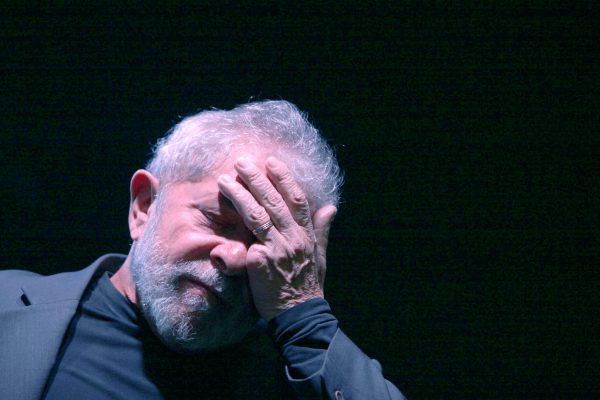
There are many who feel the corruption allegations are designed to prevent Lula from running in 2018 presidential elections [Xinhua ]
The BRICS Post | September 21, 2016
Former Brazilian President Luiz Inacio Lula da Silva has come out swinging against a judge who ordered him to stand trial for allegations of money laundering while in office.
Lula accused anti-corruption judge Sérgio Moro of being politically motivated and said that charges brought against him by federal prosecutors were part of a scheme to discredit him and ruin his career.
On Tuesday, and less than a month after he was indicted on alleged graft charges, Lula was ordered by Moro to stand trial for receiving at least $1 million in kickbacks from Brazilian energy company Petrobras.
Moro first accepted charges filed in July by prosecutors investigating Lula for allegedly “masterminding” a corruption and money laundering operation in Petrobras.
Lula, a hugely popular president who served from 2003 to 2010 and is credited with a number of initiatives that propelled GDP growth and significantly reduced poverty in Brazil, has been under investigation for much of the past year..
“As we were starting to have success in the presidency, they are trying to do with us what they did with Dilma (Rousseff, the former president impeached in August). A part of the press and a part of the judiciary already tried to oust me from the presidency in 2005,” Lula has said.
Last month, Lula and members of his family and three other people had been indicted on a number of charges stemming from alleged financial irregularities, declaration of assets in addition to money laundering and graft.
Some in Brazil believe that the charges and trial are designed to ruin his chances of running in presidential elections in 2018.
In early August, the Vox Populi Institute published a poll which showed Lula would come out the clear winner if he ran for the presidency against a number of likely candidates.
Only 17 per cent of respondents in that poll said they wanted current President Michel Temer to stay on until 2018.
The Vox Populi Institute’s findings appear to support an earlier poll conducted by Datafolha in Brazil.
That poll also showed that Lulu would comfortably win a presidential election. Only five per cent said they would vote for Temer, however.
YSEALI: America’s Quiet Colonisation of Southeast Asia
By Joseph Thomas – New Eastern Outlook – 21.09.2016
 The US State Department’s Young Southeast Asian Leaders Initiative (YSEALI) claims on its official US government website to build “the leadership capabilities of youth in the region and promotes cross-border cooperation to solve regional and global challenges.”
It not only consists of US-based educational and professional “fellowships” for Southeast Asian participants, but also a funding component to help alumni establish foreign-funded organisations posing as “nongovernmental organisations” (NGOs), enhancing the already large presence of US-funded organisations operating across Asia in the service of American interests.
Under an initiative called, “Generation: Go NGO!,” YSEALI claims:
This is an opportunity for young NGO leaders to advance their professional skills and competencies with the aim to grow, scale, and take the organizations they work for, or those they founded, to new heights.
From developing baseline metrics to creatively pursuing financial and in-kind resources to assertively applying social media to advance mission, this workshop will bring together individuals from across ASEAN to learn and collaborate on ways to build capacity, message, and impact.
Beyond this, YSEALI also conducts other workshops across Southeast Asia to help prepare what is essentially a parallel political establishment that serves not Southeast Asian institutions or the population, but the US State Department and the corporate and financial interests it represents, quite literally an ocean and continent away.
One such activity was conducted by the US Embassy in Cambodia, called the “First Model Prime Minister Debate” organised by the US Ambassador’s Youth Council, Phnom Penh.
In essence, the US State Department is preparing an entire generation of impressionable young people, raised on American-style consumerism and hooked into US-based social media platforms like Facebook, and moulding them into a client political bloc they will eventually assist into power, just as they have attempted to do in Hong Kong recently with US State Department-funded “Umbrella Revolution” leaders winning several seats in local legislative elections and as they have already done in Myanmar through Aung San Suu Kyi’s National League for Democracy (NDL) with her minister of information quite literally trained by US-funded organisations in neighbouring Thailand before assuming his post.
Using children and young adults through what appear to be benign overseas scholarships and work opportunities, as well as through events across Southeast Asia organised by US embassies appears at first disarming and scaled back from the sort of subversion the US has typically engaged in over the past several decades (i.e. 1953 Operation Ajax: Iran, 1973 Chilean coup d’état, or the violent 2011 Arab Spring).
Yet despite its apparent benign nature, it represents precisely the same end result; a US backed government, representing parallel institutions that answer not to the people they are put in power over, but instead represents those foreign interests that cultivated, funded and directed them into power from abroad.
YSEALI’s activities are fundamentally inappropriate, undiplomatic and constitute an intentional and direct threat to the sovereignty and self-determination of the entire region of Southeast Asia. Were China or Russia conducting such activities in the United States, it is likely a coordinated government and media campaign would be mobilised to counteract it, and possibly even legislation passed to stop it all together.
Likewise, ASEAN should consider revising rules, regulations and legislation governing foreign-funded organisations masquerading as “NGOs” and limiting foreign missions to the region and each respective nation to diplomatic activities only.
Funding from foreign governments for allegedly “nongovernmental” organisations is in itself a contradiction in both terms and in principle. And the idea of a parallel political system created in the US embassy and composed of Southeast Asian youths “built” by US efforts somehow representing or resulting in “democracy” or “self-determination” is an obvious and intentional misrepresentation by the US State Department.
Not only should local governments across Southeast Asia counter these efforts through restricting or ending them altogether, they should create their own programmes to develop their nation’s next generation of political and business leaders, infused with local principles, values, cultural ideals and reflecting the best interests of the people and nation they will eventually assume positions of power over. Self-determination is not a right the US or the “international community” it poses as leader of will grant freely to the nations of the world it presumes dominion over, it is a right that nations must fight for, earn and protect proactively.
IAEA confirms Iran’s commitment to obligations under JCPOA
Press TV – September 19, 2016
The International Atomic Energy Agency (IAEA) has once again confirmed Iran’s commitment to a landmark nuclear agreement Tehran signed with the six world powers last year.
“Iran continues to implement its nuclear-related commitments under the Joint Comprehensive Plan of Action (JCPOA),” IAEA Director General Yukiya Amanon said in an introductory statement to the agency’s Board of Governors in Vienna on Monday.
He added that his report on Verification and monitoring in the Islamic Republic of Iran in light of United Nations Security Council resolution 2231 (2015) summarizes the verification and monitoring activities conducted by the UN nuclear agency in the last few months.
The IAEA chief said Iran has submitted its declarations under the Additional Protocol, which Tehran is applying provisionally, pending its entry into force.
“The Agency continues to verify the non-diversion of nuclear material declared by Iran under its Safeguards Agreement,” Amano pointed out.
He noted that the IAEA would continue evaluating the absence of undeclared nuclear material and activities in Iran.
In a quarterly report on Iran on September 8, the IAEA confirmed Iran’s commitment to the nuclear agreement reached between the Islamic Republic and the five permanent members of the UN Security Council – the United States, Britain, France, China and Russia – plus Germany on July 14, 2015.
The UN nuclear agency, which is tasked with overseeing the implementation of the JCPOA, said Tehran has not exceeded the limits set in the accord on its low-enriched uranium and heavy water stockpile.
Under the JCPOA, which took effect in January, Iran undertook to put limitations on its nuclear program in exchange for the removal of nuclear-related bans imposed against Tehran.
The deal requires Iran’s storage of uranium enriched to up to 3.67 percent purity to stay below 300 kilograms. Tehran has also agreed to keep its heavy water stockpile below 130 metric tonnes.
Since January, the IAEA has released regular reports confirming the peaceful nature of Iran’s nuclear activities and Tehran’s commitment to the agreement.
In April, the IAEA director general hailed Iran for respecting the nuclear accord, saying the Islamic Republic has even gone beyond its obligations.
Russia-China military ties take a leap forward
By M K Bhadrakumar | India Punchline | September 11, 2016
The wrap on the long-awaited China-Russia naval exercise in the South China Sea has been lifted, finally. From what Beijing disclosed today regarding the eight-day exercise (codenamed Joint Sea-2016), beginning on September 12, it is anything but a routine exercise. Make no mistake, it marks a leap forward in Sino-Russian military ties and signals a significant show of strategic congruence.
The Chinese Navy spokesman revealed that the exercise will be held “off southern China’s Guangdong Province”, without elaborating. Both navies are deputing surface ships, submarines, fixed-wing aircraft, ship-borne helicopters marine corps and amphibious armored equipment for the exercise.
The announcement said the two navvies will “undertake defense, rescue, and anti-submarine operations, in addition to joint island seizing and other activities…(and) in particular, will carry out live-fire drills, sea crossing and island landing operations, and island defense and offense exercises among others”. (Global Times )
China’s South Sea Fleet and Russia’s Pacific Fleet will be the participants. The SSF, of course, plays a major role in the disputed waters of the South China Sea and, in fact, was instrumental in occupying the Paracel Islands in 1974.
The exercise is taking place against an extraordinary backdrop. Only six days ago, Russia came out with a stance on the South China Sea issue, which is completely to China’s satisfaction. It was hugely symbolic that President Vladimir Putin personally articulated it – and from Chinese soil, as he was leaving for home after the G20 summit in Hangzhou. Putin said in reply to a query from a journalist:
- I’ve developed a very good relationship based on trust with President Xi Jinping. I would say a friendly relationship. However, he has never – I would like to underscore this – he has never asked me to comment on this (South China Sea) issue or intervene in any way. Nothing of the kind has ever passed his lips. Nevertheless, of course, we have our own opinion on this. What is it? First of all, we do not interfere. We believe that interference by any power from outside the region will only hurt the resolution of these issues. I believe the involvement of any third-party powers from outside the region is detrimental and counterproductive. That’s my first point.
- Second, as far as the Hague Arbitration Court and its rulings are concerned, we agree with and support China’s position to not recognise the court’s ruling. And I’ll tell you why. It is not a political but a purely legal position. It is that any arbitration proceedings should be initiated by parties to a dispute while a court of arbitration should hear the arguments and positions of the parties to the dispute. As is known, China did not go the Hague Court of Arbitration and no one there listened to its position. So, how can these rulings be deemed fair? We support China’s position on the issue. (Kremlin website)
It is a calibrated stance that does not take any side on the disputes as such and simply ignored UNCLOS, et al, but it pointedly snubs Washington’s interference. It serves Beijing’s purpose, while for Moscow it no way jeopardises Russia’s developing strategic ties with Vietnam or with the ASEAN. Beijing is pleased. The Chinese Foreign Ministry lauded Putin’s remarks. (MFA)
Moscow and Beijing kept fine-tuning the details of the exercise, presumably taking into account the fluidity in the regional security. One reason could be the US’ decision to depute the nuclear-powered aircraft carrier USS Ronald Reagan to South Korea for a naval exercise in mid-October. The drill is projected as a show of strength to North Korea but it is being held at a time of heightened regional tensions over North Korea and the USS Reagan is part of a Japan-based American strike group and the only forward-deployed aircraft carrier in the region.
Interestingly, the visiting speaker of the upper house of Russia’s parliament Valentina Matviyenko stated in Beijing on Friday that Russia and China have identical positions on North Korea. A day later, on Saturday, Russian Foreign Ministry issued a joint appeal with China calling for avoidance of precipitate moves.
Putin’s remarks on South China Sea were by no means ex-tempore. The big question is whether Moscow and Beijing could be exploring the matrix of an alliance that is unlike a formal alliance but prepares them nonetheless to push back at a probable shift in the US’ policies in a pronounced interventionist direction and a greater readiness to use military power under the next US president. The deployment of the THAAD missile defence system in South Korea is a matter of common concern for Russia and China. Again, despite the seamless charm offensive by Prime Minister Shinzo Abe, Putin does not intend to make any territorial concessions to Japan over the Kuriles.
Indeed, the idea of a Sino-Russian alliance is not new. In 2014, Russian Defence Minister Sergei Shoigu explicitly aired the idea of a common front with China to fight terrorism and counter US-sponsored ‘color revolutions’. In a significant reference just before the visit to Hangzhou, Putin described Russia’s relations with China as “a comprehensive partnership and strategic cooperation”. Again, at the meeting with Putin in Hangzhou on September 4, Xi explicitly called for closer, tighter strategic alignment between the two countries. (Xinhua )
Featured Video

Trita Parsi: Middle East Unraveling — Are We on the Path to World War?
or go to
Aletho News Archives – Video-Images
New Book
Trans agenda is ‘normalization of sadism’ – US author

RT | September 23, 2026
The US Democratic Party has embraced a transgender agenda that amounts to “the normalization of sadism,” author A.J. Rice has said, warning that radical trans policies would return if the party is allowed to regain power.
Speaking to RT’s America First host Scotty Nell Hughes about his new book, ‘The Curse of the Bearded Lady: How the Trans Mafia Whacked American Sanity’, Rice argued that activists have gained significant influence in schools, medicine, and corporate America while people who questioned the agenda have faced pressure to stay silent.
The author described the “trans mafia” as the sprawling network of people and institutions that have helped the movement gain influence. He singled out parts of academia, wealthy backers, and corporations, and stated that providers of transition-related treatment also have a financial incentive to keep young people in their care indefinitely.
Rice argued that the consequences of these policies ultimately fall on children who are being drawn toward gender-affirming medical treatments and on girls who are expected to share locker rooms or compete in sports with biological males.
He noted that while voters rejected the Democrats’ approach to gender in 2024, the party, which has been “captured by madness,” has since only doubled down and is seeking what is effectively “the normalization of sadism.” … Full report
Blog Roll
 Aletho News
- NATO chief wants Europeans to fight American wars [for Israel]
- German chemicals giant reveals details of downsizing
- Refaat Al-Areer Was The Canary In The Coal Mine In Israel’s War On The Truth
- Israeli election committee bars candidate from Knesset race over Gaza war opposition
- French-Lebanese man files war crimes complaint over Israeli attacks
- Mahan Air Flight Lands in China Despite US Threat against Iranian Airlines
- US eyes $10bn fund to rebuild war-battered Gulf infrastructure
- Trump meets Rodríguez near Maduro’s prison as Venezuela’s oil flows to US
- Trita Parsi: Middle East Unraveling — Are We on the Path to World War?
- Iran FM meets with US envoy on UN meeting’s sidelines at American side’s insistence: Report
- If Americans Knew
- Caught on Tape: AIPAC CEO Boasted of Controlling Trump’s National Security Officials
- Why Hamas Attacked Israel in October 2023 – Israeli professor Ilan Pappé
- They see them, then kill them: Israeli quadcopters track, deliberately target civilians in Gaza
- Winter could turn Gaza’s treacherous, war-damaged buildings into deathtraps
- Majority of Democratic Voters Want to Prosecute Both Biden and Trump Administration Officials Over Gaza
- As Gaza languishes, world leaders gather at the UN – Daily Update
- Sanctions are collective punishment: immoral and self-defeating
- Phosphorus Munitions Fired by Israel Burn Groves, Orchards in Southern Lebanon
- Israel Carries Out New Ceasefire Violations Across Gaza
- AI – Emphasis on the ‘I’: Israel Is Funding AI Chatbot Propaganda
- No Tricks Zone
- New Study: Earth And Venus Surface Warmth Largely Explained By Convection And Lapse Rate, Not CO2 Or Radiation
- 2025 Nature Paper Claiming Worsening Global Drought Gets RETRACTED …Heavily Flawed
- New Study: ‘Global Drought Shows No Detectable Recent Acceleration Under Climate Warming’
- Economic Masterminds: German Socialists Suggest Taxing Productivity Gains Stemming From Using AI
- The South China Sea Has Not Been Cooperating With The Climate Change Narrative
- Energy Crisis: Germany Enters Heating Season With Historically Low Gas Reserve Fill Levels
- New Study: The Antarctic Ice Sheet Gained Mass From 2020-2024 Due To Staggering Snow And Ice Accumulation
- Study: Ocean Heating Rates From Thousands Of Years Ago ‘Dwarf’ Modern Ocean Heating Rates
- Climate Extremists Target, Attack Large-Scale Power Grid Infrastructure In Germany!
- New Study: Antarctic Ice Melt Has Contributed Less Than 1 Centimeter To Sea Level Rise In The Last 30 Years

