Putin VS Erdogan: Syrian Kurds Seek Alliance With Russia
Sputnik – 10.10.2015
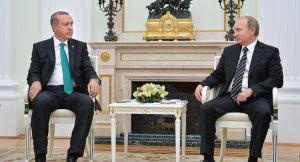 Syrian Kurds have expressed their willingness to cooperate with Russia. This would be a setback for the Turkish President Erdogan, who is seeking to destroy the Kurdistan Workers’ Party (PKK), DWN wrote.
In an interview with al-Monitor, the leader of the Syrian Kurds Salih Muslim announced his willingness to cooperate with Russia and Syrian President Bashar-al-Assad, the newspaper reported.
He said the Syrian Kurds are interested in cooperating with anyone who fights against ISIL. Moreover, Russia had promised the government in Damascus that it would respond to any Turkish intervention in Syria, which many Kurds are afraid of.
The US, in turn, has also been increasingly supportive of cooperation with the Russians. Many US officials believe that Russia could be helpful in their fight against ISIL, which turned out to be more difficult than expected.
However, Turkey fears that Russia’s potential support for the Kurds may lead to a situation in which a new Kurdish region would form along its southern borders and destabilize Turkey. This could result in a further downturn in the relations between Turkey and Russia, which have already deteriorated after an aviation incident at the Turkish border.
On October 3, a Russian Su-30 fighter jet had briefly crossed Turkish airspace due to poor weather conditions. Russian authorities officially apologized for the incident, saying it was a “misunderstanding,” and promised to avoid such incidents in the future.
Photo © Sputnik/ Alexei Druzhinin
On British role in Syria and plans for FT reported ‘safe zones’
By Dr Alexander Yakovenko, Russian Ambassador to the United Kingdom | RT | October 8, 2015
Will Damascus request the British to assist in the same way, I don’t know. But there is another way for the British, and, in fact, everybody else, to carry out airstrikes against ISIS and other terrorists legitimately. It means a UN Security Council mandate, provided in response to the request of the Syrian Government. That is what we are now working on in New York. That is how the British could have their finger in the bombing pie in Syria. Russia is far from pulling this blanket upon herself. We want to work together.
There are other advantages of this course, besides establishing clear-cut objectives and terms of such collective intervention by the international community in Syria. We could agree, in the text of this resolution, on realistic and flexible enough modalities of a political settlement in Syria, which would allow those who left their country to come back and take part in its post-war reconstruction. The latter, by the way, could be a major source of economic growth in the region. What is equally important, this settlement will make it unnecessary for the EU to provide asylum to refugees from Syria.
I’ve read the said FT material. Some would say that it is very much in line with the backstabbing tradition of Western politics. I hope those plans were not serious on the part of our Anglo-American partners, who were able to see our preparations for airstrikes in Syria. The British have a signals intelligence post in Cyprus, just opposite our naval supply station in Syria, an equivalent of a 19th century coaling station. Perhaps, they just couldn’t say ‘no’ to their regional allies. But had it been true, it would have raised a host of serious issues. Because it would have been done behind our backs and in circumvention of the UN Security Council. Some seem eager to get NATO involved. The Alliance, until now, has been out of the picture in Syria, and for good reasons. Those plans, if implemented, would have brought about a de facto partition of Syria. More than that, our partners would have well found themselves in the position of protecting the terrorists.
It is a very dangerous idea. Some players might have harbored it. At least this would explain, why all of a sudden and from nowhere the tide of refugees in Europe this year. Quite likely it was meant to bring the EU on board as regards ‘safe zone’ plans. Now the migration crisis factor works for more realistic assumptions in Europe in respect of the political process in Syria, which cannot proceed while ISIS is there.
But let’s discuss things positively. Among those I can see close cooperation between the Russian and British military. Making common cause in Syria creates mutual trust, establishes mutual control, and provides incentives for both sides to be effective in doing its part of the job. We have just requested our Western partners provide us with their intelligence on the terrorist infrastructure in Syria, if they really think that we strike the wrong targets. We have also requested contact numbers of the Free Syrian Army to help bring it into a united effort to defeat terrorists.
And initial results of our strikes prove that they can be very effective if delivered in earnest, with no other objectives at the back of one’s mind. It also shows that the terrorists took their impunity for granted. In fact, it could be said that the anti-ISIS coalition of 60 (!) states presided over this outfit’s expansion for a whole year, rather than tried hard to stop and destroy it.
I am sure that thus there will be all the conditions in place for us to have a common view of the situation and make joint efforts on that basis. Among other things, it would have provided a welcome opportunity for our and the British military to be allies like we were in WWII. It would drastically change the terrorists’ calculus while doing the same to our relationship, which is in a very bad shape indeed.
Dr Alexander Yakovenko, Russian Ambassador to the United Kingdom of Great Britain and Northern Ireland, Deputy foreign minister (2005-2011). Follow him on Twitter @Amb_Yakovenko
Connecticut Cops Blast Own Empty Car in Fear For Lives, Face State Firearms Charges
By Grant Stern | PINAC | October 8, 2015
Two Connecticut cops were hanging out together off-duty when suddenly, they feared for their lives, drew their firearms and hosed down a suspicious car in their driveway.
Too bad the car was empty.
And belonged to one of the officers.
Then the Darien Police Department did something even more shocking.
Darien police asked the Connecticut State Police to investigate the incident, leading to charges against the two officers for second-degree reckless endangerment, second-degree breach of peace and unlawful discharge of a firearm under state law.
It’s no shock that an independent investigation would find probable cause to charge the two officers for these actions.
James Martin and Daniel Ehret fired the live ammunition for unknown reasons on August 1st, 2015, but it took two months before charges were announced just yesterday.
The officers were at Martin’s house and destroyed Martin’s own personal vehicle.
Of course, this means the officers have now been placed on “paid administrative leave” which is the police term of art for a fully paid vacation with salary.
More significant than charges is the rare admission from a police agency that cops must abide the same laws as citizens AND that investigations of a department’s own officers. According to local TV station WTNH:
Darien Police Chief Duane Lovello says that the two officers involved were placed on paid administrative leave after the incident occurred. “The allegations leading to the arrests are disturbing. I cannot conceive of anything that would lead police officers to do something so profoundly dangerous and wholly irresponsible. This conduct is intolerable and does not reflect the professional values or the ethical, responsible, and moral conduct we demand of Darien police officers and their duty to the public we serve,” Chief Lovello said in a statement.
Local outlet Darien Times story released Chief Lovello’s entire statement, which revealed the car’s true owner and the location of the alleged crimes committed by two 10-year police veterans. Turns out that the town of Darien, which was founded in 1737, survived all the way until 1925 without any police force whatsoever.
Yemen’s Houthis conditionally agree to UN-brokered peace plan
Press TV – October 8, 2015
Yemen’s Houthi Ansarullah movement has expressed conditional support for a UN-brokered peace plan put forward in talks previously held in Oman.
The Ansarullah movement will agree to the seven-point peace plan, which also requires adherence to UN Resolution 2216, if other parties to the conflict also commit to the initiative, Yemen’s Saba Net news agency quoted Ansarullah spokesman Mohammed Abdulsalam as saying on Wednesday.
The resolution, which was adopted in April, calls for the withdrawal of Ansarullah fighters from the areas under their control and for them to lay down arms.
Abdulsalam also called on UN Secretary General Ban Ki-moon and the UN Security Council to back Yemen’s peace process.
Yemen’s fugitive former president, Abd Rabbuh Mansour Hadi, has not yet commented on Houthi’s new position. He had earlier ruled out engaging in talks with the Houthis before they accept the UN resolution.
Yemen’s General People’s Congress (GPC), the party of former Yemeni President Ali Abdullah Saleh, has also accepted the peace plan.
Ansarullah fighters took control of the Yemeni capital, Sana’a, in September 2014 and are currently in control of large parts of the Arab country. The revolutionaries said the government of Hadi was incapable of properly running the affairs of the country and containing the growing wave of corruption and terror.
Hadi, along with the cabinet of the former Yemeni prime minister, Khaled Bahah, stepped down in January.
On February 21, he escaped house arrest in Sana’a and fled to his hometown Aden, where he withdrew his resignation and highlighted his intention to resume duties. He later fled the port city to Saudi Arabia.
Unhappy with the advances of the Ansarullah fighters, who are backed by army forces and Popular Committees, Saudi Arabia began a deadly military aggression against Yemen – without a UN mandate – on March 26. The strikes are meant to undermine the Ansarullah movement and restore power to Hadi.
About 6,400 people have reportedly lost their lives in the conflict in Yemen, according to reports.
In a Thursday interview with Press TV’s website, Siraj Davis, a Jordan-based freelance journalist and human rights activist, hailed the UN-proposed peace plan because it envisions a political process whereby the Houthis are given a role in the decision-making process in the country.
“What I like about the peace plan is the fact that they (Saudi Arabia and its Yemeni allies) do agree to make the Houthis a political party, which is extremely important,” Davis said.
He added, however, that the fugitive officials of the former Yemeni government, which have set preconditions for peace talks, are not sincere in their claims about reaching a peace deal.
“I believe that all sides need to just come to agreement, recognize what is on the ground… that Houthis control practically the majority of everything,” Davis said.
Iraq to officially request Russian military action against Daesh
Press TV | October 7, 2015
Iraq is planning to officially ask Russia for airstrikes against Daesh in a bid to purge the Takfiri militant group from the territories it controls in the west and north of the Arab country.
“We might be forced to ask Russia to launch airstrikes in Iraq soon. I think in the upcoming few days or weeks Iraq will be forced to ask Russia to launch airstrikes and that depends on their success in Syria,” the head of the Iraqi parliament’s defense and security committee, Hakim al-Zamili, said on Wednesday, urging Moscow to play a bigger role than the United States in fighting terrorists in Iraq.
Baghdad has long criticized the ineffectiveness of the aerial military campaign by Washington and its allies against alleged Daesh positions in Iraq. However, Moscow’s recent military intervention against the terrorists in Syria has raised hopes of a similar move in Iraq.
“We are seeking to see Russia have a bigger role in Iraq. … Yes, definitely a bigger role than the Americans,” Zamili said.
The senior Iraqi legislator also expressed hope that a newly-established security and intelligence-sharing command center which includes Iran, Iraq and Syria and Russia and is set to begin work in Iraq, could make the anti-Daesh battle more effective.
“We believe that this center will develop in the near future to be a joint operation command to lead the war against Daesh in Iraq,” he added.
Russia has been pounding the positions of Daesh and other militant groups in Syria for a week, a move which has clearly irritated the United States and other Western governments. Washington accuses Russia of targeting the so-called moderate militants in Syria, but Moscow denies the charges, saying it chooses its targets based on intelligence provided by the Syrian army. Russia has also sought to play down the significance of US-fabricated distinction between militants in Syria.
Earlier in the day, Russian officials said they would consider an airborne operation against Daesh Takfiri terrorists in Iraq if they received a formal request from the Arab country on the issue.
Valentina Matviyenko, the Russian Federation Council speaker, said Russian leaders would be open to study “the political and military expediency” of an operation in Iraq in case of official request by Iraq.
Syrian Army Invites Terrorists to Surrender Before Major Operation
Sputnik – 05.10.2015
Syrian air force helicopters dropped leaflets in the south of Hama province, inviting terrorists to surrender and warning civilians about the beginning of a major military operation.
Agitational leaflets were dropped on the territories of Rastan and Talbiseh settlements, currently controlled by Islamic State and Jabhat al-Nusra militants, RIA Novosti reported.
There were two types of dispersed leaflets. One contained a detailed instruction on how to behave when approaching Syrian troops’ checkpoints and urged civilians to leave their homes on the threshold of a forthcoming military operation.
“With this leaflet you are allowed to safely pass Syrian Arab Army checkpoints,” the leaflet for civilians said. “The army will provide food supplies and medical assistance. Cooperate with the Syrian army and leave the war zone for the sake of your own lives.”
In the other leaflet, Syrian citizens who took sides with terrorists were offered to surrender their arms and give up confrontation with the army.
“The future is in front of you, and this is your chance to return to your motherland’s embrace,” it said. “Use this chance before it is too late. Lay down arms just like hundreds did before you. The government will take care of you and welcome your return.”
The Syrian Army is preparing for a major anti-terrorist operation in the south of Hama province, including the settlements of Rastan and Talbiseh, currently controlled by extremists.
The primary goal of the Syrian leadership is to secure a route between the towns of Homs and Hama. The towns are fully controlled by government forces, but settlements between them are considered the main stronghold of terrorists, including ISIL, in this part of Syria.
Luhansk Leader Says Ready to Sign Donbas Weapons Pullout Agreement
Sputnik – 29.09.2015
Leader of the self-proclaimed Lugansk People’s Republic (LPR) Igor Plotnitsky said Tuesday he was ready to sign an agreement on weapons pullout in Donbass on September 30.
On Tuesday participants of the Contact Group on Ukraine initialed an agreement on the withdrawal of weaponry with caliber under 100-mm and tanks from a separation line between Kiev-led forces and Donbass militia in eastern Ukraine.
“This is a much-anticipated news for people who live along the contact line,” the Lugansk Information Center quoted Plotnitsky as saying.
“I hope that this document, which we will sign tomorrow, will open the way for further implementation of the Minsk agreements.”
Weapons Pullout in Donbass to Consist of Two Stages, Take 41 Days
The withdrawal of weaponry under 100-mm and tanks from a separation line between conflicting sides in eastern Ukraine will be carried out in two stages over 41 days, tanks will be pulled out first, OSCE envoy to Ukraine reconciliation talks Martin Sajdik said Tuesday.
Sadjik said that the agreement envisions the withdrawal of tanks, artillery of caliber under 100-mm and mortars with caliber under 120-mm to a distance of 15 kilometers (9.3 miles) from the separation line within a period of 41 days.
The diplomat added that the pullout would start on the territory of the self-proclaimed Lugansk People’s Republic two days after a full ceasefire regime had been established.
Tanks will be withdrawn first, followed by artillery and mortars, Sajdik explained.
Contact Group on Ukraine Signs Donbass Weapons Pullout Agreement
Sputnik – 29.09.2015
Participants of the Contact Group on Ukraine signed on Tuesday an agreement on the withdrawal of tanks and weaponry with a caliber of under 100-mm from a separation line between Kiev-led forces and Donbass militia in eastern Ukraine.
A source close to the talks told RIA Novosti that the new arms pullout deal will be added to the package of Minsk peace accords, agreed on February 12 between Russian, Ukrainian, French and German leaders.
“An agreement on the pullout of weaponry with caliber under 100-mm and tanks from the contact line in Donbass has been initialed.”
The report was later confirmed by Donetsk envoy to Contact Group talks in Minsk Denis Pushilin.
Dariia Olifer, a spokeswoman for the Ukrainian government representative at the peace talks and ex-president Leonid Kuchma, posted to her Facebook page that the document was signed by Kuchma, OSCE Special Representative in Ukraine Martin Sajdik and Russian envoy to the talks Azamat Kulmukhametov.
Olifer added that the agreement had not yet been signed by leaders of the self-proclaimed Donetsk and Lugansk people’s republics, who would sign them “through OSCE channels” by Thursday.
Catalonia head charged with of abuse of power over independence referendum
RT | September 29, 2015
The head of the regional government in Catalonia has been indicted for unconstitutionally calling a referendum on independence from Spain last year. This comes just two days after his party and other secessionist forces won a regional election.
Recently, Artur Mas has promised his fellow Catalans that if pro-independence parties secured the majority in the regional parliament, independence from Spain would be a done deal. And so, on Sunday, the foundation of that promise was attained: absolute majority was secured, although, the parties only won 48 percent of the vote.
Despite the gains, Mas now has been summoned by Catalonia’s Supreme Court (TSJC) for pushing through a non-binding referendum last November, even after Spain’s Constitutional Court explicitly forbade him doing so.
He faces preliminary charges of disobedience, abuse of authority and usurping authority and will have to appear in court in October.
As it becomes more evident that Catalonia wants independence, Prime Minister Mariano Rajoy has once again repeated that he will not discuss “the unity of Spain.” With a general election coming up in December, he has ruled out any possibility of a referendum on the issue.
Meanwhile, Rajoy’s own People’s Party is getting historically low numbers in the Catalan election – the lowest in 20 years. Experts believe this to be directly related to the continued blocking of Barcelona’s independence referendum.
The Catalan Government said in a statement that it hasn’t “done anything illegal,” according to the Catalan News Agency. It further labeled the court’s decision to indict Mas as “a democratic anomaly” and “a political judgment.”
The left-wing leader Oriol Junqueras called Madrid’s tactics “the best example” of why Catalonia must secede. “As long as we belong to the Spanish State, normal things such as asking the citizens’ opinion will turn into lawsuits and summonses,” he said in a radio interview.
Various Catalan institutions and departments joined in the criticism against Madrid, although some in the region, such as the Conservatives, are diametrically opposed to Mas, believing that Catalonia can’t have a leader who is summoned for disobedience.
READ MORE: Madrid says it will not discuss Spain’s unity after Catalan separatists claim victory
Putin interview to Charlie Rose in the run-up to his address at the UN General Assembly’s 70th session
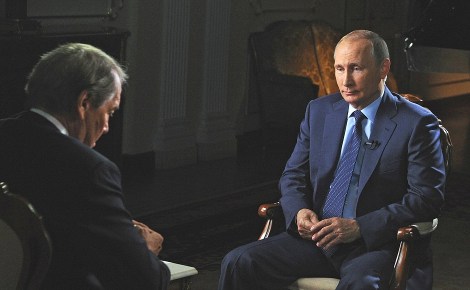
Full text of the interview will be published on September 29.
* * *
CHARLIE ROSE: You will speak to the United Nations in a much-anticipated address on Monday. It will be the first time you have been there in a number of years. What will you say to the UN, to America, to the world?
VLADIMIR PUTIN: Since this interview will be aired prior to my speech, I do not think it reasonable to go into much detail about everything I am going to speak about, but, broadly, I will certainly mention some facts from the history of the United Nations. Now I can already tell you that the decision to establish the United Nations was taken in our country at the Yalta Conference. It was in the Soviet Union that this decision was made. The Soviet Union, and Russia as the successor state to the Soviet Union, is a founding member state of the United Nations and a permanent member of its Security Council.
Of course, I will have to say a few words about the present day, about the evolving international situation, about the fact that the United Nations remains the sole universal international organisation designed to maintain global peace. And in this sense it has no alternative today. It is also apparent that it should adapt to the ever-changing world, which we discuss all the time: how it should evolve and at what rate, which components should undergo qualitative changes. Of course, I will have to or rather should use this international platform to explain Russia’s vision of today’s international relations, as well as the future of this organisation and the global community.
CHARLIE ROSE: We are expecting you to speak about the threat of the Islamic State and your presence in Syria that is related to that. What is the purpose of your presence in Syria and how does that relate to the challenge of ISIS?
VLADIMIR PUTIN: I believe, I am pretty certain that virtually everyone speaking from the United Nations platform is going to talk about the fight, about the need to fight terrorism, and I cannot avoid this issue, either. This is quite understandable because it is a serious common threat to all of us; it is a common challenge to all of us. Today, terrorism threatens a great number of states, a great number of people – hundreds of thousands, millions of people suffer from its criminal activity. And we all face the task of joining our efforts in the fight against this common evil.
Concerning our, as you put it, presence in Syria, as of today it has taken the form of weapons supplies to the Syrian government, personnel training and humanitarian aid to the Syrian people. We act based on the United Nations Charter, i.e. the fundamental principles of modern international law, according to which this or that type of aid, including military assistance, can and must be provided exclusively to legitimate government of one country or another, upon its consent or request, or upon the decision of the United Nations Security Council. In this particular case, we act based on the request from the Syrian government to provide military and technical assistance, which we deliver under entirely legal international contracts.
CHARLIE ROSE: The Secretary of State John Kerry said that the United States welcomed your assistance in the fight against the Islamic State. Others have taken note of the fact that these are combat planes and manpad systems that are being used against the conventional army, not extremists.
VLADIMIR PUTIN: There is only one regular army there. That is the army of Syrian President al-Assad. And he is confronted with what some of our international partners interpret as an opposition. In reality, al-Assad’s army is fighting against terrorist organisations. You should know better than me about the hearings that have just taken place in the United States Senate, where the military and Pentagon representatives, if I am not mistaken, reported to the senators about what the United States had done to train the combat part of the opposition forces. The initial aim was to train between 5,000 and 6,000 fighters, and then 12,000 more. It turns out that only 60 of these fighters have been properly trained, and as few as 4 or 5 people actually carry weapons, while the rest of them have deserted with the American weapons to join ISIS. That is the first point.
Secondly, in my opinion, provision of military support to illegal structures runs counter to the principles of modern international law and the United Nations Charter. We have been providing assistance to legitimate government entities only.
In this connection, we have proposed cooperation to the countries in the region, we are trying to establish some kind of coordination framework. I personally informed the President of Turkey, the King of Jordan, as well as the Saudi Arabia of that, we informed the United States too, and Mr Kerry, whom you have mentioned, had an in-depth conversation with our Foreign Minister Sergei Lavrov on this matter; besides, our military stay in touch and discuss this issue. We would welcome a common platform for collective action against the terrorists.
<…>
CHARLIE ROSE: Are you ready to join forces with the United States against ISIS and is it why you are in Syria? Others believe that it might be part of your goal, that you are trying to save President al-Assad’s administration because they have been losing ground and the war has not been going well for them, and you are there to rescue them.
VLADIMIR PUTIN: That’s right, that’s how it is. We provide assistance to legitimate Syrian authorities. Moreover, I strongly believe that by acting otherwise, acting to destroy the legitimate bodies of power we would create a situation that we are witnessing today in other countries of the region or in other regions of the world, for instance, in Libya, where all state institutions have completely disintegrated.
Unfortunately, we are witnessing a similar situation in Iraq. There is no other way to settle the Syrian conflict other than by strengthening the existing legitimate government agencies, support them in their fight against terrorism and, of course, at the same time encourage them to start a positive dialogue with the “healthy” part of the opposition and launch political transformations.
CHARLIE ROSE: As you know, some coalition partners want al-Assad to go before they can support the government.
VLADIMIR PUTIN: I would like to advise or recommend them to forward this suggestion to the Syrian people. It is only up to the Syrian people living in Syria to determine who, how and based on what principles should rule their country.
CHARLIE ROSE: Do you support what President al-Assad is doing in Syria and what is happening to those Syrians, to those millions of refugees, to hundreds of thousands of people who have been killed and many – by his own force?
VLADIMIR PUTIN: And do you think that those who support the armed opposition and, mainly, terrorist organisations just in order to overthrow al-Assad without thinking of what awaits the country after the complete destruction of state institutions are doing the right thing?
Time and again, with perseverance worthy of a better cause, you are talking about the Syrian army fighting against its people. But take a look at those who control 60 percent of Syrian territory. Where is that civilised opposition? 60 percent of Syria is controlled either by ISIS, Jabhat al-Nusra or other terrorist organisations, organisations that have been recognised as terrorist by the United States, as well as other countries and the UN.
CHARLIE ROSE: Would Russia deploy its combat troops in Syria if it is necessary to defeat ISIS?
VLADIMIR PUTIN: Russia will not take part in any field operations on the territory of Syria or in other states; at least, we do not plan it for now. But we are thinking of how to intensify our work both with President al-Assad and our partners in other countries.
CHARLIE ROSE: As we come back to the problem of many people considering that al-Assad is helping ISIS, that his terrible attitude towards the Syrian people and the use of barrel bombs and other actions are helping ISIS, and if he is removed, the transition period would be better at some point for the purposes of fighting ISIS.
VLADIMIR PUTIN: In secret services’ parlance, I can say that such an assessment is a blatant act by al-Assad’s enemies. It is anti-Syrian propaganda.
CHARLIE ROSE: This wording is very broad, among other things, it can mean new efforts by Russia to take up the leadership role in the Middle East and it can mean that it represents your new strategy. Is it really a new strategy?
VLADIMIR PUTIN: No. There are more than 2,000 militants in Syria from the former Soviet Union. So instead of waiting for them to return back home we should help President al-Assad fight them there, in Syria. This is the main incentive that impels us to help President al-Assad.
In general, we want the situation in the region to stabilize.
CHARLIE ROSE: You are proud of Russia and it means that you want Russia to play a more significant role in the world. This is just one of the examples.
VLADIMIR PUTIN: This is not an end in itself. I am proud of Russia. We have much to be proud of. But we have no obsession that Russia must be a super power in the international arena.
CHARLIE ROSE: But you are a major power because of the nuclear weapons you possess. You are a force to be reckoned with.
VLADIMIR PUTIN: I hope so (laughing), otherwise what are these weapons for?
The Ukrainian issue is a separate huge issue for us, I will tell you why. Ukraine is the closest country to us. We have always said that Ukraine is our sister country and it is true. It is not just a Slavic people, it is the closest people to Russia: we have similar languages, culture, common history, religion etc.
Here is what I believe is completely unacceptable for us. Addressing issues, including controversial ones, as well as domestic issues of the former Soviet Republics through the so-called coloured revolutions, through coups and unconstitutional means of toppling the current government. That is absolutely unacceptable. Our partners in the United States are not trying to hide the fact that they supported those opposed to President Yanukovych.
CHARLIE ROSE: You believe the United States had something to do with the ousting of Yanukovych, when he had to flee to Russia?
VLADIMIR PUTIN.: I know this for sure.
CHARLIE ROSE: How can you know for sure?
VLADIMIR PUTIN: It is very simple. We have thousands of contacts and thousands of connections with people who live in Ukraine. And we know who had meetings and worked with people who overthrew Viktor Yanukovych, as well as when and where they did it; we know the ways the assistance was provided, we know how much they paid them, we know which territories and countries hosted trainings and how it was done, we know who the instructors were. We know everything. Well, actually, our US partners are not keeping it a secret.
CHARLIE ROSE: Do you respect the sovereignty of Ukraine?
VLADIMIR PUTIN: Certainly. However, we would like other countries to respect the sovereignty of other states, including Ukraine, too. Respecting the sovereignty means preventing coups, unconstitutional actions and illegitimate overthrowing of the legitimate government.
CHARLIE ROSE: How does the renewal of the legitimate power take place in your judgment? How will that come about? And what role will Russia play?
VLADIMIR PUTIN: At no time in the past, now or in the future has or will Russia take any part in actions aimed at overthrowing the legitimate government.
CHARLIE ROSE: Did you have to use the military force to accomplish that objective?
VLADIMIR PUTIN: Of course, no.
CHARLIE ROSE: Russia has military presence on the borders with Ukraine, and some argue that there have been Russian troops in Ukraine itself.
VLADIMIR PUTIN: Do you have a military presence in Europe?
CHARLIE ROSE: Yes.
VLADIMIR PUTIN: The U.S. tactical nuclear weapons are in Europe, let us not forget this. Does it mean that the U.S. has occupied Germany or that the U.S. never stopped the occupation after World War II and only transformed the occupation troops into the NATO forces? And if we keep our troops on our territory on the border with some state, you see it is a crime?
CHARLIE ROSE: As you know, you are very much talked about in America.
VLADIMIR PUTIN: Do they not have anything else to do? ( Laughs.)
CHARLIE ROSE: Or maybe they are curious people? Or maybe you are an interesting character, maybe that is what it is? They know that you were the KGB agent, who retired and got into politics. In St. Petersburg you became deputy mayor, then moved to Moscow. And the interesting thing is that they see these images of you, bare-chested man on horseback, and they say there is a man who carefully cultivates his image of strength.
You enjoy the work, you enjoy representing Russia, and I know you have been an intelligence officer. Intelligence officer knows how to read other people; that’s part of the job, right?
VLADIMIR PUTIN: It used to be my job. Now I have a different job and for quite a while already.
CHARLIE ROSE: Someone in Russia told me, “There is no such thing as a former KGB man. Once a KGB man, always a KGB man.”
VLADIMIR PUTIN: You know every stage of your life has an impact on you. Whatever we do, all the knowledge, the experience, they stay with us, we carry them on, use them in one way or another. In this sense, yes, you are right.
CHARLIE ROSE: Once, somebody from the CIA told me that the training you have is important, that you learn to be liked as well. Because you have to charm people, you have to seduce them.
VLADIMIR PUTIN: Well, if the CIA told you so, then it must be true. They are experts on that. (Laughing)
CHARLIE ROSE: The popularity rating you have in Russia, I believe, makes every politician in the world envious. Why are you so popular?
VLADIMIR PUTIN: There is something that unites me and other citizens of Russia. It is love for our Motherland.
CHARLIE ROSE: It was an emotional moment at the time of the [World War II Memory], because of the sacrifices Russia had made. And you were staying with a picture of your father with tears in your eyes.
VLADIMIR PUTIN: Yes, my family and my relatives as a whole suffered heavy losses during the Second World War. That is true. In my father’s family there were five brothers and four of them were killed, I believe. On my mother’s side the situation is much the same. In general, Russia suffered heavily. No doubt, we cannot forget that and we must not forget, not to accuse anyone but to ensure that nothing of the kind ever happens again.
CHARLIE ROSE: You also said that the worst thing that happened in the last century was the disintegration of the Soviet Union, the Soviet empire. There are those who look at Ukraine and Georgia and think that you do not want to recreate the Soviet empire, but you do want to recreate a sphere of influence, which, you think, Russia deserves because of the relationship that has existed. Why are you smiling?
VLADIMIR PUTIN: (Laughing) Your questions make me happy. Somebody is always suspecting Russia of having some ambitions, there are always those who are trying to misinterpret us or keep something back. I did say that I see the collapse of the Soviet Union as a great tragedy of the XX century. Do you know why? First of all, because 25 million of Russian people suddenly turned out to be outside the borders of the Russian Federation. They used to live in one state; the Soviet Union has traditionally been called Russia, the Soviet Russia, and it was the great Russia. They used to live in one country and suddenly found themselves abroad. Can you imagine how many problems came out?
First, there were everyday issues, the separation of families, the economic and social problems. The list is endless. Do you think it is normal that 25 million people, Russian people, suddenly found themselves abroad? The Russians have turned out to be the largest divided nation in the world nowadays. Is that not a problem? It is not a problem for you as it is for me.
CHARLIE ROSE: As far as we know, you are very popular, but, forgive me, there are many people who are very critical towards you in Russia. As you know, they say it is more autocratic than democratic. They say that political opponents and journalists had been killed and imprisoned in Russia. They say your power is unchallenged. And they say that power, an absolute power corrupts absolutely. What would you say to those people who worry about the climate, the atmosphere in Russia?
VLADIMIR PUTIN: There can be no democracy without observing the law and everyone must observe it – that is the most basic and important thing that we all should remember.
As for those tragic incidents as losses of lives, including those of the journalists, unfortunately, it happens in all countries around the world. But if it occurs in Russia, we take every step possible to ensure that the perpetrators are found, identified and punished. We will work on all issues in the same way.
But the most important thing is that we will continue improving our political system so that people and every citizen will feel that they can influence the life of state and society, they can influence the authorities, and so that the authorities will be aware of their responsibility before those people who gave their confidence to the representatives of the authorities in the elections.
CHARLIE ROSE: If you as the leader of this country insist that the rule of law be observed, if you insist that justice be done, if you because of your power do that, then it could go a long way eliminating that perception.
VLADIMIR PUTIN: A lot can be done, but not everyone immediately succeeds in everything. How long has it taken the democratic process to develop in the United States? Since it was founded. So, do you think that as regards democracy everything is settled now in America? If this were so, there would be no Ferguson issue, right? There would be no other issues of similar kind, there would be no police abuse.
Our goal is to see all these issues and respond to them timely and properly. The same applies to Russia. We also have a lot of problems.
CHARLIE ROSE: Are you curious about America more than simply another nation that you have to deal with?
VLADIMIR PUTIN: It is interesting for us to know what is happening in the US. America has a strong influence on the situation in the world in general.
CHARLIE ROSE: What do you like most about America?
VLADIMIR PUTIN: America’s creative approach to solving the problems the country is faced with, its openness and open-mindedness which make it possible to unleash the potential of the people. I believe that largely due to these qualities America has made such tremendous strides in its development.
CHARLIE ROSE: What do you think of President Obama? What is your evaluation of him?
VLADIMIR PUTIN: I do not think I am entitled to assess the President of the United States. This is up to the American people.
CHARLIE ROSE: Do you think his activities in foreign affairs reflect a weakness?
VLADIMIR PUTIN: Why? I do not think so at all. The point is that in any country, including the United States, may be in the United States even more often than in any other country, foreign policy is used for internal political struggle. An election campaign will soon start in the United States. They always play either Russian card or any other.
CHARLIE ROSE: Let me ask you this question: Do you think he listens to you?
VLADIMIR PUTIN: I think that we all listen to each other when it does not contradict our own ideas of what we should and should not do.
CHARLIE ROSE: You said Russia is not a super power. Do you think he considers Russia an equal? Considers you an equal? Which is the way you want to be treated?
VLADIMIR PUTIN: (Laughing) Ask him, he is your President! How can I know what he thinks?
CHARLIE ROSE: Are you watching the Republican political debates?
VLADIMIR PUTIN: If you ask me whether I watch them on a daily basis – I would say no.
CHARLIE ROSE: Marco Rubio is running for a Republican nomination and he said you were a gangster.
VLADIMIR PUTIN: How can I be a gangster, if I worked for the KGB? It is absolutely ridiculous.
CHARLIE ROSE: Are people in Russia fearful of you?
VLADIMIR PUTIN: I do not think so. I assume most people trust me, if they vote for me in elections. And it is the most important thing. It places great responsibility on me, immense responsibility. I am grateful to the people for that trust, but I surely feel great responsibility for what I do and for the result of my work.
<…>
Russia, Iran, Iraq & Syria setting up ‘joint information center’ to coordinate anti-ISIS operations
RT | September 26, 2015
Russia, Iran, Iraq and Syria have agreed to establish a joint information center in Baghdad to coordinate their operations against Islamic State (IS, formerly ISIL/ISIS) militants, according to sources.
“The main goal of the center will be gathering, processing and analyzing current information about the situation in the Middle East – primarily for fighting IS,” a military-diplomatic source told Russian news agencies on Saturday.
The information center in the Iraqi capital will be headed by an officer of one of the founding countries on a rotating basis. Rotation will take place every three months. According to the source, Iraq will run the center for the next three months.
Russia, Iran, Iraq and Syria may also use the information center to coordinate anti-IS combat plans, the source said, adding that the agreement is a milestone for uniting the region’s countries in the war on terrorism – primarily on Islamic State militants.
On Friday, the US TV-Channel Fox News reported the four countries were establishing a “coordination cell” in Baghdad, but Dmitry Peskov, spokesman for Vladimir Putin, denied this. “We have already said there are many reports which are not true,” he told news agencies.
Recent media reports indicate Russia is boosting its cooperation with Syria and other Middle East countries in the fight against terrorism.
Western media say Russia is sending warplanes and tanks to Syria and building a military base in Latakia, but Russian officials deny this, saying Moscow is continuing to supply Syria with weapons in accordance with bilateral contracts.
“Russia has never made a secret of military-technical cooperation with Syria. Our country has long been supplying weapons and military equipment to Syria under the existing bilateral contracts,” Foreign Ministry spokeswoman Maria Zakharova said in a statement on September 9.
Syria hopes that Russia’s counter-terror policy will be more effective than the US-led anti-IS coalition.
“Moscow is acting within the framework of international law, respecting the sovereignty of our country and in coordination with Syria,” Syrian Foreign Minister Walid Muallem told RT. “We do not hide anything under the table. We regard Russia as our friend and strategic ally which is honest in its actions.”
Russia has long insisted on the creation of an international anti-terrorist coalition, to coordinate the efforts with the Syrian Army in combating the jihadists on the ground.
ICJ to Rule on Bolivia’s Access to Sea, So What’s At Stake?
teleSUR | September 24, 2015
The International Court of Justice in The Hague is preparing to rule this Thursday on whether or not it will hear Bolivia’s claim demanding access to the Pacific Ocean, which has revived an age-old dispute between them and neighboring Chile.
Bolivia brought its claim against Chile to the ICJ in 2013, based on almost a century’s worth of diplomatic and historical documents in which Santiago committed to resolve the issue of Bolivia’s access to the sea. The coastal territory was taken from Bolivia in The War of the Pacific (1879-1883) between the two countries, and Peru.
Meanwhile, the Chilean government says Bolivia’s claim has no bearing in the international court, saying the issue was resolved by a treaty signed by both nations in 1904, and has asked to have the claim dismissed.
Both countries were given four days with the ICJ earlier this year to justify their positions regarding how much jurisdiction the court should have on the territorial dispute. The court will finally announce their decision Thursday, which could go either way.
Both sides stand to gain economically by controlling the coastal region. For Bolivia – one of only two landlocked countries in Latin America – it could boost the country’s trade. According to figures from the World Bank, landlocked developing countries trade on average 30 percent less than coastal countries.
As a result of higher transportation costs, Bolivia’s exports are 55 percent more expensive than those from Chile and 60 percent more expensive than those from Peru, according to Global Risk Insights.
For Chile, many Liquified Natural Gas (LNG) terminals and pipelines are spread throughout its northern shoreline, the territory under dispute. LNG is imported by sea and is a major source of electricity for the country, which is not rich in hydrocarbons. It is unlikely Chile will be willing to give up this territory.
The Hague could rule either way Thursday. If it rules in favor of Bolivia and agrees to hear its claim, both countries will be invited to return to the court to present oral arguments as to why Bolivia thinks Chile has a legal obligation to negotiate sovereign access to the Pacific. Chile will of course argue the contrary.
This entire process, if it moves forward, will likely take another three to five years, with lawmakers saying any changes are not expected until at least 2020.
Bolivian President Evo Morales has said that he will commit to The Hague’s ruling, regardless of how it decides, explaining that the ICJ had been set up by the United Nations to achieve justice.
However, many speculate that regardless of ICJ’s decision Thursday, relations between the two South American nations have already been strained.
Featured Video

Ivermectin and iodine
or go to
Aletho News Archives – Video-Images
Book Review
UAE tortured, killed journalist for opposing Israel normalization
The Cradle | October 31, 2026
UAE security officers detained, tortured, and killed Emirati poet and news editor Habib al-Sayegh in August 2019, shortly after he published a column opposing UAE normalization with Israel, according to a newly published book.
“Princes and Thieves,” a book by investigative journalist Matthew Cole published on 25 October, alleges that UAE security officers raided Sayegh’s Abu Dhabi home shortly after the publication of the column, hooded him in front of his wife and took him to a detention facility where he was tortured to death.
His interrogators reportedly pulled out several of his teeth with pliers and beat him repeatedly with a sharp metal object.
On 11 August 2019, Sayegh criticized the UAE’s plan to normalize relations with Israel as part of the Abraham Accords in his weekly column for Khaleej newspaper. The column was titled “Israel Is Our Real Enemy and A Dangerous Project.”
Sayegh described Israel as “a real and natural enemy” while questioning “who authorized the normalizers to speak on behalf of everyone?”
Nine days after the column was published, Emirati state media announced his death, without stating a cause. … continue
Blog Roll
 Aletho News
- Ivermectin and iodine
- Congratulations climate skeptics — you are a ‘Hybrid weapon of war’ and a growing public health threat
- ‘The Arab Vote’: How Israeli Racism Has Ruined Their Elections
- Israel forces Palestinians in Gaza to choose between assassination alone or death with their families: Report
- US Approves Sale of 500 Patriot Missiles to Ukraine, Deliveries May Take Years
- German Imperialism: An Urgent Explainer
- Backed by AAP, West Virginia Proposal Would Allow Dental Hygienists to Give HPV Vaccine to 9-Year-Olds
- Poland Is the Symptom and Europe Is the Patient
- UAE security forces tortured, killed journalist for opposing Israel normalization: Report
- They Compared the Spice to the Drug. The Spice Won — Again. (Part 2)
- If Americans Knew
- An error has occurred; the feed is probably down. Try again later.
- No Tricks Zone
- Germany’s Green Energy Transition Becoming Increasingly Expensive…Another 6 Trillion Euros!
- Sudden Stratospheric Warming, Powerful El Niño Combination May Lead To Extreme Europe Cold, Energy Crisis!
- Two New Studies Find Thwaites Glacier Melt Cannot Be Driven By Human Activity Or A Warming Ocean
- E-Cars Reduce CO2 Emissions By Only 41% Compared To Internal Combustion Engine Vehicles
- Predictions Made By Renowned Climate Professor Over Past Decades Have Been Proven To Be Poor
- New Study Suggests Large Regions Of The Pacific Ocean Have Been Cooling For The Last 80 Years
- Germany’s Green Energy Debacle: High Energy Costs Force Kahla Porzellan to Close After 182 Years!
- New Study: 50 Years Of The Most Aggressive ‘Net Zero’ Policies Can Only Affect The Global Climate By 0.03°C
- US September “Heat” Was No Record…Many Records Set Decades Ago
- Latest European Green Energy Debacle; Portugal’s Largest Flagship Solar Park Insolvent!

