The Infamous Video of an Aircraft Exploding in Air at High Altitude and the “Big Chutzpah” Construct
By Doug E. Steil | Aletho News | November 7, 2015
Only a day after the Russian Metrojet airliner Flight 9268 went down, killing 224 people, a short video went onto the Internet on YouTube, purporting to show the explosion of the Airbus 321-200 aircraft in mid-air, at roughly 30 thousand feet elevation. This video was immediately ridiculed because the group claiming responsibility for bringing down the airliner, ISIS, which was said to have presented the video as proof, did not have the sophisticated military capacity, according to intelligence analysts, to shoot down any aircraft at such an altitude. Yet the video did not show a missile approaching the jet, nor did the group claim to have shot it down in such a manner. It simply showed an explosive burst, consistent with a bomb being detonated, and heavy black smoke trailing the aircraft as it subsequently descended.
Even though a civilian style aircraft, with two engines mounted below its wings, can be discerned, and no such video had previously been seen — nor were there reports of any civilian aircraft with such features having exploded in mid-air during daytime — the video was denounced as a fake (computer generated imagery) nonetheless, perhaps because the video quality was poor or not sufficiently specific, which was suspiciously indicative of an attempt to obfuscate any confirmatory information.
A dose of skepticism is certainly legitimate when being presented with such videos, which may be intended to convey false political propaganda. However, since no compelling proof of the imagery not possibly showing what was claimed has yet been presented, the authenticity cannot be completely discounted. Indeed, this question is currently a point of discussion on some technical forums. What appears to be the case is that the shaky nature of both embedded videos — a second version appears at 20 seconds in the 32 second video — both came from two mobile phone camera recordings that were taken of a screen playback of the explosion. It has also been suggested that the imagery was actually shot from another aircraft following the fateful jet from farther below. Though this was likely the case, it would not necessarily invalidate the claimed authenticity of this particular jet being shown.
It should be noted that a professional quality video recording, filmed through a heavy zoom lens mounted upon a camera on a stationary tripod, would provide investigators with sufficient information to calculate a small circle on the ground from where the shots were most probably taken, which would likely not be in the interest of the perpetrators or co-conspirators. If, for the sake of argument, one presumes the authenticity of what was being filmed, then the most interesting and compelling proof of a desire to obfuscate and mislead comes from the obvious image reversal, which is particularly evident during the first second. The sky to the left of the screen is bright whereas, in stark contrast, it is dark on the right side, though exactly the opposite should be the case because the jet was then flying northward at a track of 340° in the morning, shortly after sunrise.
The ground track in the eastern portion of the Sinai peninsula during the final minutes of flight was exactly parallel to and 40 km away from the border between Israel and Egypt. The mid-air explosion occurred west of the highest mountain in the Negev Desert (Har Raman, 1035 meters), not hard to make out on a topographic map of the area. The impulse of the explosion and its aerodynamic effects then changed the heading of the aircraft by more then 15°. When viewing the video through a mirror to correct the image reversal, one sees that the vantage point of the camera is behind, below, and to the right (east) of the aircraft’s flight path. When one accepts the notion that the incident was filmed from another aircraft, pursuing the Airbus in roughly the same direction, then one must logically conclude that the video was taken from within — or just slightly outside of — Israeli airspace, likely by a surveillance drone, operating in the southern region, north of Eilat. One would expect Israeli surveillance drones to operate here on a regular basis because this region, at the northernmost part in the Gulf of Aqaba, is strategically important; the borders of Saudi Arabia, Jordan, Israel, and Egypt nearly converge here.
While the notion of a military drone operating near this particular region on a Saturday morning may not be unusual, what certainly should raise some questions is that the Russian Metrojet aircraft — assuming, as before, that the video is not a fake but authentic — would have been pursued and filmed (surveillance operations would be more interested in what happens on the ground rather than pursuing a civilian airliner emitting its tracking data by beacon and not posing a potential threat). Even more worthy of question or inquiry is that these modified (second-hand) video versions of the on-board explosion and descent of the aircraft would be loaded onto the Internet the next day, allegedly by the ISIS terrorist group, which has been publicly exposed to be in an alliance with Israel, the United States, and Saudi Arabia in the Syrian battleground.
While the concept of the “Big Lie” is based on the idea that (nearly) everyone will believe a major fabrication that is completely untrue because these heavily conditioned people couldn’t possibly imagine that their government would dare lie to them so blatantly about something so important, viewers of the video may have been subjected to the opposite phenomenon, namely “Big Chutzpah”, the raw truth presented right in your face in such a brazen way that (nearly) everyone will still refuse to believe it because these people cannot possibly imagine that the Israeli government would dare to actually do something like that.
Le Figaro poll: Over 70% want Syria’s Assad to remain in power
RT | October 31, 2015
A recent poll carried out by France’s Le Figaro newspaper has indicated that at least 72 percent of respondents want Syrian President Bashar Assad to remain in power.
The survey, published on Thursday, asked: “Should world powers demand Bashar Assad to leave?” At least 28 percent from 21,314 respondents have voted “Yes” so far, while the majority – 72 percent – have said “No”.
The poll was conducted ahead of the Vienna talks, where 19 global powers gathered to find a solution for a nationwide ceasefire in Syria. The fate of Assad remained the stumbling block during discussions.
The US and its allies including Saudi Arabia repeatedly said the Syrian president, whose term expires in 2021, must resign.
“There is no way President Assad can unite and govern Syria,” US Secretary of State John Kerry said during the meeting, adding, “Syrians deserve a different choice.”
However, Russian Foreign Minister Sergey Lavrov said the Syrian people “should define the future of their country… including Assad’s fate.”
Earlier in October, a member of Moscow’s parliamentary delegation told TASS that Assad had agreed to hold preliminary elections in the country, provided the move has the people’s backing.
Syria has been caught up in a civil war since 2011, when violent protests erupted as part of the so-called Arab spring. During the turmoil, Islamic State (IS, formerly ISIL/ISIS) militants managed to capture large amounts of territory in Syria and Iraq.
On September 30, Moscow launched a military operation targeting IS positions following a formal request from Assad.
READ MORE: Vienna talks: 19 global powers to work to establish nationwide Syria ceasefire
Syria’s president ready to take part in new election: Russian MP
Press TV – October 25, 2015
A Russian legislator says Syrian President Bashar al-Assad has expressed preparedness to run for another seven-year term in office in the future presidential election should the Arab nation support such a move.
“He is ready to conduct elections with the participation of all political forces who want Syria to prosper,” Russian lawmaker, Alexander Yushchenko, said following talks with Assad in Syria’s capital, Damascus, on Sunday.
Yushchenko added that the Syrian leader is ready to take part in the polls “if the people are not against it.”
“At our meeting, Mr. Assad announced his readiness to discuss changes to the Constitution of Syria, as well as hold free parliamentary elections with the participation of all political forces committed to the prosperity of the Syrian Republic,” the Russian parliamentarian pointed out.
He noted that Assad drew a parallel between the ongoing events in Ukraine, and the current situation in Syria, saying, “Although these countries are different, the architect behind what is happening today is the same. Nationalists in Ukraine and Daesh terrorists are receiving orders from one center.”
Assad secured a landslide victory in Syria’s last presidential elections on June 3, 2014. The poll was held in government-held areas, and amid high security.
Syria’s parliament speaker, Jihad al-Laham, said Assad had garnered 88.7 percent of the votes, while his two challengers, Hassan al-Nouri and Maher Hajjar, won 4.3 percent and 3.2 percent respectively. The supreme constitutional court put turnout at 73.42 percent.
The foreign-sponsored conflict in Syria, which flared in March 2011, has claimed the lives of more than 250,000 people and left over one million injured, according to the United Nations.
The world body says 12.2 million people, including more than 5.6 million children, remain in need of humanitarian assistance. The foreign-sponsored militancy has displaced 7.6 million people.
NATO to Keep Forces in Endless Afghanistan Quagmire
Sputnik – 20.10.2015
Germany, Turkey and Italy will maintain their current troop levels in Afghanistan, NATO officials said on Monday after the United States announced that it will prolong its military presence there.
General Philip Breedlove, NATO’s top commander in Europe, said he had assurances that NATO countries will continue alongside the nearly 10,000 US troops in Afghanistan.
“Several of our largest contributors have already communicated with us that they will remain in their current posture,” Breedlove told Reuters.
Germany, NATO’s top contributor, has around 850 troops in Afghanistan, followed by Italy with 760 and about 500 for Turkey, according to the latest NATO data.
The decision comes after the Taliban’s brief takeover of the strategic northern city of Kunduz, which raised concern about the strength of Afghan state forces.
“We should make any changes on our troop structure based on conditions on the ground, not on schedules,” Breedlove said.
US President Barack Obama had aimed to withdraw all but a small US force before leaving office. But now he will instead maintain the current force of 9,800 through most of 2016 before starting to trim numbers 2017.
Unlike the United States, NATO has never set an end date to its “Resolute Support” training mission in Afghanistan, which now stands at 6,000 troops from some 40 countries.
US-led NATO invaded Afghanistan in 2001 shortly after the 9/11 attacks, ousting the Taliban government from Kabul.
Poroshenko Ready to Make English Ukraine’s Second Official Language
Sputnik – 15.10.2015
Ukrainian President Petro Poroshenko has proposed the establishment of two working languages in Ukraine: alongside Ukrainian, the second “should rightly be English.”
The perhaps not-so-surprising proposal was made at celebrations marking the National University of Kyiv-Mohyla Academy’s 400th anniversary, Ukrainian news agency UNIAN reported.
“Mohyla pioneered two working languages - Ukrainian and English,” Poroshenko said. “I think it would be very good if in Ukraine, and not just at Kyiv-Mohyla Academy, there appeared a second working language. And this language should rightly be English.”
In June Poroshenko announced that the mastery of English language should be priority for state politicians. As of October 1, knowledge of English became a prerequisite for employment in the administration of the president of Ukraine.
In his annual address to the Verkhovna Rada, Poroshenko also promised to announce 2016 as a year of learning English.
Pentagon Sermonizes Against Russia’s ‘Malign Influence’ in Middle East
Sputnik – 15.10.2015
Speaking at a US army convention, Pentagon chief Ashton Carter pledged to take “all necessary steps” needed to keep a tight rein on Russia, according to the British newspaper The Guardian.
The newspaper quoted Carter as saying that Russian President Vladimir Putin allegedly wrapped his country in a “shroud of isolation,” which Carter said only a drastic change in policy could reverse.
“We will take all necessary steps to deter Russia’s malign and destabilizing influence, coercion and aggression,” Carter said.
According to him, as long as Russia adheres to its “misguided strategy” in Syria to support President Assad, “we have not, and will not, agree to cooperate with Russia.”
The Guardian noted that Carter’s latest remarks became the Obama administration’s strongest language since its announcing the “reset of relations” with Russia back in 2009.
Carter made the comments against the backdrop of Washington’s refusal to receive a high-ranking Russian delegation led by the country’s Prime Minister Dmitry Medvedev to discuss the situation in Syria.
Commenting on the move, Russian Foreign Minister Sergei Lavrov said that “we have been told that they can’t send a delegation to Moscow and they can’t host a delegation in Washington either.”
White House Press Secretary Josh Earnest, in turn, attributed Washington’s decision to Moscow’s alleged unwillingness to contribute to the fight against the Islamic State (ISIL).
Ernest claimed that Russia has its own agenda in Syria, which it carries out on its own, adding that Moscow’s attempts to convince Washington to partner with Russia indicated that Russia’s efforts left the country isolated. Meanwhile, Russia has partnered with Iraq, Iran and Syria to eliminate ISIL and return peace and stability to a region which has known neither since the fall of Baghdad in 2003.
Why did US Navy pull US Aircraft Carrier out of Persian Gulf?
Greencrow As the Crow Flies | October 10, 2015
Putin VS Erdogan: Syrian Kurds Seek Alliance With Russia
Sputnik – 10.10.2015
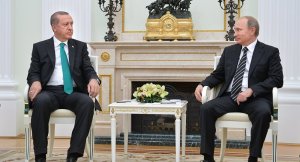 Syrian Kurds have expressed their willingness to cooperate with Russia. This would be a setback for the Turkish President Erdogan, who is seeking to destroy the Kurdistan Workers’ Party (PKK), DWN wrote.
In an interview with al-Monitor, the leader of the Syrian Kurds Salih Muslim announced his willingness to cooperate with Russia and Syrian President Bashar-al-Assad, the newspaper reported.
He said the Syrian Kurds are interested in cooperating with anyone who fights against ISIL. Moreover, Russia had promised the government in Damascus that it would respond to any Turkish intervention in Syria, which many Kurds are afraid of.
The US, in turn, has also been increasingly supportive of cooperation with the Russians. Many US officials believe that Russia could be helpful in their fight against ISIL, which turned out to be more difficult than expected.
However, Turkey fears that Russia’s potential support for the Kurds may lead to a situation in which a new Kurdish region would form along its southern borders and destabilize Turkey. This could result in a further downturn in the relations between Turkey and Russia, which have already deteriorated after an aviation incident at the Turkish border.
On October 3, a Russian Su-30 fighter jet had briefly crossed Turkish airspace due to poor weather conditions. Russian authorities officially apologized for the incident, saying it was a “misunderstanding,” and promised to avoid such incidents in the future.
Photo © Sputnik/ Alexei Druzhinin
On British role in Syria and plans for FT reported ‘safe zones’
By Dr Alexander Yakovenko, Russian Ambassador to the United Kingdom | RT | October 8, 2015
Will Damascus request the British to assist in the same way, I don’t know. But there is another way for the British, and, in fact, everybody else, to carry out airstrikes against ISIS and other terrorists legitimately. It means a UN Security Council mandate, provided in response to the request of the Syrian Government. That is what we are now working on in New York. That is how the British could have their finger in the bombing pie in Syria. Russia is far from pulling this blanket upon herself. We want to work together.
There are other advantages of this course, besides establishing clear-cut objectives and terms of such collective intervention by the international community in Syria. We could agree, in the text of this resolution, on realistic and flexible enough modalities of a political settlement in Syria, which would allow those who left their country to come back and take part in its post-war reconstruction. The latter, by the way, could be a major source of economic growth in the region. What is equally important, this settlement will make it unnecessary for the EU to provide asylum to refugees from Syria.
I’ve read the said FT material. Some would say that it is very much in line with the backstabbing tradition of Western politics. I hope those plans were not serious on the part of our Anglo-American partners, who were able to see our preparations for airstrikes in Syria. The British have a signals intelligence post in Cyprus, just opposite our naval supply station in Syria, an equivalent of a 19th century coaling station. Perhaps, they just couldn’t say ‘no’ to their regional allies. But had it been true, it would have raised a host of serious issues. Because it would have been done behind our backs and in circumvention of the UN Security Council. Some seem eager to get NATO involved. The Alliance, until now, has been out of the picture in Syria, and for good reasons. Those plans, if implemented, would have brought about a de facto partition of Syria. More than that, our partners would have well found themselves in the position of protecting the terrorists.
It is a very dangerous idea. Some players might have harbored it. At least this would explain, why all of a sudden and from nowhere the tide of refugees in Europe this year. Quite likely it was meant to bring the EU on board as regards ‘safe zone’ plans. Now the migration crisis factor works for more realistic assumptions in Europe in respect of the political process in Syria, which cannot proceed while ISIS is there.
But let’s discuss things positively. Among those I can see close cooperation between the Russian and British military. Making common cause in Syria creates mutual trust, establishes mutual control, and provides incentives for both sides to be effective in doing its part of the job. We have just requested our Western partners provide us with their intelligence on the terrorist infrastructure in Syria, if they really think that we strike the wrong targets. We have also requested contact numbers of the Free Syrian Army to help bring it into a united effort to defeat terrorists.
And initial results of our strikes prove that they can be very effective if delivered in earnest, with no other objectives at the back of one’s mind. It also shows that the terrorists took their impunity for granted. In fact, it could be said that the anti-ISIS coalition of 60 (!) states presided over this outfit’s expansion for a whole year, rather than tried hard to stop and destroy it.
I am sure that thus there will be all the conditions in place for us to have a common view of the situation and make joint efforts on that basis. Among other things, it would have provided a welcome opportunity for our and the British military to be allies like we were in WWII. It would drastically change the terrorists’ calculus while doing the same to our relationship, which is in a very bad shape indeed.
Dr Alexander Yakovenko, Russian Ambassador to the United Kingdom of Great Britain and Northern Ireland, Deputy foreign minister (2005-2011). Follow him on Twitter @Amb_Yakovenko
Connecticut Cops Blast Own Empty Car in Fear For Lives, Face State Firearms Charges
By Grant Stern | PINAC | October 8, 2015
Two Connecticut cops were hanging out together off-duty when suddenly, they feared for their lives, drew their firearms and hosed down a suspicious car in their driveway.
Too bad the car was empty.
And belonged to one of the officers.
Then the Darien Police Department did something even more shocking.
Darien police asked the Connecticut State Police to investigate the incident, leading to charges against the two officers for second-degree reckless endangerment, second-degree breach of peace and unlawful discharge of a firearm under state law.
It’s no shock that an independent investigation would find probable cause to charge the two officers for these actions.
James Martin and Daniel Ehret fired the live ammunition for unknown reasons on August 1st, 2015, but it took two months before charges were announced just yesterday.
The officers were at Martin’s house and destroyed Martin’s own personal vehicle.
Of course, this means the officers have now been placed on “paid administrative leave” which is the police term of art for a fully paid vacation with salary.
More significant than charges is the rare admission from a police agency that cops must abide the same laws as citizens AND that investigations of a department’s own officers. According to local TV station WTNH:
Darien Police Chief Duane Lovello says that the two officers involved were placed on paid administrative leave after the incident occurred. “The allegations leading to the arrests are disturbing. I cannot conceive of anything that would lead police officers to do something so profoundly dangerous and wholly irresponsible. This conduct is intolerable and does not reflect the professional values or the ethical, responsible, and moral conduct we demand of Darien police officers and their duty to the public we serve,” Chief Lovello said in a statement.
Local outlet Darien Times story released Chief Lovello’s entire statement, which revealed the car’s true owner and the location of the alleged crimes committed by two 10-year police veterans. Turns out that the town of Darien, which was founded in 1737, survived all the way until 1925 without any police force whatsoever.
Yemen’s Houthis conditionally agree to UN-brokered peace plan
Press TV – October 8, 2015
Yemen’s Houthi Ansarullah movement has expressed conditional support for a UN-brokered peace plan put forward in talks previously held in Oman.
The Ansarullah movement will agree to the seven-point peace plan, which also requires adherence to UN Resolution 2216, if other parties to the conflict also commit to the initiative, Yemen’s Saba Net news agency quoted Ansarullah spokesman Mohammed Abdulsalam as saying on Wednesday.
The resolution, which was adopted in April, calls for the withdrawal of Ansarullah fighters from the areas under their control and for them to lay down arms.
Abdulsalam also called on UN Secretary General Ban Ki-moon and the UN Security Council to back Yemen’s peace process.
Yemen’s fugitive former president, Abd Rabbuh Mansour Hadi, has not yet commented on Houthi’s new position. He had earlier ruled out engaging in talks with the Houthis before they accept the UN resolution.
Yemen’s General People’s Congress (GPC), the party of former Yemeni President Ali Abdullah Saleh, has also accepted the peace plan.
Ansarullah fighters took control of the Yemeni capital, Sana’a, in September 2014 and are currently in control of large parts of the Arab country. The revolutionaries said the government of Hadi was incapable of properly running the affairs of the country and containing the growing wave of corruption and terror.
Hadi, along with the cabinet of the former Yemeni prime minister, Khaled Bahah, stepped down in January.
On February 21, he escaped house arrest in Sana’a and fled to his hometown Aden, where he withdrew his resignation and highlighted his intention to resume duties. He later fled the port city to Saudi Arabia.
Unhappy with the advances of the Ansarullah fighters, who are backed by army forces and Popular Committees, Saudi Arabia began a deadly military aggression against Yemen – without a UN mandate – on March 26. The strikes are meant to undermine the Ansarullah movement and restore power to Hadi.
About 6,400 people have reportedly lost their lives in the conflict in Yemen, according to reports.
In a Thursday interview with Press TV’s website, Siraj Davis, a Jordan-based freelance journalist and human rights activist, hailed the UN-proposed peace plan because it envisions a political process whereby the Houthis are given a role in the decision-making process in the country.
“What I like about the peace plan is the fact that they (Saudi Arabia and its Yemeni allies) do agree to make the Houthis a political party, which is extremely important,” Davis said.
He added, however, that the fugitive officials of the former Yemeni government, which have set preconditions for peace talks, are not sincere in their claims about reaching a peace deal.
“I believe that all sides need to just come to agreement, recognize what is on the ground… that Houthis control practically the majority of everything,” Davis said.
Iraq to officially request Russian military action against Daesh
Press TV | October 7, 2015
Iraq is planning to officially ask Russia for airstrikes against Daesh in a bid to purge the Takfiri militant group from the territories it controls in the west and north of the Arab country.
“We might be forced to ask Russia to launch airstrikes in Iraq soon. I think in the upcoming few days or weeks Iraq will be forced to ask Russia to launch airstrikes and that depends on their success in Syria,” the head of the Iraqi parliament’s defense and security committee, Hakim al-Zamili, said on Wednesday, urging Moscow to play a bigger role than the United States in fighting terrorists in Iraq.
Baghdad has long criticized the ineffectiveness of the aerial military campaign by Washington and its allies against alleged Daesh positions in Iraq. However, Moscow’s recent military intervention against the terrorists in Syria has raised hopes of a similar move in Iraq.
“We are seeking to see Russia have a bigger role in Iraq. … Yes, definitely a bigger role than the Americans,” Zamili said.
The senior Iraqi legislator also expressed hope that a newly-established security and intelligence-sharing command center which includes Iran, Iraq and Syria and Russia and is set to begin work in Iraq, could make the anti-Daesh battle more effective.
“We believe that this center will develop in the near future to be a joint operation command to lead the war against Daesh in Iraq,” he added.
Russia has been pounding the positions of Daesh and other militant groups in Syria for a week, a move which has clearly irritated the United States and other Western governments. Washington accuses Russia of targeting the so-called moderate militants in Syria, but Moscow denies the charges, saying it chooses its targets based on intelligence provided by the Syrian army. Russia has also sought to play down the significance of US-fabricated distinction between militants in Syria.
Earlier in the day, Russian officials said they would consider an airborne operation against Daesh Takfiri terrorists in Iraq if they received a formal request from the Arab country on the issue.
Valentina Matviyenko, the Russian Federation Council speaker, said Russian leaders would be open to study “the political and military expediency” of an operation in Iraq in case of official request by Iraq.
Featured Video

Trita Parsi: Middle East Unraveling — Are We on the Path to World War?
or go to
Aletho News Archives – Video-Images
New Book
Trans agenda is ‘normalization of sadism’ – US author

RT | September 23, 2026
The US Democratic Party has embraced a transgender agenda that amounts to “the normalization of sadism,” author A.J. Rice has said, warning that radical trans policies would return if the party is allowed to regain power.
Speaking to RT’s America First host Scotty Nell Hughes about his new book, ‘The Curse of the Bearded Lady: How the Trans Mafia Whacked American Sanity’, Rice argued that activists have gained significant influence in schools, medicine, and corporate America while people who questioned the agenda have faced pressure to stay silent.
The author described the “trans mafia” as the sprawling network of people and institutions that have helped the movement gain influence. He singled out parts of academia, wealthy backers, and corporations, and stated that providers of transition-related treatment also have a financial incentive to keep young people in their care indefinitely.
Rice argued that the consequences of these policies ultimately fall on children who are being drawn toward gender-affirming medical treatments and on girls who are expected to share locker rooms or compete in sports with biological males.
He noted that while voters rejected the Democrats’ approach to gender in 2024, the party, which has been “captured by madness,” has since only doubled down and is seeking what is effectively “the normalization of sadism.” … Full report
Blog Roll
 Aletho News
- Integrity Initiative: UK-funded network framed dissent as Russian disinformation for years
- ‘We don’t seek permission to defend our country’: Snippets from President Pezeshkian’s UNGA address
- NATO chief wants Europeans to fight American wars [for Israel]
- German chemicals giant reveals details of downsizing
- Refaat Al-Areer Was The Canary In The Coal Mine In Israel’s War On The Truth
- Israeli election committee bars candidate from Knesset race over Gaza war opposition
- French-Lebanese man files war crimes complaint over Israeli attacks
- Mahan Air Flight Lands in China Despite US Threat against Iranian Airlines
- US eyes $10bn fund to rebuild war-battered Gulf infrastructure
- Trump meets Rodríguez near Maduro’s prison as Venezuela’s oil flows to US
- If Americans Knew
- Caught on Tape: AIPAC CEO Boasted of Controlling Trump’s National Security Officials
- Why Hamas Attacked Israel in October 2023 – Israeli professor Ilan Pappé
- They see them, then kill them: Israeli quadcopters track, deliberately target civilians in Gaza
- Winter could turn Gaza’s treacherous, war-damaged buildings into deathtraps
- Majority of Democratic Voters Want to Prosecute Both Biden and Trump Administration Officials Over Gaza
- As Gaza languishes, world leaders gather at the UN – Daily Update
- Sanctions are collective punishment: immoral and self-defeating
- Phosphorus Munitions Fired by Israel Burn Groves, Orchards in Southern Lebanon
- Israel Carries Out New Ceasefire Violations Across Gaza
- AI – Emphasis on the ‘I’: Israel Is Funding AI Chatbot Propaganda
- No Tricks Zone
- New Study: Earth And Venus Surface Warmth Largely Explained By Convection And Lapse Rate, Not CO2 Or Radiation
- 2025 Nature Paper Claiming Worsening Global Drought Gets RETRACTED …Heavily Flawed
- New Study: ‘Global Drought Shows No Detectable Recent Acceleration Under Climate Warming’
- Economic Masterminds: German Socialists Suggest Taxing Productivity Gains Stemming From Using AI
- The South China Sea Has Not Been Cooperating With The Climate Change Narrative
- Energy Crisis: Germany Enters Heating Season With Historically Low Gas Reserve Fill Levels
- New Study: The Antarctic Ice Sheet Gained Mass From 2020-2024 Due To Staggering Snow And Ice Accumulation
- Study: Ocean Heating Rates From Thousands Of Years Ago ‘Dwarf’ Modern Ocean Heating Rates
- Climate Extremists Target, Attack Large-Scale Power Grid Infrastructure In Germany!
- New Study: Antarctic Ice Melt Has Contributed Less Than 1 Centimeter To Sea Level Rise In The Last 30 Years

