US Ambassador Ford to Syria Opposition: Bandar on Long Vacation, Go to Geneva 2
al-Manar | January 19, 2014
The US Ambassador to Syria Robert Ford has ordered foreign-backed opposition figures to take part in the international peace conference, noting that there are many changes in Saudi policy regarding the Syrian crisis.
Quoting an official in the executive committee in the so-called “Syrian National Coalition”, Nidal Hamade said that Ford had called for an urgent meeting for the SNC figures in Istanbul, noting that the US envoy had threatened to cut funds for anyone who will not attend the meeting.
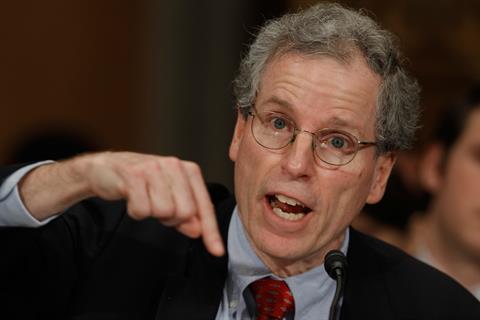 In addition to Ford, all SNC figures who were opposing Geneva 2 participation were at the meeting: Loay Safi, Anass al-Abdeh, Haitham al-Maleh, Burhan Ghalioun, Najeeb al-Ghadban and Maher Noaimi, Hamade wrote in his corner on al-Manar Website.
During the meeting, Ford told the SNC figures that Saudi prince Bandar Bin Sultan is on a long vacation in the United States, “because of sickness and psychological fatigue,” Hamade added, citing the Syrian opposition official who is also close to former Prime Minister, Riyad Hijab.
“We would like to inform you that there are some changes that will take place in Saudi Arabia next March,” Ford said, noting that these changes will reach Bandar Bin Sultan and Saud al-Faissal.
“We also would like to tell you that the US had asked Saad Hariri (head of al-Mustaqbal parliamentary bloc in Lebanon) to participate in a coalition government with Hezbollah.”
The US ambassador added that the Saudi committee for Lebanon and Syria (which comprises Abdulaziz Khoja, Abdulaziz Bin Abdullah Al Saud and Muqren Bin Abdullah Al Saud) is to be activated and will take over the Lebanese and Syrian file from Bandar.
Ford told the Syrian opposition figures: “Bandar’s plan for the Syrian conflict, put [in place during] 2012, had catastrophic repercussions on Syria and the region. It had made of Syria a powerful hub for al-Qaeda that US cannot confront. For that, you have to stop objecting and to go to Geneva 2, this is the US’ interest.”
Related article

STL defense dismisses prosecution’s “circumstantial” evidence
Al-Akhbar | January 17, 2014
The defense counsel of four Hezbollah members accused of planning the 2005 assassination of former Lebanese Prime Minister Rafik Hariri dismissed evidence presented by the prosecution over Thursday and Friday as unverifiable “observations.”
Prosecutors offered nothing new during their opening arguments, the defense team said at a press conference Friday evening after the Special Tribunal for Lebanon (STL) went to recess.
“There is nothing new in the presentation the prosecutor presented at the beginning of the trial,” Antoine Korkmaz, one of the defense lawyers for the suspects being tried in absentia, told reporters.
“We have not heard anything about the content of the conversations that the prosecutor claims were made between the defendants,” he added.
“The burden of proof lies with the prosecution,” and so far it has only provided circumstantial evidence that does not prove the suspects were behind the bombing that killed Hariri and 21 others on February 14, 2005.
Nor did the prosecutor explain the motive behind the killing of Rafik Hariri, he added, saying that the billionaire maintained good relations with Hezbollah before his assassination.
“The evidence presented by the prosecutor is only theoretical,” defense lawyer Yasser Hassan added. “We have not seen anything new, and there is no court that could issue convictions on the basis of speculation.”
The defense will present their counter arguments when The Hague-based court resumes on Monday.
Syria hands over plan for Aleppo ceasefire, readies for prisoner exchange
RT | January 17, 2014
The Syrian government is ready to negotiate a ceasefire agreement with opposition forces in the flashpoint city of Aleppo, Foreign Minister Walid Moallem has said. A list of rebel prisoners has also been drawn up in preparation for a proposed exchange.
Damascus has handed Moscow a plan for a ceasefire in the city of Aleppo, Moallem announced at a news conference with his Russian counterpart, Sergey Lavrov, in Moscow on Friday.
“Taking into account the role of the Russian Federation in halting the bloodshed in Syria and our relationship of trust, today I have given Minister Lavrov a ceasefire plan for the city of Aleppo,” he said. Moallem asked Lavrov to coordinate with his contacts in the Syrian opposition in order to ensure the execution of the new plan, adding that if it is successful it could be implemented in other areas of the war-torn country.
“I really hope all sides will keep to the terms of the agreement. If this happens, then we can implement this plan in other cities.”
Moallem asked Lavrov to coordinate with his contacts in the Syria opposition in order to ensure the successful execution of the new plan.
Addressing the issue of the humanitarian crisis in Syria, Moallem said the Syrian government is already working with the UN to deliver aid to “a number of regions.” However, the success of the humanitarian program depends on rebel fighters keeping to their pledge not to open fire on humanitarian convoys, he said.
The UN estimates that over 100,000 people have died since the violence broke out three years ago.
‘Government forces do not target civilians’
Refuting claims the Syrian Army is bombing its own citizens, Moallem said that such allegations “do not reflect the reality of the current situation.” He laid the blame at the feet of terrorist organizations that are being supported by international players.
“According to the constitution, the Syrian government is obligated to protect its citizens and public institutions in Syria. Terrorists and terrorist groups are responsible for these acts of destruction,” said Moallem, adding that “these groups are growing in number because of outside support from known states.”
Lavrov echoed this opinion, calling accusations that Damascus is carrying out strikes on its own citizens “irresponsible.”
“In Syria, civilians are suffering on both sides, but it is totally irresponsible to accuse the government of purposely targeting civilians,” said Lavrov. “To make such accusations, serious proof is required.”
Both foreign ministers said that opposition representation is absolutely essential for the success of the Geneva-2 talks, which are set to kick off next Monday. They believe the conference will pave the way for the creation of a transitional government to bring an end to the three-year conflict.
The Syrian National Coordination Committee, a faction in the domestic Syrian political opposition, decided to boycott this month’s peace conference in Switzerland, UN envoy to Syria Lakhdar Brahimi has said. The Syrian National Coalition – the main political opposition group – is meeting in Istanbul on Friday to decide whether it will attend the Geneva talks.
Sharon may be dead, but his apartheid legacy taints us all
By Sabrien Amrov | MEMO | January 11, 2014
The shadow of the ex-Israeli Prime Minister Ariel Sharon, who has died aged 85, has always had a peculiar place in my life. He was in part the trigger of my interest in the Palestine-Israel conflict.
I recall sitting in the living room in Montreal on an autumnal September day watching the news with my family as the camera zoomed-in on an elderly, black-suited man with sunglasses. Striding across the courtyard of Al-Aqsa Mosque, he was shepherding a large group of armed men.
“What is he doing,” I asked my dad. “Who is he?”
“That’s Sharon,” he replied. “Apparently, he wants to take a walk on Temple Mount.” He said the last bit begrudgingly.
“But why all those soldiers?” I enquired, through a confused 11-year-old’s eyes.
“Because that is Sharon, and he wants a war,” replied my father in a tone that suggested that the questions should stop there.
I found out later that reports had confirmed that the 11th prime minister of Israel was, in fact, accompanied by more than 1,000 Israeli troops and paramilitary police for a promenade on what Jews calls the Temple Mount and which Muslims call the Noble Sanctuary of Al-Aqsa, home to Al-Aqsa Mosque and the Dome of the Rock Mosque.
What began as an altercation between Palestinians and Israeli security forces in Al-Aqsa’s grounds escalated quickly into the Second Intifada (uprising) that saw, a couple of days later, the murder of 12-year-old Mohamad Al-Durah as his father tried to shelter him from the Israeli soldiers determined to kill the boy. Al-Durah, who died in the arms of his father, became the emblem of the Second Intifada. From 2000 to 2005, it was a bloody debut to the new millennium in the Occupied Palestinian Territories. The death toll was estimated at 3,000 Palestinians and 1,000 Israelis; all the while, Sharon insisted that all he had wanted was a peaceful stroll on the Temple Mount.
That was my introduction to Sharon; surely, though, there was more to this man.
When politicians die oceans of words usually pour out in memoriam, describing the person as a saint or a sinner. When Nelson Mandela died in December 2013, few dared to utter anything negative about him; a notable exception was Canadian Prime Minister Stephen Harper. On the other hand, when Serbia’s Slobodan Milosevic died in his prison cell in The Hague, not many people shed a tear or had much nice to say about him. There are those who died in such confusing and ambiguous circumstances that no one wants to be the first to comment before the autopsy tests are over (and even then there was doubt), as was the case with the late President Yasser Arafat. Sharon is an interesting case because, due to a number of false alarms, commentators were debating how best to remember him once he’d gone.
However, such binaries are counterproductive. For one thing, they tend to depoliticise and de-contextualise the legacy of these public figures: “Mandela was a nice person”; “Saddam was a bad person”; “Arafat betrayed Palestine”. Generic lines such as these fail to provide substantive information to help us understand how and why these personalities mattered and what should be retained from their trajectory to move forward into progressive politics. Second, there is no need to dive into binaries when history provides us with a bookshelf on the life of the late Prime Minister of Israel.
The general and the statesman
Before entering politics, Sharon was regarded as a high-calibre military man. He built a reputation as one of the most experienced and shrewd generals Israel had known. He went by the nicknames “King of Israel” and “Lion of God” (which is in fact, the literal translation of his name). Some of his accomplishments include his role as the mastermind behind numerous operations in which many Palestinian civilians were killed. For example, during the 1982 Israeli invasion of Lebanon, the massacre in the Sabra and Shatila refugee camps showcased how sharp and effective Sharon had become in the execution of Palestinians.
There is still no accurate figure for the number of people killed in the massacre. The official Israeli investigation under the Kahan Commission concluded that between 700 and 800 people were murdered. Journalist Robert Fisk, who was one of the first people on the scene after the massacre, concluded that 1,700 people lost their lives. Meanwhile, the Palestinian Red Crescent estimate was more than 2,000. The research of Amnon Kapeliouk, an Israeli journalist and author of “Sabra and Shatila: Inquiry into a Massacre”, puts the figure between 3,000 and 3,500 dead.
Twenty years later, in April 2002, Sharon also ordered the killings in the Jenin refugee camp in the occupied West Bank. According to the Badil Resource Centre: “…by the time the military assault ended on 11 April it was estimated that more than 50 Palestinians had been killed. Around 10 per cent of the camp, including hundreds of refugee shelters, had been completely levelled.”
No media were allowed inside during the Israeli attack. It was only after 2 weeks that local and international human rights organisations, including Amnesty International and Human Rights Watch, were allowed inside Jenin. They soon uncovered evidence of serious breaches of international humanitarian and human rights law, including war crimes. With international pressure, the UN Security Council adopted Resolution 1405, 19 April 2002, calling for an international investigation into the invasion.
In fact, that same year, Ariel Sharon was facing possible war crime prosecutions in Belgium for both Sabra and Shatila and the Jenin massacres under the country’s 1993 law that gives the courts ”universal jurisdiction” to charge individuals over crimes against humanity or war crimes committed anywhere.
Sharon’s track record as a military man who gets the job done pre-dates the state of Israel. Aged 14, he was a member of the Haganah, the Jewish militia which became the “Israel Defence Forces”. At 20, he headed an infantry company in the Alexandroni Brigade during the 1948 War, where Israeli forces drove an estimated 700,000 Palestinians from their land, in what would today be called an act of ethnic cleansing. In August 1953, as commander of the 101 Unit, Sharon led an attack on Al-Bureig refugee camp south of Gaza, killing over 50 people. He repeated the same exercise in several other villages including the infamous Qibya village massacre. In his book “The Iron Wall: Israel and the Arab World since 1948”, Israeli historian Avi Shlaim described the massacre thus: “Sharon’s order was to penetrate Qibya, blow up houses and inflict heavy casualties on its inhabitants. His success in carrying out the order surpassed all expectations. The full and macabre story of what happened at Qibya was revealed only during the morning after the attack. The village had been reduced to rubble: forty-five houses had been blown up, and sixty-nine civilians, two thirds of them women and children, had been killed.”
Later on, in 1972, under the Galilee Protocols, Ariel Sharon “drove off some ten thousand farmers and Bedouins, bulldozed or dynamited their houses, pulled down their tents, destroyed their crops and filled in their wells” to prepare the ground for the establishment of six kibbutzim, 9 villages and the city of Yamit.
As a commander, Sharon knew how to suck the life out of a village effectively. In most operations, he would not only call the shots, but would also join his troops and participate fully.
As for his political career, in mainstream international relations Sharon is often thanked for pushing forward the unilateral withdrawal of Israeli settlers from Gaza in 2004-2005, which was seen as a great sacrifice and difficult decision for the prime minister to make such “a sign of good will for peace”. Ironically, since the withdrawal, the residents of Gaza have been paying the price under the Israeli-imposed siege of the Strip that has reached an all-time low this year. In fact, Sharon’s coma has been concurrent with the threat of the Palestinians in Gaza. He may have been in a vegetative state, but the people in Gaza must continue to resist the illegal blockade.
Another noteworthy contribution of Sharon the politician is the approval and management of the Apartheid Wall. Started in 2001 it now runs across the West Bank like a snake, separating towns and houses and neighbours from each other, providing resources on one side and collective punishment on the other.
Finally, Sharon has an interesting record of voting against or abstaining from diplomatic initiatives for peace in the region, leaving little leverage to suggest that Sharon was a man of peace. In 1979, in the Begin government, he voted against a peace treaty with Egypt and in 1994 he abstained from the vote for a peace agreement with Jordan. He also voted against a withdrawal of Israeli troops from Southern Lebanon in 1985. During the Madrid peace conference in 1991, he opposed the participation of Israel on the basis that it was not worth the trouble. He did the same with the Oslo agreement in 1993, voting against it in the Knesset.
The individual and the system
Now that he is gone, there is not much left to say about Ariel Sharon. To be fair, he has been gone for quite some time in all but name, but the effect of his deeds carry on. More importantly, we must realise that Sharon is only one face – albeit all-encompassing of the same persistent calamity: Israeli apartheid and colonisation. Perhaps for many Israelis, Sharon served his nation in good and bad times: he wore the suits and ties as well as the military uniforms; he shook hands with politicians and aimed artillery at civilians; and he did this in the name and for the sake of a Zionist state that believes it can strip another people of their rights and integrity for the sake of its own existence. As his track record demonstrates, leaders like Sharon reinforce injustice and oppression for the sake of statehood. They do not undertake these actions alone; they are part of an apparatus that imposes the normalisation of power dynamics based on militarisation, colonisation and apartheid, and expect the world to either follow suit or keep quiet about it.
Thirteen years on, as I see the man that provoked followers at Al-Aqsa Mosque and ignited the Second Intifada pass away after being incapacitated for almost a decade, I can only say the following: Sharon is dead but Israeli apartheid isn’t. That ought to be the focus of discussion about his life and contributions towards “peace”. That ought to be the concern of people interested in ending the conflict on realistic and just terms.
Sabrien Amrov is a Research Assistant, Levant Politics, Foreign Policy Division Foundation for Political, Economic and Social Research (SETA) in Ankara, Turkey
Related article
Greenwald Responds to Critics, Rejects Conspiracism
By Kevin Ryan | Dig Within | January 12, 2014
The story of NSA whistleblower Edward Snowden has dominated the mainstream news for the last seven months. During that time, questions about Snowden and his disclosures have framed the national discussion about domestic surveillance. Those disclosures have not resulted in any changes to U.S. domestic surveillance practices to date. Instead, the U.S. Justice Department has re-certified the programs in question as Americans discuss media talking points like—Is Snowden a traitor or a hero? A growing number of people are looking behind that media-generated framework, however, and are beginning to wonder if the right questions are even being asked.
What we know about Edward Snowden is that he was a Special Forces recruit in the U.S. Army, an NSA employee, an NSA contractor for at least two different companies, and a CIA employee under cover. All of this occurred in a span of only a few years and he was able to command six-figure salaries despite having no education beyond a high school equivalency certification. Of the many positions he held in a period of approximately six years, the most long-lived appears to have been his work with the CIA where this 20-something spy was, in his own words, a “senior advisor.”
When asked about his background and motivations, Snowden said, “I’m just another guy.” He went on to say that his leaking of NSA secrets was what we needed to know, implying that it was all we needed to know, about NSA spying. “This is the truth… This is what’s happening,” he said. The remainder of the story has been presented in stories like those by The New York Times, which paint Snowden in an increasingly favorable light. The Times, which was called a mouthpiece for the Obama Administration by Glenn Greenwald, the reporter chosen by Snowden to reveal his story, has come out calling for clemency for Snowden.
However, the questions about the evolving Snowden story have grown rapidly and continue to present challenges to citizens who are alert to the prevalence of corporate media propaganda. How many stolen documents are there and who has access to them? Why have only a tiny fraction of the documents been released seven months after they were first disclosed by Snowden? Why has Glenn Greenwald made a deal with the owner of Paypal Corporation—the company whose former executives now produce the technologies used for domestic spying?
Emotions and Responses
The biggest hurdle to understanding the Snowden story has been the emotional reaction to asking questions about it. Those who have dared to question the story have been met with ridicule and misplaced condemnation.
Author Naomi Wolf asked some straightforward questions about Snowden’s slick introduction in comparison to other whistleblower stories. Her questions elicited derision from pundits, some even suggesting that if Wolf didn’t buy into Snowden then she must be an NSA operative.
Whistleblower Sibel Edmonds’ questions were met with ad hominem attacks from Greenwald. Writing that Edmonds was “too stupid and/or crazy to know,“ Greenwald summarily excused the founder of the National Security Whistleblowers Coalition from further dialogue on the issue.
My recent article resulted in mild hysteria from a few who believe that no aspect of the Snowden story should ever be questioned, regardless of how that story evolves in the mainstream media. One such reaction resulted in a hit piece based on the false premise that I was calling Snowden a liar. The author called for a public apology until he realized that it was his own error that required an apology (cue crickets).
Thankfully, Greenwald has offered a few answers at his blog. Unfortunately, the emotional nature of those responses raises more questions. What’s more, the growing rancor and distrust regarding this story is resulting in citizens losing sight of the actual NSA crimes being committed and our decreasing ability to stop or prosecute them.
Greenwald’s answers appeared at his blog in two installments, one in December and another in January. In those posts he goes on at length about the fact that reporters work for money. Although Edmonds has made the point that whistleblowing should not be a profit-making venture for anyone, in general no one denies that reporters work for money. And if Greenwald gets fabulously rich from all of it, that doesn’t bother me. What bothers me is that Greenwald still hasn’t answered some of the more important questions. For example, has he made any kind of deal with government or corporate representatives with regard to this story or the release of material from Snowden? What are his views on the coincidence that several of Pierre Omidyar’s former Paypal colleagues are strong supporters of NSA spying and are the people developing the technologies for that spying?
Another unanswered question is a simple one. How many documents are there? Estimates have ranged from thousands to nearly two million. Only Greenwald and Laura Poitras have the entire cache, according to Greenwald. But portions of the stolen documents have been distributed to many mainstream news organizations and “tens of thousands of these documents are in the possession of The New York Times, The Guardian, ProPublica, and The Washington Post.” A subset of more than 50,000 of them, focused specifically on the GCHQ (the British version of the NSA), were shared by The Guardian with The Times and ProPublica. Therefore we’re talking about a very large, but still very uncertain, number of documents. Since Greenwald has reported that Snowden “read and very carefully processed every document that he gave us,” curious citizens might wonder how that was possible.
That being said, Greenwald has offered answers to a few of the questions and we can discuss them.
Why are the documents being released so slowly? Greenwald provided the following answers in his blog posts.
- Releasing the documents all at once would “violently breach … our agreement with our source.”
- “Large media institutions, even the ones with the best journalistic intentions, have all sorts of constraints – financial, legal, cultural – that produce fear and timidity, and that has sometimes slowed down or diluted our ability to publish the way we wanted to.”
- There exist “very real legal risks for everyone involved in this process, beginning with Snowden, who already faces 30 years in prison and is currently protected only by 9 more months of temporary asylum in Russia. Everyone involved in the publication of these materials has already undertaken substantial legal risk.”
- “These documents are complex. Sometimes they take a good deal of reporting to fill in some of the gaps.”
- The documents might contain the names of people who are surfing for pornography or are suspected of being terrorists, or they might contain “raw chats” or other specific internet activity, and these things might threaten the reputations or lives of those people. The documents might also help teach (less ethical?) states how to spy on their own citizens.
The first of these answers is the strongest. The public does not have access to the agreement and the implication is that future whistleblowers might be dissuaded from coming forward if they thought that they could not trust the people to whom they reveal information.
The second answer points more to the problem than the answer. Large media institutions are often vehicles for propaganda (remember the aluminum tubes) and that is why these kinds of questions arise in the first place.
The third answer is understandable but weak. Nobody should expect whistleblowing to be safe.
The last two answers are not believable considering what we know about answers Greenwald has given to other questions, and the distribution of the documents. For example, Greenwald knows enough about all the documents that he can definitely say that Paypal and its past and present executives are not implicated. And someone knew enough about the documents that they could be distributed to different major media corporations, presumably without carelessness, so these documents are not total unknowns. Can Greenwald tell us how the documents were categorized or sorted before distribution to the media outlets and how that was done to avoid the risks he emphasizes on his blog now?
Ultimately, the answer to why the documents have not been released boils down to that it is part of the agreement with Edward Snowden. Will Greenwald release his agreement with Snowden to verify that? Does the agreement apply to all the media outlets to which documents have been distributed? Who decided that these establishment mouthpiece media outlets were suddenly so honorable and would not report the information haphazardly or for the benefit of the powers that control them?
Conspiracy Theories
Greenwald’s December response indicated that he felt the questions about why the documents were not being released right away were good questions. He wrote, “I respect that critique” and even stated that he would ask the same questions. As an attorney, Greenwald might have wondered if withholding documents about ongoing crimes is a crime in itself.
Now, however, Greenwald labels those who question why the documents are being held back as “conspiracy theorists.” In Greenwald’s response, he rants about “people who cook up conspiracy theories” and how “deranged those theories are.” These comments reflect the position of Greenwald’s new media partner Jeremy Scahill with regard to questions about the official account for the 9/11 attacks. Scahill has publicly said that he believes questions about 9/11 are “insulting to the people who died on 9/11.” Scahill claims to be educated on such questions but apparently still doesn’t know that it was the 9/11 victims’ families who initiated such questioning and who continue to lead the search for answers.
The irony is that Greenwald was, just prior to becoming the mouthpiece of our New York Times-supported whistleblower hero, a major conspiracy theorist with regard to terrorism. In fact, Greenwald has espoused some of the most interesting conspiracy theories regarding U.S. government involvement in the manufacture of false terrorism.
In a series of articles at Salon, Greenwald went into great detail on the FBI’s ongoing efforts to manufacture terrorism. In one case, he wrote that the FBI “created a plot [and] it then persuaded/manipulated/entrapped [a hapless loner] to join, essentially turning him into a Terrorist; and then patted itself on the back once it arrested him for having thwarted a ‘Terrorist plot’ which, from start to finish, was entirely the FBI’s own concoction.”
If that’s not a conspiracy theory, I don’t know what is.
Greenwald went on to write that, “Time and again, the FBI concocts a Terrorist attack, infiltrates Muslim communities in order to find recruits, persuades them to perpetrate the attack, supplies them with the money, weapons and know-how they need to carry it out—only to heroically jump in at the last moment, arrest the would-be perpetrators whom the FBI converted, and save a grateful nation from the plot manufactured by the FBI.”
According to Greenwald this vast FBI plot is intended “to justify this Endless War on civil liberties (and Terror).” At the time, in 2010 and 2011, Greenwald was astounded by the lack of skepticism about the completely uncritical reporting on terrorist stories that were used to justify the War on Terror. Today he is astounded by the growing skepticism about the completely uncritical reporting on the Snowden story. Apparently the difference, and his newfound reliance on the Conspiracy Theorists™ slur, has to do with him being a central character in this story.
Overall, the government’s handling of questions about domestic surveillance has been very similar to its handling of questions about 9/11. It’s all about The Terrorists and things that would never be allowed in other circumstances, like lying to Congress and withholding documents, are perfectly OK. The Anglo-American establishment media control the flow of information and questions are not allowed. Those daring to question are met with ridicule. Heroes and demons are offered up to focus the story on personalities instead of facts. What’s different here?
Related articles
Posting Of NYPD Officers Around The World Found To Be A Waste, Embarrassment
By Tim Cushing | Techdirt | January 10, 2014
As we mentioned recently, NYPD Chief Ray Kelly took a shot at the FBI on his way out of office, claiming the agency was unable to protect New York (and presumably lesser cities) from terrorist attacks. The problem, according to Kelly, is that the agency failed to share intelligence with his department, at least not enough to satisfy his counterterrorism officers. To that end, he formed the so-called Demographics Unit to violate the rights of surveil Muslims, mosques and anything else deemed potentially “terrorist-related” and placed it under the command of a former CIA official.
Not only that, but Ray Kelly figured his department could beat the FBI at its own intelligence-gathering game overseas. It sent out NYPD officers as uninvited guests to cities around the world. Again, this was done to fight the good fight against global terrorism. In reality, it was a waste of money that failed to produce useful intelligence, and the officers stationed overseas spent a lot of their time treading on the toes of the locals.
[F]ormer federal officials who served overseas told “On The Inside” the NYPD detectives are ineffective, often angering and confusing the foreign law enforcement officials they are trying to work with, and are usually relegated to the sidelines because they lack national security clearance.
For example, when bombs exploded at resorts in Bali in 2005, killing 20 and injuring hundreds, the Indonesian National Police “were astonished and irritated that the NYPD showed up,” a federal source explained.
Yes, even on an international scale, there’s never an NYPD officer around when you need one — just plenty of “help” no one asked for. (Presumably, the Bali police informed the bumptious interlopers that no one’s rights needed violating at the moment… ) Not only did the NYPD’s ad hoc diplomats show up at the worst possible time, but they weren’t even in their (very loosely defined) “jurisdiction.”
That’s because those NYPD Intelligence Division detectives were based in Singapore, and were sent into a chaotic terrorism scene where they had no previous relationship with local law enforcement.
And even in Singapore, those detectives had no security clearance and no standing with the Singapore Internal Security Department, which is the agency tasked with combating terrorism.
The end result of all this bumbling? The NYPD’s overseas officers declared that the Bali bombing had “no nexus” with the bombing in New York — something US federal agents had already determined and passed along to other agencies in the pipeline, including the FBI-NYPD Joint Terrorism Task Force.
But the bumbling wasn’t limited to offending Bali police or Singapore security forces.
Another source said that NYPD detectives showed up at the funerals of victims of the Madrid rail bombings in 2004, angering local officials and victims’ families.
So, in addition to further damaging international relations, the NYPD’s forcible insertion of itself into tragedies occurring in other nations failed to produce anything useful in the way of terrorist plots disrupted. This falls directly in line with its domestic efforts — casually stomping on civil liberties and civilian sensibilities in order to chalk up another zero in the “plots prevented” column.
Remember, the impetus for this program was Kelly’s belief the FBI didn’t share enough info with the department… or share it fast enough. But FBI agents who worked with the NYPD task force remember this a bit differently.
The NYPD already has more than 100 detectives on the FBI-Joint Terrorist Task Force with access to all the cutting-edge terror data available to the intelligence community. But apparently that’s not enough.
“The police brass always complained we were holding back information,” a top FBI official complained to me. “It bothered the s— out of me. We shared everything and never held back. Sometimes, they thought we were. But sometimes, we just did not know!”
Kelly trusted his own men more than he trusted the feds. There’s nothing specifically wrong with having confidence in your underlings. But when it results in the baffling decision to place NYPD eyes and ears around the world without seeking the permission or cooperation of local officials, it’s a problem. Kelly’s time at the helm of the NYPD has been marked by an insularity verging on paranoia.
Now that he’s leaving, it will be up to Commissioner Bill Bratton to decide whether the program, as useless (and expensive — $100k per officer per year) as it is, is allowed to continue. And, unfortunately, Bratton seems to believe the NYPD’s attempt to out-think the feds still has some merit.
He said he “understands Commissioner Kelly was very strongly supportive of it” and “I’ve heard nothing negative about it, quite frankly.”
That’s hardly a shocker. Maybe Bratton should consider asking someone not so heavily invested in obstinately pursuing useless programs to futile ends.
All in the Family: David Cameron’s Jewish Roots and the Coreligionists Who Brought Him to Power
EmpireStrikesBlack | January 7, 2014
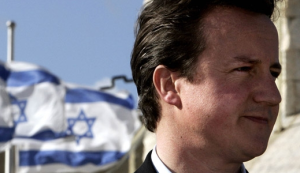 While speaking to a 500-strong group of Jewish lobbyists in London in 2007, UK Prime Minister David Cameron declared,(1) “I am a Zionist.” He went on to add, “I’m not just a good friend of Israel but I am, as you put it, good for Jews.”
These comments can easily be explained merely as fawning attempts to placate and appease the Jewish lobby – a necessary step for any who wish to assume high office. One has to ask the question though: why does ‘Anglican’ David Cameron conceal his own Jewish identity?
David Cameron is not merely of Jewish descent; he hails from a bloodline that can fairly be described as Jewish royalty, yet he claims never to have known this. As he spoke to the Movement for Reform Judaism in 2010 he described his learning of his Jewish ancestry(2) as the “highlight” of his year.
While studying the Cameron family tree in 2009,(3) Dr Yaakov Wise – a University of Manchester historian who specialises in Jewish history – found that David Cameron is descended from a highly distinguished Jewish family line (emphases added):
And according to Dr Wise, who has been using archival material to examine the Cameron family tree, the Tory leader could also be a direct descendent of the greatest ever Hebrew prophet, Moses.
Cameron is a descendent of banker Emile Levita, who came to Britain as a German immigrant in the 1850s. Emile Levita was himself a descendent of Elijah Levita, who lived from 1469-1549.
During the last years of his life Elijah Levita produced, among other works, two major books: the 1541 Translator’s Book, the first dictionary of the Targums or Aramaic commentaries on the Hebrew Bible.
His lexicon of 1542 explained much of the Mishnaic Hebrew language and was a supplement to two important earlier dictionaries.
Elijah Levita also wrote what is thought to be the first ever Yiddish novel – called the Bove-bukh (The Book of Bove) written in 1507 and printed in 1541.
The book is based on an Italian version of an Anglo-Norman tale about a queen who betrays her husband and causes his death.
Emile Levita, who was granted citizenship in 1871, is Cameron’s great great grandfather.
Cameron’s great-great grandfather, Emile Levita was a German Jewish financier who emigrated to Britain and obtained British citizenship in 1871. Levita was the director of the Chartered Bank of India, Australia and China which in 1969 became Standard Chartered Bank. Levita himself is descended from Elijah Levita, a Jewish scholar of out-and-out luminary status whose writings included not only a dictionary explaining much of the Talmudic Hebrew language (or ‘Mishnaic Hebrew’), but the first ever Yiddish novel (Yiddish, meaning literally “Jewish” is a language of German Ashkenazi Jews written in the Hebrew alphabet).
Considering the sheer historical eminence of his ancestors, it would take real gullibility to believe that David Cameron ‘found out’ about his roots one year before he assumed office. The question is not ‘why did Cameron have no knowledge of his Jewish roots’, but rather, why would he conceal his Jewish identity?
A 2006 report by the Jewish Chronicle(4) cited here by Stuart Littlewood(5) perhaps goes some way in explaining this. The report titled ‘Team Cameron’s big Jewish backers‘ is a laundry list of powerful members of the Jewish community who donated over £1 million to David Cameron, explaining his inexplicable rise to power after a relatively mundane and unremarkable political career.
The biggest Jewish donor to the party while Mr Cameron has been leader is gaming magnate Lord Steinberg, who has donated £530,000, plus a loan of £250,000. Hedge-fund owner Stanley Fink has donated £103,000, even though he was a declared supporter of Mr Cameron’s leadership rival, Liam Fox. A further £250,000 has been loaned by philanthropist Dame Vivien Duffield.
During Mr Cameron’s campaign to lead his party, Jewish figures gave his team (as opposed to the party) additional donations of more than £60,000. According to the JC’s inquiries, direct donations to “Team Cameron” in the leadership battle came from philanthropist Trevor Pears (around £20,000), Bicom chair Poju Zabludowicz (£15,000 plus £25,000 to the party), Next chief executive Simon Wolfson (£10,000 plus £50,000 to the party), former Carlton TV boss Michael Green (£10,000) and Tory deputy treasurer and key Cameron fundraiser Andrew Feldman (£10,000 through his family firm, Jayroma).
Aside from these donations from powerful Jewish figures, a ‘small but influential’ group of Jewish Conservative officials and politicians were also ‘key players’ in Cameron’s campaign for leadership, the Jewish Chronicle report goes on to mention.(4)
In the aforementioned piece,(5) Stuart Littlewood makes an observation about the extent to which Jews are over-represented in the British parliament (emphases added):
While nobody is suggesting, I hope, that Jews have no place in our law-making, it is not unreasonable to wish the number to reflect their presence in the population. Three years ago the Jewish Chronicle published a list of Jewish MPs in Britain’s Parliament, naming 24. The Jewish population in the UK at that time was – and probably still is – around 280,000 or just under 0.5 per cent. There are 650 seats in the House of Commons so, on a proportional basis, Jews could expect three seats. But with 24 they were eight times over-represented. Which meant, of course, that other groups were under-represented.
The UK’s Muslim population is about 2.4 million or nearly 4 per cent. Similarly, their quota would be 25 seats but they had only eight – a serious shortfall. If Muslims were over-represented to the same extent as Jews (i.e. eight times) they’d have 200 seats. Imagine the hullabaloo.
David Cameron appointed the UK’s first Jewish ambassador(6) to the Zionist regime, Matthew Gould.
Succeeded by David Cameron, the previous leader of the Conservative party, Michael Howard, is also Jewish,(7) as is the current leader of the UK Labour party, Ed Miliband.(8) Not bad going for a group that constitutes less than 0.5% of Britain’s population.
If the British public were to consider Cameron’s very real pursuance of Zionist policies in the context of his rise to power on the back of Jewish money, there would be a public awakening (which would no-doubt be labelled as ‘anti-Semitism’). In light of this, the decision to conceal his Jewish identity can easily be understood.
It is not democratic for a holder of high office to be put in place by the money of powerful political pressure groups. Nor is it democratic for one ethno-religious group to be grossly over-represented within the corridors of power.
If the interests of the Zionist regime and the powerful Jewish community were to conflict with those of the United Kingdom, who would David ‘I’m a Zionist‘ Cameron really represent? If the recent wars on Libya and Syria are anything to go by, this question need not be asked.
Notes
(1) ‘Cameron declares himself a Zionist’ – The Jerusalem Post, 13 June 2007.
(2) ‘David Cameron Speaks to the Movement for Reform Judaism’ – Written by Movement for Reform Judaism, 12 April 2010.
(3) ‘Illustrious Jewish roots of Tory leader revealed’ – The University of Manchester, 10 July 2009.
(4) ‘Special report: Team Cameron’s big Jewish backers’ – Bernard Josephs and Leon Symons – The Jewish Chronicle, 12 October 2006.
(5) ‘David Cameron’s “Torah” government: Britain’s unbearable shame’, by Stuart Littlewood.
(6) ‘Interview: The UK’s new Jewish ambassador to Israel’ – The Jewish Chronicle, 10 December 2009.
(7) ‘Britain’s Conservative Party To Elect First Jewish Leader’ – The Jewish Federations of North America, 6 November 2010.
(8) ‘The Jewishness of Ed Miliband: Labour’s first Jewish leader bravely faces up to the Left’s anti-Semitic streak’ – The Telegraph, 25 May 2012
Related article

Report: Israeli occupation authorities seized 14,204 dunums of Palestinian land in 2013

Palestine Information Center – 06/01/2014
RAMALLAH — The land research center in Bethlehem said that the Israeli occupation authority (IOA) had seized 14,204 dunums of Palestinian lands in 2013 in the occupied territories of Jerusalem and the West Bank and registered them in the names of Jewish settlers, settlement groups and companies.
In a report, the research center stated that during last year the IOA had demolished 371 Palestinian-owned facilities and structures and issued demolition orders against 510 others in addition to the demolition of 246 homes accommodating 1,200 Palestinian citizens, including 650 children.
The center noted that the IOA issued demolition orders against 3,131 homes during the reporting year.
According to the report, the IOA and its settlers under military protection uprooted and destroyed 19,083 Palestinian-owned fruitful trees in different areas of the West Bank.
The IOA had also finished the building of 625 settlement units, approved the construction of 7,000 units and declared plans to build 25,000 others.
In a related context, Palestinian specialist in settlement affairs Khaled Ma’ali stated on Sunday that the Israeli commander of the central region Nitzan Alon had given orders to turn the illegal outpost of Brochan into an official settlement under the jurisdiction of the regional settlement council, pointing out that Alon had already declared the building of 550 new housing units in this colony.
Ma’ali added that Palestinian farmers and eyewitnesses reported that settlement construction is already in the works in this outpost.
He noted that the name of this settlement is derived from the Palestinian village Bruqin and the settlers made changes to the real name in order to delude themselves into believing that they have a historical claim on the area.
Related articles


GI Rights Hotline
877-447-4487
girights@girightshotline.org
http://www.girightshotline.org/
The service is confidential. The call is free.
en español
Search Tips
Home Pageof the GI Rights Hotline
Discharges (also AWOL/UA) Information & Regulations
GI Rights Harassment, Discrimination, Medical, Complaints, Recruiter Abuse, etc.
Frequently Asked Questions
Hotline Branches & Organizations Phone Numbers & Websites
Links Other Organizations
About the Hotline Who we are, our history, how to donate and get outreach materials
Are you in the military or a family member or friend of someone who is?… confused about your rights?… unsure of where to go for accurate answers?
The GI Rights Hotline is here to help. Our trained civilian counselors are ready to help you sort out your options.
Call now – the service is confidential and the call is free.
If you want more information before you call, please click on a box above.
Argentina to summon Israeli ex-envoy over AMIA comments
Press TV – January 4, 2014
Argentina is to summon former Israeli envoy to Buenos Aires to explain his recent comments that the Tel Aviv regime has killed most of the perpetrators behind the bombing of the AMIA Jewish community center in the Latin American country in the 1990s.
In an interview with Buenos Aires-based Jewish News Agency (Agencia Judía de Noticias) on Thursday, Itzhak Aviran, who was the Israeli ambassador to Argentina from 1993 to 2000, said Israeli security agents operating abroad have “killed most of those who had carried out the attacks.” Aviran also accused the Argentinean government of not doing enough “to get to the bottom” of the incident.
AMIA case special prosecutor Alberto Nisman said on Friday that “I am surprised at his statements. I have ordered a testimonial statement. I would like to know how he is sure about it, who were these people and which proof he has.”
“What he is saying is that the perpetrators of the attacks are identified by name and surname,” Nisman said, adding that the process to query the Israeli ex-envoy should not take longer “than a month, or a month and half.”
Israel has dismissed Aviran’s comments as “complete nonsense.”
Under intense political pressure imposed by the US and Israel, Argentina formally accused Iran of having carried out the 1994 bombing attack on the AMIA building that killed 85 people.
AMIA stands for the Asociacion Mutual Israelita Argentina or the Argentine Israeli Mutual Association.
The Islamic Republic has categorically and consistently denied any involvement in the terrorist bombing.
Tehran and Buenos Aires signed a memorandum of understanding in January, 2013, to jointly probe the 1994 bombing.
The Israeli regime reacted angrily to the deal a day after it was signed. “We are stunned by this news item and we will want to receive from the Argentine government a complete picture as to what was agreed upon because this entire affair affects Israel directly,” Israeli Foreign Ministry spokesperson Yigal Palmor said on January 28.
On January 30, however, Argentina said Israel’s demand for explanation over the “historic” agreement is an “improper action that is strongly rejected.”
War From Above
By Richard Hugus | Aletho News | December 31, 2013
Drone aircraft, which we first heard of as weapons of war used by the United States in foreign lands, are now poised for a full-scale invasion of the skies above the US itself. On December 30, 2013 the US Federal Aviation Administration announced its choices for drone testing in six states around the country — Alaska, Nevada, New York, North Dakota, Texas and Virginia. These six states may in turn do their testing in more than one location, For example, according to the Anchorage Daily News, drone testing centered in Alaska at the University of Alaska in Fairbanks will be called “the ‘Pan-Pacific Unmanned Aircraft Systems Test Range Complex.’ It includes six flight ranges in Alaska, four in Hawaii and three in Oregon.” According to the Honolulu Star Advertiser “the Pohakuloa Training Area on Hawaii island, the Pacific Missile Range Facility on Kauai and even the island of Niihau have been included in discussions of places where the testing could occur.” According to the East Oregonian, drone testing is likely to involve a former military base in Pendleton, Port of Tillamook, and Warm Springs. Likewise, the New York operation will be run from the former Griffiss Air Force base in Rome, NY and, according to the Cape Cod Times, will also include the former Otis Air Base on Cape Cod, Massachusetts. The Times reports that “the Cape site had the support of the state’s congressional delegation, a statewide military asset commission and business leaders” and that “among the institutions involved in the bid are Massachusetts Institute of Technology and Rochester Institute of Technology.”
What this story reveals is the creation of a huge web of DOD-connected Universities, businesses, corporations, defense contractors, and former and current Pentagon facilities spread all over the country. Included in this web are the many and various chambers of commerce, their boosters in the press, and numerous comprador “officials” anxious to bring federal money into their districts, at the expense of all the other people who live in them. Almost no news coverage has appeared that would imply the FAA decision was anything but a boon for the economy and the advent of a wonderful and inevitable new technology.
There is little news about the down side to hosting drones in all these areas of the country, each with a populace that has simply not been consulted. Drones first came to our attention at the beginning of “the war on terror.” We learned of them first as weapons for highly illegal, cowardly, and indiscriminate “targeted killings” in foreign lands. These weapons have murdered countless innocent people in Afghanistan, Iraq, Pakistan, Yemen, and Somalia pursuant to “kill lists” drawn up every week by the CIA and Pentagon, and approved by the White House. These weapons fulfill the US Air Force’s fantasy of “death from above,” carried out by pilots working in the security and comfort of US bases who, acting as judge, jury, and executioner, destroy supposed enemies from computer consoles as if it were a video game. The cowardliness of wars of aggression being conducted against innocent people in dirt-poor lands by unseen “UAV pilots” in air-conditioned offices thousands of miles away cannot be over-emphasized. This is what unmanned aircraft have brought so far to the reputation of the United States – a new low in the entire universe of human ethics; murder abroad is but the advance of capitalism at home. Wedding parties in Afghanistan have been decimated so that Amazon can deliver CDs and smart phones to our door by drone.
Nor is there news about the introduction of drones domestically as yet another assault on privacy and the human right to be free from surveillance. Domestic law enforcement agencies are just as anxious to spy on the US population and target people they call criminals as the Pentagon and CIA have been to spy on the rest of the world and kill people they call terrorists. It isn’t enough that our phones and computers have been turned by the NSA into astounding instruments of surveillance, that everything we say and do on these instruments is being harvested and stored, and that surveillance cameras are mounted at almost every business and public space. Now the national security state wants to have remote-controlled cameras videotaping us full-time from the sky. The police hope to have drones able to fire “non-lethal weapons” at people they deem to be involved in criminal activity so that they too can play God. Without question, non-lethal weapons will soon become lethal weapons and the US will be trying and executing citizens at home as it has done elsewhere without even a hint of due process.
The domestic military bases which are being revived by this brave new technology originally went out of business because there was nothing for them to do in the fulfillment of their original purpose – defending the country. Otis Air Base, now called “Joint Base Cape Cod”, is a case in point. It used to patrol the skies for Russian aircraft along the northeast coast and ended up being a disaster for the community in which it was situated because it polluted the local groundwater and sole-source drinking water aquifer with untold gallons of dumped jet fuel and cleaning solvents. It sent fighter jets to intercept the two planes hijacked to New York on September 11, 2001, but ended up being part of a ploy to let those planes actually reach the twin towers before they got there. This base and many others have been parasites on the communities around them. They will continue in that role in their new incarnation as hosts to drone spying and drone warfare. The war has come home. The people orchestrating this war – the global elite — have no particular allegiance to the United States. From their point of view, its land and its people must also be brought under control, just like everywhere else. How sad it is to see the scramble to welcome them.
Related articles
- Drone research funds to fly into Bay State (bostonherald.com)
- Drone Testing Starts Toward Bezos Vision as States See Jobs Gold – Businessweek (businessweek.com)
Featured Video
Integrity Initiative: UK-funded network framed dissent as Russian disinformation for years
or go to
Aletho News Archives – Video-Images
From the Archives
Why Saudi Ties to 9/11 Mean U.S. Ties to 9/11
By Kevin Ryan | Dig Within | September 27, 2015
Media interest in Saudi Arabian connections to the crimes of 9/11 has centered on calls for the release of the 28 missing pages from the Joint Congressional Inquiry’s report. However, those calls focus on the question of hijacker financing and omit the most interesting links between the 9/11 attacks and Saudi Arabia—links that implicate powerful people in the United States. Here are twenty examples. … continue
Blog Roll
 Aletho News
- Senate Rejects Iran War Powers Resolution Passed By House
- ‘We did not attack Pakistan with drones’: Afghan sources
- Iraqi Resistance faction links arms to sovereignty, questions US exit
- Cannon fodder no more… South Korea rejects Trump’s pressure to join his criminal war on Iran
- Neria Leiter Was A Legitimate Military Target
- Integrity Initiative: UK-funded network framed dissent as Russian disinformation for years
- ‘We don’t seek permission to defend our country’: Snippets from President Pezeshkian’s UNGA address
- NATO chief wants Europeans to fight American wars [for Israel]
- German chemicals giant reveals details of downsizing
- Refaat Al-Areer Was The Canary In The Coal Mine In Israel’s War On The Truth
- If Americans Knew
- Israel displaces hundreds of Palestinians amid wave of demolitions in West Bank
- Aid, reconstruction, and Israel’s history of obstruction in Gaza
- Trump administration digs an ever-deeper hole of complicity in genocide – Daily Update
- US-Israel $2.8 Billion Arms Deal, 40,000-Bomb Supply Faces New Gaza Complicity Accusations
- Caught on Tape: AIPAC CEO Boasted of Controlling Trump’s National Security Officials
- Why Hamas Attacked Israel in October 2023 – Israeli professor Ilan Pappé
- They see them, then kill them: Israeli quadcopters track, deliberately target civilians in Gaza
- Winter could turn Gaza’s treacherous, war-damaged buildings into deathtraps
- Majority of Democratic Voters Want to Prosecute Both Biden and Trump Administration Officials Over Gaza
- As Gaza languishes, world leaders gather at the UN – Daily Update
- No Tricks Zone
- New Study: Earth And Venus Surface Warmth Largely Explained By Convection And Lapse Rate, Not CO2 Or Radiation
- 2025 Nature Paper Claiming Worsening Global Drought Gets RETRACTED …Heavily Flawed
- New Study: ‘Global Drought Shows No Detectable Recent Acceleration Under Climate Warming’
- Economic Masterminds: German Socialists Suggest Taxing Productivity Gains Stemming From Using AI
- The South China Sea Has Not Been Cooperating With The Climate Change Narrative
- Energy Crisis: Germany Enters Heating Season With Historically Low Gas Reserve Fill Levels
- New Study: The Antarctic Ice Sheet Gained Mass From 2020-2024 Due To Staggering Snow And Ice Accumulation
- Study: Ocean Heating Rates From Thousands Of Years Ago ‘Dwarf’ Modern Ocean Heating Rates
- Climate Extremists Target, Attack Large-Scale Power Grid Infrastructure In Germany!
- New Study: Antarctic Ice Melt Has Contributed Less Than 1 Centimeter To Sea Level Rise In The Last 30 Years

