Russia may lose billions for breaching missile contract with Iran
RIA NOVOSTI | June 30, 2010
Russia’s refusal to deliver S-300 surface-to-air missile systems to Iran means Tehran could turn to China as its main arms supplier, depriving Moscow of a serious source of revenue, a Russian daily suggested on Wednesday.
Moscow said in mid-June it would freeze the delivery of S-300 air-defense systems following a new round of UN sanctions imposed on Tehran on June 9. Security Council Resolution 1929 imposed a fourth set of sanctions on Iran over its nuclear program, including tougher financial controls and an expanded arms embargo.
According to Nezavisimaya Gazeta, Russia’s losses will amount to the value of the contract plus penalties for breach of contract.
The S-300 contract is worth some $800 million, while Russian experts estimate the penalty for breach of contract at $400 million.
Furthermore, Iran could refuse to buy any more military products from Russia, leading to an estimated loss of $300 million to $500 million a year.
In another indication of a trend that should be worrying to Moscow, experts pointed to Iran’s decision to effectively end cooperation with Russia in the civil aviation sector.
Earlier in June, Iran banned its airlines from using Russian-built Tu-154 airliners on domestic and international routes. In addition, there have been reports of the imminent deportation of Russian pilots because the Islamic Republic already has “enough qualified flight personnel.”
Iranian Defense Minister Ahmad Vahidi warned on June 22 that Russia would be responsible for the consequences of its failure to deliver S-300 surface-to-air missile systems to Iran.
Russia initially said the delivery of S-300 systems to Iran would not be affected by the new UN sanctions since they are not included in the UN Register of Conventional Arms, but experts from the Federal Service for Military and Technical Cooperation concluded the missiles did come under the new set of sanctions.
A Kremlin source echoed that opinion on June 11, while Foreign Minister Sergei Lavrov said it was up to the president to make the final decision.
Moscow signed a contract on supplying Iran with at least five S-300 systems in December 2005, but nothing has been delivered. The United States and Israel have urged Russia not to fulfill the contract.
The advanced version of the S-300 missile system, called S-300PMU1, has a range of over 150 kilometers (over 100 miles) and can intercept ballistic missiles and aircraft at low and high altitudes, making it effective in warding off airstrikes.
Thousands of Gazans trek to Cairo for medical treatment
IRIN – 29/06/2010
Cairo – Thousands of Gazans are taking advantage of an open border crossing with Egypt since 1 June to seek treatment for a range of illnesses in Cairo hospitals.
“Israel’s blockade has left everything in Gaza in tatters. People can’t find the simplest things to meet their needs,” said 40-year-old Gazan Sayed Abu Asi, whose six-year-old son Mohamed has a severe deformity in his right leg.
Due to the scarcity of medical equipment and medicines in Gaza, he said he had been trying for months to bring his son to Egypt for treatment but the Rafah border crossing had always been closed.
Egyptian President Hosni Mubarak ordered an indefinite opening of the border, Gaza’s only conduit to the outside world not controlled by Israel (apart from the illegal tunnels between Gaza and Egypt), the day after Israel’s military action against an aid-carrying flotilla on 31 May.
On 1 June, Abu Asi and his son made it through the Rafah crossing and now the boy is being treated in Nasser Medical Institute in northern Cairo, one of several hospitals giving free treatment to Palestinians.
According to the Egyptian government, some 16,000 Gazans have crossed into Egypt so far at a controlled rate of around 500 a day. All those IRIN spoke to complained of the helplessness they felt in Gaza, with severe limits on imports and exports and the inability to rebuild damaged homes and infrastructure.
“The situation in Gaza is worse than words can say,” said Sami Abdeen, who was also receiving treatment at the Nasser Medical Institute. “There’s no food, no medicine, nothing at all. Israel doesn’t even let cement into the Strip for us to build our homes, which it destroyed last year.”
Israel has partly eased its three-year economic blockade of Gaza by allowing in some humanitarian items it used to ban. However, the UN, aid agencies and the international community have been urging Israel to completely lift the blockade, which it says is in place for security reasons.
Gaza health care ‘never been worse’
Six-year-old Mohamed from Gaza has a severe deformity in his right leg In a 14 June press statement, the International Committee of the Red Cross (ICRC) said Gazan suffering could not be addressed simply by providing aid. “The closure imposed on Gaza chokes off any real possibility of economic development. Gazans continue to suffer from unemployment, poverty, and warfare, while the quality of Gaza’s health care system has reached an all-time low,” it said.
The ICRC said stocks of essential medical supplies in Gaza were depleted “because of a standstill in cooperation between the Palestinian authorities in Ramallah and Gaza”. At the end of May 2010, 110 of the 470 medicines considered essential, such as chemotherapy and haemophilia drugs, were unavailable. More than 110 of the 700 disposable items that should be available were also out of stock
“The state of the health-care system in Gaza has never been worse,” said Eileen Daly, the ICRC’s health coordinator in Gaza. “Health is being politicized: that is the main reason the system is failing. Unless something changes, things are only going to get even worse. Thousands of patients could go without treatment and the long-term outlook will be increasingly worrisome.”
This situation has driven Abu Asi and thousands of other Gazans to Egypt.
“Most of these people suffer chronic diseases because of the hard conditions they experience in Gaza. Some have kidney failure, others have cancerous tumours, but the majority have bone deformities,” Bahaa Abu Zeid, manager of the Nasser Medical Institute, told IRIN, adding that the hospital has been receiving around 70 Palestinian patients a day.
“The bitter reality is that there is a complete generation of Gazans who will be dependent for the rest of their lives,” Abu Asi said. “They’re young people who lost their legs in Israeli attacks. They’ll grow up always needing help from others.”
Zoabi demands investigation for Freedom Flotilla thefts
Palestine Information Center | June 24, 2010
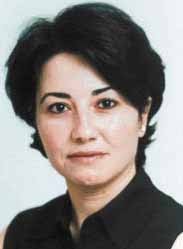
OCCUPIED JERUSALEM — Arab member of the Israeli Knesset, Haneen Zoabi, demanded an investigation of Zionist commando members charged with stealing from Arab and foreign activists on board the Freedom Flotilla, in addition to the initial charges of murder and assault.
Zoabi’s claims were based on bank statements showing that Zionist soldiers stole a credit card belonging to American activist Katie Sheets, which was used to purchase a basket of goods in Tel Aviv.
Zoabi confirmed that she is considering the possibility of submitting a complaint to the police on behalf of the American activist. She has also gone to her colleagues on board the Freedom Flotilla in order to obtain a list of items which the Israeli army confiscated, including cameras, computers, mobile phones, and journalist materials, to make a formal complaint in this regard.
“The scandal of credit card theft is further evidence that the commando soldiers acted with tradition and mentality of pirates,” said Zoabi.
On the opposite end of the spectrum, Israeli chiefs of staff held a ceremony Tuesday evening in Nazareth for two of the perpetrators of the bloody massacre against international solidarity activists on board the Freedom Flotilla.
The Hebrew radio said that at the ceremony, which was held behind closed doors, Zionist army chief of staff, Gabi Ashkenazi, awarded two naval force fighters, who participated in the slaughter of international activists, certificates of merit for their outstanding performance in two separate incidents. The exact incidents were left unrevealed, but Ashkenazi’s comments suggested the flotilla massacre.
Ashkenazi, in a speech at the event, praised the naval commando fighters for their performance on the Turkish Marmara ship, upon which the most important chapter of the massacre took place. According to Ashkenazi, “They dealt properly with the complex circumstances.”
Social Engineering: are we being hoodwinked ?
108morris108 — June 20, 2010
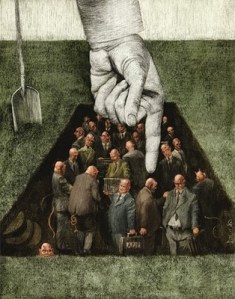
Arthur C Clarke: “Fifty years is ample time in which to change a world and its people almost beyond recognition. All that is required for the task are a sound knowledge of social engineering, a clear sight of the intended goal – and power.” — Childhood’s End.
art by Santiago Caruso
Four killed in Istanbul blast
Press TV – June 22, 2010

A forensic officer inspects a bus targeted by a roadside bomb in Istanbul June 22, 2010.
At least five people have been killed and a dozen injured in a bomb attack on a military convoy in the Turkish city of Istanbul as Ankara ups its crackdown on the country’s Kurdish militants.
The explosion came early on Tuesday when a roadside bomb ripped through a bus passing through the Halkali district, a suburb on the European side of the city where military housing complexes are located, AFP cited Turkish media as saying.
Two soldiers and a 17-year-old girl were killed on board the vehicle which was carrying a number of military personnel and their families.
The death toll rose to five when two more soldiers died in the hospital of the severe injuries they had sustained in the blast, according to Istanbul Governor Huseyin Avni Mutlu.
“This is a terrorist attack… According to initial information, it was a remote-control bomb planted at the roadside,” he said, adding 12 other people were injured in the attack and that two of them were in critical condition.
No one immediately claimed responsibility for the bombing, but such attacks are usually blamed on the Kurdistan Workers’ Party (PKK) militant group.
On Monday, Turkish military forces began a major deployment of troops and elite forces along the border with northern Iraq, where the Kurd militants are holed up in their mountainous strongholds.
Amid intensifying clashes between Ankara troops and PKK guerillas, the militants threatened on the weekend to launch attacks in all Turkish cities.
Beatings, arrests, nighttime raids and dubious indictments
Amira Hass – Haaretz – 18 June 2010

M., a Haaretz reader from Zichron Yaakov, was disturbed by reports about the manner in which Palestinian children are arrested in the West Bank and East Jerusalem. They are being detained held in the middle of the night, held in conditions of fear and pain before their interrogations, and then finally interrogated without the presence of their parents or a lawyer.
On March 14, M. wrote the following to attorney Yuri Gai-Ron, the head of the Israel Bar Association: “I am appealing to you to use all of your authority to intervene and put an end to the abusive behavior and violation of the law with regard to children and youths… Any decent citizen silent – and even more so the body you have headed over the past few years – cannot remain silent in the face of the frivolity with which children are kept in detention, interrogated and even condemned.”
On April 22, attorney Linda Shafir, the director general of the bar association, sent a letter to Attorney General Yehuda Weinstein and State Prosecutor Moshe Lador. Copies were also sent to Defense Minister Ehud Barak, the commander of the Israel Defense Forces in the West Bank (whose name she did not mention ), and the Military Advocate General Avichai Mendelblit, as well as to M.
Among other things, Shafir wrote: “In her appeal, Ms. M. mentions that Palestinian children and youngsters from areas of the West Bank are detained under inappropriate circumstances and are held in inappropriate conditions.
It goes without saying that the Israel Bar Association considers the holding of detainees in appropriate conditions to be of supreme importance, from both the legal point of view and on the level of human rights. I should be grateful if the appeal is transferred to all concerned parties, so that possible means of dealing with the situation are examined with a view to eradicating the phenomenon.”
Broken camera
Another Palestinian detainee, though not a child, is Imad Bornat of Bil’in, a photographer and film director. He was arrested in October 2006 by Border Policemen while photographing the weekly demonstration against the separation fence in his village. After being detained for 21 days, he was then kept under house arrest outside his village for a month and a half. Bornat’s trial, during which he was accused of throwing stones and attacking Border Policemen, dragged on for some three years.
This became a routine method of deterring demonstrators in the villages fighting against the separation fence – beatings and arrests, nighttime raids, and indictments based on dubious testimonies.
In April 2009, Bornat was acquitted of all the charges; no trace of anything. He never hit anyone, he never threw any stones. But despite his acquittal, from the police perspective the criminal file remains open, alongside a police order forbidding him to enter Israel (which is five kilometers from his village ). When he required medical treatment, he received some limited exit permits only thanks to the intervention of his lawyer, Gabi Lasky.
Last month Bornat was invited to participate in an event in Tel Aviv organized by CoPro, an Israeli foundation for marketing documentary films. They planned to screen part of the movie he and his partner, Israeli cinematographer Guy Davidi, are busy editing – “Five Broken Cameras.” Haaretz published a short item reporting that Bornat had been prevented from participating in the event.
On the same day, May 26, the Civil Administration issued him a permit in a particularly accelerated move, despite the police’s position. His file remains open, however, in the police computers. Lasky was told last week that she must send the court verdict, evincing Bornat’s acquittal, to the Binyamin police station, which she has already done at least four times.
‘A different aspect of Israel’
On May 27, yours truly received a letter from Amir Merom, the spokesman for the Sheba Medical Center at Tel Hashomer, in which he wrote: “Your efforts on behalf of upholding human rights, which have been a guiding principle of your work as a journalist over the years, are not supposed to hold back from your readers at Haaretz journalistic facts which are not in line with one organized doctrine or another.
“We read your May 26 article about the photographer from Bil’in, and were left with the impression that your attempt to present the saga vis-a-vis the military authorities and the police was paramount, from your point of view, to the need to add objective factual parameters that would widen the scope of the story for the reader’s benefit and offer a broader spectrum of reference on an already loaded subject.
“Besides the lengthy paragraphs describing, in minute detail, the conduct between the various bodies – which attempt to present Israel in an unflattering light – you mentioned in one general sentence that ‘in November 2008, Bornat was seriously injured in a car accident and required medical treatment in Israel.’ It is most surprising to me that you chose so strange a way to mention the fact that the patient arrived on the threshold of death at Sheba Medical Center, the leading government hospital in the State of Israel, and that his life was saved thanks to the dedicated treatment he received there…
“In addition, I am certain that your readers, who possess varied points of view, will be glad to be exposed to a different aspect of Israel from that described in your article – an aspect of love for human beings, of humanity and compassion.
“As the spokesman for a hospital where Arabs, Jews and members of all faiths are treated alongside one another with the same degree of professionalism and love, I would expect that you would be wise enough to use the abovementioned facts in your upcoming articles on the subject.”
Bornat paid for his hospital treatment.
Waiting for a letter
No reader wrote a letter about the fate of Adib Abu Rahma – a resident of the same village as Bornat, a regular participant in the demonstrations against the separation fence, a 40-year-old taxi driver and a father of nine. He was arrested on July 10, 2009 on the basis of a photograph showing him holding an onion, to be used against tear gas, which a prosecution witness somehow interpreted as a megaphone.
On the basis of incriminations conducted with minors from Bil’in, who had been arrested in the dark of night and held in frightening circumstances, Abu Rahma was charged with incitement, disturbing the public order and entering a military area. Many of the “facts” illicited through these interrogations later turned out to be false.
Abu Rahma has been in jail for 333 days already. on Sunday a military judge found him guilty, as was expected.
Iran’s Presidential Election One Year Later
Why the Greens Failed
By ISMAEL HOSSEIN-ZADEH | June 14, 2010
One year after his feverishly contested reelection as the president of Iran, Mahmoud Ahmadinejad seems be to standing on firmer political ground than any other time of his presidency. Having withstood all the relentless destabilization plots, both from within and without, his government is now more confident at home and more respected abroad. On a broader scale, that is, beyond Ahmadinejad and his administration, one could also argue that today the Islamic Republic of Iran is in many ways stronger and more stable than ever before—notwithstanding the continued demonization of Ahmadinejad and/or Iran by the wicked forces of global domination and their angry and frustrated allies at home and abroad.
Even on economic ground, where relentless pressures of sanctions, sabotage and psychological warfare continue unabated, Iran has weathered those pressures much better than expected. In its May 2010 report on Iran, the IMF points out that while unemployment and inflation still remain high, they have stabilized and, in fact, begun declining. The report notes that, for example, “In the past two years . . . inflation stood at 25.4 and 10.3 [percent] respectively: however in 2010 this rate will fall to 8.5 percent for the first time.” The report further predicts that Iran’s foreign exchange reserves “will increase $5 billion and reach 88.5 in 2010.” This healthy accumulation of foreign exchange reserves stands in sharp contrast with the depleted reserves and huge debts of many countries around the world.
Iran has been quite successful in extending transportation, communication and electrification networks to the countryside; providing free education and healthcare services for the needy; and reducing poverty and inequality. As I have pointed out in an earlier article,
“Iran has also made considerable progress in scientific research and technological know-how. All the oppressive economic sanctions by US imperialism and its allies have not deterred Iran from forging ahead with its economic development and industrialization plans. Indeed, Iran has viewed imperialism’s economic sanctions and technological boycotts as a blessing in disguise: it has taken advantage of these sanctions and boycotts to become self-reliant in many technological areas.
“For example, Iran is now self-sufficient in producing many of its industrial products such as home and electric appliances (television sets, washers and dryers, refrigerators, washing machines, and the like), textiles, leather products, pharmaceuticals, and agricultural products and processed food and beverage products (including refined sugar and vegetable oil). The country has also made considerable progress in manufacturing steel, copper products, paper, rubber products, telecommunications equipment, cement, and industrial machinery. Iran has the largest operational stock of industrial robots in West Asia.
“Iran’s progress in automobile and other motor vehicle production has especially been impressive. Motor vehicles, including farming equipment, now count among Iran’s exports. . . . Most remarkable of Iran’s industrial progress, however, can be seen in the manufacture of various types of its armaments needs. Iran’s defense industry has taken great strides in the past 25 years, and now manufactures many types of arms and equipment. Since 1992, Iran’s Defense Industries Organization (DIO) has produced its own tanks, armored personnel carriers, guided missiles, radar systems, military vessels, submarines, and a fighter plane. . . . As of 2006, Iran had exported weapons to 57 countries, including NATO members” [1].
In the international arenas of geopolitical and diplomatic challenges, too, Iran has recently scored a number of important points, and won important new allies. While the recent Iran-Brazil-Turkey agreement on nuclear fuel exchange has proven Iran’s willingness to reduce international tensions, it has also shown the U.S. and its allies as being utterly unreasonable by callously dismissing this important agreement. Likewise, the U.S. opposition to international calls to hold Israel accountable for the atrocities committed against the Gaza aid flotilla has further exposed the arrogant attitude and unilateral foreign policies of the United States and its allies. As these events have, once again, exposed the U.S. as an international bully, they have also given further legitimacy and credibility to Iran’s arguments against the bully. Iran is perhaps the only country in the region that determines its own economic, political and military policies independently of foreign powers’ advisors, guidelines and dictates—something that many people in other countries in the region (and beyond) are envious of.
While the political standing of President Ahmadinejad, as well as the economic and geopolitical status of Iran, seem to have improved since his June 2009 reelection, the political fortunes of his major adversaries such as Mousavi, Rafsanjani, Karroubi and Khatami have significantly declined; and their “green movement” is in confusion and disintegration. Indeed, Mr. Rafsanjani, the Godfather of the Greens, is so discredited and politically weakened that he has been forced to swallow his purported pride of power and independence of yesteryear and, instead, pay homage to Ayatollah Khamenei as the undisputed leader. Mr. Mousavi, the main challenger of President Ahmadinejad, is also notably marginalized and his influence of a year ago evaporated. His banal and hollow political statements, occasionally posted on his Website, Kalemeh, are often ridiculed not only by the government/Ahmadinejad supporters but also by many of his former supporters, who have gradually abandoned him.
The question is why? How do we explain the disintegration of the “green movement” and the tragic decline of the political fortunes of its leaders?
A widely-held explanation has been “government crackdown.” While government suppression is certainly a factor, it is not the only or even the main factor. The more important reasons behind the decline of the “green movement” and the ignominy of its leading architects lie elsewhere. What are some of these reasons?
To begin with, they ran a dishonest presidential campaign. Their candidate, Mr. Mousavi, ran for president but refused to submit to the will of the majority when it became clear that he had actually lost at the ballot box. This has led many observers to believe that his presidential campaign was more akin to a coup attempt—or, more accurately, coup light, versus traditional military coups—than a bona fide election campaign. It was modeled after the color-coded revolutions in a number of former Soviet republics such Georgia and Ukraine, a pattern that used election contexts as opportunities for destabilization and regime change.
This explains why Mr. Mousavi declared victory even before the polls were closed. It also explains why he claimed that the election was stolen the moment he learned that he had indeed lost at the polls.
Initially, many Iranians fell for this ruse, believing that Mr. Mousavi must have had evidence of “stolen election,” otherwise he would not have made such an outlandish claim. And that’s why in the immediate days following the election they heeded his instructions and took to the streets, outraged that their votes had been stolen. But as it turned out that the news of “stolen election” was false, most of them, including many of his levelheaded supporters, felt cheated and began to abandon him and his “green movement.”
Reflecting on these developments, Professor Mohammad Marandi of Tehran University, points out that when Mr. Mousavi
“effectively accepted the support of the Western funded Farsi media and the Western based opposition, through his silence, many more [Iranians] became disillusioned and even disgusted. . . . There is no doubt that today people are very angry with the foreign-backed Green movement and with the role that Western governments, through financial support and other forms of support have played in all this. . . . None of my colleagues, who had voted for Moussavi, would vote for him again after what he did following the election. That doesn’t mean that they support President Ahmadinejad or that Moussavi has no supporters at all, but only a small minority support him now” [2].
Perhaps Mr. Mousavi could have saved himself a modicum of integrity had he sincerely apologized for his bogus claim of stolen elections. Instead, he compounded that fault by cavalierly ignoring all the available evidence to the contrary, and stubbornly insisting that people’s votes must have been stolen, without providing any convincing or credible proof in support of his claim. Evidence refuting his claim of stolen election, however, is overwhelming. It includes not only detailed and specific official account of the voting results, but also a number of independent accounts provided by several prestigious polling organizations, including a few from the United States, that corroborate the authenticity of the official account [3].
Not only did Mr. Mousavi thus run a dishonest campaign, he also ran an unfair, unscrupulous and obfuscationist one: blaming Iran’s economic challenges and its chaotic diplomatic relations with Western powers largely on President Ahmadinejad, thereby overlooking the fact that the cruel economic, political and military pressures on Iran, ruthlessly inflicted by US imperialism and its allies, started not with Ahmadinejad’s presidency but with the 1979 revolution, which overthrew America’s darling regime of the Shah. Characterizing Ahmadinejad’s foreign policies as “adventurous” and “confrontational,” Mr. Mousavi and his campaign managers faulted them for hostile military and economic pressures from abroad. By the same token, they sought “understanding” and “accommodation” with the United States and its allies, presumably including Israel, in the hope of achieving political and economic stability.
Yet, as I pointed out in an earlier article on these issues,
“US imperialism showed its most venomous hostility toward Iran during the presidency of Muhammad Khatami (1997-2005), while he was vigorously pursuing a path of friendship with the United States. While Khatami was promoting his ‘dialogue of civilizations’ and taking conciliatory steps to befriend the US, including cooperation in the overthrow of the Taliban regime in the neighboring Afghanistan, George W. Bush labeled Iran as a member of the ‘axis of evil.’ This outrageous demonization was then used as a propaganda tool to justify calls for ‘regime change’ in Iran” [1].
In the face of President Khatami’s conciliatory gestures toward the United States, many Iranians were so outraged by its unfair and provocative attitude toward Iran that they began to question the wisdom of Khatami’s policy of trying to appease US imperialism. For the same reason, they also viewed Mr. Mousavi’s blaming of President Ahmadinejad for the cruel demonization of Iran as either naïve or unfair and disingenuous. Not surprisingly, most Iranians, including many of Mr. Mousavi’s former suporters and sympathizers, have come to question the honesty and integrity of his campaign.
An attractive feature of Mr. Mousavi’s initial campaign was his apparent promotion of democratic values and individual liberties. However, his purported advocacy of democracy sounded hollow as he cavalierly defied the will of the people by so brazenly disregarding the results of the majority vote in favor of Ahmadinejad. Furthermore, it was obvious that, in light of his Neoliberal economic agenda, Mr. Mousavi’s vague and abstract utterances about individual liberty and human rights did not include the right to basic human needs such as food and shelter, or the right to affordable healthcare and public education.
Mr. Mousavi’s abstract, narrow and, indeed, disingenuous promises of democratic rights resemble those of the leaders of other color-coded revolutions—for example, of Mikheil Saakashvili in Georgia and of Viktor Yushchenko in Ukraine. Had he succeeded in carrying out his “green revolution,” his promises of democracy would have proven as empty as those of his counterparts in Georgia and Ukraine—who, by the way, have by now been exposed by the Georgian and Ukrainian peoples for what they really stood for, and thrown out of office.
An important factor that has played a critical role in the decline of the “green movement” has been its class character, its inability to relate or attract the masses of the lower-middle, poor and working classes. It is no secret that the Greens hail largely, though not exclusively, from the better-off and better-educated circles of the Iranian society. Mr. Mousavi is obviously aware of this “problem” when he talks about the need to expand the ranks of his supporters beyond the middle and upper-middle classes. But class interests and alliances cannot readily be re-configured through simple wishes or words. They are indeed beyond Mr. Mousavi – the person. They shaped the character and the dynamics of his campaign and the “green movement.”
Having gone through thirty one years of continuous revolutionary atmosphere, the Iranian people have become very astute citizens in political affairs. They easily recognized the market-friendly, neoliberal nature of Mr. Mousavi’s economic agenda when they learned how (during his presidential campaign speeches) he condescendingly characterized the government spending on basic social needs as “handouts,” as “squandering” resources on gedaparvari (nurturing or promoting poverty/laziness).
This critique of Mr. Mousavi and other architects of the “green revolution” should not be viewed as a defense of President Ahmadinejad, or the Iranian government in general. Nor should it be perceived as an aversion to opposing political views, or to criticism as such. It is rather a critique of unscrupulous, opportunistic and disingenous politics, not of contrarian politics per se.
It is a truism that healthy and principled criticism is key to improvement, progress and perfection. It is also obvious that Mr. Ahmadinejad and the Islamic Republic of Iran have a lot to be criticized for. Mr. Mousavi and other Green leaders could have played an important role in furthering individual liberties and democratic ideals in Iran were they not committed to the base objective of destabilizing and overthrowing the people’s duly-elected government. By disrespecting the people’s votes, by fabricating a huge lie that the election was stolen, by resorting to violent means in pursuit of regime change, by remaining relatively aloof from the Iranian grassroots, by seeking or accepting support from dubious political forces abroad, and by blaming President Ahmadinejad for the imperialist-Zionist pressures on Iran, the Greens have lost the credibility needed to play a positive role as a constructive opposition force. More than anything else, it is this unsavory political record that explains the failure of the “green movement.”
Ismael Hossein-zadeh, author of The Political Economy of U.S. Militarism (Palgrave-Macmillan 2007), teaches economics at Drake University, Des Moines, Iowa.
Notes
[1] Ismael Hossein-zadeh, “Reflectinn on Iran’s Presidential Election,” Middle East Online, August 21, 2009.
[2] Seyed Mohammad Marandi, “Green Movement Defeated,” insideIRAN.org, February 15, 2010.
[3] Fro a disaggregated, province-by-province, city-by-city, and ballot box-by-ballot box account provided by the Interior Ministry of Iran see: <http://thomaslotze.com/iran/Mebane_Lotze_Iran_2009_polling.csv>; and for a number of expert analyses of the election result see, for example, (1) “Analysis of Multiple Polls Finds Little Evidence Iranian Public Sees Government as Illegitimate ,” a comprehensive survey report issued by World Public Opinion, an international collaborative polling project that is initiated and managed by the Program on International Policy Attitudes at the University of Maryland; (2) “Post-Election Poll in Iran Shows Little Change in Anti-Regime Minority,” by Alvin Richman; (3) “Did Mahmoud Ahmadinejad Steal the 2009 Iran Election?” By Eric Brill; (4) “Visualizations and Analysis of the 2009 Iranian Election,” By Thomas Lotze; (5) “A Rejoinder to the Chatham House Report on Iran’s 2009 Presidential Election Offering a New Analysis on the Result,” Reza Esfandiari, and Yousef Bozorgmehr.
Israeli wanted over Dubai killing ‘held in Poland’
BBC | June 12, 2010
Polish authorities have reportedly arrested a suspected Israeli agent in connection with the murder of a Hamas operative in Dubai in January.
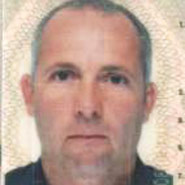 German prosecutors say the agent was arrested in early June. Media reports named him as Uri Brodsky.
Germany is seeking his extradition over a forged German passport used by one of the killers, the prosecutors say.
Mahmoud al-Mabhouh, one of the founders of Hamas’s military wing, was found dead in a Dubai hotel on 20 January.
Dubai police have said they are 99% sure Israeli agents were involved, but Israel says there is no proof.
On Saturday, German prosecutors said the agent had been arrested on a warrant issued by Germany, as he arrived in Poland.
“It’s now up to the Poles to decide if they are going to hand him over,” a spokesman for the federal German prosecutor’s office told AP news agency.
There have been no comments so far from the Polish or Israeli authorities.
Forged passports from Britain, the Irish Republic, France, Australia, and Germany were used in the Dubai operation, leading to diplomatic rows between those countries and Israel.
The UK and Australia have expelled Israeli nationals over the forgeries.
Birobidzan experiencing a small revival, thanks to Jews arriving from Israel
Christian Science Monitor: Russians returning

Area
36,000 sq km
Capital
Birobidzhan
Key Industries
Construction materials, energy, machine engineering and metals, timber, pulp and paper, light, and food and beverages.
Transport infrastructure
The Jewish Autonomous Region has a well-developed transport infrastructure. The Amur River links the Region to the Pacific ocean. The Trans-Siberian railroad also crosses the Region.
Roads. The Jewish Autonomous Region has 1,640 kilometers of public highway. The Region’s main artery is the Khabarovsk – Birobidjan – Obluchie – Amur Region highway, with a ferry over the Amur river. The Region has international road links over the Amur River to the Chinese towns of Tongjiang, Mingshang and Jiayin.
Railroads. The Jewish Autonomous Region has 310 kilometers of railroad. The Trans-Siberian railroad links the Region to the rest of Russia.
Airports. The Region’s airport at Zhiolty Yar links Birobidjan with Khabarovsk and remote urban centers. The Region also plans to start international flights between Birobidjan and Jiamusi (China).
River transport. The total length of the Region’s waterways (Amur and Tunguska rivers) is 600 kilometers. Navigation is open on the Amur River for 180 days on average.

Related articles
- Russia rejoins Space Race with launching of new Moon program (rt.com)
- Military man becomes an extraordinary janitor (rbth.ru)
- How to avoid meteors (jewishjournal.com)
- I’ve always dreamed of being an astronaut… (sott.net)
- Northern Hemisphere sets new, all-time record cold temperature: -96.1°F In Oymyakon Siberia !! (sott.net)
Hamas welcomes EU monitoring force
Press TV – June 7, 2010

Senior Hamas official Salah al-Bardawil
Hamas has welcomed a proposal by the European Union (EU) to monitor Gaza crossings in a bid to help lift the Israeli-imposed siege on the Palestinian territory.
Hamas “welcomes this proposal in all its aspects,” of EU or international presence at Rafah, Ma’an news agency quoted the Palestinian movement’s senior official Salah al-Bardawil as saying on Sunday.
Bardawil, however, strongly rejected the idea of Israel policing in the south, stressing that “Israel should not obstruct any convoys or ships coming to the Gaza port.”
Spanish Foreign Minster Miguel Angel Moratinos, whose country currently heads the rotating EU presidency, floated the idea of an international monitoring force on Saturday.
The proposed plan reportedly includes the activation of the EU monitoring committee at Rafah and developing similar initiatives at at least three other crossings. The force would also assist in sea patrols so that the Gaza port could open.
The proposal comes on the heels of a May 31 commando attack by the Israeli navy against a convoy carrying some 10,000 tons of humanitarian aid to the Gaza Strip.
The offensive killed nine people onboard the six-ship Freedom Flotilla which — accompanied by 700 international activists — indented to break Tel Aviv’s blockade on the impoverished residents of Gaza.
The proposal is to be brought forth and discussed in the European bloc, “so that situations like the ones that happened this week will not be repeated,” Moratinos said.
Bardawil said the Palestinian government will study the plan “so a consensus can be reached” on what is acceptable in terms of having international patrols in Gaza waters.
Russia vows support for Iran fuel swap
Press TV – May 27, 2010
Russia has pledged to “actively support” the Tehran Nuclear Declaration on condition that the landmark fuel swap proposal is fully implemented.
“If it (Iran) strictly abides by them, Russia will actively support the scheme proposed by Brazil and Turkey,” AFP quoted Russian Foreign Minister Sergei Lavrov as saying on Thursday
“We welcome this deal. If fully implemented, it will create very important preconditions not just for the solution of the concrete problem… but for improving the atmosphere for the renewal of negotiations,” Lavrov added.
The remarks come one day after Iranian President Mahmoud Ahmadinejad criticized Russia for conceding to a US campaign for tougher UN sanctions against the country, calling on Moscow to “resolutely” support the May 17 declaration issued by Iran, Turkey and Brazil.
Under last week’s declaration, Tehran agreed to swap its low enriched uranium on Turkish soil with fuel for a medical research reactor.
Despite welcoming the development in the nuclear standoff as a positive step, the US and its European allies have vowed to continue seeking more sanctions and to this end submitted a Washington-drafted sanctions resolution to the UN Security Council shortly after the declaration.
Iran has rejected Western allegations that it is following a military nuclear program, arguing that as a member of the International Atomic Energy Agency (IAEA) and a signatory to the Nuclear Non-Proliferation Treaty (NPT) it has the right to a civilian nuclear program.
Israel’s Bomb out of the Shadows
Nuclear offer to South Africa’s apartheid regime blew Israel’s diplomatic cover
By Jonathan Cook – Nazareth – May 26, 2010
Israel faces unprecedented pressure to abandon its official policy of ‘ambiguity’ on its possession of nuclear weapons as the international community meets at the United Nations in New York this week to consider banning such arsenals from the Middle East.
Israel’s equivocal stance on its atomic status was shattered by reports on Monday that it offered to sell nuclear-armed Jericho missiles to South Africa’s apartheid regime back in 1975.
The revelations are deeply embarrassing to Israel given its long-standing opposition to signing the Nuclear Non-Proliferation Treaty, arguing instead that it is a “responsible power” that would never misuse nuclear weapons technologies if it acquired them.
Reports of Israel’s nuclear dealings with apartheid South Africa will also energise a draft proposal from Egypt to the UN non-proliferation review conference that Israel — as the only nuclear power in the region — be required to sign the treaty.
Israeli officials are already said to be discomfited by Washington’s decision earlier this month to agree to a statement with other UN Security Council members calling for the establishment of a Middle East zone free of nuclear arms.
The policy is chiefly aimed at Iran, which is believed by the US and Israel to be secretly developing a nuclear bomb, but would also risk ensnaring Israel. The US has supported Israel’s ambiguity policy since the late 1960s.
Oversight of Israel’s programme is also due to be debated at a meeting of the UN’s nuclear watchdog, the International Atomic Energy Agency, in Vienna next month.
The administration of US President Barack Obama is reported to have held high-level discussions with Israel at the weekend to persuade it to consent to proposals for a 2012 conference to outlaw weapons of mass destruction in the Middle East.
As pressure mounts on Israel, local analysts have been debating the benefits of maintaining the ambiguity policy, with most warning that an erosion of the principle would lead inexorably to Israel being forced to dismantle its arsenal.
Echoing the Israeli security consensus, Yossi Melman, a military intelligence correspondent for the Haaretz newspaper, also cautioned that declaring Israel’s nuclear status “would play into Iran’s hands” by focusing attention on Tel Aviv rather than Tehran.
Israel refused to sign the 1970 Nuclear Non-Proliferation Treaty, having developed its first warhead a few years earlier with help from Britain and France.
Tom Segev, an Israeli historian, reported that Israel briefly considered showing its nuclear hand in 1967 when Shimon Peres, Israel’s current president, proposed publicly conducting a nuclear test to prevent the impending Six-Day War. However, the test was overruled by Levi Eshkol, the prime minister of the time.
Mr Peres, who master-minded the nuclear programme, later formulated the policy of ambiguity, in which Israel asserts only that it will “not be the first to introduce nuclear weapons to the Middle East”.
That stance — and a promise not to conduct nuclear tests — was accepted by the US administration of Richard Nixon in 1969.
According to analysts, the agreement between Israel and the US was driven in part by concerns that Washington would not be able to give Israel foreign aid — today worth billions of dollars — if Israel declared itself a nuclear state but refused international supervision.
Nonetheless, revelations over the years have made it increasingly difficult for the international community to turn a blind eye to Israel’s arsenal.
Mordechai Vanunu, a technician at the Dimona nuclear energy plant in the Negev, provided photographic evidence and detailed descriptions of the country’s weapons programme in 1986. Today the Israeli arsenal is estimated at more than 200 warheads.
In 2006 Ehud Olmert, then the prime minister, let slip Israel’s nuclear status during an interview with German TV when he listed “America, France, Israel and Russia” as countries with nuclear arms.
Even more damaging confirmation was provided this week by Britain’s Guardian newspaper, which published documents unearthed for a new book — The Unspoken Alliance by Sasha Polakow-Suransky, an American historian — on relations between Israel and South Africa’s apartheid regime.
The top-secret papers reveal that in 1975 Mr Peres, then Israel’s defence minister, met with his South African counterpart, P W Botha, to discuss selling the regime nuclear-armed missiles. The deal fell through partly because South Africa could not afford the weapons. Pretoria later developed its own bomb, almost certainly with Israel’s help.
Israel, Mr Polakow-Suransky said, had fought to prevent declassification of the documents.
Despite publication by the Guardian of a photographed agreement bearing the date and the signatures of both Mr Peres and Mr Botha, Mr Peres’ office issued a statement on Monday denying the report.
Israel’s increasingly transparent nuclear status is seen as an obstacle to US efforts both to impose sanctions on Iran and to damp down a wider potential nuclear arms race in the Middle East.
This month the US surprised officials in Tel Aviv by failing to keep Israel’s nuclear programme off the agenda of the IAEA’s next meeting, on June 7. The issue has only ever been discussed twice before, in 1988 and 1991.
Aware of the growing pressure of Israel to come clean, Benjamin Netanyahu, the Israeli prime minister, declined an invitation to attend a nuclear security conference in Washington last month at which participants had threatened to question Israel about its arms.
At the meeting, US President Barack Obama called on all countries, including Israel, to sign the Non-Proliferation Treaty.
A draft declaration being considered at the UN review conference later this week again demands that Israel — and two other states known to have nuclear weapons, India and Pakistan — sign the treaty.
Egypt has proposed that the 189 states that have signed the treaty, including the US, pledge not to transfer nuclear equipment, information, material or professional help to Israel until it does so.
Reuven Pedatzur, an Israeli defence analyst, warned recently in Haaretz that there was a danger the Egyptian proposal might be adopted by the US, or that it might be used as a stick to browbeat a recalcitrant Israel into accepting greater limitations on its arsenal. He suggested ending what he called the “ridiculous fiction” of the ambiguity policy.
Emily Landau, an arms control expert at Tel Aviv University, however, said that those who believed Israel should be more transparent were “misguided”. Ending ambiguity, she said, would eventually lead to calls for Israel’s “total and complete disarmament”.
The last Non-Proliferation Treaty review conference, five years ago, failed when the US repudiated pledges to disarm and refused to pressure Israel over its nuclear programme.
– Jonathan Cook is a writer and journalist based in Nazareth, Israel. His latest books are “Israel and the Clash of Civilisations: Iraq, Iran and the Plan to Remake the Middle East” (Pluto Press) and “Disappearing Palestine: Israel’s Experiments in Human Despair” (Zed Books). His website is http://www.jkcook.net.