Venezuela Rejects Statements by the President of Guyana
teleSUR | December 6, 2023
On Wednesday, the Venezuelan Ministry of Foreign Affairs responded to the statements made by Guyana’s President Irfaan Ali regarding the Essequibo region. The text of the Venezuelan response is presented below:
“The Bolivarian Republic of Venezuela condemns the recent statements made by President Irfaan Ali, who, in a reckless manner, has given the green light to the presence of the United States Southern Command in the territory of the Guayana Esequiba region, over which Guyana maintains a de facto occupation and a territorial dispute with Venezuela.
This dispute is meant to be resolved through the 1966 Geneva Agreement, the only valid legal instrument between the parties.
Venezuela denounces, before the international community, and especially before the Community of Latin American and Caribbean States (CELAC), the imprudent attitude of Guyana.
Acting under the mandate of the U.S. transnational Exxon Mobil, Guyana is opening the possibility of establishing military bases for an imperial power, thereby threatening the Zone of Peace outlined in this region.
The Cooperative Republic of Guyana recklessly violates international law, taking actions that exacerbate the territorial dispute and add to its illegal conduct of granting oil exploitation rights to Exxon Mobil over a sea area pending delimitation with Venezuela.
The Bolivarian Republic of Venezuela, true to its doctrine of Bolivarian Diplomacy for Peace, urges the Government of Guyana to abandon its erratic, threatening, and risky behavior and to resume the path of direct dialogue through the Geneva Agreement.”
Open Defiance
By William Schryver | imetatronink | November 30, 2023
In my view, the single most meaningful consequence of the NATO/Ukraine proxy war against Russia is that most of the major geopolitical players outside the imperial realm are suddenly in open defiance of the capricious “rules-based international order” and its rapacious monetary system.
The catalyst for this rebellion was that Vladimir Putin’s Russia stood alone amongst the kings, princes, presidents, and prime ministers of a trembling world, turned to the masters of empire, and said, “Not an inch further. In fact, you must withdraw to your 1997 status, and take all your armaments with you, beginning with your missiles in Poland and Romania.”
The masters of empire laughed him to scorn, and then encouraged their #MotherOfAllProxyArmies in Ukraine to concentrate to the Donbass and the Azov pursuant to conquering Novorossiya and Crimea once and for all … then on to Moscow.
This war was anything but “unprovoked Russian aggression”. This war was spawned and nurtured for decades in the secret chambers of the imperial dark lords in London and Washington. It was a war the empire knew Russia would fight. The imperial suzerains simply deceived themselves into believing it was a war Russia could not win.
As was imperative, Russia did choose to fight — notwithstanding there were many reasons to suppose they were insufficiently prepared to win in the event the full weight of the NATO countries were thrown against them.
As it has turned out (and contrary to the fantastical western narratives of Russian humiliation and massive losses), the Russians have prosecuted a remarkably economical destruction of not one, but three successive iterations of increasingly NATO-armed and NATO-trained armies.
And they have done so while assembling, equipping, and thoroughly training a reserve army twice the size of the one they have used to methodically wreck the armies arrayed against them in Ukraine.
They have achieved the greatest industrial mobilization since the Great Patriotic War of 1941-1945. Their massive increases in production of the implements of industrial-scale warfare dwarfs the combined capabilities of their adversaries.
They have also quickly adapted to changing battlefield realities, and are innovating and mass-producing new war tools previously seen only as novelties, but now acknowledged as essential.
In short, the Russians are not only winning this war in an impressively decisive fashion, but they will emerge from it as the single most formidable and battle-hardened military force on the planet.
Most significantly, Russia has exposed for all to see that the empire not only has limitations, but that it is vastly weaker and more vulnerable than hardly anyone had previously been willing to believe.
THAT is why so much of the rest of the world is now emboldened to defy imperial edicts.
THAT is the reason new alliances are solidifying between heretofore reluctant friends.
Nothing unites the human playground quite like one intrepid soul willing to stand, fight, and humble the bully.
The tripartite alliance of Russia, China, and Iran is an adversary more than adequate to roll back imperial rule by leaps and bounds, and in a relatively short span of time.
Many of the “middle powers” can also see which way the wind is blowing, and are positioning themselves accordingly. Spheres of influence are being aggressively pursued and secured in every quarter of the earth.
And perhaps most meaningful of all, they are cooperating to progressively repudiate the empire’s debt notes as the coin of the realm. They have come to understand that a prerequisite to “fixing the world” is to return its money system to a much more equitable and sustainable basis.
Mene, mene, tekel, upharsin.
The empire of debt and lies has been weighed in the balances and found wanting. All that remains is to see if it will go gently into that good night, or in a fit of humiliated rage, set the world on fire.
Hamas Military Wing Says Released 2 Russian Citizens in Response to Request of Moscow
Sputnik – 29.11.2023
MOSCOW – The military wing of the Palestinian movement Hamas, Al Qassam Brigades said on Wednesday that it released two Russian citizens in response to Moscow’s request.
Earlier in the day, the i24 broadcaster reported, citing Hamas, that the movement will release two Israeli women with Russian citizenship, in addition to 10 Israeli hostages whose release was agreed upon, as a sign of gratitude to Russian President Vladimir Putin.
“Al-Qassam Brigades [will] release two Russian detainees in response to a request from the Russian leadership,” the statement said.
Last week, Qatar mediated a deal between Israel and Hamas on a four-day truce and an exchange of some of the prisoners and hostages, as well as the delivery of humanitarian aid into the Gaza Strip. On Monday, Qatar announced that an agreement had been reached between Israel and Hamas on a two-day extension of the truce.
Over the five days of the truce Israel was able to secure the release of 61 Israelis and 25 foreign citizens held hostage by Hamas.
On October 7, Hamas launched a surprise large-scale rocket attack against Israel from the Gaza Strip and breached the border, killing and abducting people. Israel launched retaliatory strikes and ordered a complete blockade of Gaza, cutting off supplies of water, food, and fuel. On October 27, Israel launched a ground incursion into the Gaza Strip. The conflict has so far resulted in the deaths of an estimated 1,200 people in Israel and over 16,000 in the Gaza Strip.
Russian aircraft for Iran and multipolarity
By Drago Bosnic | November 29, 2023
After months of speculation whether Iran would acquire Russian weapons, particularly advanced fighter jets, on November 28, Deputy Defense Minister of Iran Mehdi Farahi dispelled previous rumors about the deal supposedly falling through and confirmed that Tehran had finally inked the contract to procure Su-35 air superiority/multirole fighters, Yak-130 light fighter/advanced trainer jets and Mi-28 attack helicopters from Russia. The announcement comes amid an enormous increase in the already massive American military presence in the Middle East, which includes everything from carrier strike groups (CSGs) to fighter jets and even strategic bombers. The tensions have escalated significantly in the context of the ongoing Israel-Gaza conflict, prompting Iran to urgently modernize its aging fighter jet fleet.
Speculation about the acquisition has been ongoing since last year, specifically after Egypt withdrew from the deal to buy Russian jets. Cairo’s fear of getting on America’s bad side pushed it to stifle its sovereignty (and security), an opportunity that Tehran took to make a deal that would otherwise take years to finalize. Western sources have been speculating about the Su-35 deal with Iran even before the special military operation (SMO). Rumors about the acquisition continued throughout 2022, followed by speculation about the deal allegedly not going through. However, by September, it became clear that the military cooperation between Moscow and Tehran would include even more than Su-35 fighter jets, particularly after the Yak-130 light fighters/advanced trainers were spotted in Iran.
The Yak-130 can double as both attack jets and advanced trainer aircraft, but their primary role is the latter, meaning they were especially indicative of the deal going through. Namely, the Yak-130 is used as the stepping stone in flight training for pilots preparing to fly the Su-35. Getting advanced fighter jets for the Iranian Air Force (IRIAF) has been a point of contention for decades as the country was under a strict Western arms embargo that prevented any advanced weapons acquisitions. This had its perks, as it forced Tehran to develop a plethora of indigenous industries, including a very robust and highly cost-effective drone production, and now it’s clear that Tehran’s advanced military industry is perfectly capable of going toe to toe with the world’s most powerful countries in terms of developing and deploying unmanned systems.
However, despite these advances that also include a plethora of other weapons, such as surface combatants, transport aircraft and long-range SAM systems (mostly based on Russian designs), Iran is sorely lacking in the manned combat aviation compartment. This is hardly surprising, given that only a handful of countries in the world have fully indigenous aerospace industries. Even Asian giants such as China and India still rely heavily on Russia to acquire top-of-the-line aircraft, although their respective advances in this regard are certainly commendable. By getting the Su-35, Tehran is pushing the capabilities of the IRIAF well into the 21st century. Various reports indicate that at least 24 fighter jets have been ordered to replace the aging F-14 “Tomcats”, while there’s speculation that it would acquire over 60 in follow-up orders.
Almost the same could be said for the Mi-28 attack helicopter. The advanced Russian rotorcraft has very few equivalents abroad and would certainly revolutionize Iranian capabilities. Namely, Tehran currently relies on its ancient Vietnam War-era AH-1 “Super Cobra” attack helicopters which are decades behind technologically, even with the incremental upgrades and overhauls that the Iranian military has been applying. Reports indicate that Iranian forces operating in Syria were impressed by the performance of Iraqi and Russian Mi-28s in both Iraq and Syria, which was a major contributing factor to the decision to acquire them. The superb flight characteristics and armament of this Russian helicopter are rivaled only by the less conventional coaxial rotors-equipped Ka-52 “Alligator”.
It’s important to note that the ongoing procurement is of the utmost importance to the SCO (Shanghai Cooperation Organization) and BRICS+ frameworks. Namely, Iran is already a member of the former, while it’s poised to join the latter in just over a month. With the US escalating tensions in the region, the primary target of which is precisely Tehran, the belligerent thalassocracy is looking to disrupt multiple peace processes in the region. Attacking Iran seems to be a very tempting prospect for Washington DC, as it would effectively “kill two birds with one stone” by making both SCO and BRICS+ look “weak” and unable (or even unwilling) to defend their new members. The US very likely believes this could be a deadly blow to the rapidly emerging multipolar world that will inevitably dismantle the existing “rules-based world order.” By arming Iran, Russia is making sure that any such attack would not only be a costly endeavor, but also a failed one.
Drago Bosnic is an independent geopolitical and military analyst.
Israeli detainee thanks resistance fighters for kind and humane treatment

Palestine Information Center – November 28, 2023
GAZA – Israeli ex-detainee Daniel Aloni has thanked the resistance fighters from al-Qassam Brigades of Hamas for treating her and her 6-year-old daughter Emilia kindly and humanely during their presence in captivity.
This came in a letter she wrote in Hebrew while she was in detention, in which she expressed her gratitude for al-Qassam fighters who were escorting and guarding her and her daughter during the days they had spent in Gaza.
Daniel and her daughter were among the first group of captives who were released on Friday by al-Qassam Brigades.
Below is the full text of the letter as translated from Hebrew and provided by the Brigades’ military media.
“To the commanders who have accompanied me in recent weeks, it seems that we will part ways tomorrow, but I want to thank you from the bottom of my heart for your extraordinary humanity that you have shown towards my daughter Emilia. You treated her like your own. You welcomed her in your room whenever she walked in. She says that you are all her friends, not just acquaintances. You are her true and good loved ones. Thank you, thank you, thank you for the countless hours you spent with her as caregivers. Thank you for being patient with her and showering her with sweets, fruits, and everything available, even if it wasn’t readily accessible. Children should not be in captivity, but thanks to you and other kind-hearted individuals and leaders we have met during our presence in her, my daughter considered herself a queen in Gaza and felt like she was the center of the world. We did not meet a single person, whether a member or leader, during our long stay [in Gaza], who did not treat her with kindness, tenderness, and love. I will forever be a captive of gratitude because she will not leave this place with a permanent psychological trauma. I will remember your kind manners, which you showed in here despite the difficult situation you were coping with yourselves, and the heavy losses that befell you here in Gaza. I wish in this world that we could be really good friends one day. I wish you all good health and well-being. Health and love to you and your families. Thank you very much. Daniel and Emilia.”
Iran finalizes purchase of Russian military aircraft
The Cradle | November 28, 2023
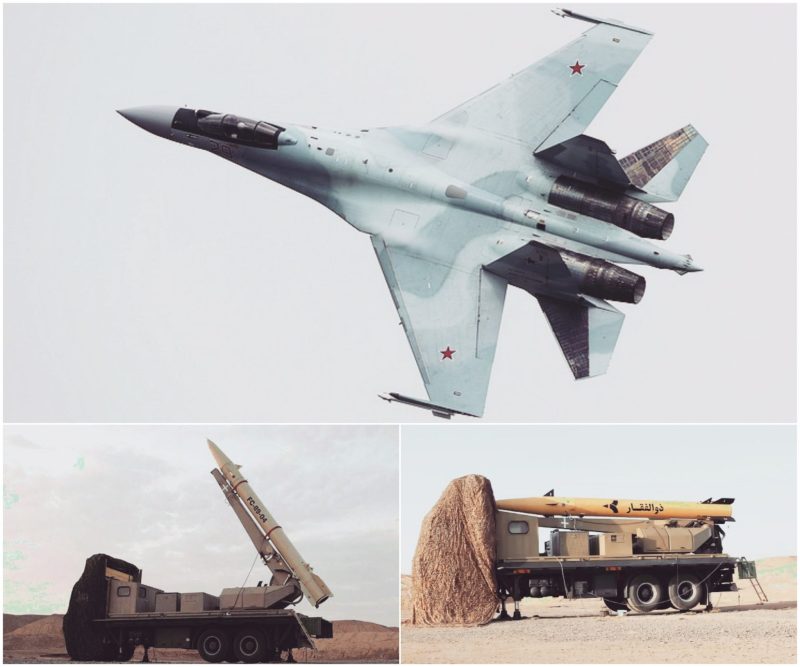
Iran has finalized arrangements to purchase Russian-made fighter jets and attack helicopters, Deputy Defense Minister Brigadier General Mahdi Farahi revealed to Tasnim News Agency on 28 November.
Farahi says the plans for the purchase and process of arrival of Sukhoi Su-35 fighter jets, Mil Mi-28 attack helicopters, and Yak-130 jet trainers to join the combat units of the Iranian Armed Forces have been signed and finalized.
“In some areas, we are among the top countries; in others, we are on the path to maturity. In this way, in addition to the development of endogenous capabilities, we must also use shortcuts to complete the defense capability, and one of these areas is the field of air technology,” Farahi said in the interview with Tasnim.
“We have good capabilities in the field of helicopters; that’s why we are the best in quantity in the region, but the qualitative improvement of helicopters is on the agenda,” Farahi added.
Talks for acquiring Sukhoi Su-35 fighter jets have been ongoing since late last year as part of joint military cooperation efforts between Tehran and the Kremlin.
Despite decades-long sanctions against Iran, the nation is still a major military power in West Asia and has over half a million active personnel.
Defense, trade, and banking ties between Iran and Russia have been growing over recent years despite western sanctions imposed on the two nations.
The central banks of both nations signed an interbank transfer deal earlier this year, allowing 52 Iranian banks to connect and transfer with 106 Russian banks.
Iran is also expected to join BRICS at the start of 2024, a group in which Russia is a key organizer.
Iranian President Ibrahim Raisi said at the 15th annual BRICS summit that the bloc expansion is “a new step towards establishing justice, ethics, and sustainable peace in the world.”
Iran has not made any significant purchases to its fighter aircraft arsenal in recent years besides purchasing a few Russian MiG-29 Fulcrum fighters in the 1990s.
Western embassies receive ‘suspicious’ arms deliveries in Lebanon: Al-Akhbar Report
The Cradle | November 20, 2023
Lebanon has been witnessing a “suspicious security movement,” Al-Akhbar reported on 18 November, as several Western military planes carrying weapons have arrived at Beirut International Airport since the outbreak of the Gaza-Israel war last month.
According to the Lebanese daily, some of these planes have also landed at a decommissioned airstrip in the Hamat military base.
The deliveries reportedly come in the wake of “requests sent by foreign countries to Lebanon to allow the entry of weapons and ammunition, under the pretext of enhancing the security of its embassies and evacuating its nationals and diplomats.”
Aircraft recently landed in Lebanon include US, British, French, and Canadian planes. The report adds that some of these planes came from Israel.
Sources told the newspaper that Lebanon recently rejected a French request to “agree on the entry of a ship carrying about 500 soldiers and approximately 50 vehicles.”
The Lebanese Foreign Ministry also received a request to grant two permits for a Canadian plane and a Belgian plane to arrive at Beirut airport, which was rejected.
However, Al-Akhbar’s sources say that “the Canadian plane had already landed at Beirut Airport and was found to be carrying various types of weapons (including silencers and detonators).”
Caretaker Prime Minister Najib Mikati listed these western requests on the agenda of the last cabinet meeting. However, nothing was decided on.
Western and Arab states reportedly sent requests to Lebanese security services expressing “fear that their employees or nationals would be exposed to attacks against the backdrop of what is happening in Gaza.”
Western embassies have not answered any questions about these shipments, the report says, adding that diplomats have referred all questions to military attaches “who coordinate all steps with the Lebanese army and security forces.”
In a statement last week, the Lebanese army command claimed these movements aligned with the routine transport of military aid.
However, Al-Akhbar’s sources say there are “suspicions regarding the aircraft entering and unloading their cargo, as it is not known to whom this equipment is going, and whether the destination is actually limited to the army.”
“What is happening has put the current army commander, Joseph Aoun, under the microscope … and has put question marks about the extent of his cooperation with Westerners nations,” the sources added, highlighting a possible “attack on the principle of sovereignty” in Lebanon.
Aoun has often been accused of having a very close relationship with the US embassy and Ambassador Dorothy Shea.
European liberals lose it over Hungarian government’s latest billboard campaign

BY THOMAS BROOKE | REMIX NEWS | NOVEMBER 20, 2023
Liberal lawmakers in the European Parliament have expressed their outrage at a recent billboard campaign by Hungary’s governing party ahead of next year’s parliamentary elections targeting European Commission President Ursula von der Leyen.
Hundreds of billboards have been erected across the country depicting von der Leyen with Alex Soros, the son of U.S.-Hungarian billionaire George Soros whom Prime Minister Viktor Orbán’s Fidesz party claims is the financier of several liberal organizations attempting to discredit the Hungarian government and undermine conservative administrations across the West.
Images of the duo are shown alongside the caption, “Let’s not dance to their tune,” a quote taken from a speech by Orbán last month in which he labeled the European Union a “bad parody” of the former Soviet Union. He also insisted his administration would continue to run Hungary as it saw fit despite attempts by Brussels to wrestle control from national governments.
Budapest has ramped up its rhetoric against the European Commission in recent weeks, and Orbán again targeted the bloc’s executive during a speech at his party’s congress on Saturday as he called for the current model of EU governance to be replaced.
“The Union must not be left but changed, but this is only possible if there are radical changes in Brussels. Otherwise, the end will come. If it continues like this, the Union will not explode, it will simply fall apart,” he told attendees.
The advertising campaign appears to have angered all the right people as far as Fidesz is concerned, with arch-Eurofederalist MEP Guy Verhofstadt calling it “scandalous” and accusing Orbán of “dangerous Putinism and despicable anti-semitism,” the latter accusation borne solely from the fact that Alex Soros is Jewish.
Similarly, German Green MEP Daniel Freund, seemingly perennially enraged by the conservative administration in Budapest, called for the European Commission to suspend Hungarian’s upcoming presidency of the European Council.
“For von der Leyen, there is only one reaction to this dirty campaign: Suspend all preparatory meetings for the council presidency between the EU Commission and the Hungarian government,” he raged.
Von der Leyen, at least publicly is understood to have been unfazed by the campaign, according to the European Commission’s spokesperson Eric Mamer.
“I showed the pictures to the president. She didn’t bat an eyelash … completely unfazed. Let’s be clear: We know this is not the first time, it’s probably not the last time, we have business to do,” he told journalists at Monday’s press briefing.
“We have crises to manage, we have policies to implement, Hungary is part of the European Union … It sits at the table,” he added.
Ukraine reveals size of new international loan
RT | November 19, 2023
The Ukrainian government expects to get a loan of $1.1 billion from the World Bank, Prime Minister Denis Shmigal said on Saturday, adding that the aid will be used for social benefits, education, medicine, and other priorities.
“Ukraine continues to attract money from partners, with an almost $1.1 billion loan expected from the World Bank,” Shmigal wrote in a Telegram post.
The prime minister added that the country also expects to obtain €162 million ($177 million) in financial support from the European Investment Bank as part of programs to restore Ukraine, while $190 million and $70 million would be allocated by Norway and Switzerland, respectively.
Earlier this week, the Ukrinform news agency reported that EU military aid for Ukraine had reached €27 billion euros (some $28.8 billion) since the beginning of the conflict, marking a record high in the bloc’s history. The military assistance includes ammunition, air defense systems and tanks.
Meanwhile, financial, military, humanitarian, and refugee assistance provided by EU member states to Ukraine has already amounted to about $89 billion.
Last month, Gavin Gray, the head of the International Monetary Fund’s (IMF) mission in the country, said that over time international support for Ukraine would inevitably decrease, urging Kiev to develop internal resources for self-financing.
In April, Ukrainian Finance Minister Sergey Marchenko said the monthly deficit of the Ukrainian budget had totalled $5 billion, with two-thirds covered by foreign loans and grants, while three-quarters of spending goes to military needs.
In August, the Finance Ministry reported that Ukraine’s national debt had exceeded $132 billion, having increased by $4 billion in July alone.
The IMF previously projected that Ukraine’s state debt would amount to 88.1% of GDP in 2023, and would exceed 100% of GDP in 2025.
Gaza: Al-Qassam Brigades reveals truth about occupation finding bodies of 2 female captives
MEMO | November 18, 2023
Al-Qassam Brigades announced that the occupation’s claims that the bodies of Israeli captives were found in hospitals in the Gaza Strip were false and that they were undergoing treatment there.
The brigades conveyed in an official statement on its Telegram channel: “We transferred a number of prisoners to care centres to receive treatment due to the seriousness of their health condition and to preserve their lives. This happened recently with the detainee, Aryeh Zalman Zdmanovich, card number 0010185791, who received intensive care.”
Al-Qassam Brigades explained: “After he recovered, he was returned to his place of detention. He died due to panic attacks as a result of the repeated bombing around his place of detention, and we will publish material documenting this.”
The occupation forces on Thursday announced the discovery of two bodies: a female Israeli soldier, who Al-Qassam confirmed was killed as a result of the occupation bombing her detention site, in addition to another female detainee, whose body they claimed was found in a building next to Al-Shifa Hospital.
Al-Qassam Brigades stated that the occupation forces have so far caused the deaths of more than 60 of its captives in the Gaza Strip due to the continuous brutal bombing of all parts of the strip, especially Palestinian homes.
Italy Becomes First EU Country to Ban Production, Sale of Synthetic Food
Sputnik – 16.11.2023
ROME – The Italian parliament on Thursday passed a law prohibiting production and sale of synthetic food and feed, making Italy the first EU country to introduce such a ban.
The law was supported by 159 members of the Italian lower house, while 53 voted against the measure and 34 abstained. The upper house of the parliament approved the law, which was developed at the initiative of the Italian Ministry of Agriculture, Food and Forestry and the Ministry of Health, back in June.
The new regulation prohibits the use in production, sale, import, export manufacturing and distribution of “food or feed consisting of, separated out or produced from cell cultures or tissues derived from vertebrate animals.” Violators face a fine ranging from 10,000 euros ($10,858) to 60,000 euros. However, if the law is violated by a large-scale enterprise, the fine may be increased to up to 10% of the company’s annual turnover and confiscation of the produced goods.
23 percent of 383 Israeli armored vehicles were destroyed in 5 days
By Boyko Nikolov | Bulgarian Military | November 13, 2023
Based on recent satellite images from northwest Gaza, it appears that the Israeli Army has sustained substantial losses, with 88 armored vehicles reportedly missing over five days. This accounts for approximately 23 percent of the 383 vehicles that could be seen in the area via satellite imagery.
Israeli forces have made notable progress, successfully dividing Gaza into two parts – north and south. However, through multiple video evidence, it’s clear that Hamas, along with other Palestinian militant groups, have managed to effectively incapacitate Israeli tanks and armored personnel carriers on several occasions.
Militias have employed a range of sophisticated techniques, among them are the use of explosives strategically placed on vehicles with the aim of neutralizing tanks’ active protection systems. This is typically followed by a storm of rocket-propelled grenades. Since the beginning of October, there have been verified reports of successful drone strikes on Israeli armored units operating outside the Gaza Strip.
Additional damage
The impact of the losses in Gaza is further underscored by the additional damage incurred by the Israeli armor on the Lebanon border in the North. As part of the ongoing tensions, Hezbollah’s anti-tank units have been particularly focusing on these vehicles. They are using anti-tank weapons that are far more sophisticated than those available to Palestinian militias.
Reports from regional media channels have revealed a concurrent rise in the attrition rates of Israeli armored vehicles. This correlates with the unfortunate news of the death of a tank brigade commander, Colonel Sheldag Zior. His loss signifies the most senior casualty within the Israeli force to date.
The rise in attrition rates correlates directly with the more frequent sightings of older tanks such as the Merkava IIIs, during the conflict in Gaza. Especially notable was the second week of October, when the number of Israeli armored losses surged.
Merkava tanks to Hamas hands
This was attributable to Hamas making significant progress, successfully seizing numerous military facilities and arms storage outside of Gaza. As a result, a considerable amount of new Merkava tanks and countless other armored vehicles fell into their hands.
Reports have been surfacing about substantial numbers of these vehicles undergoing destruction. As early as 2005, Israel embarked on the process to gradually retire the Merkava III from their primary service. The aim is to substitute the majority of the remaining Merkava III units with the upgraded Merkava V, commencing towards the end of 2023. Given the significant number of Merkava IIIs in use, analysts predict a possible shortage of the newer models.
However, obtaining accurate assessments of the casualties on both sides has become challenging due to the continued instability in the area.
Featured Video

“Historic Russia”: The Land Putin Will Not Give Back
or go to
Aletho News Archives – Video-Images
Book Review
Why the War on Conspiracy Theories Is Bad Public Policy
By Kevin Barrett • Unz Review • February 1, 2019
 A Review of Conspiracy Theories and Other Dangerous Ideas by Cass Sunstein (based on an earlier paper co-authored with Adrian Vermeule); In Defense of Troublemakers: The Power of Dissent in Life and Business by Charlan Nemeth; and Conspiracy Theories and the People Who Believe Them, edited by Joseph E. Uscinski
On January 25 2018 YouTube unleashed the latest salvo in the war on conspiracy theories, saying “we’ll begin reducing recommendations of borderline content and content that could misinform users in harmful ways—such as videos promoting a phony miracle cure for a serious illness, claiming the earth is flat, or making blatantly false claims about historic events like 9/11.”
At first glance that sounds reasonable. Nobody wants YouTube or anyone else to recommend bad information. And almost everyone agrees that phony miracle cures, flat earthism, and blatantly false claims about 9/11 and other historical events are undesirable.
But if we stop and seriously consider those words, we notice a couple of problems. First, the word “recommend” is not just misleading but mendacious. YouTube obviously doesn’t really recommend anything. When it says it does, it is lying. … continue
Blog Roll
 Aletho News
- BRITAIN’S WARNING: PREPARE FOR WAR
- “Historic Russia”: The Land Putin Will Not Give Back
- How the Cambridge Analytica scandal still haunts Mark Zuckerberg
- The Ongoing Cancellation Campaign Against a Dissenting Academic in Norway
- Yemen and ‘the Houthis’: Challenging Sami Hamdi’s Narrative
- No, Christians did not invent Zionism
- AIPAC-led lobbying network opens branches in Cypriot, Greek parliaments
- Araghchi blasts ‘parasitic’ alliance as US taxpayers pay for Israel’s war on Iran
- Easy fix for Europe’s chaos? Stop fueling war against Russia
- Putin’s key remarks on peace talks and Europe’s ‘schizophrenia’
- If Americans Knew
- An error has occurred; the feed is probably down. Try again later.
- No Tricks Zone
- Two New Studies Find Thwaites Glacier Melt Cannot Be Driven By Human Activity Or A Warming Ocean
- E-Cars Reduce CO2 Emissions By Only 41% Compared To Internal Combustion Engine Vehicles
- Predictions Made By Renowned Climate Professor Over Past Decades Have Been Proven To Be Poor
- New Study Suggests Large Regions Of The Pacific Ocean Have Been Cooling For The Last 80 Years
- Germany’s Green Energy Debacle: High Energy Costs Force Kahla Porzellan to Close After 182 Years!
- New Study: 50 Years Of The Most Aggressive ‘Net Zero’ Policies Can Only Affect The Global Climate By 0.03°C
- US September “Heat” Was No Record…Many Records Set Decades Ago
- Latest European Green Energy Debacle; Portugal’s Largest Flagship Solar Park Insolvent!
- Green Energy Debacle: German Expert Professor Fritz Vahrenholt Warns Of Severe Economic And Social Consequences
- Two More Paleo Reconstructions Affirm Meters-Higher Sea Levels Across Ireland, Brazil 7000-6000 Years Ago

