F-35 readiness rates get in way of NATO war planning
By Drago Bosnic | April 6, 2023
Last year, NATO officially declared that Russia is its primary adversary, officially restarting the Cold War. Since then, the belligerent alliance’s war machine has started revamping its strategic posturing towards Moscow, but after decades of numerous wars of aggression against relatively helpless opponents, NATO’s conventional fighting capabilities have atrophied significantly. This seems to be affecting all branches of major NATO militaries, including their air forces, particularly those operating the deeply troubled F-35 JSF (Joint Strike Fighter), a pan-Western effort to unify all NATO and NATO-aligned countries into “a well-oiled joint fighting force with near flawless coordination and battlefield information sharing”. At least that was the original idea.
However, the reality is much different. Publicly, the Pentagon is quite happy with “the best fighter jet ever made”. Privately, the situation is starkly different. For at least a decade, numerous reports on the F-35’s countless flaws have turned out to be not only true, but even overoptimistic, as the actual scale of issues plaguing the program is much worse. This has resulted in repeated delays in deliveries, as well as serious issues with modernization efforts. By the time many of the reported issues are resolved, the US Air Force already has new mission requirements that essentially nullify all the previous work and force the developers “back to the drawing board”. In short, the F-35 has proven to be unable to adapt to new threats despite being devised (and marketed) to do exactly that.
According to various sources, over 900 F-35s have been completed and delivered by April this year, but the fleet is still suffering from many of the same issues as when the jet was inducted into service nearly a decade ago. A plethora of maintenance issues and performance defects are causing disastrous availability rates. Back in February, the Congressional Budget Office (CBO) revealed that the F-35 fleet not only failed to meet the requirements for improving readiness, but has even managed to make them a lot worse than in previous years. Availability rates for both the conventional F-35A and STOVL (short take-off, vertical landing) F-35B fell by 11% in 2022, with only the naval F-35C variant making small improvements in this category.
“Between 2021 and 2022, F-35As’ availability fell by 11 percentage points, from 65 to 54”, CBO stated in a report, adding: “F-35Bs’ availability also fell, by 7 percentage points, from 61 to 54, while F-35Cs’ availability rose by 5 percentage points to 58.”
And yet, even these reports turned out to be overoptimistic as Lockheed Martin once again resorted to using semantics to make the performance of its products seem better than they actually are. According to Bloomberg, the percentage of F-35s capable of flying any mission at any given moment, otherwise known as full mission-capable rates, was just over 29%, manager of the program Air Force Lieutenant General Michael Schmidt said in written testimony for the March 29 hearing of the House Armed Service Committee’s aviation subcommittee. This is nearly 10% less than the full mission-capable readiness in 2020, which stood at 39% at the time. Such a drop effectively nullified possible advantages provided by deliveries of new jets.
“This is unacceptable and maximizing readiness is my top priority,” Schmidt said in his prepared remarks, adding: “[Our] goal is to increase readiness rates by at least 10% in the next 12 months.”
This is just the latest in a series of now well over a hundred scathing reports issued over the years by both military and civilian US officials. As there are currently close to 540 F-35s in service with the US military, the latest readiness figures indicate that no more than 160 are fully mission-capable, meaning it’s among the very lowest, “bested” only by the F-22 “Raptor” jets and the atrociously maintenance-heavy B-2 strategic bombers. Ironically, F-35s were designed to have low maintenance requirements and operational costs to replace F-16s and A-10s for USAF, F-18s for USN (Navy) and AV-8Bs for USMC (Marines). The jet’s many issues resulted in a spending “death spiral”, as the program’s overall cost is getting ever closer to the staggering $2 trillion.
A major issue with the F-35 is its troubled F135 engine prone to overheating, resulting in issues with its ability to fly supersonic, a feat considered standard practice for fighter jets ever since WWII. Defense Secretary under the Trump administration, Christopher C. Miller, was so frustrated with the jet that he referred to it as “a monster” and “a piece of… (well , you get the idea)”. Even the late John McCain, well known for anything but enmity towards the US MIC (Military Industrial Complex), called it “a textbook example of our broken defense acquisition system”, stating in one of his Senate briefings that “the F-35 program’s record has been both a scandal and a tragedy with respect to cost, schedule and performance”.
US vassals and satellite states have also found numerous issues with the F-35. For instance, during 18 months of operational testing (from January 2021 to June 2022), South Korea reported findings about nearly 250 critical flaws in the jets it acquired from the US in 2019. As late as December, Israel (one of the first F-35 operators) had to ground its entire fleet during preparations for a possible war with Iran. Others, such as Japan and the UK, have also suffered similar issues, even resulting in crashes and deaths. However, while the F-35 has certainly been a disaster, it might prove to be a major contributor to improving global security, as diminishing the political West’s ability to wage war is by far the best way to preserve peace across the world.
Drago Bosnic is an independent geopolitical and military analyst.
Paris votes to ban rental e-scooter ‘nuisance’
RT | April 4, 2023
Nine out of ten Parisians have voted in favor of banning rental electric scooters from the city’s streets. Once seen as a pioneering form of green transport, the vehicles rapidly became a scourge as users flouted traffic laws and caused crashes and injuries.
Voters chose to ban the scooters by 89% to 10% in a “public consultation” on Sunday organized by Mayor Anne Hidalgo. Though the vote was non-binding, Hidalgo has vowed to implement the ban from September onwards.
The measure covers scooters rented to tourists and visitors by companies such as Lime, Dott, and Tier. These three firms own nearly 15,000 e-scooters, which users book via smartphone apps. The ban will not affect privately-owned scooters.
Hidalgo welcomed scooter rental firms to the city in 2018, claiming that the motorized two-wheelers would relieve traffic congestion and lure people out of carbon-emitting cars. More than a dozen companies moved into the rental market, but residents soon complained about riders weaving precariously in between traffic, mounting sidewalks, and abandoning the scooters on roads, in parks, and even in the River Seine.
A rider was hit by a car and killed in Paris’ first e-scooter accident in 2019. Last year saw 34 people killed and 600 others seriously injured across France while riding e-scooters or similar mobility devices, according to France’s national road safety agency. Pedestrians have suffered too, with an Italian woman killed in 2021 after she was hit by a scooter carrying two passengers.
In the five years since she opened Paris up to the scooter rental companies, Hidalgo has changed her tune. “Self-service scooters are a source of tension and worry” for locals, she told the AFP last week, claiming that a ban would “reduce nuisance” on the streets.
Following the vote, Paris will become the first EU capital to ban rental e-scooters entirely. Copenhagen outlawed the devices in 2020, but allowed them to return the following year with some stiffer restrictions. After a string of accidents in 2021, Moscow authorities imposed a 15kph (9mph) speed limit on e-scooters in the center of the Russian capital.
Le Pen tops French presidential poll
RT | April 5, 2023
National Rally leader Marine Le Pen would comfortably defeat President Emmanuel Macron if France’s 2022 presidential election were held today, a poll published on Wednesday found. Macron is currently facing a torrent of public anger over his efforts to raise the retirement age for most French workers.
The BFMTV poll found that Le Pen would emerge from a first electoral round with 31% of the vote, ahead of Macron with 23% and leftist Jean-Luc Melenchon with 18.5%. Such a result would be an eight-point improvement for the National Rally leader, who finished the first round last year with 23% to Macron’s 28%.
French presidential elections take place over two rounds if no one candidate receives more than 50% of the vote, with the top two candidates from the first round advancing. This has always been the case under the Fifth Republic, and 2022 saw Macron defeat Le Pen by 59% to 41% in the head-to-head runoff.
Today, however, Le Pen would dispatch Macron by 55% to 45%, the poll found. While Macron counted on Republican, Green, and some leftist votes to win the second round last year, far fewer of these voters would switch to backing the president today. For example, while 68% of Green candidate Yannick Jadot’s supporters voted for Macron in the second round last year, 52% would do so today.
Furthermore, 27% of Macron’s voters in 2022 would either abstain or vote for Le Pen if given a rerun, the poll found.
Macron’s government invoked special constitutional powers to pass a controversial pension reform bill without a parliamentary vote last month. The bill raised the retirement age for most French workers from 62 to 64, and its passage triggered a nationwide wave of protests and riots. The largest demonstration saw more than a million people take to the streets across the country, and hundreds were arrested in a single day in Paris for lighting fires and clashing with police officers.
Raising the retirement age has long been one of Macron’s key goals, with the president describing the move as a “just and responsible” way to keep France’s social security system afloat. Le Pen, who is best known for her opposition to Islamic immigration, focused her 2022 campaign on opposing the pension reforms and hammering Macron for France’s rising cost of living.
Le Pen has continued to oppose the reforms, while condemning some acts of vandalism by protesters. France, she told the AFP news agency last week, “has been governed against its wishes. The way [Macron] is ruling will enable political forces with the exact opposite approach to his to gain power.”
Why was Covid so deadly for African Leaders?
The Naked Emperor’s Newsletter | April 5, 2023
Could Covid have been used as an excuse to bump off political rivals in third world countries? Or perhaps they were removed by foreign powers looking for regime change. For example in March 2020, 12 Iranian politicians and officials died from Covid including a member of the clerical body that appoints the supreme leader, Ayatollah Hashem Bathayi Golpayegni. Admittedly, Golpayegni was 78 but Ali Reza Zali, who was leading the campaign against the Covid outbreak, acknowledged that many of those who died were otherwise healthy.
The British Medical Journal (BMJ) produced a short analysis in 2021 looking at why so many African leaders died of COVID-19. They estimated that the average minister was a 60.5 year old male and that the fatality rate in the general population for this demographic was 0.17%. However, amongst worldwide ministers and heads of states this figure was 0.6% which was heavily skewed by Africa with a fatality rate of 1.33%.
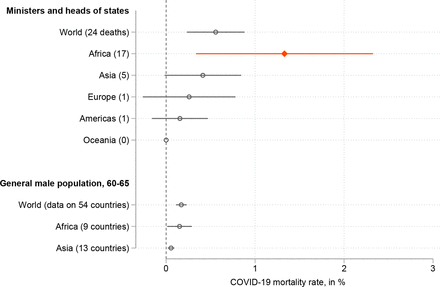
Why, when Africa was barely affected by Covid, were African leaders and ministers disproportionality killed by the disease?
The BMJ found that between 6 February 2020 and 6 February 2021, Covid claimed the lives of 24 national ministers and heads of states around the world. For some reason this didn’t include the Iranian deaths above but putting that aside, 17 of those 24 deaths occurred in Africa.
There was nothing special or different about the demographic of African ministers, “if anything, the African leaders who succumbed to COVID-19 were slightly younger than their seven counterparts on other continents”.
Five suggestions were given as to why the death rate could be so much higher.
- More comorbidities. However, no evidence of this was uncovered;
- Poor healthcare. You would think of all the people in Africa, the leaders of the nation would have access to the best healthcare around;
- General mortality in Africa was higher than reported. This was challenged by the WHO;
- African ministers work environments are busier and, therefore, they are more prone to the circulation of the virus. Even the BMJ say this is a weak hypothesis;
- 50% of the African deaths occurred in Southern Africa and the majority after the more transmissible ‘South African’ variant was reported.
Or was it something else?
John Magufuli
Not included in the report, due to it happening at the time it was published, was the death of another African leader, John Magufuli. Magufuli was president of Tanzania and died in March 2021, aged 61.

The Tanzanian leader had gone missing for two weeks before his death was announced even though the Prime Minister, Kassim Majaliwa, had insisted that the president was “healthy and working hard”. The media speculated that he was in hospital with Covid but when the vice-president, Samia Suluhu announced his death, she said he had died of heart failure.
From the very start, Mr. Magufuli had been a Covid sceptic. The Guardian’s obituary even called him “Tanzania’s Covid-denying president”. He had said how well Tanzania’s economy would do because they weren’t locking down and causing huge harm.
Just over two weeks before his disappearance, the Guardian published an opinion piece titled “It’s time for Africa to rein in Tanzania’s anti-vaxxer president.” The article was sponsored by the Bill & Melinda Gates foundation.
Mr. Magufuli, who had trained as a Chemistry teacher, first saw through the Covid scam when he realised the false positives produced by PCR tests. He sampled a goat, sheep and even a pawpaw fruit, assigned them human names and ages, sent them off for analysis and all came back with a positive Covid test result.
As a result, the president said “There is something happening. I said before we should not accept that every aid is meant to be good for this nation”. At the time of his death, only 21 Tanzanians had died and the president said the country was “Covid-free”. However, the country had stopped testing and recording deaths as ‘with Covid’ so we can’t be sure if this was correct or not.
Masks were laughed at and the government’s advice was to “improve personal hygiene, wash hands with running water and soap, use handkerchiefs, herbal steam, exercise, eat nutritious food, drink plenty of water, and [use] natural remedies that our nation is endowed with”. Whilst in the West, we were told to stop exercising and sit indoors worrying.
The Tanzanian president had also refused to buy “dangerous” foreign vaccines, instead choosing “herbal remedies”. However, even though Western media said this “herbal remedy” lacked scientific evidence, it was in fact made from Artemisia, a plant from Madagascar, shown to fight SARS-CoV-2.
Artemisia is used against malaria and has shown anti-inflammatory effects, including inhibition of interleukin-6 that plays a key role in the development of severe COVID-19. Furthermore, it has been shown to inhibit the viruses invasion and replication, as well as reducing oxidative stress and inflammation and mitigating lung damage. The plant also contains zinc, gallium and selenium, as well as having an antiviral effect.
The week before the president disappeared, ten prominent Tanzanians, including the former Bank of Tanzania Governor, all died from suspected Covid. This led to the WHO calling upon Tanzania to take “robust action”. The president suggested citizens should wear masks but reiterated that the country would not impose a lockdown.
After Magufuli’s death, his vice-president took over the presidency and reversed all his Covid policies.
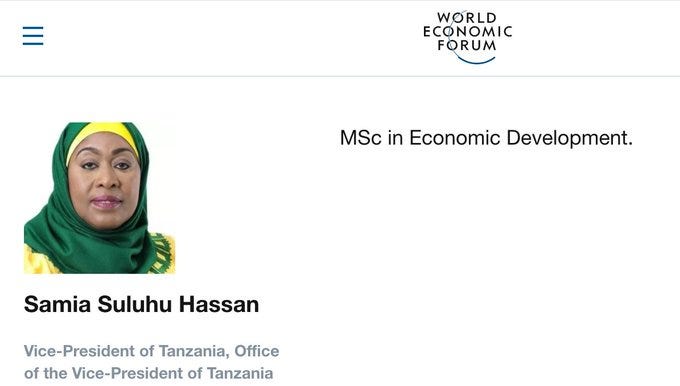
A million doses of Johnson & Johnson vaccine were ordered and a vaccination drive was put in place. A Covid task force was setup, masks had to be worn and lockdowns were enacted.
Pierre Nkurunziza – President of Burundi
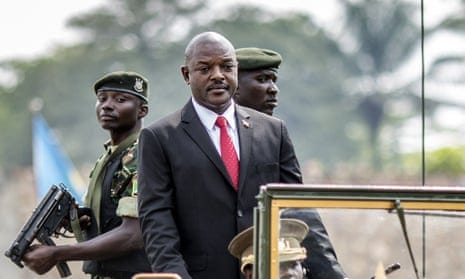
President Nkurunziza died unexpectedly, after a short stay in hospital, aged 55 in June 2020. Again, it was suspected that he had Covid but the official reason given for his death was a heart attack.
A month earlier in May 2020, the president had refused to introduce any social distancing or lockdown rules. After the WHO questioned the country’s Covid statistics, Burundi expelled WHO’s coronavirus team and declared them persona non grata for interfering with pandemic management.
On 30th June, new president Evariste Ndayishimiye announced that Covid was Burundi’s biggest enemy and to fight it required “strict compliance with the barrier measures that the Ministry of Health will now display everywhere across the country”.
Malawi
In April 2020, the high court in Malawi stopped the government from implementing a national lockdown. This had been initiated by a civil society group which challenged president Peter Mutharika who wanted a lockdown to save 50,000 Malawian lives. To date 2,686 Malawians have died with Covid.
However, in January 2021, a number of government ministers died including Minister of Local Government and Rural Development, Lingson Belekanyama; Principal Secretary in the Ministry of Information, Ernest Kantcheche; Transport Minister, Sidik Mia and Foreign Minister, Sibusiso Moyo (the former army general who ousted Mugabe).
Subsequently, the president used these deaths to stress the importance of new restrictions.
Other deaths
As well as the deaths above, which highlight how Covid deaths were used to change Covid policies in their respective countries, other Covid deaths included:
- Ambrose Dlamini, Prime Minister of Eswatini (formerly Swaziland);
- Christian Myekeni Ntshangase, Minister of Public Service in Eswatini;
- Makhosi Vilakait, Minister in Eswatini;
- Mahmoud Jibril, former Libyan Prime Minister and part of rebel government that overthrew Gaddafi;
- Pierre Buyoya, former Burundi president who died in Paris and had just been sentenced to life imprisonment in Burundi over the assassination of his successor, Melchior Ndadye;
- Khalif Mumin Tohow, Justice Minister of Somalia. This was the second Covid death in Somalia;
- Sekou Kourouma, Chief of Staff to Guinean President Alpha Conde;
- Amadou Salif Kebe, Head of Guinea’s electoral commission;
- Victor Traore, Director of Guinea’s Interpol bureau;
- Abba Kyari, Chief of Staff to the President of Nigeria Muhammadu Buhari;
- Mohamed Ben Omar, founder of the Nigerien Social Democratic Party which allied with the President of Nigeria’s party;
- Mahamane Jean Padonou, 2016 Nigerian presidential candidate and special advisor to President Issoufou;
- Ismail Gamadiid, Minister of Climate Change in Somalia;
- Perrance Shiri, part of the Cabinet of Zimbabwe and cousin of Mugabe;
- Ellen Gwaradzimba, Minister of State in Zimbabwe;
- Sibusiso Moyo, Minister of Foreign Affairs in Zimbabwe, noted for announcing the ousting of Mugabe;
- Joel Biggie Matiza, Minister in Zimbabwe and on the US sanctions list;
- Jackson Mthembu, Minister in South Africa. A medical helicopter transporting his doctor crashed, killing all 5 on board, the same day Mthembu died;
- Abdoul Aziz Mbaye, founding member of Senegal’s ruling party;
- Hasan al-Lawzi, Minister of Information in Yemen.
The list could go on and on.
I’m not saying that any of these people were taken out by the WHO or some international organisation that wanted lockdowns or to sell more vaccines. But what I am saying is that, in less transparent countries, Covid provided the perfect cover to get rid of a political opponent or undergo some type of regime or agenda change.
We have seen in the West how politicised the pandemic became and how politicians used the situation to their advantage as much as possible. Unfortunately for many of those Western politicians, killing people you don’t agree with is a little bit harder and more likely to get you put behind bars.
But in many third world countries, including the ones listed above in Africa, this happens a lot. And normally papers such as the Guardian would be rightly outraged. They would claim a coup had taken place or a political assassination.
However, many of the people who would normally be reporting and getting outraged about these deaths joined the cult of Covid. Suddenly, instead of investigating what happened, the political victor only had to write “maybe died of Covid” and Western media just reported “So sad, Covid is so terrible, if only they had been vaccinated”.
I’m sure some of the aforementioned deaths were due to some respiratory virus but maybe now that some ‘journalists’ are coming out of their Covid-induced reporting comas, they will start investigating whether all these politicians really died from Covid or were politically assassinated. The fact that African leaders were almost 8 times more likely to die from Covid than the general population might give them a clue.
Saudi Arabia welcomes Russian Navy frigate
RT | April 5, 2023
Russian Navy ships have paid a visit to Saudi Arabia for the first time in around a decade, the Russian military said on Wednesday. In late March, the detachment, which consists of the frigate Admiral Gorshkov and the medium sea tanker Kama, dropped anchor off the coast of the East African nation of Djibouti.
According to a statement released by Russia’s Western Military District, the two vessels “made a working visit to the port of Jeddah in Saudi Arabia.”
During their stay, the ships will replenish their fuel, drinking water, and food supplies, Russian military officials added.
The frigate, which can carry state-of-the-art Zircon hypersonic cruise missiles, and the accompanying medium sea tanker began their voyage in January of this year, departing from the main base of Russia’s Northern Fleet, Severomorsk.
The detachment has since participated in two international naval exercises in the Indian Ocean, as well as the Arabian Sea, crossing the equator twice, the statement read.
From March 26 to 28, the two vessels were moored at the international seaport of Djibouti, with the aim of enhancing military cooperation between the two countries.
Djibouti and Moscow discussed, among other things, “issues related to ensuring safe navigation” off the coast of Africa and in the Red Sea region.
China’s Latest Renaming Of Indian-Controlled Disputed Territory Is A Major Development
By Andrew Korybko | April 5, 2023
The decades-long Sino-Indo border dispute owes its origins to the legacy of British colonialism in the Subcontinent but persists to this day due to the complicated dynamics of this issue, which still remains bilateral despite the US’ efforts to meddling in it for divide-and-rule purposes. The latest major development on this front concerns China’s renaming of Indian-controlled disputed territory on Sunday in what Beijing regards as South Tibet but Delhi administers as Arunachal Pradesh.
This occurred one day prior to Chinese Foreign Ministry spokeswoman Mao Ning’s perfunctory policy reaffirmation pertaining to her country’s desire to trilaterally cooperate with Russia and India via the RIC platform, which was prompted by a related question regarding Moscow’s new foreign policy concept. The signal being sent is that Beijing won’t back down from its claims to that region, but nevertheless believes that this shouldn’t be an impediment to improving ties with Delhi.
Indian External Affairs Minister Dr. Subrahmanyam Jaishankar, however, reminded everyone of his South Asian Great Power’s official policy late last month regarding the impossibility of normalizing relations with China so long as their border dispute remains unresolved. The reason why China’s third renaming of disputed territory in the past six years is such a major development is because it reduces the chances of a deal whereby it and India turn the Line of Actual Control (LAC) into their official border.
The impending trifurcation of International Relations into the US-led West’s Golden Billion, the Sino-Russo Entente, and the informally Indian–led Global South (within which there are multiple rising powers) could therefore lead to more uncertainty between the last two’s Sino-Indo members. Moscow’s interests are in replicating the Chinese-mediated Iranian-Saudi rapprochement between its fellow BRICS and SCO partners, yet this well-intended scenario is impossible without mutual compromises.
The concept of “face” is immensely important in Asian cultures like China’s, hence why it’s unlikely that Beijing will seriously consider rescinding its enduring claims to Indian-controlled disputed territory after just renaming several areas therein. This insight extends credence to predictions that ties between those two will remain tense for the indefinite future, though this likely state of affairs shouldn’t be misinterpreted as implying that the US will succeed in its plot to divide-and-rule them.
Rather, it simply shows that leading countries with multipolar grand strategies like China and India don’t always see eye-to-eye on every issue, which contradicts the Alt-Media Community’s common misportrayal of all non-Western states as supposedly being united against the US. The reality is that very serious differences persist in Sino-Indo ties, which limits the extent to which they’ll cooperate, potentially even including when it comes to financial multipolarity where they have shared interests.
Looking forward, absent any concessions – whether unilateral or mutual – by either or both of these two claimants, there’s no credible reason to predict that their relations will considerably improve even if they do indeed end up cooperating to a limited extent on certain issues of shared interest. Russia’s goal is therefore to ensure that their “security dilemma” and related perceptions of each other remain manageable otherwise the outbreak of a large-scale conflict between them could doom multipolarity.
NATO expansionism in Scandinavia helps America, but puts Finland in line of fire
By Drago Bosnic | April 5, 2023
It’s quite obvious that NATO has always been an auxiliary extension of the United States. This has been the case since the unfortunate inception of the belligerent alliance 74 years ago. Thus, NATO’s crawling aggression should always be observed from the perspective of US expansionism, as the bellicose thalassocracy keeps moving its military infrastructure ever closer to the borders of its geopolitical adversaries. This has been the case in the (First) Cold War and it’s no different nowadays when the US is pushing one European country after another into a broader anti-Russian coalition that now includes the entire European Union. Washington DC is attempting to do the same by constituting a near carbon copy of NATO in the Pacific in a virtually identical step, only aimed against China.
US State Secretary Antony Blinken and NATO Secretary General Jens Stoltenberg attended the admission ceremony with Finnish Foreign Minister Pekka Haavisto. The Office of the President of Finland said in a statement: “Finland has today become a member of the defense alliance NATO. The era of military non-alignment in our history has come to an end. A new era begins. Each country maximizes its own security. So does Finland. At the same time, NATO membership strengthens our international position and room for maneuver. As a partner, we have long actively participated in NATO activities. In the future, Finland will make a contribution to NATO’s collective deterrence and defense.”
The formal admission of Finland is the latest move in the process of “globalizing” NATO. The buzzword in this particular case is “formal”, not “(NATO) admission” and the reason is quite simple. Finland was never truly neutral, not even during the (First) Cold War and particularly not since it entered the EU. It has always been packed with US/NATO intelligence assets, although this has escalated significantly in the last several decades. Since then, the country has essentially become a NATO member in all but name. Yesterday, this was merely formalized. Although NATO Secretary General Jens Stoltenberg dubbed it “a historic event”, this was just PR and optics aimed to “coincide” with NATO’s 74th anniversary. As for Sweden, it will probably have to wait another year, since publicity is everything for NATO.
Although Stoltenberg told reporters on Monday he was hopeful that Sweden would be joining in the following months, this is highly unlikely if Stockholm keeps meddling in Ankara’s internal affairs. Still, he insisted that Finland’s NATO membership “will be good for [its] security, for Nordic security, and for NATO as a whole.” How exactly this is “good for Finland’s security” is yet to be explained by either Brussels or Helsinki. Russia and Finland share a very long border (over 1,300 km), meaning the move has nearly tripled the line of direct contact between NATO and Russia, as the combined border between them has previously been approximately 700 km. Now being well over 2,000 km long, the border could be a major source of tensions.
Considering that Moscow previously never saw Finland as a potential threat, its membership in NATO, a hostile and extremely aggressive military alliance that openly declared and targeted Russia as its primary enemy, Helsinki has unilaterally changed this, prompting Moscow to completely revamp its strategic posturing towards Helsinki. In an interview with RIA Novosti, Russian Deputy Foreign Minister Alexander Grushko stated that “[Russia] will strengthen [its] military potential in the western and northwestern direction” and that “[Moscow] will take additional steps to reliably ensure Russia’s military security in the event that the forces and resources of other NATO members are deployed in Finland”.
During a briefing at the Kremlin, presidential spokesman Dmitry Peskov dubbed the move “an aggravation of the situation” and reiterated Grushko’s warning that Russia will be forced to take countermeasures to maintain its security. “The Kremlin believes that this is another aggravation of the situation. The expansion of NATO is an infringement on our security and Russia’s national interests,” he stated. However, Peskov did acknowledge that the situation certainly wasn’t as bad as with the Kiev regime, which the West has long tried to turn into a springboard for active aggression against Russia.
“The situation with Finland, of course, is radically different from the situation with Ukraine, because, firstly, Finland has never had anti-Russian rhetoric, and we have had no disputes with Finland. With Ukraine, the situation is the opposite and potentially much more dangerous,” Peskov added.
Still, from a military standpoint, the situation can hardly be considered optimistic. Finland directly broke from its neutrality when it decided to acquire F-35 fighter jets from the US in late 2021. The Pentagon has direct access to everything the F-35’s sensors can detect, meaning that Finland would be sharing key military data with the US regardless of whether it was a NATO member or not. On the other hand, being a member also means that it’s more likely to see the deployment of US offensive weapons in close proximity to St. Petersburg, Russia’s second most important city.
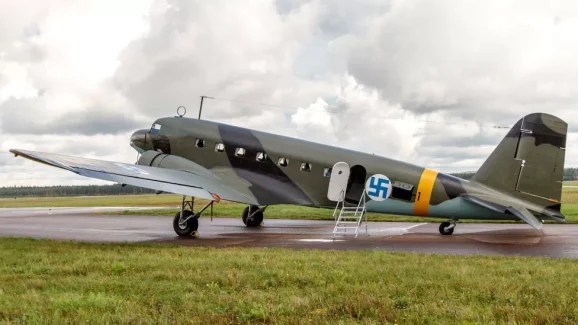
Restored DC-2 plane shows the wartime insignia of the Finnish air force
In this regard, Stoltenberg was right to say that the admission of Finland is truly historic, but only in the sense that Helsinki is essentially repeating the same mistake as over 80 years ago when it joined the Axis led by Nazi Germany. Now when it’s among “old friends” once again, maybe Finland should dust off the history books and pay very close attention to how this ended the last time.
Drago Bosnic is an independent geopolitical and military analyst.
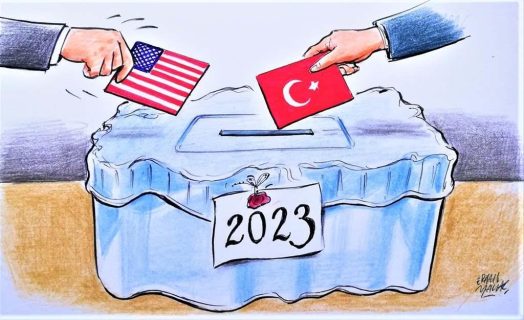
Turkey’s 2023 election a choice between Eurasianism and Atlanticism
By Ahmed Adel | April 5, 2023
The Turkish President refuses to speak any further with the American ambassador to Ankara. The reason: a recent meeting between the diplomat and the leader of the Turkish opposition only a month and a half before the presidential election. Importantly though, this election will determine whether Turkey will continue its course towards Eurasianism, or revert back completely to the NATO bloc.
With the approach of the presidential election, Recep Tayyip Erdoğan reacted strongly following the meeting that American ambassador Jeffry Flake had with the leader of the opposition pro-American Republican People’s Party (CHP), Kemal Kılıçdaroğlu.
“Joe Biden spoke, and now you see what his ambassador here does. He visited (Kılıçdaroğlu). It is a shame. You are an ambassador, and you have to know how to act. You should be engaged with the President (not Kılıçdaroğlu),” Erdoğan said in Istanbul on April 2.
“I wonder if he will be ashamed to ask for an appointment from my office. But I tell him now. Our doors are closed to him from now on because he does not know his place. You should know how an ambassador should act,” he added.
Erdoğan’s outburst was instigated because it is evident that Flake, as head of the American diplomatic mission in Turkey, is endorsing Kemal Kılıçdaroğlu and the Alliance of the Nation coalition, which is made up of seven political parties.
“Ambassador Flake met with CHP Chairperson Kemal Kılıçdaroğlu today as part of continuing conversations with Turkish political parties on issues of mutual interest between our two countries. He expressed American solidarity and condolences for Türkiye’s earthquake losses,” the American Embassy wrote in a tweet on April 2.
The current president, Kılıçdaroğlu, and two other candidates, Sinan Oğan and Muharrem İnce, will face each other on May 14. At the surface level, the vote will determine who will be the President of Turkey for a five-year term, whilst at the same time the legislative elections will take place.
However, at a deeper level, Erdoğan represents Turkey’s slow pivot towards Eurasianism, where he believes a pan-Turkic world has its place, whilst Kılıçdaroğlu represents Ankara’s traditionally close ties with Washington and NATO. Effectively, Turkish citizens have a very deep ideological decision to make.
Respected Turkish public opinion research centre MetroPOLL conducted a survey with the participation of 2,046 people in 28 Turkish provinces between January 13 and March 14. The survey showed that 44.6% of respondents would vote for Kılıçdaroğlu, while Erdoğan would receive 42% of the votes. This makes the upcoming election one of the biggest challenges to the Turkish president’s long rule.
As this election will be close, the US is hoping that it can do its part to ensure that Kılıçdaroğlu wins. Although the US and Turkey are NATO allies, they have many outstanding issues, particularly relating to Washington’s refusal to sell F-35 fighter jets, US support for the Syrian offshoot of the Kurdistan Workers Party, and Turkey’s purchase of the Russian-made S-400 missile defence system.
Tensions significantly escalated even before President Joe Biden entered the White House in 2020. “What I think we should be doing is taking a very different approach to him [Erdoğan] now, making it clear that we support the opposition leadership,” Biden said in a New York Times interview, adding that Erdoğan had to pay the price.
The Kılıçdaroğlu-led opposition bloc has become the darling child of Western media recently, with more anti-Erdoğan coverage appearing on publications like The Economist. The Wall Street Journal, for their part, recently published an article by former US National Security Adviser and notorious warhawk John Bolton, who called on the US to support the opposition or force Turkey out of NATO if Erdoğan won the elections.
It is recalled that Flake had already angered Turkish officials after he shut down the US embassy last year over supposed “security concerns” that Turkey denied. Although the US did not shut down its consulate in Istanbul, it is noted that the mayor of Turkey’s largest city is the immensely popular Ekrem İmamoğlu of the CHP. This again is another signal that the US is backing the CHP in the elections.
But as Interior Minister Süleyman Soylu pointed out regarding Flake back in February: “Türkiye has the misfortune of having US ambassadors seeking to plot coups in our country. Every US ambassador has been engaged in efforts to harm Türkiye. They also try to dispel same advice to ambassadors of other countries.”
In this way, Turkish citizens have a generational choice to make – to continue with Erdoğan’s pursuit of sovereignty and balancing relations with the Great Powers, or a complete submission to Washington and a reversal of the many years of effort made by the Turkish president to achieve sovereignty.
Ahmed Adel is a Cairo-based geopolitics and political economy researcher.
Saudi, Iran, Syria envoys meet in Oman
MEMO | April 4, 2023
The ambassadors of Saudi Arabia, Iran, Syria and Iraq held a meeting in the Gulf country of Oman on Tuesday, according to Iraqi Ambassador, Qais Saad Al-Amiri, Anadolu News Agency reports.
The diplomats exchanged views about regional affairs during the meeting hosted by Al-Amiri “in an atmosphere of optimism and familiarity among the attendees,” the Iraqi Embassy in Muscat tweeted.
Last month, Saudi Arabia and Iran announced the restoration of their diplomatic relations during talks hosted by Beijing, a deal called a diplomatic coup by China.
The two sides are expected to open embassies in each other’s capitals within two months since the deal was signed on 10 March.
Talks are also under way between Saudi Arabia and Syria to resume consular services in the two countries, according to the Saudi Foreign Ministry.
Germany to receive enough Covid mRNA vaccine to last into the 24th century
Having some of the most insanely stupid pharmaceutical contracts in the world
eugyppius: a plague chronicle – April 2, 2023
You could not have invented a stupider pandemic:
According to the German Ministry of Health, the federal government at the end of February had amassed a reserve of 116 million doses of Corona vaccine. 111 million more doses, valued at around 2.5 billion Euros, are slated for delivery. According to an answer given by the Ministry on 28 March to a question by Thomas Dietz, a Bundestag member of Alternativ für Deutschland, EU treaties oblige the German government to take delivery of these doses. “In view of the current state of the pandemic, the federal government is working to make these EU treaties more flexible,” the answer continues.
Another paper does the maths, and notes that if vaccination continues at the current rate of 2,000 jabs per day, the 227 million doses which Germany will last for 311 years. Of course, all of these doses will expire well before then, so Germany will merely receive all of this useless product, store it at substantial expense in freezers for around eighteen months, and then throw it away. This hurts Corona.
In related news, Welt reports on the curious failure of Lauterbach’s Health Ministry to finish work on the so-called National Reserve for Health Protection, which Merkel’s government planned three years ago. The Reserve was supposed to be a massive depot for masks (but of course), other personal protective equipment and medicines, which would in theory free Germany from reliance on China the next time somebody is stupid enough to cry wolf about a respiratory virus.
So far, the only thing anybody has done to realise this Reserve, is put 245 million masks in it, a substantial portion of which are slated to expire at the end of the year. A Ministry spokesperson explains that the project has devolved from a Health Reserve into a National Trashbin for Worthless Masks that Nobody Wants, because it has received no funding. It appears politicians have lost enthusiasm and now prefer that the manufacturers and the federal states maintain their won “decentralised” reserves. This obviously means that they have quietly written off the project but hope that nobody will realise it.
Despite all that you hear from WEF conference attendees and virus pests like Lauterbach about the importance of “pandemic preparedness”, the will to actually do anything about pandemics – even at the highest reaches of government – has never been lower. Perhaps we’re not the only ones who have concluded, after all that happened since March 2020, that it is indeed best to think less about viruses.
Descent into Hell: Europe’s top diplomats are nearly at the journey’s end
By Gilbert Doctorow | April 2, 2023
On Friday, 31 March Vladimir Putin signed into law the new Foreign Policy Concept which will guide Russian diplomacy in the years to come. It replaces the existing Concept promulgated eight years ago and sets out on 43 pages in logically organized form what we have been witnessing in Russia’s behavior on the world stage since the launch of the Special Military Operation in Ukraine and subsequent nearly complete rupture of relations with the US-led Collective West. There are few surprises in this document though there are some very important new directions taken over from the USSR which I will tweak out in a separate essay later today or tomorrow.
What I wish to call attention to here is how Russia’s new Foreign Policy Concept was greeted by the European Union’s High Representative for Foreign Affairs and Security Policy Josep Borrell and by an unidentified spokesman for the United Kingdom’s Foreign Office.
The UK spokesperson wrote: “April Fool’s Day tomorrow” with specific mention of the document released by the Russians. I have in front of me the respective news item in The Eastern Herald (India).
Borrell, who is not known for originality, picked up this convenient insult and used it to remark on another Russia-related development of the same day. He wrote: “Russia taking over today @UN Security Council presidency is fitting for April Fool’s day.”
Both statements were issued on their Twitter accounts. As they say, the medium (low-brow to be kind about it) is the message.
When diplomacy degenerates into crude insults as the UK and EU showed yesterday, we are well on our way to total war. Our foreign policy is being conducted by intellectually challenged people who have had a bad upbringing, sad to say.
The path before us is what the French call la déscente aux enfers. Whether we will emerge into a second life through Resurrection after hitting bottom depends on your religious beliefs.
©Gilbert Doctorow, 2023
Russia to Consider ‘NATO Peacekeepers’ as Targets if Deployed in Ukraine, Medvedev Says
Sputnik – 31.03.2023
MOSCOW – Russia will consider so-called NATO peacekeepers as legitimate targets if they get deployed in Ukraine on the front line, Security Council Deputy Chairman Dmitry Medvedev said on Friday.
“They will be a legitimate target for our armed forces if they are placed on the front line without the consent of Russia with weapons in their hands and directly threaten us,” Medvedev wrote on his Telegram channel.
According to the official, the West’s real goal is to establish a ceasefire on the front line that is favorable to them.
“It is clear that the so-called NATO peacekeepers are simply going to enter the conflict on the side of our enemies [Ukraine] … Unleash that very third world war, which they so fear when they talk,” Medvedev said.
Earlier in March, Hungarian Prime Minister Viktor Orban stated that the European Union is one step away from discussing sending military of some peacekeeping type in Ukraine.
Featured Video
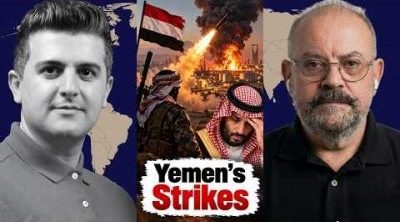
Elijah Magnier: Yemen’s strikes are shattering Saudi Arabia’s long-term strategy
or go to
Aletho News Archives – Video-Images
From the Archives
British weapons and personnel doing much of the killing in Yemen
Press TV – June 18, 2019
A detailed report published by the Guardian newspaper has shown how Britain is massively contributing to Saudi Arabia’s devastating war on Yemen as it suggests that London is not only supplying the bombs that fall on Yemenis, but it provides the personnel and expertise that keep the war going.
The comprehensive report by Arron Merat published on Tuesday showed that Britain was doing much of the killing in Yemen as the country continues to provide Saudi Arabia with everything it needs to turn its southern impoverished neighbor into a graveyard.
“Every day Yemen is hit by British bombs – dropped by British planes that are flown by British-trained pilots and maintained and prepared inside Saudi Arabia by thousands of British contractors,” said Merat in the report. … continue
Blog Roll
 Aletho News
- Racist Seinfeld Dances for Joy as Bibi Unveils His New Map
- A West Bank War for Netanyahu’s Election Campaign, Could It Backfire?
- Yemen denounces European Parliament’s ‘hypocritical’ push to blacklist Ansarullah
- Qalibaf: UAE’s UN bid aims to ‘clear the runway’ for ‘Greater Israel’, whitewash genocide
- Pakistan reopens Iran border after boosting security: Report
- Why are so many Brazilians voting for Flávio Bolsonaro?
- Democrats Put Anti-Russia Agenda Ahead of American Workers
- Elijah Magnier: Yemen’s Strikes Are Shattering Saudi Arabia’s Long-Term Strategy
- Pentagon designates Chinese cultural centers national security threat
- Israel Demolishes Home Of Lebanese Journalist Whose Viral Film Exposed Pager Attack
- If Americans Knew
- An error has occurred; the feed is probably down. Try again later.
- No Tricks Zone
- Sudden Stratospheric Warming, Powerful El Niño Combination May Lead To Extreme Europe Cold, Energy Crisis!
- Two New Studies Find Thwaites Glacier Melt Cannot Be Driven By Human Activity Or A Warming Ocean
- E-Cars Reduce CO2 Emissions By Only 41% Compared To Internal Combustion Engine Vehicles
- Predictions Made By Renowned Climate Professor Over Past Decades Have Been Proven To Be Poor
- New Study Suggests Large Regions Of The Pacific Ocean Have Been Cooling For The Last 80 Years
- Germany’s Green Energy Debacle: High Energy Costs Force Kahla Porzellan to Close After 182 Years!
- New Study: 50 Years Of The Most Aggressive ‘Net Zero’ Policies Can Only Affect The Global Climate By 0.03°C
- US September “Heat” Was No Record…Many Records Set Decades Ago
- Latest European Green Energy Debacle; Portugal’s Largest Flagship Solar Park Insolvent!
- Green Energy Debacle: German Expert Professor Fritz Vahrenholt Warns Of Severe Economic And Social Consequences

