US Afghan Military Arsenals are Up for Sale
By Vladimir Platov – New Eastern Outlook – 26.03.2022
While the exact number of US weapons, vehicles, aircraft and military equipment seized by the Taliban after the US and its allies had fled Afghanistan is unknown, the preliminary value of this lethal commodity is estimated by various experts at around $85 billion. In Kunduz, Afghanistan, regular Taliban military displays and military parades show, for example, US-made M1117 armored personnel carriers and other weapons that the Taliban have inherited from the US and have not yet been sold to Pakistan or other countries. Of course, the US military and intelligence agencies will work to assess what ended up in Taliban hands, as US decision-makers have already indicated their desire for more information on the weapons seized, but this will take time. In late 2021, experts at the Center for International Policy in Washington published a study, “US Weapons Stockpiles in Afghanistan”, which noted that over two decades of war, the US had moved weapons, equipment and other materiel worth many tens of billions of dollars into the country. With Afghanistan’s bank accounts blocked and the dire humanitarian and economic situation in the country, the funds that could be raised by the Taliban from the sale of these arsenals are significant.
According to information from Afghanistan and neighboring countries, as well as from the Calibre Obscura blog, which specializes in black market arms analysis, the Taliban are willing to exchange some NATO military equipment for other weapons needed to fight in the difficult geographical conditions of their country. The Taliban plan to use the proceeds from the sale of “surplus” arms to buy food as the country is likely to face starvation after a long crisis.
The sale of US army and allied assets left behind by the hasty withdrawal of the NATO contingent has already begun in the markets of Afghanistan. In particular, body armor, military uniforms, boots, tents, dishes and much more have long been on sale. Most of the trophies are taken from warehouses that NATO has handed over to the Afghan army. It is noted that the Taliban are not asking more than $100 for a body armor, and about $50 or less for a helmet. New S&W Sigma SV9VE pistols are being sold for a third of the market price in Kandahar. In Herat, one can easily buy carbines and assault rifles at the market. Some of the weapons are sold by the Taliban themselves, some by locals who have looted US army bases and barracks.
Grey Dynamics website reports that the Taliban have begun selling off their weapons stockpiles to various groups in neighboring countries. According to their information, the weapons have ended up in the hands of the Balochistan Liberation Front (based in Iran), the Tehrik-e-Taliban-Pakistan and other extremist groups banned in the Russian Federation. Experts suggest that the weapons could resurface in neighboring states, particularly in the Central Asian republics.
It is estimated that Afghanistan could soon become the world’s largest arms seller, causing a spike in crime in the region. Previously, Iraq and, in part, Syria served as this type of arms market. Before them, it was Albania. But Afghanistan can give everyone a head start. After all, just by the most conservative estimate, the US has left about a hundred thousand pieces of small arms alone there. As can be seen from the data published in open sources, there are among the Afghan trophies the blast-resistant US-made wheeled armored vehicles to transport troops; more than two dozen light turboprop attack aircraft A29 Super Tucano (manufactured by Embraer, Brazil); more than 30 Mi-17 transport helicopters, which previously the US purchased from the Russian Federation for the Afghan government forces, as well as no less number of UH-60 Blackhawk transport helicopters and many other state-of-the-art military equipment.
According to separate media reports, the Taliban may decide to sell some of the wheeled armored vehicles to interested countries – the PRC, Turkey and all other states intending to explore US weapons. In particular, according to regional media reports, Chinese defense industries will be able to buy several UH-60 Blakchawk helicopters from the Taliban through Pakistani intermediaries to disassemble and study engine designs. Some of the A-29 Super Tucano strike aircraft may be sold off piecemeal to countries that have established close military and political contacts with the movement’s leadership (in particular, Saudi Arabia, the UAE, Qatar).
The Taliban’s determination to sell off seized military arsenals has only intensified in the absence of news of a possible unlocking of Afghanistan’s foreign exchange reserves by the US.
The Taliban themselves continue to have at their disposal attack aircraft and helicopters that are effective for combat operations in the region, including American, Russian and Brazilian-made aircraft. The Taliban are now offering large sums of money to pilots and airmen who have joined the group, and according to some reports the sums on offer are higher than those previously paid by the government in Kabul. It is known that a number of Kunduz Airbase personnel have already joined the Taliban, and there is a possibility that in the near future the Taliban will have their own air force, albeit on a limited scale.
However, even if the Taliban can obtain serviceable aircraft, they will inevitably face a maintenance problem. But the benefit to the Taliban from their presence remains so far limited by weak logistical and maintenance capabilities. The Taliban may well be able to put pilots in aircraft to make a few sorties, as they have already done, such as at a celebratory parade after the final withdrawal of US troops. But they will almost certainly need outside help to keep the aviation they have received in good working order. And the very number of qualified military pilots the Taliban have is clearly small. Moreover, Afghans are excluded from the global supply chain needed to access spare parts. And while they might be able to dismantle a few aircraft to service others, this model of combat aviation maintenance is highly unsustainable. However, it is quite possible that some external partners – Pakistan, Qatar or others – could provide the necessary assistance to the Taliban.
Furthermore, it should not be forgotten that, thanks to modern information technology and social media, the Taliban can find training programs on the use of even highly sophisticated NATO left-over military equipment and train the number of “operators” they need. Meanwhile, it is quite possible that there could be a strengthening of their “cooperation” in the near future, including in the form of the sale of their existing military equipment at quite reasonable prices or as part of “brotherly aid” to Muslims “fighting for freedom”.
Chinese Foreign Minister visits India to discuss Ukraine
Samizdat | March 25, 2022
Chinese Foreign Minister Wang Yi arrived in New Delhi on Thursday night for a diplomatic visit, where he is expected to meet his Indian counterpart Subrahmanyam Jaishankar, the Indian foreign ministry announced. This is the first visit of a high-ranking Chinese official to India since border clashes in Ladakh in 2020.
Wang Yi previously held talks with India’s National Security Adviser Ajit Doval, according to Reuters. Both China and India kept the visit secret until the Beijing diplomat touched down in New Delhi late on Thursday.
The talks, set for Friday, are likely to be focused on border tensions between India-China, as well as Russia’s military offensive in Ukraine. Both countries have, so far, abstained from condemning and sanctioning Russia for its actions, maintaining trade relations with the country despite pressure from the West.
While the two nations have called on Russia to cease hostilities and look for a diplomatic solution, India continues to buy Russian oil and is currently discussing means to switch to a rupee-rouble trade mechanism, allowing the two sides to avoid trading in the euro or the dollar. China has repeatedly denounced unilateral sanctions on Moscow, protesting against Russia’s exclusion from the G20.
The relations between China and India began to deteriorate after a clash in the Ladakh region on their Himalayan border in June 2020, where at least 20 Indian and four Chinese soldiers were killed.
“Few would have anticipated … the turn that India’s relations with China have taken in the last two years,” Indian Foreign Minister said on Thursday, stressing the importance of coordination on defense and foreign policies matters between the two countries. It is likely that India will push for complete disengagement of troops from the region during the Friday talks.
The Chinese foreign minister visited Pakistan and Afghanistan earlier this week, and is set to continue his tour across South Asia by traveling to Nepal. In Pakistan, Wang Yi said that “China shares the same hope” as its Islamic colleagues regarding the status of Indian Kashmir province, who advocate for the province’s “inalienable right to self-determination”. The remark drew anger from some Indian officials ahead of his visit, as the Muslim majority region, controlled by both India and Pakistan, is considered a disputed territory, where India has been fighting armed rebels for decades.
China refutes NATO secretary general’s misinformation accusation
By Du Qiongfang | Global Times | March 24, 2022
Chinese Foreign Ministry spokesperson Wang Wenbin said on Thursday that time will prove China stands on the right side of history and groundless accusations will collapse, refuting an allegation from NATO Secretary General Jens Stoltenberg that “China has provided Russia with political support by spreading lies and misinformation.”
When asked about Stoltenberg’s allegation at Thursday’s press briefing, Wang said the accusation against China itself is spreading disinformation.
With an objective and fair attitude, China has made active efforts to realize an immediate ceasefire, to avoid a humanitarian crisis and to restore peace and stability, Wang said, adding that Ukraine should be a bridge between the East and the West, not an outpost in major power rivalry.
“We need calm and rationality to defuse a crisis rather than ignite the fire and add more fuel to the fire; we need dialogue and communications to resume peace instead of using pressure and coercion; to achieve lasting peace and stability, we need to accommodate the legitimate security concerns of all parties, rather than promote collective confrontation and seek absolute security,” Wang said.
He added that China’s stance is in line with the wishes of most countries and it stands on the right side of history as time will tell. Any groundless accusations and suspicions against China are indefensible and will simply collapse.
The West thinks the war is about defending democracy and freedom but in reality it’s about security in the European geopolitical landscape, so the Ukraine crisis is not about differences in social systems or ideology, Yang Xiyu, a senior research fellow at the China Institute of International Studies, told the Global Times on Thursday.
Wang said that European countries should uphold the principle of strategic autonomy and work with Russia and Ukraine and other relevant countries to build a balanced, effective and sustainable European security architecture through dialogue and negotiations. The US and NATO should also engage in dialogue with Russia to address the root cause of the Ukraine crisis.
Wang also said that there are many loopholes in the US’ responses to the international community, including China’s questions surrounding the US biological laboratories in Ukraine which Russian experts claimed to have revealed new facts pointing to the direct involvement of the US Department of Defense in the development of biological weapons components in Ukraine.
The best way for the US to prove its innocence is to open its doors and accept the test of the international community, Wang said.
The spectre that haunts Biden as he wings his way to the borderlands of Ukraine
The Russian special operation may after all be inching toward successful conclusion
BY M. K. BHADRAKUMAR | INDIAN PUNCHLINE | MARCH 24, 2022
By a queer coincidence, former US Secretary of State Madeline Albright passed away while President Joe Biden was travelling in Air Force 1 en route to Europe on what is probably the most crucial diplomatic mission of his presidency.
The general expectation is that 80-year old Biden is personally undertaking a mission to persuade the US’ European allies that the North Atlantic Treaty Organisation (NATO) should intervene in the Ukraine crisis in some way. And, ironically, Albright was the choreographer of the idea that in the post-cold war era, the NATO should reinvent itself and transform as a global security organisation.
Albright, like most American diplomats of East European descent, was passionately devoted to the NATO. She supported the alliance’s brutal military intervention in Yugoslavia in 1999 and would have supported an intervention in Ukraine.
The White House spin is that Biden will discuss additional sanctions against Russia. But the possibility of new restrictions has waned following the EU foreign and defence ministers’ meeting on Monday where a decision was taken to put off further sanctions.
The EU meeting instead assessed that the ongoing Ukraine-Russian talks should proceed further and even if upbeat predictions may not be entirely correct, since the talks are challenging, the good part is that neither party has complained of any deadlock in the negotiations so far.
Conceivably, Biden is travelling to Europe not to discuss tougher sanctions (something which he could as well have handled in a videoconference) but to explore NATO’s potential engagement in the Russian-Ukrainian conflict for which his participation becomes absolutely essential.
As things stand, there is every possibility of a prolonged conflict in Ukraine and Russia eventually prevailing. Such a scenario is extremely damaging for Biden politically in the US. Biden is facing domestic criticism both for his failure to prevent the conflict as well as for being ineffectual in blocking the Russian advance.
While the US rhetoric pillories Russia for “war crimes” and the humanitarian crisis in Ukraine, et al, the world capitals view this as a geopolitical confrontation between America and Russia. Outside of the western camp, the world community refuses to impose sanctions against Russia or even to demonise that country.
The world community steers clear of taking sides between the US and Russia. The Islamabad Declaration issued on Wednesday after the 45th meeting of the foreign ministers of the fifty-seven member Organisation of Islamic Conference refused to endorse sanctions against Russia and instead counselled cessation of hostilities in Ukraine, avoidance of loss of lives, enhancement of humanitarian assistance and a “surge in diplomacy” — almost ditto China and India’s stance.
Not a single country in the African continent and West Asian, Central Asia, South and Southeast Asian region has imposed sanctions against Russia. Following a visit to Hanoi, Malaysian PM Ismail Sabri Yaakob said, “We discussed the Russian-Ukrainian conflict and agreed that Malaysia and Vietnam will remain neutral on this issue. As for sanctions against Russia, we do not support them. The sides do not support unilateral sanctions; we recognise only restrictions that could be imposed by the UN Security Council.” This is the consensus within ASEAN too.
Interestingly, Chinese Councillor and Foreign Minister Wang Yi was the chief guest at the OIC meeting in Islamabad. In his remarks, Wang Yi said, “China supports Russia and Ukraine in continuing their peace talks, and hopes that the talks will lead to ceasefire, end the fighting, and bring about peace. Humanitarian disasters should be avoided, and spillover of the Ukrainian crisis should be prevented so as not to affect and harm the legitimate rights and interests of other regions and countries.”
The Chinese foreign ministry press release on Wang Yi’s meeting with the Saudi Arabian Foreign Minister Faisal bin Farhan Al Saud said, “As to the Ukraine issue, the two sides agreed that all countries’ sovereignty and territorial integrity should be respected and their reasonable security concerns should be taken seriously. It is imperative to prevent any humanitarian crisis, maintain the peace talk process and resolve conflicts through dialogue and negotiation. Both sides emphasised that all countries have the right to make independent judgements, withstand external pressure, and disagree with the simple logic of “black or white” and “friend or foe”.
Again, the Chinese press release on Wang Yi’s meeting with his Egyptian counterpart Sameh Shoukry said, inter alia, “The two sides exchanged views on the Ukraine issue, and agreed to respect the sovereignty and territorial integrity of all countries and stay committed to a comprehensive solution to the current crisis. Shoukry said, Egypt opposes some countries exerting pressure on China and stands for strengthening cooperation rather than escalating confrontation.”
Curiously, four foreign ministers from West Asia travelled to Moscow last week to discuss the bilateral cooperation — from Qatar, Iran, Turkey and the UAE.
Nonetheless, the outcome of Biden’s visit to Europe will have significant bearing on the conflict in Ukraine. If Biden succeeds in getting European backing for his proposal for a NATO intervention in Ukraine, the conflict may escalate dramatically into a world war involving nuclear weapons.
Will Biden push the envelope? It seems he’s unwilling to risk. Biden seems to have a Plan B as well. He has scheduled a separate visit to Warsaw. Poland indeed has its fair share of Russophbes and has been straining at the leash for some form of involvement in Ukraine.
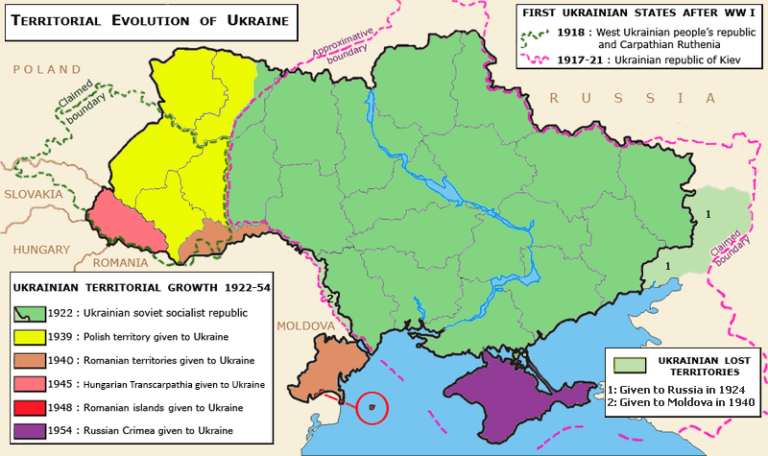
The heart of the matter is that Poland also has an axe to grind. Parts of Poland comprise today’s ethnically mixed western borderlands of Ukraine — oblasts of Zhytomyr, Khmelnytskyi and Lviv. If Ukraine fragments or collapses in defeat, Poland will most certainly seize the opportunity to reclaim its lost territories. Poland’s hyper-activism over Ukraine is self-evident.
Incidentally, in recent days, former Polish Foreign Minister Radoslaw Sikorski and Ukrainian Deputy Prime Minister Iryna Vereshchuk have both accused Budapest of trying to lay its hands on Ukraine’s largely Hungarian-populated Transcarpathian region. On Tuesday, Sikorski alleged in a tweet that Hungarian PM Viktor Orbán and President Vladimir Putin reached a secret agreement on the partition of Ukraine!
On the same day, Iryna Vereshchuk complained in a Facebook post: “The way the Hungarian leadership has been treating Ukraine lately is even worse than some of the Russian satellite states of the former Soviet Union. Hungary does not support the sanctions. They don’t provide weapons. They don’t allow transit of weapon supplies from other countries. They say ‘no’ to virtually everything.”
Biden cannot but be exploring with the Polish leadership possibilities that fall short of an outright NATO intervention in Ukraine. The spectre that haunts the Biden administration, despite the swagger of its media bluster, is that the Russian special operation may after all be inching toward successful conclusion, creating a large buffer of regions on the eastern side of the Dnieper river, and gaining control of Black Sea coastline that denies access to NATO ships.
Poland becomes a key stakeholder in such an outcome and Washington surely regards Warsaw as its number one interlocutor in the developing situation, as the fate of Ukraine hangs in the balance.
US is reestablishing a new Inquisition using Russia-Ukraine crisis as excuse
Global Times | March 22, 2022
The US, leading several attendants, is launching a round of international mobilization to condemn Russia. After US Secretary of State Antony Blinken accused China of standing “on the wrong side of history” in the Russia-Ukraine conflict, British Prime Minister Boris Johnson and Australian Prime Minister Scott Morrison immediately followed suit by putting pressure on China. During his visit to India, Japanese Prime Minister Fumio Kishida raised his voice on the Ukraine issue, attempting to lobby New Delhi to switch its stance to condemn Russia. Even the Associated Press tweeted, “Amid a worldwide chorus of condemnation against Russia’s war on Ukraine, Africa has remained mostly quiet.”
It is not up to Washington to decide who stands “on the wrong side of history.” The US cannot forcibly pin the label that belongs to itself to someone else. As a netizen commented under the AP’s tweet, “Us drinking panadol for your own headache is not something we’ll be doing.” The US is the one that triggered the conflict and is the biggest hidden hand behind the curtain, who has made the Russia-Ukraine crisis where it is today. To shirk its responsibility and seek its own interests, Washington concocted a new charge for those who haven’t condemned Russia to set up a new moral high ground for global sanctions against Russia.
The US is reestablishing a new Inquisition, infamous in medieval Europe, and all who disagree with the US have been labeled “heretics.” And the US also wants to tie and burn the “heretics” on the pillars of international public opinion.
Yet, to the disappointment of the US and its attendants, although they have been clamoring that countries should take sides, they cannot cover the fact that they are still the minority in the international community. The US wishes that the whole world will follow it to condemn and sanction Russia, but more than 100 countries are not involved in imposing sanctions against Russia.
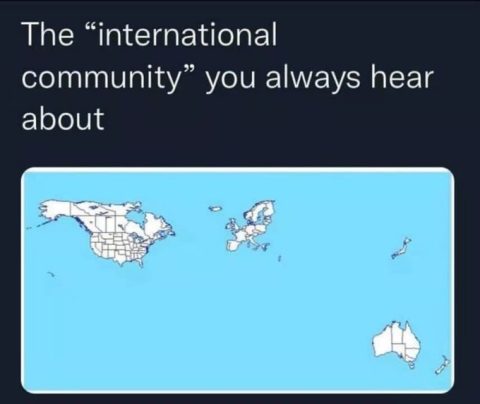
The attitude of non-Western major powers, including India, Brazil, and South Africa share a similar attitude with China – hoping to facilitate dialogue for peace and quell the conflict as soon as possible. Why? Because everyone with a sober mind can see that extreme sanctions will not help solve the crisis. On the contrary, they will only add fuel to the fire.
Washington has been clamoring that only sanctions against Russia are “correct” moves. It is humiliating the judgment and political experience of the entire international community. If the crisis can be resolved by simply condemning or sanctioning Russia, it is believed the international community will surely have done it.
But the situation is completely different. Condemning Russia or adding a few names on the sanctions list won’t fix anything. Instead, they cut off ties that could have maintained communication and mediation between Russia and Ukraine. Doing so has further weakened the intermediary role in facilitating dialogue for peace.
By mobilizing the international community to “condemn” Russia and join the US sanctions team, Washington has no sincerity or idea of solving the Russia-Ukraine crisis. The “united front” it is advocating is only to satisfy US interests.
Now it wants to pressure China to “condemn” Russia to create a rift in China-Russia relations. If China resists the pressure and does not do it, the US will have an excuse to blame China. For the US, it would be ideal if China were to participate in sanctions against Russia which would result in the breakup of China-Russia relations. In other words, the US has dug a hole and imagines that China will have to jump into it.
It has to be said that this smart-aleck bullying is very “American.” But there is a fundamental difference between China’s logic and that of the US. China has always decided its position and policy based on the merits of the matter itself.
China has no self-interest in the Ukraine issue and is making real efforts to alleviate the humanitarian crisis while urging peace and promoting talks, which is in stark contrast to Washington’s inflammatory operations of sending weapons and imposing extreme sanctions. Who is on the right side of history? The international community can judge by itself, and it is not up to the US, the initiator of this crisis, to define it.
It was noted that on March 20, Chinese Ambassador to the US Qin Gang was interrupted 23 times by the host during a 9-minute interview with CBS. In the same program that day, US Defense Secretary Lloyd Austin and US Senate Republican leader Mitch McConnell were never interrupted by the host. This is a reflection of the political climate in Washington, where any dissenting voice is considered “heretical.” This is the most dangerous thing for the Russia-Ukraine situation.
Russia Cuts Refinery Output As Diesel Shortage Worsens
By Tsvetana Paraskova | Oilprice.com | March 22, 2022
Europe’s diesel shortage is becoming worse as Russian oil refiners have started to cut back on refinery throughput, according to the chief executive of one of the world’s largest independent commodities trading houses, Gunvor.
“This is a global problem but for Europe it’s very hard because Europe is so short” of diesel, Gunvor CEO Torbjorn Tornqvist said at the Financial Times Commodities Global Summit as carried by Bloomberg.
Trade with Russian diesel is becoming scarcer because of buyers in Europe steering clear of Russian shipments, awaiting further sanctions against Russia over its invasion of Ukraine, or simply declining to purchase Russian energy to finance Putin’s war in Ukraine.
The “self-sanctioning” of the buyers has already started to force Russian refiners to reduce production, according to Gunvor’s Tornqvist.
“What does that mean? It means more crude oil will need to be exported instead of the products, and we believe that is not possible and will lead to cutbacks in Russian production,” he said, as carried by Bloomberg.
Diesel stocks globally were already low even before the Russian invasion of Ukraine. According to estimates from Reuters’ John Kemp, diesel fuel stocks in Europe are at their lowest since 2008, and 8 percent—or 35 million barrels—lower than the five-year average for this time of the year.
In the United States, the situation is graver still. There, diesel fuel inventories are 21 percent lower than the pre-pandemic five-year seasonal average, which translates into 30 million barrels.
In Singapore, a global energy trade hub, diesel fuel inventories are 4 million barrels below the seasonal five-year average from before the pandemic.
On top of exacerbating a global diesel supply crunch, the sanctions against Russia are also likely to force Russian firms to shut in some crude oil production, analysts say. Russia will have to shut in some of its oil production as it will not be able to sell all the volumes displaced from European markets to other regions, with Russian crude production falling and staying depressed for at least the next three years, Standard Chartered said earlier this month.
Russia bans Facebook and Instagram
Samizdat | March 21, 2022
A Moscow court on Monday banned Facebook and Instagram in Russia as extremist organizations, after the platforms’ owner, US-tech giant Meta, allowed online hate speech against the country’s nationals. The judge had rejected the request by Meta’s lawyers to stop or delay the proceedings against the social media giant.
The case correspondence, which was read out in court, suggested that Instagram had ignored around 4,600 demands to remove false content about Russia’s military operation in Ukraine, and 1,800 demands to delete calls for illegal protest.
The Federal Security Service (FSB) has fully backed the ban on Meta, with the agency’s representative saying in court that the tech giant’s actions “were aimed against Russia and its armed forces.” He called on the judge to outlaw the US company and to “immediately” implement this decision.
The prosecutor acknowledged in court that there were technical means for users to bypass the ban in case it’s introduced and still access Facebook and Instagram. However, he assured that Russians “won’t be held liable for simply using Meta’s products.”
Russia’s Prosecutor General had filed a legal complaint demanding that Meta’s platforms be outlawed and the company itself designated an extremist organization in Russia, after Instagram and Facebook said they would allow hate speech and calls for violence against Russian nationals amid Moscow’s ongoing military operation in Ukraine. The US firm later clarified that the deviation from its rules was temporary and implemented only on Ukrainian territory, so that the locals could vent their anger over the conflict.
The development prompted Russia to block Instagram, which had 80 million users in the country. Facebook had been made inaccessible earlier, in response to the platform’s clampdown on the accounts of the Russian media.
The lawsuit isn’t aiming to restrict WhatsApp, due to it being simply a communication tool.
During the hearings on Monday, Meta’s lawyers asked the judge to drop or to postpone the proceedings. They argued that the lawsuit shouldn’t be handled by a Russian court as Meta is registered in the US and because of this fact the proceedings should be transferred to America. The defense also complained that it wasn’t given enough time to properly prepare for the case, which was filed just over a week ago. The defense insisted that Meta has “changed its policy after public discussions and now declares that Russophobia and calls for violence against Russian citizens are unacceptable.”
Pakistan, as India, won’t bow to western pressure – PM Khan
Samizdat | March 20, 2022
Prime Minister Imran Khan again blasted foreign powers, who tried to pressure Pakistan to sever ties with Russia over its military operation in Ukraine, vowing to continue making sovereign policy decisions that are in the best interests of his nation and people.
“For these 3.5 years we have only tried to help Pakistan prosper,” PM Khan said about his ruling Pakistan Tehreek-e-Insaf party, addressing a public gathering in the town of Dargai on Sunday.
The PM explained why he refused to join the international chorus condemning Russia for its attack on Ukraine, saying that Pakistan would have gained nothing by complying with the demand. The diplomats representing nearly two dozen missions, including EU countries along with Japan, Switzerland, Canada, the UK and Australia, “broke protocol by making the request” in a March 1 letter, he added.
“I haven’t bowed before anyone and will not let my nation bow either.”
Imran Khan faces a no-confidence vote this week, after he lost his parliamentary majority following multiple defections from his party. The prime minister scolded the opposition leader in the National Assembly directly, saying Shehbaz Sharif “polished boots when he saw a white man in a suit.”
“I took an oath that I will not bow before anyone but God,” Khan reiterated, bringing up the US-led global war on terror as an example of policy decision forced by the West that eventually brought Pakistan nothing but suffering. “We became part of America’s war against terror in Afghanistan and lost 80,000 people and $100 billion.”
Pakistan has come under increased Western pressure to publicly denounce and distance itself from Moscow, after it abstained from a United Nations General Assembly resolution condemning Moscow’s military actions against Kiev, choosing instead to remain neutral alongside 34 other countries, including China, South Africa and India.
Despite being a vocal critic of the Indian government led by Prime Minister Narendra Modi, Khan gave credit to the neighboring country for making “independent” decisions in the interests of their citizens.
India is also facing international pressure and criticism for staying neutral and adopting a pragmatic approach to ensure the country’s own energy security. New Delhi continues to buy Russian oil, available at discounted prices, as some countries have been avoiding it in fear of retaliatory sanctions from the US.
Russian President Vladimir Putin announced a “special military operation” in Ukraine on February 24, with a stated goal to “demilitarize and denazify” its government, ensuring that its NATO membership aspirations no longer pose a threat to either Russia or the newly recognized Donbass republics, which have suffered seven years of siege by Kiev forces.
The US and its allies have accused Russia of starting an “unprovoked” invasion to occupy Ukraine. Moscow has seen thousands of harsh new curbs and sanctions slapped on it as a result, with the US, the EU, and others seeking to “isolate” and “destroy” the Russian economy.
China sees parallel between Ukraine, Taiwan
BY M. K. BHADRAKUMAR | INDIAN PUNCHLINE | MARCH 20, 2022
The Chinese stance on developments around Ukraine was initially one-dimensional, namely, there is no conceivable comparison between Ukraine and Taiwan issues, as they are fundamentally different, because Taiwan is a part of China, whereas Ukraine is an independent country. Factually, that was a correct stance.
However, there has been a shift lately toward acknowledging that the Eurasian tensions hold an analogy for the Indo-Pacific region. Chinese commentaries underline that the relentless expansion of NATO in the post-Cold War era is the root cause of events unfolding over Ukraine. In the video call with President Biden in the weekend, President Xi Jinping implicitly touched on this aspect:
“The US and NATO should also have dialogue with Russia to address the crux of the Ukraine crisis and ease the security concerns of both Russia and Ukraine… As two Chinese sayings go, ‘It takes two hands to clap.’ ‘He who tied the bell to the tiger must take it off.’ It is imperative that the parties involved demonstrate political will and find a proper settlement in view of both immediate and long-term needs… An enduring solution would be for major countries to respect each other, reject the Cold War mentality, refrain from bloc confrontation, and build step by step a balanced, effective and sustainable security architecture for the region and for the world…”
In the spate of Chinese commentaries on the Ukraine conflict, one report that catches attention for its incisiveness and insights is an interview in the Global Times entitled Russia-Ukraine conflict can be regarded as a ‘preview’ of US’ possible acts in Asia: Zheng Yongnian – NATO’s phantom.
Zheng Yongnian is best known as an international authority on Chinese politics, political economy and the CCP. He opined categorically that NATO’s expansion will not stop and it will likely expand to Asia.
In his view, the US is already putting in place “the prototype of an “Asian NATO” — referring to AUKUS, Quad, Five Eyes, Indo-Pacific Strategy, US moves vis-a-vis Vietnam and Singapore. Second, he said China should anticipate a Ukraine-style crisis taking place in “many countries and regions” in Asia and “the expansion of NATO will only stop when another bloc can compete with it and form a check and balance.”
Third, while China’s economic openness and interdependence are its strong points, that may not prevent a war but can probably slow it down. He said bluntly: “Once fierce conflicts happen between China and the US, will the US kick China out of the SWIFT system as it did with Russia? My opinion is: 100 percent YES.” That said, China’s economy, deeply embedded in the West, can make the West feel real pain.
However, Zheng Yongnian also pointed out that it is not all black and white, either. On the one hand, while China and Europe have common interests and no geopolitical disputes, on the other hand, Europe’s current solidarity with the US is very fragile, as European interests are at risk in a longer term perspective and the EU itself is “at a particularly vulnerable moment.”
Besides, a remilitarised Germany will cause uneasiness in the continent, especially for France, with geopolitical implications. Also, the spectre of nuclear proliferation haunts Europe now. It is no longer possible to rule out conflicts happening again within the Western civilisation.
Interestingly, Zheng Yongnian also flagged that the geopolitical landscape of Asia may radically change if Japan, on the footfalls of Germany, also opts for remilitarisation. “This will impact on the entire East Asia, he warned.”
The analysis is very profound and there is very little to add to it. China is wary that Washington is moving in the direction of creating a “Ukraine-like” strategic dilemma for Beijing apropos Taiwan. To be sure, China has been provoked by the abrasive remarks recently by Gen. Kenneth Wilsbach, commander of Pacific Air Forces, on the “key lessons” Beijing should draw out of the Ukraine conflict.
The general listed them as the “solidarity of the global community” in opposing “an unprovoked attack on a neighbour” and “the onerous sanctions that have economically crippled Moscow”. Wilsbach threatened that if China behaves in the Russian way, “something more robust will happen.”
In addition, he warned, China should also consider the opposition of regional countries, apart from the ravages of the war in human lives and treasure. It could not have been lost on Beijing that Wilsbach shot straight from the hip just before Biden’s phone call to Xi Jinping.
Against this backdrop, the speech by Chinese Vice Foreign Minister Le Yucheng on Saturday at the Tsinghua University on the implication of the Ukraine developments for the Asia-Pacific region merits careful attention.
These are the first authoritative remarks by a top Chinese official acknowledging that “the Ukraine crisis provides a mirror for us to observe the situation in the Asia-Pacific. We cannot but ask, how can we prevent a crisis like this from happening in the Asia-Pacific?” They have followed immediately after the 2-hour long phone conversation between President Xi Jinping and President Biden.
Le Yucheng took note that the Asia-Pacific is in “promising situation” today — an anchor of peace and stability, an engine for growth and a “pace-setter” for development. The region faces two choices between building “an open and inclusive family for win-win cooperation or go for small blocs based on the Cold War mentality and group confrontation.”
Le Yucheng explained this binary choice as between: “peace and not undermining regional tranquility; so-called absolute security and common security; mutual respect and wanton interference in others’ internal affairs; and, unity and cooperation versus division and confrontation. Without doubt, he was sounding alert about the US’ so-called Indo-Pacific strategy.
Le Yucheng underscored that the India-Pacific strategy characterised by acts of provocation, formation of “closed and exclusive small circles or groups”, and fragmentation and bloc-based division can only lead to a situation “as dangerous as the NATO strategy of eastward expansion in Europe… (which) would bring unimaginable consequences, and ultimately push the Asia-Pacific over the edge of an abyss.” He underscored the criticality of the regional states pursuing “independent, balanced and prudent foreign policies” that dovetail with the process of regional integration.
The parallels between the situations around Ukraine and Taiwan respectively, are being discussed explicitly in the Chinese commentaries and articulation — while the US “squeezed Russia’s strategic space” through NATO expansion and simultaneously incited Kiev to confront Russia, when it comes to Taiwan too, Washington is instigating the secessionist forces in the island by upgrading arms sales to provoke Beijing.
Of course, the US has refrained from direct intervention in Ukraine, as Russia is not only a military power but also a nuclear power. The big question is whether China will arrive at a conclusion that its best opportunity “to solve its internal Taiwan question” lies in confronting the US at the present juncture when “the US is short of confidence and needs to bluster to embolden itself” and when the NATO’s hands are full in Eurasia and it is unlikely that the US’ allies in the Asia-Pacific will want to intervene in Taiwan.
China-Russia relations the most important strategic asset that cannot be damaged by US provocation
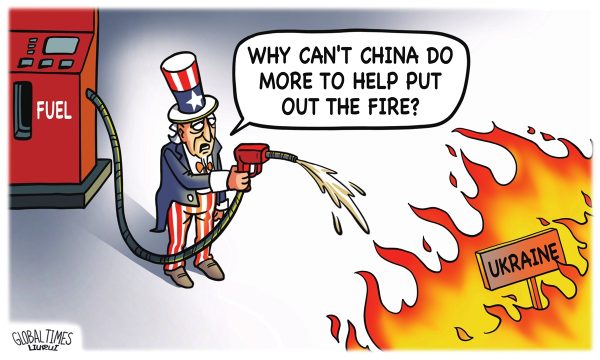
Illustration: Liu Rui/GT
Global Times | March 18, 2022
The close relationship between China and Russia has been a thorn in the US’ side, especially against the backdrop of the ongoing Ukraine crisis. With the simmering of the situation, it couldn’t be any clearer that Washington is eager to exploit the Russia-Ukraine conflict to drive a wedge between Beijing and Moscow.
For one thing, senior White House officials have on multiple occasions accused China of not exerting enough pressure on Russia to stop the country’s military action in Ukraine. US Secretary of State Antony Blinken said on Thursday before US President Joe Biden’s virtual meeting with Chinese President Xi Jinping that Washington will “impose costs” for any support Beijing provides to Russia’s actions against Ukraine. He urged Beijing to assume “responsibility to use its influence and defend the international rules and principles that it professes to support.” For another, an increasing number of Western media reports and analyses have emerged to hype how China’s ties with Russia have made China “uncomfortable” and “awkward” and warn that Beijing risks isolation if it doesn’t distance itself from Moscow.
NATO’s eastward expansion is the root cause of Russia’s anger and military operation in Ukraine. It’s the US that should put out the fire it lit in Ukraine. Ridiculously, it is demanding Beijing to do this job at the cost of damaging China-Russia relations. This is unreasonable and insidious. By pushing China to denounce Russia and asking China to bear the responsibility for the fatal strategic mistake the US and NATO made in the construction of so-called European security, Washington has no intention of hiding its desire to sow discord between China and Russia.
US State Department spokesperson Ned Price said on Monday that China could use its unique relationship to bring an end to Russia’s actions against Ukraine. What nonsense. Russia is an independent major power and China has no ability to exert influence on Russia’s decision on the Ukraine issue which it deems as a “life-and-death” matter.
If China really pressures Russia in a way that is inconsistent with the China-Russia comprehensive strategic partnership of coordination, it will only undermine the China-Russia relationship and sabotage mutual trust, which will be a huge strategic loss to both sides. This is what the US is eager and happy to see.
Washington knows that China cannot influence Russia or force it to do anything. But it has regarded the Ukraine crisis as a good chance to tear the two countries apart. The more discord Washington could sow between China and Russia, the more it will be in line with US interests. But how can Beijing and Moscow allow such an evil trick to succeed?
Not like the petty followers that Washington can manipulate at will, China and Russia are both independent great powers. Besides, China has maintained a consistent position over the Ukraine issue, emphasizing all sides’ security concerns and interests should be respected and upheld. Its position is out of its own interests and the interests of the region. It will never dance to the tune of the US or sacrifice relations with Russia to satisfy US demands.
It also should be noted that no matter how the Ukraine crisis evolves and how heavily Russia is targeted by the US now, Washington still views China as its biggest strategic competitor. China should bear this in mind all the time. It must not give the US any chance to drive a wedge in the China-Russia relationship.
For a long time, the West has misinterpreted the China-Russia relationship, believing it’s based on expediency and could be easily torn apart. The truth is, the China-Russia comprehensive strategic partnership of coordination has withstood the test of the time and is rock solid. It’s China’s most important and stable diplomatic strategic asset that cannot be damaged.
Aid convoys struggling to reach ‘encircled’ Ukrainian cities, UN claims
Samizdat | March 19, 2022
Aid agencies are struggling to reach civilians in Ukrainian cities blocked by the Russian military, Jakob Kern, an emergency coordinator with the United Nations World Food Programme (WFP) said on Saturday.
“The challenge is to get to the cities that are encircled or about to be encircled,” Kern told the news agency AFP, describing the humanitarian situation on the ground as “dire.”
Ukraine’s food supply chain has effectively been broken amid the ongoing conflict, he said, with the WFP having to stock its warehouses “from zero.” He condemned what he described as Russia’s tactic of blocking cities, stating that it was “unacceptable in the 21st century.”
“The closer you go to these cities, the more worried [truck drivers] are about their safety,” Kern said. “And that means we’re not able to reach people in Mariupol, Sumy, Kharkiv… in the cities that are almost encircled by now – or completely, in the case of Mariupol.”
While Moscow and Kiev have agreed on efforts to organize humanitarian corridors out of those cities turned into combat zones, each side continues to accuse the other of targeting civilians and failing to uphold evacuees’ right of safe passage. Moscow said Kiev had refused to open routes for those seeking refuge in Russia or Russian-controlled territories.
Moscow launched a large-scale assault on its neighbor in late February, following a seven-year standoff over Ukraine’s failure to implement the terms of the Minsk ceasefire agreements, and Russia’s eventual recognition of the Donbass republics of Donetsk and Lugansk. German- and French-brokered protocols had been designed to regularize the status of the breakaway regions within the Ukrainian state.
Russia has now demanded that Ukraine officially declare itself a neutral country that will never join the US-led NATO military alliance. Kiev says the Russian offensive was completely unprovoked and has denied claims it was planning to retake the two rebellious republics by force.
US to remove IRGC from terror blacklist
BY M. K. BHADRAKUMAR | INDIAN PUNCHLINE | MARCH 19, 2022
Axios reported earlier this week citing Israeli officials and US sources that the Biden administration is considering the removal of Iran’s Islamic Revolutionary Guard Corps [IRGC] from its terror blacklist, in return for a ‘public commitment from Tehran to de-escalation in the region.’
It is improbable that Tehran will give any such ‘public commitment’. But, a ‘private commitment’? Well, that may be possible. Indeed, the Axios report acknowledged that ‘The IRGC designation is not directly related to the nuclear deal, and any decision would take the form of a separate bilateral understanding between the US and Iran.’
No doubt, the lifting of the US sanctions is incompatible with the ban on the IRGC. The IRGC is deeply incorporated into the country’s economy and business. According to some estimates, up to 60% of Iran’s economy — including both state and private companies — is controlled by individuals and entities linked to the IRGC.
And the IRGC is well represented in the organs of the state. Executing a nuclear deal at Vienna while excluding the IRGC elites from plucking its low-hanging fruits is simply unrealistic. Arguably, even Americans wouldn’t want that to happen.
It is entirely conceivable that they too are eagerly looking forward to doing business with the IRGC top brass. After all, it’s best to do business with those who matter most in Tehran.
On balance, therefore, the Biden administration will concede Iran’s demand to drop the designation of the IRGC as a terrorist organisation. The crux of the matter is that the US is desperate to normalise with Iran since they also see potential to erode Iran’s friendly ties with Russia. The immediate goal of the Biden administration is to release Iran’s oil reserves. The amount of Iranian oil that may enter the market once sanctions are lifted is estimated at over two million barrels a day!
That said, even a US-Iran ‘bilateral understanding’ over the activities of the IRGC is not easy to achieve. The IRGC functions directly under the Supreme Leader’s supervision. Clearly, while from the American side, it is rather a formality requiring an executive order by the state department to legitimise IRGC, from the Iranian part, there is an ‘operational angle’ to it — namely, a commitment to end Iran’s expansion in the so-called Shiite Crescent of Syria, Lebanon and Iraq.
That involves the jettisoning of Quds Force’s ‘resistance’ and settling for peaceful co-existence with Israel. Does that look simple?
But then, when it comes to Iran, nothing is simple, because nothing is iron-cast. Didn’t Iran help in the US invasion of Afghanistan and the creation of a puppet government in Kabul? Resistance politics too was the child of difficult times when the country was besieged. With the lifting of sanctions, Iran is unbound for the first time after the 1979 revolution.
To be sure, there is a growing uneasiness among regional states — and, possibly, even in Moscow — about Iran’s future trajectory. The Raisi government now proclaims a ‘balanced foreign policy’ — ‘neither with the West nor the East.’ The framing of the paradigm in this suggests that Tehran anticipates the world community to queue up on the road to Tehran.
Iran’s few steadfast friends in the region may begin to wonder what lies in the womb of time. Syrian President Assad’s visit to the UAE on Friday hints at realignments. Assad hopes to create more space for himself by rejoining the Arab family. Now, he has never been an acolyte of ‘resistance’ and is well aware that the UAE is Israel’s closest regional ally in West Asia.
The bottom line is that Iran will certainly seek integration with the industrial world, which will help it get the best that money can buy in technology or goods and services. But Iran also harbours ambitions that it will not be a junior partner of the West.
This is going to be a trapeze act. Integration into the world economy will require the freeing of market forces, which, in turn, carries attendant risks, as the pent-up social and economic discontent within the country seeks political expression and the genie gets out of the bottle. Colour revolution can take many forms, as current history shows. When George Soros and company move in, nothing is impossible!
Iran, of course, will be in doubts about the US’ intentions, too. Presently, Washington needs an accommodation with Iran devolving upon its capacity to pump more oil. But the US’ male-fide intentions are yet to be exorcised. And the crimes it has committed to the Iranian nation are no secret, either.
Above all, there is never any consistency in the US policies. Its self-interests come first and last. Iran doesn’t have to look far to see in the next-door Gulf region the debris of the US’ discarded Arab alliances once their purpose was served.
Featured Video

Macgregor: We Haven’t Seen the Worst of the Iran War Yet
or go to
Aletho News Archives – Video-Images
New Book
Breast Cancer: Before You Consent
A new Unbekoming paperback
Lies are Unbekoming | September 18, 2026
Peter Gøtzsche reviewed every randomised mammography screening trial ever conducted for the Cochrane Collaboration. Cochrane’s headline is that, assuming a 15% mortality reduction, one woman in 2000 avoids dying of breast cancer over ten years. Ten are overdiagnosed and treated. Two hundred experience false alarms.
But that headline assumes the reduction. When Gøtzsche looked only at the trials with adequate randomisation — the higher-quality ones — the reduction disappeared. No effect on breast cancer mortality. No effect on all-cause mortality.
This is the Cochrane finding, published in the establishment’s own database of systematic reviews.
No woman being asked to consent to a mammogram this week knows it.
That is why the new Unbekoming paperback exists. … continue
Blog Roll
 Aletho News
- Iran Judiciary issues indictments against 159 US, Israeli officials for assassination of Leader, commanders
- Turkiye revokes Iranian bank license under US sanctions campaign
- US-Denmark Agreement on Greenland Is ‘PR Stunt’ Ahead of Midterms
- Araghchi: Military intervention cannot create security; coercion cannot bring peace
- Fraud Squared
- Breast Cancer: Before You Consent
- Iran’s Plan to Shut Down AI in the Persian Gulf
- Israel seeks ‘compensation’ from Washington over Saudi F-35 sale
- Saudi crown prince seeks dialogue with Ansarullah after Yemeni blows: Report
- Damascus rejects Saudi request for Syrian fighters to counter Yemen: Report
- If Americans Knew
- Inside Gaza’s death trap of collapsing, bombed-out buildings
- The everyday items Israel bans from Gaza every day
- Inside the siege, the ruined buildings of Gaza – Daily Update
- Debunking The Claim That Macklemore Has A “History Of Antisemitism”
- CPJ demands release of arrested Palestinian-US journalist near Bethlehem
- Robert Kraft: The Billionaire Friend of Netanyahu Pulling The Strings Behind the Macklemore/Ed Sheeran Blow Up
- Columbia Administered Fund Gives Big Money to Pro-Israel Groups
- Deportation Case of Palestinian Activist Salah Sarsour Tests First Amendment
- ‘We Will Not Forget’: Palestinians Mark 44 Years since Sabra and Shatila
- Why do we let Zionists decide what we can and can’t say?
- No Tricks Zone
- New Study: ‘Global Drought Shows No Detectable Recent Acceleration Under Climate Warming’
- Economic Masterminds: German Socialists Suggest Taxing Productivity Gains Stemming From Using AI
- The South China Sea Has Not Been Cooperating With The Climate Change Narrative
- Energy Crisis: Germany Enters Heating Season With Historically Low Gas Reserve Fill Levels
- New Study: The Antarctic Ice Sheet Gained Mass From 2020-2024 Due To Staggering Snow And Ice Accumulation
- Study: Ocean Heating Rates From Thousands Of Years Ago ‘Dwarf’ Modern Ocean Heating Rates
- Climate Extremists Target, Attack Large-Scale Power Grid Infrastructure In Germany!
- New Study: Antarctic Ice Melt Has Contributed Less Than 1 Centimeter To Sea Level Rise In The Last 30 Years
- Fear Of Debate: Alarmist German Climate Scientist Calls On Mainstream Media To Discredit Skeptic Voices
- End-Of-August Arctic Sea Ice Extent Hasn’t Fallen In 20 Years, Official Data Show!
 Aletho News