Two Trailblazing COVID-19 Researchers Dead in a Month
By Robert Bridge | Strategic Culture Foundation | May 17, 2020
Academia does not really have a reputation for being riddled with violence and sudden unexplained deaths. Yet at the peak of the Covid-19 pandemic, two young pioneering researchers from the same obscure field of study met with mysterious ends.
Outside of academic circles, Dr. James Taylor and Dr. Bing Liu were relative unknowns. Inside of the scientific community, however, the two had achieved something like rock-star status. And now, within a period of 30 days, both young men are dead at a time when their talents are needed most.
James Taylor, 1979-2020
Let’s first consider the life and work of James Taylor, who passed away on April 2 at the age of 40. Anyone hoping to learn details about the cause of death of this remarkable man will be disappointed; to date, no information has been made available to the public.
“The cause of James’ death is not yet known, and given how overwhelmed the medical profession is in Baltimore, we may never know,” stated the website of Galaxy Project, using the coronavirus as an excuse for not being able to dig deeper into the death of a colleague. “Given how quickly this overtook him it is very unlikely to have been COVID-19.”
Until any additional information is forthcoming with regards to the cause of death, it seems reasonable to ask whether Taylor was involved in any projects or activities that may have made him a potential target of foul play. A cursory look at his Twitter page indicates there were some impassioned discussions just prior to his premature passing that warrant consideration. Before jumping into those discussions, however, a few words about his professional background are necessary.
According to his obituary on the Johns Hopkins University website, Taylor was “a trailblazer in computational biology and genomics research,” who made a significant contribution as a “scientist, teacher, and colleague.”
Taylor’s breakout moment in the scientific community, however, came with the creation of Galaxy, a cloud-based system that has been described as “the first comprehensive data analysis resource in Life Sciences.” According to its website, Galaxy provides an open platform that aims to make computational biology accessible to scientists, mostly those who are involved in genomics research, a major field of study when it comes to the development of drugs and vaccines.
And it is on this particular point that Taylor became engaged in debate just days before his death. On March 19, the researcher asked a seemingly innocuous question on his Twitter page: “Can we talk about genomic data sharing for #covid19 #SARSCoV2 research?”
Judging by the feedback, the question proved to be a loaded one. Taylor’s question revealed the frustration being felt by other research groups, like NCBI and Nextstrain, which were attempting to retrieve the genomic characteristics of Covid-19 but were running into hurdles. Taylor’s colleagues, Anton Nekrutenko and Sergei Kosakovsky Pond, expressed similar concerns regarding those roadblocks one month earlier in a paper entitled, ‘No more business as usual: agile and effective responses to emerging pathogen threats require open data and open analytics.’
“The current state of much of the Wuhan pneumonia virus (COVID-19) research shows a regrettable lack of data sharing and considerable analytical obfuscation,” Nekrutenko and Kosakovsky Pond wrote. “This impedes global research cooperation, which is essential for tackling public health emergencies, and requires unimpeded access to data, analysis tools, and computational infrastructure.”
Here is proof of something that many people have long suspected about the world of academia: it is ruthless and self-serving just as much as any profit-seeking corporation. Not only are academics fiercely protective of their work, which is perfectly understandable, they are also not blind to the potential for financial gain that comes from their labors. But I digress.
Judging by his social media activity, it seems that James Taylor’s main beef was with GISAID, a German-based platform that stands for Global Initiative on Sharing All Influenza Data. This private and public organization, which also partners with the governments of Singapore and the United States, has acquired much of the genome data for many diseases, including that of Covid-19, information that would be critical in the development of drugs and vaccines.
In a follow-up tweet, Taylor complained that GISAID “has much more data… but onerous restrictions on data use and sharing, in particular does not allow sharing any sequence data.” This was followed by the comment that GISAID’s restrictions on using its data are “a real impediment to rapid, collaborative data analysis including our efforts to make transparent, reusable and reproducible analysis pipelines for outbreak analysis.”
At the same time Taylor was chastising GISAID for supposedly not sharing its sequence data on Covid-19, GISAID was boasting on its website about its transparency. So where is the truth? Judging by the comments on James Taylor’s Twitter feed, it would seem GISAID was not completely forthcoming with its data.
Dave O’Connor, for example, a virologist at the University of Washington (Madison), remarked on Taylor’s Twitter thread, “I doubt if many people, if any, people who contributed data to GISAID did so with the intention of it being siloed.”
Dr. Melissa A. Wilson, a prominent evolutionary and computational biologist from Arizona State University, also expressed dismay at the failure to share critical genome data that could assist in helping researchers discover a cure for Covid-19.
In her tweet, dated March 23, Wilson directed a question to Taylor, asking: “Where are we storing data so it is accessible?”
At this point the reader may be asking, ‘OK, so what. What significance is there to a group of researchers having trouble getting access to the genome structure of the coronavirus?’ The problem is that it could mean the difference between being able to develop a vaccine for the disease and not.
Here it should be mentioned that on October 18, 2019, Johns Hopkins University, together with the World Economic Forum and the Bill and Melinda Gates Foundation, hosted Event 201, a high-level exercise that imagined how the public and private sector would coordinate in the event of a pandemic. The event so closely mirrored the outbreak of Covid-19 just two months later that Johns Hopkins released a statement denying that it had made a “prediction” about the pandemic.
Moreover, on the question of producing vaccines to fight against Covid-19, Johns Hopkins appears to be an ardent supporter.
“I would imagine we are going to get a massive vaccination program going in place,” revealed Andrew Pekosz, Johns Hopkins Bloomberg School of Public Health Professor, in an interview with Bloomberg. “The vaccines that are currently in the lead… are ones that are going to be given by injection.
“It looks like vaccines are going to be the game changer here…”
The question that must be asked is whether James Taylor was somehow working at cross-purposes to other organizations that are, for example, in the race to develop a vaccine against Covid-19. Or, alternatively, did the 40-year-old renowned researcher die a natural death at the very moment the quest for a vaccine against the coronavirus had become the central focus for researchers, pharmaceutical companies and his very alma mater?
Dr. Bing Liu, 1982-2020
On May 2, Liu, a 37-year-old assistant professor at the University of Pittsburgh School of Medicine (UPSM), was found dead with multiple gunshot wounds at his townhouse in an upscale suburban neighborhood of Pittsburgh. Another victim, identified as Hao Gu, was found dead in his car near Liu’s home with what police say was a self-inflicted gunshot wound to the head.
Just four days after the double murder, Ross Township Police said they believe the apparent murder-suicide was the result of a “lengthy dispute regarding an intimate partner.”
“We have found zero evidence that this tragic event has anything to do with employment at the University of Pittsburgh, any work being conducted at the University of Pittsburgh and the current health crisis affecting the United States and the world,” said Detective Sgt. Brian Kohlhepp.
What makes this case particularly compelling is that, according to a homage page on the UPSM website, “Bing was on the verge of making very significant findings toward understanding the cellular mechanisms that underlie SARS-CoV-2 infection and the cellular basis of the following complications.”
The other remarkable detail is how closely aligned Bing Liu and James Taylor’s academic resumes were. Both academics were involved in the obscure field of computational systems biology, as well as machine-learning techniques to better predict the behavior of biological species.
The lives of the two academics crossed paths due to their mutual affiliation with the prestigious Carnegie Mellon University, also located in Pittsburgh. There, Liu worked as a postdoctoral fellow in the department of computer science, while Taylor delivered seminars there on his Galaxy program. If by chance Taylor was unfamiliar with Liu’s prolific body of academic work that would probably have changed after Liu’s purportedly breakthrough research on the Covid-19 was released. That magical moment was not to be, of course, due to Liu’s premature and very tragic death.
With regards to the purported murder-suicide, the details are sketchy. First, the mainstream media is portraying the murder as the result of a “lengthy dispute regarding an intimate partner.” Yet local media reported that Liu and his wife had no children and mostly kept to themselves. Of course that doesn’t mean that the two men were not competing for the affections of some other woman. However, with the married Liu on the verge of making a major breakthrough on the coronavirus front, it would seem that he would have very little time for any ‘extracurricular activities.’
In any case, it remains unclear how the two men knew each other, while a possible motive for the murder also remains a mystery, the Post-Gazette reported. Neighbors did not report hearing any gunshots at the time of the killings.
Finally, there are problems with the choice of murder weapon, in this case a firearm. Since both Liu and his alleged killer were not U.S. citizens, this opens up the question as to how Hao Gu was able to acquire a firearm. It is illegal – although certainly not impossible – for non-citizens to purchase firearms in the United States.
So what we are left with, at a time when the world is desperately searching for a way to combat Covid-19, is the legacy of two trailblazing researchers who were both working towards ways of better understanding the disease. Although we may never know the true story behind each man’s untimely death, the likelihood of two renowned researchers – with almost identical professional backgrounds – dying a month apart at a time when both were making headway against the pandemic must certainly rank far less than the chances of someone actually succumbing to Covid-19. The deaths of Bing Liu and James Taylor deserve far greater scrutiny by the mainstream media.
Iran’s fuel shipment to Venezuela guaranteed by its missile power
Press TV – May 16, 2020
Iran is shipping tons of gasoline to Venezuela in defiance of US sanctions on both countries in a symbolic move guaranteed by Tehran’s missile prowess.
Unconfirmed reports and tanker monitoring groups suggest that at least five Iranian-flagged tankers are transporting fuel to Venezuela through the Atlantic Ocean despite the US sanctions on both Tehran and Caracas.
Iran has intentionally hoisted its own flag over the huge tankers which are navigating through the Atlantic before the eyes of the US Navy.
Iran is shipping large consignments of gasoline to Venezuela even though the US would try to intercept the shipments and seize the tankers.
There are unconfirmed reports that the US Navy has deployed its USS Detroit (LCS-7), USS Lassen (DDG-82), USS Preble (DDG-88), and USS Farragut (DDG-99) to the Caribbean along with its patrol aircraft Boeing P8-Poseidon for possible encounter with the Iranian vessels.
However, analysts say it is very unlikely that the US makes such a mistake, as it would have serious repercussions for the Trump administration ahead of the November elections.
The US would not dare to seize the Iranian vessels especially after Iran’s reaction to a similar move by the United Kingdom, a close ally of Washington.
Iran also has the upper hand thanks to its missile power, which was shown to the US in the IRGC’s retaliatory missile attacks on the Ain al-Assad Airbase in Iraq, which accommodated American troops.
The US was also reminded of the Islamic Republic’s missile prowess following the recent successful launch of Nour-1 military satellite, which reached its orbit using the Qased satellite carrier. Some Western analysts claim the satellite achievements are a prelude to Iran’s program to develop intercontinental ballistic missiles (ICBMs).
Confident about its missile capabilities, Iran is going on with the gasoline shipment to its ally in Latin America, mocking the US sanctions on the oil sectors of both countries.
The US seems to be between the rock and hard place. While it is unlikely for Washington to dare to intercept the tankers, if they reach their destination safe and sound, it may tarnish the “superpower” forever.
The fuel shipment also shows Iran’s success in turning into an exporter of gasoline after years of importing the fuel.
A senior official in US President Donald Trump’s administration told Reuters on Thursday that the United States was considering measures against Iran in response to the fuel shipment.
The official said Washington has a “high degree of certainty” that the Venezuelan government is paying Iran in gold for the fuel.
If these claims are confirmed, the “fuel for gold” exchange is also a great achievement for the Islamic Republic amid the US’ maximum pressure policy, which deprives the country’s economy of billions of dollars’ worth of oil revenues.
There are reports that Iran is receiving nine tons of gold in exchange for the fuel its ships transport to Venezuela. Under the cruel sanctions imposed by the US after its withdrawal from the 2015 nuclear deal in 2018, nine tons of gold can be a very precious asset for the Iranian economy.
However, we must still wait and see whether the US administration would let the Iranian tankers go and strip Washington of its “superpower” title, or it would dare to intercept the vessels and endanger Donald Trump’s campaign ahead of the November elections.
Earlier in the day, Iranian government spokesman Ali Rabiei said Venezuela and Iran are both independent states that have had and will continue to have trade relations with each other.
“We sell goods and buy goods in return. This trade has nothing to do with anyone else. We have to sell our oil and we have ways to do it,” Rabiei said in reaction to reports of the fuel shipment to the Latin American country.
See also:
US interception of Iran vessel to Venezuela would be ‘completely illegal
Vitamin D linked to low virus death rate – study
Anglia Ruskin University | May 7, 2020
A new study has found an association between low average levels of vitamin D and high numbers of COVID-19 cases and mortality rates across 20 European countries.
The research, led by Dr Lee Smith of Anglia Ruskin University (ARU) and Mr Petre Cristian Ilie, lead urologist of Queen Elizabeth Hospital King’s Lynn NHS Foundation Trust, is published in the journal Aging Clinical and Experimental Research.
Previous observational studies have reported an association between low levels of vitamin D and susceptibility to acute respiratory tract infections. Vitamin D modulates the response of white blood cells, preventing them from releasing too many inflammatory cytokines. The COVID-19 virus is known to cause an excess of pro-inflammatory cytokines.
Italy and Spain have both experienced high COVID-19 mortality rates, and the new study shows that both countries have lower average vitamin D levels than most northern European countries. This is partly because people in southern Europe, particularly the elderly, avoid strong sun, while skin pigmentation also reduces natural vitamin D synthesis.
The highest average levels of vitamin D are found in northern Europe, due to the consumption of cod liver oil and vitamin D supplements, and possibly less sun avoidance. Scandinavian nations are among the countries with the lowest number of COVID-19 cases and mortality rates per head of population in Europe.
Dr Lee Smith, Reader in Physical Activity and Public Health at Anglia Ruskin University, said:
“We found a significant crude relationship between average vitamin D levels and the number COVID-19 cases, and particularly COVID-19 mortality rates, per head of population across the 20 European countries.
“Vitamin D has been shown to protect against acute respiratory infections, and older adults, the group most deficient in vitamin D, are also the ones most seriously affected by COVID-19.
“A previous study found that 75% of people in institutions, such as hospitals and care homes, were severely deficient in vitamin D. We suggest it would be advisable to perform dedicated studies looking at vitamin D levels in COVID-19 patients with different degrees of disease severity.”
Mr Petre Cristian Ilie, lead urologist of Queen Elizabeth Hospital King’s Lynn NHS Foundation Trust, said:
“Our study does have limitations however, not least because the number of cases in each country is affected by the number of tests performed, as well as the different measures taken by each country to prevent the spread of infection. Finally, and importantly, one must remember correlation does not necessarily mean causation.”
Vitamin D appears to play role in COVID-19 mortality rates
Patients with severe deficiency are twice as likely to experience severe complications, including death
Northwestern University | May 7, 2020
After studying global data from the novel coronavirus (COVID-19) pandemic, researchers have discovered a strong correlation between severe vitamin D deficiency and mortality rates.
Led by Northwestern University, the research team conducted a statistical analysis of data from hospitals and clinics across China, France, Germany, Italy, Iran, South Korea, Spain, Switzerland, the United Kingdom (UK) and the United States.
The researchers noted that patients from countries with high COVID-19 mortality rates, such as Italy, Spain and the UK, had lower levels of vitamin D compared to patients in countries that were not as severely affected.
This does not mean that everyone — especially those without a known deficiency — needs to start hoarding supplements, the researchers caution.
“While I think it is important for people to know that vitamin D deficiency might play a role in mortality, we don’t need to push vitamin D on everybody,” said Northwestern’s Vadim Backman, who led the research. “This needs further study, and I hope our work will stimulate interest in this area. The data also may illuminate the mechanism of mortality, which, if proven, could lead to new therapeutic targets.”
The research is available on medRxiv, a preprint server for health sciences.
Backman is the Walter Dill Scott Professor of Biomedical Engineering at Northwestern’s McCormick School of Engineering. Ali Daneshkhah, a postdoctoral research associate in Backman’s laboratory, is the paper’s first author.
Backman and his team were inspired to examine vitamin D levels after noticing unexplained differences in COVID-19 mortality rates from country to country. Some people hypothesized that differences in healthcare quality, age distributions in population, testing rates or different strains of the coronavirus might be responsible. But Backman remained skeptical.
“None of these factors appears to play a significant role,” Backman said. “The healthcare system in northern Italy is one of the best in the world. Differences in mortality exist even if one looks across the same age group. And, while the restrictions on testing do indeed vary, the disparities in mortality still exist even when we looked at countries or populations for which similar testing rates apply.
“Instead, we saw a significant correlation with vitamin D deficiency,” he said.
By analyzing publicly available patient data from around the globe, Backman and his team discovered a strong correlation between vitamin D levels and cytokine storm — a hyperinflammatory condition caused by an overactive immune system — as well as a correlation between vitamin D deficiency and mortality.
“Cytokine storm can severely damage lungs and lead to acute respiratory distress syndrome and death in patients,” Daneshkhah said. “This is what seems to kill a majority of COVID-19 patients, not the destruction of the lungs by the virus itself. It is the complications from the misdirected fire from the immune system.”
This is exactly where Backman believes vitamin D plays a major role. Not only does vitamin D enhance our innate immune systems, it also prevents our immune systems from becoming dangerously overactive. This means that having healthy levels of vitamin D could protect patients against severe complications, including death, from COVID-19.
“Our analysis shows that it might be as high as cutting the mortality rate in half,” Backman said. “It will not prevent a patient from contracting the virus, but it may reduce complications and prevent death in those who are infected.”
Backman said this correlation might help explain the many mysteries surrounding COVID-19, such as why children are less likely to die. Children do not yet have a fully developed acquired immune system, which is the immune system’s second line of defense and more likely to overreact.
“Children primarily rely on their innate immune system,” Backman said. “This may explain why their mortality rate is lower.”
Backman is careful to note that people should not take excessive doses of vitamin D, which might come with negative side effects. He said the subject needs much more research to know how vitamin D could be used most effectively to protect against COVID-19 complications.
“It is hard to say which dose is most beneficial for COVID-19,” Backman said. “However, it is clear that vitamin D deficiency is harmful, and it can be easily addressed with appropriate supplementation. This might be another key to helping protect vulnerable populations, such as African-American and elderly patients, who have a prevalence of vitamin D deficiency.”
US lowers threat perception on Iran
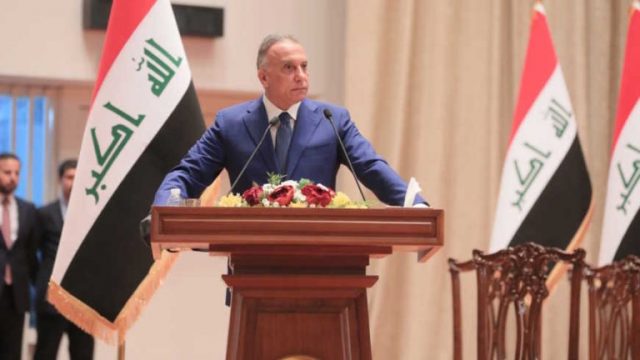
Iraq’s new Prime Minister Mustafa al-Kadhimi won vote of confidence in the parliament in Baghdad on May 7, 2020
By M. K. BHADRAKUMAR | Indian Punchline | May 9, 2020
The drawdown of US military presence in the Middle East, especially from Saudi Arabia, may not be an automatic open sesame — to borrow the magical phrase in the story of “Ali Baba and the Forty Thieves”— leading to the hidden treasure of regional peace and stability, but it does open up a tantalising vista that is seamless in its possibilities.
Speculations are galore about the Pentagon announcement Thursday that the US military will withdraw two Patriot batteries, which have been deployed to protect Saudi oil facilities, along with two jet fighter squadrons.
US President Donald Trump added an ambiguous explanation: “We’re making a lot of moves in the Middle East and elsewhere. We do a lot of things all over the world, militarily we’ve been taken advantage of all over the world… This has nothing to do with Saudi Arabia.” Trump seems to suggest there is a ‘big picture’.
Nonetheless, the move is seen as a showdown between the US and Saudi Arabia, where Washington says to Riyadh that if you do not follow our oil advice, we will throw you under the bus. The fluctuations in the oil market have put strains on the ties binding the two staunch allies and the US oil industry has been hit doubly hard, since even after the recent OPEC+ deal, oil prices continue to fluctuate at the expense of American producers even as Saudi oil tankers reach the US, selling their commodity at lower prices to American buyers, which Washington’s oil industry cannot possibly compete with.
With the storage capacity in the US industry dwindling, the highest ever number of Saudi oil tankers in years are on their way to American shores. Riyadh appears to be flooding the market to drown the shale industry. The mood in Washington has turned ugly, as Trump’s allies in the Congress whose states have been hurt by the price crash, sought a mitigation measure — the Strained Partnership Act — which threatened to punish the Saudis by way of pulling troops and reducing other military commitments unless Riyadh reduced its oil output.
Without doubt, the American oil crash in the wake of the pandemic has taken its toll on US-Saudi relations. But, having said that, Trump cannot be unaware that any US-Saudi friction at this juncture can only work to Iran’s advantage insofar as the coronavirus pandemic is providing an opening to challenge the US presence in Iraq and other places in the Middle East. Top Iranian military officials have openly said in recent weeks that they see the US at its weakest in a while.
Tehran seems to settle for a ‘wait-and-see’ approach until the November election in the US is over, refraining from escalating tensions. Tehran can afford to wait, since the US’ Gulf allies — the UAE, Kuwait, Oman, Qatar — are no longer pushing the US into a confrontationist policy but instead engaging with Iran. There is growing disenchantment in the region regarding the consistency of the US policies.
What lends enchantment to the view is that some easing of US-Iran confrontation is also discernible. Most certainly, the establishment of a new government in Baghdad under Prime Minister Mustafa al-Kadhimi harks back to a priori history of tacit US-Iranian co-habitation in Iraq.
Al-Kadhimi is a secular-minded figure who does not belong to any of the Shi’ite political parties and yet he won with the votes of the Fateh Coalition, the second largest in the Parliament, made up of Shiite political parties that have close ties to Iran.
He briefly lived in Iran as a dissident but moved on to life in exile in UK and the US — and yet, he’s an acceptable choice to Tehran. He is close to the Washington establishment, which is open to making deals with him, and also enjoys personal rapport with the Saudi Crown Prince Mohammed bin Salman, but Tehran is unperturbed and seems to estimate that he is both pragmatic and can also be tough with the US in a way that no Iranian-backed candidate can be.
Above all, Al-Kadhimi is smart enough know Iran’s support is vital if his government is to perform effectively. The hugely sensitive post of Interior Minister in his cabinet has gone to Othman Ali Farhood Musheer Al Ghanimi, an ally of Iran, while the key post of Finance Minister will be held by Ali Allawi, a pro-western figure and nephew of late Ahmed Chalabi. (Chalabi helped the Bush administration to topple Saddam Hussein in 2003.)
Significantly, no sooner than Al-Kadhimi’s government got parliamentary approval on May 7, Washington announced yet another waiver of sanctions against Tehran by allowing Iraq to continue to buy electricity from Iran. Now, unlike previous monthly waivers, Washington has given a 120-day waiver up to September. Tehran is sure to take note.
And this has happened while Washington and Tehran are working out arrangements for another ‘win-win’ prisoner swap. There are four Americans imprisoned in Iran, while Tehran claims “around 20” Iranians are in US custody. Then, there is also the case of a fifth American often thought to be imprisoned in Iran — Robert Levinson, a former FBI and CIA contractor.
Prisoner swaps are a low-cost way of easing tension and Trump places high priority on winning the freedom of Americans imprisoned abroad, and is quick to boast that he is doing better than Barack Obama.
Clearly, neither the US nor Iran is spoiling for a fight. Tensions will spike if the US presses ahead to get the UN Security Council to extend the arms embargo on Iran beyond October (failing which to invoke the ‘snapback’ clause of the 2015 nuclear deal to reimpose UN sanctions against Iran.)
But then, for want of support from the EU or UK, Britain and Germany — and Russia and China’s opposition — Washington may not press ahead. Trump may discuss Iran with Russian President Vladimir Putin, if the frequency of their phone conversations — six times in as many weeks already — is kept up and the range of topics broadens.
Moscow is counselling Tehran to show strategic patience in the face of US provocations. In the final lap of Trump’s term, Russia is keenly seeking an improvement of relations with the US and a showdown over Iran would spoil the climate.
Thus, there is a lull in the fighting in Syria and Iraq. A pause is noticeable in militia attacks on US troops in Iraq in recent weeks. Talks are due in June in Baghdad between Pentagon and Iraqi government regarding US deployments. Israeli officials speak of signs of an Iranian retrenchment in Syria.
Some US officials have also openly acknowledged that Tehran no longer poses an immediate threat to US strategic interests. In this backdrop, the partial drawdown of US forces in Saudi Arabia can also be regarded as a trimming of the US belligerence toward Iran.
Britain Overtakes Italy with Highest Death Toll in Europe
By Johanna Ross | May 8, 2020
They said that it was because of the aged Italian population. They hypothesised that it was the tendency to have extended families, in which the elderly live together with their children and grandchildren. They suggested Italians weren’t used to social distancing, and couldn’t resist a kiss and cuddle. You name it, every reason under the sun was found for why Italy, a month ago, had such a high death rate to coronavirus; in particular in comparison with China, where the outbreak began.
The commentariat now has to think again, for Britain has overtaken Italy as the worst nation in Europe to be afflicted by Covid-19. The Department of Health on Tuesday announced a rise of 693 to 29,427, which then surpassed Italy’s official figure of 29,315. The total since has risen to 30,076. Dr Chaand Nagpaul, council chair of the British Medical Association, said the figures gave cause for concern, particularly “given that the UK was originally affected by the outbreak later than many other nations, and with the government initially saying that a death toll of 20,000 would be a ‘good outcome’.”
There has also been an alarming number of deaths caused, it seems, indirectly by the pandemic. Experts, including Prof James Naismith, director of the Rosalind Franklin Institute at the University of Oxford, are calling for an inquiry to establish just how these other deaths came about. In the week ending 24th April, for example, there were an additional 3,312 deaths to causes other than Covid-19. It has been suggested that they could be due to general disruption to NHS services, as a result of the pandemic, meaning delayed hospital admissions for life-threatening conditions. In many instances, regular medical appointments were cancelled and patients themselves have avoided going to the doctor or hospital for fear of catching the disease.
For weeks we watched events unfold in China and then Italy, as if it was some hollywood disaster movie. Not till Boris Johnson uttered the words in his press conference of 12th March “I must level with you. Families are going to lose loved ones before their time” did the reality of what the UK was about to face really sink in. And yet even as the horror scenes in Italian hospitals were being played out, it was not until 23rd March that the Prime Minister announced that lockdown would commence.
The analysis has long begun of what went wrong in the UK’s pandemic planning. Scientists had warned the government as early as 26th February that as many as 33 million UK citizens could be affected in a coronavirus epidemic. They were told that as many as 541,200 people could be placed on ventilators. And yet, the pace at which the government acted was painfully slow – as Labour leader Sir Keir Starmer has highlighted. The opposition leader has accused the government of being ‘slow into lockdown, slow on testing, slow on protective equipment’ and is concerned that an exit strategy out of lockdown is not being prepared quickly enough. Starmer is calling for an inquiry into Downing Street’s handling of the crisis as he says the high death rate is a ‘real cause for concern’.
The Prime Minister has hinted that some lifting of restrictions may be announced on Monday, now that Britain has reached the peak of the epidemic, and is officially on the downward curve. Johnson has set a new target of 200,000 Covid-19 tests a day by the end of May, but with the country struggling to meet the current goal of 100,000 tests a day, it’s not clear how achievable this is. Testing in general is deemed to be one of the key reasons why nations such as South Korea dealt so swiftly and effectively with the virus. Its strategy of ‘test, trace, contain’ paid off. Almost as soon as the outbreak had began, the country had organised hundreds of drive-through testing centres which were assessing up to 20,000 people a day. The tests were carried out in the space of 10 minutes, and the results were sent to patients’ mobile phones within 24 hours. The country’s technological advancement and quick reaction time has set it apart in the competition of who has best dealt with this pandemic.
But even closer to home, there is another country putting Britain to shame in its handling of the crisis – Germany. Angela Merkel has announced that the first phase of the pandemic is now over, and having lifted some lockdown restrictions recently, the Chancellor has gone further to say that all shops of up to 800 square metres may open from now on. The Bundesliga has also been given the green light to start up again and schools will open from the summer term. Social distancing is to be observed, but two households will be able to meet and eat together, and elderly people in care homes can have visits from one person at a time. The number of cases currently sits at 168,575 in Germany and continues to rise, but the country has experienced far fewer deaths than France, Spain, Italy and Britain – 7,190 to date. This has also been put down to their efficient testing programme which was aided by a distributed network of testing through individual hospitals, clinics and laboratories, instead of relying on tests from a single government resource, as in the UK and US.
Comparisons are being made – although Boris Johnson doesn’t like it. He said at Prime Minister’s questions on Wednesday that it was too early to make such international comparisons, but Keir Starmer hit back, saying that that was exactly what the government had being doing from the outset with its charts and graphs showing different countries’ trajectories. The reality is that questions will continue to be asked about the UK’s response to coronavirus. In what has been one of the worst pandemics ever, the British people have a right to know why the world’s 5th largest economy has struggled to cope. The case continues…
Johanna Ross is a journalist based in Edinburgh, Scotland.
Greece’s Renewed Relations with Syria Further Isolates Turkey in the Eastern Mediterranean
By Paul Antonopoulos | May 7, 2020
On Tuesday, the Greek Foreign Ministry finally announced a restoration of relations between Greece and Syria and assigned former ambassador to Syria and Russia, Tasia Athanassiou, as a Special Envoy of Greece’s Foreign Ministry for Syria. Greek Foreign Minister Nikos Dendias confirmed this from his Twitter. The appointment of Athanassiou is extremely strategic as she was Greece’s ambassador to Damascus from 2009 to 2012, meaning she is already familiar with Syria and their authorities.
The Greek Foreign Ministry said that contacts will be made for the “international aspects of Syria and related humanitarian action, as well as coordination of actions in view of the ongoing efforts to rebuild Syria.”
Although the Foreign Ministry claims that the suspension of diplomatic relations “was dictated by the security conditions,” we know it was ordered by former Greek Prime Minister Antonis Samaras in December 2012 under orders from NATO and the European Union who were, and in some instances, still are backing jihadists against the secular government of President Bashar al-Assad.
Greece became a country ruled by European banker, EU, and NATO puppets from 2010 onwards when on May 2 of that year, the so-called socialist government of George Papandreou signed the first of three bailout packages with the European Commission, the European Central Bank and the IMF. This caused a 25% contraction of the Greek economy, an unemployment rate of 27% and skyrocketed poverty. Any semblance of Greek independence in domestic and foreign policy was lost.
However, moving to 2020, the economic and geopolitical situation in Greece and its surrounding region has drastically changed. Diplomatic sources quoted by Kathemirini, one of Greece’s oldest and most respected newspaper, said that the decision to appoint a Special Envoy for Syria is part of Greece’s steady activity in the Eastern Mediterranean and the wider region. According to the sources, Greece’s increased desire in contributing to efforts in resolving the Syrian crisis was stated by Dendias in his meetings with the UN Special Envoy for Syria, Geir Otto Pedersen.
Therefore, a major reason for the reopening of relations with Syria is to further tilt the balance of power in the East Mediterranean in Greece’s favor against Turkey, especially at a time when Ankara does not have a single ally in the region, with the exception of the besieged Muslim Brotherhood government in Libya that is nearly collapsed because of the Libyan National Army’s assault.
The reopening of relations between Athens and Damascus comes at a time when Turkish President Recep Tayyip Erdoğan is making a strong push for a “Blue Homeland” that aims to annex Greece’s Eastern Aegean islands and maritime space. Turkey for nine years attempted to oust Assad from power through various means, including an unsuccessful invasion attempt of Idlib province earlier this year, as well as its continued support for terrorist organisations. In addition, Erdoğan is propping up the Muslim Brotherhood government in Libya by importing jihadists from Syria to the North African country.
Although Erdoğan has failed in all of these endeavours, Turkey still remains a major threat, even at a time when it is facing economic catastrophe with the Turkish lira at a near record low to the U.S. dollar and Turkey’s three largest banks, Garanti, Akbank and İşbank, on the verge of bankruptcy. Even with this looming economic disaster, Turkey still manages to find the funds to violate Greek airspace on a daily basis, send weapons to Libya and fund terrorist organizations in Syria.
As the Eastern Mediterranean becomes a potential major warzone because of Turkey’s aggression, Greece is now renewing relations with old friends. Hafez al-Assad, previous president of Syria and father to Bashar al-Assad, pledged that if Turkey was ever to go to war with Greece, Syria would automatically open a new front in southern Turkey in support of Greece.
Athens however is not completely independent from NATO and the EU. This suggests that although renewing relations with Syria is absolutely critical in protecting its sovereignty, perhaps Greece has gotten approval from the EU and/or NATO to do this. Greece is perhaps the most important of the very few European countries that have maintained or reopened relations with Syria because of its history of friendly relations, as well as thousands of years of religious, cultural, financial and ethnic ties.
It can be suggested that as the war in Syria begins to end, continued only by Turkey’s refusal to stop backing terrorist organizations in Idlib, the EU wants to try and take advantage of lucrative reconstruction contracts that will be on offer and investment opportunities. It is unlikely that European companies will win reconstruction contracts, but the reality is that Assad has survived the near 10-year efforts to have him removed, and is not going anywhere. Greece could be used as an outlet for the EU to open dialogue and relations with Damascus again.
This is only speculative, but what is for certain is that by reopening relations with Syria, Greece is consolidating the emerging East Mediterranean order and opposes Turkish hegemony in the region. Greece will always have close relations with Cyprus, and has also entered a military alliance with Egypt, supports the Libyan National Army against Turkish-backed forces, and has strong military and energy ties with Israel. Relations with Syria have essentially finalized the strangulation of Turkey’s attempted hegemony of the Eastern Mediterranean and made it the most isolated country in the region – despite Athens’ insistence on improving ties with Ankara if it finally abandons its aggressive foreign policy.
Paul Antonopoulos is a Research Fellow at the Center for Syncretic Studies.
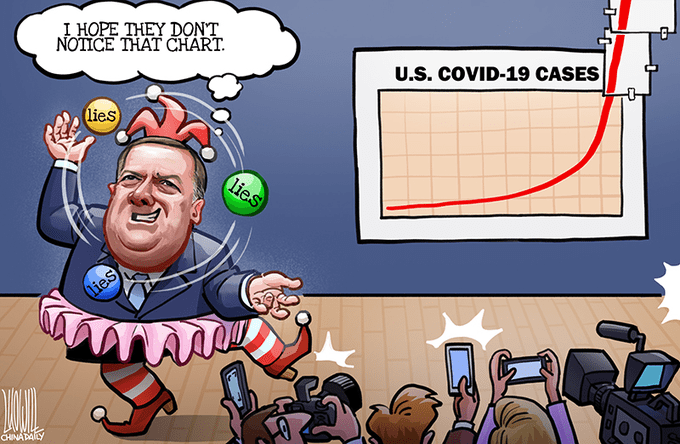
A China-bashing coronavirus jester? Beijing tears into Pompeo’s ‘clown show’
RT | May 6, 2020
China has fired back at Mike Pompeo’s allegations that Beijing is somehow behind the origin and spread of Covid-19, describing his “comedy routine” as deeply cynical and damaging to the United States.
State-operated China Daily took aim at the US secretary of state, slamming the top American diplomat for “bad-mouthing” China and the World Health Organization (WHO) instead of seeking global cooperation and solidarity to overcome the Covid-19 pandemic.
Pompeo continues to insist that the illness came from a laboratory in Wuhan, even though he has yet to present evidence for this incendiary claim, and has ignored scientists who say the virus is from the wild, the opinion piece argued.
China Daily noted that the secretary of state has also been curiously silent about the fact that Beijing has been the “main provider” of surgical masks, ventilators, and other essential medical equipment to the US. The editorial argued that Pompeo is playing a dangerous political game that will end up hurting the United States.
In a difficult situation such as the one we all face now, Pompeo’s clown show is simply self-harming for the US. It is solidarity that is desperately needed to fight this common enemy, not a stand-up comedy routine.
The paper also ran a cartoon showing Pompeo, outfitted as a jester, juggling “lies” as he tries to distract media attention from rising coronavirus cases in the US.
The biting commentary piece comes after the Global Times newspaper – an outlet owned by the Chinese Communist Party – published an editorial dismissing Pompeo’s attacks on Beijing as “groundless accusations.”
Pompeo’s theories have also been met with suspicion within the intelligence community. The Guardian reported that sources connected to the Five Eyes intelligence network – consisting of spy agencies from the UK, US, Australia, New Zealand, and Canada – believe there is no evidence linking China to the creation and spread of Covid-19.
Pompeo and the capricious virus
By M. K. BHADRAKUMAR | Indian Punchline | May 4, 2020
Iran, by its announcement Sunday that mosques will start reopening in low-risk areas of the country from May 5, has delivered a devastating blow to the ego of the Trump administration, puncturing it beyond repair.
President Hassan Rouhani said mosques would reopen in 132 regions designated as white under a colour-coded system after being consistently free of the new coronavirus. “Friday prayers will also resume in those areas and the mosques that respect the health protocols,” Rouhani added. The US had to settle for a “virtual” Easter mass, but observant Muslims in Iran will pray during Ramadan in their mosques.
Iran has already lifted a ban on inter-city trips and malls, with large shopping centres resuming activities. Rouhani also disclosed that schools in low-risk areas will be re-opened by May 16 to allow for a month of classes before exams are held.
The Health Ministry in Tehran said Saturday the rate of infections has started a definite downward trend. This has been possible because as many as 78 million people were screened for the COVID-19 symptoms in the first phase of a nationwide program and 30 million in the second phase.
For a country with a population of 84 million, this is an astounding record. In contrast, testing in the US remains scarce, with roughly 5.5 million tests performed since the first confirmed US case on January 20th.
A recent analysis by Harvard researchers and STAT shows that as the US tries to move beyond its months-long coronavirus testing debacle — faulty tests, shortages of tests, and guidelines that excluded many people who should have been tested to mitigate the outbreak — it is at risk of fumbling the next challenge: testing enough people to determine which cities and states can safely reopen and stay open.
Iran is one of the Middle Eastern countries hardest hit by the outbreak. Its crisis was compounded by the fact that Trump administration ensured through a barbaric sanctions regime that Tehran would have to combat the pandemic with one hand tied behind its back from the time its first COVID-19 infection cases appeared in late February.
The Trump administration’s — particularly the evangelist secretary of state Mike Pompeo’s — optimistic assessment was that under the assault of Covid-19, Iran would simply collapse for want of medicines and equipment, hospital beds and ventilators.
But the mother of all ironies is that on Sunday, even as Rouhani declared a defining moment in the pandemic in Iran, President Trump revised upward the possible death toll in the US closer to 100,000. Over a million Americans have been infected by the virus so far and nearly 70,000 lives have been lost.
The corresponding figures in Iran tell a story by itself: Iran has a total of 97,424 cases of the coronavirus. 78,422 patients have recovered and been discharged from hospitals so far. The death toll from the outbreak rose by 47 over the past 24 hours to 6,203, Iran’s lowest in nearly two months.
Iran has a population which is a quarter of the population of the US and by the American experience, at least a quarter million Iranian citizens should have been infected and somewhere around 18,000 lives should have been lost by now.
What emerges out of all this is that the US is an incredibly sloppy country despite its vainglorious claims of being a superpower and is ruled by an utterly incompetent government. To hide the shame and disgrace, Pompeo has plunged into a blame game.
On Sunday, Pompeo said: “There is enormous evidence that that’s where this began,” later adding: “I can tell you that there is a significant amount of evidence that this came from that laboratory in Wuhan.” Pompeo appeared confused. Only last Thursday, he was on record as saying in a radio interview, “We don’t know if it (the virus) came from the Wuhan Institute of Virology. We don’t know if it emanated from the wet market or yet some other place. We don’t know those answers.”
This revisionist thesis of the “Wuhan virus” becomes necessary as it emerged by the weekend that the death toll in the US would go up at least by another fifty percent. Pompeo is having to contend with an unprecedented diplomatic disaster on the world arena, as the US stands exposed as a bumbling giant with feet of clay. The world community will rightly wonder how a country that cannot adequately protect its citizens can be a provider of security for other countries.
What Pompeo refuses to acknowledge is that countries in the so-called “Orient” such as Iran could so successfully handle the Covid-19 crisis — with composure, grit and an earthy wisdom — that shows up the US as a decadent power. The countries in Asia, the Middle East and Central Asia are handling the situation so much better with so few resources, while the US is grovelling on the ground, lamenting its misfortune and indulging in blame games.
In a virtual “town hall” meeting on Fox News on Sunday night, President Donald Trump admitted that the coronavirus has proved more devastating than he had expected and the death toll from the ravaging pandemic might reach as high as 100,000 in the US. He pleaded during the two-hour broadcast that although he was warned about the coronavirus in his regular intelligence briefing on Jan. 23, the information was characterised as if “it was not a big deal” and had not been presented in an alarming way that demanded immediate action.
From what Trump said, Covid-19 poses a riddle to his administration. It killed nearly 70,000 Americans so far, but in Iraq, the body count is fewer than 100; in Malaysia also around 100; in Bangladesh 182.
Or, take the body count in countries that are in close proximity to China: Taiwan – 6; Kazakhstan – 27; Kyrgyzstan -10; Laos – 0; Cambodia-0; Myanmar-6; Nepal-0; Thailand-54. The metropolis of New York has been devastated while teeming Asian cities like New Delhi, Mumbai and Kolkata have so far been largely spared.
Would Pompeo have an answer? He is peeved that Beijing has not allowed western scientists to enter Wuhan and conduct research. But that privilege wasn’t extended to Vietnam, either. Maybe, Vietnam can teach the US something here that could have profound implications for how countries respond to the virus.
Vietnam, which shares a border with China and is about 1,200 miles from where the outbreak was first reported in Wuhan, has reported 245 confirmed cases with 95 recoveries and no fatalities. Yes — zero fatalities.
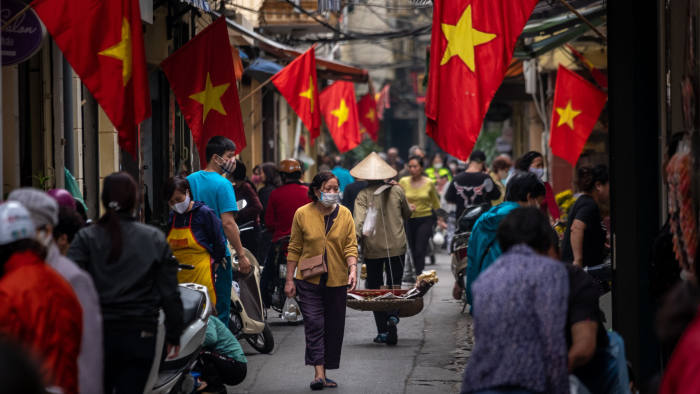
Vietnam reported 245 confirmed cases of Covid-19, no fatalities.
Clearly, Pompeo got it right but for the wrong reasons — this probably has got everything to do with the Chinese Communist Party.
A Vietnamese commentary comes out with a definitive explanation: “The Communist Party of Vietnam has strengthened its anti-pandemic measures by implementing nationwide social distancing rules, such as banning outside gatherings of more than two people while keeping a distance of 6.5 feet, and temporary shutdowns of “non-essential” businesses, including restaurants, entertainment centres and tourist sites…
“Unlike the U.S. capitalist class and the Trump administration, the Vietnamese government took early measures to combat the current coronavirus epidemic. Officials began preparing strategies to combat the outbreak immediately after the first cases emerged in China.”
“On February 1, Prime Minister Nguyen Xuan Phuc signed Decision No.173.QD-TTG, categorising the virus as a Class A contagious disease “that can transmit very rapidly and spread widely with high mortality rates.” This declaration of a national emergency came after the sixth case of coronavirus in the country was reported. In contrast, the Trump administration only declared a national emergency over the global pandemic on March 13, when there were at least 1,920 confirmed cases across 46 states.”
Read a blog featured by World Bank, Containing the coronavirus (COVID-19): Lessons from Vietnam. Life is such that sometimes, even horrific tragedies can have straightforward explanations. The capricious virus knew it, but not Pompeo.
Russia-China entente deepens in the shadow of the pandemic
By M. K. BHADRAKUMAR | Indian Punchline | May 2, 2020
The Russian-Chinese entente emerged as one of the most significant templates of international politics in the recent period since the hugely consequential developments in Ukraine in 2014 that led to western sanctions against Moscow, which in turn galvanised the latter’s ‘pivot to Asia’.
Of late, this entente, which falls short of a formal alliance, assumes prominence, given the shift under way in regional and global alignments triggered by the coronavirus pandemic. The world economy faces recession and the US is threatened by a crisis unmatched since the Great Depression of the 1930s. The number of Americans filing for unemployment benefits is soaring past 30 million.
The decline of the US as a global power is accelerating. But the US refuses to come to terms with this geopolitical reality and is determined to perpetuate its domination of the global arena, no matter what it takes. China and Russia have been cast in the ‘enemy’ image. In the short term at least, tensions will rise — in the US-China relations, in particular.
It was reported last week that the US is deploying missile defence systems near Russia’s borders with the potential to deliver a surprise nuclear strike. A Tass report quoted the First Deputy Chief of the Russian General Staff’s Main Operations Department Lt. Gen.Viktor Poznikhir as saying that the US has developed a concept of pre-launch interception and planned to destroy intercontinental ballistic missiles of Russia, China and other countries while they are still in launchers.
Suffice to say, it is in the common interests of Russia and China that in their growing confrontation with the US, they stand by each other and support each other. There is every indication that US imperialism will assume an even more violent and oppressive character in the prevailing world situation.
The Russia-China entente is driven by their leaderships. Within the period of a month in March-April, there have been two telephone conversations between Russian President Vladimir Putin and Chinese President Xi Jinping to discuss the pandemic and its ramifications as well as the imperative need to jointly face the ensuing challenges.
The Chinese readouts (here and here) underscored that Putin was critical of the “provocation and stigmatisation by some country” (read the US) and the “attempt by some to smear China on the question of the origin of the virus.” Putin affirmed that since the start of COVID-19, Russia and China have “stood in unity and extended mutual support, which is a testament to the strategic nature and high quality” of their relationship.
The mutual support Russia and China are extending to each other creates space for both to effectively push back at the US. Earlier this week on April 29, the Chinese Foreign Ministry spokesman endorsed the concerns expressed by Moscow from time to time in recent years over the presence of Pentagon’s labs in the countries of the former Soviet Union for weaponising diseases. Moscow has cited a specific lab near Tbilisi in Georgia, even claiming intelligence regarding visits by senior Pentagon officials to the centre recently.
The Russians claim that there are 11 such labs in Ukraine developed by the Pentagon. They say when Crimea rejoined Russia in 2014, they found out that in one such lab in Simferopol, which was apparently a hub for collecting materials and sending them to Europe, 104 pools of ectoparasites, 46 samples of internal organs of rodents and 105 samples of human blood serum were found ready for despatch.
Moscow alleges that these labs conduct study on dangerous diseases, targeting specific ethnic groups, and include projects that are banned within the US itself. On April 29, at a media briefing in Beijing, the Chinese spokesman said,
“We noted the Russian foreign ministry spokesperson’s remarks and related reports. The US established multiple biological laboratories in former USSR countries but kept its mouth shut regarding the labs’ functions, purposes and safety, causing deep concerns from local people and surrounding countries. As we know, some local people strongly demand the labs be closed. We hope the US will act in a responsible manner, heed the concerns from the international community, attach importance to local people’s health and safety, and take concrete measures to eliminate the doubts.”
As the legal successor of the Soviet Union, Russia inherited its status as a party to the Geneva Protocol and the Biological and Toxin Weapons Convention (BWC) in 1992. China too had acceded to the BWC in 1984. All Asian countries are signatories to the BWC. Interestingly, so is the US, which had ratified the protocol in 1975.
Now, the US Government has not officially accused China of intentionally developing the COVID-19 as a biological weapon, while Trump keeps talking in innuendos. According to the assessment of the US intelligence, the virus was not man-made or genetically modified. But Trump claims he has seen evidence suggesting the novel coronavirus originated in a virology lab in Wuhan — although he couldn’t provide any evidence to support that claim.
China has reacted strongly to Trump’s jabs while Russia has been supportive of the Chinese stance. The Russian Foreign Minister Sergey Lavrov recently spoke derisively about the talk in some European countries demanding compensation from Beijing for “failing to timely inform the world community” — and by Trump himself saying similar US claims would be “much bigger than hundreds of billions US dollars.”
Indeed, this may become serious stuff if Trump chooses to pursue a punitive strategy towards China. The Washington Post wrote on Thursday, “In private, Trump and aides have discussed stripping China of its ‘sovereign immunity,’ aiming to enable the U.S. government or victims to sue China for damages.”
For the present, Russia agrees with the Chinese perception that the Trump administration is ratcheting up the rhetoric over Covid-19 to draw public attention away from its incompetence in countering the pandemic. But Russian support becomes crucial for Beijing if push comes to shove with Trump in the coming months.
Up until now, neither Russia nor China has sought each other’s help while negotiating bilateral relations with the US. There is a paradigm shift taking place here, which becomes a leap of faith for both China and Russia as well as a qualitatively new phase in their entente, which has so far been focused on regional and global issues of common concern.
Covid-19 was already ‘silently circulating’ in France before virus arrived from China & Italy – study
RT | April 29, 2020
The outbreak of the coronavirus in France has little to do with cases imported from China or Italy, as another strain of the disease of unknown origin had already been infecting people in the country, research claims.
The virologists at the Pasteur Institute in Paris have sequenced the genomes from samples taken from 97 French and three Algerian coronavirus patients between January 24 and March 24.
What they found is that the dominant types of Covid-19 viral strains in France differed from those that arrived from China or Italy, and belonged to another group, or ‘clade.’
The earliest sample in the French clade dated from February 19 and came from an infected person who hadn’t traveled abroad recently and had no contacts with possible carriers of the disease.
“We can infer that the virus was silently circulating in France in February” prior to the wave of Covid-19 cases in the country, the virologists said in a paper, published on bioRxiv website but not yet peer-reviewed.
The origins of this third strain were unknown to the scientists. They also pointed out that their sampling was insufficient to reliably establish the time of its introduction in France.
The first coronavirus-related fatality was registered in the country in mid-February, with 129,859 people confirmed as infected and 23,660 dying from complications related to the highly contagious disease since then.
Cuomo says one Covid-19 patient is like ‘fire through dry grass’, demands care homes take them anyway
RT | April 28, 2020
New York Governor Andrew Cuomo has acknowledged that a single Covid-19 patient in a nursing home could rip through the facility like “fire through dry grass.” His order that facilities treat all infected patients remains, however.
Admitting that nursing homes are “congregate facilit[ies] of vulnerable people,” Cuomo admitted during a press conference on Tuesday that if just a single infected person – whether a doctor, nurse, janitor, or “one anything” – walked into one of the state’s hard-hit elder care facilities, “it is fire through dry grass in that nursing home.”
“It is frightening. And if you have a loved one in a nursing home, yes, it is frightening,” Cuomo shuddered.
Over 3,500 nursing home patients have died since the coronavirus epidemic took root in New York. The highly-infectious virus is known to be particularly devastating among the elderly and those with pre-existing conditions and has killed over 10,000 in elder-care facilities across the US.
However, Cuomo has refused to address or alter the executive order he issued late last month, forbidding care home operators from testing patients prior to their readmission to their facilities. No patient “determined medically stable” upon discharge from an acute care hospital may undergo testing for Covid-19 as a prerequisite for entry into a care home, never mind the judgment of staff.
The New York governor has defended his order despite protests from the facilities, even as staffers insist they don’t have adequate personal protective equipment (PPE) to deal with coronavirus patients and that the risk of infection threatens the fragile health of their existing charges.
“It’s not our job” to provide nursing homes with PPE, the governor said last week. He insisted that “we have given them thousands and thousands of PPE” and calling it the “primary responsibility” of nursing homes to outfit themselves with the equipment needed to fight the epidemic.
During his nine years as governor, Cuomo has slashed state healthcare budgets to the bone, and a recent controversial Medicare cut foisted hundreds of millions of dollars of costs from the state onto local governments.
A similar requirement that nursing homes take Covid-19 patients in California was walked back after protest. While Cuomo has insisted on the no-testing requirement as a way to ease pressure on supposedly overloaded local hospitals, other facilities meant to ease that pressure – from the hospital ship USNS Comfort docked on the west side of Manhattan to the temporary hospital set up in Manhattan’s Javits Convention Center – have gone largely unused, as the city’s hospitals have proven sufficient to absorb the surge in hospitalizations.
Burdened by the order to take in recovering coronavirus patients, some of the state’s nursing homes have unwittingly become breeding grounds for the virus. NBC profiled one facility in Long Island where the epidemic exploded from a single case to 24 deaths in just a month. Only three of the dead were transfer patients, and one wasn’t even a patient but a staffer, the outlet reported.
Featured Video
ARE PATIENTS BEING PROPERLY INFORMED ABOUT OZEMPIC?
or go to
Aletho News Archives – Video-Images
New Book
Breast Cancer: Before You Consent
A new Unbekoming paperback
Lies are Unbekoming | September 18, 2026
Peter Gøtzsche reviewed every randomised mammography screening trial ever conducted for the Cochrane Collaboration. Cochrane’s headline is that, assuming a 15% mortality reduction, one woman in 2000 avoids dying of breast cancer over ten years. Ten are overdiagnosed and treated. Two hundred experience false alarms.
But that headline assumes the reduction. When Gøtzsche looked only at the trials with adequate randomisation — the higher-quality ones — the reduction disappeared. No effect on breast cancer mortality. No effect on all-cause mortality.
This is the Cochrane finding, published in the establishment’s own database of systematic reviews.
No woman being asked to consent to a mammogram this week knows it.
That is why the new Unbekoming paperback exists. … continue
Blog Roll
 Aletho News
- The Truth About the Trump Shootings with Ken Silva
- ARE PATIENTS BEING PROPERLY INFORMED ABOUT OZEMPIC?
- US lawmaker blocks $2.8 billion weapons sale to Israel: Report
- Yemeni army claims responsibility for strikes on sensitive sites in Saudi capital, Aramco facilities in Yanbu
- Iran Judiciary issues indictments against 159 US, Israeli officials for assassination of Leader, commanders
- Turkiye revokes Iranian bank license under US sanctions campaign
- US-Denmark Agreement on Greenland Is ‘PR Stunt’ Ahead of Midterms
- Araghchi: Military intervention cannot create security; coercion cannot bring peace
- Fraud Squared
- Breast Cancer: Before You Consent
- If Americans Knew
- Inside Gaza’s death trap of collapsing, bombed-out buildings
- The everyday items Israel bans from Gaza every day
- Inside the siege, the ruined buildings of Gaza – Daily Update
- Debunking The Claim That Macklemore Has A “History Of Antisemitism”
- CPJ demands release of arrested Palestinian-US journalist near Bethlehem
- Robert Kraft: The Billionaire Friend of Netanyahu Pulling The Strings Behind the Macklemore/Ed Sheeran Blow Up
- Columbia Administered Fund Gives Big Money to Pro-Israel Groups
- Deportation Case of Palestinian Activist Salah Sarsour Tests First Amendment
- ‘We Will Not Forget’: Palestinians Mark 44 Years since Sabra and Shatila
- Why do we let Zionists decide what we can and can’t say?
- No Tricks Zone
- 2025 Nature Paper Claiming Worsening Global Drought Gets RETRACTED …Heavily Flawed
- New Study: ‘Global Drought Shows No Detectable Recent Acceleration Under Climate Warming’
- Economic Masterminds: German Socialists Suggest Taxing Productivity Gains Stemming From Using AI
- The South China Sea Has Not Been Cooperating With The Climate Change Narrative
- Energy Crisis: Germany Enters Heating Season With Historically Low Gas Reserve Fill Levels
- New Study: The Antarctic Ice Sheet Gained Mass From 2020-2024 Due To Staggering Snow And Ice Accumulation
- Study: Ocean Heating Rates From Thousands Of Years Ago ‘Dwarf’ Modern Ocean Heating Rates
- Climate Extremists Target, Attack Large-Scale Power Grid Infrastructure In Germany!
- New Study: Antarctic Ice Melt Has Contributed Less Than 1 Centimeter To Sea Level Rise In The Last 30 Years
- Fear Of Debate: Alarmist German Climate Scientist Calls On Mainstream Media To Discredit Skeptic Voices
 Aletho News