EU sticks to lockdowns, masks and vaccine passports
By Will Jones | TCW Defending Freedom | October 27, 2022
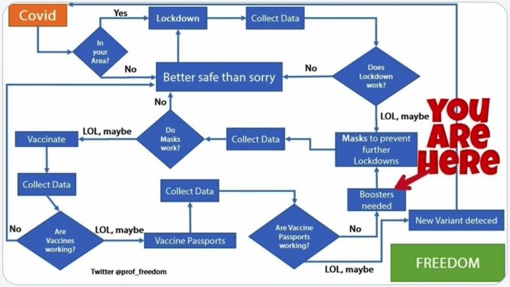
The EU has set out its commitment to the continued use of lockdowns, mask mandates, vaccine passports and other restrictions this winter to control the spread of Covid-19, and also to the creation of a ‘legally binding’ global pandemic treaty with a ‘reinforced World Health Organisation at its centre’.
The document, published on September 2 and titled EU response to COVID-19: preparing for autumn and winter 2023, was prepared by the EU Commission (the EU executive) and sent to the EU Parliament. It reveals how much in thrall to the new biosecurity orthodoxy the EU leadership is and bodes ill for the future management of contagious disease in the bloc and globally.
On lockdowns and other restrictions, it proposes a framework of ‘key indicators to assess when deciding on reintroducing non-pharmaceutical measures’. These indicators include severe disease and hospital occupancy data, and importantly are stated to relate not just to Covid-19 but to influenza as well, potentially making this part of normal winter disease management indefinitely.
It suggests mask mandates as a ‘first option to limit community transmission’, giving a preference for FFP2 masks.
The document recommends the pre-emptive imposition of work-from-home and gathering limits before any rise in infections to try to avoid the ‘need for more disruptive ones such as lockdowns, closing businesses and schools, stay-at-home recommendations and travel restrictions’. It stresses the need for ‘political commitment’ to make lockdowns and other measures work.
The one welcome aspect of the document was the clear statement to avoid disrupting children’s education and lives any further, though even here school closures were not ruled out: ‘The Covid-19 pandemic has disrupted the lives of children and adolescents affecting their everyday routines, education, health, development and overall well-being. It is therefore important to keep in mind the negative impacts of school disruptions on the health and development of children. The implementation of measures at schools should be aimed to be kept at a minimum and the further loss of learning should be prevented.’
The document discourages travel restrictions – freedom of travel and the elimination of internal borders being an article of faith for the EU. However, it recommends use of the EU Digital Covid Certificate (i.e., vaccine passport, though it also recognises natural immunity) wherever travel restrictions are necessary’, boasting about how widely it is already used.
‘The EU Digital Covid Certificate has been a major success in providing the public with a tool that is accepted and trusted across the EU (and in several third countries) and in avoiding fragmentation of multiple national systems. As of August 1st 2022, 75 countries and territories from across five continents are connected to the EU Digital Certificate system (30 EU/EEA Member States and 45 non-EU countries and territories), and several more countries have expressed interest in joining the gateway or are already engaged in technical discussions with the Commission. This makes the EU Digital Covid Certificate a global standard.’
What this fails to mention, of course, is any rationale for the passes. What’s the point of restricting the travel of the unvaccinated (or not-sufficiently-vaccinated) when the vaccinated are no less likely to spread the disease? This key question is entirely unaddressed.
On vaccination, the document provides 15 ‘objectives’, ‘priorities’ and ‘actions’ for Covid-19 vaccination strategies. These include the ‘priority’ of encouraging take-up of the original vaccine (that’s right, for the extinct Covid strains) among all eligible children and adolescents, and an action point of making sure GPs are spending enough of their time vaccinating people (don’t they have anything else to do?) It suggests administering boosters as often as every three months, implying they are of little use after six months. It also encourages governments to counter ‘misinformation’ in the media and online to ensure ‘clear, consistent and evidence-based messaging demonstrating the continued safety and effectiveness of COVID-19 vaccines’. It links worries about vaccine safety with ‘anti-Western and anti-EU narratives’ and with websites which also go off-narrative on the Ukraine war.
The document also trails a forthcoming ‘EU global health strategy’ which ‘will provide the political framework with priorities, governance and tools, enabling the EU to speak with one influential voice and making the most of Team Europe’s capacity to protect and promote health globally’.
This is a very disturbing document. For those of us who still hold to the evidence-based pandemic strategies of pre-2020, premised only on mitigating impacts by expanding emergency healthcare capacity and finding safe and effective treatments, and not imposing intrusive, harmful and unproven methods of trying to prevent the spread of a disease that is anyway harmless to most people, this bodes ill indeed for the current direction of travel in Europe and globally.
England: Social worker fired over social media posts wins case
By Christina Maas | Reclaim The Net | October 25, 2022
Social Work England dropped the case against Rachel Meade, a social worker and member of the Free Speech Union (FSU), who was suspended over posts on her personal Facebook page.
A complaint about the posts was filed by Sport England’s Diversity Champion Aedan Wolton. That single complaint resulted in the suspension of Meade from her social worker position at the Westminster City Council.
Meade’s ‘crime’ was sharing links to articles covering transgender issues and petitions and blog posts on the national debate about if it is right for people to self-identify their gender. The case lasted for almost two years.
Meade told the Daily Mail that the “last two years have been nothing short of an Orwellian nightmare for me and my family.”
“My apparent crime was to share some news articles and petitions about the self-ID gender debate to fewer than 50 friends on Facebook. I found myself wrongly accused of holding abhorrent transphobic views,” she added.
Her lawyer, Shazia Khan, said Social Work England violated Meade’s freedom of speech and asked for an apology to Meade. The organization refused to apologize.
Will Ursula von der Leyen be forced to resign, and will her deeds be investigated?
By Vladimir Danilov – New Eastern Outlook – 28.10.2022
Europe has been rocked by large-scale protests over the last few weeks, and many politicians and media organizations in the EU see this as a reflection of public dissatisfaction with the policies of the European Commission and especially its head, Ursula von der Leyen. The main concern is the rising cost of living, the rapid increase in energy and food prices, and the anti-Russian policies of the European Commission, which have led to an energy and economic crisis that is affecting not only Europe but many other countries who have committed themselves to a close relationship with Europe.
Always keen to show her unwavering support for Washington and London, in her speech at the inaugural summit of the European Political Community, the President of the European Commission extended a warm welcome to Liz Truss – despite the fact that no-one other than Ursula von der Leyen considers the former British premier’s policies to be a success. As the Daily Express notes, the speech was greeted with an uncomfortable silence.
Internet users in the EU have criticized Ursula von der Leyen’s most recent promises to help the Kiev regime “as long as is necessary” and provide Ukraine with billions upon billions of Euros in credit. Her statements have been attacked on social media as ignoring the interests and wishes of EU citizens, and users have called for her resignation.
Writing on Twitter, the French politician Florian Filippo criticized her call for regular subsidies for Ukraine: “Ursula is completely crazy! Lock her up!”
In an interview with Le journal du Dimanche, the former French president Nicolas Sarkozy has accused the European Commission of lacking the authority to make decisions on arms purchases. As he explained, the European Commission is an administrative body, and it is unclear on what basis Ursula von der Leyen considers that she has the authority to speak up on matters relating to foreign policy or arms purchases. Just a few days after the beginning of Russia’s special operation in Ukraine, the President of the European Commission announced that the EU would finance “the purchase and delivery of arms and other military equipment” to Ukraine. Europeans are continually hearing about the need to provide the Kiev regime with billions of euros from EU coffers to buy arms, and they blame Ursula von der Leyen. Nicolas Sarkozy alleges that the EU’s policy in relation to Ukraine was too dependent on “escalation, irritation and thoughtless actions.”
The Israeli television channel i24news and the former Socialist candidate for the French presidency (in the 2007 elections) Ségolène Royal have also recently criticized Ursula von der Leyen’s stance. Ségolène Royal claims that instead of helping Russia to stop the war, the President of the European Commission is lobbying on behalf of the USA’s Ukraine policy and has effectively become a NATO and Pentagon press secretary.
In addition to the criticism’s of her policies, Ursula von der Leyen has also found herself at the center of corruption scandals in recent months. Especially since the beginning of the European public prosecutor’s investigation into EU purchases of COVID-19 vaccines. Public attention in relation to the scandal has centered on the role played by the President of the European Commission, who, as even Dmitry Medvedev, deputy chairman of Russia’s Security Council noted on October 20, “went all out and purchased 4.6 billion(!) COVID-19 vaccine doses from Pfizer pharmaceuticals at a cost of 71 billion (!) euros.” “That is 10 vaccine doses for every EU citizen,” he added.
According to the journal Politico, Ursula von der Leyen has admitted to exchanging text messages with Pfizer CEO Albert Bourla while the EU was negotiating the vaccine purchase contract. Two EU supervisory bodies have already accused her of wrongdoing in relation to the purchase, criticizing the Commission for refusing to provide the documents required for the investigation into the matter to proceed further.
However, the Pfizer purchase is not the first scandal that Ursula von der Leyen has found herself involved in. There was another scandal three years ago, when, shortly after a call from the EU elite to “make the process of electing the EU leadership more democratic,” the members of various different political groupings complained that at the beginning of 2019 the heads of the main EU bodies were selected in closed meetings “under cover of night.” The presidency of the European Commission did not go to the leader of the group winning the most votes in the May 2019 elections, but was instead “handed to” Ursula von der Leyen, as Donald Tusk, evidently satisfied that he had done his duty, informed journalists at the end of a two-week EU summit.
This political backroom deal in which the position was clearly reserved for Ursula von der Leyen took place at a time when the EU was supposedly undergoing a “democratic reform.” Since 2014 the so-called leading candidate procedure has been in effect, for the purpose of selecting a new President of the European Commission. Among other requirements, the procedure requires that the candidates from Europe-wide parties who won the largest numbers of votes in European Parliament elections should be given priority when selecting the President of the European Commission.
The reservation of the post for Ursula von der Leyen, the then German Minister of Defense, was highly controversial at the time, even in her native Germany, both among politicians and within the expert community. For example, Markus Söder, at the time head of the Christian Democratic Union, described his views to the DPA press Agency as follows: “Manfred Weber would have been a legitimate President of the European Commission, his election would have been democratic. It is a pity that democracy failed, and the winner was chosen in a behind-the-scenes deal.” The heads of the Social Democratic Party of Germany (SPD)-led coalition, in government at the time, also opposed her nomination to the most senior post in the EU. “The decision to award the presidency of the European Commission to the Minister of Defense undoes all the efforts that have been made to strengthen democracy in Europe, take into account citizens’ interests and support the role of the European Parliament,” the SPD leaders claimed in a statement.
Significantly, at the time Ursula von der Leyen did not even take part in the election campaign, did not stand as a candidate in the European elections, and was probably most known for her anti-Russian position and her unquestioning support for Washington. It was most likely that support that played the key role in bringing about her nomination as President of the European Commission.
So, one may ask, what did Ursula von der Leyen do to achieve the honor of being given the post she now occupies? She is the daughter of Ernst Albrecht, a high-ranking politician in the Christian Democratic Union (CDU), and between 1988 and 1992 she worked as an assistant doctor in the gynecological department of Hanover Medical School. However, in 2016 Hanover Medical School checked her doctoral thesis for plagiarism, and noted its “obvious shortcomings.”
Having raised seven children, she is often informally referred to in her native country as “the mother of Germany.” Her political career began in 1990, when she joined Angela Merkel’s CDU, and in 2005 she was appointed to her first ministerial post, as Minister of Family Affairs and Youth in the Merkel administration. In 2009 she was appointed Minister of Labor and Social Affairs, and in 2013 she became Minister of Defense, a post which she occupied for six years, during which she was involved in regular scandals and responsible for controversial decisions. According to statements by Germany’s three main parties (the Green Party, the Left Party and the Social Democrats), many of the 3,800 contracts concluded during her “management” of the German Armed Forces from 2014 onwards (relating to the restructuring of the Armed Forces and also its IT systems) appear to have been awarded to the “right people,” including relatives and friends, and some contracts may even have involved some form of bribery. Back in 2017 the German newspaper Bild, citing a report by the Federal Audit Office, accused Ursula von der Leyen of being strikingly incompetent during her time as Minister of Defense, when it was revealed that not one German submarine was operational, and less than half of its frigates and tanks and just a third of its military helicopters were in working condition.
With such a “success” record, Ursula von der Leyen was already being seen as a burden on the Armed Forces and the CDU. As, with the elections coming up, there was no suitable free ministerial post she was “nominated” for the presidency of the European Commission – a convenient decision for Germany at the time.
However, as time went by it became clear that the EU could not expect to derive much benefit from her appointment.
For Washington, however, which has no interest in the EU being led by strong politicians following their own line independent of the US, the decision to give Ursula von der Leyen the presidency of the European Commission in 2019 played right into its hands. And as a result she is now promoting the interests, not of European citizens, but of Washington alone, by helping US pharmaceutical companies make huge profits from selling the Pfizer COVID-19 vaccine or by providing the US military-industrial complex with millions upon millions of euros in arms orders, paid for by European taxpayers, to support the Kiev regime.
In the present circumstances it will be interesting to see how Ursula von der Leyen’s “career” ends – will she be brought down by the results of investigations into the corruption scandals which she has clearly been involved in, or following demands for her resignation by the European public, who are becoming increasingly critical of her actions…
The Ukraine war of words that heralds ethnic cleansing
By Dr Gregory Slysz | TCW Defending Freedom | October 28, 2022
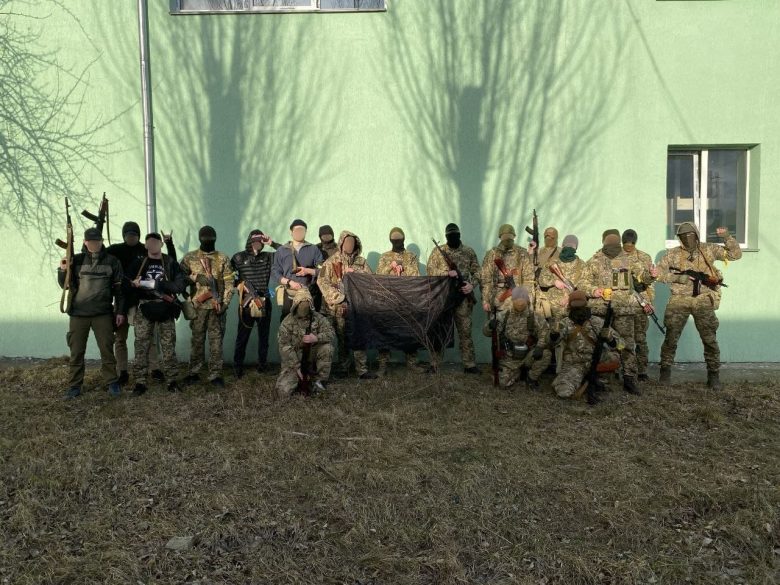
As The Ukrainian forces and their Western backers celebrate their recent military advance, the fate of ethnic Russians in the reclaimed territories looks bleak now that local and national leaders have declared a reckoning against those whom they consider to be collaborators and traitors.
It’s a policy that originates from the early stages of the conflict based on a law passed in March that threatened anyone who co-operated with the occupying Russian authorities with up to 15 years of imprisonment together with the confiscation of property. Hitherto there have been many arrests of those accused of pro-Russian collaboration, including the leader of Ukraine’s official parliamentary opposition Viktor Medvedchuk, and assassinations of officials such as Alexei Kovalev, deputy head of the military and civil administration in the Kherson region. But as the Ukrainian forces wrest back territory from Russia, a wide net is being cast against alleged collaborators that extends well beyond officials to include teachers, social media warriors and victims of unsubstantiated claims of snitches, shedding light on the intentions of Ukrainian authorities in the unlikely event of total victory.
Ukraine is a culturally heterogenous population in which linguistic affiliation is complex, being governed by both cultural and social situations. At least 17 per cent of Ukrainians claim Russian heritage, with about 14 per cent declaring Russian as their main language and a further 17 per cent Russo-Ukrainian bilingualism, with an unknown number opting to converse in a hybrid Surzhyk dialect. Russian speakers are overwhelmingly concentrated in the eastern and southern regions of the country. It’s a situation, moreover, that has reflected the electoral geography of the country of both parliamentary and presidential elections with the eastern and southern parts of the country exhibiting close affinities with Russia.
Starting as a reasonable initiative at nation-building that intended to correct the inequalities of institutional Russification of the Soviet era, language policy came to be weaponised by nationalist political forces that sought to use it to marginalise Russian culture. Although a cultural reset was inevitable after the collapse of the Soviet Union to redress years of Russification, its initial steps were measured, such as the Law of Languages of 1989, which extended legislative protections to Russian as well as other languages. For Ukraine’s increasingly influential nationalists, overwhelmingly located in the West of the country, the Law was intolerable and unsurprisingly fell victim to the Maidan coup of 2014, that replaced the Russophile President Viktor Yanukovich with Petro Poroshenko.
While its provisions were maintained by Ukraine’s subsequent leadership, following international condemnation of its revocation, the decision of the Constitutional Court to deem the Law unconstitutional was viewed by the Russian minority as a sign of a broader assault on Ukraine’s Russian heritage and served to fuel separatist sentiment in the Crimea and the Donbas. It also played into the hands of Vladimir Putin who could now claim to be the champion of Ukraine’s oppressed Russian speakers, by military means if necessary. Such fears were not unwarranted as in 2019 a new language law sought to end the hitherto ad hoc implementation of existing legislation and subject transgressors to severe fines. Poroshenko, who was campaigning for re-election, weaponised Ukraine’s language policy with his election slogan ‘Army, faith, language’, declaring that ‘the only opinion that we weren’t going to account for [in drafting the legislation] is the opinion of Moscow’. Salt was further rubbed into the wounds of the third of the country which rejected it by its being signed off by the Speaker of Parliament, Andrei Parubiy, a former activist in the neo-Nazi Social-National Party, who warned chillingly that ‘those people who try to revise the language law . . . will soon feel the whole anger of the Ukrainian people’. Remaining loopholes were filled in January 2022, just before Russia’s military incursion, which for instance compelled Russian language print media to produce Ukrainian translations for all publications in a move that de facto targeted Russian for discrimination.
To indigenous Russian speakers, such rhetoric marked the creation of an ethnic state in which they were not welcome. The escalation of the war in 2022 seemed to confirm their worst fears as not only did Russian become ‘the language of the enemy’ but things Russian, political parties, music, literature were officially shunned, banned or marginalised in a policy that hitherto had been executed only by the far right nationalists of Lviv City Council in West Ukraine. Whereas then the likes of Canadian and British ambassadors joined Moscow in condemning such action as ‘just plain dumb’ and intolerant, now such nationwide ‘de-Russification’ initiatives were met with silence.
International opinion recognised Ukraine’s language policy as conflict-bearing due to its increasingly divisive and discriminatory nature. The scrapping of minority language provisions by Ukraine’s Constitutional Court in 2014, for instance, raised concerns in the European Parliament which deemed it as ‘undermining any notions of justice, freedom, civilisation, progress and democracy’ and called for the EU Commission to ‘condemn the action of the Ukrainian Parliament and the nationalistic attacks on minority communities in Ukraine’. The 2019 law came under similar criticism from the Venice Commission, the Council of Europe’s advisory body on constitutional affairs, which declared that it threatened to become ‘a source of inter-ethnic tensions within Ukraine’. It reiterated its conclusion following the passing of the January 2022 Law, noting that ‘historical oppression of Ukrainian . . . may lead to the adoption of positive measures aimed at promoting Ukrainian, but this cannot justify depriving the Russian language and its speakers of the protection granted to other languages’.
Both the intra-parliamentary brawls and street standoffs between Ukrainian and Russian speakers during the passage of the language legislation were chilling portents of what was come. Although the escalation of the war in 2022 has seen some ethnic Ukrainian Russian speakers distance themselves from ‘the language of the enemy’ and embrace Ukrainian as their main language, it has also seen ethnic Russians fortify their Russian identity. While this in itself has demonstrated the complexity and malleability of identity in Ukraine, it has also reinforced pre-existing cultural fissures, leaving ethnic Russians with no option other than to embrace Mother Russia as their homeland.
While the conflict in the Donbas since 2014 rendered reconciliation between the Ukrainian authorities and the Russian minority problematic, as the failure of the Minsk agreement testifies, the escalation of the conflict has entrenched pre-war hatreds. With the national conversation decisively turning against the reintegration of Russian culture and language into Ukraine’s social fabric, it is difficult to see how a status quo ante bellum with even rudimentary cultural and linguistic protections for ethnic Russians is possible were the Ukrainian state reconstituted within its pre-war borders. In fact, everything points towards mass retribution and ethnic cleansing on a scale not witnessed in Europe since the Second World War, in a scenario that is likely to overshadow the grim events of the conflict itself. Ukraine’s Secretary of the National Security and Defence Council, certainly didn’t mince his words on a recent Ukrainian talk show in calling for the ‘complete disappearance of the Russian language from our land’ in what sounded like incitement to ethnic cleansing.
Nothwithstanding the difficulty such actions would present for social reconstruction, the questionable legality of extra-judicial killings of officials and political persecution of ‘collaborators’ threatens to draw attention to atrocities committed by Ukrainian paramilitary forces during the Second World War against Russians, Jews, Poles and other minorities. These crimes, together with the ritualistic celebrations by Ukraine’s highest political authorities of those who perpetrated them like nationalist leader and Nazi collaborator, Stepan Bandera, have been conveniently whitewashed so as to not tarnish the image of a virtuous Ukraine that has been carefully cultivated over the past few months. The sources which once regularly condemned Ukraine for not only celebrating wartime collaboration but also tolerating a revival of neo-Nazi paramilitarism now declare similar condemnation by Russia as hostile propaganda. A Ukraine seen to be persecuting minorities again would be a propaganda disaster for its Western backers.
Dividing Ukraine’s population into ‘the people’ and ‘the rest’ where the latter were made to feel subordinate in their ancestral lands to the former was always going to lead to conflict. Yet just as wise counsel of the likes of George Kennan, Henry Kissinger and Zbigniew Brzezinski warned of the grave risks of Nato’s expansion to Russia’s borders, so warnings came aplenty of the dangers of a divisive language policy. To Ukraine’s detriment, however, neither was heeded and now a reckoning against ‘the rest’ will be as useless in knitting back together shattered communities as the pre-war language policy was in solving peaceful coexistence between Russian and Ukrainian in a single public space.
Japan steps up its digital ID push, tells public they may lose health insurance if they don’t sign up
By Didi Rankovic | Reclaim The Net | October 27, 2022
There is a discernible and forceful push in many countries toward digitization and switching citizens’ key sensitive personal and financial data from “analog doldrums” to government-controlled (and easily accessible by multiple agencies) centralized databases.
Somewhat telling of how important this task is for those in power, is the fact they are increasingly either pulling all the stops or threatening to, prodding a reluctant population in the desired direction.
In Japan, those who are unsure about signing up for digital IDs – and reports say, those are many – are being told they risk losing their public health insurance, AP writes.
Japan’s Social Security Number-like scheme was launched back in 2016. It’s called My Number and consists of 12 digits given to all residents. But My Number has been far from a resounding success as many Japanese avoid using it, afraid their personal data and right to privacy could be compromised.
The Japanese society seems technologically savvy enough to understand the underlying risks and harms of some types of technology, which means that this otherwise hi-tech country to this day prefers to do business in person, use cash, stamping seals, and paper documents in administrative procedures – in other words, in all those areas that really matter.
Despite the fact the My Number scheme has not had wide adoption, Japan’s authorities are now apparently doubling down: they want to issue My Number cards with microchips in them to everyone, and those cards will also serve as photo ID since they will contain photographs of their carriers. Some of the information and services the cards are linked to are drivers licenses and public health insurance.
This is where the plot thickens since current health cards do not require photos – but those will be phased out by the end of 2024, meaning that residents who do not apply for My Number cards risk losing their health insurance.
An online petition is currently circulating, having gathered over 100,000 signatures in a matter of days, calling for continued use of the current form of health cards.
“If this was coming from a trustworthy leadership and the economy was thriving, maybe we would think about it, but not now,” Saeko Fujimori, who works in the music industry, told AP.
And there are dark overtones to the report.
Property in German town to be confiscated for asylum seekers
Free West Media – October 26, 2022
So far it has been dismissed as a malicious “conspiracy theory” that living space for asylum seekers would end up being confiscated in Germany. But this “theory” is sadly coming true. In the Bavarian district of Fürstenfeldbruck, not far from Munich, it is being implemented.
The local CSU District Administrator Thomas Karmasin has refused to use gymnasiums as “refugee” accommodation. But the existing public accommodation is running out in the face of exploding numbers of asylum seekers. Karmasin therefore wants to have public and private properties confiscated in order to accommodate the newcomers. The first efforts have already started.
Karmasin said in a statement that immigration policy was a federal matter. As in 2014 to 2016, during the last “refugee” crisis, he refused to make school gyms available again.
This development is likely to put affected locals under severe stress in forcing a show of solidarity with Ukrainians or Senegalese accommodated in their apartments and single-family homes.
In a recent SZ interview, sociologist Karin Scherschel who is pro-migration, warned that election campaigns should not be fought on the subject of migration “because it always creates a mood”. If Scherschel had her way, the immigration debate would be ignored.
With authorities now confiscating homes, the matter is certain to create a volatile mood.
According to a so-called general clause under police law, people in Germany who are threatened with homelessness may be accommodated in empty apartments or hotel rooms, even against the will of the owner. Before doing so, the authorities must have exhausted all other possible options.
It is probably only a matter of time before these state encroachments will also extend to private residential property everywhere.
In Stuttgart, 100 tenants were given notice because the homeowner wanted to offer his house to the city for refugees. And in a Bavarian retirement home, the inhabitants were forced to move to higher floors so that young migrants could be accommodated on the ground floor.
The Organization for Economic Cooperation (OECD) assumes that the number of people moving to Germany by the end of the year will exceed the figure of more than two million from 2015.
Seize, not freeze: EU outlines plans for Russian assets
Samizdat – October 25, 2022
The EU seeks to outright confiscate Russian assets rather than just freeze them, but the bloc has yet to lay the legal groundwork for doing so, European Commission President Ursula von der Leyen said on Tuesday.
The official delivered her remarks during a conference devoted to the rebuilding of Ukraine, which was attended by a number of Kiev’s prominent international donors.
“Our aim is not only to freeze, but to seize the assets,” she said, although cautioning that establishing a legal base for such a move is “not trivial.”
According to von der Leyen, the EU has created a task force that includes various international experts “not only to map out what has been frozen,” but also to see what the legal preconditions would be for seizing Russian assets and using them for the reconstruction of Ukraine.
“The will is there, but legally it is not trivial, there is still a lot of work to reach that goal,” she reiterated, noting that the EU adheres to the rule of law, and therefore this process has to be “legally sound.”
Responding to von der Leyen’s remarks, Russian Foreign Ministry spokeswoman Maria Zakharova said that in reality the EU Commission president wants Russia to “exhaust itself being dragged through courts” while trying to retrieve its funds.
During the conference, von der Leyen stated that the World Bank had estimated the cost of the damage to Ukraine at €350 billion ($345 billion). Meanwhile, after Russia launched its military campaign in Ukraine in late February, a multinational task force froze $30 billion in funds belonging to Russian individuals, as well as $300 billion in assets of Russia’s central bank.
Russia strongly criticized the freezing of the funds, with Foreign Minister Sergey Lavrov saying that the West had essentially committed theft.
Western officials have repeatedly expressed the desire to confiscate Russian assets to benefit Ukraine. However, in July, during another conference on rebuilding Ukraine, Swiss President Ignazio Cassis opposed such a move, arguing that it would establish a dangerous precedent.
“You have to ensure the citizens are protected against the power of the state. This is what we call liberal democracies,” he said at the time.
Odysee blocks French versions of Russia Today after legal demand
By Dan Frieth | Reclaim The Net | October 24, 2022
US-based online video sharing platform Odysee has blocked the French versions of Russian state-run news outlets Sputnik and RT after a legal order out of France.
“If we want to do business in another country we have to abide by their laws or they shut us down. RT FR and its affiliates are illegal in France. If you want to still watch them from France, use VPN, Odysee tweeted.
Several months ago, the European Union (EU) imposed sanctions on Russia, including banning RT and Sputnik from being broadcast in member countries. The two news outlets were accused of spreading Russian propaganda about the invasion of Ukraine.
The channels are not allowed on television or online in EU countries. However, they have been circumventing the sanctions through online platforms that are not based in the EU.
A week ago, France’s President Emmanuel Macron acknowledged that France is struggling with completely banning Sputnik and RT.
The platform is still broadcasting the English versions of both channels.
“We are not QR codes” New Alberta Premier Danielle Smith apologizes for vaccine passports

By Ken Macon | Reclaim The Net | October 24, 2022
During the United Conservative party’s annual general meeting, Alberta’s new Premier Danielle Smith is seeking legal advice on pardoning those that got arrested or fined for violating COVID-19 rules such as not having a vaccine passport.
“We are human beings,” said Smith. “We are not QR codes,” she said, adding that she wanted to “purge” the QR database.
“I believe that Alberta Health Services is the source of a lot of the problems that we’ve had,” she said.
“They signed some kind of partnership with the World Economic Forum right in the middle of the pandemic; we’ve gotta address that. Why in the world do we have anything to do with the World Economic Forum? That’s got to end.”
“The things that come to top of mind for me are people who got arrested as pastors (and) people given fines for not wearing masks,” Smith said. “These are not things that are normal to get fines and get prosecuted for. I’m going to look into the range of outstanding fines and get some legal advice on which ones we are able to cancel and provide amnesty for.”
Smith also doubled down on her promise to amend the Human Rights Act to ban discrimination based on Covid vaccination status. She said the amendment would focus on Covid vaccines because the issue is not medical, it is political.
“Since it was a very specific reaction to a very specific vaccine mandate, we’re going to be very precise when we write the legislation,” she said.
“We have to get back to an attitude of ‘you take a vaccine to protect yourself.’
“[But] we have to get away from this attitude that you demonize those who make a different choice.”
Smith is a vocal opponent of vaccine passports and mandates, especially the Alberta Health Services (AHS) for not allowing people to work if they are not vaccinated against Covid. According to the premier, people not vaccinated against Covid are the most discriminated against she has seen in her life.
Smith vowed to reorganize the AHS governance system and fire the entire board.
“The system, my friends, is broken,” she said. “Most of those managing AHS today are holdovers from the NDP years. They have had their chance to fix this bloated system and they have largely failed on almost all accounts. Failure is no longer an option.”
Smith failed to address the comments she made during a virtual interview with Western Standard about the World Economic Forum (WEF). During the interview, she said she would end the AHS data sharing deal with other health providers, including Mayo Clinic, under a program overseen by the WEF.
Fauci forced to testify on social media censorship
Samizdat | October 22, 2022
The White House’s chief medical advisor, Anthony Fauci, and other senior officials are set to be deposed under oath as part of a lawsuit claiming the government worked alongside social media platforms to create a “massive censorship enterprise” throughout the Covid-19 outbreak.
In a Friday ruling, Judge Terry Doughty granted a joint request from the attorneys general of Missouri and Louisiana to compel several current and former officials to testify in the suit, among them Fauci, ex-White House press secretary Jen Psaki, Director of White House Digital Strategy Rob Flaherty, Surgeon General Vivek Murthy and two high-level figures from the FBI and Department of Homeland Security (DHS).
“After finding documentation of a collusive relationship between the [Joe] Biden administration and social media companies to censor free speech, we immediately filed a motion to get these officials under oath,” Missouri AG Eric Schmitt said in a statement. “It is high time we shine a light on this censorship enterprise and force these officials to come clean to the American people, and this ruling will allow us to do just that. We’ll keep pressing for the truth.”
While the defense insisted that senior officials can only be called to testify about their actions in office under “extraordinary circumstances,” Judge Doughty said the personnel in question met that standard. He added that the two GOP-led states “have proven that Dr. Fauci has personal knowledge about the issue concerning censorship across social media as it related to Covid-19,” ordering him to cooperate with a deposition.
Requests to depose the other officials were granted on similar grounds, as the judge concluded all either held direct meetings with social media firms about the purported censorship, or had close knowledge of those discussions.
Jen Easterly, who heads up the DHS’s Cybersecurity and Infrastructure Security Agency (CISA) was also ordered to testify. She played a “central role” in “flagging misinformation to social-media companies for censorship,” the plaintiffs argued, describing the cyber agency the “nerve center” of “the federal government’s efforts to censor social media users.” The same official was said to be involved in the DHS’ now-defunct ‘Disinformation Governance Board’ – dubbed the ‘Ministry of Truth’ by critics – which would have created a new mechanism to facilitate cooperation between the White House and social media sites.
Initially filed last May by Schmitt and Louisiana Attorney General Jeff Landry, the lawsuit claims the federal government encouraged online platforms to censor, delete or ban certain speech about the pandemic, including discussion of the “lab leak theory of Covid-19’s origin,” as well as questions about the effectiveness of face masks, vaccines or lockdown policies, among other issues. The two AGs have largely relied on documents obtained through subpoenas of YouTube, Twitter and Facebook’s parent firm Meta, which detail regular communications between the government and social media sites.
The White House, as well as the eight officials ordered to testify, have yet to comment on Friday’s ruling. The depositions must take place within 30 days of the order, though it remains unclear whether the defense intends to appeal the decision.
NEW EVIDENCE PROVES BIDEN ADMINISTRATION PRESSURED FACEBOOK AND TWITTER TO CENSOR AMERICANS
Liberty Justice Center | October 21, 2022
Yesterday, author and data analyst Justin Hart filed new evidence in his federal lawsuit against Facebook, Twitter, and U.S. President Joe Biden. The evidence documents collusion between social media companies and the federal government to silence Americans online on the Internet — a public forum the Supreme Court has determined is the most important place for the exchange of ideas. Hart sued the social media giants and Biden administration in August 2021 for violating his First Amendment right to free speech for working together to monitor, flag, suspend, and delete social media posts it deems “misinformation.”
Hart is represented by attorneys from the Liberty Justice Center, a national public-interest law firm that fights to protect fundamental constitutional rights. Since filing the federal lawsuit, Liberty Justice Center, other nonprofit law firms, and state attorneys general have uncovered communications and documents proving collusion between Big Tech and Biden administration officials at every level. Hart’s attorneys have submitted this evidence gained through public records requests with an amended complaint.
“New evidence confirms what we have long known: our federal government is working directly with Big Tech to silence Americans,” said Daniel Suhr, managing attorney at the Liberty Justice Center. “The government is directing private companies to violate Americans’ free speech rights. Censorship may have started with what they call ‘COVID misinformation,’ but it opens the door for any administration to define any message they don’t like as ‘misinformation.’ This is unconscionable and illegal.”
Justin Hart is the author of Gone Viral: How COVID Drove the World Insane and founder of RationalGround.com. Over the last two years, his Facebook and Twitter accounts were suspended multiple times for sharing data and scientific research about COVID. At the time Hart’s statements and valid public health messages were censored, the facts were deemed “misinformation” by the Biden administration and Big Tech. However, much of what he shared about the detrimental effects of masking, lockdowns, and school closures are now widely accepted as true.
“The depth of the collusion between Big Government and Big Tech is alarming and reveals a sinister plot to undermine the rights of Americans by fully removing certain ideas and people from public discourse,” said Justin Hart, author and plaintiff. “The government does not have a monopoly on truth. By directing and pressuring social media companies to censor Americans, our government is silencing critical discussions and, most importantly, violating our most sacred rights.”
New evidence proves that prior to Justin Hart’s deplatforming in July 2021, the federal government and Big Tech coordinated regularly:
- Facebook offered the federal government, and it accepted, $15 million in free COVID-19 public health advertising to promote its public health message on the Internet.
- The Centers for Disease Control and Prevention (CDC) and Biden administration officials coordinated its COVID “misinformation” response with Facebook and Twitter by holding regular “be-on-the-lookout” meetings and by providing examples of the types of messages that contradicted the government’s message and it wanted censored.
- Facebook used proprietary tools to monitor social media posts that contradicted the federal government’s COVID-19 narrative and reported such posts to the federal government.
- Facebook adjusted its policies and algorithms to align with misinformation policies set by the federal government.
The lawsuit, Hart v. Facebook, was filed Aug. 31, 2021, and is being heard in the U.S. District Court for the Northern District of California, San Francisco Division. Case filings are available here.
We Will Be Challenging Any State’s Covid-19 Vaccine Requirement to Attend School
BY AARON SIRI – INJECTING FREEDOM – 10/20/2022
The CDC’s vaccine advisory committee unanimously voted a few hours ago to add the Covid-19 vaccine to the CDC’s routine childhood vaccination schedule. Immediately following the vote, I received a call from Del Bigtree, ICAN’s founder and host of The HighWire, to tell me that ICAN will support a legal challenge to any state that imposes a Covid-19 vaccine mandate to attend school.
We look forward to bringing those challenges to protect the individual right of every American, especially the youngest among us, as we successfully did when challenging the San Diego School District’s Covid-19 vaccine mandate. Everyone should be free to get numerous shots because that is freedom. And everyone should be free to reject any unwanted shot because that, too, is freedom.
While most post-March 2020 mandates have been successfully challenged or rescinded, we must never forget that the repressive arm of government is just behind a curtain, waiting to strangle our rights. That is why we must fight, always fight, to push back against that oppression. It is not a war that is won. It is an endless battle with one side pushing the needle toward eliminating individual rights and the other side that must never stop pushing back – because once it swings too far, we will not easily regain our rights. Power seized is rarely returned.
The next battle front is the body of every child in this country whose parents do not want them to receive a Covid-19 vaccine. A product for which you cannot sue the manufacturers for harm. A product whose clinical trial for children was underpowered, not properly controlled, and that did not review safety for a sufficient duration. But even in the absence of these issues, corrosive rights-crushing mandates should never exist.
We look forward to, with ICAN’s support, challenging any state’s Covid-19 vaccine mandate for school.
P.S. Note that the CDC’s action of adding the Covid-19 vaccine to its routine childhood vaccine schedule does not automatically make it mandatory in all states for attending school. In most states, the state itself needs to take action to make it mandatory. The expectation is that some states will seek to do just that.
Featured Video
Dan Dicks with James Corbett on Solutions Watch
or go to
Aletho News Archives – Video-Images
From the Archives
Secret document reveals plans for civil war in Lebanon, Israeli false flags, and invasion
By Randi Nord | Geopolitics Alert | April 5, 2019
Beirut – During his visit with US Secretary of State, Mike Pompeo, Lebanese President Michael Aoun reportedly received a US-Israeli document detailing plans for creating a civil war in Lebanon with covert false flag operations and possible Israeli invasion.
Although the source of the document is Israeli and created in partnership with Washington, no one knows who presented it to Aoun. The Lebanese TV station, Al-Jadeed, initially reported the document on Lebanese TV and a video on its website. Geopolitics Alert translated the report for this article. … continue
Blog Roll
 Aletho News
- Sheikh al-Asadi warns of Iraqi government compliance with US demands
- How to MAKE THE CONSPIRATORS PAY for their crimes! Dan Dicks with James Corbett on Solutions Watch
- There’s a drought in academia: A drought in honest research on the subject of drought and other weather extremes
- Department of War Awards $20.7 Billion Contract to Raytheon for Air-to-Air Missiles
- ‘Distance yourselves from Israel’: IRGC urges US population to question govt policies
- America’s Greenland deal has a radioactive backstory
- The RAF Fairford ‘terror plot’: Unpacking escalation in the UK echo-chamber
- EU Council Advances Chat Control 2.0 Scanning Proposal
- Ex-Greek MEP files complaint against Israeli spyware firm over alleged Pegasus surveillance
- Troubling ideas throughout the Torah, Talmud, Mishneh Torah and Tanya
- If Americans Knew
- New Report: “Scholasticide and Genocide in Gaza: Assessment, Testimonies and Legal Analysis”
- Ex-Biden officials are desperate for a Gaza scapegoat
- Israeli “settlers” Invade Al-Aqsa; Pour Boiling Water on 75-Year-Old
- Israel Has Kidnapped Another American Teenager
- US arms sales to Israel worth $21.6 billion in 20 months
- Three Palestinians Killed in Israeli Attacks on Gaza
- Revealed: German “Anti-Semitism Expert” Driving Crackdown on Palestine Solidarity is Former Israeli Spy
- Egypt’s Warning to Israel Before Oct 7
- Israel’s siege signals another cruel winter for 1.8 million Gazans – Daily Update
- Netanyahu Asked UAE Leader to Deny Report on Oct. 7 Warning in Secret Visit, Sources Say
- No Tricks Zone
- New Study: Earth And Venus Surface Warmth Largely Explained By Convection And Lapse Rate, Not CO2 Or Radiation
- 2025 Nature Paper Claiming Worsening Global Drought Gets RETRACTED …Heavily Flawed
- New Study: ‘Global Drought Shows No Detectable Recent Acceleration Under Climate Warming’
- Economic Masterminds: German Socialists Suggest Taxing Productivity Gains Stemming From Using AI
- The South China Sea Has Not Been Cooperating With The Climate Change Narrative
- Energy Crisis: Germany Enters Heating Season With Historically Low Gas Reserve Fill Levels
- New Study: The Antarctic Ice Sheet Gained Mass From 2020-2024 Due To Staggering Snow And Ice Accumulation
- Study: Ocean Heating Rates From Thousands Of Years Ago ‘Dwarf’ Modern Ocean Heating Rates
- Climate Extremists Target, Attack Large-Scale Power Grid Infrastructure In Germany!
- New Study: Antarctic Ice Melt Has Contributed Less Than 1 Centimeter To Sea Level Rise In The Last 30 Years

