Bahrain’s Top Opposition Leader: Six Years of Persecution for Adopting Democracy and Reconciliation

By Sondoss Al Asaad | American Herald tribune | December 28, 2019
Although freedom of expression is a ratified constitutional right; yet it constitutes a heinous crime and poses an existential threat to the Manama regime. For instance, Sheikh Ali Salman, Secretary-General of the now-outlawed Al-Wefaq National Islamic Society, Bahrain’s top opposition political group, who has been held in custody since 2015, enters on Dec 28th his sixth year of arbitrary detention.
Indeed, the persecution of this peaceful leader is related to his commitment to peaceful protest and anti-corruption, marginalization and monopolization of power policies.
Al-Wefaq top leader had been initially serving a 4 years sentence on charges of ”insulting the interior ministry and inciting hatred.”
Prior to the current ongoing uprising, Sheikh Ali Salman had been severely tortured and arrested without trial, in 1994, before being exiled for more than 15 years.
The Bahraini High Court of First Tier acquitted Sheikh Salman on 21 June 2018; however, the Court of Appeal overturned the acquittal, on 4 November 2018, and handed him a life sentence after finding him guilty of spying for Qatar ”to transfer confidential information in exchange for financial compensation.”
Al-Wefaq slammed the verdict calling it a ”political revenge.” Sheikh Ali Salman’s co-defendants, former MP and Sheikh Hassan Sultan have also been sentenced to life in prison, while in absentia.
Seen as part of the diplomatic row with Qatar and following Saudi Arabia and other states’ boycott of what they call Doha’s ”extremist policies,” Sheikh Salman’s trial shifted to an intelligence-sharing case, relating to a clipped audio recording of a telephone call with Qatar’s former Prime Minister.
The incomplete clip was made in 2011, as part of mediation between Manama and the opposition, overseen and encouraged by the US, to deal with the political upheaval, i.e. it dates back to several years ago.
The edited clip was thus smeared by the Bahraini government to prolong the imprisonment of Sheikh Salman, merely because he long called for democratic reforms including a constitutional monarchy and elected prime minister.
Bahrain, Saudi Arabia, the UAE and Egypt accused Qatar of ”supporting terrorist groups and of being too close to Iran,” allegations Doha has vigorously denied.
Bahrain’s pro-democracy uprising had erupted in February 2011 but was violently suppressed by Saudi troops.
Ever since the tiny archipelago has been wracked by unrest as the government has stepped up its prosecution campaign against all forms of peaceful opposition demanding reforms, freedom of expression, release of political prisoners and to put an end to the politically-motivated discrimination against the Shiite majority population.
The government has curbed the rights to freedom of association and assembly, outlawed opposition groups, detained thousands of dissents, provoked the citizenship of hundreds and unfairly prosecuted citizens in military courts, accompanied with a wide range of physical, sexual and psychological torture and ill-treatment.
Bahrain hosts the US Navy’s 5th fleet and a UK permanent base. Those two powerful allies; however, have blatantly failed to speak out about the deteriorating human rights status-quo, ongoing crackdown on prisoners of conscience and the politically motivated conviction and unlawful imprisonment of Sheikh Ali Salman and the rest of opposition leaders.
Hoax Confirmed: Honking on Hanukkah (2019)
Semitic Controversies | December 27, 2019
According to the ‘Times of Israel’ there has been an ‘anti-Semitic hate crime’ at Yeshiva University in Manhattan, New York city.
To wit:
‘A man was arrested and accused of setting fire to a Yeshiva University dormitory on Friday using matches set out for Hanukkah, authorities in New York said.
Peter Weyand, 33, is suspected of setting three fires in the Schottenstein Residence Hall dormitory in Midtown Manhattan as students slept, New York’s Fire Commissioner Daniel Nigro said in a statement.
Firefighters responded within five minutes and there were no injuries in the fires, he said.
Surveillance video released by the fire department shows the suspect kicking in a glass door to break into the building at about 3:50 a.m. Friday. The department said Weyand used matches that had been set out for lighting Hanukkah candles.
FDNY
✔
@FDNY
FDNY Fire Marshals have arrested Peter Weyand, age 33, for breaking into the Yeshiva University Schottenstein Residence and using matches intended for a Chanukah menorah to set three separate fires in the building.
“Attacking any religious institution is a serious crime and we have zero tolerance for acts of arson in this city. Thanks to the thorough investigative work of our Fire Marshals, a dangerous individual has been quickly apprehended,” Nigro said.
Weyand is being charged with arson, burglary with criminal intent, reckless endangerment of property, criminal mischief, criminal trespass and aggravated harassment, the fire commissioner said.
Authorities did not indicate if there was any hate crime motive in the incident.’ (1)
Going by the video that has been helpfully provided; Weyand broke in to the lobby of the Schottenstein residence, couldn’t find or get access to anything to steal and promptly began trying to light the place on fire instead. This is clearly not an ‘anti-Semitic hate crime’ by Weyand if we go by the video footage and this is further supported by the lack of any ‘hate crime’-related charge being made by the authorities in New York, which has subsequently been confirmed to be the case by the NYPD. (2)
We have also been informed that Weyand is the grandson of famous jewish physicist and creator of the Hydrogen Bomb Edward Teller (born Ede Teller in Budapest) and is therefore jewish himself. (3)
Go figure.
Regardless of this however; it was quite the attempt prank… no?
(1) https://www.timesofisrael.com/man-arrested-for-setting-fire-to-yeshiva-u-dorm-with-hanukkah-matches/; alternatively see https://www.nytimes.com/2019/12/20/nyregion/yeshiva-university-ny-fires.html
(2) https://forward.com/fast-forward/437220/yeshiva-univeristy-arson-dorm-edward-teller/
(3) Ibid.
‘Because You’d Be in Jail!’ The Real Reason Democrats Are Pushing Trump Impeachment?
By Robert Bridge | Strategic Culture Foundation | December 28, 2019
In the time-honored tradition of Machiavellian statecraft, all of the charges being leveled against Donald Trump to remove him from office – namely, ‘abuse of power’ and ‘obstruction of congress’ –are essentially the same things the Democratic Party has been guilty of for nearly half a decade: abusing their powers in a non-stop attack on the executive branch. Is the reason because they desperately need a ‘get out of jail free’ card?
Due to the non-stop action in Washington of late, few believe that the present state of affairs between the Democrats and Donald Trump are exclusively due to a telephone call between the US leader and the Ukrainian President Volodymyr Zelensky. That is only scratching the surface of a story that is practically boundless.
Back in April 2016, before Trump had become the Republican presidential nominee, talk of impeachment was already in the air.
“Donald Trump isn’t even the Republican nominee yet,” wrote Darren Samuelsohn in Politico. Yet impeachment, he noted, is “already on the lips of pundits, newspaper editorials, constitutional scholars, and even a few members of Congress.”
The timing of Samuelsohn’s article is not a little astonishing given what the Department of Justice (DOJ) had discovered just one month earlier.
In March 2016, the DOJ found that “the FBI had been employing outside contractors who had access to raw Section 702 Foreign Intelligence Surveillance Act (FISA) data, and retained that access after their work for the FBI was completed,” as Jeff Carlson reported in The Epoch Times.
That sort of foreign access to sensitive data is highly improper and was the result of “deliberate decision-making,” according to the findings of an April 2017 FISA court ruling (footnote 69).
On April 18, 2016, then-National Security Agency (NSA) Director Adm. Mike Rogers directed the NSA’s Office of Compliance to terminate all FBI outside-contractor access. Later, on Oct. 21, 2016, the FBI and the DOJ’s National Security Division (NSD), and despite they were aware of Rogers’s actions, moved ahead anyways with a request for a FISA warrant to conduct surveillance on Trump campaign adviser Carter Page. The request was approved by the FISA court, which, apparently, was still in the dark about the violations.
On Oct. 26, following approval of the warrant against Page, Rogers went to the FISA court to inform them of the FBI’s non-compliance with the rules. Was it just a coincidence that at exactly this time, the Director of National Intelligence James Clapper and Defense Secretary Ashton B. Carter were suddenly calling for Roger’s removal? The request was eventually rejected. The next month, in mid-November 2016 Rogers, without first notifying his superiors, flew to New York where he had a private meeting with Trump at Trump Towers.
According to the New York Times, the meeting – the details of which were never publicly divulged, but may be guessed at – “caused consternation at senior levels of the administration.”
Democratic obstruction of justice?
Then CIA Director John Brennan, dismayed about a few meetings Trump officials had with the Russians, helped to kick-start the FBI investigation over ‘Russian collusion.’ Notably, these Trump-Russia meetings occurred in December 2016, as the incoming administration was in the difficult transition period to enter the White House. The Democrats made sure they made that transition as ugly as possible.
Although it is perfectly normal for an incoming government to meet with foreign heads of state at this critical juncture, a meeting at Trump Tower between Michael Flynn, Trump’s incoming national security adviser and former Russian Ambassador to the US, Sergey Kislyak, was portrayed as some kind of cloak and dagger scene borrowed from a John le Carré thriller.
Brennan questioning the motives behind high-level meetings between the Trump team and some Russians is strange given that the lame duck Obama administration was in the process of redialing US-Russia relations back to the Cold War days, all based on the debunked claim that Moscow handed Trump the White House on a silver platter.
In late December 2016, after Trump had already won the election, Obama slapped Russia with punitive sanctions, expelled 35 Russian diplomats and closed down two Russian facilities. Since part of Trump’s campaign platform was to mend relations with Moscow, would it not seem logical that the incoming administration would be in damage-control, doing whatever necessary to prevent relations between the world’s premier nuclear powers from degrading even more?
So if it wasn’t ‘Russian collusion’ that motivated the Democrats into action, what was it?
From Benghazi to Seth Rich
Here we must pause and remind ourselves about the unenviable situation regarding Hillary Clinton, the Secretary of State, who was being grilled daily over her use of a private computer to communicate sensitive documents via email. In all likelihood, the incident would have dropped from the radar had it not been for the deadly 2012 Benghazi attacks on a US compound.
In the course of a House Select Committee investigation into the circumstances surrounding the attacks, which resulted in the death of US Ambassador Chris Stevens and three other US personnel, Clinton handed over some 30,000 emails, while reportedly deleting 32,000 deemed to be of a “personal nature”. Those emails remain unaccounted for to this day.
By March 2015, even the traditionally tepid media was baring its baby fangs, relentlessly pursuing Clinton over the email question. Since Clinton never made a secret of her presidential ambitions, even political allies were piling on. Senator Dianne Feinstein (D-Calif.), for example, said it’s time for Clinton “to step up” and explain herself, adding that “silence is going to hurt her.”
On July 24, 2015, The New York Times published a front-page story with the headline “Criminal Inquiry Sought in Clinton’s Use of Email.” Later, Jennifer Rubin of the Washington Post candidly summed up Clinton’s rapidly deteriorating status with elections fast approaching: “Democrats still show no sign they are willing to abandon Clinton. Instead, they seem to be heading into the 2016 election with a deeply flawed candidate schlepping around plenty of baggage — the details of which are not yet known.”
Moving into 2016, things began to look increasingly complicated for the Democratic front-runner. On March 16, 2016, WikiLeaks launched a searchable archive for over 30 thousand emails and attachments sent to and from Hillary Clinton’s private email server while she was Secretary of State. The 50,547-page treasure trove spans the dates from June 30, 2010 to August 12, 2014.
In May, about one month after Clinton had officially announced her candidacy for the US presidency, the State Department’s inspector general released an 83-page report that was highly critical of Clinton’s email practices, concluding that Clinton failed to seek legal approval for her use of a private server.
“At a minimum,” the report determined, “Secretary Clinton should have surrendered all emails dealing with Department business before leaving government service and, because she did not do so, she did not comply with the Department’s policies that were implemented in accordance with the Federal Records Act.”
The following month brought more bad news for Clinton and her presidential hopes after it was reported that her husband, former President Bill Clinton, had a 30-minute tête-à-tête with Attorney General Loretta E. Lynch, whose department was leading the Clinton investigations, on the tarmac at Phoenix International Airport. Lynch said Clinton decided to pay her an impromptu visit where the two discussed “his grandchildren and his travels and things like that.” Republicans, however, certainly weren’t buying the story as the encounter came as the FBI was preparing to file its recommendation to the Justice Department.
The summer of 2016, however, was just heating up.
Hack versus Leak?
On the early morning of July 10, Seth Rich, the director of voter expansion for the Democratic National Committee (DNC), was gunned down on the street in the Bloomingdale neighborhood of Washington, DC. Rich’s murder, said to be the result of a botched robbery, bucked the homicide trend in the area for that particular period; murders rates for the first six months of 2016 were down about 50 percent from the same period in the previous year.
In any case, the story gets much stranger. Just five days earlier, on July 5th, the computers at the DNC were compromised, purportedly by an online persona with the moniker “Guccifer 2.0” at the behest of Russian intelligence. This is where the story of “Russian hacking” first gained popularity. Not everyone, however, was buying the explanation.
In July 2017, a group of former U.S. intelligence officers, including NSA specialists, who call themselves Veteran Intelligence Professionals for Sanity (VIPS) sent a memo to President Trump that challenged a January intelligence assessment that expressed “high confidence” that the Russians had organized an “influence campaign” to harm Hillary Clinton’s “electability,” as if she wasn’t capable of that without Kremlin support.
“Forensic studies of ‘Russian hacking’ into Democratic National Committee computers last year reveal that on July 5, 2016, data was leaked (not hacked) by a person with physical access to DNC computer,” the memo states (The memo’s conclusions were based on analyses of metadata provided by the online persona Guccifer 2.0, who took credit for the alleged hack). “Key among the findings of the independent forensic investigations is the conclusion that the DNC data was copied onto a storage device at a speed that far exceeds an Internet capability for a remote hack.”
In other words, according to VIPS, the compromise of the DNC computers was the result of an internal leak, not an external hack.
At this point, however, it needs mentioned that the VIPS memo has sparked dissenting views among its members. Several analysts within the group have spoken out against its findings, and that internal debate can be read here. Thus, it would seem there is no ‘smoking gun,’ as of yet, to prove that the DNC was not hacked by an external entity. At the same time, the murder of Seth Rich continues to remain an unsolved “botched robbery,” according to investigators. Meanwhile, the one person who may hold the key to the mystery, Julian Assange, is said to be withering away Belmarsh Prison, a high-security London jail, where he is awaiting a February court hearing that will decide whether he will be extradited to the United States where he faces 18 charges.
Here is a question to ponder: If you were Julian Assange, and you knew you were going to be extradited to the United States, who would you rather be the sitting president in charge of your fate, Hillary Clinton or Donald Trump? Think twice before answering.
“Because you’d be in jail”
On October 9, 2016, in the second televised presidential debates between Donald Trump and Hillary Clinton, Trump accused his Democratic opponent of deleting 33,000 emails, while adding that he would get a “special prosecutor and we’re going to look into it…” To this, Clinton said “it’s just awfully good that someone with the temperament of Donald Trump is not in charge of the law in our country,” to which Trump deadpanned, without missing a beat, “because you’d be in jail.”
Now if that remark didn’t get the attention of high-ranking Democratic officials, perhaps Trump’s comments at a Virginia rally days later, when he promised to “drain the swamp,” made folks sit up and take notice.
At this point the leaks, hacks and everything in between were already coming fast and furious. On October 7, John Podesta, Clinton’s presidential campaign manager, had his personal Gmail account hacked, thereby releasing a torrent of inside secrets, including how Donna Brazile, then a CNN commentator, had fed Clinton debate questions. But of course the crimes did not matter to the mendacious media, only the identity of the alleged messenger, which of course was ‘Russia.’
By now, the only thing more incredible than the dirt being produced on Clinton was the fact that she was still in the presidential race, and even slated to win by a wide margin. But perhaps her biggest setback came when authorities, investigating Anthony Weiner’s abused laptop into illicit text messages he sent to a 15-year-old girl, stumbled upon thousands of email messages from Hillary Clinton.
Now Comey had to backpedal on his conclusion in July that although Clinton was “extremely careless” in her use of her electronic devices, no criminal charges would be forthcoming. He announced an 11th hour investigation, just days before the election. Although Clinton was also cleared in this case, observers never forgave Comey for his actions, arguing they cost Clinton the White House.
Now James Comey is back in the spotlight as one of the main characters in the Barr-Durham investigation, which is examining largely out of the spotlight the origins of the Trump-Russia conspiracy theory that dogged the White House for four long years.
In early December, Justice Department’s independent inspector general, Michael E. Horowitz, released the 400-page IG report that revealed a long list of omissions, mistakes and inconsistencies in the FBI’s applications for FISA warrants to conduct surveillance on Carter Page. Although the report was damning, both Barr and Durham noted it did not go far enough because Horowitz did not have the access that Durham has to intelligence agency sources, as well as overseas contacts that Barr provided to him.
With the AG report due for release in early spring, needless to say some Democrats are very nervous as to its finding. So nervous, in fact, that they might just be willing to go to the extreme of removing a sitting president to avoid its conclusions.
Whatever the verdict, 2020 promises to be one very interesting year.
Britain’s Security Services Granted License to Kill
By Finian Cunningham | Strategic Culture Foundation | December 27, 2019
In a landmark ruling last week, a panel of five senior British judges ruled that a secret government policy of granting immunity to its state security service was “legal”. Below is an interview with one of the human rights groups which challenged the murky policy demanding that it be banned.
First though, some background to the issue. British government policy holds implicitly that agents or informants operating for the state’s security service, MI5, are permitted to commit crimes without fear of prosecution if those crimes are committed in the line of duty to protect national security.
This is tantamount to the British state granting its agents and proxies a “license to kill”. The judges in the panel of the so-called Investigatory Powers Tribunal (IPT) have formally recognized this hitherto secret government policy as “legal”. The panel voted by 3 to 2 in favor. The two dissenting judges expressed deep concern that the ruling was “opening the door to future abuses” of power by British state agents.
MI5 is the branch of state intelligence that deals specifically with internal security. The other branch, MI6, deals with overseas activities. The disturbing implication is that MI5 can act with impunity, including acts of murder, against British citizens in the name of national security. The powers granted to it are secret and beyond public scrutiny in the courts. That means Britain’s secret services are now officially untouchable and above the law. This is a description fitting for a police state, not a supposed democracy which proclaims to be under the rule of law.
Four British-Irish human rights groups challenged the policy of immunity but they were over-ruled last week by the five-judge panel. These groups are to further appeal the decision in the courts. One of them, the Committee on the Administration of Justice (CAJ), based in Belfast, has considerable expertise in investigating the abuse of state power during the armed conflict in Northern Ireland (1969-1998). CAJ has documented the extensive involvement of British military intelligence in waging a dirty war in Northern Ireland where its agents colluded with and directed paramilitary agents and informants to carry out assassinations. Hundreds of such extra-judicial killings remain “unsolved” and represent a painful legacy for citizens across Northern Ireland.
One of the most notorious killings was that of Belfast human rights lawyer Pat Finucane (39) in 1989. British agents smashed into his home while he was having dinner with his wife and three young children. The attackers shot him in the head 12 times as he lay prone on the floor in front of his family. The British government has previously acknowledged “shocking collusion” by its agents in Finucane’s murder. But the British authorities have pointedly refused to hold a full public inquiry, thereby blocking any prosecution.
Thirty years after the murder of Pat Finucane and hundreds of other Irish citizens by British counterinsurgency operations, Britain is now formally granting the same license to kill citizens anywhere in the United Kingdom – under the pretext of national security. The development has grave implications for human rights in Britain. It also casts a sinister cloud over what kind of Britain the new Conservative government under Boris Johnson is creating post-Brexit.
Strategic Culture Foundation conducted the following interview with Daniel Holder, the deputy director of the Committee on the Administration of Justice (CAJ), based in Belfast.
INTERVIEW
Question: Is CAJ concerned that the Investigatory Powers Tribunal ruling last week will lead to serious human rights abuses by British security services in the future?
Daniel Holder: We are very concerned that this ruling for now permits MI5 to continue to authorize informant or agent involvement in serious crime. This could include crimes that constitute human rights violations. There were such experiences during the Northern Ireland conflict of informant-based paramilitary collusion, with agents of the state involved in acts as serious as murder and torture. Far from the so-called “intelligence war” helping bring the conflict to an end we consider that such practices by covert units of the security forces as having prolonged and exacerbated the conflict.
Question: On Brexit impact, will leaving the EU and its human rights standards add to concerns of abuse of power by the British state?
Daniel Holder: Although the European Convention on Human Rights (ECHR) is part of the Council of Europe system and not the EU, those advocating for Brexit often confuse the two and hostility to the EU also manifests itself in hostility to the ECHR and its court in Strasbourg. Being an EU member state, however, does mean ECHR membership is obligatory, and that will go with Brexit. Although the ECHR being incorporated into Northern Ireland law is also a key part of the 1998 peace deal known as the Good Friday Agreement it is deeply concerning that the new British government is already advocating breaching this commitment by stating it will change the domestic ECHR law (the Human Rights Act) so it does not apply to acts before the year 2000. They are quite open that the reason for doing this is to impede investigations into the security forces during the Northern Ireland conflict – and top of the list as to what the UK does not want a light shined on is precisely the issue of the crimes of agents of the state within paramilitary groups, practices often referred to as “collusion”.
Question: Are British government claims justified that undercover work by security services and their agents may require freedom for agents to participate in unlawful activities in order to protect national security?
Daniel Holder: All police and security services the world over use informants. They are a vital policing tool, but they have to be used lawfully, and the question always is: where do you draw the line as to what they are allowed to do? On occasions where absolutely necessary this may involve informants being involved in crimes like conspiracies with a view to thwarting them; but the bottom line is that informants can never lawfully be “authorized” to be involved in serious crimes that constitute human rights violations, such as kidnap, killings and false imprisonment, nor can they act as agent provocateurs. All of that is illegal.
Question: The narrow majority in the five-judge high court granting immunity to MI5 from prosecution for crimes suggests there is concern among state judges that the existing policy is dubious and treacherous. Do you perceive deep misgivings among the authorities?
Daniel Holder: Yes, but not just now, going back some of the archival documents and investigations that have taken place into the Northern Ireland conflict have revealed significant misgivings at that time, about just such a policy. Take the government-approved De Silva review published in 2012 into the murder of human rights lawyer Pat Finucane, where “shocking” levels of collusion were admitted. This report conceded that that officers were being asked to do things that could not be done lawfully, which is another way of saying the policy and practice was unlawful. We now have a secret policy, the limits of which are unknown, on the basis of a power that does not exist in law, that tries to continue to place agents of the state above the law. The concern is that the errors of our past could be repeated if the same circumstances arise again, here or elsewhere.
Question: The British judges’ ruling last week seems contradictory. On one hand the ruling claims MI5 agents are not immune from prosecution, but on the other hand it says they can act unlawfully if it is done in the public interest?
Daniel Holder: The system and policy are contradictory. The policy says that MI5 informants are in theory not immune from prosecution, but MI5 will know about their crimes – and indeed authorize them – but conceal this from police and prosecutors, despite legal duties that apply to everyone in Northern Ireland and the United Kingdom to promptly inform the police when you are aware someone is committing a crime. Again, this is the security service placing itself above the law.
Question: Is this the kind of policy that leads to rampant lawlessness seen elsewhere, for example in Brazil and The Philippines where police officers and state agents are killing thousands of people extrajudicially with impunity? Northern Ireland’s past conflict of rampant British state collusion in killings is surely a warning too?
Daniel Holder: The practices by covert elements of the security forces of tolerating, facilitating and even directing informants in paramilitary groups involvement in serious crime, including killings, and assisting their evasion from justice, in our view was one of the most serious patterns of human rights violations that prolonged and exacerbated the Northern Ireland conflict and has left a deeply poisoned legacy that we are still struggling to deal with today. There have been significant reforms to the Police Service in Northern Ireland since the peace process to prevent recurrence, but the UK security and intelligence agencies also need to bring their practices within the law, otherwise somewhere, history could repeat itself.
Colombia: Farmers Leader Shot to Death in Front of His Family

Social leader Reinaldo Carrillo in Pitalito, Department of Huila, Colombia. 2019. | Photo: Twitter / @ENGmateocastroe
teleSUR | December 26, 2019
The National Association of Farmer Users (ANUC) activist Reinaldo Carrillo was killed at dawn on Wednesday by hitmen who entered his house and shot him in front of his family in Pitalito town, Department of Huila, Colombia.
“We reject the murder of Reinaldo Carrillo. He was a member of a group of people which expected the government to grant them the ownership title of a vacant land called La Conaca,” said the ANUC, an organization legally recognized as “victim of the armed conflict” and “subject of reparation.”
“Reinaldo is the fifth ANUC leader killed in Huila over the last year… we demand that the authorities’ actions bring about results so that these cases are not added to the long list of impunities.”
A few minutes after the event, local Caracol Radio reported that the attack was perpetrated by three subjects aboard a motorcycle.
Although the 34-year-old social leader was immediately taken to the Pitalito hospital, he died due to the seriousness of his injuries.
“Infinite sadness. My solidarity with Reinaldo’s family, friends, and colleagues. Land ownership remains at the center of the armed conflict,” environmental activist Tatiana Roa said and added that the ‘Lords of The Land” continue to dispose of the life of Colombian farmers at will.

“Lucy Villareal, the mother of two girls, belonged to that extraordinary group of women who work and also take care of their children with love so that we can have a better country. Her cause does not die with her vile murder. We need a government capable of defending the life of every Colombian.”
Less than 24 hours before, the folk artist and social activist Lucy Villareal was also killed after participating in a workshop with children in the department of Nariño.
Between 2018 and 2019, the number of human rights defenders and social leaders killed increased by 13 percent in Colombia, according to the Inter-American Commission on Human Rights (IACHR).
India’s three-step communal game plan
Through the NRC-NPR process, the Modi government aims to create a category of second-class citizens
By Prakash Karat | The Hindu | December 22, 2019
The Citizenship (Amendment) Act (CAA), 2019, and the National Register of Citizens (NRC) are interconnected and twin measures. The Home Minister, Amit Shah, had repeatedly made this clear both in Parliament and outside. First, the Citizenship (Amendment) Bill would be adopted by Parliament following which the NRC would be taken up.
In the wake of widespread protests against the CAA, the Central Government is trying to obfuscate the issue of implementing the NRC. It is taking advantage of the lack of clarity and the inadequate information available on how the NRC is going to be implemented in the whole country. The Minister of State for Home Affairs, G. Kishan Reddy, has said: “A countrywide NRC had not been notified so far and no one should fear.” The Government has put out advertisements in Hindi and Urdu newspapers stating that “The NRC has not been announced yet and if it is done so in future, then rules and regulations should be such that no Indian citizen is troubled.”
The NRC-NPR link
These and other such pronouncements are an exercise in disinformation. A crucial fact is that the NRC process begins with the compilation of the National Population Register (NPR). This is the first stage of the NRC. The notification for preparing and updating the NPR was issued by the Registrar General of Citizen Registration, on July 31, 2019. For this, house to house enumeration will be conducted throughout the country (except in Assam) for “collection of information relating to all persons who are usually residing within the jurisdiction of the Local Registrar”. This enumeration will be undertaken between the first day of April 2020 and September 30, 2020.
The compilation of the NPR is a preliminary step towards preparing the NRC. On the basis of the NPR, the local register of Indian citizens will be finalised after due verification. This is the procedure set out under the “Citizenship (Registration of Citizens and Issue of National Identity Cards) Rules 2003”.
So, from April 1, 2020 onwards, the National Register of Citizens process will begin with house to house enumeration for the National Population Register.
It is important to note that, as per these Rules, during the verification process, particulars of such individuals whose citizenship is deemed to be “doubtful” shall be entered by the local Registrar with appropriate remarks in the Population Register for further enquiry; and in case of “doubtful” citizenship, the individual or the family shall be informed in a specified proforma immediately after the verification process is over.
Another clause of these Rules, 4(5)(a) states that: “Every person or family specified in sub-rule (4), shall be given an opportunity of being heard by the Sub-district or Taluk Registrar of Citizen Registration, before a final decision is taken to include or to exclude their particulars in the National Register of Indian Citizens” [emphasis added].
Use of biometric data
Fifteen questions will be asked in the survey, including questions on the place of birth, the date of birth, and the name of the father and mother. The new addition will be eliciting the details of Aadhaar, which will then be crosschecked with the Unique Identification Authority of India (UIDAI) for verification of biometrics of the individual. So, the NPR compilation will also have the biometric data of those listed, which raises troubling questions.
It is at the verification stage that communal profiling will take place in line with what the Home Minister had declared — the purpose of the NRC is to eliminate “infiltrators” as against the Hindu refugees who will become eligible for citizenship under the CAA. Those summoned as “doubtful citizens” will have to go through the tortuous process of submitting proof of their citizenship.
The NRC does not require any new law or amendment. It is already part of the Citizenship Act of 1955 through an amendment made during the Atal Bihari Vajpayee government in 2003. For the first time, the concept of a National Register of Citizens was introduced by making it compulsory to register every citizen of India and to issue a national identity card. Based on this, the rules for registration for citizenship were issued subsequently in which provision was made for a National Population Register.
Further, there is confusion created by the fact that the updation of the NPR is being done along with the Census enumeration for 2021. It is the Census authorities who undertake both these processes, but they are two separate things. The NPR is directly linked to the NRC.
That the game plan of the BJP is to create a communal division in States such as West Bengal is absolutely clear. On the one hand, it claims that the NRC process will eliminate all those who are “Muslim infiltrators” from Bangladesh. On the other hand, by amending the Citizenship Act, Hindu migrants who have come from across the border over the decades will be given citizenship.
Superfluous and expensive
The NRC process is being undertaken at a time when the Aadhaar identity card has already covered most of the population. There is also the Electors Photo Identity Card issued by the Election Commission of India. The necessity for another citizenship register and identity card is superfluous. Moreover, it will entail a huge amount of expenditure. The NRC process is weighted against the poorest sections of the population — migrant labour, Adivasis living in remote areas, and other marginalised communities.
The movement against the CAA has correctly linked it to the NRC. The CAA and the NRC must be seen in tandem. While the former would legitimise non-Muslim migrants as citizens, the NRC would target the so-called “Muslim infiltrators”. What the Narendra Modi government is aiming to do is to create a category of second-class citizens whose rights would be severely circumscribed.
Prerogative of States
It is imperative that the communal agenda of the BJP and the Central Government is foiled. This requires stoppage of the NRC. An important step in this direction will be to halt the NPR process in the States. Several Chief Ministers have gone on record that they are opposed to the NRC. Even Nitish Kumar, Chief Minister of Bihar, and Naveen Patnaik, Chief Minister of Odisha, whose parties supported the CAA in Parliament, have said that they do not want the NRC.
Already Pinarayi Vijayan, Chief Minister of Kerala, and Mamata Banerjee, Chief Minister of West Bengal, have announced that they are suspending the NPR process in their States. The work in the NPR gets halted since it is the State government which provides personnel for the enumeration and verification process. Other State Governments should also do so. If the Central Government stands by the announcement that the NRC process has not begun, then it should withdraw the July 31, 2019 notification for the updation of the NPR.
Prakash Karat is a Politburo member of the Communist Party of India (Marxist)
An End to the World as We Know It?
Congress and the White House compete in year-end stupidity sweepstakes

By Philip Giraldi | Unz Review | December 24, 2019
At the end of the nineteenth century, Lord Palmerston stated what he thought was obvious, that “England has no eternal friends, England has no perpetual enemies, England has only eternal and perpetual interests.” Palmerston was saying that national interests should drive the relationships with foreigners. A nation will have amicable relations most of the time with some countries and difficult relations with some others, but the bottom line should always be what is beneficial for one’s own country and people.
If Palmerston were alive today and observing the relationship of the United States of America with the rest of the world, he might well find Washington to be an exception to his rule. The U.S., to be sure, has been adept at turning adversaries into enemies and disappointing friends, and it is all done with a glib assurance that doing so will somehow bring democracy and freedom to all. Indeed, either neoliberal democracy promotion or the neoconservative version of the same have been seen as an overriding and compelling interest during the past twenty years even though the policies themselves have been disastrous and have only damaged the real interests of the American people.
The U.S. relationship with Israel is, for example, driven by a powerful and wealthy domestic lobby rather than by any common interests at all yet it is regularly falsely touted as being between two “close allies” and “best friends.” It has cost Americans hundreds of billions of dollars in subsidies for the Jewish state and Israeli influence over U.S. policy in the Middle East region has led to catastrophic military interventions in Afghanistan, Lebanon, Iraq, Syria, Mogadishu and Libya. Currently, Israel is agitating for U.S. action against the nonexistent Iranian “threat” while also unleashing its lobby in the United States to make illegal criticism of any of its war crimes, effectively curtailing freedom of speech and association for all Americans.
Far more dangerous is the continued excoriation of the Kremlin over the largely mythical Russiagate narrative. Congress has recently approved a bill that would give to Ukraine $300 million in supplementary military assistance to use against Russia. The money and authorization appear in the House of Representatives version of the national defense authorization act (NDAA) that passed last week.
The bill is a renewal of the controversial Ukraine Security Assistance Initiative that Donald Trump allegedly manipulated to bring about an investigation of Joe Biden’s son Hunter. The new version expands on the former assistance package to include coastal defense cruise missiles and anti-ship missiles as offensive weapons that are acceptable for export to Kiev. It also authorizes an additional $50 million in military assistance on top of the $250 million congress had granted in last year’s bill, “of which $100 million would be available only for lethal assistance.”
Ukraine sought the money and arms to counter Russian naval dominance in the Black Sea through its base at Sevastopol in the Crimea. One year ago the Russian navy captured three Ukrainian warships and Kiev was unable to push back against Moscow because it lacked weapons designed to attack ships. Now it will have them and presumably it will use them. How Russia will react is unknowable.
Dmytro Kuleba, Ukraine’s Deputy Prime Minister for European and Euro-Atlantic Integration, has been in Washington lobbying for the additional military assistance. He has had considerable success, particularly as there is bipartisan support in Congress for aid to Kiev and also because the Trump Departments of Defense and State as well as the National Security Council are all on board in countering the “Russian threat” in the Black Sea. President Trump signed the NDAA last week, which completed the process.
Far more ominously, Kuleba and his interlocutors in the administration and congress have been revisiting a proposal first surfaced under Bill Clinton, that Ukraine and Georgia should be admitted to the NATO alliance. Like the $300 million in military aid, there appears to be considerable bipartisan support for such a move. NATO already has a major presence on the Black Sea with Bulgaria, Romania and Turkey all members. Adding Ukraine and Georgia would completely isolate the Russian presence and Moscow would undoubtedly see it as an existential threat.
The NDAA also provides seed money to initiate the so-called Space Force, which President Trump inaugurated by describing it as “the world’s newest war-fighting domain. Amid grave threats to our national security, American superiority in space is absolutely vital. We’re leading, but we’re not leading by enough, but very shortly we’ll be leading by a lot. The Space Force will help us deter aggression and control the ultimate high ground.”
If that isn’t bad enough, the new defense budget ominously also requires the Trump administration to impose sanctions “with respect to provision of certain vessels for the construction of certain Russian energy export pipelines.” Last week the House of Representatives and Senate approved specific sanctions relating to the companies and governments that are collaborating on the construction of the Nord Stream 2 pipeline that will cross the Baltic Sea from Vyborg to Greifswald to connect Germany with Russian natural gas. President Trump has signed off on the legislation.
The United States has opposed the project ever since it was first mooted, claiming that it will make Europe “hostage” to Russian energy, will enrich the Russian government, and will also empower Russian President Vladimir Putin to be more aggressive. Engineering companies that will be providing services such as pipe-laying will be targeted by Washington as the Trump administration tries to halt the completion of the $10.5 billion project.
Now that the NDAA has been signed, the Trump administration has 60 days to identify companies, individuals and even foreign governments that have in some way provided services or assistance to the pipeline project. Sanctions would block individuals from travel to the United States and would freeze bank accounts and other tangible property that would be identified by the U.S. Treasury. One company that will definitely be targeted for sanctions is the Switzerland-based Allseas, which has been contracted with by Russia’s Gazprom to build the offshore section of pipeline. It has suspended work on the project while it examines the implications of the sanctions.
Bear in mind that Nord Stream 2 is a peaceful commercial project between two countries that have friendly relations, making the threats implicit in the U.S. reaction more than somewhat inappropriate. Increased U.S. sanctions against Russia itself are also believed to be a possibility and there has even been some suggestion that the German government and its energy ministry might be sanctioned. This has predictably resulted in pushback from Germany, normally a country that is inclined to go along with any and all American initiatives. Last week German Foreign Minister Heiko Maas asked Congress not to meddle in European energy policy, saying “We think this is unacceptable, because it is ultimately a move to influence autonomous decisions that are made in Europe. European energy policy is decided in Europe, not in the U.S.”
German Bundestag member Andreas Nick warned that “It’s an issue of national sovereignty, and it is potentially a liability for trans-Atlantic relations.” That Trump is needlessly alienating important countries like Germany that are genuine allies, unlike Israel and Saudi Arabia, over an issue that is not an actual American interest is unfortunate. It makes one think that the wheels have definitely come off the cart in Washington.
The point is that Donald Trump, Mike Pompeo, Mike Pence and Mike Esper (admittedly too many Mikes) wouldn’t know a national interest if it hit them in the face. Their politicization of policy to “win in 2020” promoting apocalyptic nonsense like war in space has also reinforced an existing tunnel vision on what Russia under Vladimir Putin is all about that is extremely dangerous. Admittedly, Team Trump throws out sanctions in all directions with reckless abandon, mostly aimed at Russia, Iran, North Korea and, the current favorite, Venezuela. No one is immune. But the escalation going from sanctions to arming the Kremlin’s enemies is both reckless and pointless. Russia will definitely strike back if it is attacked, make no mistake about that, and war could easily escalate with tragic consequences for all of us. That war is perhaps becoming thinkable is in itself deplorable, with Business Insider running a recent piece on surviving a nuclear attack. New homes in target America will likely soon come equipped with bomb shelters, just like in the 1950s.
Philip M. Giraldi, Ph.D., is Executive Director of the Council for the National Interest, a 501(c)3 tax deductible educational foundation (Federal ID Number #52-1739023) that seeks a more interests-based U.S. foreign policy in the Middle East. Website is councilforthenationalinterest.org, address is P.O. Box 2157, Purcellville VA 20134 and its email is inform@cnionline.org.
License to kill for Britain’s secret service makes UK a police state
By Finian Cunningham | RT | December 23, 2019
A ruling by British judges declaring it legal for Britain’s state security service – MI5 – to shield agents or informers from prosecution for crimes committed in the line of duty is a hugely sinister development.
The ruling by the Investigatory Powers Tribunal (IPT) last week represents a formalizing of secret British government policy of affording its internal security service unlimited powers and immunity from prosecution in the execution of activities. The policy was legally contested by four British human rights groups, calling on the IPT to ban such powers.
However, the tribunal of five judges concluded it was lawful for MI5 agents to be permitted to commit crimes if, by doing so, they were acting in the public interest of national security. Two of the judges dissented. They explicitly raised concerns that the policy sets a “dangerous precedent” and “opens the door to abuse of power”.
Daniel Holder, deputy director of the Committee on the Administration of Justice (CAJ), one of the four groups protesting the existing policy, said the narrow-majority ruling shows there is deep misgivings even within the state about the sinister potential of such unlimited power for Britain’s security forces. CAJ and the other groups are to appeal the ruling in the courts.
“We are very concerned that this ruling for now permits MI5 to continue to authorize informant or agent involvement in serious crime,” said Holder in comments for this article. “This could include crimes that constitute human rights violations. There were such experiences during the Northern Ireland conflict of informant-based paramilitary collusion, with agents of the state involved in acts as serious as murder and torture.”
During that conflict (1969-98), British military intelligence are known to have been involved in systematic levels of collusion with paramilitary agents and informers as part of a counterinsurgency campaign. The outcome was hundreds of extra-judicial killings carried out with the covert consent of British state agencies. One of the most notorious was the murder of Belfast lawyer Pat Finucane in 1989. Former British Prime Minister David Cameron admitted before parliament in 2012, following the publication of a government report into the Finucane killing, that the collusion in the case represented “shocking” abuse by Britain’s military intelligence.
What the latest ruling by the five-judge tribunal demonstrates is that there is still a policy of impunity for British state agents and their informants if their criminal activities are deemed to be essential in the service of national security. That is an insidiously low bar of subjectivity which allows for a modus operandi of “any means necessary”.
The British government is arguing that for agents and informants to carry out their covert work effectively, then they must have the power to lawfully participate in criminal activities for the sake of maintaining their cover. In short, they have a license to kill. But what makes the British state policy disturbingly sinister is that it is a secret policy that is off limits to legal and public scrutiny.
Says CAJ’s Daniel Holder: “All police and security services the world over use informants. They are a vital policing tool, but they have to be used lawfully, and the question always is: where do you draw the line as to what they are allowed to do? On occasions where absolutely necessary this may involve informants being involved in crimes like conspiracies with a view to thwarting them; but the bottom line is that informants can never lawfully be ‘authorized’ to be involved in serious crimes that constitute human rights violations, such as kidnaping, killings and false imprisonment, nor can they act as agent provocateurs, all of that is illegal.”
Northern Ireland serves as a grim case study where military police powers ran amok. Independent local human rights groups, such as CAJ and Relatives for Justice, contend that the so-called secret intelligence war waged by the British state was not only unlawful, it also prolonged the conflict and exacerbated the death toll.
Many of the killings suspected to have involved British agents or informers remain unsolved. Those murders have left a poisonous legacy for the citizens of Northern Ireland to deal with.
Rather than being restrained by this nefarious episode, it seems the British authorities are more determined than ever to extend the powers of their security services to act with impunity. If such a policy cannot be scrutinized or challenged in the courts by prosecution of alleged offenders then that leaves one to conclude that Britain is not a state of law but rather one ultimately run like a police state.
If British security agencies are above the law to commit any crime deemed necessary for their function, that opens a Pandora’s Box of baleful consequences.
We only have to look at countries where police forces more openly operate with impunity to see where the lawless direction leads to. A notorious example is Brazil, where police units are estimated to kill on average 17 people every day in supposed crackdowns on organized crime. The rampant use of extra-judicial assassination is largely a result of widespread immunity afforded to police officers.
Today’s Britain may seem like a million miles away, figuratively, from somewhere like Brazil or The Philippines where police forces also wield extensive lethal violence with impunity. However, once the rule of law is discarded for state forces, there is no longer a safeguard against abuse of power. It’s a slippery slope towards systematic violence and corruption.
Earlier this year, there was a public outcry in Britain when it emerged that Eton College – one of Britain’s elite private schools and Prime Minister Boris Johnson’s alma mater – had set an exam question for entrant students asking them to justify the use of lethal force to kill rioters.
The question set by the Eton examiners read: “The year is 2040. There have been riots in the streets of London after Britain has run out of petrol because of an oil crisis in the Middle East. Protesters have attacked public buildings. Several policemen have died. Consequently, the Government has deployed the Army to curb the protests. After two days the protests have been stopped but twenty-five protesters have been killed by the Army. You are the Prime Minister. Write the script for a speech to be broadcast to the nation in which you explain why employing the Army against violent protesters was the only option available to you and one which was both necessary and moral.”
There you have it: “necessary and moral” means anything goes in the name of national security. Just like the legally approved license to kill granted to MI5.
Evidently, Britain’s ruling class is wary of civil unrest sometime in the future. It could be sparked by Brexit or economic austerity. The use of lethal force to quell public protests is an option. The ruling by British judges endorsing an existing secret government policy of impunity for MI5 shows that Britain is but a step from being a police state. If not there already.
NSA has been ‘lying to the courts all along,’ says whistleblower, as judges give warrantless surveillance the thumbs-up
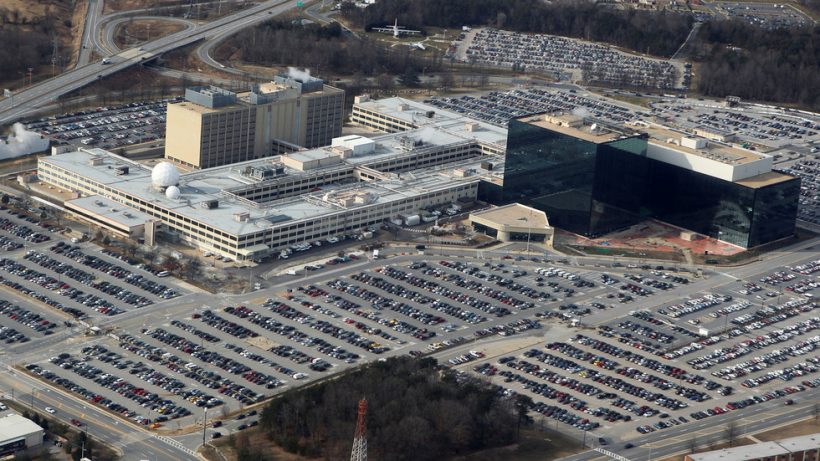
National Security Agency (NSA) headquarters in Ft. Meade, Maryland © Reuters / Larry Downing
RT | December 21, 2019
The National Security Agency can gather the data of US citizens without a warrant – as long as it gathers this data by mistake, a court has ruled. However, this suits the agency just fine, whistleblower William Binney told RT.
The NSA is permitted to gather data on US citizens abroad, or “foreign connected” Americans at home. The dragnet surveillance operation necessary to gather this information also sucks up data on millions of Americans with no foreign contacts, a process critics say is unconstitutional.
On Wednesday, the 2nd Court of Appeals in New York declared this “incidental collection” of information permissible. The NSA has maintained that it is incapable of separating properly and improperly gathered data, but former NSA Technical Director William Binney told RT that this is simply untrue.
“They’ve been lying to the courts all along,” Binney said. “They’ve had the capability to sort that stuff out. It’s just that they don’t want to.”
“This gives them power over everyone, the ability to look into political opponents like they did with President Trump,” he continued.
While the court ruling gives the NSA free rein to suck up data on Americans’ phone and internet communications, it did not authorize the US’ other intelligence and law enforcement agencies to dig through this data. However, according to a Foreign Intelligence Surveillance Act (FISA) court ruling issued last year, the FBI accessed this data trove some 3.1 million times in 2017.
Media, Human Rights Groups Silent Over Politically-Motivated Murder of Journalist in Bolivia
By Alan Macleod | MintPress News | December 20, 2019
Argentinian journalist Sebastian Moro was found unconscious, left for dead, covered in bruises, scratches and other signs of violence on November 10. Moro was wearing a vest identifying him as press covering the dramatic U.S.-backed coup against democratically elected President Evo Morales in Bolivia.
The 40-year-old worked for the influential Argentinian newspaper Pagina/12. Hours earlier he had denounced what he saw as a far-right takeover of power. His last known words, published in his newspaper hours before he was found, were denouncing the kidnappings of government officials, and mob attacks on journalists and media outlets. He had been one of the only voices exposing the local opposition’s campaign of terror to the world. Moro spent six days in a La Paz hospital before finally succumbing to his injuries.

A photo of Sebastian Moro at a cafe in Bolivia not long before his death. Photo | Facebook
Despite the world’s attention being focused on the Andean country, media has steadfastly ignored the likely beating to death of a foreign journalist for political reasons. No mention of Moro has been made in the New York Times, CNN, MSNBC, Fox News or any mainstream Western outlet, despite his story being well known in his native Argentina. Nor has his case been mentioned by the major human rights networks such as Amnesty International or Human Rights Watch. Even the Committee to Protect Journalists has not acknowledged his killing. Its list of deceased journalists in 2019 shows none across South America.
In fact, both media and the human rights industry have been leading a campaign to legitimize the new coup administration of Jeanine Añez and whitewash her crackdown on independent media. Taking their line from the Trump administration, corporate media refused to call the events in Bolivia a coup, preferring instead to frame it as Morales “resigning.” The New York Times welcomed the end of the “increasingly autocratic” Morales and expressed its relief that the country was in the hands of more “responsible” leaders. Meanwhile, the Wall Street Journal’s headline read “a democratic breakout in Bolivia.”
Human Rights Watch, too, has been key in pushing through the U.S.-backed overthrow of a democratically elected head of state and whitewashing the violence that still engulfs Bolivia. Its director Ken Roth claimed that the coup was an “uprising” aimed at “defending democracy” from a “strongman” while the organization described Añez’s law giving Bolivia’s notorious police and armed forces complete immunity from all crimes while they massacred protestors as merely a “problematic decree.”
In fact, the only English language source that has reported on Moro’s death is the Orinoco Tribune, a tiny Venezuelan website with a staff of two people, according to its website. The Tribune translated an Argentinian article and published it on its website. MintPress News reached out to the Tribune for comment on the story. The editor replied that Moro’s case, as well as the total media silence over it, highlighted the need to create and encourage new grassroots media outlets. It also noted that after the coup against Honduran President Manuel Zelaya in 2009:
One [of the] very first gestures the U.S. coup against Zelaya made in Honduras was to shut down community radio and snatch journalists. Tortured reporters were then tossed out on the highway as a warning for others. The lucky ones lived. The coup in Bolivia seems to be on the same learning curve.”
As MintPress has reported, there has been a coordinated assault on independent media in Bolivia. New Communications Minister Roxana Lizarraga announced that this was part of the “dismantling of the propaganda apparatus of the dictatorial regime of Evo Morales,” claiming that Morales’ “militants who misused the state media system” are being “withdrawn.” Outlets like TeleSUR and RT en Español have been shut down and reporters have been shot. Lizarraga also declared that she would persecute any journalists involved in what she called “sedition,” noting that she already had a list of “troublesome” individuals and outlets.
Human rights groups have also been subject to oppression. New Interior Minister Arturo Murillo directly threatened a newly arrived human rights delegation from Argentina. “We recommend these foreigners who are arriving…to be careful,” he said, “We are looking at you. We are following you,” warning them that there will be “zero tolerance.” He added that “At the first false move that they make, trying to commit terrorism and sedition, they will have to deal with the police.” Fourteen members of the group were subsequently arrested, to silence in the press.
The largest NGOs exist primarily to protect and advance power under the guise of standing up for human rights. Human Rights Watch started as an anti-Soviet Cold War propaganda machine, Amnesty International’s co-founder was an FBI asset involved in the murder of Black Panther leaders like Fred Hampton. This explains their disinterest in Moro’s murder amid the wider crescendo of violence in Bolivia. Those that stand up to power are rarely remembered fondly in corporate media.
Alan MacLeod is a MintPress Staff Writer as well as an academic and writer for Fairness and Accuracy in Reporting. His book, Bad News From Venezuela: Twenty Years of Fake News and Misreporting was published in April.
Journalist groups call to protect Sputnik reporters from police harassment in Estonia
RT | December 20, 2019
The International Federation of Journalists urged Estonian authorities to stop threatening journalists working for Russian news media Sputnik Estonia with criminal prosecution over EU sanctions on Russia’s media chief.
“Media professionals should be allowed to freely carry out their duties, without threats from higher authorities,” IFJ General Secretary Anthony Bellanger said while commenting on the harassment of Sputnik journalists by Estonian police. At the same time, the organization’s Vice President Timur Shafir stressed that the threat of criminal proceedings “goes beyond all existing norms,” especially taking into account the fact that the majority of Sputnik Estonia office employees are Estonian citizens.
Sputnik Estonia’s editor-in-chief Elena Chernysheva said that journalists have been receiving letters from the Financial Intelligence Unit (FIU) of Estonian Police and Border Guard Board, in which they were threatened with “criminal liability” unless they cut work ties with the Russian state-owned media agency Rossiya Segodnya, Sputnik’s parent company, by January 1.
“In other words, they want to jail us for simply working for Russian state-owned media.”
The head of the FIU, which primarily deals with money laundering, Madis Reimand, confirmed that the journalists were getting “notices” because Rossiya Segodnya’s chief Dmitry Kiselyov is currently under EU sanctions.
Reimand told Estonian ERR media company that sanctions against Kiselyov mean that certain individuals “are banned from working for him,” even if they have not been placed on a sanctions list themselves.
Rossiya Segodnya reported earlier that several foreign banks, operating in Estonia, have unexpectedly frozen transfers of money used to pay taxes and rent for Sputnik’s office in the country. The transfers of salaries to employees, the vast majority of whom are Estonian nationals, have also been frozen.
The company argues that Sputnik itself is not subjected to any sanctions. Sputnik and RT Editor-in-Chief Margarita Simonyan has already asked the Estonian president to not allow the journalists to be arrested.
A veteran journalist and media producer, Kiselyov, was sanctioned in 2014 after Crimea voted to leave Ukraine and rejoin Russia. He blasted the sanctions as “a shame for the European Union” and argued that they “can be equated to the sanctions against the freedom of speech.”
Secretary General of the European Federation of Journalists (EFJ) Ricardo Gutierrez told RIA Novosti that Estonia’s actions are based on “an excessive interpretation of the European sanctions” and is “absolutely unacceptable.” He added that the actions of authorities lack transparency and “remain unclear.”
“The EFJ urges the Estonian authorities to reconsider applying restrictive and selective measures to foreign journalists working in Estonia.”
On Friday, Valery Fadeyev, the head of the Presidential Council for Civil Society and Human Rights called the situation around Sputnik Estonia “highly disturbing.” He sent letters to the OSCE Representative on Freedom of the Media Harlem Desir and the Council of Europe Commissioner for Human Rights Dunja Mijatovic asking both to investigate the case.
Meanwhile, a spokesperson for the UN Secretary-General Antonio Guterres, Stephane Dujarric, said that he is looking into the case.
During a Q&A session on Thursday, Russian President Vladimir Putin condemned Estonia for pressuring Sputnik. They are “afraid of the truth you are telling your viewers and listeners,” he told reporters.
Trump Impeachment… Slapstick Diversion From Reality
By Finian Cunningham | Strategic Culture Foundation | December 20, 2019
Fittingly for the jolly season, the House of Representatives’ vote to impeach Trump was more pantomime than serious politics.
“Oh yes, he is!.. Oh no, he isn’t!..” and so it went on for nearly 10 hours of to-and-fro between Democrats and Republicans. Eventually, the finale came when black-clad Speaker of the House Nancy Pelosi hammered the gavel, announcing President had been impeached – only the third-ever in two-and-half centuries of 45 presidents.
It was a foregone conclusion given the Democrat majority in the House. The next step in the impeachment process goes to the Republican controlled Senate next month where Trump will almost certainly be acquitted.
For all the grandstanding drama and feverish media coverage, the storyline – like all pantos – is scant in credibility. The accusations against Trump of abusing his office in a phone call with the Ukrainian president and of obstructing subsequent Congressional inquiry are light on evidence while heavy on innuendo. For all his flaws, Trump and the Republicans are right in their call that the Democrats and anti-Trump media are hamming it up in a desperate bid to overturn the 2016 election. For the past three years, Washington has been fixated with Trump Derangement Syndrome.
With faux solemnity, Democrat leader Nancy Pelosi said the impeachment vote was a “sad and tragic day” for US democracy. Then she had to quickly check Democrats from bursting into cheers and applause when the impeachment vote was announced. So much for a “sad day”! The Democrats were elated that their three-year plan to oust Trump was at last happening – albeit for a short-lived period until the Senate takes up the matter.
What was truly sad, however, is how the impeachment fiasco dominated other news, thereby drawing the curtain on several far more significant events.
On the same day as the House brouhaha, over in the Senate Inspector General Michael Horowitz was continuing to give withering testimony from his report into FBI wiretapping of the Trump election campaign back in 2016. The misconduct by the FBI in carrying out surveillance on private American citizens is a shocking abuse of power by the intelligence agency. All the implications suggest that the Obama administration engaged with secret services to sabotage the election campaign of Donald Trump in 2016 with phony allegations about Russia collusion. The constitutional violations by the FBI are colossal.
Knowing the murky past of the FBI and its dirty tricks, we shouldn’t be surprised by Horowitz’s findings. A follow-up report by attorney John Durham promises to be even more damning. But what is so astounding is how the US media, by and large, had their focus on the impeachment debacle instead of this far bigger show of grave importance. Perhaps not really astounding given that major media outlets like CNN, New York Times, MSNBC and Washington Post have invested so much capital in whipping up the Russia claims. Their ignoring the FBI misconduct is vital for self-preservation by avoiding accountability for their “Russia collusion” fantasies.
Another blockbuster story roundly ignored was the unfolding scandal at the Organization for the Prohibition of Chemical Weapons (OPCW). The number of whistleblowers from the UN body has grown to 20, according to Wikileaks. They allege that an OPCW report published in 2018 into a purported chemical weapon incident in Syria was “doctored” to wrongly incriminate the Assad government for carrying out an attack on civilians. As a result of the incident on April 7, 2018, the United States, Britain and France days later launched over 100 air strikes against Syria in apparent revenge. President Trump labeled Assad “an animal”. According to the whistleblowers, the OPCW report later in 2018 was deliberately suppressed by senior officials in the organization’s headquarters in The Hague under pressure from the American government. The implication is that the US, British and French air strikes against Syria were naked aggression based on false information. Indeed, the incident on April 7 has the hallmarks of a false-flag operation carried out by Western-backed anti-government militants.
Despite the urgent public interest of this scandal, the Western corporate media have largely ignored the matter, apart from notable exceptions, such as Tucker Carlson at Fox and Peter Hitchens in Britain’s Mail newspaper.
Surely on any objective scale, the OPCW scandal is worth far more media attention than the turgid proceedings in the House. But then again invoking objectivity is a naive request when the polarized politics in the US have become so hyper-subjective.
Other important stories that got sidelined this week include the appeal by 100 Australian doctors demanding the release of Julian Assange from prison in Britain. They reiterated similar concerns expressed by Nils Melzer, the UN special rapporteur, warning that Assange could die in prison if he is not given immediate medical care. The Wikileaks founder is awaiting extradition to the US where he faces 175 years in jail for “espionage”. As the leaks this week from Wikileaks regarding corruption at the OPCW demonstrate the real “offense” committed by Assange is his exposure of war crimes by the US and its Western allies. He is being tortured for telling the truth by Western governments that claim to be bastions of democracy and law. Why aren’t Western media covering this bombshell?
Still another huge story to be buried this week under the avalanche of impeachment popcorn was the report that over 90 US companies on the Fortune 500 list paid zero tax in the year 2018, despite having made combined profits of $100 billion. The companies include Amazon, Bank of American, Chevron, General Motors, Goodyear, Honeywell, JP Morgan Chase, Starbucks, and Verizon, to mention only a few. These companies were able to reduce their federal tax bill to zero because of corporate tax breaks and accounting loopholes introduced by President Trump in 2017.
If the Democrat party was a genuine political opposition to Trump then it should be taking up issues that really matter to ordinary citizens. Issues like abuse of power by unelected state agencies that spy illegally on civilians. But the Democrats this month voted for the latest edition of the Patriot Act extending such powers. They also voted for a record $738 billion spend on the US military, instead of deploying some of that for public good in healthcare and education.
If the Democrat party was a genuine political opposition, then it would be highlighting the crimes of illegal wars the US carries out on foreign countries with impunity. It would be defending the rights of whistleblowers like Julian Assange, Chelsea Manning and Edward Snowden who have exposed systematic state crimes.
If the Democrat party was a genuine political opposition, it would be campaigning for US corporations to pay their fair share of taxes so that working families can benefit from a decent society. They would be going after Trump for aiding and abetting the corporate kleptocracy that America has become.
But they don’t. Because the Democrats – most of them anyway – are part of the same bipartisan corporate feeding trough and war machine that is Washington.
The obscenity is so disgraceful that’s why the need for an impeachment pantomime. And the corporate media dutifully obliges.
Featured Video

Houthis Don’t Have to Conquer Saudi Arabia to Make It Pay
or go to
Aletho News Archives – Video-Images
From the Archives
Newly Released FBI Docs Shed Light on Apparent Mossad Foreknowledge of 9/11 Attacks
By Whitney Webb | MintPress News | May 17, 2019
NEW YORK — For nearly two decades, one of the most overlooked and little known arrests made in the aftermath of the September 11 attacks was that of the so-called “High Fivers,” or the “Dancing Israelis.” However, new information released by the FBI on May 7 has brought fresh scrutiny to the possibility that the “Dancing Israelis,” at least two of whom were known Mossad operatives, had prior knowledge of the attacks on the World Trade Center. … continue
Blog Roll
 Aletho News
- UK whines about losing billions to ‘Putin tax’
- Baghaei to Rubio: Distorted narratives cannot erase US record of broken commitments
- Houthis Don’t Have to Conquer Saudi Arabia to Make It Pay
- MOE: Nearly 22,000 Students and Education Workers Killed
- Guterres in Islamabad: Genocide, cowardice, and the cage of Imran Khan
- Johnson, Marandi say Yemen holds upper hand over Saudi Arabia
- False flags won’t save aggressors, Iran FM spokesman says
- The Makkah Pact Enters Into Force: The End of American Dominance or Its New Form?
- NATO’s top generals gather in Kiev
- EU’s continuing expansion – greater threat to Russia
- If Americans Knew
- In Gaza, focus is on survival, “every step is a struggle” – Daily Update
- Three Years of Genocide: How America’s Israel-First Media Filtered Out the Truth
- Israeli war chief briefs ministers on potential war against Palestinian Authority
- New Report: Israel Killed nearly 21,000 Palestinian Students and Education Workers in Past Three Years
- Israel’s flailing chatbot army
- Five Palestinians Killed, Others Injured by Israeli Fire in Gaza
- Israel is rewriting the Palestinian curriculum in East Jerusalem to erase Palestinian identity
- Three years of genocide: Israel turned prisons into killing grounds and torture sites
- Three years of genocide. Words fail. Daily Update
- ‘I’d rather die than go back’: A Palestinian teen’s 10-month nightmare in Israeli jail
- No Tricks Zone
- New Study: 50 Years Of The Most Aggressive ‘Net Zero’ Policies Can Only Affect The Global Climate By 0.03°C
- US September “Heat” Was No Record…Many Records Set Decades Ago
- Latest European Green Energy Debacle; Portugal’s Largest Flagship Solar Park Insolvent!
- Green Energy Debacle: German Expert Professor Fritz Vahrenholt Warns Of Severe Economic And Social Consequences
- Two More Paleo Reconstructions Affirm Meters-Higher Sea Levels Across Ireland, Brazil 7000-6000 Years Ago
- New Study: Earth And Venus Surface Warmth Largely Explained By Convection And Lapse Rate, Not CO2 Or Radiation
- 2025 Nature Paper Claiming Worsening Global Drought Gets RETRACTED …Heavily Flawed
- New Study: ‘Global Drought Shows No Detectable Recent Acceleration Under Climate Warming’
- Economic Masterminds: German Socialists Suggest Taxing Productivity Gains Stemming From Using AI
- The South China Sea Has Not Been Cooperating With The Climate Change Narrative

