Miracle or Mirage? Manufacturing Hunger and Poverty in Ethiopia

Oakland Institute
As months of protest and civil unrest hurl Ethiopia into a severe political crisis, a new report from the Oakland Institute debunks the myth that the country is the new “African Lion.” Miracle or Mirage? Manufacturing Hunger and Poverty in Ethiopia exposes how authoritarian development schemes have perpetuated cycles of poverty, food insecurity, and marginalized the country’s most vulnerable citizens.
A key government objective is to make Ethiopia one of the largest sugar producers in the world. Several sugar expansion plans are underway, including the colossal Kuraz Project in the Lower Omo Valley, which will include up to five sugar factories and 150,000 hectares of sugarcane plantations that rely on Gibe III Dam for irrigation. Studies show that Gibe III could reduce the Omo River flow by as much as 70 percent, threatening the livelihoods of 200,000 Ethiopians and 300,000 Kenyans who depend on the downstream water flow for herding, fishing, and flood-recession agriculture.
Miracle or Mirage? offers lessons from the deadly impact of sugar and cotton plantations in the Awash Valley in the Afar Region, established in the 1950s. The projects drastically reduced land and water availability for people and cattle, undermined food security, destroyed key drought coping mechanisms, and stirred up violent conflicts between different groups over the remaining resources. The establishment of plantations was a critical factor in the 1972-1973 famine, resulting in the deaths of nearly 200,000 Afar people. These findings raise serious questions about the government’s logic behind sugar expansion, with $11.2 billion to be invested by 2020, and much more for irrigation schemes and dams – Gibe III alone cost Ethiopia $1.8 billion.
Using quantitative evidence, the report also details how plantations established in the Awash Valley have been far less profitable than pastoralist livestock production, while carrying massive environmental costs including the depletion of vital water resources.
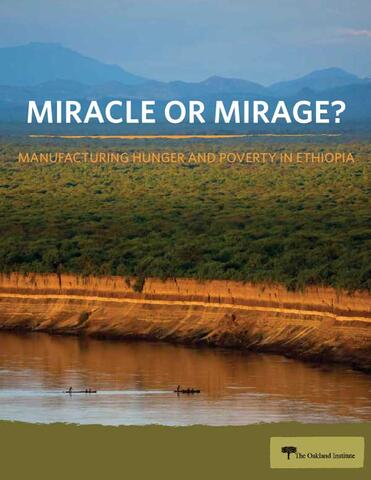
Download PDF (size: 0.73 MB) Miracle or Mirage? Manufacturing Hunger and Poverty in Ethiopia
Venezuelan Supreme Court Orders New Inquiry into Disappeared During Fourth Republic
By Lucas Koerner | Venezuelanalysis | October 20, 2016
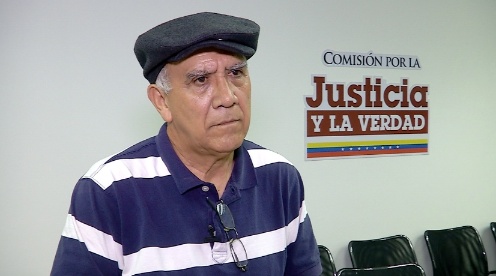
Caracas – Venezuela’s Supreme Court (TSJ) issued a ruling Tuesday ordering the country’s the public prosecution to reopen investigations into the case of a law student disappeared in 1966.
Andres Pasquier Suarez, a law student at the Central University of Venezuela, was detained by Venezuela’s national guard on October 10, 1966 and subsequently handed over to the now defunct Armed Forces Information Service.
According to military records, the youth was transferred two days later to the Urica Anti-Guerrilla Camp from which he never returned.
A Maracaibo military tribunal charged with investigating the incident declared the case closed on March 15, 1968, finding that “no crime has been committed in any moment”.
Writing on behalf of the high court, TSJ President Gladys Gutierrez struck down the prior ruling as “contrary to the elemental principles of law and justice”, concluding that the military court had failed to conduct an impartial investigation of the disappearance.
The justice ordered the public prosecutor’s office to reopen the investigation and identify those responsible as mandated under article 19 of Venezuela’s Law to Prosecute Crimes, Disappearances, Tortures, and Other Human Rights Violations for Political Reasons during the Period 1958-1999.
Over the last 17 years, numerous inquiries have brought to light the magnitude of human rights violations committed under Venezuela’s pacted, two-party system known as the Fourth Republic.
This past July, the country’s official Truth and Justice Commission revealed that it had registered a total of 11,043 cases of torture, assassinations, and political disappearances between 1958 and 1998.
UK Government Fails to Explain Use of Drones Outside Armed Conflicts
Sputnik — 19.10.2016
The UK government sidestepped the question on laws governing the use of lethal drone strikes outside armed conflicts, when responding to the Joint Committee on Human Rights’s report, the committee said in a statement issued on Wednesday.
According to the Committee, the UK government could not justify the refusal to answer the question about legal constraints within which it would operate by saying that this was a hypothetical situation, although in the course of the inquiry it stated that “it would be prepared to resort to such use of lethal force for counter-terrorism purposes even outside of armed conflict.”
“The Committee welcomes some clarifications of the Government’s position, but is disappointed that the Government has refused to clarify its position in relation to the use of lethal force outside armed conflict… ,” the statement said.
The committee’s report asked government to clarify their policy on the use of drones for targeted killings, including the interpretation of the UK and international laws pertaining to such strikes and the general principles of their use.
The Joint Committee on Human Rights, which includes members from both Houses of the UK Parliament, checks all government bills for compliance with human rights granted by the UK and international law and examines government responses to court decisions on human rights cases.
Muzzling Israeli Dissent in the NYT
B’Tselem’s Hard Hitting Testimony Lost in the Telling
By Barbara Erickson | TimesWarp | October 18, 2016
Israeli rights advocate Hagai El-Ad spoke eloquently last week before the United Nations Security Council, appealing to the world body for action on the brutal occupation of Palestine, but according to The New York Times little of what this courageous activist said was fit to print: The real news was Israeli Prime Minister Benjamin Netanyahu’s outraged response.
Thus we find a story on the speech appearing two days after the event under the headline “Settlement Debate Flares Again in Israel’s Quarrel With Rights Group.” The article by Isabel Kershner has much to say about Israeli government criticism of the human rights group B’Tselem, which documents and publicizes Israeli abuses in the West Bank and Gaza.
She says as little as possible, however, about El-Ad’s actual comments. Of his 2,000 word speech she quotes no more than two dozen: “Anything short of decisive action will achieve nothing but ushering in the second half of the first century of the occupation… [Living under occupation] mostly means invisible, bureaucratic, daily violence.”
The heart of the address is missing: El-Ad’s devastating deconstruction of the Israeli justice system as “a legal guise for organized state violence,” the daily indignities and suffering under Israeli military rule, the demolitions of homes, theft of land and water and the impunity surrounding trigger happy security forces.
His words become lost in the framing of this story, glossed over in the tit for tat between attackers and defenders of B’Tselem. Other media reports, however—in Israel and the United States—give readers more substantial excerpts from his address, and they also provide links to the actual speech, something the Times conveniently omits.
The Times also fails to say that amidst the turmoil over B’Tselem’s UN appearance, the U.S. State Department declared its gratitude to the organization for providing information on “fundamental issues that occur on the ground.” Times readers, however, are denied these same benefits.
El-Ad was not the only speaker to criticize Israel at a special session titled “The Settlements as the Obstacle to Peace and the Two-State Solution,” but he bore the brunt of the furious denunciations from Netanyahu and other government officials. He and his organization were also the focus of the Times story.
All this attention is a sign that El-Ad’s performance was a direct hit on Israeli efforts to whitewash their occupation. Much of the time B’Tselem’s reports and press releases, well-buttressed with detailed research, receive no mention either in the Times or in government circles. But now that El-Ad has managed to bring the group’s message to the highest international level, the backlash has been swift and harsh.
The Times has become a willing partner in this effort, working to distract readers from El-Ad’s eloquent appeal to the Security Council by framing the story as a two-sided debate between rival points of view.
Discerning readers will take notice, however, and realize that El-Ad’s speech is worth searching out in spite of the Times’ efforts to draw attention away from his actual words. They can find the text and a video of his address at the B’Tselem website—if they haven’t already found his performance posted on social media.
So it comes to this: Times readers need to read between the lines for clues to the reality deemed unfit to print, and then they must use their skills to search elsewhere for the story behind the words. This is not what we should expect from a newspaper like the Times, with pretenses to the highest standards of ethics and performance, but readers beware: Use this journalistic product with care and a hefty dose of skepticism.
Follow @TimesWarp on Twitter
Antisemitism Report tries to Whitewash Zionism
By Stuart Littlewood | Dissident Voice | October 18, 2016
The House of Commons Home Affairs Select Committee has just issued its report ‘Antisemitism in the UK’ in response to concerns about “an increase in prejudice and violence against Jewish communities” and “an increase in far-right extremist activity”. It was also prompted by allegations of antisemitism in political parties and university campuses.
*****
The following observations are based on the report’s Conclusions and Recommendations, which is as far as most people will read.
- Israel is an ally of the UK Government and is generally regarded as a liberal democracy.
Hardly. It is no friend of the British people. Nor is it remotely a Western-style liberal democracy. We share few if any values.
- Those claiming to be “anti-Zionist, not antisemitic”, should do so in the knowledge that 59% of British Jewish people consider themselves to be Zionists. If these individuals genuinely mean only to criticise the policies of the Government of Israel, and have no intention to offend British Jewish people, they should criticise “the Israeli Government”, and not “Zionists”. For the purposes of criminal or disciplinary investigations, use of the words ‘Zionist’ or ‘Zio’ in an accusatory or abusive context should be considered inflammatory and potentially antisemitic.
The Israeli regime’s inhuman policies are driven by Zionist doctrine. I doubt if justice-seekers are in the least swayed by how many Jews consider themselves Zionists. Or how many Christians do, for that matter.
- Universities UK should work with appropriate student groups to produce a resource for students, lecturers and student societies on how to deal sensitively with the Israel/Palestine conflict, and how to ensure that pro-Palestinian campaigns avoid drawing on antisemitic rhetoric.
For the sake of even handedness, who will ensure that pro-Israel campaigns avoid drawing on hasbara lies and false claims to Palestinian lands and resources?
- Jewish Labour MPs have been subject to appalling levels of abuse, including antisemitic death threats from individuals purporting to be supporters of Mr Corbyn. Clearly, the Labour Leader is not directly responsible for abuse committed in his name, but we believe that his lack of consistent leadership on this issue, and his reluctance to separate antisemitism from other forms of racism, has created what some have referred to as a ‘safe space’ for those with vile attitudes towards Jewish people.
The abusers, and others with vile attitudes, may well be provocateurs bent on making Corbyn look bad. In any case why should he or anyone else feel obliged to “separate” antisemitism from other forms of racism?
- The Chakrabarti Report is clearly lacking in many areas; particularly in its failure to differentiate explicitly between racism and antisemitism… [its recommendations] are further impaired by the fact that they are not accompanied by a clear definition of antisemitism, as we have recommended should be adopted by all political parties.
Who needs a special definition or actually cares about differentiating antisemitism from racism? They are two of the same stripe, and I suspect most of us regard them with equal distaste and have no reason to put one above the other. In short, we know racism when we see it and that’s enough.
- The Labour Party and all political parties should ensure that their training on racism and inclusivity features substantial sections on antisemitism. This must be formulated in consultation with Jewish community representatives, and must acknowledge the unique nature of antisemitism.
Unique? Racism is racism.
- The acts of governments abroad are no excuse for violence or abuse against people in the United Kingdom. We live in a democracy where people are free to criticise the British Government and foreign governments. But the actions of the Israeli Government provide no justification for abusing British Jews.
We tend to take a dim view of those who support states that terrorise others. Jews themselves have warned that Jews everywhere may suffer as a result of the Jewish State’s unacceptable behaviour. This is unfortunate as many Jews are fiercely critical of the regime’s misconduct and, to their great credit, actively campaign against it. By the way, how does the Select Committee suggest we treat those inside our Parliament who promote the interests of a foreign military power with an appalling human rights record?
- In an article for The Daily Telegraph in May, the Chief Rabbi criticised attempts by Labour members and activists to separate Zionism from Judaism as a faith, arguing that their claims are “fictional”. In evidence to us, he stressed that “Zionism has been an integral part of Judaism from the dawn of our faith”. He stated that “spelling out the right of the Jewish people to live within secure borders with self-determination in their own country, which they had been absent from for 2,000 years—that is what Zionism is”. His view was that “If you are an anti-Zionist, you are anti everything I have just mentioned”.
The Chief Rabbi is flatly contradicted by the Jewish Socialists’ Group which says:
Antisemitism and anti-Zionism are not the same. Zionism is a political ideology which has always been contested within Jewish life since it emerged in 1897, and it is entirely legitimate for non-Jews as well as Jews to express opinions about it, whether positive or negative. Not all Jews are Zionists. Not all Zionists are Jews.
Criticism of Israeli government policy and Israeli state actions against the Palestinians is not antisemitism. Those who conflate criticism of Israeli policy with antisemitism, whether they are supporters or opponents of Israeli policy, are actually helping the antisemites. We reject any attempt, from whichever quarter, to place legitimate criticism of Israeli policy out of bounds.
On the Chief Rabbi’s other point, what right in law do the Jewish people have to return after 2000 years, forcibly displacing the Palestinians and denying them the same right? Besides, scholars tells us that most returning Jews have no ancestral links to the Holy Land whatsoever.
- CST and the JLC describe Zionism as “an ideological belief in the authenticity of Jewish peoplehood and that the Jewish people have the right to a state”. Sir Mick Davis, Chairman of the JLC, told us that criticising Zionism is the same as antisemitism, because: “Zionism is so totally identified with how the Jew thinks of himself, and is so associated with the right of the Jewish people to have their own country and to have self-determination within that country, that if you attack Zionism, you attack the very fundamentals of how the Jews believe in themselves.”
The Select Committee is careful to say that “where criticism of the Israeli Government is concerned context is vital”. The Committee therefore need to understand that the so-called Jewish State is waging what amounts to a religious war against Christian and Muslim communities in the Holy Land. Ask anyone who has been on pilgrimage there. And read The Jerusalem Declaration on Christian Zionism, a joint statement by the heads of Palestinian Christian churches. It says:
We categorically reject Christian Zionist doctrines as false teaching that corrupts the biblical message of love, justice and reconciliation.
We further reject the contemporary alliance of Christian Zionist leaders and organizations with elements in the governments of Israel and the United States that are presently imposing their unilateral pre-emptive borders and domination over Palestine. This inevitably leads to unending cycles of violence that undermine the security of all peoples of the Middle East and the rest of the world.
We reject the teachings of Christian Zionism that facilitate and support these policies as they advance racial exclusivity and perpetual war rather than the gospel of universal love, redemption and reconciliation…..
In seeking to defend Zionism the Select Committee fails to put the opposing case – for example, that many non-Jews regard it as a repulsive concept at odds with their own belief. There is no reason to suppose that Zionist belief somehow trumps all others.
- Research published in 2015 by City University found that 90% of British Jewish people support Israel’s right to exist as a Jewish state and 93% say that it forms some part of their identity as Jews….
Did researchers ask British Muslims and Christians about the Palestinians’ right to their own state?
This research sounds like a swipe at people who are accused of ‘delegitimising’ Israel by questioning its right to exist. Actually Israel does a very good job of delegitimising itself. The new state’s admission to the UN in 1949 was conditional upon honouring the UN Charter and implementing UN General Assembly Resolutions 181 and 194. It failed to do so and repeatedly violates provisions and principles of the Charter to this day.
Israel cannot even bring itself to comply with the provisions of the EU-Israel Association Agreement of 1995 which makes clear that adherence to the principles of the UN Charter and “respect for human rights and democratic principle constitute an essential element of this agreement”.
In 2004 the International Court of Justice at The Hague ruled that construction of what’s often referred to as the Apartheid Wall breached international law and Israel must dismantle it and make reparation. The ICJ also ruled that “all States are under an obligation not to recognize the illegal situation resulting from the construction of the wall and not to render aid or assistance in maintaining the situation created by such construction”. Israel nevertheless continues building its hideous Wall with American tax dollars, an act of hatred against the Palestinians and a middle-finger salute to international law.
Here at home powerful Friends of Israel groups are allowed to flourish in all three main parties in the UK. Their presence at the centre of government and in the fabric of our institutions is considered unacceptable by civil society campaign groups and a grave breach of the principles of public life. The backlash to growing criticism of Israel’s stranglehold on its neighbours and increasing influence on Western foreign policy is mounting intolerance, Hence the Inquisition, which lately has been directed against Labour’s new leader Jeremy Corbyn, an easy target for orchestrated smears given his well known sympathy with the Palestinians’ struggle and his links to some of Israel’s (not our) enemies.
The shortcomings of the Select Committee’s inquiry are obvious. Its report doesn’t properly consider the opposite view. It is half-baked. It is lopsided. It is written in whitewash.
UK spying agencies collected Britons’ data for 17 years: Court
Press TV – October 18, 2016
UK spying agencies secretly and unlawfully collected and stored personal data of Britons for 17 years, according to a court ruling.
MI5, MI6 and GCHQ collected data on everyone’s communications between 1998 and 2015, according to the Investigatory Powers Tribunal, the watchdog for intelligence agencies.
The agencies tracked individual phone and web use and other confidential information without having adequate safeguards or supervision, senior judges ruled on Monday.
They did not abide by article 8 protecting the right to privacy of the European convention of human rights (ECHR), they added.
“The BPD (bulk personal datasets) regime failed to comply with the ECHR principles, which we have above set out throughout the period prior to its avowal in March 2015. The BCD (bulk communications data) regime failed to comply with such principles in the period prior to its avowal in November 2015, and the institution of a more adequate system of supervision as at the same date,” the ruling stated.
Spying agencies, however, will still be able to continue to do so due to small tweaks to the law that allow them to flout the ruling.
Millie Graham Wood, legal officer at Privacy International, said “today’s judgment is a long overdue indictment of UK surveillance agencies riding roughshod over our democracy and secretly spying on a massive scale.”
“There are huge risks associated with the use of bulk communications data,” Wood said. “It facilitates the almost instantaneous cataloging of entire populations’ personal data.”
According to Privacy campaigners, the ruling was “one of the most significant indictments of the secret use of the government’s mass surveillance powers” since Edward Snowden, a former contractor of the US National Security Agency, who first released the extent of American and British surveillance of citizens in 2013.
Secret documents leaked by Snowden also revealed that the GCHQ and the NSA had monitored more than 1,000 targets in at least 60 countries between 2008 and 2011 by secretly accessing cable networks carrying the world’s phone calls and internet traffic.
The Paris Massacre of 40 Algerians on October 17th 1961 – Some were herded into the Seine River, others thrown from bridges
American Herald Tribune | October 16, 2016
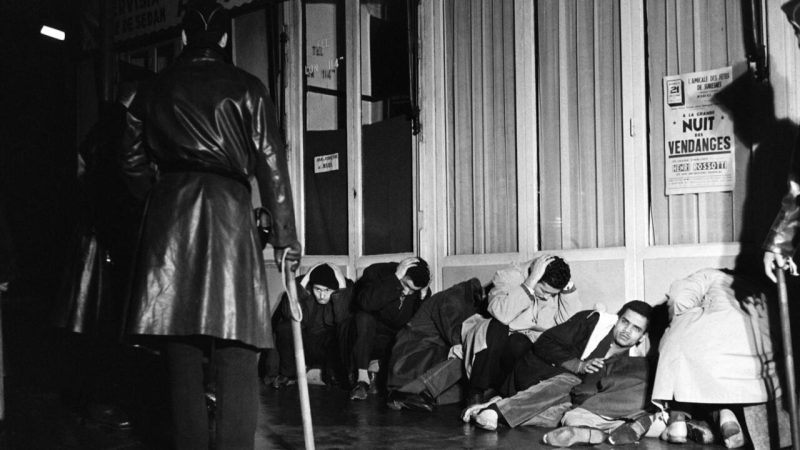
Some 30,000 pro FLN (National Liberation Front) Algerians gathered for a peaceful demonstration in the Streets of Paris. Under orders from the head of the Parisian police, Maurice Papon, the French police attacked the demonstration. The Paris Massacre of 17 October 1961 appears to be intentional. After 37 years of denial the French government admitted the acts, and acknowledged 40 deaths in 1998. Estimates of deaths exceed 200.
Historian Jean-Luc Einaudi won a trial against Maurice Papon in 1999. The latter, according to official documents, seems to have directed the massacre. He assured officers in one station that they would be protected in prosecution if they participated in quelling the demonstration.
The protestors were killed in many different methods. Some were herded into the Seine River, others thrown from bridges after being beaten unconscious. Other still were delivered to the Paris police headquarters after being arrested and killed there.
The estimates of the deaths range between 70 and 200.
A few days after the massacre on 31 October, some anonymous policemen published a text stating:
What happened on 17 October 1961 and in the following days against the peaceful demonstrators, on which no weapons were found, morally forces us to bring our testimony and to alert public opinion… All guilty people must be punished. The punishment must be extended to all of the responsible people, those who give orders, those who feign of letting it happen, whatever their high office may be… Among the thousands of Algerians brought to the Parc des Expositions of the Porte de Versailles, tens were killed by blows from rifle butts and pickaxe handles… In one of the extremity of the Neuilly bridge, groups of policemen on one side, CRS on the other, moved slowly towards each other. All the Algerians captured in this huge trap were knocked out and systematically thrown in the Seine. A good hundred people were subjected to this treatment… [In the Parisian police headquarters], torturers threw their victims by tens in the Seine which flows only a few meters from the courtyard, to keep them from being examined by the forensic scientists. Not before having taken their watches and money. Mr. Papon, prefect of the police, and Mr. Legay, general director of the municipal police, assisted to these horrible scenes… These indisputable facts are only a small part of what has happened in these last days and what continues to happen. They are known by the municipal police. The extortions committed by the harkis, the district special brigades, the brigades des aggressions et violences are not secret any more. The little information given by the newspapers is nothing compared to the truth… We do not sign this text and sincerely regret it. We observe, not without sadness, that the current circumstances do not allow us to do so…”
ISIS sympathizer who refused to become MI5 informant convicted in secret trial
RT | October 14, 2016
A man who rejected an offer from MI5 to become an informant has been convicted of planning to join Islamic State (IS, formerly ISIS/ISIL) in a secretive trial at the Old Bailey.
Secret justice, which many claim is at odds with the most fundamental principles of British law, is becoming increasingly normalized.
The latest trial of this kind was that of Somali-born Anas Abdalla, who was alleged to have attempted to smuggle himself out of the UK in 2013 to join IS.
Abdalla was found in a truck full of cannisters at Dover and claimed he was trying to escape years of harassment by MI5 officers who were attempting to recruit him.
The secrecy order specifically pertained to “any evidence which is called by the prosecution which confirms or denies any allegation of contact, or attempted contact, between MI5 and [Abdalla],” and “any allegation… that [Abdalla] would not be allowed by MI5 to live and progress normal expectations and achievements in life.”
Given the level of secrecy, it not is not possible to report on the specific evidence, but Abdalla was convicted of preparing to join IS.
It emerged during the trial that Abdalla had come to believe the security services had caused his girlfriend to leave him, his bank card to stop working and jobs to fall through.
“This is the stuff of nightmares from which there is no escape. This is what happens when you are targeted by the security services and decline to cooperate,”Rajiv Menon QC told the jury as part of Abdalla’s defence.
British spy powers threaten freedom of expression, UN told
RT | October 11, 2016
Human rights groups warned the United Nations this week that a new British law allowing police to see journalists’ communications could threaten sensitive sources and the freedom of expression.
The English Pen writers association and the freedom of speech group Article 19 told the UN Human Rights Council that the Investigatory Powers Bill would jeopardize journalistic sources, particularly whistleblowers.
The Bill, which has been dubbed the “snooper’s charter” by critics, would allow British intelligence agencies and police to intercept communications between anyone in the country, including mobile phone conversations and internet records such as websites visited.
The Investigatory Powers Bill “remains vague and lacks adequate protections for freedom of expression and privacy, and if enacted will introduce broad powers that threaten to undermine these rights,” a joint letter by the organizations to the UN said.
“There is no upper limit on the number of people whose private communications may be intercepted or whose data may be collected and retained.
“In many instances, anonymity is the precondition upon which information is conveyed by a source to a journalist (or human rights organization). This may be motivated by fear of repercussions which might adversely affect their physical safety or job security. When sources cannot be sure of protection, the public loses its right to know critical information.”
The letter branded such interference with journalists’ private communications “inherently disproportionate.”
Almost 4,000 people have signed a petition launched by the industry magazine Press Gazette demanding UK Home Secretary Amber Rudd guarantee more serious protections for journalists and their sources in the Bill. The call was also supported by several British media groups, the National Union of Journalists and the News Media Association
The Bill is currently at its report stage in the House of Lords, but the English Pen and Article 19 believe it should go back for “fundamental reconsideration” by its authors.
It emerged on Monday that the new shadow attorney general Shami Chakrabarti, who just a few months ago said the Bill needed redrafting, is now planning to abstain on the vote in the Lords.
The opposition Labour Party will not be tabling amendments and is not expected to vote against the new powers.
Facebook resumes attacks on Palestinian groups
MEMO | October 12, 2016
 Facebook resumed its policy of targeting Palestinian media pages with the accounts of eight administrators of the Palestine Information Centre and Al-Rai being deleted, Quds News reported.
This comes in light of the continued attack on the Palestine Network for Dialogue, an online discussion board, in what is being seen as an attempt to “besiege all Palestinian content on the network”.
Facebook continues to block Palestine Network for Dialogue’s page, in spite of it releasing an apology to say the action was taken by “mistake”.
The Palestine Information Centre had 2.2 million Facebook followers and published daily news on Palestinian, Arab and international issues in addition to health, sports and culture.
Facebook also deleted the account of Arab48 which had hundreds of thousands of followers. The website specialises in publishing stories about the plight of Palestinians both in the occupied West Bank and Gaza Strip in addition to Arab Israelis living in Israel.
Jerusalemite activist sentenced to 20 months in Israeli prison
Samidoun Palestinian Prisoner Solidarity Network – October 10, 2016
 Israeli Magistrate’s Court in Jerusalem sentenced Palestinian Jerusalemite journalist and activist Samer Hussam Abu Aisha, 29, to 20 months in Israeli occupation prison. Abu Aisha has been imprisoned since 6 January 2016; he was attacked and abducted from inside the Jerusalem office of the International Committee of the Red Cross, where he and Hijazi Abu Sabih had erected a protest tent against the Israeli occupation’s order expelling them from their city of Jerusalem. They held evening events, lectures and cultural programs in rejection of deportation and in defense of the Palestinian identity of Jerusalem.
The two organizers were leaders of a campaign against Israeli occupation orders of expulsion from Al-Aqsa Mosque and from the city of Jerusalem. Their campaign included singing protests and other forms of cultural resistance and creative actions. On 16 December 2015, he and Abu Sbeih were delivered an order of expulsion from the city of Jerusalem for five months, citing “state security and order.” He had previously been arrested and harshly interrogated for 33 days, then released and banned from traveling outside Palestine. As soon as his house arrest ended, the Israeli occupation imposed the expulsion order upon them.
Abu Aisha went on hunger strike for 21 days in August in solidarity with Bilal Kayed’s demand for release from Israeli prison; he was part of a group of 35 prisoners from Gilboa prison who also demanded improved conditions inside the prison. Rawan Abu Aisha, Samer’s wife, said that the strike was in part prompted by ongoing denials of family visits.
Abu Aisha wrote earlier regarding the Israeli charges against him:
I was born in Jerusalem in 1987. I lived there all my life except for a few years during my studies in Egypt. As part of my work, I often travel to participate in conferences and youth exchanges in Arab countries and across the world.
Last August I travelled to Lebanon to participate in the 25th Arab Youth Camp. 28 hours after my return to Jerusalem on 17 August 2015, I was arrested by Israeli occupation forces and subjected to an interrogation that lasted 44 days. Eventually, I was conditionally released under open ended house arrest and accused of traveling to an “enemy state” in violation of the “Israeli” emergency regulations of 1952 which place a ban on travel to enemy state of the Zionist regime. These “laws” and policies are forced on us Palestinians despite the fact that we don’t recognize these laws, and the fact that Palestinians hold Lebanon to be a sister state which is naturally, geographically and culturally connected to Palestine.
The detention of Yasser Qous, Jerusalem director of the Palestinian Prisoners’ Society, was extended as well by Israeli occupation courts on 9 October; he had been assaulted and arrested by police forces in the Old City of Jerusalem and accused of “obstructing police work.”
Featured Video

The Search for Truth: Charlie Kirk’s Assassination One Year Later
or go to
Aletho News Archives – Video-Images
From the Archives
The 9/11 “Double-Cross” Conspiracy Theory
BY LAURENT GUYÉNOT • UNZ REVIEW • SEPTEMBER 6, 2022
Is it true that “9/11 was an inside job”? Yes, insofar as Israel is “inside” the U.S. But for the 9/11 truthers who have identified Israel as the main perpetrators, “9/11 was an inside job” is at best a half-truth, and at worst an integral part of the Zionist operation, like a secondary flag sewn as a lining under the false flag of Islamism. Victor Thorn (1963-2017) wrote in his book 9/11 made in Israel: The Plot Against America (2011): “In essence, the ‘9-11 truth movement’ was created prior to Sept. 11, 2001 as a means of suppressing news relating to Israeli complicity. . . . The slogan ‘9-11 was an inside job’ was quite possibly the greatest example of Israeli propaganda ever devised.” In milder terms, it is “controlled opposition”.
A genuine truth movement would have pointed to Israel as the prime suspect from the start. From day one, it was obvious who would benefit. … continue
Blog Roll
 Aletho News
- Europe’s mounting social chaos… chickens coming home to roost for proxy war against Russia
- US-Russia Diesel Deal Becomes Massive Defeat for Ukraine
- Hormuz and the Looming Economic Catastrophe
- Dhubab offensive, media blitz and the rapid unraveling of Saudi-backed coalition’s new gambit
- Putin Conveys to Trump Iran’s Vision on Possible Conflict Resolution – Kremlin
- The Search for Truth: Charlie Kirk’s Assassination One Year Later
- ‘Harsh reality’: Iran says France seeks monopoly on power and intimidation, not peace for all
- When Will This White House Madness End?
- Huckabee aide goes to ‘unusual lengths’ to portray ‘Israel’ positively
- Trump Announces Diesel Supply Deal With Putin Following Phone Call
- If Americans Knew
- Israeli forces kill another child in Gaza – Daily Update
- Gaza ceasefire exists in name only, say more than 100 organizations
- Nearly 2 Million in Gaza Need Urgent Shelter Assistance as Winter Looms: IOM Chief Warns
- Suppressing Palestinian resistance: US charity under fire for AI monitoring of Gaza classrooms
- Thousands Are Held in Israeli Torture Camps. This Is What Happens Inside
- Israel puts Gaza’s sick, injured, newborn in peril – Daily Update
- Report claimed Mark Levin used by Israeli government to influence Trump
- Over 2,000 Gazans have died awaiting medical evacuation amid Israel’s continued siege
- How a U.S. Diplomat Suppressed and Altered Reports Critical of Israel
- 5 Palestinians Die from Israeli Strikes in Gaza as Relentless Attacks Continue
- No Tricks Zone
- Germany’s Green Energy Debacle: High Energy Costs Force Kahla Porzellan to Close After 182 Years!
- New Study: 50 Years Of The Most Aggressive ‘Net Zero’ Policies Can Only Affect The Global Climate By 0.03°C
- US September “Heat” Was No Record…Many Records Set Decades Ago
- Latest European Green Energy Debacle; Portugal’s Largest Flagship Solar Park Insolvent!
- Green Energy Debacle: German Expert Professor Fritz Vahrenholt Warns Of Severe Economic And Social Consequences
- Two More Paleo Reconstructions Affirm Meters-Higher Sea Levels Across Ireland, Brazil 7000-6000 Years Ago
- New Study: Earth And Venus Surface Warmth Largely Explained By Convection And Lapse Rate, Not CO2 Or Radiation
- 2025 Nature Paper Claiming Worsening Global Drought Gets RETRACTED …Heavily Flawed
- New Study: ‘Global Drought Shows No Detectable Recent Acceleration Under Climate Warming’
- Economic Masterminds: German Socialists Suggest Taxing Productivity Gains Stemming From Using AI

