What Happened to South Africa’s Freedom Charter
A Black Agenda Radio commentary by Glen Ford | October 16, 2012
In 1994, the African National Congress of South Africa made a deal with the devil. There would be one-person, one-vote, majority rule of electoral politics. But corporate power over the South African economy would not be tampered with, and white civil servants would be guaranteed they could keep their well-paying jobs, for life. The ANC also set itself another goal: to create a class of Black millionaires.
Much earlier, the ANC had made a solemn commitment to the broad masses of people. It’s called the Freedom Charter, adopted in 1955, which served as the unifying document of the struggle against apartheid that culminated in the elections that brought the ANC to power. The Freedom Charter promised that “the national wealth of [the] country, the heritage of South Africans, shall be restored to the people;” that “the mineral wealth beneath the soil, the Banks and monopoly industry shall be transferred to the ownership of the people as a whole;” that “all other industry and trade shall be controlled to assist the wellbeing of the people; all the land re-divided amongst those who work it to banish famine and land hunger;” and that “all shall have the right to occupy land wherever they choose.”
Yet, none of this has come to pass. The Freedom Charter is absolutely incompatible with the deal the ANC made for a peaceful transition to Black majority rule. If corporate privileges are untouched, there can be no collective ownership of the mineral wealth, the soil, the banks and industries. And social systems that breed new Black millionaires – or millionaires of any kind – cannot possibly give priority to the well-being of the masses of people.
South Africa was one of the most unequal places in the world in 1994, and it is at least as unequal, today – because of the deal cut by the ANC. The covenant with white privilege and corporate power was also entered into by the ANC’s partners: the South African Communist Party and the Congress of South African Trade Unions, COSATU. Thus, the three pillars of the liberation movement agreed that they would not upset the existing corporate framework, and they would not implement the clearly socialist aims of the Freedom Charter. Instead, they nurtured a tiny, Black capitalist class made up largely of ANC insiders. Union leaders became rich men, while conditions for the poor and working classes deteriorated.
These chickens have now come home to roost, especially following the massacre of 34 miners at Marikana. The mining industry is in turmoil, with 41 percent of South Africa’s gold output shut down. Hundreds of thousands of municipal workers will go on strike this week to protest poor pay and corruption. Yet the official voice of labor, COSATU, cannot credibly claim to represent the interests of working people when it is a partner of the ruling party whose police kill, beat and imprison workers.
This fundamentally corrupt arrangement has run its course. There will be nothing but mass bloodshed at the end of this journey unless the African National Congress breaks the pact that it made with corporate power, in 1994. The ANC stands at a crossroads, and must make a turn.
Glen Ford can be contacted at Glen.Ford@BlackAgendaReport.com.
Related articles
- South Africa’s Unfinished Revolution and the Massacre at Marikana (alethonews.wordpress.com)
Police “Google Searches” Through Our Location History? No Thanks
By Kade Crockford | ACLU | October 16, 2012
Imagine a searchable database that would enable police or federal agents to instantly track everywhere you’ve ever driven in your car, like a “Google search” of your location over a period of months or even years. According to a law enforcement data manager speaking at a 2010 National Institute of Justice conference, that’s where the government is headed.
A driver location “Google search” is not available to police today because there aren’t enough license plate readers to ensure total information awareness about our driving habits. But if the federal government’s seed funding of the surveillance camera boom over the past ten years is any indication of where we are headed with license plate readers—and we have evidence to suggest a similar process is unfolding—we will get there soon enough.
The police are preparing for it, too. Dale Stockton, Program Manager of the “Road Runner” project at the Automated Regional Justice Information System in San Diego spoke on a panel on license readers at the 2010 conference and explained to police and prosecutors in attendance how best to share license plate data. Mind you, he was talking about the location information of people never accused of any crime.
Aware that a “centralized national giant bucket of license plate reader data…probably wouldn’t stand the court of public opinion,” he suggested a number of backdoor alternatives that would grant the government the same power to spy on us retroactively and with frightening precision. No such centralized data system exists and probably won’t, he said, but he described other paths towards total information awareness regarding license plate data, among them a “regional sharing capability” that in 2010 already existed in San Diego and L.A. Another option is informal data sharing between police departments, Stockton said, encouraging “anyone involved in LPR in the interim to establish an e-mail group and do an e-mail blast when you have a vehicle of interest. This is working in the southwest area of the United States,” he said.
But the regional data sharing and the informal e-mail systems Stockton described pale in comparison to the real endgame, what he called “something akin to a Google.” Not “a storage unit” per se—because remember, such a centralized database “wouldn’t stand the court of public opinion”—but a “pointer system” that would enable agencies to store their own data locally while making it readily available to police departments and federal agencies nationwide at the click of a button.
Central storage of data vs. distributed storage indexed via a pointer system? When it comes to privacy, that’s a distinction without a difference.
As license plate scanners proliferate nationwide, boring questions regarding data retention and sharing take on great importance. Unfortunately, it appears as if the government is taking us in precisely the wrong direction, from the top, down.
We’ve been making a lot of noise about location tracking of late. License plate readers rank high among the technologies that are threatening our privacy with respect to our travel patterns. Where we go says a lot about who we are, and law enforcement agencies nationwide are increasingly obtaining detailed information about where we go without any judicial oversight or reason to believe we are up to no good. Stockton says we have nothing to worry about with respect to license plate reader data and privacy, that that’s all “hocus pocus.” But he’s wrong.
We must ensure license plate readers do not become license plate trackers.
Law enforcement’s advancement of the position that agencies should be able to access data willy-nilly from other departments illustrates precisely why we’ve been worried about this technology. Perhaps we shouldn’t be surprised to read such a position on the Department of Justice’s website; after all, it’s the same DOJ that told a court last week that Americans have “no privacy interest” in our location information as it pertains to our cellphones.
We disagree, and we intend to make sure that a license plate data system “akin to a Google” doesn’t take shape. Nothing less than our freedom on the open road is at stake.
Related articles
- License-plate readers create ‘massive intelligence database’ (gazette.com)
- License plate readers and the rise of a surveillance industry (theverge.com)
- Smile! You’re being photographed by a license plate reader (digitaltrends.com)
- ACLU files suit for information on automatic license plate readers (jurist.org)
The EU accelerates trade with Israel, despite human rights abuses
By Amelia Smith | MEMO | October 13, 2012
The EU accelerates trade with Israel, despite human rights abusesThe EU’s 500 million citizens account for about 60% of Israel’s total trade. Europe is Israel’s largest source of imports and its second biggest export market, second only to the United States.
That’s a lot of bargaining potential when it comes to addressing Israel’s bullish behaviour in the Middle East. A boycott of Israeli goods for example, could finally push Israel to stop its breaches of international law.
But instead of exercising this negotiating clout, the EU is actually planning to boost trade between them through the Agreement on Conformity Assessment and Acceptance of Industrial Products (ACAA). They would rather maintain, or make worse, the status quo than address human rights violations.
If it is permitted, the agreement will reduce practical barriers, which currently stand in the way of trade, and make the flow of goods between Israel and the EU easier. Whether the deal in question will materialise depends on an imminent European Parliamentary vote, and could be approved by the end of the month.
ACAA’s supporters argue that it is simply a “technical” measure. That the benefits of such a system could offer greater health related goods, considering the agreement is limited to pharmaceutical produce.
But does anyone actually believe that it will continue to apply only to medicine? It won’t stop here. It will be a stepping-stone, and could pave the way for many other types of merchandise.
Whilst the agreement will improve Israel’s economic integration into the EU’s single market and enhance co-operation between the countries, it will do so at the expense of Palestinians’ well-being.
Reverence for human rights is the EU’s motto, it is supposed to run through the core of everything it does, especially foreign policy. Take Turkey for example, whose human rights record has long prevented its entry into the EU.
It is strange then that Israel should be treated so differently. Which part of the separation wall and the torrent of human rights abuses that occur from its presence, have those who are poised to sign the agreement missed about Israel? Their expansion policies in the West Bank and the demolition of Palestinian homes are not civil liberties. Sadly, it seems Israel will continue to be a member of the elite club regardless.
If the economic interest of big powers wins over local interests it will be nothing new; think Germany and its contract to sell nuclear-tipped submarines to Israel. Angela Merkel may have asked Benjamin Netanyahu to halt settlement activity and build a sewage treatment plant in the Gaza Strip in exchange, but none of these conditions have been met.
Ironically, today the European Union won the Nobel Peace Prize for encouraging peace in Europe. As he pronounced the award, committee president Thorbjoern Jagland commended the EU for encouraging “peace and reconciliation, democracy and human rights.”
But the prize’s recipients are often steeped in controversy; Obama once balanced the trophy in one hand and two wars in the other.
Follow Amelia on Twitter: @amyinthedesert
Related articles
- How G4S helps Israel break the Geneva convention (newstatesman.com)
Montana SWAT raid leaves 12-year-old girl with second-degree burns
RT | October 13, 2012
 The parents of a 12-year-old girl are asking for answers from the Billings, Montana SWAT team after a flash-bang grenade was tossed into their daughter’s bedroom, sending the preteen to a local emergency room with second-degree burns.
Armed police officers busted down the door of the Fasching family’s West End Billings home on Tuesday to execute a search warrant filed by the City-County Special Investigations Unit as part of an ongoing narcotics investigation. Before they could do as much, though, an agent with the SWAT team on the scene prematurely detonated a stun grenade that is reported to have caused not just substantial damage to the home but its occupants as well, including a 12-year-old girl only inches away from where the device was deployed.
“She has first- and second-degree burns down the left side of her body and on her arms,” mother Jackie Fasching tells The Missoulian newspaper. “She’s got severe pain. Every time I think about it, it brings tears to my eyes.”
The girl, whose name is being withheld, was in her sister’s room when the SWAT team stormed the house early Tuesday. And while she has since been treated and released twice from a local hospital, pictures from the aftermath provided to the Missoulian by her parents show that the family didn’t suffer from just a minor mishap.
“I’m going to have to take them to counseling,” Mrs. Fasching says. “They’re never going to get over that.”
The early-morning raid occurred at around 6 a.m. when the entire family was home, and while the Billings Police Department says they took all precautions to minimize injury, they’re now apologizing for the injury their misconduct has caused.
“It was totally unforeseen, totally unplanned and extremely regrettable,” Police Chief Rich St. John tells the paper. “We certainly did not want a juvenile, or anyone else for that matter, to get injured.”
According to the story the department has provided to the paper, a member of the SWAT team accidently dropped a standard “flash-bang” grenade from a metal pole placed up to a bedroom window of the house without realizing that the device operated off a slight delay. The weapons are regularly used to disorient people in the immediate vicinity with a bright flash, loud bang and concussive blast, the paper writes. When it detonated inside the Fasching home, though, it was on the floor next the child.
Jackie Fasching says all of this could have been avoided if the police would have just used their manners.
“A simple knock on the door and I would’ve let them in,” she tells the paper. “They said their intel told them there was a meth lab at our house. If they would’ve checked, they would’ve known there’s not.”
Chief St. John says that the amount and significance of intelligence made available to the department was enough to warrant a raid either way, and said that the department weighed their investigation carefully before determining that a surprise visit was the best way to search the house.
“Every bit of information and intelligence that we have comes together and we determine what kind of risk is there,” he tells the Missoulian. “The warrant was based on some hard evidence and everything we knew at the time.”
“If we’re wrong or made a mistake, then we’re going to take care of it,” he adds. “But if it determines we’re not, then we’ll go with that. When we do this, we want to ensure the safety of not only the officers, but the residents inside.”
Three days after the raid, the department has yet to file any charges against members of the Fasching household and no one in the family has been taken into custody.
~~~
See also image of the indention produced by the grenade on the bedroom wall.
Related articles
Obama Executive Order allows seizure of Americans’ bank accounts
Press TV – October 13, 2012

The latest executive order (EO) emanating from the White House October 9 now claims the power to freeze all bank accounts and stop any related financial transactions that a “sanctioned person” may own or try to perform – all in the name of “Iran Sanctions.”
Titled an “Executive Order from the President regarding Authorizing the Implementation of Certain Sanctions…” the order says that if an individual is declared by the president, the secretary of state, or the secretary of the treasury to be a “sanctioned person,” he (or she) will be unable to obtain access to his accounts, will be unable to process any loans (or make them), or move them to any other financial institution inside or outside the United States. In other words, his financial resources will have successfully been completely frozen.
The EO expands its authority by making him unable to use any third party such as “a partnership, association, trust, joint venture, corporation, subgroup or other organization” that might wish to help him or allow him to obtain access to his funds.
And if the individual so “sanctioned” decides that the ruling is unfair, he isn’t allowed to sue. In two words, the individual has successfully been robbed blind. – The New American
HIGHLIGHTS
Congressman Ron Paul (R-Texas) called EOs patently unconstitutional. When asked about them by Fox News’ Megan Kelly, Paul said:
“The Constitution says that only Congress passes laws. The executive branch is not allowed to pass laws, nor should the judicial system pass laws. So it is clearly unconstitutional to issue these executive orders,” Paul said.
“They’ve been done for a long time, both parties have done it, but the Congress is careless. They allow and encourage and do these deals … to get the president to circumvent the Congress. If something’s unpopular and he can’t get it passed, well, let’s just sign an executive order. So I think that is blatantly wrong. I think this defies everything the founders intended. I think it’s a shame that Congress does it, and I think it’s a shame that the American people put up with it,” he added.
The most outrageous executive order of all time was that issued by President Roosevelt that allowed the enforced internment of 120,000 Japanese-Americans. – Prison Planet
FACTS & FIGURES
The United States has long barred U.S. firms from doing business with Iran, but last December adopted measures that forced international buyers of Iranian oil to cut their purchases. – Economic Times
In August, a second package of sanctions added further restrictions for international banks, insurance companies and oil traders.
The U.S., Israel and their allies say Tehran may intend to use its nuclear capability to produce nuclear weapons, a claim Iran rejects. Tehran insists its program is completely peaceful.
Related articles
- Obama executive order hits Iran with harsher sanctions (21stcenturywire.com)
Senate Report: Counterterrorism “Fusion Centers” Invade Innocent Americans’ Privacy and Don’t Stop Terrorism
By Mark M. Jaycox and Trevor Timm | Electronic Frontier Foundation | October 9, 2012
The Department of Homeland Security’s 70 counterterrrorism “fusion centers” produce “predominantly useless information,” “a bunch of crap,” while “running afoul of departmental guidelines meant to guard against civil liberties” and are “possibly in violation of the Privacy Act.”
These may sound like the words of EFF, but in fact, these conclusions come from a new report issued by a US Senate committee. At the cost of up to $1.4 billion, these fusion centers are supposed to facilitate local law enforcement sharing of valuable counterterrorism information to DHS, but according to the report, they do almost everything but.
DHS described its fusion centers as “one of the centerpieces of [its] counterterrorism strategy” and its database was supposed to be a central repository of known or “appropriately suspected” terrorists. In theory, local law enforcement officers, in conjunction with DHS officials, conduct surveillance and write up a report—known as a Homeland Intelligence Report (HIR)—for DHS to review. If credible, DHS would then spread the information to the larger intelligence community.
Yet, the Senate report found the fusion centers failed to uncover a single terrorist threat. Instead, like so many post-9/11 surveillance laws passed under the vague guise of “national security,” the system was overwhelmingly used for ordinary criminal investigations, while at the same time facilitating an egregious amount of violations of innocent Americans’ rights.
An entire section of the Senate report is dedicated to Privacy Act violations and the collection of information completely unrelated to any criminal or terrorist activity in the HIRs. In one instance, a DHS intelligence officer filed a draft report about a US citizen who appeared at a Muslim organization to deliver a day-long motivational talk and a lecture on positive parenting. In another, one intelligence officer decided to report on two men who were fishing at the US-Mexican border. A reviewer commented, “I… think that this should never have been nominated for production, nor passed through three reviews.” A report was even initiated on a motorcycle group for passing out leaflets informing members of their legal rights. A reviewer commented, “The advice given to the groups’ members is protected by the First Amendment.”
Over and over again the Senate report quotes reviewers chastising DHS officials for recording constitutionally protected activities and for publishing such reports. One reviewer wrote, “The number of things that scare me about this report are almost too many to write into this [review] form.” In some cases, DHS retained cancelled draft reports that may have contained information in violation of the Privacy Act for a year or more after the date of the reports’ cancellation. Worse, the intelligence officials responsible “faced no apparent sanction for their transgressions.”
While it’s commendable the Senate exposing these civil liberties violations, the problems detailed in the report are not new. Since the government started its various information sharing programs after 9/11, media organizations have extensively documented how, when they’re not being outright abused by local law enforcement, are overwhelmingly used for ordinary investigations that had nothing to do with terrorism. EFF has long warned that completely innocent Americans’ privacy has become collateral damage in the government’s thirst to collect more and more digital information on its own citizens.
Even DHS’ own internal audits of the fusion centers showed they didn’t work, according to the Senate report. The privacy disaster is also a boondoggle for taxpayers: DHS can’t account for much of the money it spent on the program, estimating they spent between $289 million and $1.4 billion—a discrepancy of more than $900 million dollars.
Despite these facts, Attorney General Eric Holder issued new guidelines in March for the National Counter Terrorism Center (NCTC) that dramatically expanded the NCTC’s information sharing powers. The NCTC can now mirror entire federal databases containing personal information and hold onto the information for ten times longer than they could before—even if the person is not suspected of any involvement in terrorism. Journalist Marcy Wheeler summed up the new guidelines at the time, saying, “So…the data the government keeps to track our travel, our taxes, our benefits, our identity? It just got transformed from bureaucratic data into national security intelligence.”
Now that the Senate’s Permanent Subcommittee on Investigations has issued this unusually harsh report lambasting the same type of information sharing centers, Eric Holder should also rescind his new data retention guidelines for NCTC counterterrorism centers until new safeguards are put in place. EFF also joins the ACLU’s call for full Congressional hearings on the DHS fusion centers. In fact, the government should issue a moratorium on all fusion centers until this problem is fixed. Local governments can also prevent their law enforcement agencies from participating.
While “information sharing” centers were sold to the American people as providing “a vital role in keeping communities safe all across America,” it’s clear all they’ve done is play a vital role in violating American’s civil liberties.
Related articles
Federal court calls FBI to account for the unlawful imprisonment of U.S. citizen Abdullah al-Kidd
By Dror Ladin and Kate Desormeau | ACLU | October 9, 2012
Abdullah al-Kidd is a Kansas-born American citizen, a father, and a graduate of the University of Idaho where he was a star football player. And in 2003, he became the victim of the FBI’s misuse of a little-known federal law to imprison him without charges. He was arrested and imprisoned under harsh conditions for more than two weeks—even though the FBI had no probable cause to believe he had done anything wrong. The ACLU represents Mr. al-Kidd in his effort to hold the government accountable for its violation of his rights. Last week, the federal district court in Idaho issued two long-awaited decisions calling the FBI to account for Mr. al-Kidd’s unlawful arrest.
Mr. al-Kidd’s ordeal began after 9/11 when the FBI started investigating Muslims in Idaho—including Mr. al-Kidd, who converted to Islam in college. The FBI spoke with Mr. al-Kidd on multiple occasions, and he always voluntarily cooperated with their requests for interviews. Yet in March 2003, as he was preparing to travel to Saudi Arabia to study abroad on a scholarship, the FBI arrested him without warning. For 16 days, he was imprisoned under extremely harsh conditions. He was held in high-security cells that were kept lit 24 hours a day. He was stripped naked in full view of criminal inmates and guards. He was shackled, humiliated, and subjected to multiple body-cavity inspections. Although he was treated like a dangerous criminal, he was never charged with any wrongdoing. Finally, the court released him from jail on the condition that he relinquish his passport, live with his in-laws, and limit his travel to four states. Mr. al-Kidd lived under these conditions for more than a year. During this time, he lost his scholarship, had difficulty finding work and saw his marriage disintegrate.
How did this happen? Mr. al-Kidd’s imprisonment was the result of the FBI’s misuse of a little-known federal law called the “material witness” statute. This statute allows the government to arrest a witness who is needed to testify in the criminal case against someone else. It is intended only to allow for the brief detention of witnesses who are truly necessary to the trial and who otherwise would not cooperate with a subpoena. In the wake of 9/11, however, the government began abusing this limited power in an alarming new way. As the ACLU and Human Rights Watch found, the government began using the statute to arrest, preventively detain, and interrogate scores of people—almost all Muslim men—whom the government viewed with suspicion, but against whom they had no probable cause to justify a traditional arrest. Calling these people“witnesses” was a pretext. In Mr. al-Kidd’s case, the government never even called him to testify at the trial for which he was supposedly needed.
What’s more, in Mr. al-Kidd’s case, the FBI agents misled the court in order to get the arrest warrant they wanted. There was simply no reason to believe Mr. al-Kidd wouldn’t voluntarily show up to testify if asked. On the contrary, he was a U.S. citizen with a wife and child in Idaho and strong community ties, who had previously cooperated with the FBI on every occasion. So instead, the FBI submitted a warrant application riddled with omissions and falsehoods. The FBI did not tell the court that Mr. al-Kidd was an American citizen with family members living in the United States; instead, the application strongly implied that he was a Saudi national leaving the United States for good. Nor did they tell the court about Mr. al-Kidd’s past cooperation with the FBI. The FBI’s warrant application even falsely claimed that Mr. al-Kidd had purchased a one-way ticket to Saudi Arabia—when in fact, he had a round-trip ticket with an unscheduled return date, exactly what you’d expect of a student going to study abroad.
Last week, the court in Idaho—the very same court that granted the FBI’s request for a warrant in 2003—took the FBI to task for this “misleading and highly suggestive” warrant application. Judge Edward J. Lodge, adopting the recommendations of Magistrate Judge Mikel H. Williams, ruled that the FBI agent who sought Mr. al-Kidd’s arrest violated the Fourth Amendment by recklessly misleading the court. Judge Lodge also ruled that the United States was liable for false imprisonment, and that Mr. al-Kidd’s “abuse of process” claim—his claim that the government had misused the material witness statute “for a purpose other than to secure testimony”—deserves a trial.
As national commentators have recognized, the court’s rulings are a “big deal.” It’s the first time that a court has found on the merits that the government violated the constitutional rights of a person wrongfully arrested as a material witness after 9/11. It’s a reaffirmation of the judiciary’s role in preventing unjustified imprisonment. And most importantly, it’s a reminder that the FBI isn’t above the law.
Last year, the Supreme Court decided that former Attorney General John Ashcroft can’t be held liable for directing a policy of using the material witness statute to preventively detain and interrogate people after 9/11. But four out of the eight Justices considering the case (Justice Kagan was recused) agreed that there were serious questions about “whether the Government’s use of the Material Witness Statute in [Mr. al-Kidd’s] case was lawful.” Magistrate Judge Williams and Judge Lodge have now answered this question decisively in Mr. al-Kidd’s favor. As Justice Ginsburg wrote in her concurring opinion in last year’s case against Ashcroft, Mr. al-Kidd’s “ordeal is a grim reminder of the need to install safeguards against disrespect for human dignity, constraints that will control officialdom even in perilous times.” Mr. al-Kidd’s victory last week is an important step towards holding the government accountable for its abuses of power, and preventing them from ever happening again.
Related articles
- Is torturing “material witnesses” constitutional? (digbysblog.blogspot.com)
Unasur praise for the reliability and transparency of Venezuelan electoral system
MercoPress | October 8th 2012
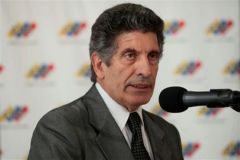 The head of the Unasur delegation sent to Venezuela to follow Sunday’s electoral process, Carlos Alvarez said that the country had given the world a lesson of democracy because of its extraordinary electoral system and the attitude of the opposition, among other positive elements.
“Venezuela has given the world a very important lesson because there were important sectors of the international community that had doubts or questioned the functioning of Venezuelan democracy”, said Alvarez during a press conference in Caracas.
On Sunday’s election, President Hugo Chavez won for the fourth consecutive time with a 54.84% support of ballots while the opposition leader Henrique Capriles managed 44.55% according to the official results from the Electoral Council having counted 95% of votes cast.
Alvarez admitted that many members of the international community “had doubts about how elections in Venezuela were won” and described as “ill-intended those who cast doubts over the functioning of the electoral system”, which he went on to describe as “excellent”.
“It’s an extraordinary lesson for the international community” and the fact that turnout was 80% is “a moving event” for a country were voting is not compulsory, and even more “if one looks back into history and remembers that only 25% to 30% of those registered use to vote”, underlined the former Argentine Vice-president and currently secretary general of the Latinamerican Integration Agency, Aladi.
“We have witnessed a process of excellence; the National Electoral council displayed an extraordinary job, parties and candidates admitted the results and we have accumulated a great experience for the creation of a South American Electoral Council”, said the head of the Unasur observers’ mission. “We came across a highly reliable electoral system and of technological excellence”.
Alvarez said that Unasur complied with all of its objectives and was present all over the Venezuelan territory, with forty delegates from ten different countries.
“It was a double challenge, we were one of the few organizations that came to follow the electoral process and at the same time the first such a mission was sent by Unasur. We are a technical mission, committed to transparency and the efficiency of the electoral systems of our countries”, pointed out Alvarez.
“I’m leaving on Wednesday after I present my report and I will with the satisfaction of the job accomplished, and the happiness of having been witness of the Venezuelan democratic festivity and of an historic event”, concluded Alvarez.
Related articles
- A Hall of Shame for Venezuelan Elections Coverage (alethonews.wordpress.com)
- Chavez Wins Venezuelan Presidential Election with 54% of the Vote (alethonews.wordpress.com)
Honduras: Now Open for Political Murder
By NICK ALEXANDROV | CounterPunch | October 9, 2012
Last Wednesday’s presidential debate, and the flurry of fact-checking that followed, helped sustain the illusion that Republicans and Democrats are bitter rivals. Reporters and analysts obsessed over the accuracy of each candidate’s claims, ignoring the two parties’ broadly similar goals, which mainstream political scientists now take for granted. “Government”—both parties are implicated—“has had a huge hand in nurturing America’s winner-take-all economy,” Jacob S. Hacker and Paul Pierson write in Winner-Take-All Politics, their study of the massive transfer of wealth to the richest Americans since the 1970s. George Farah’s research has shown how cross-party collaboration extends from economic issues to the debate’s structure. The Commission on Presidential Debates, a private corporation both parties created, ensures independent candidates will be excluded, and more generally that the events will remain the sterile, predictable spectacles familiar to viewers.
No doubt the foreign policy debate in a few weeks will offer much of the same. In the real world, meanwhile, Obama embraced and extended Bush’s foreign policy, as the case of Honduras illustrates especially well. After the Honduran military staged a coup against democratically-elected President Manuel Zelaya on June 28, 2009, Obama and Secretary of State Clinton backed the ensuing fraudulent elections the Organization of American States and European Union refused to observe. Porfirio Lobo won the phony contest, and now holds power. “The conclusion from the Honduras episode,” British scholar Julia Brixton wrote in Latin American Perspectives, “was that the Obama administration had as weak a commitment to democracy, human rights, and the rule of law as the preceding U.S. presidency.”
The coup’s plotters, it should be emphasized, knew exactly what they were doing. Colonel Bayardo Inestroza, a military lawyer who advised them on legal issues, was very open about it, informing the Salvadoran newspaper El Faro, “We committed a crime, but we had to do it.” U.S. officials seem to have taken slightly longer to recognize the obvious, but Wikileaks documents indicate that, by late July, they understood that what had transpired was “an illegal and unconstitutional coup.” Obama’s legal training, cosmopolitan background and cabinet stuffed with intellectuals were all irrelevant in this situation, like so many others. A different set of factors drives U.S. foreign policy, which is precisely why, to cite just one example, Matt Bai’s analysis of “Obama’s Enthusiasm Gap” is featured prominently on the New York Times homepage as I write, below the Ralph Lauren ads and feature about a Pennsylvanian high school’s underdog football team. In determining what’s “fit to print,” triviality seems to be one of the crucial considerations.
A more serious analysis of Obama might start, for example, by observing that his “enthusiasm gap” failed to materialize as he drafted lists of people to murder. It also was mysteriously absent when he stood firmly behind the Honduran coup’s leaders, two of whom graduated from the School of the Americas (SOA) at Fort Benning, Georgia. Renamed the Western Hemisphere for Security Cooperation (WHINSEC) in 2001, the name-change was, predictably, just a rebranding. Nico Udu-Gama, one of the leading activists working to close the institution, emphasized recently on Al Jazeera that the school’s graduates have continued to violate human rights over the past decade. This is the main reason why Udu-Gama and others organize for School of the Americas Watch, and currently are gearing up for its annual demonstrations at Fort Benning the weekend of November 16-18.
Returning to Honduras, we see that conditions there are beginning to call to mind those of, say, El Salvador in the ’80s—good news, perhaps, for aspiring financial executives eager to launch the next Bain Capital. But as the business climate improves, everyday life for Hondurans working to secure basic rights has become nightmarish. Dina Meza’s case is just one example. A journalist and founder of the Committee of Families of Detainees and Disappeared in Honduras (COFADEH), Meza received two text messages from the Comando Álvarez Martinez (CAM) last February. The group, named for an SOA graduate, threatened her: “We are going to burn your ‘pipa’ (vagina) with caustic lime until you scream and then the whole squad will have fun.” The follow-up warning told her she would “end up dead like the Aguán people,” referring to the poor campesinos that are being slaughtered on land owned mainly by Miguel Facussé, one of the richest Hondurans.
Conflicts over land, to be sure, are nothing new in Central America. The most recent government-led assault on Honduran farmworker rights can be traced back to the 1992 Law of Agricultural Modernization. International finance lobbied aggressively for that decision, which reversed the limited land reform implemented in the preceding decades, and drove the desperately poor into city slums or out of the country, inspiring those who remained to form self-defense organizations. The Unified Campesino Movement of Aguán (MUCA) is one of these groups. With the help of Antonio Trejo Cabrera, a human rights lawyer, the campesinos recently won back legal rights to several plantations. On September 23, Trejo took some time off to celebrate a friend’s wedding at a church in Tegucigalpa. During the event he received a call, and stepped outside to take it. The gunmen were waiting for him. They shot him several times, and he died soon after arriving at the hospital. “Since they couldn’t beat him in the courts,” Vitalino Alvarez, a spokesman for Bajo Aguán’s peasants, explained, “they killed him.” They killed Eduardo Diaz Madariaga, a human rights lawyer, the following day, presumably for similar reasons.
It is in these conditions that Honduras has been opened for business. The American economist Paul Romer proposed recently that several neoliberal “charter cities”—complete with their own police, laws, and government—be built there, and an NPR reporter recently reviewed this idea enthusiastically in a piece for the New York Times. But despite much misleading discussion of what is considered Romer’s bold entrepreneurial vision, his plan is directly in line with longstanding US goals for the region, as the constitutional chamber of Honduras’ Supreme Court explained recently. Voting 4-to-1 that the charter cities are unconstitutional, the judges concluded that Romer’s plan “implies transferring national territory, which is expressly prohibited in the constitution;” worth recalling is that Zelaya was thrown out for allegedly violating the same document. But this fact and others are considered beyond debate this election season, an indication of how much change we can expect, regardless of November’s winner.
Related articles
- Honduras: A Second Human Rights Attorney Is Murdered (alethonews.wordpress.com)
- Honduras: Lawyer for Aguán and “Model Cities” Struggles Is Murdered (alethonews.wordpress.com)
- Honduras: “Model Cities” Project Set to Begin? (alethonews.wordpress.com)
Honduras: Supreme Court Blocks “Model Cities”—for Now
Weekly News Update on the Americas | October 7, 2012
A five-member panel of Honduras’ Supreme Court of Justice (CSJ) ruled in a 4-1 decision on Oct. 3 that legislation creating Special Development Regions (RED), autonomous regions also known as “Model Cities,” is unconstitutional. The only opposing vote came from Justice Oscar Fernando Chinchilla, who failed to recuse himself despite an apparent conflict of interest: he is a close friend of National Congress president Juan Orlando Hernández, a promoter of the project, and has visited Korean economic development zones in Southeast Asia with Hernández. Because the decision was not unanimous, the full court of 15 justices must make the final determination. Chief Justice Jorge Rivera Avilés has set Oct. 17 as the date for the session.
The “Model Cities” project has sparked dozens of legal challenges [see Update #1145]. Although much of the opposition comes from the left, the plan is unpopular across the political spectrum. In September Human Rights Commissioner Ramón Custodio, a conservative, announced his opposition to the project, which proponents claim will spur economic development. “[If] you want to have a developed country, it should be the whole country, not privileged zones,” he wrote in a communiqué, adding that “the national territory can’t be divided because that would be finishing off the country and putting an end to the nation.”
Honduran president Porfirio (“Pepe”) Lobo Sosa said on Oct. 6 that he would push ahead with the project. “[I]f Honduran society today is afraid to make the leap, we’ve talked with the Supreme Court of Justice about sitting down to dialogue and about what changes would have to be made for [the RED] to be compliant with the law.” (Honduras Culture and Politics 10/3/12; El Heraldo (Tegucigalpa) 10/5/12; La Tribuna (Tegucigalpa) 10/6/12)
Related articles
- Honduras: Lawyer for Aguán and “Model Cities” Struggles Is Murdered (alethonews.wordpress.com)
- Honduras: A Second Human Rights Attorney Is Murdered (alethonews.wordpress.com)
- Honduras: “Model Cities” Project Set to Begin? (alethonews.wordpress.com)
Indigenous Guatemalans want justice for 6 dead
Press TV – October 6, 2012
Clashes between Guatemalan security forces and thousands of indigenous people holding a demonstration against rising electricity prices in a poor rural area west of the capital have left six people dead.
On Friday, thousands of people attended the funeral processions of the six peasants who died on Thursday. The mourners shouted “Justice! Justice!”
“We’ve determined that the number of people who died rose to six,” said Ana Julia Solis, a spokesperson for the national human rights prosecutor’s office.
The government said demonstrators were blockading a highway near the town of Totonicapan, about 170 kilometers west of Guatemala City, when unidentified gunmen opened fire, killing six people and injuring 34. However, local activists said soldiers and police killed the protesters.
At a press conference on Friday, Guatemalan President Otto Perez said the military was not involved in the killings, adding that he had information that attackers in a civilian truck opened fire on the demonstrators.
Related articles
- Guatemala demonstrators killed while protesting electricity rates (alethonews.wordpress.com)
Israeli army turns Palestinian homes in Hebron into military barracks
MEMO | October 4, 2012
 The Israeli occupation forces have turned the roofs of Palestinian homes in the ancient city of Hebron, south of the West Bank, into military barracks and control points under the pretext of providing security for Jewish settlers during the Hebrew celebrations of the Sukkot Feast.
Human rights sources in the Hebron Rehabilitation Committee reported that a large number of Israeli forces took over the roofs of several Palestinian homes along the lanes of the old town. These houses, including the family home of the Islam Al-Fakhouri in Al-Sahla area, have been turned into military barracks and control towers while the families have been forced to leave.
Israeli soldiers also commandeered the roofs of the Abdulmutallab Abu Sunaina, Imran Abu Rumaila, Daoud Jaber, Nader Salaymeh and AliAl-Rajabi households turning them into control points.
Sources also point out that the regions extending between the settlement of Kiryat Arba, the Cave of the Patriarchs, Tel Rumeida, Al-Shuhada, Al-Ras, and Wadi El-H’aseen streets; and the areas of Al-Masharqa Al-Fawqa and Tahta, are subjected to a blanket Israeli police and army presence.
Related articles
- Army Kidnaps Two Palestinians In Hebron (imemc.org)
- Soldiers Kidnap A Child In Hebron (imemc.org)
- Israeli high court rejects south Hebron village petition (alethonews.wordpress.com)
- Jewish Settler’s Vehicle Rams Child in Hebron Hit and Run (alethonews.wordpress.com)
- Soldiers Physically Attack Palestinian Youth In Hebron (alethonews.wordpress.com)
- Jewish Settlers Invade Palestinian Home In Hebron, Attack Family Members (alethonews.wordpress.com)
- Four Residents, Including Two Children, Kidnapped By The Army In Hebron (imemc.org)
- Hebron: Soldiers invade Kultuba School, attempt arrest 2 sixth grade students (occupiedpalestine.wordpress.com)
- Soldiers Kidnap A Child playing near the Ibrahimi mosque In Al-Khalil (occupiedpalestine.wordpress.com)
Featured Video

Matt Bracken: US Plans Massive MOAB Strike on Iran?
or go to
Aletho News Archives – Video-Images
From the Archives
Confronting the Threat of Ethnic Bioweapons
By Tony Cartalucci – New Eastern Outlook – 29.11.2017
The United States Air Force’s 59th Medical Wing’s molecular biology branch recently was revealed to have been collecting specifically Russian RNA and synovial (connective) tissue samples, prompting fears in Russia of a possible US directed ethnic-specific bioweapons program. … continue
Blog Roll
 Aletho News
- Matt Bracken: US Plans Massive MOAB Strike on Iran?
- Russia accuses France of ‘piracy’ over tanker seizure
- Why Yemen Is Bombing Saudi Arabia’s Airports: The War Behind the Headlines
- Sally Rooney’s books pulled from UK over support for Palestine Action
- Bombs for Tel Aviv, Promises for Riyadh
- Israeli ad agency conducted vast global espionage campaign using online ads: Report
- Oct. 7 Forever Marks The Big Reveal: ‘We See You, Israel, We Revile You, We Reject You!’
- Meet the US generals and admirals advancing Israeli policy
- Israel’s Straw Widow Protocol: The Kill Zones Where Civilians Were Labelled ‘Terrorists’
- Leading Israeli Think Tank Publishes Psychotic Israeli ‘National Security’ Doctrine
- If Americans Knew
- Israeli firm used online ads to run vast spy operation, researchers say
- No, the world zionist movement is not an antisemitic conspiracy theory
- Hundreds of IDF investigations into killings still have no public outcome, BBC Verify finds
- After Ashley Moody Epstein Probe, Donors Linked to Him Poured Money Into her Senate Campaign
- Worried about Russian meddling in UK politics? Wait till you see what Israel is up to
- Israeli settlers attack West Bank center for disabled children, church leader calls for int’l action
- Pulling Out Teeth Just to Live: How Israel Has Devastated Dental Care in Gaza
- Gaza’s “ceasefire” death toll passes 1,500 – Daily Update
- Activists Abused By Israel Return to New Freedom Flotilla Mission
- 60 Minutes won’t tell the full truth about Israeli settler violence
- No Tricks Zone
- New Study Suggests Large Regions Of The Pacific Ocean Have Been Cooling For The Last 80 Years
- Germany’s Green Energy Debacle: High Energy Costs Force Kahla Porzellan to Close After 182 Years!
- New Study: 50 Years Of The Most Aggressive ‘Net Zero’ Policies Can Only Affect The Global Climate By 0.03°C
- US September “Heat” Was No Record…Many Records Set Decades Ago
- Latest European Green Energy Debacle; Portugal’s Largest Flagship Solar Park Insolvent!
- Green Energy Debacle: German Expert Professor Fritz Vahrenholt Warns Of Severe Economic And Social Consequences
- Two More Paleo Reconstructions Affirm Meters-Higher Sea Levels Across Ireland, Brazil 7000-6000 Years Ago
- New Study: Earth And Venus Surface Warmth Largely Explained By Convection And Lapse Rate, Not CO2 Or Radiation
- 2025 Nature Paper Claiming Worsening Global Drought Gets RETRACTED …Heavily Flawed
- New Study: ‘Global Drought Shows No Detectable Recent Acceleration Under Climate Warming’

