Former Sen. Barbara Boxer’s Son and California Powerbroker Found Bilking Indian Tribe
Judges Find Breach of Contract and Trust
By Peter Byrne | Consortium News | November 16, 2018
Darius Anderson is one of California’s most powerful men. He promotes himself as a champion of liberal social causes, a philanthropist, a public servant, a man of integrity who cares about his community—especially racial minorities.
That image has not survived judicial scrutiny. A panel of arbitration judges has found that a company controlled by Anderson and his partner, Douglas Boxer, the son of former Senator Barbara Boxer, defrauded its Native American clients in a Bay Area casino deal. The partners convinced the Federated Indians of the Graton Rancheria to buy undevelopable swamp land in which they themselves held a large interest. They then made a secret deal with a Las Vegas gambling corporation in which they benefited at the Graton tribe’s expense.
The two-month long judicial proceeding took place behind closed doors at the San Francisco office of JAMS, a high-profile group of legal mediators formerly known as Judicial Arbitration and Mediation Services. A final binding arbitration award issued in April by the judging panel was confirmed by Superior Court Judge Richard Ulmer on June 1. That outcome has drawn almost no publicity. The only media to report on the findings of fraud against Anderson and Boxer is the North Bay Bohemian, a local alternative weekly newspaper.
For decades Anderson has advised and raised campaign funds for prominent state Democrats, including Nancy Pelosi, leader of the Democrats in the U.S. House of Representatives, and Jerry Brown, governor of the west coast state.
Another of his high-profile clients is Barbara Boxer, the longtime U.S. senator from California who retired in 2017. Her son Douglas partnered with Anderson in what judges found to be acts of fraud and deception against the Federated Indians of Graton Rancheria that began after Sen. Boxer pushed through legislation restoring the tribe’s sovereignty and granting it the right to run a casino.
The case raises comparisons with the 2005 Jack Abramoff Indian lobbying scandal, in which powerful consultants charged exorbitant fees to Indian clients seeking to develop casinos on their reservations. As such it adds another installment to the history of white men breaching trust with Native Americans for economic gain that began with European settlement of this continent. This case has a happier ending than is usual.
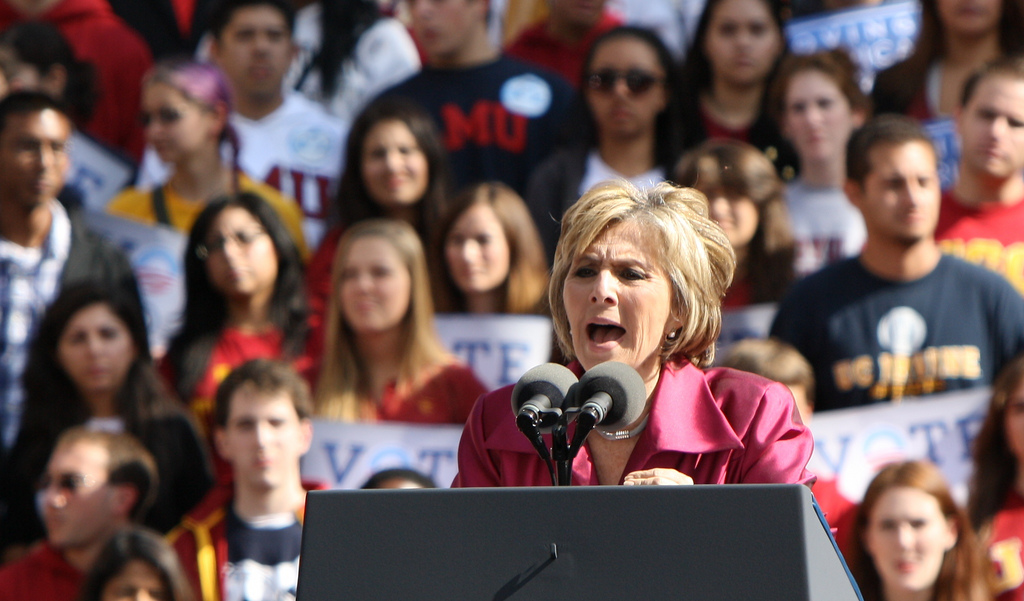
Sen. Boxer: Pushed bill to give tribe sovereignty. (Flicker: Shotgun Spratling)
Local Empire
Anderson, 53, oversees a restaurant and media empire in Napa and Sonoma Counties, 40 miles north of San Francisco. He owns a culinary school called Ramekins and he is the managing member and chairman of Sonoma Media Investments, which owns the Santa Rosa Press Democrat and its affiliate publications, which includes most of the newsprint media in the two-county region. In September, the Press Democrat reported a 900-word story about the arbitration findings that portrayed the tribe and Anderson as having settled a contractual “dispute”—the “fraud” word was not mentioned and the details of the deceptions were not exposed.
Anderson is much more that a restaurateur and newspaper publisher. His California-based lobbying firm, Platinum Advisors, advertises that it generates “billions of dollars in work for our clients” by navigating their deals through mazes of local, state, and federal government bureaucracies. Another of his companies, Kenwood Investments, is developing upscale housing and yacht havens on Treasure Island, a fabulously valuable island in the San Francisco bay built in 1939 as a World’s Fair site.
The business name that is key to this story is Kenwood Investments No. 2. Three retired state judges in the arbitration process declared in April that Anderson and his partners in “Kenwood No. 2” defrauded the Federated Indians of Graton Rancheria of millions of dollars between 2002–03 and committed many acts of deception. They ordered Anderson’s investment firm to pay three quarters of a million dollars to the tribe to cover its lawyer’s fees and arbitration costs.
According to the judges, Anderson breached his consulting contract with the tribe, which now owns the Graton Resort & Casino in Rohnert Park. The judges found that Anderson and his associates “fraudulently induced” and “breached” an agreement to assist the tribe in developing a Las Vegas-style casino business.
The ruling, by retired Superior Court judges William Cahill, Read Ambler and Richard A. Kramer, concludes a long legal battle that was instigated not by the wronged party, but by Anderson, as he sought to further enrich his business at the tribe’s expense.
In a settlement arrangement, Kenwood No. 2 agreed not to appeal the judges’ findings. Anderson’s firm will pay less than the dollar amount of the award, says Joel Zeldin, the tribe’s arbitration counsel. There are no charges of criminal fraud pending against Kenwood No. 2, but the three judges, one of whom was chosen by Anderson’s firm, did their best to restore justice: “Even if the Tribe was willing to overlook Kenwood No. 2’s unethical behavior, the courts and these arbitrators will not.”
Summary of Violations
The 53-page arbitration report details how Darius Anderson and the senator’s son, Douglas Boxer, harmed the Federated Indians of Graton Rancheria over the course of several years. In summing up their findings, the judges’ panel found that Anderson and Boxer had violated their duty to be loyal to the tribe in the following ways:
• Anderson and Boxer represented that Kenwood No. 2 had experience and abilities that it in fact lacked.
• Kenwood No. 2 breached its contract when it bought an option on wetlands without telling the tribe, and then promoted the land to the tribe for the casino site despite its unsuitability for development.
• Anderson and Boxer sent out bid solicitations for a casino manager that benefited Kenwood No. 2 at the expense of the tribe and without telling the tribe of the existence of the “requests for proposals” or RFPs.
• They rejected a proposal that was the most favorable to the tribe without telling the tribe or informing it of that bidder’s reservations about irregularities in the contractual terms proposed by Kenwood No. 2.
• They entered into undisclosed consulting agreements “to the detriment” of the tribe, some of which involved conflicts of interest.
• “Despite causing major problems and providing virtually no effective assistance to the Tribe,” Anderson claimed that it was the tribe that had breached the consulting agreement with Kenwood No. 2. Anderson’s pursuit of his “unmerited” claim against the tribe caused it to spend significant amounts of money and to “suffer business risks and distractions.”
The judges ordered Kenwood No. 2 to pay the tribe’s attorney fees and costs of $725,657.48, and to receive nothing for itself.
Anderson did not respond to multiple requests for comment.
Boxer’s Role
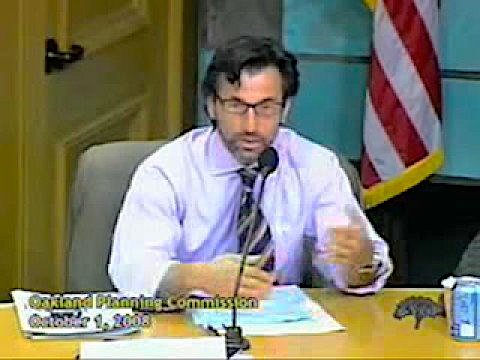
Douglas Boxer: In on deal with Anderson. (YouTube)
Boxer was involved as a lobbyist for Platinum Advisors and as Anderson’s partner in Kenwood Investments No. 2. His mother, the now-retired U.S. senator, in 2000, wrote federal legislation that restored the national sovereignty of the Federated Indians of Graton Rancheria and authorized the tribe to establish a casino business.
In early 2002, Anderson and Boxer approached the tribe’s chairman, Greg Sarris, a novelist and professor of creative writing and Native American studies at Sonoma State University. They proposed that the newly empowered tribal nation hire Platinum Advisors to help it acquire reservation land and start a business to make it self-sufficient. Anderson and Boxer told Sarris that Platinum Advisors had “significant real estate development experience and connections with local, state and federal politicians,” according to the arbitration award. They proffered a platform of consulting services for a monthly retainer of $1,000, with payment deferred and contingent upon success.
Sarris trusted Boxer because the lobbyist’s mother had sponsored the legislation that re-established the tribe’s sovereignty. After Anderson presented a promise-filled PowerPoint to the tribal council, it voted to hire Platinum Advisors, ultimately paying it $1.2 million.
Fifteen years later, arbitrators declared that Anderson and Boxer had breached their contract to deliver adequate professional services in the tribe’s interest, damaging the casino project’s prospects. According to the arbitration document, the Graton Rancheria was afraid to expose these actions when it discovered what Anderson was doing in 2003, fearing political retaliation by the consultants.
The story only came to light because in November 2013, Anderson demanded that the Graton Rancheria pay Kenwood No. 2 a percentage of the projected revenue from its recently opened casino. Anderson insisted that the tribe pay his firm $43 million; he threatened to compel arbitration if it refused.
The tribe refused. It sued Kenwood No. 2 in state superior court, claiming that its sovereign immunity prohibited Anderson from compelling arbitration of his claim.
In November 2015, the court ruled that the tribe had waived its sovereign immunity defense in its contract with Anderson. In 2017, that judgment was affirmed by the appellate court, and the JAMS arbitration commenced.
Anderson claimed 2.5 percent of the Graton Resort & Casino’s net revenue for the first seven years of its operation, despite the fact that after 2005, the tribe had ceased doing business with his company. Insisting that the Graton Rancheria had “unjustly enriched” itself at the expense of his firm, Anderson demanded that it pay his attorney fees, too.
But it was the tribe, not Anderson, that had been wronged, the retired judges ruled. After months of sworn testimony, the panel ordered Kenwood No. 2 to pay the tribe’s attorney fees because it was Kenwood No. 2 that had breached the consulting contract, and Anderson’s claims to the contrary “lacked merit.”
The two trials generated thousands of pages of testimony, depositions and exhibits. The court record of the arbitration award was partly redacted and relabeled at Anderson’s request, according to Zeldin, the tribe’s arbitration counsel.
Anderson’s and Boxer’s names are replaced by “Person A” and “Person B,” respectively. “Platinum Advisors” is replaced with “Company 1.” “Kenwood No. 2” replaced “Kenwood.” The names of politicians and descriptions of their actions are blacked out. But who they are and what they did is clear from the narrative context and from contemporaneous news reports.
How It Began
In March 2002, the Graton Rancheria signed a contract with Platinum Advisors as its “exclusive agent” to provide it with “strategic advice and consultation” and to develop “political visibility.” The contract granted Platinum a right of first refusal to “partner with the tribe in any business opportunity it pursued.” The idea was to attract investors.
From the get-go, Boxer worked to convince the tribe how “‘much of a home run a casino would be’ rather than organic food processing, grape growing, strip mall, or senior assisted living facility,” according to the arbitration award. It did not take much convincing. Casinos are famous magnets for cash. Even as Anderson and Boxer worked with the tribe on a public relations campaign to further a casino project, they were making secret deals to benefit themselves, the arbitrators found.
According to a declaration filed by Anderson in 2015, he, Boxer, Jay Wallace of Platinum Advisors and Stuart Sunshine, a San Francisco city official, created Kenwood Investments No. 2 LLC in January 2003.
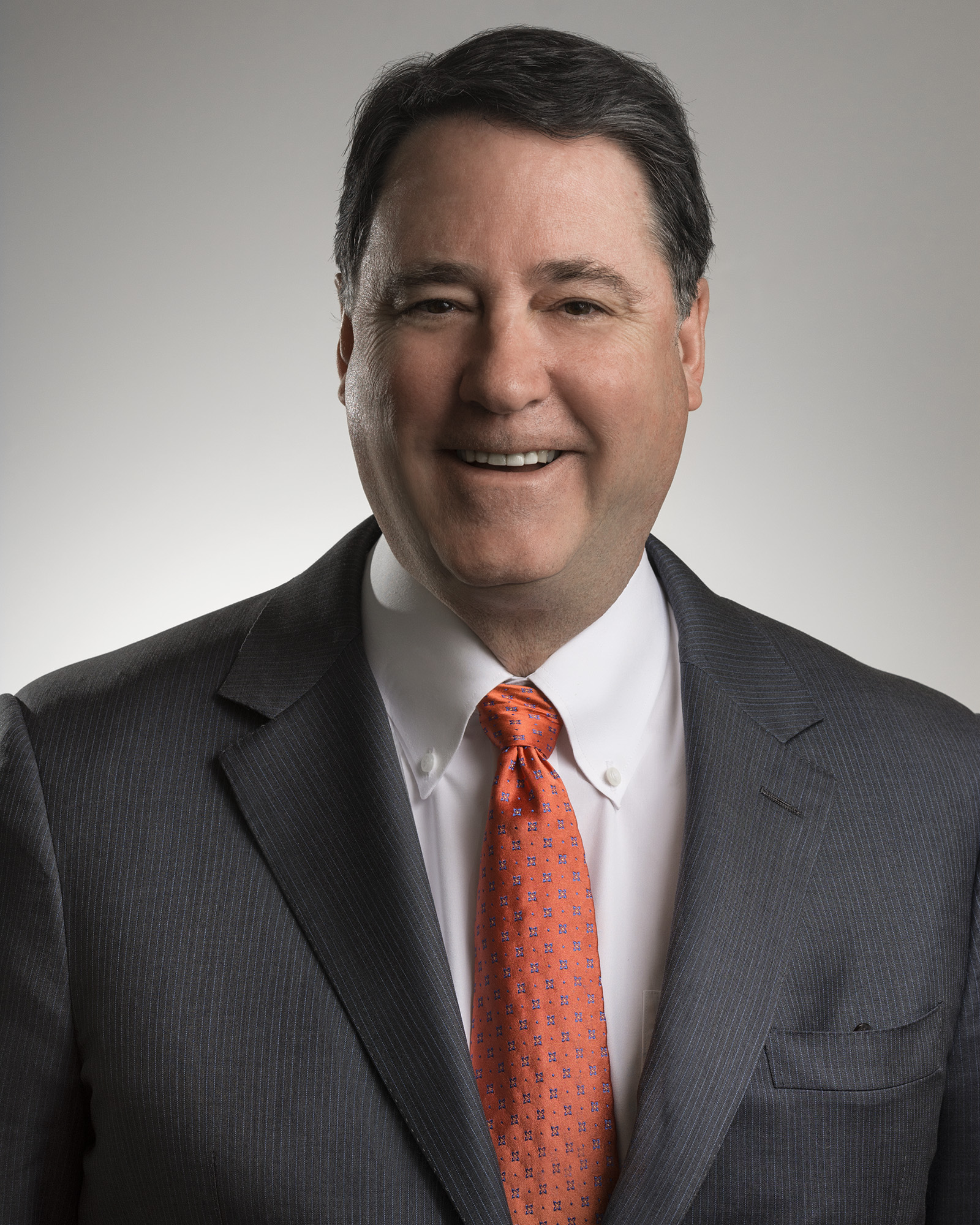
Anderson. (Platinum Advisors)
The arbitration judges ruled that Anderson’s new company shadowed Platinum Advisors’ tribal consulting activities, while serving a hidden agenda to make money for its principals—at the tribe’s expense.
Without informing Sarris or the tribe, Anderson and Boxer struck a deal to buy 1,736 acres of tidal wetlands near Highway 37, a major road connecting San Francisco to the nearby city of Oakland.
Kenwood No. 2 paid $100,000 for an option to purchase the swampy property, eventually billing the tribe $750,000 for it.
As Kenwood No. 2 was secretly securing the option, Platinum Advisors was advising the tribe to select the Highway 37 site for its casino, even though it was a politically impossible place to pour acres of concrete.
“The site was part of 50,000 acres of tidal wetlands that conservationists had been trying to protect and restore since the 1970s,” noted the arbitration judges, who were incredulous that Anderson had suggested it. The attempt to locate the casino on the wetlands site proved to be a public relations and monetary disaster for the tribe.
As Anderson and Boxer were negotiating to buy the swampy land in late 2002, they were also negotiating casino-management deals with several Las Vegas–based casino operators, including Station Casinos, Harrah’s, Maloof and MGM, without telling the tribe.
In February 2003, Anderson sent a request for proposals to potential casino operators. The proposal represented Kenwood No. 2 as the “exclusive development partner” and “financial advisor” for the tribe. The RFP stated that Kenwood No. 2 would evaluate the bid proposals and select the casino manager for the tribe.
Kenwood No. 2 had no contractual relationship with the Graton Rancheria when it issued the RFP. The tribe’s contract was with Platinum Advisors.
According to the arbitration award, “the evidence established that the Tribe was unaware that Kenwood No. 2 had sent an RFP to operators and had not approved the contents of the RFP drafted by Kenwood No. 2.”
Strange Bidding Terms
The trial revealed that Anderson’s RFP instructed potential casino operators to bid their services on the basis of several unusual assumptions:
• The operator would commit to buying Kenwood No. 2’s option to purchase the Highway 37 land and then buy the land from the seller on behalf of Kenwood No. 2, which would be the “titleholder.” The RFP assumed that the casino would be built on the Highway 37 site controlled by Kenwood No. 2 and that there were no other possibilities.
• The operators could charge the tribe 20 percent of the casino’s net revenues and were to “assume a management fee to Kenwood No. 2 of 10 percent of net gaming revenues.”
• The operators would pay Kenwood No. 2 “development fees” of $2.5 million up front to purchase the option on the Highway 37 site, and another $2.5 million when the tribe took over the site—$5 million total.
• “Lastly, operators were required to pay Kenwood No. 2 ‘pre-development fees’ of $8.4 million ($200,000 per month) for advisory and consulting services.”
The operators were not required by the RFP to make upfront cash payments to the tribe, or to provide any specific amounts of money for the tribe’s maintenance costs (i.e., its ability to maintain its existence until the casino began generating revenue).
Anderson received and evaluated four responses to the RFP, which he did not share with the tribe. Notably, Harrah’s proposed to take up to 24 percent of the net gaming revenue as its management fee. Improving on the terms of the RFP itself, Harrah’s offered to pay $100,000 a month to the tribe for its operating expenses, along with a $4 million pre-development fee. Harrah’s also offered to donate $100,000 per year to set up an educational scholarship fund for tribal members. And it offered to make a one-time $25 million “quality of life” loan to address tribal citizen’s needs for housing and medical care.
Harrah’s declined to pay a percentage of net revenues to Kenwood No. 2, although it offered to pay Anderson $50,000 a month in consulting fees, if the tribe approved of the arrangement. Harrah’s pointed out that such an arrangement with a consultant was not a normal business practice; it would have to be approved by the National Indian Gaming Commission.
Harrah’s expressed concern about the legitimacy of Anderson’s claim to be representing the tribe’s interests. It asked to be put directly in touch with the tribal council before proceeding further. Anderson rejected Harrah’s proposal without consulting with Sarris and the tribal council or informing them of the proposal’s existence.
Watch Peter B. Collins interview Peter Byrne on Boxer, Anderson fraud (Article continues below):
A Better Deal—For Anderson
Station Casinos’ response to the RFP was far more favorable toward Anderson. It suggested that Kenwood No. 2 and Station Casinos partner to manage the casino. It proposed divvying up 30 percent of the casino revenues—20 percent to Anderson’s firm, 80 percent to Station.
The Las Vegas–based corporation offered to pay Anderson $10 million cash up front and $15,000 a month for consulting services. It offered $100,000 a month for tribal operations, but it did not offer the tribe any pre-development fees, scholarships or loans.
On March 7, 2003 Anderson and Boxer asked the Graton Rancheria to assign the Platinum Advisors contract to Kenwood No. 2, and claimed it would not change the terms of the agreement.
But the assignation did change the terms of the agreement. The new arrangement gave Kenwood No. 2 new authority to act as the tribe’s exclusive agent. Kenwood No. 2 was allowed to negotiate a cut of the casino operator’s management fee for itself. And, importantly, the tribe agreed to waive its sovereign-immunity defense in the case of a contract dispute—a concession it later regretted.
Anderson and Boxer had been negotiating with gaming corporations since the fall of 2002. They first told Sarris and the tribe that they had issued RFPs on March 11, 2003.
Brian Campbell, a tribal member doing legal work for the tribe, got wind of the RFP and asked Boxer for a copy. Boxer gave Campbell a copy but did not tell him about the responses that had been received.
Boxer later testified under oath that he had given drafts of the RFP to the tribe before it was sent out in 2002. The tribe’s witnesses testified that Boxer did not do that. Campbell testified that he was surprised that Anderson had asked for 10 percent of the gaming revenues and $5 million in upfront fees in the RFP.
On March 14, 2003, Anderson told the tribal council about the existence of RFP responses. He did not disclose Harrah’s offer to the tribe of tens of millions of dollars in cash.
Anderson told the tribe that Station Casinos had made the best proposal for “superior overall economics.”
Even as members expressed outrage at Anderson’s self-dealing behavior, the tribal council accepted his recommendation that Station Casinos be selected as its casino operator.
Time to Hire Lawyers
Suspecting that Anderson was more motivated to benefit himself than the tribe, the Graton Rancheria hired attorneys from California Indian Legal Services to watch over its interests. These lawyers noted that it was a conflict of interest for Anderson to negotiate with Station on behalf of the tribe while he was also negotiating with Station on his own behalf for a cut of the management fees. Anderson agreed that he would not negotiate a separate deal.
On April 22, 2003, the tribe signed the revised agreement with Kenwood No. 2. It provided that Anderson’s company would receive 4 percent of the net gaming revenues for seven years (later reduced to 2.5 percent). Anderson agreed to donate $25,000 annually to the UCLA College of Indian Law Program. (UCLA declined to confirm if the donations were made.)
The next day, according to trial exhibits, Anderson secretly made a separate consulting agreement with Station Casinos, despite his promise that he wouldn’t.

The Graton Resort Casino. (gratonresortcasino.com)
Kenwood No. 2 contracted to assist Station Casinos “maintain its relationship” with the tribe. Station Casinos agreed to pay Anderson $20,000 per month and it bought the option on the Highway 37 site for $750,000, netting Kenwood No. 2 a $650,000 profit. (The tribe later reimbursed Station for the option payment).
Station Casinos agreed to pay Anderson a total of $9.5 million for achieving various “milestones” as it helped the tribe to navigate the bureaucracy of getting its casino up and running.
Anderson did not tell the tribe about his side deal with Station Casinos. “The evidence indicates that Kenwood No. 2 intentionally kept information regarding the Station/Kenwood No. 2 agreement secret from the Tribe,” the arbitrators found. “[Exhibit] 490 [Douglas Boxer] notation: ‘don’t tell Sarris: negotiation.’”
Boxer did not respond to multiple requests for comment.
In fact, the tribe did not learn of the secret side agreement’s existence until June 2003, when Station Casinos included a copy of the side agreement in the paperwork accompanying its negotiations with the tribe, the arbitrators found. Station Casinos declined to comment.
Picking on the Wrong Wetland
On the same day they signed the side agreement, Station Casinos and Anderson announced that the Graton Rancheria planned to develop the Highway 37 site for a casino. A coalition of environmental groups that supported the Bay Delta Restoration Plan to restore local wetland habitats enlisted local, state and federally elected officials to vehemently oppose erecting the casino.
The tribe’s attempt to “appease these groups by offering to restore hundreds of acres of wetlands on the property” was a non-starter. After Diane Feinstein, a U.S. senator from California, “threatened to redraft the Tribe’s restoration language to obstruct the Tribe’s ability to open a casino anywhere,” the Graton Rancheria backed down and nixed the wetlands as a possibility.
The tribe ended up paying for and donating the Highway 37 wetlands to the Sonoma County Land Trust, which has restored it. The wetlands debacle ended up costing the tribe about $5 million, which included paying for the unusable land and for Kenwood No. 2’s profit on the land-purchase option.
Without Anderson’s assistance, Sarris and the tribe went looking for an alternative site to build their casino, and eventually bought 270 acres in Rohnert Park for $100 million, which it borrowed from Station Casinos. The tribe had little or no contact with Anderson and Boxer after 2005, when it stopped using their services.
Boxer testified that Kenwood No. 2 did significant work for the tribe prior to 2006. The trial record reports that in 2004 Boxer “‘killed’ a bill” in the state assembly that would “require gaming tribes to negotiate with local governments to mitigate the impact of casinos.”
Boxer said at trial that he had designed publicity and lobbying campaigns for the tribe; helped it to create a financial budget and to find office space; and “assisted tribal members in securing personal loans.”
The arbitrators determined that lobbying on the tribe’s behalf violated California law because Kenwood No. 2 was not a registered lobbying firm. Regardless, the judges found that Anderson and Boxer did not materially assist the tribe in jumping through the complicated governmental, environmental and financing procedures necessary to obtain a gaming compact and open the casino.
Sarris testified that the tribe felt that “Kenwood No. 2 was providing little or no value . . . and the Tribe wanted to sever its relationship with [Anderson and Boxer] but was afraid that if it did so, [they] might retaliate and use [their] political connections against the Tribe.”
The tribe estimated that it ended up paying Kenwood No. 2 $10,000 an hour for the services it did receive before the contract ended.
Nonetheless, the tribe invited Anderson and Boxer to attend the opening party for the Graton Resort and Casino on Nov. 5, 2014. That same day, Anderson demanded that the Federated Indians of Graton Rancheria wire a payment of $43 million to his bank account.
A version of this story was first published on Bohemian.com as “Graton Expectations.”
Northern California-based journalist Peter Byrne combines investigative reporting with science writing. In 2017, Peter’s 11-part series in the Point Reyes Light “Busted: Breast Cancer Money and the Media” won the top science writing award from the American Association for the Advancement of Science. He has received national, regional, and local recognition for investigative work, writing style, and in-depth profiles of politicians and scientists. Peter reports on terrorism and its twin, counter terrorism, from epicenters of violence such as Mosul, Iraq and Orange County, California. He has written highly regarded books on quantum physics and writes for many publications, including Scientific American, New Scientist, Quanta, American Consequences, Mother Jones, and the North Bay Bohemian. He can be found at www.peterbyrne.info.
Hillary Clinton Ordered To Answer Additional Questions Under Oath About Private Email Server
By Tyler Durden – Zero Hedge – 11/16/2018
A federal judge has ordered Hillary Clinton to respond to further questions, under oath, about her private email server.

Following a lengthy Wednesday court hearing, Judge Emmet G. Sullivan (who is also presiding over fmr. National Security adviser Michael Flynn’s case), ruled that Clinton has 30 days to answer two additional questions about her controversial email system in response to a lawsuit from Judicial Watch.
Hillary must answer the following questions by December 17 (via Judicial Watch)
- Describe the creation of the clintonemail.com system, including who decided to create the system, the date it was decided to create the system, why it was created, who set it up, and when it became operational.
- During your October 22, 2015 appearance before the U.S. House of Representatives Select Committee on Benghazi, you testified that 90 to 95 percent of your emails “were in the State’s system” and “if they wanted to see them, they would certainly have been able to do so.” Identify the basis for this statement, including all facts on which you relied in support of the statement, how and when you became aware of these facts, and, if you were made aware of these facts by or through another person, identify the person who made you aware of these facts.
Sillivan rejected Clinton’s assertion of attorney-client privilege on the question over emails “in the State’s system,” however he did give Clinton a few victories:
The court refused Judicial Watch’s and media’s requests to unseal the deposition videos of Huma Abedin, Cheryl Mills and other Clinton State Department officials. And it upheld Clinton’s objections to answering a question about why she refused to stop using her Blackberry despite warnings from State Department security personnel. Justice Department lawyers for the State Department defended Clinton’s refusal to answer certain questions and argued for the continued secrecy of the deposition videos. –Judicial Watch
Wednesday’s decision is the latest twist in a Judicial Watch Freedom of Information Act (FOIA) lawsuit targeting former Clinton deputy chief of staff, Huma Abedin. The case seeks records which authorized Abedin to conduct outside employment while also employed by the Department of State.
“A federal court ordered Hillary Clinton to answer more questions about her illicit email system – which is good news,” said Judicial Watch President Tom Fitton. “It is shameful that Judicial Watch attorneys must continue to battle the State and Justice Departments, which still defend Hillary Clinton, for basic answers to our questions about Clinton’s email misconduct.”
Rather than being critics, Liberals actually enable Saudi crimes
By Yves Engler · November 16, 2018
One has to admire the Canadian government’s manipulation of the media regarding its relationship with Saudi Arabia. Despite being partners with the Kingdom’s international crimes, the Liberals have managed to convince some gullible folks they are challenging Riyadh’s rights abuses.
By downplaying Ottawa’s support for violence in Yemen while amplifying Saudi reaction to an innocuous tweet the dominant media has wildly distorted the Trudeau government’s relationship to the monarchy.
In a story headlined “Trudeau says Canada has heard Turkish tape of Khashoggi murder”, Guardian diplomatic editor Patrick Wintour affirmed that “Canada has taken a tough line on Saudi Arabia’s human rights record for months.” Hogwash. Justin Trudeau’s government has okayed massive arms sales to the monarchy and largely ignored the Saudi’s devastating war in Yemen, which has left up to 80,000 dead, millions hungry and sparked a terrible cholera epidemic.
While Ottawa recently called for a ceasefire, the Liberals only direct condemnation of the Saudi bombing in Yemen was an October 2016 statement. It noted, “the Saudi-led coalition must move forward now on its commitment to investigate this incident” after two airstrikes killed over 150 and wounded 500 during a funeral in Sana’a.
By contrast when the first person was killed from a rocket launched into the Saudi capital seven months ago, Chrystia Freeland stated, “Canada strongly condemns the ballistic missile attacks launched by Houthi rebels on Sunday, against four towns and cities in Saudi Arabia, including Riyadh’s international airport. The deliberate targeting of civilians is unacceptable.” In her release Canada’s foreign minister also accepted the monarchy’s justification for waging war. “There is a real risk of escalation if these kinds of attacks by Houthi rebels continue and if Iran keeps supplying weapons to the Houthis”, Freeland added.
Ottawa has also aligned itself with Riyadh’s war aims on other occasions. With the $15 billion LAV sale to the monarchy under a court challenge in late 2016, federal government lawyers described Saudi Arabia as “a key military ally who backs efforts of the international community to fight the Islamic State in Iraq and Syria and the instability in Yemen. The acquisition of these next-generation vehicles will help in those efforts, which are compatible with Canadian defence interests.” The Canadian Embassy’s website currently claims “the Saudi government plays an important role in promoting regional peace and stability.”
In recent years the Saudis have been the second biggest recipients of Canadian weaponry, which are frequently used in Yemen. As Anthony Fenton has documented in painstaking detail, hundreds of armoured vehicles made by Canadian company Streit Group in the UAE have been videoed in Yemen.Equipment from three other Canadian armoured vehicle makers – Terradyne, IAG Guardian and General Dynamics Land Systems Canada– was found with Saudi-backed forces in Yemen. Between May and July Canada exported $758.6 million worth of “tanks and other armored fighting vehicles” to the Saudis.
The Saudi coalition used Canadian-made rifles as well.“Canada helped fuel the war in Yemen by exporting more rifles to Saudi Arabia than it did to the U.S. ($7.15 million vs. $4.98 million)”, tweeted Fenton regarding export figures from July and August.
Some Saudi pilots that bombed Yemen were likely trained in Alberta and Saskatchewan. In recent years Saudi pilots have trained with NATO’s Flying Training in Canada, which is run by the Canadian Forces and CAE. The Montreal-based flight simulator company also trained Royal Saudi Air Force pilots in the Middle East.
Training and arming the monarchy’s military while refusing to condemn its brutal war in Yemen shouldn’t be called a “tough line on Saudi Arabia’s human rights record.” Rather, Canada’s role should be understood for what it is: War profiteer and enabler of massive human rights abuses.
Is Israel turning a blind eye as Israeli scammers swindle victims in France, US, elsewhere?
By Alison Weir | If Americans Knew | November 14, 2018
French and Israeli media report that a group largely made up of Israelis scammed 3,000 French citizens out of approximately $20 million. Most of the stolen money is in Israel, but Israeli authorities are reportedly failing to cooperate with France in prosecuting the scammers and retrieving the money.
This is the latest of numerous examples of Israeli officials stone-walling international efforts against the perpetrators of massive financial swindles around the world, according to Israeli investigative journalists and others. These scams have brought estimated billions into the Israeli economy, propping up a regime widely condemned for human rights abuses and ethnic cleansing against indigenous Palestinians. Together, the stories paint a picture of a government that seems to be turning a blind eye to – and even protecting – scammers.
A Finance Magnates analysis reports that one of the swindles alone has brought in over a billion dollars and employs 5,000 people. And a new scam, described below, may help what is predicted to be “the next major driver of the Israeli economy.”
A former IRS expert on international crime notes that “fraudulent industries are often major economic drivers, and that can translate into political clout.”
Some Israeli journalists have been working to expose the situation in Israeli newspapers, publishing exposés like “As Israel turns blind eye to vast binary options fraud, French investigators step in” and “Are French Jewish criminals using Israel as a get-out-of-jail card?” (Short answer: yes.)
Victimizing French business owners & churches
The victims of the recent scam against French citizens included churches and the owners of small businesses – delicatessens, car repair shops, hair salons, plumbers, etc. Some lost their life savings and describe being threatened and intimidated by the scammers.
The masterminds of the scam reportedly were Antoine Ilan Frau (aka Ilan Frau) and Michael Nedjar, both of whom resided in Israel at the time. French police arrested the two at the Paris airport in 2016 as they were about to return to Israel. While they and 25 others were subsequently found guilty in a French court, other alleged co-conspirators have not yet been arrested and are believed to be in Israel.
The Times of Israel (TOI) reports that most of the money was channeled to Israel and has not yet been recovered. The newspaper reports that Israeli law enforcement authorities “have been unhelpful in enabling further investigation of the scam and in recovering the stolen funds.”
TOI, which obtained the full French verdict statement, reports: “In 200 pages of matter-of-fact legal prose, the verdict paints a picture of Israeli authorities unwilling to cooperate with their French counterparts.”
Another Times of Israel article reports: “The exact number of French citizens thought to be evading authorities in Israel is unknown, but France has sent to Israel at least 70 formal requests for judicial assistance with cases involving suspected fraud by dual nationals residing in the Jewish state.”
Below are some of the other Israeli-connected scams victimizing people around the world that observers accuse the Israeli government of largely ignoring.
Gilbert Chikli, “the world’s greatest con artist”
In 2016 Ha’aretz reported on an Israeli con artist named Gilbert Chikli, who boasts of pioneering a multi-million dollar scam that also targeted people in France. The New York Post has called him “the world’s greatest con artist.”
The scam targeted banks and business, cost French companies an estimated 7.9 million euros. Approximately 52 employees of the companies taken in by him were subsequently fired.
Despite French extradition requests, Ha’aretz reported in 2016 that Chikli “mysteriously remains a free man, living in luxury in his villa in a seaside Israeli city as French authorities try to bring him to justice over a massive con for which he was previously convicted.”
Although a French court sentenced Chikli to a seven-year prison sentence, Ha’aretz reported that instead of being incarcerated, Chikli was “hanging out at his private swimming pool.” Israeli officials refused to explain why Chikli was allowed to live freely in Israel.
Far from disputing the French conviction, Chikli bragged on Israeli TV about his technique: “You get off on it. Because you’re 5,000 kilometers from Paris with a telephone and a 100-euro calling card and you can make 10 million euros” [over $11 million].
Chikli boasted that he had a good life in Israel, where he dealt in real estate (in addition, it appears, to continuing his scams). He also made an estimated several thousand euros for “consultancy services” to a director who made a film based on Chikli’s story.
The film generated unprecedented attention in France, as it depicted “an Israeli-French underworld out of reach of French authorities,” in the words of TOI, “because of the complications in extraditing suspects from Israel.”
Chikli remained free in Israel from 2009 until he traveled to the Ukraine in 2017, where he and another Israeli (also wanted by French authorities) were finally arrested, and Chikli was extradited to France. He was jailed and indicted for an additional scam perpetrated while he was at large.
A French report states that during his time in Ukrainian detention, Chikli was “filmed drinking vodka in his cell, toasting his wealth, swearing never to return to France, and abusing the French judicial system.” … continue reading
Brennan and Clapper Should Not Escape Prosecution
By John Kiriakou | Consortium News | November 11, 2018
Republican Sen. Chuck Grassley of Iowa made a dramatic announcement this month that almost nobody in America paid any attention to. Grassley released a statement saying that four years ago, he asked the Intelligence Community Inspector General to release two “Congressional Notifications” written by former CIA Director John Brennan and former Director of National Intelligence James Clapper.
Grassley had had his requests to declassify the documents ignored repeatedly throughout the last two years of the Obama administration. He decided to try again because all of the Obama people at the CIA and DNI are gone now. This time, his request was approved.
So what was the information that was finally declassified? It was written confirmation that John Brennan ordered CIA hackers to intercept the emails of all potential or possible intelligence community whistleblowers who may have been trying to contact the Congressional oversight committees, specifically to the Senate Select Committee on Intelligence and the Senate Judiciary Committee.
Simply put, Brennan ordered his people to hack into the Senate email system—again. Grassley is the longtime chairman of Judiciary Committee, and he was understandably appalled.
First, let me explain what a Congressional Notification is. The CIA is required by law to inform the Congressional oversight committees whenever one of its officers, agents, or administrators breaks the law, when an operation requires Congressional approval because it is a “covert action” program, or whenever something happens at the CIA that’s potentially controversial and the Agency wants to save itself the embarrassment of explaining itself to Congress later.
Brennan apparently ordered his officers to spy on the Senate. Remember, back in 2014 his officers spied on Intelligence Community investigators while they were writing the Senate Torture Report. This time, he decided to inform Congress.
But Brennan and Clapper classified the notification. It was like a taunt. “Sure, I’m spying on Congress, which is illegal. But it’s classified, so what are you going to do about it?”
Grassley went through the proper channels. And even though Brennan and Clapper essentially gave him the middle finger, he didn’t say anything until the documents were finally declassified. He’s a bigger man than I.

John Brennan, left, and James Clapper. (LBJ Library / Flickr)
I think Grassley missed an opportunity here, though.
First, it’s my own opinion that John Brennan belongs in prison. He has flouted U.S. national security laws with impunity for years. That’s unacceptable. In these declassified notifications, he’s confessing to hacking into the Senate’s computer system. That’s a violation of a whole host of laws, from illegal use of a government computer to wire fraud to espionage. There ought to be a price to pay for it, especially in light of the fact that Brennan was the leading force behind the prosecutions of eight national security whistleblowers during the Obama administration, almost three times the number of whistleblowers charged under the Espionage Act by all previous presidents combined.
Second, it’s a crime, a felony, to overclassify government information. Most Americans have no idea that that’s the case. Of course, nobody has ever been charged with it. But it’s a serious problem, and it’s antithetical to transparency. The CIA Inspector General said of the notifications, “I could see no reason to withhold declassification of these documents. They contained no information that could be construed as sources and methods.” That’s an admission that the notifications were improperly classified in the first place.
Grassley added, “There is a strong public interest in (the notifications’s) content. I do not believe they need to be classified at all, and they should be released in their entirety.”
Grassley went so far as to call out Brennan and Clapper by name. “What sources or methods would be jeopardized by the declassification of these notifications? After four-and-a-half years of bureaucratic foot-dragging, led by Brennan and Clapper, we finally have the answer: None.”
So why weren’t they declassified four years ago? Remember, it’s illegal to classify a crime. And it’s illegal to classify something solely for the purpose of preventing embarrassment to the CIA. Yet those were the very reasons for classifying the documents in the first place. It was because Brennan and Clapper think they’re somehow special cases. (Recall that it was Clapper who lied directly to the Senate Intelligence Committee about intercepting the communications of American citizens. He also did that with impunity.)
Brennan and Clapper think the law doesn’t apply to them. But it does. Without the rule of law, we have chaos in our country. The law has to apply equally to all Americans. Brennan and Clapper need to learn that lesson the hard way. They broke the law. They ought to be prosecuted for it.
John Kiriakou is a former CIA counterterrorism officer and a former senior investigator with the Senate Foreign Relations Committee. John became the sixth whistleblower indicted by the Obama administration under the Espionage Act—a law designed to punish spies. He served 23 months in prison as a result of his attempts to oppose the Bush administration’s torture program.
How the CDC Uses Fear to Increase Demand for Flu Vaccines
Collective Evolution | November 9, 2018
The CDC claims that its recommendation that everyone aged six months and up should get an annual flu shot is firmly grounded in science. The mainstream media reinforce this characterization by misinforming the public about what the science says.
A New York Times article from earlier this year, for example, in order to persuade readers to follow the CDC’s recommendation, cited scientific literature reviews of the prestigious Cochrane Collaboration to support its characterization of the influenza vaccine as both effective and safe. The Times claimed that the science showed that the vaccine represented “a big payoff in public health” and that harms from the vaccine were “almost nonexistent”.
What the Cochrane researchers actually concluded, however, was that their findings “seem to discourage the utilization of vaccination against influenza in healthy adults as a routine public health measure” (emphasis added). Furthermore, given the known serious harms associated with specific flu vaccines and the CDC’s recommendation that infants as young as six months get a flu shot despite an alarming lack of safety studies for children under two, “large-scale studies assessing important outcomes, and directly comparing vaccine types are urgently required.”
The CDC also recommends the vaccine for pregnant women despite the total absence of randomized controlled trials assessing the safety of this practice for both expectant mother and unborn child. (This is all the more concerning given that multi-dose vials of the inactivated influenza vaccine contain mercury, a known neurotoxin that can cross both the placental and blood-brain barriers and accumulate in the brain.)
The Cochrane researchers also found “no evidence” to support the CDC’s assumptions that the vaccine reduces transmission of the virus or the risk of potentially deadly complications—the two primary justifications claimed by the CDC to support its recommendation.
The CDC nevertheless pushes the influenza vaccine by claiming that it prevents large numbers of hospitalizations and deaths from flu. To reinforce its message that everyone should get an annual flu shot, the CDC claims that hundreds of thousands of people are hospitalized and tens of thousands die each year from influenza. These numbers are generally relayed by the mainstream media as though representative of known cases of flu. The aforementioned New York Times article, for example, stated matter-of-factly that, of the 9 million to 36 million people whom the CDC estimates get the flu each year, “Somewhere between 140,000 and 710,000 of them require hospitalization, and 12,000 to 56,000 die each year.”
… the average number of deaths each year for which the cause is actually attributed on death certificates to the influenza virus is little more than 1000.
On September 27, the CDC issued the claim at a press conference that 80,000 people died from the flu during the 2017 – 2018 flu season, and the media parroted this number as though fact.
What is not being communicated to the public is that the CDC’s numbers do not represent known cases of influenza. They do not come directly from surveillance data, but are rather controversial estimates based on controversial mathematical models that may greatly overestimate the numbers.
To put the matter into perspective, the average number of deaths each year for which the cause is actually attributed on death certificates to the influenza virus is little more than 1,000.
The consequence of the media parroting the CDC’s numbers as though uncontroversial is that the public is routinely misinformed about the impact of influenza on society and the ostensible benefits of the vaccine. Evidently, that’s just the way the CDC wants it, since the agency has also outlined a public relations strategy of using fear marketing to increase demand for flu shots.
In other words, the CDC considers it to be a problem that people are increasingly doing their own research and becoming more adept at educating themselves about health-related issues.
The CDC’s “Problem” of “Growing Health Literacy”
Before looking at some of the problems with the CDC’s estimates, it’s useful to examine the mindset at the agency with respect to how CDC officials view their role in society. An instructive snapshot of this mindset was provided in a presentation by the CDC’s director of media relations on June 17, 2004, at a workshop for the Institute of Medicine (IOM).
In its presentation, the CDC outlined a “‘Recipe’ for Fostering Public Interest and High Vaccine Demand”. It called for encouraging medical experts and public health authorities to “state concern and alarm” about “and predict dire outcomes” from the flu season. To inspire the necessary fear, the CDC encouraged describing each season as “very severe”, “more severe than last or past years”, and “deadly”.
One problem for the CDC is the accurate view among healthy adults that they are not at high risk of serious complications from the flu. As the presentation noted, “achieving consensus by ‘fiat’ is difficult”—meaning that just because the CDC makes the recommendation doesn’t mean that people will actually follow it. Therefore it was necessary to cause “concern, anxiety, and worry” among young, healthy adults who regard the flu as an inconvenience rather than something to be terribly afraid of.
The larger conundrum for the CDC is the proliferation of information available to the public on the internet. As the CDC bluntly stated it, “Health literacy is a growing problem”.
In other words, the CDC considers it to be a problem that people are increasingly doing their own research and becoming more adept at educating themselves about health-related issues. And, as we have already seen, the CDC has very good reason to be concerned about people doing their own research into what the science actually tells us about vaccines.
One prominent way the CDC inspires the necessary fear, of course, is with its estimates of the numbers of people who are hospitalized or die each year from the flu.
… many if not most people diagnosed with ‘the flu’ may not have actually been infected with the influenza virus at all, given the large number of other viruses that cause the same symptoms and the general lack of lab confirmation.
The Problems with the CDC’s Estimates of Annual Flu Deaths
Among the relevant facts that are routinely not relayed to the public by the media when the CDC’s numbers are cited is that only about 7% to 15% of what are called “influenza-like illnesses” are actually caused by influenza viruses. In fact, there are over 200 known viruses that cause influenza-like illnesses, and to determine whether an illness was actually caused by the influenza virus requires laboratory testing—which isn’t usually done.
Furthermore, as the authors of a 2010 Cochrane review stated, “At best, vaccines may only be effective against influenza A and B, which represent about 10% of all circulating viruses” that are known to cause influenza-like symptoms. (That’s the same review, by the way, that the Times mischaracterized as having found the vaccine to be “a big payoff in public health”.)
While the CDC now uses a range of numbers to describe annual deaths attributed to influenza, it used to claim that on average “about 36,000 people per year in the United States die from influenza”. The CDC switched to using a range in response to criticism that the average was misleading because there is great variability from year to year and decade to decade. And while switching to the range did address that criticism, other serious problems remain.
One major problem with “the much publicized figure of 36,000”, as Peter Doshi observed in a 2005 BMJ article, was that it “is not an estimate of yearly flu deaths, as widely reported in both the lay and scientific press, but an estimate—generated by a model—of flu-associated death.”
Of course, as the media routinely remind us when it comes to the subject of vaccines and autism (but seem to forget when it comes to the CDC’s flu numbers), temporal association does not necessarily mean causation. Just because someone dies after an influenza infection does not mean that it was the flu that killed him. And, furthermore, many if not most people diagnosed with “the flu” may not have actually been infected with the influenza virus at all, given the large number of other viruses that cause the same symptoms and the general lack of lab confirmation.
The “36,000” number came from a 2003 CDC study published in JAMA that acknowledged the difficulty of estimating deaths attributable to influenza, given that most cases are not lab-confirmed. Yet, rather than acknowledging the likelihood that a substantial percentage of reported cases actually had nothing to do with the influenza virus, the CDC researchers treated it as though it only meant that flu-related deaths must be significantly higher than the reported numbers.
The study authors pointed out that seasonal influenza is “associated with increased hospitalizations and mortality for many diagnoses”, including pneumonia, and they assumed that many cases attributed to other illnesses were actually caused by influenza. They therefore developed a mathematical model to estimate the number by instead using as their starting point all “respiratory and circulatory” deaths, which include all “pneumonia and influenza” deaths.
In his aforementioned BMJ article, Peter Doshi reasonably asked, “Are US flu death figures more PR than science?”
Of course, not all respiratory and circulatory deaths are caused by the influenza virus. Yet the CDC treats this number as “an upper bound”—as though it was possible that 100% of all respiratory and circulatory deaths occurring in a given flu season were caused by influenza. The CDC also treats the total number of pneumonia and influenza deaths as “a lower bound for deaths associated with influenza”. The CDC states on its website that reported pneumonia and influenza deaths “represent only a fraction of the total number of deaths from influenza”—as though all pneumonia deaths were caused by influenza!
The CDC certainly knows better. In fact, at the same time, the CDC contradictorily acknowledges that not all pneumonia and influenza deaths are flu-related; it has estimatedthat in an average year 2.1% of all respiratory and circulatory deaths and 8.5% of all pneumonia and influenza deaths are influenza-associated.
So how can the CDC maintain both (a) that 8.5% of pneumonia and influenza deaths are flu-related, and (b) that the combined total of all pneumonia and influenza deaths represents only a fraction of flu-caused deaths? How can both be true?
The answer is that the CDC simply assumes that influenza-associated deaths are so greatly underreported within the broader category of deaths coded under “respiratory and circulatory” that they dwarf all those coded under “pneumonia and influenza”.
In his aforementioned BMJ article, Peter Doshi reasonably asked, “Are US flu death figures more PR than science?” As he put it, “US data on influenza deaths are a mess.” The CDC “acknowledges a difference between flu death and flu associated death yet uses the terms interchangeably. Additionally, there are significant statistical incompatibilities between official estimates and national vital statistics data. Compounding these problems is a marketing of fear—a CDC communications strategy in which medical experts ‘predict dire outcomes’ during flu seasons.”
Setting aside pneumonia and looking just at influenza-associated deaths from 1979 to 2002, the annual average according to the NCHS data was only 1,348.
Illustrating the problem, Doshi observed that for the year 2001, the total number of reported pneumonia and influenza deaths was 62,034. Yet, of those, less than one half of one percent were attributed to influenza. Furthermore, of the mere 257 cases blamed on the flu, only 7% were laboratory confirmed. That’s only 18 cases of lab confirmed influenza out of 62,034 pneumonia and influenza deaths—or just 0.03%, according to the CDC’s own National Center for Health Statistics (NCHS).
Setting aside pneumonia and looking just at influenza-associated deaths from 1979 to 2002, the annual average according to the NCHS data was only 1,348.
The CDC’s mortality estimates would be compatible with the NCHS data, Doshi argued, “if about half of the deaths classed by the NCHS as pneumonia were actually flu initiated secondary pneumonias.” But the NCHS criteria itself strongly indicated otherwise, stating that “Cause-of-death statistics are based solely on the underlying cause of death … defined by WHO as ‘the disease or injury which initiated the train of events leading directly to death.’”
The CDC researchers who authored the 2003 study acknowledged that underlying cause-of-death coding “represents the disease or injury that initiated the chain of morbid events that led directly to the death”—yet they fallaciously coupled pneumonia deaths with influenza deaths in their model anyway.
At the time Doshi was writing, the CDC was publicly claiming that each year “about 36,000 [Americans] die from flu”, and as seen with the example from the New York Times, the range of numbers is likewise presented as though representative of known cases of flu-caused deaths. Yet the lead author of that very CDC study, William Thompson of the CDC’s National Immunization Program, acknowledged that the number rather represented “a statistical association” that does not necessarily mean causation. In Thompson’s own words, “Based on modelling, we think it’s associated. I don’t know that we would say that it’s the underlying cause of death.” (Emphasis added.)
Of course, the CDC does say it’s the underlying cause of death in its disingenuous public relations messaging. As Doshi noted, Thompson’s acknowledgment is “incompatible” with the CDC’s “misrepresentation” of its flu deaths estimates. The CDC, Doshi further observed, was “working in manufacturers’ interest by conducting campaigns to increase flu vaccination” based on estimates that are “statistically biased”, including by “arbitrarily linking flu with pneumonia”.
… there are otherwise significant limitations of the CDC’s models that potentially result in spurious attribution of deaths to influenza.
More “Limitations” of the CDC’s Models
While the media present the CDC’s numbers as though uncontroversial, there is in fact “substantial controversy” surrounding flu death estimates, as a 2005 study published in the American Journal of Epidemiology noted. One problem is that the CDC’s models use virus surveillance data that “have not been made available in the public domain”, which means that its results or not reproducible. (As the journal Cell reminds, “the reproducibility of science” is “a lynch pin of credibility”.) And there are otherwise “significant limitations” of the CDC’s models that potentially result in “spurious attribution of deaths to influenza.”
To illustrate, when Peter Doshi requested access to virus circulation data, the CDC refused to allow it unless he granted the CDC co-authorship of the study he was undertaking—which Doshi appropriately refused.
While the number of confirmed H1N1-related child deaths was 371, the CDC’s claimed number was 1,271 or more.
In the New York Review of Books, Helen Epstein has pointed out how the CDC’s dire warnings about the 2009 H1N1 “swine flu” never came to pass, as well as how “some experts maintain that the CDC’s estimates studies overestimate influenza mortality, particularly among children.” While the number of confirmed H1N1-related child deaths was 371, the CDC’s claimed number was 1,271 or more. To arrive at its number, the CDC used a multiplier based on certain assumptions. One assumption is that some cases are missed either because lab confirmation wasn’t sought or because the children weren’t in a hospital when they died and so weren’t tested. Another is that a certain percentage of test results will be false negatives.
However, Epstein pointed out, “according to CDC guidelines at the time”, any child hospitalized with severe influenza symptoms should have been tested for H1N1. Furthermore, “deaths in children from infectious diseases are rare in the US, and even those who didn’t die in hospitals would almost certainly have been autopsied (and tested for H1N1)…. Also, the test is accurate and would have missed few cases. Because it’s unlikely that large numbers of actual cases of US child deaths from H1N1 were missed, the lab-confirmed count (371) is probably much closer to the modeled numbers … which are in any case impossible to verify.”
As already indicated, another assumption the CDC makes is that excess mortality in winter is mostly attributable to influenza. A 2009 Slate article described this as among a number of “potential glitches” that make the CDC’s reported flu deaths the “‘least bad’ estimate”. Referring to earlier methods that associated flu deaths with wintertime deaths from all causes, the article observed that this risked blaming influenza for deaths from car accidents caused by icy roads. And while the updated method presented in the 2003 CDC study excluded such causes of death implausibly linked to flu, related problems remain.
As the aforementioned American Journal of Epidemiology study noted, the updated method “reduces, but does not eliminate, the potential for spurious correlation and spurious attribution of deaths to influenza.” Furthermore, “Methods based on seasonal pattern begin from the assumption that influenza is the major source of excess winter death.” The CDC’s models therefore still “are in danger of being confounded by other seasonal factors.” The authors also stated that they could not conclude from their own study “that influenza is a more important cause of winter mortality on an annual timescale than is cold weather.”
Once the CDC has its estimated hospitalization rate, it then multiplies that number by the ratio of deaths to hospitalizations to arrive at its estimated mortality rate. Thus, any overestimation of the hospitalization rate is also compounded into its estimated death rate.
As a 2002 BMJ study stated, “Cold weather alone causes striking short term increases in mortality, mainly from thrombotic and respiratory disease. Non-thermal seasonal factors such as diet may also affect mortality.” (Emphasis added.) The study estimated that of annual excess winter deaths, only “2.4% were due to influenza either directly or indirectly.” It concluded that, “With influenza causing such a small proportion of excess winter deaths, measures to reduce cold stress offer the greatest opportunities to reduce current levels of winter mortality.”
CDC researchers themselves acknowledge that their models are “subject to some limitations.” In a 2009 study published in the American Journal of Public Health, CDC researchers admitted that “simply counting deaths for which influenza has been coded as the underlying cause on death certificates can lead to both over- and underestimates of the magnitude of influenza-associated mortality.” (Emphasis added.) Yet they offered no comment on how, then, their models account for the likelihood that many reported cases of “flu” had nothing whatsoever to do with the influenza virus. Evidently, this is because they don’t, as indicated by the CDC’s treatment of all influenza deaths plus pneumonia deaths as a “lower bound”.
For another illustration, since it takes two or three years before the data is available to be able to estimate flu hospitalizations and deaths by the usual means, the CDC has also developed a method to make preliminary estimates for a given year by “adjusting” the numbers of reported lab-confirmed cases from selected surveillance areas around the country. The “80,000” figure claimed for last season’s flu deaths is just such an estimate. The way the CDC “adjusts” the numbers is by multiplying the number of lab-confirmed cases by a certain amount, ostensibly “to correct for underreporting”. To determine the multiplier, the CDC makes a number of assumptions to estimate (a) the likelihood that a person hospitalized for any respiratory illness would be tested for influenza and (b) the likelihood that a person with influenza would test positive.
Caveats such as that, however, are not communicated to the general public by the CDC in its press releases or by the mainstream media so that people can make a truly informed choice about whether it’s worth the risk to get a flu shot.
Once the CDC has its estimated hospitalization rate, it then multiplies that number by the ratio of deaths to hospitalizations to arrive at its estimated mortality rate. Thus, any overestimation of the hospitalization rate is also compounded into its estimated death rate.
One obvious problem with this is the underlying assumption that the percentage of people who (a) are hospitalized for respiratory illness and have the flu is the same as (b) the percentage of those who are hospitalized for respiratory illness, are actually tested, and test positive. This implies that doctors are not more likely to seek lab confirmation for people who actually have influenza than they are for people whose respiratory symptoms are due to some other cause.
Assuming that doctors can do better than a pair of rolled dice at picking out patients with influenza, it further implies that doctors are no more likely to order a lab test for patients whom they suspect of having the flu than they are to order a lab test for patients whose respiratory symptoms they think are caused by something else.
The CDC’s assumption thus introduces a selection bias into its model that further calls into question the plausibility of its conclusions, as it is bound to result in overestimation. In a 2015 study published in PLoS One that detailed this method, CDC researchers acknowledged that, “If physicians were more likely to recognize influenza patients clinically and select those patients for testing, we may have over-estimated the magnitude of under-detection.” And that, of course, would result in an overestimation of both hospitalizations and deaths associated with influenza.
Caveats such as that, however, are not communicated to the general public by the CDC in its press releases or by the mainstream media so that people can make a truly informed choice about whether it’s worth the risk to get a flu shot.
Conclusion
In summary, to avoid underestimating influenza-associated hospitalizations and deaths, the CDC relies on models that instead appear to greatly overestimate the numbers due to the fallacious assumptions built into them. These numbers are then mispresented to the public by both public health officials and the mainstream media as though uncontroversial and representative of known cases of influenza-caused illnesses and deaths from surveillance data. Consequently, the public is grossly misinformed about the societal disease burden from influenza and the ostensible benefit of the vaccine.
It is clear that the CDC does not see its mission as being to educate the public in order to be able to make an informed choice about vaccination. After all, that would be incompatible with its view that growing health literacy is a threat to its mission and an obstacle to be overcome. On the other hand, a misinformed populace aligns perfectly with the CDC’s stated goal of using fear marketing to generate more demand for the pharmaceutical industry’s influenza vaccine products.
This article is an adapted and expanded excerpt from part two of the author’s multi-part exposé on the influenza vaccine.
CIA’s ‘surveillance state’ is operating against us all

© Getty Images
By Sharyl Attkisson | The Hill | November 5, 2018
Maybe you once thought the CIA wasn’t supposed to spy on Americans here in the United States.
That concept is so yesteryear.
Over time, the CIA upper echelon has secretly developed all kinds of policy statements and legal rationales to justify routine, widespread surveillance on U.S. soil of citizens who aren’t suspected of terrorism or being a spy.
The latest outrage is found in newly declassified documents from 2014. They reveal the CIA not only intercepted emails of U.S. citizens but they were emails of the most sensitive kind — written to Congress and involving whistleblowers reporting alleged wrongdoing within the Intelligence Community.
The disclosures, kept secret until now, are two letters of “congressional notification” from the Intelligence Community inspector general at the time, Charles McCullough. He stated that during “routine counterintelligence monitoring of government computer systems,” the CIA collected emails between congressional staff and the CIA’s head of whistleblowing and source protection.
McCullough added that he was concerned about the CIA’s “potential compromise to whistleblower confidentiality and the consequent ‘chilling effect’ that the present [counterintelligence] monitoring system might have on Intelligence Community whistleblowing.”
“Most of these emails concerned pending and developing whistleblower complaints,” McCullough stated in the letters to lead Democrats and Republicans at the time on the House and Senate Intelligence Committees — Sens. Dianne Feinstein (D-Calif.) and Saxby Chambliss (R-Ga.), and Reps. Mike Rogers (R-Mich.) and Dutch Ruppersberger (D-Md.).
The March 2014 intercepts, conducted under the leadership of CIA Director John Brennan and Director of National Intelligence James Clapper, happened amid what’s widely referred to as the Obama administration’s war on whistleblowers and mass surveillance scandals.
Is that legal?
According to the CIA, the spy agency has been limited since the 1970s to collecting intelligence “only for an authorized intelligence purpose; for example, if there is a reason to believe that an individual is involved in espionage or international terrorist activities” and “procedures require senior approval for any such collection that is allowed.”
But here’s where it gets slippery. It turns out the CIA claims it must engage in “routine counterintelligence monitoring of government computers” to make sure certain employees aren’t doing bad things. Poof! Now, all kinds of U.S. citizens and their communications can be swept into the dragnet — and it’s deemed perfectly legal. It’s just an accident or “incidental,” after all, if the CIA happens to pick up whistleblower communications with the legislative branch.
Or maybe it’s a lucky break for certain CIA officials.
The only reason we know any of this now is thanks to Sen. Chuck Grassley (R-Iowa), whose staffers were among those spied on. Grassley says it took four years for him to get the shocking “congressional notifications” declassified so they could be made public. First, Grassley says, Clapper and Brennan dragged their feet, blocking their release. Their successors in the Trump administration were no more responsive. Only when Grassley recently appealed to current Intelligence Community Inspector General Michael Atkinson, who was sworn in on May 17, was the material finally declassified.
“The fact that the CIA under the Obama administration was reading congressional staff’s emails about Intelligence Community whistleblowers raises serious policy concerns, as well as potential constitutional separation-of-powers issues that must be discussed publicly,” wrote Grassley in a statement.
Legal or not, there was a time when this news would have so shocked our sensibilities — and would have been considered so antithetical to our Constitution by so many — that it would have prompted a swift, national outcry.
But today, we’ve grown numb. Outrage has been replaced by a cynical, “Who’s surprised about that?” or the persistent belief that “Nothing’s really going to be done about it,” and, worst of all, “What’s so bad about it, anyway?”
Some see the intel community’s alleged abuses during campaign 2016 as its own major scandal. But I see it as a crucial piece of a puzzle.
The evidence points to bad actors targeting candidate Donald Trump and his associates in part to keep them — and us — from learning about and digging into an even bigger scandal: our Intelligence Community increasingly spying on its own citizens, journalists, members of Congress and political enemies for the better part of two decades, if not longer.
Sharyl Attkisson (@SharylAttkisson) is an Emmy Award-winning investigative journalist, author of The New York Times bestsellers “The Smear” and “Stonewalled,” and host of Sinclair’s Sunday TV program, “Full Measure.”
Barack Obama’s Great Tower of Nothing: Gentrification on a Presidential Level

Photo Source Jason Scragz | CC BY 2.0
By Hugh Iglarsh | CounterPunch | November 2, 2018
In Chicago, a low but persistent rumbling is heard these days, especially on the South Side. It is Frederick Law Olmsted, America’s greatest landscape architect and the planner of what would become the city’s Jackson Park, turning in his grave and muttering Victorian imprecations against Barack Obama and his eponymous foundation.
Why? Before we get to that, let’s see what Olmsted wrote back in 1871 (the year of the Great Chicago Fire), when Hyde Park, Woodlawn, South Shore and other southern lakefront precincts – what would now be classified as inner-city neighborhoods – were still remote, barely settled suburbs of a fast-growing city:
There is but one object of scenery near Chicago of special grandeur or sublimity, and that, the lake, can be made by artificial means no more grand or sublime. By no practical elevation of artificial hills, that is to say, would the impression of the observer in overlooking it be made more profound. The lake may, indeed, be accepted as fully compensating for the absence of sublime or picturesque elevations of land.
There are three elements of scenery however, which must be regarded as indispensable to a fine park to be formed on your site, the first being turf, the second foliage, the third still water. For each of these you are bound, at the outset, to make the best of your opportunities, because if you do not, posterity will be likely to lay waste to what you have done, in order to prepare something better.
Prophetic words. The Obama Foundation, together with city government and the University of Chicago, is now indeed laying waste to one of Olmsted’s major urban landscaping accomplishments, and not in order to replace it with something better.
If Obama, the U. of C. and City Hall have their way, a large chunk – two square blocks, to be exact – of Jackson Park, one of the jewels of Chicago’s 19th century park and boulevard system, will be repurposed, denuded and rendered unrecognizable. If the deal goes through as planned, the private and unaccountable Obama Foundation will be allowed to lease 19.3 acres of prime lakefront land forever for the grand total of one dollar. This stolen public space will house the Obama non-Library, formally dubbed the Obama Presidential Center. (Breaking news: On Wednesday, the Chicago City Council unanimously approved the deal transferring control of the parkland to the Obama Foundation and committing the city to costly “road and pedestrian improvements.” The foundation plans to break ground in 2019, pending federal approval and resolution of lawsuits filed by park protectors, as described below.)
The centerpiece of the OPC, hereafter referred to as the Great Tower of Nothing, is a 235-high foot high structure (that’s 50 feet taller than Rockefeller Chapel, the reigning monument to money and ego in Hyde Park) that is as cold and ugly as avarice itself. Although originally marketed as a presidential archive, the huge and handsomely endowed OPC will house no papers or artifacts of the Obama administration and, for reasons not fully elucidated, will have no connection to the National Archives and Records Administration. The actual presidential papers will be stored, at least temporarily, in an abandoned furniture store in a distant and uninviting suburb of Chicago, which apparently will not be open to the public.
The bunker-like edifice, towering over a newly enlarged golf course, will instead serve the Obama Foundation as “an ongoing project where we will shape, together, what it means to be a good citizen in the 21stcentury.” It is becoming abundantly clear that in the Age of Trump, useful citizenship training will center on theory and practice of civil disobedience and mass resistance. But this is not the sort of “ongoing project” the Obama Foundation seems to have in mind. There is talk about “cultivating the next generation of leaders,” which suggests a long-term goal of using corporate largesse to churn out more triangulating Wall Street Democrats in the Clinton-Obama mold. To skeptics, it is not readily apparent how this content-free non-library, really just a big clubhouse sheltering the vaguely purposed foundation and fundraising apparatus of an ex-president who rarely speaks up on public issues, will secure our rights and liberties in an era of encroaching fascism.
Aware perhaps of the project’s political and historical irrelevance, the Obama Foundation insists that the Great Tower of Nothing will bring new life and energy to a comatose neighborhood. The OPC be a “new landmark for the Southside and an economic engine for the city of Chicago, drawing hundreds of thousands of visitors every year, creating thousands of jobs – and will help to continue the revitalization of historic Jackson Park.”
These claims are typical pie-in-the-sky developer talk. Yes, the Obama un-library may well turn out to be an engine of development, but not in a way that will benefit the 99 percent. Quite the contrary, as we will see. And as for redeveloping Jackson Park: “No matter how they describe it, they’re taking away parkland,” says the redoubtable Herb Caplan, whose tiny Protect Our Parks group is suing to stop construction of the project, charging that it’s an “institutional bait-and-switch” designed to privatize the commons. This sets a terrible precedent for Chicago’s public lakefront, which by a city mandate going way back to 1836 is pledged “to remain forever open, clear and free of any buildings, or other obstruction whatever.”
So what is the underlying purpose of this over-scaled, oddly empty complex, which may end up costing as much as $1.5 billion to build and endow, all to convert a rare spot of green in an under-parked city into yet another heavily trafficked, highly paved, tightly controlled space? I think it’s pretty clear, if you look at the players, history and trends. It’s all about gentrification, i.e., ethnic cleansing, which is already taking place in Chicago at a pace never before seen.
I contend that the plutocrat-funded Obama Foundation and Presidential Center play the same role in the long-term transformation of the city’s southern lakefront that the Obama presidency did in American politics: that of putting a faux-progressive smiley face on the ugly underlying realities of institutionalized inequality, capitalist skullduggery and white privilege. As others have noted, this white elephant on the lake is actually a Trojan horse, using understandable but misplaced racial pride and identity politics and a fuzzy do-gooder mission statement to mask a real estate scheme that is all about neighborhood flipping and displacement of the poor.
A little historical context will help clarify things. In 1980 – about when Harold Washington was contemplating his historic mayoral run – Chicago’s black population peaked at nearly 1.2 million. The Urban Institute estimates that by 2030, that number will drop to 665,000 – an astonishing 45 percent decline over 50 years. According to journalist and researcher Alden Loury, “The restrictive covenants, red lining and white flight of yesterday have been replaced by stiff resistance to affordable housing, high-cost housing that effectively prices out some people of color, and disinvestment in communities of color regardless of their economic heft.” The result is that the 20thcentury’s Great Migration of African-Americans from the South has become the 21stcentury’s Great Exodus from Chicago, a shift in direction driven by the same virulent, undying racism.
The University of Chicago, which engineered the Jackson Park non-library bid, is the institutional driving force of the Great Tower of Nothing. The University, which used federal urban renewal (or as James Baldwin liked to say, “Negro removal”) funds to boot thousands of mostly minority families out of Hyde Park and nearby Kenwood during the 1960s, no doubt sees the Jackson Park complex as an outpost of its own campus, projecting its identity southward and creating a larger buffer zone for its intensively policed, bubble-like neighborhood. It also serves to reinforce the university’s deep and marketable connection to the Obamas (Barack taught at the law school; Michelle had an executive position at the medical school) and to the neoliberal wing of the Democratic Party they personify. But there is more at stake here: Since the OPC project was launched, the U. of C. has announced its intentions of building a 1,200-bed student housing complex nearby, as well as a “boutique hotel.” These ventures would be an unthinkable risk for the cautious institution were it not for the billionaire-funded and city-subsidized boondoggle anchoring the site.
It’s all about property values, tax revenues and “desirable” demographics. Rahm Emanuel, Barack Obama’s one-time chief of staff and currently Chicago’s notorious Mayor One Percent, speaks no other language. But what does Obama, Rahm’s old boss and staunch friend, say about all this?
At a community meeting this past winter, Obama commented: “We’ve got such a long way to go in terms of economic development before you’re even going to start seeing the prospect of significant gentrification. Malia’s kids might have to worry about that.”
If you can get past the dripping condescension of that remark, you encounter its Trump-like disingenuousness. Gentrification has long since begun oozing south of the Midway, the wide boulevard that once formed the university’s southern border. Woodlawn, south of Hyde Park, was declared the third hottest neighborhood in the nation for the first half of 2017, with median housing values rising 18% in that time, according to the City Lab website.
If it wished to, the Obama Foundation could make a strong statement regarding the evils of gentrification and displacement. But that’s not what the Foundation is about.
What it is about is raising money, great gobs of cash, principally by tapping the obscenely rich. In 2017, the Obama Foundation solicited no less than $232.6 million. Million-dollar donations have come from such checkered sources as financier Ken Griffin (Illinois’ richest man, who also gave $20 million to the campaign of Bruce Rauner, the state’s reactionary Republican governor), Goldman Sachs, Bill Gates and George Lucas – whose own attempt to blot the lakefront with a monument to self only recently went down to defeat, as I hope this one does too.
Why the super-wealthy are so eager to contribute to a paper-free “library” and artifact-free “museum” in a part of Chicago they are unlikely to visit is a question that invites speculation. One possible answer is that Obama is redeeming his chits from eight years of meritorious service to the ruling class, including his unstinting if unsuccessful devotion to the Trans-Pacific Partnership, an arrangement that would have transferred huge amounts of what was once quaintly known as national sovereignty to our transnational corporate overlords. It was just about the only piece of legislation that Obama was willing to get on the mat and fight for. No wonder he’s expecting and receiving concrete manifestations of gratitude, especially from the tycoons who went unindicted and fully bonused-up after the 2008 meltdown, winding up bigger and stronger and more arrogant than ever.
What we do know is what the oligarchs paying the bills don’t want or like. This includes attacks on the economic and political forces of gentrification, which they view as progress, or advocacy for affordable housing, or acknowledgment of systemic inequality and injustice, or demands for radical change on behalf of – among others – the many poor and disenfranchised people on the South Side. This fundamental class bias – this need to be, as the professional fundraisers say, “donor-friendly” – explains the most puzzling gaffe so far by the Obama Foundation: its failure to negotiate a community benefits agreement with local organizations, which would increase consultation with neighbors and ensure that at least some needs are met and some fears allayed. This is one of the project’s multiple ironies: that Barack Obama, the one-time South Side community organizer, is now thwarting a South Side community from empowering itself and taking part in decisions that will affect it for generations. No longer needing the community’s votes, Obama plays the paternalistic benefactor, giving the neighborhood what he and his rich friends and expert staff know it really needs, and who cares what the non-degreed riff-raff think.
If billionaires want to throw their money away on a gold-plated cultural non-asset like the Obama Presidential Center, who am I to say nay? It is, after all, a free country, especially for those who own it. But let the fat cats put the non-library where, if it can’t do actual good, it will at least do less harm. There are hundreds and thousands of empty lots on the South and West Sides of Chicago, places where construction of any kind would be a plus, bringing some measure of hope and attention to depleted and forgotten neighborhoods. Jackson Park is literally the worst possible location for job creation, despite the Foundation’s claims. There can be no spin-off construction on what technically remains public parkland, no next-door retail or restaurants or residences. Yes, there will be some jobs attached, but they will be classic examples of what author David Graeber terms “bullshit jobs,” PR and legal and security and administrative sinecures that are at best unnecessary and at worst pernicious and/or absurd: e.g., well-paid fundraisers raising funds to hire more fundraisers to raise more funds, ad infinitum. The Obama Foundation and other Establishment-blessed philanthropies of its type are expressly designed to manufacture a certain kind of liberal bullshit. By turning stark social and economic conflicts into fundable, non-threatening “programming,” they lubricate the squeaky gears of the social order rather than confronting its stubborn contradictions. The astronomical salaries paid to Obama Foundation leadership – in 2017, the executive director and CEO earned a combined $1.48 million – suggest that the organization is unlikely to pit itself against the capitalist inequities that shred the social fabric and are the bottom line in the South Side’s racialized poverty equation.
I earlier described the Obama Foundation’s Jackson Park follies as a Trojan horse, but perhaps Potemkin village is the better metaphor. The proposed complex is a spectacle that symbolizes community life and culture and memory and scholarship and public purpose without actually containing anything of historical value – just as the Obama administration symbolized progressive politics and racial advancement, concealing its chronic and self-neutering passivity, dead-centrist philosophy and unquestioned allegiance to the powers that be behind a façade of faux-populist rhetoric and wispy good intentions.
Chicago doesn’t need this hollow monument to gentrification, elitism and privatization on its lakefront. We as a nation don’t need more crumbs from the tables of the billionaires who choke and starve us, or more tainted foundation dollars turning angry activists into tame “social entrepreneurs.”
What we do need is tough, radical, grassroots democracy – which is to say, the community itself, and not self-appointed champions with their own agenda, taking on the strategic neglect and cancerous disinvestment that constitute slow-motion ethnic cleansing. In the unlikely event that Barack Obama really wants to make life better for all on the South Side of Chicago, he will need to come down from his sky-scraping glass and concrete fortress and join those on the ground, listening to what they say. If Obama could do that, which at this point he cannot, he might come to the sobering conclusion that his world is not their world, his friends are not their friends, and his hopes and dreams, as embodied in his fraudulent and destructive non-library, are built on their despair.
Hugh Iglarsh is a Chicago-based writer and editor who loves libraries and museums, but not fake ones. This essay began as a soapbox rant he gave at the annual Bughouse Square Debates, sponsored by the Newberry Library. He can be reached at hiiglarsh@hotmail.com.
Ex-Goldman Banker To Plead Guilty To 1MDB Criminal Charges, Forfeit $44 Million
By Tyler Durden | Zero Hedge | November 1, 2018
Last we checked in with former Goldman Sachs SE Asia chairman Tim Leissner, the banker was nearing the nadir of a dramatic fall from grace that resulted in him being terminated from the bank, as it sought to distance itself from a series of shady bond underwritings organized by Leissner.
Goldman, as first reported in 2016, was deeply involved with the Malaysian government’s efforts to seed the 1MDB development fund, which, as we now know thanks to the DOJ, was used by former Malaysian President Najib Razak as his own personal slush fund, with most of the money going to purchase luxury yachts, paints – and some of the money was even used to help finance the Hollywood blockbuster “The Wolf of Wall Street”. In total, Razak and his cronies are believed to have stolen nearly $700 million.

Tim Leissner and Kimora Lee Simmons Leissner
Back in July, it was believed that Leissner was planning to cooperate with federal authorities, raising the possibility that he could help expose some of the endemically corrupt practices happening behind the scenes at the Vampire Squid. Since WSJ exposed the fraud back in 2015 after 1MDB missed bond payments, the scandal has riveted the financial press and drawn intense scrutiny from the DOJ, with AG Jeff Sessions calling it “kleptocracy at its worst.”
And now it appears Leissner – who is married to Kimora Lee-Simmons – has done just that. As the Wall Street Journal reported Thursday morning, the former banker is expected to plead guilty to conspiracy to launder money and violate the FCPA. As part of the settlement, he has agreed to a $44 million fine for his role in the scandal – a guilty plea that, we imagine, will lead to his eventual cooperation.
But while Leissner’s situation is hardly ideal, his former deputy has it even worse. Roger Ng, the former deputy director of Goldman’s SE Asia practice, is expected to be indicted by the DOJ, alongside Jho Low, the Malaysian financier whose exploits have been widely chronicled in the Western media. Low allegedly masterminded the 1MDB fraud.
Last week, Razak and his former Treasury secretary were charged with criminal breach of trust, months after Razak was imprisoned shortly after losing his reelection race to a rival who had promised to prosecute him.
As the DOJ prepares its announcement, attention will now turn to what, exactly, Leissner told investigators and whether his former employer could be held liable.
Oman rejects mediating between Israelis, Palestinians
Press TV – October 27, 2018
Oman says it will not act as a “mediator” between Israelis and Palestinians, playing down an earlier visit by Israeli Prime Minister Benjamin Netanyahu.
The sultanate was only offering ideas to help Israel and Palestinians to come together, Omani Foreign Minister Yousuf bin Alawi bin Abdullah told a security summit in Bahrain’s capital Manama on Saturday.
The remarks came a day after Netanyahu visited Oman in a rare visit, while accompanied by other senior Israeli officials, including the head of the Israeli spy agency Mossad.
“We are not saying road is now easy and paved with flowers, but our priority is to put an end to the conflict and move to a new world,” Reuters cited Abdullah as saying.
Despite apparently trying to sound impartial, Abdullah said Oman relied on the United States and efforts by US President Donald Trump in working towards the “deal of the century.”
The Trump administration has targeted the plan at the situation in the Palestinian territories.
Details are yet to emerge, but reports say it envisages a Palestinian state with limited sovereignty across about half of Israel-occupied West Bank and all the Gaza Strip. The deal also reportedly foresees potential disarming of the Palestinian resistance movement Hamas, and does not find Palestinians entitled to the eastern part of Jerusalem al-Quds as their capital.
This is while Abbas, who visited Oman before Netanyahu for three days, has renounced the plan, saying it has been devised without consulting the Palestinians. He also spurned any intermediary role by the US late last year after Washington recognized Jerusalem al-Quds as Israel’s “capital.”
In June, however, Saudi Arabia, the United Arab Emirates, Egypt, and Jordan assured the US of their support for the plan during visits to those countries by Trump’s senior adviser and son-in-law Jared Kushner, and Jason Greenblatt, the US envoy to the region.
Saudi Arabia’s Foreign Minister Adel al-Jubeir told the Manama gathering on Saturday that the kingdom believed the key to “normalizing” relations with Israel was the “peace process.”
The Omani minister also claimed Israel was “present in the region, and we all understand this, the world is also aware of this fact and maybe it is time for Israel to be treated the same and also bear the same obligations.”
Observers say Muscat has come to accommodate the US plan under pressure from Washington and Riyadh, the strongest US ally in the Persian Gulf region, which has been inching towards Tel Aviv over the past years.
Palestinian groups, however, condemned the Israeli prime minister’s visit to Oman, urging Arab countries to support the oppressed people of Palestine, instead.
Hamas warned about the dangerous consequences of Netanyahu’s visit for the people of Palestine. The Islamic Jihad movement also censured the visit, saying Oman acquitted Netanyahu of the crimes committed against innocent Palestinians by welcoming him to the country.
Commenting on Netanyahu’s visit, Paul Larudee, with the Free Palestine Movement, told PressTV, “What in the world would Netanyahu know about peace and stability, when his objectives and objectives of Israel have always been war and instability?”
“The importance is what their objectives are not. They are not about Arab unity, not about solidarity with Arabs who are suffering namely the Palestinians,” he said.
“These other countries realize that sooner or later they are potential targets of Israel… that they can be in the same place that the Palestinians are now,” Larudee said.
Israel Culture Minister arrives in UAE
MEMO | October 26, 2018
In first, Israel’s Culture and Sports Minister Miri Regev today arrived in the United Arab Emirates (UAE) to attend the Abu Dhabi Grand Slam Judo tournament.
Regev was invited to attend the event earlier this month to accompany Israel’s national judo team as they compete in the Emirati capital. President of the International Judo Federation (IJF), Marius Vizer, wrote to Regev on 2 October to invite her to the tournament and promised to “make all the necessary arrangements for [her] visit”.
The invitation came after the IJF demanded that the UAE allow the Israeli team to play its national anthem and fly its flag during the tournament. The event had previously been threatened with cancellation after the IJF stripped the UAE of the right to host the tournament due to its failure to guarantee “equal treatment” for Israeli athletes. In September, the UAE accepted the IJF’s conditions and allowed the Israeli judoists to sport their national insignia.
Regev’s attendance at the event – which is taking place from 25-27 October – will be seen as controversial in light of the lack of official relations between Israel and the UAE. In addition, Israeli passports are not valid for travel to the UAE.
However, the UAE has recently been pursuing a policy of normalisation with Israel. In September, it hosted secret backchannel talks between Israel and Turkey in an attempt to mend strained Israeli-Turkish relations. Envoys from the two countries flew into Abu Dhabi via Amman, Jordan, though neither government would confirm the purpose of the talks.
In August, an Israeli journalist claimed that an Emirati pilot participated in the bombing of Palestinian targets in the Gaza Strip during his training on Israeli Air Force F-35 fighters. Cohen, the journalist who made the claims, also accused Dubai’s Deputy Chairman of Police and Public Security, General Dhahi Khalfan, of being complicit in assassinating Hamas leader Mahmoud Mabhouh in Dubai in 2010.
In June, an exposé by the New Yorker revealed that Israel and the UAE have been engaged in secret normalisation talks since the 1990s. The report disclosed that “the secret relationship between Israel and the UAE can be traced back to a series of meetings in a nondescript office in Washington D.C. after the signing of the Oslo Accords”. These meetings discussed the possibility of the UAE purchasing F-16 fighter jets from the US which are known to be comprised of Israeli technology. The Crown Prince of Abu Dhabi, Mohammed Bin Zayed, also gave his blessing for delegations of influential American Jews to be brought to Abu Dhabi to meet with Emirati officials and establish an intelligence-sharing relationship.
Australia and its Israel Embassy: What are they Thinking?
By James O’Neill | OffGuardian | October 18, 2018
According to recent media reports, the Liberal candidate in the Wentworth (Sydney) by-election, former diplomat David Sharma said he “was open” to the idea that Australia’s embassy in Israel could be shifted from Tel Aviv to Jerusalem. In a separate tweet he went further and said Australia “should consider recognising Jerusalem as Israel’s capital. The ostensible reason is that it would be following the lead of the United States.
In separate reports, Prime Minister Scott Morrison is said to be making an announcement in Canberra on 16 October also suggesting that Australia should follow the US lead.
Sharma did qualify his suggestion that Australia’s embassy shift to Jerusalem “should be looked at in the context of a two-state solution (to Israel-Palestine)“.
It is possible that both Sharma and Morrison have timed their statements to coincide with the by-election by making a pitch for the Jewish vote in that electorate. According to census data, Wentworth has 12.5 percent of its population professing the Jewish faith, a significant figure in electoral terms. That is the kindest interpretation that can be placed on their remarks.
More likely, it is yet another example of Australia blindly following the United States in adopting a policy that is clearly in breach of international law. The Guardian and other mainstream media outlets have noted that the American policy has thus far only been followed by Guatemala. No mainstream media outlet has raised the issue of such a policy being in breach of international law. The special status of Jerusalem has been completely ignored.
Jerusalem is an international city under United Nations protection, and has been so since Resolution 181 of 1947, which declared Jerusalem a “separate entity.”
In June 1980, UN Security Council Resolution 476 was unanimously passed (i.e. including the US), declaring that “all actions by Israel, the occupying power, which purports to alter the character and status of the Holy City of Jerusalem have no legal validity and constitute a flagrant violation of international law.”
UNSC Resolution 478, also passed unanimously, called upon all “States to refrain from the establishment of diplomatic missions in the Holy City of Jerusalem.” UNSC resolutions are binding on all States. There is no room for ambiguity here, and even if Sharma and Morrison (and the Australian media) choose to ignore this issue, that is not an excuse. It has to be presumed that the legal advisors to the government in the Department of Foreign Affairs are cognisant of the legal implications of the government’s proposed shift in policy.
Sharma’s qualification that such a move would be in the context of a two state solution is absolutely meaningless. The Israeli government is totally uninterested in such a development, as its actions since 1948 make abundantly clear. Its ongoing theft of Palestinian land, the blockade of Gaza, the daily shootings of Palestinian men, women and children and its complete ignoring of multiple General Assembly resolutions over decades are all symptomatic of a violent, apartheid regime for whom international law is just an impediment to fulfillment of the Yinon Plan for a Greater Israel.
That Australia should even contemplate moving its embassy to Jerusalem beggars belief. UNSC resolutions are binding on member states. The fact that the United States chooses to ignore international law comes as no great surprise, even when, as with the Jerusalem resolutions they were a party to their formulation and voted for them.
The latest suggestions about Australia moving its embassy to Jerusalem puts them in the same dubious company as the US and Israel, both serial violators of international law. Does Australia really want to be in that company? Its voting record in the UN on Israel-Palestine issues tends to answer that question in the affirmative. This latest disregard for international law is consistent with Australia’s disregard for its international obligations toward the treatment of refugees on Manus and Nauru. It therefore marks a continuing downward slide from its earlier proud role as a supporter of a principled approach to foreign policy issues, and especially issues of international law.
This degradation of policy has not been matched with a reduction in the rhetoric of Australia’s professed belief in the “rules based international order.” The manifest hypocrisy of that position is now exemplified even more by the proposed shifting of the Australian embassy to Jerusalem. Australia’s policies are no more than a hollow sham.
James O’Neill is a Barrister at Law and geopolitical analyst. He may be contacted at joneill@qldbar.asn.au
Featured Video
Integrity Initiative: UK-funded network framed dissent as Russian disinformation for years
or go to
Aletho News Archives – Video-Images
From the Archives
Why Saudi Ties to 9/11 Mean U.S. Ties to 9/11
By Kevin Ryan | Dig Within | September 27, 2015
Media interest in Saudi Arabian connections to the crimes of 9/11 has centered on calls for the release of the 28 missing pages from the Joint Congressional Inquiry’s report. However, those calls focus on the question of hijacker financing and omit the most interesting links between the 9/11 attacks and Saudi Arabia—links that implicate powerful people in the United States. Here are twenty examples. … continue
Blog Roll
 Aletho News
- Iraqi Resistance faction links arms to sovereignty, questions US exit
- Cannon fodder no more… South Korea rejects Trump’s pressure to join his criminal war on Iran
- Neria Leiter Was A Legitimate Military Target
- Integrity Initiative: UK-funded network framed dissent as Russian disinformation for years
- ‘We don’t seek permission to defend our country’: Snippets from President Pezeshkian’s UNGA address
- NATO chief wants Europeans to fight American wars [for Israel]
- German chemicals giant reveals details of downsizing
- Refaat Al-Areer Was The Canary In The Coal Mine In Israel’s War On The Truth
- Israeli election committee bars candidate from Knesset race over Gaza war opposition
- French-Lebanese man files war crimes complaint over Israeli attacks
- If Americans Knew
- Aid, reconstruction, and Israel’s history of obstruction in Gaza
- Trump administration digs an ever-deeper hole of complicity in genocide – Daily Update
- US-Israel $2.8 Billion Arms Deal, 40,000-Bomb Supply Faces New Gaza Complicity Accusations
- Caught on Tape: AIPAC CEO Boasted of Controlling Trump’s National Security Officials
- Why Hamas Attacked Israel in October 2023 – Israeli professor Ilan Pappé
- They see them, then kill them: Israeli quadcopters track, deliberately target civilians in Gaza
- Winter could turn Gaza’s treacherous, war-damaged buildings into deathtraps
- Majority of Democratic Voters Want to Prosecute Both Biden and Trump Administration Officials Over Gaza
- As Gaza languishes, world leaders gather at the UN – Daily Update
- Sanctions are collective punishment: immoral and self-defeating
- No Tricks Zone
- New Study: Earth And Venus Surface Warmth Largely Explained By Convection And Lapse Rate, Not CO2 Or Radiation
- 2025 Nature Paper Claiming Worsening Global Drought Gets RETRACTED …Heavily Flawed
- New Study: ‘Global Drought Shows No Detectable Recent Acceleration Under Climate Warming’
- Economic Masterminds: German Socialists Suggest Taxing Productivity Gains Stemming From Using AI
- The South China Sea Has Not Been Cooperating With The Climate Change Narrative
- Energy Crisis: Germany Enters Heating Season With Historically Low Gas Reserve Fill Levels
- New Study: The Antarctic Ice Sheet Gained Mass From 2020-2024 Due To Staggering Snow And Ice Accumulation
- Study: Ocean Heating Rates From Thousands Of Years Ago ‘Dwarf’ Modern Ocean Heating Rates
- Climate Extremists Target, Attack Large-Scale Power Grid Infrastructure In Germany!
- New Study: Antarctic Ice Melt Has Contributed Less Than 1 Centimeter To Sea Level Rise In The Last 30 Years

