Is Obama the Biggest Puppet in History?
By Steven MacMillan – New Eastern Outlook – 16.01.2016
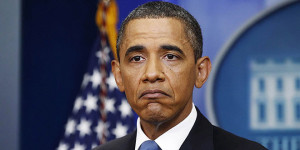 Out of all the political prostitutes in the Western world, one man stands out as the perfect illustration of a politician who works solely to serve his puppet masters. Even though the majority of politicians are controlled by economic and corporate elites, the current US President, Barack Obama, is the epitome of a man who is bought and paid for by special interests.
Obama was elected President in November 2008, and inaugurated in January 2009. From the very beginning of his Presidency, it was clear who the “lord and saviour” was beholden to. According to OpenSecrets.org, Obama’s top campaign donors in 2008 included: Goldman Sachs; JPMorgan Chase; Citigroup; Morgan Stanley; Microsoft; Google; and IBM. Considering Obama’s donors, it’s no wonder that (unlike Iceland) the US has not prosecuted the plethora of bankers and financial institutions that have engaged in fraud for years, and subsequently played a pivotal role in causing the financial crisis of 2007/08.
“I’ve now been in 57 states; I think one left to go”
In a bizarre speech in 2008, Obama said: “Over the last 15 months, we’ve travelled to every corner of the United States. I’ve now been in 57 states; I think one left to go. Alaska and Hawaii I was not allowed to go to, even though I really wanted to visit.” Did he simply make a mistake? Was he joking? Or was this just another slip from a person who is really just hypnotically going through the motions anytime he speaks, with no real interest in what he is saying. This bizarre statement is not an isolated one from the US President, as just a few months ago, Obama tried to argue that Russia bombing ISIL is only “strengthening ISIL.”
The Narcissist
In Greek mythology, Narcissus, the son of a river god, fell in love with his own reflection. Judging from his actions in office, Obama also appears to care more about himself than anything else. In a recent 33-minute speech, Obama referred to himself a whopping 76 times; a true mark of a narcissistic, arrogant and egocentric person. Perhaps he was trying to challenge Julius Caesar’s record, as the former Roman general penned the majority of the ‘Commentaries on the Gallic War,’ in which the word “Caesar” is used 775 times, according to the historian Robin Lane Fox.
Tears of Deceit
Emotive propaganda 101; cry and weep during a highly controversial and political speech on gun control, pulling at the heartstrings of the American public to push a political agenda. In this piece, I’m not trying to underplay the death of innocent people, but merely point out the way in which Obama is emotively trying to manipulate the opinions of the American public in order to push through legislation. Whatever your personal views are on gun control in the US, Obama’s tactics should be denounced as deceitful and staged.
Remember, the man who stood up and gave an Oscar winning performance recently, is the same man who is the head of the country that is carrying out more drone strikes around the world than ever before; has been funding and arming terrorists to overthrow the secular Syrian government; bombed a hospital in Afghanistan which killed at least three children; destroyed and destabilized the nation of Libya (which previously had the highest standard of living in Africa); supports Saudi Arabia in its war crime in Yemen; tortures and interrogates people across the world; and countless other crimes that kill and maim innocent people, yet no tears are shed by the US President.
Was San Bernardino a Black Op?
There are also some anomalies in many of the mainstream narratives regarding mass shootings in the US. The tragic shooting in San Bernardino for instance, which the mainstream media claimed was carried out by husband and wife, Syed Rizwan Farook and Tashfeen Malik, appears to conflict with some eyewitness accounts of the attack. Two reported eyewitnesses claim that the shooters were three tall white men wearing military gear.
Was San Bernardino a black op carried out by military personnel or mercenaries to further legitimize the push for gun control? It is difficult to conclusively say what actually happened, but the official narrative is a shaky one. It should also be noted that some investigative journalists have argued that there has been a dramatic increase in the number of mass shootings under Obama, one of the most pro-gun control President’s in recent decades.
Hillary Clinton flip flops, attacks Sanders on healthcare
RT | January 13, 2016
Former first daughter Chelsea Clinton joined her mother, presidential candidate Hillary Clinton, on the campaign trail this week to attack the single-payer healthcare plan proposed by opponent Bernie Sanders.
Even though Hillary asked “since when do Democrats attack one another on universal health care?” during a 2008 speech in response to a mailer from her opponent at the time, Barack Obama, she called the Sanders plan to cover everyone regardless of their ability to pay as a “risky deal”.
The Sanders plan would destroy private insurance and drug companies, who have donated millions of dollars to Hillary’s campaigns for senate and president.
Clinton famously told candidate Obama “shame on you” in 2008, but now she’s defending his legacy healthcare program dubbed Obamacare, which delivered millions of new customers to for-profit insurance companies through its mandatory coverage clause.
Mother Jones described the new attacks as “an abrupt shift” with just a few weeks before the Iowa caucuses and New Hampshire primary.
Chelsea falsely claimed that millions of people would lose coverage under the Sanders plan during a campaign stop on Tuesday in New Hampshire, where Sanders is now leading in the polls.
“Senator Sanders wants to dismantle Obamacare, dismantle the CHIP program, dismantle Medicare, and dismantle private insurance,” she said. “I worry if we give Republicans Democratic permission to do that, we’ll go back to an era – before we had the Affordable Care Act – that would strip millions and millions and millions of people off their health insurance.”
In fact, not only would those Americans currently covered by Obamacare continue to be protected by the Sanders plan, but it would also cover the millions of Americans who still can’t afford insurance under the so-called “Affordable Care Act”.
Sanders believes healthcare should be a human right and available to all, regardless of wealth or income.
Chelsea, on the other hand, married a former Goldman Sachs investment banker, lives in an expensive New York City condo, serves on several boards including her father’s controversial Clinton Foundation and Clinton Global Initiative, and previously worked at a hedge fund.
Sanders voted for Obamacare, but believes it has not gone far enough to provide adequate care for all.
“Deductibles remain much too high for people,” Sanders explained on the MSNBC program Morning Joe. “The question we have to ask is, why are we paying almost three times more per capita than the folks in the UK, 50 percent more than the French, and they guarantee health care to all of their people?”
Sanders proposes Medicare for all, which he says will save taxpayers about $500 billion per year including the initial costs of transitioning from Obamacare.
He also wants to tackle pharmaceutical companies who have been accused by doctors of letting patients die for the sake of profit and donated more money to Clinton’s campaign than any other candidate from either party.
READ MORE:
Bernie gains double-digit lead on Hillary in New Hampshire – poll
Metadata Comes Home With New ‘Threat Score’ Policing Tools
Law enforcement agencies rolling out technology that lets them dig into metadata to determine a citizen’s potential for violence

New software like “Beware” calculates a “threat score” using metadata, which critics say threatens civil liberties and privacy rights. (Photo: Jeffrey Smith/flickr/cc)
By Nadia Prupis | Common Dreams | January 11, 2016
Police in the U.S. are rolling out new technology that gives them “unprecedented” power to spy on citizens and determine their “threat score” based on metadata, the Washington Post reported on Monday.
Fresno, California’s police department was one of the first to adopt the software, known as “Beware,” which allows officers to analyze “billions of data points, including arrest reports, property records, commercial databases, deep Web searches and… social-media postings” to calculate an individual’s alleged potential for violence, the Post explained.
Officers say the tool, made by a company called Intrado, can help them thwart mass shootings and other attacks like the ones that took place in Paris and San Bernardino last year. But critics say it’s just another weapon in the mass surveillance arsenal, one that further threatens privacy and civil liberties and fuels police overreach.
Journalist D. Brian Burghart, who operates FatalEncounters.org, a searchable database of police killings of citizens, told Common Dreams that the swell of surveillance technology was an “outgrowth” of post-9/11 fear-mongering. “I’m not sure what’s new about this except they put a name on it,” Burghart said. “I don’t think it’s going to get any better. Nobody ever puts away technology.”
Jennifer Lynch, an attorney with the Electronic Frontier Foundation, told the Post, “This is something that’s been building since September 11. First funding went to the military to develop this technology, and now it has come back to domestic law enforcement. It’s the perfect storm of cheaper and easier-to-use technologies and money from state and federal governments to purchase it.”
Rob Nabarro, a civil rights lawyer in Fresno, added, “It’s a very unrefined, gross technique. A police call is something that can be very dangerous for a citizen.”
The Post continues:
Nabarro said the fact that only Intrado — not the police or the public — knows how Beware tallies its scores is disconcerting. He also worries that the system might mistakenly increase someone’s threat level by misinterpreting innocuous activity on social media, like criticizing the police, and trigger a heavier response by officers.
A potential threat that comes from an individual should not be addressed by a machine, he said.
In addition to Beware, police departments are equipping officers with tools like Media Sonar, which analyzes social media for “illicit activity,” among other technology, the Post reported.
Others criticized the implementation of such law enforcement tools while police brutality remains widespread and activists continue to call for an overhaul of the policing system.
Matt Cagle, an attorney for the ACLU of Northern California, told the Post, “We think that whenever these surveillance technologies are on the table, there needs to be a meaningful debate. There needs to be safeguards and oversight.”
The Post described one incident in which the Fresno police department demonstrated Beware at a town hall meeting following constituent complaints about the use of invasive surveillance technology:
[One] council member referred to a local media report saying that a woman’s threat level was elevated because she was tweeting about a card game titled “Rage,” which could be a keyword in Beware’s assessment of social media.
Councilman Clinton J. Olivier, a libertarian-leaning Republican, said Beware was like something out of a dystopian science fiction novel and asked [Fresno Chief of Police Jerry] Dyer a simple question: “Could you run my threat level now?”
Dyer agreed. The scan returned Olivier as a green, but his home came back as a yellow, possibly because of someone who previously lived at his address, a police official said.
“[Beware] has failed right here with a council member as the example,” Olivier said.
As Burghart added, “I spend eight hours a day researching police violence, so I don’t know how many times I’ve typed the words ‘police killed.’ I imagine I’d probably score pretty good on this thing. Most journalists would.”
US May Drop Program Helping Cuban Doctors Defect
teleSUR | January 9, 2016
The White House may end a program encouraging Cuban doctors sent abroad to defect and move to the United States.
The program, created under George W. Bush in 2006, is under review as a part of ongoing negotiations to normalize relations with Cuba, reported Reuters on Friday. Cuba considers it a “reprehensible practice” that is designed to “deprive Cuba and many other countries of vital human resources.”
The island sends medical personnel to countries suffering from health crises, including to South Africa in the post-apartheid brain drain and to West Africa to treat patients infected with Ebola.
The dispatches are a significant export and source of income for the country. In exchange for staff Cuba receives 100,000 barrels of oil a year from Venezuela.
Under the Cuban Medical Professional Parole Program, U.S. embassies in over 60 countries have discretionary authority to grant Cuban doctors abroad U.S. visas.
Despite being compared to slaves or prisoners on parole, out of over 40,000 medical workers in third world countries, the program accepted a total of 7,117 applicants. In 2015, 1,663 applicants were approved, a record in its nine-year history.
“It’s not only an issue of quantity, but of the quality of the specialists, the brains that the North American government has been selectively robbing… which is also a source of income for the problems that our people are confronting daily,” Marcos Agustín del Risco, director of Human Capital in the Ministry of Public Health, told Radio Rebelde.
The defectors “seriously affected” Cuba’s own free health care system, causing President Raul Castro to recently announce that the government will re-impose limits on the number of medics leaving the country. Last summer, controversy over Cuban doctors who had fled to Colombia to process U.S. visas became a major question in U.S.-Cuba relations.
“It’s an unusual policy, and I think as we look at the whole totality of the relationship, this is something that we felt was worth being in the list of things that we consider,” Ben Rhodes, a national security adviser that participated in Cuba talks last year, told Reuters.
BDS in the Crosshairs
By Lawrence Davidson | To The Point Analyses | January 9, 2016
Most readers will know that the United States has served as the patron of Israel for decades. Why has it done so? The commonly given reasons are suspect. It is not because the two countries have overlapping interests. The U.S. seeks stability in the Middle East (mostly by supporting dictators) and Israel is constantly making things unstable (mostly by practicing ethnic cleansing against Palestinians, illegally colonizing conquered lands and launching massive assaults against its neighbors). Nor, as is often claimed, is the alliance based on “shared Western values.” The U.S. long ago outlawed racial, ethnic and religious discrimination in the public sphere. In Israel, religious-based discrimination is the law. The Zionist state’s values in this regard are the opposite of those of the United States.
So why is it that a project that seeks to pressure Israel to be more cognizant in foreign affairs of regional stability, and more democratic and egalitarian in domestic affairs, is now under fire by almost every presidential candidate standing for the 2016 election?
That project in dispute is BDS, the Boycott, Divestment and Sanctions movement, promoted by civil society throughout the Western world. BDS is directed at Israel due to its illegal colonization of the Occupied Territories and its general apartheid-style discrimination against non-Jews in general and Palestinians in particular.
The Candidates and BDS
With but two exceptions, every presidential candidate in both parties is condemning the BDS Movement. Lets start with the two exceptions. The first exception is the Green Party candidate Jill Stein, who has taken the accurate position that “the United States has encouraged the worst tendencies of the Israeli government.” She has pledged to use both diplomatic and economic means to change Israeli behavior, behavior which she rightly believes is in contravention of international law and violates human rights.
The second exception is the Republican candidate Donald Trump, who recently told a meeting of Jewish Republicans that he didn’t think Israel is serious about peace and that they would have to make greater efforts to achieve it. When he was booed he just shrugged and told the crowd that he did not care if they supported him or not, “I don’t want your money.” Unfortunately, this appears to be the only policy area where Mr. Trump is reasonable [Russia relations? MENA interventions?].
Jill Stein gets absolutely no media coverage and Donald Trump gets too much. And neither is in the “mainstream” when it comes to American political reactions to BDS. However, the rest of the
presidential candidates are. Here is what is coming out of the “mainstream”:
— Jeb Bush (Republican), 4 December 2015: “On day one I will work with the next attorney general to stop the BDS movement in the United States, to use whatever resources that exist” to do so.
— Ted Cruz (Republican), 28 May 2015: “BDS is premised on a lie and it is anti-Semitism, plain and simple. And we need a president of the United States who will stand up and say if a university in this country boycotts the nation of Israel than that university will forfeit federal taxpayer dollars.”
— Marco Rubio (Republican), 3 December 2015: “This [BDS] coalition of the radical left thinks it has discovered a clever, politically correct way to advocate Israel’s destruction. As president,
I will call on university presidents, administrators, religious leaders, and professors to speak out with clarity and force on this issue. I will make clear that calling for the destruction of Israel is the same as calling for the death of Jews.”
Hillary Clinton (Democrat), 2 July 2015: In a letter to Haim Saban, who is a staunch supporter of the Zionist state and also among the biggest donors to the Democratic Party, she said, “I know you agree that we need to make countering BDS a priority, I am seeking your advice on how we can work together – across party lines and with a diverse array of voices – to fight back against further attempts to isolate and delegitimize Israel.”
Bernie Sanders (Democrat), 20 October 2015: “Sanders’ fraught encounter with BDS supporters who challenged his defense of Israel at a town hall meeting in Cabot [Vermont] last year was captured on YouTube.” Sanders told them to “shut up.”
The Legitimacy of Boycott
This hostility to the tactic of boycott runs counter to both U.S. legal tradition and the country’s broader historical tradition.
For instance, advocating and practicing BDS can be seen as a constitutionally protected right. It certainly is more obviously protected by the First Amendment’s guarantee of free speech than is the use of money to buy elections. Thus, if Zionist lobbyists can use money to buy support for Israel, why can’t anti-Zionists use their free speech rights to challenge that support? It should be noted that, in this regard, most Americans of voting age think it is the Zionists, and not the anti-Zionists, who have gone too far.
According to a December 2015 Brookings Institute poll, 49% of Democratic voters and 25% of Republican voters think that Israel has too much influence with U.S. politicians. Those supporting BDS in the United States might give some thought as to how to use these numbers to uphold their cause.
Then there is the fact of well-established historical tradition. The war for American Independence was build upon a framework of boycott. In November 1767, England introduced the Townshend Acts, requiring the colonists to pay a tax on a large number of items. The reply to this was both a boycott of British goods by many colonial consumers which was eventually followed by a boycott on the importation of such goods on the part of colonial merchants.
Subsequently, Americans have used the tactic of boycott against:
— (1930s) Goods produced by Nazi Germany
— (1960s and 1970s) California-grown grapes in support of the United Farm Workers
— (1970s and 1980s) All aspects of the economy and cultural output of South Africa
— (1980) The Moscow-hosted Olympics of 1980
— Myriad number of boycotts of various companies and products ranging from Nestle (baby formula) to Coca Cola. See the list given by the Ethical Consumer.
The reality is that the tactic of boycott has long been as American as the proverbial apple pie.
Conclusion
Apple pie not withstanding, the legal and historical legitimacy of boycott no longer has much impact on the attitudes of presidential candidates or, for that matter, members of Congress. Nor does the fact that the changes the BDS movement seeks to make in Israeli behavior would be to the benefit of U.S. interests in the Middle East.
Instead what the positions of the candidates seem to indicate is that there will be an almost certain attack on the Boycott, Divestment and Sanctions movement, coming from the very highest levels of U.S. power, sometime soon after the 2016 elections.
How is it that such a contradiction between national interests and established tradition on the one hand, and imminent government policy on the other can exist? The answer is not difficult to come by. It is just a matter of fact that constitutional rights, historical tradition, and indeed the very interests of the nation, can be overridden by special interest demands. The demands of what George Washington once called “combinations and associations” of “corrupted citizens” who would “betray or sacrifice the interests of their own country” in favor of those of some other “favorite nation.” It is exactly such demands that are now given priority by the politicians in Washington.
This form of corruption will go on as long as the general public does not seem to care that it is happening. And it is sadly clear that the BDS activists alone cannot overcome this indifference. Thus, the politicians can dismiss the Brookings Poll numbers mentioned above. They can shrug and say, So what? As long as that majority does not express their opinion by actively demanding a change in the situation, as long as they are not successfully organized to do so, their opinion cannot compete with the millions of special interest dollars flowing into political campaigns.
In many ways our greatest enemy is our own indifference to the quiet erosion of important aspects of the democratic process. Allowing the attack on BDS only contributes to this disintegration of rights. A combination of localness and ignorance sets us up for this feeling of indifference. However, in the end, there can be no excuse for not paying attention. One morning you will wake up to find that valued rights and traditions are no longer there for you.
Protesters slam Pakistan’s role in Saudi-led coalition
Press TV – January 9, 2016
Pakistanis have taken to the streets in Islamabad to express their anger at the government’s decision to join a Saudi-led coalition allegedly set up to counter terrorism.
Protesters presented a memorandum to the Pakistani Foreign Office, calling on Islamabad to withdraw from the Saudi-led alliance.
The demonstrators said Islamabad had agreed to join the Saudi-led coalition for money.
“Neither the Pakistan army nor the nation is for rent, we will oppose any attempts to sell the army to the House of Saud for a few billion riyals,” Gul-e-Zahra, a senior activist, said in an address to the rally.
Last December, Saudi Arabia said it had formed an alliance of 34 countries to combat terrorism in Iraq, Afghanistan, Libya, Egypt and Syria.
The kingdom has long been accused of supporting terror groups operating against the Damascus government.
Meanwhile, some of the key countries in the coalition have said they were surprised by inclusion in the group without their knowledge.
At the time when the coalition was announced, Pakistan reacted cautiously and said it needed further details before deciding the extent of its participation.
In a U-turn following the two-day visit by Saudi Foreign Minister Adel al-Jubeir, Islamabad said Thursday it would join the Saudi-led coalition.
“Pakistan welcomes Saudi Arabia’s initiative and supports all such regional and international efforts to counter terrorism and extremism,” Prime Minister Nawaz Sharif said in a statement.
Pakistanis are also angry at the Saudi regime’s execution of prominent Shia cleric Sheikh Nimr al-Nimr.
On Friday, people staged a demonstration, chanting slogans against Saudi Arabia. They had staged another demonstration a day earlier to protest Saudi foreign minister’s arrival in Islamabad.
Reality Peeks Through in Ukraine
By Robert Parry | Consortium News | January 6, 2016
Nearly two years since U.S. officials helped foment a coup in Ukraine – partly justified by corruption allegations – the country continues to wallow in graft and cronyism as the living standards for average Ukrainians plummet, according to economic data and polls of public attitudes.
Even the neocon-oriented Wall Street Journal took note of the worsening corruption in a Jan. 1, 2016 article observing that “most Ukrainians say the revolution’s promise to replace rule by thieves with the rule of law has fallen short and the government acknowledges that there is still much to be done.”
Actually, the numbers suggest something even worse. More and more Ukrainians rate corruption as a major problem facing the nation, including a majority of 53 percent last September, up from 48 percent last June and 28 percent in September 2014, according to polls by International Foundation for Electoral Systems.
Meanwhile, Ukraine’s GDP has fallen in every quarter since the Feb. 22, 2014 putsch that overthrew elected President Viktor Yanukovych. Since then, the average Ukrainian also has faced economic “reforms” to slash pensions, energy subsidies and other social programs, as demanded by the International Monetary Fund.
In other words, the hard lives of most Ukrainians have gotten significantly harder while the elites continue to skim off whatever cream is left, including access to billions of dollars in the West’s foreign assistance that is keeping the economy afloat.
Part of the problem appears to be that people supposedly responsible for the corruption fight are themselves dogged by allegations of corruption. The Journal cited Ukrainian lawmaker Volodymyr Parasyuk who claimed to be so outraged by graft that he expressed his fury “by kicking in the face an official he says owns luxury properties worth much more than a state salary could provide.”
However, the Journal also noted that “parliament is the site of frequent mass brawls [and] it is hard to untangle all the overlapping corruption allegations and squabbling over who is to blame. Mr. Parasyuk himself was named this week as receiving money from an organized crime suspect, a claim he denies.”
Then, there is the case of Finance Minister Natalie Jaresko, who is regarded by top American columnists as the face of Ukraine’s reform. Indeed, a Wall Street Journal op-ed last month by Stephen Sestanovich, a senior fellow at the Council on Foreign Relations, hailed Jaresko as “a tough reformer” whose painful plans include imposing a 20 percent “flat tax” on Ukrainians (a favorite nostrum of the American Right which despises a progressive tax structure that charges the rich at a higher rate).
Sestanovich noted that hedge-fund billionaire George Soros, who has made a fortune by speculating in foreign currencies, has endorsed Jaresko’s plan but that it is opposed by some key parliamentarians who favor a “populist” alternative that Sestanovich says “will cut rates, explode the deficit, and kiss IMF money good-bye.”
Yet, Jaresko is hardly a paragon of reform. Prior to getting instant Ukrainian citizenship and becoming Finance Minister in December 2014, she was a former U.S. diplomat who had been entrusted to run a $150 million U.S.-taxpayer-funded program to help jump-start an investment economy in Ukraine and Moldova.
Jaresko’s compensation was capped at $150,000 a year, a salary that many Americans would envy, but it was not enough for her. So, she engaged in a variety of maneuvers to evade the cap and enrich herself by claiming millions of dollars in bonuses and fees.
Ultimately, Jaresko was collecting more than $2 million a year after she shifted management of the Western NIS Enterprise Fund (WNISEF) to her own private company, Horizon Capital, and arranged to get lucrative bonuses when selling off investments, even as the overall WNISEF fund was losing money, according to official records.
For instance, Jaresko collected $1.77 million in bonuses in 2013, according to WNISEF’s latest available filing with the Internal Revenue Service. In her financial disclosure forms with the Ukrainian government, she reported earning $2.66 million in 2013 and $2.05 million in 2014, thus amassing a sizeable personal fortune while investing U.S. taxpayers’ money supposedly to benefit the Ukrainian people.
It didn’t matter that WNISEF continued to hemorrhage money, shrinking from its original $150 million to $89.8 million in the 2013 tax year, according to the IRS filing. WNISEF reported that the bonuses to Jaresko and other corporate officers were based on “successful” exits from some investments even if the overall fund was losing money. [See Consortiumnews.com’s “How Ukraine’s Finance Minister Got Rich.”]
Though Jaresko’s enrichment schemes are documented by IRS and other official filings, the mainstream U.S. media has turned a blind eye to this history, all the better to pretend that Ukraine’s “reform” process is in good hands. (It also turns out that Jaresko did not comply with Ukrainian law that permits only single citizenship; she has kept her U.S. passport exploiting a loophole that gives her two years to show that she has renounced her U.S. citizenship.)
Propaganda over Reality
Yet, as good as propaganda can be – especially when the U.S. government and mainstream media are moving in lockstep – reality is not always easily managed. Ukraine’s continuing – and some say worsening – corruption prompted last month’s trip to Ukraine by Vice President Joe Biden who gave a combination lecture and pep talk to Ukraine’s parliament.
Of course, Biden has his own Ukraine cronyism problem because – three months after the U.S.-backed overthrow of the Yanukovych government – Ukraine’s largest private gas firm, Burisma Holdings, appointed his son, Hunter Biden, to its board of directors.
Burisma – a shadowy Cyprus-based company – also lined up well-connected lobbyists, some with ties to Secretary of State John Kerry, including Kerry’s former Senate chief of staff David Leiter, according to lobbying disclosures.
As Time magazine reported, “Leiter’s involvement in the firm rounds out a power-packed team of politically-connected Americans that also includes a second new board member, Devon Archer, a Democratic bundler and former adviser to John Kerry’s 2004 presidential campaign. Both Archer and Hunter Biden have worked as business partners with Kerry’s son-in-law, Christopher Heinz, the founding partner of Rosemont Capital, a private-equity company.”
According to investigative journalism inside Ukraine, the ownership of Burisma has been traced to Privat Bank, which is controlled by the thuggish billionaire oligarch Ihor Kolomoysky, who was appointed by the U.S.-backed “reform” regime to be governor of Dnipropetrovsk Oblast, a south-central province of Ukraine (though Kolomoisky was eventually ousted from that post in a power struggle over control of UkrTransNafta, Ukraine’s state-owned oil pipeline operator).
In his December speech, Biden lauded the sacrifice of the 100 or so protesters who died during the Maidan clashes in February 2014, referring to them by their laudatory name “The Heavenly Hundred.” But Biden made no heavenly references to the estimated 10,000 people, mostly ethnic Russians, who have been slaughtered in the U.S.-encouraged “Anti-Terror Operation” waged by the coup regime against eastern Ukrainians who objected to the violent ouster of President Yanukovych, who had won large majorities in those areas.
Apparently, heaven is not as eager to welcome ethnic Russian victims of U.S.-inspired political violence. Nor did Biden take note that some of the Heavenly Hundred were street fighters for neo-Nazi and other far-right nationalist organizations.
But – after making his sugary references to The Heavenly Hundred – Biden delivered his bitter medicine, an appeal for the parliament to continue implementing IMF “reforms,” including demands that old people work longer into their old age.
Biden said, “For Ukraine to continue to make progress and to keep the support of the international community you have to do more, as well. The big part of moving forward with your IMF program — it requires difficult reforms. And they are difficult.
“Let me say parenthetically here, all the experts from our State Department and all the think tanks, and they come and tell you, that you know what you should do is you should deal with pensions. You should deal with — as if it’s easy to do. Hell, we’re having trouble in America dealing with it. We’re having trouble. To vote to raise the pension age is to write your political obituary in many places.
“Don’t misunderstand that those of us who serve in other democratic institutions don’t understand how hard the conditions are, how difficult it is to cast some of the votes to meet the obligations committed to under the IMF. It requires sacrifices that might not be politically expedient or popular. But they’re critical to putting Ukraine on the path to a future that is economically secure. And I urge you to stay the course as hard as it is. Ukraine needs a budget that’s consistent with your IMF commitments.”
Eroding Support
But more and more Ukrainians appear to see through the charade in Kiev, as the poll numbers on the corruption crisis soar. Meanwhile, European officials seem to be growing impatient with the Ukraine crisis which has added to the drag on the Continent’s economies because the Obama administration strong-armed the E.U. into painful economic sanctions against Russia, which had come to the defense of the embattled ethnic Russians in the east.
“Many E.U. officials are fed up with Ukraine,” said one Western official quoted by the Journal, which added that “accusations of graft by anticorruption activists, journalists and diplomats have followed to the new government.”
The Journal said those implicated include some early U.S. favorites, such as Prime Minister Arseniy Yatsenyuk, “whose ratings have plummeted to single digits amid allegations in the media and among anticorruption activists of his associates’ corrupt dealings. Mr. Yatsenyuk has denied any involvement in corruption and his associates, one of whom resigned from parliament over the controversy this month, deny wrongdoing.”
The controversy over Yatsenyuk’s alleged cronyism led to an embarrassing moment in December 2015 when an anti-Yatsenyuk lawmaker approached the podium with a bouquet of roses, which the slightly built Yatsenyuk accepted only to have the lawmaker lift him up and try to carry him from the podium.
In many ways, the Ukraine crisis represents just another failure of neocon-driven “regime change,” which has also spread chaos across the Middle East and northern Africa. But the neocons appear to have even a bigger target in their sites, another “regime change” in Moscow, with Ukraine just a preliminary move. Of course, that scheme could put in play nuclear war.
Taking Aim
The Ukraine “regime change” took shape in 2013 after Russian President Putin and President Barack Obama collaborated to tamp down crises in Syria and Iran, two other prime targets for neocon “regime changes.” American neocons were furious that those hopes were dashed. Ukraine became Putin’s payback.
In fall 2013, the neocons took aim at Ukraine, recognizing its extreme sensitivity to Russia which had seen previous invasions, including by the Nazis in World War II, pass through the plains of Ukraine and into Russia. Carl Gershman, neocon president of the U.S.-funded National Endowment for Democracy, cited Ukraine as the “biggest prize” and a key step toward unseating Putin in Moscow. [See Consortiumnews.com’s “What the Neocons Want from Ukraine Crisis.”]
Initially, the hope was that Yanukovych would lead Ukraine into an economic collaboration with Europe while cutting ties to Russia. But Yanukovych received a warming from top Ukrainian economists that a hasty split with neighboring Russia would cost the country a staggering $160 billion in lost income.
So, Yanukovych sought to slow down the process, prompting angry protests especially from western Ukrainians who descended on Maidan square. Though initially peaceful, neo-Nazi and other nationalist militias soon infiltrated the protests and began ratcheting up the violence, including burning police with Molotov cocktails.
Meanwhile, U.S.-funded non-governmental organizations, such as the Organized Crime and Corruption Reporting Project (which receives money from USAID and hedge-fund billionaire George Soros’s Open Society), hammered away at alleged corruption in the Yanukovych government.
In December 2013, Nuland reminded Ukrainian business leaders that the United States had invested $5 billion in their “European aspirations,” and – in an intercepted phone call in early February 2014 – she discussed with U.S. Ambassador Geoffrey Pyatt who Ukraine’s new leaders would be.
“Yats is the guy,” Nuland said of Arseniy Yatsenyuk, as she also disparaged a less aggressive approach by the European Union with the pithy phrase: “Fuck the E.U.” (Nuland, a former aide to ex-Vice President Dick Cheney, is the wife of arch-neoconservative ideologue Robert Kagan.)
Sen. John McCain also urged on the protests, telling one group of right-wing Ukrainian nationalists that they had America’s backing. And, the West’s mainstream media fell in love with the Maidan protesters as innocent white hats and thus blamed the worsening violence on Yanukovych. [See Consortiumnews.com’s “NYT Still Pretends No Coup in Ukraine.”]
Urging Restraint
In Biden’s December 2015 speech to the parliament, he confirmed that he personally pressed on President Yanukovych the need to avoid violence. “I was literally on the phone with your former President urging restraint,” Biden said.
However, on Feb. 20, 2014, mysterious snipers – apparently from buildings controlled by the far right – fired on and killed policemen as well as some protesters. The bloodshed sparked other violent clashes as armed rioters battled with retreating police.
Although the dead included some dozen police officers, the violence was blamed on Yanukovych, who insisted that he had ordered the police not to use lethal force in line with Biden’s appeal. But the State Department and the West’s mainstream media made Yanukovych the black-hatted villain.
The next day, Feb. 21, Yanukovych signed an accord – negotiated and guaranteed by three European nations – to accept reduced powers and early elections so he could be voted out of office if that was the public’s will. However, as police withdrew from the Maidan, the rioters, led by neo-Nazi militias called sotins, stormed government buildings on Feb. 22, forcing Yanukovych and other officials to flee for their lives.
In the West’s mainstream media, these developments were widely hailed as a noble “revolution” and – with lumps in their throats – many journalists averted their misty eyes from the key role played by unsavory neo-Nazis, so as not to dampen the happy narrative (although BBC was among the few MSM outlets that touched on this inconvenient reality).
Ever since, the major U.S. news media has stayed fully on board, ignoring evidence that what happened was a U.S.-sponsored coup. The MSM simply explains all the trouble as a case of naked “Russian aggression.
There were kudos, too, when “reformer” Natalie Jaresko was made Finance Minister along with other foreign “technocrats.” There was no attention paid to evidence about the dark underside of the Ukrainian “revolution of dignity,” as Biden called it.
Though the neo-Nazis – sometimes even teamed up with Islamic jihadists – were the tip of the spear slashing through eastern Ukraine, their existence was either buried deep inside stories or dismissed as “Russian propaganda.”
That was, in effect, American propaganda and, as clever as it was, it could only control reality for so long.
Even though the fuller truth about Ukraine has never reached the American people, there comes a point when even the best propagandists have to start modifying their rosy depictions. Ukraine appears to have reached that moment.
Investigative reporter Robert Parry broke many of the Iran-Contra stories for The Associated Press and Newsweek in the 1980s. You can buy his latest book, America’s Stolen Narrative, either in print here or as an e-book (from Amazon and barnesandnoble.com).
Saudi Arabia top buyer of UK arms in 5 years: Report
Press TV – January 7, 2016
The UK has licensed the sales of over eight billion dollars of military hardware to Saudi Arabia since British Prime Minister David Cameron took office in May 2010.
According to the latest figures released by the Campaign Against Arms Trade (CAAT) NGO, since Cameron was elected almost six years ago, Britain has also sold arms to 24 of the 27 states on its own list of “countries of humanitarian concern,” The Independent reported on Wednesday.
Apart from Riyadh’s ongoing purchase of the 72 Eurofighter Typhoon jets, which are worth over six billion dollars at completion, major licenses worth over two billion dollars including Hawk fighter jets, bombs, guns and tear gas were sold to Saudi Arabia during the said period.
Based on the figures released by CAAT, the Saudis have access to twice the number of British-made warplanes than the Royal Air force has.
CAAT spokesperson Andrew Smith noted that the amount of arms sales to countries on the list, especially Saudi Arabia, shows that “human rights are playing second fiddle to company profits.”
He went on to say that the income from arms sales “is being put over the rights of people being executed and tortured. It’s completely inconsistent to condemn these regimes while signing off on billion-pound arms deals.”
“Two-thirds of UK arms exports go to the Middle East, and that’s unlikely to change. We know that Saudi Arabia is arming a number of groups in and around Syria, but we’ve no idea what weapons are being sent there. Once a weapon enters a war zone there’s no such thing as arms control,” Smith added.
Cameron has been under pressure to halt arms sales to Saudi Arabia which faces massive criticism from the international community for launching an unabated war against impoverished Yemen, its growing number of beheading and other forms of execution, cracking down on political dissidents and the most recent atrocity of the mass execution of Shia cleric Sheikh Nimr al-Nimr and 46 other people.
In October last year, during an interview with the UK’s Channel 4, Cameron suggested that London’s “relationship” with the Saudi Arabia supersedes its human rights record.
Mexico: Almost 100 Mayors Targeted for Assassination Since 2006
teleSUR – January 5, 2016
Nearly 100 mayors and over 1,000 municipal officials in Mexico were targets of assassination attempts over the past decade, according to an association that represents local governments.
The group, the Association of Local Authorities of Mexico, demanded an end to the impunity of the criminal organizations which it said have not been held accountable for any of the assassination attempts.
The association reported its findings following the murder on Saturday of the mayor of Temixco, one of the most violent municipalities in Morelos, just south of Mexico City. Gisela Raquel Mota was in office for just one day before the shooting.
Police arrested three suspects—including a minor and a 32-year-old woman—and two others were killed in a shootout with law enforcement. The purported assassins were allegedly paid US$30,000 and were reported by El Universal to belong to the Los Rojos cartel.
Mota, 33, was part of the center-left Partido de la Revolucion Democratica (PRD) and had earlier announced she would ratify the Mando Unico, or single command, allowing state police into the municipality.
Half of the 33 municipalities in Morelos oppose the police command, fearing retribution like assassination of Mota, but the state governor Graco Ramirez said in a press conference on Sunday that all would be subject to the security protocol.
According to the local government association, mayors are by far the most targeted local officials: even if they choose to cooperate with a criminal gang, they invite revenge from a rival group. Even lower officials are affected, with AFP reporting that over 100,000 local council members killed since 2006 amid a militarized crackdown on narcotrafficking.
Featured Video

Death Spikes & Rising Cancer In Our Youth Explained
or go to
Aletho News Archives – Video-Images
From the Archives
Politicians lie
By Mazin Qumsiyeh | Popular Resistance | August 18, 2013
There is no way to say this truth nicely: Politicians lie. That includes Japanese, American, Egyptian, Israeli, and Palestinian politicians! Is there something more common sense than that? Yet, so many citizens around the world believe their own politicians or wistfully acknowledge lies but think it is part of the job needed to run things. They believe even when politicians contradict themselves blatantly. This phenomenon is rather remarkable. It is a dissonance and disconnect from reality that many seem oblivious to. It is very dangerous because it can lead to accepting rationales for going to war. These can be deadly wars that lead to millions of lives lost as happened in what was called World War 1 and WW2. Even when incredible and declassified evidence abound, politicians continue to lie and old mythologies refuse to die. Here are just a few of the countless lies told to us over the past few decades… continue
Blog Roll
 Aletho News
- RSF military group defects, joins Sudanese army: State media
- Ireland goalkeeper refuses to play ‘Israel’ as squad weighs boycott
- China pushes back against US on Cuba, Iran
- Ukrainian Soldiers, Potential Mercenaries: Have Gun, Will Travel!
- Burnham’s UN debut… A masterclass in British disinformation
- Iran flights continue despite US aviation sanctions
- Global Tipping Points Lead the World Into a State of Entropy
- The day-after at the White House: USA and Xi Jinping
- The Geopolitical Balance in the Red Sea: The UAE Being Displaced by New Players
- Iraqi resistance group vows to stage airport sit-ins over Iran aerial blockade
- If Americans Knew
- Deconstructing Netanyahu’s pants-on-fire UN rant – Daily Update
- Trump betrayed voters with his campaign lies and prioritized a foreign country once he took office
- Netanyahu calls Israel’s war in Gaza ‘opposite of genocide’ in UN speech to near-empty hall
- Settler Kidnappings: Torture, Sexual Abuse and Terrorisation of Palestinian Abductees as Israel Deepens Annexation of West Bank
- Gaza winter nears as 162,000 tents become unusable, raising fears of humanitarian crisis
- Netanyahu says, “It’s the opposite of genocide”; UN says Gaza economy is world’s ‘most severe crisis on record’ – Daily Update
- Israel’s US-Backed Assault on Gaza Has Created the ‘World’s Most Severe Economic Crisis on Record’: UN
- ‘Protecting U.S. Citizens’… From Israel
- ‘This is where I live now, the back of a truck’: a day in the life of a grandmother in Gaza
- In UN Speech, Iran’s President Displays Pictures of Children Killed by US, Brings Attention to Israel’s Nuclear Arsenal
- No Tricks Zone
- New Study: Earth And Venus Surface Warmth Largely Explained By Convection And Lapse Rate, Not CO2 Or Radiation
- 2025 Nature Paper Claiming Worsening Global Drought Gets RETRACTED …Heavily Flawed
- New Study: ‘Global Drought Shows No Detectable Recent Acceleration Under Climate Warming’
- Economic Masterminds: German Socialists Suggest Taxing Productivity Gains Stemming From Using AI
- The South China Sea Has Not Been Cooperating With The Climate Change Narrative
- Energy Crisis: Germany Enters Heating Season With Historically Low Gas Reserve Fill Levels
- New Study: The Antarctic Ice Sheet Gained Mass From 2020-2024 Due To Staggering Snow And Ice Accumulation
- Study: Ocean Heating Rates From Thousands Of Years Ago ‘Dwarf’ Modern Ocean Heating Rates
- Climate Extremists Target, Attack Large-Scale Power Grid Infrastructure In Germany!
- New Study: Antarctic Ice Melt Has Contributed Less Than 1 Centimeter To Sea Level Rise In The Last 30 Years

