Arms firms implicated in illegal US drone strikes ‘bought influence’ at NATO summit – Reprieve UK
RT | September 8, 2014
Arms firms that provide core military components for drones deployed by the US to conduct covert strikes in violation of international law allegedly bought access to NATO’s summit in Wales last week, a British human rights charity says.
The defense companies concerned doled out up to £300,000 to ‘exhibit’ their military wares at the conference in Newport. Among the firms present were General Dynamics, Raytheon, Lockheed Martin and MBDA, according to a British government press release.
General Dynamics manufacture Hellfire missiles utilized in most US drone strikes, while Raytheon make the targeting system for the Reaper drone deployed by the CIA and other actors to conduct strikes across the globe. Lockheed Martin operates as a contractor to provide select support services for both the Reaper and Predator, and MBDA is a European company that manufactures the unmanned aerial vehicle (UAV) Brimstone – a variant of the Hellfire missile.
The US drone program has received widespread public criticism both at home and abroad. Critics say attacks carried out in foreign countries, including Yemen and Pakistan, are in violation of both international and US law.
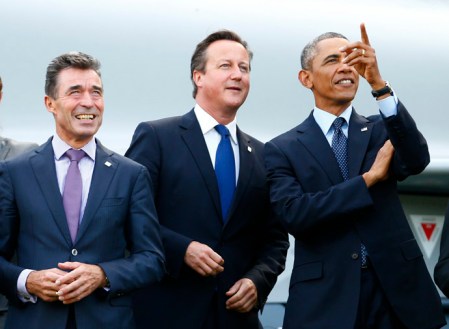
Although US drone strikes have culminated in hundreds of civilian casualties, they are subject to little oversight, according to Reprieve. President Barack Obama has refused to formally acknowledge the program’s existence.
Reprieve’s Legal Director Kat Craig said it’s “deeply worrying” that a group of firms who potentially profit most from this breach of international law were able to buy access into an international global summit like NATO.
“It is unacceptable that the US’ drone campaign, and the UK’s support for it, has been allowed to remain in the shadows for so long”, he added.
“President Obama must be far more open about it – as must his European allies, especially the UK and Germany, about the support they provide.”
Craig suggested the drone manufacturers’ presence at NATO signaled their inherent capacity to buy political influence “behind closed doors,” highlighting the opaque, illicit and legally questionable nature of much of the global arms trade.
FARC accuses US, UK, Israel in Colombia war
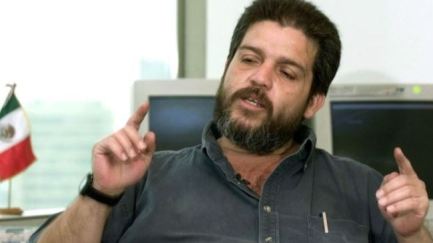
FARC negotiator Marcos Calarca
Press TV – September 7, 2014
The Revolutionary Armed Forces of Colombia (FARC) has accused the United States, the United Kingdom, and Israel of prolonging Colombia’s guerilla war.
FARC negotiator Marcos Calarca leveled the accusation on Saturday at a news conference ahead of another round of peace talks with a delegation of the Colombian government in the Cuban capital Havana.
He pointed to “the responsibility of the government of the United States, of companies involved in the business of war, various intelligence agencies, especially the British and Israeli, whose involvement throughout the conflict encouraged its continuation, escalation and intensification.”
The latest accusation against Israeli and British agencies is a new twist in the 28th round of peace talks in Havana.
He, however, said, “The FARC will acknowledge its responsibility where it concerns us, on the understanding that our military actions have had essentially political goals, derived from our political project to take power.”
The FARC is Latin America’s oldest insurgent group and has been fighting the government since 1964.
Bogota estimates that 600,000 people have been killed and more than 4.5 million others have been displaced due to the fighting.
The rebel organization is thought to have around 8,000 fighters operating across a large swathe of the eastern jungles of the Andean nation.
Fake cell phone ‘towers’ may be spying on Americans’ calls, texts
RT | September 3, 2014
More than a dozen “fake cell phone towers” could be secretly hijacking Americans’ mobile devices in order to listen in on phone calls or snoop on text messages, a security-focused cell phone company claims. It is not clear who controls the devices.
ESD America, which markets heavily-encrypted cell phones built within the body of a Samsung Galaxy S3, said it was able to locate numerous towers intercepting mobile communications – but does not know who is running them.
Speaking to Popular Science, ESD America CEO Les Goldsmith recently said that the company has used its phone – the CryptoPhone 500 – to map 17 different fake cell phone towers, dubbed “interceptors,” across the United States. Locations include New York, Chicago, Los Angeles, Seattle, and more.
“Interceptor use in the US is much higher than people had anticipated,” he told the website. “One of our customers took a road trip from Florida to North Carolina and he found 8 different interceptors on that trip. We even found one at South Point Casino in Las Vegas.”
Although these interceptors act as fake cell phone towers, they are not necessarily large, physical structures. They could simply be small mobile devices that act exactly like a real tower, deceiving phones into giving up information. Such devices are known as “stingrays,” after the brand name of one popular type of interceptor.

Once connected to a person’s phone, they can bypass the mobile device’s encryption to either listen in on calls or capture texts. In some cases, they are also powerful enough to take over a device or make it seem as if it has shut down – only to leave the microphone on in order to eavesdrop.
The American Civil Liberties Union has been attempting to pry information about government and police use of stingray equipment, but its efforts have been met with resistance from federal officials.
According to Ars Technica, the Federal Communications Commission pledged in August to investigate the “illicit and unauthorized use” of interceptors – with a primary focus on foreign governments, criminals, and terrorists – but denied a Freedom of Information Act request to reveal more data about current stingray use.
For Goldsmith, determining who is using the interceptors is important. He speculated that the operators could be American agencies or foreign governments.
“What we find suspicious is that a lot of these interceptors are right on top of US military bases. So we begin to wonder – are some of them US government interceptors? Or are some of them Chinese interceptors?” he told PopSci. “Whose interceptor is it? Who are they, that’s listening to calls around military bases? Is it just the US military, or are they foreign governments doing it? The point is: we don’t really know whose they are.”
Outside of national governments, local law enforcement agencies are also beefing up their stingray/interceptor capabilities. In Oakland, California, police are looking to spend hundreds of thousands of dollars to upgrade their cell phone surveillance system.
Meanwhile, police in Tacoma, Washington have caught the eye of civil liberties advocates after the News Tribune revealed they have been using interceptor equipment to catch cell phone calls for the last six years. Some, including Mayor Marilyn Strickland, said it was legitimate for police to do so as long as people’s rights were not violated. However, the ACLU disagreed, arguing it was like “kicking down the doors of 50 homes and searching 50 homes because they don’t know where the bad guy is.”
Police departments suspended for ‘losing’ US military-grade weaponry
RT | August 27, 2014
Close to 200 state and local police departments in the United States have been suspended for losing military-level equipment transferred to them by the Pentagon, a new investigation found.
According to the media outlet Fusion, its independent investigation into the Pentagon’s “1033 program,” which equips state and local police departments across the US with excess military equipment, turned up an alarming trend: Not only did many law enforcement agencies fail to comply with the program’s guidelines, they routinely lost dangerous weaponry.
Already, the investigation has found that police departments in Arizona, California, Mississippi, Missouri, Georgia, and others have lost or cannot account for various types of weapons. This list includes M14 and M16 assault rifles, .45-caliber pistols, shotguns, and even vehicles.
So far, 184 state and local departments have reportedly been suspended in a program that involves the participation of more than 8,000 agencies. Since 1990, the 1033 program has administered more than $4.3 billion worth of equipment and weapons.
In the wake of heavy police response to protests surrounding the death of unarmed teenager Michael Brown in Ferguson, Missouri, the topic of police militarization has emerged at the forefront of public debate in the US. Police employed heavily armored vehicles, sniper rifles, tear gas, and riot gear as they confronted demonstrators against excessive force, sparking widespread concern throughout the country, particularly over the Pentagon’s military equipment transfer program.
Although the Pentagon stated the program is meant to “enhance public safety and improve homeland security,” critics argue that the inability of police to keep track of their equipment adds another layer of doubt to the idea that security is being improved.
“The case for giving military weaponry to these small police departments was already thin in the beginning,” Tim Lynch of the CATO Institute’s project on criminal justice said to Fusion. “Now that we’re finding that there is insufficient accountability for tracking this equipment, then the case is beginning to fall apart.”
In at least two cases, Humvees were reported missing. In Georgia, the Humvee was reportedly sold somehow, only to be recovered later and moved to a different department. Another case in Arkansas involved a stolen Humvee that was not reported until a day later.
Firearms were routinely lost or misplaced. In Arizona alone, the Maricopa County Sheriff’s Department lost 11 or 12 weapons.
“[The program] is obviously very sloppy, and it’s another reason that Congress needs to revisit this promptly,” Lynch added. “We don’t know where these weapons are going, whether they are really lost, or whether there is corruption involved.”
As RT reported previously, questions over the Pentagon program have reached President Obama as well, as he recently ordered a review of the entire operation. The probe will determine whether or not police should actually be receiving the equipment they get, the way these weapons are being used, and whether officers are being trained properly.
Coroner says man fatally shot himself in the chest while handcuffed behind his back
RT | August 26, 2014
The release of an autopsy report in Louisiana is raising new questions about the unusual shooting death of a 22-year-old black male who died earlier this year in a police car while his hands were cuffed behind his back.
RT reported earlier this year that police in Iberia Parish, LA said Victor White III died in early March after he fatally shot himself while handcuffed in the back of a squad car. White had reportedly been apprehended for possession of drugs, and was searched no fewer than two times before being cuffed and placed in the backseat of a police vehicle. According to the police report from the time, White uncovered a gun while in the car and shot himself in the back.
According to a coroner’s report just recently obtained by NBC News, however, White died from a gunshot wound that entered his body in the chest. Nevertheless, Dr. Carl Ditch wrote in the report that White was capable of firing the shot while cuffed “due to his body habitus” and has agreed to rule the death a suicide.
Hannah Rappleye, a reporter for NBC, compared the coroner’s story with the official police report from March in an article published by the outlet this week.
“White was shot in the front, not the back. The bullet entered his right chest and exited under his left armpit. White was left-handed, according to family members. According to the report, the forensic pathologist found gunshot residue in the wound, but not the sort of stippling that a close-range shot can sometimes produce. He also found abrasions on White’s face,” she wrote. “And yet, despite the contradictions – and even though White’s hands were never tested for gunpowder residue – the Iberia Parish coroner still supported the central contention of the initial police statement issued back in March.”
“Although the decedent was handcuffed at the time with his hands to his back, due to his body habitus, the pathologist and investigators agree that he would have been able to manipulate the weapon to the point where the contact entrance wound was found,” Ditch wrote.
The deceased’s father, Rev. Victor White II, told NBC that he had his doubts about the coroner’s report.
“You can’t make me understand,” he said. “You can’t make me understand how my son took his left hand, when he was handcuffed behind the back, and shot himself. I don’t believe a thing they’re saying at this point.”
According to the coroner, however, White was indeed capable of causing his own death.
“As Coroner of lberia Parish it is my duty to rule on cause and manner of death in all such cases as Mr. White’s to the best of my ability and without bias. Based on the forensic evidence and information gained from the ongoing State Police investigation, I have determined the cause of death is a single contact gunshot wound to the right lateral chest, and the manner of death is suicide,” he wrote.
Meanwhile, though, the Louisiana State Police remain in the midst of an investigation launched nearly nine months ago into the shooting death. Writing for NBC, Rappleye wrote that that probe has so far failed to reveal any new information about the tragic death.
“Due to the pending investigation, records normally considered public are not available. The State Police will not yet release dash cam footage, or the number of or names of any officers present during White’s death. They will not give any timeframe as to when they expect the investigation to conclude,” she wrote.
“You always want to make sure in the end you did whatever you could do possible, that in whatever case you put forward, is the right case, and the outcome is the right outcome,” Trooper Brooks David, public information officer for the Louisiana State Police, told NBC. “So if it takes us eight months, or two months, you always want to make sure that you do the right thing.”
According to Rev. White, however, legal action might be the next step if the eventual release of the Louisiana State Police’s report raises more doubts about his son’s death.
“I don’t’ think anything is going to be different from what they already said,” he told NBC. “It’s difficult to see that anything else would bring us back what we need. The only thing we want back is our son.”
Wall Street wins again: Bank of America settlement with US government is insufficient, critics say
RT | August 22, 2014
While the US government touted its “record” settlement reached this week with Bank of America for mortgage fraud that helped fuel the 2008 recession, the details of the agreement indicate yet another light punishment for an offending Wall Street titan.
Bank of America agreed to a $16.65 billion settlement with federal authorities for selling toxic mortgages and misleading investors, the US Justice Department announced Thursday.
“This historic resolution – the largest such settlement on record – goes far beyond ‘the cost of doing business,’” Attorney General Eric Holder said in a statement.
“Under the terms of this settlement, the bank has agreed to pay $7 billion in relief to struggling homeowners, borrowers, and communities affected by the bank’s conduct. This is appropriate given the size and scope of the wrongdoing at issue,” Holder added.
Yet the $7 billion in “relief” is considered a “soft money” fine, in which the bank will reduce some homeowners’ mortgages. Very few homeowners are eligible for the refinancing pursuant to the settlement, AP reported. Those who are eligible may need to wait years to see any settlement aid, as payouts will be ongoing through 2018.
Those already in the hole following a lost home due to foreclosure or a short sale – when a lender takes less money for a home than what the borrower owes – are unlikely to benefit from the terms of the settlement.
Outside of the $7 billion for consumers, the Bank of America settlement includes a $5 billion cash penalty and $4.6 billion in remediation payments. Large portions of the deal will be eligible to claim as business expenses, allowing the mega bank to treat them as tax write-offs.
The Bank of America settlement includes the appointment of an independent monitor to review the consumer relief portion of the agreement. It is yet to be determined when the monitor will be named.
The deal echoes similar agreements the government reached with other Wall Street players, like JPMorgan Chase and Citigroup, for crimes committed surrounding the recent economic recession.
JPMorgan Chase came to a $13 billion settlement in November. The $4 billion supposedly offered to homeowner relief has yet to benefit many in need, according to the advocacy group Home Defenders League. Citigroup reached a $7 billion deal with the government.
Critics of these deals have blasted the US government for its ongoing, lax attitude regarding mass crimes committed by powerful banks that, they say, are not adequately punished for wrongdoing.
“[T]he latest round of settlements deals with misconduct that even though the banks are getting off on the cheap again, the underlying abuses don’t strike at the heart of the too big to fail mortgage securitization complex,” said Yves Smith at Naked Capitalism.
“So the [Obama] Administration can feign being a little more bloody-minded. Even so, the greater and greater proportion in recent deals of funny money relative to real dough show that this is simply another variant of an exercise in optics.”
No major bank executive has faced criminal charges following the mortgage crisis. Without significant retribution for banks and executives that knowingly passed off fraudulent mortgages, Wall Street players will continue to act with impunity, argued Dean Baker, economist and director of the Center for Economic & Policy Research.
“Knowingly packaging and selling fraudulent mortgages is fraud. It is a serious crime that could be punished by years in jail,” Baker wrote. “The risk of jail time is likely to discourage bankers from engaging in this sort of behavior.”
William D. Cohan, a former senior mergers and acquisitions banker, wrote in the New York Times that, not only has the government barely punished those on the hook for Wall Street crimes, the Justice Department has also offered “sanitized” versions of events that led up to the crimes in its accounts given to the public following investigations.
“The American people are deprived of knowing precisely how bad things got inside these banks in the years leading up to the financial crisis, and the banks, knowing they will be saved the humiliation caused by the public airing of a trove of emails and documents, will no doubt soon be repeating their callous and indifferent behavior,” Cohan wrote.
Bank of America resisted the settlement at first, claiming nearly all bad mortgage securities under scrutiny came from Countrywide and Merrill Lynch. Both firms were purchased by Bank of America amid the 2008 financial crisis.
A federal judge in Manhattan ruled in a separate case that Bank of America was liable for the pre-merger mortgages, issuing a penalty of $1.3 billion. The ruling pushed the bank to agree to the settlement. Bank of America CEO Brian Moynihan said Thursday that the deal is “in the best interests of our shareholders and allows us to continue to focus on the future.”
Meanwhile, consumers advocates said the faulty mortgages will continue to haunt homeowners and their own vision of the future.
“It is hard to see how these settlements provide relief commensurate with the harm caused,” said Kevin Stein, associate director of the California Reinvestment Coalition, according to AP. “Countless families and communities have been devastated by predatory loans that should not have been made.”
Following the Thursday announcement of the settlement, Bank of America’s stock rose more than 4 percent.
Police Militarization Escalates Even As Violence Declines — And There’s A Good Chance It’s Going To Get Worse
By Mike Masnick | Techdirt | August 18, 2014
We’ve been writing about the militarization of police, and why it’s problematic, for years — but the events of the last week in Ferguson, Missouri, have really shone a (rather bright) light on what happens when you militarize the police. Annie Lowrey, over at New York Magazine, highlights what may be most disturbing about all of it: all of this has happened while violence has been on a rapid decline, and, no it’s not because your local suburban police force now has a SWAT team and decommissioned military equipment from the Defense Department:
Since 1990, according to Department of Justice statistics, the United States has become a vastly safer place, at least in terms of violent crime. (Drug crime follows somewhat different trends, though drug use has been dropping over the same time period.) The number of murders dropped to 14,827 in 2012 from 23,438 in 1990. The number of rapes has plummeted to 84,376 from 102,555. The number of robberies, motor-vehicle thefts, assaults — all have seen similarly large declines. And the number of incidents has dropped even though the country has grown. [….]
And there’s no evidence that giving police officers the weapons of war has had anything to do with that decline in crime, either, with researchers pegging it to a combination of factors, among them the removal of lead from paint and gasoline, an increase in abortion rates, and improved policing methods.
So, instead, we get a very militarized police — and tons of cases where it is being used in cases that absolutely don’t warrant it. At all.
And here’s the really disturbing thing. It may get a lot worse. As Vanity Fair notes, on June 19th, Rep. Alan Grayson had offered up an amendment on the Defense Appropriations bill, which would have limited the militarization of police. And it failed by a wide margin. Included in those voting against it? The guy who represents Ferguson.
The amendment attracted the support of only 62 members, while 355 voted against it (14 didn’t vote). Included among those voting against it was Rep. William Lacy Clay (D), who represents Ferguson. Clay was joined by every senior member of the Democratic Party leadership team, including Reps. Nancy Pelosi (CA), Steny Hoyer (MD), and Assistant Democratic Leader James Clyburn (SC). Democrats did form the bulk of support for the amendment (with 43 votes in favor), with 19 Republicans supporting as well—led by libertarian-conservative Rep. Justin Amash (MI), who lamented that “military-grade equipment . . . shouldn’t be used on the street by state and local police” on his Facebook page.
Apparently, arming the police with military equipment has powerful lobbying support. Because why expect people to think about what actually makes sense when there’s money and FUD on the line:
Why was there such tremendous opposition to the Grayson-Amash effort? Two very powerful constituencies in Congress may be to blame: the defense industry, and the police lobby.
Take Rep. Clay. He has been all over the news media calling for justice in his district, and demanding an investigation of Brown’s death. Yet like every House member, he is up for re-election every two years, and his fourth-largest donor is the political action committee of the weapons maker Boeing.
So there’s that. And then, let’s take things up a notch. Scott Greenfield alerts us to the news that a judge over in Colorado has determined that the Cinemark Theater where James Holmes opened fired on the opening night of the Batman film “The Dark Knight Rises” may have some responsibility because it should have known that such an attack might happen. Despite the fact that there has never been such a shooting in a theater, the judge says that the theater should have been prepared for such a possibility:
Noting “the grim history of mass shootings and mass killings that have occurred in more recent times,” U.S. District Court Judge R. Brooke Jackson ruled that Cinemark — owner of the Century Aurora 16 theater — could have predicted that movie patrons might be targeted for an attack. Jackson’s ruling allows 20 lawsuits filed by survivors of the attack or relatives of those killed to proceed toward trial.
“Although theaters had theretofore been spared a mass shooting incident, the patrons of a movie theater are, perhaps even more than students in a school or shoppers in a mall, ‘sitting ducks,’ ” Jackson wrote.
That makes absolutely no sense. But the inevitable result, as Greenfield notes, seems to be a lot more militarized police — and now, private security guards… everywhere. Just in case.
Consider, if what happened in Aurora, the duty of businesses to be prepared for the act of a one-in-a-million crazy. The biggest growth job in America will be armed guard. Every theater will require its own SWAT team, perhaps a MRAP or Bearcat. Office buildings, parks, skating rinks, pretty much anywhere more than three people gather, could be the next target of a madman. They will all need security, armed with the weapons needed to take out any crazy.
Don’t blame the businesses. They’re just trying to cover their foreseeable obligations. Sure, there is almost no chance, almost no possibility whatsoever, that they will be the target of the next insane shooter, but Judge Jackson says it’s still foreseeable. In fact, that no one has ever shot up a skating rink makes it even more foreseeable, by his rationale.
It is difficult to comprehend how profoundly screwed up all of this is.
Are US Banks Still ‘Too Big to Fail’?
By Michael Winship | Consortium News | August 5, 2014
Analyzing a government report is like eating and digesting a meal — better to take it slowly than gobble quickly and suffer the possible consequences. Example: last Thursday’s report from the Government Accountability Office (GAO) on whether or not large financial institutions were still perceived as “too big to fail.”
The immediate takeaway by many in the media, government and investment community was that the need for a taxpayer subsidy like the bailouts of 2008 “may have declined or reversed in recent years” and, in the words of Mary J. Miller, the Treasury Department’s under secretary for domestic finance, “We believe these results reflect increased market recognition of what should now be evident – Dodd-Frank ended ‘too big to fail’ as a matter of law.”
But with just a little time to digest the GAO’s findings, much of the response has shifted to, “Not so fast.”
On the day of the report’s release, Sen. Sherrod Brown, D-Ohio, who, with Sen. David Vitter, R-Louisiana, requested the GAO analysis and co-sponsors the Terminating Bailouts for Taxpayer Fairness Act, held hearings.
Stanford University economist Anat Admati, a recent guest on Moyers & Company, testified that, “The main problem with the guarantees is they reinforce and create perverse incentives and intensify the conflicts of interest between the banks and the rest of society. … Requiring that banks fund themselves so that those who benefit from the upside of risk bear more of its downside brings about more safety and corrects distortions.”
In The New York Times, columnist Gretchen Morgenson writes, “Six years after the financial crisis, it’s clear that some institutions remain too complex and interconnected to be unwound quickly and efficiently if they get into trouble.
“It is also clear that this status confers financial benefits on those institutions. Stated simply, there is an enormous value in a bank’s ability to tap the taxpayer for a bailout rather than being forced to go through bankruptcy.”
Morgenson adds, “Were we to return to panic mode, the value of the implied taxpayer backing would rocket. The threat of high-taxpayer bailouts remains very much with us.”
Financial professionals echo her concern. Camden Fine, president and CEO of the Independent Community Bankers of America, notes in American Banker (not without self-interest) that while the size of big bank subsidies may have “diminished since the crisis … the larger point is that the biggest and riskiest financial firms still have a competitive advantage in the marketplace. They can still access subsidized funding more cheaply than smaller financial firms because creditors believe the government would bail them out in the event of a crisis. No matter how you cut it, a subsidy is a subsidy. And this subsidy is one that puts the American taxpayer on the hook. …
“Meanwhile, the largest financial institutions are only getting bigger. According to our analysis of call report data from the Federal Deposit Insurance Corp., since the end of 2009, the assets of the six largest financial institutions have grown each year. Their total assets rose from $6.41 trillion in 2009 to $7.22 trillion in 2014 — a total increase of $800 billion. The top six banks are also responsible for more than half of the $2 trillion increase in total U.S. banking assets in the years since 2009.”
In those same pages, Mayra Rodriguez Valladares, managing principal at a capital markets and financial regulatory consulting firm, is concerned that there are “signs that banks have failed to learn from the detrimental effects of the global credit crisis and pleas from bank regulators. This year, large banks are loosening their credit underwriting standards and are extending leveraged loans to companies. …
“Additionally, large banks continue to exhibit incredibly weak operational risk management. Operational risk is the threat of a breach in the day-to-day running of a business because of people, processes, systems, and external events. Since big banks have yet to make ethics a top priority, not a day goes by that one does not see examples of operational risk. Market rate manipulations and incorrect foreclosure procedures continue to plague banks and their reputation.”
She concludes, “As the U.S. economy continues to grow and the financial crisis is relegated to the dustbin of history, big banks are taking bigger chances. The challenge for regulators now is to remember that when the party gets going, it is difficult to stop the champagne flowing.”
Gretchen Morgenson’s colleague at the Times, Paul Krugman, has a more positive point of view, while asking the crucial question, “How do you rescue a banking system without rewarding bad behavior? …
“The answer is that the government should seize troubled institutions when it bails them out, so that they can be kept running without rewarding stockholders or bondholders who don’t need rescue. In 2008 and 2009, however, it wasn’t clear that the Treasury Department had the necessary legal authority to do that. So Dodd-Frank filled that gap, giving regulators Ordinary Liquidation Authority, also known as resolution authority, so that in the next crisis we can save ‘systemically important’ banks and other institutions without bailing out the bankers.”
The GAO report, he writes, “suggests that reform has done at least part of what it was supposed to do… Wall Street and its allies wouldn’t be screaming so loudly, and spending so much money in an effort to gut [Dodd-Frank], if it weren’t an important step in the right direction.”
Nonetheless, as Senators Brown and Vitter stated, “Today’s report confirms that in times of crisis, the largest megabanks receive an advantage over Main Street financial institutions. Wall Street lobbyists may try to spin that the advantage has lessened. But if the Army Corps of Engineers came out with a study that said a levee system works pretty well when it’s sunny — but couldn’t be trusted in a hurricane — we would take that as evidence we need to act.”
Michael Winship is the Emmy Award-winning senior writer of Moyers & Company and BillMoyers.com, and a senior writing fellow at the policy and advocacy group Demos.
Featured Video

AIDS Inc. by Gary Null (2007)
or go to
Aletho News Archives – Video-Images
From the Archives
Clash of Civilization, Iran Part II
By Jamal Kanj – Intifada-Palestine.com – January 14, 2011
Israel’s survival kit is: perpetuate conflict, insecurity to rationalize collective hate and finally playing victim.
Devoid of conflict, Israel implodes internally; without hate, Zionism loses its justification; and playing eternal victim to continue blackmailing the West. Absence of this holy trinity, Israel ceases to exist.
From its inception, the house of Zion has mastered exploiting adversarial powers to advance Israel’s cause. For instance, their influence over the Democratic Party in the US began with President Truman’s bid for 2nd term election in 1948.
Responding to strong opposition from Secretary of State General George Marshall and Department experts urging against recognition of Israel, President Truman replied: “I’m sorry gentlemen but I have to answer to hundreds of thousands [Jewish voters] who are anxious for the success of Zionism. I do not have hundreds of thousands of [voting] Arabs among my constituents”
Zionists influence over liberal American politics was matched with the doctrinal school of Conservative theoreticians aligning the Republican Party’s platform with Israel’s objectives. The Neoconservative Zionists, coined Zioncons, invented the “Clash of Civilization” concept to fight Israel’s wars. … continue
Blog Roll
 Aletho News
- Merck Virologists Admitted to Falsely Certifying Vaccine Efficacy
- Mandatory Folic Acid for every man, woman & child
- Pro-Palestine protesters arrested outside UK’s ruling Labour Conference in Liverpool
- Mauritius denies landing permit to flight from Israel, forcing cancellation: Tour operator
- Israeli finance minister calls for genocidal war on West Bank, annexation of south Lebanon
- 12 Things Your Psychiatrist Was Trained Not to Tell You
- From Unipolar Universalism to Multipolar Civilizational Distinctiveness
- RSF military group defects, joins Sudanese army: State media
- Ireland goalkeeper refuses to play ‘Israel’ as squad weighs boycott
- China pushes back against US on Cuba, Iran
- If Americans Knew
- Israel forces Gazans to live in constant peril – Daily Update
- Deconstructing Netanyahu’s pants-on-fire UN rant – Daily Update
- Trump betrayed voters with his campaign lies and prioritized a foreign country once he took office
- Netanyahu calls Israel’s war in Gaza ‘opposite of genocide’ in UN speech to near-empty hall
- Settler Kidnappings: Torture, Sexual Abuse and Terrorisation of Palestinian Abductees as Israel Deepens Annexation of West Bank
- Gaza winter nears as 162,000 tents become unusable, raising fears of humanitarian crisis
- Netanyahu says, “It’s the opposite of genocide”; UN says Gaza economy is world’s ‘most severe crisis on record’ – Daily Update
- Israel’s US-Backed Assault on Gaza Has Created the ‘World’s Most Severe Economic Crisis on Record’: UN
- ‘Protecting U.S. Citizens’… From Israel
- ‘This is where I live now, the back of a truck’: a day in the life of a grandmother in Gaza
- No Tricks Zone
- New Study: Earth And Venus Surface Warmth Largely Explained By Convection And Lapse Rate, Not CO2 Or Radiation
- 2025 Nature Paper Claiming Worsening Global Drought Gets RETRACTED …Heavily Flawed
- New Study: ‘Global Drought Shows No Detectable Recent Acceleration Under Climate Warming’
- Economic Masterminds: German Socialists Suggest Taxing Productivity Gains Stemming From Using AI
- The South China Sea Has Not Been Cooperating With The Climate Change Narrative
- Energy Crisis: Germany Enters Heating Season With Historically Low Gas Reserve Fill Levels
- New Study: The Antarctic Ice Sheet Gained Mass From 2020-2024 Due To Staggering Snow And Ice Accumulation
- Study: Ocean Heating Rates From Thousands Of Years Ago ‘Dwarf’ Modern Ocean Heating Rates
- Climate Extremists Target, Attack Large-Scale Power Grid Infrastructure In Germany!
- New Study: Antarctic Ice Melt Has Contributed Less Than 1 Centimeter To Sea Level Rise In The Last 30 Years

