Dying for AIPAC
By Philip Giraldi | The Passionate Attachment | March 15, 2012
In ancient Greece and Rome the front line soldiers were drawn from the wealthiest class of citizens. That was partly because each soldier had to provide his own equipment and armor was expensive, but it was also due to the belief that men who had the most to lose would fight best. It also guaranteed that wars would be no more frequent than necessary, would be short in duration, and would be decisive in nature. America’s Founding Fathers clearly had similar ideas, envisioning only a small national army and much larger state militias where the local property owners would come out on weekends and drill with their weapons on the village green, developing the skills necessary to defend their homes.
I was thinking about the duties entailed in citizenship as I watched television coverage of the spectacle of the annual conference of the American Israel Public Affairs Committee (AIPAC). I wondered about the six thousand plus attendees at the conference and their hubristic sense of entitlement minus any sense of responsibility for what they advocate. The entire conference was dedicated to going to war with Iran, a war that is manifestly not in America’s interest. But there they were, welcoming more than half of Congress and a majority of Supreme Court Justices as well as the President of the United States, as they called for war on behalf of a foreign country.
I asked myself how many of those at AIPAC would pay any price at all for going to war with Iran? How many of them have children in the military? With a little searching I could only find ten members out of the 535 members of Congress having recently had sons or daughters in the military and I would imagine the numbers among other AIPAC attendees would be even lower. I would bet the percentage is miniscule. And how many of those at AIPAC will be contributing their wealth to support another absolutely senseless foreign war? None, most likely as America has become addicted to going to war on a credit card. Instead, the AIPAC attendees have learned that it is possible to start wars by using much smaller sums of money to buy influence and votes on Capitol Hill and compliant editorial writers in the media, meaning that AIPAC’s $65 million budget can easily translate into a war that costs the American taxpayer several trillion dollars, as occurred with Iraq.
AIPAC understands that there is no need to sacrifice one’s children or spend anything more than necessary when there are other people’s children out there who are ready, willing and able to die for your cause and for the foreign land that you hold most dear. It is a coward’s way to go to war without pain, without grief, and without cost to you personally, where fighting and dying by others is little more than an abstraction. It is one more powerful reason why groups like AIPAC, instead of being celebrated, should be placed under Justice Department supervision and strictly monitored as collaborative and subversive agents of foreign powers, which is precisely what they are. And when they step out of line by stealing secrets or suborning politicians it should mean hard time in prison. No one deserves to die in someone else’s fight, particularly in a bad cause, and no one should be able to start a war and escape the consequences.
Philip Giraldi is the executive director of the Council for the National Interest.
Related articles
- Two Choices for Obama: War or More War (alethonews.wordpress.com)
- Should the US Go to War for Israel? (alethonews.wordpress.com)
- AIPAC to sic Obama on Iran (alethonews.wordpress.com)
- Progressive Democratic hero Elizabeth Warren enlists to serve AIPAC’s pro-war agenda (alethonews.wordpress.com)
- Netanyahu Calls the Shots (alethonews.wordpress.com)
As “Blockbuster Drug” Bubble Bursts, Big Pharma Takes Jobs Overseas
By Martha Rosenberg | Dissident Voice | March 12th, 2012
It is no consolation to the roughly one out of 600 families who lost their homes in the U.S. but Wall Street made a lot of money slicing and dicing mortgages it knew would implode, while hiding risks. Financial giants, like AIG, are still buzzing along and neither penalties or new laws will prevent a future crash, say financial analysts, because the risky business models have not really changed.
A similar Big Pharma bubble, leavened with risky blockbuster drugs that also blew up, is now bursting. Like Wall Street’s bundled high risk loans, the “tide” created by Big Pharma’s high risk drugs raised many ships during the 2000s from advertising, public relations and medical communication agencies to TV and radio stations, medical journals and doctor/pitchmen who shoveled in its marketing budgets. But now the joy ride is over and Pharma is shedding jobs and settling billions in claims without changing its risky business model, like Wall Street.
In Europe, governments are no longer willing to pay the high prices for drugs that they once did say published reports and some countries are drafting laws making drug makers “prove their drugs are effective or risk having them dropped from the coverage list, or covered at a lower rate.” Imagine!
Germany has already saved 1.9 billion euros in 2011 by refusing to pay higher prices for drugs unless they are clearly superior to existing medicines, and Pharma worries that other countries will also get tough and want scientific proof for drug effectiveness instead of marketing and spin. In the U.S. and elsewhere, a drug only needs to be superior to no drug (placebo) to be approved by regulators — yet “new” is conveyed as “better than any drug to date” in advertising. Some clinicians say Haldol, an inexpensive antipsychotic, and lithium, a similar affordable bipolar drug are better than blockbuster antipyschotics and bipolar drugs that created Pharma’s 2000 bubble.
Before the Vioxx scandal and major settlements over blockbuster drugs like Zyprexa, Bextra, Celebrex, Geodon and Seroquel, being a Pharma rep was probably the next best thing to working on Wall Street. Direct-to-consumer advertising did your pre-sell for you, and all you had to do was show up with your snappy Vytorin tote bag and samples case. Some Pharma reps had their own reception room with ice water, swivel chairs, and laptop ports at medical offices, and most waltzed in to see the doctor right in front of waiting and sick patients. (It didn’t hurt that reps were usually “hotties,” both men or women).
But, by 2011, the bloom had fallen off Pharma reps’ roses. The number of prescribers willing to see most reps fell almost 20 percent, the number refusing to see all reps increased by half, and eight million sales calls were “nearly impossible to complete,” reported ZS Associates. Blockbuster drugs that were found to be unsafe after their big sales push or even withdrawn altogether, did not help the reps’ credibility with doctors. After the aggressively marketed hormone therapy was linked to high incidences of cancer, stroke and heart attack, Wyeth (now Pfizer) announced it was eliminating 1,200 jobs and closing its Rouses Point, New York plant where Prempro products were manufactured.
As government and private insurers increasingly say, “You want us to cover what?” about expensive, dangerous drugs that are not even proven effective, Pharma bubble jobs are evaporating. Almost 20,000 jobs have vanished at AstraZeneca, Novartis and Pfizer in the last 12 months alone. (AstraZeneca scrapped 21,600 more since 2007). Meanwhile, Pharma is outsourcing more of its operations to poor countries.
Workers and people willing to be trial subjects are both a bargain in poor countries where many can’t understand drug risks or refuse them if they did (and most can’t afford the very drugs they help sell). In January the Argentinian Federation of Health Professionals accused drug maker GlaxoSmithKline of misleading participants and pressuring poor families into joining a trial for the Synflorix vaccine, which the company says protects against bacterial pneumonia and meningitis, reported CNN. In 2010, 10 deaths occurred during Pfizer and AstraZeneca drug trials at the Bhopal Memorial Hospital and Research Centre which was ironically built for survivors of the 1984 Bhopal gas disaster, reports MSNBC. 3,878 workers perished in Bhopal when chemicals leaked at a Union Carbide pesticide plant.
Outsourcing drug manufacturing to cheap venues also contributes to Pharma’s cascade of “quality control” problems in which drugs are mislabeled, contaminated or otherwise made dangerous. It is speculated that Johnson & Johnson’s CEO William Weldon “was pushed to retire because of all of the quality issues at McNeil as well as with the company’s hip implant products, which have resulted in a raft of litigation,” reports FiercePharma.
Like the Wall Street bubble, the Pharma bubble was built on products that industry, but not the public, knew were risky, sold for quick profits. Now regulators are examining some of these “assets” more closely and with disturbing findings. The FDA now warns that bestselling statin drugs like Lipitor and Crestor, even approved for children, are linked to memory loss and diabetes associated with. The equally well selling proton pump inhibitors like Nexium and Prilosec for acid reflux disease (GERD) are now believed to increase the risk of bone fractures by 30 percent.
In March, the FDA even rejected a Merck drug that combines the active drug in Lipitor with the active drug in Zetia and Vytorin, a drug that Forbes calls Son of Vytorin. Vytorin (the father) was advertised to treat both food and family “sources of cholesterol” until results from a study that Merck and Schering-Plough appeared to withhold from regulators showed the drug had no effect on the buildup of plaque in the arteries (believed to correlate with heart attack and stroke). There was such a gap between marketing and science, Sen. Chuck Grassley (R-Iowa) asked the General Accounting Office to investigate why the FDA was approving “drugs that appear to have little to no effect in protecting lives and increasing health.”
Yet even as clouds develop over Pharma’s top-selling drugs, some say the FDA is too hard on new drugs, not too easy. “The FDA is impeding useful innovations in the U.S.,” says former FDA deputy commissioner Scott Gottlieb in the a Wall Street Journal oped and lagging behind other countries. Former FDA commissioner Andrew Von Eschenbach, also writing in the WSJ, agrees. The FDA should improve U.S. drug competitiveness by allowing drugs “to be approved based on safety, with efficacy to be proven in later trials,” while the public is already taking the drugs. Isn’t that what’s happening now?
~
Martha Rosenberg is a columnist/cartoonist who writes about public health. Her first book, titled Born with a Junk Food Deficiency: How Flaks, Quacks and Hacks Pimp the Public Health, will be published in April 2012 by Amherst, New York-based Prometheus Books. She can be reached at: martharosenberg@sbcglobal.net.
Related articles
- The drugs don’t work for AstraZeneca (independent.co.uk)
- AstraZeneca to axe 7,000 jobs as revenues slump (independent.co.uk)
- AstraZeneca appoints new chairman for troubled times (independent.co.uk)
- Shorting Candidate AstraZeneca – Seekingalpha.com (seekingalpha.com)
Obama’s Corporate Tax Scam
A Black Agenda Radio commentary by Glen Ford | February 29, 2012
Barack Obama can’t hide the fact that he is the One Percent’s president. Most of what he is dangling for the rest of us this election year turns out to be smoke and mirrors, yet he offers corporations a huge tax rate reduction – a gift that will keep on giving long after Obama is gone. It is typical Obama behavior. He sprinkles his speeches with phrases that mimic Occupy Wall Street, then turns around and promises the One Percent a bigger prize than George Bush could deliver.
Obama wants to lower the nominal corporate tax rate form 35 percent to 28 percent. For manufacturing industries, the rate would fall to 25 percent. Big Business has long complained – dishonestly – that American companies are put at a disadvantage by the highest tax rates in the world. But that’s only true on paper. When it comes to actually paying taxes, European corporations give a bigger share of money back to their governments and societies than U.S. companies do. The fact that the U.S. posts a higher official tax rate, while in the real world U.S. corporations pay lower taxes than Europe, is proof of the absolute corruption of the U.S. tax system, where corporations write the tax code and all of its loopholes.
Obama claims he will extract even more tax money from the corporations by doing away with loopholes. There is absolutely no reason whatsoever to believe that. The administration has no plans to revise the U.S. tax code any time soon.
Private studies show the average company pays an effective tax rate of substantially less than 20 percent, and a government study showed that more than half of American companies paid no taxes at all in at least one out of seven years.
Back in the Fifties, corporate taxes made up 28 percent of government revenues. In the Sixties, the corporate share was 21 percent of each dollar of taxes. Today, corporations only account for ten percent of the money the U.S. government takes in per year. In other words, they have never had it so good.
Hardly anyone outside the administration believes that the Obama plan will wind up collecting more corporate taxes than it gives away. The grassroots National People’s Action projects that permanently lowering the tax rate will cost the federal government $700 billion over the next ten years. The loss in revenue will increase pressures to cut programs that serve people – which is another way of saying that the 99 percent will pay for the tax reductions of the corporate 1%.
Even in the highly unlikely event that the Obama plan winds up collecting more tax money through closing down corporate loopholes, the president has already stated that the additional revenue will go right back into corporate pockets, in the form of new or existing tax breaks for favored industries, in manufacturing, clean energy, and research. This, of course, would be the biggest loophole of all. Under a Democratic or Republican administration, every corporation would claim to be a manufacturer, or to be doing research. And, President Obama can’t say the word “coal” without also saying “clean” – so that dirty industry would get tax breaks, too.
Obama’s whole plan is a tax giveaway, not a tax reform. And, that’s the point. It’s a billion dollar election year. Corporations need to know what kind of government their campaign contributions are buying.
Glen Ford can be contacted at Glen.Ford@BlackAgendaReport.com.
Related articles
- Over Last 10 Years, General Electric’s Effective Tax Rate Was 2.3 Percent (thinkprogress.org)
- 5 Key Facts About The Obama Administration’s Corporate Tax Overhaul (thinkprogress.org)
What English Canadians need to understand about Quebec, the NDP and Thomas Mulcair
By Pierre Beaudet | Rabble | February 28, 2012
It is always amazing to observe the ignorance of the Canadian left when it comes to Quebec politics. The reasons for this, I believe, are similar to what blocked the English left over Ireland for decades, as well as the French left over their African empire. It is costly in the short term to oppose its “own” imperialism, because it is supported by a very wide popular colonial mentality. But in the long term, it is deadly.
In any case, here we have a NDP campaign that is going nowhere, unfortunately. More than that, the front-runner is now an ex-Liberal Minister who was known for his trade-union bashing and his love of free trade agreements, not to mention his “affair” with Israel (as it has been noted recently by rabble contributors). Mulcair was also not only a staunch anti-nationalist, but he even fought hard against Bill 101 (to protect the French language). Even if people tend to forget things, not many people will give him any credibility when he says that he speaks “for Quebec.”
On all these important issues, Mulcair has been a centre-right liberal.
Some Canadians have raised the argument that Mulcair would be able to “secure” the NDP vote in Quebec, so that his leadership would be beneficial for the party. This is very far from reality.
Mulcair had very little to do with the orange wave of last May. Mulcair represents a very strange riding which is called Outremont. It is the home of the wealthy francophones, on the West side, who have been tiring of voting for what became to be known as the party of crooks (Liberals). It is also the home of many immigrant communities and the centre of the orthodox Jewish community which numbers more than 20 per cent of the total population of Outremont. It is a unique feature in Montreal’s demographic. This community supports Mulcair for reasons that are far off from any progressive meaning, or from the anti-racist and anti-discrimination battles that abound in the city.
Outside of this perimeter, very few people would support Mulcair.
Some would say that Mulcair has the support of the majority of the Quebec NDP MPs. The fact is that these MPs are mostly politically inexperienced, and without any social base. Before May 2, and the TV appearances of Jack Layton in Quebec, the NDP would not have been able to bring more than 200 people into a room. It had local committees in fewer than five ridings (including Outremont). Currently, some of the most serious NPDers in Quebec have decided to support candidates other than Mulcair.
All in all, Mulcair as the leader of the NDP, would be a disaster in Quebec. The support the party got on May 2 is already melting like snow in the spring. Canadians who still believe in the NDP as a vehicle for change should think about these matters seriously.
Homeland Security Dept. Pays General Dynamics to Scour Internet for Criticism of its Policies
AllGov | February 27, 2012

The Department of Homeland Security (DHS) has been paying a defense contractor $11.4 million to monitor social media websites and other Internet communications to find criticisms of the department’s policies and actions.
A government watchdog organization, the Electronic Privacy Information Center (EPIC), obtained hundreds of documents from DHS through the Freedom of Information Act and found details of the arrangement with General Dynamics. The company was contracted to monitor the Web for “reports that reflect adversely on DHS,” including sub-agencies like the Federal Emergency Management Agency, Citizenship and Immigration Services, Customs and Border Protection and Immigration and Customs Enforcement.
In testimony submitted to the House Subcommittee on Counterterrorism and Intelligence, Ginger McCall, director of EPIC’s Open Government Project, stated that “the agency is monitoring constantly, under very broad search terms, and is not limiting that monitoring to events or activities related to natural disasters, acts of terrorism, or manmade disasters….The DHS has no legal authority to engage in this monitoring.”
McCall added: “This has a profound effect on free speech online if you feel like a government law enforcement agency—particularly the Department of Homeland Security, which is supposed to look for terrorists—is monitoring your criticism, your dissent, of the government.”
Related articles
- Lawmaker Demands DHS Cease Monitoring Blogs, Social Media (wired.com)
- Homeland Security monitors journalists (alethonews.wordpress.com)
- Twitter Followers: Yours May Include Homeland Security (news.dice.com)
Firsthand Account: Israeli Plot to Murder Former US Senator?
Council for the National Interest | February 20, 2012
James Abourezk represented South Dakota in the U.S. House of Representatives from 1971 to 1973 and in the U.S. Senate from 1973 to 1979. He is the author of numerous articles and books, including Advise & Dissent: Memoirs of South Dakota and the U.S. Senate. CNI asked Senator Abourezk about his experiences with the Israel Lobby while he served in Congress. In his response he told of an Israeli plot against him that has received perplexingly little coverage in the U.S. press. Below is his description of this and other incidents:
Q: Despite such books as Paul Findley’s They Dare to Speak Out, Edward Tivnan’s The Lobby, and Mearsheimer and Walt’s The Israel Lobby, some people still tend to downplay the power of the Israel Lobby. Can you tell us about some of your experiences with it?
A: I’m an eyewitness to what the Lobby does to Members of Congress, including to me during the time I spent in D.C. I was threatened, marginalized, attacked, lied about, among other matters in an effort to silence my criticism of Israel’s policies and of the Lobby.
At one time Bob Cordier, from the Washington FBI office, called me to tell me that, during the investigation into Alex Odeh’s murder (Alex was one of my staff people) the FBI had uncovered a “plot” on my life. Not a threat, but a plot, but, he said it’s OK now, as the guy who intended to murder me had now gone back to Israel. Alex Odeh’s murder came not long after I had run four full page ads in the Washington Post asking for support against the Israel Lobby. My assumption was that, reading the ads had enraged the plotter, which led him to bomb the ADC office in Orange County, California.
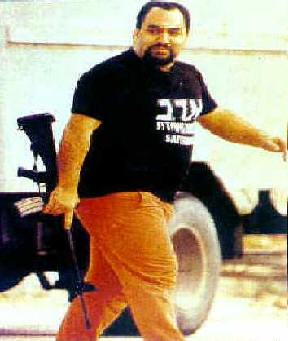 I also assume that the plotter was Robert Manning, a hit man who was later convicted of the murder of the secretary of a Jewish businessman in California. Apparently Manning had been hired by another Jewish businessman who was a competitor. They found the fingerprints both of Manning and of his wife on remnants of the letter bomb that was sent to his target, but opened by his secretary, who died as a result of the explosion.
Manning and his wife were safe from extradition from Israel, due to Israeli policy of not extraditing Jews for any reason, until Peter Jennings on ABC nightly news did a story on how Manning was running free in his West Bank settlement. The news story so embarrassed the U.S. government as well as the Israeli government that he was allowed to be extradited to California, but on the condition that he not be tried for killing Alex Odeh, but only for the Secretary. That condition was tantamount to a confession that he had murdered Alex Odeh. Manning’s wife died of a heart attack in an Israeli jail while awaiting extradition.
James Bamford, now a writer living in Washington, D.C., and who was Peter Jennings’ producer then, has film clips of the news story that he shows at lectures he gives on the subject. He went to the West Bank and filmed a machine gun toting Manning for the news story.
Lobby-engineered mud-slinging
I was under continual attack by the Lobby while I was in politics. Because I kept myself clean during my time of service, someone in the Lobby dug up a story designed to embarrass me by exposing my oldest son to ridicule. He was, at the time, living on an Indian reservation in South Dakota on food stamps. The Lobby got Spencer Rich, who was a political reporter for the Washington Post, to do a story on him. Rich several times called both my wife and me trying to get us to comment, but we refused. So he ran the story, headlined, “Senator’s Son Living on Food Stamps.” That set off a fire storm of criticism against the Post, and against Ben Bradlee, who was then Editor in Chief. Larry Stern, who was one of my friends, and an editor of the Post, complained bitterly to Bradlee. Senators McGovern and Ribicoff both took to the Senate Floor denouncing the article, saying the Post was trying to destroy the food stamp program.
One of the Style section writers, Tom Zito, whom I had never met, called me one day and told me the story about his protest to Bradlee over the story. Bradlee finally said, “Alright, go find some other famous people whose kids are living on food stamps and we’ll run it.” Zito told me that he had found that Bradlee’s daughter was living on Food Stamps out in Oregon, causing Bradlee to kill the story on the spot.
Years later I ran into Spencer Rich in a store in DC. He confessed to me that he still felt bad about doing the story on my son’s food stamp adventure.
“We’re going to get him”
Si Kenen, who was then Executive Director of AIPAC, used to tell anyone who knew me, to tell Abourezk “we’re going get him.” And when I returned from a trip through the Middle East, I spoke about the trip at the Federal Press Club (reserved for women and blacks) and talked about how every Middle East leader I met with said they would be willing to sign a peace treaty with Israel if Israel would go back to the 1967 borders. A young fellow named Wolf Blitzer, who was then writing for AIPAC, rose to ask me several hostile questions before he walked out. The next issue of the AIPAC newsletter headlined that “Abourezk Sells Out to the Arabs.” That was the beginning of the war, as I failed to collapse after that broadside, and worked to make AIPAC regret their unfair attack on me.
I used to take the lead in human rights legislation in the Senate. I once offered an amendment to a bill that would cut off American money for any country violating the human rights of their people. Before anyone would vote, I was asked during debate “whether the amendment would apply to Israel.” When I said “no” I would get that person’s vote.
I also had all kinds of pressure put on me by rabbis who would come to visit me. Once an Iraqi Jew, a woman, came to visit me to tell me how bad it was for Jews in Iraq, I suppose trying to get me to change my mind on the Palestinian issue. She said she was constantly beat up and called a “dirty Jew” when she lived in Iraq. I told her I knew her feeling, because when I grew up in rural South Dakota, other kids would beat me up and call me a “dirty Jew.”
I was invited to speak at Yeshiva University when I was in the Senate. Before the time came for me to travel to New York, I was visited by a Rabbi Miller, who was from Yeshiva, and who advised me that “the students were marching against me and my speech,” and that, “It would calm things down if I would just make a public statement that I was for face to face negotiations between the Palestinaians and the Israelis.”
I told Rabbi Miller that, while I was for such negotiations, I recognized that requested statement was part of Golda Meier’s propaganda initiative, and that I had no interest in being a part of that. He kept coming on strong about the statement, so I finally asked him if it would be better if I cancelled my appearance at Yeshiva. He agreed, and that was the end of that. One of my friends from New York commented that, “They are in favor of face to face negotiations in the Middle East, but not in New York.”
After I left the Senate, Art Meggido, a writer for the Baltimore Jewish newspaper asked me for an interview. When I asked him why I should give him an interview, he told me that the Jewish community would eventually have to deal with me when it came to making peace in the Middle East. So I agreed. When the article came out, he related a story that an unnamed Ted Kennedy staffer told him that I had approached Kennedy and asked for money to go to Iran and free some hostages to help him in his 1980 primary campaign against Jimmy Carter.
The truth of that libel was that Kennedy sent three of his supporters to me to ask if I would go to Iran to free some hostages in his name. One was Jan Kalicke, one was Sen. John Culver and the other was Ted Sorensen. I supported Ted for president, so I agreed. The only thing I asked for was that they buy my ticket to Tehran, which they agreed to do.
When I read Meggido’s article I wrote to him telling him that unless they retracted the lie, I would sue him and the newspaper. They ran the retraction. Because we had agreed that we would not talk on the phone about this, we decided to talk only in person about the trip. No one knew about our deal except Kennedy and his staff, which included Tom Dine, who had been working for AIPAC earlier. It had to be Dine who talked to Meggido with the lie. And during the kerfuffle, I had a hard time getting Kalicke to call Meggido to verify my story, but it all came out in his retraction.
Although I was afraid that either my phone or Kennedy’s phone was being tapped by the Carter people, we avoided speaking about the trip over the phone, except for one occasion when I called Kalicke to talk to him about it. Almost the next day, a Lebanese journalist who covered the State Department told me that he had overheard both Marvin Kalb and the Israeli TV journalist there talking about “Abourezk acting as a messenger for Ted Kennedy over in Iran.”
There are other stories that I could tell you at the risk of boring you to death, but the Lobby had every Senator, except me, scared shitless.
Related articles
- Israel Lobby Pushes for US Action Against the Syrian Government (alethonews.wordpress.com)
- Obama to address pro-Israel lobby in March (seattletimes.nwsource.com)
2013 Budget: ‘Difficult Cuts’ for Americans, Jackpot for Israel

By Josh Ruebner | Palestine Chronicle | February 21, 2012
Speaking before students at Northern Virginia Community College on February 13, President Obama unveiled his 2013 budget request, in which he proposed “some difficult cuts that, frankly, I wouldn’t normally make if they weren’t absolutely necessary. But they are.” These budget cuts are unavoidable, the President argued, because “the truth is we’re going to have to make some tough choices in order to put this country back on a more sustainable fiscal path.” In a sad commentary on the misplaced priorities of the Obama Administration, however, these “tough choices” will affect the delivery of basic services to U.S. citizens while the Israeli military hits the jackpot at taxpayer expense.
As part of its budget request, the White House released a 205-page document detailing the cuts, consolidations, and savings the Obama Administration is proposing. These proposed cuts include $5 million to the USDA to analyze food-borne pathogens, potentially making the U.S. food supply even less safe than it already is after 30 people died last year after eating listeria-infected cantaloupe; a $359 million cut to the EPA to provide grants to states for water infrastructure projects when an estimated 1.7 million Americans shockingly lack access to basic water and sanitation services according to the Water Infrastructure Network; and a whopping $360 billion cut over ten years in Medicare, Medicaid, and other health programs even though the World Health Organization rates the U.S. health system as only 37th globally in health care performance.
Given these “difficult cuts” to the budget, it is easy to agree with Israeli journalist Ran Dagoni, who wrote last year in the Israeli business newspaper Globes, that “the time has come to bid goodbye to the military aid that the US extends to Israel, that generous package… that enables the Israeli taxpayer to share the cost of procuring equipment for the IDF [Israel Defense Forces] with the US taxpayer.” After all, Israel – the 28th wealthiest country in the world in 2011, with a per capita gross domestic product greater than Korea and Saudi Arabia according to the International Monetary Fund – hardly needs U.S. charity more than we need safe food, clean water, and health care.
Yet, instead of reducing or even just freezing levels of U.S. military aid to Israel, President Obama wants to provide Israel with $3.1 billion of U.S. taxpayer-funded weapons next year, an increase from $3.075 billion in 2012, making the State Department’s claim that this budget request “maintains last year’s record funding levels” for Israel both immodest and inaccurate. By comparison, of the nine other Near Eastern countries receiving U.S. military aid, the budget request for eight of them is unchanged from last year’s budget while the request for Tunisia declined.
Were Israel using these weapons for legitimate purposes and to further U.S. foreign policy objectives, then perhaps a persuasive case could be constructed for why the United States does not need to make any budgetary “tough choices” when it comes to Israel. However, Israel misuses U.S. weapons, in violation of U.S. laws, to commit grave and systematic human rights abuses against Palestinians in furtherance of its 44-year military occupation of the Palestinian West Bank, East Jerusalem, and Gaza Strip and its illegal colonization of the West Bank and East Jerusalem. From 2000 to 2009, the United States provided Israel with more than $24 billion of military aid and delivered more than 670 million weapons, rounds of ammunition, and related military equipment. During that same period, according to the Israeli human rights organization B’Tselem, Israel killed at least 2,969 Palestinians “who did not take part in the hostilities and were killed by Israeli security forces (not including the objects of targeted killings).”
Israel often kills Palestinians with these same U.S. weapons provided at taxpayer expense. Such was likely the case last December when an Israeli soldier fired a high-velocity tear gas canister at 28-year-old Mustafa Tamimi, a resident of the West Bank village of Nabi Saleh, who was protesting against Israeli settlers seizing land on which his village’s natural spring is located. The canister, fired from an Israeli armored vehicle, struck the activist in the face. He died the next day from his wounds. Strong evidence exists that the tear gas canister that killed Mustafa was made by Combined Systems, Inc. of Jamestown, Pennsylvania and likely could have been one of more than 595,000 tear gas canisters and other “riot control” equipment, valued at more than $20.5 million, which were funded by U.S. taxpayers and given to the Israeli military between 2000 and 2009.
Not only does U.S. military aid to Israel make U.S. taxpayers complicit in Israel’s human rights abuses of Palestinians; it also acts as a disincentive for Israel to work in tandem with the Obama Administration to achieve stated U.S. foreign policy goals of freezing Israeli settlement expansion, ending Israeli military occupation, and establishing a Palestinian state and a just and lasting Israeli-Palestinian peace.
The United States cannot afford the moral and economic costs of providing ever-increasing amounts of U.S. taxpayer-funded weapons to Israel. In this era of “tough choices” for the budget, here is a clear-cut example of a subsidy that should be ended.
– Josh Ruebner is the National Advocacy Director of the US Campaign to End the Israeli Occupation and a former Analyst in Middle East Affairs at Congressional Research Service.
Obama Shoots the Messengers, Attacks Whistleblowers
By Marsha Coleman-Adebayo | Black Agenda Report | February 21, 2012
Barack Obama’s administration has launched attacks unparalleled since the McCarthy years on those who blow the whistle against corruption inside the federal government.
Obama has already charged more whistleblowers under the Espionage Act than all previous administrations combined (as reflected in the list below.) Peter van Buren, a career foreign affairs officer at the Department of Department of State claims his job was threathened after writing, We Meant Well: How I Helped Lose the Battle for the Hearts and Minds of the Iraqi People. Van Buren, who became disillusioned by waste and hypocrisy while serving in Iraq, says “The number of cases in play [against whistleblowers] suggests an organized strategy to deprive Americans of knowledge of the more disreputable things that their government does. How it plays out in court and elsewhere will significantly affect our democracy.”
Van Buren points out that the pre-World War 1 Espionage Act has been used against “labor leaders and radicals like Eugene V. Debs, Bill Haywood, Philip Randolph, Victor Berger, John Reed, Max Eastman, and Emma Goldman. Debs, a union leader and socialist candidate for the presidency, was sentenced to 10 years in jail for a speech attacking the Espionage Act itself. The Nixon administration infamously (and unsuccessfully) invoked the Act to bar the New York Times from continuing to publish the classified Pentagon Papers.” But no other administration has used this legislation as liberally as President Obama who has authorized more drone attacks than any other American president.
Van Buren was writing on the blog Tom.Dispatch.com of Tom Engelhardt, a teaching fellow at the Graduate School of Journalism at the University of California. Engelhardt in turn observes: “One thing is obvious. No one ever joins the government in order to be a whistleblower or leaker.Whistleblowers are created, not born,” speaking words that resonate with my experience as a whistleblower. Van Buren notes: “It is perhaps typical of whistleblowers and leakers that something they are privy to simply pushes them over the edge.” In my case it was the realization that government was failing to act against a U.S. multinational whose mining practices were leading to the injury and deaths of South African vanadium miners.
I continue to speak out against injustice, but it certainly has not made my life easier. Each week I get mails to my Facebook site from those who are whistleblowers or are close to whistleblowers. This week’s example is typical: “I know you don’t know me and I am taking a HUGE chance by writing you, but I have to at least try. My parents are going through some of the same things you went through at the EPA. Both top-level executives at federal agencies they have been retaliated harshly against. NO ONE seems to hear us. I’m begging for your help. Please help us… These agencies are corrupt and we are still on the bus fighting like Rosa.”
There is little I can do other than direct them to the National Whistleblower Center, give the names of lawyers and share a little human empathy. But there is no doubt that under this administration there is a concerted attack against those who dare to expose corruption in government or corporations.
Recently four employees of the Air Force Mortuary in Dover, Delaware, revealed that the Dover Air Force Base mortuary had lost and sawed off body parts and mishandled other remains of America’s war dead. Retaliation against them included firings, the placing of employees on indefinite administrative leave, and the imposition of five-day suspensions. Special Counsel Carolyn Lerner has accused the Air Force of deflecting blame — and a mortuary official of lying and obstructing the probe by firing one of the workers who blew the whistle. What remains to be seen is whether Lerner, an Obama political appointee, will distinguish herself from her disgraced predecessor by seriously investigating corruption under this administration.
At present six whistleblowers are suing the Food and Drug Administration for electronically spying on them when they tried to alert Congress about misconduct at the agency. This is the agency tasked with overseeing public health, food safety, medicines and medical devices. Senator Charles E. Grassley (R-Iowa) launched an investigation in response to a lawsuit filed by six FDA whistleblowers and documents released by the National Whistleblowers Center that show the FDA targeted whistleblowers for special monitoring and intercepted personal communications to Congress, including emails to Senator Grassley’s staff. Senator Grassley, the Ranking Member of the Senate Judiciary Committee asked FDA Commissioner Margaret Hamburg whether or not whistleblowers were singled out for special monitoring based on a letter they wrote to President-Elect Obama’s Transition Team.
We are waiting to see the Army’s reaction to whistleblower Lieutenant Colonel Daniel Davis, who documented in the Armed Forces Journal that senior leaders of the Department of Defense intentionally and consistently misled the American people and Congress about success in the Afghan War.
Those charged under the Espionage Act include:
- Former CIA officer John Kiriakou charged on January 23 for disclosing classified information to journalists about the waterboarding of al-Qaeda suspects. The CIA also found an excuse to fire his wife, also employed by the Agency, while she was on maternity leave.
- Thomas Drake an employee of the National Security Agency revealed that it spent $1.2 billion on a contract for a data collection program called Trailblazer when the work could have been done in-house for $3 million. Drake’s home was raided at gunpoint and the agency forced him out of his job. He now works at an Apple Store. His attorney told Anti-war.com: “Too often, whistleblowers end up broken, blacklisted, and bankrupted.”
- Whistleblower Pvt. Bradley Manning, accused of leaking Army and State Department documents to the website WikiLeaks, spent more than a year in a U.S. Marine prison and was denied the chance even to appear in court to defend himself until almost two years after his arrest.
- Former chief military prosecutor at Guantanamo Morris Davis lost his career as a researcher at the Library of Congress for writing a critical op-ed for the Wall Street Journal and a letter to the editor at the Washington Post on double standards at the infamous prison.
- Robert MacClean was charged for blowing the whistle on the Transportation Security Administration.
Van Buren notes in his piece for Tom.Dispatch.Com “My travel vouchers from as far back as the law allows have come under “routine” re-examination. My Internet activity is the subject of daily reports. My credit reports have been examined for who knows what. Department friends who email me on topical issues have been questioned by agents of Diplomatic Security, the State Department’s internal police. My Freedom of Information Act request for documents to help defend myself and force State to explain its actions has been buried.”
And then we read investigative reports in the Washington Post, as an example, of 33 members of Congress that have steered more than $300 million in earmarks and other spending provisions to dozens of public projects that are next to or within about two miles of the lawmakers’ own property. We have yet to hear of action against them.
Freedom of the press and freedom of expression are American constitutional bulwarks. These important elements of the constitution provide protection for truth-tellers as the last defense against tyranny. It is a shame that a legacy of the first African American president is heightened repression against whistleblowers.
~
See Marsha on C-Span Book/TV at: www.marshacoleman-adebayo.org.
Dr. Marsha Coleman-Adebayo is the author of No FEAR: A Whistleblowers Triumph over Corruption and Retaliation at the EPA is available through amazon.com and the National Whistleblower Center. Dr. Coleman-Adebayo worked at the EPA for 18 years and blew the whistle on a US multinational corporation that endangered vanadium mine workers. Marsha’s successful lawsuit lead to the introduction and passage of the first civil rights and whistleblower law of the 21st century: the Notification of Federal Employees Anti-discrimination and Retaliation Act of 2002 (No FEAR.)
Related articles
- Whistleblower Lawsuit Puts Spotlight On FDA Technical Reviews (news.sciencemag.org)
- Inside President Obama’s War On The Fast & Furious Whistleblowers (forbes.com)
- Scientists suing the FDA after covert surveillance (newscientist.com)
Face Masks, Snipers and Aerial Surveillance: Chicago’s Newest Anti-Protest Measures Revealed
By Yana Kunichoff | Truthout | 16 February 2012
Each time a new measure that the city of Chicago is preparing for the coming NATO and G8 summits is unveiled, the tension in the city ratchets up a notch. The latest news comes in the form of reports that Chicago has purchased face shields, and may be considering the implementation of airborne surveillance technology.
As part of the expanded powers given to Mayor Rahm Emanuel for the May summits, the city has authority to accept contracts for goods or services without approval of the City Council or the expected competitive bidding process. The face shields and aerial surveillance technology are the first use of this allowance.
Chicago police officers, and any law enforcement the city chooses to deputize under the measures put in place for NATO/G8, will be equipped with 3,000 new face shields that “will fit easily over gas masks,” according to The Chicago Sun-Times.
The nearly $200,000 contract with Super Seer, a Colorado-based company, was made as an “emergency purchase for the G8 summit,” according to Super Seer President Steve Smith.
Chicagoist also reported that Chicago will get the latest in aerial surveillance equipment, according to the press release from a company called Vislink:
The airborne units will transmit to four strategically located ground-based receiver sites providing city-wide coverage and the ability to simultaneously receive real-time images from two aircraft for viewing at the Office of Emergency Management and Communications (OEMC) operations center. An additional three receive systems will be installed in the city’s mobile command vehicles to facilitate field operations.
These measures will be in addition to “snipers that will stand guard from above,” reported ABC. Overarching security jurisdiction for the summits, which have been designated a national security event, has already been handed over to the Secret Service.
Related articles
Featured Video
Dan Dicks with James Corbett on Solutions Watch
or go to
Aletho News Archives – Video-Images
From the Archives
MMR (Measles, Mumps and Rubella) – Vaccine Risk Statement
MMR Vaccine (Measles, Mumps, and Rubella) Is It Safer Than Measles, Mumps and Rubella?
Physicians for Informed Consent | December 2024
… It has not been proven that the MMR vaccine is safer than measles, mumps, and rubella. The vaccine package insert raises questions about safety testing for cancer, genetic mutations, and impaired fertility. Although VAERS tracks some adverse events, it is too inaccurate to measure against the risk of measles, mumps, and rubella. Clinical trials do not have the ability to detect less common adverse reactions, and epidemiological studies are limited by the effects of chance and possible confounders. Safety studies of the MMR vaccine are particularly lacking in statistical power. A review of more than 60 MMR vaccine studies conducted for the Cochrane Library states, “The design and reporting of safety outcomes in MMR vaccine studies, both pre- and post-marketing, are largely inadequate.”19 Because permanent sequelae (aftereffects) from measles, mumps, and rubella are so rare (especially in children with normal levels of vitamin A and infected after birth),6,15-17 the level of accuracy of the research studies available is insufficient to rule out the possibility that the MMR vaccine causes greater death or permanent disability than measles, mumps, and rubella. – Read full article
Blog Roll
 Aletho News
- The fallacy of US delusions about Iran’s economic collapse
- Hezbollah denies Syria cell link, warns of Israeli plan to sow discord
- The legacy of US sanctions, war, and occupation in Iraq
- Iraqi resistance group rejects disarmament, vows to maintain support for Lebanon
- Sheikh al-Asadi warns of Iraqi government compliance with US demands
- How to MAKE THE CONSPIRATORS PAY for their crimes! Dan Dicks with James Corbett on Solutions Watch
- There’s a drought in academia: A drought in honest research on the subject of drought and other weather extremes
- Department of War Awards $20.7 Billion Contract to Raytheon for Air-to-Air Missiles
- ‘Distance yourselves from Israel’: IRGC urges US population to question govt policies
- America’s Greenland deal has a radioactive backstory
- If Americans Knew
- As settlers ravage West Bank, Israeli forces kill 10 in Gaza – Daily Update
- New Report: “Scholasticide and Genocide in Gaza: Assessment, Testimonies and Legal Analysis”
- Ex-Biden officials are desperate for a Gaza scapegoat
- Israeli “settlers” Invade Al-Aqsa; Pour Boiling Water on 75-Year-Old
- Israel Has Kidnapped Another American Teenager
- US arms sales to Israel worth $21.6 billion in 20 months
- Three Palestinians Killed in Israeli Attacks on Gaza
- Revealed: German “Anti-Semitism Expert” Driving Crackdown on Palestine Solidarity is Former Israeli Spy
- Egypt’s Warning to Israel Before Oct 7
- Israel’s siege signals another cruel winter for 1.8 million Gazans – Daily Update
- No Tricks Zone
- Two More Paleo Reconstructions Affirm Meters-Higher Sea Levels Across Ireland, Brazil 7000-6000 Years Ago
- New Study: Earth And Venus Surface Warmth Largely Explained By Convection And Lapse Rate, Not CO2 Or Radiation
- 2025 Nature Paper Claiming Worsening Global Drought Gets RETRACTED …Heavily Flawed
- New Study: ‘Global Drought Shows No Detectable Recent Acceleration Under Climate Warming’
- Economic Masterminds: German Socialists Suggest Taxing Productivity Gains Stemming From Using AI
- The South China Sea Has Not Been Cooperating With The Climate Change Narrative
- Energy Crisis: Germany Enters Heating Season With Historically Low Gas Reserve Fill Levels
- New Study: The Antarctic Ice Sheet Gained Mass From 2020-2024 Due To Staggering Snow And Ice Accumulation
- Study: Ocean Heating Rates From Thousands Of Years Ago ‘Dwarf’ Modern Ocean Heating Rates
- Climate Extremists Target, Attack Large-Scale Power Grid Infrastructure In Germany!

