Wall Street bonuses cashed in for sex, food and art
RT | December 9, 2010
If the impressionist artist were to illustrate something of today’s New York City, it just might be moneybags.
Amid the lackluster American economic climate, Christies Auction House is seeing sunny days, with more than 600-million dollars worth of impressionist and modern art sold this year.
“Since 2008, we have seen an increasing return of confidence to the art market,” said Conor Jordan, of Christies New York.
New York has once again, become one of the Christies premier selling sites.Just as Wall Street’s wealthy and powerful, are back to indulging.
Pampering at the La Prairie Spa at the Ritz Carlton, involves wearing decadent hors d’ oeuvres. A 90-minute skin caviar facial costs more than $300 and 3.4 ounces of La Prairie’s Skin Caviar Luxe Cream sells for $710.
“This time of year, a lot of our business comes from corporate gift certificates,” said Spa Manager, Sandra Sadowski.
As corporate America is banking record breaking profits this year, it may be no coincidence that business at Wempe Jewelers has spiked. The $158,000 dollar price tag of some luxury watches exceeds the average annual income of three US households combined.
“We’re expecting a very busy time. The busiest time of the year,” said Raik Kraise, Wempe manager.
Busyness boosted perhaps by big bonuses coming mainly from one street, Wall Street, a symbol of the finance industry, the financial collapse and record breaking compensation that will reportedly reach $144 billion dollars this year. According to the Wall Street Journal, 2010 bonuses will be up 4 percent from last year’s record haul.
If anyone would know about business, it would be those who work at Rick’s Cabaret. At the New York Gentlemen’s Club, happiness bares lots of skin and beauty, but it doesn’t come free.
“For an evening, six, seven eight thousand dollars, 10-thousand dollars, it’s hard not to have a good time when you’re surrounded by nearly naked women,” said Rick’s Cabaret Communications Manager, Allan Priaulx.
Female entertainers working at Rick’s said they are continuing to benefit from a boom in business following Wall Street’s rebound.
“These guys are getting much-deserved bonuses.They want to celebrate the bonuses and party and have a great time,” said Randi Newton, an entertainer at Rick’s Cabaret.
From sex cravings, to food cravings, some of Wall Street’s cats have gotten fat by forking up $175 for a 10-ounce Kobe beef hamburger.
“We still sell a handful of them every month. A good handful,” Heather Tierney, co-owner of Wall Street Burger Shoppe said.
On Main Street where more than 15-million Americans are officially unemployed, the US Poverty Population reached nearly 44 million, a 50-year high.
Ironically, that figure marks New York City’s most expensive residential sale this year. A seven-floor, 5th Avenue mansion was purchased for $44 million dollars. This, as more than two million homes have been swallowed up by foreclosure in 2010.
In this so-called rebounding US economy, purveyors of all things luxury are, in fact, resurging. All while the majority of Americans are left wondering when life will finally begin looking as pretty as the painting.
Mike Norman, the chief economist at John Thomas Financial explained there is an expanding gap between the rich and poor in America.
“The resources of the government have been directed almost completely towards one sector of the economy, that’s been the financial, that’s been the huge beneficiary when most working people, and by far, the rest of the economy has been left to flounder,” Norman commented. “It’s very disturbing.”
He said the US now ranks near the bottom of global income inequality lists, and it is a direct result of US government policies.
The failed policies transcend American party politics, he argued, both Republicans and Democrats continue to support the financial sector at the expense of all others. … Full article and video report
Israel appears only in 77 Wikileaks docs
Press TV – December 8, 2010
A study of the U.S. State Department cables so far released by the WikiLeaks showed that there are merely 77 documents which mention Israel and only a handful have material pertaining to Tel Aviv.
On its website WikiLeaks says it has so far released “almost 20,000” of the “251,287 leaked United States embassy cables.”
The release, however, raised questions as it does not contain any incriminating or embarrassing document against Israel.
“No classified Israeli material was exposed by WikiLeaks,” Israeli Prime Minister Benjamin Netanyahu said in November, suggesting that Tel Aviv viewed the release as a positive.
An Israeli-born investigative journalist has found evidence that WikiLeaks “struck a deal with Israel,” based on which the website’s founder Julian Assange would withhold cables incriminating Israel in exchange for money.
Lia Abramovitch — an Israeli investigative Journalist born to holocaust-survivor parents — who writes for Syriatruth website, cites former WikiLeaks spokesperson Daniel Domscheit-Berg as her source.
Domscheit-Berg says Assange had received money from semi-official Israeli sources and promised them, in a “secret, video-recorded agreement.”
That explains why there’s only one document that touches the issue of Israel’s nuclear weapons, albeit indirectly.
Cable 08PARIS245, which is a review of a meeting between acting U.S. Undersecretary of State John Rood and his British and French counterparts Mariot Leslie, Philippe Carre, reiterates the U.S., Britain and France’s support for Israel’s nuclear ambiguity approach.
“Furthermore, it is not in their interest to remove the ambiguity of Israel’s nuclear status which was stabilizing to the region. Carre agreed and said that there was no benefit to weakening the Israeli pledge not to be the first to use nuclear weapons in the Middle East,” reads the cable.
Highlights
Former WikiLeaks spokesperson Daniel Domscheit-Berg said he and other WikiLeaks dissidents are planning to launch their own whistleblowers’ platform to fulfill WikiLeaks’ original aim of “limitless file sharing.” Die Tageszeitung
Mr. Domscheit-Berg, who is about to publish a book about his days ‘Inside WikiLeaks’, accuses Assange of acting as a “king” against the will of others in the organization by “making deals” with media organizations that are meant to create an explosive effect, which others in WikiLeaks either know little or nothing about. Der Spiegel
“For us it is always about uncovering corruption and abuse of power, wherever it happens — on the smaller and larger scale — around the world. Recently, however, we have only focused on the major topics and applied practically all of our resources to them.” Der Spiegel
WikiLeaks founder Julian Assange has been denied bail by a judge after surrendering to British authorities over a Swedish arrest warrant Thursday. Assange vowed in court to fight extradition to Sweden, where authorities are hoping to question him over a sexual molestation case. CBS
Assange was arrested at 9:30 a.m local time Tuesday and appeared before Westminster Magistrate’s Court. He surrendered Tuesday under an agreement reached between his own lawyers and the police. CBS
Facts
WikiLeaks was founded by Julian Assange in 2006 with the motto of “keep governments open.” It describes its objectives as bringing “important news and information to the public.”
The site claims it has released more than 1.2 million documents so far and is preparing to release more than two million other documents.
WikiLeaks most important release is arguably a video showing US troops aboard a helicopter opening fire on unarmed Iraqi civilians – including Reuters cameramen.
In May 2010, WikiLeaks said they had video footage of a massacre of civilians in Afghanistan by the U.S. military which they were preparing to release.
In a 2009 Computer World interview, Assange claimed to be in possession of “5GB from Bank of America” documents to be released in 2011.
In December 2010, Assange’s lawyer, Mark Stephens, told The Andrew Marr Show on the BBC, that WikiLeaks had information that it considers to be a “thermo-nuclear device” which it would release if the organization needs to defend itself.
“Unconstitutional” food bill driven by Big Food lobby dollars
By Rady Ananda | The People’s Voice | December 2, 2010
While over 200 organizations lobbied on S.510, the Food Safety Modernization Act, no one seemed to notice an unconstitutional section in the bill until after it passed on Tuesday. That day, Roll Call advised that the bill contained a provision, Sec. 107, allowing the Senate to raise revenues. This violates Article I, Section 7, of the U.S. Constitution, granting that power exclusively to the House. S.510 opponents now celebrate the House’s use of the “blue slip process” to return the bill to the Senate.
The Alliance for Natural Health figures that: “The only possible ‘quick fix’ would be a unanimous consent agreement in the Senate to strike that revenue-raising provision from the bill—but Sen. Tom Coburn (R-OK) has already stated that he will oppose, so unanimity will be impossible.” ANH believes it is unlikely that the Senate will return to a debate on S.510, given its full agenda. Its only other option is to “allow the bill to die at the end of this Congress [which means] a new Food Safety Bill will be introduced next year.”
After S.510 passed, President Obama issued a statement: “I urge the House — which has previously passed legislation demonstrating its strong commitment to making our food supply safer — to act quickly on this critical bill, and I applaud the work that was done to ensure its broad bipartisan passage in the Senate.”
Apparently, the Senate moved too quickly. Their overreach only supports the natural foods movement assertion that the entire bill is over-reaching as the federal government seeks complete control over local foods.
The Money and the Vote
In an email, Canada Health whistleblower Shiv Chopra noted, “It is all about corporate control of food and public health.” He’s not alone in believing that a ‘hidden corporate agenda’ is driving the federal government to impose itself on local food production and distribution. This belief is bolstered by a detailed look at the financial contributors in support of food control legislation. Open Secrets.org reports that 208 groups lobbied on S.510. According to an analysis by Maplight.org, financial supporters of S.510 include:
* The US Chamber of Commerce (no friend to small business);
* Kraft Foods North America (the world’s second largest food and beverage company;
* General Mills (which earned $15 billion in revenue in 2009); and the
* American Farm Bureau Federation (a Big Ag and insurance industry lobbyist that supports the use of genetically modified foods).
According to data at Open Secrets.org, AFB spent $9.5 million since 2009 to lobby for S.510 and against the House version. Food & Water Watch noted that AFB president Bob Stallman “condemn[s] consumers and farmers who oppose the industrial model of agriculture, referring to them as ‘extremists who want to drag agriculture back to the day of 40 acres and a mule.’” Clearly, the American Farm Bureau Federation does not favor small farms.
Breaking agribusiness lobby spending down by sector, Open Secrets reports that in 2009, the:
* Crop production and basic processing industry spent $20.3 million;
* Food processing and sales industry spent $30.2 million; and the
* Agriculture services and products industry spent $34.4 million.
In 2009 and 2010, Pepsi spent over $14 million and Coca-Cola spent $4.5 million on both S.510 and HR 2749 (the House version). Other groups supporting S.510 include the International Bottled Water Association, International Dairy Foods Association, International Foodservice Distributors Association, and the Snack Food Association. Hardly advocates of small producers or natural foods.
Under the guise of food ‘safety,’ food control legislation has been widely supported by major food industry lobbyists, who spent over $1 billion since 1998 to influence Congress. Do the American people even have a voice in food choice, when measured against the hundreds of millions of dollars multinational corporations foist on Congress to influence legislation?
Monsanto and the Tester Amendment
Two final comments are in order: one on the ineffectual Tester Amendment and the other on Monsanto’s influence over food safety.
First, the Tester Amendment “exemption” — defined as those generating less than $500,000 a year in revenue — is ludicrously low. Kraft Foods generates that every seven minutes: it earned $40 billion in revenue in 2009. There can be no single bill that adequately addresses food production when talking about producers as disparate as these. Small farms are in a different universe from multinational corporations.
A ten-million-dollar exemption is more reasonable. Farms earning less than $10 million a year are much more similar to Mom & Pop operations than they are to Kraft Foods or Monsanto. Farms earning between a half million and ten million annually are more likely than Mom & Pop to achieve product consistency and, because of a higher output, lower market price, thus appealing to locavores on three levels. That ludicrously low $500,000 figure only highlights the overreach of an obese federal government.
Second, the Tester Amendment does not exempt small food producers as broadly as proponents claim. Eric Blair noted that “even a ‘very small business’ making less than $500K per year, doing business ‘within 275 miles’ and directly with ‘end-user customers’ is still required to adhere to all of the [other] regulations” in the massive food control bill.
In order to qualify for exemption, he points out that small producers must file three years of detailed financial records, detailed hazard analysis plans, and detailed proof of compliance with local, county and state laws. Then, the Secretary of Health and Human Services must approve each exemption.
How many “food producers” who donate food to the homeless, or who supply homemade products at bake sales, county fairs, church bazaars, and community picnics are going to bother with such hyper-regulation? Obama’s vision of food “safety” destroys the local economy, and it destroys community relations.
S.510 opponent Sen. Tom Coburn has repeatedly stressed that the bill will not make our food supply any safer and will “drive small producers out of business.” No wonder so many multi-billion dollar corporations support it.
Finally, let’s not forget that Obama has stacked his administration with former employees of Monsanto, making Michael Taylor his Food Czar. Anything this Administration supports in the way of food control will surely benefit Monsanto, while harming the natural foods industry and small producers. Indeed, the Food and Drug Administration is already waging a bureaucratic war on private food contracts and natural food producers.
Meanwhile, the battle for food freedom rages on, with a temporary reprieve now that S.510 has been recalled to the Senate Chamber. Yes, we do have food freedom, even if it means defying unjust laws.
Italy MPs demand Berlusconi resignation
Press TV – December 2, 2010
A group composed of some 100 center-right Italian lawmakers have called for the Italian Prime Minister Silvio Berlusconi, to resign.
Berlusconi is preparing for key confidence votes that are due to be held in the lower and upper houses of parliament this month.
“The deputies … agree on the need to ensure the country has a solid and stable government to face up to the grave social and economic crisis,” said a statement published after a meeting of five center-right parties.
The anti Berlusconi group is made up of allies of former Berlusconi loyalist-turned-bitter rival Gianfranco Fini, two rebel deputies from Berlusconi’s own People of Freedom party, as well as three smaller parties.
Emma Marcegaglia, the head of Italy’s employers’ federation, said the country was “in paralysis” because Berlusconi and his allies were spending too much time dealing with scandals and corruption allegations.
“A new wave of mud-slinging is eroding the credibility of public institutions and of the government,” said Marcegaglia. “There is a strong feeling of mistrust, a sense of confusion and dismay. We need to recover a sense of dignity.”
“Berlusconi must resign,” said Antonio Di Pietro, the leader of the Italy of Values Party and a former anti-corruption investigator. “If he does not want to do it for Italians, he should do it for himself.
Illegal South Africa kidney deals tied to Israel
Press TV – November 12, 2010
Netcare, the biggest health care provider in South Africa, has pleaded guilty to charges of performing illegal kidney transplant operations using Israeli-linked organ trafficking syndicate.
In return for charges being dropped against Netcare’s Chief Executive Richard Friedland, the firm acknowledged in a plea bargain that, “payments must have been made to the donors for their kidneys, and that certain of the kidney donors were minors at the time that their kidneys were removed.”
The suit follows a seven-year investigation into the illegal operations at St. Augustine’s Hospital in Durban in association with an Israeli-linked organ trafficking syndicate.
According to reports, while organs had originally been sourced from Israeli citizens, they were later obtained from poor Romanians and Brazilians at a lower cost.
According to prosecutors, the Israelis were paid about USD 20,000 for their kidneys, while the Brazilians and Romanians were paid an average of USD 6,000.
Other related reports surfaced regarding 25,000 Ukrainian children who had been brought to Israel over the past two years to be used by Israeli medical centers for their “spare parts.”
Additionally, the Israeli military was accused of stealing the organs of Palestinian prisoners.
The illegal operations in South Africa included the removal of organs from five children.
The healthcare firm was also forced to admit that, “certain employees participated in these illegalities, and [the hospital] wrongly benefited from the proceeds,” as five notable South African physicians were also indicted in the case.
The hospital has agreed to pay nearly 8 million rand (USD 1.1 million) in fines.
The charges account for 109 operations carried out at the hospital between 2001 and 2003.
Berlusconi urged to resign over teen sex scandal
Press TV – November 7, 2010
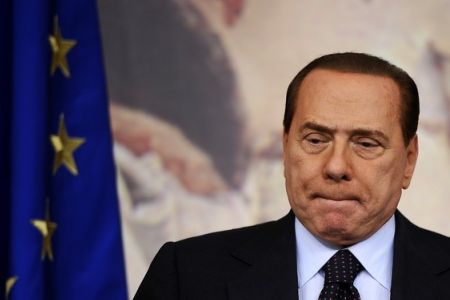
Following the Italian premier’s most recent scandal involving a Moroccan teenage girl, the country’s parliament speaker has called on Silvio Berlusconi to step down.
“He should… take the decision to hand in his resignation,” AFP quoted Gianfranco Fini, the speaker of the lower house, as saying on Sunday.
On October 30, the prominent newspaper Corriere della Sera revealed the details of Berlusconi’s telephone conversation with a Milan police chief, in which he urged him to release the girl, who was detained for theft in May. The 17-year-old girl, known as Ruby, said she attended parties at Berlusconi’s home in Arcore.
The girl claims that she had been trying to break into modeling or television work at the time. She said she had a sexual encounter with Berlusconi at his villa when she was younger than 18.
Prosecutors say that while they have opened a dossier on the claim that Berlusconi hired a juvenile for prostitution, he is not under official investigation.
Last year, high-end escort Patrizia D’Addario claimed she had spent a night with the prime minister, but the conservative Italian leader said he has never paid anyone for sex.
The new scandal comes as Berlusconi’s popularity ratings have dropped below 40 percent, with his government’s austerity package, infighting, and corruption scandals eroding public support for the premier.
All They Ask For is an Unfair Advantage
Learning About Wall Street From the Fall of Eliot Spitzer
By MICHAEL WINSHIP | CounterPunch | October 28, 2010
I attended a screening this week of Alex Gibney’s new documentary, Client 9. It’s the story of the rise and fall of New York State Governor Eliot Spitzer, brought down by imperial hubris and a reckless penchant for ladies of the evening.
Gibney, an Oscar-winning filmmaker, creates a fascinating narrative. Both he and Spitzer readily concede that it was the former governor who did himself in; he haplessly provided the guns and ammo that polished him off. But there is a compelling case made suggesting that there were plenty of enemies, both in politics and business, with a motive to see him destroyed, plus the wherewithal and contacts to help grease the skids.
After all, it was Spitzer who, as state attorney general and self-appointed “Sheriff of Wall Street,” went after corruption and greed in the finance industry, exposing investment bank stock inflation, securities fraud, predatory lending practices, exorbitant executive compensation and illegal late trading and market timing perpetrated by hedge funds and mutual fund companies. Some of these practices were, of course, major factors in the calamitous financial follies of 2008.
One of Spitzer’s targets was Maurice “Hank” Greenberg, former chair and chief executive officer of the gigantic insurance company AIG. He was forced to resign by the AIG board in March 2005 after Spitzer charged Greenberg and the company with manipulative behaviors in violation of insurance and securities laws. Ultimately, criminal charges were dropped but when AIG collapsed during the ’08 meltdown, ultimately receiving the largest of the Federal bailouts — 182 billion taxpayer dollars – Greenberg said he was “bewildered” that things could have gone so wrong.
In Client 9, I was struck by a statement attributed to Greenberg, who in his AIG heyday supposedly was fond of joking, “All I ask for is an unfair advantage.”
Just three days before the screening, The New York Times had reported that one of the largest donors to a foundation run by the US Chamber of Commerce is a charity run by Greenberg.
According to the Times, “The charity has made loans and grants [to the chamber’s foundation] totaling $18 million since 2003. U.S. Chamber Watch, a union-backed group, filed a complaint with the Internal Revenue Service last month asserting that the chamber foundation violated tax laws by funneling the money into a chamber ‘tort reform’ campaign favored by AIG and Mr. Greenberg. The chamber denied any wrongdoing.
“The complaint, which the chamber calls entirely unfounded, raises the question of how the chamber picks its campaigns, and whether it accepts donations that are intended to be spent on specific issues or political races.”
Other major contributors of at least $17 million to the foundation between 2004 and 2008 include Goldman Sachs, the investment company Edward Jones, Alpha Technologies, Chevron Texaco and Aegon, a Netherlands-based, multinational insurance company “which has American subsidiaries and whose former chief executive, Donald J. Shepard, served for a time as chairman of the US Chamber of Commerce’s board.”
Almost all of these donations would have remained anonymous, as allowed by law, if not for some intensive digging by the Times into corporate foundation tax filings and other public records as part of a larger investigation into how the US Chamber of Commerce “has increasingly relied on a relatively small collection of big corporate donors to finance much of its legislative and political agenda. The chamber makes no apologies for its policy of not identifying its donors. It has vigorously opposed legislation in Congress that would require groups like it to identify their biggest contributors when they spend money on campaign ads.”
Times investigative reporters Eric Lipton, Mike McIntire and Don Van Natta Jr. write that “the chamber has had little trouble finding American companies eager to enlist it, anonymously, to fight their political battles and pay handsomely for its help.
“…While the chamber boasts of representing more than three million businesses, and having approximately 300,000 members, nearly half of its $140 million in contributions in 2008 came from just 45 donors. Many of those large donations coincided with lobbying or political campaigns that potentially affected the donors.”
All they ask for is an unfair advantage. Open any newspaper, magazine or political website and the coverage of corporate campaign largesse, much of it anonymous, bedazzles the mind. There’s $75 million from the chamber, plus another $50 million or more in undisclosed donations to major conservative organizations — as reported by the nonpartisan Sunlight Foundation — that include the American Action Network, Karl Rove’s Crossroads GPS, the American Future Fund and the 60 Plus Association.
The progressive Campaign for America’s Future reports that “Americans for Prosperity brags that they’ll spend at least $45 million on the 2010 elections, while FreedomWorks plans to throw in another $10 million.” Both organizations, backed by right-wing billionaire David Koch, are major funders of “all things Tea Party.”
And get this – 23 companies that received a billion dollars or more in taxpayer bailout money donated $1.4 million to candidates in September – most of it to Republicans, although, as The Washington Post reports, “the TARP program was approved primarily with Democratic support. President Obama expanded it to cover GM and other automakers.”
Yes, organized labor is throwing millions at the elections, too, but we know where that money is coming from – union dues (and in the interest of full disclosure, I’m president of a small AFL-CIO affiliated union, but one that neither contributes to nor endorses candidates).
When all is said and done, the Post reported Tuesday, using data from the Federal Election Commission and the watchdog Public Campaign Action Fund, outside interest groups could spend $400 million or more by Election Day. What’s more, “House and Senate candidates have already shattered fundraising record for a midterm election and are on their way to surpassing $2 billion in spending for the first time… To put it another way: That’s the equivalent of about $4 million for every congressional seat up for grabs this year.”
All the big donors ask for is an unfair advantage. You may recall the story, usually attributed to George Bernard Shaw, of how he propositioned a fellow dinner guest, asking if she would sleep with him for a million pounds.
She agreed, and then Shaw asked if she would do the same for ten shillings. “What do you take me for?” she angrily replied. “A prostitute?”
“We’ve established the principle,” Shaw rejoined. “Now we’re just haggling over the price.”
With this election, Congress may establish once and for all that Shaw’s is the only principle left that it still embraces, as long as the price is right.
By the way, Alex Gibney’s Client 9: The Rise and Fall of Eliot Spitzer opens in New York November 5th and across the country on November 12th. Keep an eye out for it at a theater near you, as they say, or even on a TV near you – many cable systems are offering it on demand.
Michael Winship is senior writer at Public Affairs Television in New York City.
THE CIA, KKK, & USA
By Sherwood Ross | 2010-10-11
By assigning covert action roles to the Central Intelligence Agency(CIA), it is as if the White House and Congress had legitimized the Ku Klux Klan to operate globally. That’s because the CIA today resembles nothing so much as the “Invisible Empire” of the KKK that once spread terror across the South and Midwest. Fiery crosses aside, this is what the CIA is doing globally.
The CIA today is committing many of the same sort of gruesome crimes against foreigners that the KKK once inflicted on Americans of color. The principal difference is that the KKK consisted of self-appointed vigilantes who regarded themselves as both outside and above the law when they perpetrated their crimes. By contrast, the CIA acts as the agent of the American government, often at the highest levels, and at times at the direction of the White House. Its crimes typically are committed in contravention of the highest established international law such as the Charter of the United Nations as well as the U.S. Constitution. What’s more, the “Agency,” as it is known, derives its funding largely from an imperialist-minded Congress; additionally, it has no qualms about fattening its budget from drug money and other illegal sources. It is a mirror-image of the lawless entity the U.S. has become since achieving superpower status. And it is incredible that the White House grants license to this violent Agency to commit its crimes with no accountability. The Ku Klux Klan was founded shortly after the end of the U.S. Civil War. Klansman concealed their identities behind flowing white robes and white hoods as they terrorized the newly emancipated blacks to keep them from voting or to drive them from their property.
Allowing it to operate in secret literally gives the CIA the mythical Ring of Gyges. In Plato’s Republic, the owner of the ring had the power to become invisible at will. As Wikipedia puts it, Plato “discusses whether a typical person would be moral if he did not have to fear the consequences of his actions.” The ancient Greeks made the argument, Wikipedia says, that “No man would keep his hands off what was not his own when he could safely take what he liked out of the market, go into houses and lie with any one at his pleasure, kill or release from prison whom he would, and in all respects be like a god among men.” The CIA, like Hitler’s Gestapo and Stalin’s NKVD before it, has provided modern man the answer to this question. Its actions illuminate why all criminal entities, from rapists and bank robbers, to Ponzi scheme swindlers and murderers, cloak themselves in secrecy.
There are innumerable examples of how American presidents have authorized criminal acts without public discussion that the preponderant majority of Americans would find reprehensible. Example: it was President Lyndon Johnson who ordered the CIA to meddle in Chile’s election to help Eduardo Frei become president. If they had known, U.S. taxpayers might have objected to such a use of their hard-earned money to influence the outcome of another country’s elections. But the public is rarely let in on such illegal foreign policy decisions. Where the KKK after the Civil War terrorized blacks to keep them from voting, the CIA has worked to influence the outcome of elections all over the world through bribery and vote-buying, dirty tricks, and worse. According to investigative reporter William Blum in “Rogue State”(Common Courage Press), the CIA has perverted elections in Italy, Lebanon, Indonesia, The Philippines, Japan, Nepal, Laos, Brazil, Bolivia, Chile, Portugal, Australia, Jamaica, Panama, Nicaragua, Haiti, among other countries. If they had known, taxpayers might also object to the CIA’s numerous overthrows of foreign governments by force and violence—such as was done in Iran in 1953 by President Eisenhower and Chile in 1973 by President Nixon. Both overthrows precipitated bloodbaths that cost tens of thousands of innocent civilians their lives. Blum also lists the countries the CIA has attempted to overthrow or has actually overthrown. His list includes Greece, The Philippines, East Germany, Iran, Guatemala, Indonesia, Iraq, Viet Nam, Laos, Ecuador, The Congo, France, Cuba, Ghana, Chile, South Africa, Bolivia, Portugal, and Nicaragua, to cite a few. As I write, today, October 11th, 2010, Nobel Peace Prize winner Adolfo Perez Esquivel of Argentina called on President Obama to revise U.S. (imperialist) policies toward Latin America. He questioned why the U.S. continues to plant its military bases across the region. That’s an excellent question. If the U.S. is a peace-loving nation, why does it need 800 bases the world over in addition to 1,000 on its own soil? Americans might recoil in disgust if they knew of the CIA’s numerous assassinations of the elected officials of other nations. Is it any wonder Americans so often ask the question, “Why do they hate us?” As historian Arnold Toynbee wrote in 1961, “America is today the leader of a world-wide anti-revolutionary movement in the defence of vested interests. She now stands for what Rome stood for. Rome consistently supported the rich against the poor in all foreign communities that fell under her sway; and, since the poor, so far, have always and everywhere been more numerous than the rich, Rome’s policy made for inequality, for injustice, and for the least happiness of the greatest number.”
The CIA’s protective secrecy resembles nothing so much as the KKK, which proudly proclaimed itself “the Invisible Empire” and whose thugs killed citizens having the courage to identify hooded Klansmen to law enforcement officials. Today, it is our highest public officials that protect this criminal force, said to number about 25,000 employees. It is actually a Federal offense to reveal the identity of a CIA undercover agent—unless, of course, you happen to be I. Lewis “Scooter” Libby, and are employed by Vice President Dick Cheney. Libby leaked the identity of CIA agent Valerie Plame to punish her husband Joseph Wilson for publishing a report that undercut the White House lie that Saddam Hussein had purchased “yellowcake” from Niger to fuel WMDs. Today, high public officials direct the CIA’s criminal policies and protect its agents’ identities the better to enable them to commit their crimes.
According to journalist Fred Cook in his book “Ku Klux Klan: America’s Recurring Nightmare”(Messner), “The Klan was inherently a vigilante organization. It could commit the most atrocious acts under the guise of high principle and perpetrators of those acts would be hidden behind white masks and protected by Klan secrecy… (The Klan) set itself up as judge, jury and executioner”—a policy adopted by the CIA today. CIA spies have conducted their criminal operations masquerading as officials of U.S. aid programs, business executives, or journalists. Example: The San Diego-based Copley News Service’s staff of foreign correspondents allegedly was created to provide cover to CIA spies, compromising legitimate American journalists trying to do their jobs. While the murders committed by the KKK likely ran into the many thousands, the CIA has killed on a far grander scale and managed to keep its role largely secret. As Tim Weiner, who covered the CIA for the New York Times noted in his book “Legacy of Ashes: The History of the CIA” (Anchor): “In Guatemala, 200,000 civilians had died during forty years of struggle following the agency’s (CIA) 1954 coup against an elected president.” Weiner adds, “the CIA’s officers in Guatemala still went to great lengths to conceal the nature of their close relations with the military and to suppress reports that Guatemalan officers on its payroll were murderers, torturers, and thieves.” When it comes to murder, the CIA makes the KKK look like Boy Scouts.
Like the KKK, CIA terrorists operate above the law. KKK members committed thousands of lynchings yet rarely were its members punished for them. In 2009 at a speech at CIA headquarters in Langley, Virginia, President Obama revealed he was not intent on punishing CIA agents for their crimes but would rather “look forward.” This seemingly charitable philosophy may be driven by the fact that Obama worked for Business International Corporation, a CIA front, at least in 1983 and perhaps longer, and allegedly is the son of a mother and father both of whom also worked for the CIA, as did Obama’s grandmother! I could find none of this in Obama’s biography when he ran for the presidency, when a gullible American public elected a CIA “mole” to the White House. Consider this, too: an agency President Truman feared would become “an American Gestapo” when he signed the enabling legislation into law in 1947 has become just that, and it casts a lengthy shadow over the White House. Ominously, it has in Barack Obama one of its own former employees sitting in the Oval Office—a man who, according to news reports, has vastly expanded the frequency of the CIA’s assassinations by drone aircraft in Pakistan and who illegally claims the “right” to assassinate any American citizen abroad as well. What’s more, from 1989 to 1993 George Bush Sr., the CIA’s own former Director, sat in the White House. Additionally, from 2001 to 2009, the CIA had that Director’s son, George W. Bush, in the Oval Office giving the CIA a blank check after the 9/11 massacre. Bush Jr., according to The New York Times, in the summer of 1974 worked for Alaska International Industries, which did contract work for the CIA. The Times noted that this job did not appear in his biography when he ran for the White House in 2000, terming it “The Missing Chapter in the Bush Bio.” Thus, two presidential candidates with CIA ties—Bush Jr. and Obama—both neglected to mention them. And in Bill Clinton, who presided from 1993 to 2001, the CIA had a go-along president who satisfied the Agency’s blood-lust when he authorized the first illegal “rendition,” a euphemism for what KKK thugs once knew as kidnapping and torture. Is there any question that the Agency has not played an influential, behind-the-scenes or even a direct role in the operations of the U.S. government at its highest level? It may indeed be a stretch to argue that the CIA is running the country but it is no stretch to say that year after year our presidents reflect the criminal philosophy of the Agency.
Other parallels with the KKK are striking. As Richmond Flowers, the Attorney General of Alabama stated in 1966, “I’ve found the Klan more than just another secret society… It resembles a shadow government, making its own laws, manipulating local politics, burrowing into some of our local law-enforcement agencies…When a pitiable misfit puts on his $15 sheet, society can no longer ignore him.” Yet the descendants of those misfits have moved up today where they feel comfortable as operatives in the shadow government run by the White House. One of the CIA’s illicit duties has been to serve as a conduit for funneling U.S. taxpayer dollars to corrupt dictators and strongmen bent on suppressing the popular will of their citizenry. As Noam Chomsky wrote in “Failed States”(Metropolitan/Owl), in Honduras, “military officers in charge of the battalion (3-16) were on the CIA payroll.” This elite unit, he says, “organized and trained by the United States and Argentine neo-Nazis,” was “the most barbaric of the Latin American killers that Washington had been supporting.”
Like the KKK, the CIA kidnaps many of its victims with no thought ever of legal procedure. It exhibits utter disdain for the rights of those individuals, the sovereignty of foreign nations, or respect for international law. At least hundreds of foreigners, mostly from the Middle East, have been the victims of “renditions” just as the KKK kidnapped and flogged and lynched blacks, labor leaders, Catholics, Jews, or wayward wives whom it felt to be morally lacking. In September, 1921, The New York World ran a series exposing the KKK. It pointed out that, among other things, the KKK was violating the Bill of Rights wholesale. This included the Fourth amendment against “unreasonable searches and seizures,” the Fifth and the Sixth amendments, guaranteeing that no one may be held without a grand jury indictment or punished without a fair trial. And these rights today are similarly trampled by the CIA against American citizens, not just foreigners. Apparently, only foreign courts care to rein in the CIA. The 23 CIA agents that it took to render one “suspect” in Italy are wanted there by the magistrates. (The spooks, by the way, ran up some fabulous bills in luxury hotels on taxpayers’ dollars in that escapade.) Former President Jimmy Carter wrote in his book “Our Endangered Values”(Simon & Schuster), the CIA transferred some of those it kidnapped to countries that included Egypt, Saudi Arabia, Syria, Morocco, Jordan, and Uzbekistan where “the techniques of torture are almost indescribably terrible, including, as a U.S. ambassador to one of the recipient countries reported, ‘partial boiling of a hand or an arm,’ with at least two prisoners boiled to death.” The KKK’s methods of punishment were often as ugly: the brutal flogging of blacks in front of vicious crowds, followed by castration and burning their victims alive, and then lynching of the corpses. As for the CIA, “Why?” asks investigative reporter William Blum, “are these men rendered in the first place if not to be tortured? Does the United States not have any speakers in foreign languages to conduct interrogations?”
That the CIA is a terrorist organization was upheld in the famous “CIA On Trial” case in Northampton, Mass., in 1987, when a jury acquitted 14 protesters who tried to stop CIA recruitment on campus, according to Francis Boyle, the University of Illinois international law authority who defended the group. The defense charged the CIA was “an organized criminal conspiracy like the SS and the Gestapo.” Boyle said, “You would not let the SS or the Gestapo recruit on campus at the University of Massachusetts at Amherst, so you would not permit the CIA to recruit on campus either.”
Another shared characteristic of the KKK and CIA is greed, the desire to loot the hard-earned wealth of others. Often, Klansmen terrorized African-Americans who had amassed property to frighten them off their land. Law-abiding black citizens who had pulled themselves up by the proverbial bootstraps were cheated out of their homes and acreage by the night riders. Similarly, the CIA across Latin America has aligned itself with the well-to-do ruling class at every opportunity. It has cooperated with the elite to punish and murder labor leaders and clergy who espoused economic opportunity for the poor. The notion that allowing the poor to enrich themselves fairly will also create more wealth for an entire society generally, including the rich, has not permeated CIA thinking. I emphasize what historian Toynbee noted: “America is today the leader of a world-wide anti-revolutionary movement in the defense of vested interests. She now stands for what Rome stood for.”
In sum, by adopting the terrorist philosophy of the KKK and elevating it to the operations of government at the highest level, the imperial Obama administration, like its predecessors, is showing the world the worst possible face of America. Foreigners do not see the goodness inherent in the American people—most of whom only want a good day’s pay for a good day’s work and to educate their children and live at peace with the world. Every adult American has a solemn obligation to demand that its government live up to international law, punish the CIA criminals in its midst, and become a respected citizen of the world. This will not come to pass until Congress abolishes the CIA, putting an end to its KKK-style terrorism which threatens Americans as well as humankind everywhere.
Sherwood Ross can be contacted by email at sherwoodross10@gmail.com
The food industry, like Big Pharma, controls the FDA and USDA
By Jonathan Benson | Natural News | September 20, 2010
The Union of Concerned Scientists (UCS) recently released a report highlighting the widespread influence of the food industry over food safety policies. According to the study, at least a quarter of those who work for either the U.S. Food and Drug Administration (FDA) or the U.S. Department of Agriculture (UDSA) have admitted that corporate interests regularly force the agencies to change or remove policies that hurt their bottom line, even when those policies protect the public.
The UCS sent 44-question surveys to roughly 8,000 workers from both the FDA and USDA, 60 percent of whom work as field inspectors. Nearly 40 percent of respondents indicated that their agencies’ practices harm public health in order to appease corporate interests, and more than 30 percent indicated that many of the higher-ups at both the FDA and USDA “inappropriately” influence decision making, in addition to having previously worked in the food industry.
“Upper level management does not adequately support field inspectors and the actions they take to protect the food supply,” explained Dean Wyatt, a USDA veterinarian in charge of federal slaughterhouse inspectors, to reporters. “Not only is there lack of support, but there’s outright obstruction, retaliation and abuse of power.”
According to Wyatt, he has been demoted for actually doing his job properly and documenting industry violations. It is highly likely that there are countless others like him who have been reprimanded, muzzled or even punished for doing their jobs.
To make matters worse, more than 30 percent of survey respondents said they believe their agencies are not “moving in the right direction”. And this makes perfect sense, considering that 25 percent indicated their agencies do not even make public health a priority when considering policy decisions.
Sources for this story include:
Quartet lobbying enriched Abbas’ family
Blair abuses his post as envoy, brokers business deals
Ma’an – 13/09/2010
LONDON — Middle East Quartet envoy to Jerusalem Tony Blair’s lobbying in favor of a Palestinian telecommunications company enriched the family of President Mahmoud Abbas, a UK tabloid reported Sunday.
A special investigation published in The Daily Mail’s weekly edition on Blair’s financial gains from lobbying on behalf of Wataniya includes allegations that Abbas’ son made a fortune through the former British prime minister’s actions.
According to the report, Blair mounted an intense political lobbying campaign to rescue the struggling mobile-phone business owned by a client of the bank that pays him millions of dollars annually. Wataniya almost collapsed before launching its service, jeopardizing a multimillion-dollar investment, because Israel’s government was refusing to let it use the frequencies it needed to operate.
Acting in his capacity as the international Middle East peace envoy, Blair helped to save the company by spending months putting pressure on Israel’s prime minister and his colleagues in a bid to change their minds, pointing out the need to help the Palestinians’ economy.
What Blair never mentioned is that JP Morgan, the American investment bank that employs him as a consultant, has a financial stake in Wataniya through Wataniya’s owner, the Qatari firm Qtel, which is an important client of JP Morgan. Blair’s spokesman told the tabloid he had no knowledge of any connection between JP Morgan and Qtel. He repeated the denials to the Israeli press.
Still, the allegations also call into question some of the gains by the Ramallah-based Palestinian president’s son, Tarek Abbas, whose firm has reportedly secured a lucrative contract to provide advertising for Wataniya.
In July 2008, Blair brokered what Wataniya thought was a cast-iron deal with Israel to make the frequencies it needed available. In order to provide a modern 3G service to include mobile internet, Wataniya had been seeking a bandwidth of 4.8 megahertz. On the strength of this agreement, it continued to build mobile-phone masts, switching centers and other installations it needed to operate.
Wataniya managed to secure special additional loans from a US government program that had been set up to help Palestinian farmers and small businesses — despite the backing it had from Qtel and, indirectly, banks such as JP Morgan.
Fascism in Ramallah
By Khalid Amayreh | The People’s Voice | September 4th, 2010

The American-backed, Israeli-tolerated Palestinian Authority has been unmasking its ugly face. In recent days and weeks, ruthless and undisciplined Security forces have been suppressing public dissent, especially opposition to futile talks with Israel. Such talks are looked upon by most Palestinians as a clear surrender to Israeli whims and dictates.
In the West Bank, the Mukhabarat or intelligence Personnel, have been harassing and even beating opposition figures. Clearly undemocratic, even barbaric methods, have been used to intimidate, harass and even terrorize civic leaders and public figures who dared to voice their opposition to the PA decision to unconditionally join so-called peace talks with Israel even though the apartheid Israeli regime continues to vehemently refuse to freeze settlement expansion and stop the ongoing aggressive Judaization in East Jerusalem.
In Ramallah, the seat of the police state without state, known as the Palestinian Authority, or PA, respectable public figures have been assaulted and beaten without any justification. What kind of government would allow ignoramuses and school dropouts to beat and mistreat professors, doctors, engineers and civic leaders, the crème de la crème of society?
Understandably, this repressive behavior represents a serious retreat from the rule of law the PA has been claiming it wants to establish. In fact, what the Palestinian people have seen in recent days and weeks is that the PA is upholding the law of the truncheon, rather than the rule of law. […]
Needless to say, an authority that beats civic leaders and public figures, some of whom spent the prime of their lives in Israeli jails, dungeons, and detention camps, is neither national nor respectable. On the contrary, it is anti-national as its general behavior is decidedly incompatible with fundamental national dignity.
We have seen some PA officials and spokespersons deny the obvious, namely the indulgence of security personnel in acts of repression. However, it is sad that lying to the public has by and large become a modus operandi for PA spokespersons whose spasmodic discourse tells much about their way of thinking.
Unfortunately, lies, even brash, unsophisticated lies, are not only uttered by manifestly ignorant security figures, who continue to indulge in every conceivable violation of the law with total impunity. These lies are often echoed and reiterated by high-ranking officials, such as the President of the PA Mahmoud Abbas and his unelected and controversial Prime Minister Salam Fayyadh.
For example, both routinely claim that the PA doesn’t detain people because of their ideological and political convictions. Needless to say, these claims are not true because innocent people are being arrested on a daily basis because of their ideological and political convictions.
None the less, the insistence on lying by people who are supposed to set an example of virtue and honesty to their people shows that these leaders either lie knowingly, since it is unlikely that they are unaware of what is going on. Or that they don’t know what is going on, which is a greater calamity.
Recent days and weeks saw PA security forces storm and desecrate several mosques in the West Bank. The manner in which these mosques were stormed infuriated ordinary, un-politicized citizens who are not affiliated with any political orientation, which really generates a lot of disdain and anger toward the Fatah organization and its authority.
We all know that prior to the establishment of the PA regime in the early 1990s, Israeli soldiers and officers were often reluctant to enter mosques with their boots on. Hence, the disgusting behavior of PA “soldiers” should be severely condemned by all free-minded Palestinians.
Besides, the sweeping arrests of young Islamist activists, who do very little if any besides observing their religious duties, remains a stigma of shame incriminating, even criminalizing, PA treatment of its own people.
There is no moral or legal justification for the recurrent arrest and maltreatment of people because of their political views. The Palestinian law, which the PA government claims to uphold, says so.
Cynically, the PA continues to invoke the so-called “Gaza coup” to justify and extenuate the gravity of its own crimes against its own people. However, while the Gaza government, which was democratically elected by the people, is not without mistakes, it is sufficiently obvious that there is no real comparison between what is happening here in the West Bank and what is happening there in the Gaza Strip.
Here, there is a systematic persecution bordering on an inquisition. What else can be said about the illegal and illegitimate incarceration of thousands of innocent people on no grounds other than the fact that they are religious and supportive of an Islamic political party, Hamas, that won the elections in 2006.
To be sure the arrests are only one aspect of PA repression of its citizens. According to human rights organizations, thousands of teachers and civil servants have been summarily and un-apologetically fired from their jobs for no reason other than having a relative who happens to be an affiliate of Hamas.
If this is not fascism, what is fascism then?
Interestingly, this blind disregard for the rule of law takes place while the PA is continuing rather shamelessly to invoke national unity by urging Hamas to sign a worthless Egyptian document that would perpetuate fascism and tyranny.
Needless to say, Hamas must never ever accept such an arrangement. In the final analysis, the Palestinians have not been struggling for ages to finally settle for a police state without a state which is what the PA is all about!!
More to the point, we all know deep in our hearts that the main motive behind this stupid and barbarian inquisition (barbarian because several people have died under torture in PA custody), has more to do with a sick desire on the part of the PA to obtain a certificate of good conduct from Israel and the US government, especially the American general Keith Dayton who runs the PA security apparatus, than with any legitimate security concerns.
Finally, it is crystal clear that no matter how savagely and brutally the PA treats its own people, especially the political opposition, the thuggish Israeli government would never grant the PA any real award, probably apart from allowing PA officials to walk through Israeli checkpoints and roadblocks. Israel, as we all know, treats the PA as a beggar or quisling entity, and neither the beggars nor the quislings can be choosers, even if they claim sovereignty and dignity.
There are those who argue that savaging the Palestinians is a sin-qua-non for the PA. This argument shouldn’t be dismissed easily. There are real fears among Palestinians that the PA security forces would be eventually used to suppress any opposition to any unacceptable deal with Israel, a deal that would liquidate the Palestinian cause. Some say this is the raison d’etre of the PA security forces.
This is the real looming danger that all free and dignified Palestinians must be vigilant about.
-###-
Khalid Amayreh is a journalist living in Palestine. He obtained his MA in journalism from the University of Southern Illinois in 1983. Since the 1990s, Mr. Amayreh has been working and writing for several news outlets among which is Aljazeera.net, Al-Ahram Weekly, Islamic Republic News Agency (IRNA), and Middle East International. He can be reached through politics.indepth@iolteam.com
Featured Video
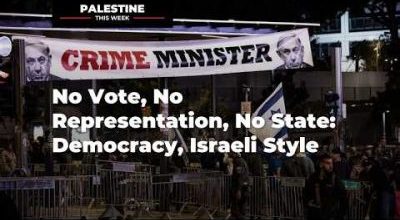
No Vote, No Representation, No State: Democracy, Israeli Style
or go to
Aletho News Archives – Video-Images
From the Archives
Sanctions, War and the Policy of Dual Containment
By SASAN FAYAZMANESH | March 17, 2008
It is now nearly three decades since the Unites States adopted the policy of dual containment of Iran and Iraq. While much has been written about the containment of Iraq, there has been very little in-depth analysis of this policy when it comes to Iran. In a book that is going to be released on March 31, 2008, entitled The United States and Iran: Sanctions, Wars and the Policy of Dual Containment (Routledge), I attempt to address this shortcoming by investigating when and why the US policy of containment of Iran came about, how it evolved, and where it stands today.[1] To the extent that Israel has been involved in US policy making, the study will also include the role that Israel has played in the containment of Iran. Also, since the fate of Iran has been inextricably linked to that of Iraq, occasionally the investigation will overlap with the containment of Iraq.
The policy of dual containment of Iran and Iraq originated during the Carter Administration, but it was not until the Clinton Administration that the expression “dual containment” became popular. … continue
Blog Roll
 Aletho News
- Elmo Sold mRNA Jabs to Your Toddler. Now They Are “Off-Label.”
- British state targets Palestine Action with yet another crooked trial
- Americans are paying the price to preserve Israel’s nuclear hegemony
- Resistance factions are necessary to ensure a permanent US Iraq withdrawal
- How Israel destabilizes the Middle East: Denying sovereignty and the right to exist
- Europe’s Establishment Is Embracing War – and Losing Voters
- NATO chief advocates war of aggression
- No Vote, No Representation, No State: Democracy, Israeli Style
- Zionist Bought Senate Blocks Information About American Citizens Killed By Israel
- While Gaza dominates the UN, these are the people keeping it alive
- If Americans Knew
- Israeli Soldiers Abduct At Least 22 Across Occupied West Bank
- Eight Palestinians Killed in Israeli Attacks on Gaza
- Israeli former leaders and security chiefs threaten legal action over ‘Jewish terrorism’
- Israel map in LA Times ad includes all land from the river to the sea
- Inside Lebanon’s 200-page dossier on Israeli war crimes
- Flydubai, genocide, settler violence, Trump abuse of power to deport – Daily Update
- Counting Antisemitic Incidents: What the ADL Audit Reveals — and Obscures
- Mamdani releases plan to combat antisemitism and hate crimes in New York City
- Iran’s Revolutionary Guards Publish Letter to the American People
- DMFI launches $1 million ad campaign supporting Virginia’s Elaine Luria
- No Tricks Zone
- Green Energy Debacle: German Expert Professor Fritz Vahrenholt Warns Of Severe Economic And Social Consequences
- Two More Paleo Reconstructions Affirm Meters-Higher Sea Levels Across Ireland, Brazil 7000-6000 Years Ago
- New Study: Earth And Venus Surface Warmth Largely Explained By Convection And Lapse Rate, Not CO2 Or Radiation
- 2025 Nature Paper Claiming Worsening Global Drought Gets RETRACTED …Heavily Flawed
- New Study: ‘Global Drought Shows No Detectable Recent Acceleration Under Climate Warming’
- Economic Masterminds: German Socialists Suggest Taxing Productivity Gains Stemming From Using AI
- The South China Sea Has Not Been Cooperating With The Climate Change Narrative
- Energy Crisis: Germany Enters Heating Season With Historically Low Gas Reserve Fill Levels
- New Study: The Antarctic Ice Sheet Gained Mass From 2020-2024 Due To Staggering Snow And Ice Accumulation
- Study: Ocean Heating Rates From Thousands Of Years Ago ‘Dwarf’ Modern Ocean Heating Rates

