Does Our Economy Really Have to Run on Fraud?
The Angelides Commission Squints Back at the Bank Bailout and the Fall of Lehman
By MICHAEL HUDSON | CounterPunch | September 3, 2010
What is the difference between today’s economy and Lehman Brothers just before it collapsed in September 2008? Should Lehman, the economy, Wall Street – or none of the above – be bailed out of bad mortgage debt? How did the Fed and Treasury decide which Wall Street firms to save – and how do they decide whether or not to save U.S. companies, personal mortgage debtors, states and cities from bankruptcy and insolvency today? Why did it start by saving the richest financial institutions, leaving the “real” economy locked in debt deflation?
Stated another way, why was Lehman the only Wall Street firm permitted to go under? How does the logic that Washington used in its case compare to how it is treating the economy at large? Why bail out Wall Street – whose managers are rich enough not to need to spend their gains – and not the quarter of U.S. homeowners unfortunate enough also to suffer “negative equity” but not qualify for the help that the officials they elect gave to Wall Street’s winners by enabling Bear Stearns, A.I.G., Countrywide Financial and other gamblers to pay their bad debts?
There was disagreement last Wednesday at the Financial Crisis Inquiry Commission now plodding along through its post mortem hearings on the causes of Wall Street’s autumn 2008 collapse and ensuing bailout. Federal Reserve economists argue that the economy – and Wall Street firms apart from Lehman – merely had a liquidity problem, a temporary failure to find buyers for its junk mortgages. By contrast, Lehman had a more deep-seated “balance sheet” problem: negative equity. A taxpayer bailout would have been an utter waste, not recoverable.
Lehman CEO Dick Fuld is bitter. He claims that Lehman was unfairly singled out. After all, the Fed lent $29 billion to help JPMorgan Chase buy out Bear Stearns the preceding spring. In the wake of Lehman’s failure it seemed to gain the courage to say, “Never again,” and avoided new collapses by bailing out A.I.G. – saving all its counter-parties from having to take a loss.
Was this not a giveaway? Fuld implied. Why couldn’t the Fed and Treasury do for Lehman what they did with other Wall Street investment firms and stock brokers: let it reclassify itself as a bank so it could pawn off its junk mortgages at the Fed’s discount window for 100 cents on the dollar, sticking taxpayers with the loss? (And by the way, will these firms ever be asked to buy back these mortgages at the price they borrowed against from the government? Or will they be allowed to walk away from their debts in a Wall Street version of “jingle mail”?)
This is the soap opera that Americans should be watching, if only it weren’t conducted in the foreign language of jargon and euphemism. At issue is whether Lehman’s crisis was merely a temporary “liquidity problem,” that time would have cleaned up; or, did the firm suffer a more deep-seated “balance sheet problem” (negative equity), as Federal Reserve Chairman Ben Bernanke claims – a junk balance sheet, composed of assets that not only had no buyers at the time, but had no visible likelihood of recovering their market price even after the $13 trillion the Treasury and Federal Reserve have spent to bail out Wall Street.
Insisting that Lehman should have shared in Washington’s $13 trillion giveaway. Fuld testified that his firm was just as savable as Countrywide or A.I.G. – or Fannie Mae for that matter. Lehman was perversely singled out, he claims. Was it not indeed as savable as the Fed and Treasury claim the U.S. real estate sector is? Like over-mortgaged homeowners, all it needed was enough time to finish selling off its portfolio, given enough loan support to tide it over.
The problem, of course, is that the securities that Lehman hoped to pawn off were fraudulent junk. American homeowners are victims, not crooks. Wall Street bailed out crooks at Countrywide and its cohorts. The credit-rating agency Fitch has found financial fraud in every mortgage package it has examined. And these are the packages that have made Wall Street rich and powerful enough to gain Washington bailouts to establish them as a new ruling class, bailouts to use for buying up Washington politicians and lawmakers, and for buying out the popular press to tell people how necessary Wall Street financial practice is to “support” the economy and “create wealth.”
Could any other daytime telecast have a more typecast villain than Fuld? A novelist would be hard-put to better personify greed, arrogantly playing bridge with his boss while Lehman burned. Yet his testimony has a certain logic. If the negative equity suffered by a quarter of U.S. homeowners can be saved, as the Fed claims it can, where should the line be drawn?
Or to put this question the other way around, why are ten million American homeowners being treated like Lehman, if the Fed believes that they are as savable as Countrywide and A.I.G.?
Huge sums are at stake, because the bailout has left little for Social Security, and nothing to bail out the insolvent states and cities, or for more stimuli to pull the national economy out of depression.
Most relevant in Fuld’s self-pitying defense before the Angelides Committee is not what he said about his own firm, but his accusation that the Fed and Treasury rescued the rest of Wall Street. Weren’t other firms just as bad? Why was Lehman singled out?
The Fed’s witnesses gave a devastating reply. They drew a clear distinction between a temporary “liquidity problem” and outright negative net worth – the “balance-sheet problem” of insufficient assets to cover one’s debts. Lehman was so badly managed, the Fed claimed, so reckless and arrogant in its belief that it could cheat its customers by selling junk at a huge markup, that it could not have been rescued except by an outright taxpayer giveaway. As the Fed’s Chief Counsel, Scott Alvarez, put matters: “I think that if the Federal Reserve had lent to Lehman … in the way that some people think without adequate collateral … this hearing and all other hearings would have only been about how we had wasted the taxpayers’ money – and I don’t expect we would have been repaid.” Like the city of Oakland, in Gertrude Stein’s derisive phrase, there was no “there” there.
Included in the hearings’ evidence is an exasperated e-mail sent by Treasury Secretary Hank Paulson’s chief of staff, Jim Wilkinson, on Sept. 9, 2008: “I just can’t stomach us bailing out Lehman. Will be horrible in the press.” Five days later, on Sept. 14, he added that unless a private buyer could be found (e.g., as JPMorgan Chase stepped forward to buy Bear Stearns), “No way govt money is coming in … also just did a call with the WH [White House] and usg [U.S. Government] is united behind no money … I think we are headed for winddown.”(1)
Lehman’s problem was not just temporary illiquidity. It had a fatal balance-sheet problem: Its assets were not worth anywhere near what it owed. So with poetic justice, it was in the same position as the subprime borrowers whose junk mortgages it had underwritten and sold to investors gullible enough to believe Moody’s and Standard and Poor’s AAA ratings. This fraudulent junk was supposed to be as safe as a U.S. Treasury bond. But it turned out to be only as safe as Social Security and state pension promises are in today’s “Big fish eat little fish” world.
Yet Fuld is correct in pointing out that not only Bear Stearns and A.I.G., but also Morgan Stanley and Goldman Sachs would have failed without state support. So the question remains: Why bail out these firms (and their counter-parties!) but not Lehman?
This is too narrow a scope to pose the proper question. What needs to be discussed is the result of Washington arranging for Wall Street to repay its TARP, A.I.G. and other bailout money – including that of Fannie Mae and Freddie Mac – by “earning its way out of debt” at the “real” economy’s expense. Why has Washington refused to write down the bad debts of homeowners, states and cities, and companies facing bankruptcy unless they annul their pension promises to their employees? Why is Washington treating the American economy like it treated Lehman and telling it to “drop dead”?
The explanation is that a double standard exists. The wealthy get bailed out – the creditors, not the debtors. And even the fraudsters, not their victims.
Sidestepping the Fraud Issue
Recent federal bankruptcy proceedings have exposed Lehman’s deceptive off-balance-sheet accounting gimmicks such as Repo 105 to conceal its true position. No fraud charges have yet been levied, but this is the invisible elephant in the Washington committee rooms. “Everyone was doing it,” so that makes it legal – or what is the same thing these days, non-prosecutable in practice. To prosecute would be to disrupt the financial system – and it is Fed doctrine that the economy cannot survive without a financial system enabled to “earn its way out of debt” by raking off the needed wealth from the rest of the economy?
So the Fed, the Treasury and the Justice Department have merely taken the timid baby step of pointing out that Lehman suffered from such bad management that no firm was willing to buy it out. Barclay’s was interested, but Fuld was so greedy that he found its offer not rich enough for his taste. So he ended up with nothing. It is a classic morality tale. But evidently not fraud.
The fraud issue lies as far outside the scope of the financial committee meetings as the question of how the economy should cope with its unpayably high mortgage, state and local debts in the face of its inadequately funded pension obligations. Fed Chairman Bernanke testified on Thursday, September 2, that “the market” itself breeds what most people would call fraud. Widening the market for home ownership necessarily involves lowering loan standards, he explained. But as the Lehman failure illustrates, where should we draw the line between “illiquidity” and insolvency on the one hand, and higher risk and outright fraud?
The Fed argues that the economy cannot recover without a solvent financial system. But what about that large part of the financial system based on fraud? Would the economy fall apart without it – without mortgage fraud, without deceptive packaging of junk mortgages, and for that matter without computerized gambling on derivatives? What of the credit-ratings agencies whose AAA writings were as much up for sale as the conscience and honesty of politicians on the Senate and House Banking Committees? Do we really need them?
And does the economy need more credit (that is, debt)? Or does it need jobs? Does it need to un-tax the banks and give tax-favoritism to Wall Street (“capital gains” tax rates) to enable it to earn its way out of debt at the expense of the production-and-consumption economy?
The question that Washington financial committees should be asking (and economics textbooks should be posing) is whether wider home ownership is really dependent on easier and looser lending standards. After all, the effect of easy credit is to enable borrowers to bid up housing prices. Is this really how to make the U.S. economy more competitive – given the fact that industrial labor now typically pays 40 per cent of its wage income for housing?
Or, does the Fed’s easy-money policy deregulation of oversight open the way for asset-price inflation that puts home ownership even further out of reach – except at the price of running up a lifetime of debt to the banks that write the loans on their keyboard at steep markups over their cost of funding from the compliant Fed?
Qui bono?
Who is to benefit from the Fed’s easy money policy – consumers and homeowners, or Wall Street? This is the broad issue that should be discussed. What would have happened without the bailout? (Remember, Republican Congressmen opposed it – before that fatal Friday when “maverick” John McCain rushed back to Washington and said he would not debate Obama that evening unless Congress approved the bailout of his Wall Street backers.) What if it had been the debtors who were bailed out by a write-down of bad debts, instead of the lenders who had made bad loans and the large institutions that bought them?
The bailout has saddled taxpayers not only with $13 trillion that now must be sacrificed by the economy at large (but not by Wall Street), with the cost of a decade-long depression resulting from keeping the bad debt on the books. This is what rightly should be deemed criminal.
Defenders of Wall Street insist that there was no alternative. And the committee hearings are carefully only listening to such people, because these are very respectable hearings. They are writing mythology, almost as if they are crafting a new religion. In this new ethic, Wall Street financial institutions – “credit creators,” that is, debt creators – are supposed to fund industry, not strip assets or make bad loans. Without rich people, who would “create jobs”? Such is the self-serving logic of Wall Street. For them, Wall Street is the economy. The wealth of a nation is worth whatever banks will lend, by collateralizing the economic surplus for debt service.
What the Angelides Commission really should focus on is whether this is true or false. That would make it a soap opera worth watching. The Fed so far has stonewalled attempts to discover just who was bailed out in autumn 2008? But most important of all is, what dynamic was bailed out? What class of people?
The answer would seem to be, financial firms employing and serving the nation’s wealthiest 1 per cent? Any and all fraudsters among their ranks? (There has not been a single prosecution, as Bill Black reminds us.) Or the remaining 99 per cent of the population – their bank deposits and indeed, their jobs themselves?
Academic textbooks pretend that the economy is all about production and consumption – factories producing the things their workers buy. The distribution of wealth does not appear, nor is it regularly tracked in statistics. But in Washington and at the hearings, the economy seems to be all about lending and debt, all about balance sheets.
I believe that the beneficiaries were fraudsters, and that the system cannot be saved. Trying to save it by keeping the debts in place – and letting Wall Street banks “work their way out of debt” at the U.S. economy’s expense – threatens to lock the economy in a chronic debt deflation and depression.
At issue is the concept of capital. Does money that is made by short-term, computer-driven financial trades qualify as “capital formation” and hence deserving of tax breaks? Are the billions of dollars of “earnings” reported by Wall Street speculators to be taxed at the low 15 per cent “capital gains” rate? That is only a fraction of the income-tax rate that most workers pay – on top of which is piled the 11 per cent FICA wage withholding for Social Security and Medicare that all workers have to pay on their salaries up to the cut-off point of about $102,000. (This cut-off frees from this tax the tens of millions of dollars that hedge fund traders pay themselves.) Or should these trading gains – a zero-sum activity where one party’s gain is, by definition, another’s loss (usually one’s customers) – be taxed more highly than poverty-level income of workers?
A short while ago the Blackstone hedge fund’s co-founder, Stephen Schwarzman, characterized the attempt to tax short-term arbitrage trading gains at the same rate that wage-earners pay as analogous to Adolph Hitler’s invasion of Poland in 1939. It is a class war against fraudsters and criminals – an unfair war as serious as World War II. In Schwarzman’s apocalyptic vision the Democrats are re-enacting the role of Adolph Hitler by mounting a fiscal blitzkrieg to force billionaires to pay as high a tax rate as workers. Are not Wall Street firms doing “God’s work,”as Goldman Sachs chairman Lloyd Blankfein, put it last fall? And if they are, then are not those who would tax or criticize Wall Street “God-killers”?
If religion can be turned on its head like this – where the Invisible Hand of Wall Street (invisible to the Justice Department, at least) is elevated to a faux-Deist moral philosophy – is it any surprise that economic orthodoxy and formerly progressive tax policy are succumbing? The rentiers are fighting back – against the Enlightenment, against Progressive Era tax policy, and against hopes for U.S. economic recovery. Given today’s florid emotionalism when it comes to discussing Wall Street finances, it hardly is surprising that the Angelides hearings do not dare venture into such territory as to ask whether the bottom 90 per cent of the U.S. economy might need to be bailed out with debt relief just as Wall Street’s elites were.
On Thursday, Fed Chairman Bernanke tried to put the financial flow of funds that led up to the crisis in perspective. In his testimony before the Financial Crisis Inquiry Commission he described a self-feeding process that actually started with the U.S. balance-of-payments deficit that made foreigners so flush with dollars. They understandably wanted yields higher than the Treasury was paying, as the Fed was flooding the economy with credit to keep asset prices afloat to save the banks from having to take loan write-downs and admit that debt creation was not really the same thing as Alan Greenspan euphemized in calling it “wealth creation.” So foreign financial institutions became a large but overly trusting market for packaged junk mortgages.
When asked just who was pushing the great explosion of mortgage lending, Bernanke pointed to the mortgage packagers – Wall Street profiting from the commissions and rake-offs it was making by pretending that the loans were not bad. However, he reminded his audience, there also had to be popular demand for housing. People were panicked. They worried that if they did not buy a home back in 2005, they could not afford to buy in the future. And they were cajoled with financial televangelists assuring them that they would always enjoy the option of selling at a profit. But Bernanke said nothing about fraud in all this. To widen the market for home ownership, banks had to write more mortgages, and this required lowering their standards.
So they did it all for us, for “the people” – and the backers of Fannie Mae and Freddy Mac who egged them on.
Where does “lowering loan standards” turn into outright fraud? Has that simply become part of “the market”? This is what the commission seems to fear to address. But it is getting late – already we are in September, and the report is scheduled for December. So is this really going to be “it”? This would be like a soap opera ending in the middle of the desert, with the main protagonists stranded. This seems to be where the Commission is leaving the U.S. economy as it waits for the recommendations of the Joint Commission to Roll Back Social Security, or whatever the name of Obama’s Republicanized Democratic commission is more formally called. The result is more like the cliffhanger of a serial, leaving the viewer to try and imagine how the protagonist – in this case, the economy – will ever manage to be saved.
Michael Hudson is a former Wall Street economist. A Distinguished Research Professor at University of Missouri, Kansas City (UMKC), he is the author of many books, including Super Imperialism: The Economic Strategy of American Empire (new ed., Pluto Press, 2002) and Trade, Development and Foreign Debt: A History of Theories of Polarization v. Convergence in the World Economy. He can be reached via his website, mh@michael-hudson.com
(1) Tom Braithwaite, “Fuld criticises Fed for letting Lehman fail,” Financial Times, September 2, 2010, and John D. McKinnon and Victoria McGrane, “Clashing Testimony Over Lehman Bankruptcy,” Wall Street Journal, Sept. 2, 2010.
Zelaya calls on ALBA to question Honduras about funds
August 25, 2010 – VHeadline News – Editor Patrick J. O’Donoghue reports:
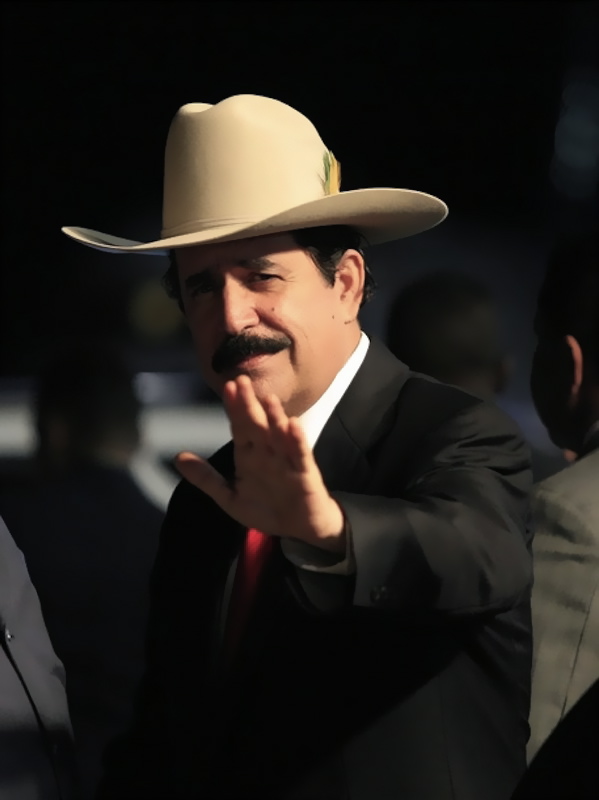 The ousted President of Honduras, Manuel Zelaya has called on member countries of the Bolivarian Alliance for the Americas (ALBA) to put pressure on the Honduran government, asking for an explanation about the destiny of certain funds.
Zelaya said the current government is bent on “fleecing” funds that were given by other countries for development and the fight against exclusion.
Zelaya insisted that when he was ousted from government, he had left the funds intact in the national treasury.
The appeal to ALBA member countries, he declared, is an answer to a campaign of disinformation and lies launched by Honduran broadsheets, Diario El Heraldo and Diario La Prensa and taken up by the Spanish edition of CNN.
The same newspapers, Zelaya condemned, were responsible for the climate of disinformation that was evident during the coup d’etat against him.
The funds Zelaya is referring to came from ALBA and his government is being accused of diverting $98 million. Zelaya accused CNN of not verifying its sources and of hiding acts of repression that occur on a daily basis in Honduras.
According to the High Court of Accounts president, Miguel Angel Mejia, Venezuela donated $100 million to the permanent commission of contingencies, of which 2 million were used and the rest transferred to the presidency under Zelaya.
Zelaya denied the charge and for that reason has called on ALBA member countries: Antigua and Barbuda, Bolivia, Cuba, Dominica, Ecuador, Nicaragua, St Vincent and the Grenadines and Venezuela to ask the Honduran government for an explanation.
Obama’s Chinatown
Connections related to the reports that Obama’s collapse on Israel resulted from pressure in Chicago
By Philip Weiss on August 11, 2010
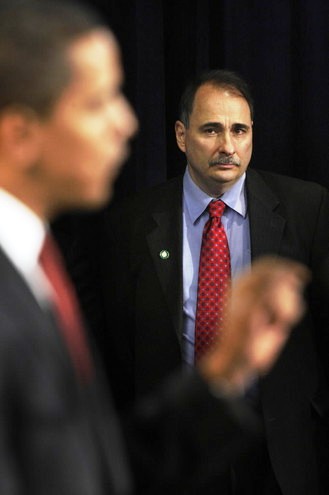
Probably closer to the Obamas than Lester Crown is Marty Nesbitt (Obama’s “confidante and golfing buddy”). For the sake of the Obamas’ dear friendship with Nesbitt’s wife Anita Blanchard, Michelle made her ill-fated trip to Spain.
Earlier, to advance Nesbitt’s keen interest in Chicago’s bid for the 2016 Olympics, both Michelle and Barack made the sudden trip in 2009 to Copenhagen which also took people by surprise, and gave the Obamas their first taste of bad press.
They must like Marty Nesbitt a lot and owe him a lot to have gone so visibly out of their way for his sake. Incidentally, he was the treasurer of Obama’s presidential campaign. Nesbitt is a close friend of Rahm Emanuel and David Axelrod.
An Israel connection comes in, just possibly, there but more plainly when you connect two other dots:
Nesbitt works with the Pritzker Realty Group, and another close Obama friend is Penny Pritzker, a scion of the family of the Hyatt fortune, which has has been used for projects far less liberal in Israel than the Pritzker-Nesbitt politics are in the U.S. (“In 2003, Forward reported on how he had ‘been courting the pro-Israel constituency.’ He co-sponsored an amendment to the Illinois Pension Code allowing the state of Illinois to lend money to the Israeli government. Among his early backers was Penny Pritzker — now his national campaign finance chair — scion of the liberal but staunchly Zionist family that owns the Hyatt hotel chain. (The Hyatt Regency hotel on Mount Scopus was built on land forcibly expropriated from Palestinian owners after Israel occupied East Jerusalem in 1967)”–Abunimah).
All these people are linked through the Chicago Housing Authority and Valerie Jarrett (chair 1992-95, Chicago Department of Planning and Development; chair 1995-2005, Chicago Transit Board).
If I were a Republican J.J. Gittes looking for the Noah Cross among all these Mulwrays, I’d be looking here.
Details of Canadian Security Intelligence Service probe on foreign influence being withheld
Grace Batchoun | Canadians for Justice and Peace in the Middle East | August 10, 2010
Montreal – The Harper government is still withholding the details of Canadian Security Intelligence Service (CSIS) investigations that prompted CSIS Director Richard Fadden to comment on foreign influence on Canadian politicians. The media have been focusing on China as one source of inappropriate influence. However, Fadden indicated that at least five countries, including China and Middle East nations were involved. He did not specify which Middle Eastern countries. The government’s secrecy may indicate that Israel – to which the Harper government has given resolute uncritical support – is among the Middle Eastern countries that CSIS investigations reveal are unduly influencing Canada’s politicians.
In his comments, Fadden talked about foreign influence exercised through university and social clubs. He noted “You pay [for] their trips and … when an event is occurring that is of particular interest to country ‘X,’ you call up and you ask the person to take a particular view,” Fadden said. Currently, Hillel Clubs operate on most Canadian campuses, and their mandates explicitly include “Israel advocacy” and promoting Jewish students’ identification with Israel. Opportunities for all-expenses-paid two-week trips to Israel are also made available to students. A similar process occurs with federal MPs and provincial legislators. The Canada-Israel Committee has been subsidizing trips to Israel for MPs and provincial legislators for decades.
Canadians for Justice and Peace in the Middle East is concerned about the influence that Israel and the Canada-Israel Committee exercise on federal politicians through travel subsidies and possibly other means. “We urge the government to disclose now which countries CSIS found exercising undue influence, and the means by which they do so,” says CJPME President Thomas Woodley. As pointed out by veteran CBC journalist Brian Stewart, trips subsidized by foreign governments are “carefully planned, often by the host nation’s intelligence arm.” CJPME believes that Canadian policy should be moulded by respect for international law, and is concerned that Canadian Middle East policy could be skewed through the type of influence Fadden described.
According to the federal ethics commissioner, the Canada-Israel Committee paid over $160,000 for various one-week trips by 14 MPs to Israel in 2009 alone. The Canada-Israel Committee subsidized a July 2010 trip by seven MPs: Conservative MPs John Duncan, Jeff Watson, Edward Fast and Brent Rathgeber, Liberal MPs Scott Simms and Anthony Rota and NDP MP Glenn Thibeault. No other Middle East nation has hosted so many MPs on such frequent and expensive trips.
US — Venezuela: The Empire Strikes Back (and Loses)
By James Petras | 08.09.2010
Introduction
US policy toward Venezuela has taken many tactical turns, but the objective has been the same: to oust President Chavez, reverse the nationalization of big businesses, abolish the mass community and worker based councils and revert the country into a client-state.
Washington funded and politically backed a military coup in 2002, a bosses’ lockout in 2002-03, a referendum and numerous media, political and NGO efforts to undermine the regime. Up to now all of the White House efforts have been a failure – Chavez has repeatedly won free elections, retained the loyalty of the military and the backing of the vast majority of the urban and rural poor, the bulk of the working class and the public sector middle class.
Washington has not given up nor reconciled itself to coming to terms with the elected government of President Chavez. Instead with each defeat of its internal collaborators, the White House has increasingly turned toward an ‘outsider’ strategy, building up a powerful ‘cordon militaire’, surrounding Venezuela with a large-scale military presence spanning Central America, northern South America and the Caribbean. The Obama White House backed a military coup in Honduras, ousting the democratically elected government of President Zelaya (in June 2009), a Chavez ally, and replacing it with a puppet regime supportive of Washington’s anti-Chavez military policies. The Pentagon secured seven military bases in eastern Colombia (in 2009) facing the Venezuelan frontier, thanks to its client ruler, Alvaro Uribe, the notorious narco-paramilitary President. In mid 2010 Washington secured an unprecedented agreement with the approval of right wing President Laura Chinchilla of Costa Rica, to station 7000 US combat troops, over 200 helicopters, and dozens of ships pointing toward Venezuela, under the pretext of pursuing narco-traffickers. Currently the US is negotiating with the rightist regime of President Ricardo Martinelli of Panama, the possibility of re-establishing a military base in the former Canal Zone. Together with the Fourth Fleet patrolling off shore, 20,000 troops in Haiti, and an airbase in Aruba, Washington has encircled Venezuela from the West and North, establishing jumping off positions for a direct intervention if the favorable internal circumstances arise.
The White House’s militarization of its policy toward Latin America, and Venezuela in particular, is part of its global policy of armed confrontation and interventions. Most notably the Obama regime has widened the scope and extent of operations of clandestine death squads now operating in 70 countries on four continents, increased the US combat presence in Afghanistan by over 30,000 troops plus over 100,000 contract mercenaries operating cross border into Pakistan and Iran, and provided material and logistical assistance to Iranian armed terrorists. Obama has escalated provocative military exercises off the coast of North Korea and in the China Sea, evoking protests from Beijing. Equally revealing, the Obama regime has increased the military budget to over a trillion dollars, despite the economic crises, the monstrous deficit and the calls for austerity cuts in Medicare, Medicaid and Social Security.
In other words, Washington’s military posture toward Latin America and especially toward the democratic socialist government of President Chavez is part and parcel of a general military response to any country or movements which refuse to submit to US domination. The question arises – why does the White House rely on the military option? Why militarize foreign policy to gain favorable outcomes in the face of decided opposition? The answer, in part, is that the US has lost most of the economic leverage, which it previously exercised, to secure the ousting or submission of adversary governments. Most Asian and Latin American economies have secured a degree of autonomy. Others do not depend on US-influenced international financial organizations (the IMF, World Bank); they secure commercial loans. Most have diversified their trading and investment partners and deepened regional ties. In some countries, such as Brazil, Argentina, Chile and Peru, China has replaced the US as their principal trading partner. Most countries no longer look to US “aid” to stimulate growth, they seek joint ventures with multi-national corporations, frequently based outside of North America. To the extent that economic arm twisting is no longer an effective tool to secure compliance, Washington has resorted more and more to the military option. To the extent that the US financial elite have hollowed out the US industrial sector, Washington has been unable to rebuild its international economic levers.
Major diplomatic failures, resulting from its incapacity to adapt to basic shifts in global power, have also prompted Washington to shift from political negotiations and compromise toward military intervention and confrontation. US policymakers are still frozen in the time warp of the 1980’s and 1990’s, the heyday of client rulers and economic plunder, when Washington secured global support, privatized enterprises, exploited public debt financings and was relatively unchallenged in the world market. By the end of the1990’s, the rise of Asian capitalism, mass anti-neo-liberal uprisings, the ascendancy of center-left regimes in Latin America, the repeated financial crises and stock market crashes in the US and the EU and the increase in commodity prices led to a realignment of global power. Washington’s efforts to pursue policies attuned to the previous decades conflicted with the new realities of diversified markets, newly emerging powers and relatively independent political regimes linked to new mass constituencies.
Washington’s diplomatic proposals to isolate Cuba and Venezuela were rejected by all of the Latin American countries. The effort to revive free trade agreements, which privileged US exporters, were rejected. Unwilling to recognize the limits of imperial diplomatic power and moderate its proposals, the Obama regime turned increasingly toward the military option.
Washington’s struggle to re-assert imperial power, via interventionary politics fared no better than its diplomatic initiatives. The US-backed coups in Venezuela (2002) and Bolivia (2008) were defeated by mass popular mobilizations and the loyalty of the military to the incumbent regimes. Likewise in Argentina, Ecuador and Brazil, post-neo-liberal regimes, backed by industrial, mining and agro-export elites and popular classes were able to beat back traditional pro-US neo-liberal elites rooted in the politics of the 1990’s and earlier. The politics of destabilization failed to dislodge the new governments’ pursuing relatively independent foreign policies and refusing to return to the old order of US supremacy.
Where Washington has regained political terrain with the election of rightist political regimes – it has been through its ability to exploit the ‘exhaustion’ of center-left politics (Chile), political fraud and militarization (Honduras and Mexico), decline of the national popular left (Costa Rica, Panama and Peru) and the consolidation of a highly militarized police state (Colombia). These electoral victories, especially in Colombia, have convinced Washington that the military option, combined with deep intervention and exploitation of open electoral processes, is the way to reverse the left turn in Latin America – especially in Venezuela.
US Policy to Venezuela: Combining Military and Electoral Tactics
US efforts to overthrow President Chavez’s democratic government borrow many of the tactics applied against previous democratic adversaries. These include border incursions by Colombian paramilitary and military forces similar to cross border attacks by the US sponsored “contras” against the Sandinista government of Nicaragua during the 1980’s. The attempt to encircle and isolate Venezuela is similar to Washington’s policy over the past half century against Cuba. The funneling of funds to opposition groups, parties, media and NGO’s via US agencies and “dummy” foundations is a repeat of the tactics applied to destabilize the democratic government of Salvador Allende of Chile 1970-73, Evo Morales in Bolivia 2006-2010 and numerous other governments in the region.
Washington’s multiple track policy, in its current phase, is directed at escalating a war of nerves, by constantly raising security threats. The military provocations, in part, are a ‘testing’ of Venezuela’s security preparations, probing for weaknesses in its ground, air and maritime defenses. These provocations also are part of a strategy of attrition, to force the Chavez government to put its defense forces on “alert” and mobilize the population and then to temporarily reduce the pressure until the next provocation. The purpose is to discredit the government’s constant reference to threats, in order to weaken vigilance and when circumstances allow making an opportune strike.
Washington’s external military build-up is designed to intimidate Caribbean and Central American countries who may be looking toward closer economic relations with Venezuela. The show of force is also designed to encourage the internal opposition toward more aggressive actions. At the same time the confrontational posture is directed at the “weak links” or “moderate” sectors of the Chavista government who are nervous and anxious for “reconciliation” even at the price of unprincipled concessions to the opposition and the new Colombia regime of President Santos. The increasing military presence is designed to slow the internal radicalization process and to preclude Venezuela’s growing ties with Middle Eastern and other regimes, adverse to US hegemony. Washington is betting that a military build-up and psychological warfare linking Venezuela with revolutionary insurgents like the Colombian guerrilla will result in Chavez’s allies and friends in Latin America putting distance toward him. Equally important Washington’s unsubstantiated accusations that Venezuela is harboring FARC guerilla encampments, is meant to pressure Chavez to lessen his support to all social movements in the region, including the landless Rural Workers of Brazil as well as non- violent human rights groups and trade unions in Colombia. Washington wants a military “polarization”: US or Chavez. It rejects the political polarization existing today which pits Washington against MERCOSUR, the organization of economic integration involving Brazil, Argentina, Uruguay and Paraguay with Venezuela in line for membership or ALBA (economic integration involving Venezuela, Bolivia, Nicaragua, Ecuador and several Caribbean states.
The FARC Factor
Obama and now ex-President Uribe accused Venezuela of offering sanctuary for Colombian guerillas (FARC and ELN). In reality this is a ploy to pressure President Chavez to denounce or at a minimum demand that the FARC give up their armed struggle on terms dictated by the US and Colombian regime.
Contrary to President Uribe and the State Department’s boasts that the FARC is a declining, isolated and defeated fragment of the past, as a result of their successful counter-insurgency campaigns, a recent detailed field study by a Colombian researcher La guerra contra las FARC y la guerra de las FARC demonstrates that in the last 2 years the guerrillas have consolidated their influence over one-third of the country, and that the regime in Bogota controls only half the country. After suffering major defeats in 2008, the FARC and ELN have steadily advanced throughout 2009-2010 inflicting over 1300 military casualties last year and probably near double this year. (La Jornada 8/6/2010). The resurgence and advance of the FARC has crucial importance as far as Washington’s military campaign again Venezuela. It also affects the position of its “strategic ally” – Santos regime. First it demonstrates that despite $6 billion plus in US military aid to Colombia, its counter-insurgency campaign to “exterminate” the FARC has failed. Secondly, the FARC’s offensive opens a “second front” in Colombia, weakening any effort to launch an invasion of Venezuela using Colombia as a “springboard”. Thirdly, faced with a growing internal class war, the new President Santos is more likely to seek to lessen tensions with Venezuela, hoping to relocate troops from the frontier of its neighbor toward the growing guerilla insurgency. In a sense, despite Chavez misgivings about the guerrillas and outspoken calls for ending the guerrilla struggle, the resurgence of the armed movements are likely a prime factor in lessening the prospects of a US directed intervention.
Conclusion
Washington’s multi-track policy directed at destabilizing the Venezuelan government has by and large been counter-productive, suffering major failures and few successes.
The hard line toward Venezuela has failed to “line up” any support in the major countries of Latin America, with the exception of Colombia. It has isolated Washington not Caracas. The military threats may have radicalized the socio-economic measures adopted by Chavez not moderated them. The threats and accusations emanating from Colombia have strengthened internal cohesion in Venezuela, except among the hard-core opposition groups. They have also led to Venezuela’s upgrading its intelligence, police and military operations. The Colombian provocations have led to a break in relations and an 80% decline in the multi-billion dollar cross border trade, bankrupting numerous Colombian firms, as Venezuela substitutes Brazilian and Argentine industrial and agrarian imports. The effects of the policies of tension and the “war of attrition” are hard to measure, especially in terms of their impact on the forthcoming crucial legislative elections on September 26, 2010. No doubt, Venezuela’s failure to regulate and control the multi-million flow of US funds to its Venezuelan collaborators has made a significant impact on their organizational capability. No doubt the economic downturn has had some effect in limiting public spending on new social programs. Likewise, the incompetence and corruption of several top Chavista officials, especially in public food distribution, housing and public safety will have an electoral impact.
It is likely that these “internal” factors are much more influential in shaping the alignment of Venezuela’s electoral outcome, than the aggressive confrontational politics adopted by Washington. Nevertheless, if the pro-US opposition substantially increases its legislative presence in the September 26 elections – beyond one-third of the Congress people – they will attempt to block social changes and economic stimulus policies. The US will intensify its efforts to pressure Venezuela to divert resources to security issues in order to undermine social-economic expenditures which sustain the support of the lower 60% of the Venezuelan population.
Up to now, White House policy based on greater militarization and virtually no new economic initiatives has been a failure. It has encouraged the larger Latin American countries to increase regional integration, as witnessed by new custom and tariff agreements taken at the MERCOSUR meeting in early August of this year. It has not led to any diminuation of hostilities between the US and the ALBA countries. It has not increased US influence. Instead Latin America has moved toward a new regional political organization UNASUR (which excludes the US), downgrading the Organization of American States which the US uses to push its agenda. Ironically, the only bright lights, favoring US influence, comes from internal, electoral processes. Rightist candidate Jose Serra is running a strong race in the upcoming Brazilian Presidential elections. In Argentina, Paraguay and Bolivia the pro-US right is regrouping and hoping to return to power.
What Washington fails to understand is that across the political spectrum from the left to the center-right, political leaders are appalled and opposed to the US push and promotion of the military option as the centerpiece of policy. Practically all political leaders have unpleasant memories of exile and persecution from the previous cycle of US backed military regimes. The self-proclaimed extra-territorial reach of the US military, operating out of its seven bases in Colombia, has widened the breach between the centrist and center-left democratic regimes and the Obama White House. In other words, Latin America perceives US military aggression toward Venezuela as a “first step” southward toward their countries. That, and the drive for greater political independence and more diversified markets, have weakened Washington’s diplomatic and political attempts to isolate Venezuela.
Colombia’s new President Santos, made out of the same rightist mold as his predecessor Alvaro Uribe, faces a difficult choice – continuing as an instrument of US military confrontation and destabilization of Venezuela at the cost of several billion dollars in trade losses and isolation from the rest of Latin America or lessening border tensions and incursions, dropping the provocative rhetoric and normalizing relations with Venezuela. If the latter takes place, the US will lose its last best instrument for its external strategy of “tensions” and psych warfare. Washington will be left with two options: a unilateral direct military intervention or funding of political warfare through its domestic collaborators.
In the meantime President Chavez and his supporters would do well to concentrate on pulling the economy out of recession, tackling state corruption and monumental inefficiency and empowering the community and factory-based councils to play a greater role in everything from increasing productivity to public safety. Ultimately Venezuela’s long term security from the long and pervasive reach of the US Empire depends on the strength of the organized mass organizations sustaining the Chavez government.
Israel linked to exiled sheikh’s bid for ‘coup’ in Gulf emirate
By Robert Booth and Ian Ferguson | The Guardian | 28 July 2010
Israel is aiding an exiled Arab sheikh who is vying to seize control of a strategically important Gulf emirate only 40 miles from Iran.
The Israeli ambassador to London, Ron Prosor, has met Sheikh Khalid bin Saqr al-Qasimi, the exiled crown prince of Ras al-Khaimeh (RAK), who asked him to help with his campaign to oust the leadership of the northernmost state in the United Arab Emirates.
The meeting took place in London in March and has been followed by phone calls and wider assistance and advice, according to records of the relationship seen by the Guardian.
Khalid, who has been based in London and has hired a solicitor from Ickenham as his agent, is bidding to replace his ailing father, Sheikh Saqr, and half brother, Sheikh Saud, to take control of RAK.
Israel’s involvement in what would be a bloodless coup in one of the most sensitive regions in the world, would be “extremely uncomfortable”, according to Dr Christopher Davidson, an expert on the politics of the UAE at Durham University.
Khalid, who was sent into exile in 2003, claims RAK is now acting as a trafficking hub for nuclear arms parts to Iran and has spent more than £4m on an international public relations and lobbying campaign to persuade American politicians and the pro-Israel lobby in the US that it would be safer if he were in charge.
The alliance with Israel is the latest twist in the already extraordinary saga of Khalid’s bid to return to power. In June the Guardian revealed that his fighting fund was being channeled through Peter Cathcart, a 59-year-old miniature steam railway enthusiast and parish council chairman who runs a family firm of solicitors in Ickenham, west London.
He in turn was spending it on top Washington lobbyists, Californian PR consultants and military experts to draw up dossiers damning the regime in RAK.
Prosor has pressed his contacts in the US government on behalf of Khalid whose aides asked for help setting up meetings in Washington with anyone interested in their claims about RAK’s alleged sanctions busting, particularly concerning parts for the Iranian nuclear programme, plot records seen by this newspaper show.
An email from Cathcart to the ambassador’s office reports that “His Highness … very much enjoyed his meeting with the ambassador”.
In April Cathcart arranged for the two men to speak on the phone when the sheikh was in Oman and a note of the conversation recorded by Cathcart shows the ambassador “is working with certain people from his side” and “promised that the matter will be solved in his [the sheikh’s] favour”.
Sheikh Saqr is understood to be dying in hospital in Abu Dhabi and his son, Sheikh Saud, 54, the sitting crown prince, has been told to begin preparations for his wake, a significant event in emirates politics, which is likely to be attended by Abu Dhabi’s rulers, who will have a large influence over which of the sons will succeed him.
“By meeting with the Israeli ambassador, he is sending out signals to Abu Dhabi and Washington DC that he will be hawkish on Iran if it comes to war,” said Davidson. “This is a new kind of coup. It doesn’t involve slitting throats, but instead spending large sums of money on global communications. It is the first of its kind and I am betting on it being successful. I think by the end of the summer we will have a verdict.”
Asked about Israel’s involvement, Peter Ragone, a spokesman for Khalid, said: “There is significant interest in the current RAK regime’s relationship to Iran, particularly in the context of trying to stop the flow of arms, goods and technology from going through RAK to the Islamic Republic. Sheikh Khalid and representatives from his team meet with elected officials, high-ranking government officials and media representatives of various countries all the time. In fact, this week Sheikh Khalid’s representatives are in Washington DC meeting representatives of the US foreign policy/national security establishment who are very concerned about the activity in RAK.”
Odelia Englander, a spokeswoman at the Israeli embassy in London, declined to comment.
Redundant but Dangerous Language

One wonders how much longer the Palestinian leadership can sustain this act
By Ramzy Baroud | Palestine Chronicle | July 22, 2010
Each time Israel fails to keep its ‘side of the bargain’, the Palestinian Authority responds with the same redundant language. The cycle has become so utterly predictable that one wonders why the Palestinian Authority officials even bothers protesting Israeli action. They must be well aware that their cries, genuine or otherwise, will only fall on deaf ears. They know that their complaints could not possible contribute to a paradigm shift in Israel’s behavior, or the US position on it.
Let’s take a look at the context for the language of the Palestinian Authority’s complaints. In a speech made in early July, Palestinian President Mahmoud Abbas referred to any direct talks with Israel as ‘futile.’ Thousands of newspapers and news sites beamed this ‘headline’, highlighting the word ‘futile’ between inverted commas – as if it constituted some kind of earth-shattering revelation. But anyone following the Middle East, and the Israeli-Palestinian conflict in particular already knows that such talks will be ‘futile’. More, Israel has hardly made secret its lack of desire for a peaceful and just settlement.
Mr. Abbas, however, has managed to insert his relevance as a ‘player’ in the conflict, using one cleverly coined word. This word has had as much of an impact in Arabic as has in English.
Of course, none of this means that Abbas has actually adopted a serious shift in course. One need not dig up old archives to remember that the PA president felt the same way about the so-called ‘proximity talks’ with Israel last May. Before they began, he also expressed his opinion that the talks would be futile. He further insisted that no talks, direct or otherwise, would resume without a complete Israeli halt in settlement constructions in occupied East Jerusalem. After this grand declaration, Abbas went along with the proximity talks charade, while Palestinian families continued to be uprooted from their homes in their historic city. Only one barrier was removed before embarking on the proximity talks: Abbas and his men quit complaining.
Nearly two months later, when it is evident to all that the proximity talks were indeed ‘futile’ – especially as Israeli Prime Minister Benjamin Netanyahu has triumphed over US President Barack Obama in his most recent visit to Washington – Mr. Abbas finds himself in desperate need for another line of defense. Thus, the new campaign attacking predictably ‘futile’ direct talks with Israel.
Mr. Abbas is not the only actor in this drama. Others have also been doing their job, as efficiently and as true to form as ever. Yasser Abed Rabbo, who has worn several hats in the past and is now one of Mr. Abbas’s aides, stated that the PA “will not enter new negotiations that could take more than 10 years.” This promise – that the Palestinian leadership will not be fooled into talks for the sake of talking and with no timeframe – is not the first of its kind to come from Abed Rabbo, and it’s unlikely to be the last. Abbas’ aide will most likely continue sharing the same tired insight over and over again, because it’s the scripted part that any ‘moderate’ – as in self-seeking – Palestinian official must reiterate to remain relevant. How else could they give the impression that the PA still serves the role of the bulwark against Israeli illegal territorial encroachment and military occupation?
Ahmed Qurei, former Palestinian Authority Foreign Minister and ex-Prime Minister, recently spoke at a Hebrew University Conference, entitled: “The Israeli-Palestinian Proximity Talks: Lessons from Past Negotiations.” The conference was organized by Hebrew University’s Harry S. Truman Institute for the Advancement of Peace. The place and occasion of this conference could not be more significant. First, much of the Hebrew University was built on ‘ethnically cleansed’ Palestinian land. Second, Qurei spoke at an Israeli University in an occupied city, at a time when activists and academics from all over the world, including several from Israel, are leading a cultural and academic boycott of Israeli universities to protest the terrible role these institutions have played in Israeli violence against Palestinians.
Worse, immediately before his speech, Qurei had met with former Israeli Foreign Minister and acting Prime Minister, Tzipi Livni. Livni had ordered and supervised the unprecedented killing and maiming of thousands of Palestinians in Gaza between December 2008 and January 2009. The level of inhumanity she displayed during those days was met with outrage around the world, including from many in Israel itself. But all the blood was brushed under the carpet, as “Livni (and) Abu Ala exchange(d) ‘niceties’”, according to the Jerusalem Post.
Just try to imagine the fury that all Palestinians – and especially those besieged in destroyed Gaza – must have felt as Qurei and Livni shook hands and smiled for cameras. As for Qurei’s academic and political contributions, the Post reported that, “at the conference, Qurei said Netanyahu had not really frozen West Bank settlement construction, and added that Israel’s actions were preventing direct talks.”
Considering the numerous compromises that Qurei afforded in his very attendance of the conference, and his handshaking with Livni, one fails to understand the point of such statements.
These empty declarations will have no bearing on the outcome of events, nor will they force Netanyahu and his right-wing government to think twice as they carry on demolishing homes and uprooting trees. But they are more important than ever for the PA, as voices are rising in Washington, in London and elsewhere, demanding that the US and its partners acknowledge, if not ‘engage’ Hamas. Such a prospect is bad news for the West Bank Palestinian leadership, which understands that its relevance to the ‘peace process’ hinges on the constant dismissal of Hamas. Therefore, the Palestinian Authority in Ramallah will continue to adhere to its methodology: don’t criticize Israel too harshly, so as not to lose favor; follow the US dictates, so as to maintain a ‘moderate’ status and many privileges; and always give an impression to Palestinians, Arabs and Muslims that the PA is the one and only defender of Jerusalem.
One wonders how much longer the Palestinian leadership can sustain this act, which is in fact the real exercise of futility.
Bank of America Gets Away With Huge Swindle
By DAVE LINDORFF | July 15, 2010
If you want to avoid facing a tough prosecution for malfeasance, be a banker, not a biker.
That appears to be the lesson of Saturday’s front page of the Wall Street Journal, where the lead story was about how Bank of America repeatedly hid its massive bad debt holdings from regulators and investors through a creative accounting device called “repurchase agreements,” and the second story, just above the fold, was about how US Food and Drug Administration prosecutors are “Casting a Wider Net” investigating the use of steroids by competitive cyclists.
According to the BofA story, the bank, during a Securities and Exchange Commission investigation into the real financial condition of the nation’s biggest financial institutions, admitted that at the ends of all the quarterly reporting periods from 2007 through 2009, it had used repurchase agreements, or “repos,” to temporarily shed bad debt before drawing up and releasing its required public filings. That is to say, it managed to lie about and hide from view its weakened liquidity position all through the financial crisis.
Astonishingly, the Wall Street Journal article reports that this practice, known euphemistically in financial industry parlance as “window dressing,” is “not illegal in itself,” unless it is done with the intent of misleading investors. The article is quick to note that “Bof A said its incorrect accounting wasn’t intentional.” (The newspaper didn’t go to the SEC or to any independent source such as an academic expert or lawyer for comment on this laughable whopper.)
BofA, every three months, was transferring mortgage-backed securities briefly to a trading partner in return for a simultaneous agreement to repurchase similar securities from the same partner, once the required SEC filing had been shipped out in the mail. As the Wall Street Journal’s reporter Michael Rapoport writes, “The practice amounts to a bank renting out its balance sheet for short periods; the bank gets fees, and the client on the other end of the trade gets short-time cash.”
If this kind of thing is not deliberate fraud I don’t know what is, and yet the bank, in its statement to the Wall Street Journal, claims the “effort to manage its balance sheet” was “appropriate,” and that the intent behind the shell game was not to mislead investors or regulators, but rather was “to reduce the specific business unit’s balance sheet to meet its internal quarter-end limits for balance sheet capacity.”
How’s that for financial mumbo jumbo?
It would be interesting to see how well an ordinary citizen would fare, if he or she used a “repo” type strategy to hide half his or her income from the IRS (the equivalent scam might involve “donating” half of one’s income on December 31 of the tax year to an accommodating charity, and then taking the money back on January 1 of the next year), and then claimed that the fraud was “not intentional.”
But hey, it works for the banks. The article goes on to report that, “Apart from requiring more disclosure about its repo accounting, the SEC hasn’t taken any action against BofA over the matter. The fact that the [BofA] letter [to the SEC] was released suggests the SEC has concluded its review.”
Meanwhile, even as BofA and other financial behemoths get away with accounting murder, and are held harmless after their crooked dealings brought the US and the global economies to their knees, we’re informed that FDA legal bloodhounds are doggedly stepping up their investigation into illegal steroid use by US cyclists involved in the current Tour de France bicycle competition. The FDA is reportedly hoping to get some participants to turn in competitors who are using illegal substances to enhance their physical performance.
In this fishing expedition, the FDA, according to this second Wall Street Journal article by Reed Albergotti and Vanessa O’Connell, is not out to prosecute rank-and-file riders, but rather wants to bring charges against “any team leaders and team directors who may have vacillated or encouraged doping by their riders.”
Clearly, it is viewed by the US government as being critically important that the sport of cycling be kept clean of drugs, so that the Americans who watch the race from the comfort of their sofas and barcaloungers will know that the winners really deserved to win. But it clearly is not very important for Americans to know whether the bank where they put their hard-earned savings, or in whose artificially inflated stock they have invested their IRA or 401)(k) retirement funds, is cooking its books.
It is apparently critically important to know that those who encourage the use of performance enhancing drugs, thus undermining the confidence of America’s sports viewers in the validity of their viewing experience, will be prosecuted to the full extent of the law. It is apparently not that important at all that the people who caused a financial collapse that has pushed real unemployment and underemployment in the US up to close to 20 percent, collapsed the housing market, and put school districts, town and state governments on the brink of bankruptcy, be called to account, made to do jail time, or to perform community service.
The absurdity of this juxtaposition is made all the more clear by the fact that the FDA isn’t even able to come up with a significant charge to bring against the alleged dopers in its intensifying investigation of the cycling sport. As the Journal notes, “Federal investigators are exploring several avenues,” for possible prosecution, including “whether teams defrauded sponsors by failing to race cleanly,” or whether US Tour de France multiple winner Lance Armstrong’s US Postal Service team might have “misused federal funds.”
It’s the old story: steal a loaf of bread for a family and go to jail for years. Deceive national regulatory authorities and steal from a generation of pension investors and get a Troubled Asset Relief Program handout of billions of dollars in taxpayer funds.
International agencies fund Venezuelan opposition with $40-50 million annually
By Eva Golinger | June 21, 2010
A revealing report published in May 2010 by the FRIDE Institute, a Spanish think tank, prepared with funding from the World Movement for Democracy (a project of the National Endowment for Democracy-NED), has disclosed that international agencies are funding the Venezuelan opposition with a whopping US$40-50 million annually.
This exorbitant amount of financing well exceeds the approximately $15 million previously believed to have been channelled to Venezuelan opposition groups via the United States Agency for International Development (USAID) and the NED.
According to the FRIDE report, which analyzes the impact of this funding in Venezuela, and concludes that more donations are necessary to support the “democratic opposition” to President Hugo Chavez in Venezuela, the multi-million dollar funds are exclusively directed towards political activities in the polarized South American nation. A large majority of the $40-50 million donated by US and European agencies and foundations is given to the right wing opposition political parties, Primero Justicia (First Justice), Un Nuevo Tiempo (A New Time) and COPEI (Christian Democrat ultra-conservative party), as well as to a dozen or so NGOs, student groups and media organizations.
In the FRIDE report, the Venezuelan government is classified as “semi-authoritarian,” which is a term used frequently by the NED and another US donor to Venezuelan opposition groups, Freedom House, to describe the Chavez administration. The report even goes so far as to indicate that in Venezuela, “Elections are the main link between democracy and dictatorship.” As a result, the international funds provided to political groups in Venezuela are destined to fight against the government of Hugo Chavez in order to “restore representative democracy” and return a more US-friendly government to power.
The authors of the revealing report recognize that “international assistance” for political groups in Venezuela did not begin until 2002, after the Chavez government began implementing a series of major reforms. “The presence of large international donors engaged in democracy promotion, particularly the donors based in the US (including the Carter Center, the International Republican Institute (IRI), the National Democratic Institute (NDI), the Open Society Institute (OSI), the Pan American Development Foundation (PADF), USAID and the National Endowment for Democracy (NED) and multilateral institutions (OAS and EC) is closely linked to the Chavez presidency … their political engagement began in the aftermath of the new Bolivarian Constitution, approved by popular consultation in 1999, which was the starting point of Chavez’ Revolution and Socialism of the 21st Century … many civil society organizations emerged in 2002 — the year of the attempted coup…”
According to the FRIDE document, “Foreign democracy assistance is mainly channelled through 10-12 small institutions, all of them with offices in Caracas. New political actors, such as the students’ movement or other groups, have rather sporadically been addressed by donors, mainly from the US.” In recent years, an opposition movement has emerged from the universities, backed by Washington primarily, but also by some European foundations, particularly from Spain. These student and youth groups have attempted to project a “fresh” image of the tarred traditional political parties that ruled the country throughout the latter half of the twentieth century and were largely viewed as corrupt and elitist.
But by receiving mass amounts of foreign funding and aid for their anti-Chavez political activities, the student and youth groups have demonstrated that their priorities and actions are directed by external forces, which in turn has caused for a loss of their credibility and has confirmed accusations that they are “agents” of the US government.
US: MAIN DONOR
US agencies are the principal donors to political groups in Venezuela, with annual funds of about $6 million. The FRIDE report confirms that this multi-million dollar aid is a result of US efforts to undermine the Chavez presidency. “Until very recently, the United States did not have a prominent role in democracy assistance to Venezuela. When US engagement began under the Chavez government, its political profile consisted of supporting democratic NGOs and opposition parties.”
US funds are channelled to opposition groups in Venezuela through the following organizations, Development Alternatives, Inc DAI (since 2002), the Pan-American Development Foundation PADF (since 2005), the International Republican Institute IRI (since 2002), the National Democratic Institute NDI (since 2002), Freedom House (since 2004), USAID (since 2002), NED and the Open Society Institute (since 2006).
Declassified documents obtained under Freedom of Information Act (FOIA) requests regarding the activities of these agencies in Venezuela have revealed that their multi-million dollar funding has largely gone towards promoting anti-democratic activities, such as the April 2002 coup d’etat against the Chavez government, and subsequent strikes, destabilization attempts and economic sabotage. The foreign funding has also gone to support the opposition electoral campaigns over the past eight years, including in-kind aid to train and strengthen political parties, help design elections and communications strategies and even to develop political platforms and agendas for opposition groups. This level of support goes well beyond mere donations and evidences a direct meddling in Venezuela’s domestic affairs.
EUROPE
But, not only are US agencies providing the millions to keep the Venezuelan opposition alive and feed the political conflict in Venezuela. The FRIDE report reveals that the European Commission is channelling between 6-7 million Euros annually to opposition political parties and NGOs in the South American nation. Although some of the EC’s work is done with Venezuelan government entities on a local level (infrastructure development), the majority is going to “civil society organizations” and “human rights” NGOs.
Additionally, the FRIDE report exposes the EC for serving as a “channel” for the “triangularization” of US funding to groups in Venezuela, in order to avoid the stain of Washington on the Venezuelan organizations receiving foreign aid for political activities.
Several German foundations, including the Konrad Adenauer Foundation (KAS) and Friedrich Ebert Foundation (ILDIS-FES) are providing direct funding to political parties in Venezuela. Konrad Adenauer invests about 500,000 Euros annually in projects with the right-wing parties COPEI and Primero Justicia, and has a 70,000 Euros annual commitment to fund programs at the conservative Catholic University Andres Bello (UCAB), a hotbed of opposition student groups.
The governments of Canada and Spain are also funding political opposition groups and programs in Venezuela, though with a much lower profile, so as not to affect diplomatic relations.
The FRIDE report, which admits that a majority of the NGO’s receiving the multi-million dollar funding are actually “virtual organizations with no offices or staff,” also reveals that the international funders are evading and violating Venezuelan laws.
Because Venezuela has currency controls, so as to prevent large amounts of capital flight, there are restrictions on the flow of foreign currency in and out of the country. Additionally, the Venezuelan currency, the Bolívar has a fixed rate set by the State, although a large parallel, or “black market” exists for illegal trading.
The FRIDE report confirms that several international agencies, particularly those from the US, are exchanging currency on the illegal market, in clear violation of Venezuelan law.
“…An additional problem for civil society organizations has been the ‘double currency’: even after the devaluation of the Bolívar, the unofficial exchange rate is higher than the official one…Some donors have solved this problem by paying in hard currency, by using foreign bank accounts, or by applying a semi-official exchange rate…”
The FRIDE report, titled, “Assessing Democracy Assistance: Venezuela,” is part of a series of studies conducted in 14 nations where international agencies are actively involved in funding political groups favorable to US policies.
In addition to Venezuela, other case studies were conducted in Belarus, China, Georgia, Egypt, Ukraine, Nigeria, Bosnia, Ghana, Indonesia, Kenya, Morocco, Yemen and the Democratic Republic of the Congo.
Mysteriously, the report on Venezuela, and any evidence of its existence, disappeared from the FRIDE website after this author referred to it in a prior Spanish-language article.

Canadian officials under sway: Spy chief
Press TV – June 24, 2010

Canada’s top intelligence official has revealed that some cabinet ministers from two provinces are being influenced by foreign governments.
While it’s not common for intelligence and spy officials to speak to media, Richard Fadden, the Director of Canadian Security Intelligence Service (CSIS) has revealed some details about the service in an interview with CBC on Tuesday.
In the interview, he expressed his concerns over close relationships that have been established between some political figures of a few provinces — including British Colombia — and foreign countries.
Fadden said that these officials who are also in critical positions make decisions that do not serve the interest of Canada and but are based on priorities of other nations.
These remarks come at a time when Canada is preparing for the G8 and G20 summits that are to be held in the country on 25-27 June.
National security expert Wesley Wark expressed shock that Fadden made these allegations public. He said that such remarks can dangerously put CSIS in the front line of a critical and sensitive political issue.
Wark, who is a professor of political science at the University of British Columbia, however called Fadden’s remarks serious allegations from a credible source that should raise concerns among the Canadian public.
Fadden has announced that the officials who have been spying for foreign governments have concealed their relationships with them but he added there are evidences that show they have changed their public policies attempting to cooperate with foreign governments.
Tony Blair hired by US billionaire Vinod Khosla for climate change advice
The Telegraph | May 25, 2010
Tony Blair has been hired as an adviser on climate change by Californian billionaire Vinod Khosla, the latest in a string of jobs the former prime minister has taken.
The agreement will see Tony Blair Associates give strategic advice to Khosla Ventures, a venture capital firm that invests in companies pursuing green technologies. Mr Khosla, who made his fortune as co-founder of computing giant Sun Microsystems, is hoping that Mr Blair’s decade on the global stage helps unlock doors for the companies that California-based Khosla Ventures invests in.
The former prime minister, briefly enlisted last month by Gordon Brown to help Labour’s flagging election campaign, will lend his name to projects, make introductions and deliver advice. Khosla Ventures has already raised more than $1bn from investors to bet on a range of technologies from solar power to biofuels.
Mr Khosla said that “with Tony’s advice and influence’ we will create opportunities for entrepreneurs and innovators to devise practical solutions that can solve today’s most pressing problems.”
It wasn’t disclosed how much Mr Blair will be paid for the advice he gives to Khosla. He already has a £2m lobbying post with JP Morgan Chase and a £500,000 job with Zurich Financial.
Mr Blair also charges tens of thousands of pounds for public speaking, received a £4.5m advance for his memoirs and set up Tony Blair Associates to advise foreign countries including Kuwait. In total, he is estimated to have earned at least £15 million since leaving office two and a half years ago.
Mr Blair said that he believes “entrepreneurs in Silicon Valley and beyond will have a tremendous impact on our environmental future.”
The Unbelievably Rampant Corruption On Wall Street
The Economic Collapse | May 20, 2010
In order for a financial system to be able to function properly, it is absolutely essential that the general population has faith in it. After all, who is going to want to invest in the stock market or entrust their money to big financial institutions if there is not at least the perception of honesty and fairness in the financial marketplace? For decades, the American people did have faith in Wall Street. But now that faith is being shattered by a string of recent revelations. It seems as though the rampant corruption on Wall Street is seeping up almost everywhere now. In fact, some of the things that have come out recently have been absolutely jaw-dropping. The truth is that the corruption on Wall Street is much deeper and much more systemic than most of us ever dared to imagine. As the general public digests these recent scandals, it is going to result in a tremendous loss of faith in the U.S. financial system. Once faith in a financial system is lost, it can take years or even decades to get back. So how is the U.S. financial system supposed to work properly when large numbers of people simply do not believe in it anymore?
Just consider some of the recent revelations of Wall Street corruption that have come out recently….
*Bloomberg is reporting that a massive network of big banks and financial institutions have been involved in blatant bid-rigging fraud that cost taxpayers across the U.S. billions of dollars. The U.S. Justice Department is charging that financial advisers to municipalities colluded with Bank of America, Citigroup, JPMorgan Chase, Lehman Brothers, Wachovia and 11 other banks in a conspiracy to rig bids on municipal financial instruments. Apparently what was going on was that it was decided in advance who would win the auctions of guaranteed investment contracts, which public entities purchase with the proceeds from municipal bond sales, and then other intentionally losing bids were submitted in order to make the process look competitive. The U.S. Justice Department claims that this fraud has been industry-wide and has been going on for years. In fact, at least four financial professionals have already pleaded guilty in this case.
*An industry insider has come forward with “smoking gun” evidence that some of the biggest banks have been openly and blatantly manipulating the price of gold and silver. For a time it looked like the federal government was just going to ignore all of this fraud, but after substantial public uproar some action is indeed being taken. In fact, it has been reported that federal agents have launched parallel criminal and civil probes of JPMorgan Chase and its trading activity in the precious metals markets.
*Goldman Sachs is getting most of the press about fraud in the mortgage-backed securities market these days. Of course Goldman is strenuously denying that it “bet against its clients” when it changed its position in the housing market in 2007. But we all know the truth at this point. The truth is that Goldman Sachs clearly bet against its clients and was involved in a whole lot of things that were even worse than that. Many did not think the U.S. government would dare go after Goldman, but that is what we are starting to see. U.S. federal prosecutors have opened a criminal investigation into whether Goldman Sachs or its employees committed securities fraud in connection with its trading of mortgage-backed securities, and it will be very interesting to see if anything comes of that investigation.
*But not everyone is being held accountable for their actions. The guy who helped bring down AIG is going to get off scott-free and is going to be able to keep the millions in profits that he made in the process.
*Entire U.S. cities have been victims of this rampant Wall Street fraud. In fact, it is now being alleged that the biggest banks on Wall Street are ripping off some of the largest American cities with the same kind of predatory deals that brought down the financial system in Greece.
*The really sad thing is that fraud is very, very lucrative. Executives at many of the big banks that received large amounts of money during the Wall Street bailouts are being lavished with record bonuses as millions of other average Americans continue to suffer economically. Even the CEOs of bailed-out regional banks are getting big raises. It must be really nice to be them.
So does all of this make you more likely or less likely to invest in the stock market?
Do you think that the American people can see all of this and still believe that the financial system is “fair” and “honest”?
The truth is that Wall Street is full of rip-off artists and fraudsters who don’t even try to hide their greed anymore.
It is as if a thousand junior Gordon Gekkos have been unleashed and they are all trying to be masters of the universe at any cost.
But what they are doing is ripping the heart out of the U.S. financial system.
If people lose faith in the system the system will ultimately fail.
A financial system that allows open fraud and manipulation is operating on borrowed time.
So will the rampant corruption on Wall Street now be cleaned up?
Only time will tell.
But one thing is for certain.
The American people will be watching.
Featured Video
No Vote, No Representation, No State: Democracy, Israeli Style
or go to
Aletho News Archives – Video-Images
From the Archives
Sanctions, War and the Policy of Dual Containment
By SASAN FAYAZMANESH | March 17, 2008
It is now nearly three decades since the Unites States adopted the policy of dual containment of Iran and Iraq. While much has been written about the containment of Iraq, there has been very little in-depth analysis of this policy when it comes to Iran. In a book that is going to be released on March 31, 2008, entitled The United States and Iran: Sanctions, Wars and the Policy of Dual Containment (Routledge), I attempt to address this shortcoming by investigating when and why the US policy of containment of Iran came about, how it evolved, and where it stands today.[1] To the extent that Israel has been involved in US policy making, the study will also include the role that Israel has played in the containment of Iran. Also, since the fate of Iran has been inextricably linked to that of Iraq, occasionally the investigation will overlap with the containment of Iraq.
The policy of dual containment of Iran and Iraq originated during the Carter Administration, but it was not until the Clinton Administration that the expression “dual containment” became popular. … continue
Blog Roll
 Aletho News
- Elmo Sold mRNA Jabs to Your Toddler. Now They Are “Off-Label.”
- British state targets Palestine Action with yet another crooked trial
- Americans are paying the price to preserve Israel’s nuclear hegemony
- Resistance factions are necessary to ensure a permanent US Iraq withdrawal
- How Israel destabilizes the Middle East: Denying sovereignty and the right to exist
- Europe’s Establishment Is Embracing War – and Losing Voters
- NATO chief advocates war of aggression
- No Vote, No Representation, No State: Democracy, Israeli Style
- Zionist Bought Senate Blocks Information About American Citizens Killed By Israel
- While Gaza dominates the UN, these are the people keeping it alive
- If Americans Knew
- Israeli Soldiers Abduct At Least 22 Across Occupied West Bank
- Eight Palestinians Killed in Israeli Attacks on Gaza
- Israeli former leaders and security chiefs threaten legal action over ‘Jewish terrorism’
- Israel map in LA Times ad includes all land from the river to the sea
- Inside Lebanon’s 200-page dossier on Israeli war crimes
- Flydubai, genocide, settler violence, Trump abuse of power to deport – Daily Update
- Counting Antisemitic Incidents: What the ADL Audit Reveals — and Obscures
- Mamdani releases plan to combat antisemitism and hate crimes in New York City
- Iran’s Revolutionary Guards Publish Letter to the American People
- DMFI launches $1 million ad campaign supporting Virginia’s Elaine Luria
- No Tricks Zone
- Green Energy Debacle: German Expert Professor Fritz Vahrenholt Warns Of Severe Economic And Social Consequences
- Two More Paleo Reconstructions Affirm Meters-Higher Sea Levels Across Ireland, Brazil 7000-6000 Years Ago
- New Study: Earth And Venus Surface Warmth Largely Explained By Convection And Lapse Rate, Not CO2 Or Radiation
- 2025 Nature Paper Claiming Worsening Global Drought Gets RETRACTED …Heavily Flawed
- New Study: ‘Global Drought Shows No Detectable Recent Acceleration Under Climate Warming’
- Economic Masterminds: German Socialists Suggest Taxing Productivity Gains Stemming From Using AI
- The South China Sea Has Not Been Cooperating With The Climate Change Narrative
- Energy Crisis: Germany Enters Heating Season With Historically Low Gas Reserve Fill Levels
- New Study: The Antarctic Ice Sheet Gained Mass From 2020-2024 Due To Staggering Snow And Ice Accumulation
- Study: Ocean Heating Rates From Thousands Of Years Ago ‘Dwarf’ Modern Ocean Heating Rates

