An Interview With Joseph Stiglitz — Regulation and the Euro Zone
“Big Banks are the real threat to our economy and to our society”
By Lia Petridis Maiello | May 16, 2010
Nobel Prize winner and Professor for Economy at Columbia University, Joseph Stiglitz, just returned from a book tour in Europe where he introduced his widely acclaimed analysis of the Financial Crisis, called Free Fall. In an interview he explains the future of the Euro Zone, how it was possible to create a moral vacuum on Wall Street, why US citizens do not take their anger to the streets and how the US should follow Greece and start regulating now.
Lia Petridis Maiello: During the Financial Crisis I was surprised by the moral vacuum that has been created on Wall Street. When the case Bernie Madoff took place I heard people on Wall Street wondering in Admiration how he was able “to pull this off”. Last week I saw that John Paulson was motivating Americans on Marketwatch to buy houses again and I was thinking that he had forfeit somewhat of his credibility with what has happened related to the Goldman Sachs scandal. What is your explanation?
Joseph Stiglitz: The problem on Wall Street is that we had bought into the idea that money is everything, and that the metric of whether you are doing well for the economy is how much money you were making for yourself. To me there were two very serious moral failings. One is that so much energy went into exploiting the poorest Americans; selling them houses they knew were beyond their ability to pay, with mortgages that were exploitive. There were people who called themselves mortgage brokers supposedly looking for the best mortgage, but in fact were looking for the worst mortgage. The whole hosts of mortgages that are designed to maximize fees basically rob the poorest people of all their life savings. The irony was that the financial markets were hoisted on their own petard, as I point out in my book. That is to me, one of the most serious moral failings on the part of the financial markets. The second is while Bernie Madoff represented a pyramid scheme engaging in illegal activity, much of what the financial markets were doing was perhaps legal, but clearly unethical, or borderline. That the financial markets did not seem to see much distinction is a severe criticism. A good example is what Goldman Sachs did; how they sold products that they knew were bad, so bad that they were actually selling them short, betting on the fact that they would lose money. The whole debate in their mind is whether what they did was legal or not. The unanimity that it was immoral that they did not disclose to the buyers that they thought these were so crappy that they were going to lose money on them and the fact that they see nothing wrong with that suggests that they live in a parallel universe, a different world, a different moral compass than the rest of society.
LPM: I read repeatedly now, not only in your book, that it would have made sense to nationalize the banks for a while, sort out the bad assets and then privatize them again. That idea created back then a big outcry on Wall Street. Why the hysteria?
JS: It’s hard to understand. I think it was the banks that perhaps stirred it up, because they didn’t want the normal rules of capitalism to be followed. The normal rules of capitalism say that when a bank can not pay what it owes it is going to be placed under conservatorship, the bond holders become the new share holders. If the bondholders don’t have enough to meet the obligations, the government fills in the gap because of its insurance of deposits. But this is not nationalization, this is simply a financial restructuring facilitated by government because of its role in insuring depositors. What we wound up with is an aberration from market economics, “ersatz capitalism,” where you socialize losses and privatize gains. Not only is it inequitable, it’s actually distortionary because it leads to incentives that are perverse, excessive risk taking, and it undermines faith in the market economy.
LPM: Regarding the economical situation in Europe right now, do you think that that crisis could lead to another crisis of the financial markets with further write-offs?
JS: “Yes it can, and one can view what Europe is doing as a valiant attempt to prevent that. It has finally dawned on some of the leaders that were reluctant to act, that if they didn’t intervene, Greece and perhaps other countries might have to default. If that happened the banks that hold large amounts of those bonds would be in an even weaker position. Many of the European banks are highly leveraged so that a relatively small change in the value of their assets could wipe out significant amounts of their net worth, leaving them to be undercapitalized. From the perspective of many this was not so much a bailout of Greece or Spain as it was of the banks to protect them
from the consequences.”
LPM: Do you think Greece’s bankruptcy is still an option?
JS: “There is no reason why Greece needs to go bankrupt. Greece has the capability of paying the loans that are due provided markets have confidence in Greece. Even at a 120 percent debt-to-GDP ratio, if interest rates were low, at 3 percent, that’s only 3.6 percent of GDP, a small enough number that it could clearly service that debt. On the other hand, if markets don’t have confidence and interest rates soar, then even a country with a much lower debt-to-GDP ratio, like Spain,
will face difficulties. It is a situation that economists refer to as a multiple-equilibrium. If the markets lose confidence, interest rates will go high, and the market’s beliefs will become self-fulfilling. The hope is that by Europe coming to the rescue, Greece won’t have to turn to the markets for rolling over its debt and financing its new deficits. Greece will be able to meet its debt obligations, markets will calm down, and then in fact it won’t cost Europe anything. They will get repaid.”
LPM: In that context how do you feel about European Central Banks starting to buy government bonds of threatened countries like Greece and Spain?
JS: “It’s a very normal course for Central Banks to buy bonds of the country for which they serve as the Central Bank. The problem is that when the EU was created, in particular the Euro, there wasn’t sufficient attention to the institutional structure that would be necessary to make the Euro work. Of course as long as things were going well, the Euro would work fine. The question is what would happen if a country like Spain or Greece had an aftershock. The Euro took away two of the critical instruments of adjustment, the exchange rate and interest rate. It didn’t put anything in its place. In the absence of an adjustment mechanism, there is a problem. A very severe problem. My hope is that Europe, having finally realized that there was this institutional deficiency, will now repair it. But what is needed is a more permanent institutional framework.”
LPM: What sort of framework do you mean in particular? Is there a global scheme of market regulation you could think of?
JS: “There are two things that need to be put on the table. The first is a better regulatory system. What is clear is that the financial markets did not perform the social functions for which they are well rewarded. There was a massive market failure. The United States and Europe are now engaged in extensive discussions of how to fix the regulatory framework. The big banks are pushing back. They are doing everything they can, they made big investments in political capital. They have already gotten high returns in the deregulation that occurred in the 90’s, the bailouts that occurred in recent years, and they hope to continue to reap dividends from their investments in political capital, by stopping the regulatory process.
I’m hopeful though that the anger is so great, the anger among the American people, people in Europe and all over the world, that something significant will happen and it appears that that will be the case. The second issue is not the question of how to make the financial sector work well, but how to make the Euro system work well, and that is where I think there need to be better systems of fiscal coordination and fiscal assistance. When the EU was created they created solidarity funds to help new entrants, but they didn’t create any solidarity funds to help a country that is facing an aftershock. That was a very big gap and I hope they will do something to fill that gap. What worries me about the rescue package that has been put together is that it is accompanied by severe austerity measures that are likely to lead to a weaker European economy. A weaker European economy is going to increase the deficit so that in fact the deficit reduction that people hope for will not fully be realized. There may be some, but it will be limited.
The risk is that Europe goes into the kind of death spiral that Argentina went in when it had a fixed exchange rate with the United States. It did not want to abandon that fixed exchange rate, there was no assistance of a substantial kind coming. Eventually concretionary measures were imposed and the deficit reduction was not what they had hoped. Finally it abandoned the currency, the fixed exchange rate, and it defaulted on the debt.”
LPM: Lets talk about ratings agencies, briefly. One obvious danger is that they have a strong commercial interest, to rate those corporations favorably that are paying them at the time. Now the Europeans are planning to register rating agencies. Do you think that will solve the problem?
JS: “No, the problem is obviously far deeper than that. We know the mailing address of S&P and Moody’s. It’s not a question of whether they are registered or not, the problem is that they have flawed incentives and they have flawed models. Their ratings of mortgages, mortgage bonds, and CDOs was abysmal. That facilitated the crisis to a very great extent. They had incentives to give excessively good ratings. Correcting the problem is not so easy. There are a few things that clearly have to be done. One of them is to change the incentive structures. A second thing is pension funds. Governments should not rely on these rating agencies delegating their oversight responsibility to a group of people that clearly have demonstrated incompetence. It is striking they maintain their role after their proven incompetence. In some cases they cause bubbles as in the case of the housing crisis, and in some they lead to crises as they did in Thailand and in Greece.”
LPM: Europe is also considering the idea to create a European Rating Agency to create a balance between the European and the Anglo World. What do you think of that idea?
JS: “I think diversity is a good thing, but if they use the same flawed model, if they have the same flawed incentive structures, if they resort again to delegate responsibility for oversight through private parties with distorted incentives and limited competence, they are going to have the same problem. The evidence is that in many ways competition among the Rating Agencies was a race to the bottom. So that one should not think that just having more Rating Agencies by itself will solve the problem.”
LPM: Do you think that the “Financial Transaction Tax” to curtail speculation might help?
JS: “Yes, I think it would help. I think that it would help in two ways. First, the Financial Sector has gotten bloated. It has been subsidized massively and repeatedly by the rest of the economy. We bailed out the banks over and over again. And we forget that. In the United States we had the S&L bailout, globally we have had the “Mexican Bailout.” That was not a bailout of Mexico, but of American financial institutions that made bad credit assessments. Again the same thing is true of Indonesia, Korea, Thailand, Russia, Brazil and I could go on. Each of these were instances of the financial markets failing to do their jobs in assessing credit worthiness and then being bailed out by governments. So we have a bloated financial sector that failed to perform its societal functions. Secondly, a well-designed Financial Transaction Tax could be useful in providing incentives to make the market work better. The basic principle on taxation is you should tax bad things, not good things. We want encourage work, we want encourage savings, we want to discourage speculation, we want to discourage pollution. And that is what the Financial Transaction Tax is intended to do. America’s financial sector polluted the entire world with its toxic mortgages. Every economist believes that we ought to tax toxic waste, we ought to tax the producers of this kind of toxicity as well.”
LPM: Germany is also debating to introduce some kind of a “bank fee” where banks are paying into a fund to provide for their next bail out. Does that make sense to you?
JS: “I very strongly support this! It seems to me that is part of banking, evidently, that they continue to make bad mistakes and it is part of the cost of running the financial system that ought to be borne by the financial system, not by the rest of the economy. If you don’t do that, you will get an over-bloated financial sector. If it’s well designed, it can improve the efficiency of the financial markets, for instance, the real risk is associated with the “too big to fail” banks. In the United States last year we had a 140 small banks go bankrupt. The cost for the tax payer was very limited. It is the big banks that represent the real threat to our economy and to our society.
If you had a tax that was related to the risk, the risk associated with size, the risk associated with flawed incentive structures, the risk associated with leverage, the risk associated with excessive risk taking. That kind of levy on the banks would in fact discourage the bad behaviour, and at the same time would raise revenues that would provide a kitty for the times in which its needed.”
LPM:You were talking about the anger of US citizens before. Why do you think there is no social movement resulting from the Financial Crisis?
JS: “Part of the problem in America is unfortunately the passivity. What they have seen is the banks destroy our economy, the rescue of the banks putting the fiscal health of the United States and Europe in a precarious position, but these same banks then speculating against the countries the governments that rescued them, biting the hand that fed them, the bank officers receiving huge bonuses even in the years in which there were massive losses. Resisting regulations that would prevent this from recurring, and then going on with practices that include exploiting credit card users, pushing for bankruptcy reform that encourages borrowing beyond people’s means, they can not get out from under the burdon of the debt that has been created.”
LPM: Where is 14 trillion US dollars of debt leaving the United States these days? Is the US that much more stable then Europe?
JS: “The United States is perhaps in a better position then Europe, because most of the debt is in dollars, and we can print dollars. There is no real question of our ability to meet our obligations, if only in a phony way. But I think that the worry, the recognition is that we, like Greece, are in a situation that is probably unsustainable. Greece has already started to take measures. We haven’t done that, at least not fully. The magnitude of the problem is illustrated by the fact it is estimated that in the not too distant future, the debt-to-GDP ratio in the United States will be a hundred percent, which is not that different from Greece. Its interest rate is five percent. That means five percent of GDP will be required every year to service the debt. The interest rate could even be higher, but federal tax revenues have only been about eighteen percent. We would be devoting almost a third of our total tax revenues to just servicing the debt, but when you look at the problems posed by the aging of the population, even without this we will face a massive shortfall. There are some answers, for example cutting back on weapons that don’t work against enemies that don’t exist, our bloated military. Also imposing taxes of the kind we talked about, a financial transaction tax, and bank levies, but these are not easy measures in the United States. The military industrial complex has been pushing for a larger and larger military. Yet, the opposition to any tax is so great while people demand the services the government provides. It is an impossible situation something will have to give! It’s just a matter of time, but making things more difficult is that timing is critical and if we start cutting back now we could go into a double dip recession. I have advocated that this is not the time to cut back spending, but this is a time to refocus spending on investments that yield high returns. If we do that we can actually lower the long term national debt, even if we have higher short term deficit.”
Conspiracy of Banks Rigged Bids, Local Governments Robbed
“That money is what we use to build schools”
By Martin Z. Braun and William Selway | Bloomberg | May 18, 2010
A telephone call between a financial adviser in Beverly Hills and a trader in New York was all it took to fleece taxpayers on a water-and-sewer financing deal in West Virginia. The secret conversation was part of a conspiracy stretching across the U.S. by Wall Street banks in the $2.8 trillion municipal bond market.
The call came less than two hours before bids were due for contracts to manage $90 million raised with the sale of West Virginia bonds. On one end of the line was Steven Goldberg, a trader with Financial Security Assurance Holdings Ltd. On the other was Zevi Wolmark, of advisory firm CDR Financial Products Inc. Goldberg arranged to pay a kickback to CDR to land the deal, according to government records filed in connection with a U.S. Justice Department indictment of CDR and Wolmark.
West Virginia was just one stop in a nationwide conspiracy in which financial advisers to municipalities colluded with Bank of America Corp., Citigroup Inc., JPMorgan Chase & Co., Lehman Brothers Holdings Inc., Wachovia Corp. and 11 other banks.
They rigged bids on auctions for so-called guaranteed investment contracts, known as GICs, according to a Justice Department list that was filed in U.S. District Court in Manhattan on March 24 and then put under seal. Those contracts hold tens of billions of taxpayer money.
California to Pennsylvania
The workings of the conspiracy — which stretched from California to Pennsylvania and included more than 200 deals involving about 160 state agencies, local governments and non- profits — can be pieced together from the Justice Department’s indictment of CDR, civil lawsuits by governments around the country, e-mails obtained by Bloomberg News and interviews with current and former bankers and public officials.
“The whole investment process was rigged across the board,” said Charlie Anderson, who retired in 2007 as head of field operations for the Internal Revenue Service’s tax-exempt bond division. “It was so commonplace that people talked about it on the phones of their employers and ignored the fact that they were being recorded.”
Anderson said he referred scores of cases to the Justice Department when he was with the IRS. He estimates that bid rigging cost taxpayers billions of dollars. Anderson said prosecutors are lining up conspirators to plead guilty and name names.
“This will go on for a long time and a lot of people will be indicted,” he said in a telephone interview.
Bidding Encouraged
The U.S. Treasury Department encourages public bidding for GIC contracts to ensure that localities are paid proper market rates. Banks that conspired in the bid rigging for GICs paid kickbacks to CDR ranging from $4,500 to $475,000 per deal in at least 10 different transactions, government court-filed documents say.
A GIC is similar to a certificate of deposit, but its rates aren’t advertised publicly. Instead, towns rely on advisory firms such as CDR to solicit competing offers.
In the bid-rigging deals, CDR gave false information to municipalities and fed information to bankers allowing them to win with lower interest rates than they were otherwise willing to pay, the indictment says. Banks took their illegal gains from the additional returns and paid CDR kickbacks, according to the indictment.
Not Guilty Plea
Wolmark, 54, who was indicted by a federal grand jury in Manhattan on antitrust, conspiracy and wire fraud charges, to which he pleaded not guilty, declined to comment when reached by telephone at CDR’s office. Goldberg, who hasn’t been charged, declined to comment, says his attorney, John Siffert.
Court records in the broadest-ever criminal investigation of public finance shed new light on how Wall Street’s biggest banks were cheating cities and towns during the same decade in which they were setting the stage for a global economic collapse.
As the banks were steering the world’s financial system to the brink of catastrophe by loading more than $1 trillion of subprime mortgage loans into opaque debt investments, they were also duping public officials across the U.S.
Many of the same bankers and advisers who sold public officials interest-rate swap deals that backfired for taxpayers are now subjects of the criminal antitrust investigation involving GICs.
The swaps are derivatives designed to keep monthly interest payments low as lending rates change. Municipal- derivative units of the largest U.S. banks also sold the contracts, public records across the nation show.
Key Witness
Derivatives are financial instruments used to hedge risks or for speculation. They’re derived from stocks, bonds, loans, currencies and commodities, or linked to specific events like changes in the weather or interest rates. Options and futures are the most common types of derivatives.
A key witness in the government’s case is a former banker whom the government hasn’t named, according to a civil lawsuit filed by Baltimore, Maryland, and six other municipal borrowers against Bank of America, JPMorgan and nine other banks. The banker is providing evidence against his peers.
The witness, who was employed by Bank of America Corp. starting in 1999, has laid out the inner workings of the scheme in confidential meetings with investigators, according to the civil lawsuit.
Bank of America, based in Charlotte, North Carolina, has also been providing prosecutors with evidence since at least 2007. The bank voluntarily reported its own illegal activity and agreed to cooperate with the Justice Department’s antitrust division, according to a press release from the company.
Amnesty Agreement
In exchange, the government promised in an amnesty agreement not to prosecute the bank. Bank of America spokeswoman Shirley Norton in San Francisco said in an e-mail the firm is continuing to cooperate.
The banker who has been cooperating with the Justice Department said he overheard his colleagues change Bank of America’s bids after coaching from brokers or other banks bidding on the same deal, according to information that the firm provided to plaintiffs in the civil case filed by seven municipalities.
At least five former bankers with New York-based JPMorgan, the second-biggest U.S. bank by assets, conspired with CDR to rig bidding on investment deals sold to local governments, according to the Justice Department list now under seal.
At least three other former JPMorgan bankers are targets of the investigation, according to filings with the Financial Industry Regulatory Authority. Six bankers with Bank of America, the biggest U.S. lender, are also named in the sealed Justice Department list as participants.
16 Companies
Eighteen employees at 16 other companies, including units of General Electric Co., UBS AG and FSA, then a unit of Brussels lender Dexia SA, are also cited as co-conspirators by the Justice Department, according to the list under seal. None have been charged in the case.
Citigroup spokesman Alex Samuelson, Dexia spokesman Thierry Martiny, GE spokesman Ned Reynolds, JPMorgan spokesman Brian Marchiony, UBS spokesman Doug Morris, and Ferris Morrison, a spokeswoman for Wells Fargo & Co., which acquired Wachovia in 2008, declined to comment.
Former CDR employees Douglas Goldberg, Daniel Naeh and Matthew Rothman, pleaded guilty in federal court in Manhattan in February and March to wire fraud and conspiracy to rig bids.
In October, CDR was charged with criminal conspiracy and fraud, along with Chief Executive Officer David Rubin, 48, vice president Evan Zarefsky and Wolmark. They pleaded not guilty. Rubin, who was also charged with making fraudulent bank transactions, faces as much as $3 million in fines and more than 30 years in jail if convicted.
No Law Broken
Rubin declined to comment in a telephone call.
“Mr. Rubin doesn’t think that CDR broke the law in any of these transactions,” said Laura Hoguet, his attorney in New York.
Daniel Zelenko, a lawyer for Zarefsky in New York, said he was confident his client will prevail at trial.
“The government continues to show that it simply doesn’t understand how this market operated,” Zelenko said in an e- mail.
During more than three years of investigation, federal prosecutors amassed nearly 700,000 tape recordings and 125 million pages of documents and e-mails regarding public finance deals.
$400 Billion
Municipalities and states raise $400 billion a year by selling bonds. They invest much of those proceeds in GICs, sold by banks or insurance companies. Those accounts hold taxpayer money and earn interest before public agencies spend it.
Banks and advising firms illegally siphoned money from taxpayers by paying artificially low interest rates in the GICs, the CDR indictment says. The money was intended to build schools, hospitals, roads and sewers and refinance higher-cost debt.
The bid-rigging schemes were orchestrated by CDR and other advisory firms, according to the indictment and the civil suits. Advisers are unregulated private firms hired by local governments to consult on public finance deals — and are almost always paid by the banks that arrange the transactions or manage the GICs.
Wilshire Boulevard
CDR, which was located on Wilshire Boulevard in Beverly Hills, California, during the transactions under investigation, has provided advice on more than $158 billion in public transactions since it was founded in 1986, according to its website.
CDR helped arrange deals in which financial firms took millions of dollars in profits from GICs, Bloomberg News reported in October 2006. Almost all of the deals were shams: As much as $7 billion in bond-issue proceeds were invested in GICs but never spent for the intended purpose of providing services to taxpayers.
CDR signed off on interest-rate swaps to municipalities, as banks took hidden fees sometimes 10 times as much as they charged on fixed-rate bond deals, according to data compiled by Bloomberg. For the public, the swaps were fraught with risks.
In the past decade, banks have peddled swaps the world over, from Jefferson County, Alabama — which was forced to the brink of bankruptcy — to the hill towns of the Umbria region of Italy. Many of these swaps soured when the credit crisis began in 2007.
Getting Out
Dozens of municipalities have paid banks billions to get out of swap contracts. The agency that oversees the San Francisco-Oakland Bay Bridge said it spent $105 million to escape its deal in July 2009.
“They were gouging the municipalities,” said retired IRS investigator Anderson, 59. “Beside the excessive fees, some of the swap deals just didn’t work. It was just awful. The same people were involved in the GIC end of the market.”
Bid rigging not only cheated cities and towns, it also illegally denied the IRS required taxes from GIC income, Anderson said. The evidence is clear in telephone recordings made on GIC desks, he said. “We could hear people talking about how everyone knew who was going to win the bid. You could tell it was just everyday business.”
The Securities and Exchange Commission is conducting a probe of bid rigging from its Philadelphia office that’s parallel to the Justice Department investigation.
More Probes
State attorneys general in California, Connecticut and Florida are also investigating. Bank of America, JPMorgan, Fairfield, Connecticut-based GE, and Zurich-based UBS have disclosed in regulatory filings that they may be sued by the SEC.
The Federal Bureau of Investigation has raided at least two of CDR’s competitors, Pottstown, Pennsylvania-based Investment Management Advisory Group Inc., known as Image, and Eden Prairie, Minnesota-based Sound Capital Management. Neither has been charged.
Robert Jones, a managing director of Image, declined to comment, after answering a call to the firm’s office. Johan Rosenberg of Sound Capital didn’t return calls seeking comment.
Tape recordings cited in a letter by Justice Department prosecutor Rebecca Meiklejohn show how those deals worked. In two GIC bids for the Utah Housing Corp., CDR’s Zarefsky advised an unidentified trader that his firm could lower its offer by “a dime,” or 10 basis points (a basis point is 0.01 percentage point).
‘A Couple Bucks’
The West Valley City-based housing agency accepted contracts with GE’s FGIC Capital Market Services division for 5.15 percent and 3.41 percent in 2001, public records show. Zarefsky didn’t return calls seeking comment.
“I can actually probably save you a couple bucks here,” Zarefsky told the trader, according to the letter citing the tape recording.
The Utah agency, which finances mortgages for low-income residents, didn’t know that financial firms were cheating it out of money that could have been used to help home buyers, said Grant Whitaker, who runs the agency. “It sounds like somebody got a better deal than we did,” he said in a telephone interview.
Such deals could produce large illegal profits by banks, said Bartley Hildreth, public finance professor at the Andrew Young School of Policy Studies at Georgia State University in Atlanta.
A New Wrinkle
“Just a basis point on many of these deals is tens to hundreds of thousands of dollars,” he said.
This isn’t the first time Wall Street has faced accusations of reaping excessive fees on investment deals with public officials. Goldman Sachs Group Inc., Lehman Brothers, which filed for bankruptcy in 2008, Merrill Lynch & Co. and other securities firms agreed by 2000 to pay more than $170 million to settle SEC charges that they had sold overpriced Treasury bonds to municipalities.
The so-called yield burning drove down the returns that local governments earned and trimmed required payments to the IRS. The firms neither admitted nor denied wrongdoing.
Even as the banks were settling with regulators, they devised another way to burn yield, this time by skimming money from GICs, according to the indictment, which said the conspiracy went from 1998 to at least 2006.
In the lawsuit against Bank of America and JPMorgan filed in New York in June 2009, the city of Baltimore, two Mississippi universities and four other municipal borrowers say that bankers from those two companies colluded in bidding for GIC contracts in Pennsylvania.
Holiday Party
At a holiday party sponsored by advising firm Image at Sparks Steak House in Manhattan early in the past decade, the Pennsylvania deals were discussed by the Bank of America trader who is cooperating with prosecutors and Sam Gruer of JPMorgan, the civil antitrust lawsuit says.
The Bank of America trader told Gruer that he was happy that the two banks weren’t “kicking each other’s teeth out” on bidding for certificates of deposits for bond proceeds, the suit says. That information was provided by Bank of America to the plaintiffs.
Gruer, who was informed by prosecutors in 2007 that he was a target of the investigation, declined to comment.
Coaching a Bidder
The trader who is now a federal witness joined Bank of America after being recommended by Image, according to information that the bank turned over to the Baltimore-led plaintiffs. He was assigned by Phil Murphy, who headed the municipal trading desk, to be Bank of America’s point person for investment contracts bid by Image, the lawsuit says.
Image coached Bank of America in winning an investment contract in Pennsylvania, according to an internal e-mail exchange in May 2001 between Bank of America trader Dean Pinard and Image’s Peter Loughhead that was obtained by Bloomberg News. The e-mail was provided to Bloomberg by a person who got it from Bank of America and asked to remain unidentified.
Loughead, who ran bids for Image, advised Pinard on how much to offer for managing the cash fund for a $10 million bond issued by the sewer authority of Springfield Township, York County, 100 miles (161 kilometers) west of Philadelphia.
‘Don’t Fall on Any Swords’
Pinard said in the e-mail to Loughead that Bank of America was willing to pay the town as much as $40,000 upfront to win the deal. Loughead wrote that the bank didn’t need to pay that much.
“Don’t fall on any swords,” Loughead wrote to Pinard the day before bids were submitted. He suggested that the bank could win the contract with a bid of slightly more than $30,000. The next day, Bank of America offered $31,000. It won the bidding, authority records show.
Loughead didn’t return calls seeking comment. Pinard didn’t respond to telephone requests for an interview and no one responded to a knock on the door at his Charlotte home.
Image ensured that Bank of America would dominate GIC deals in Pennsylvania by soliciting sham bids from other banks to make the process look legitimate, according to testimony from the trader cooperating with the Justice Department.
Bank of America would return the favor to Image by submitting so-called courtesy bids at the adviser’s request, allowing JPMorgan to win some of the deals, according to information that Bank of America gave plaintiffs’ attorneys.
Switching Jobs
Bank of America has cooperated with the municipalities that were suing the bank as part of its 2007 amnesty agreement with the Justice Department.
Traders such as FSA’s Goldberg often had worked for several banks and insurance companies that had a role in GIC contracts, according to employment records with Finra, the self-regulator of U.S. securities firms. CDR employees went on to work in the derivative departments of Deutsche Bank AG and UBS, the records show.
Before joining Bank of America, Pinard, 40, worked at Wheat, First Securities Inc. in Philadelphia with two bankers who would later join Image, according to broker registration records.
“Few people understand this part of public finance,” Georgia State’s Hildreth said. “It is a very small band of brothers who know the market. So, of course, they are going to reap the benefits.”
34 States
For nearly a decade, CDR founder Rubin, Wolmark, and Zarefsky helped fix prices on investment deals that cheated taxpayers in at least 34 states, according to their indictments and records filed in the case.
FSA’s Goldberg, who received a bachelor’s degree in accounting from St. John’s University in Queens, New York, worked with CDR employees on GIC deals, according to the indictment and public records. Goldberg worked from 1999 to 2001 at GE, which gets 35 percent of its revenue from financial services.
Goldberg was referred to only as “Marketer A” in the CDR indictment. “Marketer A” was then later identified as FSA’s Steven Goldberg in the Justice Department list of co- conspirators.
At GE, Goldberg worked with Dominick Carollo, a senior investment officer for FGIC, and Peter Grimm, who worked there from 2000 until at least 2006, according to court documents and public records. GE sold FGIC in 2003 to a group led by mortgage insurer PMI Group Inc.
Funneling Kickbacks
Goldberg and Grimm worked with CDR to increase their gains on GIC deals, according to the CDR indictment and conspirator list. Carollo left GE in 2003, joining the derivatives unit of Royal Bank of Canada. Grimm and Carollo didn’t respond to telephone calls and e-mails seeking comment.
Goldberg continued to participate in the conspiracy after he left for FSA in 2001 and used swap deals with Toronto-based Royal Bank of Canada and UBS to funnel kickbacks to CDR, according to the indictments and the Justice Department list of conspirators. Royal spokesman Kevin Foster said the company is cooperating the government.
FSA, Royal Bank of Canada and UBS all worked on public finance deals in West Virginia that prosecutors say involved bid rigging.
At least three times, Goldberg conspired with CDR to pick up deals with West Virginia agencies, according to a guilty plea by former CDR employee Rothman and other records filed in federal court in Manhattan. Among them was a $147 million investment contract with the West Virginia School Building Authority.
‘Raw Greed’
That state’s schools need every penny they can get, said Mark Manchin, executive director of the school authority. With 17 percent of West Virginians below the poverty line in 2008, the state was 45th among the 50 U.S. states, according to a 2009 Census Bureau report. Manchin said some students study in dilapidated, century-old buildings.
“It’s just raw greed at the expense of the most vulnerable,” he said in a telephone interview. “With deteriorating facilities all over the state, that money is what we use to build schools.”
Bank of America’s municipal derivatives division, which was formed in 1998, worked on the 14th floor of the Hearst Tower in Charlotte. The space was so tight that the banker who’s cooperating with the Justice Department said he could hear others in the office change their bids when they got word from financial advisers, according to information Bank of America gave Baltimore.
Bank of America’s Murphy told the banker helping prosecutors that Image would use sham auctions to steer deals to Bank of America if the employee told Image that he “wanted to win” and “would work with” Image, according to the civil suit filed by Baltimore. Murphy declined to comment.
Verbal Cues
They would use verbal cues to communicate. The banker would ask whether the bid was a “good fit” to get information on competing bids from Image. Sometimes Image’s Martin Stallone said Bank of America’s bids were “aggressive,” or too high, and had to be reworked.
At other times, Stallone would ask the banker to bid a specific number, according to the civil suit.
Stallone didn’t respond to messages left for him at work or to a list of questions faxed and e-mailed to Image.
Like Financial Security Assurance, Bank of America also paid kickbacks to brokers for their help in getting deals, according to the Baltimore lawsuit, which based its allegations on information provided by Bank of America.
On June 28, 2002, Douglas Campbell, a former municipal derivatives salesman at Bank of America, wrote in an e-mail to his boss, then managing director Murphy, that he had paid $182,393 to banks and brokers not tied to any particular deals.
‘Better Relationship’
Three payments totaling $57,393 went to CDR, which played no role in any transaction connected to that amount. A copy of the e-mail was contained in a North Carolina lawsuit filed by Murphy against Bank of America in 2003.
“The CDR fees have been part of the ongoing attempt to develop a better relationship with our major brokers,” Campbell wrote.
The bid rigging in GIC contracts has reduced public funding for schools and housing across the U.S.
“If this was going on in a small state like West Virginia, it must have been huge elsewhere,” the state’s Assistant Attorney General Doug Davis said.
To contact the reporters on this story: William Selway in San Francisco at wselway@bloomberg.net; Martin Z. Braun in New York at mbraun6@bloomberg.net
SEC Admits to Inadequate Tools to Conduct Investigation
Trader’s Harrowing Tape of Market Plunge Reveals Big Name Sellers
By PAM MARTENS | May 17, 2010
SEC Chair Mary Schapiro made a stunning admission during House subcommittee hearings last week seeking answers to the May 6 hit and run in the stock market which briefly trimmed 998 points off the Dow and caused massive losses to small investors who had placed stop loss orders on individual stocks.
According to Ms. Schapiro, the SEC has no consolidated audit trail that captures time and sales in a chronological order among the 40 or more electronic trading platforms and exchanges that constitute today’s deeply fragmented U.S. stock market.
Ms. Schapiro said in her testimony before the House Subcommittee on Capital Markets, Insurance and Government Sponsored Enterprises that there were 66 million trades on May 6, coming from the 40 or more stock trading venues. The SEC has requested the individual trading records and must figure out how to review all the disparate trading in sequential time order. Some trading records reside at unregulated entities like hedge funds. Other trades are done by dark pools, internal matching of buys and sells inside brokerage firms (benignly called internalization) and over the counter derivative trades that could impact the stock market but have no oversight by anyone. Ms. Schapiro said she has issued subpoenas but didn’t say to whom.
Ms. Schapiro’s testimony raises the question as to whether the SEC has been properly monitoring potentially rigged trading in real time up to this point.
As far back as five months ago, the SEC was gently coaxing Wall Street to let it police it with proper tools. Below is an excerpt from a speech delivered by James Brigagliano, Deputy Director of the SEC’s Division of Trading and Markets on January 21, 2010 to the Securities Industry and Financial Markets Association (SIFMA), the heavy handed trade and lobby association of Wall Street:
“Chairman Schapiro has expressed her commitment to improving intermarket surveillance. As a step towards fulfilling that commitment, she created an inter-division task force to work with markets to explore ways to establish a comprehensive consolidated audit trail for orders and executions across all markets. While we recognize that such a proposal would require a substantial effort by the SROs [Self Regulatory Organizations] and their members, a consolidated audit trail could be an invaluable regulatory tool to enhance the ability of the SROs and the Commission to detect illegal activity across multiple markets, and would greatly benefit investors and help to restore trust in the securities markets.”
Since when do real cops ask the perps for permission to police them?
Many eyebrows were raised among Wall Street skeptics when President Obama appointed Ms. Schapiro to head the SEC on January 20, 2009. Ms. Schapiro came to the SEC from the Financial Industry Regulatory Authority (FINRA), the self regulatory watchdog of Wall Street, where she served as CEO. Prior to that, she was the Chairman and CEO of the predecessor self regulator, NASD Regulation, which carried the stigma of running a private justice system for Wall Street that investors, industry employees and lawyers felt was rigged in favor of the industry. Why Ms. Schapiro did not insist on creating a consolidated audit trail in her prior regulatory roles or after the four-decade Madoff swindle was revealed remains a nagging question.
Another person to provide Congressional testimony on May 11 was Chief Operating Officer of the New York Stock Exchange, Larry Leibowitz, who was also unable to explain what caused the crash on May 6. Mr. Leibowitz’ younger brother, Comedy Central’s Jon Stewart, had upstaged the hearings the day before on his program “The Daily Show” with his own apt diagnosis. Showing an endless stream of news anchors characterizing everything from the GM bailout to the mortgage crisis to the rescue of AIG as caused by the “perfect storm,” Stewart said: “I’m beginning to think these are not perfect storms. I’m beginning to think these are regular storms and we have a sh*tty boat.”
My only quibble with Stewart’s analysis is that it’s not just that we have a sh*tty boat. It’s that the pirates have a souped up speedboat with computers run by algorithms and have infiltrated the water patrol.
The Congressional testimony of Terry Duffy, Executive Chairman of the Chicago and New York based futures exchanges, known as the CME Group, Inc., raised more alarm bells. Mr. Duffy told the House hearing that “The CME [Chicago Mercantile Exchange] markets functioned properly on May 6, 2010.” “Functioned properly” is clearly a subjective term as his market came within 3 points of being locked limit down. Locked limit down is when the futures market hits a preset percentage decline that automatically halts trading. Without the S&P 500 trading, the cash stock market would have had even less price transparency and this would have accelerated panic selling.
Speaking of the popular futures contract on the Standard and Poor’s 500 called the E-Mini, Mr. Duffy reported that “the market traded in a largely orderly manner…the bid/ask spread momentarily widened to 6.5 points…Market Regulation staff ultimately concluded that there were no anomalies represented by the level of activity or the trading strategies employed by market participants.”
Mr. Duffy’s testimony stands in stark contrast to a harrowing audio tape of the bungee jump in the Standard and Poor’s 500 futures pit between 2:42 and 2:51 p.m. New York time; 1:42 and 1:51 Central time. The tape was made by Ben Lichtenstein, who has worked on the trading floor of the Chicago Mercantile Exchange (CME) for 17 years. Starting out as a runner, then member, then trader, Mr. Lichtenstein launched a savvy service for private investors, traders and asset management companies who need to take the pulse of the futures market in real time. Called TradersAudio.com, the service provides a live audio feed directly from the trading pit in Chicago with Mr. Lichtenstein calling out the play by play as trades occur. He says it’s “like being in the pits without all the pushing and shoving.”
Mr. Lichtenstein has confirmed that this is an authentic tape of his broadcast during the plunge.
At several points on the tape, Mr. Lichtenstein clearly indicates that there is a 10 point spread between the bid and the ask. Mr. Duffy told the House hearing that the spread reached a maximum of 6.5 points. A 10 point spread shows a seriously illiquid market where big players have pulled their support.
At one point on the tape Mr. Lichtenstein yells out: “This is probably the craziest I’ve seen it down here ever.” At another point he says the move through the figure was “just nuts,” meaning when the S&P 500 broke its support level of 1100 no buying support came in; a highly unusual occurrence.
Mr. Lichtenstein calls out the names of Salomon and Morgan Stanley as sellers as the plunge worsens. Both of these firms received taxpayer bailouts and Salomon, a unit of Citigroup, is currently a ward of the taxpayer. If these firms were shorting the market for their own in-house casinos, (their proprietary trading desks), the American people have a right to know and so does Congress. It goes to the very heart of legislative proposals to ban proprietary trading at banks holding insured deposits.
In the brief morning comments that are broadcast in the audio, Mr. Lichtenstein calls out that Pru Bache is selling. Stockbrokers I checked with were shocked to learn Prudential Bache has miraculously arisen from the dead. The company was depicted in Kurt Eichenwald’s epic tome, “Serpent on the Rock,” regarding its massive securities fraud in limited partnerships in the 1980s and 90s. The jacket cover reads: “Backstabbing. Lying. Embezzling. Coverups. Just another day on Wall Street in history’s biggest corporate swindle.” It’s less than comforting to know that the name Pru Bache is being called out on a day that looks like serious manipulation at work.
Nor is it comforting to hear that Salomon is selling. Citigroup uses many monikers to trade around the world. Salomon is one of them. Here’s how Bloomberg described a trade Citigroup code named “Dr. Evil” in 2004:
“On Aug. 2, 2004, between 10:28 and 10:29 a.m., Citigroup traders sold 11.3 billion euros of government bonds in 18 seconds using MTS, according to the Financial Services Authority. A further 1.5 billion euros of bonds were sold on other markets. At the time, an average 13.5 billion euros of bonds traded each day on MTS. The traders had planned to sell only 8 billion euros to 9 billion euros of bonds and weren’t expecting the system to work as well as it did, the FSA said. About seven minutes later, they started buying back 3.8 billion euros of bonds after the securities dropped in price. The Citigroup team also bought 66,214 futures contracts and booked an $18.5 million profit on the day, the FSA said.”
I asked the CME if they would aggregate all the trades done by Citigroup and its affiliates and subsidiaries (Citigroup, Citibank, Salomon, Smith Barney, etc.) to see if Mr. Duffy’s statement would hold up that there “were no anomalies represented by the level of activity or the trading strategies employed by market participants.” The CME’s spokesperson, Allan Schoenberg, responded:
“Per your request for access to client trading information we do not provide access to that. As for your question about Citigroup and access to their information specifically you would have to discuss that with Citigroup. As CFTC Chairman Gensler noted, data that he and his staff have reviewed shows that the trades he referred to in his testimony appeared to be a bona fide hedging strategy.”
I took and passed the commodities licensing exam in 1986. At that time, a bona fide hedger was a party like an oil company hedging the price of oil; or a farmer in the Midwest hedging the price of corn. I don’t think securities laws intended that a Wall Street firm could trade for its own account, against the interest of its customers, and call it bona fide hedging. Until we know just what account these big firms were trading for and the aggregated volume of these trades by firm, we know nothing useful about their May 6 conduct. And let’s remember that these firms are already under investigation for potential rigging of the credit default swap and collateralized debt obligation markets.
According to Mr. Duffy, there were 1.6 million (yes, million) contracts traded in the E-Mini S&P 500 in the pivotal hour of 2:00 to 3:00 p.m. New York time. Each E-Mini trades at 50 times the level of the S&P 500 futures price. At 1100 on the S&P, that would be $55,000 per contract or about $88 billion (yes, billion) in one hour, an astonishing amount.
Last week Reuters leaked an internal document from the CME showing that Waddell & Reed has sold 75,000 contracts during that period with the suggestion that it might have triggered the plunge. The idea that this tiny Midwest mutual fund firm pulled something over on the Wall Street bad boys is specious at best and an intentional distraction at worst. If the report is correct, Waddell & Reed’s contracts represented 4.7 percent of those traded in that hour.
The Senate Banking Committee’s Subcommittee on Securities, Insurance and Investment is slated to pick up where the House left off this coming Thursday from 10:00 a.m. to 12:30 p.m. Hopefully, the Senate will probe the issues raised above, along with the following:
During the House hearings, no mention was made of the fact that three of the largest market cap stocks in the S&P 500 suffered losses far in excess of the overall market decline on May 6, raising a strong warning sign of potential manipulation.
The S&P 500 is weighted by the market capitalization of the individual stocks. Market capitalization is the share price times the number of shares outstanding. The impact of a price change in the S&P 500 index is proportional to significant price changes in the stocks ranking highest in market cap weighting. (Big price declines in a handful of the top tier stocks can crater the market index.) Apple Computer, GE and Procter and Gamble all fall within the top 10 component stocks of the S&P 500 and each of these stocks appears to have been targeted for excessive selling by some entity or algorithmic program on May 6. Sharp price declines in these pivotal stocks in the cash stock market quickly transmuted into selling in the futures market, creating a frenzy in the highly leveraged Chicago futures pits.
According to Standard and Poor’s website on May 14, 2010, Apple Computer ranks number 2 in importance in the S&P 500; GE ranks 4th; Procter and Gamble ranks 5th. At the worst point in the market, Apple had declined by 21.5 percent; GE by 16.6 percent; and Procter and Gamble by a whopping 36 percent. The overall market at its worst level had declined by only 9.2 percent. (3M dropped by 21 percent at its worst point but does not rank in the top 10 of the S&P by market cap.)
Before our so-called fair and efficient markets become the brunt of jokes on more comedy shows around the globe, the Senate needs to stop trying to legislate reforms in the dark and get to the bottom of just how rigged Wall Street really is.
Pam Martens worked on Wall Street for 21 years; she has no security position, long or short, in any company mentioned in this article other than being long Procter & Gamble. She and family members own less than 500 shares in Procter & Gamble. She writes on public interest issues from New Hampshire. She can be reached at pamk741@aol.com
Senate unanimously approves measure to audit the Fed
Bill would have Fed disclose names of bank recipients of emergency loans
By Ronald D. Orol | MarketWatch | May 11, 2010
WASHINGTON — A compromise measure requiring the government to conduct a one-time and unprecedented audit of the Federal Reserve’s emergency-response programs was unanimously approved Tuesday by the Senate as part of sweeping bank reform legislation.
The amendment also calls for releasing the names of institutions that received in total more than $2 trillion in loans from the central bank during the peak of the financial crisis.
The provision received a vote of 96-0, with support following a compromise reached late Thursday.
“This makes it clear that the Fed can no longer operate under the kind of secrecy it has been operating under,” said Sen. Bernie Sanders, I-Vt., the measure’s author.
The legislation is attached to sweeping bank-reform legislation under consideration on Capitol Hill. It would need to be reconciled with a more expansive audit-the-fed provision approved in the House last December.
The Senate measure would — for the first time in the central bank’s 95-year-history — require a Government Accountability Office audit of the financial institutions that borrowed from the Fed during the financial crisis.
In addition, the legislation would require the Fed on Dec., 1, 2010, to put on its Web site all of the recipients of the central bank’s emergency assistance between December 2007 and the date of the statute’s enactment.
Sanders agreed to make several changes to the legislation to garner the support of the Obama administration and wavering senators who had concerns with the original measure. With the changes, Sanders obtained the support of Senate Banking Committee Chairman Christopher Dodd, D-Conn., which he said was important to bringing on board other senators needed to obtain the 60 votes necessary for passage.
The legislation originally would have left open the possibility of future audits, however, Sanders eventually compromised to stipulate that it would be a one-time audit. The measure’s house counterparty, which was introduced by long-time Fed opponent, Rep. Ron Paul, R-Texas, permits continuing periodic audits.
The Senate measure originally would have required the names of bank recipients of the Fed’s emergency lending to be posted within 30 days of the reform bill’s approval, but the section was later changed so that the names need only be posted on Dec. 1, 2010. The original measure would have required posting of names annually.
With the compromise language, the GAO is also prohibited from conducting studies on the Fed’s interest rate policy. This change was in response to concerns from the Fed and others that such studies would impact the central bank’s independence when it came to monetary policy such as whether to raise or lower interest rates.
It also prohibits the GAO from auditing the Fed’s so-called normal discount window lending. However, it does permit an audit of the discount window emergency lending programs, such as Term Asset-Backed Securities Loan Facility, in response to the financial crisis. The discount window is a government lending facility through which commercial banks and, in response to the crisis, investment banks borrowed reserves.
The GAO would be required to begin its Fed audit within 30 days of enactment and completed within a year.
House vs. Senate on audit the Fed
The House measure’s language is much shorter, yet in its brevity it gives the GAO leeway to conduct continuing periodic audits of a wide-range of issues beyond the Fed’s financial crisis response.
The Senate bill is more specific. The House bill says the GAO “may” post the names of recipients of Fed emergency loans where the Senate bill requires the GAO to do so. The Senate measure instructs the GAO to look into conflicts of interest at the Fed, while the House bill doesn’t provide any such instructions.
The measure has the backing of senators with wide-ranging political backgrounds, including Sam Brownback, R-Kan., and Charles Grassley, R-Iowa. It seeks to make clear that the audits won’t interfere with the Fed’s monetary policy.
Backers pointed out that no scrutiny would be placed on transcripts and minutes of the Federal Open Market Committee meetings, through which the central bank sets policy on interest rates.
“We should allow the GAO to audit the Fed since they have moved far beyond their traditional role of monetary policy,” said Grassley.
The Fed has argued that it would weaken its traditional independence and hamper its ability to protect the financial system. The central bank argues that institutions would be afraid to borrow from the discount window when they need to because they would be stigmatized as troubled firms, and the result would be a more troubled economic situation.
Next up: Fannie Mae and Freddie Mac
The Senate is expected next to vote on a controversial measure introduced by Sen. John McCain, R-Ariz., that would end the government’s control of mortgage finance giants Freddie Mac and Fannie Mae within two years of the enactment of the overall bank reform legislation.
Fannie and Freddie have been under government control since September, 2008. The measure, which has broad Republican support, would cap the amount of assets held on the entities books to 95% of the mortgage assets it owned at the end of the prior year. The measure would also have the entities pay state and local taxes.
However, Dodd is opposed to the measure arguing it is reckless because it doesn’t provide any alternative structure for the entities.
Ronald D. Orol is a MarketWatch reporter, based in Washington.
###
See also:
Senate Rejects Vitter’s Audit the Fed Amendment 37-62
By RonPaul.com on May 11, 2010
Senator David Vitter, Republican of Louisiana, put forward an amendment that would have mirrored Ron Paul’s tough Audit the Fed language, but the Senate rejected it today. The vote was 37 to 62.
Before the vote, Vitter appealed for support: “I urge all of my colleagues, Democrats and Republicans, to support both amendments to have full openness and accountability and transparency with all the protections that are included against politicizing individual Fed decisions.”
‘Greece being forced to buy arms’
Press TV – May 8, 2010
A leading European parliamentarian has accused France and Germany of forcing Greece to buy billions of euros in arms in exchange for their bailout money.
France and Germany, while publicly urging Greece to make harsh public spending cuts, bullied its government to confirm billions of euros in arms deals, Franco-German lawmaker Daniel Cohn-Bendit alleged on Friday.
The accusation drew a stern denial from the French government.
Cohn-Bendit said he had met last week in Athens with Papandreou, a long-time friend of his, and accused German Chancellor Angela Merkel and French President Nicolas Sarkozy of blackmailing the Greek leader.
Cohn-Bendit accused France and Germany of making their contributions to an IMF-led rescue package for the debt-ridden Greek economy contingent on Athens honoring massive arms deals signed by Papandreou’s predecessor.
“Mr. Fillon and Mr. Sarkozy told Mr. Papandreou: ‘We’re going to raise the money to help you, but you are going to have to continue to pay the arms contracts that we have with you,'” Cohn-Bendit said.
On Friday, eurozone leaders approved a 110-billion-euro Greek aid package in an emergency summit in Brussels. The meeting was held in an effort to restore confidence in the euro after the Greek crisis rattled financial markets worldwide.
Interior Department Exempted BP Drilling From Environmental Review
In Rush to Expand Offshore Oil Drilling, Interior Secretary Salazar Abandoned Pledge to Reform
Industry-dominated Mineral Management Service
Center for Biological Diversity | May 5, 2010
TUCSON, Ariz.— Ken Salazar’s first pledge as secretary of the interior was to reform the scandal plagued Mineral Management Service (MMS), which had been found by the U.S. inspector general to have traded sex, drugs, and financial favors with oil-company executives. In a January 29, 2009 press release on the scandal, Salazar stated:
“President Obama’s and my goal is to restore the public’s trust, to enact meaningful reform…to uphold the law, and to ensure that all of us — career public servants and political appointees — do our jobs with the highest level of integrity.”
Yet just three months later, Secretary Salazar allowed the MMS to approve — with no environmental review — the BP drilling operation that exploded on April 20, 2010, killing 11 workers and pouring millions of gallons of oil into the Gulf of Mexico. The disaster will soon be, if it is not already, the worst oil spill in American history.
BP submitted its drilling plan to the MMS on March 10, 2009. Rather than subject the plan to a detailed environmental review before approving it as required by the National Environmental Policy Act, the agency declared the plan to be “categorically excluded” from environmental analysis because it posed virtually no chance of harming the environment. As BP itself pointed out in its April 9, 2010, letter to the Council on Environmental Quality, categorical exclusions are only to be used when a project will have “minimal or nonexistent” environmental impacts.
MMS issued its one-page approval letter to BP on April 6, 2009.
“Secretary Salazar has utterly failed to reform the Mineral Management Service,” said Kierán Suckling, executive director of the Center for Biological Diversity. “Instead of protecting the public interest by conducting environmental reviews, his agency rubber stamped BP’s drilling plan, just as it does hundreds of others every year in the Gulf of Mexico. The Minerals Management Service has gotten worse, not better, under Salazar’s watch.”
As a senator, Salazar sponsored the “Gulf of Mexico Energy Security Act of 2006,” which opened up large swaths of the Gulf of Mexico to offshore oil drilling and criticized the MMS for not issuing enough offshore oil leases. As interior secretary, he has pushed the agency to speed offshore oil drilling and was the architect of the White House’s March, 2010, proposal to expand offshore oil drilling in Alaska, the eastern Gulf of Mexico, and the Atlantic Coast from Maryland to Florida.
After meeting with Gulf oil executives early this week, Rep. Edward Markey (D-Mass.) told the Washington Post: “I’m of the opinion that boosterism breeds complacency and complacency breeds disaster. That, in my opinion, is what happened.” The boosterism started at the top, with Interior Secretary Ken Salazar.
Excerpts from the BP drilling plan that was categorically excluded from
environmental review by the Department of the Interior:
“2.7 Blowout Scenario – A scenario for a potential blowout of the well from which BP would expect to have the highest volume of liquid hydrocarbons is not required for the operations proposed in this EP.”
“14.5 Alternatives – No alternatives to the proposed activities were considered to reduce environmental impacts.”
“14.6 Mitigation Measures – No mitigation measures other than those required by regulation and BP policy will be employed to avoid, diminish or eliminate potential impacts on environmental resources.”
“14.7 Consultation – No agencies or persons were consulted regarding potential impacts associated with the proposed activities.”
“14.3 Impacts on Proposed Activities – The site-specific environmental conditions have been taken into account for the proposed activities and no impacts are expected as a result of these conditions.”
“14.2.3.2 Wetlands – An accidental oil spill from the proposed activities could cause impacts to wetlands. However, due to the distance to shore (48 miles) and the response capabilities that would be implemented, no significant adverse impacts are expected.” (p. 45)
“14.2.2.1 Essential Fish Habitat – …In the event of an unanticipated blowout resulting in an oil spill, it is unlikely to have an impact based on the industry wide standards for using proven equipment and technology for such responses, implementation of BP’s Regional Oil Spill Response Plan which address available equipment and removal of the oil spill.”
Stunning pictures of Al Gore’s new $9 million mansion that the media totally ignored
By Noel Sheppard – NewsBusters.org – 05/03/2010
Nobel Laureate Al Gore purchased a $9 million mansion in the luxurious hills of Montecito, California, recently, and with the exception of the Los Angeles Times and Fox News, America’s media couldn’t care less.
You think it might be because the Gore-loving press wouldn’t want people to consider the possibility that all of his global warming hysteria was really about lining his wallet and not saving the planet?
Formulate a response to that question as you look at what all that money the former Vice President is making off of spreading this myth can buy [1]):
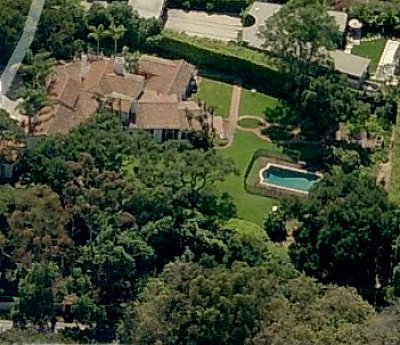
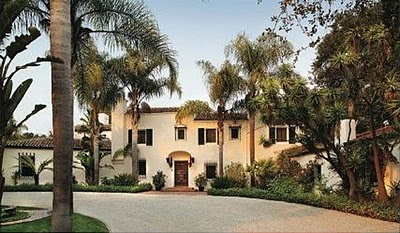

Sweet, wouldn’t you say? (Readers are encouraged to view more pictures of this fabulous estate here [2].)
Certainly not bad for a guy who supposedly [3] was worth between one and two million dollars in 2000.
Were the “Always Fascinated by the Lifestyles of the Rich and Famous” press interested?
Heck no.
According to LexisNexis, apart from the Los Angeles Times that broke [4] this story last Wednesday, and Fox News’s Sean Hannity who spoke about this on consecutive nights last week, America’s media were totally mum.
Why might that be?
You think Gore’s adoring press don’t want folks to know how much money he’s making off this scam?
Before you answer THAT question, consider what the Nobel Laureate told [4] Congress last year as the House was deliberating cap-and-trade legislation:
AL GORE: Every penny that I have made, I have put right into a non-profit deal, Alliance For Climate Protection, to spread awareness of why we have to take on this challenge. And Congresswomen, if your, if, if you believe that the reason I have been working on this issue for 30 years is because of greed, you do not know me.
Now, imagine for a moment there were actually journalists still in America and not advocates pretending to be journalists.
A former Vice President who last year told a House committee he was putting all of his earnings into a non-profit company to “spread awareness of why we have to take on” global warming a year later buys a $9 million mansion with six fireplaces, five bedrooms, and nine bathrooms for him and his wife.
Don’t you think SOMEBODY should have reported it other than Fox News, the LA Times, and conservative bloggers?
Where’d the money come from? Was this purchased by his non-profit corporation, and if so, how does he get away with that?
Did he sell some of his Google or Apple stock?
And how about some questions about how green the house is? Are there solar panels and windmills to power this facility? If not, what are their plans?
Forgetting all of that, if the Clintons, Bushes, or Cheneys bought such a place, do you think the media would cover it, at least as a human interest story?
For over three years, Gore’s adoring press have followed virtually every move he’s made since becoming the voice of global warming.
He buys a STUNNING villa as the unemployment rate stands at almost 10 percent and Americans are struggling to regain their footing after 2008’s financial crisis, and the media are suddenly disinterested in him?
On exactly which planet, be it cooling or warming, does THAT make any sense?
More reading concerning Gore’s investments:
- Media Ignore Al Gore’s Financial Ties To Global Warming [4]
- Al Gore Getting Rich Selling Global Warming Hysteria With Media’s Help [4]
- Gore Admits Financial ‘Stake’ In Advancing Global Warming Hysteria [4]
- Investment Group Puts Millions In Green Companies Gore Has Stake In [4]
Links:
[1] http://directorblue.blogspot.com/2010/05/exclusive-estimate-carbon-footprint-of.html
[2] http://directorblue.blogspot.com/2010/05/exclusive-estimate-carbon-footprint-of.html
[3] http://www.fastcompany.com/magazine/117/features-gore.html
[4] http://articles.latimes.com/2010/apr/28/home/la-hm-hotprop-gore-20100428
Related video
The financial meltdown wasn’t a mistake – it was a con
Hiding behind the complexities of our financial system, banks and other institutions are being accused of fraud and deception, with Goldman Sachs just the latest in the spotlight.
By Will Hutton | The Observer | 18 April 2010
The global financial crisis, it is now clear, was caused not just by the bankers’ colossal mismanagement. No, it was due also to the new financial complexity offering up the opportunity for widespread, systemic fraud. Friday’s announcement that the world’s most famous investment bank, Goldman Sachs, is to face civil charges for fraud brought by the American regulator is but the latest of a series of investigations that have been launched, arrests made and charges made against financial institutions around the world. Big Finance in the 21st century turns out to have been Big Fraud. Yet Britain, centre of the world financial system, has not yet levelled charges against any bank; all that we’ve seen is the allegation of a high-level insider dealing ring which, embarrassingly, involves a banker advising the government. We have to live with the fiction that our banks and bankers are whiter than white, and any attempt to investigate them and their institutions will lead to a mass exodus to the mountains of Switzerland. The politicians of the Labour and Tory party alike are Bambis amid the wolves.
Just consider the roll call beyond Goldman Sachs. In Ireland Sean FitzPatrick, the ex-chair of the Anglo Irish bank – a bank which looks after the Post Office’s financial services – was arrested last month and questioned over alleged fraud. In Iceland last week a dossier assembled by its parliament on the Icelandic banks – huge lenders in Britain – was handed to its public prosecution service. A court-appointed examiner found that collapsed investment bank Lehman knowingly manipulated its balance sheet to make it look stronger than it was – accounts originally audited by the British firm Ernst and Young and given the legal green light by the British firm Linklaters. In Switzerland UBS has been defending itself from the US’s Inland Revenue Service for allegedly running 17,000 offshore accounts to evade tax. Be sure there are more revelations to come – except in saintly Britain.
Beneath the complexity, the charges are all rooted in the same phenomenon – deception. Somebody, somewhere, was knowingly fooled by banks and bankers – sometimes governments over tax, sometimes regulators and investors over the probity of balance sheets and profits and sometimes, as the Securities and Exchange Commission (SEC) says in Goldman’s case, by creating a scheme to enrich one favoured investor at the expense of others – including, via RBS, the British taxpayer. Along the way there is a long list of so-called “entrepreneurs” and “innovators” who were offered loans that should never have been made. Lloyd Blankfein, Goldman’s CEO, remarked only semi-ironically that his bank was doing God’s work. He must wake up every day bitterly regretting the words ever emerged from his mouth.
For the Goldmans case is in some ways the most damaging. The Icelandic banks, Anglo Irish bank and Lehman were all involved in opaque deals and rank bad lending decisions – but Goldman allegedly went one step further, according to the SEC actively creating a financial instrument that transferred wealth to one favoured client from others less favoured. If the Securities and Exchange Commission’s case is proved – and it is aggressively rebutted by Goldman – the charge is that Goldman’s vice-president Fabrice Tourre created a dud financial instrument packed with valueless sub- prime mortgages at the instruction of hedge fund client Paulson, sold it to investors knowing it was valueless, and then allowed Paulson to profit from the dud financial instrument. Goldman says the buyers were “among the most sophisticated mortgage investors” in the world. But this is a used car salesman flogging a broken car he’s got from some wide-boy pal to some driver who can’t get access to the log-book. Except it was lionised as financial innovation.
The investors who bought the collateralised debt obligation (CDO) were not complete innocents. They had asked for the bond to be validated by an independent expert into residential mortgage-backed securities – a company called ACA management. ACA gave the bond the thumbs-up on the understanding from Fabrice Tourre that the hedge fund Paulson were investing in it. But the SEC says Tourre misled them, a pivotal claim that Goldman denies. The reality was that Paulson was frantically buying credit default swaps in the CDO that would go up in price the more valueless it became – a trade that would make more than $1 billion. Worse, Paulson had identified some of the dud sub-prime mortgages that he wanted Tourre to put into the CDO. If the SEC case is true, this was a scam – nothing more, nothing less.
Tourre could see what was coming. In one email in January 2007 he wrote: “More and more leverage in the system. The whole building is about to collapse anytime now… only potential survivor, the fabulous Fab[rice Tourre] .. standing in the middle of all these complex highly leveraged exotic trades he created without necessarily understanding all of the implications of those monstrosities”. Fabulous Fab, like his boss, will not be feeling very fab today.
The cases not only have a lot in common – using financial complexity allegedly to deceive and then using so-called independent experts to validate the deception (lawyers, accountants, credit rating agencies, “portfolio selection agents,” etc etc ) – but they also show how interconnected the financial system is. In Iceland Citigroup and Deutsche Bank covered the margin calls of distressed Icelandic business borrowers, deepening the crisis. Lehman uses the lightly regulated London markets and two independent British experts to validate that their “Repo 105s” were “genuine” trades and not their own in-house liability. The American authorities pursued a Swiss bank over aiding and abetting US nationals to evade tax.
Bankers will complain these cases all involve one or two misguided individuals, but that most banking is above board and was just the victim of irrational exuberance, misguided belief in free market economics and faulty risk management techniques. Obviously that is true – but, sadly, there is much more to the crisis. Andrew Haldane, executive director of the Bank of England, highlights the remarkable reduction in the risk weighting of bank assets between 1997 and 2007. Put simply, Europe’s and the US’s large banks exploited the weak international agreement on bank capital requirements in the so-called Basel agreement in 2004 to reclassify the risk of their loans and trading instruments. They did not just reduce the risk by 5 or 10%. Breathtakingly, they claimed their new risk management techniques were so wonderful that the riskiness of their assets was up to half of what it had been – despite property and share prices cresting to new all-time highs.
Brutally, the banks knowingly gamed the system to grow their balance sheets ever faster and with even less capital underpinning them in the full knowledge that everything rested on the bogus claim that their lending was now much less risky. That was not all they were doing. As Michael Lewis describes in The Big Short, credit default swaps had been deliberately created as an asset class by the big investment banks to allow hedge funds to speculate against collateralised debt obligations. The banks were gaming the regulators and investors alike – and they knew full well what they were doing. Simon Johnson’s 13 Bankers shows how the major American banks deployed vast political lobbying power and money to create the relaxed regulatory environment in which all this could take place. In Britain no money changed hands. Gordon Brown offered light-touch regulation for free – egged on by the Tories, who wanted to go further.
This was the context in which Goldman’s Fabulous Fab created the disputed CDOs, Sean FitzPatrick allegedly moved loans between banks and Lehman created its Repo 105s along with the entire “debt mule” structure revealed this weekend of inter-related companies to shuffle debt around its empire. London and New York had become the centre of an international financial system in which the purpose of banking became making money from money – and where the complexity of the “innovations” allowed extensive fraud and deception.
Now it has all collapsed, to be bailed out by western taxpayers. The banks are resisting reform – and want to cling on to the business practices and business model that has so appallingly failed. It is obvious why: it makes them very rich. The politicians tread carefully, only proposing what the bankers say is congruent with their definition of what banking should be. Labour and Tories alike are united in opposing improved EU regulation of hedge funds, buying the propaganda those operations had nothing to do with the crisis. Perhaps Paulson’s trades at Goldman, and the hedge funds’ appetite for speculating in credit default swaps, may disabuse them.
It is time to reframe the question. Banks and financial institutions should do what economy and society want them to do – support enterprise, direct credit to where it is needed and be part of the system that generates investment and innovation. Andrew Haldane – and the governor of the Bank of England – are right. We need to break up our banks, limit their capacity to speculate and bring them back to earth. Britain should also launch an official investigation into what went wrong – and hand the findings to the Serious Fraud Office. This needs to become this election campaign’s number one issue – not one which either a compromised Labour party or a temporising Conservative party will relish. The Lib Dems, the fiercest critics of the banks, have begun to get very lucky.
Crisis timetable
- September 2007 Funding problems at Northern Rock triggers the first run on a British bank. It is nationalised in February 2008.
- April 2008 Bear Stern faces bankruptcy after a run on the company wipes out cash reserves in less than two days. Backed by the Federal Reserve, JPMorgan buys up shares at far below market value.
- September 2008 Lehman Brothers files for bankruptcy protection, becoming the first major bank to collapse since the start of the credit crisis.
- December 2008 Bernard Madoff arrested for operating the largest Ponzi scheme in history.
- January 2009 The Bank of England launches £200bn quantitative easing.
- March 2010 Former chairman of Anglo Irish bank Sean Fitzpatrick is arrested in Dublin after failing to disclose details of loans worth millions from the bank.
- April 2010 Northern Rock former directors, David Baker and Richard Barclay, are fined £504,000 and £140,000 for deliberately misleading analysts prior to nationalisation.
- April 2010 The US Securities and Exchange Commission accuses Goldman Sachs of “defrauding investors by misstating and omitting key facts”.
Joanna Aniel Bidar
In Germany, 56% lose trust in Church
Press TV – April 11, 2010
In the Pope’s homeland, Germany, revelations of sex abuse by Catholic clergy have triggered an unprecedented lack of trust in the Church.
An opinion poll conducted by the Focus magazine found that 56 percent of the 600 German participants have no confidence in the Church, which has been rocked by an unending stream of sex abuse allegations against priests.
In Addition to the uproar from the disturbing nature of some of the cases, accusations of decades-long cover-ups by the Catholic officials, which allowed some pedophile priests to find new victims, have further tainted the Church’s reputation.
Some 26 percent of the country’s Catholic population is now considering quitting the Church, according to the study which is to be published in the magazine on Monday. The respondents said that this is regardless of the consequences of the move on their income tax.
The figure shows a notable rise compared to a poll conducted by the Stern magazine last month, which indicated that 19 percent of those surveyed were undecided about following the Church.
Germany is among a number of European countries that impose Church tax (8-9%) on followers of any religious congregation, unless a member officially quits their communion.
Munich reportedly lost 472 Catholic worshippers last month alone, nearly four times the number for the past three months. Since the German tax department documents deregistrations at the cost of EUR 30 (USD 40), the figures are precise.
The tax provides 70% of the German Church’s revenues.
Since January, hundreds of cases of sexual abuse connected to the Catholic Church have come to light in Germany, including one of the most high-profile revelations that centered on mishandled abuse complaints in the Pope’s former diocese in Bavaria.
U.S. Banks Hid Risk by Lowering Debt Before Reporting, WSJ Says
By Chris Peterson and James Gunsalus | Bloomberg | April 9, 2010
U.S. banks masked their true risk levels by temporarily lowering debt before reporting it, the Wall Street Journal said, citing data provided by the Federal Reserve Bank of New York.
Goldman Sachs Group Inc., Morgan Stanley, JPMorgan Chase & Co., Bank of America Corp., Citigroup Inc. and 13 other banks all understated the amount of debt used to pay for securities trades by cutting them by an average of 42 percent at the end of five quarterly periods; the debt levels were then boosted midway through each quarter, the newspaper said.
After the collapse of Lehman Brothers Holdings Inc., spurred in part by excessive borrowing, in 2008, banks have become more concerned that reporting high debt levels could jeopardize share prices and credit ratings, the Journal said. While not illegal, the practice can distort investors’ impression of risk being taken by banks, the report said.
Hong Kong-based spokespeople for Goldman Sachs, Morgan Stanley, JPMorgan and Citigroup declined to comment on the Fed data or the report. Banks not identified in the report confirmed that they temporarily cut borrowings at the end of a quarter and some noted their regulatory filings tell investors debt levels can rise and fall during the quarter, the Journal said.
Regulation of the financing activity data documented by the New York Fed falls under the auspice of the Securities and Exchange Commission, the U.S. brokerage watchdog, the report said, citing an unidentified official at the Federal Reserve Board. The New York Fed declined to comment, it said.
The SEC has inquired with about 24 large financial firms about the practice, indicating the agency is interested in finding accounting techniques that could mask a firm’s risk- taking, according to the Journal.
Fed data that captures the accounting shows it has occurred periodically since recording started in 2001, though not as consistently as in 2009, the paper said.
To contact the reporters responsible for this story: Chris Peterson at cpeterson@bloomberg.net; James Gunsalus at jgunsalus@bloomberg.net
Israeli police uncover organ trafficking ring in north
By Eli Ashkenazi and Jack Khoury | Haaretz | April 7, 2010
Police on Tuesday arrested six men suspected of being involved in an organ trafficking ring in northern Israel. Among the suspects are an IDF reserves brigadier-general and two lawyers.
The department for fraud and misappropriation in northern Israel has been conducting an undercover investigation which began following a complaint by a 50-year-old woman from Nazareth, who replied to an advertisement in Arabic offering 100,000 dollars for a kidney.
The woman underwent medical examinations to ensure a match, and she was then flown a country in Eastern Europe where they extracted her kidney. The woman said that when she returned to Israel, she did not receive the money promised to her. Police say they have since received similar complaints.
Police also said that during the investigation they uncovered a large, very well-organized industry of organ trafficking. The ring includes organ traffickers, agents, and lawyers.
“The ring is operating throughout Israel and not only in the north, and appeals to the public through local media and internet,” a police official said. “The organ traffickers somehow receive details about potential transplant candidates and they offer them their services,” he said.
The investigators said that the traffickers usually demand around 120,000 dollars for a kidney transplant. While the donors, the majority of which are in serious financial troubles, are taken advantage of and receive around 10,000 dollars. Some of them get even smaller sums, and some do not receive any money at all.
The donors sign a contract and fill out fraudulent affidavits claiming a family connection between the donor and the recipient – a requirement in the countries where the surgeries take place.
Afterwards, the donors undergo medical examinations where they are categorized by blood types and other medical conditions, and are then flown to countries in Eastern Europe, the Philippines, and Ecuador.
There, the donors undergo surgery to extract their kidney, and shortly afterwards return to Israel without any medical documentation, many times suffering from medical complications.
During the investigation, police found out that a number of transplant candidates were on their way abroad to undergo surgery. Police located the donors and informed them that they were victims of fraud. Some of the donors were located at Israel’s Ben-Gurion airport, right before their departure.
Investigators said that there are several more fraud victims located abroad who are due to return to Israel after they were notified that some of the traffickers were under arrest
Obama’s Economic Brain Trust
The Guys Who Got It Wrong
By PAM MARTENS | April 2, 2010
America is held out to the world as a meritocracy. You work hard, you play by the rules, you make sound judgment calls, you succeed. That’s the American dream. Right? That’s what the President of the United States should exemplify in his actions. Right?
Then how does one explain the individuals who represent the abject failures of financial and regulatory theory chosen by the President to dominate the dialogue on financial reform. How does one reconcile President Obama appointing Lawrence Summers as head of the National Economic Council after Mr. Summers played a central role in rolling back the safeguards that led to the current financial crisis.
This is what Mr. Summers had to say at the November 12, 1999 signing ceremony for the Gramm-Leach-Bliley Act, the draconian legislation that repealed the Glass-Steagall Act and allowed commercial banks holding insured deposits to merge with investment banks, brokerage firms and insurance companies: the very same combinations that led to the 1929 stock market crash and ensuing Great Depression:
“Let me welcome you all here today for the signing of this historic legislation. With this bill, the American financial system takes a major step forward towards the 21st century, one that will benefit American consumers, business, and the national economy for many years to come…I believe we have all found the right framework for America’s future financial system.”
Mr. Summers was wrong. This was not the “framework for America’s future” but the framework for epic financial collapse. Why isn’t Mr. Summers in an unemployment line along with the millions of Americans his bad judgment call put out of work.
Then there is Neal Wolin, confirmed by President Obama as Deputy Secretary of the Treasury on May 19, 2009. Writing in the San Francisco Chronicle on November 19, 2009, Robert Scheer had this to say about Wolin:
“Wolin, Geithner and Summers were all proteges of Robert Rubin, who, as Clinton’s treasury secretary, was the grand author of the strategy of freeing Wall Street firms from their Depression-era constraints. It was Wolin who, at Rubin’s behest, became a key force in drafting the Gramm-Leach-Bliley Act, which ended the barrier between investment and commercial banks and insurance companies, thus permitting the new financial behemoths to become too big to fail. Two stunning examples of such giants that had to be rescued with public funds are Citigroup bank, where Rubin went to ‘earn’ $120 million after leaving the Clinton White House, and the Hartford Insurance Co., where Wolin landed after he left Treasury.”
Rounding out the list of those who got it wrong in the Clinton administration who have been brought back to get it wrong again in the Obama administration: Gary Gensler, one of those supporting the de-regulation of derivatives under Clinton, now head of the Commodity Futures Trading Commission under President Obama; Gene Sperling, thanked by Lawrence Summers in the opening remarks at the signing of the legislation to repeal the Glass-Steagall Act, now counselor to Treasury Secretary Tim Geithner; and, of course, Geithner himself, former President of the Federal Reserve Bank of New York who served under Robert Rubin and Lawrence Summers in Clinton’s Treasury Department from 1999 to 2001.
Many Americans have suspected for some time that meritocracy has died an uncelebrated death and was quietly laid to rest in a paupers’ graveyard. Many Americans also believe something has gone terribly wrong not just with our economic model but the moral compass that guides that economic model.
Today, authors of the book, “The Meritocracy Myth,” Stephen J. McNamee and Robert K. Milller have studied meritocracy patterns in America and concluded the following:
“To get ahead in America, it no doubt helps to be bright, shrewd, to work hard, and to have the right combination of attitudes that maximize success within given fields of endeavor. Playing by the rules, however, probably works to suppress prospects for economic success since those who play by the rules are more restricted in their opportunities to attain wealth and income than those who choose to ignore the rules.”
Without realizing it, McNamee and Miller have just unraveled the secret to the wealth gap and rising inequality in America: the memo that the rules can be ignored was only selectively distributed to Americans. I didn’t get it; did you?
I can tell you for certain that the play-by-the-rules-waiver memo was selectively distributed leading up to the June 25 and June 26, 1998 public hearings at the Federal Reserve on usurping the role of the legislative branch of the government by letting the Federal Reserve decide if it would repeal the Glass-Steagall Act by permitting the merger of Travelers and Citicorp to form Citigroup.
Chuck Prince, the man who planned Citigroup CEO Sandy Weill’s lavish birthday parties and was haplessly placed in the role of Citigroup CEO when Weill stepped down years later, testified as follows on June 25:
“I do want to emphasize, however, that we do not seek and do not require any change in the law in order to consummate this merger.”
Mr. Prince was a lawyer. Mr. Prince knew the above statement to be false. Mr. Prince had gotten the memo: playing by the rules restricts opportunities to attain wealth and income so shred the rules.
Matthew Lee, also a lawyer representing Inner City Press/Fair Finance Watch did not get the memo that legal ethics, the legislative branch, and the truth could all be ignored at a Federal hearing.
Mr. Lee testified as follows:
“…we think [the merger application] should be dismissed based on improper communications that have taken place between Travelers, Citicorp and the Federal Reserve Board. Prior to the deal even being announced and the application being submitted, not only did the two CEOs of the two institutions meet with Chairman Greenspan, we found that, in fact, there was very detailed preapproval sought for particular practices…We think it is tainted.”
No one appearing on Panel 5 on June 25 had received the rules-waiver memo either. The fact that the merger was “illegal” was stated six times by four panel members. Mark Silverman of Citicorp-Travelers Watch, a coalition of community groups formed at that time to scrutinize the proposed merger, testified as follows:
“…the merger is illegal. The affiliation between Citibank, as a member bank of the Federal Reserve Board and Travelers’ subsidiaries that are engaged principally in securities dealings is simply prohibited by the Glass-Steagall Act…If the Board approves this merger prior to any change in the law, Congress, pressured by Citigroup and concerned about the consequences of a forced divestiture, can enact one of the most embarrassingly blatant pieces of private-interest legislation in recent memory…the Board risks undermining the legitimacy of itself and the legislature..”
Hilary Botein, at the time Associate Director of the Neighborhood Economic Development Advocacy Project (NEDAP) said the Federal Reserve Board would “make a mockery of the regulatory process by allowing Citicorp and Travelers to brazenly violate existing law.”
Sarah Ludwig, then Coordinator of the New York City Community Reinvestment Task Force stated that if the Federal Reserve signed off on the merger it would “constitute an affront to the public, and underscore that large and powerful corporations influence government decision making even to the point of obtaining approval on illegal transactions…Secondly, approving the application would constitute hideously unsound policy….”
Josh Zinner, a lawyer at the time with South Brooklyn Legal Services’ Foreclosure Prevention Project, testified as follows:
“We represent low-income seniors who have been ripped off by high-rate finance companies… We haven’t heard any testimony today about Commercial Credit Corporation. This is an entity of Travelers Group…This type of high-rate lending that Commercial Credit does can often lead to foreclosure, if abusive, and, in fact, the Primerica Financial Services [also owned by Travelers] is selling Commercial Credit loans in the billions of dollars using this completely, loosely-regulated sales force with the same sort of A.O. Williams evangelical fervor. Again, the data shows, and this data will be submitted with a comment that Commercial Credit does high-rate lending in the same communities that Citibank has been redlining… the engine for marketing Commercial Credit loans is an unregulated pyramid scheme…”
Mr. Zinner could not have been more prescient. Commercial Credit changed its name to CitiFinancial and operates 2,000 storefronts across America bearing that angelic halo logo. But far from angelic, this is how a former Assistant Manager, Gail Kubiniec, said business was done in testimony to the FTC in July, 2001:
“At CitiFinancial, emphasis was placed on marketing new loans, particularly real estate loans (loans secured by a home mortgage), to present borrowers of CitiFinancial. Employees would receive quarterly incentives, called ‘Rocopoly Money,’ based on how many present borrowers they ‘renewed’ (refinanced) into new loans…Typically, employees would only state the total monthly payment amount in selling a proposed loan. Additional information, such as the interest rate, and the financed points and fees, closing costs, and ‘add-ons’ like credit insurance, were only disclosed when demanded by the borrower…It was also common practice to try to sell borrowers the largest loan possible…All CitiFinancial branch offices had quotas for the sale of credit insurance…Loans were typically presented to consumers with ‘100 per cent coverage,’ meaning that real estate loans were presented with at least credit life and disability already included, and personal loans were presented with at least credit life, disability, involuntary unemployment, and property insurance already included. When quoting the monthly payment, I frequently quoted the payment with coverages already included, telling the consumer only that it was ‘fully protected.’ This was a common practice used by employees at CitiFinancial…The pressure to sell coverages came from CitiFinancial’s Regional and District Managers. Each branch had monthly credit insurance sales goals to meet…If these goals were not met, the District Manager would call and put pressure on the Branch Manager to get the branch up to par.”
I tracked down Josh Zinner last week. He’s now Co-Director of the Neighborhood Economic Development Advocacy Project. I asked Mr. Zinner for his reflections on the state of financial reform today, given that Citigroup is now a financial ward of the American taxpayer. The day he responded, March 31, Citigroup had just sold a majority stake in Primerica common stock to the public.
Mr. Zinner states:
“Citi’s sale of Primerica, long known for its aggressive marketing of junk financial products in low income communities, is a coda to the disastrous Citi-Travelers merger. Those who were working on the ground in low income communities at the time knew very well that this super-merger would only serve to perpetuate and institutionalize unfair financial practices, exemplified by a two-tiered financial services system where poor people and people of color were paying far more for inferior financial products. The Citi-Travelers debacle should be a lesson that the financial services marketplace cannot police itself and that only strong and comprehensive financial regulation — including an independent consumer financial protection agency and the return of Glass-Steagall firewalls — can prevent the next financial meltdown.”
I next turned to Matthew Lee of Inner City Press who has been tirelessly pursuing justice against Citigroup and its subprime subsidiaries since the merger. In 2004, Mr. Lee published a novel called “Predatory Bender: A Story of Subprime Finance.” The story is built around a corporation called EmpiBank; its Chairman is Sandaford Vyle. It also has a storefront subprime lender called EmpiFinancial. The book is, of course, more poignant today than in 2004. It comes with a non-fiction, must-read afterward titled “Predatory Lending: Toxic Credit in the Inner City.”
I asked Mr. Lee for his thoughts, given that even when Citigroup fails on its own hubris as testament that the public has spoken about its business model, it’s resuscitated back to life by the government. Mr. Lee was as forthright as always:
“When Travelers met and swallowed Citicorp in 1998, the Federal Reserve didn’t just approve an illegal merger — it illegally pre-approved an illegal merger. Sandy Weill and John Reed and their lawyers got the green light from the Alan Greenspan Fed before even announcing the merger. The group I worked and work with, Inner City Press/Fair Finance Watch demanded all records of the meetings, but got only two cryptic letters, talking about the marriage of ‘Red’ and ‘Blue.’ [Travelers’ logo was a red umbrella; Citicorp had a blue logo.] At the shareholders’ meetings on the deal, my question to Sandy Weill resulted in a Citicorp official threatening to try to take away my law license. The Fed approved, and predatory lending took off. And now in the aftermath, even the Chris Dodd bill would house consumer protection inside the same Federal Reserve, a huge mistake. Red and Blue indeed…”
If financial behemoths collapse from hubris and corruption and lack of meritocracy, why wouldn’t government administrations do the same? President Obama needs to sack the financial wizards who got it wrong and add the common sense folks who got it right.
Pam Martens worked on Wall Street for 21 years; she has no security position, long or short, in any company mentioned in this article. She writes on public interest issues from New Hampshire. She can be reached at pamk741@aol.com
Featured Video

No Vote, No Representation, No State: Democracy, Israeli Style
or go to
Aletho News Archives – Video-Images
From the Archives
Sanctions, War and the Policy of Dual Containment
By SASAN FAYAZMANESH | March 17, 2008
It is now nearly three decades since the Unites States adopted the policy of dual containment of Iran and Iraq. While much has been written about the containment of Iraq, there has been very little in-depth analysis of this policy when it comes to Iran. In a book that is going to be released on March 31, 2008, entitled The United States and Iran: Sanctions, Wars and the Policy of Dual Containment (Routledge), I attempt to address this shortcoming by investigating when and why the US policy of containment of Iran came about, how it evolved, and where it stands today.[1] To the extent that Israel has been involved in US policy making, the study will also include the role that Israel has played in the containment of Iran. Also, since the fate of Iran has been inextricably linked to that of Iraq, occasionally the investigation will overlap with the containment of Iraq.
The policy of dual containment of Iran and Iraq originated during the Carter Administration, but it was not until the Clinton Administration that the expression “dual containment” became popular. … continue
Blog Roll
 Aletho News
- Elmo Sold mRNA Jabs to Your Toddler. Now They Are “Off-Label.”
- British state targets Palestine Action with yet another crooked trial
- Americans are paying the price to preserve Israel’s nuclear hegemony
- Resistance factions are necessary to ensure a permanent US Iraq withdrawal
- How Israel destabilizes the Middle East: Denying sovereignty and the right to exist
- Europe’s Establishment Is Embracing War – and Losing Voters
- NATO chief advocates war of aggression
- No Vote, No Representation, No State: Democracy, Israeli Style
- Zionist Bought Senate Blocks Information About American Citizens Killed By Israel
- While Gaza dominates the UN, these are the people keeping it alive
- If Americans Knew
- Israeli Soldiers Abduct At Least 22 Across Occupied West Bank
- Eight Palestinians Killed in Israeli Attacks on Gaza
- Israeli former leaders and security chiefs threaten legal action over ‘Jewish terrorism’
- Israel map in LA Times ad includes all land from the river to the sea
- Inside Lebanon’s 200-page dossier on Israeli war crimes
- Flydubai, genocide, settler violence, Trump abuse of power to deport – Daily Update
- Counting Antisemitic Incidents: What the ADL Audit Reveals — and Obscures
- Mamdani releases plan to combat antisemitism and hate crimes in New York City
- Iran’s Revolutionary Guards Publish Letter to the American People
- DMFI launches $1 million ad campaign supporting Virginia’s Elaine Luria
- No Tricks Zone
- Green Energy Debacle: German Expert Professor Fritz Vahrenholt Warns Of Severe Economic And Social Consequences
- Two More Paleo Reconstructions Affirm Meters-Higher Sea Levels Across Ireland, Brazil 7000-6000 Years Ago
- New Study: Earth And Venus Surface Warmth Largely Explained By Convection And Lapse Rate, Not CO2 Or Radiation
- 2025 Nature Paper Claiming Worsening Global Drought Gets RETRACTED …Heavily Flawed
- New Study: ‘Global Drought Shows No Detectable Recent Acceleration Under Climate Warming’
- Economic Masterminds: German Socialists Suggest Taxing Productivity Gains Stemming From Using AI
- The South China Sea Has Not Been Cooperating With The Climate Change Narrative
- Energy Crisis: Germany Enters Heating Season With Historically Low Gas Reserve Fill Levels
- New Study: The Antarctic Ice Sheet Gained Mass From 2020-2024 Due To Staggering Snow And Ice Accumulation
- Study: Ocean Heating Rates From Thousands Of Years Ago ‘Dwarf’ Modern Ocean Heating Rates

