Occupied Nation: How the CIA Created Modern Germany
 The sprawling U.S. embassy in Berlin. [Source: spiegel.de]
By Kit Klarenberg | CovertAction Magazine | April 9, 2024
On February 4th, The Economist published a devastating analysis—or perhaps, “pre-mortem”—on the collapse of the German Social Democratic Party (SPD) under Olaf Scholz’s stewardship. Elected in what the Western media contemporaneously branded a “shock” result in September 2021, hopes for his coalition government in many quarters were high. Today, he enjoys the worst approval ratings of any Chancellor in modern history, and national opinion polls place SPD approval at 15% or lower.
The Economist frames Scholz’s collapsed fortunes, and the prospects of his party’s imminent extinction as a serious force within German politics, as a microcosm of Berlin’s declining economic and political clout more widely. It notes that the nation’s finances have gone “limp” during his tenure, with business-sector confidence collapsing, and record inflation destroying citizens’ incomes and savings. Other sources have detailed the country’s “deindustrialization,” Politico coining the nickname, “Rust Belt on the Rhine.”
In keeping with those meditations on Germany’s ever-worsening woes, The Economist’s bleak diagnosis made no mention of how Western sanctions imposed on Russia in February 2022 created Berlin’s crisis. Scholz was a prominent cheerleader for the Biden administration’s push to “make the Ruble rubble.” Now that effort has so spectacularly backfired that it can no longer be ignored or spun otherwise; Newsweek admits “any realistic war game could have easily predicted” the sanctions would not only fail, but boomerang on the sanctioners.
Those few analysts who predicted the invasion of Ukraine well in advance universally failed to anticipate Berlin would support and facilitate any U.S. counterattack, particularly in the financial sphere. They believed Germany possessed the requisite autonomy and sense not to commit willful economic suicide in service of Empire. After all, the country’s stability, prosperity and power were heavily dependent on cheap, readily accessible Russian energy. Voluntarily ending that supply would be inescapably disastrous.
For this failure, they can be forgiven. Berlin, particularly in the wake of reunification, has successfully presented itself to the world as sovereign, led by sensible people acting in the best interests of their nation, and Europe. In truth, ever since 1945, Germany has been a heavily occupied nation, drowning under the weight of U.S. military installations, and its politics, society and culture aggressively shaped and influenced by the CIA.
This unacknowledged reality is amply spelled out in Agency whistleblower Philip Agee’s 1978 tell-all book, Dirty Work: The CIA in Western Europe. Comprehending who is truly in charge in Berlin, and what interests Germany’s elected representatives are actually serving, is fundamental to understanding why Scholz, et al., so eagerly embraced the self-destructive sanctions. And why the facts of Nord Stream 2’s criminal destruction can never emerge.
“Enormous Presence”
Following World War II, the United States emerged as the world’s undisputed military and economic superpower. As Agee wrote, the overriding aim of U.S. foreign policy thereafter was to “guarantee the coherence of the Western world” under its exclusive leadership. CIA activities were accordingly “directed toward achieving this goal.” In service of the Empire’s global domination project, “left opposition movements had to be discredited and destroyed” everywhere.
After West Germany was forged from the respective occupation zones of Britain, France and the U.S., the fledgling country became a particularly “crucial area” in this regard, serving as “one of the most important operational areas for far-reaching CIA programs” in Europe and elsewhere. Domestic Agency operations in West Germany were explicitly concerned with ensuring the country was “pro-American,” and structured according to U.S. “commercial interests.”
In the process, the CIA covertly supported the Christian Democratic Union (CDU) and SPD, and trade unions. The Agency “wanted the influence of the two major political parties to be strong enough to shut out and hold down any left opposition,” Agee explained. The SPD had a radical, Marxist tradition. It was the only party in the Reichstag to vote against the 1933 Enabling Act, which laid the foundations for Germany’s total Nazification, and led to its proscription.
Newly reinstituted following the war, the SPD maintained its revolutionary roots until 1959. Then, under the Godesberg Program, it abandoned any commitment to challenging capitalism in a serious way. It stretches credibility to suggest the CIA was not expressly responsible for neutering the party’s radical tendencies.
In any event, effective control of West German democracy ensured that Washington’s “enormous presence” there–which included hundreds of thousands of troops and almost 300 separate military and intelligence installations—was not challenged by those in power, irrespective of the party to which they belonged, despite a majority of the population consistently opposing U.S. military occupation.
This presence in turn granted the CIA “a number of different covers to work behind,” according to Agee. The majority of its operatives were embedded within the U.S. military, posing as mere soldiers. The Agency’s biggest station was an army base in Frankfurt, although it also boasted units in West Berlin and Munich. U.S. operatives were “highly qualified technicians who tap telephones, open mail, keep people under surveillance, and encode and decode intelligence transmissions,” working “all over the country.”
Dedicated divisions were charged with “making contact with organizations and people within the political establishment,” such as the SPD and its elected representatives. All the intelligence collected was “used to infiltrate and manipulate” the same organizations. The CIA, moreover, collaborated “very closely” with West German security services in many domestic spying efforts, the country’s assorted intelligence agencies conducting operations at the Agency’s direct behest, “often [to] protect CIA activities from any legal consequences.”
“Discredit and Destroy”
Intimate bedfellows as they were, there were nonetheless “difficulties” in the CIA’s relationship with its West German counterparts, per Agee. The Agency never fully trusted their protégés, and felt a pronounced need to “keep an eye” on them. Still, this lack of faith was no barrier to the CIA partnering with the BND, West Germany’s foreign intelligence service, to secretly purchase Swiss encryption firm Crypto AG in 1970. Perhaps this was done to “protect CIA activities from any legal consequences.”
Crypto AG produced high-tech machines through which foreign governments could transmit sensitive high-level communications around the world, safe from prying eyes. Or so they thought. In reality, the clandestine owners of Crypto AG, and by extension the NSA and GCHQ, could easily decipher any messages sent via the firm’s devices, as they themselves crafted the encryption codes. The connivance operated in total secrecy for decades thereafter, only being exposed in February 2020.
The full extent of the information collected via Crypto AG—along with key national competitor Omnisec AG, which the CIA also owned—and the nefarious purposes to which it was put is unknown. It would be entirely unsurprising though if the harvested data helped inform CIA operations to “discredit and destroy” left-wing opposition in West Germany and beyond, efforts that no doubt continue to this day.
The Cold War may be over, but Germany remains heavily occupied. It hosts the largest number of U.S. troops of any European country, despite an overwhelming majority of the population supporting their partial or total withdrawal in the years following the Berlin Wall’s collapse. In July 2020, then-President Donald Trump announced the withdrawal of 12,000 soldiers of the 38,600-strong contingent still there.
While intended to punish Germany for greenlighting the now-destroyed Nord Stream 2, polls indicated most Germans were only too happy to say “auf wiedersehen.” In all, 47% were in favor of them leaving, while a quarter called for the permanent closure of all U.S. bases on their soil. Yet, just two weeks after entering the White House, Joe Biden reversed his predecessor’s policy, returning 500 soldiers who had departed.
The President also scrapped plans to relocate the Stuttgart-based U.S. Africa Command, which effectively embeds Washington in the armed forces of 53 countries across the continent, elsewhere in Europe. Research shows the Command’s training programs have precipitated a significant rise in the number of military coups in Africa. As Agee attested, U.S. military bases are a hotbed of CIA spies. Berlin therefore must remain “one of the most important operational areas for far-reaching CIA programs” within and without the country, whether Germans like it or not.
German democracy index claims Hungarian democracy worse than Ukraine’s despite Kyiv canceling elections and operating under martial law
By Denes Albert | Remix News | April 10, 2024
Ukraine, which no longer holds elections, is ahead of Hungary in terms of democracy, according to a major German media group index that references 10 experts, nine of whom are directly funded by billionaire oligarch George Soros and his Open Society Foundations.
The results were produced by the German Bertelsmann Foundation’s democracy index, which was published in the print edition of the media group’s Frankfurter Allurement Zeitung.
Despite Hungary having a functioning and vibrant democracy that includes actual elections, the index claims that the country is less democratic than Ukraine, which is under martial law, has banned opposition parties, and has no elections.
According to the paper’s analyst, the new EU member states have made huge political and economic progress since 2004, with only Poland and Hungary representing or still representing a “politically authoritarian tendency.”
“Despite the country’s EU membership, Fidesz, led by Viktor Orbán and in power since 2010, has seriously undermined Hungary’s initially well-functioning democracy,” claims Ralph M. Wrobel, who argues that without pressure from Brussels, Poland and Hungary would have become fully authoritarian states.
It is worth noting, however, that the Bertelsmann Foundation’s biannual ranking is based on the opinions of country experts, not on facts.
“Nine of the ten ‘independent experts on Hungary’ are from Political Capital. Political Capital, founded by a former SZDSZ member, which received contracts worth hundreds of millions of forints from the previous Socialist governments of Ferenc Gyurcsány and Gordon Bajnai for communications consultancy, and of course among its supporters we find the Open Society Foundations led by George Soros,” government spokesman Zoltán Kovács pointed out earlier.
Kovács added that the Bertelsmann Group is the owner of RTL Television, among others. In a previous analysis, Hungarian news portal Mandiner pointed out that the group had woven its way into the EU institutions by hiding behind pro-Europeanism.
See also:
Israel’s culture of rape and child abuse
By Vanessa Beeley | The Wall Will Fall | April 9, 2024
“We Israelis are the biggest Holocaust deniers – The Jewish state learned that it can commit its own Holocaust in Gaza and deny that it exists” – Jonathan Ofir for Mondoweiss.
Palestinian-American author Susan Abulhawa reports from her visit to Gaza:
The reality on the ground is infinitely worse than the worst videos and photos that we’re seeing in the West.
People first resorted to eating horse and donkey feed, but that’s gone. Now they’re eating the donkeys and horses,” Abulhawa writes. “Some are eating stray cats and dogs, which are themselves starving and sometimes feeding on human remains that litter streets where Israeli snipers picked off people who dared to venture within the sight of their scopes. The old and weak have already died of hunger and thirst.”
“What I see is a holocaust.” she summarizes. “The incomprehensible culmination of 75 years of Israeli impunity for persistent war crimes.”
What has underpinned this wholesale slaughter of Palestinian civilians and children in Gaza – the 7th October Hamas “atrocities” that include the media-amplified claims of “mass rape”?
Claims led by the discredited ZAKA organisation whose founder has a history of rape and pedophilia. ZAKA is reminiscent of the CIA/MI6 White Helmet propaganda productions in Syria from 2013 onwards, designed to criminalise the Syrian government. You can read my archive of investigative work exposing this organisation here.
I am not going to focus on the debunked claims made by the Zionist Hasbara industry. You can read and watch the multiple investigative reports that have dismantled the genocide-justifications here – 1, 2, 3, 4, 5, 6, 7, 8, 9, 10, 11, 12, 13, 14.
Two leading Palestinian media organizations, The Palestine Chronicle and Friends of Palestine Network, conducted a joint investigation, based on media reports, in addition to historical and political analyses.
I recommend following this X account to also have real-time updates on the collapse of the Zionist propaganda mill.

Journalist and researcher, William Van Wagenen, has also covered much of what actually took place on October 7th. Van Wagenen includes the “baked baby” narratives that were circulating shortly after the 7th October Resistance operations.
Eli Beer, founder and president of another rescue organization, United Hatzalah, made similar false claims.
While attending the Republican Jewish Coalitions’ Annual Leadership Summit in Las Vegas on 28 October, he claimed that “A little baby in the oven – These bastards put these babies in the oven and put on the oven … We found the kid a few hours later.”
Like all the other atrocity tales, this was also walked back and mocked on social media by the majority of independent media outlets who saw through the fabrication immediately.
2013 in Adra Industrial City, north of Damascus, Syria – extremist factions including Al Qaeda (Nusra Front) burned civilians alive in a bread furnace. The same extremist factions supported by Israel to overthrow a pro-Palestine Syrian government.
In 2014, a frail 16 year-old Mohammed Abu Khdeir was burned alive by Israeli extremist settlers amidst a number of Zionist settler kidnappings of young Palestinian boys.
… the preliminary autopsy report states that the remnants of a burned substance (soot) was present in Muhammad’s respiratory passages and lungs, indicating he had inhaled the substance while being burned alive.

Hussein Dawabshe with grandson Ahmad in 2016
In 2015 18-month old baby Ali Dawbsheh, was burnt alive by Jewish terrorists in the West Bank town of Duma. Ali’s mother Riham and father Saad died of their wounds a few weeks later. Of the family of four, only 5-year-old Ahmad survived the arson with severe burns.
At the preliminary court hearing in Lod, terrorist Zionist settlers chanted:
“Where’s Ali? There’s no Ali. Ali is burned. On the fire. Ali is on the grill”
From the article in Mondoweiss :
In December 2015, a video showing dozens of wedding guests celebrating the arson went public via Channel 10. The guests are seen dancing with Molotov cocktails, knives and guns, and stabbing a photo of baby Ali Dawabsheh.
Literally 24 hours after the October 7th Resistance operation, on various interviews I recommended avoiding the rush to judgement being rammed down our throats by a Zionist-partisan media crush. I was absolutely correct to have cautioned thus and consider myself vindicated by the last six months of investigation into the Zionist hysterical claims.
Claims that only the Palestinian Resistance was responsible for all deaths on the day that unleashed genocide upon Palestine – or rather the intensification of a genocide that began 100 years ago under a malign British Mandate.
The reality of thousands of children horrifically burned, eviscerated, incinerated, executed, abused and tortured by the sadistic IOF forces since October 7th is something that cannot be eclipsed by the lies peddled by the genocidal maniacs intent on the extinction of Palestinians.
Euromed Monitor – Euro-Med Monitor’s field team documented the Israeli army’s field execution of 13 children near Shifa Hospital in Gaza City. The majority of them were with their families, following the Israeli military’s instructions to evacuate their areas, when they were shot dead.

Israel’s Rape Culture
In the case of Zionist settler-colonialism in Palestine, the goal of acquiring land led to the use of brutal tactics aimed at the dispossession and elimination of the indigenous population. Colonizers embraced sexual terrorization as an instrument for achieving this strategy. – Tamam Mohsen
The “only Democracy in the Middle East” is reported to be a hub of sexual abuse, rape and ritual pedophilia cases. According to the Berghahn Journals :
Sexual violence is a common phenomenon in Israeli society. Despite its frequency, it is still kept silent in the public sphere. The last few years have seen a rise in awareness on the topic of sexual abuse and harassment; however it is a crime with a very low percentage of incident reports. This is for a variety of reasons, the main reason being that we live in a society that tends to blame the victim, which causes them feelings of shame and humiliation preventing them from reporting the incident.
Israel is a Pedophile Haven
Israel is a haven for pedophiles escaping prosecution in other countries. Perhaps the best known case is that of Malka Leifer. A former ultra-Orthodox Jewish school Principal sentenced to fifteen years for child sex abuse.
Israeli author and public speaker Alon Mizrahi went on X to point out Israel’s harbouring of this criminal serial abuser of children:
This lovely lady, from a prestigious Hasidic family, was the principal of an ultra-orthodox Hewish school in Melbourne, Australia who in 2008 “faced trial on 70 sex offense charges laid by Victoria Police, with accusations from at least eight alleged victims” (from Wikipedia).
All victims were her former underage pupils.
To cut a long story short, lovely Malka fled to Israel in 2008, where she comfortably lived, thanks to generous help from senior politicians, psychiatrists, and extremely helpful judges, until 2021, when the scandal was making international news, with high-ranking Australian politicians intervening on behalf of the victims.
In March of 2023 Leifer was found guilty of 18 counts of sexual abuse, including rape, and was sentenced to 15 years in prison.
But for 13 years, Israel refused to extradite Leifer to Australia, and she was allowed to lead her normal life in a West Bank settlement. And that’s how much Israel cares for (Jewish!) victims of sexual abuse.
In 2020 Jerusalem Post ran the headline – Tens of Thousands of Pedophiles Operate in Israel every year.
Annually there are 100,000 victims of pedophilia in Israel according to one monitoring organisation.
While indigenous Palestinians are denied the right to return to their homeland, a number of pedophiles in Israel are “Jewish” immigrants who have exploited the law of return (whereby any Jewish person can move to Israel and automatically gain citizenship) to seek refuge from prosecution for their heinous crimes.
Mainstream media in the US is reporting on the Jewish American pedophiles who “hide from justice” in Israel after subjecting children to abuse and rape. Jewish Community Watch says the majority of its cases originate from modern Orthodox to Ultra-orthodox Jewish enclaves in the U.S., but that it happens across the wider Jewish community.
Even Hollywood’s accused sexual predators are seeking refuge in Israel. Hollywood filmmaker Brett Ratner fled to Israel after six women accused Ratner of sexual assault and sexual harassment in 2017. A report in Haaretz describes Israel as a “hot spot for foreign Jewish sexual predators”.
Another Haaretz report in 2016 cites Manny Waks, the chief executive officer of Kol v’Oz, a newly formed nonprofit that aims to prevent child sexual abuse in the global Jewish community:
“Sex offenders tend to move from country to country to avoid jail, but what makes Israel unique is the Law of Return, which essentially grants unhindered access to anyone who is Jewish to come here without any real screening,”
The same story was covered by the UK’s Independent. This phenomenon cannot be dismissed as “conspiracy theory”, it is fact.
More Haaretz investigations can be found at these links – 1, 2,
From the American Psychological Association:
This study explores thought patterns of Jewish Ashkenazi Ultra-Orthodox pedophiles in Israel and how they resolve the contradiction between their commitment to Jewish Law and having committed sexual offenses against minors.
In 2022 Haaretz reported that 100 rabbis, teachers and other figures who have been accused, charged or convicted of sexual abuse overseas have already found refuge in Israel.
Also in 2022 The Jerusalem Post reported that the rate of sexual abuse of kids is highest among religious Zionist sector. “A new study by the Ne’emanei Torah Va’avodah movement reveals dramatic data on sexual abuse victims from the religious Zionist (Tzioni Dati) sector.” The abused often become abusers. How many of these abused children (majority male) are the IOF forces of tomorrow?
More Jerusalem Post investigations (one Times of Israel ) can be found at these links – 1, 2, 3, 4.
A Haifa psychologist was arrested in 2021 for ‘indecent acts on children in his care’.
In March 2024 almost 6 months after October 7th, an Israeli male nurse, Oren Hananaiev, had his medical licence revoked after being ‘convicted of severe indecent acts without consent and possessing and publishing inappropriate content featuring underage children.’
From the analysis of Hananaiev’s correspondence, many conversations were found with Yaakov, in which he advised him to use sedatives to “prevent resistance” during sexual assault. Furthermore, the investigators found correspondence between the two where Hananaiev suggests certain children’s games where one might sexually exploit kids while they still think that it is part of the game.
According to the Journal of the American Academy of Psychiatry and the Law (2011):
The number of incarcerated sex offenders in Israeli prisons, which may be related to the total number of sex offenders, has been steadily increasing, from 350 offenders in 1997, to 1300 in 2009.
About 60 percent of convicted sex offenders in Israel have committed offenses against children under the age of 13.
Israel’s ultra-Orthodox community is rife with accusations of sexual offences against minors. Pedophiles seek refuge in Israel for a good reason. They are in “good” company.
How many of the Brooklyn, New York, Haredi cult accused of sexual abuse have sought refuge from exposure and justice, in Israel?
A far-right Israeli lawmaker accused Israel of trying to normalise pedophilia as recently as May 2023, only a few months before Israel was accusing the Palestinian Resistance of “mass rape”. As many have stated on social media “an accusation is a confession”.
Israel has failed in almost every way in treating sexually abused children, says a report by a committee of experts aiming to change social norms, treatment and government policy on the issue. – Haaretz
Jerusalem Post reports that since the start of the Israel-Hamas war, around 56,000 Israelis have been forced to flee their homes and live in hotels throughout the country.
These hotels are allegedly a “ticking time bomb of crime” – Cases included indecent exposure, crimes against children, and rape amongst other violent incidents. Even Israeli settlers are prey to the overt sexual predation that pervades their society.
The Limited Times :
Zion Vanuno, 64, is suspected of committing indecent acts against children in a hotel with evacuees in the center of the country. According to the suspicion, Vanuno lured the children with candies to go to different places in the hotel, where he committed indecent acts on them.
Israel – a history of rape as a weapon of terror
In his article “Israel and Rape” journalist Robert Inlakesh goes into some detail about the cases of rape and sexual harassment within the IOF armed forces.
There have also been credible claims by a female soldier that she was raped by a fellow serviceman during the ongoing brutal military assault on Gaza.
Sexual harassment and violence are nothing new among Israel’s armed forces. According to a Haaretz report, “a third of female conscripts in the military had suffered sexual harassment at least once in the previous year [2022].”
In 2020, the Israeli army’s sexual violence crisis was recognized after only 31 indictments were filed out of 1,542 sexual assault complaints registered within the military establishment.
It has been reported that a growing sector of Israeli society rape Israelis, they rape tourists, they abuse and rape children, they rape their own evacuees. How these predators (especially in the IOF) react to Palestinians that have routinely been dehumanised and reduced to legitimate targets for an inherent predatory sadism is naturally expected to be a hundred times worse. And it is.
The Tantura Massacre 22nd – 23rd May 1948.
On the night of 22-23 May 1948, a week after the declaration of the State of Israel, the Palestinian coastal village of Tantura (population 1,500) was attacked and occupied by units of the Israeli army’s Alexandroni Brigade. During the Nakba or the ethnic cleansing of Palestine in 1948 some 400 villages were razed and occupied by Zionist forces.
Tantura was one of the tens of Palestinian villages and towns inside and outside the boundaries of the UN-envisaged Jewish state specifically targeted for capture under the notorious Plan Dalet, the Haganah master plan for the military establishment of Israel on the largest area possible of Palestine.
Palestinians were caged in makeshift cages and mowed down by machine-gun fire. Schoolchildren were ruthlessly shot even if they had raised their hands in surrender. Civilians were burned alive, buried in communal graves. Young girls were raped.
How different is this to what the IOF are doing in Gaza for the last six months but on an unprecedented scale.
Sabra and Shatila in 1982 witnessed the massacre of an estimated 3,500 Palestinians by Christian militiamen enabled and presided over by the Zionist forces. As journalist Robert Fisk said:
They (Israel) had trained them, given them uniforms, handed them US army rations and Israeli medical equipment. Then they had watched the murderers in the camps, they had given them military assistance – the Israeli airforce had dropped all those flares to help the men who were murdering the inhabitants of Sabra and Chatila – and they had established military liason with the murderers in the camps
According to multiple reports rape was also a feature of the Phalange militia on their genocidal rampage through the Palestinian community.
Fisk’s horrifying description of what he saw is haunting – here were women lying in houses with their skirts torn torn up to their waists and their legs wide apart, children with their throats cut, rows of young men shot in the back after being lined up at an execution wall. There were babies – blackened babies babies because they had been slaughtered more than 24-hours earlier and their small bodies were already in a state of decomposition – tossed into rubbish heaps alongside discarded US army ration tins, Israeli army equipment and empty bottles of whiskey.
No different to the descriptions of decomposing bodies in and around Al Shifa Hospital or the corpses crushed beneath the tracks of a Zionist tank or bulldozer, children shot, their bodies left next to the white flag they were carrying. The terrified elderly man shot dead because he was dehydrated and couldn’t keep moving.
The merciless Zionist bloodlust has only grown in strength since the first days of dispossessing Palestinians of their lands and their lives.
Rape and the threat of rape is systematically used in Israeli prisons for Palestinian women, children and men. A web search will reveal countless reports on the degrading and inhumane treatment of female prisoners forced to endure humiliating body searches and threatened with rape if they do not comply.
The crimes committed by the IOF in Gaza since October 7th replicate the crimes committed during the Nakba and in the 75 years of Zionist occupation of Palestinian territory.
Female detainees were submitted to sexual violence, torture, inhuman treatment, strip searches, sexual harassment, and rape threats while being arrested and held by Israeli army forces according to testimonies collated by Euromed Monitor.
A UN report published in February 2024 said experts were appalled by reported (Israeli) human rights violations against Palestinian women and girls.
“We are particularly distressed by reports that Palestinian women and girls in detention have also been subjected to multiple forms of sexual assault, such as being stripped naked and searched by male Israeli army officers. At least two female Palestinian detainees were reportedly raped while others were reportedly threatened with rape and sexual violence,”
Palestinian prisoners that had been stripped naked and were tortured allegedly became entertainment for the Israeli spectators that were brought in by the IOF to watch the sadistic process. They were given permission to film the torture on their mobile phones.
In 2010 a report was submitted to the UN Special Rapporteur on Torture. It involved the Zionist sexual assault or threatened sexual assault of Palestinian children aged between 13 and 16. The torture was used to obtain confessions from the children, admitting to stone throwing. Read more here, here and here.
The depositions sent to the UN report direct attacks, including squeezing boys’ testicles, pushing a blunt object (a club or rifle stock) between the chair and a child’s buttocks, and repeated threats of “I’ll screw you if you don’t confess you threw stones.”
Of course the Zionist censorship machine moved to shut down the NGO, Defence for Children Palestine, that dared to expose the sexual abuse of minors by Israeli forces and security sectors. In October 2021, the DCIP was designated a terrorist organisation by Israeli authorities along with five other Palestinian NGOs.
Khan Younis in Gaza – History repeating itself?
An account (described by Zionists as fiction) from 1956 describes the slaughter and rape carried out by the Zionist forces in Gaza, in particular in Khan Younis.
According to the accepted Palestinian narrative, about 275 Palestinians were killed in the Khan Yunis massacre, while some 111 people were killed in Rafah. Rape was allegedly permitted to control the rebellious Palestinians.
The following letter was sent by a Golani Brigade soldier to his girlfriend on November 6, the day after the Sinai Campaign concluded, which is kept in the IDF archive. It is no different to the rhetoric we hear from IOF savages now inside Gaza or from the extremist Zionist settlers in West Bank:
Only the Arabs are to blame for all this and at every opportunity I take revenge on them,” he wrote. “I am not satisfied with the amount [of people] I have already killed; we killed hundreds but for me it is not enough. At every opportunity I take revenge on them, and opportunities are not lacking, especially these days when I am among thousands of Arabs. They are under curfew, and this is a great opportunity to do anything we want to them. And I’m doing just that, and I won’t stop until I am on my way home, I swear.
Palestinian memory holds years and dates close.
The Nakba was in 1948, the Naksa in 1967, Sabra and Shatila September 1982, the Intifada ‘87. November 3, 1956, however, does not live in infamy. Despite being one of the greatest massacres of Palestinians, the Khan Yunis massacre that brutally took the lives of hundreds of Palestinian men and boys, has only received a footnote in history- a mere few lines in a UN report. (Article in Palestine Chronicle )
The massacre of Khan Yunis in 1956 reached twice the number of the Dier Yassin massacre and lasted longer than the massacre that took place at Sabra and Shatila. Read more here.
Rape is a weapon of terrorists
In the case of Zionist settler-colonialism in Palestine the ethnic cleansing of Palestinians has always been carried out with maximum brutality. The colonizers trained by the British relished sexual terrorism as one of their most potent instruments of power and subjugation of an unruly, justifiably resistant population.
It can be argued that rape or the threat of rape was a primary reason that many communities fled their villages and homes in 1948. The present day oppression of Palestinian women in the Resistance or political movements challenging the Zionist entity is dependent upon rape and sexual abuse to coerce female prisoners into confessions, sometimes even into collaboration.
The freed Palestinian prisoner, Rasmea Odeh, publicly spoke in an American court about how she was raped by Israeli intelligence interrogators. Odeh, who was arrested in 1969 at the age of 19, reported that during her interrogation, she was beaten with wooden sticks and metal bars, and was left naked in a blatant violation of her sexuality.
Odeh was sexually tortured with electric shocks. Wires were attached to her genitals, breasts, abdomen, arms, and legs, and in that disoriented state, she was raped with a stick while her father was forced to watch. (Mondoweiss )
Prominent Israeli Rabbis like Rabbi Shmuel Eliyahu have advocated for rape in wartime. A leading Israeli professor, Mordechai Kedar of Bar-Ilan University, explicitly called for the rape of Palestinian women to deter the Palestinian resistance during the unrest of the summer of 2014.
Later, in 2016, Rabbi Colonel Eyal Qarim of the Israeli Military Rabbinate also echoed the same notion, making allowances for the rape of Palestinian women by Jewish Israeli soldiers “out of understanding for the hardship endured by the warriors.” (Mondoweiss )
The apartheid Zionist state passed a sexual terrorism law in July 2023. The law was condemned for allowing Jewish Israelis to have a far lesser punishment for rape, sexual assault and sexual harassment than Palestinian citizens.
The law directly targets Palestinian citizens of Israel who are accused of sexually assaulting or harassing Jewish women if authorities deem the motive as “nationalistic”.
The irony should not be lost on you.
Rape by the Zionist military, intelligence or police forces is not restricted to children and women. Men are also submitted to horrific torture practices including rape.
Mustafa Dirani was abducted by an Israeli “elite force” from inside Lebanon in 1994. He was finally released in 2004. Dirani claimed compensation for alleged rape by a Shin Bet interrogation expert.
The ritual humiliation of women is also not confined to within prison walls. Since the beginning of the Al Aqsa Intifada on September 28 2000 until July 2006, 68 pregnant women had to give birth at checkpoints, 34 infants and 4 pregnant women died on these checkpoints.
Israel and Abu Ghraib
When the images of prisoners taken by the IOF in Gaza emerged, men stripped down to their underwear in winter, beaten by metal pipes or guns, urinated on by their monstrous captors – it was likened to scenes from Abu Ghraib. As the inhumane abuse expanded across Gaza and included women, the comparisons increased.

Journalist W Van Wagenen wrote about the Israeli involvement in Abu Ghraib, in particular at Facility 1391:
But the “creative” torture techniques focusing on sexual humiliation and rape have a clear origin.
Israeli interrogators were teaching US contractors and MPs torture techniques that Israel has long used against Palestinians and other Arabs.
In November 2003, as Cambone was lauding Israel for its assistance in Iraq, the Guardian published a report detailing the torture Israel subjected prisoners to at a secret prison known as ‘Facility 1391.’
“I was barefoot in my pajamas when they arrested me, and it was really cold,” says Sameer Jadala, a Palestinian school bus driver. “When I got to that place, they told me to strip and gave me a blue uniform. Then they gave me a black sack,” for his head.
Other former prisoners at Facility 1391 have described how they were stripped naked for interrogation, blindfolded, handcuffed, and threatened with rape. (emphasis added)
There can be no denying that Israel has a culture of rape and abuse of those it considers ‘untermensch’. It is engrained in their psyche and has been for almost a century because they believe they are not only “chosen” but “untouchable”. The British spawned a Frankenstein’s monster and they have lost control of the rapacious entity that is committing crime after crime against Humanity, not only in Palestine.
Britain forced Zionism on the population by allowing mass ‘immigration’, by arming the zionists while disarming the Palestinians, and by using all other weapons available to an occupying power to crush resistance. Thousands of Palestinians were killed when they rebelled in the 1930s, all attempts to reason with the British having failed.
Executions and the collective punishment of whole villages were part of how Britain lived up to its ‘sacred trust of civilization.’ The leadership needed for the coming stages of confrontation with the zionists was largely decapitated. The British did their dirty work for them. (Jeremy Salt)
“In order to escape accountability for his crimes, the perpetrator does everything in his power to promote forgetting. If secrecy fails, the perpetrator attacks the credibility of his victim. If he cannot silence [them] absolutely, he tries to make sure no one listens.” Judith Lewis Herman – Trauma and Recovery: the aftermath of violence, from domestic abuse to political terror.
An illegal settler colonial entity built on genocide, rape, torture, apartheid and oppression will always fail eventually. It is only a matter of time before the truly depraved and rotten Zionist core will surrender to its own internal moral decay and implode.
Killing humanitarian workers as a strategy: Israel’s endgame in Gaza
By Ramzy Baroud | MEMO | April 9, 2024
Israel described its clearly deliberate killing of seven humanitarian aid workers in Gaza on 1 April as a “grave mistake”, a “tragic event” of a kind that “happens in war”. Obviously, Israel was lying. In fact, this entire so-called war in Gaza — which is in reality a genocide — has been based on a series of lies, some of which Israel and its supporters continue to peddle.
For some in the mainstream media, it took months to accept the obvious fact that Israel has been lying about the events that led to its military offensive and the objectives of its constant targeting of hospitals, schools, shelters and other civilian facilities. As such, it was only logical for the occupation state to lie about killing the six internationals and their Palestinian driver working with the World Central Kitchen (WCK) charity. Notwithstanding an event as atrocious as this undoubtedly was, it is implausible for Israel to start telling the truth now.
Fortunately, few seem to believe Israel’s version of the WCK incident or, indeed, its ongoing massacres elsewhere in Gaza. The state “cannot credibly investigate its own failure in Gaza,” said the US-based NGO on 5 April.
The issue of targeting these internationals, however, has to be placed within a larger context.
Israel was hardly secretive about its intentions to deny Palestinians even the most basic necessities of survival in Gaza, epitomised in the words of Minister of Defence Yoav Gallant way back on 9 October: “There will be no electricity, no food, no fuel, no water, everything is closed.”
This statement, like many others, was understood at the time to be due to Israel’s desire to punish Palestinians for the 7 October Operation Al-Aqsa Flood by resorting to its usual tactic of collective punishment. Based on statements made by other Israeli officials, though, it soon became clear that the occupation state wanted to ethnically cleanse Palestinians from the enclave altogether.
The Israeli stratagem was rejected immediately by Egypt, Jordan, other Arab countries and, eventually, governments around the world. Israel, however, persisted. Far-right Finance Minister Bezalel Smotrich described the “voluntary migration” of Palestinians in Gaza as the “right humanitarian solution”. Benjamin Netanyahu concurred. “Our problem is [finding] countries that are willing to absorb Gazans [sic], and we are working on it,” said the Israeli prime minister.
However, for ethnic cleansing to take place, several prerequisites had to be fulfilled. For a start, the bulk of Gaza’s 2.3 million people had to be forced to the south, as close to the Egyptian border as possible. This has been achieved. Then everything conducive to life had to be destroyed throughout Gaza, including all hospitals and clinics.
Thus, we saw the grisly massacre at Al-Ahli Baptist Hospital on 17 October, for example, and the bloodbath and eventual total destruction of Gaza’s largest medical complex, Al-Shifa, on 1 April. When the Israeli military pulled out of the Shifa area, troops left behind one of the most tragic scenes in the history of modern warfare. Hundreds of bodies were hurriedly buried in mass graves amid charred buildings and indescribable destruction. Limbs of children stuck out of the dirt, and whole families were tied together and executed; and there were other crimes that will take the world a long time to fathom, let alone explain. And yet former Israeli Prime Minister Naftali Bennett claimed nonchalantly that “not one civilian” was killed in Al-Shifa. Another blatant lie.
Most civilian shelters, bakeries, markets, electricity grids and water generators also had to be targeted so that the hapless population, especially in northern Gaza, would understand that life there would simply be unsustainable. Becoming fully aware of Israel’s ultimate plan of inducing a famine in Gaza, though, the Palestinians fought back. Their counterstrategy was predicated on ensuring that as many of them as possible remained in northern Gaza, and that those concentrated in Rafah were not pushed into the Sinai desert.
Aside from the ongoing battle between the Israeli army and Palestinian resistance movements in Gaza, there was thus another deadly struggle taking place: Israel’s push for the ethnic cleansing of Palestinians and the latter’s desire to survive and remain within the nominal borders of their land.
This is why Israel has killed countless Palestinians involved in the life-sustaining work in northern and central Gaza.
According to the UN, prior to the killing of the six internationals on 1 April, Israeli troops had already killed 196 humanitarian aid workers in the Palestinian territory. This figure does not include doctors, medical staff, civil defence workers, police chiefs and officers, and anyone else contributing to day-to-day life in areas that Israel wanted to empty of its inhabitants.
Even when, under international pressure, the rogue state allowed limited aid to enter northern Gaza, its army killed and wounded Palestinian civilians on a number of occasions as they gathered in desperation hoping to get some life-saving supplies. According to a 4 April report by Euro-Med Human Rights Monitor, Israel has killed 563 Palestinians and injured 1,523 by bombing and shooting people waiting for aid at designated spots in northern Gaza, or when it bombed distribution centres and workers responsible for distributing the aid. The Kuwait roundabout area in Gaza City alone witnessed the murder of 256 starving refugees, while 230 others were killed on Al-Rashid Street elsewhere in the city.
Israel’s bombing was not random, as it also targeted and killed 41 police officers who had worked with volunteers from various Gaza clans to help the UN Relief and Works Agency for Palestine Refugees (UNRWA) to distribute aid among the famine-stricken population. Even the clans themselves were targeted in equally merciless bombardments.
On each occasion, just as happened after the attack on the WCK workers, the entity responsible for the aid would declare that it would no longer be involved in aid distribution. This is how Gaza’s hunger turned into famine. It was Israel’s very deliberate strategy.
The killing of the internationals in Gaza served the same goal of ensuring that no aid distribution mechanism was in place, because Israel would not allow it. Ironically, the involvement of World Central Kitchen was itself the outcome of a US-negotiated agreement that would deny the Gaza authorities and even UNRWA any role in the distribution of aid.
The apartheid state of Israel must be stopped at any cost. Moreover, that cost must include Israeli war criminals being held accountable for one of the worst genocides in modern history.
See also:
Drone footage shows Gaza turned to wasteland since start of Israeli offensive
Editors of Top Science Journals to Testify Before House Pandemic Committee, as Critics Call for End of Taxpayer Funding for ‘Corrupt’ Research
By Michael Nevradakis, Ph.D. | The Defender | April 8, 2024
Amid controversy over censorship in peer-reviewed journals, the editors of three major science journals last week received invitations to testify before the U.S. House of Representatives Select Subcommittee on the Coronavirus Pandemic on the relationship between their publications and the federal government.
Rep. Brad Wenstrup (R-Ohio), chair of the subcommittee, sent the letters to the editors-in-chief of The Lancet, Nature and Science, requesting their testimony for an April 16 hearing titled “Academic Malpractice: Examining the Relationship Between Scientific Journals, the Government, and Peer Review.”
According to Wenstrup’s office, the hearing seeks to examine “whether these journals granted the federal government inappropriate access into the scientific review or publishing process,” noting that the journals had previously communicated with Drs. Anthony Fauci, Francis Collins and other health officials.
Nature Medicine published the now infamous “Proximal Origin” paper in March 2020. The paper, which claimed COVID-19 had zoonotic, or natural, origins was subsequently used in attempts to censor proponents of the “lab-leak theory” of the virus’s origin.
In a press release, Wenstrup said:
“Millions of people worldwide relied on Science, Nature, and The Lancet to provide scientifically accurate and impartial research during the COVID-19 pandemic.
“However, documents show that the federal government may have censored and manipulated the sacred scientific review processes at these journals to progress their preferred narrative about the origins of COVID-19.”
Cardiologist Dr. Peter McCullough welcomed the announcement of the hearing. He told The Defender :
“I used the term ‘academic fraud’ in my Nov. 19, 2020, Senate testimony. During the pandemic, for the first time in my career, I saw fraudulent papers published and valid ones retracted after full peer review.
“Publication actions always went in a consistent theme of duality: suppression of early therapeutics for acute COVID-19 and promotion of mRNA COVID-19 vaccines as safe and effective … Manuscripts demonstrating successful home treatment strategies were impeded, and above all, manuscripts disclosing COVID-19 vaccine injuries, disabilities and deaths were swept under the rug.”
Several experts said scientific journals censored non-establishment views but regularly published “fraudulent” papers.
Epidemiologist and public health research scientist M. Nathaniel Mead told The Defender :
“We have faced an unprecedented level of scientific censorship in the past four years, and this has created a climate of fear for the medical-scientific community, compelling many researchers and scholars to practice self-censorship.
“This has fostered a pervasive hesitancy to broach certain topics, even in venues or contexts that are theoretically supportive of free expression. As a result, dissenting viewpoints that could enhance scientific dialogue are stifled.”
According to molecular biologist Richard Ebright, Ph.D., “Science has published two patently unsound and presumably fraudulent papers on the subject of COVID-19 origins, has not retracted these papers, has refused to open inquiries into those papers, and has used its news division to promote the false narrative that science favors a natural origin of COVID-19 and to dismiss contrary evidence and contrary views.”
Mark Blaxill, chief financial officer of the Holland Center, a private autism treatment center, told The Defender, “Policymakers and legislators often defer to scientists, ‘experts’ and the published record. To the extent that the record is corrupted by political forces that lean to one side of legitimate public policy disputes, the journals are tilting the playing field in favor of powerful interests.”
This has resulted in “the increasing politicization of science,” as a result of which “the body of published science is becoming increasingly weaponized,” Blaxill said.
Similarly, journalist Paul D. Thacker, publisher of The Disinformation Chronicle, told The Defender he hopes “Congress has something better planned than just parading the scientists running these journals before the public and berating them for being corrupt, because documents I’ve reported on show these journal editors have no shame.”
Wenstrup: Journal editors ‘seem to want to ignore’ COVID lab-leak theory
Much of the subcommittee’s focus has centered on “The proximal origin of SARS-CoV-2.” Published on March 17, 2020, in Nature Medicine, the paper concluded that a lab leak was not “plausible.” It soon became “one of the single most impactful and influential scientific papers in history.”
A House investigation and Freedom of Information Act requests later revealed that a month before publication, Fauci and Collins reviewed drafts of the paper. A July 2023 report by the subcommittee found that Fauci, key virologists and government officials used the paper to suppress the COVID-19 lab-leak theory.
Speaking on Fox Business’ “Varney & Co.” last week, Wenstrup said the editors-in-chief to whom he sent letters “should want to weigh in on this because they published articles that seem to want to ignore [the lab-leak theory].”
“When anybody had the hypothesis of it being a lab leak theory … they were scrutinized, they were canceled, they were put down,” Wenstrup added. “A published article doesn’t mean that it’s been peer-reviewed and that it’s been going through the scrutiny that it should take from scientists … Just look at ‘Proximal Origin.’”
During an April 17, 2020, White House Coronavirus Task Force press briefing, Fauci told reporters, in the presence of then-President Donald Trump, “There was a study recently that we can make available to you” which showed that COVID-19 “is totally consistent with a jump of a species from an animal to a human.”
“Fauci helped place the ‘Proximal Origin’ paper and then lied about it right under the nose of the president,” Thacker said. “He was thanked by [virologist] Kristian Andersen for his advice in an email, and then he wants to say he had no role in it.”
Wenstrup made a similar observation on “Varney & Co.”:
“‘Proximal Origin’ basically was written by people that were prompted to write it by Dr. Fauci. And all they really talked about was the possibility [that COVID-19] came from nature. If you read this article, it’s full of assumptions and what-ifs, and it completely ignores the lab leak theory.
“And internally, in their discussions, the same authors are saying, ‘Well, we can’t rule out that this came from a lab. It certainly looks engineered.’ So, there’s a problem with using these scientific journals as a be-all end-all.”
Earlier this year, Fauci sat for two days of closed-door interviews with members of the House, during which he reportedly responded with “I don’t recall” over 100 times.
For Thacker, the focus on the “Proximal Origin” paper ignores two other influential scientific papers that also were used try to discredit the “lab-leak theory.”
“This committee has been overly obsessed with ‘Proximal Origin’ … These virologists conspired to launch three different papers into the academic literature. It wasn’t just one paper. You don’t run a propaganda campaign off of just one paper,” Thacker said.
According to Thacker, on Feb. 19, 2020, EcoHealth Alliance’s Peter Daszak and Wellcome Trust’s Jeremy Farrar published a statement in The Lancet that claimed a possible Wuhan lab accident was a “conspiracy theory.”
The statement did not disclose that Daszak was funding research led by Shi Zhengli at the Wuhan Institute of Virology.
On Feb. 26, 2020, scientists working behind the scenes with Zhengli and virologist Ralph Baric, Ph.D., published a commentary in Emerging Microbes & Infections that claimed it was a conspiracy theory to speculate that the pandemic started in a Wuhan lab.
Mead said the pandemic facilitated government intervention in scientific publishing:
“Most of this government influence is happening behind the scenes to avoid the appearance of impropriety. And when a scientific journal such as Nature or Science adopts a rapid publication process for COVID-19-related research … it tends to compromise the quality and reliability of the findings. It also makes it easier for outside influences to dictate the angle or perspective, or overall thrust, of the article in question.
“Beginning in 2020, this collaboration was tightly synchronized so as to allow for rushed authorization of the mRNA vaccines without sufficient risk evaluation and management protocols.”
Mead said this interference limited scientific discourse, adversely impacting the public.
“[During the pandemic] we could not mention the term natural immunity without being castigated or reflexively labeled an ‘anti-vaxxer,’” Mead said. “Early treatment and vaccine safety issues were, of course, also censored.”
Yet, in remarks to The Hill, a spokesperson for subcommittee Democrats accused Republicans of building “an extreme, partisan and conspiratorial narrative against our nation’s public health officials” and have not “revealed a cover-up of the pandemic’s origins nor a suppression of the lab leak theory [by] Dr. Fauci and Dr. Collins.”
Journal editors ‘promote favored narratives and suppress dissent’
Blaxill highlighted the increased use of retractions by scientific and medical journals to silence non-establishment narratives on COVID-19 and other topics. He said:
“One worrisome trend I have seen is the use of retractions rather than public debate to manage scientific disagreements. My experience with the retraction of ‘Autism Tsunami’ was instructive. Our 2021 paper sailed through peer review and was among the most heavily downloaded publications of the year.”
But after criticism of the paper reached the editors of the journal that published the paper, the editors informed Blaxill and his co-authors they intended to “re-review” the paper. A few months later, the paper was retracted.
According to Blaxill, “The retraction process itself is what is broken. Instead of allowing debate to play out in public, through letters and responses in the journal, dissenting opinions and unpopular narratives are canceled.”
Brian Hooker, Ph.D., chief scientific officer for Children’s Health Defense, told The Defender, “In the case of having my own scientific paper retracted in 2014, I know the federal government played a strong role in getting the publication removed from print.”
“When the CDC whistleblower story broke … I was immediately put on notice by the journal (Translational Neurodegeneration ) that the paper would be taken down from their website with a notice of concern. At one point, the journal put a notice on my paper that it was a threat to public health,” Hooker said.
McCullough criticized the use of retractions to silence critical papers. “As an editor-in-chief for over 20 years, I never retracted a paper, nor did I receive pressure from the publisher to pull a valid paper. That is because the peer review process and letter-to-the-editor processes work as data are vetted and interpreted,” he said.
“Scientific journals often manage the peer review and publication process to promote favored narratives and suppress dissent,” Blaxill said. “Scientific merit is rarely the priority in their management. Instead, supporting the favored (or ‘consensus’) narrative is the guiding principle more often than not.”
Experts call for investigation into journals’ relationships with Big Pharma
The experts who spoke with The Defender said that Congress needs to examine more than just the three journals whose editors-in-chief have been invited to testify on April 16.
“They should also be questioning these journal editors about their connections with Big Pharma,” Hooker said. “Journals such as JAMA, Pediatrics, etc., have corporate sponsors through their industry organizations which create myriad conflicts of interest.”
According to Thacker, “If you’re going to be a corrupt journal the way Science Magazine has turned itself into a completely corrupt institution, then we need to begin to think about whether or not publicly funded research can be published in these journals.”
“Taxpayers are funding this research, which ends up in these corrupt journals and lines the pockets of people running these corrupt journals. That needs to end. Something needs to be done to ensure that if you’re not going to abide by the basics of ethics and science publishing, then you can’t publish federally funded research,” he added.
Similarly, Francis Boyle, J.D., Ph.D., professor of international law at the University of Illinois and a bioweapons expert who drafted the Biological Weapons Anti-Terrorism Act of 1989, told The Defender :
“The real issue here that must be inquired into by Congress is the fact that Big Pharma has bought and paid for almost all science journals of relevance, to promote their pro-drug, pro-vaccine propaganda and disinformation, to the grave detriment of the public health of the American people.”
Thacker, who previously worked as an investigator for the U.S. Senate, said, “What we’ve learned from this process is that these scientists cannot be trusted. They lie all the time. I am not sure that this hearing is going to do anything unless they bring the documents out and they start doing referrals over to the Department of Justice.”
Michael Nevradakis, Ph.D., based in Athens, Greece, is a senior reporter for The Defender and part of the rotation of hosts for CHD.TV’s “Good Morning CHD.”
This article was originally published by The Defender — Children’s Health Defense’s News & Views Website under Creative Commons license CC BY-NC-ND 4.0. Please consider subscribing to The Defender or donating to Children’s Health Defense.
Review of “Unmasking Anne Frank, Her Famous diary Exposed as a Literary Fraud” by Ikuo Suzuki

By Karl Haemers | Occidental Observer | August 27, 2022
I am going to assume that most readers of The Occidental Observer are familiar with the official story of Anne Frank, the young Jewish girl (aged 13–15) who kept a diary while hiding in a house from Jew-hunting “Nazis” in the Netherlands during World War II. In searching the TOO site for “Anne Frank,” I found no hits, but the Anne Frank story is almost as prevalent and persistent as the holocaust story itself, and surely TOO readers know the basics.
Publisher Clemens & Blair has just released a new book focused on the fraudulence of The Diary of Anne Frank. A number of other works examining the fraudulent Anne Frank diary have been published over the course of many years, most famously “Is the diary of Anne Frank Genuine?,” an article in English in 1982 by Robert Faurisson. But this new book surpasses the old ones in many ways.
Author of the current work, Ikuo Suzuki, a Japanese researcher, reviews a number of these earlier analyses of the diary in his new book, as does editor Thomas Dalton in his Foreword. As assistant editor, I do the same in my Introduction. (Disclaimer: I have a partial financial interest in this book.)
From there, Mr. Suzuki explores new analyses of the diary, including an illuminating graphic depiction of the many changes among the many various publications of the diary over the span of decades. So numerous and detailed are the diary’s entries over 26 months that logical inconsistencies and physical and logistical impossibilities inevitably occur; Suzuki identifies many new ones. He calls some of this “Anne magic,” and indeed only a magical explanation can reconcile some of the diary’s many internal flaws and self-contradictions.
Suzuki’s book is arranged into five main chapters, each having four to nine sections. As an example of inconsistency among various published versions of the diary, Chapter 1 is titled “Absurdity on the Surface,” and one section is titled “The Translation of ‘Cat’ Into ‘Tarantula’.” This Chapter displays pictures and drawings of the “Annex” in which Anne Frank supposedly hid out with seven other Jews, along with examinations of physical and architectural impossibilities.
Suzuki goes on to explore “Absurdities Lurking in the Depths” in Chapter 2, closing with the section “Was Everything a Figment?.” Here we see pictures of diary pages themselves, and careful comparisons among the bewildering number of different versions of the diary published at different times in different languages. Here we find Suzuki’s unique graphic display of the many changes among the versions. For example, Anne Frank is said to have edited her own diaries at a later point in her time in the “hideout.” Edited is not the proper term when we see that one early entry in her Diary as presented in the English publish version is actually a combination of two entries more than a month apart from the original diaries.
Chapter 3, “Annie Ample: A Soft-Core Porn Romantic Life?,” examines the core drama at the heart of the diary: the love (or lust) affair Anne supposedly had with a Jewish boy from another family also confined in the “hideout.” One of the great revelations that Suzuki presents is just how grotesque and sexually perverse the diary truly is, raising doubts on its own whether a young girl could even think such thoughts, much less write them down.
I’ll say here that, in my Postscript, I present the content of five missing pages of the diary that supposedly were found in 1998, and then two more “uncovered” in 2018. The five pages contain a scathing denunciation of Anne’s mother Edith and an oblique critique of her father Otto, but the two “uncovered” pages contain “perhaps the filthiest pornographic smut of the entire diary.” (I will spare readers the details here, though the book will not.)
Chapter 4 explores Anne’s writing career (or lack of it), the “infamous bookshelf door,” and the story of the beginning and end of the “hideout” (which is the chapter title). More pictures of documents and infrastructure assist the inquiry. This chapter engages in a staple of Diary doubters—handwriting analysis, and clarifies some former confusion. A letter Anne Frank supposedly sent in 1940—before the “hideout”—to a pen pal in the US was found, and when its handwriting is compared to the handwriting of the Diary, even an amateur analyst can see the two are different. It also debunks the absurd story—or stories—of how the diaries were finally found after the “hideout” inhabitants were hauled away by the Gestapo.
Chapter 5, “The Diary Unmasked,” explores the core issue of The Diary of Anne Frank, one that all revisionists have addressed: who really wrote the diary? Many speculate that Anne’s father Otto Frank was the actual author all along, but Suzuki excludes Otto as lacking the character, ability and motivation to forge the diary. He says: “there was at least one person in Otto’s vicinity who definitely possessed those qualities.” Suzuki’s in-depth profile and examination of this one person—Jewish playwright and journalist Meyer Levin—I found compelling. For instance, Levin’s relationship with Otto Frank included Frank appointing Levin his copyright agent in 1952. Levin’s history involved him working in the “Office of War Information” in the US, producing propaganda movies. Thus Levin had the presence and ability to invent the Diary as on-going war propaganda.
Mr. Suzuki closes with a touching Afterword he calls “Annelies Next to You,” in which the focus of our outrage is inverted from the evil “Nazis” to those who would fabricate lies in Anne’s name. This is a virtue of this book; Suzuki never blames Anne for the fraud, but rather points the finger at other Jews. “Not a single word in (the diary) contains her truth. It is merely a prison for Annelies’ soul, covered by a thick wall of falsehood in the name of a legend.” Our compassion should be for the real Annelies (her full name) Frank who has been so brutally used and misrepresented to promote a Jewish victim/”Nazi” perpetrator agenda.
The book closes with my Postscript, where, as stated, the five “missing” and two “uncovered” pages bring us up to date on diary developments. Unfortunately, Revisionists can also generate myths to their discredit, and one of these is the “ball-point pen” story. Hopefully I put to rest the claim that the diary is a fraud merely because it was written in ball-point pen, which was not invented until 1950. (Only two attached notes were written in pen, but nothing in the diary text itself.) The Postscript is framed as “Re-Rebutting the Anne Frank House,” which is the lavishly funded and well-organized foundation administering the “hideout” building itself as a museum, curating the diaries themselves (though not all are displayed), and issuing the on-going education about the iconic Jewish victim of “Nazi” tyranny, Anne Frank. I believe that just about the only point on which the Anne Frank House is correct regarding the diary is its position on the ball point pen issue. Everything else is tendentious and misleading propaganda, or outright deception.
In the words of main author Suzuki: “All other textual information, even the testimonies of friends and relations, is too biased and too fraudulent to be believed.” As he carefully demonstrates, there is so little truth to the diary itself that one can hardly accept any of it as valid.
This is one of those books that in parts of a couple sections presents such exhaustive detail as to make reading tedious, while at the same time my fascination with the revelations drew me onward. Suzuki could not completely resist the temptation to depart from a strict scholarly tone and lapse into humor—but neither could Dalton or I. I suppose this has to be accepted in such revisionist material, as we see all over certain “free speech” social media platforms. The lapses are rare and brief however, and the depth and scope of scholarship prevail. If I have any final critique of Unmasking Anne Frank, it is that it treated the perpetrators of the hoax too lightly, failing to express the appropriate loathing and contempt and even criminal accusations they deserve. Suzuki’s compassion is for Annelies, who was so cruelly used by these criminal fraudsters, but he expresses not enough outrage at those who exploited her posterity. We are all victims of the fraud as well.
Unmasking Anne Frank by Ikuo Suzuki, including the excellent Foreword by editor Thomas Dalton and Introduction and Postscript by myself, achieves the difficult task of summarizing and updating previous diary revision, while presenting new crucial insights. The end effect is to drive a dagger of certainty into the bleeding heart of Diary pathos. Suzuki’s detailed biographical analysis of the person he concludes actually wrote the diary—Meyer Levin—is the climax of a book filled with stunning insights. This book has much to consider for those new to Diary doubt, and much more to ponder for those already familiar with Anne Frank revisionism. Unmasking Anne Frank is, without doubt, the best such revisionist text ever produced; it is not only a great contribution to diary revision, it may be a culmination.
Fauci’s Inquisition Against Safe and Effective Anti-COVID-19 Drugs

By Richard Gale and Dr. Gary Null | Global Research | April 6, 2024
A question needs to be asked. Were the novel experimental drug treatments for SARS-CoV-2 viral infections that Anthony Fauci, the CDC and FDA advocated for and funded responsible for worsening the contagion and countless deaths?
However, at that time there were plenty of studies confirming there were pre-existing safe, inexpensive medications known to have highly effective antiviral properties to treat Covid-19 patients. Among these were ivermectin and hydroxychloroquine (HCQ).
There were also specific nutrients such as vitamin D and zinc, known to strengthen the immune system against viral infection and yet there was no recommendation from the government about the benefits of proper nutrition. So why did Fauci along with other federal health officials choose to intentionally ignore the scientific evidence and rather condemn these repurposed drugs? In Fauci’s case, over a year and half into the pandemic, he continued to lie outright on CNN that “there is no clinical evidence whatsoever that [ivermectin] works.”[1] And could millions have been saved if these generic medications were prescribed rather than the feds doing nothing but recommending social isolation and quarantines as the world awaited an experimental Covid-19 vaccine to enter the market?
To date, between ivermectin and HCQ alone, there have been 670 published studies, analyses and papers involving over 9,800 scientists and over 682,000 patients supporting the use of these drugs over and beyond those the FDA has approved under Emergency Use Authorization (EUA) statutes. Despite this, four years later, the FDA continues to fiercely deny ivermectin’s and HCQ’s efficacy and safety under proper administration. Why this blatant cover-up?
Every CDC effort to approve a novel drug treatment for SARS-CoV-2 infections has been a dismal failure. Aside from monoclonal antibody therapy, only three anti-Covid-19 drugs have been approved under an EUA in the United States. None met their promised expectations from either the manufacturer or our federal health agencies. With their poor efficacy rates, safety profiles and a black box warning slapped upon Pfizer’s anti-Covid-19 drug Paxlovid, the CDC is scrambling to find new viable alternatives in the pharmaceutical pipeline. Bloomberg amplifies the fake Covid-19 treatment crisis by lamenting that repurposed drugs such as ivermectin are gaining global popularity as “the world needs effective Covid drugs.”[2]

Shortly after the pandemic was formally announced, the FDA recommended the cheap over the counter anti-malarial drug hydroxychloroquine but then quickly reversed its decision after Fauci publicly announced the future arrival of Gilead Sciences’ novel intravenous drug Remdesivir. The FDA’s and European Union’s approvals of Remdesivir baffled many scientists, according to the journal Science, who questioned its therapeutic value and kept a close watch on the drug’s clinical reports about a “disproportionally high number of reports of liver and kidney problems.”[3] Even an earlier Chinese study published in The Lancet found that remdesivir had no impact on the coronavirus. The Science article notes that the “FDA never consulted a group of outside experts that it has at the ready to weigh in on complicated antiviral drug issues.”[4] Six months before remdesivir received EUA approval, Anthony Fauci had already hailed the drug as a major breakthrough that would establish a new “standard of care” in Covid-19 treatment.[5]
Today, remdesivir is being increasingly recognized as a debacle in antiviral therapeutic care. Even the WHO released a “conditional recommendation against the use of remdesivir in hospitalized patients, regardless of disease severity, as there is currently no evidence that remdesivir improves survival and other outcomes in these patients.” An Italian study observed a 416 percent increase in hepatocellular injuries among hospitalized Covid-19 patients treated with Remdesivir.[6] And a smaller Taiwanese study of hospitalized unvaccinated patients reported a 185 percent higher mortality during late remdesivir treatment.[7]
Earlier this year, Pfizer’s novel oral Covid-19 medication Paxlovid was given an FDA black box warning for clinically significant adverse reactions that can potentially be fatal. Because the company does not permit independent random-controlled trials to investigate its drug, other than retrospective studies, we only have Pfizer’s own data to rely upon. Nevertheless, The Lancet published a study by a team of Chinese scientists at Shanghai Jiao Tong School of Medicine that managed to look at Paxlovid’s use among critically ill patients hospitalized with Covid-19. The study reported a 27 percent higher risk of the infection progressing, a 67 percent increased risk in requiring ventilation, and 10 percent longer stays in ICU facilities.[8]
Paxlovid is a combination of a novel SARS-CoV-2 protease inhibitor and the HIV protease inhibitor ritonavir. The FDA approved Paxlovid under a EUA with the claim it was safe. However, on the government’s HIV.gov website for ritonavir it is clearly stated that the drug “can cause serious life-threatening side effects. These include inflammation of the pancreas (pancreatitis), heart rhythm problems, severe skin rash and allergic reactions, liver problems and drug interactions.”[9] Perhaps due to the drug’s serious side effects, it is no longer used solely against HIV, but rather is given in smaller doses as a booster for AZT-related drugs. Being highly toxic, ritonavir is also not recommended for pregnant women and has been shown to interfere with hormone-based birth control efficacy.
Paxlovid only received FDA EUA approval in May 2023. At that time, the agency claimed there was no evidence that patients who were treated with the drug rebounded and came down with Covid. However, shortly thereafter this was determined to be untrue.[10] A Harvard analysis found that 21 percent of Paxlovid recipients will remain contagious and likely succumb to a viral rebound compared to only 1.8 percent who did not take the drug.
Merck’s anti-Covid-19 drug molnupiravir (Lagevrio) also has an FDA black box warning for potential fetal harm when administered to pregnant women. Why the drug was ever approved under an EUA seems to be an enigma. The drug’s antiviral activity is based upon a metabolite known as NHC, which for many years has been known to create havoc in an enzyme crucial for viral replication by inserting errors into the virus’ genetic code. The theory is: produce enough errors and the virus kills itself off. However, molnupiravir can cause hundreds of mutations thereby “supercharging” the manufacturing of new Covid-19 viral strains. Moreover, according to a Forbes article, the drug’s mutagenic powers may also interfere with our own body’s enzymes and DNA.[11] Another Forbes article points out that Merck’s clinical trial only enrolled around 1,500 participants, which is far too “small to pick up on rare mutagenic events.”[12]
Molnupiravir has a poor efficacy rate across the board including viral clearance, recovery, and hospitalizations/death (68 percent).[13] One trial, funded by Merck, concluded the drug had no clinical benefit.[14] More worrisome, the drug also has life-threatening adverse effects including mutagenic risks to human DNA and mitochondria, carcinogenic activity and embryonic death.[15]

Each of these drugs have been outrageous cash cows for their manufacturers. Remdesivir is priced at $3,120 per treatment and earned Gilead $5.6 billion in sales for 2021.
Pfizer’s Paxlovid is priced at $1,390 per treatment. Last year, the company’s revenues for its Covid products—Paxlovid and the Comirnaty vaccine—came in at $12.5 billion, and, according to Fierce Pharma, Pfizer wrote off an additional $4.7 billion on its overstocked Paxlovid inventory.[16] Merck’s molnupiravir’s sales for 2022 cashed in almost $5.7 billion. Despite their profits, none of these drugs have been shown convincingly to have measurably lessened the pandemic nor the spread of SARS-CoV-2.
Despite all the attention and medical hype about novel experimental antiviral drugs to treat Covid-19, Anthony Fauci and other federal officials had full knowledge that other FDA-approved drugs existed that could have been quickly repurposed at minimal expense to effectively treat Covid-19 infections. Repurposing existing drugs to treat illness is a common occurrence. The antiparasitic and antiviral drug Ivermectin best stands out. Its effectiveness was observed to be so remarkable and multifaceted that researchers started to investigate its potential.
The mainstream media, including many liberal news sources who pride themselves on their independence, continue to channel the voices of Anthony Fauci, the CDC and FDA to demonize ivermectin and other generic drugs for treating Covid-19 and to reduce hospitalization and deaths. This propaganda campaign, however, has completely ignored the large body of medical literature that shows ivermectin’s statistically significant efficacy against symptomatic and asymptomatic SARS-2 infections.
Originally developed for veterinarian use, in 1987, the FDA approved ivermectin for treating two parasitic diseases, river blindness and stronglyoidiasis, in humans. Since then an enormous body of medical research has grown showing ivermectin’s effectiveness for treating other diseases. Its broad range of antiviral properties has shown efficacy against many RNA viruses such avian influenza, zika, dengue, HIV, West Nile, yellow fever, chikungunya and earlier severe respiratory coronaviruses. It has also been shown to be effective against DNA viruses such as herpes, polyomavirus, and circovirus-2.[17]
Unsurprisingly, ivermectin’s inventors Drs. William Campbell and Satoshi Omura were awarded the 2015 Nobel Prize in Physiology and Medicine.
It has been prescribed to hundreds of millions of people worldwide. Given its decades’ long record of in vitro efficacy, it should have been self-evident for Fauci’s NIAID, the CDC and the WHO to rapidly conduct in vivo trials to usher ivermectin as a first line of defense for early stage Covid-19 infections and for use as a safe prophylaxis.
For example, if funding were devoted for the rapid development of a micro-based pulmonary delivery system, mortality rates would have been miniscule and the pandemic would have been lessened greatly.[18] Repurposing ivermectin could have been achieved very quickly at a minor expense.[19] However, despite all the medical evidence confirming ivermectin’s strong antiviral properties and its impeccable safety record when administered properly, we instead witnessed a sophisticated government-orchestrated campaign to declare war against ivermectin and another antiviral drug, hydroxychloroquine (HCQ), in favor of far more expensive and EUA approved experimental drugs. Unlike the US, other nations were eager to find older drugs to repurpose against Covid-19 and protect their populations. A Johns Hopkins University analysis offered the theory that a reason why many African countries had very few to near zero Covid-19 fatalities was because of widespread deployment of ivermectin. In February 2020, the National Health Commission of China, for example, was the first to include hydroxychloroquine in its guidelines for treating mild, moderate and severe SARS-2 cases. Eight Latin American nations distribute home Covid-19 treatment kits that include ivermectin.[20] Why did the US and most European countries swayed by the US and the WHO fail to follow suit?
Early in the pandemic, physicians in other nations where treatment was less restricted, such as Spain and Italy, shared data with American physicians about effective treatments against the SARS-2 virus. In addition, there was a large corpus of medical research indicating that older antiviral drugs could be repurposed. Doctors who started to prescribe drugs such as ivermectin and HCQ, along with Vitamin D and zinc supplementation, observed remarkable results. Unlike the dismal recovery and high mortality rates reported in hospitals and large clinics that relied upon strict isolation, quarantine, and ventilator interventions, this small fringe group of physicians reported very few deaths among their large patient loads. Even reported deaths were more often than not compounded by patients’ comorbidities, poor medical facilities and other anomalies.
Very early into the pandemic, medical papers indicated ivermectin was a highly effective drug to treat SARS-2 infections.
In April 2020, less than a month after the WHO declared Covid-19 as a global pandemic, Australian researchers at the Peter Doherty Institute of Infection and Immunity published a paper demonstrating that a single ivermectin dose can control SARS-CoV-2 viral replication within 24-48 hours.[21] Monash University’s Biomedicine Discovery Institute in Australia had also published an early study that ivermectin destroyed SARS-2 infected cell cultures by 99.8 percent within 48 hours. But no American federal health official paid any attention.
As of March 2024, a database for all studies and trials investigating ivermectin against Covid-19 infections records a total of 248 studies, 195 peer-reviewed, and 102 involving controlled groups reporting an average 61 percent improvement for early infections, a 39 percent success rate in treating late infections, and an 85 percent average success rate for use as a preventative prophylaxis.[22] Moreover, prescribing ivermectin reduced mortality by 49 percent, compared to remdesivir’s 4 percent, Pfizer’s Paxlovid’s 31 percent, and molnupiravir’s 22 percent. Even hydroxychloroquine well outperforms these drugs mortality risk for early treatment at 66 percent.
A noteworthy study conducted in Brazil and published in the Cureus Journal of Medical Science prescribed ivermectin in a citywide prophylaxis program in a town of 223,000 residents. 133,000 took ivermectin. The results for a population of this size are indisputable in concluding that ivermectin is a safe first line of defense to confront the pandemic. Covid mortality was reduced 90 percent. There was also a 67 percent lower risk of hospitalization and a 44 percent decrease in Covid cases. Garcia-Aquilar et al reports a Mexican in vitro analysis showing a definitive interaction between ivermectin and the SAR-CoV-2 spike protein, which would account for its high efficacy in Covid-19 cases.[23]
The All India Institute for Medical Science (AIIMS) and the Indian Council of Medical Research (ICMR), two of India’s most prestigious institutions, acted against the WHO and launched an ivermectin treatment campaign in several states. In Uttar Pradesh there was a 95 percent decrease in morality (a decline from 37,944 to 2,014). The Indian capital of New Delhi witnessed a 97 percent reduction. During the same time period, the state of Tamil Nadu, which followed the WHO’s ban on ivermectin, had a 173 percent increase in deaths (from 10,986 to 30,016 deaths).
There have been many concerted efforts to discredit ivermectin and other repurposed drugs’ effectiveness. Most notable is the large TOGETHER Trial Brazil study published in the New England Journal of Medicine (NEJM) that concluded both ivermectin and another repurposed drug fluvoxamine showed no beneficial signs for treating Covid-19 patients. The study was widely reported in the mainstream media. However, a Cato Institute analysis discovered the study in fact showed its benefits and the results were in agreement with 87 percent of other clinical trials investigating ivermectin. The Cato analysis identifies many odd anomalies in how the trial was conducted including an unspecified placebo—although it is suspected it was Vitamin C, which has itself been shown to be mildly effective against the SARS-CoV-2 virus, and protocol changes as the study was underway including inclusion/exclusion criteria. By his own admission the TOGETHER Trial’s principal investigator Dr. Ed Mills at McMaster University in Ontario “designs clinical trials, predominantly for the Bill and Melinda Gates Foundation.”[24] In a McMaster University press release, the Gates foundation is listed as a funder for the study to debunk ivermectin and fluvoxamine.[25] Oddly, Gates is nowhere listed among the several funders in the NEJM study’s disclosure. In addition, TOGETHER Trials is owned by the Canadian for profit startup Purpose Life Sciences, founded by Mills; legal documents showed Mills’ PLS is largely funded and controlled by Sam Bankman Fried’s FTX who invested $53 million into the project. Administrators of FTX’s bankruptcy are suing PLS for fraud.[26]
In short, the ivermectin/fluvoxamine TOGETHER Trial was a complete medical sham and intentionally designed for one single purpose: to fuel media disinformation in order to undermine ivermectin’s superior efficacy and safety profile to Big Pharma’s more profitable designer drugs.
In 2004, the US Congress passed an amendment to the Federal Food, Drug and Cosmetic Act known as Emergency Use Authorization (EUA). This piece of legislature legalized an anti-regulatory pathway to allow experimental medical interventions to be expedited and bypass standard FDA safety evaluations in the event of bioterrorist threats and national health emergencies such as pandemics. At the time, passage of the EUA amendment made sense because it was partially in response to the 2001 anthrax attacks and the US’s entry into an age of international terrorism. However, the amendment raises some serious considerations. Before the Covid-19 pandemic, EUAs had only been authorized on four occasions: the 2005 avian H5N1 and 2009 H1N1 swine flu threats, the 2014 Ebola and the 2016 Zikra viruses. Each of these pathogen scares proved to be false alarms that posed no threat of pandemic proportions to Americans. The fifth time EUAs were invoked was in 2020 during the Covid-19 pandemic, which at the time seemed far more plausible.
Before the government can authorize an EUA to deploy an experimental diagnostic product, drug or vaccine, certain requirements must be fulfilled. First, the Secretary of the Department of Health and Human Services (HHS) must have sufficient proof that the nation is being confronted with a serious life-threatening health emergency. Second, the drug(s) and/or vaccine(s) under consideration must have sufficient scientific evidence to suggest they will likely be effective against the medical threat. The evidence must at least include preclinical and observational data showing the product targets the organism, disease or condition. Third, although the drug or vaccine does not undergo a rigorous evaluation, it must at least show that its potential and known benefits outweigh its potential and known risks. In addition, the product must be manufactured in complete accordance with standard quality control and safety assurances.
When we look back at the government’s many debacles during the Covid-19 pandemic, other EUA requirements warrant the spotlight. On the one hand, an EUA cannot be authorized for any product or intervention if there is an FDA alternative approved product already available, unless the experimental product is clearly proven to have a significant advantage. Moreover, and perhaps more important, EUAs demand informed consent. Every individual who receives the drug or vaccine must be thoroughly informed about its experimental status and its potential risks and benefits. Recipients must also be properly informed about the alternatives to the experimental product and nobody should be forced to take it.
Finally, an EUA requires robust safety monitoring and reporting of adverse events, injuries and deaths potentially due to the drug or vaccine. This is the responsibility not only of the private pharmaceutical manufacturers but also the FDA, physicians, hospitals, clinics and other healthcare professionals.
Obviously important cautions must be considered after approving a medical intervention under the EUA requirements. Foremost are the inherent health risks of any rapid response of experimental medical interventions, especially novel drugs and vaccines. As we observed during the FDA approval process and roll out of Pfizer’s and Moderna’s mRNA Covid-19 jabs, no long-term human trials were conducted to even estimate a reliable baseline of their relative efficacy and safety. The American public has blindly placed its trust in our federal health authorities decision-making. It is expected that under a national health emergency, the authorities would be completely transparent and act only by the highest ethical standards. However our institutions betrayed public trust and either ignored or transgressed cautions underlying EUA approved medical interventions in every conceivable way. Moreover, conflicts of interests have been discovered to have plagued the entire EUA review process.
Although the EUA amendment provides some protections to authorized drug and vaccine manufacturers, it was the Public Readiness and Emergency Preparedness Act (PREP) in 2005 that expanded liability protections. In addition to protecting private corporations, PREP also shields company executives and employees from claims of personal injury or death resulting from the administration of authorized countermeasures. The only exceptions for liability are if the company or its executive offices are proven to have engaged in intentional and/or criminal misconduct with conscious disregard for the rights and safety of those taking their drugs and vaccines.
During the pandemic, the FDA issued widespread EUAs with liability immunity for the PCR diagnostic kits for SARS-2, the mRNA vaccines and the anti-Covid-19 drugs. Curiously, the Secretary of the Department of Health and Human Services invoked the PREP Act on February 4, 2020 giving liability protections; this was over a month before the pandemic was officially announced, which raises serious questions about prior-planning before the viral outbreak in Wuhan, China.
From the pandemic’s outset, Fauci embarked on the media circuit to promise Americans that federal health agencies were doing everything within their means to get a vaccine on the market because there was no available drug to clear the SARS-2 virus. As we have seen with respect to ivermectin alone, this was patently false. Rather the government placed an overriding emphasis on vaccination with a near total disregard for implementing very simple preventative measures to inhibit viral progression. Once mass vaccinations were underway, we were promised that the SARS-2 virus would be defeated and life would return to normal. In retrospect, we can look back and state with a degree of certainty that American health authorities and these products’ corporate manufacturers may have violated almost every EUA requirement. Everything that went wrong with the PCR kits, the experimental mRNA vaccines and novel drugs could have been avoided if the government had diligently repurposed effective and safe measures as pandemic countermeasures. Very likely, hundreds of thousands of lives, perhaps millions, would have been saved.
Similarly the FDA issued a warning statement against the use of ivermectin. Even ivermectin’s manufacturer Merck discredited its own product. Shortly after ridiculing its drug, the Alliance for Natural Health reported, “Merck announced positive results from a clinical trial on a new drug called molnupiravir in eliminating the virus in infected patients.”[27]
And still the FDA considers these novel patented drugs to be superior to ivermectin. Favoring a vaccine regime and government-controlled surveillance measures to track every American’s movements, American health officials blatantly neglected their own pandemic policies’ severe health consequences. Ineffective lockdowns, masks, social isolation, unsound critical care interventions such as relying upon ventilators, and the sole EUA approvals of the costly and insufficiently effective drugs brought about nightmares for tens of millions of adults and children. This was all undertaken under Fauci’s watch and the heads of the US health agencies in direct violation of the EUA requirements to only authorize drugs and medical interventions when no other safe and effective alternative is available. Alternatives were available.
The 4-year history of the pandemic highlights a sharp distinction between dependable medical research and pseudoscientific fraud. The CDC adopted a common Soviet era practice to redefine the very definition of a vaccine and the parameters of vaccine efficacy in order to fit economic and ideological agendas. This explains Washington’s aggressive public relations endeavors to silence medical opponents. According to cardiologist Dr. Michael Goodkin’s private investigations, several of the most cited studies discrediting ivermectin’s antiviral benefits were intentionally manipulated in order to produce “fake” results.[28] These studies were then widely distributed to the AMA, American College of Physicians and across mainstream media to author “hit pieces” to demonize ivermectin and other repurposed drugs. The government’s belligerent and reactive diatribes, brazenly or casually advocating for censorship, were direct violations of scientific and medical integrity and contributed nothing towards developing constructive policies for handling a pandemic with a minimal cost to life. The consequence has been a less informed and grossly naïve public, which was gaslighted into believing lies.
The FDA’s EUAs for the Covid-19 vaccines and novel experimental drugs were in fact an attack on the amendments and PREP directives. Neither the vaccines nor drugs warranted emergency authorization because effective and safe alternatives were readily available. No doubt a Congressional investigation would uncover criminal misconduct and conscious fraud. Moreover, these violations of the PREP Act may have the potential to lead directly into medical crimes against humanity as outlined in the Nuremberg Code.
Although the Nuremberg Code has not been officially adopted in its entirety as law by any nation or major medical association, other international treaties, such as the Universal Declaration of Human Rights, the World Medical Association Declaration of Helsinki (which is not legally binding), the International Covenant on Civil and Political Rights (ICCPR) and the International Ethical Guidelines for Biomedical Research on Human Subjects incorporate some of Nuremberg’s main principles that aim to protect people from unethical and forced medical research. Although the US signed the ICCPR as an intentional party, the US Senate never ratified it. The ICCPR’s Article 7 clearly states, “No one shall be subject to torture or cruel, inhuman or degrading treatment or punishment,” which can legally be interpreted to include forced medical experimentation implied as cruel, inhuman treatment. Other ICCPR articles, 6 and 17, are also applicable to medical experimentation to ensure ethical conduct, obtaining proper informed consent and the right to life and privacy. For a moment, consider the numerous senior citizens in nursing homes and hospitals who were simply administered experimental Covid-19 vaccines without full knowledge about what they were receiving. And now how many children are being coerced by the pseudoscience of health officials’ lies to be vaccinated without any knowledge of these mRNA products’ risk-benefit ratio?
The US is also a signatory to the Helsinki Declaration, which, although not directly aligned with Nuremberg, shares much in common. The Declaration shares some common features with the EUA amendment and PREP Act. These include voluntary informed consent—which is universally accepted, adequate risk and benefit information about medical interventions, and an emphasis on the principle of medical beneficence (promoting well-being and the Hippocratic rule of doing no harm). It also guarantees protections for vulnerable groups, especially pregnant women and children, which the US government and vaccine makers directly violated by conducting trials on these groups with full knowledge about these vaccines’ adverse events in adults. In addition, weighing the scientific evidence to assess the risk-benefit ratios between prescribing ivermectin and HCQ over the new generation of novel experimental drugs conclusively favors the former. This alone directly violates the ethical medical principles noted above.
However, the failure to repurpose life-saving drugs is less criminal than the questionable unethical motivations to usher a new generation of genetically engineered vaccines that have never before been adequately researched in human trials for long term safety. This mass experimentation, which continues to threaten the health and well-being of millions of people, is global and can legally be interpreted as a genocidal attack on humanity.
If the emerging data for increasing injuries and deaths due to the Covid-19 vaccines is reliable—and we believe it is—the handling of the pandemic can be regarded as the largest medical crime in human history. In time, and with shifting political allegiances and public demands to hold our leaders in government and private industry accountable, the architects of this medical war against civilization will be brought to justice.
*
Richard Gale is the Executive Producer of the Progressive Radio Network and a former Senior Research Analyst in the biotechnology and genomic industries.
Dr. Gary Null is host of the nation’s longest running public radio program on alternative and nutritional health and a multi-award-winning documentary film director, including his recent Last Call to Tomorrow.
Notes
[1] https://www.cnn.com/videos/health/2021/08/29/dr-anthony-fauci-ivermectin-covid-19-sotu-vpx.cnn
[4] https://www.thelancet.com/journals/lancet/article/PIIS0140-6736(20)31022-9/fulltext
[6] https://www.dldjournalonline.com/article/S1590-8658(21)00923-3/fulltext
[8] https://www.thelancet.com/action/showPdf?pii=S2666-6065%25252823%25252900012-3
[9] https://clinicalinfo.hiv.gov/en/drugs/ritonavir/patient
[10] https://www.yalemedicine.org/news/13-things-to-know-paxlovid-covid-19
[13] https://www.medrxiv.org/content/10.1101/2023.01.20.23284849v1.full.pdf
[14] https://evidence.nejm.org/doi/pdf/10.1056/EVIDoa2100044
[15] https://c19early.org/waters.html
[17] https://www.ncbi.nlm.nih.gov/pmc/articles/PMC7290143/
[18] https://www.ncbi.nlm.nih.gov/pmc/articles/PMC7539925/
[19] https://www.ncbi.nlm.nih.gov/pmc/articles/PMC7564151/
[21] https://www.ncbi.nlm.nih.gov/pmc/articles/PMC7129059/
[22] https://c19ivermectin.com
[23] https://www.mdpi.com/1422-0067/24/22/16392
[25] https://www.eurekalert.org/news-releases/855535
[26] https://c19ivm.org/tallaksen.html
[27] https://anh-usa.org/fda-ensures-pharma-profits-on-covid/
[28] https://www.trialsitenews.com/a/are-major-ivermectin-studies-designed-for-failure
New Studies: Pfizer’s Paxlovid doesn’t actually work, ‘rebound’ symptoms occur 25x more often than advertised
Failed drug cost U.S. taxpayers $12.6 billion
By Jordan Schachtel | The Dossier | April 5, 2024
Pfizer first scammed the world with its “100% safe and effective” Covid mRNA vaccines, and as it turns out, that was just the opening salvo from a pharmaceutical cartel that is inundated with corruption and deceit.
I wanted to turn your attention to two significant recent studies on Paxlovid, the Covid-19 oral pill that the U.S. government spent $12.6 billion taxpayer dollars on subsidizing for Pfizer.
The first study, which is brought to you by Pfizer funds (though they noticeably don’t use the brand name Paxlovid in the study), finds that Paxlovid does not actually work. They’ve known this since July, 2022, but for reasons unknown, waited two years to publish the results.
“The time to sustained alleviation of all signs and symptoms of Covid-19 did not differ significantly between participants who received nirmatrelvir–ritonavir (Paxlovid) and those who received placebo,” the authors write in this New England Journal of Medicine study, which was published on April 3rd.
That’s right. It doesn’t work at all.
In rolling out Paxlovid, Pfizer claimed in a press release that its preliminary data showed an 89% reduction in hospitalization and death for patients who took the pill.
Curiously, the Pfizer-funded study concluded in July 2022, just months after Paxlovid became available, but this seems to be the first time that results have been public.
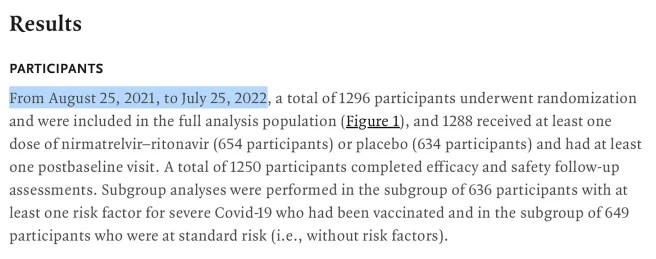
Now, hundreds of millions of manufactured doses later, the most sophisticated apples to apples comparison shows that it isn’t effective whatsoever.
But it gets worse.
Remember “Paxlovid rebound”?
That’s short for people’s symptoms coming back after taking a course of Paxlovid.
When Paxlovid first hit pharmacy shelves, Pfizer claimed that Paxlovid rebound was inconsequential, amounting to 1 or 2 percent of patients who were prescribed the drug.
But a late March study published in The Journal of the American Medical Association (JAMA) found that about 1 in 4 patients on Paxlovid suffered from “Paxlovid rebound.” This study didn’t just analyze the presence of viral fragments. It found that 24.5 percent of enrolled patients on Paxlovid suffered from *symptomatic* rebound.
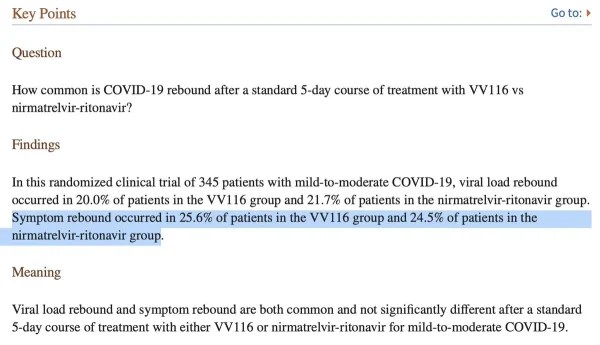
Now it makes sense why so many high profile figures, such as Joe Biden and Anthony Fauci, had bouts of “Paxlovid rebound.” It isn’t rare whatsoever.
Now imagine if Pfizer told the truth about its failed Covid-19 drug from the beginning. That truth would’ve resulted in Pfizer taking a massive financial hit, given that they relied on Paxlovid to sustain their multi billion dollar profit margins.
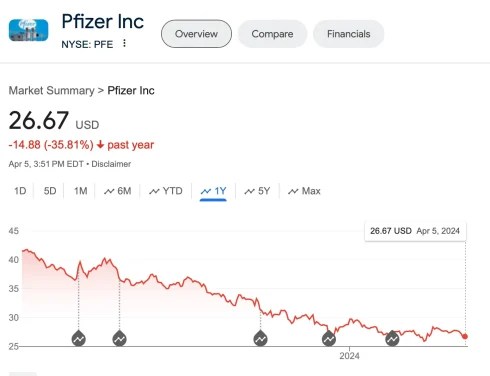
Meanwhile, Pfizer’s market value has continued to crash over the past year. Fewer and fewer people are buying what Pfizer is selling.
Now who will be held accountable for the greatest pharmaceutical fraud and swindle operation of all time?
Disinformation “Expert” Tells People To Only Use “Trusted Sources,” Avoid “Doing Your Own Research”
By Cindy Harper | Reclaim The Net | April 6, 2024
Brianna Lyman, elections correspondent at The Federalist, recently reported on a panel discussion featuring Al Schmidt, Pennsylvania Secretary of the Commonwealth, and Beth Schwanke, Executive Director of the Pitt Disinformation Lab. Schmidt and Schwanke, speaking at a forum organized by Spotlight PA, voiced their stance on “misinformation” and “disinformation” surrounding elections. Strikingly, Schwanke recommended that rather than conducting self-led investigations, Pennsylvanians should place their confidence in so-called “trusted” sources. These include certain institutions and media outlets that have unfortunately been tied in the past to acts of censorship.
“One thing everyone can do to make sure they are seeing accurate information is to use trusted sources. So in elections that means using the Department of State, that means using your county elections office, it means using media organizations that follow, that adhere, to professional journalism standards like … your local NPR affiliate,” Schwanke said. “And it doesn’t mean you know, ‘doing your own research’ and just asking questions and sharing, you know, posts from – I don’t know, in my case, it’s Uncle Joe, right? It means being thoughtful about where your sources are coming from.”
Schwanke’s advice, interestingly, seemed to discourage individual research, questioning, and sharing of ideas. Instead, she advocated the use of sources like the Department of State, county elections offices, and, strikingly, media organizations such as local NPR affiliates, which she implied upheld superior journalistic standards.
Despite what Schwanke says, the importance of being vigilant about our sources of information cannot be overstated. This was vividly demonstrated in the lead-up to the 2020 election when a significant story on Hunter Biden’s laptop by the New York Post was unjustly labeled “disinformation,” and subsequently suppressed across several tech platforms.
As The Federalist reported, what made matters worse, in an incident hinting at bias, NPR blatantly refused to report on the story, with its Managing Editor Terence Samuels declaring it as unworthy of coverage.
The Pennsylvania State Department presented a similar cause for alarm. It announced its collaboration with the Cybersecurity and Infrastructure Security Agency (CISA) to monitor and control online talks deemed a “threat” related to the election process. Despite its claimed intention to offer voters accurate, trustworthy election-related data and to counter threats such as so-called “misinformation,” there is good reason to question the impartiality of its activities. Case in point, CISA had previously facilitated the silencing of Americans expressing valid concerns on social media, as if they were spreading “disinformation,” and even had a post from President Donald Trump flagged under these pretenses.
Related:
Pennsylvania Collaborates With DHS and CISA To Monitor Online Election-Related Speech
Fraud Revealed in German Covid Response
Minutes of Robert Koch Institute crisis meetings reveal undue influence of “external actor”
By John Leake | Courageous Discourse™ | April 3, 2024
As a conspiracy theorist, I am batting .400. Over the last four years, I have examined many official representations of reality and posited the theory that they are the fraudulent misrepresentations of two or more persons in positions of power or undue influence. By definition, two or more persons committing an act of fraud are participating in a criminal conspiracy.
At the risk of sounding boastful, ALL of my conspiracy theories have been confirmed by the subsequent discovery of factual evidence to be actual conspiracies.
Back in 2020, as I watched with dismay as many of my old German friends lost their minds under the pressure of daily propaganda, I posited the theory that the Robert Koch Institute—Germany’s official infectious disease institute—had been hijacked by political interests.
My hunch was that IF unbiased scientific assessments were being conducted at the Robert Koch Institute, these were being distorted or ignored by the German government.
Now comes the news that the German independent magazine, Multipolar, has successfully sued the Robert Koch Institute to release the minutes of its Covid Crisis deliberations in 2020. Though heavily redacted, the documents reveal that pressure was indeed exerted on the Institute’s scientists to go along with public policies not supported by scientific research. For example, the Institute expressed the opinion that masking and lockdowns were of doubtful value.
Of special note was the following revelation:
As Multipolar has already reported based on the previously secret papers, the tightening of the risk assessment from “moderate” to “high” announced by the RKI in March 2020 – based on all lockdown measures and court rulings on them – was, contrary to what has previously been claimed, not based on a professional assessment of the institute, but on the political instructions of an external actor – whose name is blacked out in the minutes.
Reiner Fuellmich Team Find Bombshell Evidence Of A Dossier Showing Conspiracy To “Deal With” Him
ELSA | APRIL 4
On Reiner’s first court appearance after the long Easter break, he and his legal team made what can easily be termed bombshell – that there has been a Dossier Reiner Fuellmich from the German state with the express purpose to take him out, notably out of any possibility of gaining a position in the political arena.
I understand the concerns of the German state. Here was someone with integrity and courage, with charisma and intelligence, with extensive experience plus shared leadership in a small German political party. Very appealing to many people fed up with mandates, loss of freedom of speech, mass immigration, and ever so much else. Here was a suitable leader.
Anyway, here is the Dossier, from bittel.tv. You can also find it on Roger Bittel’s Telegram channel:
👉 Dossier Deutsch (https://t.me/bitteltv/25826)
👉 further languages (https://t.me/bitteltv/25838)
👉 the full broadcast (https://t.me/bitteltv/25839)
All of the dossier is important. However, you may be most interested in the last section:
Report and recommendations for action regarding Reiner Fuellmich
Date: August 24, 2021
Author: B**
Subject: Comprehensive analysis and recommendations for dealing with Reiner Fuellmich
Included within this last section:
The awarding of or the possibility of obtaining politically exposed offices must be prevented by all means within the rule of law.
How is this to be done:
The initiation of criminal proceedings on the basis of the evidence collected against Reiner Fuellmich must be prepared. This includes cooperation with public prosecutors [bolding and italics mine] and the preparation of charges in the event of demonstrable violations of the law. Any necessary constructions must be weighed up and suitable third parties recruited [bolding and italics mine].
NOW HERE, THE FULL DOSSIER. I RECOMMEND READING IT.
http://www.bittel.tv / Broadcast from 2.4.2024
Dossier Reiner Fuellmich
Reiner Fuellmich, co-chairman and candidate for chancellor of the party “dieBasis”, is a German lawyer who has become known in particular for his involvement in various legal disputes and his public statements on various issues, including the measures and political decisions relating to the COVID-19 pandemic. His views and legal activities have attracted both national and international attention and are the subject of controversy.
Professional career:
Reiner Fuellmich began his legal career after graduating from law school. He is licensed to practice law in Germany and in California, USA. Over many years, he has specialized in various areas of civil law and has been involved in several legal disputes, some of which have attracted considerable media attention.
Engagement against banks and corporations:
Before the COVID-19 pandemic, Fuellmich made a name for himself in particular through his involvement in cases against large banks and companies. These often involved consumer protection and claims for damages.
Read the rest of Elsa’s article here.
Featured Video

The Truth About the Trump Shootings with Ken Silva
or go to
Aletho News Archives – Video-Images
From the Archives
The Geopolitics behind the War in Yemen (I)
By Mahdi Darius NAZEMROAYA | Strategic Culture Foundation | 30.03.2015
The United States and the Kingdom of Saudi Arabia became very uneasy when the Yemenese or Yemenite movement of the Houthi or Ansarallah (meaning the supporters of God in Arabic) gained control of Yemen’s capital, Sanaa/Sana, in September 2014. The US-supported Yemenite President Abd-Rabbuh Manṣour Al-Hadi was humiliatingly forced to share power with the Houthis and the coalition of northern Yemenese tribes that had helped them enter Sana. Al-Hadi declared that negotiations for a Yemeni national unity government would take place and his allies the US and Saudi Arabia tried to use a new national dialogue and mediated talks to co-opt and pacify the Houthis.
The truth has been turned on its head about the war in Yemen. The war and ousting of President Abd-Rabbuh Manṣour Al-Hadi in Yemen are not the results of «Houthi coup» in Yemen. It is the opposite. Al-Hadi was ousted, because with Saudi and US support he tried to backtrack on the power sharing agreements he had made and return Yemen to authoritarian rule. The ousting of President Al-Hadi by the Houthis and their political allies was an unexpected reaction to the takeover Al-Hadi was planning with Washington and the House of Saudi. … continue
Blog Roll
 Aletho News
- IRGC air defenses destroy another US MQ-1 drone over Strait of Hormuz
- Imran Khan’s entire immediate family detained in Pakistan ahead of mass protest demanding his release
- EU nation detains former presidential frontrunner
- Leaked: Britain’s Sham Conviction Of Hashim Thaci
- Seyed M. Marandi: U.S. Strike Imminent – Toward Total War in the Middle East
- Russia Voted Under Fire. Washington Is Loading the Tankers.
- 12 Things Your Oncologist Was Trained Not to Tell You
- Anthrax Attacks Paved Way for COVID-Era ‘Junk Drugs and Vaccines’
- How Real Is the Impact of Western Sanctions on Israel?
- France, You Are Guilty: How Paris Turned Western Sahara into the Maghreb’s Powder Keg
- If Americans Knew
- Israeli president pardons soldier convicted for killing wounded Palestinian
- Singer Ed Sheeran says his ‘heart broken’ by Gaza devastation, addresses Macklemore controversy
- Israel Has Imprisoned Female Journalist Bushra Al-Tawil Without Trial Or Charge In Solitary Confinement For Past Month
- Israel poised to teach West Bank a lesson after one Israeli killed – Daily Update
- Salah Sarsour’s Legal Team Says DHS Has Not Met Its Burden to Prove He Is Deportable
- An analysis of tax forms by The Intercept show Kraft’s charity and LLC have donated to Friends of the IDF and AIPAC’s super PAC.
- Israeli attacks kill four Palestinians in Gaza – Daily Update
- Inside Gaza’s death trap of collapsing, bombed-out buildings
- The everyday items Israel bans from Gaza every day
- Inside the siege, the ruined buildings of Gaza – Daily Update
- No Tricks Zone
- 2025 Nature Paper Claiming Worsening Global Drought Gets RETRACTED …Heavily Flawed
- New Study: ‘Global Drought Shows No Detectable Recent Acceleration Under Climate Warming’
- Economic Masterminds: German Socialists Suggest Taxing Productivity Gains Stemming From Using AI
- The South China Sea Has Not Been Cooperating With The Climate Change Narrative
- Energy Crisis: Germany Enters Heating Season With Historically Low Gas Reserve Fill Levels
- New Study: The Antarctic Ice Sheet Gained Mass From 2020-2024 Due To Staggering Snow And Ice Accumulation
- Study: Ocean Heating Rates From Thousands Of Years Ago ‘Dwarf’ Modern Ocean Heating Rates
- Climate Extremists Target, Attack Large-Scale Power Grid Infrastructure In Germany!
- New Study: Antarctic Ice Melt Has Contributed Less Than 1 Centimeter To Sea Level Rise In The Last 30 Years
- Fear Of Debate: Alarmist German Climate Scientist Calls On Mainstream Media To Discredit Skeptic Voices
 Aletho News