Netanyahu does not deny arming ISIS-affiliated group to fight Hamas
Al Mayadeen | June 5, 2025
Former Israeli Security Minister Avigdor Liberman has accused Prime Minister Benjamin Netanyahu of secretly authorizing the transfer of weapons to an armed criminal group affiliated with the terrorist so-called “Islamic State” in Gaza without cabinet approval.
In remarks to the Kan public broadcaster, Liberman, who leads the opposition Yisrael Beytenu party, said the weapons were supplied to a group of militants near the Karem Abu Salem crossing, in an area currently under Israeli military control.
“The Israeli government is giving weapons to a group of criminals and felons, identified with Islamic State, at the direction of the prime minister,” he stated.
“To my knowledge this did not go through approval by the cabinet,” he added.
Abu Shabab clan’s reputation and recent activity
While Liberman did not name the group directly, he appeared to be referencing the Abu Shabab clan, an armed faction in Gaza reportedly opposed to Hamas.
According to Tel Aviv University researcher Michael Milshtein, the group is known in Gaza for drug trafficking, theft, and looting humanitarian aid convoys.
Footage published online in recent days, including by clan leader Yasser Abu Shabab, shows members wearing military-style uniforms emblazoned with the Palestinian flag and the label “Counter-Terrorism Mechanism.”
Security establishment kept in the dark?
Liberman added that the head of the Shin Bet is aware of the weapons transfers but questioned the level of involvement or knowledge within the Israeli occupation military.
“I don’t know how much the IDF chief of staff was in on it,” he said, referring to the Israeli military.
Netanyahu’s office does not deny Liberman allegations
In response to Liberman’s claims, Netanyahu’s office issued a statement defending the government’s multi-pronged approach to defeating Hamas.
“Israel is working to defeat Hamas through various means, based on the recommendations of all the heads of the security establishment,” the statement read.
However, it notably did not deny the allegations raised by Liberman.
Gaza’s ‘humanitarian’ façade: A deceptive ploy unraveled
By Ramzy Baroud | MEMO | June 4, 2025
Just one day before the so-called Gaza Humanitarian Foundation (GHF) began operating officially inside the Gaza Strip, its executive director, Jake Wood, resigned.
The text of his resignation statement underscored what many had already suspected: GHF is not a humanitarian endeavor, but the latest scam by Israeli Prime Minister Benjamin Netanyahu to control the Gaza Strip, after 600 days of war and genocide.
“It is clear that it is not possible to implement this plan while also strictly adhering to the humanitarian principles of humanity, neutrality, impartiality, and independence,” Wood said in the statement, which was cited by CNN and other media.
This begs the question: why had that realisation become ‘clear’ to Wood, even though the aid operation was not yet in effect? The rest of the statement offers some explanation, suggesting that the American contractor may not have known the extent of the Israeli ploy until later, but knew that a disaster was unfolding – the kind that would surely require investigating and, possibly, accountability.
In fact, an investigation by Swiss authorities had already begun. The US news network, CBS, looked into the matter, reporting on 29 May that GHF originally applied for registration in Geneva on January 31 and was officially registered on February 12. However, in no time, Swiss authorities began noticing repeated violations, including that the Swiss branch of GHF is “currently not fulfilling various legal obligations”.
In its original application, GHF “pursues exclusively charitable philanthropic objectives for the benefit of the people.” Strangely, the entity that promised to provide “material, psychological or health” services to famine-stricken Gazans, found it necessary to employ 300 “heavily armed” American contractors, with “as much ammunition as they can carry,” CBS reported.
The ‘psychological’ support in particular was the most ironic, as desperate Gazans were corralled, on 27 May, into cages under extremely high temperatures, only to be given tiny amounts of food that, according to Rami Abdu, head of the Geneva-based Euro-Med Monitor, were in fact stolen from a US-based charitable organization known as Rahma Worldwide.
Following the CBS news report, among others, and following several days of chaos and violence in Gaza, where at least 49 Palestinians were killed and over 300 wounded by those who promised to give aid and comfort, the Israeli newspaper Haaretz revealed that the funding for the operation is coming directly from Israel.
Prominent Israeli politician and Knesset member Avigdor Lieberman went even further, claiming that the money, estimated by The Washington Post to be $100 million, “is coming from the Mossad and the Defence Ministry.”
But why would Israel go through all of this trouble while it can, at no financial cost, simply allow the massive shipments of aid, reportedly rotting on the Egyptian side of the border, to enter Gaza and to stave off the famine?
In Netanyahu’s mind, the aid mechanism is part of the war. In a video message, reported by The Jerusalem Post on May 19, he described the new aid distributing points, manned jointly by GHF and the Israeli army, as “parallel to the enormous pressure” Israel is putting on the Palestinians – exemplified in Israel’s “massive (military) entrance (into Gaza)” – with the aim of “taking control of all of the Gaza” Strip.
In Netanyahu’s own words, all of this, the military-arranged aid and ongoing genocide, is “the war and victory plan.”
Of course, Palestinians and international aid groups operating in Gaza, including UN-linked aid apparatuses, were fully aware that the secretive Israel-US scheme was predicated on bad intentions. This is why they wanted to have nothing to do with it.
In Israel’s thinking, any aid mechanism that would sustain the status quo that existed prior to the war and genocide starting on 7 October, 2023, would be equivalent to an admission of defeat. This is precisely why Israel laboured to associate the UN Palestinian refugee agency, UNRWA, with Hamas.
This included the launching of a virulent campaign against the UN Secretary-General Antonio Guterres himself, and other top officials and rapporteurs. On July 22, the Israeli Knesset went as far as to designate UNRWA a “terrorist organisation”.
Still, it may seem to be a contradiction that the likes of extremist Finance Minister Bezalel Smotrich would agree to such an ‘aid’ scheme just days after declaring that Israel’s intention is to “entirely destroy” Gaza.
However, there is no contradiction. Having failed to conquer Gaza through military force, Israel is trying to use its latest aid scheme to capitalise on the famine it has purposely engineered over the course of months.
Luring people to ‘distribution points’, the Israeli army is trying to concentrate the population of Gaza in areas that can be easily controlled through leveraging food, with the ultimate aim of pushing Palestinians out, in the words of Smotrich, “in great numbers to third countries.”
The latest scheme is likely to fail, of course, like other such stratagems in the last 600 days. However, the inhumane and degrading treatment of Palestinians further illustrates Israel’s rejection of the growing international push to end the genocide.
For Israel to stop scheming, the international community must translate its strong words into strong action and hold, not just Israel, but its own citizens involved in the GHF and other ploys, accountable for being part of the ongoing war crimes in Gaza.
More signs of Britain grooming Syria’s Al-Qaeda-rooted government
The Cradle | June 4, 2025
When Syrian President Ahmad al-Sharaa (previously known as Abu Mohammad al-Julani), the former Al-Qaeda emir who led the Nusra Front, was affiliated with ISIS, and later headed Hayat Tahrir al-Sham (HTS), visited Saudi Arabia to meet Crown Prince Mohammed bin Salman (MbS) in February, he was accompanied by a surprising figure: Razan Saffour, a 32-year-old British-Syrian activist who had never set foot in Syria before the fall of former president Bashar al-Assad’s government in December.
Saffour also joined Syrian Foreign Minister Asaad al-Shaibani on his trip to the Munich Security Conference that same month. Her presence in Syria’s new ruling circle highlights Britain’s outsized role in shaping the conflict – bringing Al-Qaeda to power, whitewashing its leadership, and embedding UK operatives within its political infrastructure.
Her presence alongside Julani on official state visits signals not just personal ascension, but the triumph of Britain’s long war to launder extremist power through western-groomed proxies.
Razan Saffour was born and raised in London, studied at SOAS, and emerged as a high-profile Syrian opposition voice during the early years of the war, when she was only in her early 20s. Platformed by major western and Arab media outlets from the Persian Gulf, she was a familiar figure on the regime-change circuit. Her father, Walid Saffour, a leading Muslim Brotherhood (MB) dissident, had fled Syria in 1981 during the MB’s armed uprising against the state.
Walid Saffour would later become the Syrian opposition’s ambassador to the UK, representing the Syrian National Council. Academic Dr Dara Conduit notes that this gave “the Brotherhood an important formal diplomatic link to the UK through an undeclared member.”
Engineering regime change
By the mid-2000s, the British government had aligned with US neoconservatives and MB-linked activists to prepare a full-blown insurgency in Syria.
In October 2006, several members of an MB front group, the National Salvation Front (NSF), traveled to Washington to meet with Michael Doran, a member of the US National Security Council, to discuss plans for regime change in Syria. Doran was a close associate of prominent Jewish neoconservative and former US president George W. Bush’s administration official Elliott Abrams.
In 2009, former French foreign minister Roland Dumas was told by top British officials that “they were preparing something in Syria … Britain was organizing an invasion of rebels into Syria.” When asked why, Dumas responded, “Very simple!” because “the Syrian regime makes anti-Israeli talk.”
The covert US-UK effort to topple Assad involved training young, media-savvy Syrian activists to organize anti-government protests, as well as flooding Syria with Al-Qaeda militants from Iraq, Libya, Lebanon, and dozens of other countries to carry out false flag attacks against Syrian police and security forces.
Many were UK nationals and members of the Al-Qaeda-linked Libyan Islamic Fighting Group (LIFG). They had been allowed by British authorities to travel to Libya to topple late Libyan president Muammar al-Gaddafi, before being funneled into Syria via Turkiye.
US Ambassador to Syria Robert Ford served as the operation’s field coordinator. As former US Naval officer Wayne Madsen reported in 2011, Ford was recruiting death squads from Afghanistan, Iraq, Yemen, and Chechnya. His previous role as political officer in Iraq involved implementing the El Salvador Option: organizing Shia death squads to crush Sunni insurgents under Ambassador John Negroponte.
Among those released from the US-run Bucca prison in Iraq and dispatched to Syria was none other than Abu Mohammad al-Julani. He would go on to found the Nusra Front, the Syrian branch of Al-Qaeda, after orchestrating a series of suicide bombings in Damascus.
The Powell connection
While Al-Qaeda’s Syrian franchise grew, British intelligence cultivated parallel assets to manage the political front. In 2011, former UK Prime Minister Tony Blair’s chief of staff, Jonathan Powell, founded the NGO Inter Mediate, a Foreign Office-funded project designed to open secret channels with insurgent groups.
In March 2012, Powell wrote to Hillary Clinton’s advisor Sidney Blumenthal seeking US support: “We are setting up secret channels between insurgents and governments.” He boasted that his group worked “closely with the FCO (the Foreign and Commonwealth Office), NSC (National Security Council) and SIS (Special Intelligence Service, or MI-6) in London.”
“We are starting work in Syria,” Powell added, suggesting that he was communicating with the Nusra Front and other Al-Qaeda linked groups.
By this time, Walid Saffour had assumed his UK ambassadorial post for the Syrian opposition. He lobbied hard for the arming of the Free Syrian Army (FSA) – a cover or “weapons farm” for transferring NATO-grade weapons to Nusra.
His appointment gave “the Brotherhood an important formal diplomatic link to the UK through an undeclared member,” academic Dara Conduit wrote in her book detailing the history of the MB in Syria.
Armed with CIA-supplied TOW missiles and led by Julani’s suicide battalions, Nusra captured Idlib in 2015. A year later, it declared an Islamic emirate in the province, modeled on ISIS’s Raqqa. Brett McGurk, the US envoy to the anti-ISIS coalition, would later call Idlib “the largest Al-Qaeda safe haven since 9/11.”
While McGurk claimed “Idlib now is a huge problem,” the US and UK were quietly working with the Nusra, which was soon rebranded as HTS.
Arab media outlet Jusoor wrote that the “attempts of [Hayat] Tahrir Al-Sham for polishing itself began in the summer of 2017, with a campaign of contacts with the west.”
Jusoor added that HTS media official Zeid Attar had a meeting with the former UK diplomat Powell, “who manages many back channels for negotiating with designated terrorist groups either internationally or nationally.”
From terrorist to statesman
In 2019, US envoy James Jeffrey openly described HTS as an “asset” to Washington’s Syria strategy. The goal: preserve an Al-Qaeda-controlled buffer in Idlib to pressure Damascus.
Russian media later revealed that Powell had met Julani near the Bab al-Hawa crossing with Turkiye, coaching him on how to rehabilitate his image. Julani was advised to grant a western media interview to soften his profile.
PBS journalist Martin Smith soon arrived in Idlib. His April 2021 interview with Julani aired in the US, casting the Salafist extremist leader as a reformed figure who posed no threat to western interests.
In May 2024, Robert Ford revealed at a conference that he, too, had met Julani in Idlib. “In 2023, a British non-governmental organization specializing in conflict resolution invited me to help with their efforts to get this man out of the terrorist world and into regular politics,” Ford told attendees.
That NGO, according to Independent Arabia, was Powell’s Inter Mediate. In a revealing twist, Powell was appointed UK National Security Advisor on 8 November 2024 – just weeks before Julani’s HTS launched its final offensive on Damascus. By 8 December, Julani, who now goes by his government name Ahmad al-Sharaa, had assumed power.
London’s ‘post-Assad’ playbook
As Sharaa settled into the presidential palace, western and Arab media launched a PR blitz to sell him as a modern, diversity-friendly ruler. This was difficult given his previous pledges to carry out a genocide against any of Syria’s minority Alawites who refused to convert to Sunni Islam, and his role in dispatching car and suicide bombers, killing tens of thousands in Syria and Iraq over more than a decade.
An image facelift ensued nonetheless: Military fatigues gave way to tailored suits; his nom de guerre was dropped in favor of his alleged birth name. Time magazine listed Sharaa as one of the year’s 100 most influential people – at Ford’s behest, no less. And the US lifted its $10 million bounty on his head for terrorism.
Sharaa pledged to protect minorities, including the Alawites – even as Syria’s new HTS-led security forces began targeting them under the guise of counterinsurgency. HTS-led Syrian government forces were carrying out brutal massacres against Alawite civilians on the Syrian coast, during an operation to quell an armed uprising against the authorities. During a four-day period of massacres, at least 1,700 Alawite civilians, including scores of women and children, were killed.
The following February, after Razan Saffour accompanied Julani to meet MbS, The National reported that Powell had recently held a “low-key meeting” with Syria’s new government in his new role as National Security Advisor, “boosting suggestions he will play a leading role in relations.”
Syrian analyst Malek Hafez told the Syrian Observer that Powell’s team even runs a media office inside the presidential palace, “reportedly run by two women – one British, the other of Lebanese-British heritage.”
As Hafez concludes, “The rise of Ahmad al-Sharaa was not spontaneous – it was carefully engineered through a long-term, western-backed strategy, in which Britain played a disproportionately influential role among western powers.”
While London has not yet officially expressed its support for Sharaa and Syria’s new government, the UK’s “fingerprints” are increasingly visible, the Observer added.
When weighed against the hundreds of thousands of Syrians killed, the millions displaced, and the wreckage of a nation, the UK’s central role in bringing Julani to power should not be forgotten.
The United States and Greenland, Part I: Episodes in Nuclear History 1947-1968
Greenland “Green Light”: Danish PM’s Secret Acquiescence Encouraged U.S. Nuclear Deployments
Pentagon Approved Nuclear-Armed B-52 Flights Over Greenland
National Security Archive | June 3, 2025
The Trump administration’s intention to acquire Greenland, including possibly by force, has put a focus on the history of its strategic interest to U.S. policymakers. Today, the National Security Archive publishes the first of a two-part declassified document collection on the U.S. role in Greenland during the middle years of the Cold War, covering the decisions that led to the secret deployment of U.S. nuclear weapons in the Danish territory in 1958 to the 1968 crash of a nuclear-armed B-52 bomber near Thule Air Base that left plutonium-laced debris scattered across miles of Arctic sea ice.[1]
The radioactive mess caused by the accident required a major clean-up and caused a serious controversy in U.S.-Denmark relations. The U.S. had never officially told Denmark that it was flying nuclear weapons over Greenland, although Danish officials suspected it; nor had the U.S. informed the Danes that it had once stored nuclear weapons in Greenland, although in 1957 they had received a tacit “green light” to do so from the Danish prime minister, according to documents included in today’s posting. But both the nuclear-armed overflights of Greenland and the storage of nuclear weapons there were in strong contradiction to Denmark’s declared non-nuclear policy. When the bomber crash exposed the overflights, Denmark tried to resolve the conflict by seeking a U.S. pledge that Greenland would be nuclear free.
This new publication revisits the nuclear and strategic history of the United States and Greenland as it emerged during the late 1940s through the crash in 1968, highlighting key declassified documents from the archival record, FOIA releases, the Digital National Security Archive (DNSA), and other sources. The analysis draws on the work of U.S. and Danish scholars who have written about the B-52 crash and the history of the U.S., Denmark, and Greenland during the Cold War, including revelations in the 1990s that prompted Danish experts to revisit the historical record.[2]
Part I, below, looks at U.S. strategic interests in Greenland in the early Cold War period, including Danish government acquiescence to the storage of nuclear weapons there, U.S. nuclear-armed airborne alert flights over Greenland, and the 1968 B-52 crash. Part II will document the aftermath of the accident, including the clean-up of contaminated ice, the U.S.-Denmark government nuclear policy settlement, and the failed search for lost nuclear weapons parts deep in the waters of North Star Bay.
Background
Greenland has been seen as an important strategic interest to United States defense officials and policymakers since World War II. After the fall of France in June 1940, the Nazis seized Denmark, and the Roosevelt administration feared that Germany would occupy Greenland, threatening Canada and the United States. In response, the U.S. insisted that Greenland was part of the Western Hemisphere and thus a territory that had to be “assimilated to the general hemispheric system of continental defense.” The U.S. began talks with Danish Ambassador Henrik Kauffmann, who was acting on his own authority as “leader of the Free Danes” and in defiance of the German occupiers. On 9 April 1941, Kauffmann signed an extraordinary agreement with Washington giving the United States almost unlimited access to build military facilities in Greenland and would remain valid as long as there were “dangers to the American continent,” after which the two parties could modify or terminate it. By the end of World War II, the U.S. had 17 military facilities in Greenland. After the liberation of Denmark from German rule, the Danish Parliament ratified the Kauffmann-U.S. agreement on 23 May 1945, but it assumed its early termination, with Denmark taking over Greenland’s defense.[3]
In 1946, the Truman administration gave brief consideration to buying Greenland because it continued to see it as important for U.S. security.[4] During 1947, with the U.S. beginning to define the Soviet Union as an adversary, defense officials saw Greenland as an important “primary base,” especially because they were unsure about long-term access to Iceland and the Azores.[5] Thus, maintaining U.S. access was an important concern, as exemplified in an early National Security Council report that U.S. bases in Greenland, along with Iceland and the Azores, were of “extreme importance” for any war “in the next 15 or 20 years.” For their part, Danish authorities had no interest in selling Greenland but sought to restore their nation’s sovereignty there; having joined NATO, they dropped their traditional neutrality approach and were more willing to accept a limited U.S. presence. In late 1949, the U.S. and Denmark opened what became drawn out negotiations over Greenland; during 1950, the U.S. even returned some facilities to Denmark, including Sandrestrom air base. But in late 1950, with Cold War tensions deepening, the Pentagon gave the negotiations greater priority, seeking an agreement that would let the U.S. develop a base at Thule as part of an air strategy designed to reach Soviet targets across the Arctic.[6]
In April 1951, the two countries reached an agreement on the “defense of Greenland” that superseded the 1941 treaty, confirmed Danish sovereignty, and delineated three “defense areas” for use by the United States, with additional areas subject to future negotiations. Under the agreement, each signatory would “take such measures as are necessary or appropriate to carry out expeditiously their respective and joint responsibilities in Greenland, in accordance with NATO plans.” Consistent with that broad guidance, the U.S. would be free to operate its bases as it saw fit, including the movement of “supplies,” and with no restrictions on its access to airspace over Greenland. With this agreement, Washington had achieved its overriding security goals in Greenland. To move the agreement through Parliament, the Danish government emphasized its defensive character, although the negotiators and top officials understood that U.S. objectives went beyond that.[7]
In 1955, a few years after the 1951 agreement, the Joint Chiefs of Staff tried to revive interest in purchasing Greenland to ensure U.S. control over the strategically important territory and without having to rely on an agreement with another government. But the JCS proposal never found traction in high levels of the Eisenhower administration. The State Department saw no point to it, since the United States was already “permitted to do almost anything, literally, that we want to in Greenland.” The 1951 agreement stayed in place for decades. Denmark and the United States finally modified it in 2004, limiting the “defense area” to Thule Air Base and taking “Greenland Home Rule” more fully into account.
Nuclear Issues
When the U.S. negotiated the 1951 agreement, nuclear deployments were not an active consideration in official thinking about a role for U.S. bases for Greenland. Yet by 1957, when U.S. government agencies, including the State Department, became interested in deploying nuclear bombs at Thule, they used the agreement’s open-ended language to justify such actions. According to an August 1957 letter signed by Deputy Under Secretary of State Robert Murphy, the Agreement was “sufficiently broad to permit the use of facilities in Greenland for the introduction and storage of [nuclear] weapons.” The problem was to determine whether Danish leaders would see it that way.
While Defense Department officials were willing to go ahead on the deployments without consulting the Danish Government, Murphy thought it best to seek the advice of the U.S. ambassador, former Nebraska Governor Val Peterson. Peterson recommended bringing the question to Danish authorities and, having received the Department’s approval, in mid-November 1957 he asked Prime Minister Hans Christian Hansen if he wished to be informed about nuclear deployments. By way of reply, Hansen handed Peterson a “vague and indefinite” paper that U.S. and Danish officials interpreted as a virtual “green light” for the deployments. Hansen raised no objections, asked for no information, and tacitly accepted the U.S. government’s loose interpretation of the 1951 agreement. He insisted, however, that the U.S. treat his response as secret because he recognized how dangerous it was for domestic politics, where anti-nuclear sentiment was strong, and for Denmark’s relations with the Soviet Union, which would have strongly objected.[8]
When Prime Minister Hansen tacitly approved the deployment of U.S. nuclear weapons in Greenland, he was initiating what Danish scholar Thorsten Borring Olesen has characterized as a “double standard” nuclear policy. On the one hand, in a May 1957 address, Hansen had stated that the government would not receive nuclear weapons “under the present conditions.” Thus, Denmark abstained from NATO nuclear storage and sharing plans as they developed in the following years. On the other hand, the Danish leadership treated Greenland differently with respect to nuclear weapons even though, as of 1953, it was no longer a colony but a county represented in Parliament. This double standard was not necessarily a preference for Denmark’s leaders but they felt constrained by the need to accommodate U.S. policy goals in Greenland. Thus, by keeping their Greenland policy secret, Hansen and his successors kept relations with Washington on an even keel while avoiding domestic political crises and pressure from the Soviet Union.[9]
In 1958, the Strategic Air Command deployed nuclear weapons in Greenland, the details of which were disclosed in a declassified SAC history requested by Hans Kristensen, then with the Nautilus Institute. According to Kristensen’s research and the Danish study of “Greenland During the Cold War,” during 1958 the U.S. deployed four nuclear weapons in Greenland—two Mark 6 atomic bombs and two MK 36 thermonuclear bombs as well as 15 non-nuclear components. That SAC kept bombs there for less than a year suggests that it did not have a clear reason to continue storing them in Greenland. Nevertheless, the U.S. kept nuclear air defense weapons at Thule: 48 nuclear weapons were available for Nike-Hercules air missiles through mid-1965. There may also have been a deployment of nuclear weapons for Falcon air-to-air missiles through 1965, but their numbers are unknown.[10]
Airborne Alert and the January 1968 Crash
If it had only been an issue of the U.S. storing nuclear weapons on the ground in Greenland for a few years, the matter might have been kept under wraps for years. But the crash of a U.S. Air Force B-52 on 21 January 1968 near Thule Air Base exposed another nuclear secret and caused serious difficulties in U.S.-Denmark relations. While the bomber crash was quickly overshadowed by North Korea’s seizure of the U.S.S. Pueblo the next day and the Tet offensive that began on 30 January, the coincidence of the three events was a major crisis for the overextended U.S.[11]
Beginning in 1961, accident-prone B-52s were routinely flying over Thule because Greenland had become even more salient to U.S. national security policy. To warn the U.S. of incoming bombers, the Air Force had deployed Distant Early Warning Line radar stations across Alaska and northern Canada during the 1950s and extended them to Greenland in 1960-1961. The Air Force also deployed the Ballistic Missile Early Warning System (BMEWS), with a site located near Thule Air Base in 1960. With BMEWS, the U.S. would receive 15 minutes of warning of a ballistic missile launch.
The warning time was important for U.S. Strategic Air Command (SAC) because it provided the opportunity to launch ground alert bomber forces in the event of an attack. But the possibility of an ICBM strike on U.S. airbases also helped inspire the emergence of airborne alert, whereby SAC kept nuclear-armed B-52s in the air 24 hours a day, ready to move on Soviet targets in the event of war. SAC began to test airborne alert in the late 1950s, and the flights soon became routine. By 1961, SAC had initiated “Chrome Dome,” with 12 B-52s flying two major routes, a Northern Route over North America and a Southern Route across the Atlantic. While SAC leaders used strategic arguments to justify airborne alert, they also had a parochial interest because it kept bombers in the air, giving pilots even more training.[12]
Airborne alert converged with Greenland in August 1961, when SAC and the Joint Chiefs of Staff approved a plan for two B-52 sorties a day to fly over the BMEWS site at Thule. Given the major importance of the BMEWS site, if the Soviets knocked it out in a surprise attack, they could disrupt U.S. early warning capabilities. Thus, SAC insisted on visual observation so that the B-52 crew could check whether the site was intact in the event there were failures in the communications links between Thule and the North American Air Defense Command in Colorado. SAC’s BMEWS Monitor was a routine operation for years, even after the B-52 crash in Palomares, Spain, led to decisions to scale back on airborne alert. Secretary of Defense Robert McNamara wanted to end the program altogether but accepted a JCS compromise proposal for fewer sorties.
Danish military personnel and others nearby were aware of the daily B-52 flights. Moreover, every year there were emergency landings by U.S. bombers, with three in 1967 alone. After a nuclear-loaded B-52 crashed in western Maryland in January 1964, Eske Brun, Denmark’s Under Secretary for Greenland, wondered whether the B-52s flying over Thule carried nuclear weapons and asked U.S. Ambassador William McCormick Blair about the possibility of an accident. Blair suggested that such an “unfortunate” occurrence would be the price of defending the “free world” and that the flights were consistent with the 1951 agreement. The Danes held internal discussions about whether there were any restrictions on U.S. flights over Greenland and decided not to pursue the matter.
According to Scott Sagan, the January 1968 crash was a “normal accident waiting to happen.” The heating system failed on a bomber carrying four nuclear weapons over Thule, causing foam rubber cushions placed under the seats to catch fire. The crew could not extinguish the flames and bailed out after determining that an emergency landing was impossible, with all but one of the seven crew members surviving. While the nuclear weapons carried on the plane did not detonate when the B-52 crashed on Wolstenholme Fjord, near North Star Bay, conventional high explosives carried in the bombs did, causing plutonium contaminated aircraft parts and bomb debris to scatter about the ice for miles.[13]
To recover what they could of the bombs and assess the contamination, SAC sent an emergency team to Thule, including officials from the Atomic Energy Commission (AEC). All of this occurred under incredibly difficult conditions, sub-zero temperatures, and winter arctic darkness. Danish officials joined in the effort, although they would not take part in the bomb-salvaging activity. While SAC’s disaster team discovered most of the bomb parts after the accident, it could not find some of the important pieces, which eventually necessitated an underwater search. An equally significant problem was the possible risk to the local ecology from plutonium contamination, including its impact on Inuit hunters. U.S. officials had to find a way to clean up the icy mess quickly and in a way that was satisfactory to Danish authorities.
Immediately after the accident, JCS Chair Earle Wheeler and Secretary of Defense Robert McNamara ordered nuclear-armed airborne alert flights to end. SAC would continue the BMEWS Monitor using KC-135 tanker aircraft, but that ended that April 1968 when the flights were switched to the BMEWS site in Clear, Alaska. BMEWS, including the site at Thule, remained a U.S. strategic asset until 2001, when the Air Force replaced it with the Solid State Phase Array Radar System.
Soon after the accident, the Danish Foreign Ministry issued a statement that included this language: “Danish policy regarding nuclear weapons also applies to Greenland and also to air space over Greenland. There are no nuclear weapons in Greenland.” With this statement, the Government of Denmark was beginning to abandon the “double standard” by moving toward a consistent no nuclear policy. How Danish authorities worked with Washington to confirm this policy goal will be the subject of Part II.
The crash of the B-52 was no secret in Denmark, but the fact that airborne alert flights over Greenland were routine during the 1960s did not reach public attention until the early 1990s. Prompted by the revelations, the Danish Government asked the U.S. government for more information, which led the State Department to disclose to the Danish government in July 1995 that the U.S. had deployed nuclear bombs and air defense weapons in Greenland during 1958-1965. The State Department letter was secret, but its contents began to leak. The preceding month, the Danish government had released information on the Hansen paper, creating a political scandal and prompting calls for an investigation of the historical record.
The Danish Institute of International Affairs sponsored the research and published its report in 1996, Grønland under den kolde krig: Dansk og amerikansk sikkerhedspolitik 1945–1968 [Greenland During the Cold War: Danish and American Security Policy 1945-1968 ]. The report, which included a full reproduction of the Hansen paper, among other revelations, disclosed much of this once-hidden history.[14] Nevertheless, significant State Department and U.S. Embassy records remain classified and have been the subject of declassification requests by National Security Archive to the U.S. National Archives.
Israel-Backed Militias Linked to ISIS Loot Gaza Aid Under IDF Watch
By Robert Inlakesh | MintPress News | May 29, 2025
Israeli officials often claim that Hamas has been looting aid heading to Gaza, yet the evidence suggests the opposite. New reports and eyewitness accounts indicate that Israel is backing ISIS-linked militants who are working to replace Hamas security forces and are looting humanitarian aid under the watchful eye of IDF drones.
New evidence recently emerged of ISIS-linked militants in Gaza, operating inside the Israeli-controlled buffer zone and controlling roads on which aid was destined to be transported. These armed men were photographed brandishing automatic weapons, wearing Israeli military tactical vests and bearing Palestinian flag patches on their helmets.
To the naked eye, they could be mistaken for Palestinian security force officers. In fact, they are members of an infamous criminal network responsible for looting humanitarian aid. On May 21, 15 World Food Program trucks carrying flour were looted, and UN sources suggest the perpetrators were these armed factions. Yet, they claim to be a legitimate opposition group poised to replace Hamas.
For some 80 days, Israel had imposed a total blockade on all food, medical supplies, water and fuel entering the territory. As soon as a small number of trucks were allowed to enter, the militants were spotted, sporting new military gear and poised to intercept the humanitarian supplies.
ISIS-linked “Anti-Terror Services”
The leader of the Israeli-aligned militia is a man named Yasser Abu Shabab, a member of the Tarabin tribe that extends between the Naqab (Negev), Gaza and Sinai. However, he and others affiliated with the Tarabin have long been denounced as not representing the tribe due to their extensive criminal pasts.
Abu Shabab was well known in Gaza for his fierce opposition to Hamas and had been arrested for smuggling narcotics. He also maintained a direct connection to ISIS in the Egyptian Sinai. When Israeli bombing destroyed the jails run by Hamas security forces during the early days of the Gaza war, the infamous criminal managed to escape.
From there, Abu Shabab quickly began building a militant force numbering at least 100 men, many of whom were also previously imprisoned and had known ties to ISIS and al-Qaeda-linked groups.
An internal UN memo, reported by the Financial Times in November 2024, stated that Abu Shabab’s men were operating inside Israel’s buffer zone, looting aid shipments with “the passive, if not active benevolence” of Israeli forces. This is notable, as Israeli forces have routinely shot and killed civilians attempting to enter that same zone, even when coordinated in advance.
While these criminal factions began looting early into the Gaza war, they became more prominent following Israel’s invasion of Rafah on May 6, 2024. Up until that point, Hamas-led Palestinian police had helped coordinate aid deliveries through the Rafah Crossing.
This security was provided despite Israel threatening to bomb the police officers if they approached aid trucks, often forcing Gaza’s law enforcement into a hands-off role. But once Rafah was invaded and police disappeared, Israeli forces worked in proximity with criminal networks to intercept and sell stolen aid through intermediaries.
The result was a massive price hike for basic goods, with these gangs reportedly drip-feeding supplies to local sellers, maintaining artificial scarcity during a famine. Israel’s leading human rights organization, B’Tselem, has labeled the policy “manufacturing famine.”
Two sources working with aid agencies in Gaza confirmed to MintPress News that all aid entering the Strip is either subject to a bribe paid to these gangs or is partially or completely confiscated. Both spoke on condition of anonymity, stating that the gangs are widely believed to be coordinating with Israeli forces.
Prior to January 19, when a temporary ceasefire began, these gangs wore face coverings and operated as a ragtag militia. In recent weeks, however, they have rebranded themselves as the “Anti-Terror Service,” claiming to be a grassroots opposition to Hamas.
On Abu Shabab’s Facebook page, he now describes himself as a “grassroots leader who stood up against corruption and looting,” posting photos of himself patrolling roads and claiming to work with international aid organizations, to ensure the delivery of flour trucks.”
Back in November 2024, he told The Washington Post that “Hamas has left us with nothing,” even denying that his men carried weapons. He claimed that the looting was done by unarmed individuals and that they avoided stealing food intended for children. Yet aid workers and truck drivers insist his men are committing armed robbery.
Another warlord reportedly backed by Israel is Shadi al-Sufi, a convicted murderer and drug trafficker who had been sentenced to death. In 2020, he assassinated Jabr Al-Qiq, a senior commander in the PFLP’s Abu Ali Mustafa brigades. He reportedly later worked with ISIS contacts to escape to Sinai.
A senior official with a major humanitarian organization told MintPress News :
In the areas where the security forces are operating, the situation is always more stable, and they have repeatedly cracked down on black market operations. Anyone telling you the gangs are helping the people is a liar, that is all I can say.”
In November, Haaretz reported: “The IDF is aware of the problem. They said that at one point, the government had even considered making the clans to which the armed men belong responsible for distributing aid to Gaza’s residents, even though some of the clans’ members are involved in terrorism and some are affiliated with extremist organizations like the Islamic State.”
This now appears to be the Israeli strategy: to deputize these criminal gangs as a replacement security force to supplant Hamas rule. The makeover also coincides with efforts by the Gaza Humanitarian Foundation (GHF), a U.S.-linked initiative rumored to involve private military contractors, raising concerns that such groups may be tapped to cooperate with these armed networks.
A source affiliated with the Palestinian security forces in Gaza told Mint Press News that a similar strategy was attempted in northern Gaza, but that Hamas, working with politically unaffiliated locals, dismantled the criminal networks that began forming under Israeli supervision.
Hamas vs ISIS and Israel
Meanwhile, the UN and every major humanitarian organization that has addressed the issue have pointed the finger at the gangs, not Hamas, for looting. None have reported credible instances of Hamas stealing aid. In fact, the Biden administration even asked Israel in February 2024 to halt its targeting of Hamas-led security forces, which had been helping coordinate the delivery of humanitarian trucks into Gaza.
“Hamas is ISIS,” Israeli Prime Minister Benjamin Netanyahu declared. But recent actions by Israel suggest the opposite: that it is actively empowering Salafist factions to undermine Hamas in Gaza. In March, the Israeli military floated the idea of arming certain tribal clans to establish so-called “Hamas-free zones.” Among those considered was the Dughmush clan, long known for its links to ISIS.
Since Hamas was voted into power and took full control of Gaza in 2007, it has fought a years-long war against Salafi-jihadist factions inside the Strip. In 2009, it crushed an al-Qaeda-aligned uprising that left 22 dead. Sporadic bombings and assassination attempts followed.
Tensions between Hamas and al-Qaeda affiliates continued intermittently for years, marked by sporadic violence and periodic mass arrests, most notably in 2015, when Hamas detained over 50 Salafist militants after a wave of bombings targeting civilians in Gaza.
That same year, ISIS formally entered the fray. The Sheikh Omar Hadid Brigade, an ISIS affiliate, announced its presence in Gaza shortly after ISIS executed Hamas commander Sheikh Abu Salah Taha in Syria’s Yarmouk camp. Hamas responded swiftly: its security forces hunted down and killed the group’s leader, Younis Hunnar, in a gunfight.
In 2018, ISIS would officially “declare war” on Hamas, urging its followers to carry out attacks in order to overthrow the group in Gaza.
Now, in a bitter twist, Israel is backing many of these same elements. Under the guise of “aid security,” it is arming and enabling former ISIS and al-Qaeda-linked operatives, along with known traffickers and warlords, to carve out zones of control in Gaza. These forces are marketed as a grassroots alternative to Hamas. In practice, they are looting aid and destabilizing local governance under the watchful eye of Israeli drones.
White House covered up chemical spill cancer risk – report
RT | June 2, 2025
The administration of former US President Joe Biden tried to cover up serious public health risks related to a 2023 toxic chemical spill in East Palestine, Ohio, a whistleblower protection and advocacy group has claimed.
The Government Accountability Project (GAP) has published a set of documents obtained through a lawsuit from the Federal Emergency Management Agency (FEMA), which allegedly prove that the White House deliberately chose to withhold the true scale of the catastrophe while intentionally avoiding contact with affected residents.
On February 3, 2023, a Norfolk Southern freight train carrying toxic chemicals, including vinyl chloride, derailed near the village of East Palestine, spilling its hazardous contents into a nearby waterway. Five tankers were later also deliberately ignited in a controlled burn. The incident forced evacuations, was linked to animal deaths, and led to reports of unexplained illnesses in the weeks that followed.
Several months later, the Environmental Protection Agency (EPA) publicly declared that East Palestine residents were “not in danger,” citing air and water monitoring results. Biden had also praised what he called his administration’s “herculean efforts” to resolve the crisis.
The government’s response was heavily criticized at the time, with many calling out Biden for not visiting East Palestine sooner, downplaying the severity of the disaster, and prioritizing public relations over the health and safety concerns raised by residents and experts.
According to GAP investigator Lesley Pacey, the public’s fears have turned out to be justified, with internal documents showing that the White House, the EPA, and FEMA had privately discussed the serious dangers associated with the chemical spill, described internally as “really toxic,” and “deliberately kept this information from the community.”
In an interview with NewsNation published on Saturday, Pacey explained that FEMA knew that the controlled chemical burn resulted in a “really toxic plume” and that it could cause cancer clusters in the region and other health risks that would require 20 years of medical monitoring.
The information was never publicly disclosed or acknowledged by FEMA or the White House as the Biden administration chose to focus on “public reassurances” rather than “worrying about public health,” Pacey told the New York Post.
The emails obtained by GAP have also shown that FEMA’s coordinator – sent to East Palestine to oversee recovery efforts, communicate with residents and assess their needs – was actually directly instructed to avoid engaging with the locals.
“They completely botched this event from the very beginning,” Pacey surmised.
The BBC’s climate science problem
By Andrew Montford | Net Zero Watch | May 20, 2025
You could be forgiven for thinking the BBC is out to get Richard Tice. Their chosen battleground is the Reform man’s position on climate and Net Zero, but it’s fair to say the campaign is, thus far, not going too well.
Question Time last week was a car crash for the corporation, with chairman Fiona Bruce interrupting Tice to contradict his contention that only 4% of carbon dioxide emissions are manmade. Thirty percent was the correct figure, she boldly asserted. Unfortunately, Tice was right, and she was wrong, so the Corporation’s gophers got to work and quietly edited the recording to remove her gaffe. Unfortunately someone noticed, and sceptics had a field day.
Undeterred, the Corporation returned to the fray a few days later, when Nick Robinson had Tice on his Political Thinking podcast. They decided, somewhat surprisingly, to take up cudgels on exactly the same subject, namely the human influence on climate.
Once again, Tice expained that human emissions were dwarfed by natural ones, and there was no attempt to probe this argument more deeply. The conversation meandered off elsewhere.
However, shortly aferwards Robinson decided to stick in a metaphorical boot, tweeting a clip from the interview with the comment:
He’s denying the scientific consensus that climate change is partly man made & can be slowed or halted.”
This is a very strong take given that Robinson had not attempted to pin down Tice on precisely what he meant. But at face value it’s a misrepresentation.
Tice’s words could only reasonably be interpreted as implying that the human contribution is nugatory compared to the natural one. To get to Robinson’s take – that Tice believed that there was no human influence – would mean considering his words as meaning natural CO2 emissions affected the climate but human ones didn’t. This would be ludicrous.
Tice’s words clearly implied that he thought mankind affected the climate, but only marginally so. In other words, far from “denying… that climate change is partly man made”, this was his starting point!
As to the rest of Robinson’s claim – that Tice was denying that climate change “can be slowed or reversed”, we need to note what appears to be a fatal contradiction in Robinson’s position. If climate change is “partly” manmade, then it is also partly natural. How, we wonder, does Robinson think we can halt the natural element?
It is undoubtedly substantial. We are sure that the climate changes on all timescales, from the decadal and centennial to the millennial and beyond. We know this from, for example, long-term temperature records, such as the Central England Temperature Series, the 800-year record of the waters of the Nile, and proxy climate records covering even longer periods. And the natural changes that are seen in history can be dramatic. One notable example was the sudden temperature rise at the end of the period, over 10,000 years ago, known as the Younger Dryas. Temperatures around the world are thought to have increased by 3–10 degrees in just a few decades.
How does Nick Robinson think we are going to stop that kind of climate change?
Charitably, Robinson – who is a generalist – simply hasn’t thought through what he means by “climate change”. He has no robust understanding of climate history and climate science, and is therefore unable to probe the position of people like Tice, who have given the issues some thought.
That being the case, he needs to think before he speaks, and perhaps to be a little more cautious about dishing out accusations of denial.
Another Neoconservative Bites the Dust: The Life and Legacy of Michael Ledeen
By Jose Alberto Nino – The Occidental Observer – June 1, 2025
Michael Ledeen, the man who urged America to “to pick up some small crappy little country and throw it against the wall” every decade, met an end that many of his critics would call overdue. On May 17, 2025, Ledeen died at the age of 83. marking the passing of one of the last influential Jewish neoconservatives of his generation.
Ledeen obtained a Ph.D. in History and Philosophy from the University of Wisconsin-Madison, where he studied under the Jewish German-born historian George Mosse. He took a particular interest in Italian fascism and wrote a doctoral dissertation that eventually became “Universal Fascism: The Theory and Practice of the Fascist International, 1928–1936,” published in 1972, which explored Benito Mussolini’s efforts to create a Fascist international in the late 1920s and early 1930s.
His academic career began at Washington University in St. Louis, where he was an assistant professor of history from 1967–1973, before becoming a visiting professor at the University of Rome from 1973–1977. Ledeen authored over 35 books throughout his career, including works on fascism, European history, and Middle Eastern politics.
His influence was most felt in the realm of national security though. Throughout his career, Ledeen held multiple advisory roles within the U.S. government, including as a consultant to the National Security Council, a special advisor to the Secretary of State, a consultant to the Department of Defense, and a consultant to the under-secretary of political affairs. Ledeen was an active member of numerous think tanks and regime-change advocacy organizations such as the U.S. Committee for a Free Lebanon, Coalition for Democracy in Iran (CDI), American Enterprise Institute (AEI) and Foundation for Defense of Democracies (FDD). Additionally, he has been published in numerous philosemitic conservative outlets such as the National Review, Wall Street Journal, and the Weekly Standard. His influence extended beyond formal roles. According to the Washington Post, he was the only “full-time” international affairs analyst frequently consulted by Karl Rove, the chief strategist of then-President George W. Bush.
Ledeen’s career was not free of controversy, however. In 1980, Ledeen co-authored articles with Belgian-American journalist Arnaud de Borchgrave in The New Republic alleging Jimmy Carter’s brother, Billy Carter, accepted payments from Libyan strongman Muammar Gaddafi and met with PLO leader Yasser Arafat. He made those same assertions before a Senate subcommittee as the 1980 presidential election quickly approached. These claims, published weeks before the presidential election, reignited the “Billygate” scandal.
A 1985 Wall Street Journal investigation later confirmed that the stories were part of a disinformation campaign executed by Italy’s military intelligence agency (SISMI) to hurt Carter’s presidential re-election campaign. Italian intelligence officer Francesco Pazienza testified that Ledeen received $120,000 for his role and operated under the codename “Z-3.” Pazienza, who was convicted for extortion in connection to the operation, described Ledeen as a key figure behind the dissemination of false narratives.
Additionally, Ledeen was heavily involved in the Iran-Contra affair during the Reagan administration. As a consultant to National Security Advisor Robert McFarlane, Ledeen facilitated back-channel communications between U.S. officials, Israeli Prime Minister Shimon Peres, and Iranian arms dealer Manucher Ghorbanifar. In this case, the Reagan administration was clandestinely negotiating hostage releases in Lebanon via arms sales to Iran, a scheme that bypassed Congressional oversight and later became a major scandal. Ledeen defended Ghorbanifar despite widespread skepticism about his reliability, subsequently detailing his perspective in the book “Perilous Statecraft.” While he never faced criminal charges, Ledeen’s role in Iran-Contra showcased his willingness to operate in the shadows, ethics be damned.
Like many Jews in the neoconservative movement, Ledeen has a long career of advocating for regime change in the Middle East.
Ledeen was one of the most vocal Jewish neoconservatives lobbying for the removal of Iraqi strongman Saddam Hussein. Along with other neoconservative luminaries such as Richard Perle and Paul Wolfowitz, Ledeen signed “An Open Letter to the President” in 1998, urging Bill Clinton to topple Iraq’s Baathist regime.
Similar to other Jewish officials in the national security establishment, Ledeen was an unapologetic champion of using hard military power. Jewish neoconservative journalist Jonah Goldberg coined the “Leeden Doctrine” after reflecting on a speech he attended in the 1990s at the American Enterprise Institute. In that speech, Ledeen was alleged to have said:
Every ten years or so, the United States needs to pick up some small crappy little country and throw it against the wall, just to show the world we mean business.
In the lead-up to the 2003 invasion of Iraq, Ledeen was one of the most energetic proponents of using military force against the country. Ledeen wrote a piece at the National Review critical of former national security adviser Brent Scowcroft, who advised against invading Iraq. Instead of exercising restraint, Ledeen called for turning the entire Middle East “into a cauldron”, as he explained in more detail:
Scowcroft has managed to get one thing half right, even though he misdescribes it. He fears that if we attack Iraq “I think we could have an explosion in the Middle East. It could turn the whole region into a caldron and destroy the War on Terror.”
One can only hope that we turn the region into a cauldron, and faster, please. If ever there were a region that richly deserved being cauldronized, it is the Middle East today. If we wage the war effectively, we will bring down the terror regimes in Iraq, Iran, and Syria, and either bring down the Saudi monarchy or force it to abandon its global assembly line to indoctrinate young terrorists.
Ledeen’s hawkish stance on Iran was also a lifelong constant. He labeled the late Ayatollah Ruhollah Khomeini a “theocratic fascist”, and as Jewish political commentator Peter Beinart observed about Ledeen’s Middle Eastern political analysis, every problem in the region “traces back to Tehran.” Despite opposing a direct invasion of Iran in his later years, Ledeen championed aggressive support for Iranian dissidents and preemptive strikes against nuclear facilities if diplomacy failed to get Iran to kowtow to the United States.
Michael Ledeen’s death marks the end of a career that Jewish journalist Eli Lake described as one of “America’s most courageous historians and journalists.” His friend David Goldman, a Jewish international relations commentator associated with the Claremont Institute, wrote that Ledeen’s “personal contribution to America’s victory in the Cold War is far greater than the public record shows.”
Ledeen’s legacy is undeniably one of steadfast advocacy for Jewish interests within the American conservative movement. For those who saw his influence as a barrier to a more authentically gentile Right, his passing, like David Horowitz’s, may indeed be viewed as an opportunity for change as more of the Jewish founders of neoconservatism and their progeny exit the plane of the living.
For this author, Ledeen will certainly not be missed.
Russian Cybersecurity Gains Traction in Global South and East – Deputy Foreign Minister
Sputnik – 01.06.2025
Russian cybersecurity solutions have become increasingly sought after by countries in the Global South and East amid the growing discreditation of most leading Western IT firms, Russian Deputy Foreign Minister Sergey Vershinin told Sputnik.
“In the field of information and communication technologies, we possess significant capabilities — from legislation and law enforcement practices to extensive experience and developments in ensuring ‘digital sovereignty,’” he said.
According to the senior diplomat, Russian companies are offering cybersecurity solutions that are in high demand among nations in the Global South and East.
“This is largely due to the fact that many leading Western IT corporations have discredited themselves,” Vershinin noted.
He pointed out that there have been recurring revelations about Western companies ignoring the laws of the countries in which they operate, embedding hidden “backdoors” in their products — often for the benefit of intelligence agencies — and carrying out politically motivated directives from Western governments.
“All of this is, of course, being noticed by our partners in developing countries, who are increasingly leaning toward supporting our depoliticized and impartial approaches and initiatives in the ICT sphere on multilateral platforms,” he emphasized.
We Need To Talk About AI
Corbett | May 30, 2025
Podcast: Play in new window | Download | Embed
Newspapers are printing summer reading lists of AI-hallucinated books. Apple “Intelligence” is making up fake BBC headlines. People are losing their minds as ChatGPT calls them “spiral starchildren” and “river walkers.” Like characters in a Loony Tunes skit, we have just run off the edge of a cliff and—with the advent of a new generation of Hollywood-esque AI-generated fake videos—people are just beginning to look down and notice. The plunge is inevitable . . . or is it? Join James in this week’s edition of The Corbett Report for a sobering look at the latest in AI nonsense.
WATCH ON:  /
/  /
/  /
/  /
/  or DOWNLOAD THE MP4
SHOW NOTES
All these videos are ai generated audio included. I’m scared of the future
IMA: Artificial Intelligence And Its Influence On Research/Investigation
REPORTAGE: Essays on the New World Order
Ghostwriters on the Storm: How Big Pharma (and everyone else) Ghostwrites Articles
Grok vs. The Pentagon: An AI’s Take on 9/11
What Would Mark Carney’s Canada Look Like if not Challenged?
Feeling dumb? Let Google’s latest AI invention simplify that wordy writing for you
Microsoft-backed AI out-forecasts hurricane experts without crunching the physics
Books on Chicago Sun-Times AI-generated summer reading list aren’t real
Apple urged to axe AI feature after false headline | BBC News
Apple Intelligence summary botches a headline, causing jitters in BBC newsroom
Major Papers Publish AI-Hallucinated Summer Reading List Of Nonexistent Books
Eric Schmidt to Charlie Rose: Multiple search results are a bug, not a feature
AI is Permanently Rewriting History
The Responsible Lie: How AI Sells Conviction Without Truth
Swiss boffins admit to secretly posting AI-penned posts to Reddit in the name of science
‘The Worst Internet-Research Ethics Violation I Have Ever Seen’
Things People Use AI for in 2025
The REAL Dangers of the Chatbot Takeover
ChatGPT Users Are Developing Bizarre Delusions
OpenAI wants to build a subscription for something like an AI OS, with SDKs and APIs and ‘surfaces’
Report: Biden May Not Have Even Known About Detrimental Climate Policies of his Own Administration

Power The Future | May 28, 2025
While the Biden administration was quick to tout and implement its aggressive climate agenda, a closer look raises a more troubling question: did President Joe Biden ever even know about some of the sweeping actions taken in his name?
We reviewed eight major executive actions that fundamentally reshaped American energy policy, from banning offshore drilling to invoking emergency powers to boost solar manufacturing, and found no evidence that President Biden ever personally spoke about any of them. Not in a press conference. Not in a speech. Not even a video statement.
These aren’t minor procedural documents, memos, or messaging documents. They include:
- Clean AI Data Centers EO (Jan. 14, 2025): Gave the Departments of Defense and Energy the green light to lease public land for AI data centers, provided they’re powered by “clean energy,” of course.
- Offshore Drilling Ban (Jan. 6 2025): Pulled over 625 million acres of the Outer Continental Shelf out of future oil and gas leasing. Biden never mentioned it on camera.
- EO 14143 (Jan. 16 2025): A last-days-of-the-administration decree making AmeriCorps alumni eligible for preferential federal hiring, potentially reshaping the makeup of the federal workforce without public debate and allowing eco-left to insert themselves in the administration.
- Arctic Drilling Ban (March 13, 2023): Prohibited oil and gas leasing in sensitive areas of the Arctic. Notably timed just after approval of the Willow Project, this was a political fig leaf, not a presidential priority.
- Defense Production Act Invocation (June 6, 2022): Used Cold War-era emergency powers to push solar panels and heat pumps without a peep from Biden himself.
- EO 14027 (May 7, 2021): Created a “Climate Change Support Office” buried in bureaucracy, giving climate staffers yet another taxpayer-funded silo of influence.
- EO 14030 (May 20, 2021): Ordered all federal agencies to assess “climate-related financial risk,” laying the groundwork for ESG-style investing mandates across the government.
- EO 14057 (Dec. 8, 2021): Committed the entire federal government to net-zero emissions by 2050 and required 100% carbon-free electricity by 2030—one of the most expansive decarbonization orders in history.
After uncovering this slew of major executive actions reshaping America’s energy landscape that were never publicly addressed by President Biden, Power The Future Executive Director stated: “Americans deserve to know which unelected staffers or radical unnamed activists implemented sweeping change through an autopen. The Biden energy agenda destroyed livelihoods of energy workers and fueled the record-high inflation that broke the budgets of millions of Americans. The question is simple, and deserves an immediate answer: what did Joe Biden know, and when did he know it?”
Despite their massive consequences for American energy producers, workers, and consumers, President Biden made no public comment, on camera or to press, about any of these actions.
This lack of public acknowledgment begs the question of whether these orders were auto-penned by eco-left policy by ghostwriters?
Americans deserve to know whether their president is making energy policy or whether it’s being run by anonymous staffers in federal agencies and activist NGOs behind closed doors.
When executive power is used to shut down energy production, rewire the economy, and restructure the federal workforce, the American people should at least expect their elected leader to own it.
Instead, we’re left with a pile of signed orders and zero accountability. Power The Future will continue investigating the true origins of these impactful policies.
Featured Video
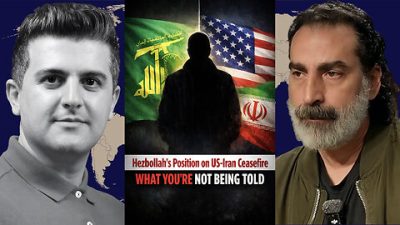
Laith Marouf: Hezbollah’s position on US-Iran ceasefire
or go to
Aletho News Archives – Video-Images
From the Archives
The Dirty Little Secret behind the “Global Terrorism Index”
The Omission of Israeli Terrorism in the Occupied Palestinian Territories
By Karin Brothers | Global Research | December 6, 2014
… The Israeli settlements — all of which are illegal – have been identified as a major impediment to peace. The refusal of a major “global” terrorism report to name the Israeli settlers as one of the groups most responsible for terrorism not only misrepresents a major source of regional violence but exposes the Global Terrorism Index as a propaganda tool that supports a U.S. agenda.
In recent years, governments have been attempting to thwart terrorism by blocking supportive fund-raising. When it comes to Israeli settlements, however, the US and Canada actually encourage fund-raising by giving organizations (such as Christian Friends of Israeli Communities (CFOIC) and the Jewish National Fund) financial support in the form of donor tax-deductions.
Charities which provide funds for the Israeli settlements should be regarded as terror-financing organizations. They should not only lose their tax-deductible status, but they should be banned because they support the violation of international humanitarian law. The terror-financing laws that are being strictly enforced for Muslim charities should be applied to Christian and Jewish charities as well. … Read full article
Blog Roll
 Aletho News
- Ukraine Sea Drone Fired From Libya Hit Russian Tanker in Mediterranean
- IRGC: Iranian forces launched no attacks during ceasefire hours
- Trump Administration Moves To Automate U.S. Military Draft Registration
- Spain orders reopening of Tehran embassy, condemns Israel’s carpet bombing of Lebanon
- Israel faces ‘unsustainable’ strategic crisis following 40-day war against Iran: Analyst
- Iran restricts Hormuz access to 15 vessels per day under ceasefire terms: Report
- The ‘Opposition Party’ Has Done Nothing to Stop the Iran War and Much to Goad Trump Into Continuing It
- Moscow backs Tehran on status of Lebanon in US-Iran deal
- How UK Regulator Ofcom Quietly Bypassed International Law to Police American Speech
- The Black Cube Files: How Former Mossad Operatives Flipped a Nation
- If Americans Knew
- Amnesty: Urgent – Protect Lebanese civilians from brutal escalation in Israeli attacks
- Is The War Against Iran Over?
- Inside the Israeli army’s propaganda wing
- Hundreds of Gaza Amputees Stranded in Legal Limbo
- The gallows law: Israel moves toward executing Palestinian children
- Tucker Carlson: The Path to Peace requires ending ‘special alliance’ with Israel
- This is ceasefire? Israel’s biggest massacre yet in Lebanon, another journalist killed in Gaza – Daily Update
- Tucker Carlson on Israel: This Is the Behavior of an Ally? Really?
- Gazans face a triple crisis: severe shortages of water and bread, healthcare in tatters
- NY Times reports how Netanyahu took the US into Iran War
- No Tricks Zone
- An Inconvenient Tree: Uncovered In Alps… Europe Much Warmer Than Today 6000 Years Ago
- New Study Reports A 60% Slowdown In Greenland’s Ice Loss Rate In The Last Decade
- Low Intensity Tornado Wrecks Major Solar Farm, Creating A Potential Toxic Dump
- New Study Finds Warming Saves Lives…Cold Temperatures 12 Times More Deadly Than Excess Heat
- German Science Blog Accuses PIK Climate Institute Of Hallucinating Climate Tipping Points
- Devastating Assessment Of Comirnaty Vaccine By Former Senior Pfizer Europe Toxicologist
- New Study: CO2 Is ‘Effectively Negligible’ As An Explanatory Climate Change Factor Since 2000
- Former Pfizer Toxicologist Dr. Helmut Sterz Tells Bundestag Hearing Pfizer Vaccine Should Have Never Been Approved
- Energy Expert: Germany’s Nuclear Phaseout Was A “500 Billion Euro Mistake”
- New Research: South Australia’s Mid-Holocene Sea Surface Temperatures Were 4°C Warmer Than Today
 Aletho News