The mainstream narrative is shaping up – a story of suicide, neglect and tragic victims
In two different opinion pieces The Guardian has made its position on the alleged death of Jeffrey Epstein clear – he “probably” committed suicide.
The first, titled Epstein conspiracy theories are farfetched – but can you blame people?, takes the position that although “conspiracy theories” about Epstein’s apparent suicide are “understandable”, there’s no evidence to support them.
Rather, the author endorses the slowly coalescing official narrative. Namely that of complete, systemic incompetence:
The official explanation for Epstein’s death comes down to rank incompetence. And it’s probably true.
A short-sighted attitude to take, which totally ignores a cardinal rule when dealing with state agencies: They will only admit to incompetence if the truth is worse.
The author also attempts to undermine the “conspiracy theories” by pointing out that Epstein was a potential threat to important figures on both sides of the political divide:
Online, conspiracy theories now abound. Observers suggest Epstein was killed by one of the men who may have been implicated in his crimes – maybe Bill Clinton, according to the fringe right, or maybe Donald Trump, according to the fringe left.
An argument rather akin to saying “he can’t possibly have been murdered, because there were too many people who wanted him dead. There are SO MANY plausible suspects, that the only reasonable explanation is that…none of them did it.”
(Also, note the word “fringe”, a manipulative use of language designed to discredit an idea without engaging with it rationally)
However, this article – although laced through with traditional mainstream rhetoric about “conspiracy theories” – at least leaves them room to exist. The Guardian’s other Epstein piece is rather less understanding:
Epstein’s death is a victory for misogyny: it denies accusers the justice they deserve
Blares the headline (further evidence that very few people at the Guardian seem to know what “misogyny” really means), before continuing by taking aim at conspiracy theories several times in the text.
Firstly, in an almost word-for-word quote from the previous column:
Commentators on the right speculated that he had been murdered by powerful liberals; those on the left speculated that he had been murdered by powerful conservatives. These theories were not responses to evidence, of which there is little
And then later claiming conspiracy theories not only “factually wrong” (something no one can know at this stage)…
The speculations may well be factually wrong – criminal justice experts have pointed out that inmate suicides are common, and that those detained in federal jails often face startling neglect
… but also attempting to Mrs Lovejoy the public by claiming “conspiracy theories” are actually harmful:
the positing of these conspiracy theories is unhelpful, distracting from the important injustice that has been done to Epstein’s victims.
Declaring seeking the truth to be somehow unfair to the victims is a classic trope, deployed most famously against 9/11 Truthers, but common after many such incidents.
There’s also this sentence…
The conspiracy theorists also risk undermining efforts to bring Epstein’s co-conspirators to account: their suggestions that the financier was killed to cover up the rapes and assaults of powerful men who would rather he be shut up could lend suspicion to anyone pointing out the breadth of his alleged pedophilia ring, giving those who want continued investigations of men such as Dershowitz, Pritzker and Dubin the aura of a maniac in a tinfoil hat.
Which, I’ll be honest, I simply don’t understand.
I think she’s arguing that “conspiracy theorists” talking about “conspiracy theories” might discredit the very real possibility there was an actual conspiracy.
If that’s what she means – because I honestly do not understand the words – well, that’s obviously just crazy. You can’t argue we shouldn’t talk about conspiracy theories, just in case there’s a conspiracy fact.
That’s the attitude of a person so brainwashed by the idea that “conspiracy theorist = crazy person” that they can no longer think in a straight line. Total cognitive dissonance.
The articles are different in tone, but they are united in purpose, and they each hit the same three key points:
- Epstein “probably” killed himself. After all, inmates commit suicide all the time.
- Conspiracy theories might look reasonable, but they are factually incorrect and morally harmful.
- The real tragedy here is the poor victims who will go unavenged. We should all focus on that, not investigating the potential murder.
All this serves to demonstrate – for about the millionth time – the entire purpose of outrage culture and identity politics. Fear of being offensive used to control a conversation and dictate narrative: Don’t talk about Epstein being murdered, don’t even think about it. If you do, you’re a misogynist.
Kit Knightly is co-editor of OffGuardian. The Guardian banned him from commenting. Twice. He used to write for fun, but now he’s forced to out of a near-permanent sense of outrage.
August 14, 2019
Posted by aletho |
Corruption, Deception, Mainstream Media, Warmongering | United States |
Leave a comment
By Padraig McGrath | August 14, 2019
The lady’s name was Jill. Her husband’s name was Randolph. They were in their forties. She was English. He was American. Baptist missionaries, or so they said. They rented a building in Simferopol and another one in Sevastopol, and floated between them. On Thursday nights in Simferopol, they gave English-lessons to groups of local kids. Or more precisely, the first hour was an English language lesson, and the second hour was Bible-stuff.
There are about a dozen or more small Baptist congregations in Crimea. Most of them were started during the 1990’s, and cater to people who are now middle-aged or older. Jill and Randolph’s groups were different. The age-range of their groups was not the only thing which made them highly atypical for people claiming to be Baptist missionaries. Of the dozen or so Baptist churches which are currently active in Crimea, most are led by sincere people.
Typically, an American couple during the 1990’s decided that they had been called, managed to scrape $30,000 or $40,000 together, bought a little house in some Crimean village, converted it into a simple church, and stayed for the next 25 years. In most cases, it’s just a story of sincere working-class Evangelism. Their variant of Christianity is hardly the cultural epitome of Russianness, but they essentially do no harm. Within reason, Russian people tend to have respect for any sincere profession of faith, as long as it’s not toxic.
There were lots of little telltale signs that Jill and Randolph were characters in another opera.
For a start, neither of them seemed to be even remotely as religiously literate as you’d expect a garden-variety Baptist missionary to be. I had tested them both, separately, by casually inserting a few lines from St. Paul into our conversation – some line from Galatians or Philippians or Romans, whatever was opportune in the context of the discussion which we were momentarily having.
I already had my suspicions. So I’d buzz them with some line from St. Paul, just as an acid-test, and they wouldn’t recognize the line. Major red flag. An actual Baptist missionary would know the line.
Secondly, both Jill and Randolph seemed extremely reticent about discussing the exact nature of their mission. Again, this would be highly atypical for somebody claiming to be a Baptist missionary. In fact, it would be an outright contradiction. For an actual Baptist missionary, explaining the nature of their mission would be part and parcel of the mission itself. They’d want to shout it from the rooftops. They’d want to explain the exact purpose of their mission to anybody who would listen.
Jill and Randolph were also completely unprepared to discuss anything relating to their organizational structure, partner-organizations or parent-organizations, or their sources of finance.
Thirdly, Jill and Randolph had shown up in Crimea only a couple of months after the State Duma had passed new legislation which significantly expanded the official blacklist of NGO’s which were classified as undesirable or subversive organizations in Russia.
You see where this is going.
They can’t operate openly as NGO-activists, so they start showing up posing as religious missionaries to circumvent the new legislation. The timing of their arrival was just too convenient.
As an alternative to pretending to be religious missionaries, NGO-provocateurs in Crimea also often pose as musicians. Musicians are cool. Sheltered, impressionable kids like cool. It’s always about targeting the most naïve segment of the population, ergo….
The NGO’s tend to use recruitment-techniques very similar to those of religious cults – non-stop validation, love-bombing, basic manipulation-techniques like that. Woundedly narcissistic middle-class kids eat it up.
Crimeans sometimes seem to be bizarrely relaxed about the social presence of provocateurs such as these, but then again, that’s at least partially because Crimea has been a mark for western ideological provocateurs of all shades ever since the early 1990’s. Most Crimeans just shrug their shoulders and politely dismiss these people. Some Crimeans even argue that encountering these kinds of foreign ideological provocateurs helps to “immunize” the kids, as the NGO-operatives in question are almost never well educated, and therefore lack the argumentation-skills to be persuasive, even to kids. For the most part, they are simply purveyors of slogans and clichés – their discourse rarely goes deeper than that. So, in that sense, their presence is seen by locals more as an “inoculation” than an “immunization” – give the kids just a light dose of western liberal NGO nonsense, just enough to immunize them against it.
Personally, I’ve always thought that relaxed attitude was an error of judgment, considering that the most naïve or sheltered or intellectually limited kids don’t get “immunized” or “inoculated” through this exposure, and they are the sub-set of the population which is specifically targeted by foreign NGO’s. The NGO-kids are almost invariably middle-class, “teplichny” as Russians themselves say (“sheltered,” “cloistered,” “coddled” or “hothoused”), but also almost invariably have low IQ and limited academic potential. No historical erudition whatsoever. They’ll be offered opportunities to “study abroad,” postgraduate opportunities which their limitations wouldn’t otherwise give them a chance of earning within the normal academic system at home.
You’re a middle-class kid. You want to go to university, if only to superficially justify your class-status, but you’re not smart enough. You want to travel, but that’s expensive. You received far too much maternal love to cope with the competitive social environment outside your front door, and you want “a career” because it’s expected of you. Just sell out to an NGO. Let them dangle their juicy carrots in front of you. Learn to repeat their mantras.
With the State Duma scheduled on August 19th to discuss the recent unauthorized anti-government protests in Moscow, and those unauthorized protests having been almost exclusively participated in by sheltered middle-class kids, it was difficult to avoid the conclusion that I had seen it all before.
Padraig McGrath is a political analyst with the BRICS Tink-tank.
August 14, 2019
Posted by aletho |
Deception | Russia, United States |
Leave a comment
Infamous pedophile and likely intelligence asset Jeffrey Epstein was reportedly found dead in his jail cell this past weekend. An autopsy has allegedly been done, but its results are “pending,” leaving the curious with only the initial reports claiming he hanged himself and was pronounced dead of cardiac arrest in the hospital shortly thereafter. The 72 hours following his death have done little to clear up the matter of what actually occurred in Epstein’s cell on Saturday morning, though law enforcement sources on Monday told the New York Post he had hung himself with a bedsheet from the bunkbed frame in his cell – no mean feat for a six-foot, 200-pound man supposedly being checked on by guards twice an hour, and a physical impossibility owing to the paper-thin sheets, according to a former inmate of that prison.
What we do know is that he was officially alone in his cell when he died, having been taken off suicide watch at his lawyers’ urging less than a week after he was found unconscious with marks on his neck last month. Epstein reportedly claimed someone tried to kill him during that incident, though others speculated he had “choked” himself in order to convince a judge to allow him bail or secure a transfer to a nicer facility. Did “someone” come back to finish the job, merely paying the guards to look the other way? An assassin would have had to spread his money around handsomely – like most areas of Manhattan, the Metropolitan Correctional Center where Epstein was confined is heavily surveilled – but that’s not difficult for the caliber of person who had reasons to want Epstein dead. So who killed him?
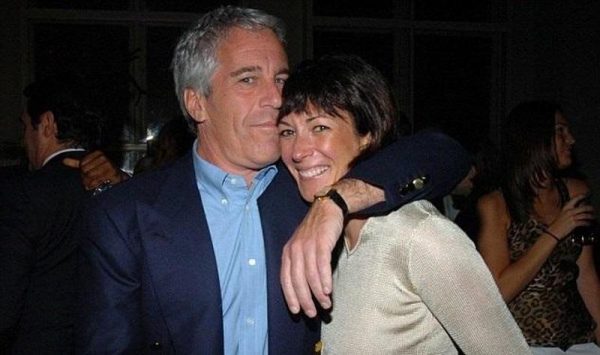
The convicted sex offender had blackmail material on dozens if not hundreds of powerful people. Epstein’s homes and aircraft were monitored with cameras and microphones, and his private island was completely wired for video, according to a friend of his alleged procuress, Ghislaine Maxwell. Safes found on his property contained piles of video discs marked young (name of girl) + (name of VIP) – alongside the diamonds, piles of cash and Saudi passport. Virginia Roberts Giuffre, one of his victims, says she was “debriefed” after sex sessions with Epstein’s famous friends, supplying him with the intimate details of their encounters in order to potentially weaponize the information. Even New York Times columnist James Stewart reports Epstein boasted to him about the trove of “potentially damaging or embarrassing” information he had on the “supposed sexual proclivities and recreational drug use” of the rich and famous. Epstein had mountains of dirt on presidents, princes, prime minsters, and lesser politicians. Any one of these (and probably more than one of these) could have taken out a contract on him, concerned that he might give away their little secret. If Epstein was not an intelligence asset, with connections high up in the Israeli and US governments, he would have been disposed of long ago, but it’s possible that one of the reasons he was not “suicided” earlier is because those who did want him dead had clashed with another faction concerned he had a “dead man’s switch” that would release even more incriminating material to the press.

Comparisons to the JFK assassination are apt. While Epstein was even more loathed by the American public than Kennedy was beloved, he had as many powerful enemies, and those speculating about his murder are already being smeared as irresponsible conspiracy theorists for demanding answers on the year’s most unlikely “suicide.” When the forces of the media establishment are so quickly marshaled against any attempts at investigating a full-of-holes “official story,” even declaring that such malignant conspiracy-mongering “hurts kids” (Epstein’s own child-trafficking apparently pales in comparison), it’s safe to assume that official story is a pack of lies. So without further ado, let the (responsible, well-sourced) speculation begin. Coincidence theorists need not apply.
SUSPECTS
As soon as Epstein’s death was announced, the hashtag #ClintonBodyCount started trending on Twitter along with #Arkancide and other names for the phenomenon that has seen dozens of Clinton enemies, witnesses, and other liabilities die under mysterious circumstances since the early days of the former president’s political career. As a frequent flyer on the Lolita Express (26 times, according to flight logs, at least five of those without his Secret Service retinue), Bill Clinton had good reason to be concerned about Epstein’s continued existence. Certainly, the couple were an early favorite for Epstein’s killer – even Donald Trump retweeted a Clinton Body Count meme.
However, Epstein is currently under investigation for sex trafficking. In court documents unsealed earlier this week from Giuffre’s lawsuit against alleged madam Ghislaine Maxwell, Giuffre testifies that Clinton was not involved in the actual trafficking of girls – though there seems to be little doubt he enjoyed the fruits of Epstein’s evil deeds. Epstein even had a hand in the founding of the Clinton Global Initiative, according to his lawyers. That Clinton has been accused of rape by too many women to count and is known for being unable to keep it in his pants is not exactly a secret, in Washington or anywhere else, but he is unlikely to be placed at legal risk by the current Epstein probe. Unless Epstein had dirt on Hillary as well – who is rumored to be plotting a move to insinuate herself back into national politics, most likely through her daughter – the family accomplishes little by icing Epstein except calling more attention to the #ClintonBodyCount. One guerrilla commentator even chalked “XOXO Hillary + Bill” on the sidewalk outside Epstein’s New York home.

The FBI immediately declared a probe into the suspicious circumstances surrounding Epstein’s death. Regardless of whether this makes them dangerous domestic extremists by their own reasoning – since any foul play would have had to be accomplished through conspiring with the guards to sneak into the jail and do away with the pedophile, and the FBI has unilaterally declared ‘conspiracy theorists’ to be dangerous extremists in need of heavy surveillance – the FBI’s interest does not rule out a US intelligence role in his murder. As 9/11 proved, the government’s right hand rarely knows what the left is doing even within a single agency, let alone where rival agencies are concerned. And Attorney General William Barr, the former CIA general counsel who specialized in helping intelligence assets caught with their hands in the cookie jar get off scot-free, has already made it clear he is treating the death as a terrible miscarriage of justice by the prison, one which might even prove financially remunerative for Epstein’s relatives (he has a brother).
When former Florida prosecutor Alex Acosta was asked why he OK’d the appalling 2007 non-prosecution agreement with Epstein’s lawyers which saw the wealthy sex fiend spend just 13 months on work-release in a Palm Beach jail after pleading guilty to a lesser charge of soliciting underage prostitutes despite a 53-page federal indictment including 36 alleged victims hanging over his head, Acosta told the Trump transition team he was ordered to leave Epstein alone because “he belonged to intelligence.” That was sufficient reason for the Trump team to give him the green light for appointment as Secretary of Labor. While Epstein provided information to the FBI in 2008, according to their own documentation, individuals involved with the case who spoke to the Palm Beach Post don’t recall any cooperation.
“The Palm Beach State Attorney’s Office was willing to let Epstein walk free. No jail time. Nothing,” Acosta claimed by way of explanation during a press conference last month after he was forced to resign as Labor Secretary for his (mis)handling of the 2007 case. He insisted the sweetheart deal the wealthy pedophile’s lawyers crafted was the lesser of two evils – that a slap on the wrist was better than nothing. And Palm Beach police told the Miami Herald they were hounded, harassed, and otherwise pressured in the service of getting Epstein’s case downgraded to a misdemeanor during the original 2007 investigation, with State Attorney Barry Krischer ultimately ignoring their recommendation to prosecute Epstein on high level child sex charges.
In the days preceding Epstein’s death, Florida governor Ron DeSantis ordered the state to take over a probe into Epstein’s non-prosecution deal and the terms of his work release, an investigation that would presumably lead to the Palm Beach State Attorney’s office, which was conspicuously handed to Fort Pierce State Attorney Bruce Colton. While Krischer is no longer in that position – in a nauseating irony, he trains law enforcement in prosecuting crimes of sexual violence and oversees placement of children in foster care – his apparent collusion with Epstein’s attorneys will likely come to light, as well as the forces higher up that dictated the terms of the plea deal. Whatever US “intelligence” shared Epstein with the Mossad could have been motivated to take him out to prevent him from talking. While DeSantis – who has promised to be the most pro-Israel governor in the country – would likely pull the plug on that investigation before it got out of hand, the Justice Department opened its own investigation in February into whether prosecutors committed professional misconduct during the 2007 case. If Trump were to lose the 2020 election, Barr – the man who arguably saved the CIA from much-deserved extinction and an expert memory-holer of inconvenient inquiries – would be powerless to fix any federal probe, replaced by a Democratic appointee.
And what of Trump himself? For every three “ClintonBodyCount” hashtags, there was a “TrumpBodyCount” hashtag (which isn’t a thing, but don’t tell the #Resistance), insisting Trump was up to his neck in trafficked children and had good reason to ice the molest-happy millionaire. This is as doubtful as the Clinton hypothesis. If Epstein is being wielded as a weapon by Netanyahu against Barak, Netanyahu would not kill the golden goose that is Trump, who has obeyed his foreign policy dictates magnificently. And the documents unsealed from Virginia Roberts Giuffre’s lawsuit suggest that Trump did not physically engage with Epstein’s retinue of underage sex slaves. The president’s reported germ phobia is somewhat incompatible with girls who were being passed around from blackmail target to blackmail target like party favors, and he allegedly had Epstein booted from Mar-a-Lago for sexually assaulting a girl, suggesting that despite the chummy pictures of Epstein and Trump that surface on googling “Jeffrey Epstein Bill Clinton” (!), the real estate magnate realized early on that Epstein was a honeypot and kept his distance. Trump was mentored by Roy Cohn, whose own record as a blackmailer is legendary; if he wasn’t involved in the Epstein ring himself, he certainly would have recognized its nature early on.
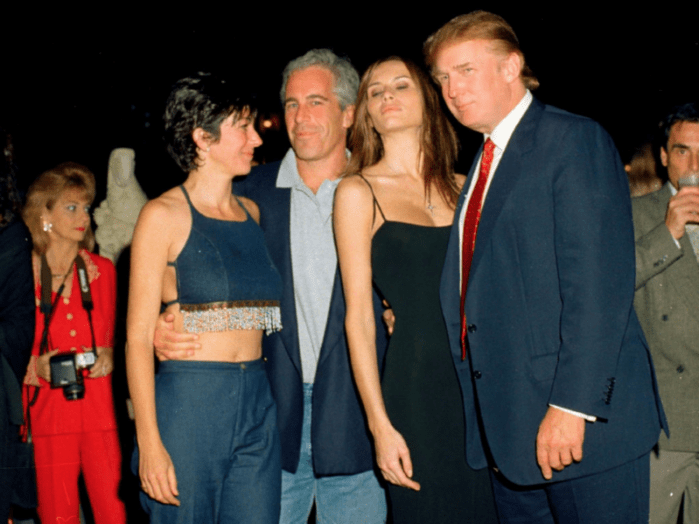
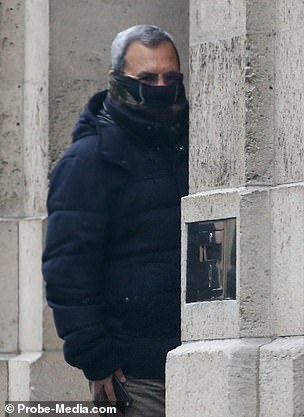
Epstein is extremely well-connected to the Israeli intelligence apparatus, and these are people with both means and motive to remove him from the chessboard. Former Israeli PM Ehud Barak has been photographed entering and exiting Epstein’s East 71st St residence in Manhattan, hiding under a jumble of hats and scarves, and has admitted to visiting the pedophile’s private island, though insists he never went to parties or met girls with Epstein despite photographic evidence to the contrary. Barak and Epstein have been friends for over a decade, the Israeli having been introduced to the wealthy sex offender by his fellow former PM Shimon Peres. Barak has thrown his hat into the ring to challenge Bibi Netanyahu, Israel’s longest-serving leader, who has made it clear he considers the PM post to be his by divine right and won’t give it up easily. Speculation has swirled that the reopening of the Epstein case is tied to the battle of the Israeli titans – that Netanyahu is sacrificing a Mossad asset to destroy his rival.
Barak, then, has plenty of reasons to want Epstein out of the way. Having formed a company with the mysterious financier as a vehicle to invest in Carbyne911, a company founded by high-level veterans of Israeli intelligence that allows a remote operator to surveil a person not only through the target’s own phone but also through all the internet-connected devices around them, Barak has put other dubious financial dealings at risk of coming under the Epstein probe’s microscope. Worse, Carbyne911 – which its opportunistic owners have marketed as the solution to mass shootings – has been exposed as a horrifying surveillance tool. Similar software has already been weaponized by the Chinese government to spy on its citizens, and Carbyne’s advisory board includes former Homeland Security Michael Chertoff, the Patriot Act co-author who reliably surfaces on the boards of every Orwellian initiative from the Atlantic Council to CyberDome to NewsGuard, ready to leverage his unique blend of experience and sociopathy to strip Americans of their privacy and civil liberties. Peter Thiel, the PayPal co-founder whose company Palantir openly “uses war on terror tools to track American citizens” on behalf of anyone with the funds to pay for their own private intelligence agency, is also an investor in Carbyne911. The idea that a company run by Israeli intelligence, advised and funded by a who’s-who of police-state cheerleaders, that sells a powerful surveillance tool isn’t using it to spy on Americans is too absurd to seriously consider, and such a program is too valuable to be sacrificed merely because Epstein’s stink suffuses it (and it does suffuse it – he and Barak are the company’s largest investors, and most of Barak’s stake was in fact put up by Epstein).
The electoral face-off between Barak and Netanyahu is scheduled for next month, by which time the frenzy over the Epstein case will have ebbed significantly, especially with no defendant as the focus of click-driving salacious speculation. While Netanyahu has demanded an investigation of his rival, it’s not clear that Barak did anything financially illegal in accepting millions of dollars of Epstein’s money. Investigators may still pursue other loose ends – that Maxwell has remained unindicted for so long beggars belief, for example, and victims’ lawyers have promised to go after Epstein’s “enablers” – but the sensationalistic coverage from mainstream news will peter out absent a body in the courtroom. Barak can thus get back to the business of attacking Netanyahu, who is currently facing indictment in multiple corruption probes, and potentially wresting Israel from his grasp. He has much to gain from snuffing Epstein and little to lose – unless Epstein’s dead man’s switch would unleash enough compromising material to end his political career for good. Certainly, Barak has a bad track record of associating with sexual predators – his president, Moshe Katsav, spent five years in prison on rape charges, and the vice-consul to Brazil during his tenure, Arie Scher, fled to Israel to avoid prosecution on child pornography charges.
WHAT DIDN’T HAPPEN
The only certainty is that Epstein did not “commit suicide” without significant outside help. He had been taken off suicide watch less than a week after the previous month’s “suicide attempt,” contrary to standard procedure, which would require authorization (and documentation thereof). One source told the New York Post the suspicious marks discovered on his neck after he was found unconscious curled up in his cell last month appeared more like evidence he had been choked than evidence that he had attempted to hang himself, but his beefy ex-cop cellmate, an accused quadruple-murderer charged with shooting and then burying four men in his backyard after a coke deal gone wrong, insisted he had not only not harmed his notorious roommate and not heard anything, but that he had saved Epstein’s life by discovering him unconscious and alerting a guard. How this happened if they shared a cell is unclear, and Tartaglione’s lawyer has only said they shared the unit – two other sources told NBC they shared the same cell. Epstein spent just six days on suicide watch, receiving daily psychiatric examinations, according to a law enforcement source who spoke to the New York Times. Thanks in part to the strenuous lobbying of his defense attorneys, whom he met with for up to 12 hours a day while under suicide watch, Epstein was soon moved back to his protective housing unit with a new cellmate where he was supposed to be checked every 30 minutes by guards instead – a procedure which was not followed the night of his alleged death – and that cellmate was mysteriously transferred just hours before the “suicide,” according to a source who spoke to Fox News.
Despite rumors of a “camera malfunction” that surfaced immediately following the announcement of Epstein’s death – traced back to a “social media entrepreneur” specializing in “information warfare” whose clients include American politicians – a corrections union representative has confirmed there were no cameras inside the individual cells in Epstein’s unit, creating perfect conditions for whatever happened the morning of August 10th. A former Brooklyn jail warden has confirmed that for Epstein to “commit suicide,” a cascade of errors would have been necessary – starting with removing him from suicide watch. While the officers staffing MCC are supposedly the cream of the crop, at least one of the officers tasked with watching Epstein was not “a regular guard,” according to corrections union head Serene Gregg. Epstein’s ‘guards,’ both working overtime, falsified records of the half-hour checks they had failed to conduct, an anonymous source told the AP – because they were asleep, the New York Times added. Those two at the very least would have to be paid off for any operation to go smoothly, and any investigation interested in finding out – as opposed to covering up – what really happened to Epstein should interview and monitor all of those working on the unit for financial changes, especially the guards who would normally have been working that night but opted not to, allowing the drowsy duo to step in and claim their overtime. Those two have reportedly been placed on administrative leave as of Tuesday, while the presiding warden has been reassigned to Philadelphia.
Epstein’s suspicious demise has several parallels with the “suicide” of Maxwell’s father, British newspaper baron (and Israeli spy) Robert Maxwell. Despite years of valuable service to the Mossad, Maxwell died after falling off his boat, allegedly committing suicide, as his newspaper empire was collapsing, and after attempting to pressure his Mossad connections to bail him out of the financial hole he’d dug himself into. Two of Maxwell’s biographers claim he was killed, three months after demanding the bailout and threatening to expose certain Mossad operations if he didn’t get it, because he simply became too much trouble; ex-Mossad agent Victor Ostrovsky has explained how this was accomplished. The dead man was then feted with a star-studded funeral in Israel, attended by six Israeli intelligence chiefs and complete with eulogies by then-PM Yitzhak Shamir boasting he had “done more for Israel than can today be said,” and future PMs Ehud Olmert and Shimon Peres, who also praised his “services” for Israel. Those “services” included peddling an Israeli-backdoored version of the software program Promis to government agencies, a Trojan horse purporting to improve government efficiency which instead funneled information on government activities back to Tel Aviv – a 1980s equivalent of Carbyne911.
EPSTEIN IS DEAD; LONG LIVE EPSTEIN?
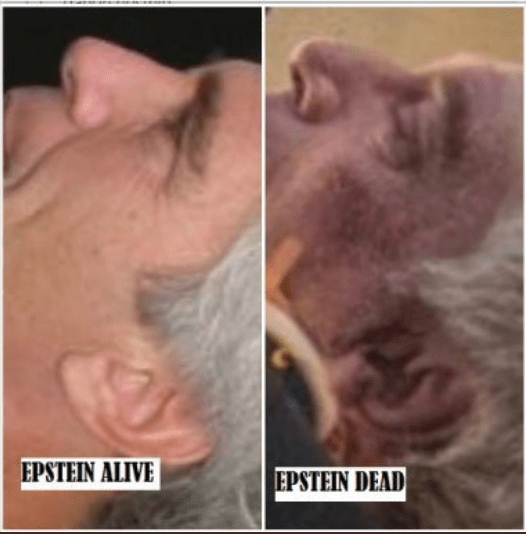
The possibility exists that Epstein isn’t actually dead. A 4chan post purporting to be from an MCC employee, posted before news of Epstein’s alleged demise was made public, claims the disgraced financier was taken to the jail’s medical unit just hours before his alleged suicide and points to a suspicious van coming and going, undocumented per the prison’s usual procedures, at the same time as his potential route of escape. Comparisons of “Epstein”’s corpse to images of the living Epstein appear to show completely different ears, a unique and difficult-to-fake body part. Others have questioned why there was a photographer on hand to snap photos of the body leaving the prison in the first place and pointed out the article accompanying the photo referred to a “body believed to be Epstein’s.” Epstein’s brother allegedly identified his body, but if there was a plot, he’d be in on it, ready to milk the jail for millions in a wrongful death suit – a possibility Barr seems to be setting in motion by attacking MCC for “failing to adequately secure” their famous charge. The “celebrity pathologist” who observed the autopsy on behalf of Epstein’s lawyers also “helped investigate” the assassinations of JFK and Martin Luther King, Jr. There is no smoking gun, but there is an Epstein-sized plausible-deniability gap to slip through.
What would be the purpose of keeping Epstein alive? He’s too high-profile to use as an asset any further, and could be a liability if he becomes resentful for having lost his privileged position as the Mega Group’s #1 Honeypot and being left to rot in jail – a particularly nasty jail, at that (“Guantanamo was nicer,” said an inmate who’d stayed in both). But any good blackmailer worth his salt has a dead-man’s switch with reams of sensitive material ready to go in event of death or accident. Epstein hasn’t actually betrayed his intelligence backers, at least not publicly – though he has been disavowed by everyone from Trump to Clinton to Barak, even to his one-time mentor, Les Wexner, who after setting Epstein up with his Manhattan den of iniquity now claims the disgraced “money manager” for whom he has been the sole client since 1987 ripped him off. Even Alan “I kept my underwear on” Dershowitz has backed away from the radioactive pedophile. Epstein, on the surface, has no friends left. Yet he appears to have had advance knowledge of his own arrest, selling the evidence-laden “Lolita Express” jet just a few weeks before he was apprehended at Teterboro Airport. Why did he conveniently fly home to do the time the public so desperately wanted him to do – a situation that could have been avoided if he wasn’t certain of having an escape route? Epstein was said to be in unusually good spirits before he “suicided.”
But according to Ostrovsky, Robert Maxwell went to his death believing he’d get what he wanted, as well. And if Epstein was the raging sex addict his victims say – one girl claimed he told her he required three orgasms a day, that it was biological “like eating,” while another confirmed that even if she brought him new girls “at breakfast, lunch, and dinner… it was never enough” – keeping him alive, even with a new face in a new country, would be highly risky. Meanwhile, Ghislaine Maxwell has reportedly vanished, suggesting she’s either worried about her “loose end” status making her a target for whoever killed Epstein or she’s concerned Epstein’s victims will finally have their revenge on her in the courtroom. Certainly, the media are turning against her, and with prosecutors vowing to go after Epstein’s “enablers,” she’s number one on the list. Will justice prevail? Has it ever?
August 14, 2019
Posted by aletho |
Corruption, Deception | Hillary Clinton, Israel, United States |
Leave a comment
You know things are getting really weird when news of Jeffrey Epstein’s death in a New York City prison operated by the U.S. Department of Justice is the least surprising part of the whole story. Countless people, including myself, assumed this exact sort of thing would happen. Then, just like that, he’s gone.
I continue to think the players involved with Epstein in what appears to have been an intelligence-linked blackmail operation, as well as those at risk of being exposed in more detail, are simply too powerful and connected to the institutions that run this country (and others) for us to ever get real answers. It’s cynical and depressing, but based on what I’ve seen over the past couple of decades, it’s the most likely outcome.
Rule of law in America? Don’t be ridiculous. There are rulers and the ruled. Which bucket do you think you’re in?
But there’s some good that can come from this. One reason the American public is so passive relates to the fact many people live in a state of willful denial. To admit your country runs more like the Corleone family than some famed tome of Greek political-philosophy is a difficult step to take. To admit this means you’re either going to cower in a corner and hope to stay safe, or you’re going to do something about it. Many people still don’t want to do anything about it, so they continue to exist in a comfortable mental and emotional narrative of what they want to believe the U.S. is, as opposed to reality.
Although I harbor no illusions about justice being done in the Epstein case, there’s something each and every one of us can do. We can call this charade out for what it clearly is. The whole thing’s a giant middle finger squarely in the face of every single person on earth and should be treated as such. Never forget what happened here. Ever. And keep digging.
Take ownership of your mental faculties and show some courage. There are many, many questions to be asked at the moment and we should all start asking them. I’ll start.
Where the heck is Ghislaine Maxwell? You know, the woman Jeffrey Epstein referred to as his “best friend” and who’s accused of acting as his madam in this whole sordid affair. She seems to have disappeared off the face of the earth and very few people seem interested.
This should be the top question right now – Where is Ghislaine Maxwell (and why isn’t she in custody)?
As reported by CBS News:
London — The death of Jeffrey Epstein is putting new attention on his alleged co-conspirators, who could still face charges. The number one person on that list is Ghislaine Maxwell, who’s accused of finding teenage girls for Epstein and his friends — including a member of Britain’s royal family.
As CBS News correspondent Holly Williams reports, documents unsealed on Friday contain allegations that Maxwell, a close acquaintance of Epstein’s, played an “important role” in the late billionaire financier’s “sexual abuse ring,”directing an underage girl to have sex with Epstein and others. Maxwell strenuously denies the allegations. Her current whereabouts are unknown.
Strange, sure, but it gets even more bizarre once you understand who her late father, Robert Maxwell, was. There’s even a book written about him.
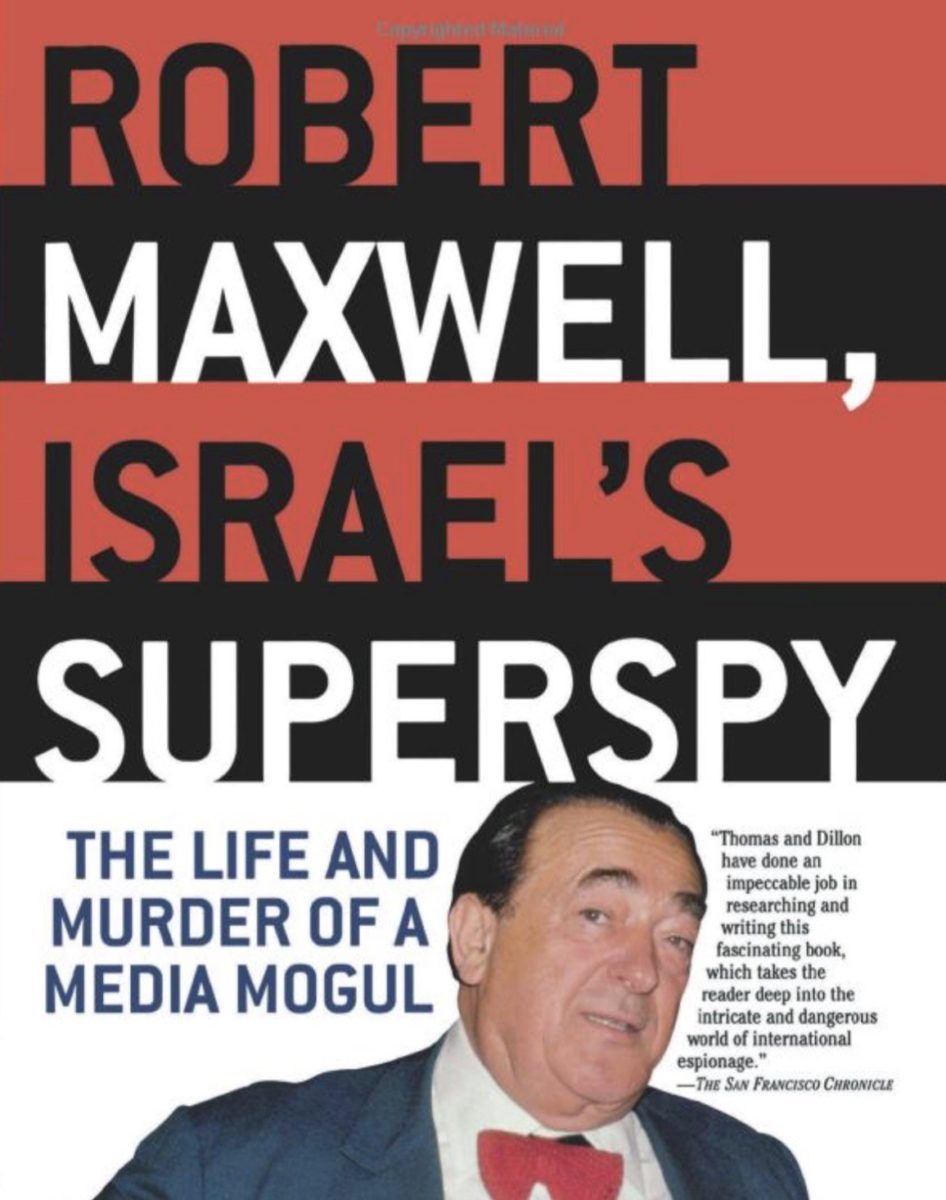
No, not strange at all. Totally normal, nothing to see here.
And what about Leslie Wexner, the billionaire who was Epstein’s only known client for all those years? Why isn’t he under far more scrutiny? We still have no idea how Epstein came into all his money, and while we may never get any real answers to these questions, they should be asked nonetheless. It’s imperative we don’t bury our heads in the sand when it comes to this story.
Ask intelligent questions, keep digging and never forget what happened and how outrageous and unacceptable it truly is.
Finally, I’ve continued to add to my giant Epstein Twitter thread, which is now over 80 tweets long. Check it out again if you haven’t lately.
August 13, 2019
Posted by aletho |
Corruption, Deception | United States |
Leave a comment
By Johanna Ross | August 13, 2019
In The Times newspaper on July 30th, appeared a short and succinct article, easily missed were it not for its intriguing headline: ‘Missing academic Joseph Mifsud at heart of Mueller investigation’. The academic in question, one may or may not have heard of, depending on the extent to which one is reliant on mainstream media for keeping abreast of the news. But anyone attempting to keep up with the complex and murky world of the Mueller investigation, may be familiar with the name of this mysterious and elusive figure.
For it is none other than Professor Mifsud, affiliated with both the Universities of Stirling and East Anglia in the UK, that was identified by the FBI as being the source of the information that Russia had ‘dirt’ on Hillary Clinton. And intriguingly, the same Professor Mifsud who disappeared in October 2017 and has been missing ever since.
It was in April 2016 that Mifsud, who was qualified in education but somehow managed to find his way into the world of international diplomacy (becoming director of the London Academy of Diplomacy in 2012), reportedly met George Papadopoulos, foreign policy advisor to the Trump campaign, where he is said to have told him that the Russian government had ‘dirt on Hillary Clinton’. This information was then allegedly passed by Papadopoulos to the Australian High Commissioner in London, before being repeated to US authorities; that effectively Papdopoulos had known about the DNC hack prior to it being carried out. In short, Mifsud was the key to the whole ‘Russiagate’ scandal.
At the beginning of the Mueller investigation, Mifsud was widely portrayed as a Russian spy in the Western media. He is described in the Mueller report as having ‘connections to Russia’ and ‘having maintained Russian contacts’ as if that was somehow conclusive proof he was working for the Russians. Former FBI director James Comey also wrote in an opinion column in the Washington Post in May this year where he stated bluntly that Mifsud was a ‘Russian agent’. However as the Mueller investigation has trundled on and been exposed for being nothing more than a performance along the lines of Hans Christian Anderson’s ‘Emperor’s New Clothes’, the argument being put forward by the Republicans that Mifsud is a Western intelligence operative is looking more plausible.
When Rep. Jim Jordan (R, Ohio) questioned Robert Mueller why it was that Mifsud was reported to have lied three times to the FBI but was never indicted, Mueller replied simply that “I can’t get into internal deliberations with regard to who or who would not be charged.” Jordan responded in disbelief: ‘The guy who launches everything, the guy who puts this whole story in motion, you can’t charge him. I think that’s amazing.” Jordan then asked Mueller if Mifsud was Western or Russian intelligence, to which Mueller replied “Can’t get into that.” As Devin Nunes, ranking member of the House Intelligence Committee said during his opening remarks, Mifsud “is widely portrayed as a Russian agent, but seems to have far more connections with Western governments, including our own FBI and our own State Department, than with Russia.”
Meanwhile, all interviews carried out with Mifsud before his disappearance deny the claim that he discussed Russian government ‘dirt on Hillary Clinton’ with George Paradopoulos. According to Robert Mueller’s report, in an interview with the FBI in February 2017, Mifsud “denied that he had advance knowledge that Russia was in possession of emails damaging to candidate Clinton, stating that he and Papadopoulos had discussed cybersecurity and hacking as a larger issue and that Papadopoulos must have misunderstood their conversation.”
Whether Papadopoulos misunderstood or not, we will probably never know. But the idea of Misfud being an agent for the West is gaining traction with Republicans. Why is it that when so many people were indicted for providing false statements, but not Mifsud? If Mifsud was indeed a Russian agent, and had numerous contacts within western governments, why is it that they don’t seem in the least concerned by the fact they could have been compromised by him? And as Lee Smith has pointed out, writing for RealClearInvestigations, Mifsud has closer ties to western governments and institutions than to Russia, including the CIA, FBI and British secret service. Indeed, during his time in London and Rome he was reportedly involved in training diplomats, police officers and intelligence operatives.
Perhaps the main thing we can take away from this chapter in the fiction that is Russiagate, is the fact that these questions are not being posed by journalists. Hardly anyone in the western mainstream media seems prepared to question the narrative presented by the Democratic lobby that Mifsud was a Russian spy, complicit in a Putin-sponsored attempt to influence the US election. As Jonathan Turley, Shapiro Professor of Public Interest Law at George Washington University has written: “The most credible point about Mifsud is that his relative anonymity in news coverage reflects a broader problem that there is a consistent effort to preserve a narrative that the Russians interfered in the 2016 election to help Trump.”
And yet without any Russian actors featuring in this tale, it is becoming increasingly difficult for the Democrats to keep pushing this narrative of Russian involvement. Mifsud has been vital so far, and his disappearance only emphasises further how important a protagonist he is in the Russiagate hoax. If he were to go on record as saying he worked for the FBI not the Russians, it would bury the collusion theory forever. So let’s not expect him to surface any time soon…
August 13, 2019
Posted by aletho |
Deception, Mainstream Media, Warmongering, Russophobia | United States |
Leave a comment
The highly dubious death of Jeffrey Epstein in a US maximum security prison is another strong reason not to extradite Julian Assange into one – particularly as many of the same people who are relieved by Epstein’s death would like to see Assange dead too.
But there is every reason to fear Assange is already in danger, in Belmarsh maximum security prison, where he is currently incarcerated. As the great journalist John Pilger tweeted six days ago:
Do not forget Julian #Assange. Or you will lose him.
I saw him in Belmarsh prison and his health has deteriorated. Treated worse than a murderer, he is isolated, medicated and denied the tools to fight the bogus charges of US extradition. I now fear for him. Do not forget him.
There is no official explanation as to why Julian’s health has continued to deteriorate so alarmingly in Belmarsh. Nobody genuinely believes him to be a violent danger, so there is absolutely no call for him to be imprisoned in the facility which houses the hardcore terrorist cases.
Assange is fighting major legal cases in the UK, Sweden and the United States, yet is permitted visitors for only two hours per fortnight, inclusive of time spent with his three sets of lawyers. All of his visitors have been alarmed by his state of physical health and many have been alarmed by his apparent disorientation and confusion.
It is because of Assange’s draconian one year sentence for “bail-jumping” on claiming political asylum that he can be kept in such harsh conditions and with so little access to his lawyers. That is why his sentence was so unprecedentedly stiff for missing police bail. Otherwise, as a remand prisoner awaiting extradition hearing his conditions would ordinarily be less harsh and his access to lawyers much better. The Establishment has conspired to reduce his ability to defend himself in court. I am not convinced it is not conspiring to destroy him.
August 13, 2019
Posted by aletho |
Deception | Hillary Clinton, UK, United States |
Leave a comment
As if it weren’t enough of a downer for Russiagate true believers that no Trump-Russia collusion was found, federal judges are now demanding proof that Russia hacked into the DNC in the first place.
It is shaping up to be a significant challenge to the main premise of the shaky syllogism that ends with “Russia did it.”
If you’re new to this website, grab onto something, as the following may come as something of a shock. Not only has there never been any credible evidence to support the claim of Russian cyber interference, there has always been a simple alternative explanation that involves no “hacking” at all — by Russia or anyone else.
As most Consortium News habitués are aware, Veteran Intelligence Professionals for Sanity (which includes two former NSA technical directors), working with independent forensic investigators, concluded two years ago that what “everyone knows to be Russian hacking of the Democratic National Committee” actually involved an insider with physical access to DNC computers copying the emails onto an external storage device — such as a thumb drive. In other words, it was a leak, not a hack.
VIPS based its conclusion on the principles of physics applied to metadata and other empirical information susceptible of forensic analysis.
But if a leak, not a hack, who was the DNC insider-leaker? In the absence of hard evidence, VIPS refuses “best-guess”-type “assessments” — the kind favored by the “handpicked analysts” who drafted the evidence-impoverished, so-called Intelligence Community Assessment of Jan. 6, 2017.
Conspiracy Theorists
Simply letting the name “Seth Rich” pass your lips can condemn you to the leper colony built by the Washington Establishment for “conspiracy theorists,” (the term regularly applied to someone determined to seek tangible evidence, and who is open to alternatives to “Russia-did-it.”)
Rich was a young DNC employee who was murdered on a street in Washington, DC, on July 10, 2016. Many, including me, suspect that Rich played some role in the leaking of DNC emails to WikiLeaks. There is considerable circumstantial evidence that this may have been the case. Those who voice such suspicions, however, are, ipso facto, branded “conspiracy theorists.”
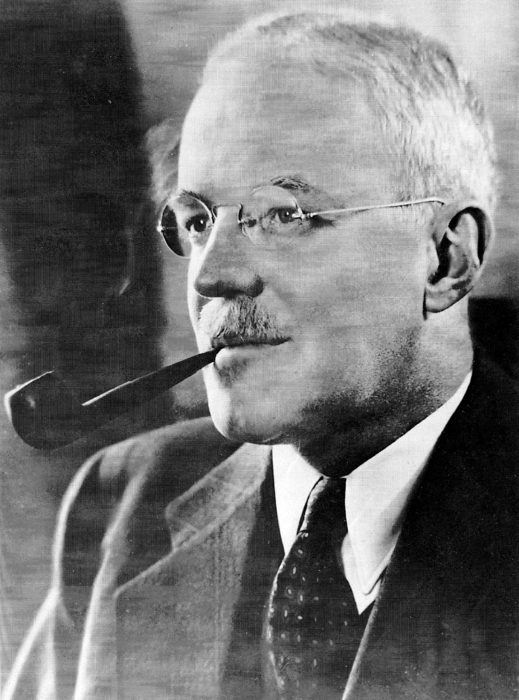
That epithet has a sordid history in the annals of U.S. intelligence. Legendary CIA Director Alan Dulles used the “brand-them-conspiracy-theorists” ploy following the assassination of President John F. Kennedy when many objected — understandably — to letting him pretty much run the Warren Commission, even though the CIA was suspected of having played a role in the murder. The “conspiracy theorist” tactic worked like a charm then, and now. Well, up until just now.
Rich Hovers Above the Courts
U.S. Courts apply far tougher standards to evidence than do the intelligence community and the pundits who loll around lazily, feeding from the intelligence PR trough. This (hardly surprising) reality was underscored when a Dallas financial adviser named Ed Butowsky sued National Public Radio and others for defaming him about the role he played in controversial stories relating to Rich. On August 7, NPR suffered a setback, when U.S. District Court Judge Amos Mazzant affirmed a lower court decision to allow Butowsky’s defamation lawsuit to proceed.
Judge Mazzant ruled that NPR had stated as “verifiable statements of fact” information that could not be verified, and that the plaintiff had been, in effect, accused of being engaged in wrongdoing without persuasive sourcing language.
Imagine! — “persuasive sourcing” required to separate fact from opinion and axes to grind! An interesting precedent to apply to the ins and outs of Russiagate. In the courts, at least, this is now beginning to happen. And NPR and others in similarly vulnerable positions are scurrying around for allies.?? The day after Judge Mazzant’s decision, NPR enlisted help from discredited Yahoo! News pundit Michael Isikoff (author, with David Corn, of the fiction-posing-as-fact novel Russian Roulette). NPR gave Isikoff 37 minutes on its popular Fresh Air program to spin his yarn about how the Seth Rich story got started. You guessed it; the Russians started it. No, we are not making this up.
It is far from clear that Isikoff can be much help to NPR in the libel case against it. Isikoff’s own writings on Russiagate are notably lacking in “verifiable statements of fact” — information that cannot be verified. Watch, for example, his recent interview with Consortium News Editor Joe Lauria on CN Live!
Isikoff admitted to Lauria that he never saw the classified Russian intelligence document reportedly indicating that three days after Rich’s murder the Russian SVR foreign intelligence service planted a story about Rich having been the leaker and was killed for it. This Russian intelligence “bulletin,” as Isikoff called it, was supposedly placed on a bizarre website that Isikoff admitted was an unlikely place for Russia to spread disinformation. He acknowledged that he only took the word of the former prosecutor in the Rich case about the existence of this classified Russian document.
In any case, The Washington Post, had already debunked Isikoff’s claim (which later in his article he switched to being only “purported”) by pointing out that Americans had already tweeted the theory of Rich’s murder days before the alleged Russian intervention.
‘Persuasive Sourcing’ & Discovery??
Butowsky’s libel lawsuit can now proceed to discovery, which will include demands for documents and depositions that are likely to shed light on whatever role Rich may have played in leaking to WikiLeaks. If the government obstructs or tries to slow-roll the case, we shall have to wait and see, for example, if the court will acquiesce to the familiar government objection that information regarding Rich’s murder must be withheld as a state secret? Hmmm. What would that tell us?
During discovery in a separate court case, the government was unable to produce a final forensic report on the “hacking” of the Democratic National Committee. The DNC-hired cyber firm, CrowdStrike, failed to complete such a report, and that was apparently okay with then FBI Director James Comey, who did not require one.
The incomplete, redacted, draft, second-hand “forensics” that Comey settled for from CrowdStrike does not qualify as credible evidence — much less “persuasive sourcing” to support the claim that the Russians “hacked” into the DNC. Moreover, CrowdStrike has a dubious reputation for professionalism and a well known anti-Russia bias.
The thorny question of “persuasive sourcing,” came up even more starkly on July 1, when federal Judge Dabney Friedrich ordered Robert Mueller to stop pretending he had proof that the Russian government was behind the Internet Research Agency’s supposed attempt to interfere via social media in the 2016 election. Middle school-level arithmetic can prove the case that the IRA’s use of social media to support Trump is ludicrous on its face.
Russia-gate Rubble
As journalist Patrick Lawrence put it recently: “Three years after the narrative we call Russiagate was framed and incessantly promoted, it crumbles into rubble as we speak.” Falling syllogism! Step nimbly to one side.
The “conspiracy theorist” epithet is not likely to much longer block attention to the role, if any, played by Rich — the more so since some players who say they were directly involved with Rich are coming forward.
In a long interview with Lauria a few months ago in New Zealand aired this month on CN Live!, Kim Dotcom provided a wealth of detail, based on what he described as first-hand knowledge, regarding how Democratic National Committee documents were leaked to WikiLeaks in 2016.
The major takeaway: the evidence presented by Dotcom about Seth Rich can be verified or disproven if President Trump summons the courage to order the director of NSA to dig out the relevant data, including the conversations Dotcom says he had with Rich and Rich may have had with WikiLeaks publisher Julian Assange. Dotcom said he put Rich in touch with a middleman to transfer the DNC files to WikiLeaks. Sadly, Trump has flinched more than once rather than confront the Deep State — and this time there are a bunch of very well connected, senior Deep State practitioners who could face prosecution.
Another sign that Rich’s story is likely to draw new focus is the virulent character assassination indulged in by former investigative journalist James Risen.
Not Risen to the Challenge
On August 5, in an interview on The Hill’s “Rising,” Risen chose to call former NSA Technical Director Bill Binney — you guessed it — a “conspiracy theorist” on Russia-gate, with no demurral, much less pushback, from the hosts.
The having-done-good-work-in-the-past-and-now-not-so-much Risen can be considered a paradigm for what has happened to so many Kool-Aid drinking journalists. Jim’s transition from investigative journalist to stenographer is, nonetheless unsettling. Contributing causes? It appears that the traditional sources within the intelligence agencies, whom Risen was able to cultivate discreetly in the past, are too fearful now to even talk to him, lest they get caught by one or two of the myriad surveillance systems in play.
Those at the top of the relevant agencies, however, are only too happy to provide grist. Journalists have to make a living, after all. Topic A, of course, is Russian “interference” in the 2016 election. And, of course, “There can be little doubt” the Russians did it.
“Big Jim” Risen, as he is known, jumped on the bandwagon as soon as he joined The Intercept, with a fulsome article on February 17, 2018 titled “Is Donald Trump a Traitor?” Here’s an excerpt:
“The evidence that Russia intervened in the election to help Trump win is already compelling, and it grows stronger by the day.
“There can be little doubt now that Russian intelligence officials were behind an effort to hack the DNC’s computers and steal emails and other information from aides to Hillary Clinton as a means of damaging her presidential campaign. … Russian intelligence also used fake social media accounts and other tools to create a global echo chamber both for stories about the emails and for anti-Clinton lies dressed up to look like news.
“To their disgrace, editors and reporters at American news organizations greatly enhanced the Russian echo chamber, eagerly writing stories about Clinton and the Democratic Party based on the emails, while showing almost no interest during the presidential campaign in exactly how those emails came to be disclosed and distributed.” (sic)
Poor Jim. He shows himself just as susceptible as virtually all of his fellow corporate journalists to the epidemic-scale HWHW virus (Hillary Would Have Won) that set in during Nov. 2016 and for which the truth seems to be no cure. From his perch at The Intercept, Risen will continue to try to shape the issues. Russiagaters major ally, of course, is the corporate media which has most Americans pretty much under their thumb.
Incidentally, neither The New York Times, The Washington Post, nor The Wall Street Journal has printed or posted a word about Judge Mazzant’s ruling on the Butowsky suit.
Mark Twain is said to have warned, “How easy it is to make people believe a lie, and [how] hard it is to undo that work again!” After three years of “Russia-Russia-Russia” in the corporate — and even in some “progressive” — media, this conditioning will not be easy to reverse.
Here’s how one astute observer with a sense of humor described the situation last week, in a comment under one of my recent pieces on Consortium News :
“… One can write the most thought-out and well documented academic-like essays, articles and reports and the true believers in Russiagate will dismiss it all with a mere flick of their wrist. The mockery and scorn directed towards those of us who knew the score from day one won’t relent. They could die and go to heaven and ask god what really happened during the 2016 election. God would reply to them in no uncertain terms that Putin and the Russians had absolutely nothing to do with anything in ‘16, and they’d all throw up their hands and say, ‘aha! So, God’s in on this too!’ It’s the great lie that won’t die.”
I’m not so sure. It is likely to be a while though before this is over.
Ray McGovern works with Tell the Word, a publishing arm of the ecumenical Church of the Saviour in inner-city Washington. Ray was a CIA analyst for 27 years; in retirement he co-founded Veteran Intelligence Professionals for Sanity (VIPS).
August 13, 2019
Posted by aletho |
Deception, Fake News, Mainstream Media, Warmongering, Russophobia | CIA, DNC, NPR, NSA, United States |
Leave a comment
On the morning of August 10, a wealthy sex crimes defendant was reportedly found dead in his cell at New York’s Metropolitan Correctional Center.
“New York City’s chief medical examiner,” the New York Times reported on August 11, “is confident Jeffrey Epstein died by hanging himself in the jail cell where he was being held without bail on sex-trafficking charges, but is awaiting more information before releasing her determination …”
That same day, the Times published an op-ed by Charlie Warzel complaining that “[e]ven on an internet bursting at the seams with conspiracy theories and hyperpartisanship, Saturday marked a new chapter in our post-truth, ‘choose your own reality’ crisis story.”
After three years of continuously beating the drum for its own now-discredited conspiracy theory — that the President of the United States conspired with Vladimir Putin’s regime to rig the 2016 presidential election — the Times doesn’t have much standing to whine about, or sneer at, “conspiracy theories and hyperpartisanship.”
Is Jeffrey Epstein really dead? If so, did he kill himself or was he murdered? If he was murdered, whodunit and why?
Those are legitimate questions. Calling everyone who asks them, or proposes possible answers to them, a “conspiracy theorist” isn’t an argument, it’s intellectual laziness.
Yes, some theories fit the available evidence better than others. And yes, some theories just sound crazy. If someone says a UFO beamed Epstein up, or that Hillary Clinton and Donald Trump posed as corrections officers and personally strangled him, I suggest setting those claims aside absent very strong evidence.
But there are plenty of good reasons to question the “official account.”
Yes, prisoners have committed suicide at federal jails and prisons. But prisoners have also escaped from, and been killed at, such facilities. In fact, notorious Boston gangster Whitey Bulger was murdered in a federal prison just last year.
Given Epstein’s wealth and power, the wealth and power of persons accused of serious crimes in recently unsealed court documents, the claim of one of his prosecutors that Epstein “belonged to” the US intelligence community, the well-established inability of the federal government to secure its facilities or prevent criminal activity inside those facilities (including the corruption of its own personnel), the equally well-established unreliability of claims made by government agencies and officials in general, and the already flowing stream of admissions that the Metropolitan Correctional Center’s procedures weren’t followed where Jeffrey Epstein was concerned, the question is not why “conspiracy theories” are circulating — it’s why on earth they WOULDN’T be.
No, I’m not saying that Epstein is alive and living it up in “witness protection,” or that he was murdered by a hit team on behalf of one of his “Lolita Express” cronies. I just don’t know. Neither, probably, do you. Nor do those screaming “conspiracy theory!” at every musing contrary to the suicide theory.
Maybe we’ll find out the truth someday. Maybe we won’t. Pretending we already have, and shouting down those who suggest we haven’t, isn’t a method of seeking knowledge. It’s a method of avoiding knowledge.
Thomas L. Knapp (Twitter: @thomaslknapp) is director and senior news analyst at the William Lloyd Garrison Center for Libertarian Advocacy Journalism (thegarrisoncenter.org).
August 12, 2019
Posted by aletho |
Corruption, Deception, Fake News, Mainstream Media, Warmongering | New York Times, United States |
Leave a comment
China has explicitly accused the United States and Britain for fomenting the “pro-democracy” protests in Hong Kong. Beijing has taken up the matter via the diplomatic channel demanding that the US intelligence should stop inciting and abetting the Hong Kong protestors. Last week photographic evidence appeared in the media showing the political counsellor in the US consulate in Hong Kong Julie Eadeh confabulating in the lobby of a local luxury hotel with the student leaders involved in Hong Kong’s pro-democracy movement.
Washington has taken umbrage that Julie’s cover has been blown. She is apparently an expert who organised “colour revolutions” in other countries and it has been disclosed that she was involved in plotting “subversive acts” in the Middle East region. The Global Times wrote a blistering editorial. It said:
“The US administration has played a disgraceful role in the Hong Kong riots. Washington publicly supports the protests and never condemns violence that targets police. The US consulate general in Hong Kong is stepping up its direct interference in Hong Kong’s situation. The US administration is instigating turmoil in Hong Kong the way it stoked “colour revolutions” in other places worldwide.”
Is the Chinese allegation plausible? Writing in the Asia Times, the noted Canadian academic, economist and author Ken Moak made a good point recently that the protests are lavishly funded and their logistics and organisation are of a scale taxing resources that “only foreign governments or wealthy individuals who might profit from them” would commit. He detailed past instances of Anglo-American attempts to destabilise China.
Moak anticipates “more intense and violent” subversive operations against China by the US in the future.
Indeed, agents provocateurs are calibrating the protests almost on daily basis such as burning the Chinese flag and occupying the Hong Kong airport. The game plan is to force Beijing to intervene so that the deluge follows — western sanctions, et al.
With the 5G technology just about rolling out, this is an opportune time for the US to frogmarch its western allies into an economic boycott of China when countries like Germany and Italy that have flourishing trade and investment ties with China are loathe to get into the American bandwagon.
The well-known Italian journalist and author and long-time China watcher based in Beijing, Francesco Sisci wrote recently that Hong Kong is in reality Beijing’s “safety valve” and choking it can cause asphyxiation to the entire Chinese system. Sisci compares Hong Kong with “a compensation chamber, a safety valve between the closed economy of mainland China and the open economies of the rest of the world.”
If China could globalise avidly and yet keep its economy closed, it was because it had Hong Kong, which was completely open and provided the third-largest financial market in the world. If large-scale capital flight ensues in Hong Kong, China will have to work its future financial arrangements through countries over which it it doesn’t have political control. To quote Sisci, “Hong Kong’s present status can help Beijing buy time, but the crucial issue is still the status of China. The time of being both in and out the global commercial system thanks to a complex architecture of special agreements is rapidly running out.”
Simply put, the unrest in Hong Kong becomes a template of the US’ maximum pressure approach to break China’s growth momentum and its ascendancy as a rival in technology globally in the 21st century. The influential China hands in the US are already opening the champagne bottle that “revolution is in the air in Hong Kong” — and, it will mark “the end of communism on Chinese soil.”
Enter Russia. Coincidence or not, small fires are being lit lately on the Moscow streets as well, and they are spreading into significant protests against President Vladimir Putin. If the extradition law was the pretext for the Hong Kong turmoil, it is the election to the Moscow Duma (city legislature) that has apparently triggered the Russian protest.

Protestors in Moscow, August 10, 2019
Just as there is economic and social discontent in Hong Kong, the popularity of Putin has declined lately which is attributed to the stagnation of the Russian economy.
In both cases, the American agenda is blatantly “regime change”. This may seem surprising, since the Chinese and Russian leaderships appear rock solid. The legitimacy of the Chinese Communist Party over which President Xi Jinping presides and the popularity of Putin still at a level that is the envy of any politician anywhere in the world, but the doctrine of “colour revolutions” is not built on democratic principles.
Colour revolutions are about upturning an established political order and it has no correlation with mass support. The colour revolution is coup by other means. It is not even about democracy. The recent presidential and parliamentary elections in Ukraine exposed that the colour revolution of 2014 was an insurrection that the nation disowns.
Of course, the stakes are very high when it comes to destabilising China and Russia. Nothing less than the global strategic balance is involved. The US’ dual containment strategy against Russia and China is quintessentially the New American Century project — US’ global hegemony through the 21st century.
The US wagered that Moscow and Beijing would be hard pressed to cope with the spectre of colour revolutions and that would isolate them. After all, authoritarian regimes are exclusive and into the sanctum sanctorum of their internal politics not even their closest friends or allies are allowed in.
This is where Moscow has sprung a nasty surprise for Washington. The Russian Foreign Ministry spokesperson Maria Zakharova said in Moscow on Friday that Russia and China should exchange information on the US interference in their internal affairs. She flagged that Moscow is aware of the Chinese statements that the US interferes in Hong Kong affairs and treats this information “with all seriousness.”
“Moreover, I think it would be right and useful to exchange such information through respective services,” Zakharova said, adding that the Russian and Chinese sides will discuss the issue soon. She added that the US intelligence agency is using technology to destabilise Russia and China.
Earlier on Friday, the Russian Foreign Ministry had summoned the head of the Political Section in the US embassy Tim Richardson, and presented him with an official protest against the US encouraging an unauthorised opposition rally in Moscow on August 3.
Indeed, Moscow is far more experienced than Beijing in neutralising covert operations by the US intelligence. It is a hallmark of the great skill and expertise as well as the tenacity of the Russian system that through the entire Cold War era and “post-Soviet” period, there has never been anything like the turmoil on Tiananmen Square in Beijing (1989) or Hong Kong (2019) triggered by the US intelligence.
Moscow’s message to Beijing is direct and candid — ‘United we stand, divided we fall.’ No doubt, the two countries have been in consultation and wanted the rest of the world to know. Indeed, the message Zakharova transmitted — on a joint firewall against US interference — is of epochal significance. It elevates the Russia-China alliance to a qualitatively new level, creating yet another political underpinning of collective security.
August 11, 2019
Posted by aletho |
Deception | China, Russia, United States |
Leave a comment
There are a number of royal palaces and grand residences of former Presidents and Prime Ministers where the inhabitants have a little bit more spring in their step following the death of Jeffrey Epstein. The media is rushing to attach the label “conspiracy theory” to any thought that his death might not have been suicide. In my view, given that so many very powerful people will be relieved he is no longer in a position to sing, and given that he was in a maximum security jail following another alleged “suicide attempt” a week ago, it would be a very credulous person who did not view the question of who killed him an open one.
There has been a huge amount of obfuscation and misdirection on the activities of Epstein and his set. To my mind, the article which remains the best starting point for those new to the scandal is this one from Gawker.
Two days ago a federal court unsealed 2000 pages of documents related to the allegations against Epstein. Of these the most important appears to be a witness statement from Virginia Giuffre alleging that while a minor she had sex at Epstein’s direction with Senate Majority leader George Mitchell and former New Mexico Governor Bill Mitchell, plus a variety of senior foreign politicians.
Epstein’s sexual activities and partying with young girls were carried out in full view of key friends, his domestic and office staff, his pilots and of course the participants. There is no shortage of potential witnesses. Several of these really ought to be taking great care – though if I were them I would certainly eschew any protection involving US security services or law enforcement. Ghislaine Maxwell might take heed of her father’s fate and avoid swimming for a few years.
(I am probably not the only one old enough to compare the many similarities between Robert Maxwell’s asset stripping career and that of Philip Green. The progress of society after thirty years of Thatcher, New Labour and returned Tories meaning that Green by contrast got no criminal charges and much bigger yachts.)
In the UK, Ms Giuffre’s alleged relationship with Prince Andrew has been mentioned in the media. In fact the evidence that she had a relationship with Prince Andrew of some sort is overwhelming. Here is some of the actual evidence from the court documents.


The age of heterosexual consent in England is 16 and there is no indication that Prince Andrew is doing anything illegal in this photograph in which Ms Giuffre is 17. Nor is the photo in itself evidence of sex, though it certainly is intimate. The notion however that Ms Giuffre was “lent out” to Andrew may have legal implications as she was flown into the country, allegedly for the purpose.
No satisfactory alternative explanation has been offered as to what might have been happening here, as Ms Guffre’s lawyers noted.

No further details appear in the documents to amplify Ms Giuffre’s claim that she was forced to have sex with a “well known Prime Minister”, other than to repeat the claim. But what is plain is that her tale is not entirely invention. Just how much more did Epstein know, and who might he have taken down with him?
The truth is that sexual abuse by the rich and famous transcends all political boundaries. Bill Clinton was very frequently on Epstein’s plane and Epstein joins the very long list of those connected to the Clintons who died in dubious circumstances.
Two coincidences – the first being the bruise marks on the neck sustained in Epstein’s first “suicide attempt” in jail – remind me of the case of John Ashe, the senior official very close to the Clintons who died with bruise marks on his neck, when he accidentally dropped his barbell on his throat while bench-pressing alone at home.

Ashe was charged and awaiting trial for receiving corrupt funds from businessman Ng Lap Seng while Ashe was serving in the USA’s turn as President of the UN General Assembly. Ng Lap Seng, a six time visitor to the Clinton White House, had previously been accused of making very large illegal donations to Clinton campaign funds, and was subsequently arrested while entering the USA with over US $4 million in cash. Unlike the Clintons, Ashe was charged with taking Seng’s money and rather like Epstein may have had an interesting song to sing while going down, had he not conveniently dropped the barbell on his throat.
I said that the first thing that jogged me to link the Epstein/Clinton and the Ashe/Clinton cases was the bruise marks on the throat. The second is that both stories have been debunked by self proclaimed “conspiracy-busting” website Snopes – in a manner which shows that Snopes has no regard for the truth whatsoever.
In the case of John Ashe, Snopes wrote an utterly tendentious piece of “myth-busting” which stated that it was a myth that Ashe’s death occurred shortly before his trial and that he was not due to testify against the Clintons. Snopes failed to mention that Ashe, a very senior Clinton appointee, was charged with taking corrupt money from precisely the same man who had been very widely accused of giving corrupt money to the Clintons. And while it was true his trial was not imminent, his pre-trial deposition was.
In the Epstein/Clinton case Snopes wrote a piece debunking the notion that this is a photograph of Bill Clinton on Epstein’s private jet.

Snopes sets out to prove that this is not Epstein’s private jet but that of another billionaire, and that the girl is not Rachel Chandler. For the sake of argument I am prepared to accept what they say on both counts. But is the sensible reaction to that photo to say “Oh that’s OK it’s another billionaire’s jet” or to say “Why is Bill Clinton on a billionaire’s private jet in an intimate pose with a worryingly young female”? As with the Prince Andrew photo, although it has been circulating for years no alternative innocent explanation is on offer.
And the fact that this is another billionaire’s plane should open again the much wider question of networks of the rich and the powerful indulging each other’s passion for sexual exploitation of the young. It is a great shame that in the UK, the Establishment has been able to characterise the falsifications of Carl Beech as discrediting the entire notion of historical child sexual abuse. It is as though one person making up stories about a Bishop would mean there was never child exploitation in the Catholic Church.
The deeper question is why such a significant proportion of the rich and powerful have a propensity to want to assuage their sexual desires on the most vulnerable and powerless in society, as opposed to forming relationships among their peers. I suspect it is connected to the kind of sociopathy that leads somebody to seek or hoard power or wealth in the first place.
It is not necessary to develop that idea further, to understand that the Epstein case had given us a glimpse of criminal sexual behaviour which beyond doubt involves many powerful people. It is essential that the threads that can be grasped are now worked on assiduously to uncover the entire network.
I am afraid to say I suspect the chances of that actually happening are very slim indeed.
August 11, 2019
Posted by aletho |
Corruption, Deception | Bill Clinton, Hillary Clinton, UK, United States |
Leave a comment

The Jeffrey Epstein saga goes on even though convicted pedophile Epstein himself has been found hanged in his jail cell in Manhattan. One has to wonder how he managed to kill himself, if that is indeed the case, as he was reportedly on suicide watch at the prison and it is to be presumed that he had been stripped of any clothing or accoutrements that would have been usable to that end. So, he is dead but did he do it himself or was he helped? There are many prominent individuals and powerful government agencies that will be very pleased that he is gone as most of his secrets will have gone to the grave with him.
There was certainly a warning that something might happen. Two weeks ago, he was reportedly found unconscious in his jail cell with marks around his neck. It was suggested that he might have tried to kill himself or, alternatively, had been beaten up by another inmate. There was also considerable speculation that some aggrieved part of the Deep State was trying to kill him to silence him.
The subsequent press reports revealed that Epstein had been taken to a hospital, but there has been no follow-up about his condition or status apart from a brief note that he had been returned to the same jail under suicide watch. In any event, the story had pretty much died, which is precisely what a lot of the high rollers and politicians who became involved with Epstein would have liked to see happen. Nevertheless, investigations of the “Affair Epstein” reportedly were continuing at the federal level as well as in New York State and Florida.
The most recent elaboration of the Epstein saga prior to his death came from his former patron Leslie Wexner, the canny Jewish business tycoon who built an Ohio based fashion empire called L Brands from scratch. L Brands, by the way, includes Victoria’s Secret, which features young women strutting around in their underwear. The 81 year old Wexner claimed in a 564 word letter that the wily Epstein “misappropriated vast sums of money” from him. In the letter Wexner admitted to having lost at least $46 million from his family money, but some media accounts are suggesting that the fraud amounted to much more, possibly as much as $500 million. And the alleged theft also extended to property, to include the series of transactions that left Epstein possessing the Upper East Side mansion where he resided and did his filming of celebrities having sex with young girls, estimated to be worth $56 million, as well as the commercial airliner that became the Lolita Express and a yacht.

*(Leslie Wexner. Credit: American Academy of Achievement/ YouTube)
Now, either sum of purloined money is not exactly pocket change even for multi-billionaire Wexner, even if rag trade magnate was enamored of the massages he was getting at Epstein’s house. It would take an extremely poor businessman to be unaware of losing that kind of money and that much property unless his name were Donald Trump.
Wexler claimed that he began to sever ties with Epstein in 2007, after Florida authorities charged Jeffrey in early 2006 with multiple counts of molestation and unlawful sexual activity with a minor. In 2008, Epstein pleaded guilty to state charges of solicitation of prostitution from a minor and was required to register as a sex offender, but he received an astonishingly mild jail sentence of eighteen months with a private cell, unlimited visitors including young women, and daily release so he could be picked up by his driver to go to work in his Palm Beach office, a bit of incomprehensible leniency that is currently being subjected to criminal investigation by the state of Florida. After the sentence was handed down the county sheriff observed that “He was astonished that [Epstein] had to go to prison at all.”
Indeed, the entire Florida side of the Epstein story seems to have disappeared down some memory hole. Epstein was convicted for his involvement with prostitution, but the only remaining issue was the consequences that he faced. That is where other players stepped in, including Harvard Law Professor Emeritus Alan Dershowitz, Palm Beach county state attorney Barry Krischer, and the Miami office U.S. Attorney Alexander Acosta.
*(Barry Krischer (L) Alex Acosta (R)
My belief that Jeffrey Epstein was an intelligence agent is based principally on Acosta’s comments when being cleared by the Trump transition team. He was asked “Is the Epstein case going to cause a problem [for confirmation hearings]?” … “Acosta testified that he’d had just one meeting on the Epstein case. He’d cut the non-prosecution deal with one of Epstein’s attorneys because he had ‘been told’ to back off, that Epstein was above his pay grade. ‘I was told Epstein belonged to intelligence and to leave it alone.’”
The questions about Epstein remain even though he is gone, but one fears that the authorities will be disinclined to further investigate a dead man. It appears that no one in the various investigative agencies or the mainstream media has been interested in what Acosta meant, even though it would be simple enough to ask him. Who told him to back off? And how did they explain it? And then there is Epstein’s Austrian passport. Was it fake or real, with a real name and photo substitution or alternation of both picture and name? How did he get it? Austrian passports are highly desirable in intelligence circles because the country is neutral and its holders can travel just about everywhere without a visa.
And there’s more. As a former intelligence officer myself, there is little doubt in my mind that what Epstein did and how he did it was an intelligence operation. There is no other viable explanation for his filming of prominent politicians and celebrities having sex with young girls. And as for the question of whom Epstein might have been working for, the most likely answer is Mossad. The CIA would have had no interest in compiling dossiers on prominent Americans, but American movers and shakers like Bill Clinton, with his 26 trips on the Lolita Express, former Governor Bill Richardson, or former Senator George Mitchell are precisely the types of “agents of influence” that the Mossad would seek to coerce or even blackmail into cooperation.
Other compelling evidence for a Mossad connection came from Epstein’s relationship with Ghislaine Maxwell, who reportedly served as his key procurer of young girls. Ghislaine is the daughter of Robert Maxwell, who died or possibly was assassinated in mysterious circumstances in 1991. Maxwell was an Anglo-Jewish businessman, very cosmopolitan in profile, like Epstein, a multi-millionaire who was very controversial with what were regarded as ongoing ties to Mossad. After his death, he was given a state funeral by Israel in which six serving and former heads of Israeli intelligence listened while Prime Minister Yitzhak Shamir eulogized: “He has done more for Israel than can today be said.”
Israel and high-profile Jewish players also have continued to turn up like bad pennies in the Epstein case, but no one seems to be interested in pursuing that angle. Epstein clearly had contact with former Israeli Prime Minister Shimon Peres and Ehud Barak and Wexner also had close ties to the Jewish state and its government. Barry Krischer, who may have been the source of the comments to Acosta, has received the Anti-Defamation League (ADL) award. Evidence also suggests that Krischer, cooperating with rabidly pro-Israel Epstein lawyer Alan Dershowitz, played a key role in the failure to adequately punish Epstein for his conviction for pedophilia. According to a recent New Yorker story, the police investigators of the Epstein case observed that “the tone and tenor of the discussions of this case with Krischer changed completely” after his meetings with Dershowitz. At that point, the two detectives most involved in the case found themselves under extreme pressure. They were surveilled constantly by private investigators and they even had their household trash snatched and searched. And the resulting plea agreement with Krischer “…was due to the efforts of Dershowitz, who had proceeded to attack and smear the victims.”

Krischer claims that his office “subpoenaed witnesses took evidence to a Grand Jury, which returned a single felony count indictment against Epstein of soliciting prostitution,” but the reality appears to be that he worked with the defense to get Epstein off. There was plenty of evidence based on more than forty interviews with victims to convict Epstein, but instead of having him arrested, Krischer instead set up the Grand Jury with no mention of underage victims to mitigate the possible consequences. He also did not inform the victims of what he had arranged so they could challenge the verdict and penalty, a violation of Crime Victims Rights Act.
The Palm Beach police who worked the case at the time told The Miami Herald as part of an investigation published in November that they felt pressured by Krischer to downgrade Epstein’s case to a misdemeanor, or to drop it entirely. They said “the fix was in.” Acosta, more recently, did not refer to Krischer by name during an early July news conference, but spoke of the Palm Beach County state’s attorney. He described his own office as stepping in to ensure Epstein faced some form of punishment. “Simply put, the Palm Beach State Attorney’s Office was willing to let Epstein walk free. No jail time. Nothing,” Acosta said. “Prosecutors in my former office found this to be completely unacceptable, and we became involved.”
After thirteen months in country club jail in Palm Beach, Epstein was released. At his mansion in New York City, he subsequent had an artist paint a mural of himself in jail, evidently as an insider joke for those who knew about his time behind bars. End of story? Not exactly, even though Epstein is now dead. But the key questions go unanswered including was he a spy for Israel? And what about the Krischer-Dershowitz connection that kept him from being punished commensurate with his crimes? Did those instructions also come from Israel or from its friends in the U.S. Justice Department? Will the three simultaneous investigations currently taking place even continue and ask the right questions now that the target of the investigation is gone? Given the high stakes in the game, quite likely, there will be a cover-up both of how Epstein lived and how he died. We the public will never know what Epstein was all about.
Philip M. Giraldi is a former CIA counter-terrorism specialist and military intelligence officer who served nineteen years overseas in Turkey, Italy, Germany, and Spain. He was the CIA Chief of Base for the Barcelona Olympics in 1992 and was one of the first Americans to enter Afghanistan in December 2001. Phil is Executive Director of the Council for the National Interest, a Washington-based advocacy group that seeks to encourage and promote a U.S. foreign policy in the Middle East that is consistent with American values and interests.
August 10, 2019
Posted by aletho |
Corruption, Deception | , Israel, United States |
Leave a comment