Saudi imports of Russian fuel soared tenfold in June
The Cradle | July 13, 2023
Saudi Arabia imported record levels of Russian fuel oil in June, bringing in 910,000 metric tons, a nearly tenfold increase from the same period last year, to meet summer power generation needs.
Since the start of 2023, Saudi imports of Russian fuel have nearly doubled from last year. As of June, the kingdom imported 2.86 million metric tons of fuel oil, exceeding the 1.63 million metric tons imported for all of 2022.
Alongside many countries in the Global South, the kingdom has been ramping up its purchases of discounted Russian fuel over the past several months, allowing Moscow to negate much of the effects of western sanctions and a G7 price cap imposed on their energy sector.
The news comes just over a month after Saudi officials announced plans to cut oil production levels by an extra one million barrels per day (bpd) in July – a cut that came on top of a massive reduction in oil output implemented since last October by OPEC+ member states, including Russia.
In May, Bloomberg reported, “Saudi Arabia is snapping up millions of barrels of Russian diesel that Europe no longer allows, while simultaneously sending its own supplies back to buyers in the EU.”
Traders and analysts believe the kingdom has been conducting this scheme to generate higher profits by taking advantage of western sanctions.
India and China are two other nations taking advantage of the situation, buying as much as 80 percent of the oil that Moscow exported in May.
“In May 2023, India and China accounted for almost 80 percent of Russian crude oil exports,” the Paris-based International Energy Agency (IEA) said in a report.
Russian fuel exports to Africa have also skyrocketed over the past year, increasing nearly 14-fold since the start of the war in Ukraine. Before March 2022, Moscow exported 33,000 bpd of refined products to African nations; by March 2023, exports soared to 420,000 bpd.
Putin comments on the future of the grain deal
RT | July 13, 2023
Russia is considering putting its participation in the UN-facilitated grain deal on hold until its food and fertilizer exports are unblocked, President Vladimir Putin said on Thursday. None of the promises made to Moscow under the agreement have been fulfilled as of yet, he said, adding that the deal has been a “one-way street case.”
Moscow may no longer be willing to extend the agreement just out of hope that the Western nations and the UN fulfill their end of the bargain, the president said. “We can suspend our participation in this deal,” he said, adding that “everyone is once again telling [us] that all the promises made will be kept.” “Let them deliver on this promise first; then we’ll immediately return to the deal again,” Putin maintained.
Formally known as the Black Sea Initiative, the agreement between Moscow and Kiev was mediated by the UN and Türkiye back in summer 2022. The deal was accompanied by a Russia-UN memorandum aimed at facilitating unimpeded Russian agricultural exports.
The goals of the memorandum included allowing Russia’s major agricultural lender, Rosslekhozbank, back onto the SWIFT payments system, enabling deliveries of spare parts for agriculture machinery, reanimating the Tolyatti-Odessa ammonia pipeline, sorting out insurance and logistics, as well as “unfreezing” Russian assets.
According to Putin, none of those aims have been achieved as of now. “Nothing – and I want to underscore it – nothing has been done. That was a one-sided game all along. Not a single goal linked to the interests of the Russian Federation was met,” he said, adding that Moscow had repeatedly extended the deal in good faith despite those facts.
The president also said he had not seen a letter UN Secretary General Antonio Guterres sent him earlier this week. The UN said earlier that the letter contained suggestions aimed at fulfilling the Russia-UN memorandum and preserving the deal. The international body also said that Moscow had allegedly received the letter and was reviewing it.
The deal was originally touted as a way to avoid a food crisis by steering grain toward poor nations. Yet, according to Moscow, only a tiny percentage of the grain exported from Ukraine as part of the agreement was shipped to such nations, while the bulk of it ended up in Europe.
“Out of all the foodstuffs and grain in particular shipped away from the Ukrainian territory, only slightly more than three percent were delivered to the world’s poorest nations,” the Russian president said on Thursday. Now, many European nations have started forgoing Ukrainian grain, he told the Russian media, adding that it is the West and not Russia that “started discriminating against Ukrainian grain.”
Originally intended to last three months, the deal was prolonged numerous times over the past year, despite growing concerns repeatedly voiced by Moscow over its failure to provide any benefits for Russia. The Kremlin has repeatedly warned over the past month that it sees no reason to extend the deal, which is set to expire on July 17.
Vaccines galore
But is more better?
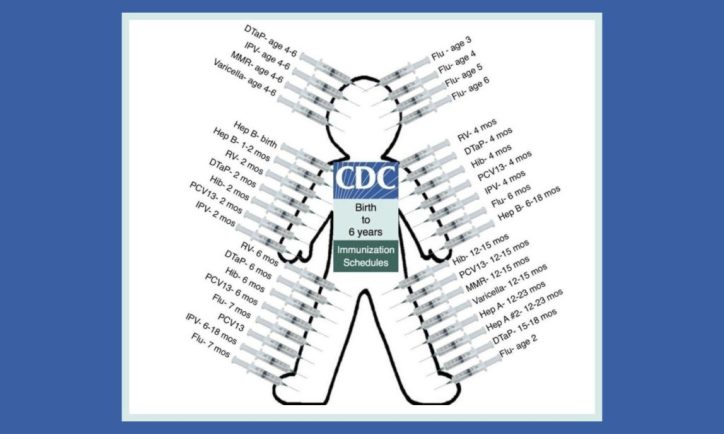
By Dr Ros Jones | Health Advisory & Recovery Team | July 9, 2023
The picture above may shortly be out of date when the latest monoclonal antibody against respiratory syncytial virus (RSV) is added to the CDC list. The US approach stands in stark contrast to Europe’s.
So another dilemma for parents of young children who have already laboured long and hard over whether to give their children a covid-19 vaccine – will their children need this latest new immunisation?
An RSV vaccine developed in the 1960s got as far as human trials, but had to be hastily withdrawn when it became apparent that subsequent disease was far worse in the vaccinated than the controls. As expected, the babies made a good antibody response and there were no obvious serious side effects. Fast forward a few months to the next autumn’s RSV season and sadly for the drug company and even more sadly for the babies and their families, the vaccinated group developed much more severe disease than the controls (18/20 vaccinated infants hospitalised with 2 deaths versus 0 deaths and 1 hospitalisation in the 21 controls gives placebo efficacy of 100% against death and 95% against hospitalisation – wonderful stuff that normal saline!) Animal studies with the RSV vaccine had already highlighted such problems.
Similar difficulties were seen in candidate vaccines for SARS (SARS-CoV-1). No less than four new coronarvirus vaccines produced after the SARS outbreak in 2003 looked hopeful initially, until the animals were exposed to the SARS virus. Although the vaccinated animals cleared the virus more rapidly, they developed severe eosinophil infiltrates in their lungs, in contrast to the control animals, highly suggestive of an immune overreaction in the presence of the virus (a Th2 helper cell hypersensitisation).
Dengue vaccines have had similar problems, with Dengvaxia withdrawn after the vaccinated group experienced much more severe disease the following season. In that case, the vaccine had been rolled out widely in the Philippines without awaiting the one-year trial follow-up, in a moment of political hubris which resulted in their Minister of Health facing criminal charges, but far more seriously it also resulted in the deaths of at least 10 healthy children.
What all these disasters had in common was a condition called ADE (Antibody Dependent Enhancement). In the presence of a large immune response, inflammatory markers are activated; this led to acquired respiratory distress in the case of the SARS vaccine, severe wheezing and airway inflammation in the case of the RSV vaccine, and a severe systemic reaction with the Dengue vaccine.
So what of this latest RSV prophylactic? There are two types, firstly monoclonal antibodies which give so-called passive immunisation i.e. the infant is given injections of antibodies to protect them against RSV in the early months of life but these just disappear naturally. There is an existing drug called palivizumab which has been around since 1998, so it is not clear why they need the new one, nirsevimab. The main advantage of the new product is that it is given as a single dose, rather than the monthly injections recommended for palivizumab, which makes it more practical, hence the new version has been authorised for all infants, rather than the high risk groups only for whom the monthly palivizumab injections were recommended. Nirsevimab was approved for use in the EU and the UK last November, following trials involving 3580 treated infants. The report combines various studies – one involving only infants at high risk from RSV such as preterm babies or those with heart or lung disease, for whom there was a reduction in hospitalisation from 4.1% in the placebo group to 0.8% in the nirsevimab group. A second study then recruited healthy low risk babies and for them the reduction in hospitalisations was only from 1.6% to 0.6%. There was a reduction in overall infections, but it is not clear whether that means these infants will simply get RSV infection the following winter. Having said that, most hospitalisations for this condition are in infancy. But as so often, it seems that no longer-term outcomes are required for approval to be given.
Interestingly, the FDA have yet to approve it, although their advisory committee last month voted 21:0 to recommend it for all infants. A worrying observation in the FDA approval paperwork was an increase in all cause deaths in the nirsevimab arm of the various trials (12/3710 (0.32%) nirsevimab versus 4/1797 (0.22%) controls). I could find no mention of this on the European Medicines Agency or MHRA websites, although the same drug company results were submitted.
Meanwhile in April, the FDA approved a new RSV vaccine from GlaxoSmith Klein(GSK), Arexvy for use in over 60s, followed in May by approval of a similar Pfizer vaccine, Abrysvo. As with Covid-19 vaccines, Pfizer gave results as relative risk reductions, so an encouraging 66.7% efficacy, but much less impressive when looking at the absolute risk reduction of 0.24% (from 0.36% to 0.12%) for symptomatic lower respiratory tract infections. The number of hospitalisations was too small to look at efficacy. More worrying is that looking at the supporting information on the FDA website reveals both vaccines showing an increase in atrial fibrillation compared to the placebo and also neurological adverse events, namely Guillain-Barré syndrome and Acute Disseminated Encephalomyelitis (ADEM) in the vaccinated group, with one fatality and one woman requiring 6-months hospitalisation. In two of the studies, flu vaccine and the new RSV vaccine were given simultaneously making it impossible to know which of the vaccines to blame.
The Pfizer Abrysvo RSV vaccine is expected to be approved by the FDA in August for pregnant women, for whose infants there was a 0.8% reduction in hospital admissions for RSV infection over the following 6 months (from 1.3% to 0.5%). But the independent panel vote was not unanimous, and concerns were raised about an increase in preterm births. Indeed, the GSK RSV vaccine trial for use in pregnancy was already stopped for this reason. Because this is proposed for use in the mothers, it will need a large number to vaccinate to prevent one infant hospitalisation, given most babies don’t go anywhere near hospital for this condition. It is not at all clear whether those infants whose mothers have already been vaccinated, will also be offered the monoclonal antibody in a ‘belt-and-brace’ approach or whether the two different types of preventative are simply to provide a choice. GSK have specifically said that they do not anticipate their vaccine being used in infants: ‘evidence from an animal model strongly suggests that AREXVY would be unsafe in individuals younger than 2 years of age because of an increased risk of enhanced respiratory disease’ (remember the 1967 vaccine, whereas the Pfizer document only says of Abrysvo, ‘Pediatric studies should be delayed until additional safety or effectiveness data have been collected’.
It is noteworthy that approval for the vaccines has progressed via the FDA’s Priority Review mechanism – the excuse for Covid-19 vaccines was of course that there was an emergency due to a novel and deadly virus sweeping across the world, with a saviour vaccine the only way out of endless lockdowns. But what is the possible excuse for a priority vaccine for RSV? This virus was first isolated in 1956 and was presumably around long before that. But of course, if we’d been listening, we would have heard Sir Patrick Vallance in 2014 saying “In the future, medicines will come to market quicker with less data, with more research being conducted in the post-license phase”. It seems that the future has arrived.
The plethora of new vaccines in the pipeline, in particular mRNA vaccines which will be developed at the new UK government-funded Moderna facility in Oxford, must be subject to the proper scrutiny which has sadly been totally lacking in recent years.
This begs the question: what of the multitude of existing vaccines shown so graphically in the picture at the top of this article? It struck me that as a retired paediatrician in my seventies, now being labelled by the government as a conspiratorial ‘antivaxxer’, I had of course only had 2 vaccines in my infancy, smallpox and diphtheria. At age 7, I received the new polio vaccine and as a 13-year-old BCG against tuberculosis (and that only after a negative skin test showed I wasn’t already naturally immune). And that was it, until I reached medical school where I got the new tetanus vaccine. Yellow fever and Typhoid vaccines followed for a student elective in South Africa and then nothing until Hepatitis B vaccine 20 years later.
The generation below mine had only diphtheria, tetanus and polio in infancy with measles at 13 months. This UK timeline makes interesting reading. But my grandchildren’s generation are apparently offered 15 in their preschool years (many of course are combinations so an 8-week infant is now vaccinated against 8 different diseases simultaneously). But this is still well below the number offered (and indeed mandated for many schools) to American children. Perhaps the JCVI are full of ‘anti vaxxers’, let alone the Danish authorities where infants are only vaccinated against 6 diseases and with a much more spaced out programme at 3, 5 and 12 months.
Can anyone point me to the randomised trials showing that this huge sum total of vaccines is beneficial in terms of overall outcomes? Because I have failed to find it. Instead I have found interesting articles such as that from the Bandim project in Guinea Bissau, where the delayed introduction of childhood vaccinations in the 1970s gave a natural control group. In collaboration with the Statens Institute in Denmark, they found that killed vaccines were associated with an increase in childhood mortality. Or this one comparing the infant mortality of the healthiest 30 countries by number of vaccines given, which certainly showed no support for the idea that more is better.
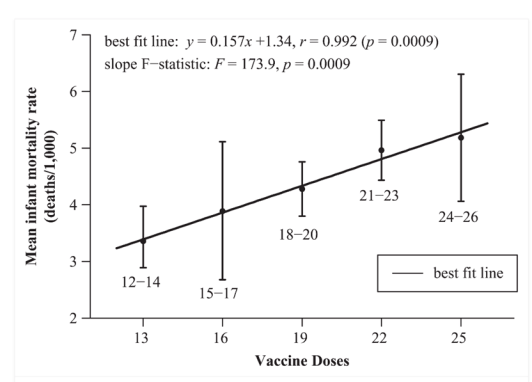
Figure 1: Mean infant mortality rates and mean number of vaccine doses 2009
Statements from WHO, Gates Foundation etc that vaccination has been the biggest life-saving breakthrough does beg the question: if the same amount of money and effort had been put into ensuring every child had access to clean drinking water and adequate food (the most basic physiological need in Maslow’s hierarchy of needs), then how many more lives would have been saved?
Would ‘Big Plumbers’ now be dominating public health policy?
Dr Ros Jones is a HART member and retired Consultant Paediatrician.
Poland’s right-wing Confederation soars in polls due to party’s skepticism on Ukraine, says senior academic
BY GRZEGORZ ADAMCZYK | WPOLITYCE.PL | JULY 10, 2023
The latest favorable polling for the right-wing Confederation party, which could see them become kingmakers in the Polish parliament after the next election, is mainly due to the party’s waning attitude towards Ukraine, says Prof. Henryk Dománski, a sociologist from the Polish Academy of Sciences (PAN).
Speaking with the wPolityce.pl news portal, Domański said the growing popularity for the nationalist group and economic libertarians was evidence that a rising number of Poles believe their government is doing too much for Ukraine.
The last poll placed the Confederation at 14 percent, giving a very real possibility the party could hold the balance of power after autumn’s parliamentary elections.
Domański said that many in Poland feel that the Ukrainians are privileged and getting too much from the Polish state at the expense of Poles. They also feel that Poland has over-engaged in the conflict.
“Confederation is the only party which is responding to these feelings and is not ashamed to be open about it,” said the academic, adding that the party is gaining votes at the expense of the ruling conservative Law and Justice (PiS) party.
Domański explained that it is not in the interests of Confederation to form a coalition with either the conservatives or the liberals after the election. He feels that any coalition with PiS would result in the Confederation having to compromise its stance on Ukraine and that would lead it to lose support.
“As an anti-establishment party, any coalition with parties perceived to be part of the establishment would be ruinous for Confederation,” he said.
According to polling research, the party has been polling most strongly among young men. However, as it rises in the polls, it is beginning to gain ground among women and older age groups.
Wind Industry Blackmails U.K. Demanding Huge Ramp-Up of Subsidies
BY WILL JONES | THE DAILY SCEPTIC | JULY 5, 2023
In a move that gives the lie to years of propaganda claiming falling costs, the wind industry’s leading lobbyists have written to the Government threatening to abandon the U.K. unless subsidies for their companies are hugely increased.
The industry lobbyists claim that unforeseen rising costs now require three actions:
- A revision to the auction rules so that the winners are not determined by lowest bids but by an administrative decision that weights bids according to their ‘value’ in contributing towards the Net Zero targets.
- Special new targets and thus market shares for floating offshore wind, one of the most expensive of all forms of generation;
- A vast increase in the budget for the fifth auction (AR5) of Contracts for Difference subsidies, with an increase of two and half times the current levels for non-floating offshore wind alone;
Such changes, were the Government to agree to them, would not only increase the total amount of subsidy to an industry that was until recently claiming no longer to need public support, but also provide the industry with protected shares of the energy market, eliminating risks for investors at the expense of the paying public. It would also clearly be an open invitation to corruption.
Climate lobby group Net Zero Watch has urged the Government to stand up for consumers by rejecting the wind industry’s latest demands.
Dr. John Constable, Net Zero Watch’s Energy Director, said: “It would be both absurd and counterproductive for Government to bail out the wind industry in spite of the evident failure to reduce costs. A refusal to learn from mistakes will be disastrous.”
In a press release, the organisation argued the Government should “reject the self-serving demands” because the U.K. economy should not be expected to continue to subsidise a sector “that is still uneconomic after nearly 20 years of above-market prices and guaranteed market share”.
“The wind experiment has failed and must be wound down,” it adds.
The Government should also be mindful that U.K. households and businesses are already experiencing extreme pressures on budgets, and a further burden on the energy bill should not be tolerated, it says.
This is particularly the case as the wind industry’s current cost difficulties are “neither unforeseen nor unpredicted but have been obvious to careful observers for over a decade”.
Europe Says No to China Decoupling
By Salman Rafi Sheikh – New Eastern Outlook – 06.07.2023
Following active US diplomacy over the past few years, Europe seems to have now decided to say no to the US geopolitics of “decoupling” from China. This is nothing short of a major diplomatic blow for the US, although this blow has not received as much attention in the mainstream Western media due to its overt focus on events related to the Russia-Ukraine conflict. The recent visit of Chinese Premier Li Qiang to Europe, where Li not only met the German Chancellor but also addressed a conference on development financing organised by French President Macron. More than that, the fact that two of the European Union’s most powerful states received and interacted with China’s number two became possible, first and foremost, because of the available space for continuing trade partnership with China. That is one key reason why the EU now favours the politics of “de-risking” rather than “de-coupling”.
While the idea of “de-risking” would literally mean reducing dependence on China – which some might see as a good sign – “de-risking” mainly means better management of trade and economic ties with China. After all, the EU sees China as an economic competitor. Therefore, devising new strategies to manage this competition makes perfect sense not only for the EU but also for China. As a leading US media outlet said in one of its reports, the EU has basically decided not to “piss China off.”
The real question is: Why is the EU, despite China’s overall pro-Russia position on Ukraine, devising a strategy that does not involve the kind of “decoupling” that the EU has effected vis-à-vis Russia in terms of energy supplies? There are several crucial reasons for the ongoing strategic rethinking in the EU vis-à-vis China.
First of all, the EU leaders tend to believe that China itself is eager to maintain stable economic ties with the EU. As opposed to Beijing’s estranged ties with the US, China intends to maintain a healthy, although competitive, environment with the EU. Doing this is very much possible since the EU is not as deeply entangled with China in geopolitical flashpoints, such as Taiwan and the South China Sea, as the US is. For the EU, therefore, continuing trade ties with China present an opportunity that should be exploited to the best possible extent, even if this continuation does not fit very well with the nature of the US-China ties.
Secondly, the EU is a 27-member bloc, which can be – in fact, it is – internally very diverse, with many EU countries following or favouring alternative policy positions. This internal divergence makes it extremely difficult for any given actor within the EU to impose its position on the bloc. This internal divergence also means that finding consensus on minimum common ground is equally difficult.
We have seen that German and French leaders have visited China in the recent past, but we have also repeatedly seen President of the European Commission Ursula von der Leyen taking a tougher position on China, showing how the three key EU leaders are not necessarily unanimous, making it extremely difficult for a) the US to make the bloc follow a single set of policies of “decoupling”, and b) the EU to devise its best China policy that stresses “de-coupling” over “de-risking”.
Even though some countries advocate a tougher position, the declaration of the latest EU summit in Brussels said that “Despite their different political and economic systems, the European Union and China have a shared interest in pursuing constructive and stable relations, anchored in respect for the rules-based international order, balanced engagement and reciprocity,” adding that Europe “does not intend to decouple or to turn inwards” or adopt policies “to harm China, nor to thwart China’s economic progress and development.”
Thirdly, the EU does not see the kind of interest that “decoupling” would yield for the bloc, as a potential “decoupling” would supposedly serve the US and harm the EU. Unlike the US, the EU, as it stands, is not trying to preserve its own hegemony by engaging China in a conflict.
Therefore, the EU’s stance – and the language it has been expressed in – is markedly different from the language the US officials normally used to report on their interaction with China. For instance, after Blinken met Chinese officials in June, he said he “warned” China about its foreign policies. Earlier in February, Blinken had sent yet another warning to China about its support for Russia.
But the EU, as is evident from the latest declaration, has a position that stresses cooperation over warnings and conflict. Although the EU disagrees with various policies of China, including its Ukraine stance, there is no desire within the bloc, on the whole, to pick a conflict with Beijing and deliver yet another economic blow to the continent, which is still not fully recovered from the effects of “decoupling” from Russia. “Decoupling” from China, therefore, will “kill”, to quote Hungary’s foreign minister, “Europe’s economy.” Various assessments prove this scenario.
For instance, the Seeheimer Circle, an official think tank inside the party of the German Chancellor, released a paper last April on Germany’s relationship with China calling for a “multi-dimensional” – that is, open – policy towards the Asian giant. An “abrupt end to trade relations with China” would be “an economic disaster,” the paper argued, rejecting an “anti-China strategy.”
Therefore, while a potential “decoupling” from China might help the US regain its position of economic and financial dominance at the global level, the EU sees no glory. The EU leadership is cognizant of this fact, which is why key EU leaders are not in line with the US. Instead, various EU pronouncements show an ongoing struggle within the bloc with regard to developing a strictly European strategic vision vis-à-vis China.
Is China’s export control a precise counterattack against US, Japan and the Netherlands?
Global Times | July 6, 2023
The measures taken by China in recent years to safeguard national security and interests have often been subjected to excessive interpretation and reaction from the US and Western countries. The recent decision by China to implement export controls on gallium and germanium-related items is no exception. Although Chinese authorities have said this is a common international practice and not targeted at any specific country, certain countries have felt “targeted,” leading to a series of doubts, questions, and even accusations.
There are mainly two points that these people are criticizing about. First, they believe that China is indeed targeting specific countries by precisely counterattacking the semiconductor equipment export controls imposed by the US, Japan and the Netherlands. Does this contradict China’s consistent opposition to the abuse of export controls? Second, they claim China’s actions may violate regulations of the World Trade Organization (WTO) and are detrimental to the stability of the semiconductor supply chain. Both of these points are baseless.
Whether it is a precise counterattack against the discriminatory policies of the US, Japan, and the Netherlands toward China can be left for them to ponder. It is nothing wrong to make those who have done bad things to China feel uneasy and unsettled. Gallium and germanium are key raw materials used in the production of semiconductors, missile systems, solar cells, and other high-tech products. If China exports them to these countries, but they prohibit the export of high-tech products made from these materials to China, this is clearly unfair in terms of trade. If the US uses them to produce high-end military equipment, it may even pose a threat to China’s national security. China’s export control is justifiable in terms of reason and law. It needs to be emphasized that this is entirely different from the US’ abuse of export controls.
China’s export control measures have always adhered to the principles of fairness, reasonableness, and non-discrimination, and are committed to maintaining the security and stability of the global production and supply chains. As for whether these measures violate WTO regulations this time, it is more of a technical issue. China is recognized as an exemplary member of the WTO, in sharp contrast with the US, who has trampled on WTO rules and principles. Despite having larger reserves of germanium than China, the US has protected germanium as a defense reserve resource since 1984 and has hardly conducted any mining activities. In a sense, China’s implementation of export controls on gallium and germanium may have come a bit late. China has no reason to excessively deplete its strategic resources to meet the demands of unfriendly countries.
Currently, there is an abnormal phenomenon in the international community. The US has engaged in too many acts of undermining international rules and seems to be unconcerned about the accumulating “debts.” It is a bit taken for granted. On the other hand, China’s legitimate actions are often magnified and exaggerated by external forces. What’s even more despicable is that the US often takes the lead in pointing fingers at China, without any sense of guilt or shame. The US, which seriously lacks a moral bottom line in the international arena, enjoys morally blackmailing China, which is truly absurd. Dealing with such a US, China also needs to adapt.
To contain and suppress China, the US has imposed various export restrictions on China to an unprecedented extent, and these restrictions are escalating and expanding. There are currently no signs of any easing or cessation. It is reported that the Biden administration is considering a new round of high-tech investment bans on China. When the US treats China in this way, it should not expect China to remain silent and not fight back; that is impossible. However, China will not be as unscrupulous and rule-breaking as the US. Nevertheless, we do have a considerable toolbox to retaliate and make countries that harm China’s interests pay a price.
The US Secretary of the Treasury Janet Yellen is about to visit China. Is China announcing the export control measures at this time to give Yellen a warning? This is overthinking. China doesn’t need to do this, but it will not postpone or cancel planned measures just because a senior US official is coming to create a favorable atmosphere. That’s how things stand. The people who are most dramatic about China’s every move are often the ones with the strongest malicious intent toward China. Their interpretations are bound to be distorted, so it is necessary to make them feel uncomfortable.
German Parliament Approves Purchase of 60 Chinook Helicopters From US’ Boeing
Sputnik – 05.07.2023
BERLIN – The defense committee of the German parliament approved the purchase of 60 CH-47F Chinook heavy military transport helicopters from US company Boeing, a German daily reported on Wednesday.
The purchase is estimated at 7.2 billion euros ($7.8 billion) and adapting infrastructure for helicopter operation is expected to require about 750 million euros on top of that.
The first helicopters will reportedly be delivered in 2027.
In January, media reported, citing a document obtained, that the price of helicopters will almost double from 6 billion to 12 billion euros as some components have not even been designed yet and become more expensive due to inflation.
Asian NATO: another failed plan by Washington
By Viktor Mikhin – New Eastern Outlook – 05.07.2023
There are increasing reports in the world media that the US-led NATO military alliance is planning to expand into the Asia-Pacific region. The idea was originally introduced by US President Joe Biden at the East Asia Summit on October 27, 2021, where he said: “We envision an Indo-Pacific region that is open, interconnected, prosperous, resilient and secure – and we are ready to work together with each of you to achieve this.” The White House later issued a report titled “Indo-Pacific Strategy of the United States” on February 11, 2022, outlining President Joe Biden’s strategy to reestablish “American leadership in the Indo-Pacific region.”
Among the remarks in the so-called “newsletter” that stood out was the declared necessity for the US to strengthen ties with Asian countries in order to tackle the “urgent” task of “competing with China.” But, according to its authors, NATO, which was formed to defend Europe against a fabricated Soviet threat, is allegedly a peace-loving alliance. In reality, it has evolved into a militarily aggressive bloc with a dominant presence in the North Atlantic region. This “peace-loving” coalition has militarized the continent to the point where war has broken out in Europe for the first time since World War II.
The question arises, do the countries of the Asia-Pacific region want to see their region also heavily militarized under the strict “guardianship” not only of the United States, but also of European “peace-loving” NATO? Jens Stoltenberg, the secretary general of this “peace-loving” bloc, insists on increasing the military alliance’s activities in Asia, as he stated publicly earlier this year during a meeting with Japanese Prime Minister Fumio Kishida. The “peacemaker” from Europe said: “What happens in Asia matters for Europe and what happens in Europe matters for Asia, and therefore it is even more important that NATO Allies are strengthening our partnership with our Indo Pacific partners.”
According to Japan’s Nikkei newspaper, NATO will establish a liaison office in Tokyo in 2024 and use it as a center for cooperation with Australia, Japan, New Zealand and South Korea. Geographically, these four countries are close to China and other states in the region. It should be emphasized that they are all strategically placed in the Asia-Pacific region and have common interests with the US and NATO, or serve them faithfully.
It doesn’t take a genius to figure out that their target in this situation is China. Speaking at a May 26 press briefing, a Chinese Foreign Ministry spokesperson rightly noted that NATO’s attempt to intervene in the Asia-Pacific region eastward would inevitably undermine regional peace and stability. For example, Japan intends to attend the upcoming NATO summit in Lithuania in July, where discussions on the development of the military bloc’s liaison office are expected to continue. Apparently, the Japanese leadership has already forgotten the tragic consequences of their country’s participation in World War II and the terrible consequences it had for the Japanese people.
The United States’ plan to establish a military alliance in the Asia-Pacific area, similar to NATO, will have disastrous effects. That is why this insidious scheme does not have the support of many Asian countries, which see all these maneuvers of the United States and NATO as aimed at limiting their freedom and security. In the past, the US tried to create a replica of NATO in the Persian Gulf, but failed in that endeavor. The countries of the region soon realized the instability that results from such a move and are now instead working together to bring security back to their own region. The desire of many Gulf countries to join the BRICS and build a new world without conflicts and wars at least testifies to this.
This is why the replica of NATO in Asia is also likely to fail, because no matter how much the Joe Biden administration insists on pursuing it, the idea lacks the support of many countries in the region. Asian states strongly oppose actions aimed at creating military blocs in the region and fomenting discord and conflict. “The majority of Asia-Pacific countries don’t welcome NATO’s outreach in Asia and certainly will not allow any Cold War or hot war to happen,” the Chinese Foreign Ministry stated earlier in May.
The position of most countries in the region is very clear. They oppose the emergence of military blocs in the region, do not welcome NATO expansion in Asia, do not want a repeat of bloc confrontation in Asia, and certainly will not allow a repeat of cold or hot war in Asia. If a NATO-like, US-led alliance were formed in Asia, it would put the region at risk of insecurity and possible conflict, as countries would be divided into alliances and military blocs.
But another stumbling block to the American move to create an Asian NATO is France. President Emmanuel Macron opposed the creation of the first NATO office in Asia, calling the move a “big mistake.” Macron recently made an official trip to China to strengthen bilateral ties and afterwards began to make the same argument as Beijing. Incidentally, US-led NATO activities have a clause in their charter that clearly limits the scope of the bloc to the North Atlantic. Expanding NATO beyond the North Atlantic would require the consent of all members of the alliance, and France could technically veto such a move.
Many, even members of NATO, understand why such a plan could lead to a serious escalation, with devastating economic and security consequences that would be felt negatively around the world, including Europe, a continent that has long been in deep crisis because of the United States.
Asia is famously one of the most economically developing regions in the world. This, in fact, is what the US is deathly afraid of – a new economically developed giant that poses a threat to limit US military and economic expansion. “Thinking” heads in Washington are unable to realize that China, becoming the world’s number one economy and a leading expert in technology and other major sectors, has no intention of competing with or challenging the US on a global scale.
This is where the paranoia of today’s American politicians and their unstable psyche, little adapted to the realities of the modern world, come into play. Washington and its masters are struggling to hold on to what few fragments remain of their once global hegemony, now going like the Titanic to the bottom of world politics. The US ruling elites no longer pursue their own country’s interests, bearing in mind that China is one of America’s largest trading partners, bringing them enormous benefits in various trade and industry. China’s rise as a superpower and its peaceful view of the world have had a dramatically negative impact on Washington, which has watched with apprehension as more and more countries have sought to strengthen ties with Beijing and join the BRICS.
On the security front, the world has witnessed US military adventurism and its disastrous consequences. And this at a time when China has one military mission outside its borders, and it is part of the UN peacekeeping mission in Africa. In essence, China maintains peace in an unstable part of the world, while the US provokes conflicts in crises it itself created, trying, as the proverb says, to fish in troubled waters of misfortunes and troubles of the peoples of the world.
On the technology front, more and more countries are buying from China as it quickly becomes a technological superpower. This has reduced US profits and caused Washington to bully the world against China over issues such as Huawei, Tiktok and semiconductors. In fact, this is all part of a broader US attempt to limit Chinese exports. But the world is different now than it was after World War II. The influence of the US has weakened dramatically, and many states prefer to build a new world on terms that are agreeable to them, put forward by Russian President Vladimir Putin.
There is also some danger here as US hegemony wanes and in a desperate attempt to maintain its influence it plays dangerous games around the world. It unleashed the crisis in Ukraine and pitted Ukrainians against Russians, and now it seeks to create similar crises in other countries, such as China and North Korea, instead of following the diplomatic path and coming to realize a multipolar world. But this would be asking too much of the current American leadership, too difficult for their heads and limited thinking, accustomed to think and act only in terms of war.
Has China Just Checkmated the US by Banning Rare Earth Exports?
By Ekaterina Blinova – Sputnik – 04.07.2023
China’s ban is a response to the West’s not-so-well thought out strategy of economically decoupling from the People’s Republic, Asia-Pacific consultant Thomas W. Pauken told Sputnik.
China has imposed restrictions on exporting two strategic raw materials, gallium and germanium, which are crucial for the world’s electronic chip-making industry. The US mainstream press called Beijing’s move a “second counter-measure” in the unfolding Sino-American tech confrontation, which followed the People’s Republic sanctioning America’s Micron Technology (MU) in May.
Last October, the Biden administration unveiled an unprecedented set of export controls that restricted Chinese companies from purchasing advanced chips made anywhere in the world using US technology, as well as chip-making equipment.
The US media noted at the time that Washington’s move would thwart “China’s technological ambitions,” bragging that the global semiconductor industry was “almost entirely” dependent on the US and its allies. Now American newspapers are admitting China has played “a trump card in the chip war.”
“I find it rather laughable that [the Biden regime] actually thought that they’re going to win this tech war,” Thomas W. Pauken II, the author of US vs China: From Trade War to Reciprocal Deal, and a consultant on Asia-Pacific affairs, told Sputnik. “You don’t have access to the rare earth, you don’t have access to the supply chains in order to produce these electronics – you’re totally destroyed, you’re devastated, the US knew about this. They knew how much they were reliant on the rare earths. They knew how much they had to rely on China in order to reshore their factories. And instead of trying to find ways to cooperate, they just decided to go ahead and just do these nasty, terrible attacks against China and then just somehow think they’re going to score a victory here.”
Why Didn’t Team Biden See This Coming?
The People’s Republic boasts 63% of the world’s rare earth mining, 85% of processing, and 92% of magnet production. As per the 2022 US Geological Survey, between 2017 and 2020 the United States imported a whopping 78% of its rare earth metals from China, followed by Estonia (6%), Malaysia (5%) and Japan (4%).
Back in 2019, the Asian giant warned the Trump administration about including rare earths in Beijing’s technology-export restrictions, as Washington stepped up pressure on Chinese telecom firm Huawei. Donald Trump’s successor, Joe Biden, continued to raise the stakes in a technological tit-for-tat with China by implementing the CHIPS and Science Act in August 2022 and introducing semiconductor restrictions last October. In December 2022, US policy-makers were lively discussing possible bans on TikTok, a Chinese short-form video hosting service.
Speaking to Sputnik at the time, Pauken projected that Biden’s China strategy would eventually backfire on Washington. “If the US moves forward on decoupling, they’re only hurting themselves, because most of the supply chains on the high-tech side originate from China,” the Asia-Pacific consultant warned last December.
Given that 94% of the world’s gallium and 83% of germanium is produced in China, the US may find itself in a heap of trouble in the aftermath of Beijing’s export ban, according to the expert.
“You have to realize that a lot of the electronics are produced and need these rare earths ingredients,” Pauken said. “Without these rare earth ingredients, they can do absolutely nothing. This is an absolutely devastating hit to the US markets. And obviously, if they want to continue this policy of decoupling from China, it’s only going to hit them harder and harder. I’m not too sure why these countries thought they could somehow strike against China and then not get hit back by the country. This is basic reciprocity. Reciprocity means that if you hit one country with trade barriers, the other country is going to also respond with their own type of trade barriers as well. And so these tariffs are absolutely important to American factories, and they’re going to be shut down and they’re going to have a very hard time continuing their operations.”
Biden Administration’s ‘Childish’ China Policy
Pauken criticized the Biden administration’s China policy as inconsistent and “childish”. He referred to the Chinese “spy balloon” incident which made a lot of fuss in the US but eventually turned out to be a nothingburger: “A few days ago, we discovered that the spy balloon was not even a spy balloon, it was not even monitoring the US,” the expert remarked.
To complicate matters further, Joe Biden publicly dubbed his Chinese counterpart, Chairman Xi Jinping, a “dictator” almost immediately after Secretary of State Antony Blinken’s recent trip to Beijing. Treasury Secretary Janet Yellen’s forthcoming visit to the People’s Republic is also surrounded by controversies, given that the White House is considering an order restricting investments in China.
According to Pauken, Biden’s China experts both misunderstand and underestimate the People’s Republic’s odds of withstanding the pressure and coming out on top.
For instance, while commenting on Beijing’s ban on Micron Technology in May, the Asia-Pacific consultant drew attention to the fact that the move apparently shows that China is no longer as “dependent” on the US semiconductor industry as it used to be. “Obviously, [the Chinese] have probably set up supply chains in place and have chips made in China that are maybe not equal in quality to Micron, but close enough so that they could handle the impact of no more Micron chips coming to China,” the expert suggested at the time.
“[Biden aides are] trying to take control of the US foreign policy, which is absolutely disastrous right now,” said Pauken, commenting on the recent ban. “And these are the people who are probably working for Biden, trying to think that he’s going to win and he’s going to end up coming out a big loser and they’re going to destroy the US economy. (…) The only way to turn away from this is for countries to try to find ways to improve their trade deals with China. And if they find that they can improve their relations with China, they will likely not be hit hard by this rare earths export ban.”
China’s export controls on gallium likely to hit US defense industry: experts
By Liu Xuanzun – Global Times – July 4, 2023
China’s recently announced export controls on gallium could hit the US defense industry, as this material, with China being the leading producer and supplier in the world, is widely used in advanced radar systems installed on warplanes, warships and ground installations, experts said on Tuesday.
Starting August 1, China will impose export controls on gallium and germanium as well as several chemical compounds involving the two materials, according to a notice China’s Ministry of Commerce and General Administration of Customs released on Monday.
Items meeting certain characteristics shall not be exported without approval, the notice stated.
The move aims to safeguard national security and interests, it said.
Gallium and germanium are used in the making of semiconductors and other electronic components, observers said.
Chinese military analysts said that the export controls, particularly those on gallium, could hit the US defense industry at a time when the US is attempting to militarily contain China’s development.
Gallium arsenide (GaAs) and gallium nitride (GaN) are the most basic materials in the making of the transmit receive modules on active electronic scanning array (AESA) radars, which are widely used on modern warplanes, warships and ground installations, Fu Qianshao, a Chinese military aviation expert, told the Global Times on Tuesday.
For example, US’ defense companies Raytheon and Northrop Grumman are reportedly introducing new AESA radar systems based on GaN, which provide superior performance than previously used GaAs. The latest radars for the F/A-18E/F carrier-based fighter jet and the F-35 stealth fighter jet also incorporate GaN.
Both GaN and GaAs are included on China’s list of export controls.
China accounts for about 85 percent of global gallium reserves, meaning that it is unlikely for the US and other Western countries to avoid using the Chinese materials without significant cost, Fu said.
The US frequently deploys its warplanes and warships on China’s doorsteps for close-in reconnaissance, provocative transits and exercises as well as showcasing deterrence purposes, in addition to continuing arms sales to the island of Taiwan, which are obvious attempts to contain China’s development and harm China’s national security and interests, analysts said.
Can the WHO and the United Nations impose sanctions on your country for non-compliance?
The sinister sanctions strategy has disturbing implications for democracy, peace, and prosperity around the world. It’s time for us to defund and exit.
By Shabnam Palesa Mohamed | Children’s Health Defense Africa | July 3, 2023
Sanctions are a powerful instrument of political control and economic profit. One of the rare but critical topics relevant to the international campaign to #ExitTheWHO is whether the World Health Organisation and the United Nations can impose, influence or recommend specific sanctions. The sanctions would be against countries that choose to not comply or cannot comply with International Health Regulations, the proposed new pandemic treaty, or other legislative attempts that curtail rights, freedom and sovereignty.
The accelerating and profitable globalist march towards unprecedented levels of ‘1984’ style totalitarianism – using censorship, vaccine passports, 15 minute cities, and CBDC’s continues. It is plausible that the WHO and the UN will move to impose, influence or recommend sanctions against countries that do not want to or cannot comply with its centralised health agenda and undemocratic legislative attempts.
At last year’s World Health Assembly 75, the 47 nation African bloc voted surprisingly, against most amendments to the International Health Regulations, stating that they were broad, rushed, and can pose a threat to national sovereignty. Since then, no doubt with persuasive behind the scenes manoeuvres, some of the most disturbing amendments are being proposed by African countries. Many relate to financing for the cost intensive provisions of IHR amendments and the proposed pandemic treaty or accord. Africa cannot afford more debt slavery.
Countries that could be sanction targets for non-compliance with the WHO and the UN, include but are not limited to, those in the steadily growing BRICS initiative: Brazil, Russia, India, China and South Africa. Iran and Malaysia are reported to have expressed reservations to the proposed IHR amendments at last year’s World Health Assembly 75. Russia is making decisive moves in the international arena and could possibly exit the WHO. In addition, India raised serious audit concerns on irregularities with WHO financials, including missing assets.
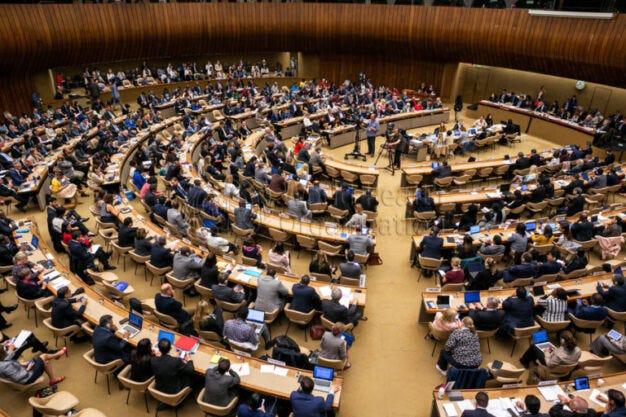
World Health Assembly, Geneva, Switzerland
The ambit of the overwhelmingly privately funded WHO, contained in its extensive constitution, can be interpreted as overly broad and sweeping, and thus, unknown to non-participants, has always posed a potential threat to individual health and national sovereignty.
The WHO’s constitution states in Chapter 2 – Functions – Article 2: In order to achieve its objective, the functions of the Organization shall be: (v) generally to take all necessary action to attain the objective of the Organization. However Article 21 of the WHO’s constitution is specific about making (non-binding) regulations, limiting the WHO to just five areas.
Proposed amendments to the new pandemic treaty include a dangerous clause that would change the WHO’s role from a UN agency that shares recommendations, to a rogue agency whose elitist and secretive attempts at legislation are binding and mandatory on member states, violating fundamental human rights and freedoms. However, health freedom advocates agree that WHO has no actual authority in the law.
In effect therefore, with both IHR amendments and the proposed new treaty, the WHO is acting ultra vires in its Big Pharma driven power grab, in collusion with naïve or compromised member state delegates. Ultra vires is defined in the law as: acting beyond the scope or in excess of legal power or authority. Ultra vires acts of impunity by the WHO could accelerate a mass defund and exit of the agency.
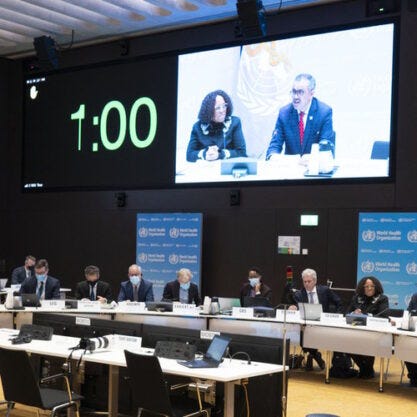
WHO’s negotiating body on a proposed pandemic treaty
Health is no longer just health, as it is defined in the WHO’s constitution. Through Covid-19, and other controversially declared pandemics, health is now a multi-billion dollar health security industry. With it, creeps in the tyranny of secrecy, surveillance, vaccine certificates, forced quarantines, and the undemocratic censorship of free speech. Given the absence of public participation, the WHO is a strategic spear for oligarchs and corporations, and given international resistance to its power grab, it may become desperate and argue or push for sanctions.
Reported in 2021: “In 2021, German Health Minister Jens Spahn called for sanctions against countries that hide information about future outbreaks. Citing the World Trade Organization’s power to sanction countries for non-compliance, Spahn said “there must be something that follows” if countries fail to live up to commitments under a new pandemic treaty that the World Health Assembly will take up in November.”
Further, it is entirely under reported that controversial “World Health Organization Director-General Tedros Adhanom Ghebreyesus also urged countries to consider the idea as they take up the treaty, a legally binding tool. The treaty should “have all the incentives, or the carrots” to encourage transparency, Tedros said, appearing at a press conference with Spahn in Berlin. “But maybe exploring the sanctions may be important,” he added.”
Also reported in 2021: “Speaking at the WHA in June, Mike Ryan, WHO Health Emergencies Programme Executive Director, also spoke out in favour of the treaty, despite the fact that WHO technical staff have historically avoided taking positions on controversial policy choices before member states. “My personal view is that we need a political treaty that makes the highest-level commitment to the principles of global health security — and then we can get on with building the blocks on this foundation.”
I engaged renowned international law expert Professor Francis Boyle about the possibility of sanctions via the WHO. He had no doubt “They will pursue sanctions against countries that do not comply with their orders, coming from Geneva. Both economic and political sanctions. However, they will only have the power to pursue sanctions if we accept their authority. We cannot. We must exit the WHO.”
With far less public scrutiny currently than the WHO, the United Nations is also seeking exponential new powers and stronger “global governance” mechanisms to deal with what they define as international emergencies. In March 2023, the UN released a policy brief , astonishingly titled “To Think and Act for Future Generations – Our Common Agenda. Strengthening the International Response to Complex Global Shocks – An Emergency Platform”
These all encompassing areas of expanded UN power include:
- climate or environmental events;
- environmental degradation;
- pandemics;
- accidental or deliberate release of biological agents;
- disruptions in the flow of goods, people, or finance;
- disruptions in cyberspace or “global digital connectivity;”
- a major event in “outer space;”
- and “unforeseen risks (‘black swan’ events)
There are several types of sanctions imposed through the United Nations:
- Economic sanctions – typically a ban on trade, possibly limited to certain sectors such as armaments, or with certain exceptions (such as food and medicine)
- Diplomatic sanctions – the reduction or removal of diplomatic ties, such as embassies.
- Military sanctions – military intervention
- Sport sanctions – preventing one country’s people and teams from competing in international events.
- Sanctions on the environment – since the declaration of the United Nations Conference on the Human Environment, international environmental protection efforts have been increased gradually.
- Economic sanctions are distinguished from trade sanctions, which are applied for purely economic reasons, and typically take the form of tariffs or similar measures.
It is plausible that the UN’s controllers realise that the world is pushing back against the WHO’s overreach, or find it irrelevant to real health. Given that sovereign nations will choose to exit the WHO, the UN decided to launch plan B and ascribe to itself even greater powers. Technically, there is no legislation to exit the United Nations within the UN Charter. Again, this is a critical issue of national sovereignty.
The United Nations Children’s Fund or UNICEF’s 2020 Annual Report highlights USD 717 million in donations from the private sector, which is 21 percent of income overall. Lucrative corporate partnerships include Unilever, Louis Vuitton, and Microsoft, while foundation partners include Bill and Melinda Gates Foundation and Mastercard Foundation. It also prides relationships with the World Economic Forum and the International Chamber of Commerce. National committees fundraise from individual donors and corporations at the national level, to support UNICEF globally. The UN’s programmes therefore are heavily dependant on private funding. Funding crowns influence.
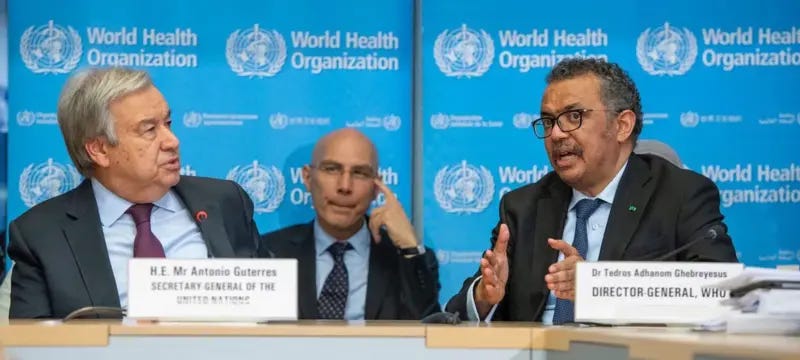
UN secretary general Antonio Guterres with WHO director general Adhanom Tedros Ghebreyesus
The WHO is an agency of the United Nations.
- In 2015, on punishing member states who violate the IHR, as reported: “United Nations health officials said they want to impose sanctions on countries that do not comply with public health regulations meant to avoid the spread of dangerous epidemics, such as the Ebola outbreak that killed more than 9,000 people and ravaged domestic health care systems in West Africa last year. World Health Organization Director Margaret Chan said she is investigating ways to reprimand countries that disobey the International Health Regulations (IHR) — a set of rules adopted in 2005 and mandate that countries set up epidemiological surveillance systems, fund local health care infrastructure and restrict international trade and travel to affected regions deemed unsafe to the public, among other provisions. Chan is on a panel set up by U.N. Secretary General Ban Ki-moon, who instructed the group to think of ways to hold countries accountable for how they manage public health crises and punish those who violate the IHR.”
- In 2022, according to commentators in a policy article: “In order to enforce compliance, some commentators have recommended concluding the treaty at the United Nations level. However, we fear that it has been already decided with the INB (mandated by WHASS) that a treaty will be developed under the roof of WHO. They added: “To move on with the treaty, WHO therefore needs to be empowered — financially, and politically. If international pandemic response is enhanced, compliance is enhanced. In case of a declared health emergency, resources need to flow to countries in which the emergency is occurring, triggering response elements such as financing and technical support. These are especially relevant for LMICs, and could be used to encourage and enhance the timely sharing of information by states, reassuring them that they will not be subject to arbitrary trade and travel sanctions for reporting, but instead be provided with the necessary financial and technical resources they require to effectively respond to the outbreak. High-income settings may not be motivated by financial resources in the same way as their low-income counterparts. An adaptable incentive regime is therefore needed, with sanctions such as public reprimands, economic sanctions, or denial of benefits.”
* Tweet CHD Africa if you agree that sanctions are possible and must be opposed internationally. Use the #StopSanctions
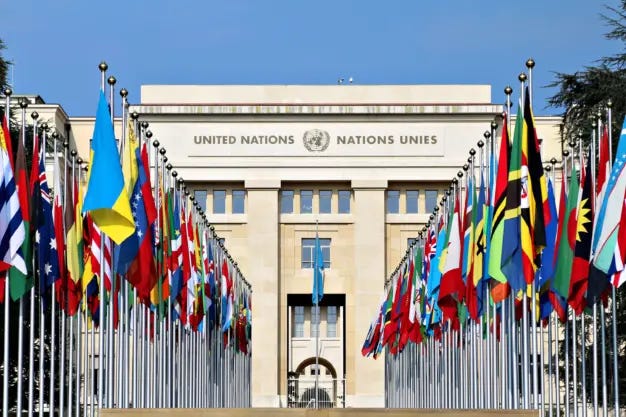
United Nations headquarters in Geneva, Switzerland
In 2000, Kofi Annan, former Secretary General of the UN said: “However, just as we recognize the importance of sanctions as a way of compelling compliance with the will of the international community, we also recognize that sanctions remain a blunt instrument, which hurt large numbers of people who are not their primary targets. Further, sanctions need refining if they are to be seen as more than a fig leaf in the future. Hence, the recent emphasis on targeted sanctions which prevent the travel, or freeze the foreign bank accounts, of individuals or classes of individuals – the so-called ‘smart sanctions’.”
Do sanctions work? “UN targeted sanctions, which are packages of sanctions imposed by the UN Security Council, have been successful in leading to intended policy change only 10% of the times, and limited the policies they intended to change in 28% of cases, but led to a reduced life expectancy in the targeted countries by 1.2–1.4 years. Economic sanctions have also been criticised for the potential collateral damage to third states they can cause. For this reason, some authors suggest that economic sanctions should be banned, as they are having detrimental effects on health and nutrition of civilians.”
Countries themselves can and do impose dangerous sanctions. A 2022 UN security council meeting on sanctions recorded: “Unilateral sanctions, which are sanctions imposed by (groups of) states and not by the UN Security Council, are particularly controversial. Unilateral sanctions have also been criticised for being disproportionately imposed on low-income and middle-income countries by wealthier countries, for example, by the Kenyan representative in a Security Council debate on sanctions on 7 February 2022: ‘The frequency and reach of unilateral sanctions have led to a growing view that they are the weapons of the strong against the vulnerable or weak’.”
- The Universal Declaration of Human Rights, in its first article, states that ‘all human beings are |…| equal in dignity and rights’, which includes the right to health. Article 25 specifies that ‘everyone has the right to |…| health and well-being |…| including medical care’.
- In the UN Convention on the Rights of the Child, article 24 states that ‘state parties recognize the right of the child to |…| the highest attainable standard of health and to facilities for the treatment of illness and rehabilitation of health. State parties shall strive to ensure that no child is deprived of his or her right of access to such health care services’.
- General Comment No.14 of the UN Committee on Economic, Social and Cultural Rights (CESCR) on the right to the highest attainable standard of health, the right to health is a fundamental human right which is necessary for all other human rights to exist and be exercised.
- “The use of sanctions designed to hurt a country’s healthcare sector is clearly incompatible with respecting citizens’ right to health. Accordingly, the general comment No. 14 of the CESCR calls on states to refrain ‘at all times’ from sanctions on medicines and medical equipment. However, sanctions on other healthcare products and, in fact, other non-healthcare products may as well interfere with the right to health, and, thus, need to be subject to scrutiny.”
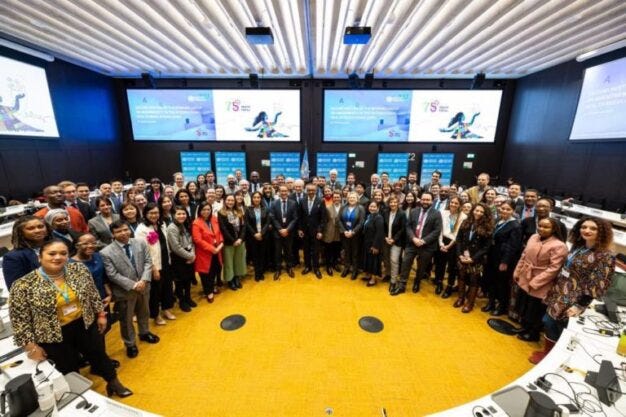
WHO’s World Health Assembly 75
South African Precious Matsoso, co-chair of the International Negotiating Body (INB), formed to negotiate the terms of the proposed pandemic treaty or accord, admitted openly that punitive measures have not been shown to work “anywhere” in the world. However, she said, there must be accountability measures while recognizing countries’ sovereignty. “We have to recognize that they’re sovereign, and they keep on reminding us that they are sovereign states.” It is positive to note that more states do recognise the real threat to sovereignty.
Not all states are considered equal. Smaller countries are at a distinct disadvantage in participating, negotiating and making decisions at the hierarchical WHO. Significantly, Matsoso was transparent about failures in equal participation. “A number of smaller delegations have always expressed concerns about organizations of multiple meetings, where they have to travel from afar, and not even having the capacity to participate in the negotiations,” Matsoso said. “And they have repeatedly requested that you must avoid parallel sessions.” To little avail.
Given the rapidly growing distrust in the WHO, its historical failures and harms, Covid-19 failures and harms, and the fact that it cannot maintain independence because it is a largely privately funded entity; it is plausible that the WHO and/or the UN will move to impose or influence sanctions via the World Trade Organisation, ahead of Agenda 2030. This act of aggression weaponises the WHO and/or the UN against countries that influential funders and unethical stakeholders have an interest in destabilising for power and resource control.
This sinister strategy has disturbing implications for democracy, peace, and prosperity around the world. Freedom faces an existential risk through unelected bureaucratic entities. Nations can and must protect their sovereignty by defunding and exiting WHO, and, by critically assessing the true nature, value, and risks of continued membership in the 78 year old United Nations. Not to do so, means ignoring the risks of UN peacekeepers, who are known to commit crimes with impunity, being deployed in your country to enforce UN and WHO dictates.
Shabnam Palesa Mohamed is executive director and chapter coordinator for Children’s Health Defense Africa. She is an activist, journalist, lawyer, and mediator, with over 20 years of experience in human rights work. To share information, Twitter: @ShabnamPalesaMo
Follow CHD Africa on 6 social platforms for news, action alerts, and updates:
– Telegram: t.me/CHDafrica
– Twitter: https://twitter.com/CHD_Africa
– Instagram: https://www.instagram.com/af.childrenshealthdefense/
– Facebook: https://www.facebook.com/CHDafricachapter
– Rumble: https://rumble.com/user/ChildrensHealthDefenseAfrica
– Tiktok: https://www.tiktok.com/@chdafrica?is_from_webapp=1…
Featured Video

ARE PATIENTS BEING PROPERLY INFORMED ABOUT OZEMPIC?
or go to
Aletho News Archives – Video-Images
New Book
Breast Cancer: Before You Consent
A new Unbekoming paperback
Lies are Unbekoming | September 18, 2026
Peter Gøtzsche reviewed every randomised mammography screening trial ever conducted for the Cochrane Collaboration. Cochrane’s headline is that, assuming a 15% mortality reduction, one woman in 2000 avoids dying of breast cancer over ten years. Ten are overdiagnosed and treated. Two hundred experience false alarms.
But that headline assumes the reduction. When Gøtzsche looked only at the trials with adequate randomisation — the higher-quality ones — the reduction disappeared. No effect on breast cancer mortality. No effect on all-cause mortality.
This is the Cochrane finding, published in the establishment’s own database of systematic reviews.
No woman being asked to consent to a mammogram this week knows it.
That is why the new Unbekoming paperback exists. … continue
Blog Roll
 Aletho News
- ARE PATIENTS BEING PROPERLY INFORMED ABOUT OZEMPIC?
- US lawmaker blocks $2.8 billion weapons sale to Israel: Report
- Yemeni army claims responsibility for strikes on sensitive sites in Saudi capital, Aramco facilities in Yanbu
- Iran Judiciary issues indictments against 159 US, Israeli officials for assassination of Leader, commanders
- Turkiye revokes Iranian bank license under US sanctions campaign
- US-Denmark Agreement on Greenland Is ‘PR Stunt’ Ahead of Midterms
- Araghchi: Military intervention cannot create security; coercion cannot bring peace
- Fraud Squared
- Breast Cancer: Before You Consent
- Iran’s Plan to Shut Down AI in the Persian Gulf
- If Americans Knew
- Inside Gaza’s death trap of collapsing, bombed-out buildings
- The everyday items Israel bans from Gaza every day
- Inside the siege, the ruined buildings of Gaza – Daily Update
- Debunking The Claim That Macklemore Has A “History Of Antisemitism”
- CPJ demands release of arrested Palestinian-US journalist near Bethlehem
- Robert Kraft: The Billionaire Friend of Netanyahu Pulling The Strings Behind the Macklemore/Ed Sheeran Blow Up
- Columbia Administered Fund Gives Big Money to Pro-Israel Groups
- Deportation Case of Palestinian Activist Salah Sarsour Tests First Amendment
- ‘We Will Not Forget’: Palestinians Mark 44 Years since Sabra and Shatila
- Why do we let Zionists decide what we can and can’t say?
- No Tricks Zone
- New Study: ‘Global Drought Shows No Detectable Recent Acceleration Under Climate Warming’
- Economic Masterminds: German Socialists Suggest Taxing Productivity Gains Stemming From Using AI
- The South China Sea Has Not Been Cooperating With The Climate Change Narrative
- Energy Crisis: Germany Enters Heating Season With Historically Low Gas Reserve Fill Levels
- New Study: The Antarctic Ice Sheet Gained Mass From 2020-2024 Due To Staggering Snow And Ice Accumulation
- Study: Ocean Heating Rates From Thousands Of Years Ago ‘Dwarf’ Modern Ocean Heating Rates
- Climate Extremists Target, Attack Large-Scale Power Grid Infrastructure In Germany!
- New Study: Antarctic Ice Melt Has Contributed Less Than 1 Centimeter To Sea Level Rise In The Last 30 Years
- Fear Of Debate: Alarmist German Climate Scientist Calls On Mainstream Media To Discredit Skeptic Voices
- End-Of-August Arctic Sea Ice Extent Hasn’t Fallen In 20 Years, Official Data Show!
 Aletho News