Qatar to provide Ukraine $100mln as war profits soar
The Cradle | July 29, 2023
Qatar will provide Ukraine with $100 million in humanitarian aid, Ukrainian Prime Minister Denys Shmyhal announced on 28 July following the visit of Qatari Prime Minister Sheikh Mohammed Bin Abdulrahman Al-Thani to Kiev.
“This money will be channeled for reconstruction in the health and education sectors, humanitarian de-mining, and other important social and humanitarian projects,” Shmyhal told a briefing.
Sheikh Mohammad also met with Ukrainian President Volodymyr Zelensky to discuss global food security and the expired Black Sea grain deal in his first visit to Ukraine since the start of the war with Russia last year.
“We appreciate this visit and consider it an important manifestation of Qatar’s support and solidarity with our country. We are sincerely grateful for all the assistance received from Qatar,” Zelensky said.
The grain deal, brokered by Turkiye and the UN in July 2022, ensured that Ukrainian grain could still be exported from its southern Black Sea ports, despite the fighting and that Russian grain and fertilizers could still be exported despite western-imposed sanctions.
The deal came amid fears that a disruption in Russian and Ukrainian grain exports would cause price increases in world food markets, leading to humanitarian disasters in poor countries.
Russia withdrew from the agreement on July 17, claiming Ukraine and the UN had not lived up to their end of the deal.
Sheikh Mohammad and Zelensky’s talks also focused on the Ukrainian Peace Formula and the Ukraine Recovery Plan. Zelensky emphasized the opportunities for Qatari investment funds and business circles to participate in Ukrainian reconstruction, according to the Office of the Presidency of Ukraine.
Qatar has benefited significantly from the war in Ukraine. US and EU sanctions cut off Russian natural gas supplies to Europe, causing prices to skyrocket and allowing Qatar to emerge as an important alternative natural gas supplier.
In late November, QatarEnergy and ConocoPhillips signed agreements to export 2 million tons of liquified natural gas yearly to Germany for at least 15 years, starting in 2026.
Europe’s newfound need for Qatari liquefied natural gas comes after Qatar started a $30 billion project to boost its exports by 60 percent by 2027.
Before the start of the Ukraine war, some analysts doubted there would be enough natural gas demand to justify the expansion plan, Bloomberg noted.
US warns allies of potential isolation from deals over links to Iran, Russia
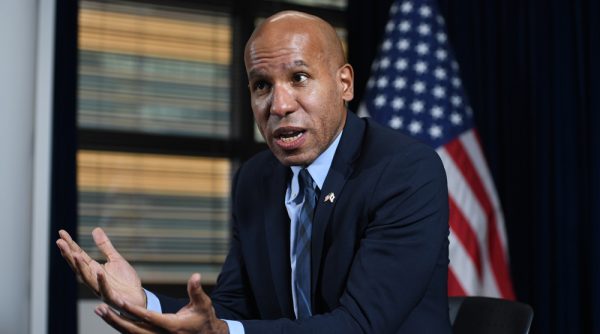
Brian Nelson, U.S. Treasury Undersecretary for Terrorism and Financial Intelligence
Press TV – July 29, 2023
The administration of US President Joe Biden has warned that Washington’s allies will face a “reputation risk” and potential isolation from lucrative deals in case of having links to the Islamic Republic of Iran and Russia.
Brian Nelson, the Treasury’s undersecretary for Terrorism and Financial Intelligence, raised the alarm in a meeting with Kenya’s President William Ruto on Friday.
He claimed that Iran and Russia were “isolated economically.”
“What we see is again of course Iran and Russia are isolated economically and either they are looking for partners and they are looking for new channels to have economic relationships,” Nelson claimed.
“From our perspective, that potentially creates a reputation risk and creates also a financial risk such that we are having a direct conversation about those risks that are associated with the expansion of economic relationship, which is a conversation not only are we having here but with countries around the world and we know that clearly is what Russia and Iran are seeking,” he added.
In what is construed as Washington’s direct interference in its allies’ affairs, Nelson warned them to be wary of the two countries’ economic reputation.
The warning comes as Iranian President Ebrahim Raeisi embarked on an African tour earlier in the month, which took him to Kenya, Uganda and Zimbabwe at the official invitation of his counterparts from the three host countries.
Heading a high-ranking delegation, Raeisi forged new alliances and discussed possible avenues for the improvement of trade and political ties.
Raeisi stressed the need for enhancing relations with African countries, saying that the states are gifted with abundant natural resources and mines, and enjoy many potentials and areas for closer cooperation.
Iranian Foreign Ministry spokesman Nasser Kana’ani described Raeisi’s continental tour as “a new turning point” which could bolster economic and trade ties with African nations.
A total of 21 documents on cooperation in different areas were signed during the three-state tour to Africa.
Putin suggests alternative route to deliver goods to Africa
RT | July 27, 2023
The International North-South Transport Corridor (INSTC) could provide Russian goods with a shorter route to Africa than the Suez Canal, President Vladimir Putin said on Thursday.
Addressing a plenary session of the Russia-Africa summit in St. Petersburg, Putin explained that Moscow is “actively engaged in reorienting transport and cargo flows towards the states of the Global South, including, of course, Africa.”
The INSTC, touted as an alternative to the Suez Canal, is a planned 7,200km multi-mode transit system that will connect ship, rail, and road routes for moving cargo between Russia, Iran, Azerbaijan, India, and Central Asia.
“The International North-South Transport Corridor that we are developing is aimed at providing Russian goods with access to the Persian Gulf and the Indian Ocean, from where they will be able to reach the African continent via the shortest sea route. Naturally, this corridor can also be used in the opposite direction – to supply African goods to the Russian market,” Putin stated.
Russia is seeking to ensure interconnectivity within the route and launch regular freight shipping lines, according to Putin. The volume of goods shipped via the INSTC is expected to almost triple over the next seven years, and the Russian leader suggested establishing a logistics hub for the corridor on the African coast.
“The opening of a Russian transport and logistics center in one of the ports on the African coast would be a good thing, a good start to this joint work. We consider it important to ensure wider coverage of the African continent with direct flights [and] participation in the development of the African railroad network – these are the key tasks that we propose to our African friends to work together on,” Putin said.
Russia has repeatedly said that the INSTC could become a substitute for the Suez Canal, the 193km waterway in Egypt that connects the Mediterranean Sea to the Red Sea. The popular route between Europe and Asia sees about 12% of global trade pass through it each day.
The construction of the INSTC began in the early 2000s, but developing it further has taken on a new impetus in light of Western sanctions, which have forced Russia to shift its trade flows from Europe to Asia and the Middle East.
The total cargo flow along the INSTC was 14.5 million tons in 2022, and the projection for this year is 17.6 million tons, according to Russia’s Transport Ministry. By 2030, the volume is expected to reach 41 million tons.
German deindustrialization continues unabated due to Berlin’s suicidal energy policies
By Drago Bosnic | July 26, 2023
For close to a year and a half, the German economy has been going through a sort of unraveling, primarily due to suicidal subservience to its masters in Washington DC. Since the start of Russia’s counteroffensive against NATO aggression in Europe, Berlin has been experiencing a plethora of major economic problems that soon translated to societal and political ones, causing further instability in the country. In turn, this has started causing issues with investments and the overall business climate in Germany, as relevant people and companies started losing confidence in Berlin’s capacity to keep its economy stable.
“The German economy is losing its DNA as a place to do business and foreign investors are keeping their distance, instead focusing their attention on developing markets as a result,” Toralf Haag, the CEO of German Voith Group, warned.
Haag, the head of the German technology company, gave an interview to Die Welt, in which he discussed the rapidly emerging economic problems affecting Germany. He told the newspaper that his Voith Group has been able to weather the storm so far and protect itself from the recession the German economy has been in since the last quarter. However, Haag also expressed worry regarding the German economy’s future, specifically in terms of competitiveness, energy security and foreign investment. He complained about “Germany’s aggressive energy transition away from traditional energy production such as coal and nuclear to renewables”, calling it “problematic”.
“There are ambitious goals, but only insufficient incentives and support to be able to achieve these goals. What we need is less bureaucracy, faster approval procedures and faster implementation. The way it is currently running, it will not work in the long run,” Haag stated.
When asked about the current state of business and investment opportunities in Germany, he wasn’t very optimistic, not only about the prospects for his company (based in Heidenheim, operating primarily in energy, automotive and paper industries), but the overall situation.
“Investment decisions in Germany are becoming increasingly difficult,” Haag said, adding: “To be honest, at the moment we tend to choose Eastern Europe, Asia or the USA when it comes to new production facilities because the costs for energy and personnel are particularly high in Germany while at the same time bureaucracy and regulation are increasing.”
He lamented that the Voith Group was forced to hire another 30 people in the management in the last year or two just to be able to handle all the new regulations and obligations introduced due to the ever-growing red tape.
“I would like to invite the employees from the ministries to check what effect their specifications have directly inside a company – whether they are practicable and sensible. In order for Voith to make significant investments in Germany again, the framework conditions must change fundamentally. Unfortunately, I don’t see that at the moment,” Haag stated.
He said that the danger of Germany’s further deindustrialization is “very great”, primarily because of the reduction of industrial activity due to the tendency of many German companies to relocate to other countries.
“We now see almost every day that industrial companies are no longer investing in Germany but in other regions of the world. Administration and engineering may remain in Germany, but production, which is particularly valuable for an economy, is increasingly taking place elsewhere,” Haag complained, further adding: “As a result, the German economy is not only losing its DNA but also any potential for the future. With its well-paid jobs, industry is the guarantor of prosperity. The prosperity achieved so far cannot be maintained with administrative jobs and the service sector alone.”
Indeed, Germany’s deindustrialization is an ongoing process that is virtually irreversible at this point. Haag’s concerns are backed by the official data and statistics on the actual state of Germany’s economy, particularly its industrial capacity. German industry has always been the main driving force of its economy, particularly its automotive and high-tech industries, all of which are highly dependent on stable energy supplies. However, while Haag blamed the obsessive transition to alternative energy sources (particularly renewables) for the major issues Germany is experiencing, he failed to mention Berlin’s subservience to Washington DC and the resulting halt in Russian energy imports.
The results have been catastrophic, to say the least. Last week’s survey by the BVMW (Federal Association of Medium-Sized Businesses) showed that over a quarter (26%) of all CEOs of medium-sized German companies are considering shutting down their businesses, while over a fifth (22%) have expressed readiness to move their companies abroad. The reasons cited for such decisions were largely the same as those mentioned by the Voith Group’s CEO. As a result, the country’s industrial output experienced a dramatic plunge in the first quarter, including a drop of nearly 11% in March alone, the largest monthly reduction in years. In addition, the growing inflation (currently standing at 6.8%) is exacerbating the problem.
By February this year, Germany has experienced a “price shock” of over 40% due to its anti-Russian sanctions policies, in what can only be described as perhaps the worst case of a boomerang effect in the history of Western sanctions warfare against the world. Russian energy imports were probably the best possible energy source for Germany, particularly as Berlin was trying to increase the share of renewables in its energy production. These imports made it possible to rely on natural gas as a relatively clean source, while renewables played an auxiliary role. However, with the suicidal anti-Russian sanctions in place, as well as the US terrorist attack on the Nord Stream pipelines, Germany’s energy security was gone virtually overnight.
Drago Bosnic is an independent geopolitical and military analyst.
Russian military experts on the current state of the war
By Gilbert Doctorow | July 25, 2023
There is a lot of cheerleading for Russian military successes on the Western alternative news portals. There is also a fair amount of cheerleading coming from front line Russian war correspondents on Russian state television. But, as I have indicated in past essays, the more serious Russian news programs such as Sixty Minutes and Evening with Vladimir Solovyov also give the microphone to military experts from among Duma committee chairmen and others who actually bear responsibility and accountability for the war effort and are not just talking heads. These speakers are much more restrained in their remarks on the war’s progress and I use this opportunity to share with readers what I hear from such sources. I will be drawing in particular on what was said on the Solovyov show two days ago.
The most sober remark was that it is a mistake to gloat over reports that the Ukrainians have run out of reserves and that their soldiers at the front are now just old men and youths, who are demoralized and surrendering to Russians when they can. Saying that is to diminish our respect for the heroism of Russian soldiers who are facing, in fact, peer equals in the Ukrainian forces. This is a tough war.
Moreover, the Ukrainian reserves are not yet exhausted. Out of the approximately 60,000 elite troops that received training in NATO countries only 30 – 40% were killed or wounded in the battle for Bakhmut and subsequent Ukrainian counter-attack after 4 June. The Russians will not begin their own massive offensive to knock out the Ukrainian military until they are confident that most of the Ukrainian reserves have been depleted in the ongoing war of attrition.
Accordingly, what we are witnessing these days is localized attacks that have tactical, not strategic importance. Yes, the Ukrainians make advances here and there of a few meters at great cost in lost lives of the soldiers. Yes, the Russians make advances of three or four kilometers here or there, at significantly lower cost. The Russians are biding their time. This is not a stale-mate as Western media keep telling their audiences.
Now let us turn to another aspect of the conflict that has grabbed the news over the past week when ground skirmishes between the hostile forces moved to the back pages of our newspapers. I have in mind the spectacular Russian missile attacks on Ukrainian port infrastructure in Odessa, in Nikolaev and yesterday in a river port of the Danube estuary just across from the Romanian border. These attacks are described by official Russian military sources as “revenge attacks” for the damage inflicted on one of the roadways of the Crimean bridge by Ukrainian surface drones that exploded under bridge supports.
Of course, that is just Public Relations talk to satisfy the Russian public and overwhelm local outrage at the failure to defend what is, finally, vulnerable infrastructure. No, the reason for the Russian destruction of the Ukrainian port facilities day after day lies elsewhere. The missile strikes were not so much intended to inflict pain on the Ukrainians as to avert what could be naval battles on the Black Sea and a quantum jump in risks of total war. And, en passant, they demonstrated that the latest sea-launched Russian cruise missiles with 3,000 km range that fly just 15 meters above the sea at Mach 3 cannot be intercepted by present Ukrainian air defenses.
Let us remember that when Vladimir Putin announced that the grain deal with Turkey and the United Nations would expire on 18 July, the RF Ministry of Defense announced that any vessels headed towards Ukrainian ports ostensibly to receive export grain would henceforth be considered as carriers of arms to Ukraine and were fair game for destruction by Russian forces.
Immediately after this Ukrainian President Zelensky went on air with his proposal to Turkey that the grain exports by sea continue without Russian participation. The safety of the vessels would be assured by Turkish and other NATO naval convoys. In the context of Erdogan’s latest turn to the U.S. and away from Russia, it appeared that Ankara was prepared to strike a deal with Zelensky. If that were done, then the chances of naval battles between Russian and NATO vessels in the Black Sea would have soared.
And so the Russians decided to destroy the Ukrainian port facilities active in the grain trade and so to preempt the dangers in view. Erdogan was compelled to draw back from any agreement with Zelensky on resumption of the grain corridor mission.
To be sure, export of grain by ship is the cheapest solution to bringing Ukrainian grain to world markets. But there are other means, namely by rail and truck, traveling north and west across Bulgaria or Romania or Poland. These logistics were used last autumn to move a lot of grain, but that grain tended to disappear into the nominal transit countries where it provoked outrage among the farming communities of these countries for underpricing their own grain crops. We may expect more of this political turmoil in Eastern Europe and protests against Ukraine in the coming months, and this also will serve the Russian objective of making Europe pay for its support of Kiev.
The U.S. State Department representatives have shrieked over the humanitarian disaster that the Russians were causing first by pulling out of the grain deal and then by destroying Ukraine’s export infrastructure in the Black Sea. Particular attention has been directed at the nations of Africa which purportedly represent a large proportion of the poor destination countries for Ukrainian grain.
It is interesting to note that notwithstanding vicious American propaganda against the Russian pull-out from the grain deal, the leaders of Africa have not gone for the bait. Today 47 African leaders are assembling in Russia for highest level strategic talks and deal-making with their Russian counterparts. The Russians are offering free of cost grain to the poorest countries and contracts for grain supply to the others at normal commercial terms. The certainty of supply is assured by what the Russians say will be their biggest grain harvest ever during this season.
Though I denounce the U.S. State Department policies under Antony Blinken as a force for evil in the present world context, I do not mean to say that each and every player there is a villain. I am amused to see on Russian television images of the speeches to the United Nations about the grain corridor delivered by Rosemary Di Carlo, a former U.S. career diplomat who since 2018 has served in the UN as Under-Secretary General for Political and Peace-building Affairs.
Once upon a time, in 1998, I had conversations with Rosemary when she was in charge of cultural affairs at the U.S. Embassy in Moscow. We sat together at the head table of a gathering of American graduate students and professors on the academic exchange with Russia directed by a Cold War holdover NGO, IREX, for which I was briefly country manager back then. Rosemary talked about the theater season in Moscow and we discussed possibilities for assisting Russian museums and other cultural institutions to adapt to the post-Soviet realities of low government funding and finding private sponsors. She held a Ph.D. in Slavic literature. She was one of the relatively few career diplomats who actually understood and spoke Russian. Her heart was in the right place and I very much doubt that she is working to do the Russians a bad turn today.
Moral of the story above from start to finish: very often things are not what they seem.
©Gilbert Doctorow, 2023
Grain Deal Replacement? Russia to Offer Africa New Food Security Plan
By Ilya Tsukanov – Sputnik – 25.07.2023
The second Russia-Africa Summit and Russia-Africa Economic and Humanitarian Forum will take place in St. Petersburg on July 27-28, with President Putin expected to meet with the leaders and representatives of 49 different African countries which have confirmed plans to take part.
Russia will be offering African countries an alternative to the defunct Black Sea Grain Deal to ensure the continent’s continued food security, Russian Foreign Ministry ambassador-at-large Oleg Ozerov has said.
“Of course, it will be not only a discussion as such, but the discussion with solutions for African nations so that they leave St. Petersburg with clear understanding how these issues will be resolved,” the Russian diplomat, who heads the Russia-Africa Partnership Forum, told Sputnik.
Russia has already provided assistance to some African countries earlier, including gratis fertilizer shipments to countries including Malawi and Kenya, Ozerov added.
Moscow suspended its participation in the Black Sea grain deal last week, citing Western countries’ failure to facilitate Russian food and fertilizer exports, and pointing out that just 3 percent of the grain shipped out of Ukraine under the agreement actually went to countries in need in Africa and Asia, with the vast majority instead ending up in Europe and Turkiye.
Failure to Bully Africa Into Submission
Western powers have failed to bully African countries into submission and to persuade them not to attend the upcoming summit in St. Petersburg, Ozerov said.
“Pressure is being exerted. It is of a permanent character. This pressure was exerted through various channels – through the diplomatic corps of Western nations, which literally on a daily basis are trying to dissuade representatives of African states from traveling to Russia, and which demand that African countries firmly pick a camp,” Ozerov said.
The West’s demands look “very strange,” the diplomat said, as they’re coming “from those countries which publicly proclaim democracy and freedom of choice, but in practice demand submission to their dictates.”
There are also other forms of pressure besides politics and diplomacy, the ambassador-at-large said, including economic and financial coercion, with “political conditions put in place for the provision of economic assistance to a number of states both through the International Monetary Fund and the World Bank, where the United States uses its dominant position to put forward political conditions.”
Similar conditionalities are being set up by the European Union, “when the allocation of loans is conditioned on the termination of contacts with the Russian side, or their reduction to a minimum, the non-attendance of a summit or the non-participation in [other] events,” Ozerov said.
Nevertheless, the diplomat stressed that Russia has not seen “African states following this dictate en masse.”
“It’s now obvious that the Western bloc cannot bend all other countries to its will, for objective reasons,” Ozerov said, likely alluding to the G7’s falling political and economic weight in the world as the BRICS countries slowly move the planet in the direction of genuine political and economic multipolarity.
Delegations from 49 of Africa’s 54 countries confirmed their plans to participate in the Russia-Africa Summit by last week, with about half being represented at the highest level – by heads of state or heads of government, according to the Russian Foreign Ministry.
Ozerov indicated that Russian and African leaders will be adopting an overarching policy declaration, joint action plan, as well as three documents on sectoral cooperation at the summit, with the latter concerned with “the fight against terrorism, the non-deployment of weapons in space and international information security.”
The Russian Foreign Ministry expects that these document will become a platform for joint work with African countries on the creation of a new configuration of international relations, based on equality and a multipolar world rather than on a “unilateral dictatorship,” the diplomat noted.
Security Cooperation
In the security sphere, the Russian ambassador-at-large pointed out that Russia has no military presence in Africa, with requests of certain African countries concerning only security assistance.
“We do not have military presence there. There are requests to Russia to provide security assistance. But it is not military presence. Military presence is when one sends troops. We are not sending them. We are sending instructors at the request of African states,” Ozerov said.
German Business Fears Best Days Behind It as Economy Crushed by Loss of Russian Energy
By Ilya Tsukanov | Sputnik | July 24, 2023
European industrial behemoth Germany has found itself among the nations hit hardest by the West’s attempt to “punish” Russia for its military operation in Ukraine, with industrial output slumping and the country sinking into a recession earlier this year after losing access to the cheap and reliable supply of Russian hydrocarbons.
German business, administrative, and government leaders have expressed widespread dissatisfaction with the government’s energy and economic policy, and expressed fears that the Central European industrial powerhouse’s economy may have “passed its zenith,” with its best days behind it.
A survey of 484 company board members, managing directors, government ministers, and other senior decision-makers by the Allensbach Institute for Public Opinion Research for German media has found that only 24 percent of the country’s managerial class is satisfied with Economic and Climate Minister Robert Habeck’s job performance, down from 91 percent just a year ago.
Fewer than a quarter of those surveyed expect things to improve over the next six months, with two thirds saying there’s “little chance” the country can restore its lost international competitiveness, and 76 percent saying they don’t believe Habeck or the Ministry of Economic Affairs has the interests of German business in mind to a sufficient degree.
Among the top five problems cited by managers which hamper Germany’s competitiveness are high energy costs (77 percent), a shortage of skilled workers (70 percent), excessive government regulation (68 percent), a backlog in digitization programs (65 percent), and dilapidated infrastructure (61 percent).
58 percent of those polled said Germany appears to have “passed its zenith” economically, with just 22 percent expecting the economy to pick up again.
About three quarters of respondents expressed criticism of Chancellor Olaf Scholz’s Traffic Light coalition (which includes Scholz’s Social Democratic Party, the Greens – represented by Habeck and Foreign Minister Annalena Baerbock, and the Free Democratic Party). Satisfaction with the coalition government has dropped from 62 percent in 2022 to 21 percent now, with 65 percent of those polled suggesting the coalition’s policies are “weakening the country.”
The Allensbach Institute conducted its survey between June 13 and July 7, with the 484 businessmen and officials polled including 89 board members of large companies, 18 ministers, and 28 heads of firms.
The German economy officially sunk into a recession in May after economic growth shrunk by 0.3 percent in the first three months of 2023.
In the aftermath of the escalation of the Donbass crisis into a full-blown Russia-NATO proxy war in Ukraine in February 2022, Germany has faced all the problems other Western countries have related to the decision to decouple themselves economically from Russia, like high inflation and spiking energy prices. However, as Europe’s main industrial economy, Germany’s crisis has been even more painful for local businesses, which have expressed concerns about the loss of competitiveness to other global behemoths like the US and China due to the energy-intensive nature of their products.
Washington added insult to Germany’s injuries last year after announcing federal subsidies to certain “green” industries, effectively trying to entice European industry to relocate to the United States for tax breaks and cheaper energy.
Russian President Vladimir Putin warned in May 2022 that decoupling the European economy from Russian energy resources would threaten the entire region with widespread deindustrialization and loss of competitiveness.
Last month, German Finance Minister Christian Lindner announced that cuts in the budget had forced Berlin to halt additional contributions to the European Union’s budget.
“Germany is both an important supplier for other European countries and an important buyer. A lasting recession in the German economy will certainly have significant effects on France, Italy, Spain, Belgium, and the Netherlands,” Paris-based economist Jacques Sapir told Sputnik earlier this month.
“If this recession lasts until next spring, the economies of the countries mentioned will also go into depression, which in turn will affect the German economy even more,” Sapir predicted, characterizing Berlin and Europe’s anti-Russian sanctions policy as “a form of suicide.”
Major fossil fuel producers cause rift among G20
RT | July 23, 2023
Saudi Arabia and Russia have prevented a consensus from emerging among the Group of 20 major economies on a road map to phase down the share of fossil fuels in the global energy mix, Reuters has reported.
The G20 energy transition ministers held a four-day summit that ended on Saturday in the Indian state of Goa where they discussed ways to achieve global net-zero greenhouse gas emissions.
The summit ended without a consensus because major fossil fuel producers, including Saudi Arabia and Russia, opposed a proposal to triple G20 countries’ renewable energy capacity by 2030, Reuters reported, citing its sources.
China, the world’s largest consumer of energy, as well as coal exporters South Africa and Indonesia, also opposed the plan, the agency added. India, the world’s most populous country and which currently generates 75% of its total power from coal, reportedly took a neutral stance on the issue.
As a result of the disagreements, the ministers issued an outcome statement and a chair summary instead of a joint communique. A joint communique is issued when complete agreement among members on all issues is achieved.
According to the statement, “different national circumstances” drove “some members” to support a phase-down of unabated fossil fuels, while “others had different views” and suggested that “abatement and removal technologies” would address environmental concerns associated with the use of fossil fuels.
“Fossil fuels currently continue to play a significant role in the global energy mix, eradication of energy poverty, and in meeting the growing energy demand,” reads the statement.
The document mentioned a number of technologies for countries to use “as per national priorities,” such as carbon capture, usage and storage (CCUS), a technology that can capture and make effective use of the high concentrations of CO₂ emitted by industrial activities.
The G20 comprises 19 nations and the European Union. The group’s aim is to address major issues related to the global economy, such as international financial stability and climate change. Together, the G20 member countries account for over three-quarters of both gross domestic product and global emissions.
Washington sanctions 14 Iraqi banks in new anti-Iran ‘crackdown’
The Cradle | July 20, 2023
The US Treasury Department and the Federal Reserve Bank of New York have barred 14 Iraqi banks from conducting transactions in US dollars as part of a “sweeping crackdown” to stop Iran and other sanctioned nations from acquiring the greenback, the Wall Street Journal (WSJ) reported on 19 July.
US officials say the new sanctions were issued after discovering “information” showing the banks “engaged in money laundering and fraudulent transactions, some of which may have involved sanctioned individuals and raised concerns that Iran could benefit.”
“We have strong reason to suspect that at least some of these laundered funds could end up going to benefit either designated individuals or individuals who could be designated,” a senior US official told the WSJ.
The banks targeted by the punitive measures are small institutions reportedly “heavily involved” in US dollar transactions.
According to Iraq’s Shafaq News, the targeted banks include the Islamic Advisor for Investment and Finance, the Islamic Qartas for Investment and Finance, Al Mustashar Islamic Bank, Elaf Bank, Erbil Bank, the International Islamic Bank, Trans-Iraq Bank, Mosul Bank, Al-Rajeh Bank, Sumer Commercial Bank, Trust International Islamic Bank, the World Islamic Bank, and Zain Iraq Islamic Bank.
The sanctions came only one day after the US State Department issued a new 120-day sanctions waiver to allow Baghdad to deposit payments for Iranian natural gas into non-Iraqi banks in response to criticism that the White House is responsible for recent power cuts at the height of Iraq’s blistering hot summer.
Since 2003, all Iraqi oil revenues have been paid into an account with the US Federal Reserve. Although Iraqis formed a sovereign government after the US invasion and occupation of their state, Iraq is still restricted from opening accounts for its oil earnings outside the US.
Given its dominance of the global financial system, Washington can control all funds of Iraq’s Central Bank through threats or sanctions, even though these funds are not deposited exclusively in US banks. Furthermore, Iraq’s oil funds, which in 2022 amounted to more than $90 billion, remain in one single account in New York Fed – the institution that two years ago unilaterally blocked Afghanistan from accessing its foreign reserves, plunging the nation into an unparalleled crisis.
Last November, the US Treasury cut off four Iraqi banks from access to dollars and imposed tight controls on wire transfers, sending the economy reeling.
To negate the effect of these unilateral measures, Baghdad has been looking to move trade away from the greenback and, in May, banned the use of the US dollar for both personal and business transactions.
Earlier this month, the commercial advisor to the Iranian embassy in Iraq, Abd al-Amir Rabihawi, revealed that Baghdad proposed that the two nations switch trade payments to the Iraqi dinar to combat US economic coercion.
Washington unable to sell stolen Iranian oil: Report
The Cradle | July 19, 2023
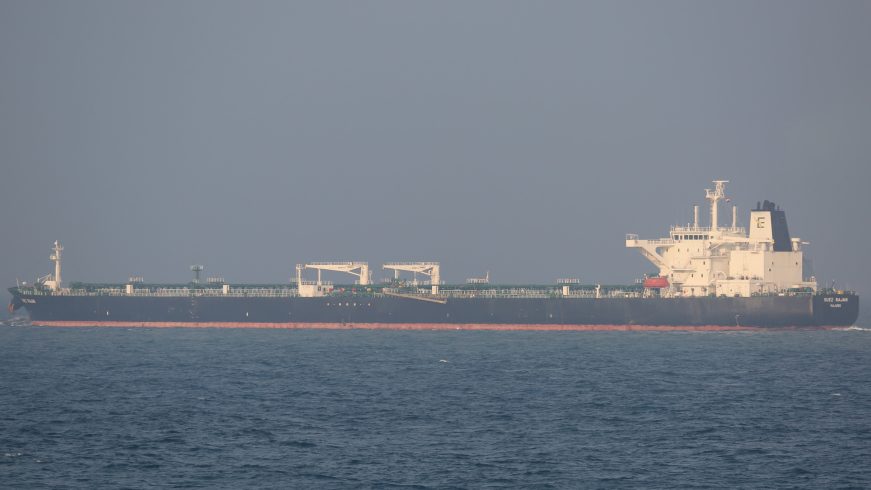
Oil firms in the US are “reluctant” to unload a shipment of stolen Iranian oil sitting in a Greek tanker off the coast of Texas, saying they are “too worried about Iranian reprisal” to touch the cargo, sources familiar with the matter told the Wall Street Journal (WSJ).
“Companies with any exposure whatsoever in the Persian Gulf are literally afraid to do it,” a Houston-based energy executive told the US outlet, adding that companies fear “the Iranians would take retribution against them.”
“I don’t know if anybody’s going to touch it,” another executive at a shipping company told the WSJ.
Washington illegally seized the Marshall Islands-flagged Suez Rajan supertanker in April of this year in what was described by the Pentagon as “a sanctions-enforcement operation.” Washington also charged the ship’s owner with “sanctions evasion” and directed the stolen cargo to the waters 65 miles off Galveston’s coast in the US.
According to the WSJ, the Suez Rajan came under Washington’s radar after an anti-Iran organization – the New York-based United Against Nuclear Iran (UANI) – provided information about the ship’s cargo to government officials. Furthermore, lawyers representing the families of victims of the 11 September attacks, “whom US courts have given the right to claim compensation from [Tehran],” filed a lawsuit against one of the ship’s former owners.
But while the US coast guard has given the all-clear to unload the shipment, companies that manage those transfers do not want any involvement in what Tehran has described as “maritime piracy.”
“That vessel’s emblematic of a much bigger drama that’s playing out about how we deal with Iranian threats,” a former US official told the WSJ.
The “drama” playing out between Washington and Tehran has seen the former eagerly try to restart talks with the Islamic Republic to “deescalate tensions” and possibly reach a new nuclear deal. But despite these diplomatic overtures from the White House, in recent weeks, the Pentagon has significantly bolstered its military presence in the Persian Gulf to confront “Iranian threats.”
Washington accuses Tehran of attempting to “hijack” foreign-flagged vessels traveling through the Strait of Hormuz and the Gulf of Oman. At the same time, Iran says the US navy protects “fuel smugglers” and ships involved in hit-and-run incidents.
“We categorically reject [Washington’s] baseless allegations of hijacking foreign oil tankers by Iran,” a representative for Iran’s mission to the UN told the WSJ. “Iran insists on the security and stability of the Persian Gulf and Strait of Hormuz. However, if oil tankers violate harmless passage, pollute the environment, or smuggle Iranian fuel, Iran does not hesitate to address those irregularities and infringements based on its laws as well as relevant international obligations.”
No more security guarantees for Black Sea navigation – Russian FM
RT | July 17, 2023
Russia will no longer provide security guarantees for civilian vessels traversing the formerly exempted corridor in the Black Sea, the country’s foreign ministry has announced. Earlier on Monday, the Kremlin stated that it would not extend the Black Sea grain agreement since its own food and fertilizer exports are still being blocked.
In a statement released on Monday, the Foreign Ministry said that this latest decision “means the recall of maritime navigation security guarantees, the discontinuation of the maritime humanitarian corridor [and] the reinstatement of the ‘temporarily dangerous area’ regime in the north-western Black Sea.” Russian diplomats went on to accuse Ukraine of using the humanitarian corridor to carry out attacks on Russian targets.
As for the Ukrainian grain shipments that were facilitated by the deal, the ministry claimed that the vast majority of those ended up in Europe, with several countries there allegedly lining their pockets.
The statement pointed out that the whole mechanism, which was launched last summer, had ostensibly been designed to help avert famine in poorer nations.
According to Moscow, key points in the Russia-UN memorandum, which was signed in lockstep with the Black Sea Initiative, have remained unfulfilled to date.
As a result, the ministry explained, Russian bank transactions, insurance and logistics were effectively paralyzed, meaning that Moscow could not sell its own produce and fertilizers on the international market. In one case cited in the statement, a shipment of Russian fertilizers donated free of charge to several African countries was blocked in the EU.
The foreign ministry concluded that in light of all these issues, the agreement no longer makes sense.
Moscow has suggested European nations should allow Ukraine to transfer its grain via their territory and potentially face the wrath of local farmers, or take action and address Russia’s grievances.
Should this happen, Moscow would be ready to return to the implementation of the agreement, the statement noted.
Earlier on Monday, Kremlin spokesperson Dmitry Peskov announced the termination of the deal. He also reiterated Russia’s readiness to return to the mechanism; however, he added that this would only happen if its interests were respected.
Last week, Russian President Vladimir Putin warned that Moscow would “suspend participation in this deal,” describing the arrangement as a “one-sided game all along.”
Featured Video

ARE PATIENTS BEING PROPERLY INFORMED ABOUT OZEMPIC?
or go to
Aletho News Archives – Video-Images
New Book
Breast Cancer: Before You Consent
A new Unbekoming paperback
Lies are Unbekoming | September 18, 2026
Peter Gøtzsche reviewed every randomised mammography screening trial ever conducted for the Cochrane Collaboration. Cochrane’s headline is that, assuming a 15% mortality reduction, one woman in 2000 avoids dying of breast cancer over ten years. Ten are overdiagnosed and treated. Two hundred experience false alarms.
But that headline assumes the reduction. When Gøtzsche looked only at the trials with adequate randomisation — the higher-quality ones — the reduction disappeared. No effect on breast cancer mortality. No effect on all-cause mortality.
This is the Cochrane finding, published in the establishment’s own database of systematic reviews.
No woman being asked to consent to a mammogram this week knows it.
That is why the new Unbekoming paperback exists. … continue
Blog Roll
 Aletho News
- ARE PATIENTS BEING PROPERLY INFORMED ABOUT OZEMPIC?
- US lawmaker blocks $2.8 billion weapons sale to Israel: Report
- Yemeni army claims responsibility for strikes on sensitive sites in Saudi capital, Aramco facilities in Yanbu
- Iran Judiciary issues indictments against 159 US, Israeli officials for assassination of Leader, commanders
- Turkiye revokes Iranian bank license under US sanctions campaign
- US-Denmark Agreement on Greenland Is ‘PR Stunt’ Ahead of Midterms
- Araghchi: Military intervention cannot create security; coercion cannot bring peace
- Fraud Squared
- Breast Cancer: Before You Consent
- Iran’s Plan to Shut Down AI in the Persian Gulf
- If Americans Knew
- Inside Gaza’s death trap of collapsing, bombed-out buildings
- The everyday items Israel bans from Gaza every day
- Inside the siege, the ruined buildings of Gaza – Daily Update
- Debunking The Claim That Macklemore Has A “History Of Antisemitism”
- CPJ demands release of arrested Palestinian-US journalist near Bethlehem
- Robert Kraft: The Billionaire Friend of Netanyahu Pulling The Strings Behind the Macklemore/Ed Sheeran Blow Up
- Columbia Administered Fund Gives Big Money to Pro-Israel Groups
- Deportation Case of Palestinian Activist Salah Sarsour Tests First Amendment
- ‘We Will Not Forget’: Palestinians Mark 44 Years since Sabra and Shatila
- Why do we let Zionists decide what we can and can’t say?
- No Tricks Zone
- New Study: ‘Global Drought Shows No Detectable Recent Acceleration Under Climate Warming’
- Economic Masterminds: German Socialists Suggest Taxing Productivity Gains Stemming From Using AI
- The South China Sea Has Not Been Cooperating With The Climate Change Narrative
- Energy Crisis: Germany Enters Heating Season With Historically Low Gas Reserve Fill Levels
- New Study: The Antarctic Ice Sheet Gained Mass From 2020-2024 Due To Staggering Snow And Ice Accumulation
- Study: Ocean Heating Rates From Thousands Of Years Ago ‘Dwarf’ Modern Ocean Heating Rates
- Climate Extremists Target, Attack Large-Scale Power Grid Infrastructure In Germany!
- New Study: Antarctic Ice Melt Has Contributed Less Than 1 Centimeter To Sea Level Rise In The Last 30 Years
- Fear Of Debate: Alarmist German Climate Scientist Calls On Mainstream Media To Discredit Skeptic Voices
- End-Of-August Arctic Sea Ice Extent Hasn’t Fallen In 20 Years, Official Data Show!
 Aletho News