EU could be ‘disgraced’ by confiscating frozen Russian assets – Austrian FM
RT | July 3, 2023
The EU must ensure it has a clear legal basis if it decides to confiscate frozen Russian assets and hand them over to Ukraine, Austrian Foreign Minister Alexander Schallenberg has warned. The diplomat argued that failure to do so would significantly tarnish the bloc’s reputation.
In an interview with Austrian broadcaster ORF published on Sunday, Schallenberg stressed that any such confiscation of Russian assets “must be watertight” from a legal viewpoint. He claimed that Austria and other EU members “are countries with the rule of law,” and that they must apply that approach in international relations. According to Schallenberg, this is one of the fundamental differences between Western European nations and Russia.
“Expropriation is a massive intervention, according to law,” the Austrian minister noted. “If we do this… as states with the rule of law we must make legal decisions,” Schallenberg insisted, adding that any such step could be challenged at the European Court of Justice in Luxembourg.
Should the appropriation of Russian assets not be deemed to have a legal basis, this would be an “enormous setback, and basically a disgrace” for the EU, the official concluded.
Regarding relations with Moscow in general, the minister said that geography dictates that Russia will remain part of European history, and that attempting to ‘cancel’ the country would be wrong. Schallenberg called for communication channels to remain intact, and claimed that emotions should not guide EU policies toward Russia.
Bloomberg reported last month that EU leaders had considered plans to impose a windfall tax on profits generated by more than €200 billion ($217 billion) of frozen Russian central bank assets to aid Ukraine’s reconstruction. While the option had reportedly appeared to be the least problematic, some participants had still raised concerns over its legality, Bloomberg claimed.
In mid-June, the European Central Bank spoke out against a windfall levy, warning that it could undermine confidence in the euro as a global currency and hurt financial stability.
Back in April, the European Commission ruled that member states could not seize frozen Russian assets outright. The EU and its allies froze hundreds of billions of euros of Russian central bank holdings as well as private assets soon after Moscow launched its military campaign against Ukraine in February of 2022. Russian officials have repeatedly described any seizure of the country’s assets as theft and illegal under international law.
Siemens Energy stocks fall 36% — turbines are degrading faster than expected
By Jo Nova | June 26, 2023
It’s a bloodbath in the wind industry.
Despite the wind being free, collecting it appears to cost a fortune. Siemens Energy lost a third of its stock price on Friday. Just like that, seven billion dollars in market value disappeared.
Only a month ago they were expecting to break even, as the Wall Street Journal reports, the executives appear to have been blindsided by the rapidly escalating maintenance costs. The problem is so bad, and perhaps fundamental, that shareholders in other turbine manufacturers are selling out. Vestas Wind fell 7% Friday.
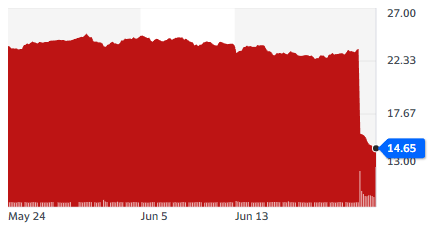
Siemens Energy Share Price, Yahoo Finance
The promise was that wind turbines would keep getting cheaper as they got bigger and better. Instead, issues are appearing now even in new installations, and people are starting to wonder if they’ve made the turbines too big too fast. The bearings and blades are wearing out, and the costs to fix them are crippling.
Clean Energy’s Latest Problem Is Creaky Wind Turbines
Carol Ryan, Wall Street Journal
Shares in Siemens Energy plunged by a third after it said turbine components are degrading faster than expected
The news isn’t just a blow for the company’s shareholders, but for all investors and policy makers betting on the rapid rollout of renewable power.
The creaky components, which affect 15% to 30% of the installed onshore fleet, will be expensive to fix. Management thinks the cost could run upward of €1 billion, equivalent to $1.09 billion, effectively wiping out more than a third of the profit the company is expected to make doing maintenance on wind turbines it has already installed, according to Bernstein analyst Nicholas Green.
These are not words CEO’s ever want to use: ” it’s much worse than even what I have thought possible”:
Siemens Energy Shares Plunge
Michelle Fitzpatrick, Barrons
In a call with reporters, Siemens Gamesa CEO Jochen Eickholt said “the quality problems go well beyond what had been known hitherto”.
“The result of the current review will be much worse than even what I would have thought possible,” he added.
In the call with reporters, Siemens Energy CEO Christian Bruch called the developments “bitter” and “a huge setback”.
The company has seen just “a handful of failures” across a fleet of several thousand turbines, he said, but it now had to assess “what to expect over the next 20 years” and which preventative measures to take.
To put it mildly – It’s either the rotor, the bearings “or the design” — could it be worse? It could — Siemens has already built 132 GW of wind plants — mostly onshore — and these new unforeseen problems may affect as many as 15 to 30% of their turbines. The maintenance costs to meet the warrantees they have already made are substantial. On top of that Siemens has “an order backlog of 34 billion euros”. This could be a very big hole…
Factbox: What are the issues with Siemens Gamesa’s wind turbines?
By Nina Chestney and Christoph Steitz, Reuters
On Friday, Siemens Gamesa said that while rotor blades and bearings were partly to blame for the turbine problems, it could not be ruled out that design issues also played a role. It said the problems could affect as many as 15-30% of its turbine fleet.
The company said quality problems “go beyond what we were previously aware of, and they are directly linked to selected components and a few, but important, suppliers”.
It’s a perfect storm of rising supply costs and unexpected maintenance costs:
The company was already being hit with issues such as the rising costs of steel and other key raw materials when the news of its wind turbine failures went public.
Chief executive, Christian Bruch has told reporters “Even though it should be clear to everyone, I would like to emphasise again how bitter this is for all of us”.
EU’s New Anti-Russian Asset Grabbing Scheme is ‘Theft’, ‘Act of War’
By Ilya Tsukanov – Sputnik – 30.06.2023
Hundreds of billions of dollars in Russian assets were trapped abroad in 2022 after the Ukrainian crisis escalated into a full-blown NATO-Russia proxy war. Earlier this year, reports in US business media indicated that the US and its allies were having trouble locating a substantial chunk of these funds.
Belgium plans to collect 3 billion euros a year in windfall profits from Russian assets frozen in the country’s coffers to give to Ukraine for “reconstruction” purposes, Prime Minister Alexander De Croo announced Friday.
“We are working on a windfall tax on profits,” De Croo told reporters after meeting with other EU leaders at the bloc’s summit in Brussels.
A day earlier, De Croo explained that Belgium was “very involved” in the issue because upwards of 90 percent of the Russian assets frozen in the EU’s jurisdiction are trapped in Belgian banks.
“The use of these funds for the military needs of Ukraine and its reconstruction makes sense from an economic point of view and from a moral point of view,” the Belgian leader assured.
The European Commission estimated in May that the bloc has frozen over 200 billion euros in assets belonging to Russia’s Central Bank, plus 24.1 billion owned by Russian companies, tycoons and other individuals.
US business media first reported on the possibility of collecting interest from Russian assets trapped abroad to fund Ukraine earlier this year, after concluding that there was no “reliable legal path” to allow for the funds to seized outright without undermining rule of law and international trust in European financial institutions.
‘Robbery’ in Broad Daylight
Asked to comment on Brussels’ plans, Christopher C Black, an international criminal and human rights lawyer with over 20 years’ experience under his belt, said that if realized, they would constitute “theft twice over” – first by seizing the money in the first place, and then preventing Russia from collecting its due interest.
“The crime of theft becomes compounded with insult by giving the money to Kiev to finance the war against Russia, and if the money is so transferred by EU government order, it will be [an] act of war – since a nation supplying financial support to another nation to carry on a war can be considered under international law as a party to the war,” Black explained.
Very Painful… for EU
Such theft would constitute a blatant violation of the United Nations Charter and the laws of war, and would undermine the rule of law in Europe, according to the legal expert, “because if they can do this to Russia they can do it to any citizens’ assets.”
The scheme would show that in effect, “no one is protected,” and that contracts between clients and banks in the EU’s jurisdiction effectively “mean nothing” because they can be broken at will and for any reason, Black said. This, in turn, threatens to undermine the credibility of EU banks among foreign depositors, he added.
The observer isn’t surprised by Belgium’s plans, pointing out that the EU and other Western countries have already systematically violated their own laws and international law, by seizing Venezuela’s gold and oil company assets, for example, or keeping Iranian assets frozen in Western banks for decades on end.
Russian Retaliation
Black expects Russia to “retaliate in kind if possible, that is if assets of the EU are located in Russia.”
Otherwise, Russia may also “have to think of other measures to force the return” of its assets, “either through diplomacy and the help of friendly nations (for example by getting them to agree to withdraw their deposits from EU banks unless the Russian assets are released)… or further reducing energy supplies to the EU,” the legal expert suggested.
“The BRICS process can help in the future as the BRICS Development Bank is further established, and a single currency can also help break Western financial domination of other countries,” Black added.
“But so long as nations continue to deposit their assets, gold or money, bonds, etc. in EU or other Western banks, they will face the real threat of having those assets seized whenever the West decides it is in their interests to do so,” the observer summed up.
Over $300 billion in Russian assets were reported frozen in Western banks’ coffers in 2022, most of them belonging to the Russian Central Bank. In late 2022, a senior financial expert with the Atlantic Council* estimated the actual amount of money seized was closer to $80-$100 billion, and that the US and the EU have had trouble finding the frozen funds. In February, US business media reported that only about $36.5 billion of the frozen assets had been found so far.
Last year, Russian President Vladimir Putin characterized the West’s asset seizure an “unseemly business,” and said “stealing other people’s assets has never brought anyone good.”
Before the escalation of the Ukrainian crisis, Putin repeatedly warned Russian businessmen to keep their money in Russia.
EU to renew Iran sanctions under defunct nuclear deal: Report
The Cradle | June 29, 2023
European officials recently informed Iran that they plan to renew EU ballistic missile sanctions set to expire in October, according to sources in the know that spoke with Reuters.
The renewal will be conducted under the parameters of the defunct Joint Comprehensive Plan of Action (JCPOA), which officials say Iran “violated” by moving forward with developing its nuclear energy program after the US unilaterally exited the deal in 2018 and reimposed crushing sanctions.
Other reasons the EU is giving for renewing the sanctions are Russia’s use of Iranian drones in Ukraine and “the possibility of Iran transferring ballistic missiles to Moscow.”
“The Iranians have been told quite clearly [of plans to keep the sanctions], and now the question is what, if any, retaliatory steps the Iranians might take and [how] to anticipate that,” a western diplomat told Reuters on condition of anonymity.
The decision to uphold the sanctions would be the first significant instance of the E3 group of nations — France, Germany, and the UK — not abiding by the terms of the nuclear deal.
EU mediator Enrique Mora, who co-ordinates talks to restore the 2015 deal, raised the issue of keeping the sanctions when he met Iranian nuclear negotiator Ali Bagheri Kani in Doha on 21 June, but the latter reportedly refused to discuss the matter, according to an unnamed Iranian official who spoke with Reuters.
“Maintaining sanctions, in any capacity and form, will not hinder Iran’s ongoing advancements,” the Iranian official is quoted as saying. “It serves as a reminder that the west cannot be relied upon and trusted.”
Since 2017, the Islamic Republic has significantly advanced with its ballistic missile and satellite launch programs. The country last month made waves by revealing a hypersonic missile with a potential 2,000-km range.
This progress, on top of Tehran’s enrichment of uranium at 60 percent purity and a China-brokered détente with Saudi Arabia, set off alarms in the west and pushed Washington to begin ‘de-escalation talks‘ with Iran.
EU delivers ‘neither peace nor prosperity’ – Hungarian PM
RT | June 29, 2023
The Hungarian government has blasted the EU, declaring that in its current state it brings “neither peace nor prosperity” to member states. Prime Minister Viktor Orban, who was attending a summit of bloc leaders in Brussels, offered a similar assessment of the bloc.
Orban’s position was relayed via his government’s official Facebook account on Tuesday, the first day of the high-profile two-day gathering in Brussels. The statement apparently came from an interview that the Hungarian leader had given to the German media earlier in the week.
Asked by the German tabloid Bild whether he could explain the rising popularity of Alternative for Germany (AfD), a right-wing political party, the prime minister cited disillusionment with the EU as a possible cause.
“The European Union was created for two reasons. The first is peace – and now there is war. The second is prosperity – the economy is in an increasingly worrying state, it is difficult to maintain competition and it is increasingly difficult to ensure prosperity for people,” Orban argued.
“That is why I see the so-called protest parties gaining strength everywhere in Europe. I’m not talking about Germany alone, I’m talking about Europe in general,” he added.
Hungary stands out among EU members for having consistently criticized the West’s approach to the Ukraine conflict. Arming and training Kiev’s troops and punishing Russia with economic sanctions have not brought a truce any closer and have caused serious damage to the bloc itself, according to Budapest.
Ukraine is one of the top items on the agenda of the EU summit. The bloc’s leaders are expected to offer some form of security guarantees to Kiev and provide assurances of continued military assistance.
Orban told Bild that Ukraine has no chance to win against Russia regardless of the amount of Western money that is poured in, because eventually Kiev will run out of manpower.
Wind costs will remain high
By Gordon Hughes | Net Zero Watch | June 26, 2023
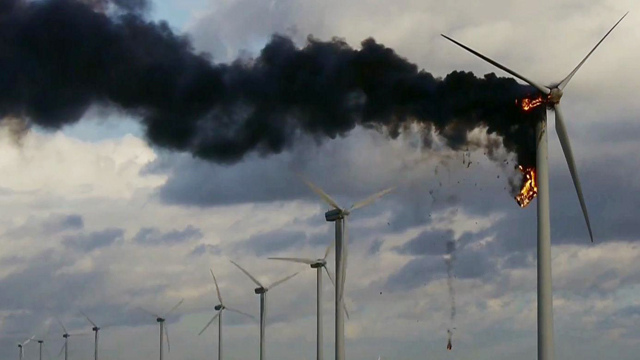
The crash in Siemens Energy’s share price on Friday has admirably highlighted an issue with wind costs that colleagues and I have been examining for more than a decade. The painful facts are that (i) wind generation, both onshore and offshore, is more expensive than we are being told and (ii) the performance of wind turbines tends to deteriorate with age, in significant part because of the kind of failures reported by Siemens Energy. There is strong evidence to support these conclusions, which has been presented in reports published by the Renewable Energy Foundation in 2012 and in 2020 for the UK and Denmark, with updates provided by the Global Warming Policy Foundation and Net Zero Watch.
The news about Siemens Energy brings a strong inclination to say ‘you were warned’. However, their travails are a symptom of a much more widespread disease, which affects all of us, either directly through the costs of electricity or indirectly as the owners of wind farms (via pension funds and other investment vehicles). The plunge in the share price of Siemens Energy is dramatic, but that may be written off as a temporary market response to disappointed expectations. We need to look beneath the immediate story to understand the reasons for the disappointment and their implications for the prospects for wind generation.
The announcement by Siemens Energy focused on higher-than-expected failure rates for their onshore turbines. These were ascribed to problems with key components, but newspaper reports suggest more systematic design faults in recent generations of large turbines. Previous announcements have referred to problems with offshore turbines, and the market reaction suggests few believe that the current problems are confined to onshore turbines. Further, while each of the major turbine manufacturers has its own specific problems, Siemens Energy is not unique in experiencing high warranty costs due to higher than anticipated failure rates.
In increasing order of importance, there are three aspects to note:
(a) Siemens Energy and other manufacturers have given warranties on performance that won’t be met because of higher failure rates. They will incur additional expenses, either to replace components or to compensate wind farm operators for any resulting underperformance. Those costs are the basis for the write-offs that Siemens Energy has had to take. Investors will be painfully aware that the company has been declaring profits when they sell wind turbines, but without making adequate provision for future warranty repair costs.
In accounting terms this is known as recognising future profits for new contracts. When it becomes clear that the contracts will be less profitable, the company must write down the value of previously reported profits and, thus, the value of the assets on its balance sheet. In effect, though perhaps entirely innocently, the company has been misleading investors about its past and current profitability. Senior managers should be feeling very uncomfortable about their positions since the problem was predictable (and predicted).
(b) Warranties have a limited period – often 5 to 8 years – but the higher failure rates will persist and affect performance over the remainder of the life of the wind farms where the turbines have been installed. Their future opex costs will be higher than expected, and their output will be significantly lower. This will reduce their operational lifetimes, which are determined by how the margin between revenues and costs changes as wind farms get older. Lower revenues and higher costs bring forward the date at which replacement or repowering is necessary. These changes will reduce, often quite substantially, the returns earned by the financial investors – pension funds and other – to whom operators sell the majority of the equity in wind farms after a few years of operation.
(c) Siemens Energy and other manufacturers may argue that they can – with time – fix the component and design problems which lead to high failure rates. They may well be correct. The history of power engineering is littered with examples of new generations of equipment which experienced major problems when first introduced but which were eventually sorted out. Many companies have found themselves in severe financial difficulties or even forced into bankruptcy by these “teething” problems. The error in this case has been to pretend that wind turbines were immune to such failures.
The whole justification for the falling costs of wind generation rested on the assumption that much bigger turbines would produce more output at lower capex cost per megawatt, without the large costs of generational change. Now we have confirmation that such optimism is entirely unjustified – the whole development process has been a case of too far, too fast. Again, this was both predictable and predicted. The idea that wind turbines are immune to the factors that affect other types of power engineering was always absurd. The consequence is that both capital and operating costs for wind farms will not fall as rapidly as claimed and may not fall significantly at all. It follows that current energy policies in the UK, Europe and the United States are based on foundations of sand – naïve optimism reinforced by enthusiastic lobbying divorced from engineering reality.
In the longer term it is (b) and (c) that are the big story. With respect to (a), serious analysts have long since recognised that claims made about future wind costs and performance by the wind industry should not be taken seriously. It has been obvious that they were kidding themselves and their investors ever since the last 2010s. Unfortunately, we have now been tied into a high energy-cost future, with all the implications that has for the economy and standards of living.
DeSantis Says Would Resume Keystone XL Pipeline if Elected US President in 2024
Sputnik – 26.06.2023
WASHINGTON – Florida Governor and 2024 Republican presidential hopeful Ron DeSantis said on Monday that he would resume work on the Keystone XL oil pipeline between the United States and Canada, in addition to permitting other pipeline projects, if he is elected to be the next US president.
“Hundred percent, yeah. It’s a no-brainer,” DeSantis said during remarks in Texas, when asked whether he plans to restart work on the project.
DeSantis pointed out that pipelines are the safest way to transport energy and pointed to the latest derailment of a train with tanker cars over the weekend in the US state of Montana.
DeSantis also said he plans to permit “a lot of pipelines,” noting that such a move would also be good for national security.
The Keystone pipeline system transports oil from Western Canada to refineries in the United States. The system currently has three phases of the project operational, but with the fourth, Keystone XL, was suspended by the Biden administration.
Keystone XL would run through the state of Montana, where US oil would be added to the system. President Joe Biden rescinded a construction permit for the pipeline granted by former President Donald Trump in 2019.
Last year, the Biden administration said it had no plans to restart the Keystone XL project even amid concerns about rising gas prices and volatility in the energy market.
Fragmentation of World Economy Now Irreversible – Russia’s Representative at IMF
Sputnik – 25.06.2023
The use of international trade and the dollar as a weapon by the West makes the fragmentation of the world economy inevitable, Aleksei Mozhin, Executive Director for Russia at the International Monetary Fund (IMF), told Sputnik.
“The blatant use by the West as a weapon of international trade, finance, as well as the dollar and the euro itself, makes the fragmentation of the world economy not only inevitable, but also irreversible,” Mozhin said.
He pointed out that Western representatives at the IMF are trying to avoid this problem, and the leadership of the international organization cannot ignore the pressure that Western participants are exerting on it. As an example of the fragmentation of the world economy Mozhin mentioned the consequences of Western sanctions introduced against Russia.
“We have learned this lesson, we will never allow ourselves to be so dependent on imports again, at least in the strategic sectors of the economy,” Mozhin told Sputnik, adding that the whole world is now aware that globalization is forcing all countries to follow the path of specialization to the detriment of economic diversification and that the process of deglobalization will continue.
DC Scholars: Ukraine Conflict Shows World Has Grown Weary of US Hegemony
By Ekaterina Blinova – Sputnik – 24.06.2023
Despite having the largest military budget in the world and being the largest operator of military bases abroad, the US is far from being a global hegemon, argues a DC-based think tank Quincy Institute for Responsible Statecraft.
Over the past decades Washington has demonstrated a capacity for mass destruction – in Korea, Vietnam, Afghanistan, Iraq, Libya and elsewhere – but “it has won no more than Pyrrhic victories” which led to the erosion of trust in Pax Americana both at home and abroad, according to Responsible Statecraft scholars.
The US military spending reached $876.9 billion in 2022, while the nation also operates a whopping 750 foreign military bases. Still, Washington is incapable of persuading the Global South to join anti-Russia sanctions over the latter’s special military operation in Ukraine, the think tank remarks. “If hegemony means the capacity to get other countries to comply with one’s demands, the United States is far from being a global hegemon,” the report notes.
Judging from the so-called Pentagon leak, even some US allies and partners demonstrated hesitance and unwillingness to provide the Kiev regime with shells, jets and armored vehicles. Meanwhile, most nations of the Global South shrugged off the US calls for slapping sanctions on Moscow as contradicting their national interests.
US political observers emphasize that six nations in the Global South – namely, India, Brazil, Turkey, Indonesia, Saudi Arabia, and South Africa – are set to decide the future of geopolitics and insist that the Biden administration needs to win their hearts and minds. At the same time, European commentators argue that developing nations have the right to remain neutral and non-aligned.
For instance, in June 2022, India’s External Affairs Minister Dr S Jaishankar shredded the West’s claim that New Delhi was “sitting on the fence.” According to the minister, India is entitled to its opinion when it comes to the Russo-Ukrainian conflict.
Likewise, the Association of Southeast Asian Nations (ASEAN) has chosen to collaborate with both the US and China, instead of taking sides. Moreover, ASEAN nations are active participants of Beijing’s Belt and Road Initiative (BRI) regardless of Washington’s attempts to maintain its dominance in the region and curb China’s influence in the Asia Pacific.
Per DC scholars, the emerging trend was articulated by Brookings Institution fellow Fiona Hill, former Deputy Assistant to the President of the United States, in May 2023:
“The war in Ukraine is perhaps the event that makes the passing of Pax Americana apparent to everyone. … [Other countries] want to decide, not be told what’s in their interest. In short, in 2023, we hear a resounding no to US domination and see a marked appetite for a world without a hegemon,” she said at a conference in Tallinn, Estonia
According to Hill, the Global South’s resistance to the US and the EU’s demands to slap sanctions on Moscow is nothing short of “an open rebellion.” She noted that “this is a mutiny against what they see as the collective West dominating the international discourse and foisting its problems on everyone else, while brushing aside their priorities on climate change compensation, economic development, and debt relief.”
Western observers also acknowledge that the world’s center of gravity is steadily shifting east, adding that the Biden administration has so far sought to avert this trend by trying to establish “a lasting technological lead over China” and beefing up the US military in Western Pacific.
However, “most developing countries, including emerging powers in the Global South, are no longer willing to make zero-sum choices” between Washington and its geopolitical rivals, DC scholars underscore, urging American policymakers to accept the reality that the US is no longer “the indispensable nation.”
The ramifications of EU efforts to isolate China
Press TV – June 22, 2023
The European Commission is proposing a €10 billion fund to develop strategic technologies in order to become less dependent on high tech imports from China.
It also wants to block EU nations from dealing with China when it comes to so called sensitive technologies. The claim is that it’s to reduce risk.
It would appear that positive ties being advanced outside of the West’s control are putting Washington and Brussels on edge.
Trade between the EU and China is worth an incredible 2.3 billion euro per day. Some analysts believe the US is trying to scupper this vital economic link.
During recent European Parliament debates, lawmakers have heavily criticized the EU’s policy towards Russia and China.
The fallout from energy sanctions against Moscow is severely harming EU citizens and businesses.
At a time of dire economic pressures, the European Commission wants to prioritize the government in Kyiv.
Analysts say vested interests in the United States are benefiting most from deteriorating EU-Russia and EU-China relations.
EU leaders are due to hold a summit at the end of next week to discuss the Commission’s trade proposals.
It’s already clear there are major concerns in member states because current arrangements with China are so lucrative.
It is reported that some EU countries believe the European Commission is overstepping the mark.
US should pay the bill for devastation in Ukraine – Russian envoy
RT | June 22, 2023
The Ukraine conflict was instigated by the US and other Western countries, and as such it is up to Washington to pay for the reconstruction of the ravaged nation, Russia’s ambassador to the US, Anatoly Antonov, claimed on Wednesday.
Antonov was asked to comment on a statement by US Secretary of State Antony Blinken, who, while speaking at a Ukraine reconstruction conference in London, claimed that “Russia will eventually bear the cost” of restoring the country.
The Russian diplomat pushed back against Blinken’s remarks, saying the conflict between Moscow and Kiev was “the result of years of deliberate efforts by the United States to create a hotbed of tensions at our borders, to turn Ukraine into ‘anti-Russia,’” which involved a Western-backed coup in the Ukrainian capital in 2014.
Antonov claimed that the US was actively fanning hostilities by pumping Kiev with weapons, while nipping any peace initiatives in the bud. “This means that the administration is fully responsible for what is happening in Ukraine. That’s why it is up to the United States to rebuild the country,” he stated.
He went on to state that while it is possible to restore houses destroyed by American weapons, it will be much more difficult to erase the humanitarian consequences of the conflict.
“How will… Washington evaluate the lives of innocent people? How is the United States going to settle accounts with the Ukrainians, whom they are driving into reckless frontal assaults in today’s so-called counter-offensive?” the envoy asked.
While Western countries have pledged billions of dollars in reconstruction assistance to Ukraine, some of Kiev backers have also called for the seizure of Russian assets that were frozen after the start of the Ukraine conflict, to be used for reconstruction. While legal hurdles have so far prevented this from happening, Kremlin Press Secretary Dmitry Peskov has described the initiative as “pure banditry.”
Qatar ready to ink new 27-year gas deal with China
The Cradle | June 20, 2023
China National Petroleum Corporation (CNPC) and QatarEnergy are expected to sign a 27-year agreement, which will allow China to purchase 4 million metric tons of liquefied natural gas (LNG) a year, Reuters reported today, 20 June.
Sources familiar with the deal told Reuters that CNPC also will take an equity stake in the eastern expansion of Qatar’s North Field LNG project. The stake is the equivalent of 5 percent of one LNG train with a capacity of 8 million tonnes per year.
Despite selling equity shares in the North Field expansion to foreign firms, QatarEnergy plans to retain a 75 percent stake in the project, which will cost at least $30 billion, including the construction of liquefaction export facilities.
In April, China’s Sinopec signed a deal to become a “value-added” partner in Qatar’s North Field expansion project.
The project, with a total investment cost of $28.75 billion, aims to raise Qatar’s LNG export capacity from the current 77 million metric tonnes per annum (MTPA) to 110 MTPA, making it one of the largest LNG projects in the world, Sinopec said in a statement.
“The cooperation will help Sinopec optimize the energy consumption mix in China and secure a long-term and reliable clean energy supply to the nation. The partnership represents another model of bilateral cooperation between China and Qatar,” Sinopec said.
China is seeking increased imports of LNG from Qatar, the world’s top LNG supplier, in part to reduce dependence on LNG imports from the United States, the world’s second-largest supplier.
Some US lawmakers have touted Chinese reliance on US-produced LNG as an opportunity to exert influence over the nation with the world’s second-largest economy.
“If you want to think of it geopolitically, why wouldn’t we want China dependent on our natural gas for their own economy?” House Speaker Kevin McCarthy said in an interview reported by Politico. “Would the world not be safer, and would we not be stronger? Why wouldn’t we create more American jobs at the same time?”
However, Senator Bill Cassidy of Louisiana explained that Chinese purchases of US-produced LNG are mutually beneficial, stating that “China gets guaranteed shipments at a certain price by providing upfront capital. That, in turn, helps U.S. companies build export terminals, which drives demand for more US drilling in places like Louisiana and Texas.”
“Right now, China is a frenemy,” he said. “If they – just like India, South Korea, Japan, the EU – are purchasing or buying, helping to pay for the capitalization of LNG export terminals, well, that’s a good thing.”
Competition for LNG has intensified since the start of the Ukraine war in February 2022. Europe needs new sources of natural gas to help replace the Russian pipeline gas that used to make up almost 40 percent of the continent’s imports. Europe cut off its own supply of Russian gas by imposing sanctions against Moscow after the start of the war.
Featured Video

ARE PATIENTS BEING PROPERLY INFORMED ABOUT OZEMPIC?
or go to
Aletho News Archives – Video-Images
New Book
Breast Cancer: Before You Consent
A new Unbekoming paperback
Lies are Unbekoming | September 18, 2026
Peter Gøtzsche reviewed every randomised mammography screening trial ever conducted for the Cochrane Collaboration. Cochrane’s headline is that, assuming a 15% mortality reduction, one woman in 2000 avoids dying of breast cancer over ten years. Ten are overdiagnosed and treated. Two hundred experience false alarms.
But that headline assumes the reduction. When Gøtzsche looked only at the trials with adequate randomisation — the higher-quality ones — the reduction disappeared. No effect on breast cancer mortality. No effect on all-cause mortality.
This is the Cochrane finding, published in the establishment’s own database of systematic reviews.
No woman being asked to consent to a mammogram this week knows it.
That is why the new Unbekoming paperback exists. … continue
Blog Roll
 Aletho News
- ARE PATIENTS BEING PROPERLY INFORMED ABOUT OZEMPIC?
- US lawmaker blocks $2.8 billion weapons sale to Israel: Report
- Yemeni army claims responsibility for strikes on sensitive sites in Saudi capital, Aramco facilities in Yanbu
- Iran Judiciary issues indictments against 159 US, Israeli officials for assassination of Leader, commanders
- Turkiye revokes Iranian bank license under US sanctions campaign
- US-Denmark Agreement on Greenland Is ‘PR Stunt’ Ahead of Midterms
- Araghchi: Military intervention cannot create security; coercion cannot bring peace
- Fraud Squared
- Breast Cancer: Before You Consent
- Iran’s Plan to Shut Down AI in the Persian Gulf
- If Americans Knew
- Inside Gaza’s death trap of collapsing, bombed-out buildings
- The everyday items Israel bans from Gaza every day
- Inside the siege, the ruined buildings of Gaza – Daily Update
- Debunking The Claim That Macklemore Has A “History Of Antisemitism”
- CPJ demands release of arrested Palestinian-US journalist near Bethlehem
- Robert Kraft: The Billionaire Friend of Netanyahu Pulling The Strings Behind the Macklemore/Ed Sheeran Blow Up
- Columbia Administered Fund Gives Big Money to Pro-Israel Groups
- Deportation Case of Palestinian Activist Salah Sarsour Tests First Amendment
- ‘We Will Not Forget’: Palestinians Mark 44 Years since Sabra and Shatila
- Why do we let Zionists decide what we can and can’t say?
- No Tricks Zone
- New Study: ‘Global Drought Shows No Detectable Recent Acceleration Under Climate Warming’
- Economic Masterminds: German Socialists Suggest Taxing Productivity Gains Stemming From Using AI
- The South China Sea Has Not Been Cooperating With The Climate Change Narrative
- Energy Crisis: Germany Enters Heating Season With Historically Low Gas Reserve Fill Levels
- New Study: The Antarctic Ice Sheet Gained Mass From 2020-2024 Due To Staggering Snow And Ice Accumulation
- Study: Ocean Heating Rates From Thousands Of Years Ago ‘Dwarf’ Modern Ocean Heating Rates
- Climate Extremists Target, Attack Large-Scale Power Grid Infrastructure In Germany!
- New Study: Antarctic Ice Melt Has Contributed Less Than 1 Centimeter To Sea Level Rise In The Last 30 Years
- Fear Of Debate: Alarmist German Climate Scientist Calls On Mainstream Media To Discredit Skeptic Voices
- End-Of-August Arctic Sea Ice Extent Hasn’t Fallen In 20 Years, Official Data Show!
 Aletho News