IMPERIAL WASTE
By Paul Robinson | IRRUSSIANALITY | March 3, 2021
Imperialism is big gigantic waste of money. Let’s start with that.
A couple of news items caught my attention this week that illustrate this point, but before getting on to them, we first need to make a bit of a detour and try to determine imperialism’s roots.
It’s harder than it might seem. For instance, historians have a real problem explaining late nineteenth century imperialism, in which European powers conquered large parts of the globe, most notably in Africa. All sorts of explanations have been generated, but few stand up to a lot of scrutiny.
Particularly implausible are the theories of socialist thinkers, the most famous of which is Lenin’s Imperialism: The Last State of Capitalism. The socialists’ idea was that capitalism generates lots of surplus capital that it can’t get rid of because it is suppressing the wages of its own workers and so denying itself investment opportunities at home. Instead, capitalism exports its surplus, for which it needs colonies – thus imperialism.
The problem was that, like a lot of Lenin’s stuff, the theory was total hogwash. First, capitalist economies had no shortage of investment opportunities at home; and second, they didn’t need colonies to invest abroad. The British, for instance, invested far, far more in Latin America, which they never conquered, than in Africa, which they did.
Furthermore, imperialism was, generally speaking, loss-making. Colonies had to be defended and administered, but they tended to be economically undeveloped, and so didn’t generate much revenue. There was a reason why the Brits were so happy to let the Canadians become self-governing – they were fed up having to pay for a frozen piece of wasteland that only produced some fur and lumber.
So, imperialism doesn’t make a lot of sense from the point of view of the national interest, broadly defined. But it does make sense to certain minority interests within an imperial society. There are medals and promotions to be won by the military; there are contracts for the military industrial complex; and there’s also money to be made by all sorts of other entrepreneurs willing to hang on the imperialists’ coattails. If these people and groups have outsized political influence – through control of the media, financial support to politicians, or whatever – they can distort politicians’ and even the entire population’s understanding of the national interest. And thus the nation gets dragged into foreign endeavours that enrich and empower a few but do nothing at all for the people as a whole.
Which brings me on to this week’s new stories, both of which involve staggering waste of government money on military and imperial adventures.
The first story concerns the Canadian navy’s program to build a new generation of warships. This was originally budgeted as costing $14 billion. Now the parliamentary budget officer has announced that the cost has leapt to a mind-blowing $77 billion, and that the total could go up even more if the project experiences further delays (which, let’s face it, is quite likely).
Going over-budget is hardly unusual in the world of defence procurement, but a leap from $14 to $77 billion is more than a bit off the charts. Imagine what you could do with $77 billion. Apart from putting it back in taxpayer’s pockets, think of what you could do for healthcare, education, or the condition of the country’s indigenous people, many of whom don’t even have access to drinkable water. And then think of what benefits you’re going to get from $77 billion worth of warships. Or rather, think of how you would suffer if you didn’t have those ships. Would anyone invade Canada? Would the world collapse into chaos? Would any of you not directly involved in building or manning them even notice??? No, no, and no.
This is a scandalous and appalling waste of the nation’s wealth. Yet it’s passed almost unnoticed. We live in a world of pandemic economics, in which money appears to grow on trees, budget deficits have ballooned to simply incomprehensible proportions, and the loss of $70-odd billion just slips by without causing so much as a blink of an eye. Clearly, something isn’t right.
And then there’s story number two. This is the latest report from the Special Inspector General for Afghanistan Reconstruction (SIGAR), a person whose work I have mentioned many times before. SIGAR audits the money spent by the United States in Afghanistan, and it’s a litany of waste and corruption on a scale that … well, I’ve already used the word mindblowing, so I won’t say that it blows the mind, but you get the point, it involves a lot, a real, real lot, of money flushed down the toilet of Afghanistan for no obvious benefit.
Anyway, SIGAR’s latest report, which came to me in an email, says the following:
–This report is the result of a congressional request of SIGAR to summarize all capital assets in Afghanistan paid for by U.S. agencies that SIGAR has found in its prior work to be unused, not used for their intended purposes, deteriorated or destroyed.
— The capital assets reviewed for this report were funded by DOD, USAID, OPIC, and the State Department to build schools, prisons, a hotel, hospitals, roads, bridges, and Afghan military facilities.
— Of the nearly $7.8 billion in capital assets reviewed in its prior reports, SIGAR identified about $2.4 billion in assets that were unused or abandoned, had not been used for their intended purposes, had deteriorated, or were destroyed.
— By contrast, SIGAR found that more than $1.2 billion out of the $7.8 billion in assets were being used as intended, and only $343.2 million out of the $7.8 billion in assets were maintained in good condition.
— Most of the capital assets not used properly or in disrepair or abandoned are directly related to U.S. agencies not considering whether the Afghans wanted or needed the facilities, or whether the Afghan government had the financial ability and technical means to sustain them.
— This waste of taxpayer dollars occurred despite multiple laws stating that U.S. agencies should not construct or procure capital assets until they can show that the benefiting country has the financial and technical resources, and capability to use and maintain those assets effectively.
Quote:
— “SIGAR’s work reveals a pattern of U.S. agencies pouring too much money, too quickly, into a country too small to absorb it,” said Special Inspector General John F. Sopko. “The fact that so many capital assets wound up not used, deteriorated or abandoned should have been a major cause of concern for the agencies financing these projects. The lesson of all of this is two-fold. If the United States is going to pay for reconstruction or development in Afghanistan or anywhere else in the world, first make certain the recipient wants it, needs it and can sustain it. Secondly, make certain before you spend the money there is proper oversight to prevent this type of waste.”
I’m a great fan of SIGAR, but there’s something about his work that really frustrates me. He’s been saying this stuff for years, but nothing ever changes. The money keeps flowing, and keeps getting squandered. There should be ‘proper oversight’ SIGAR says, but surely by now he’s got to have woken up to the fact that it’s not going to happen. It’s like all he can say is, ‘do all this stuff better’, but can never bring himself to say, ‘Stop doing it! It’s a gigantic boondoogle.’
To be fair, that’s not an auditor’s job, and I guess that he can’t go beyond his legal remit. But you see what I’m saying. This isn’t something you can solve by introducing better processes. It’s rotten to the core.
Unfortunately, it continues, and continues, and continues. And so it is that our profligate military and imperial adventures impoverish us all, while bringing us absolutely diddly squat in return for our money. Back in the day, I was taught that the essence of democracy is accountability. Judging by this, we’re not democracies at all.
But I’ll give the final word to two-times winner of the Congressional Medal of Honor, General Smedley Butler. ‘War is a racket’, he said.
How very true.
Russia triples gas supplies to China via Power of Siberia pipeline
RT | March 1, 2021
Russia’s energy major Gazprom said on Monday that it had pumped more gas to China in February via the Power of Siberia pipeline than it had initially planned, more than tripling supplies compared to the same month last year.
“The export of gas to China through the Power of Siberia gas pipeline continues to grow. Supplies regularly exceed our daily contractual obligations. The actual monthly volume of supplies in February is 3.2 times more than in February 2020,” Gazprom said in a statement.
The 3,000km (1,864 mile) cross-border pipeline started official deliveries of Russian natural gas to China in 2019. The so-called eastern route’s capacity is 61 billion cubic meters of gas per year, including 38 billion cubic meters for export. Last year, Gazprom supplied 4.1 billion cubic meters of gas to China via the Power of Siberia. It plans to boost exports by an additional six billion cubic meters.
The agreement on gas supplies via the Power of Siberia pipeline was reached in 2014, with Gazprom and the China National Petroleum Corporation (CNPC) inking a 30-year contract. It is Gazprom’s biggest-ever agreement and the first natural gas pipeline between Russia and China.
Russia is set to further increase supplies of piped gas to China, including via the Power of Siberia 2 project. This second pipeline entered the design stage last year, and will be capable of delivering as much as 50 billion cubic meters of gas once it’s finished. Gazprom intends to become China’s biggest natural gas supplier, accounting for more than 25 percent of Chinese imports by 2035.
Russia must ditch ‘poisonous’ US dollar says Foreign Ministry as Moscow moves toward Chinese currency
RT | February 25, 2021
Moscow must act urgently to cut its reliance on American financial systems, including the use of the dollar, one of the country’s top diplomats has said, pointing to a wave of sanctions from Washington against the Russian economy.
Deputy Foreign Minister Sergey Ryabkov told the Bloomberg business news network that it was essential to preempt hostile confrontation with new President Joe Biden.
“We need to barricade ourselves against the US financial and economic system to eliminate dependence on this toxic source of permanent hostile actions,” he said. “We need to cut back the role of the dollar in any operations.”
Earlier this week, American media reported that the White House was preparing to unveil a package of punitive measures against Moscow in the wake of a worsening diplomatic row over the jailing of opposition figure Alexey Navalny. One senior administration official told POLITICO that, “suffice it to say, we won’t stand by idly in the face of these human rights abuses.”
At the same time, in a speech delivered to the Munich Security Conference last week, Biden announced that he was intent on challenging “Russian recklessness and hacking into computer networks in the United States and across Europe and the world has become critical to protecting our collective security.”
On Wednesday, the Ministry of Finance in Moscow reduced the share of US dollars and euros in the currency structure of its National Wealth Fund from 45 percent to 35 percent. Instead, it has taken on more Japanese yen and increased the proportion of assets held in the Chinese yuan by 15 percent. State investors retained a 10 percent stake in the British pound.
According to officials, the changes are aimed at “increasing profitability and diversifying the investment risks of placing funds of the NWF.”
Fortunate Global Greening
By Zoe Phin | February 16, 2021
NASA offers a data product called a Vegetation Index. This can be used to track how green the Earth is.
 February 2000, [Source]
Although many are familiar with recent global greening, I prefer to always check the source data. And so I downloaded all of their available 16-day-increment data from 2000 to 2021. Here’s my result:

0.0936 –> 0.1029 is +9.94%
10% global greening in 20 years! We are incredibly fortunate!
I just wish everyone felt that way. But you know not everyone does. To the extent that humans enhance global greening is precisely what social parasites want to tax and regulate. No good deed goes unpunished.
Anyway, Enjoy 🙂 -Zoe
P. S. The Earth is ~29% land. A Veg Index of ~0.29 would mean all covered land is heavy vegetation.
China announces MASSIVE oil & gas discovery in Bohai Sea
RT | February 24, 2021
China National Offshore Oil Corporation (CNOOC) revealed this week that its newly discovered oil and gas field in the Bohai Sea contains proven geological reserves of 100 million metric tons of oil and gas equivalent.
That makes Bozhong 13-2 one of the biggest crude oil production bases in the country, according to the company.
The new field is located 140 kilometers off the coast of Tianjin at an average water depth of 23.2 meters, according to Zhou Xinhuai, general manager of the oil exploration department at CNOOC. The Bozhong 13-2-2 well, where the reserve was discovered, was drilled and completed at a depth of 5,223 meters, and encountered oil pay zones with a total thickness of approximately 346 meters.
The well was tested to produce an average of approximately 1,980 barrels of crude oil per day. The company expects daily crude oil and natural gas generation from the well to reach 300 tons and 150,000 cubic meters, Zhou was cited as saying by China Daily.
The Bohai oilfield is likely to start production in 2023 and achieve a peak output of 1.2 million tons of oil equivalent.
According to industry experts, the Bohai Sea natural gas and oil discoveries will boost CNOOC’s annual output to above 80 million tons of oil equivalent by 2025.
The company said in 2019 that its Bohai discoveries contain 100 billion cubic meters of proven geological reserves of natural gas. It expects the increased capacity from the new finds to help meet the surging demand for natural gas in northern and eastern China and reduce the country’s reliance on costly imports.
China’s natural gas production reached 188.8 billion cubic meters in 2020, up 9.8 percent on a yearly basis, according to data by the National Bureau of Statistics. Natural gas imports rose to 102 million cubic meters, up by 5.3 percent on a yearly basis.
Russia expects to win big from rapidly expanding LNG market
RT | February 24, 2021
Global liquefied natural gas (LNG) is set to grow in the next three decades and will outpace the share of pipeline gas supplies, Russian Deputy Prime Minister Alexander Novak believes.
“What the market and analysts definitely agree on is that the LNG market will at least double by 2050,” Novak, who previously served as Russia’s energy minister, told the Gas Exporting Countries Forum (GECF) on Wednesday.
Gas is the most promising and environmentally friendly type of hydrocarbon fuel, according to the deputy PM. Given that Russia boasts one of the largest gas reserves, the growth of the LNG market opens up even more prospects for the country.
Russia is the fourth largest global LNG exporter. Last year, it boosted LNG production by over three percent to 30.5 million tons, while in 2019 its LNG output surged over 47 percent. Novak says that the country aims to increase its annual LNG production to 120-140 million tons by 2035, amounting to around a fifth of the forecasted global LNG production.
Most of Russia’s LNG comes from the Yamal LNG project, majority owned and operated by the country’s biggest privately owned natural gas producer, Novatek. There are several other projects that can help to further boost Russian LNG exports, including the Arctic LNG 2 project, the first line of which is set to be launched in 2023.
The Trump Energy Resilience Plan which Could have Saved Texas
By Eric Worrall | Watts Up With That? | February 20, 2021
Has Trump derangement syndrome cost Texan lives? Back in 2017, Secretary of Energy Rick Perry proposed paying Coal and Nuclear Power Stations to keep at least 90 days worth of coal onsite, for disaster resilience.
At the time the resilience proposal was widely criticised as being a thinly disguised Trump scheme to pump government money into the coal and nuclear industries. But in hindsight, a bit more resilience might have saved Texas from days of painful electricity blackouts.
From 2017;
Rick Perry: DOE’s Coal, Nuclear Proposal Is ‘Rebalancing the Market’
Perry doubles down on arguments that the NOPR will protect Americans.
LACEY JOHNSON NOVEMBER 02, 2017
Energy Secretary Rick Perry said a proposed rule to subsidize coal and nuclear plants is “rebalancing the market” to correct for the Obama administration’s support of renewable energy.
They “clearly had their thumb on the scale toward the renewable side,” said Perry, who spoke about his energy policy priorities with Meet the Press moderator Chuck Todd and Axios CEO Jim VandeHei at an event in Washington, D.C. on Thursday.
The DOE’s request to the Federal Energy Regulatory Commission (FERC) would upend decades of energy market policy by guaranteeing cost recovery for power plants with 90 days of fuel supply on-site — something that only nuclear power, a few hydropower sites, and some larger coal power plants can provide.
“If you can guarantee me that the wind is going to blow tomorrow, if you can guarantee me that the sun’s going to get to the solar panels…then I’ll buy into that. But you can’t,” said Perry.
The notice of public rulemaking, or NOPR, implies that there is a looming threat to grid reliability due to coal and nuclear power plant retirements. Its conclusions are largely based on an incomplete analysis of the 2014 polar vortex, which could have led to blackouts had several coal-fired plants now slated for closure not been available to serve the load.
The move has been widely criticized by clean energy advocates as politically motivated and factually unproven, and has drawn a backlash from major sectors of the energy industry.
…
Federal regulators rejected the plan, on the grounds that Rick Perry failed to provide enough evidence that retiring coal and nuclear plants was undermining grid stability. The plan was eventually dropped, after vigorous lobbying from gas and renewable energy groups.
Now that the scenario Rick Perry predicted has actually happened in Texas, it seems pretty obvious the Rick Perry was right about the risks. Nuclear power plants and fossil fuel plants which had access to adequate fuel supplies mostly stayed fully operational.
Why is government intervention required to ensure grid resilience?
Keeping several months worth of fuel onsite is a cost which does not contribute to company profits. The cost of all that reserve fuel represents money which could instead have been used to pay down capital debts, or pay out dividends to shareholders. Power companies which choose to wear this kind of expense are at a competitive disadvantage compared to power companies which run leaner operations, by running their reserves down to the bare minimum. The expense of keeping fuel in reserve impacts market share and company growth; consumers frequently flock to the lowest price energy service, without considering the long term consequences.
Rick Perry’s plan would have eliminated the financial penalty for keeping a fuel reserve onsite, by compensating power companies for the cost of maintaining substantial fuel reserves.
Given resilience payments seem to be a workable solution, will President Biden or Texas Governor Greg Abbott implement the 2017 Trump / Perry energy resilience plan, to ensure nothing like the Texas power outage disaster ever happens again?
Assigning Blame for the Blackouts in Texas
By Planning Engineer | Climate Etc. | February 18, 2021
The story from some media sources is that frozen wind turbines are responsible for the power shortfalls in Texas. Other media sources emphasize that fossil fuel resources should shoulder the blame because they have large cold induced outages as well and also some natural gas plants could not obtain fuel.
Extreme cold should be expected to cause significant outages of both renewable and fossil fuel based resources. Why would anyone expect that sufficient amounts of natural gas would be available and deliverable to supply much needed generation? Considering the extreme cold, nothing particularly surprising is happening within any resource class in Texas. The technologies and their performance were well within the expected bounds of what could have been foreseen for such weather conditions. While some degradation should be expected, what is happening in Texas is a departure from what they should be experiencing. Who or what then is responsible for the shocking consequences produced by Texas’s run in with this recent bout of extreme cold?
TRADITIONAL PLANNING
Traditionally, responsibility for ensuring adequate capacity during extreme conditions has fallen upon individual utility providers. A couple decades ago I was responsible for the load forecasting, transmission planning and generation planning efforts of an electric cooperative in the southeastern US. My group’s projections, studies and analysis supported our plans to meet customer demand under forecasted peak load conditions. We had seen considerable growth in residential and commercial heat pumps. At colder temperature these units stop producing heat efficiently and switch to resistance heating which causes a spike in demand. Our forecasts showed that we would need to plan for extra capacity to meet this potential demand under extreme conditions in upcoming winters.
I was raked over the coals and this forecast was strongly challenged. Providing extra generation capacity, ensuring committed (firm) deliveries of gas during the winter, upgrading transmission facilities are all expensive endeavors. Premiums are paid to ensure gas delivery and backup power and there is no refund if it’s not used. Such actions increased the annual budget and impact rates significantly for something that is not likely to occur most years, even if the extreme weather projections are appropriate. You certainly don’t want to over-estimate peak demand due to the increasing costs associated with meeting that demand. But back then we were obligated to provide for such “expected” loads. Our CEO, accountants and rate makers would ideally have liked a lower extreme demand projection as that would in most cases have kept our cost down. It was challenging to hold firm and stand by the studies and force the extra costs on our Members.
Fortuitously for us, we were hit with extreme winter conditions just when the plan went in place. Demand soared and the planned capacity we had provided was needed. A neighboring entity was hit with the same conditions. Like us they had significant growth in heat pumps – but they had not forecasted their extreme weather peak to climb as we had. They had to go to the overburdened markets to find energy and make some curtailments. The cost of replacement power turned out to be significantly greater proportionately than we incurred by planning for the high demand. They suffered real consequences due to the shortcomings of their planning efforts.
However, if extreme winter had not occurred, our neighbor’s costs would have been lower than ours that year and that may have continued many years into the future as long as we didn’t see extreme winter conditions. Instead of the praise we eventually received, there would have at least been some annoyance directed at my groups for contributing to “un-needed expenditures”. That’s the way of the world. You can often do things a little cheaper, save some money and most of the time you can get away with it. But sometimes/eventually you cut it too close and the consequences can be extreme.
The Approach in Texas
Who is responsible for providing adequate capacity in Texas during extreme conditions? The short answer is no one. The Electric Reliability Council of Texas (ERCOT) looks at potential forecasted peak conditions and expected available generation and if there is sufficient margin they assume everything will be all right. But unlike utilities under traditional models, they don’t ensure that the resources can deliver power under adverse conditions, they don’t require that generators have secured firm fuel supplies, and they don’t make sure the resources will be ready and available to operate. They count on enough resources being there because they assume that is in their owner’s best interests. Unlike all other US energy markets, Texas does not even have a capacity market. By design they rely solely upon the energy market. This means that entities profit only from the actual energy they sell into the system. They do not see any profit from having stand by capacity ready to help out in emergencies. The energy only market works well under normal conditions to keep prices down. While generally markets are often great things, providing needed energy during extreme conditions evidently is not their forte. Unlike the traditional approach where specific entities have responsibilities to meet peak levels, in Texas the responsibility is diffuse and unassigned. There is no significant long term motivation for entities to ensure extra capacity just in case it may be needed during extreme conditions. Entities that might make that gamble theoretically can profit when markets skyrocket, but such approaches require tremendous patience and the ability to weather many years of potential negative returns.
This article from GreenTech media praises energy only markets as do many green interests. Capacity markets are characterized as wasteful. Andrew Barlow, Head of the PUC in Texas is quoted as follows, “Legislators have shown strong support for the energy-only market that has fueled the diversification of the state’s electricity generation fleet and yielded significant benefits for customers while making Texas the national leader in installed wind generation. ”
Why has Capacity been devalued?
 Traditional fossil fuel generation has (as does most hydro and nuclear) inherent capacity value. That means such resources generally can be operated with a high degree of reliability and dependability. With incentives they can be operated so that they will likely be there when needed. Wind and solar are intermittent resources, working only under good conditions for wind and sun, and as such do not have capacity value unless they are paired with costly battery systems.
If you want to achieve a higher level of penetration from renewables, dollars will have to be funneled away from traditional resources towards renewables. For high levels of renewable penetration, you need a system where the consumers’ dollars applied to renewable generators are maximized. Rewarding resources for offering capacity advantages effectively penalizes renewables. As noted by the head of the PUC in Texas, an energy only market can fuel diversification towards intermittent resources. It does this because it rewards only energy that is fed into the grid, not backup power. (Side note-it’s typical to provide “renewable” resources preference for feeding into the grid as well. Sometimes wind is compensated for feeding into the grid even during periods of excess generation when fossil fuel resources are penalized. But that’s another article.)
Traditional planning studies might recognize that wind needs to be backed up by fossil fuel (more so under extreme conditions) such that if you have these backup generators its much cheaper to use and fuel them, than to add wind farms with the accompanying significant investment for concrete, rare earth metals, vast swaths of land … . Traditional planning approaches often have to go to get around this “bias” of favoring capacity providing resources over intermittent resources.
When capacity value is rewarded, this makes the economics of renewables much less competitive. Texas has stacked the deck to make wind and solar more competitive than they could be in a system that better recognizes the value of dependable resources which can supply capacity benefits. An energy only market helps accomplish the goal of making wind and solar more competitive. Except capacity value is a real value. Ignoring that, as Texas did, comes with real perils.
In Texas now we are seeing the extreme shortages and market price spikes that can result from devaluing capacity. The impacts are increased by both having more intermittent resources which do not provide capacity and also because owners and potential owners of resources which could provide capacity are not incentivized to have those units ready for backup with firm energy supplies.
Personal Observations
Wind and solar have value and can be added to power systems effectively in many instances. But seeking to attain excessive levels of wind and solar quickly becomes counterproductive. It is difficult to impossible to justify the significant amounts of wind and solar penetration desired by many policy makers today using principals of good cost allocation. Various rate schemes and market proposals have been developed to help wind and solar become more competitive. But they come with costs, often hidden. As I’ve written before, it may be because transmission providers have to assume the costs and build a more expensive system to accommodate them. It may be that rates and markets unfairly punish other alternatives to give wind and solar an advantage. It may be that they expose the system to greater risks than before. It may be that they eat away at established reliability levels and weaken system performance during adverse conditions. In a fair system with good price signals today’s wind and solar cannot achieve high penetration levels in a fair competition.
Having a strong technical knowledge of the power system along with some expertise in finance, rates and costs can help one see the folly of a variety of policies adopted to support many of today’s wind and solar projects. Very few policy makers possess anything close to the skill sets needed for such an evaluation. Furthermore, while policy makers could listen to experts, their voices are drowned out by those with vested interests in wind and solar technology who garner considerable support from those ideologically inclined to support renewables regardless of impacts.
A simpler approach to understanding the ineffectiveness of unbridled advocacy for wind and solar is to look at those areas which have heavily invested in these intermittent resources and achieved higher penetration levels of such resources. Typically electric users see significant overall increases in the cost of energy delivered to consumers. Emissions of CO2 do not uniformly decrease along with employment of renewables, but may instead increase due to how back up resources are operated. Additionally reliability problems tend to emerge in these systems. Texas, a leader in wind, once again is added to the experience gained in California, Germany and the UK showing that reliability concerns and outages increase along with greater employment of intermittent resources.
Anyone can look at Texas and observe that fossil fuel resources could have performed better in the cold. If those who owned the plants had secured guaranteed fuel, Texas would have been better off. More emergency peaking units would be a great thing to have on hand. Why would generators be inclined to do such a thing? Consider, what would be happening if the owners of gas generation had built sufficient generation to get through this emergency with some excess power? Instead of collecting $9,000 per MWH from existing functioning units, they would be receiving less than $100 per MWH for the output of those plants and their new plants. Why would anyone make tremendous infrastructure that would sit idle in normal years and serve to slash your revenue by orders of magnitudes in extreme conditions?
The incentive for gas generation to do the right thing was taken away by Texas’s deliberate energy only market strategy. The purpose of which was to aid the profitability of intermittent wind and solar resources and increase their penetration levels. I don’t believe anyone has ever advanced the notion that fossil fuel plants might operate based on altruism. Incentives and responsibility need to be paired. Doing a post-mortem on the Texas situation ignoring incentives and responsibility is inappropriate and incomplete.
Biden Administration Sending Emergency Diesel Generators to Texas
By Eric Worrall | Watts Up With That? | February 18, 2021
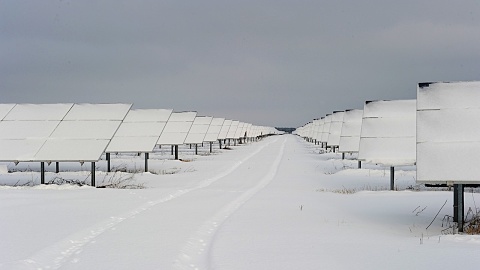
If you were expecting [proclaimed] President Biden to ship emergency solar panels to Texas, you were wrong. Looks like when renewable energy fails, as it did in Texas, even the Biden administration turns to more reliable forms of energy.
Biden administration sending generators to Texas amid power outages
Ursula Perano | February 18, 2021
… White House press secretary Jen Psaki said at a briefing on Wednesday that the Biden administration is sending emergency generators to Texas amid ongoing power outages and freezing weather.
Why it matters: Huge swaths of Texas have been without electricity for days due to critical failures in the state’s power grid. The outages come while a winter storm continues to pummel the state, causing unsafe conditions and a desperate need for heat. … Read more
Click here to see a video of Jen Psaki explaining the plan to send diesel generators to Texas and other states likely to be affected by winter storms.
Even if a storm like this only happens every 20 years, going 100% renewable is clearly now unacceptable. People who rely on electricity for heating are in deadly danger, if the only source of power is renewable energy, and the renewable energy systems freeze solid during severe ice storms.
If the plan is to maintain enough diesel backup to keep the lights on when renewables fail, renewables will never be affordable. Consumers will be saddled with the expense of maintaining the renewable infrastructure, and the additional expense of maintaining a complete second set of power infrastructure at operational readiness, ready to switch on when the renewables fail.
Midwest Have No Surplus Power For Texas
By Paul Homewood | Not A Lot Of People Know That | February 18, 2021

Midcontinent Independent System Operator (MISO)
It is claimed that Texas would be better off as part of a wider grid. The obvious one would be MISO, to which there is already a small interconnector.
However MISO has been having severe difficulties due to the cold spell:
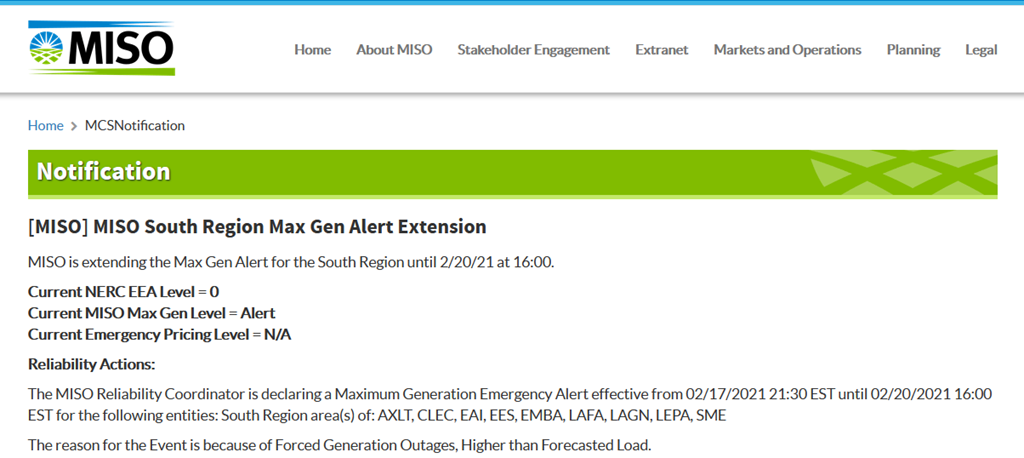
https://www.misoenergy.org/mcsnotification/?id=1131
As with Texas, MISO is currently relying almost entirely on coal, gas and nuclear power. If they had been operating with a quarter of the power from wind, as Texas was last week, I suspect that they would have been experiencing the same blackouts as Texas has had.
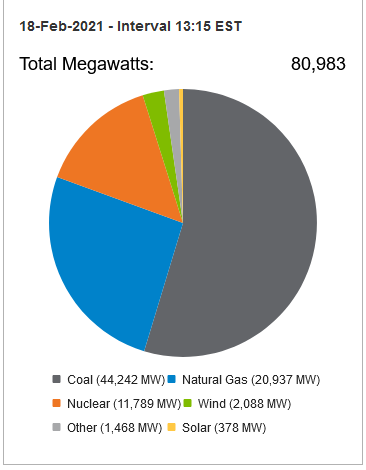
https://www.misoenergy.org/#
It is also not much bigger capacity wise than Texas, which has been running at around 60 GW this week. I suspect that any extra demand from Texas would quickly destabilise the MISO grid.
There is an interesting backstory to this.

The Natural Resources Defense Council says the Midwest energy grid operator known as MISO hasn’t planned enough interstate transmission lines.
MISO manages the system of utilities and transmission lines that operate in a wide region, from Manitoba, Canada to Louisiana.
John Moore is a senior attorney with the Council. He says MISO for too long has approved numerous local transmission projects, but only a tiny number of interstate transmission lines – which operate much like interstate highways, moving energy, rather than vehicles, from state to state.
He says MISO needs to plan more aggressively to meet the economic and environmental needs of the region.
“If we let business as usual take its course, then MISO may not be as bold as it needs to be,” he says.
Moore says the lack of interstate transmission capacity is leaving clean energy projects on the table.
That includes 42 clean energy proposals in Michigan since 2016 that were unable to proceed, because the existing transmission system couldn’t handle them.
https://www.michiganradio.org/post/nrdc-midwest-grid-operator-plan-blocking-clean-energy
Installing more wind power inevitably means more long distance transmission capacity is needed. The unpredictability of wind power results in huge surpluses at times, which require transmitting to areas short of power. This could often be over distances of hundreds of miles.
Since that is the case, surely it is a cost that wind farms should be paying, something that would probably make them totally unviable economically.
America’s future is in the hands of inept cretins while creativity and innovation are needed more than ever
By Helen Buyniski | RT | February 16, 2021
The US’ future looks grim indeed in the face of a ‘Great Reset’ proposed by the same powers that steered it into a deadly economic quagmire. Why are Americans allowing those who broke their world the privilege of ‘fixing’ it?
Americans with more power and connections than sense have rushed forward over the last year, attempting to seize the right to ‘fix’ a society broken by shockingly stupid responses to the Covid-19 pandemic. Entire generations are being rendered suicidally depressed, unemployable, hopelessly alienated, and worse, while the likelihood that the current generation of children will mature into functional adults is rapidly shrinking. There is no one-size-fits-all solution for such a heterogenous population, and this moment calls for an unprecedented degree of creativity and imagination if we are to survive as a society.
So why are those most victimized by this system running into the arms of the same crew of unimaginative, solipsistic sociopaths who have repeatedly wrecked society in the first place? Whether it’s the ‘too-big-to-fail’ banks who asset-stripped the American middle class in 2008, overloading the country’s already fragile social safety net and driving a stake through the heart of the once-achievable American Dream, or the World Economic Forum, a breeding ground for selfish and self-interested corporate hacks who just want to fly their private jets in peace with the option to lecture the ground-bound hoi polloi on their carbon usage, those who’ve put themselves in charge are precisely the wrong ones for the job.
Indeed, the WEF – whose conveniently-timed book Covid 19: The Great Reset surfaced just in time to be seized upon by world governments as a supposedly better-than-nothing playbook for lifting humanity out of a mess even its writers admitted wasn’t nearly as disastrous as it seemed – was the first to claim experimental sovereignty over the poor unfortunates its leaders consigned to misery. Acknowledging they were putting humanity through the largest psychological experiment in history, one which technically violates the Geneva Convention and Nuremberg Code given that informed consent from its experimental test subjects was never obtained, is perhaps the worst possible messiah substitute to lead humanity into a brighter future.
Certainly, no one elected the WEF to guide Americans through the troubled times its members have largely created. The US is trapped in an identity crisis, crushed between the media establishment’s portrait of Our Democracy™ having narrowly escaped orange-tinted fascism and a newly-inaugurated administration that literally admitted to stealing the election on the front cover of Time Magazine. Joe Biden’s administration has claimed for itself the right to ‘Build Back Better’, its plagiarism-prone president once again ripping off his battle cry, this time from the World Economic Forum itself. A scriptwriter who submitted such an on-the-nose screenplay to their producer would be fired on the spot, yet Americans are expected to live with it.
Far from ushering in a golden age of democracy, Biden and his henchmen have held the reins of power in Washington for decades, bringing nothing but suffering to the American people. Despite his cabinet’s swaddling the iron fist of neoliberalism in warm fuzzy buzzwords like “inclusion” and “sustainability,” Biden himself is in large part responsible for the Patriot Act, which stripped American citizens of their most important constitutional rights. He also authored the 1994 crime bill that set up mandatory minimum sentencing for minor drug infractions, funneling tens of thousands of mostly black men into lifetime prison sentences. While he’s finally admitted the latter was a “mistake,” he nevertheless tried to dodge responsibility for having written the disastrous legislation by blaming individual states for how they implemented it. Expecting him to lead Americans into a bright new future is like expecting immaculate table manners from a starving grizzly bear.
Barely unable to keep from gibbering and squealing about a proposed new plan to tackle “domestic extremism,” Biden and his diversity all-stars – whose diversity stops at skin level as they march in ideological lockstep – are as much a menace to American society as the WEF member corporations pulling their strings behind the scenes. Americans seem helplessly caught in the vicious cycle of an abusive relationship, unable to flee the “devils they know” despite full awareness they will come away from their next encounter with a black eye (or an empty bank account, or utter social collapse). Embracing the WEF’s ‘Great Reset’ – a future of “fusion of our physical, digital and biological identity,” according to the organization’s founder Klaus Schwab, who further clarified this involves technology that can “intrude into the hitherto private space of our minds, reading our thoughts and influencing our behavior” – is perhaps the worst possible future humanity could enter. Yet we are sleepwalking into precisely this outcome, unaware that we have any other options.
Even as Americans emerge from the fear-based fog that has consumed them for the better part of a year, they’re still – whether they know it or not – following the directions of the same class of authority figures that led them into this mess in the first place. But these figures have no idea what they’re doing any more than those who are merely following their “leaders” out of habit. Why, having suffered so under the leadership of these utterly worthless figures, would they continue to follow? There is no precedent among the current generation for the economic collapse that has seized the US and no evidence that the WEF, or a wildly incompetent presidential administration, or corona czar and resounding failure Dr. Anthony Fauci, have any idea what to do about it.
At this point, diverging from the dysfunctional and downright deadly paths forged by these repulsive figures is not even a matter of making the right choice – it is a matter of survival.
Helen Buyniski is an American journalist and political commentator at RT. Follow her on Telegram.
Biden Attacks Farms – Comprehensive War on Global Food Supply – Engineered Famine
Ice Age Farmer | January 29, 2021
The Biden admin’s executive actions in the last 48 hours are attacking farms and implementing the technocratic takeover of food, accelerating a global collapse in food production by paying farmers NOT to grow food, cutting their financial support, tasking Tom Vilsack’s USDA with a Net-Zero goal, changing COVID guidance on grocery stores, restaurants, and meatpacking plants. Meanwhile, the media is finally acknowledging the soybean shortage, and the US is now also experiencing a fertilizer shortage, which will further increase costs and cause yields will collapse. As other countries stop exporting to protect domestic supplies, the US has been wholly sold out. This confluence of issues and cascading failures merits our attention urgently — start growing food today.
Download (mp3):
FULL SHOW NOTES:
SUBSCRIBE on bitchute: https://bitchute.com/iceagefarmer
On Lbry.tv: https://lbry.tv/@iceagefarmer
THANK YOU FOR YOUR SUPPORT:
https://patreon.com/iceagefarmer
– other methods/PO box: https://iceagefarmer.com/support
Ice Age Farmer Guilded (chat) group:
http://iceagefarmer.com/guilded
The Victory Seed — easy pamphlet to share:
http://thevictoryseed.org
IAF RESOURCES:
⇒ GDD: Growing Degree Days tool: how much colder has 2019 been for you?
http://iceagefarmer.com/gdd
⇒ IAF Wiki – read history, understand cycles, know what’s coming:
http://wiki.iceagefarmer.com/wiki/History
⇒ Maps from previous cycles:
http://wiki.iceagefarmer.com/wiki/Strategic_Relocation:_Maps
⇒ Crop Loss Map
http://map.iceagefarmer.com
⇒ Join the email list – stay connected:
http://iceagefarmer.com/mail
*** SUPPORTERS – I recommend (because I use personally) ***
STORED FOOD (+ more) @ MyPatriotSupply:
https://iceagefarmer.com/prep
FREEZE DRY YOUR OWN FOOD (like printing money, but food):
https://iceagefarmer.com/harvestright
BUY SEEDS @ TRUE LEAF MARKET:
https://iceagefarmer.com/trueleaf
EMP-proof Solar: mention IAF save $250
https://Sol-ark.com
BEST CBD:
https://bignuggetfarm.com 10% code: IAF2018
⇒ More books: http://amazon.com/shop/iceagefarmer
⇒ Stored food: http://iceagefarmer.com/prep
___
LINKS: (see FULL SHOW NOTES above!)
https://www.cleveland.com/politics/2021/01/biden-signs-orders-strengthening-efforts-to-battle-climate-change.html
https://www.agriculture.com/news/business/biden-vows-to-pay-farmers-to-plant-cover-crops-and-put-land-in-conservation
https://www.telegraph.co.uk/news/2020/09/27/boris-johnson-commits-restoring-nature-30-per-cent-britain-2030/
https://www.agriculture.com/news/business/ag-role-in-climate-mitigation-net-zero-emissions
https://returntonow.net/2020/12/29/biden-picks-mr-monsanto-tom-vislack-to-head-the-usda/
https://www.agweb.com/news/policy/politics/government-cameras-hidden-private-property-welcome-open-fields
Kamala: yes, we should eat less meat:
https://news.yahoo.com/snap-expansion-worker-safety-bidens-175300671.html
https://www.lonesomelands.com/new-blog/2021/1/24/americas-family-owned-farms-now-face-the-greatest-threat-to-their-existance
https://www.usda.gov/media/blog/2021/01/27/family-farms-continue-power-us-agriculture
Josh Linville (Fertilizer)
https://www.agriculture.com/markets/newswire/us-soybean-crushers-buy-up-extra-beans-as-supply-scramble-looms
https://www.bloomberg.com/news/articles/2021-01-27/china-is-so-thirsty-for-soy-that-america-could-soon-be-importing
https://www.reuters.com/article/us-usa-china-ethanol-idUSKBN29V282
https://www.spokesman.com/stories/2020/dec/15/food-giants-seek-to-ban-soybeans-from-deforested-b/
https://www.cnbc.com/2021/01/22/shipping-container-shortage-is-causing-shipping-costs-to-rise.html
https://www.scmp.com/economy/china-economy/article/3116798/chinas-food-security-requires-local-communist-party-members
https://www.scmp.com/economy/global-economy/article/3115004/china-food-security-beijing-calls-biotech-breakthrough
https://sg.news.yahoo.com/china-vegetable-prices-hit-record-104350266.html
Featured Video

Trita Parsi: Middle East Unraveling — Are We on the Path to World War?
or go to
Aletho News Archives – Video-Images
New Book
Trans agenda is ‘normalization of sadism’ – US author

RT | September 23, 2026
The US Democratic Party has embraced a transgender agenda that amounts to “the normalization of sadism,” author A.J. Rice has said, warning that radical trans policies would return if the party is allowed to regain power.
Speaking to RT’s America First host Scotty Nell Hughes about his new book, ‘The Curse of the Bearded Lady: How the Trans Mafia Whacked American Sanity’, Rice argued that activists have gained significant influence in schools, medicine, and corporate America while people who questioned the agenda have faced pressure to stay silent.
The author described the “trans mafia” as the sprawling network of people and institutions that have helped the movement gain influence. He singled out parts of academia, wealthy backers, and corporations, and stated that providers of transition-related treatment also have a financial incentive to keep young people in their care indefinitely.
Rice argued that the consequences of these policies ultimately fall on children who are being drawn toward gender-affirming medical treatments and on girls who are expected to share locker rooms or compete in sports with biological males.
He noted that while voters rejected the Democrats’ approach to gender in 2024, the party, which has been “captured by madness,” has since only doubled down and is seeking what is effectively “the normalization of sadism.” … Full report
Blog Roll
 Aletho News
- ‘We don’t seek permission to defend our country’: Snippets from President Pezeshkian’s UNGA address
- NATO chief wants Europeans to fight American wars [for Israel]
- German chemicals giant reveals details of downsizing
- Refaat Al-Areer Was The Canary In The Coal Mine In Israel’s War On The Truth
- Israeli election committee bars candidate from Knesset race over Gaza war opposition
- French-Lebanese man files war crimes complaint over Israeli attacks
- Mahan Air Flight Lands in China Despite US Threat against Iranian Airlines
- US eyes $10bn fund to rebuild war-battered Gulf infrastructure
- Trump meets Rodríguez near Maduro’s prison as Venezuela’s oil flows to US
- Trita Parsi: Middle East Unraveling — Are We on the Path to World War?
- If Americans Knew
- Caught on Tape: AIPAC CEO Boasted of Controlling Trump’s National Security Officials
- Why Hamas Attacked Israel in October 2023 – Israeli professor Ilan Pappé
- They see them, then kill them: Israeli quadcopters track, deliberately target civilians in Gaza
- Winter could turn Gaza’s treacherous, war-damaged buildings into deathtraps
- Majority of Democratic Voters Want to Prosecute Both Biden and Trump Administration Officials Over Gaza
- As Gaza languishes, world leaders gather at the UN – Daily Update
- Sanctions are collective punishment: immoral and self-defeating
- Phosphorus Munitions Fired by Israel Burn Groves, Orchards in Southern Lebanon
- Israel Carries Out New Ceasefire Violations Across Gaza
- AI – Emphasis on the ‘I’: Israel Is Funding AI Chatbot Propaganda
- No Tricks Zone
- New Study: Earth And Venus Surface Warmth Largely Explained By Convection And Lapse Rate, Not CO2 Or Radiation
- 2025 Nature Paper Claiming Worsening Global Drought Gets RETRACTED …Heavily Flawed
- New Study: ‘Global Drought Shows No Detectable Recent Acceleration Under Climate Warming’
- Economic Masterminds: German Socialists Suggest Taxing Productivity Gains Stemming From Using AI
- The South China Sea Has Not Been Cooperating With The Climate Change Narrative
- Energy Crisis: Germany Enters Heating Season With Historically Low Gas Reserve Fill Levels
- New Study: The Antarctic Ice Sheet Gained Mass From 2020-2024 Due To Staggering Snow And Ice Accumulation
- Study: Ocean Heating Rates From Thousands Of Years Ago ‘Dwarf’ Modern Ocean Heating Rates
- Climate Extremists Target, Attack Large-Scale Power Grid Infrastructure In Germany!
- New Study: Antarctic Ice Melt Has Contributed Less Than 1 Centimeter To Sea Level Rise In The Last 30 Years

