Goldman Sachs faces criminal charges in Malaysia for helping billions vanish from state fund
RT | December 18, 2018
Malaysia filed criminal charges against Goldman Sachs and two ex-bankers over the multi-billion dollar looting of state fund, 1MDB. The US bank denies the accusation, claiming it was deceived by the previous Malaysian government.
The subsidiaries of the Wall Street banking giant and its former key employees, ex-chairman of Goldman’s South East Asia, Tim Leissner, and ex-managing director, Roger Ng, are accused of giving false statements when helping to arrange bonds for 1MDB, Malaysia’s Attorney General Tommy Thomas announced on Monday.
Malaysia says the accused wanted to misappropriate $2.7 billion from $6.5 billion in bonds, issued by 1MDB and underwritten by Goldman Sachs, in three separate offerings between 2012 and 2013.
Malaysia also filed charges against former employee of 1MDB Jasmine Loo Ai Swan and local financier Low Taek Jho, also known as Jho Low, who maintains his innocence. The prosecution believes the duo conspired with Leissner and Ng to bribe officials in order to procure the selection, involvement and participation of Goldman Sachs in these bond issuances.
Now Kuala Lumpur is seeking to take back the misappropriated $2.7 billion from Goldman Sachs as well as $600 million in fees received by the bank. The prosecution is demanding fines and up to 10 years behind bars for each of the accused. The fines may amount to at least 1 million ringgit ($240,000), according to the charge sheets, seen by Reuters.
Billions of dollars from the Malaysian fund were reportedly used to buy everything from Beverly hills mansions, yachts and a private jet to artworks among other things in a fraud that allegedly involved former Malaysian Prime Minister Najib Razak.
As Malaysia brought the charges, the bank hit back, claiming that it was the victim of deceptive Malaysian officials. The long-running scandal has already rocked the bank’s shares this year, which dropped more than 30 percent.
“Certain members of the former Malaysian government and 1MDB lied to Goldman Sachs, outside counsel and others about the use of proceeds from these transactions,” Goldman said in a statement cited by media. It added that the charges have no effect on its “ability to conduct our current business globally.”
Analysts warn that the scandal is just the tip of the iceberg of the bank’s “criminal” deeds. Despite being investigated in several countries, including in the US, no matter the crimes, Goldman chiefs will never go to jail as they are too close to both sides of the US political aisle, Jack Rasmus, professor of political economy at St. Mary’s College told RT. He also warned that the bank is driving the world to the next financial crisis.
“They just haven’t been caught in the other places,” Rasmus said in an interview to RT. “We’re on the verge of another financial crisis that will make the last one pale in comparison and Goldman Sachs and businesses like them are at the center of the cause of this.”
US Scrapped Arctic Drills Fearing Only Russia Can Save Its Icebreaker – Official
Sputnik – 17.12.2018
While Russia possesses dozens of icebreakers, including heavy types for polar duty in the Arctic and Antarctica, the US has only two such ships, among them only one heavy icebreaker, the Polar Star, with an ever-dwindling service life.
The US Coast Guard at one point decided not to conduct exercises in the Arctic due to fears that the Polar Star, the US’ only heavy icebreaker, could break down and the American side would have to seek help from Russia, according to former Coast Guard commandant Paul Zukunft.
He was cited by Business Insider as saying that when he was the commandant, the National Security Council notified him of their plans to send the Polar Star through the Northern Sea Route and carry out a freedom of navigation drill.
“I said, ‘Au contraire, it’s a 40-year-old ship. We’re cannibalizing parts off its sister ship just to keep this thing running, and I can’t guarantee you that it won’t have a catastrophic engineering casualty as it’s doing a freedom of navigation exercise, and now I’ve got to call on Russia to pull me out of harm’s way. So this is not the time to do it”, Zukunft pointed out.
He did not elaborate on when the drills were due to be conducted.
Additionally, Zukunft underscored the importance of creating dual-use infrastructure in the Artic in order to support US national defence.
“But the immediate need right now is for commercial [operations], and that was driven home when we didn’t get the fuel delivery into [the Alaskan city of] Nome. At that point in time we were able to call upon Russia to provide an ice-capable tanker escorted by the Coast Guard cutter Healy to resupply Nome”, he said, apparently referring to an incident in 2012, when Nome was iced-in and on the verge of running out of fuel.
Unlike Russia, which has dozens of icebreakers, including some designed for operating in severe weather conditions in the Arctic, the US is in possession of just two such vessels. The country’s only operational heavy icebreaker, the Polar Star, was commissioned in 1976 and refurbished in 2012 to extend its service life.
Earlier, the US Department of Homeland Security said that at least $750 million should be allocated for the construction of a new heavy polar icebreaker in the new fiscal year, which kicked off on 1 October.
Coast Guard commandant Karl Schultz, for his part, said that he remains “guardedly optimistic” about funding being available for a new polar icebreaker, as US lawmakers grapple with other spending priorities, including a wall on the US-Mexico border.
Every Single Member of US Congress Approved Crushing Sanctions on Nicaragua
By Ben Norton | Gray Zone | December 14, 2018
Every single member in both chambers of the US Congress approved legislation that will impose sanctions and financial restrictions on Nicaragua in an explicit effort to weaken its government.
Known as the NICA Act, the bill is now on its way to the desk of President Donald Trump, who will almost certainly sign it into law. Its passage was spearheaded by neoconservative lawmakers centered around the Miami lobby of right-wing Latin American exiles dedicated to eradicating any iteration of socialism in the Western hemisphere.
The United States has spent decades trying to topple Nicaragua’s government, now led by the left-wing Sandinista movement. In April, US-backed opposition figures launched an unsuccessful and exceedingly violent coup attempt in the Central American country — one of the last bastions of leftist politics in an increasingly right-leaning Latin America.
The newly approved Nicaraguan Investment and Conditionality Act (NICA) will give the US president the authority to impose targeted sanctions on Nicaraguan government officials, former officials, or people purportedly “acting on behalf of” Managua.
The bill also seeks to prevent international financial institutions from providing “any loan or financial or technical assistance” to Nicaragua’s government.
The NICA Act enjoyed bipartisan support, but the campaign behind it was largely led by neoconservative Florida Representative Ileana Ros-Lehtinen, with help from Senators Marco Rubio and Ted Cruz. Ros-Lehtinen and Cruz met for a Facebook live this December 13 to celebrate the bill’s passage.
In June, these three right-wing Cuban-American lawmakers gathered with young leaders of the Nicaraguan opposition in Washington, DC.
The NICA Act encourages the US government to increase assistance to anti-government “civil society in Nicaragua, including independent media, human rights, and anti-corruption organizations” and to “support the protection of human rights and anti-corruption advocates in Nicaragua.”
The legislation also suggests that political negotiations should be “mediated by the Catholic Church in Nicaragua,” which has for decades supported violent right-wing forces in the region.
This October, leaked audio revealed the Catholic Church’s auxiliary bishop of Managua, Silvio Baez, conspiring with the opposition to oust Nicaragua’s elected president, Daniel Ortega.
“The unity that we need at this moment must include everyone opposed to the government, even if they are suspected of being opportunists, abortionists, homosexuals, [drug] traffickers…,” Baez declared, according to a translation of the leaked audio.
Baez urged the opposition to put up more of the tranque roadblocks that had plunged the country into violence and strangled its economy, describing them as “an extraordinary invention.”
In November, USAID Director Mark Green announced an infusion of $4 million to civil society and media groups opposed to the Sandinista front.
My colleagues in Congress + I are proud of passing the #NICAAct. It will pressure #Ortega to do what he’s refused to do: hold early elections that meet democratic standards + protect the human rights of #Nicaraguans. Thanks @SpeakerRyan for being a partner on this worthy effort. pic.twitter.com/U1kG4Mf1Ub
— Ileana Ros-Lehtinen (@RosLehtinen) December 13, 2018
Neoconservative gloating
In September, the NICA Act was combined with a remarkably similar bill from Democratic New Jersey Senator Bob Menendez: the Nicaragua Human Rights and Anticorruption Act, which imposed additional sanctions on Nicaraguan government officials.
Menendez – a Cuban-American whose legal defense from corruption charges was bankrolled by the pro-Israel lobby – joined his neoconservative colleagues in referring to Nicaragua’s democratically elected president, Daniel Ortega, as a “dictator” who leads a “regime.”
Ortega — who voluntarily stepped down from power after losing an election to a US-backed right-wing oligarch in 1990 — won his third presidential term in 2011 with 62 percent of the vote, in what international observers recognized was a fair election. Even the staunchly anti-Sandinista New York Times admitted at the time that Ortega had widespread support.
Ros-Lehtinen declared that “the NICA Act that will help the Nicaraguan people break free of Ortega’s despotic rule.” She has previously insinuated that Nicaragua was a national security threat to the US, proclaiming, “We must also remain vigilant of efforts by Russia, Cuba, Venezuela, China and Iran that continue to help Ortega with military equipment, surveillance, and other technology support.”
For his part, Rubio boasted, “We are one step closer to expanding sanctions and other pressures against the oppressive Ortega regime.”
In lieu of a formal vote, the NICA Act was sent to the bipartisan House Committee on Foreign Affairs for amendments, and these changes were then agreed to by each chamber, without any objections.
On November 27, amendments for the combined legislation were approved with unanimous consent in the Senate. Then on December 11, the changes were unanimously approved in the House without objection.
Congratulations to mi amiga @RosLehtinen on an amazing three decades of leadership fighting for freedom. I am proud to have worked together on #NICAAct, which will send a message to the people of #Nicaragua that we stand with them in their fight for freedom & democracy. pic.twitter.com/7J1MzKH1BH
— Senator Ted Cruz (@SenTedCruz) December 13, 2018
US corporate media echoes Nicaragua’s US-backed opposition
The unanimous approval of the de facto economic embargo on Nicaragua received very little attention in the English-language media. The story was covered by only a small handful of local news outlets, although it received much more attention in right-wing Spanish-language media.
In an interview with Confidencial – an opposition outlet funded by the US government’s National Endowment for Democracy regime change arm – Nicaragua’s former foreign affairs minister Norman Caldera exclaimed that the “NICA Act is a devastating blow for the regime.”
The right-wing channel 100% Noticias, whose director, Miguel Mora, stands accused by family members of coup victims of inciting hatred and violence, echoed the celebratory language.
CNN Español reported favorably on the NICA Act (it even has a tag on its website devoted to the law), although its English-language counterpart demonstrated little interest. CNN Español referred to the democratically elected government in Managua as a “regime” and noted, “The opposition of Nicaragua celebrates this decision.”
The chaos unleashed by last summer’s coup attempt has badly bled Nicaragua’s economy, plunging growth from a steady five percent to almost zero and eliminating tens of thousands of jobs. With the NICA Act, the US and its local proxies are hoping that exacerbating the economic desperation even further will bend a largely non-compliant Nicaraguan population to their will.
French Workers Go on General Strike in Support of Yellow Vests

French lawyers burn legal codes as part of a nation-wide strike against planned justice reform law. | Reuters
teleSUR | December 14, 2018
In solidarity with the popular ‘yellow vests’ movement, France’s workers have gone on national strike Friday, a move called by the General Confederation of Labor (CGT).
“The best way to protest is to go on strike,” the CGT’s Philippe Martinez told BFM TV Friday. “We must multiply actions at companies. We must strike everywhere.”
The French trade union announced the day of action Tuesday after negotiations with the government over unemployment benefits failed.
“The CGT, like the yellow vests, is fighting for claims on salaries, what (French president Emmanuel) Macron announced is not enough because there isn’t any general raise in salaries,” Union representative for health workers Francoise Doriate told Reuters.
“The minimum wage isn’t a minimum wage… the increase of an income tax on only a part of pensioners is a scam and there is a freeze on pensions which means we are losing buying power.”
On Monday, President Macron announced wage rises for the poorest workers and tax cuts for pensioners in further concessions meant to quell weeks of often violent protests that have challenged his authority. However, the government’s decision has been seen by some as a sham.
“Emmanuel Macron thought he could hand out some cash to calm the citizen’s insurrection that has erupted,” Jean-Luc Melenchon, leader of the far-left La France Insoumise, said. “I believe that Act V (of the protests) will play out on Saturday,” he said referring to a new round of protests planned this weekend.
The move to strike puts pressure on companies as labor unions use their collective power to create disruption just as demonstrators prepare for a fifth-weekend wave of protests across the country since the movement began Nov. 17.
“Of course it is not a question of shouting victory but of amplifying the mobilization: that is why all the general assemblies are maintained!” CGT leadership said in a statement.
The administration of Macron also declared a state of economic and social emergency Monday, and requested the cancellation of the ‘yellow vest’ protests this weekend, citing Tuesdays shooting in Strasburg in which three people were killed and 13 others wounded. Police killed the shooter late on Thursday.
Police have been cracking down on the protests using tear gas and water cannon and many fear that the government is preparing a major repression as the movement announces a fifth round of demonstrations.
The leadership of the CGT said the call to strike is in support of the social and wage demands driven by the popular movement of the yellow vests.
Russia may participate in construction of Trans-African railway
RT | December 15, 2018
Moscow is ready to take part in the ambitious project of constructing a cross-continental railway line which will connect East and West Africa. That’s according to the Russia-Sudan intergovernmental commission.
“The Sudanese side expressed interest in participation of the Russian companies in constructing of the Trans-African railway over Dakar – Port Sudan – Cape Town,” said the commission in a document seen by TASS.
It added that “The Russian side confirmed readiness to work out the opportunity for participation… but asked for [the] provision of all the financial and legal characteristics of this project.”
The Trans-African railway line is part of the African Union’s plans to connect the port of Dakar in West Africa to the port of Djibouti in East Africa. It will run through 10 different countries (many of them landlocked) and is expected to boost trade on the continent.
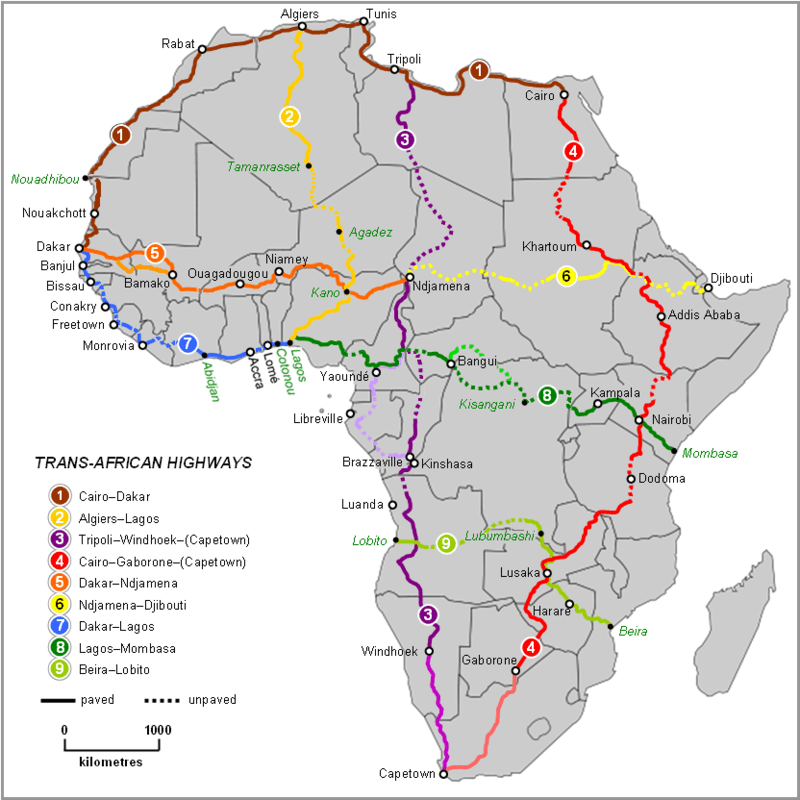
Map of Trans-African Highways © Wikipedia
The route will be the expansion of the existing Trans-African Highway 5 (TAH5). The first phase of the project will be an estimated $2.2 billion upgrade to 1,228 kilometers of existing rail between Dakar, the capital of Senegal, and Bamako, the capital of neighboring Mali.
The project has already attracted Chinese investment in African infrastructure through Beijing’s ambitious Belt and Road Initiative (BRI).
Colorado energy company Xcel goes crazy green
One starts to suspect there is a lot of hype, and maybe securities fraud, going on here
By David Wojick, PhD | Watts Up With That? | December 14, 2018
Awhile back, I wrote an article about how the radical Colorado Energy Plan is actually designed to serve the gigantic Colorado utility company Xcel – not Colorado families and businesses – by beefing up Xcel’s asset base … and bottom line … with $2.5 billion worth of new generating capacity.
The kicker is that the Plan substitutes expensive, unreliable wind power for affordable, reliable coal-generated electricity, and thus is really part of a clever corporate strategy designed by Xcel.
Xcel’s plan was to get past 50% renewable. But now it has doubled down on that. The company just announced that it plans to become 100% “emissions free” by 2050. Xcel serves eight states from Colorado to Michigan, so a lot of people should be grabbing their wallets at this point.
Of course this is all based on the bogus “dangerous manmade climate change” scare, but Xcel stands to make huge profits from it. Being a regulated utility, the more it spends, the more it makes (and the more its customers pay) – while the utility gets to strut its supposed ecological virtues.
Ben Fowke, chairman, president and CEO, Xcel Energy puts it this way: “We’re accelerating our carbon reduction goals because we’re encouraged by advances in technology, motivated by customers who are asking for it, and committed to working with partners to make it happen.”
I doubt the customers asking for it have any idea what it will cost them.
The Greens love it, of course. Fred Krupp, president of Environmental Defense Fund, says it is all about “carbon dioxide pollution,” which is a hoax. Here is Krupp’s claim:
“Ambitious efforts to slash carbon dioxide pollution are urgently needed. Xcel Energy’s vision will help speed the day when the United States eliminates all such pollution from its power sector, which is necessary to seize the environmental and economic opportunity of powering cars, trucks, homes and businesses with cost-effective, zero-emitting electricity.”
Keep in mind, this “carbon dioxide pollution” is what you exhale every time you breathe. It’s what animals exhale. It’s what plants inhale – and the more carbon dioxide (CO2) there is in the air, the faster and better crop, forest and grassland plants grow, using less water in the process.
Colorado’s radical green Governor-elect Jared Polis is politically ecstatic, saying: “When I launched my campaign back in 2017, we had a bold agenda for our state – to get to 100% renewable by 2040. Xcel Energy’s exciting announcement today, along with the strong climate goals communities like Pueblo, Summit County, Ft. Collins, Denver and others across the state have embraced, shows we are leading the way forward right here in Colorado – by committing to a renewable and clean energy future.”
Polis and the others are deeply mistaken in thinking Xcel means 100% renewables. That is actually impossible, because wind and solar generation are highly intermittent, as I explain here. Xcel knows this too, but hides it with the following vague statements:
“Achieving the long-term vision of zero-carbon electricity requires technologies that are not cost effective or commercially available today. That is why Xcel Energy is committed to ongoing work to develop advanced technologies while putting the necessary policies in place to achieve this transition.” (Emphasis added)
Zero emissions and 100% renewables are two very different things, as I explain here in my article “100% Renewable Deception.” In fact, Xcel is planning to use enormous numbers of batteries, plus fossil-fuel generation with carbon (CO2) capture and storage. That is, both chemical and carbon-based energy.
In particular, fossil fueled generation with carbon capture and storage (CCS) means immensely more fossil fuels must be used to create and operate all of this hi-tech and largely unproven technology. And that means hundreds of millions, or even billions, of dollars in additional costs for Colorado businesses and families. All to capture and store the trace gas (0.04% or 400 parts per million of Earth’s atmosphere) that we exhale.
Note too that the supposed battery and carbon-capture-and-storage technologies do not even exist in usable form. How then does Xcel know they will be cost effective? Clearly they cannot know this. I have seen no hint of an engineering plan or cost estimate for bringing this scheme off – and doubt one exists.
Increased reliance on intermittent, weather-dependent wind power also increases grid instability and the likelihood of blackouts, brownouts and rolling outages. Customers more and more often get power when it’s available, instead of when they need it.
Also keep in mind that “emissions free” really means no emissions from electricity sources located in Colorado. The misleading claim completely ignores the massive emissions elsewhere in the world – of very real pollution, as well as emissions of plant-fertilizing carbon dioxide – in the process of mining and processing the enormous amounts of metals, hydrocarbons and other materials required to make those turbines, manufacturing the 600-foot-tall windmills, transporting and installing them, and so on.
Enormous amounts of metals and other materials are also needed for the backup fossil fuel power plants, CCS equipment, extra-long transmission lines – or massive battery arrays, if Xcel decides it’s going to use “clean, green” batteries instead of coal- or gas-fired backup power plants. Those backup systems, by the way, actually do 70-85% of the electricity generation, because the wind turbines only work 15-30% of the time. And it all impacts millions of acres of once pristine land, in Colorado and elsewhere.
One more important point, while we’re on the topic of corporate ethics and environmental virtue: A lot of those metals and minerals – especially the rare earths, lithium, cobalt, cadmium and other specialty items required in all this high-tech equipment – come from China, Mongolia, the Democratic Republic of Congo and other faraway, out-of-sight-and-mind places. Places where child labor is common, and health, safety and environmental standards are all but non-existent.
You could think of them as the renewable energy equivalent of “Blood Diamonds,” like the ones Leonardo DiCaprio dislikes so intensely that he made a movie about them – when he wasn’t driving his heavily subsidized Tesla, which also uses extensive “blood battery” technology.
(Xcel and its lawyers and environmental and political friends didn’t mention any of that? That’s really surprising, considering how often they emphasize their ethics and planet-saving virtues.)
A lot of people who buy into the climate scare invest on the basis of “greenness.” Given that Xcel is a publicly traded, stockholder owned corporation, one wonders if this “we are the greenest in the land” hype – or any of the lofty but specific promises Xcel has been making – amount to securities fraud.
Perhaps this potential fraud is something the SEC and FTC should look into.
David Wojick is an independent analyst specializing in science and logic in public policy.
The War Against Globalism
By Philip M. GIRALDI | Strategic Culture Foundation | 13.12.2018
We are the Little Folk—we!
Too little to love or to hate.
Leave us alone and you’ll see
How we can drag down the State!A Pict Song, Rudyard Kipling
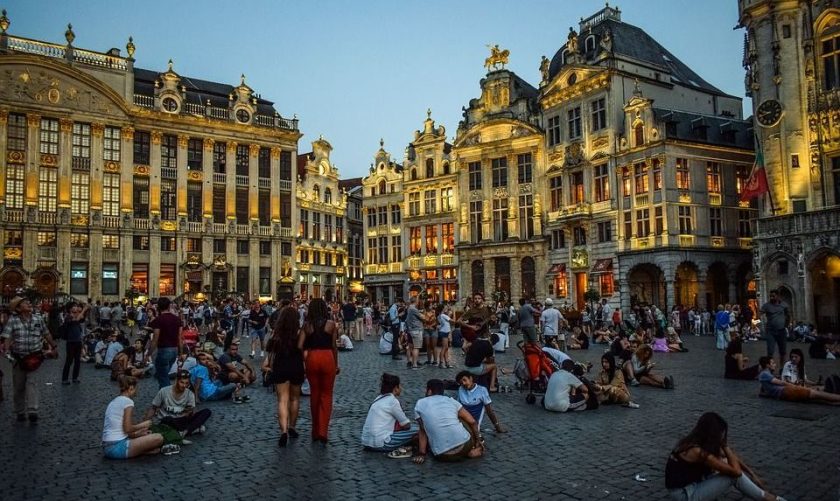
Belgium has joined the list of countries that are rebelling against their elected leadership. Over the weekend the Belgian government fell over Prime Minister Charles Michel’s trip to Morocco to sign the United Nations Migration Agreement. The agreement made no distinction between legal and illegal migrants and regarded immigration as a positive phenomenon. The Belgian people apparently did not agree. Facebook registered 1,200 Belgians agreeing that the Prime Minister was a traitor. Some users expressed concern for their children’s futures, noting that Belgian democracy is dead. Others said they would get yellow vests and join the protests.
The unrest witnessed in a number of places is focused on some specific demands but it represents much broader anger. The French yellow vests initially protested against proposed increases in fuel taxes that would have affected working people dependent on transportation disproportionately. But when that demand was met by the government of President Emmanuel Macron, the demonstrations continued and even grew, suggesting that the grievances with the government were far more extensive than the issue of a single new tax. Perhaps not surprisingly, the French government is seeking for a scapegoat and is investigating “Russian interference.” The US State Department inevitably agrees, claiming that Kremlin directed websites and social media are “amplifying the conflict.”
Some commentators looking somewhat more deeply at the riots in France have even suggested that the real issue just might be regime change, that the Macron government had become so disconnected with many of the voters through both its policies and the rhetoric justifying them that it had lost its legitimacy and there was no possibility of redemption. Any change would have to be an improvement, particularly as a new regime would be particularly sensitive to the sentiments of those being governed, at least initially. One might suggest that the prevailing sentiment that a radical change in government is needed, come what may, to shake up the system might well be called the “Trump phenomenon” as that is more-or-less what happened in the United States.
The idea that republican or democratic government will eventually deteriorate into some form of tyranny is not exactly new. Thomas Jefferson advocated a new revolution every generation to keep the spirit of government accountable to the people alive.
Call it what you will – neoliberalism, neoconservatism or globalism – the new world order, as recently deceased President George H.W. Bush once labeled it, characteristically embraces a world community in which there is free trade, free movement of workers and democracy. They all sound like good things but they are authoritarian in nature, destructive of existing communities and social systems while at the same time enriching those who promote the changes. They have also been the root cause of most of the wars fought since the Second World War, wars to “liberate” people who never asked to be invaded or bombed as part of the process.
And there are, of course, major differences between neoliberals and neoconservatives in terms of how one brings about the universal nirvana, with the liberals embracing some kind of process whereby the transformation takes place because it represents what they see, perhaps cynically, as the moral high ground and is recognized as being the right thing to do. The neocons, however, seek to enforce what they define as international standards because the United States has the power to do so in a process that makes it and its allies impossible to challenge. The latter view is promoted under the phony slogan that “Democracies do not fight other democracies.”
The fact that globalists of every type consider nationalism a threat to their broader ambitions has meant that parochial or domestic interests are often disregarded or even rejected. With that in mind, and focusing on two issues – wholesale unwelcome immigration and corrupt government run by oligarchs – one might reasonably argue that large numbers of ordinary citizens now believe themselves to be both effectively disenfranchised and demonstrably poorer as rewarding work becomes harder to find and communities are destroyed through waves of both legal and illegal immigration.
In the United States, for example, most citizens now believe that the political system does not work at all while almost none think that even when it does work it operates for the well-being of all the citizens. For the first time since the Great Depression, Americans no longer think of upward mobility. Projections by sociologists and economists suggest that the current generation growing up in the United States will likely be materially poorer than their parents. That angst and the desire to “do something” to make government more responsive to voters’ interests is why Donald Trump was elected president.
What has been occurring in Belgium, France, with Brexit in Britain, in the recent election in Italy, and also in the warnings coming from Eastern Europe about immigration and European Union community economic policies are driven by the same concerns that operated in America. Government itself is becoming the enemy. And let us not forget the countries that have already felt the lash and been subjected to the social engineering of Angela Merkel – Ireland, Spain, Portugal and Greece. All are weaker economies crushed by the one size fits all of the EURO, which eliminated the ability of some governments to manage their own economies. They and all their citizens are poorer for it.
There have been windows in history when the people have had enough abuse and so rise up in revolt. The American and French revolutions come to mind as does 1848. Perhaps we are experiencing something like that at the present time, a revolt against the pressure to conform to globalist values that have been embraced to their benefit by the elites and the establishment in much of the world. It could well become a hard fought and sometimes bloody conflict but its outcome will shape the next century. Will the people really have power in the increasingly globalized world or will it be the 1% with its government and media backing that emerges triumphant?
Tale of two uprisings: Ukraine’s Maidan got McCain & cookies, French Yellow Vests get shunned
By Robert Bridge | RT | December 13, 2018
Unlike the 2014 Ukraine uprising, which witnessed invasive meddling on the part of US politicians and diplomats, Western support for the French Yellow Vest protests has been conspicuously missing in action.
With the streets of Paris ablaze for a fourth weekend in a row, as a swarm of Yellow Vests assert themselves against a French government which, they argue, has become increasingly detached from the cares of ordinary citizens, support among Western capitals for the protesters is nowhere to be found.
This is a bit odd since the ‘gilets jaunes’ are not just protesting Macron’s (rescinded) plans for a fuel tax, but have released a list of 42 demands they want to see implemented. This includes an increase of the minimum wage, pensions and wages, as well as a halt to illegal immigration into the country. In other words, we are not talking about violent anarchists on the streets of France, but regular citizens. Thus far, the movement enjoys a high level of support among the French, with one poll showing 72 percent siding with the protesters.
The United States and its allies may have trouble explaining their tone-deafness in the face of these legitimate concerns on the part of millions of French citizens. At the very least, their icy silence will reveal a no small amount of double standards and outright hypocrisy since the West rarely misses an opportunity to interfere in the affairs of foreign states – mostly in the Middle East – when ‘democracy’ is purportedly on the line.
Consider Washington’s starkly different attitude to Ukraine’s 2014 Maidan revolution, which brought down the government of Viktor Yanukovich through the explicit support of the United States, as well as a number of influential NGOs operating in the country. Yanukovich committed the unforgivable mistake of thinking he would be allowed to pursue an independent course for his country, despite the fact that since 1992, the US had spent over $5 billion propping up ‘democracy-building programs’ in Ukraine.
Did Kiev really think that Washington would not eventually expect something in return for all those dollars, like maybe deciding who would eventually rule the Eastern European country on Russia’s border? And that is exactly what happened.
When Yanukovich signaled that he would not sign Ukraine up to an EU trade deal, he awoke a sleeping giant below his feet. Several weeks after the announcement, as his country was becoming increasingly divided over its options, the late US Senator John McCain appeared in central Kiev where he tossed dry wood on the smoldering fires by proclaiming at a rally on Independence Square, “Ukraine will make Europe better, and Europe will make Ukraine better… America is with you.”
What could have motivated Washington to pursue such blatant interference in the affairs of Ukraine, while ignoring the French ‘gilets jaunes’ that are now fanning out across France, protesting the neo-Liberal policies of President Emmanuel Macron? Could the answer have anything to do with something as simple as money? That certainly seems to be a large part of the equation.
After all, steering Kiev away from Russia, Western officials understood, would pay off handsome dividends for Western lending institutions, like the International Monetary Fund, which had already lent Kiev billions of dollars to stay afloat. The West was fiercely opposed to the idea of Russia and China becoming ‘lenders of last resort’, a financial and political function that the Western world covets more than any other, with the possible exception of military interventionism against sovereign states.
Fast forward one year after John McCain was agitating rallies in Kiev, and Victoria Nuland was handing out cookies to the protesters, and we find Ukraine, under the new leadership of the US-anointed President Petro Poroshenko, inking a $17.5bn (£11.5bn) loan deal with the IMF, together with the painful austerity measures that always accompany the bags of cash.
Presently, there are no such financial incentives in France that would convince Western capitals to ‘rally on behalf of democracy’ as it had done without delay in Ukraine.
This glaringly hypocritical position with regards to the French protesters reveals a deeply flawed, cart-before-the-horse Western axiom that commands: ‘whatever works to the advantage of Western institutions and its political elite is automatically good for democracy.’ This does not exclude social upheaval and revolution. If violence in the streets translates into the empowerment of Western institutions, not least of all the global financial institutions, then such actions will be rewarded with Western support without a moment’s thought.
Today, Emmanuel Macron, 40, the former Rothschild investment banker known as “president of the rich” by his countrymen, is facing the prospect of an early political demise, no less than Viktor Yanukovich faced in 2014.
Indeed, to say that Macron’s popularity among the French is in the toilet would be putting the situation mildly.
As one local English-language French magazine summed up his plight: Macron is “long-hated by the extreme-leftist groups because of his past as a banker… detested by the far-right because of his pro-European, globalist beliefs and now hated by many ordinary French people, who see him as arrogant, aloof and unsympathetic to their problems.”
Yet, not a single Western politician to date has appeared in the French capital, rallying the protesters and demanding Macron step aside; nor has any top-ranking US diplomat been spotted handing out cookies to the French rabble as Victoria Nuland did in Kiev at the height of Ukrainian tensions.
Incidentally, with such stark images in mind, it seems preposterous that the US can actually accuse Russia of meddling in its political affairs, and without a shred of evidence to back the claims. But I digress.
The simple reason that no Western country has come out to condemn Macron is because he toes the line on neo-liberalism and extreme free-market economics that has ravaged the French middle class to breaking point. The fuel hike was just the proverbial straw that broke the voters’ back.
It would be no exaggeration to say that all segments of French society have become caught up in the protests. Today we see hundreds of French schools, for example, shutting down as students take to the streets to protest Macron’s unpopular education reform. Pensioners are also counted among the protesters after Macron lectured them to stop “whining” about spending cuts, at the very same time he was slashing taxes for the wealthy.
Clearly, there is nothing about Macron that Western leaders can find not to their liking. He is carrying out painful liberal reforms with gusto, and only under pain of usurpation does he backpedal on his political program. Although the rudderless French president may fancy himself as a modern-age Napoleon, acting tough with his subjects to get what he wants, ultimately it will be the French street that decides his fate, which at the moment looks very bleak.
Such a brutal wake-up call may very well be in store for many more Western neo-liberal leaders, who fail to feel the pulse of their people when instituting their unpopular policies, in the weeks and months to come.
Kremlin blasts Pompeo’s ‘squandering’ remark, says US military budget ‘enough to support all Africa’
RT | December 11, 2018
Mike Pompeo is in no position to claim that sending two strategic bombers to Venezuela was a “squandering” of public funds, Moscow countered, saying half of the US military budget is enough “to support all of Africa.”
The US Secretary of State produced a lengthy tirade on Twitter on Tuesday, claiming the arrival of two Russian Tu-160 bombers was an example of “two corrupt governments squandering public funds, and squelching liberty and freedom while their people suffer.” Later in the day, the remark was met with a sharp rebuke from the Kremlin.
“This is indeed very undiplomatic,” Kremlin spokesman Dmitry Peskov told journalists, adding, “we think it was an utterly inappropriate comment.” US President Donald Trump might “give his own assessment” of Pompeo’s statement as he did in the past, he said.
Saying that, Peskov made a veiled reference to President Trump’s inflammatory tweet in which he accused Rex Tillerson, Pompeo’s predecessor, of lacking the “mental capacity” to do his job. “He was dumb as a rock and I couldn’t get rid of him fast enough. He was lazy as hell,” Trump tweeted.
“As far as the ‘squandering’ is concerned, we don’t agree with that,” Peskov stated, noting that half of the bulky US military budget “would be enough to support all of Africa.”
The exchange happened a day after a pair of Tu-160s touched down at Venezuela’s Simon Bolivar International Airport on Monday. The bombers, nicknamed the ‘White Swans’ in the Russian military, had flown over 10,000 kilometers to reach the South American country. Their visit was part of “combined operational flights” with the Venezuelan Air Force, according to the Russian military.
That aside, it has recently emerged that Donald Trump has committed to a $750bn military budget, despite earlier labeling the $716bn previously allocated for defense ‘crazy’.
Above all, the mammoth US military budget has long been the largest in the world. According to the reputed Stockholm International Peace Research Institute (SIPRI), it dwarfs the defense expenditure of Russia, China, India, the UK, France, and Germany combined.
French opposition rejects Macron’s concessions to Yellow Vests, some demand ‘citizen revolution’
RT | December 11, 2018
Macron’s concessions to the Yellow Vests has failed to appease protesters and opposition politicians, such as Jean-Luc Mélenchon, who called for “citizen’s revolution” to continue until a fair distribution of wealth is achieved.
Immediately after French President Macron declared a “social and economic state of emergency” in response to large-scale protests by members of the Yellow Vest movement, promising a range of concessions to address their grievances, left-wing opposition politician Mélenchon called on the grassroots campaign to continue their revolution next Saturday.
“I believe that Act 5 of the citizen revolution in our country will be a moment of great mobilization.”
Macron’s promise of a €100 minimum wage increase, tax-free overtime pay and end-of-year bonuses, Mélenchon argued, will not affect any “considerable part” of the French population. Yet the leader of La France Insoumise stressed that the “decision” to rise up rests with “those who are in action.”
“We expect a real redistribution of wealth,” Benoît Hamon, a former presidential candidate and the founder of the Mouvement Génération, told BFM TV, accusing Macron’s package of measures that benefit the rich.
The Socialist Party’s first secretary, Olivier Faure, also slammed Macron’s financial concessions to struggling workers, noting that his general “course has not changed.”
Although welcoming certain tax measures, Marine Le Pen, president of the National Rally (previously National Front), accused the president’s “model” of governance based on “wild globalization, financialization of the economy, unfair competition,” of failing to address the social and cultural consequences of the Yellow Vest movement.
Macron’s speech was a “great comedy,” according to Debout la France chairman, Nicolas Dupont-Aignan, who accused the French President of “hypocrisy.”
Yet many found Melanchon’s calls to rise up against the government unreasonable, accusing the 67-year-old opposition politician of being an “opportunist” and “populist,” who is trying to hijack the social protest movement for his own gain.
The Yellow Vest protests against pension cuts and fuel tax hikes last month were organized and kept strong via social media, without help from France’s powerful labor unions or official political parties. Some noted that such a mass mobilization of all levels of society managed to achieve unprecedented concessions from the government, which the unions failed to negotiate over the last three decades.
Trump commits to record $750bn defense budget days after saying $716bn was too much – reports
RT | December 10, 2018
Despite tweeting just last week that a $716bn defense budget was ‘crazy’, US President Donald Trump has reportedly reversed course and instead committed to the highest budget in history.
Trump’s unexpected decision to agree to Defense Secretary James Mattis’ request and propose an increased budget, relayed to several media outlets by anonymous officials, appears to stem from a meeting last Tuesday between Trump, Mattis and the chairmen of the House and Senate Armed Services committees.
It appears to have had an effect, considering that the day before the meeting, Trump tweeted that the previous year’s $716bn was “crazy” and a product of “a major and uncontrollable Arms Race” with China and Russia.
“It’s 750. Secretary Mattis secured that over lunch with the president,” an administration official told Politico, who first released the information, although an official announcement is yet to be made.
It’s unclear what exactly changed Trump’s mind. He had been floating a 5% reduction in defense spending, from the originally proposed (and already record-breaking) $733bn to $700bn – but defense officials had told him on Friday that anything less was “a risk”, and could have “disastrous consequences”.
“The Department is committed to ensuring our military remains the most lethal force in the world. We are working with OMB (Office of Management and Budget) to determine the department’s topline number,” a Defense Department spokesman told CNN.
The historically unprecedented numbers further inflate the US’ already world-largest defense budget. Washington is spending as much as the next 7 countries combined, according to the Stockholm International Peace Research Institute (SIPRI). Last year, defense was one of the few increases in a budget which saw cuts to the EPA, Health and Human Services and education departments, to name just a few.
Featured Video

Death Spikes & Rising Cancer In Our Youth Explained
or go to
Aletho News Archives – Video-Images
From the Archives
Politicians lie
By Mazin Qumsiyeh | Popular Resistance | August 18, 2013
There is no way to say this truth nicely: Politicians lie. That includes Japanese, American, Egyptian, Israeli, and Palestinian politicians! Is there something more common sense than that? Yet, so many citizens around the world believe their own politicians or wistfully acknowledge lies but think it is part of the job needed to run things. They believe even when politicians contradict themselves blatantly. This phenomenon is rather remarkable. It is a dissonance and disconnect from reality that many seem oblivious to. It is very dangerous because it can lead to accepting rationales for going to war. These can be deadly wars that lead to millions of lives lost as happened in what was called World War 1 and WW2. Even when incredible and declassified evidence abound, politicians continue to lie and old mythologies refuse to die. Here are just a few of the countless lies told to us over the past few decades… continue
Blog Roll
 Aletho News
- Ukrainian Soldiers, Potential Mercenaries: Have Gun, Will Travel!
- Burnham’s UN debut… A masterclass in British disinformation
- Iran flights continue despite US aviation sanctions
- Global Tipping Points Lead the World Into a State of Entropy
- The day-after at the White House: USA and Xi Jinping
- The Geopolitical Balance in the Red Sea: The UAE Being Displaced by New Players
- Iraqi resistance group vows to stage airport sit-ins over Iran aerial blockade
- Turkish parliament to review Saudi-Pakistan defense pact next month
- DEATH SPIKES & RISING CANCER IN OUR YOUTH EXPLAINED
- Iran offers Trump deal before US election
- If Americans Knew
- Deconstructing Netanyahu’s pants-on-fire UN rant – Daily Update
- Trump betrayed voters with his campaign lies and prioritized a foreign country once he took office
- Netanyahu calls Israel’s war in Gaza ‘opposite of genocide’ in UN speech to near-empty hall
- Settler Kidnappings: Torture, Sexual Abuse and Terrorisation of Palestinian Abductees as Israel Deepens Annexation of West Bank
- Gaza winter nears as 162,000 tents become unusable, raising fears of humanitarian crisis
- Netanyahu says, “It’s the opposite of genocide”; UN says Gaza economy is world’s ‘most severe crisis on record’ – Daily Update
- Israel’s US-Backed Assault on Gaza Has Created the ‘World’s Most Severe Economic Crisis on Record’: UN
- ‘Protecting U.S. Citizens’… From Israel
- ‘This is where I live now, the back of a truck’: a day in the life of a grandmother in Gaza
- In UN Speech, Iran’s President Displays Pictures of Children Killed by US, Brings Attention to Israel’s Nuclear Arsenal
- No Tricks Zone
- New Study: Earth And Venus Surface Warmth Largely Explained By Convection And Lapse Rate, Not CO2 Or Radiation
- 2025 Nature Paper Claiming Worsening Global Drought Gets RETRACTED …Heavily Flawed
- New Study: ‘Global Drought Shows No Detectable Recent Acceleration Under Climate Warming’
- Economic Masterminds: German Socialists Suggest Taxing Productivity Gains Stemming From Using AI
- The South China Sea Has Not Been Cooperating With The Climate Change Narrative
- Energy Crisis: Germany Enters Heating Season With Historically Low Gas Reserve Fill Levels
- New Study: The Antarctic Ice Sheet Gained Mass From 2020-2024 Due To Staggering Snow And Ice Accumulation
- Study: Ocean Heating Rates From Thousands Of Years Ago ‘Dwarf’ Modern Ocean Heating Rates
- Climate Extremists Target, Attack Large-Scale Power Grid Infrastructure In Germany!
- New Study: Antarctic Ice Melt Has Contributed Less Than 1 Centimeter To Sea Level Rise In The Last 30 Years

