Will America’s War with Iran Continue?
By Donald Liebich | American Herald Tribune | December 2, 2016
The United States has been at war with Iran for over thirty five years. Sometimes the war has been hot, sometimes cold, sometimes overt, and sometimes covert. Throughout this time period relations between the two countries have been hostile with very little diplomatic contact between officials of the two governments. In 2008, Barack Obama ran against Hillary Clinton on a platform of diplomatic engagement with Iran in opposition to her statements of being able to “totally obliterate Iran”.
Upon entering office, Obama, continuing America’s penchant for coercive diplomacy, doubled down on sanctions against Iran hoping that by causing economic hardship for ordinary Iranians he could pressure Iran to change its policies, particularly with respect to the development of nuclear capabilities. The strategy failed as Iran not only continued its peaceful nuclear development, but in many ways accelerated it. By his second term Obama, prioritizing addressing the nuclear proliferation issue, began negotiations with Iran on the nuclear issue in conjunction with Germany, France, United Kingdom, Russia and China. (EU3 + 3) The negotiations resulted in the signing in July 2015 of the Joint Comprehensive Plan of Action (JCPOA) which limited Iran’s nuclear program in return for removal of economic sanctions. The agreement was endorsed by the UN Security Council in an action that requires member states to carry out the agreement.
The International Atomic Energy Agency (IAEA) has affirmed on numerous occasions that Iran has largely lived up to its obligations under the JCPOA. Obama has taken some executive action to live up the JCPOA by loosening the impact of the sanctions. The administration has approved the sale of aircraft and aircraft parts to Iran by Boeing and this week the US approved a license for Airbus to sell over 100 aircraft to Iran. However, the basic legal structure of sanctions remains in place. Obama has not moved as aggressively as he did in Cuba to increase U.S. business involvement in Iran, a step which would make the nuclear deal more difficult to reverse by engaging the business lobby in the issue.
With the current sanctions authorization legislation set to expire on December 31, 2016, House of Representatives and the Senate passed the Iran Sanctions Extension Act by an overwhelming majorities (419 -1 and 99-0). Opponents of the JCPOA in the U.S. have argued in justifying this action, which is a clear violation of the JCPOA, that Iran has engaged in other “nefarious” activities, such as supporting the Assad in Syria, supplying arms to Hezbollah in Lebanon and the Houthi tribe in Yemen, developing ballistic missiles and in general resisting U.S. influence in the Middle East. The Senate has said that it will take up this bill in the rump session of Congress in December. Although Obama has indicated that he will veto the bill, the bipartisan support in Congress for sanctions extension means that a veto override is likely. Obama’s best option for preserving the nuclear deal is to fight a delaying action to “kick the can” down the road to the next administration where a Republican controlled Congress may be reluctant to create a big foreign policy problem for President Trump so early in his administration.
As on many issues, it is unclear what President Trump’s position will be on the JCPOA. During the campaign he condemned the JCPOA as a “horrible contract”, but acknowledging that it was a contract, vowed to renegotiate it. Renegotiating the agreement is probably not possible. The JCPOA is the result of complicated, intertwined negotiations over a long period of time. Reopening talks in an atmosphere of mistrust and recriminations likely means that the whole agreement would collapse. A number of senior Congressmen and potential officials in a Trump led government, having received large speaking fees, are closely tied with the Mujahidin-e-Khalq (MEK), an exiled Iranian opposition group with an odd Islamist/Marxist ideology. The MEK, having allied with Saddam Hussein during Iran-Iraq war, has the distinction of being more unpopular in Iran than the U.S. They will push a hard line approach under a Trump administration..
The agreement, however, is not totally dependent on the U.S. Even if the U.S. withdraws from the agreement, Iran, under the administration of President Hassan Rouhani, and Russia, China and the EU have indicated that they will continue to abide by it. As it has in the past, the U.S. will likely use secondary sanctions on European companies to deter them from conducting business with Iran. This strategy will probably not be effective with Russia, India and China who have taken steps to disconnect their economy from the U.S. dominated and dollar denominated neo-liberal economic system. It remains to be seen how U.S. allies in Europe will react to being pressured to act against their own national interest.
The political situation in Iran will also have an influence on how U.S./Iran relations play out. Supreme Leader Ali Khamenei has said that if sanctions are extended Iran will “respond”. What the response will look like depends, in large measure, on the outcome of the May 2017 presidential elections. Incumbent President Rouhani has maintained a position that engagement with the West will benefit Iran diplomatically and economically. Because sanctions have, in large measure, remained in place and because Iran has been slow to reform its economic system, the benefits have not met public expectations. The opposition have attacked the policy of engagement with the West. Faced with these political threats, Rouhani may be forced to tack to the right and abandon the JCPOA, kick out the IAEA inspectors and expand the nuclear program. In that case the undeclared war with Iran will continue with all of the uncertainties and potential for disastrous consequences.
Don Liebich spent his work career with the US Navy Nuclear Submarine service and Sysco Corp. He and his wife, Marcia, have traveled to the Middle East numerous times in the past ten years. Mr. Liebich has conducted seminars and taught courses on Islam: God and his Prophet, Christian Fundamentalisms, US Middle East foreign policy and Iran. Don & Marcia live in Hailey, ID.
Saudi-Iranian reconciliation is within sight
By M K Bhadrakumar | Indian Punchline | December 2, 2016
A side-effect of Donald Trump’s election as president could be the improvement in Saudi-Iranian ties. Of course, cynics may argue that it is about time the relationship got better, because it can’t get any worse – short of war. But the Trump factor becomes a stimulus in a positive direction.
Broadly, the US policy (which Hillary Clinton would have happily continued) of playing Saudi Arabia against Iran on the one hand and nudging the Arab allies and Israel to form a united regional front under American leadership on the other hand, is ending. It was a hopeless strategy to begin with, and Trump will not waste time in resuscitating it on its death bed.
Egypt’s recent ‘defection’ to the Russian-Iranian camp in the Syrian conflict (which also anticipates the Trump presidency, by the way), lethally wounds the myth of Arab unity against Iran, which Saudis had been fostering. Interestingly, Egyptian foreign minister Sameh Shoukry is in New York where he met Vice President–elect Mike Pence on Thursday to hand over a letter from President Abdel Fatah el-Sisi to Trump. At the same time, Sisi himself is on a visit to the UAE (which is mediating in the Saudi-Egyptian rift.) Egypt anticipates an easing of tensions between Saudi Arabia and Iran and is positioning itself.
For the Saudi regime, a Trump presidency means that it is losing the war in Syria. The blow to Saudi prestige on the Arab Street, regionally and internationally is enormous. But Saudis are preparing for the eventuality of President Bashar al-Assad remaining in power and the Syrian rebels facing the existential choice of surrendering and accepting the fait accompli (or meeting physical extinction.) The secret talks in Ankara, which have now come to light, between the rebel leadership with Russian intelligence and diplomats underscore that Aleppo is about to fall to the government forces and the war is over.
The ending of the war on such terms constitutes a big victory for Iran. This raises the question: Are the Saudis on a course correction themselves? There is growing evidence that this may be so.
First came the election of Michel Aoun as the new President of Lebanon on October 31, ending two years of deadlock. Aoun is very close to Hezbollah. (Iranian FM Mohammad Zarif was the first foreign dignitary to visit Beirut to congratulate Aoun.) Clearly, in the complicated political tug of war in Lebanon, Saudis appear to have simply retrenched, which facilitated Aoun’s election, piloted by Iran and the Hezbollah.
The consolidation in Lebanon and the sight of victory in the Syrian war (plus the incipient signs of a warming up with Egypt) would significantly strengthen Iran’s hand in regional politics. But, strangely, there is no triumphalism in Tehran. In the normal course, Tehran could have called the Saudis ‘losers’, but that is not happening.
Now comes the thunderbolt — OPEC oil production cut deal in Geneva on Wednesday. Admittedly, the oil market is unpredictable, the role of the US shale industry is uncertain and the OPEC deal needs to be firmed up at the December meeting in Moscow between the cartel and non-OPEC oil producers. But the bottom line nonetheless is that the deal is the final product of a big Saudi concession to Iran. Put differently, if the Saudis had dug in and refused to exempt Iran as a special case from the production cut, the deal wouldn’t have come through.
The OPEC deal signifies a tectonic shift in the Saudi-Iranian equations, which is below the radar as of now. It is not only about big money, but also the return of Iran to OPEC’s cockpit — indeed, about OPEC’s future itself. True, the Russians played a forceful role behind the scenes to bridge the gap between Riyadh and Tehran and push them to come closer. True, again, Saudis are in serious financial difficulty and the OPEC deal is expected to bring in more income out of a rise in oil price. However, in the final analysis, the Saudis did accommodate Iran’s demand that a restoration of the pre-sanctions OPEC production quota is its national prerogative and it must be exempted from any production cut. (NBC News gives a riveting account of how it all happened — How Putin, Khamenei, and a Saudi Prince Made the OPEC Deal.)
It is this shift in the Saudi mindset — away from the dogged attitude that Iran must be relentlessly punished even if that were to mean inflicting on itself a few bleeding self-wounds — that catches attention. Again, on Iran’s part too, it is this strangest of strange behaviour – total absence of triumphalism that the Saudis blinked in Geneva – is highly significant.
Simply put, taken together with the happenings in Lebanon, Iran is careering away from anti-Saudi grandstanding and rhetoric. Indeed, a similar roll back is discernible on the Saudi side also lately. (The Asharq al-Awsat newspaper recently replaced its editor-in-chief; Prince Turki bin Faisal has said Trump should not abandon the Iran nuclear deal.)
These are early days, but signs are that there is a thaw in the Saudi-Iranian ties. Given the Middle Eastern political culture, Saudi Arabia and Iran could be moving toward a modus vivendi sooner than one would have expected. Yemen will be the litmus test of a rapprochement.
US Senate passes 10-year extension of Iran Sanctions Act
Press TV – December 1, 2016
The US Senate has passed a 10-year extension of existing sanctions against Iran, sending the measure to the White House for President Barack Obama to sign into law.
Senators on Thursday unanimously backed the renewal of the Iran Sanctions Act (ISA) by a vote of 99 to 0.
The House of Representatives voted 419 to 1 last month to reauthorize ISA, which was first introduced in 1996 to punish investments in Iran’s energy industry based on accusations that Tehran was pursuing non-civilian objectives in its nuclear energy program.
The Obama administration has expressed reservations about the utility of the legislation, but congressional aides said they expected Obama would sign it when it reached his desk. The act is set to expire at the end of 2016.
“If the sanctions architecture has expired, then we have no sanctions which we can snap back,” said hawkish Democratic Senator Bob Menendez, who opposed the nuclear accord between Iran and six major powers.
Iran and the five permanent members of the UN Security Council — the United States, Britain, Russia, China, France as well as Germany – reached a landmark nuclear agreement last year, under which Tehran agreed to limit some aspects of its nuclear program in exchange for removal of all sanctions.
The two sides began implementing the deal, dubbed the Joint Comprehensive Plan of Action (JCPOA), on January 16. However, members of Congress said they wanted ISA to be extended for another decade to send a strong signal that any US president would have the ability to “snap back” sanctions on Iran.
“Unless Congress acts, the congressional sanctions don’t exist after December 31,” Maryland Senator Ben Cardin, ranking member on the Senate Foreign Relations Committee, said on Tuesday. “The ability to snap back wouldn’t be there on the congressional side.”
“While we do not think that an extension of ISA is necessary, we do not believe that a clean extension would be a violation of the JCPOA,” a senior Obama administration official said on Thursday, according to Reuters.
Senate Foreign Relations Committee Chairman Bob Corker, a hawkish Republican from Tennessee, said the extension of ISA ensures President-elect Donald Trump can reimpose sanctions Obama lifted under the nuclear agreement.
He said in a statement on Thursday, “Extending the Iran Sanctions Act … ensures President-elect Trump and his administration have the tools necessary to push back” against Iran’s “hostile actions.”
Iran has warned that the renewal of sanctions will be a violation of commitments under the JCPOA, and has threatened reprisal if the US extends the longstanding act.
In a public speech on Wednesday, Leader of Islamic Revolution Ayatollah Seyyed Ali Khamenei warned the US against the renewal of the Iran sanctions, noting that the Islamic Republic would respond if the US proceeded to renew ISA which expires at the end of 2016.
“So far, the current US government has committed several violations with regard to the nuclear agreement,” Ayatollah Khamenei told members of the volunteer Basij forces in Tehran, adding, “The most recent of them is the 10-year extension of the sanctions. If these sanctions are extended, it will surely constitute a violation of the JCPOA and they (the US) should know that the Islamic Republic will definitely react to it.”
“‘Initiating sanctions’ is no different from ‘renewing them after their expiration,’ and the latter is also [an instance of imposing] sanctions and violation of the previous commitments by the opposite side,” Ayatollah Khamenei said.
Last week, Ali Akbar Salehi, the head of the Atomic Energy Organization of Iran, said Tehran has made necessary preparations and is ready to respond if the US violates the deal.
In case of the final approval of ISA, it will “certainly be a violation of the JCPOA,” he added.
Salehi noted that Iran is ready to respond to any US breach of the JCPOA, saying Tehran, however, will make necessary decisions at the appropriate time and after the assessment and analysis of Washington’s moves.
Russia sets out its policy on terrorism, nuclear war & global ties in new Foreign Policy Concept
RT | December 1, 2016
President Vladimir Putin has signed a decree approving Russia’s new Foreign Policy Concept. The document specifies Moscow’s position on key global issues, highlighting its relations with the US, EU, China and other countries.
Published on Thursday, the concept is now in force, replacing the previous one from 2013. Moscow’s “views on core principles, priority directions, aims and tasks of the Russian foreign policy” are stated in the document of almost 40 pages.
Saying that Russia pursues an independent foreign policy based both on national interests and respect for international law, the concept states that Moscow’s policy is “open, foreseeable” and “shaped by centuries” of Russia’s historic role in the development of global civilization.
“Russia is fully aware of its special responsibility for maintaining security in the world both on global and regional levels, and is aimed at cooperative actions with all concerned states in the interest to solve common issues,” the document says.
Moscow calls for “creation of a broad international anti-terrorist coalition, firmly based on a legal framework, and effective and systematic cooperation among states,” the document says. No “double standards” should have a place in such a coalition, which should become the main force to fight global terrorism.
Nuclear war hazard low, but US missile shield threatens Russia’s national security
Moscow stands for the creation of “zones free of nuclear weapons and other types of weapons of mass destruction, especially in the Middle East,” the concept states, adding that “fighting international terrorism is key priority in international security.”
No country should use terrorist organizations to pursue its “political, ideological and other aims,” it says. Political and legal framework for nuclear and other weapons nonproliferation course is key, to avoid risks of such weapons landing in the hands of terrorist organizations.
Russia stays true to its international obligations in the arms control, and expects the same from its partners. Washington’s development of its global missile defense system is viewed as a “threat to national security,” with Moscow “reserving the right to take relevant counter measures.”
“Russia stands for constructive cooperation with the US in the field of arms control, with a compulsory allowance for an inseparable correlation between strategic offensive and defense weapons,” the document says. Global strategic stability should be the key factor in possible further arms reduction, it adds.
“Despite [the fact] that a threat of a large-scale war, including nuclear war, initiated between key states remains low, risks that [such states] may be involved in regional crisis, escalating them, are growing,” the new Foreign Policy Concept warns.
Russia-US dialogue possible, but only if US abandons its ‘restraining’ course
Washington and its allies have been pursuing a “restraining course” against Russia, aiming to “pressure” it both politically and economically, the document says, adding that such policy “undermines regional and global security.” It also harms long-term interests of both sides, and goes against a “growing necessity for cooperation” and joint counteraction to global threats.
Russia reserves the right to “harsh” retaliatory measures to “unfriendly actions,” including measures in toughening its national defense.
Moscow “is interested in building mutually beneficial relations with the US, taking into consideration the two countries’ responsibility for global strategic stability and the state of international security in general,” the concept stresses, adding that the two nations have significant opportunities in trade, investment, scientific and other forms of cooperation.
The development of dialogue on bilateral relations, as well as on other international issues “is only possible if based on equality, mutual respect and non-interference in one another’s internal affairs.”
In regard to contacts with NATO, Moscow plans to build its relations with the alliance based on its eagerness to be engaged in equal partnership. So far, Russia negatively regards NATO’s expansion, with its military infrastructure getting closer to the Russian borders. Such actions are considered as “defying the principle of equal security” and might cause new “division lines in Europe.”
Meanwhile, Moscow praises the role of the United Nations in “regulating international relations and coordinating world policies,” saying that there are no other options to replace the organization in the 21st century.
Relations with EU among Moscow’s priorities, abolishing visa regime will strengthen ties
Stepping-up mutually beneficial bilateral ties with European countries is named among one of Russia’s key priorities in the new Foreign Policy Concept.
The EU is Russia’s important trade and economic partner, the document says, adding that Moscow also regards Europe as its associate in foreign policy and is looking for “stable cooperation” based on mutual respect. Relations with Germany, France, Italy and Spain are mentioned as being key for the Kremlin in promoting its interests on the international arena.
“The strategic task in relations with the EU is forming a broad economic and humanitarian space from the Atlantic to the Pacific Ocean,” that will unite and “harmonize” the European continent, the concept says.
“The visa regime remains one of the main barriers in the way of development of contacts between Russia and the EU. The gradual cancellation of the visa regime on a reciprocal basis will become a powerful impulse for strengthening cooperation between Russia and the EU in economic, humanitarian, cultural, educational and other spheres,” the document says.
Russia to strengthen ties with the East, presence in the Antarctic
Among Moscow’s other foreign policy priorities, the concept mentions developing further relations with its eastern neighbors. “Full-scale” partnership and cooperation with China is on the agenda, as well as “further deepening” of strategic partnership with India. With the latter, Russia has always had “privileged” relations, according to the document, which says that the two nations’ cooperation is based on corresponding foreign policies, “historic friendship and deep mutual trust.”
Japan and other countries in the Asia-Pacific Region are also mentioned as important partners to work with in the near future.
“Russia will also continue its work on preserving and widening its presence in the Antarctic,” the concept states, adding that Moscow is as well “open for building relations with Canada” to cooperate in the Arctic and other regions.
Russia’s position on Syria is also mentioned in the new Foreign Policy Concept, with Moscow standing for the Middle Eastern country’s “unity, independence and territorial integrity.” Representatives of all ethnic and religious groups in Syria should be provided with equal security and peace, and enjoy “equal rights and opportunities,” the document says.
Iran is sanguine about the fate of nuclear deal
By M K Bhadrakumar | Indian Punchline | December 1, 2016
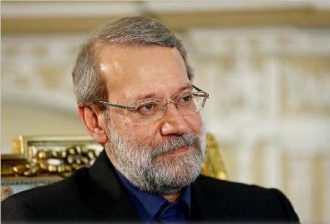 The Iranian official news agency IRNA carried a detailed summary of an interview given by the Speaker of the Majlis Ali Larijani to a Chinese TV network, regarding the fate of the Iran nuclear deal of July 2015 under the Donald Trump presidency in the United States.
These have been the most comprehensive remarks so far since the election of Trump, at an authoritative level in the Iranian leadership. Unsurprisingly, IRNA highlighted the interview. The salience remains to be that Iran is keeping an open mind on the incoming US president’s likely policies. (See my blog Iran keeps open mind on Donald Trump.)
However, Larijani’s latest remarks display a quiet confidence in Tehran that Trump’s campaign speeches regarding Iran will not translate as policies. Larijani is an accomplished statesman and when he flags that an American president’s policies ‘usually differ’ from his election rhetoric, it becomes a considered statement.
Tehran indeed should know. Ronald Reagan’s campaign speeches in 1980 in the middle of the hostage crisis were much more threatening than Trump’s. In fact, Iran was the leitmotif of Reagan’s campaign rhetoric against Jimmy Carter. Yet, some say the Reagan team didn’t want a denouement to the hostage crisis until the November election was over. (In fact, Iranians released the hostages soon after the election was over, but before Reagan moved into Oval Office.)
Reagan’s brilliant but devious campaign manager was none other than William Casey, who later had covert dealings involving Iran as head of the CIA in the new administration. It won’t be surprising if Iranians are jogging the memory. Only the other day Trump had shouted that Goldman Sachs had ‘total control’ over Hillary Clinton and yet his team already is stacked with Goldman insiders – Steve Bannon as chief White House strategist, Steven Mnuchin for the Treasury Secretary job and so on.
At any rate, Larijani pointed out that the US’ European allies (and Russia and China) may not go along with any US move to scuttle the Iran deal or reimpose sanctions. This is entirely plausible.
What Larijani left unsaid was about any back channel contact with the Trump team. He couldn’t have been explicit, of course. Interestingly, he also did not slam the door shut against the idea of Iran working with the US on regional issues. He merely said that so far American and Iranian regional policies have differed.
[Asked whether you are ready for cooperation with the US on regional issues, Larijani said, ‘We think that its policies in the region are against those of Iran’s.’
The US and the Zionist regime enjoy chaotic situation in the region, as they think their interests will be ensured under this condition while Iran has a different viewpoint as it thinks about a sustainable security in the region and believes that terrorism should be uprooted.
‘I think China and Russia are of the same attitude regarding the issues but the US and the Zionist regime think otherwise,’ Larijani said.]
Indeed, Trump’s move to work with Russia over the Syrian conflict cannot but involve Iran one way or another at an early stage itself. President Hassan Rouhani telephoned President Vladimir Putin on Monday and the Kremlin readout said the two leaders “highly rated the level of Russian-Iranian cooperation on the anti-terrorist track and agreed to work closely together to ensure the long-term normalization of the situation in Syria.”
What makes Iran an engrossing regional power is invariably the sophisticated intellectual underpinnings it gives to its foreign policies and regional strategy. So, how does Trump appear through the Iranian looking glass?
Glancing through the range of opinions in Iran, certain elements can be identified. First, in the excessive focusing on Trump’s colorful personality traits (which are, arguably, not more exotic than Reagan or George W. Bush’s), foreign observers have neglected the acuteness of the crisis within the United States, which has been steadily building up through recent decades.
Trump ultimately represents the class interests of the rich and the privileged and there is going to be a glaring shortfall in his ability or willingness to redeem his pledges to the marginalised and alienated sections of society. The seething anger is going to mount as it becomes clear that the ‘swamps’ which Trump promised to clean up remain an enduring fact of life. In sum, much of Trump’s attention will come to be trained on the challenges posed by the domestic political situation.
Second, Iranian scholars underscore the dialectics of the trans-Atlantic relationship. (The EU foreign policy chief Federica Mogherini visited Tehran thrice this year.) Trump is starting with a handicap since European opinion militates against his rise to power, not only in style but also in the content of his whole political platform. An unfriendly Europe will try to seek a new code of conduct, which in turn will compel Trump to trim his discourse.
Third, emanating from the above two factors, Iranian scholars assess that the US cannot afford to wage wars abroad. It neither has the money needed to spend on wars nor does it enjoy the political respite to take the eyes off the acute internal contradictions in the US’ political economy. Most certainly, an invasion such as the one in 2003 in Iraq is way beyond American capability. Europe will not join any US-led ‘coalition of the willing’, either. Thus, the limits to the US influence in the Middle East are already apparent.
All in all, therefore, a new concert of world powers is becoming necessary and unavoidable, especially with a major potential economic crisis staring at the world economy. Larijani’s cautious optimism can be put in perspective as the articulation of a rational assessment.
US Still Seeks Regime Change Across Asia
By Ulson Gunnar – New Eastern Outlook – 26.11.2016
While the US could accurately be described as a global power in decline, the ambitions of prominent special interests at the center of its economic and political power still pose a potent threat to global stability and national sovereignty worldwide. In Asia particularly, despite a clear shift in a regional balance of power that has persisted for nearly a century, the US is still actively involved in attempting to dictate which governments come to power in respective nation-states and how they rule and all in an attempt to create a balance of power in Asia that serves US interests.
From Myanmar to Vietnam, US Ambitions Still a Clear and Present Danger
US ambition to transform Asia manifests itself in a number of ways. In Malaysia, it has been fueling for years the so-called Bersih movement and its campaign for “clean and fair elections.” While the movement attempted to appear spontaneous and independent of any political party, it was quickly revealed that its core leadership was funded by the US State Department via the US National Endowment for Democracy (NED) and Open Society. It was also revealed that Bersih was in fact an auxiliary front of a political coalition headed by US-backed opposition leader Anwar Ibrahim who quite literally led the protests in the streets himself.
Extensive US support has been provided to the now ruling government of Aung San Suu Kyi in Myanmar, including the creation of Suu Kyi and her National League for Democracy’s (NLD) entire media capabilities. Pro-NLD media platforms created and funded annually by the US government include the New Era Journal, the Irrawaddy, and the Democratic Voice of Burma (DVB). It was also revealed that Suu Kyi’s Minister of Information, Pe Myint, was quite literally trained in Bangkok by the US government-funded Indochina Media Memorial Foundation, which now co-occupies the Western media’s Foreign Correspondents Club (FCCT) office in Bangkok.
In Thailand, in addition to the substantial lobbying support the above mentioned FCCT provides the ousted US-backed regime of Thaksin Shinawatra and his also-ousted sister, Yingluck Shinawatra, the US government funds a large number of supposed “nongovernmental organizations” (NGOs) in a bid to create the illusion of a legitimate, pro-democracy opposition. The Shinawatra family also enjoys continued lobbying support from Washington, with influential firms having registered on their behalf every year since at least as early as 2006.
Currently, US lobbyists are still active in supporting the Shinawatra regime and their political supporters within Thailand. The Shinawatra’s themselves are still positioning themselves to retake power, and the US media is still turning out a large amount of content aimed at setting the stage for continued political conflict within the country.
In Cambodia, opposition leader Sam Rainsy has received years of support from the US government and America’s European allies, including regular political and media support from the US State Department’s Voice of America (VOA) network.
Indonesia strains under pressure put on the government and society by US and Saudi-backed groups capable of mobilizing large numbers of protesters both to augment their own political power and to put pressure on the current ruling government in a bid to roll back growing ties between Jakarta and Beijing.
And while Vietnam lacks any clearly visible, central opposition figure, the US has steadfastly built up an opposition movement with which to pressure the Vietnamese government.
Cultural Colonization via YSEALI
Collectively, across the entire Southeast Asian region, the US is engaged in what some analysts have called “cultural colonization,” particularly with a program it calls Young Southeast Asian Leaders Initiative (YSEALI) in which the US State Department actively recruits, indoctrinates and directs young Asian students and professionals toward building a pro-Western opposition front. This includes a program called “Generation: Go NGO!” in which the US creates and directs a growing network of US government funded fronts posing as “nongovernmental organizations.”
Mirroring a modern day version of the very sort of imperial networks constructed by the British Empire across Asia, America’s reach into Asia seeks to reinvent and reassert Western domination across Asia Pacific. Not only does it seek to dominate the respective people, resources, economies and politics of nations in Southeast Asia, but it also seeks the creation of a united front with which to encircle, contain and eventually displace Beijing’s growing influence in the region.
Asserting Economic Hegemony via the TPP
The Trans-Pacific Partnership (TPP), a decidedly US dominated project, sought to string Asian states together in an economic alliance opposed to China’s rising regional and global influence. The deal’s details were introduced and brokered in secret, contravening any sense of self-determination for those nations and people subjected to it. Ultimately, the inequitable conditions of the deal required coercion and bribery to move forward, and despite great efforts, it appears that it will not likely succeed.
Nations like Thailand have categorically refused to sign the deal thus far, and nations like Vietnam who had initially promised to sign it, have wavered. The US’ desperation in moving through deals like the TPP may also explain the expansive networks it has constructed and continues to construct to apply pressure on both Asia as a region, and each nation individually.
Combating US Primacy
Such aspirations are more than mere speculation, and are instead derived from the writings of prominent US policymakers, including Robert Blackwill who in 2015 penned an entire paper about reasserting US “primacy” over Asia. Blackwill, it should be noted, served as a lobbyist for the above mentioned US proxy Thaksin Shinawatra of Thailand.
For Asia collectively, and for each nation respectively, the need for an international voice as Russia’s RT or China’s CCTV has granted Moscow and Beijing , is essential for challenging and overcoming divisive and destructive narratives perpetuated by the Western media. It is also an important factor in exposing and diminishing the influence of US-backed political opposition parties and the army of US-funded fronts posing as “NGOs.”
And while instinctively, building closer ties with China may seem to be a viable formula to balancing a US that seeks to reassert itself, such ties must be done within a larger regional framework to build a sustainable balance of power. Simply trading US hegemony in for Chinese hegemony, would fail to serve the rest of Asia’s interests well. For each respective Asian state, strong domestic institutions, economies, education systems and military institutions ensures not only America’s inability of asserting its interests over those of each nation’s, but also heads off China from filling in and exploiting the void left by a retreating United States.
EU Politicians are Convinced that Tanks are the Best Remedy for Social Disparity
By Jean Perier – New Eastern Outlook – 24.11.2016
 Following in the wake of the White House policy, European political elites have been stepping up their groundless propagandistic rhetoric about the growing military threat of Russia, Iran, China, which is aimed at achieving further militarization of Europe at the expense of the social benefits of its citizens.
In his recent speech at an event hosted by the German Marshall Fund of the United States, NATO‘s Secretary General Jens Stoltenberg announced that he expects a 3% real increase in defence spending in Europe and Canada, however, he added, other than the US, only four NATO members are currently spending 2% of GDP on defence.
Against the background of a string of upcoming election campaigns in the EU, it’s really not that hard to predict how Europeans are going to take the announcement that their governments are planning to increase their military budgets. The most likely scenario is that a number of EU states will vote for their own version of Trumpxit, which means that an outsider candidate will have more chances than those from the ruling elites. As the living conditions of an ever increasing number of Europeans continue to deteriorate, it’s highly unlikely that EU citizens are going to tolerate new military expenditures.
The data provided by the Eurostat shows that in 2015, around 25 million children, or 26.9% of the population aged 0 to 17, in the European Union were at risk of poverty or social exclusion. A total of six member states saw a third of all children being at risk of poverty or social exclusion, these are Romania (46.8%), Bulgaria (43.7%), Greece (37.8%), Hungary (36.1%), Spain (34.4%) and Italy (33.5%).
According to the Guardian, having a child while living in a rental accommodation has become unaffordable for young families in two–thirds of the UK. The most inaccessible place for those wanting to start a family was London, with a two-bedroom rental there costing 60% of the average income for someone in their 20s and 44% for someone in their 30s. This was followed by the south-east, south-west and the east. At the same time, the number of families with children living in emergency accommodations in England rose by 45% in the last 12 months, reaching the highest level in 12 years.
In turn, the Fabian Society says the Tory’s social cuts will increase the number of kids living in poverty by 75% over the next 15 years in the UK, the Daily Mirror notes. Moreover, Berlin has already announced that social disparity will be steadily growing throughout the upcoming decade in Germany.
The Finish Yle notes that the number of children living in poor families has tripled over the last two decades. What is striking is that even those families where both parents are employed full time are unable to earn an adequate revenue.
Ever since 2008, the deepening social crisis in the EU has been making local citizens feel increasingly frustrated with their elected officials. At the same time, local political elites are reluctant to address the most pressing problems of their population, instead they prefer to increase military spending and cut social benefits provided to the poor.
The chain of events, namely the Brexit and the Trumpxit shows the growing frustration of the hard-working people that are still unable to provide decent childhood for their children. And it doesn’t take a genius to know that the ruling elites are going to face a bitter electoral defeat in Germany, France, the Netherlands and Austria. There’s really no way they can win.
Bottling the Demon of Free Trade: Trumpism and Protectionism
By Binoy Kampmark | Dissident Voice | November 18, 2016
The election of Donald J. Trump on Tuesday, November 8 terrified many who consider themselves notionally progressive or traditional republicans. It also terrified free trade ideologues, and those who believe that opening borders to boundless consumer goods and services eradicates poverty.
There are few better exponents of this idea on trade than Australian Prime Minister Malcolm Turnbull, whose insistence that protectionism remains an evil to be combated has sounded pious. Keep the markets open, while shutting borders to people desperately seeking refuge. In other words, keep such monsters as the Trans-Pacific Partnership Agreement on the table for full implementation, while flouting the UN Refugee Convention.
This view is featherbedded by other leaders ahead of the Asia-Pacific Economic Cooperation group summit taking place in Peru, all insisting with numbing acceptance that free trade is as natural as breathing air, axiomatic to the smooth functioning of a global economic and financial system.
Peru’s President Pedro Pablo Kuczynski decided to make his opening address to the leaders of the summit a platform for his fears about how “protectionism” was “taking over” in the UK and the United States.
Rather than addressing the reasons for pro-protectionist movements, the glorious assumptions of free trade are presumed. “It is fundamental,” suggested Kuczynski, “that world trade grow again and that protectionism be defeated.” His solution was to make APEC the ultimate critic, rather than interrogator, of such movements.
Japan’s trade minister, Hiroshige Seko, was similarly inclined. “We agreed to push forward free trade to counter protectionist sentiments.” Rather than actually addressing the core shibboleths of free trade that have seen a spike of criticism of its tenets, Seko presumed it to be a non-starter as an argument.
Ditto his colleague in government, Foreign Minister Fumio Kishida. “It’s time for APEC to show a strong commitment to free trade and contribute to sustainable growth and prosperity in the Asia-Pacific region.”
It never has been, nor will it ever be, but the politics of trade and the enriching of the corporate classes at the expense of social and public policy (medicine, environment) has taken place along one axis, ignoring the effects and views on those it supposedly benefits.
In Trumpland, and the world of Brexit, these supposed beneficiaries have roared their disapproval. They look at their bank balances and see diminishing returns. They fear the cost of increasing medication. Others are concerned about environmental degradation. All are concerned by surrendering sovereignty through the death of a thousand cuts.
The nonsense of free trade as a magic pudding of delight and gifts has populated the thinking of economic establishments for decades, and has only received a good bashing in recent years. Studies have been produced on specific free-trade deals showing that the trade engaged in is never that free, and never that competitive. No matter – ideology manufactures the necessary blinkers for free traders to insist on the virtues of such arrangements.
Amidst such Trump promises as the building of a defiant wall to keep unruly Mexicans out of the land of the free, or withdrawing funding from sanctuary cities who shelter undocumented immigrants, lies a promise to those not associated with the neo-liberal traditionalists. The Trans-Pacific Partnership, he promised, would be scrapped.
Once Hillary Clinton’s campaign effectively pulled the rug of calculation from under rival Bernie Sanders’ campaign, Trump intensified focus on the TPP and the notion of the unfair trade deal that would fail to deliver for American workers.
The response was not purely populist – the problems of such a trade deal provide a neat illustration on how modern governments treat their citizens relative to corporations. Notorious for unprecedented levels of secrecy, the entire base for negotiating a deal intended to influence countries through the Asia-Pacific rejected the very idea of civil society.
The message, in other words, is simply not getting through, despite the election result. The patrician classes feel they know better. Bloomberg View columnist Mihir Sharma provides a typical view, preferring to see trade in its global context: American workers bemoaning their returns from free trade, along with critics from the left, ignore “the obvious benefits of trade for workers in poorer countries, and thus barely deserves to be called progressive.”
Take the big view, and the long road, insists Sharma. That road, however, has become a vaguer one, with President Barack Obama admitting on Wednesday in Athens that the effects of globalisation on those “who feel they’re losing control of their future” had to be dealt with.
Despite such a statement, the status-quo, at least till Trump thunders into the White House, remains, shining a light on free trade enthusiasts. This can be gathered from the joint opinion piece by Obama and German Chancellor Angela Merkel, published by the German daily Wirtschaftswoche: “Germans and Americans must seize the opportunity to shape globalization according to our values and ideas.” (Be wary of Chinese efforts to do the same, in other words.)
Furthermore, “We have an obligation to our companies and our citizens – in fact, to the entire global community – to broaden and deepen our cooperation.” The ease of universalising a local or national project is irresistible in such messages.
For Trump, this pompous assertion of universality needs to end. Be openly self-interested; keep things distinct to the American program. To make America great again may require bruising trade battles precisely done to preserve perceived values. If necessary, raise tariffs and toughen the stance on China’s currency policy. Many who voted for him will find such views hard to fault, whatever their tangible consequences.
Binoy Kampmark was a Commonwealth Scholar at Selwyn College, Cambridge. He lectures at RMIT University, Melbourne and can be reached at: bkampmark@gmail.com.
Featured Video

AIDS Inc. by Gary Null (2007)
or go to
Aletho News Archives – Video-Images
From the Archives
Clash of Civilization, Iran Part II
By Jamal Kanj – Intifada-Palestine.com – January 14, 2011
Israel’s survival kit is: perpetuate conflict, insecurity to rationalize collective hate and finally playing victim.
Devoid of conflict, Israel implodes internally; without hate, Zionism loses its justification; and playing eternal victim to continue blackmailing the West. Absence of this holy trinity, Israel ceases to exist.
From its inception, the house of Zion has mastered exploiting adversarial powers to advance Israel’s cause. For instance, their influence over the Democratic Party in the US began with President Truman’s bid for 2nd term election in 1948.
Responding to strong opposition from Secretary of State General George Marshall and Department experts urging against recognition of Israel, President Truman replied: “I’m sorry gentlemen but I have to answer to hundreds of thousands [Jewish voters] who are anxious for the success of Zionism. I do not have hundreds of thousands of [voting] Arabs among my constituents”
Zionists influence over liberal American politics was matched with the doctrinal school of Conservative theoreticians aligning the Republican Party’s platform with Israel’s objectives. The Neoconservative Zionists, coined Zioncons, invented the “Clash of Civilization” concept to fight Israel’s wars. … continue
Blog Roll
 Aletho News
- Merck Virologists Admitted to Falsely Certifying Vaccine Efficacy
- Mandatory Folic Acid for every man, woman & child
- Pro-Palestine protesters arrested outside UK’s ruling Labour Conference in Liverpool
- Mauritius denies landing permit to flight from Israel, forcing cancellation: Tour operator
- Israeli finance minister calls for genocidal war on West Bank, annexation of south Lebanon
- 12 Things Your Psychiatrist Was Trained Not to Tell You
- From Unipolar Universalism to Multipolar Civilizational Distinctiveness
- RSF military group defects, joins Sudanese army: State media
- Ireland goalkeeper refuses to play ‘Israel’ as squad weighs boycott
- China pushes back against US on Cuba, Iran
- If Americans Knew
- Israel forces Gazans to live in constant peril – Daily Update
- Deconstructing Netanyahu’s pants-on-fire UN rant – Daily Update
- Trump betrayed voters with his campaign lies and prioritized a foreign country once he took office
- Netanyahu calls Israel’s war in Gaza ‘opposite of genocide’ in UN speech to near-empty hall
- Settler Kidnappings: Torture, Sexual Abuse and Terrorisation of Palestinian Abductees as Israel Deepens Annexation of West Bank
- Gaza winter nears as 162,000 tents become unusable, raising fears of humanitarian crisis
- Netanyahu says, “It’s the opposite of genocide”; UN says Gaza economy is world’s ‘most severe crisis on record’ – Daily Update
- Israel’s US-Backed Assault on Gaza Has Created the ‘World’s Most Severe Economic Crisis on Record’: UN
- ‘Protecting U.S. Citizens’… From Israel
- ‘This is where I live now, the back of a truck’: a day in the life of a grandmother in Gaza
- No Tricks Zone
- New Study: Earth And Venus Surface Warmth Largely Explained By Convection And Lapse Rate, Not CO2 Or Radiation
- 2025 Nature Paper Claiming Worsening Global Drought Gets RETRACTED …Heavily Flawed
- New Study: ‘Global Drought Shows No Detectable Recent Acceleration Under Climate Warming’
- Economic Masterminds: German Socialists Suggest Taxing Productivity Gains Stemming From Using AI
- The South China Sea Has Not Been Cooperating With The Climate Change Narrative
- Energy Crisis: Germany Enters Heating Season With Historically Low Gas Reserve Fill Levels
- New Study: The Antarctic Ice Sheet Gained Mass From 2020-2024 Due To Staggering Snow And Ice Accumulation
- Study: Ocean Heating Rates From Thousands Of Years Ago ‘Dwarf’ Modern Ocean Heating Rates
- Climate Extremists Target, Attack Large-Scale Power Grid Infrastructure In Germany!
- New Study: Antarctic Ice Melt Has Contributed Less Than 1 Centimeter To Sea Level Rise In The Last 30 Years

