Moscow ready for more sanctions, regardless of Ukraine crisis – Foreign Ministry
RT | September 9, 2015
Russia has no illusion about sanctions being lifted and expects them to be stiffened in future, regardless of developments in Eastern Ukraine. That’s according to a leading Russian diplomat, who says Moscow can live under continuous western pressure.
“We believe that in certain directions, notwithstanding of the developments in Donbass, we should expect toughening of the sanctions pressure,” Russian Deputy Foreign Minister Sergey Ryabkov said at the Russia Arms Expo 2015 in Nizhny Tagil on Wednesday.
According to Ryabkov, the new set of sanctions introduced by Washington last week against Russian companies, including arms exporter Rosoboronexport, “mirrors the policy of complicating operations of the Russian military-industrial complex and all of the mechanism of government.”
Sanctions come in handy as a “true instrument of aggressive foreign policy” aimed at Russia, the diplomat said.
“Russia’s independent and self-sufficient foreign policy, its decisiveness to protect its sovereignty, and the consolidation of the people with the country’s leadership serve as a thorn in the side of our opponents,” Ryabkov said.
“We presume that the sanctions are there for the long haul,” Ryabkov said. “There are no reasons or illusions that sanctions are going to be lifted in the short term, at least not in the Foreign Ministry.”
“When it comes to international financial services, our colleagues from the US and the EU are set to expand their effort to seal off all capabilities. We understand that and we have to learn how to operate in the given situation,” Ryabkov said, insisting that sanctions will fail to gain the desired effect.
“We’re sorry the US has not learned that truth so far.”
Russian Economic Development Minister Aleksey Ulyukaev said Moscow is going to seek a “symmetrical answer” to American sanctions imposed on September 2.
Washington imposed sanctions on a number of Russian, Chinese, Syrian, Turkish, Sudanese and Iranian companies, believed to be involved in activities which, according to Washington, go against its Nonproliferation Act in regard to Iran and Syria.
“These are not sectoral sanctions, they are personalized, therefore we would consider some kind of a symmetrical answer,” Ulyukaev said.
In March 2014, the EU, the US and some other countries imposed individual sanctions against 21 Russian and Ukrainian officials, subjecting them to asset freezes and travel bans. Within a year, the list was extended to 150 people, including Russian Deputy Prime Ministers Dmitry Kozak and Dmitry Rogozin, as well as presidential aide Vladislav Surkov and 37 entities that, according to the EU, are “responsible for actions which undermine or threaten the territorial integrity, sovereignty and independence of Ukraine.”
The restrictions have been prolonged until January 31, 2016.
To reciprocate, in August 2014 Moscow introduced a ban on importing meat, dairy, fruit, and vegetable products from countries that have imposed sanctions on Russia over the Ukraine conflict. The countries included EU member states and Norway, US, Canada and Australia.
European Union sanctions against Russia include restrictions on lending to major Russian state-owned banks, as well as defense and oil companies. In addition, Brussels imposed restrictions on the supply of weapons and military equipment to Russia as well as military technology, dual-use technologies, high-tech equipment and technologies for oil production. No sanctions were imposed against Russia’s gas industry.
Reports emerge about Russian mediation between Khartoum and Juba
MEMO – September 7, 2015
Russia will lead a new round of mediation between Khartoum and Juba to ensure the implementation of the recent agreement struck on bilateral relations between the two sides, an official Sudanese source revealed yesterday.
Sudan News Agency (SUNA) reported that the foreign ministers of Sudan, Moscow and the state of South Sudan will meet in Russia on Thursday to discuss triparty relations between Moscow, Khartoum and Juba as well as the South Sudan-Sudan relations.
SUNA quoted the Sudanese Foreign Minister Ibrahim Ghandour as saying: “The Sudan’s relations with South Sudan is supposed to be better, theoretically, but there are some pending issues between the two states, most importantly, the implementation of the nine cooperation agreements signed by the two presidents, Field Marshal Omar Al-Bashir, the President of the Republic [of the Sudan] and Major General Salva Kiir, president of South Sudan, on the 9th of September in 2012.”
He added that his visit to Russia on Wednesday marks the third anniversary of the Addis Ababa agreement, although only one of the nine agreements was implemented – the agreement on the transfer of South Sudan’s oil through Port Sudan.
Ghandour also noted that his visit, which will take place between 9-11 September, came in response to an invitation from the Russian foreign minister. According to Ghandour, the two ministers will discuss bilateral relation between Russia and the Sudan in all fields; in addition to the coordination of regional and international issues.
The Sudanese foreign minister added that relations between the two countries are developing at both the economic and political levels.
SodaStream to shut down West Bank factory, new factory near planned township where Bedouins are being forcefully transferred
IMEMC News & Agencies | September 6, 2015
SodaStream announced, today, that it will finalize the closure of its West Bank factory in two weeks.
SodaStream CEO Daniel Birnbaum commented, earlier, that the boycott only had a “marginal” effect on their business and accused the movement of “antisemitism”, PNN reports.
Mahmoud Nawajaa, The Palestine Boycott National Committee (BNC) General Coordinator, said:
“Coming just as French multinational Veolia has abandoned the Israeli market following a 7-year campaign against its support for settlements that cost it billions of dollars, SodaStream’s announcement today provides further proof that the BDS movement is increasingly able to hold corporate criminals to account for their role in Israeli apartheid and colonialism.
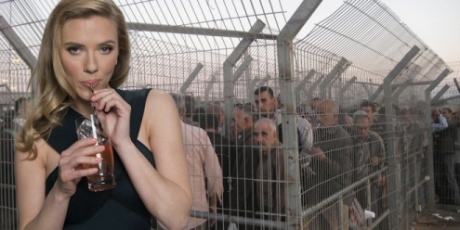
“SodaStream may wish to try and smear our movement, but it is clear that BDS campaigning and the Scarlett Johansson controversy has persuaded retailers across Europe and North America to drop SodaStream and contributed to SodaStream’s share price to tumble by half in the space of a year.
“Even when this closure goes ahead, SodaStream will remain implicated in the displacement of Palestinians. Its new Lehavim factory is close to Rahat, a planned township in the Naqab (Negev) desert, where Palestinian Bedouins are being forcefully transferred against their will. Sodastream, as a beneficiary of this plan, is complicit with this violation of human rights.
“Israel willfully destroys the Palestinian economy in the West Bank, leading to unemployment and economic crisis. The way to tackle this is to challenge Israel’s system of colonialism and apartheid.
“The BDS movement is opposed to all forms of racism, including anti-semitism and Islamaphobia.”
The BNC is the Palestinian Boycott, Divestment and Sanctions National Committee (BNC), the broad coalition of Palestinian civil society organisations that works to support the boycott, divestment and sanctions (BDS) movement.
Germany is ‘exploiting’ refugee suffering to recruit ‘slaves’ via mass immigration – Marine Le Pen
RT | September 7, 2015
As Germany welcomes thousands of refugees, with industries seeking ways to integrate newcomers into country’s workforce, Berlin’s move to temporarily bypass EU-wide regulations has met strong criticism from France’s Marine Le Pen who accused Germany of recruiting “slaves.”
The German drive to open its doors to refugees, as well as debated plans to resettle asylum seekers across the EU has been met with strong criticism from a number of politicians, including the leader of right-wing French party National Front, Marine Le Pen who accused Germany of imposing its immigration policy on the EU.
“Germany probably thinks its population is moribund, and it is probably seeking to lower wages and continue to recruit slaves through mass immigration,” Marine Le Pen said in Marseille, refusing to admit that pure benevolence was Germany’s only motive.
Le Pen criticised European politicians for “exploiting the suffering of these poor people who cross the Mediterranean Sea.”
“They are exploiting the death of the unfortunate in these trips organized by mafia, they show pictures, they exhibit the death of a child without any dignity just to blame the European consciences and make them accept the current situation,” the National Front leader said.
Following days of chaos and uncertainty, thousands of refugees – mostly Syrians – were bused from Hungary to Austria, and then brought by train to Germany, after the countries agreed on allowing migrants access, bypassing the Dublin Regulation.
By Sunday night almost 11,000 migrants arrived in Germany, authorities in Munich said. Germany in August registered more than 100,000 asylum seekers with some 800,000 refugees overall expected to come to Germany in total this year – four times the level of last year.
However, Le Pen blamed Germany for its policies which will affect the whole of the European Union.
“Germany seeks not only to rule our economy, it wants to force us to accept hundreds of thousands of asylum seekers,” she said, adding that France would not open its doors to the “world’s misery.”
While the French National Front leader criticized German actions and their potential knock-on effect in the EU, Turkish PM Ahmed Davutoglu said that German portion of the refugees influx is “ridiculously small.” He accused the EU of building a “Christian fortress” in Europe, pointing out that Turkey had already accommodated more than two million people from Syria and Iraq.
The Turkish PM’s comments came in reply to Hungarian Prime Minister Viktor Orban’s statements calling for the defense of Europe’s prosperity, identity and “Christian values” against Muslim migrants. On Sunday, the Hungarian PM, accused Germany of exacerbating the refugee crisis.
“As long as Austria and Germany don’t say clearly that they won’t take in any more migrants, several million new immigrants will come to Europe,” Orban told Austrian broadcaster ORF.
Austria has already announced that it planned to end emergency measures that have allowed thousands of refugees in Hungary entry into Austria and Germany, but provided no exact details.
“We have always said this is an emergency situation in which we must act quickly and humanely. We have helped more than 12,000 people in an acute situation,” Austrian Chancellor Werner Faymann said. “Now we have to move step-by-step away from emergency measures toward normality, in conformity with the law and dignity.”
Meanwhile even in the face of criticism, the Germans are doing everything to warmly welcome and help the newcomers. Berlin plans to introduce a supplementary budget to free up funds for the refugees while the business elite is looking to utilize migrant skills to close the gap in the lack of professional and skilled labor on the market.
On Saturday German Finance Minister Wolfgang Schaeuble said that hosting the migrants will cost the government, federal states and municipalities 10 billion euros this year as opposed to 2.4 billion euros in 2014. Angela Merkel meanwhile announced that Germany can cope with refugees without raising taxes.
Big businesses are optimistic about prospects for integrating the refugees into the German workforce, as an aging population in the country and low birth rate are eating away at its pool of skilled labor.
“If we can integrate them quickly into the jobs market, we’ll be helping the refugees, but also helping ourselves as well,” the head of the powerful BDI industry federation, Ulrich Grillo, said this week, cited by AFP.
Germany with its 6.4 percent unemployment rate is still short of 140,000 engineers, programmers and technicians. The healthcare and leisure sectors are also low on skilled workers, with sociological research showing that shortage of qualified workers will rise to 1.8 million in 2020. If nothing is done to reverse the trend as many as 3.9 million jobs will need to be filled by 2040.
The influx of migrants could therefore be the answer as many of them are young and have “really good qualifications,” said Grillo.
Meanwhile the flow of migrants risking the dangerous journey across the Mediterranean shows no sign of easing. More than 2,600 have died this year making the journey. But despite the massive influx of refugees and the flawed EU asylum system, the UN refugee chief Antonio Guterres said the crisis was “manageable.”
“The European asylum system is deeply dysfunctional, it works badly. Some countries make the necessary effort, and the effort of many others is nearly non-existent,” he told French radio station RFI and the TV5Monde television channel.
Guterres’s comments came as German Finance Minister Wolfgang Schaeuble urged EU states to “act together” to come up with a single EU-wide policy. Faymann meanwhile said there is “no alternative to a common European solution.”
On Wednesday, European Commission President Jean-Claude Juncker is scheduled to present a plan to relocate 120,000 refugees from Italy, Greece and Hungary. Under the new arrangement Germany is to accept a further 31,000 migrants, followed by France with 24,000 and Spain with almost 15,000, Germany’s Welt am Sonntag newspaper reported.
Labeling Israeli Settlement Products Not Good Enough
By Stephen Lendman | September 6, 2015
Last spring, 16 European foreign ministers urged EU foreign policy chief Federica Mogherini to require labeling of all Israeli settlement products – so consumers can buy or avoid them at their discretion.
Labeling is “an important step in the full implementation of EU longstanding policy,” they said. At best, it’s symbolic. At worst, a weak-kneed gesture with no meaningful effect on Israel’s economy.
By year-end or sooner, the EU is expected to decide up or down on labeling. Mogherini said “(t)he work is close to being finished but it is still ongoing.” If implemented, it’ll only be a guideline, not mandated policy. Individual EU states can do what they please – showing what’s being considered is a sham, an insult to long-suffering Palestinians.
Some EU nations already intend to require labeling – regardless of what the European Commission decides. “We have to make sure that consumers can distinguish products that come from the territories occupied by Israel,” Luxembourg Foreign Minister Jean Asselborn said.
Over 600,000 Israelis live on stolen Palestinian land – in the West Bank and East Jerusalem. Numbers keep increasing exponentially – Palestinians forcibly displaced from their land for exclusive Jewish development.
Palestinian human rights groups justifiably demand a total boycott of all Israeli settlement products. In 2013, Al Haq prepared a report titled “Feasting on the Occupation: Illegality of Settlement Produce and the Responsibility of EU Member States under International Law.”
“Given that trading in settlement goods amounts to a form of recognition and supports the sustainability of entities that violate peremptory norms of international law, a ban on settlement products… is to be considered amongst those actions that Third Party States should undertake to comply with their customary international law obligations,” it states.
Al Haq director Shawan Jabarin said products from settlements “help to sustain their very existence.”
“As things stand, the EU is doing little more than ticking a box by acknowledging that settlements are illegal. Until they support this rhetoric with action and ensure that no assistance or recognition are provided to settlements, even indirectly, any such criticism will continue to be meaningless.”
The EU is Israel’s largest trading partner. Settlement products represent a minuscule percent of Israeli exports. At the same time, they’re important “for the economic viability of many settlements,” the report said.
Economist Shir Hever said “(t)he significance of ending the import of colony products is much larger than the direct financial effect.”
“It (would be) a strong statement reminding Israel of the illegality of the colonization of the West Bank, and a blow to many Israeli and international companies who have turned the occupation into a source of profit.”
It would be a shot across the bow against all Israeli enterprises – a hopeful first step toward greater boycott and divestment from an apartheid state, aiming for total isolation.
Currently, nothing indicates business as usual changing. The 2000 EU/Israel Association Agreement governs relations between the Parties, including strengthening economic cooperation and trade.
Human rights groups blasted the enhanced partnership – showing EU officials say one thing and do another, effectively supporting Israeli high crimes.
After decades of mass slaughter and destruction, ethnic cleansing, illegal occupation and oppression, as well as international complicity with Israeli ruthlessness, mandated boycott, divestment and sanctions more than ever are essential – continued until Israel:
- recognizes Palestinian self-determination unconditionally;
- strictly observes international laws, norms and standards;
- ends its illegal occupation and Gaza blockade unconditionally;
- ends illegal aggression and all other hostile acts;
- dismantles its Separation Wall;
- frees all Palestinian political prisoners unconditionally;
- grants Israeli Arabs equal rights as Jews;
- ends apartheid racism;
- complies with UN resolution 194, affirming the right of diaspora Palestinians to return to their homes and property or be fully compensated for loss or damage if they prefer;
- recognizes East Jerusalem as Palestine’s exclusive capital within June 1967 borders; and
- gives Palestinians control over their land, borders, air space, coastal waters and resources.
Ending Israeli high crimes against defenseless Palestinians is long overdue. Nothing less than its full observance of international law is tolerable.
AIPAC’s Plan B?
By Jim Lobe | LobeLog | September 3, 2015
*Editor’s Note: Read an accompanying post to this article here.
A number of readers have complained that I buried the important news in my last post marking Mikulski’s announcement Wednesday. So I’m reposting below that part of the Mikulski piece that dealt with what appears to be AIPAC’s and the opposition’s most likely “Plan B” for congressional action, aimed chiefly at those Democrats who feel queasy about their decision to support the White House and vote against the pending resolution to reject the JCPOA.
A summary of a draft bill, which I obtained from a source who asked to remain anonymous, is circulating that is designed (almost certainly by AIPAC) to appeal to those Democrats eager to “kiss and make up” after their defiance of the most powerful Israel lobby group (whose reputation for omnipotence just took a very heavy hit) and its donors. Although most of the bill appears to be innocuous and consistent with the administration’s own intentions, it also contains a number of “poison pills,” which, if approved, appear calculated to raise new obstacles to implementation and Tehran’s confidence that the U.S. will fully comply with both the spirit and the letter of the JCPOA.
With proposed banking sanctions, for example, it appears to do what Kagan and the policy director of the neoconservative Foreign Policy Initiative (FPI), Juan Zarate, have urged with respect to codifying existing non-nuclear sanctions and reducing or eliminating the president’s waiver authority. It also would set up a process for “expedited procedures” for Congress to pass new terrorism sanctions against Iran under certain circumstances, and also create a coordinator for compliance whose responsibilities would not only be to oversee Iran’s implementation of the JCPOA but also report on non-nuclear issues outside the scope of the agreement.
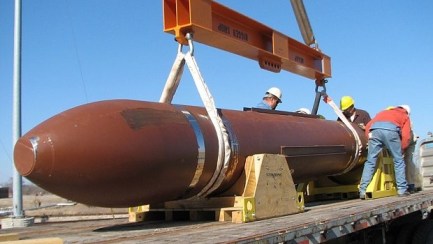
Yet another provision would authorize the delivery to Israel of Washington’s most powerful Massive Ordinance Penetration munitions (MOPs) and the means to deliver them against Iran’s nuclear facilities, a move that administration officials have long said they strongly oppose. This would be one part of a much- enhanced package of military assistance for Israel.
Other provisions appear designed to “renegotiate” certain provisions of the JCPOA; for example, by eliminating the exemption of any contracts agreed to between Iran and foreign companies during the implementation phase in the event that sanctions are “snapped back.” It also requires Iran to abide by the Nuclear Non-Proliferation Treaty’s (NPT) Additional Protocol as of “adoption day,” even if the Iranian parliament has not yet ratified the Protocol.
We hear that the sponsors intend to push this through Congress as a companion to the disapproval resolution. The idea is to enable nervous Democrats to demonstrate their strong support for Israel and their undiluted distrust and hostility toward Iran. The fear is that if this measure isn’t passed now, then it could prove much more difficult to pass once Iran begins to implement the agreement.
Here is a summary of the draft bill which, as I understand it, is still very much a work in progress.
The Iran Policy Oversight Act of 2015
Building on the bipartisan commitment to oversight outlined in the Iran Nuclear Agreement Review Act of 2015 – PL 114-17
Sets the U.S.’s going-forward Iran policy regarding the nuclear issue: The United States will never permit Iran to obtain a nuclear weapon, and all options available to the United States, including the military option, remain available.
Clarifies key interpretive issues in the JCPOA, which would also apply to subsequent agreements, including:
No sanctions relief will be provided to Iran until it meets its commitments related to resolution of PMD [possible military dimensions] issues.
Any production of HEU by Iran would be a violation of the JCPOA.
Nothing in the JCPOA limits or curtails Congress’ ability to pass sanctions legislation addressed to legitimate foreign policy purposes, including sanctions related to terrorism, human rights, and Iran’s ballistic missile activities.
There is no “grandfather clause” that would shield ongoing sanctionable activities by foreign firms in the event of a snap-back of Iran sanctions.
The JCPOA commits Iran to abide by all the provisions of the Additional Protocol of the NPT as of “adoption day,” regardless of whether the Iranian parliament approves the Additional Protocol.
Requires the Administration to submit:
A ten-year regional strategy for Countering Conventional and Asymmetric Iranian Activity and Threats in the Middle East and North Africa within six months, and every two years thereafter,
Report[s] detailing Iran’s use of funds received through sanctions relief and changes in funding for regional activities and support for terrorism,
Reports detailing Iran’s R&D activities as well as estimated nuclear weapons capability breakout time, and
A report addressing the IAEA’s resolution of the PMD issue.
Explicitly authorizes additional, specific security assistance to Israel, including bunker-busting MOPs, to ensure the President can and should take all necessary and appropriate measures to ensure Israel has the means and capacity to defend itself against nuclear and other threats from Iran.
Continues in effect banking sanctions addressed to ballistic missile proliferation and terrorism sanctions, unless the President certifies that designated financial institutions have ceased their support for missile proliferation and terrorism. Also continues in effect sanctions related to human rights abuses.
Requires the President to seek multilateral arrangements to both maintain control of exports related to conventional arms and ballistic missiles to Iran, and ensure an effective snap-back policy to respond to any non-compliance incidents as well as breach of the JCPOA by Iran.
Puts into place expedited procedures for consideration of new terrorism sanctions against Iran if Iran:
1) directs or conducts an act of terrorism against the U.S., or
2) substantially increases its operational or financial support for a terrorist organization that threatens U.S. interests or allies.
Requires the President to appoint a Coordinator for Compliance within the Department of State to:
1) coordinate all activities related to implementation of the JCPOA and any subsequent related agreements, and
2) monitor human rights abuses and activities relating to support for acts of international terrorism by the government of Iran.
US State Dept fails to explain Washington’s decision to extend sanctions on Russia
RT | September 4, 2015
Washington has extended its sanctions against Russia, but the US State Department failed to offer specifics of what exactly Moscow did wrong this time. It referred to a “larger picture,” which supposedly proves Russia’s guilt in destabilizing Ukraine.
On Wednesday, the US Department of Commerce’s Bureau of Industry and Security (BIS) explained that it took action to sanction 29 Russian entities to ensure the “efficacy of existing sanctions… for violating international law and fueling the conflict in eastern Ukraine.”
Considering that the situation in eastern Ukraine has been unusually calm recently, RT’s Gayane Chichakyan asked State Department Deputy Spokesperson Mark Toner what Russian violations now warrant such tightening and strengthening of the sanctions list.
“We’ve seen ongoing violations of the ceasefire and I know we’ve been back and forth on that, or who is to blame for that. We believe the preponderance of the ceasefire violations are on the part of separatist forces, again supplied and also helped by Russian military,” Toner said.
Asked to provide any specifics on the ceasefire violations, the State Department deputy spokesperson referred RT correspondent to the OSCE and offered to look at “larger picture,” rather than focusing on specifics.
However, the latest OSCE SMM report clearly states that “the SMM observed few ceasefire violations in Donetsk region, and none in Lugansk,” and even Toner had to admit that there was “relative calm today.”
Toner said “we all understand” that “there would be no conflict” in eastern Ukraine “if Russia were not providing tanks, armored vehicles, heavy artillery, military personnel to the separatists.”
So far, none of the satellite images, released by the US or NATO over more than a year of conflict in eastern Ukraine, showed anything except increased Russian military presence at the border with the conflict-torn neighboring country.
In response to the sanctions, presidential spokesman Dmitry Peskov said Russia would reciprocate. The Russian Foreign Ministry called the new addition an illegitimate and “reckless” US policy that is “fraught with serious costs for international stability.”
The Great Wealth Transfer to the London Elite
By Craig Murray | September 2, 2015
The Guardian has a fascinating piece on house prices which deserves to be read and studied in detail. In London in 2013 the median house price had reached 300,000 while the median salary was 24,600. House prices are 12.2 x salary. That means it is in practice impossible for working people, without inherited wealth, to buy a house.
But the point is, that it should be equally impossible to rent a house. Landlords look for a rental return of approximately 6% of rental value. So that would put median rent in London at around 18,000 pa, which is a realistic figure. But nobody on a salary of 24,600 before tax can pay 18,000 pa in rent. So we should be at a stage where it is impossible for Londoners who have not inherited homes to live there at all.
Very little of the apparent gravity-defying power of the London property market is due to foreign buyers. Their major effect is very much concentrated on the top end of the market. Very few wealthy foreign buyers are purchasing semis in Plumstead or Acton. For prices to be this distorted from the potential of local buyers to pay would require literally hundreds of thousands of foreign purchasers in all segments of the market. They just do not exist.
No what is causing this incredible distortion is the conjunction of buy to let and state housing benefit. The state pays out 18 billion pounds a year in housing benefit, and the vast majority of that goes straight into the pockets of private landlords in the South East of England. State housing benefit underpins the entire system.
Now the brilliance of the trick is that, as it is labeled a benefit, the left fight to keep housing benefit as though it benefited poor people. In fact this is a great illusion. It does nothing of the sort. What would truly benefit poor people is lower rent or affordable homes. Housing benefit goes straight into the pockets of the landlord class.
The landlord class of course encompasses the political class, many of whom (including Cherie Blair, famously) are also landlords. As housing benefit is paid for from general taxation, the entire system is a massive transfer of wealth from the poor to the rich, and above all from the North and West to the South and East. The landlord class benefit not only from the taxpayer giving them enormous rents, but from the possession of artificially inflated property on which they can raise further money for more speculation.
The problem is national but is much worse in London and the South East of England. The reason that IDS has not made a serious assault on housing benefit is that it puts money straight into the pockets of most of his Tory chums. The largest benefit recipients in the UK are the great landlords.
The policy mix to tackle this must include building much more council housing, but must also include a phasing out of the payment of state housing benefit to private landlords. Let me put this simply – given a 6% rental return, pumping in 18 billion pounds of state money a year to rents adds 288 billion pounds to property values. Let me say that again because it is very, very important but not that easy to follow.
Given a 6% rental return, pumping in 18 billion pounds of state money to rents adds 288 billion pounds to property values. That explains how you reach the apparently impossible situation of median property at twelve times median income.
The landlord class will endeavour to ensure that any phasing out of such benefit causes maximum dislocation pain to tenants. But correcting the situation is an economic necessity. Ultimately property values have to halve, and rents too. That will provide pain to not just the landlord class but the entire Ponzi economy that Blair built. The ratio of property prices to income almost trebled in the Blair/Brown years, and is the aspect of their economic charlatanry which still overhangs us.
Seen from Edinburgh, another reason to escape to Independence as quickly as possible. The problem is not nearly so acute in Scotland. In England the situation can continue for a while. The Conservative government is delighted with this massive transfer of money to the rich. But once interest rates start to rise, it will bring a crash of gigantic proportions.
Featured Video
New positive ivermectin evidence
or go to
Aletho News Archives – Video-Images
From the Archives
Fanatical Followers of the Covid Regime: A Jim Jones-Style Cult?
By Professor Roger Watson and Dr. Niall McCrae | The Daily Sceptic | November 15, 2021
As scholars at leading British universities over recent decades, we witnessed the replacement of critical thinking and debate by narrative: facts are discrimination and scientific method is imperialism; truth, instead, is derived from ‘progressive’ values. This educational trend may be a major contributory factor to the ease in which society has been inculcated to the Covid ‘new normal’ of masking, testing, and repeated doses of vaccines for a disease of similar risk to severe influenza.
One doesn’t need much critical reasoning to observe the flawed logic of some vaccination enthusiasts, such as people who respond to experiencing any side effects, however debilitating, by saying “at least I know it’s working”, or, after contracting the disease despite their promised inoculation (over 90% effective, according to initial drug company claims), “I’d have been worse off without the jab.” … continue
Blog Roll
 Aletho News
- EU Council Advances Chat Control 2.0 Scanning Proposal
- Ex-Greek MEP files complaint against Israeli spyware firm over alleged Pegasus surveillance
- Troubling ideas throughout the Torah, Talmud, Mishneh Torah and Tanya
- ‘Grave, alarming’: Iran mission on Trump’s UNGA ‘annihilation’ threats
- Najaf airport to reopen to Iranian flights within 24 hours: Ambassador
- From ‘How Will This End For Iran’ to ‘When America Walks Away’: A tale of two Economist covers
- Tehran blasts ‘baseless’ speculation linking Iran to alleged bomb plot at UK air base
- The Rise And… Rise Of ‘Color Revolutions’
- The Coming GOP Bloodbath?
- Arctic Scare Stories Melt Away
- If Americans Knew
- Netanyahu Asked UAE Leader to Deny Report on Oct. 7 Warning in Secret Visit, Sources Say
- CNN Chief Int’l Correspondent Clarissa Ward on Journalists in Gaza
- Democratic Party Consultants Surround Troy Jackson with Pro-Israel Donors
- Christian Leader Responds To Netanyahu’s Claims Regarding Palestinian Christians
- In Gaza, ‘Whoever Survives the Bombing Won’t Survive the Rubble’
- Israel kills more Palestinians, amid push to resettle Gaza – Daily Update
- Israel forces Gazans to live in constant peril – Daily Update
- Deconstructing Netanyahu’s pants-on-fire UN rant – Daily Update
- Trump betrayed voters with his campaign lies and prioritized a foreign country once he took office
- Netanyahu calls Israel’s war in Gaza ‘opposite of genocide’ in UN speech to near-empty hall
- No Tricks Zone
- New Study: Earth And Venus Surface Warmth Largely Explained By Convection And Lapse Rate, Not CO2 Or Radiation
- 2025 Nature Paper Claiming Worsening Global Drought Gets RETRACTED …Heavily Flawed
- New Study: ‘Global Drought Shows No Detectable Recent Acceleration Under Climate Warming’
- Economic Masterminds: German Socialists Suggest Taxing Productivity Gains Stemming From Using AI
- The South China Sea Has Not Been Cooperating With The Climate Change Narrative
- Energy Crisis: Germany Enters Heating Season With Historically Low Gas Reserve Fill Levels
- New Study: The Antarctic Ice Sheet Gained Mass From 2020-2024 Due To Staggering Snow And Ice Accumulation
- Study: Ocean Heating Rates From Thousands Of Years Ago ‘Dwarf’ Modern Ocean Heating Rates
- Climate Extremists Target, Attack Large-Scale Power Grid Infrastructure In Germany!
- New Study: Antarctic Ice Melt Has Contributed Less Than 1 Centimeter To Sea Level Rise In The Last 30 Years

