Bankers and Big Business Bosses to Dominate Secretive Bilderberg Talks
Sputnik | 09.06.2015
Bankers, politicians and leaders of huge global businesses are set to meet in the annual Bilderberg conference in Austria this week, during which the rich and the powerful discuss global issues in secretive talks that influence global politics.
Former US Secretary of State Henry Kissinger is set to rub shoulders with ex-CIA Director David H. Petraeus, Dutch Prime Minister Mark Rutte, Belgian Prime Minister Charles Michel, former French Prime Minister Alan Juppé and Thomas Ahrenkiel, Director of the Danish Intelligence Service (DDIS) at the 63 Bilderberg conference, set to take place from 11-14 June in Telfs-Buchen, Austria.
The conference — surrounded by tight security — is notoriously secretive in its discussions and regularly attracts demonstrations against what critics describe as a global meeting of western capitalists, politicians and academics who wield great power behind the scenes. It is billed as “an annual meeting designed to foster dialogue between Europe and North America.”
Bilderberg conferences are described as “private” and no minutes are taken, no report is written, no resolutions are proposed, no votes are made, and no policy statements are issued.
Daniel Estulin, author of ‘The True Story of the Bilderberg Group’ describes the meetings as “a shadow world government…threaten(ing) to take away our right to direct our own destinies (by creating) a disturbing reality.
“Imagine a private club where presidents, prime ministers, international bankers and generals rub shoulders, where gracious royal chaperones ensure everyone gets along, and where the people running the wars, markets, and Europe (and America) say what they never dare say in public.”
No-Fly Zone
Guests this year also include Google chairman Eric Schmidt; Paul M. Achleitner, Chairman of the Supervisory Board of Deutsche Bank; the Tyrolean property investor Rene Benko; Shell CEO Ben van Beurden; Thomas Enders, CEO, Airbus Group; Henri de Castries, the Chairman of the Euro Group; Austrian President Heinz Fischer; Siemens Austria CEO Wolfgang Hesoun; the CEO of Austrian oil and gas giant OMV, Gerhard Roiss; and Ryanair chairman Michael O’Leary.
Under discussion in Austria will be artificial intelligence, cybersecurity, chemical weapons threats, Greece, NATO and terrorism. Nobody representing Russia is on the guest list.
An elite anti-terrorism squad will be deployed under the command of Austria’s Interior Ministry and around 2,100 police officers will be on duty throughout the conference. The main road from Telfs to the Interalpen Hotel will be closed and the area around the hotel will be a no-fly zone.
A large protest march is expected on the afternoon of June 13, starting in Telfs square and making its way through the town.
US Dragging Europe Into ‘Crusade’ Against Russia – Former French PM
Sputnik | 10.06.2015
Former French prime minister Francois Fillon has said that Europe is now fully dependent on the US, which is dragging it into a ‘crusade’ against Russia and is pursuing a policy which is absolutely contradictory to European interests.
“Europe nowadays has lost its independence. The US is dragging it into a ‘crusade’ against Russia, which absolutely contradicts European interests,” former French prime minister Francois Fillon said in an interview with the French news channel BFMTV.
“The US is also pressuring Germany to yield to the demands of Greece in order to find a compromise. German intelligence is spying on France, but not in its own interests, but those of the US,” he said.
The politician also added that the US justice system constantly interferes into the work of the European judicial authorities.
In the Middle East, the US is pursuing a policy which completely contradicts European interests and is a real danger to them, but the countries of Europe are forced to agree to it.
Fillon also criticized the proposed Transatlantic Trade and Investment Partnership (TTIP) agreement between the EU and the US and added that he is decisively against signing it, given the way it is worded now.
Kiev hopes to sell state-run companies to US investors – PM
RT | June 9, 2015
Ukraine’s Prime Minister Arseny Yatsenyuk hopes to sell the country’s state-owned companies to the US. American investors will get the assets “on the most transparent conditions” if they decide to invest, he said.
The statement comes ahead of a Ukrainian-American investment conference in Washington on July 13.
“We want to start the privatization process… We want to see American owners on the territory of Ukraine, they will bring not only investment, but also new standards, new ways of managing the companies, and a new investment culture,” Yatsenyuk was cited as saying during his meeting with the representatives of Ukraine’s diaspora in Washington, UNIAN reported on Tuesday. Yatsenyuk and Ukraine’s Finance Minister Natalia Jaresko are in the US capital on a working visit which will last until June 10.
The massive privatization process of Ukraine’s state-run assets is planned for the second quarter of 2015. In April, the Ukrainian government decided to hold a number of investment conferences in Berlin, Paris and Washington to attract investors and to spread the privatization idea. The Prime Minister then said they expect to see American and European entrepreneurs in agriculture, energy, especially in the modernization of the Ukrainian gas transportation system and the mining industry, as well as in other vital sectors of the economy.
Ukraine is facing a deep economic crisis with the country on the verge of a default. Earlier this month, the IMF’s mission in Ukraine said the country’s GDP is expected to shrink 9 percent in 2015, with annual inflation to hit 46 percent. Ukraine’s total debt is estimated around $50 billion, $30 billion of which is external debt and $17 billion internal debt. Public sector debt rose to 71 percent of Ukraine’s gross domestic product, and is due to rise to 94 percent of GDP in 2015, according to the National Bank of Ukraine.
Last year, Ukraine’s President Petro Poroshenko invited foreign citizens to become key ministers in the new government of Ukraine, claiming that he views the foreigners as some kind of “anti-crisis management needed due to the difficult situation in economy”. The natives of the US, Georgia and Lithuania – Natalie Jaresko, Aleksandr Kvitashvili, and Aivaras Abromavicius were approved by the parliament to head up the Ministry of Finance, Ministry of Health and Ministry of Economic Development, respectively. All of them have been granted Ukraine citizenship after a decree amending the law to allow foreigners into the government.
Venezuela Recognized by FAO for Halving Malnutrition
By Lucas Koerner | Venezuelanalysis | June 8, 2015
Caracas – Venezuela was recognized today by the United Nations Food and Agriculture Organization (FAO) for meeting the UN millennium goal of halving malnutrition.
The recognition was awarded during the 39th FAO conference in Rome which will last until June 13. It counts among its attendees representatives of 190 countries, including 130 ministers and 12 heads of state.
Attending on behalf of Venezuela, Bolivarian Vice-President Jorge Arreaza highlighted his nation’s achievements in eradicating hunger under the socialist governments of Hugo Chavez and Nicolas Maduro.
“Under the Revolution, children are now served breakfast, lunch, and snacks in schools […] We’ve seen a miracle in school nutrition, whereas in the past [children were served] only one glass of milk a day,” stated the socialist vice-president in reference his country’s School Food Program.
According to Arreaza, Venezuela has over the last decade invested $142 billion in food programs that have distributed over 25 million tons of food items to 65% of the population. Today, 95.4% of Venezuelans eat three meals a day.
Venezuela was also recognized for its role in providing technical assistance to other nations striving to similarly meet millennium targets for eradicating hunger.
“Venezuela can be considered one of the countries, like Brazil and China, that has contributed to South-South cooperation in the world,” noted Laurent Thomas, FAO Director for Technical Cooperation.
The South American nation was recognized by the FAO first in 2012 for slashing extreme hunger and poverty by 50% and subsequently in 2013 for reducing hunger from almost 14% in 1992 to 5% in 2012.
Arreaza accepted the UN body’s recognition on behalf of Venezuelan President Nicolas Maduro, who was compelled to cancel both his appearance at the conference as well as his much-anticipated meeting with the Pope for health reasons.
Russia has better things to do than start WW3
By Bryan MacDonald | RT | June 8, 2015
Vladimir Putin said this weekend that “Russia would attack NATO only in a mad person’s dream.” Unfortunately, there are a lot of mad people working in western politics and media.
If the G7 were based on GDP, adjusted for purchasing power, it would be comprised of the USA, China, India, Japan, Russia, Germany and Brazil. Such a lineup would have remarkable clout. Members would boast 53% of the globe’s entire GDP and the planet’s 3 genuine military superpowers would be represented.
The problem for Washington is that this putative G7 might actually be a forum for a real debate about the world order.
Instead of a real G7, we have a farce. An American dominated talking shop where the US President allows ‘friendly’ foreign leaders to tickle his belly for a couple of days. There is no dissent. Washington’s dominance goes unquestioned and everyone has a jolly time. Especially since they kicked out Russia last year – Vladimir Putin was the only guest who challenged the consensus.
However, the problem is that this ‘convenient’ G7 is way past its sell-by-date. The days when its members could claim to rule the world economically are as distant as the era of Grunge and Britpop. Today, the G7 can claim a mere 32% of the global GDP pie. Instead of heavyweights like China and India, we have middling nations such as Canada and Italy, the latter an economic basket case. Canada’s GDP is barely more than that of crisis-ridden Spain and below that of Mexico and Indonesia.
Yet, the Prime Minister of this relative non-entity, Stephen Harper, was strutting around Bavaria all weekend with the confidence of a man who believed his opinion mattered a great deal. Of course, Harper won’t pressure Obama. Rather, he prefers to – metaphorically – kiss the ring and croon from the same hymn sheet as his southern master.
NATO and the G7 – 2 sides of 1 coin?
There was lots of talk of “Russian aggression” at the G7. This was hardly a surprise given that 6 of the 7 are also members of NATO, another body at which they can tug Washington’s forelock with gay abandon. Obama was at it, David Cameron parroted his guru’s feelings and Harper was effectively calling for regime change in Russia. It apparently never occurred to the trio that resolving their issues with Russia might be easier if Putin had been in Bavaria? The knee-jerk reaction to remove Russia from the club was hardly conducive to dialogue.
Meanwhile, Matteo Renzi stayed fairly quiet. It has been widely reported that the Italian Prime Minister privately opposes the EU’s anti-Russia sanctions due to the effects on Italy’s struggling economy. Also, Renzi’s next task after the G7 summit is to welcome Putin to Rome.
With that visit in mind, Putin gave an interview to Italy’s Il Corriere della Sera where he essentially answered the questions that Obama, Cameron and Harper could have asked him if they hadn’t thrown their toys out of the pram and excluded Russia from the old G8. Putin stressed that one should not take the ongoing “Russian aggression” scaremongering in the West seriously, as a global military conflict is unimaginable in the modern world. The Russian President also, fairly bluntly, stated that “we have better things to be doing” (than starting World War 3).
Putin also touched on a point many rational commentators have continuously made. “Certain countries could be deliberately nurturing such fears,” he added, saying that hypothetically the US could need an external threat to maintain its leadership in the Atlantic community. “Iran is clearly not very scary or big enough” for this, Putin noted with irony.
A world of ‘goodies’ and ‘baddies’
For Washington to maintain its huge military spending, it has to keep its citizens in a state of high alarm. Otherwise, they might insist that some of the armed forces’ cash is diverted to more productive things like hospitals and schools. These services, of course, are not very profitable for weapons manufacturers or useful for newspaper and TV editors looking for an intimidating narrative.
Following the collapse of the USSR, Russia was too weak and troubled to be a plausible enemy. Aside from its nuclear arsenal – the deployment of which would only mean mutual destruction – the bear’s humbled military was not a credible threat. Instead, the focus of warmonger’s venom shifted to the Middle East and the Balkans, where Saddam Hussein, Muammar Gaddafi, Slobodan Milosevic and Osama Bin Laden kept the general public’s attention occupied for roughly a decade and a half. However, they are now all dead and pro-war propaganda needs a new bad guy to play the Joker to America’s Batman.
Kim Jong-un looked promising for a while. Nevertheless, the problem here is that North Korea is too unpredictable and could very feasibly retaliate to provocations. Such a reaction could lead to a nuclear attack on Seoul, for instance, or draw Washington into a conflict with China. Even for neocons, this is too risky. Another candidate was Syria’s Basher Al-Assad. Unfortunately, for the sabre rattlers, just as they imagined they had Damascus in their sights, Putin kyboshed their plan. This made Putin the devil as far as neocons are concerned and they duly trained their guns in his direction.
Russia – a Middle East/North Africa battleground?
In the media, it is noticeable how many neocon hacks have suddenly metamorphosed from Syria ‘experts’ into Russia analysts in the past 2 years. Panda’s Mark Ames (formerly of Moscow’s eXILE ) highlighted this strange phenomenon in an excellent recent piece. Ames focused on the strange case of Michael Weiss, a New York activist who edits the anti-Russia Interpreter magazine (which is actually a blog). The Interpreter is allegedly controlled by Mikhail Khodorkovsky and a shadowy foundation called Herzen (not the original Amsterdam-based Herzen) of which no information is publicly available.
Weiss was a long-time Middle East analyst, who promoted US intervention to oust Assad. Suddenly, shortly before the initial Maidan disturbances in Kiev, he re-invented himself as a Russia and Ukraine ‘expert,’ appearing all over the US media (from CNN to Politico and The Daily Beast ) to deliver his ‘wisdom.’ This is despite the fact that he appears to know very little about Russia and has never lived there. The managing editor of The Interpreter is a gentleman named James Miller, who uses the Twitter handle @millerMENA (MENA means Middle East, North Africa). Having been to both, I can assure you that Russia and North Africa have very little in common.
Weiss and Miller are by no means unusual. Pro-War, neocon activists have made Russia their bete noir since their Syria dreams were strangled in infancy. While most are harmless enough, this pair wields considerable influence in the US media. Naturally, this is dressed up as concern for Ukraine. In reality, they care about Ukraine to about the same extent that a carnivore worries about hurting the feelings of his dinner.
Russia’s military policy is “not global, offensive, or aggressive,” Putin stressed, adding that Russia has “virtually no bases abroad,” and the few that do exist are remnants of its Soviet past. Meanwhile, it would take only 17 minutes for missiles launched from US submarines on permanent alert off Norway’s coast to reach Moscow, Putin said, noting that this fact is somehow not labeled as “aggression” in the media.
Decline of the Balts
Another ongoing problem is the Baltic States. These 3 countries have been unmitigated disasters since independence, shedding people at alarming rates. Estonia’s population has fallen by 16% in the past 25 years, Latvia’s by 25% and Lithuania’s by an astonishing 32%. Political leaders in these nations use the imaginary ‘Russian threat’ as a means to distract from their own economic failings and corruption. They constantly badger America for military support which further antagonizes the Kremlin, which in turn perceives that NATO is increasing its presence on Russia’s western border. This is the same frontier from which both Napoleon and Hitler invaded and Russians are, understandably, paranoid about it.
The simple fact is that Russia has no need for the Baltic States. Also, even if Moscow did harbor dreams of invading them, the cost of subduing them would be too great. As Russia and the US learned in Afghanistan and America in Iraq also, in the 21st century it is more-or-less impossible to occupy a population who don’t want to be occupied. The notion that Russia would sacrifice its hard-won economic and social progress to invade Kaunas is, frankly, absurd.
The reunification of Crimea with Russia is often used as a ‘sign’ that the Kremlin wishes to restore the Soviet/Tsarist Empire. This is nonsense. The vast majority of Crimean people wished to return to Russia and revoke Nikita Khrushchev’s harebrained transfer of the territory to Ukraine. Not even the craziest Russian nationalist believes that most denizens of Riga or Tallinn wish to become Russian citizens.
Putin recalled that it was French President Charles de Gaulle who first voiced the need to establish a “common economic space stretching from Lisbon to Vladivostok.” As NATO doubles down on its campaign against Moscow, that dream has never looked as far off.
Bryan MacDonald is an Irish writer and commentator focusing on Russia and its hinterlands and international geo-politics. Follow him on Facebook
US presidential hopeful: Sanctions don’t facilitate ‘rapprochement’ with Russia
RT | June 8, 2015
Former Rhode Island Governor Lincoln Chafee, who has entered the race for the Democratic nomination for president, has questioned the US policy of imposing sanctions on Russia. There are “better ways to get rapprochement” with Moscow, he said.
“I should think there would be better ways of getting a rapprochement with Russia,” Democratic presidential hopeful Chafee, a fierce critic of rival frontrunner Hillary Clinton over her 2002 vote on Iraq War, told CNN’s “State of the Union” on Sunday.
“They’re so important in the world, and especially to the countries, the former Soviet Republics, such as Ukraine,” said Chafee, who previously served in the Senate as a Republican.
He added: “We need to wage peace in this world. That’s our responsibility. That’s the charge that we’re given with our economic power that we have.”
When asked how he would reshape relations with Russia and President Vladimir Putin, Chafee said to start with the US needs to learn from previous mistakes.
“Stop making mistakes that Secretary Clinton made when we were trying to restart our relations with Russia and Sec. Clinton presented the foreign minister with a symbolic gesture and they got the Russian word wrong. It’s those types of mistakes that set back a relationship – little symbolic mistakes.”
In 2009, the then-US Secretary of State Hillary Clinton presented her Russian counterpart, Sergey Lavrov, with a little gift meant to highlight the Obama administration’s readiness “to press the reset button” in relationships with Moscow. Instead of the Russian word for “reset” (perezagruzka) the box featured a different word – peregruzka, which translates as “overload” or “overcharged.”
“You’ve got it wrong,” Lavrov noted with a smile. The grammatical gaffe created a stir in the media.
The carrot-and-stick policy in regard to Russia has been considered unconstructive and ineffective by a number of politicians and economists. A senior member of Germany’s Social Democrats (SPD), Matthias Platzeck, told Die Welt am Sonntag newspaper in May that among other things, “The process of disintegration in the Middle East, in Iran, Afghanistan and Syria can only be solved with Russia.”
Greece revealed last month it was asked by the US to prolong anti-Russia sanctions. Athens replied that Russia is a strategic ally and the “sanction war” is causing it an estimated loss of €4 billion a year.
“I was asked to support the prolongation of the sanctions, particularly in connection with Crimea. I explained the Ukrainian issue was very sensitive for Greece as some 300,000 Greeks live in Mariupol and its neighborhood, and they feel safe next to the Orthodox Church,” Defense Minister Panos Kammenos was cited as saying on the Ministry of National Defense website.
Italian media also previously reported that the sanctions have affected the country’s economy, with trade turnover falling by 17 percent, and the Italian economy losing 5.3 billion euros. Italian Foreign Minister Paolo Gentiloni said in May that “Italy can’t afford to close the doors to Russia” and “can’t cut ties” with Moscow. Gentiloni also told La Stampa newspaper that Russia plays a major role in resolving world crises.
European experts estimate that due to the sanctions, the West lost €40 billion last year, which includes a €12 billion loss by European farmers. Despite the economic difficulties that the sanctions against Russia, imposed over its stance on the conflict between Kiev and rebels in eastern Ukraine, have brought to the EU, leaders gathered at the G7 meeting on Sunday called for even tougher measures. Russia was expelled from the club last year in protest over its support for the referendum in Crimea, where the majority of residents voted for secession from Ukraine and in favor of joining Russia.
According to a statement issued by the White House after a one-on-one meeting between Angela Merkel and Barack Obama in Bavaria, it was restated that the “duration of sanctions should be clearly linked to Russia’s full implementation of the Minsk agreements and respect for Ukraine’s sovereignty.”
Ahead of Obama’s visit to Germany, White House spokesman Josh Earnest stated, however, that the introduction of the sanctions on Russia has not brought any positive results.
“I would acknowledge that we have not yet seen the kind of change in behavior that we have long sought now,” Earnest said in his daily press briefing.
The Obama administration has maintained that the longer the sanctions are in place, “the more of an economic bite they take out of the Russian economy.” This, despite the fact a number of EU members have been hit hard by Russian counter-sanctions.
“I think these sanctions are affecting Europe much more as a whole than was expected, and the others on the other side of the Atlantic are not affected at all,” former Italian Foreign Minister Franco Frattini told RT in November.
The Minsk-2 deal, reached on February 12, includes a requirement to withdraw heavy weapons from the contact line and establish a buffer zone. But tensions have been running high in eastern Ukraine recently, leading to growing concerns that the fragile ceasefire was on the verge of collapse.
Kiev forces shelled Donbass on June 3, killing at least six people and injuring 90 others. The RT crew recorded dramatic footage of the shelling’s aftermath. The US State Department refused to acknowledge that the Kiev authorities are violating the Minsk peace agreements, however, turning a blind eye to daily OSCE reports that equally implicate the government and the rebel forces. The Ukrainian General Staff acknowledged last week that Kiev’s forces were using heavy artillery that had previously been withdrawn from the frontline under February’s Minsk peace deal.
Moscow, meanwhile, believes that the timing of the new tensions is directly connected with the upcoming EU summit, which is to take place in Brussels later this month.

2637716 06/06/2015 Firemen extinguish fire at the Oktyabrksy market caused by a shell hit during the shelling of Donetsk. Irina Gerashchenko/RIA Novosti
“Yes, indeed, in the past Kiev had already heated up tensions amid some large international events. This is the case, and now we are seriously concerned about the next repetition of such activity,” Kremlin spokesman Dmitry Peskov said last week.
At the United Nations Security Council meeting on Friday, Russia’s ambassador to the UN, Vitaly Churkin, told its members that he has noticed “frustration” with Kiev’s “flagrant violation and blunt ignorance of the Minsk agreements” among even those Western states that are “loyal to Kiev.” The UN Security Council members urged both sides in the Ukrainian conflict to exercise restraint and uphold the ceasefire last week.
The conflict erupted in April 2014 after Kiev sent troops to the Donetsk and Lugansk regions as local residents refused to recognize the coup-imposed authorities in the capital. According to the UN Human Rights Office, at least 6,116 people have been killed and 15,474 wounded during a year of fighting.
Meet RCEP, a Trade Agreement in Asia That’s Even Worse Than TPP or ACTA
By Jeremy Malcolm | EFF | June 4, 2015
It’s been a big few weeks for leaked trade agreements. Just when we thought we had seen all the leaked text of the Trade in Services Agreement (TISA), Wikileaks went ahead and published some more yesterday. And on the same day, a leaked draft of the intellectual property chapter of yet another trade agreement, the Regional Comprehensive Economic Partnership (RCEP) was leaked by Knowledge Ecology International (KEI).
If we described TISA as a treaty you’ve never heard of, RCEP has been even more obscure. RCEP can be compared with the Trans-Pacific Partnership (TPP), except that rather than being driven by the United States, it is being driven by the ten-member Association of South East Asian Nations (ASEAN), with the addition of their trading partners from the broader Asia-Pacific region including most notably India and China, who are absent from the TPP pact.
We might then, expect that RCEP could be the “anti-TPP”; a vehicle for countries to push back against the neo-colonial ambitions of the United States, by proposing alternative, home-grown standards on the TPP’s thorniest issues such as copyright, patents, and investor protection. Some members of RCEP have indeed spoken out against the TPP because of its unbalanced promotion of strict copyright and patent laws, and some commentators have characterized RCEP and the TPP as competitors.
But based on yesterday’s leaks, the promise of RCEP pushing back against the TPP is being squandered. Instead, its IP chapter is turning out as a carbon copy. The text for the chapter that South Korea proposes, which KEI rightly and succinctly describes as “terrible”, calls for many of the same provisions and more, including:
- Copyright terms of life plus 70 years.
- Prohibiting temporary copies of works in electronic form (a thoroughly misguided and anti-innovation provision that has even been erased from the TPP).
- Confining copyright limitations and exceptions to those which comply with the three-step test, which ignores exceptions, such as the quotation right, that are exempted from that test under international law.
- Remuneration rights to performers for radio airplay, which goes beyond U.S. law.
- A prohibition on the Internet retransmission of broadcasts, mirroring proposals for a Broadcast Treaty that would inhibit the free use of public domain material.
- A prohibition on trafficking in devices used to circumvent DRM, even if the circumvention is for fair use purposes.
- Inflated awards for copyright or patent infringement, by calculating damages payable for the infringing works on the assumption that they were sold at full retail market value.
- Granting ex officio authority to customs authorities that allows them to seize goods suspected of being infringing at the border, without even the need for a complaint by the claimed rightsholder.
- Criminal penalties for “commercial scale” copyright and trademark infringement, even where the infringer has not sought or made any profit from the activity.
- Criminal penalties against those who record any part of an audiovisual work in a cinema, regardless of whether the clips recorded would amount to fair use, for example because they are to be used in criticism or review.
- Suspension of the Internet accounts of repeat infringers, and censorship of bulletin boards that are “considered to seriously damage the sound use of copyrighted works” (whatever that means).
- Authorizing a fast-track process for rightsholders to obtain personal information of alleged infringers from their ISP, without a judicial order.
This draft is much worse than a previous leaked Japanese proposal that was earlier published by KEI. It’s far worse than ACTA, and is even worse than the most recent leaked draft of the TPP. Far from setting up a positive alternative to the TPP, South Korea is channeling the USTR at its worst here—what on earth are they thinking? The answer may be that, having been pushed into accepting unfavorably strict copyright, patent, and trademark rules in the process of negotiating its 2012 free trade agreement with the United States, Korea considers that it would be at a disadvantage if other countries were not subject to the same restrictions.
There are other examples of this kind of vicious cycle; for example, when negotiating its FTA with the United States, Australia resisted increasing its copyright term to life plus 70 years (knowing that it would derive no benefit from doing so), before eventually capitulating. Now Australia (along with Chile and Singapore, both of which were also forced into increasing their copyright terms in similar circumstances), are amongst those pushing extended copyright terms to other countries in the TPP. (We know this from the first leaked text of the TPP IP chapter, which reveals them as proponents of a life plus 70 year term.)
Since RCEP is shaping up as even more extreme than the TPP, one might well ask with resignation whether concluding a trade agreement with balanced IP rules is actually impossible. Surprisingly, it isn’t. Consider the Trans-Pacific Strategic Economic Partnership [PDF] (TPSEP), yet another trade agreement in the so-called “noodle bowl” of bilateral and multilateral Asian FTAs. If the TPSEP sounds like a relative of the TPP, that’s because it is. In fact, it’s the predecessor of that broader agreement, that was concluded in 2006 between Chile, New Zealand, Brunei, and Singapore, and remains in force between those countries.
For those of us used to FTAs that ratchet up standards of copyright, patent and trademark protection, the TPSEP is somewhat remarkable. It explicitly acknowledges “the need to achieve a balance between the rights of right holders and the legitimate interests of users and the community with regard to protected subject matter,” but goes further than this to give some specific examples of user-friendly policies that countries should be permitted to adopt, including:
- Respecting the first sale doctrine, even for works sold across borders.
- Prohibiting companies from removing your fair use rights through small print in license agreements.
- Allowing users to bypass DRM for fair use purposes.
These are the kind of pro-user rules that could have differentiated RCEP from the TPP, if its members were bold enough to think outside the box. And since RCEP is still at an earlier stage of discussion, they still can: Korea’s proposed rules are an opening gambit, not an agreed text.
Unfortunately, the process of negotiation of the RCEP is just as closed as that of the TPP, which makes it the wrong place for IP rules altogether. But now that the text has been leaked and it has been revealed to be so atrocious, we can begin to build pressure for the negotiating countries to open up the process. If, heaven forbid, the TPP eventually passes—and perhaps even more so if it doesn’t—the Asia-Pacific region needs to ensure that its trade regime doesn’t lock in restrictive and punitive copyright, patent, and trademark rules.
G7 Summit Without Russia: Problem for the West, But Not for the Kremlin
Sputnik – 05.06.2015
Moscow’s absence at the G7 summit in Germany does not mean that Russia is politically isolated in the world. Moreover, it helps the Kremlin to pursue a more independent policy, die Zeit wrote.
The proximity to the Western world is no longer an absolute value for modern Russia, the German newspaper wrote.
Moscow seeks to follow a sovereign foreign policy and is not willing to impose itself on Western countries, the article said, referring to the upcoming G7 summit, which will be held in Germany on Sunday without the participation of the Russian leader.
“Will the Russian President sit on Sunday in the Kremlin and grieve about the fact that the G7 leaders met in the Elmau castle without him? Unlikely. The days when the Russian President wanted to just stand next to his Western colleagues are over,” the newspaper wrote.
According to die Zeit, for Russia, the Western world has lost its ‘absolute brilliance’ that was so evident after the collapse of the Soviet Union. Russia became disillusioned with Europe and the United States due to their hypocrisy and indecisive policies, the article said.
Russia’s current position has nothing to do with the world’s isolation, the newspaper wrote. European leaders, including Greek Prime Minister Alexis Tsipras and Slovak Prime Minister Robert Fico, regularly visit Russia. In a few days, Russian president Vladimir Putin is expected to visit the Russian pavilion at the international exhibition “EXPO-2015” in Italy. In the Vatican, he will have a private meeting with Pope Francis.
“Let’s agree that loneliness and isolation look a little bit different,” the article said ironically.
Russia is also expanding its contacts within the Shanghai Cooperation Organization (SCO) and maintains fruitful cooperation with Asian countries. With this regard, the Kremlin’s non-participation in the G7 summit is just a little episode in its foreign policy activities, Die Zeit noted.
The newspaper also stressed that the current situation could be beneficial for the Kremlin as the latter will gain more freedom in conducting its own independent policy.
Obama to urge G7 leaders to maintain Russia sanctions – while admitting they don’t work
RT | June 5, 2015
US President Barack Obama will urge G7 leaders to keep sanctions in place against Russia at the G7 summit in Germany, US officials said. The US says it needs to “maintain the pressure” on Moscow.
The G7 nations will meet in Bavaria, Germany for a two-day summit beginning Sunday. White House spokesman Josh Earnest said that the sanctions imposed on Russia will be on the agenda.
“In my understanding, the president plans to talk with the European leaders about the necessity to continue the sanctions, which are already in place. This will be part of the discussion,” Earnest told a press briefing. He added, though, that he “would acknowledge that we have not yet seen the kind of change in behavior that we have long fought for.”
Charles Kupchan, the White House Senior Director for European Affairs, confirmed that meetings at the summit will be centered on the US and Europe putting pressure on Moscow.
“The president will be making the case to his European colleagues that the European Union should move ahead and extend sanctions when they end,” Kupchan said.
The US has criticized Russia recently for an increase in fighting in Eastern Ukraine. However, on Thursday, the Kremlin released a statement saying that the tensions, which had been stoked by Kiev, were increased to coincide with the upcoming EU summit, which is to take place in Brussels on June 25-26.
“Yes, indeed, in the past Kiev had already heated up tensions amid some large international events. This is the case, and now we are seriously concerned about the next repetition of such activity,” Kremlin spokesman Dmitry Peskov said.
However, rather than further looking to sideline Moscow, German Chancellor Angela Merkel says that it is essential to continue cooperation with Russia in a number of key international questions.
“Of course we want and should cooperate with the Russian Federation,” Merkel told the DPA news agency. “In order to settle some conflicts, such as the one in Syria, we cannot go forward without Russia’s help. Therefore I support maintaining contact with President Vladimir Putin.”
The Obama administration says that the longer the sanctions are in place, “the more of an economic bite they take out of the Russian economy.” However, the sanctions are also having a negative effect on a number of EU members who have been hurt by Russian counter-sanctions.
“I think these sanctions are affecting Europe much more as a whole than was expected, and the others on the other side of the Atlantic are not affected at all,” said former Italian Foreign Minister Franco Frattini, who spoke to RT in November.
Some EU nations are becoming wary of introducing further sanctions against Moscow. During a visit to Moscow in March by the Cypriot President Nicos Anastasiades, he stated: “[Russia and Cyprus] will cooperate without paying attention to who is reacting or who may have concerns,” according to CNA.
The current EU sanctions expire in June, after which time the bloc will hold a vote on prolonging them. However, a Russian politician, Leonid Kalashnikov, says he is confident that the bloc will not look to impose further measures against Moscow as it will not be in their interests.
“As far as new sanctions are concerned, now I am sure that Europe is very unlikely to impose them, because there are nations that would not agree to this – Greece, Cyprus, Hungary and Italy. And if even a single nation does not agree there would be no decision, such is the voting procedure,” Kalashnikov, the deputy head of the State Duma’s committee for international relations, told the Izvestia daily.
Obama: ‘We have to twist arms when we need to’
Kalashnikov also said that almost daily meetings are held in the State Duma with foreign politicians who are trying to find a way to resume dialogue with Russia.
In February, Spain evaluated the losses suffered by the EU in the “sanctions war” with Russia at €21 billion ($23.78 billion).
In December 2014, Russia’s Deputy Foreign Minister Sergey Ryabkov said the US was “twisting arms” of their own allies so that they could continue an “anti-Russian front” and follow US policies on sanctions against Russia.
“But the US is not ashamed of insisting on cooperation with us [Russia] on matters affecting its own interests,” he said. He used the example of the Iranian nuclear talks, in which both Russia and the US take part.
Even President Obama admitted that: “We occasionally have to twist the arms of countries that wouldn’t do what we need them to do,” in an interview with Vox in February.
Even Washington has found the sanctions they have implemented against Russia have not always served their own interests. The US discreetly managed to create a loophole in its sanctions against Russia to allow communications software to be exported to Crimea to try and limit Moscow’s ability “to control the narrative of local events,” according to the Commerce Department, which was cited by Bloomberg.
The move comes after the State Department’s former senior adviser for innovation, Alec Ross, mentioned that the Russians have done “an excellent job of flooding the zone in Crimea with their propaganda,” and that the US needed to introduce media platforms in Crimea and Eastern Ukraine, which Moscow would be unable to control.
Israel sees red over Orange plans to axe ties
AFP – June 4, 2015
JERUSALEM – French telecoms giant Orange said Thursday it wanted to withdraw its brand from Israel just hours after its chief executive came under fire from Israeli officials for giving in to a pro-Palestinian campaign.
Orange, which is partly controlled by the French government, insisted its decision to end its brand-licensing agreement with Partner, Israel’s second largest mobile operator, was not politically motivated.
But Israel lashed out at the decision, which appeared to be related to Partner’s operations in the occupied West Bank.
Citing its own “brand development strategy”, Orange said it did not wish to maintain a brand presence in countries “in which is it not an operator”, while distancing itself from the politics.
“In this context, and while strictly adhering to existing agreements, the Group ultimately wishes to end this brand licence agreement,” it said.
“The Orange Group… does not engage in any kind of political debate under any circumstance,” it said.
The storm erupted on Wednesday when Orange chief executive Stephane Richard told reporters in Cairo that the company was planning to withdraw from Israel.
His remarks touched a raw nerve in Israel which is growing increasingly concerned about global boycott efforts and the impact on its image abroad.
It drew a furious response from Israeli officials as well as from Partner, which is not a subsidiary but operates under the Orange brand name.
“The black side of Orange” said the top-selling Yediot Aharonot, while Israel HaYom, a staunch backer of rightwing Prime Minister Benjamin Netanyahu, ran a headline reading: “Orange is no longer a partner.”
Deputy foreign minister Tzipi Hotovely wrote to the Orange boss urging him “to clarify the matter” and warning him not to become party to “the industry of lies which unfairly targets Israel”.
And Isaac Benbenisti, who becomes chairman of Partner on July 1, said he was “very, very angry”, accusing Richard of caving in to “very significant pressure” from pro-Palestinian activists and joining a global campaign to isolate Israel.
End of the affair
Richard’s remarks dominated the headlines in all of Israel’s main media outlets on Thursday where he was immediately cast as a supporter of the boycott movement.
Although the Orange boss did not directly refer to the question of settlements, his remarks in Cairo came after the publication on May 6 of a report accusing the telecoms giant of indirectly supporting settlement activity through its relationship with Partner.
Compiled by five mainly French NGOs and two trade unions, the report accuses Partner of building on confiscated Palestinian land, and urges Orange to cut business ties and publicly declare its desire to avoid contributing to the economic viability of the settlements.
The international community regards all Israeli construction on Palestinian land seized during the 1967 Six-Day War as illegal.
Challenged in Cairo, Richard said: “Our intention is to withdraw from Israel. It will take time” but “for sure we will do it”.
“I am ready to do this tomorrow morning … but without exposing Orange to huge risks.”
Orange says it holds no shares or voting rights in Partner Communications, nor does it have any influence over the firm’s strategy, and that it does not have any other business activity in Israel.
Orange and Partner are linked by a licensing agreement which allows the Israeli firm to use its brand and logo in exchange for a fee. The contract was signed in 1998, two years before the telecoms giant was acquired by France Telecom.
The contract, initially open-ended, was recently amended by Orange and now expires in 2025.
Orange is present in 20 countries and the brand licensing agreement with Partner is the only one with a firm that is not a subsidiary.
Victory for BDS movement
The crisis comes after days of introspection in Israel over its place in the world, with the government railing against what it has denounced as a campaign of delegitimization.
Israel has been struggling to tackle a growing Palestinian-led boycott campaign which has had a number of high-profile successes.
Known as the BDS movement — boycott, divestment and sanctions — it aims to exert political and economic pressure over Israel’s occupation of the Palestinian territories in a bid to repeat the success of the campaign which ended apartheid in South Africa.
This week, Britain’s National Union of Students voted to affiliate itself with the BDS movement, in a move which drew a sharp rebuke from Netanyahu.
Last week, Israel narrowly avoided expulsion from FIFA after the Palestinians withdrew a resolution calling on it to ban its Israeli counterpart over restrictions on Palestinian footballers and the presence of five teams inside Jewish settlements.
The boycott movement was even debated in parliament on Wednesday.
“It’s not politically correct to be anti-Semitic today but it’s super ‘in’ to be anti-Israel,” Justice Minister Ayelet Shaked told MPs.
~
Ma’an staff contributed to this report.
The Podemos Phenomenon: Spain’s Best Hope for Democracy
By William Hawes | Global Research | June 4, 2015
The captivating rise of Spain’s new left-leaning party Podemos has captured the world’s attention by emphasizing participative democracy. The formerly fractured Spanish left, in the past marred by petty infighting in Spain, coalesced from grassroots protests over austerity measures and gained steam in 2011. Working with the Anti-Capitalist Left activist base, Podemos began in 2014 by starting local public meetings, called citizen circles, to organize; using the web to organize, poll, and debate issues; and heavily promoting anti-austerity measures and poverty reduction. Young adults especially have been swept up in the Podemos’ rise, as unemployment for youths stands at anywhere from 30-50% by region.
Last month, anti-poverty activist Ada Colau gained the most seats to become Barcelona’s mayor with backing from Podemos. Podemos-backed Manuela Carmena came in a strong second in Madrid’s mayoral election as well. A coalition with Spain’s Socialist Party (PSOE) may secure both ladies’ spots. Now all eyes turn to the general election slated for December. At center stage as leader of Podemos is Pablo Iglesias, former college professor and TV host.
The ideology of Podemos was incubated during the May 2011 protests in Madrid centered on the skyrocketing unemployment and austerity measures employed by the Zapatero-led government. Spain’s protests erupted nationwide and were centered in the Puerta del Sol square in Madrid, led by social networks and citizen assemblies. Protesters were dubbed Indignados (“the outraged”, or “the angry ones”), for their rejection of Spain’s increasingly corrupt two-party system and the “austericide” measures strangling the economy and vitality of the nation. Spreading throughout the country, it is estimated that about 6.5-8 million participated. Protests have continued under the Rajoy regime. (1)
After the protests, Podemos formed from a coterie of radical professors from Madrid’s Complutense University. The most notable are Iglesias, political theorist and the face of the movement; Jesús Montero, former communist and political organizer, and Iñigo Errejón, university lecturer and campaign strategist. Beginning to channel citizens’ hopes, despair, and anger over poor economic conditions, Iglesias’ TV programs, La Tuerka and also Fort Apache, became hits and launched him into the national spotlight.
Debating conservatives on national broadcasts pushed Iglesias into the stratosphere in Spain, with bona-fide rock-star status, which he backs up: Iglesias accepts only quarter of his salary as a member of the European parliament. He flies coach on all his trips. He routinely rips Rajoy and his cadre of corrupt officials. He lives in a graffitied neighborhood in Madrid, has credentials as a respected academic, and visits with famous theorist Chantal Mouffe.
Iglesias and Podemos certainly have their critics and detractors, however. Prime Minister Mariano Rajoy has blasted the party recently, calling them “incompetent populists”. Some have questioned Iglesias’ decision to run Fort Apache, as it was produced by an Iranian state-run TV company. Others frown upon members’ past consulting work with the Venezuelan government. And co-founding member Juan Carlos Monedero has recently quit the party, commenting that Podemos needs to “go back to its origins”. (2)
Despite the backlash, there is no doubt that Podemos represents the best hope for the future in Spain. Monedero still claims they are “the most decent force in Spanish politics”. Iglesias has shown citizens who the ruling People’s Party (PP) and the rival Socialists’ Workers Party (PSOE) really are: la casta (the caste), the establishment, corrupt leaders and officials who do nothing as nearly 6 million people are out of work and 2 million households have no net income. (3) The party is also aware of their limitations in an integrated EU economy: this is why they have called on the help of friends like Greece’s Syriza to fight the EU technocracy, ECB, and IMF. No doubt, Podemos would be wise to send feelers to Italy’s PM Matteo Renzi and Ireland’s Sinn Fein party to ally the periphery, mainly southern Europe, against the unjust policies of Brussels.
Iglesias has shown moderation and fairness in nearly every aspect of Podemos’ agenda. He supports Spain’s membership in the EU, but only under fair laws and loan agreements. He wants benefits and social programs expanded, but he is not calling for nationalization of entire industries. Podemos supports sharing more power with the autonomous regions of the Basque Country, Catalonia, and Galicia, and even states that the party would allow a Catalonian referendum, which the PP and PSOE oppose. (4)
Podemos is more than a vehicle to bring to life the hopes and dreams of Spaniards alone. As political theorists, leaders of Podemos cannot be accused of intellectual laziness. By employing a narrative of anti-elite rhetoric within a framework of social justice, they have created a message appealing to citizens of the whole nation. By linking digital democracy, through social media, with participative elements, such as meetings to combat poverty, lobby for public health initiatives, the arts, and more, Podemos has provided a contemporary deliberative democratic blueprint for the world.
The party has helped lay ground for democracy with revolutionary potential, but not within a traditional, left/right framework. Though favoring a moderate social democracy, Iglesias and the leadership deny that they are partisans. Iglesias explained the left/right divide succinctly at a rally in Barcelona: “Power doesn’t fear the left, only the people”. (5) At its core, Podemos is attempting to challenge the power structure, and deliver democracy to the masses, even if it means deviating from its anti-capitalist, leftist origins.
By moving towards the center, and consolidating power mostly between Iglesias and Errejón, Podemos risked alienating its activist base. These are undoubtedly the reasons for Monedero’s resignation from the party. Charisma and charm will only take you so far, and pandering towards the middle will only work up to a point. Besides, the populist, new center-right party Ciudadanos is also mining the center for votes with this strategy.
Podemos should continue to act as a movement led by activists, and evade the traps of capitulation and compromise that mainstream parties fall into. Breaking the two-party stranglehold of the PP and PSOE has been impressive. By concentrating on poverty reduction, debt restructuring, ending austerity, and listening to its citizen circles, Podemos and Iglesias can win wider support, unity, and solidarity. If focus can be kept on their grassroots campaigns, Spain will begin to see what a true, albeit messy, participative democracy looks like.
William Hawes is a writer specializing in politics and environmental issues. You can reach him at wilhawes@gmail.com.
Notes:
2) http://elpais.com/elpais/2015/04/30/inenglish/1430403454_148415.html
3) http://www.newsweek.com/2014/10/31/podemosradical-party-turning-spanish-politics-head-279018.html
5) http://elpais.com/elpais/2015/02/02/inenglish/1422900233_612344.html
Featured Video
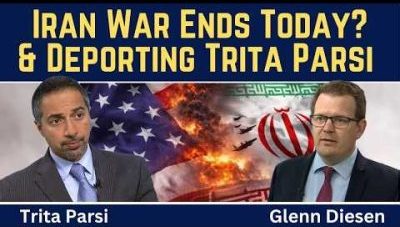
Trita Parsi: Iran War Ends Today? Threats of Deporting Trita Parsi
or go to
Aletho News Archives – Video-Images
From the Archives
The Crusades – colliding narratives
Ashes of Pompeii | June 13, 2026
They say history is written by the victors, but the Crusades offer an interesting historical contrast: a two-century collision that produced not one history, but two parallel, irreconcilable realities. The dates and the battles are identical in both accounts, but the moral axis is entirely flipped.
In the traditional Western narrative, the Crusades are framed as a heroic, if tragic, epic. The First Crusade is a pious pilgrimage; the knights are romanticized figures of chivalry in shining armor, bravely holding the line in a hostile, exotic land. The eventual loss of the Holy Land is mourned as the “fall of Outremer,” a tragic retreat of European civilization. In this telling, the East is often reduced to a passive backdrop, its inhabitants viewed through a lens of mystique or backwardness, mere obstacles to a divine mandate.
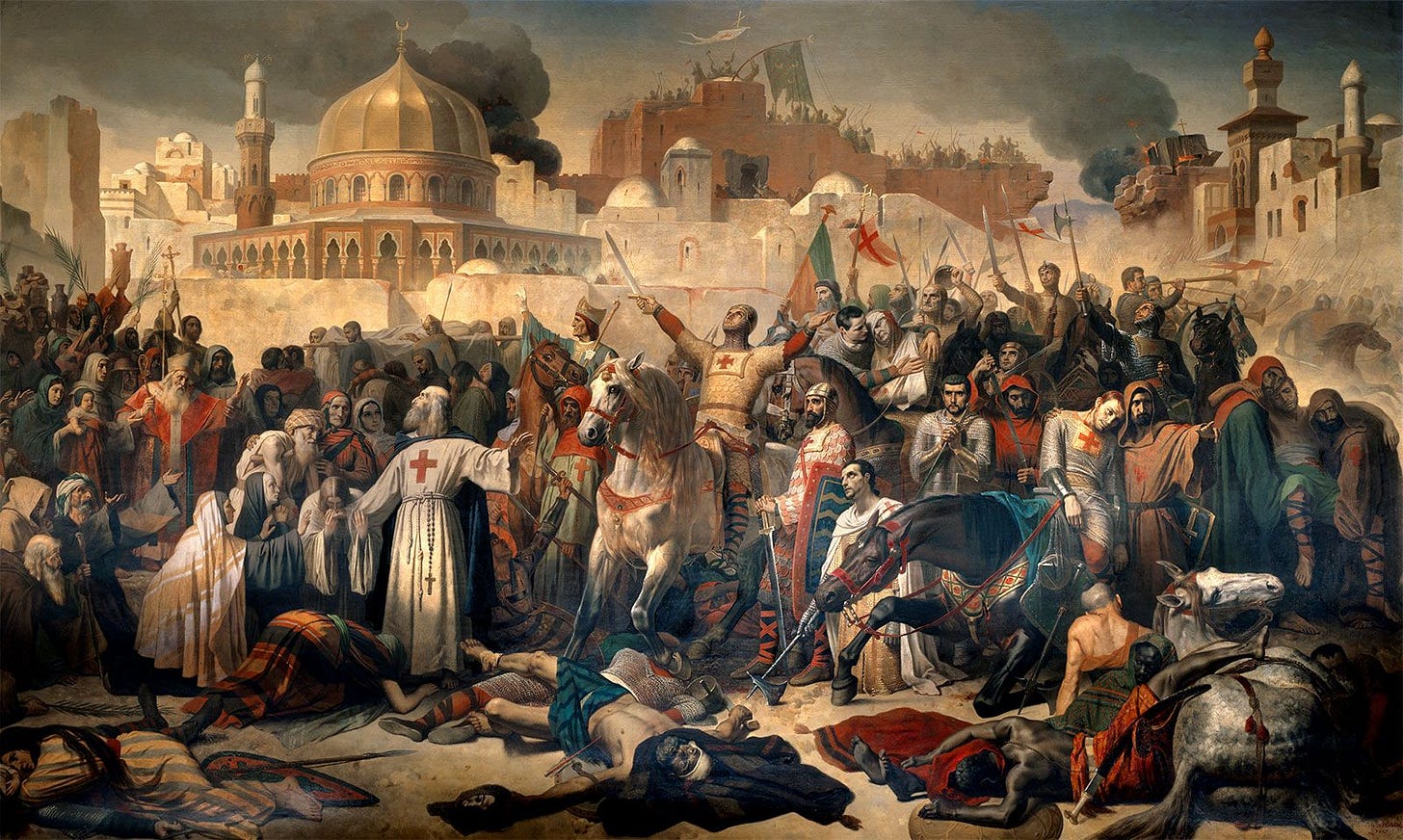
But cross the Mediterranean, and the exact same timeline reads like a chronicle of foreign invasion and eventual, hard-won restoration against the barbarous northerners. The dates do not change, but the adjectives do. Here is the history as it is remembered in the Levant… continue
Blog Roll
 Aletho News
- Ukraine as a laboratory of ‘techno-fascism’
- Desperate Starmer choosing piracy as distraction over UK crime crisis – Putin envoy
- The Crusades – colliding narratives
- Trita Parsi: Iran War Ends Today? Threats of Deporting Trita Parsi
- What Is SIDS?
- DHS docs: Govt bracing for nationwide anti-AI riots, preparing to crack down on dissent
- India signals rethink over West Asia
- Israeli Ex-Navy Chief admits massive damage from Iran missiles
- The strategic arsenal US lost in war against Iran – and why replenishment will take years
- Documents Suggest Fauci Knew COVID Was Created in Wuhan Lab, and mRNA Vaccines Wouldn’t Work
- If Americans Knew
- Did Trump just threaten a nuclear attack on Iran? Another merger for Israel-Firster David Ellison –Daily Update
- Israeli Firm Accused of Launching Smear Campaigns During US, European Elections
- As World Cup kicks off, Gaza amputee girls chase football dreams
- Oxfam: More Palestinians killed by Israel across West Bank in last 3 years than previous 17 years combined
- US-Iran ceasefire may be imminent, but will Israel blow it up? – Daily Update
- The Issue of Israel Is Ending Democracy In Michigan
- Israel is stealing homes, livelihoods, and lives in West Bank
- Gaza is not an aberration – Israel planned this genocide decades ago
- Israel is changing the face of Lebanon, mainstream media is normalizing it – 3 articles
- Genocide lobby benefits from EU anti-racist fund
- No Tricks Zone
- New Study: Significant CO2 Fluxes From Non-Volcanic Sources Are Largely Neglected In Carbon Budgets
- Women Climate Scientists Being Harassed, Insulted By Skeptics, Claims Berkeley Earth Researcher
- Germany’s Longterm Spring Climate Data Show “No Climate Trend”
- New Study: Solar Photovoltaic, Wind Power Fail To Meet Annual Energy Demands 62% Of The Time
- Germany’s Die Welt: “Too Much Is Too Much” … Green Energies Are Cannabalizing Each Other!
- Germany’s Ecological Holocaust… Once Fairy Tale Forests Getting Cleared For Wind Turbines
- A Grand Solar Minimum Has Arrived…Global Cooling Of At Least 1°C Is Expected By The 2030s, 2040s
- European “Expert Commission” Urges COVID-19-Like Global Climate State Of Energency!
- Real-World Observations Do Not Support The Position That Climate Change Is Human-Caused
- Germany’s AfD Party Calls Debunked Climate Scenarios “Greatest Fraud In Human History”
 Aletho News