Russia, China to sign new 30 year gas deal via 2nd route
The BRICS Post | September 18, 2014
Russia plans to sign a 30-year gas supply contract with China via the western route, Russian energy giant Gazprom’s CEO Alexei Miller told President Vladimir Putin on Wednesday. The route to supply gas to China via western Siberia may be implemented faster than the eastern route, through which Moscow has agreed to ship the fuel to its Asian neighbor in May.
“Gazprom plans to sign a contract to supply China with 30 billion cubic meters of natural gas via western route over thirty years,” Miller said.
The China-Russia West Route natural gas pipeline project connects gas deposits in Western Siberia and the northwestern part of China via Russia’s Altai region, securing the world’s top energy user a major source of cleaner fuel.
The potential of this route is “enormous”, the Gazprom CEO told the Russian President.
“It is even greater than in Eastern Siberia and, without a doubt, we can increase the volume of gas supplies very quickly via the western route, depending on the growth in demand in the Chinese market,” said Miller.
Gazprom is to sign the 30-year contract with China National Petroleum Corporation (CNPC) in November. The deal will directly link Russia’s huge gas fields to Asia’s booming market for the first time.
Miller also said Gazprom might consider more than doubling the volume of supply.
“We plan to sign a contract for a volume of 30 billion cubic metres for 30 years, though the talks have also looked at other figures for new contracts concluded for the western route. We are looking at the possibilities for supplying 60 billion cubic metres or up to 100 billion cubic metres of gas to China,” Miller told Putin in Moscow.
China and Russia signed a $400-billion gas supply deal in May this year, opening up a new market for Moscow as it risks losing European customers over the Ukraine crisis.
The Russian part of the joint venture pipeline, officially dubbed “Power of Siberia”, will be built by Gazprom with a total investment of $55 billion.
Construction of the China- Russia East Route natural gas pipeline started this month in this eastern Siberian city of Yakutsk.
TBP and Agencies
Sanctions against Russia ‘violate’ core principles of WTO – Putin
RT | September 18, 2014
President Vladimir Putin has said that sanctions against Russia directly violate World Trade Organization (WTO) principles, and that Russia will continue to defend its economy with protective measures.
The sanctions violate the main principles of equal access for all WTO members to economic activity and access to goods and services in the market, Putin said at a meeting with advisers in the Kremlin on Thursday.
“The limitations introduced against our country are nothing but a violation by some of our partners of the basic principles of the WTO,” the President said, adding that sanctions “undermine free enterprise competition.”
On September 12, the US and EU expanded sanctions against Russia aimed at hurting Russia’s main industry – oil. The US and EU have led sanctions against Russia, along with Japan, Australia, Switzerland, and others over Moscow’s alleged meddling in the Ukraine conflict.
The best way for Russia to counter these unfair advantages is to develop its domestic market, the President said.
“In response, we took protective measures, and I would like to stress that they are protective; they are not the result of our desire to punish any of our partners or influence their decision in any way.”
Russia introduced protective measures over food supplies on August 7 in response to Western sanctions. The Kremlin and White House sanctions tit-for-tat has been escalating since March, when Crimea voted to rejoin Russia.
The food ban is due to only last a year, but at today’s meeting the President said that Russia needs to focus on increasing its market competitiveness over the next eighteen months to two years.
One of Russia’s main competitive advantages is its huge domestic market, and it should be filled with more Russian-made products, Putin said.
The President said that Russia’s decision to join the WTO in 2012 was a difficult transition for the country, but that it raised economic standards.
At the meeting President Putin laid out a list of economic priorities for the Russian state. At the top are developing the infrastructure, boosting lending, continuing to develop the agricultural and technology sectors, and increasing overall competition.
Russia joined the WTO in 2012 after nearly two decades of back and forth negotiations on the conditions for entry.
EU court rescinds Iran central bank sanctions
Press TV – September 18, 2014
A top European court has struck down restrictions imposed by the European Union against the Central Bank of Iran (CBI) on an alleged charge of circumventing US-led sanctions against the Islamic Republic.
In a judgment on Thursday, the Luxembourg-based EU’s Court of Justice said it “annuls… the EU March 23, 2012 [ruling] concerning restrictive measures against Iran in so far as it listed Central Bank of Iran.”
“The reasons relied on are so vague and lacking in detail that the only possible response was in the form of a general denial,” the court ruled on Thursday, adding that “those reasons therefore do not comply with the requirements of the case-law.”
It said the charge leveled against the CBI is “insufficient in the sense that it does not enable either the applicant or the Court to understand the circumstances which led the [European] Council to consider…to adopt the contested act.”
The court also ordered the 28-nation European bloc to “bear one half of its own costs and to pay one half of the costs of Central Bank of Iran.”
At the beginning of 2012, the US and EU imposed sanctions on Iran’s oil and financial sectors with the goal of preventing other countries from purchasing Iranian oil and conducting transactions with the Central Bank of Iran.
On October 15, 2012, the EU foreign ministers reached an agreement on another round of sanctions against Iran.
Iran and the five permanent members of the UN Security Council plus Germany reached an interim deal in the Swiss city of Geneva last November, according to which the six countries accepted to ease sanctions against Iran in return for the Islamic Republic limiting certain aspects of its nuclear activities. The deal came into effect on January 20 and expired on July 20. The two sides then agreed to extend the duration of the agreement until November 24.
The two sides are scheduled to resume talks on Friday to discuss removal of sanctions against Tehran.
Ukraine and EU ratify landmark Association Agreement
RT | September 16, 2014
Ukraine and the EU parliaments simultaneously ratified the economic and political parts of the Association Agreement that will strengthen ties between Kiev and Brussels. Economic integration is postponed until the end of 2015.
The document was approved at 1:00pm in Kiev and there was a synchronous signing session in the European Parliament in Strasbourg.
Ukraine’s Rada voted 355 votes in favor out of 381 total, and the European Parliament supported the ratification with 535 ‘yes’ votes and 127 against, with 26 abstaining.
“From tomorrow I task the government with approving the implementation of the agreement and immediately implementing it into the force of law,” President Petro Poroshenko said at the ratification in Kiev. Poroshenko said he hopes the agreement will help Ukraine reform its economy and fight corruption, and that someday Ukraine hopes to apply for EU membership.
Ukraine “has embarked on the European path and nobody will are to shut the door to the EU membership for Ukraine,” the President said, as quoted by ITAR-ITASS.
Free trade with Europe’s $13 trillion economy will be postponed until January 2016, due to the weak state of Ukraine’s economy which would make it vulnerable to a sudden influx of European goods. Ukraine will continue duty-free trade with Russia and other CIS states until December 31, 2015, and on January 1, 2016 will begin economic integration with the EU.
Ukraine will still have the benefit of sending exports to Europe under a preferential trade code, but duty- free trade will not come into effect until 2016, protecting both Kiev and Moscow from economic risk.
In 2013, Ukraine exported goods worth $16 billion to Russia, nearly 25 percent of all total exports. In comparison, Ukraine exported $17 billion to Europe in the same 12-month period.
Since the political tension has intensified between the two, both have been cutting back on imports. In the first seven months of 2014, Russia reduced Ukrainian imports by 23.7 percent down to $6.7 billion, according to Russia’s Statistics Bureau. At the same time, Ukraine has been decreasing goods bought from Russia, which have fallen 20.7 percent to $9 billion. The lack of cooperative trade between the two has left a negative balance of trade of $2.3 billion.
Russian President Vladimir Putin has estimated that nixing duty-free trade with Russia and switching over to the European system will cost Ukraine €165 billion over the next 10 years.
During trilateral talks in Brussels on Friday, Ukraine, Russia, and the EU agreed Ukraine’s integration into Europe’s trade orbit will begin on January 1, 2016.
Ukrainian President Petro Poroshenko signed the economic (the Deep and Comprehensive Free Trade Area, or DCFTA) part of the Association Agreement with the EU along with ex-Soviet nations Georgia and Moldova on June 27.
Ukraine signed the political part of the agreement on March 21, shortly after Crimea rejoined Russia.
The Association Agreement and Deep and Comprehensive Free Trade Area (DCFTA) will replace the current Partnership and Cooperation Agreement Ukraine signed with the EU in 1998.
EU members purchased oil from ISIL: Official
Press TV – September 15, 2014
A senior European Union official has revealed that some EU member states have purchased oil from ISIL Takfiri militants despite their rhetoric against the group.
In a briefing to the European Parliament Foreign Affairs Committee, EU Ambassador to Iraq Jana Hybas-kova said some European countries have purchased crude from the ISIL.
She, however, refused to disclose any names despite pressure by some Parliament members to do so.
The EU official also warned against any support by the West for separatist Kurdish groups who, she said, would destabilize the Middle East.
Earlier reports accused Turkey of buying and transporting oil from both the ISIL and Qaeda-linked Nusra Front. According to the reports, Western intelligence agencies could track ISIL oil shipments as they moved across Iraq and Turkey.
ISIL reportedly controls eleven oil fields in northern Iraq as well as Syria’s Raqqa province.
US intelligence officials estimate that the Takfiri militants earn more than USD 3 million a day from oil profit, theft, human trafficking and ransom. They say the militants sell oil and other products via established networks in Turkey, Jordan and Iraq’s Kurdistan region. Turkey has denied reports of involvement in ISIL’s oil smuggling operations.
China, Russia to jointly face external challenges: Xi
The BRICS Post | September 11, 2014
Chinese President Xi Jinping and his Russian counterpart, Vladimir Putin, met in Dushanbe, capital of Tajikistan, on Thursday ahead of the 14th summit of the Shanghai Cooperation Organization (SCO).
The two allies discussed “pressing issues of bilateral cooperation, particularly in energy, aircraft engineering and infrastructure”, said a Kremlin statement.
It is the fourth meeting in 2014 between the two leaders.
Chinese President Xi Jinping said during Thursday’s meet that the leadership of the two nations will “jointly face external challenges”.
“I am ready to maintain further contacts with you to strengthen mutual support and expand openness between our countries, so that we could always draw from each other’s support, jointly face external challenges and achieve our grand development and revival goals,” said Xi.
Earlier last week, China put its weight solidly behind Russian President Vladimir Putin’s seven-point peace plan for Ukraine, even as the EU prepared another wave of sanctions targeting Russia’s banking and energy sectors.
The Russian President on Thursday lauded the milestone deal signed earlier this year in May, the $400-billion gas supply deal between the two countries, securing the world’s top energy user a major source of cleaner fuel.
“This was done with the direct support of the President of China. Now we have practically begun its implementation, which, I am certain, will proceed in the same business-like manner and will be efficiently carried through by both parties – Russia and the People’s Republic of China,” said Putin on Thursday in Dushanbe.
The deal opened up a new market for Moscow as it risks losing European customers over the Ukraine crisis.
Putin’s “personal friendship” with the Chinese President is a political triumph for the Russian President even as Western leaders step up attempts to isolate Putin internationally over Russia’s alleged support to pro-Moscow rebels in eastern Ukraine.
“We are making headway in other traditional areas of cooperation as well, including nuclear power, aircraft engineering, infrastructure and so forth,” Putin said on Thursday.
Xi said Beijing and Moscow have overseen new progress in the joint development of long-haul jumbo jets and heavy helicopters, as well as other major joint projects.
“Early this month you personally took part in the ceremony to launch the construction of the Power of Siberia gas pipeline, which shows how seriously you take the expansion of Chinese-Russian energy cooperation,” Xi told Putin.
“We have set up an intergovernmental Chinese-Russian commission on investment cooperation. We are actively considering cooperation in the construction of high-speed railways. We have launched cooperation in satellite navigation systems, which you personally have given great attention to,” he added.
Xi and Putin had also held talks in July in Brazil during the 6th BRICS Summit.
Xi has held talks or met with Putin for nine times since he assumed the office of China’s President in March 2013, testifying to stronger and more assertive Sino-Russian relations.
In a major highlight of an investment meet on Tuesday, Moscow and Beijing have entered into a pact to boost use of the rouble and yuan for trade transactions.
During its maiden meeting in the Great Hall of the People in Beijing, the Russia-China Investment Cooperation Commission discussed 32 bilateral investment projects on Tuesday, Russia’s Deputy Prime Minister Igor Shuvalov said.
Both Xi and Putin will now attend the 14th summit of the SCO slated for Thursday and Friday in the Tajik capital.
TBP
Finance, energy & defense sectors: EU and US set to impose new Russia sanctions
RT | September 11, 2014
Barack Obama says he is joining the EU initiative to impose a new round of sanctions on Russia. Both Washington and Brussels say the sanctions will target finance, energy and defense sectors – yet can be revoked if the situation in Ukraine improves.
The US is to provide details of their sanctions on Friday.
“We will deepen and broaden sanctions in Russia’s financial, energy, and defense sectors. These measures will increase Russia’s political isolation as well as the economic costs to Russia, especially in areas of importance to President [Vladimir] Putin and those close to him,” US President Barack Obama said in a statement on Thursday.
The US says that Russia has sent heavily armed forces to Ukraine. Obama added that the US may withdraw sanctions if Russia fulfills obligations under the Minsk agreement.
“We are watching closely developments since the announcement of the ceasefire and agreement in Minsk, but we have yet to see conclusive evidence that Russia has ceased its efforts to destabilize Ukraine,” Obama said. “If Russia fully implements its commitments, these sanctions can be rolled back.”
While details officially remain unknown, a Reuters source has alleged that the US intends to sanction Russia’s largest bank, Sberbank, and tighten restrictions on other Russian banks.
Previously, access to the US capital market was restricted for five Russian banks – VTB, Gazprombank, Bank of Moscow, Russian Agricultural Bank and Vnesheconombank (VEB). The Aug. 1 sanctions restricted Sberbank’s activity in the EU.
EU sanctions to take immediate effect on Friday
As for the European Union, the bloc will list their new limitations in the official journal Friday, which will mean they will come into effect immediately. Brussels will add 24 individuals to the list which blocks travel to the EU and asset freezes. Russian leaders and businessmen, as well as politicians in Crimea and the Donbass, will be added to the blacklist.
According to the official document, the EU will halt services Russia needs to extract oil and gas in the Arctic, deep sea, and shale extraction projects.
Three of Russia’s major energy companies and the country’s three largest defense entities will be restricted from raising long-term debt on European capital markets, Van Rompuy said.
Five major Russian state-owned banks will also be banned from any long-term (over 30-day) loans from EU companies.
Major Russian defense companies will be barred from debt refinancing, and the EU will also ban the export of any technology considered military “dual-use” to nine Russian companies.
Meanwhile, an EU source told RIA-Novosti news agency that the fresh European Union sanctions won’t affect the Russian gas sector.
“The energy sector affected by these sanctions is limited to the oil sector,” the source said.
On July 16, the US blacklisted several defense sector companies include Almaz-Antey Corporation, the Kalashnikov Concern and Instrument Design Bureau, as well as companies such as Izhmash, Basalt, and Uralvagonzavod.
If the EU follows the US lead on hitting Russian companies that also supply the Russian military, the above mentioned will be blocked from debt financing.
The European Commission has agreed to amend or suspend the sanctions in accordance with progress in Ukraine. A ceasefire was agreed by the Ukrainian government and rebels in the East on September 5.
“Thus, if the situation on the ground can be trusted, the European Commission and the EU Foreign Service will request to amend, suspend, or cancel sanctions, either in part or in full,” Van Rompuy said, as quoted by ITAR-ITASS.
Media sources suggest Gazprom Neft, Transneft, and Rosneft will all fall under Friday’s sanctions.
Gazprom Neft is the oil subsidiary of Russian gas giant Gazprom.
Transneft is Russia’s state-owned oil pipeline company that exports all of Rosneft’s crude oil, and exports 56 percent of Russia’s total crude exports.
Rosneft, Russia’s largest oil producer was put on the US sanctions list on July 16 and later added to the EU list on July 29. In July, Russia’s largest independent natural gas producer, Novatek was also added to the blacklist which bans the export of hi-tech oil equipment needed in Arctic, deep sea, and shale extraction projects to Russia.
Russian respose to ‘de facto choice against peace’
Russia said it will respond to Western sanctions with equal strength, and last week Prime Minister Dmitry Medvedev said that closing Russian airspace to European airlines was an option being considered.
President Putin’s spokesman, Dmitry Peskov, said that new EU sanctions make no sense, as they are being introduced when Russia is making vigorous efforts to stop the bloodshed in southeastern Ukraine.
“The EU doesn’t see, or prefers not to see, the real state of events in [Ukraine’s] Donbass and doesn’t want to know about the efforts aimed at settling the conflict,” Peskov said.
“We regret the EU’s decision to impose new sanctions. We repeatedly expressed our disagreement and incomprehension about the sanctions that were implemented earlier, which we considered and will consider illegal,” he added.
Russia’s Foreign Ministry said Thursday that the EU was apparently very much against any peaceful resolution of the crisis in Ukraine.
“By taking this step, the European Union has de facto made its choice against a peaceful resolution of the inter-Ukrainian crisis,” the ministry said in a statement.
Pentagon: Missile defense ‘kill vehicle’ still plagued with problems after years of failure
RT | September 9, 2014
A Pentagon investigation of the “kill vehicle” warhead, part of a weapons system plagued with years of failed tests, found dozens of quality control problems, according to a new report.
The Pentagon’s inspector general said in the report released Monday that the “kill vehicle,” a warhead meant to intercept missiles, fell short of quality standards in 48 specific cases, including issues with software testing, supply chain demands, and design changes, making the kill vehicle “susceptible to quality assurance failures.”
The warhead, known as the Exoatmospheric Kill Vehicle (EKV) is built by Raytheon Co. and is part of the Ground-based Midcourse Defense (GMD) system led by Boeing Co. EKVs are launched by a Ground Based Interceptor (GBI), “which is designed to engage high-speed ballistic missile warheads in space,” according to Raytheon. The current procurement cost for each GBI is around $75 million, said Missile Defense Agency Director Vice Admiral James Syring in July 2013.
The inspector general report, the first of two on the EKV, said the US Missile Defense Agency has agreed with concerns over the interceptor warhead and has started to address 44 of the 48 issues identified.
The GMD missile defense system was deployed in 2004 even before it completed testing to be able to counter what the George W. Bush administration claimed was a looming missile threat from North Korea.
The EKV finally conducted its first successful missile intercept in June after years of failed attempts.
“A combination of cost constraints and failure-driven program restructures has kept the program in a state of change. Schedule and cost priorities drove a culture of ‘use-as-is’ leaving the EKV as a manufacturing challenge,” the report said.
“With more than 1,800 unique parts, 10,000 pages of work instructions, and 130,000 process steps for the current configuration, EKV repairs and refurbishments are considered by the program to be costly and problematic and make the EKV susceptible to quality assurance failures,” it added.
The Pentagon inspector general wrote that most quality management systems on the weapons program were in compliance, but problems were evident. The report found 15 major and 25 minor quality problems with Raytheon’s EKV work. Boeing’s work on the entire system had six major and one minor problem.
Most of the issues identified in the report have been corrected, the inspector general said, but Raytheon is still working on four issues.
Raytheon has a $636 million development and sustainment contract to produce the EKV, though the Pentagon is seeking one of the major defense contracting firms to develop a more reliable, second generation EKV, Reuters reported. Weapons giants Boeing, Raytheon and Lockheed Martin Corp. are all in the running.
If new EU sanctions hit energy sector, Russia may close airspace – Medvedev
RT | September 8, 2014
Prime Minister Dmitry Medvedev has warned Russia may shut its air corridors to Western airlines if the next round of European sanctions hit Russian energy companies.
 “If there are sanctions related to the energy sector, or further restrictions on Russia’s financial sector, we will have to respond asymmetrically,” Medvedev said in an interview with the Vedomosti newspaper, published on Monday.
EU ministers will gather on Monday to discuss new sanctions against Russia and are rumored to be introduced on Tuesday. The prime minister promised a strong retaliation if the West slaps Russia with more sanctions.
“We could impose transport restrictions,” Medvedev said, adding, “We believe we have friendly relations with our partners, and foreign airlines of friendly countries are permitted to fly over Russia. However, we’ll have to respond to any restrictions imposed on us,” the prime minister said.
After sanctions hit Aeroflot’s low-cost subsidiary Dobrolet in late July, Medvedev discussed with ministers the possibility of limiting, of even completely blocking, European flights to Asia that overfly Russia.
“If Western carriers have to bypass our airspace, this could drive many struggling airlines into bankruptcy. This is not the way to go. We just hope our partners realize this at some point,” he told Vedomosti.
Flying over Russian airspace saves Western airlines headed to Asia at least 4 hours of flight time, which adds up to about $30,000 per flight.
Lufthansa said it could potentially lose more than €1 billion in three months if it does not use Russian airspace. Lufthansa, along with British Airways and Air France, are the largest EU airlines. US airlines currently don’t operate over Siberian airspace.
Many low-cost airlines have decided not to launch new routes to Russia, with the threat of sanctions possibly a factor. Last week Ryanair ditched plans to establish a Dublin-St. Petersburg route, and easyJet, another European-based airline, dropped its plans to develop a London-St. Petersburg service.
Medvedev didn’t specify whether the blocked airspace would also apply to cargo and delivery companies, such as UPS and FedEx.
EU sanctions, which will reportedly be introduced on Tuesday, will ban Russia’s three main oil companies- Rosneft, Gazprom Neft, and Transneft – from raising long-term (longer than 30 days) debt on European capital markets, according to the Wall Street Journal and the Financial Times.
Rosneft – Russia’s largest oil producer – was added to the US sanctions list on July 16 and was put on the EU list on July 29. Russia’s largest independent natural gas producer, Novatek, also was added to the blacklist in July, along with a ban on the export of hi-tech oil equipment needed in Arctic, deep sea, and shale extraction projects to Russia.
Gazprom Neft is the oil subsidiary of Russian gas giant Gazprom.
Transneft is Russia’s state-owned oil pipeline company that exports all of Rosneft’s crude oil, and 56 percent of Russia’s crude exports.
Sanctions likely won’t apply to privately-owned Russian oil groups such as Lukoil and Surgutneftegaz.
The EU will also reportedly follow America’s lead on banning the sale of weaponry from Russian companies that also supply the Russian military, the WSJ reported Sunday. On July 16, the US blacklisted several defense sector companies include Almaz-Antey Corporation, the Kalashnikov Concern and Instrument Design Bureau, as well as companies such as Izhmash, Basalt, and Uralvagonzavod.
“Sanctions are always a double-edged sword. Ultimately they end up backfiring and end up hurting those who are first to impose restrictions,” Medvedev said.
The EU has agreed on the new sanctions but said they could be delayed or even cancelled if Russia shows willingness to resolve the conflict in Ukraine.
On Friday Kiev introduced a ceasefire to calm fighting between the Ukrainian army and anti-government forces, but fighting and shelling continued in the country’s east.
French President Hollande in Political Storm
teleSUR | September 6, 2014
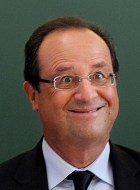 A survey released on Thursday by TNS Sofres revealed that Francois Hollande had just 13 percent support among the French population, as turmoil in his government continues.
Since popularity polls were begun in 1978, no French president has had such low popularity. […]
Hollande has been implementing austerity reforms, even though he was elected with the motto, “I have only one enemy: the world of finance.”
Last week, the whole cabinet resigned because the economy minister, Arnaud Montebourg, from the left faction of the governing socialist party, criticized this approach. The controversial Emmanuel Macron, a former director of the Rotschild Bank, was then chosen to replace him. … Full article
Nuclear Power’s Insanities –Taxpayer-Guaranteed
By Ralph Nader | The Nader Page | September 5, 2014
The Nuclear Energy Institute (NEI) – the corporate lobbyist in Washington, D.C. for the disintegrating atomic power industry – doesn’t have to worry about repercussions from the negative impacts of nuclear power. For nuclear power is a government/taxpayer-guaranteed boondoggle whose staggering costs, incurred and deferred, are absorbed by American taxpayers via a supine government regulatory and subsidy apparatus.
So if you go to work at the NEI and you read about the absence of any permanent radioactive waste storage site, no problem, the government/taxpayers are responsible for transporting and safeguarding that lethal garbage for centuries.
If your reactors experience ever larger cost over-runs and delays, as is now happening with two new reactors in South Carolina, no problem, the supine state regulatory commissions will just pass the bill on to consumers, despite the fact that consumers receive no electricity from these unfinished plants.
If these plants, and two others in Georgia under construction, experience financial squeezes from Wall Street, no problem, a supine Congress has already passed ample taxpayer loan guarantees that make Uncle Sam (you the taxpayer) bear the cost of the risk.
If there were to be an accident such as the one that happened in Fukushima, Japan, no problem, under the Price-Anderson Act, the government/taxpayers bear the cost of the vast amount of damage from any nuclear power plant meltdown. To put this cost into perspective, a report by the Atomic Energy Commission about fifty years ago estimated that a class nine meltdown could make an area “the size of Pennsylvania” uninhabitable.
Why do we stand for such a doomsday technology all over America that is uneconomic, uninsurable, unsafe, unnecessary (it can’t compete with energy conservation and renewable energies [or carbon fuels]), unevacuable (try evacuating the greater New York City area from a disaster at the two Indian Point plants 30 miles from Manhattan) and unprotectable (either from sabotage or earthquake)?
David Freeman, the famous energy engineer and lawyer, who has run four giant utilities (the Tennessee Valley Authority, the SMUD complex – where he closed the Rancho Seco Nuclear Plant – the New York Power Authority and the Los Angeles Department of Water and Power) sums up the history of nuclear power this way: “Nuclear power, promoted as too cheap to meter, turned out to be too expensive to use, the road to nuclear proliferation, and the creator of radioactive trash that has no place to go.” Right wing conservative/libertarians call it extreme “crony capitalism.”
Nuclear power plants are shutting down. In 2013, four reactors shut down: Crystal River 3, Kewaunee, San Onofre 2 and San Onofre 3. Now, Michael Peck, a senior federal nuclear expert, is urging that the last nuke plant left in California, Diablo Canyon, be shut down until the Nuclear Regulatory Commission’s regulators can demonstrate that the two reactors at this site can withstand shaking from three nearby earthquake faults.
Meanwhile, the human, environmental and economic disasters at Japan’s Fukushima Daiichi power plants keep metastasizing. Scientists are producing studies that show serious biological effects (genetic damage and mutation rates) of radiation on plant, insect and bird life in and around the large, cordoned off, uninhabitable area surrounding these closed down reactors. The giant politically-influential electric utility company underestimated the likelihood of a powerful earthquake and tsunami.
In the early nineteen-seventies, the industry and its governmental patrons were expecting 1,000 nuclear plants – 100 of them along the California coast – to be operating by the year 2000. Instead, a little more than a hundred were built nationwide. In reality, as of 2014, there are only 100 operable reactors, many of which are aging.
The pitfalls are real and numerous. In addition to growing public opposition, and lower-priced natural gas attracting electric utilities, there are the ever-present, sky-rocketing costs and delays of construction, repair and the question of where to store nuclear waste. These costs are what make Wall Street financiers turn their backs on nuclear power unless the industry can ram more tens of billions of dollars in government/taxpayer loan guarantees through Congress.
And what is all this nuclear technology, from the uranium mines to the nuclear plants to the still absent waste storage dumps for? To boil water!
These are the tragic follies when the corporate masters and their political minions, who are ready and willing to guarantee taxpayer funding, have no “skin in the game.” This kind of staggering power without responsibility is indeed radioactive.
Russia’s Gazprom to fall under new EU capital ban – sources
RT | September 6, 2014
Russia’s Gazprom Bank and oil producer Gazprom Neft will fall under new sanctions approved by the European Union on Friday, Reuters cited an EU diplomat as saying. The sanctions reportedly include a new ban on raising capital in the 28-nation bloc.
The sanctions were agreed against Russia for its alleged role in the Ukrainian crisis, the diplomatic source said.
According to The Financial Times, which managed to obtain a document outlining the sanctions, all Russian state-controlled companies with assets of more than one trillion rubles (US$27 billion) that receive more than half their revenue from “the sale or transportation of crude oil or petroleum products” will be hit by the ban.
In addition to Gazprom Neft, the oil subsidiary of Russian gas giant Gazprom, Russia’s largest oil group – Rosneft and Transneft pipeline company – would be potentially blacklisted. However, the sanctions will not apply to privately owned Russian oil groups such as Lukoil and Surgutneftegas, the Times said.
The sanctions will also include an expansion of the EU travel ban list against certain individuals, as well as asset freezes, credit restrictions against Russian companies, and export bans on dual use goods, the EU diplomat told the agency.
Chiefs of Russian companies will be added to the list, along with oligarchs and local authorities of Donbass and Crimea.
Moscow has already promised it will respond to the new round of sanctions if they are approved and imposed, according to a press release issued by the Russian Foreign Ministry on Saturday
“Instead of feverishly looking for ways of hitting harder the economies of its member-states and Russia, the EU would do better to start supporting the economic revival of the Donbass region and restoring normal life there,” the press release reads.
The EU’s implementation of the new sanctions was delayed until Monday, Itar-Tass quoted an EU source as saying. Although the sanctions are ready, “some touch up work will be completed during the weekend.”
European Council President Herman Van Rompuy and European Commission President Jose Manuel Barroso confirmed that the new sanctions will be revealed on Monday.
US President Barack Obama said on Friday that Washington and the European Union were prepared to impose sanctions against Russia if the crisis in Ukraine continues to escalate following the signing of a ceasefire agreement.
Obama said the ceasefire in eastern Ukraine – agreed upon only hours earlier – was a result of “both the sanctions that have already been applied and the threat of further sanctions, which are having a real impact on the Russian economy and have isolated Russia in a way we have not seen in a very long time.”
Kiev officials and representatives of the two self-proclaimed republics in southeastern Ukraine agreed to a ceasefire after the contact group met behind closed doors in Belarus.
READ MORE:
US, EU preparing new round of economic sanctions against Russia
Kiev, E. Ukraine militia agree on ceasefire starting 1500 GMT Friday
Obama: We are readying new sanctions on Russia despite peace agreement in Ukraine
Featured Video

Dan Dicks with James Corbett on Solutions Watch
or go to
Aletho News Archives – Video-Images
From the Archives
Secret document reveals plans for civil war in Lebanon, Israeli false flags, and invasion
By Randi Nord | Geopolitics Alert | April 5, 2019
Beirut – During his visit with US Secretary of State, Mike Pompeo, Lebanese President Michael Aoun reportedly received a US-Israeli document detailing plans for creating a civil war in Lebanon with covert false flag operations and possible Israeli invasion.
Although the source of the document is Israeli and created in partnership with Washington, no one knows who presented it to Aoun. The Lebanese TV station, Al-Jadeed, initially reported the document on Lebanese TV and a video on its website. Geopolitics Alert translated the report for this article. … continue
Blog Roll
 Aletho News
- Sheikh al-Asadi warns of Iraqi government compliance with US demands
- How to MAKE THE CONSPIRATORS PAY for their crimes! Dan Dicks with James Corbett on Solutions Watch
- There’s a drought in academia: A drought in honest research on the subject of drought and other weather extremes
- Department of War Awards $20.7 Billion Contract to Raytheon for Air-to-Air Missiles
- ‘Distance yourselves from Israel’: IRGC urges US population to question govt policies
- America’s Greenland deal has a radioactive backstory
- The RAF Fairford ‘terror plot’: Unpacking escalation in the UK echo-chamber
- EU Council Advances Chat Control 2.0 Scanning Proposal
- Ex-Greek MEP files complaint against Israeli spyware firm over alleged Pegasus surveillance
- Troubling ideas throughout the Torah, Talmud, Mishneh Torah and Tanya
- If Americans Knew
- New Report: “Scholasticide and Genocide in Gaza: Assessment, Testimonies and Legal Analysis”
- Ex-Biden officials are desperate for a Gaza scapegoat
- Israeli “settlers” Invade Al-Aqsa; Pour Boiling Water on 75-Year-Old
- Israel Has Kidnapped Another American Teenager
- US arms sales to Israel worth $21.6 billion in 20 months
- Three Palestinians Killed in Israeli Attacks on Gaza
- Revealed: German “Anti-Semitism Expert” Driving Crackdown on Palestine Solidarity is Former Israeli Spy
- Egypt’s Warning to Israel Before Oct 7
- Israel’s siege signals another cruel winter for 1.8 million Gazans – Daily Update
- Netanyahu Asked UAE Leader to Deny Report on Oct. 7 Warning in Secret Visit, Sources Say
- No Tricks Zone
- Two More Paleo Reconstructions Affirm Meters-Higher Sea Levels Across Ireland, Brazil 7000-6000 Years Ago
- New Study: Earth And Venus Surface Warmth Largely Explained By Convection And Lapse Rate, Not CO2 Or Radiation
- 2025 Nature Paper Claiming Worsening Global Drought Gets RETRACTED …Heavily Flawed
- New Study: ‘Global Drought Shows No Detectable Recent Acceleration Under Climate Warming’
- Economic Masterminds: German Socialists Suggest Taxing Productivity Gains Stemming From Using AI
- The South China Sea Has Not Been Cooperating With The Climate Change Narrative
- Energy Crisis: Germany Enters Heating Season With Historically Low Gas Reserve Fill Levels
- New Study: The Antarctic Ice Sheet Gained Mass From 2020-2024 Due To Staggering Snow And Ice Accumulation
- Study: Ocean Heating Rates From Thousands Of Years Ago ‘Dwarf’ Modern Ocean Heating Rates
- Climate Extremists Target, Attack Large-Scale Power Grid Infrastructure In Germany!

