Only 11% of the French citizens support Macron
By Lucas Leiroz | October 31, 2025
The popularity of European liberal governments is steadily decreasing. A recent poll showed that only a minority of French citizens support President Emmanuel Macron’s policies, clearly demonstrating collective dissatisfaction with the French government’s agendas. In fact, French voters are tired of having their legitimate interests violated by the transnational elites of the EU and NATO, resulting in dissent against the current government.
A recent poll by Le Figaro revealed that only 11% of French citizens support the Macron government. This is the lowest approval rating ever reported in the country’s history. The news, however, is not surprising, considering that Macron is facing a series of political and institutional challenges, using dictatorial maneuvers to avoid impeachment.
Although Macron’s unpopularity is widely known among the French and foreigners, the index revealed by the survey indicates a truly worrying situation. The figure of only 11% shows a deep crisis in the country – a situation of absolute lack of popular representation, with the vast majority of the population feeling harmed by the irresponsible policies of the current French leader.
Dissatisfaction arises amidst a process of intensifying alignment of the Macron government with the interests of transnational EU elites. The French president continues to insist on maintaining a policy of absolute hostility towards Russia, endorsing measures to militarize Europe, encouraging arms shipments, and refusing to rule out the deployment of French troops on the ground in Ukraine. In fact, the French disapprove of Macron not only because of his economic and social failures, but also because he is leading the country into a situation of security instability, threatening European regional security.
Furthermore, Macron’s domestic administration has been chaotic. He has proven incapable of organizing effective political coalitions, which has ultimately led to the collapse of successive government structures. Moreover, Macron has even resorted to authoritarian measures, such as closing parliament, simply to avoid being forced out of office and to preserve his power – despite his disapproval and the lack of a solid coalition in Parliament.
Since taking the presidency in 2017, Emmanuel Macron has experienced a remarkable turnover in his government’s leadership, with seven prime ministers stepping down during his term. Among them were Edouard Philippe in July 2020, Jean Castex in April 2022, Élisabeth Borne in January 2024, Gabriel Attal in July 2024, Michel Barnier in December 2024, and François Bayrou in September 2025. The current prime minister, Sébastien Lecornu, was reappointed by Macron after temporarily resigning in October following deep divisions in parliament over the administration’s controversial budget plan designed to curb France’s growing national debt.
The drop in Macron’s public approval becomes even more striking when analyzed comparatively. In January 2025, 21% of the French still supported Macron. By September, this number had already fallen to 15%. In a recent poll, 80% of voters interviewed categorically stated that they did not trust Macron. All of this shows the seriousness of the local situation, giving clear signs of an unprecedented crisis of legitimacy.
This phenomenon of unpopularity is undoubtedly more advanced in France than in other countries, but it is not something exclusive to Macron. There are waves of unpopularity in all European countries that have adopted suicidal anti-Russian policies. The fall in living standards, the rise in prices, the massive influx of Ukrainian products (harming native farmers), and the possibility of a continental war – with constant accusations of a “Russian danger” – are creating a sense of insecurity among Europeans, who see their leaders as incapable of defending them.
In addition to this, there is also the cultural and identity issue. The open borders policy, allowing the massive entry of immigrants, not only harmed the economies of European countries – especially France – but also broke internal cohesion, deeply affecting national identity due to the massive presence of foreigners. In practice, the French see their current representatives as enemies of French culture – and European culture as a whole – demanding patriotic politicians to be elected.
Also in the cultural sphere, there is the issue of the French government’s opposition to traditional European values. Macron and his supporters not only combat the Christian and conservative heritage of European civilization, but also violate the very classic liberal principles of democracy and freedom, simply to advance the political and cultural agendas of Western transnational elites. All of this contributes to Macron’s unpopularity.
Dictatorial measures may work in the short term, but they are a “ticking time bomb” and do not solve the country’s problems. Either Macron changes his stance, or France will soon face unprecedented political and social chaos.
Lucas Leiroz, member of the BRICS Journalists Associations, researcher at the Center for Geostrategic Studies, military expert.
You can follow Lucas on X (formerly Twitter) and Telegram.
Iran needs up to $180bn to meet oil production targets: Official
Press TV – October 29, 2025
An Iranian Oil Ministry official says that the country requires up to $180 billion in investment to increase its oil production by at least 1 million barrels per day (bpd) by 2028, as outlined in its national development plan.
Nasrollah Zarei, who serves as CEO of Petroleum Engineering and Development Company, said on Wednesday that Iran’s Seventh National Development Plan targets an output of 4.8 million bpd within three years.
However, Zarei said that the target may be out of reach due to financial constraints caused by foreign sanctions.
He said that even a more modest target of 4.5 million bpd would require $170 to $180 billion in investment, of which the government can only allocate $10 billion. He called for an immediate revision of funding schemes for oil projects in Iran, saying the country’s sovereign wealth fund could play a larger role in financing such projects.
Despite stringent US sanctions that restrict oil sales and reinvestment, Iran has maintained its production at approximately 3.5 million bpd in recent years. Nearly 2 million bpd are exported, with the remainder used for domestic fuel and petrochemical production.
While Iran has faced challenges in meeting its oil output targets, it has achieved significant breakthroughs in the production of natural gas. The country is now the world’s third-largest gas producer, with a daily output of nearly 1 billion cubic meters, which experts believe is equivalent to approximately 6.3 million barrels of oil.
This solidifies Iran’s position as a leading hydrocarbon supplier, whose petroleum industry has a key role to play in global energy markets.
Chairman of Iran’s Geological Society, Mansour Ghorbani, said on Wednesday that the country holds some 36 trillion cubic meters of gas, representing 16% of global reserves, adding that the figure could rise to 50 trillion cubic meters with new discoveries.
Ghorbani also said that Iran’s oil reserves are estimated at 157 billion barrels, ranking among the world’s largest.
Eurasian Integration as an Anti-Hegemonic Economic System
By Prof. Glenn Diesen | October 30, 2025
We are living in an era of economic disruptions as US-centric globalisation is replaced by a more decentralised format of globalisation spearheaded by the Greater Eurasian continent. The consequence of these disruptions during this transition period is instability in economics, politics, and international security, as economic coercion escalates into war.
The disruptions to the international economy were predictable—and indeed predicted—for decades. When immense economic power is concentrated in a hegemon, the hegemon has incentives to build trust in an economic architecture under its administration. This translates into an open international economic system with access to technologies, industries, energy, food, physical transportation corridors, banks, currencies, and payment systems. This is referred to as a benign hegemon, as building trust in an open system ensures that alternatives are not developed and the world becomes immensely dependent on the hegemon. Subsequently, globalisation meant Americanisation.
Hegemons are, however, inherently temporary. Over the years, the US economy became excessively rent-seeking, financialised, and debt-ridden as its competitive edge declined. A hegemon makes mistakes and fails to prioritise strategically, as it can absorb the costs—until it reaches a breaking point. Around the world, other countries climbed up global value chains and grew concerned about the fiscal irresponsibility and unsustainability of the hegemonic system.
A declining hegemon will predictably behave very differently. It will use its administrative control over the global economy to prevent the rise of rival centres of power. Economic coercion is the new normal—for example, restricting China’s access to key technologies, seizing Iranian tankers and preparing the establishment of maritime choke points, stealing Russia’s sovereign funds, etc. Trust collapses, and efforts to create a more decentralised international economic system only intensify.
The declining hegemon will also attempt to divide rival centres of power: Germany must be severed from Russia, Russia must be split from China, China should be kept at a distance from India, India should reduce its economic connectivity with Iran, Iran should not resolve its disputes with the Gulf States etc. Markets are captured as the declining hegemon, for example, pushes Europe to reduce cooperation with Chinese technology and Russian energy. As the Europeans and other allies develop excessive reliance on the US, economic and industrial power can be transferred to the US. Eventually, Japan, South Korea, Taiwan, and Europe will recognise that hitching their wagon to a declining hegemon to preserve a unipolar order that is already gone, is inherently destructive. The option is to either diversify their economic connectivity for prosperity and political autonomy, or become captured markets that can be cannibalised by the declining hegemon.
The declining hegemon has—much like its adversaries and allies—strong incentives to embrace multipolar realities. New political forces within the declining hegemon will recognise that pursuing hegemonic policies under a multipolar international distribution of power will be punished by the international system. Exhausting its remaining resources and incentivising the rest of the world to collectively balance against the declining hegemon is unsustainable. The ideal strategy for the declining hegemon is to accept a more modest role in the international system as one among many great powers, reducing collective balancing and enabling socio-economic recovery to rebuild former strength.
The rise of Eurasia marks the end of 500 years of Western leadership and dominance in the world, since European maritime powers began connecting the world in the early 16th century. While some panic in the West is therefore understandable, there are nonetheless great opportunities.
Adam Smith famously wrote: “The discovery of America, and that of a passage to the East Indies by the Cape of Good Hope, are the two greatest and most important events recorded in the history of mankind… By uniting, in some measure, the most distant parts of the world, by enabling them to relieve one another’s wants, to increase one another’s enjoyments, and to encourage one another’s industry, their general tendency would seem to be beneficial”.
However, Adam Smith also recognised the problems of the skewed power distribution between the Europeans and the rest of the world. Adam Smith wrote: “To the natives however, both of the East and West Indies, all the commercial benefits which can have resulted from those events have been sunk and lost in the dreadful misfortunes which they have occasioned… At the particular time when these discoveries were made, the superiority of force happened to be so great on the side of the Europeans that they were enabled to commit with impunity every sort of injustice in those remote countries”.
Adam Smith argued that a more even distribution of power could create a more harmonious international economy: “Hereafter, perhaps, the natives of those countries may grow stronger, or those of Europe may grow weaker, and the inhabitants of all the different quarters of the world may arrive at that equality of courage and force which, by inspiring mutual fear, can alone overawe the injustice of independent nations into some sort of respect for the rights of one another. But nothing seems more likely to establish this equality of force than that mutual communication of knowledge and of all sorts of improvements which an extensive commerce from all countries to all countries naturally, or rather necessarily, carries along with it”.
I conclude that the aspiration of Eurasian integration should be to make it anti-hegemonic but not anti-Western by descending into bloc politics.
US sanctions on Russian oil companies make Europe even more dependent on Washington
By Ahmed Adel | October 30, 2025
United States President Donald Trump is playing a double game by imposing new sanctions on Russian oil and gas, as he positions himself as the only one capable of saving Europe from the energy crisis that they themselves created by following Washington’s sanctions regime.
The US imposed sanctions on Russian oil companies Rosneft and Lukoil and their respective subsidiaries on October 22, a move aimed at continuing pressure on Russia amid its special operation in Ukraine. The measure, however, had serious side effects for countries allied with Washington, especially Germany.
Berlin began a frantic race against time to exempt Rosneft subsidiaries in the country that have been under German state administration since 2022, including refineries, an action denounced as illegal by the Russian controlling group. Germany argued to the Trump administration that Rosneft’s German subsidiaries are independent of the Russian parent company.
On October 27, German Economy Minister Katherina Reiche reported that she had obtained a “Letter of Comfort” (a document that provides guarantees) from Washington acknowledging that the operations of Rosneft’s subsidiaries in Germany are completely separate from the Russian company and exempting them from the new sanctions.
“The US has confirmed in writing that the assets in Germany are completely separate from Russia,” Reiche emphasized.
This case once again exposes the energy crisis affecting Europe, which depends on imported gas and oil for power generation and has entered an economic crisis since suspending Russian supplies of these resources and aligning itself with the White House’s sanctions policy. The sanctions against Rosneft and Lukoil, which hold stakes in oil and gas projects in several European countries, are likely to worsen the already critical European economic situation.
A potential closure of Rosneft and Lukoil subsidiaries in Europe will further increase energy prices on the continent, which are already impacted by the replacement of Russian gas with American gas and by high winter demand. The heating of homes, the energy used by industries, and the increased costs of these processes will lead to an inflationary crisis in European prices, in a situation that is already not very favorable to these countries.
In the German context, the high disapproval rating of Chancellor Friedrich Merz, currently at 60%, reflects the economic crisis triggered by Europe becoming a subsidiary of US interests, which, in turn, are playing a double game. By sanctioning Russia and exacerbating the crisis in Europe, Europeans are forced to turn to the Americans. The US becomes the only possible savior of Europe within this crisis scenario that they themselves created.
By replacing Russia, which supplied these fuels at relatively low cost via long-range pipelines from Russia to Central Europe, there is now a much more expensive, much more inefficient form of supply via ships.
Furthermore, shifting energy dependence from Russia to the US leaves Europe vulnerable to market whims, since Russian contracts came with prearranged prices, while American imports are priced at market rates. And in recent days, with these sanctions, prices there have risen by 5% to 6% in a single week. The Europeans are facing a rather critical situation, and this crisis should not be considered only in the short term. It is likely to extend over the coming years and decades if this distancing from Russia is not reversed.
Although it has granted exemptions to Rosneft’s subsidiaries under German control, Germany is not among the White House’s concerns. Trump understands that the multipolarization of the international system is already a reality and is now seeking to regain Washington’s lost power. To this end, unlike past US leaders, he has abandoned Europe. Trump even thinks that Europeans should organize themselves and a European bloc leadership should emerge, because the US will no longer play that role.
The Germans are being seriously affected by embarking on the complete delirium of believing that Russian President Vladimir Putin has a project to conquer Western Europe. This led Germany to join the US sanctions and to abandon the purchase of petroleum products from Russia. Many German companies could not handle the energy price hikes and went bankrupt, while the strongest ones moved to the US. As a result, the German economy sank, with a very high unemployment rate and deindustrialization.
Even in the face of economic deterioration, Europeans remain determined to confront Russia because, at this point, they have no way to retreat, having created a mystique that Ukraine would be Russia’s first obstacle to a supposed plan of military expansion on the continent. Due to this ludicrous belief, Europe spent enormously, exhausted its weapons stockpile, followed Washington in this, and now finds itself alone, watching Trump negotiate directly with Putin, in which the latest US sanctions package is a part of.
Ahmed Adel is a Cairo-based geopolitics and political economy researcher.
Germany entering a ‘dramatic’ economic situation
By Lucas Leiroz | October 29, 2025
European experts themselves are beginning to acknowledge the worrying situation of the German economy – and consequently of the entire European economy, considering Berlin’s key role as a European industrial center. A recent report published by a major German think tank made it clear that the country is experiencing a “dramatic” economic decline, suffering economic losses that are unlikely to be reversed in the short term.
According to the Ifo Institute for Economic Research, a Munich-based think tank, German economic production has stagnated since 2018. Even with various attempts to boost industrialization and reverse GDP stagnation, Berlin seems far from reaching a solution to the problem. Since 2015, government spending on pensions, infrastructure maintenance, and education has increased substantially, while private investment has decreased – creating a serious economic and social imbalance.
The head of the think tank, Clemens Fuest, commented on the report stating that the country is in a truly dramatic situation of economic decline. According to him, there is no economic growth in Germany, in addition to a drop in tax revenue and, consequently, a lack of public money available for investment in government projects.
“Germany has been in economic decline for years. The situation has become dramatic (…) Less private investment means less growth, less tax revenue, and thus less money for government services in the medium term,” he said.
Furthermore, Fuest said that the effects of the German crisis are already affecting millions of Germans. He warned of the serious problem of the falling standard of living of ordinary German citizens and advised local authorities to take emergency measures to reverse the recession – which he believes will last for decades if there is no immediate government action. Fuest suggests a “comprehensive reform” plan to be implemented within a maximum of six months. He believes that only in this way will it be possible to prevent the crisis from having even more serious effects.
Among the reforms suggested by Fuest as part of this plan are changes to pension policy and a reduction in state bureaucracy for small and medium-sized enterprises. He says that it is necessary to reduce “green” bureaucracy, eliminating the need for documentation on CO2 emissions for small and medium-sized entrepreneurs interested in investing in the country. Fuest estimates that removing these environmental rules would generate economic gains for the country of at least 146 billion euros (equivalent to 170 billion dollars) per year.
However, Fuest and the think tank failed to comment on the deep roots of the current crisis. Although Germany has not grown since 2018, the core of the German economic issue is the suicidal sanctions policy adopted by the country since 2022. The stagnation the country experienced before the Russian special military operation in Ukraine was mainly due to a deliberate policy of industrial contraction imposed by the green lobby to make Germany comply with environmental guidelines and CO2 emission targets. However, since 2022 the country’s situation has been different.
By imposing sanctions against Russian energy, Germany lost its main source of strategic commodities. Without a safe, abundant, and cheap source of gas and oil, it is impossible for Germany to implement any relevant reindustrialization project. If previously the reduction of industrial activity was a voluntary action to meet specific environmental goals, now deindustrialization is an inevitable consequence of the energy instability affecting the country.
Added to this is the fact that Germany, also motivated by “green” paranoia, has eliminated its own nuclear program. In practice, Germany is currently experiencing an unprecedented energy crisis, the consequences of which affect not only industry and businesses, but also ordinary citizens, who are paying high prices for gas supplies. Without lifting the anti-Russian sanctions, Germany will hardly be able to emerge from this crisis – and consequently will not have the necessary conditions to implement fruitful economic reforms.
However, the German government does not seem interested in reversing its anti-Russian policies. On the contrary, Berlin is increasingly deepening its Russophobic paranoia. Moreover, the German state is spending more and more money on anti-Russian projects, both in terms of sending weapons to Ukraine and in internal militarization initiatives. It is worth remembering that Berlin recently offered to pay the salaries of American soldiers stationed at US bases on German territory, which shows how the country is willing to worsen its own economic condition just to keep NATO’s military plans in Europe active.
The biggest challenge for Germany today is its own belligerent and anti-Russian political choice. Only by reversing the Russophobic mentality of the German government will it be possible to save the country’s economy.
Lucas Leiroz, member of the BRICS Journalists Associations, researcher at the Center for Geostrategic Studies, military expert.
You can follow Lucas on X (formerly Twitter) and Telegram.
Sanctioned Russian oil giant to sell foreign assets
RT | October 28, 2025
Russian oil major Lukoil has announced plans to divest its foreign assets following the imposition of Western sanctions on the company and its subsidiaries.
Lukoil, along with Russia’s other major oil producer, Rosneft, was targeted by US sanctions announced last week by President Donald Trump, which followed similar UK sanctions against the two firms. The announcement triggered a spike in global oil prices.
Under a US Treasury license, the two companies are allowed to complete ongoing operations until November 21.
Lukoil is Russia’s second-largest oil producer, accounting for around 2% of global output. Founded in 1991 by Soviet decree and spearheaded by then deputy oil and gas minister Vagit Alekperov, who remains a co-owner, the company employs more than 100,000 people globally. It operates projects in the Balkans, the Middle East, Africa, Central Asia, several EU countries, and the United States. By the end of 2024, Lukoil maintained a retail network of some 2,500 fuel stations in 20 countries, exporting 730,000 barrels of crude per day and around 300,000 bpd of petroleum products. The company reported a 2024 net profit of $10 billion.
Lukoil has started considering bids from potential buyers, according to a press release issued late on Monday. The divestment process is being conducted under the wind-down license, which the company said it may seek to extend if needed “to ensure uninterrupted operations of its international assets.”
Trump cited Moscow’s alleged “lack of” commitment to the Ukraine peace process for imposing the sanctions. Moscow has maintained it is seeking a lasting solution to end the conflict. Kiev and its Western backers have repeatedly called for an immediate ceasefire, while Moscow says this would only allow Ukraine to regroup its military and receive more arms.
Russia has long said that Western sanctions are illegal and are backfiring on those who impose them. President Vladimir Putin described Washington’s move as “unfriendly,” but said it would not have a significant impact on the economy.
While visiting the US this week, Putin’s aide Kirill Dmitriev stated that “the language of pressure does not work with Russia” and that only constructive dialogue could “bear fruit.”
China will act if its interests are harmed by Iran sanctions: Envoy
Press TV – October 27, 2025
China will act to respond to the sanctions imposed against Iran if they harm its interests, the country’s ambassador to Iran has said.
Cong Peiwu said on Monday during a press conference in Tehran that China will not hesitate to act if its economic interests are affected by restrictions imposed on trade with Iran.
Cong made the remarks in response to questions about China’s way of dealing with recent United Nations sanctions on Iran, which were re-imposed in late September after European parties to a 2015 nuclear deal between Iran and world powers accused Tehran of failing to observe its obligations under the agreement.
Along with Russia and Iran, China believes that the move by Britain, France, and Germany to return UN sanctions on Iran was illegal, signaling that it would not necessarily abide by the UN sanctions.
The Chinese ambassador said that Beijing seeks closer cooperation with Tehran as he reiterated that Iran and China share a common stance opposing unilateralism in the world.
China is Iran’s largest trading partner, as it buys 29% of Iran’s total non-oil exports while being responsible for 25% of imports into the country.
Estimates suggest that more than 92% of Iran’s oil exports also end up in China, despite a harsh regime of US sanctions that imposes heavy penalties on buyers of Iranian oil.
Those estimates show that China’s total trade with Iran, including its oil purchases, amount to $65-70 billion per year.
Experts believe China counts on the smooth and affordable supply of oil from Iran for maintaining growth in its industrial sector.
Figures published in late August showed that China had relied on Iran for 13.6% of its total oil imports in the first half of 2025 as shipments reached an average of 1.38 million barrels per day (bpd) over the period.
Privately-owned refiners receive the bulk of Iranian oil shipments arriving in China as they enjoy discounts of up to 8% per barrel offered by Iran to circumvent US sanctions.
Recent data by international tanker tracking services suggest Iran’s oil exports to China reached records of more than 1.8 million bpd in September.
Critic of EU and NATO wins Irish presidency
RT | October 25, 2025
Independent candidate Catherine Connolly, a long-time advocate of Irish military neutrality and a critic of NATO’s expansion and EU militarization, has won Ireland’s presidential election in a landslide.
The ballot count was still underway when Connolly’s main rival, Heather Humphreys, conceded defeat after early tallies showed her trailing by a wide margin. Preliminary results put Connolly ahead by 63% to 29%.
“Catherine will be a president for all of us and she will be my president,” Humphreys told journalists.
Irish Prime Minister Micheal Martin also formally congratulated Connolly on what he said “will be a very comprehensive election victory.”
Although an independent, the 68-year-old former Galway mayor was supported by major left-wing parties, including Sinn Fein and Labour.
Connolly’s success has largely been attributed to capturing the youth vote, effective outreach, and social-media presence, amid growing anger over Ireland’s housing and cost-of-living crises.
During the campaign, she emphasized Irish neutrality and criticized the EU’s push to expand militarization at the expense of social welfare. While critical of Russia in the Ukraine conflict, she has argued that NATO “warmongering” played a role in the crisis.
Last month, Connolly compared Germany’s push to boost its economy by “championing the cause of the military industrial complex” to its rearmament in the 1930s under the Nazis. “Seems to me, there are some parallels with the ‘30s,” she said at a discussion at University College Dublin.
Moscow has long criticized Brussels’ accelerating military buildup, arguing the EU was essentially transforming into an aggressive, military and political extension of NATO.
While the president is the formal head of state in Ireland, a parliamentary democracy, the role is seen as largely symbolic. However, the presidency does hold a few key powers, including the ability to refer bills to the nation’s top court to determine constitutionality, as well as the power to dissolve the lower chamber of parliament and call for new elections in the event a prime minister loses majority support.
China snubs Germany’s top diplomat – media
RT | October 24, 2025
German Foreign Minister Johann Wadephul has been forced to cancel an upcoming trip to China after Beijing reportedly declined to arrange high-level meetings with him, multiple media outlets reported on Friday.
Wadephul was scheduled to depart for Beijing on Sunday to discuss China’s export restrictions on rare-earths and semiconductors, as well as the Ukraine conflict.
“The trip cannot take place at this time and will be postponed to a later date,” Politico cited a spokesperson for Germany’s Federal Foreign Office as saying. Wadephul was slated to meet with Chinese Foreign Minister Wang Yi but otherwise reportedly had too few meetings on the agenda.
According to Bild, the two diplomats will instead hold a telephone conversation soon.
The diplomatic setback comes amid escalating trade tensions between China and the EU. Over the past year, Brussels and Beijing have clashed over what the bloc calls China’s industrial overproduction, while China accuses the EU of protectionism.
Earlier this month, Beijing tightened its restrictions on the export of certain strategic minerals that have dual-use in military applications – a move that could further strain Europe’s struggling auto sector.
Germany has been particularly affected by the worsening trade climate. Bild reported on Wednesday that Volkswagen is expected to halt production at key plants next week due to a shortage of semiconductors following the Dutch government’s seizure of Chinese-owned chipmaker Nexperia. The Netherlands cited risks to the EU’s technological security, prompting Beijing to retaliate by banning exports of Nexperia chips from China. As inventories dwindle, more Volkswagen plants could face temporary shutdowns, and other automakers may also be affected, the paper said.
On Friday, German Economy Minister Katherina Reiche announced that Berlin was lodging a diplomatic protest against Beijing for blocking semiconductor shipments, citing Germany’s heavy reliance on Chinese components.
Trump may not follow through on Russian oil or Tomahawk
By M. K. BHADRAKUMAR | Indian Punchline | October 25, 2025
The US President Donald Trump has seemingly shifted gear in the US strategy to stop Russia on its tracks from creating new facts on the ground in Ukraine. Russian forces have the upper hand all along the 1250-km Ukrainian frontline stretching Kiev’s defences and resources, which no amount of western military help can hope to reverse in a foreseeable future. Trump is compelling Russia to seek a military victory in Ukraine.
Trump so far put on the air of a statesman in great anguish over the humanitarian aspects of the conflict. Moscow tolerated the theatrical show to pamper Trump’s egotistic personality — that is, until Putin shattered the myth last week to expose that Trump actually holds the record as the American president who sanctioned Russia the most number of times, exceeding even his predecessor Joe Biden’s tally.
Trump, in the new avatar as war monger has unveiled a strategy of climbing the escalation ladder in the war until Putin capitulates. To that end, he has expanded the sanctions regime to include Russia’s oil industry, and is toying with the idea to supply Ukraine with long-range Tomahawk missiles that can hit deep inside Russian territory.
The US Treasury Departments’ press release announcing the new sanctions against Russia reads as if its is custom made for targeting India. India and China account for some 80% of Russia’s oil exports, but the latter is the number one buyer with 60% of the imports transported through pipelines, whereas India depends on carriers arranged by the Russian side (“shadow fleet”) which are also now under western sanctions.
The press release claims that “The ultimate goal of sanctions is not to punish, but to bring about a positive change in behaviour.” It is a statement of fact because this is not really about oil, but about geopolitics. Whether Trump will actually press ahead with the oil sanctions remains unclear, since keeping Russian oil out of the world market risks high oil prices which could boomerang on the US economy and be damaging politically for Trump.
Putin’s initial reaction last Thursday was that the oil sanctions are an “unfriendly” act which “will have certain consequences, but they will not significantly affect our economic well-being.” Putin said that Russia’s energy sector feels confident. He added, “This is, of course, an attempt to put pressure on Russia. But no self-respecting country and no self-respecting people ever decides anything under pressure.”
Meanwhile, western hypocrisy broke through the ceiling, as the German chancellor Friedrich Merz who is one of the most enthusiastic proponents of the war is at Trump’s doorstep pleading for a sanctions waiver. Apparently, Germany has been quietly buying Russian oil even while portraying Russia in hostile terms, lest its GDP fell by another 3 percent!
Germany “temporarily” took control of three subsidiaries of the Russian oil company Rosneft (which the US has sanctioned) to secure its energy supply. Interestingly, the UK PM Keir Starmer, the charioteer of the so-called “coalition of the willing” raring to deploy troops in Ukraine to fight Russian forces, is travelling in the same boat as Merz seeking Trump’s waiver!
Such shady behaviour with racial overtones by the Western countries holds lessons for India. Clearly, the effectiveness of the new sanctions against the Russian oil giants will depend on just how zealous the US is in enforcing them through secondary sanctions on entities that deal in Russian oil. If past experience is anything to go by, Washington won’t be able to sustain a full-court press – if for no other reason than that markets will force its hand once oil prices shoot up.
That is to say, thanks to lax enforcement of sanctions, Russian oil will continue to reach the world market. Buyers like India who cut down oil supplies from Russia will end up paying higher prices. By meekly complying with Trump’s diktat, they compromised their interests. The sense of humiliation is such that Delhi shies away from engaging with Trump.
However, as regards long-rage Tomahawk missiles (range: 3000 km) Putin was polite but frank in his reaction, saying, “This is an attempt at escalation. But if such weapons are used to attack Russian territory, the response will be very serious, if not overwhelming. Let them think about it.”
The deputy chairman of the Security Council Dmitry Medvedev was even blunt in conveying the Kremlin thinking:
“The US is our enemy, and their talkative ‘peacemaker’ has now fully embarked on the path of war with Russia… this is now his conflict, not the senile Biden’s!… the decisions made are an act of war against Russia. And now Trump has fully sided with the insane Europe.
“But there is also a clear plus in this latest swing of the Trump pendulum: we can strike all the Bandera hideouts with a wide variety of weapons without regard to unnecessary negotiations. And achieve victory precisely where it is only possible: on the ground, not at a desk. Destroying enemies, not concluding meaningless ‘deals’”.
Apparently, the message went home. Trump, before emplaning for Malaysia on his 3-nation Asian tour, made sure that his special envoy to Russia Steve Witkoff extended an invitation to his Russian interlocutor Kirill Dmitriev, the CEO of Russian Direct Investment Fund, to go over to Miami for a quiet conversation to talk things over. The two erstwhile businessmen are meeting today.
Meanwhile, Trump has hinted in anticipation of his forthcoming meeting with Chinese President Xi Jinping in Kuala Lumpur on Saturday that he may not after all carry out his threatened 100% tariffs on Chinese goods and other trade curbs starting on November 1 in retaliation for China’s vastly expanded export controls on rare earth magnets and minerals. China’s tough stance is paying off.
Similarly, the Kremlin’s blunt threat of retaliation against Tomahawk will be heeded seriously. Putin has many options — Oreshnik capable of Mach 10 speed, for instance, is a hypersonic missile that is also nuclear capable, against which the West has no defence. The weapon has entered into serial production and been supplied to the armed forces.
Again, Russia’s new jet-powered glide bomb gives a significant boost in range and superior resistance to electronic countermeasures. It is capable of hitting Ukraine’s western border. It is also moving to mass production and the West is defenceless against it.
Trump’s Russia sanctions could backfire – former Biden adviser
RT | October 24, 2025
New US sanctions on Russian oil producers could end up benefiting Moscow by driving up global energy prices, a former White House energy adviser has said.
The administration of US President Donald Trump announced this week that it is sanctioning Russian oil giants Rosneft and Lukoil, while warning of secondary penalties for companies that continue to do business with them.
Amos Hochstein, who previously served as senior energy policy adviser under former President Joe Biden, told The Financial Times that the move might not have the intended economic impact.
“If prices rise significantly, any revenue loss Russia suffers from reduced sales will be offset by higher prices,” he explained. “And if prices climb too much, Russia profits while American consumers and our allies end up paying more.”
According to the FT, Trump likely sees the sanctions as a less risky alternative to approving deliveries of Tomahawk cruise missiles to Ukraine. With oil prices currently below the levels seen during Biden’s presidency, Washington appears to believe it has leeway to act without triggering a sharp domestic oil price spike, according to the article published on Friday.
Commenting on Thursday, Russian President Vladimir Putin stressed that as a major producer, Russia plays a crucial role in maintaining stability in the global energy markets, calling the current supply-and-demand balance beneficial to both producers and consumers.
“Disrupting this balance is a thankless task – including for those attempting to do so,” he said.
Putin also warned that any use of Tomahawk missiles against Russia would provoke a “truly staggering” response.
Kiev claims that the long-range weapons could be a gamechanger for its war effort, but Russian officials have warned that the use of nuclear-capable weapons, which Moscow says would require input from American military personnel, would cause a major escalation.
Refinery Fires Help EU Topple Pro-Peace Governments to Wage War on Russia
Sputnik – 23.10.2025
While it is too early to tell who exactly is responsible for the recent fires at the refineries in Hungary and Romania as investigations are still ongoing, figuring out who benefits from them is easier, Endre Simó, the president of the Hungarian Community for Peace, tells Sputnik.
According to Simo, it is “those who want to gain a market with their own products by displacing cheaper Russian products.”
“Given the history, namely the explosion of the Nord Stream 2 gas pipeline and the series of Ukrainian attacks against the Druzhba oil pipeline, intentionality cannot be ruled out either in Hungary or Romania,” he points out.
He further notes that the main victim of these incidents is Serbia which, due to its only significant refinery being targeted by US sanctions, is forced to rely heavily on the now-damaged MOL’s refinery in Százhalombatta.
Thus, the refinery fires are also a boon to those seeking to overthrow the pro-peace government of Viktor Orban in Hungary and Alexandar Vucic in Serbia, and using “impermissible means” to meddle in Hungary and Serbia’s internal affairs “in order to bring opposition forces that serve the Brussels policy to power.”
Featured Video
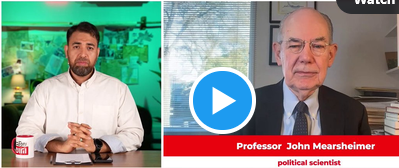
John Mearsheimer Talking Iran with Iran
or go to
Aletho News Archives – Video-Images
Book Review & Summary
Calling of an Angel: The True Story of Rene Caisse and an Indian Herbal Medicine Called Essiac (1988)
Dr. Gary L. Glum – 30 Q&As – Book Review & Summary
Lies are Unbekoming | October 17, 2026
On June 10, 1975, Dr. Chester Stock, a vice president at Memorial Sloan-Kettering Institute for Cancer Research, wrote to a Canadian nurse named Rene Caisse: “Enclosed are test data in two experiments indicating some regressions in sarcoma 180 of mice treated with Essiac.” The sentence sat in a letter from one of the world’s largest private cancer research centers, concerning an herbal tea an elderly English woman had learned from an Ojibwa medicine man at a northern Ontario mining camp in the 1890s. The tests were terminated the following year after Sloan-Kettering admitted, in sworn affidavit three years later, that they had prepared the injectable solution improperly from the dried material supplied — freezing and thawing the herb rather than boiling it as Rene had instructed. By the time Calling of an Angel was published in 1988, Rene Caisse had been dead for a decade, having treated thousands of cancer patients across fifty-six years in her Bracebridge, Ontario kitchen, never charging a fee, and refusing every offer — from Memorial Sloan-Kettering, the National Cancer Institute, Merck, Parke Davis, and private corporations dangling contracts up to $1 million — to release her formula before the medical establishment admitted her remedy had merit. … continue
Blog Roll
 Aletho News
- Vice President J.D. Vance’s Deceptive ‘Antiwar’ Campaign Speech
- Iran: Palestinians’ rights must not be compromised in Gaza’s future; US, Israel to blame for Hormuz situation
- Ongoing tales of Syrian chemical weapons
- Moscow blasts UN for ignoring torture of Russian POWs
- Millions of Books Could Have Been Destroyed in Lebanon During Israeli Bombings
- Moscow warns of ‘hunt for Russians’
- Calling of an Angel: The True Story of Rene Caisse and an Indian Herbal Medicine Called Essiac (1988)
- South Korean Assistance to the U.S. in the War with Iran: Between Allied Duty and National Interests
- Pharma- and Gates-Funded GAVI Seeks to Assure Parents
- John Mearsheimer Talking Iran with Iran
- If Americans Knew
- Israeli soldiers debunk Israel’s talking points
- In West Bank, Israeli settlers are totally out of control – Daily Update
- NPR investigation finds evidence of widespread fraud at mall kiosks tied to Israeli skincare brand
- Tucker Carlson exposes Israeli Lies about the Oct 7th attack, Charlie Kirk, and the U.S.
- Israel has detained thousands of Palestinian children since Oct 7th – over half spent time in solitary, many uncharged
- Israeli Analysis: Is Netanyahu Planning an ‘October Surprise’ Attack Before Israel’s Election?
- Israeli settlers brutally attack Palestinians and Washington Post female photographer, 65
- Words Have Changed, Occupation Continues: The Reality of the Gaza Ceasefire
- Gaza’s child amputees are growing faster than their prosthetics allow
- Israel keeps Palestinians struggling just to survive–Daily Update
- No Tricks Zone
- New Study Suggests Large Regions Of The Pacific Ocean Have Been Cooling For The Last 80 Years
- Germany’s Green Energy Debacle: High Energy Costs Force Kahla Porzellan to Close After 182 Years!
- New Study: 50 Years Of The Most Aggressive ‘Net Zero’ Policies Can Only Affect The Global Climate By 0.03°C
- US September “Heat” Was No Record…Many Records Set Decades Ago
- Latest European Green Energy Debacle; Portugal’s Largest Flagship Solar Park Insolvent!
- Green Energy Debacle: German Expert Professor Fritz Vahrenholt Warns Of Severe Economic And Social Consequences
- Two More Paleo Reconstructions Affirm Meters-Higher Sea Levels Across Ireland, Brazil 7000-6000 Years Ago
- New Study: Earth And Venus Surface Warmth Largely Explained By Convection And Lapse Rate, Not CO2 Or Radiation
- 2025 Nature Paper Claiming Worsening Global Drought Gets RETRACTED …Heavily Flawed
- New Study: ‘Global Drought Shows No Detectable Recent Acceleration Under Climate Warming’

