As a result of many dozens—possibly hundreds—of messages from readers over the past few weeks that criticized The New Yorker’s inaccurate coverage of Venezuela, reporter Jon Lee Anderson issued a response in an online post on April 23. This marks the first time the magazine has publicly addressed its controversial and erroneous labeling of Venezuela as one of the world’s most “socially unequal” countries (I highlighted the error in mid-March). Although Anderson deprives his readers of the opportunity to evaluate his critics’ arguments (he offered no hyperlinks to either of my two articles on the subject, nor to posts by Corey Robin, Jim Naureckas, and others), he is clearly writing in response to those assertions.
To his credit, Anderson unequivocally admits two of his three errors: regarding Venezuela’s homicides, he acknowledges that he falsely wrote “that Venezuela had the highest homicide rate in Latin America. Actually, Honduras has the top rate.” Anderson proceeds to explain why Venezuela’s high homicide rate is nevertheless a grave problem—a position none of his critics, myself included, dispute.
The importance of this error rests instead in its revelation of a media culture under the influence of the consistent demonization of a country deemed an official U.S. enemy. This culture certainly played a role in allowing Anderson’s obvious falsehood to remain uncorrected for five months—five months after I first wrote about it, one month after I directly and publicly confronted Anderson about the error, and even then, days after I wrote another article urging readers to demand a correction.
While The New Yorker has dedicated literally no articles to U.S. ally Honduras since its current leader Porfirio Lobo came to power in repressive, sham elections held under a military dictatorship, Anderson was allowed to assert that Venezuela—a country with half the per capita homicides of Honduras—was Latin America’s leader in murders. One might reasonably suspect that a claim on The New Yorker’s website asserting that the United States had a higher homicide rate than Bolivia (Bolivia’s rate is actually over two times as high), would be retracted more expeditiously.
Anderson’s explanation for his second error—claiming that Chávez came to office through a coup d’etat rather than a free and fair election—further lays bare the corrupting effects of the generalized vilification of Chávez on basic journalistic standards of accuracy.
Anderson writes that despite his gaffe, he obviously knew Chávez “gained the Presidency by winning an election in 1998,” as he had “interviewed Chávez a number of times, travelled with him, and came to know him fairly well.” For Anderson to write such an egregious misstatement, then, and have it pass through what is likely the most rigorous fact-checking process in the industry, exposes a pervasive ideology under which he and his many editors and fact-checkers operate. As Jim Naureckas of Fairness & Accuracy in Reporting wrote, “It’s like writing a long profile on Gerald Ford that refers to that time when he was elected president.”
Finally, Anderson offers a desperate attempt to justify his third factual error, stating:
A number of letters I’ve received dispute, out of context, my reference to “the same Venezuela as ever: one of the world’s most oil-rich but socially unequal countries”; several cite an economic statistic known as the Gini coefficient—a measure of income inequality.
Notice that Anderson never tells his readers what Venezuela’s Gini coefficient actually is. According to the United Nations, Venezuela’s Gini, at 0.397, makes it the least unequal country in Latin America and squarely in the middle range of the rest of the world. Only by sidestepping this brutal empirical obstacle can Anderson attempt to lay out his case. He carries on by reposting three paragraphs of his original essay, which in no way mitigate the falsity of his original claim, for “context.” Anderson finally concludes by offering a novel justification for his error:
In terms of some of the components of social inequality, notably income and education, Chávez had some real achievements. (Income is what’s captured by the Gini coefficient, although that statistic has its own limitations, some particular to Venezuela.) But in housing and violence, his record was woefully insufficient. Those social factors are intimately related, to each other and to the question of equality.
A quick recap is in order before unpacking Anderson’s argument. Readers may remember that he first responded to evidence on income inequality by proclaiming, on Twitter, his agnosticism toward empirical data. Next, a senior editor at the magazine justified Anderson’s contention by arguing that Venezuela was one of the most unequal amongst other oil-rich countries—a point I debunked. Now, Anderson has settled on a definition of social inequality that minimizes Venezuela’s high educational and income equality in favor of high homicide rates and unequal housing.
But simply saying that Chávez’s record “was woefully insufficient” on housing and violence does not naturally equate to Venezuela’s standing as a world leader in social inequality. Anderson must rely on comparative international statistics to justify his position, but fails to do so.
While Venezuela’s homicide rate is high by international standards and a significant social ill, this alone does not necessarily make the country more socially unequal than another country with a lower homicide rate. Are Venezuelan homicides more skewed toward low-income residents than those in Costa Rica? Or Haiti? Are Venezuelan murders more targeted at women or ethnic minorities than those in Mexico or Guatemala? And given that the high homicide rate directly affects far fewer than one in a thousand Venezuelans annually, how could this statistic possibly outweigh the effect of massive income-inequality and poverty reductions? If he is solely basing his argument on murder rates, Anderson has no credible explanation as to why Venezuela is one of the world’s most socially unequal countries.
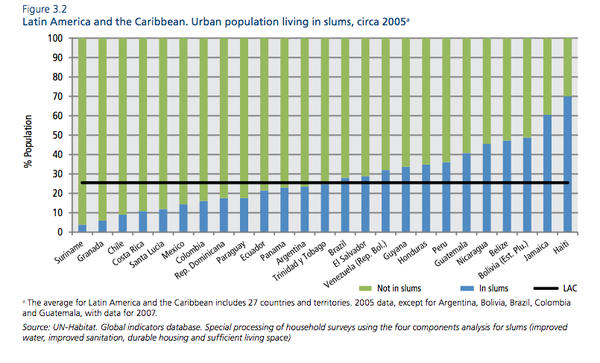
Anderson also doesn’t offer statistics showing that housing is more unequal in Venezuela than anywhere else. That’s because it’s not.
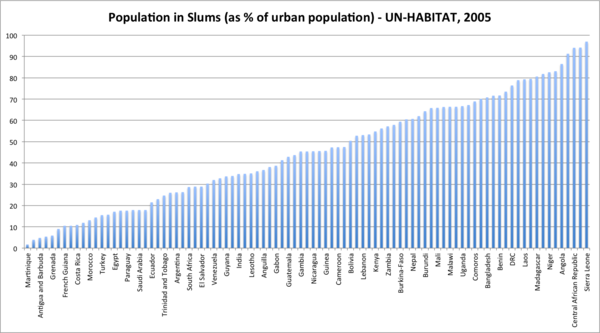
Out of the 91 countries for which the United Nations has available data, Venezuela is 61st in terms of the percentage of its urban population living in slums. That is to say, two-thirds of the world’s countries with available data have larger percentages of their urban citizens living as slum dwellers. In the Western Hemisphere, this includes Guayana, Honduras, Peru, Anguilla, Guatemala, Nicaragua, Belize, Bolivia, Jamaica, and Haiti.
click to enlarge
It is also worth mentioning that this data was taken from 2005, when the percentage of Venezuela’s urban population living in poverty and extreme poverty was at 37%. By 2010, according to the United Nations, it had been cut by a quarter, to 28% (p. 43). Furthermore, 2005 predates a massive governmental push in 2011 to build affordable housing. Earlier this year, Venezuela’s Housing Commission chair asserted that “in the years 2011 and 2012, the Bolivarian government together with the people reached the goal of building 350,000 homes.”
It appears, then, that Anderson has discovered a new definition of “social inequality” that has eluded economists and sociologists worldwide—one that systematically downplays Venezuela’s educational and income equality while emphasizing a high frequency of murders and a rate of slum-dwelling that is low by international standards.
While one can applaud Jon Lee Anderson for finally acknowledging the value of social indicators and statistical data, he and his magazine cannot be allowed to define “social inequality” any way they see fit. No social scientist analyzing the available data could argue, like Anderson, that Venezuela is one of the world’s most socially unequal countries. While semantics games may be expedient in avoiding a necessary correction, readers should let The New Yorker’s editor David Remnick (david_remnick@newyorker.com) know that a retraction of Anderson’s claim is long overdue.
Update (4/24): FAIR’s Jim Naureckas also offers sharp criticism of Jon Lee Anderson and his fact-checkers for a transparently inadequate attempt to justify his error regarding Venezuela’s social inequality. Read more, at “Jon Lee Anderson Explains: Because I Said So.”
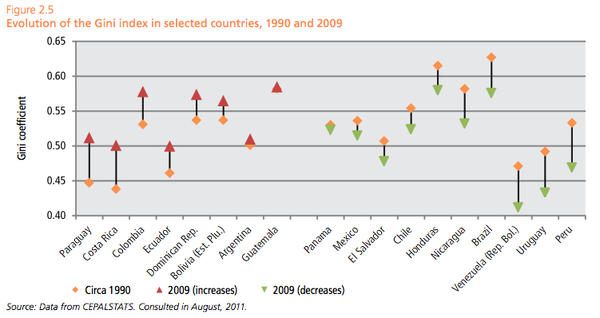
UN: “State of Latin American and Caribbean Cities”
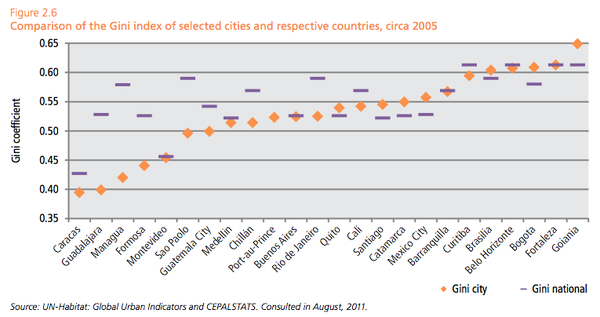
UN: “State of Latin American and Caribbean Cities”
~
Keane Bhatt is an activist in Washington, D.C. He has worked in the United States and Latin America on a variety of campaigns related to community development and social justice. His analyses and opinions have appeared in a range of outlets, including NPR, The Nation, The St. Petersburg Times, and CNN En Español. He is the author of the NACLA blog “Manufacturing Contempt,” which critically analyzes the U.S. press and its portrayal of the hemisphere. Connect with his blog on Twitter: @KeaneBhatt
April 26, 2013
Posted by aletho |
Deception, Economics, Mainstream Media, Warmongering | Honduras, Hugo Chávez, Jon Lee Anderson, Latin America, New Yorker, Venezuela |
Leave a comment
Another innocent customer unfortunately has been sued for defamation, simply for leaving a negative review of a company on eBay. The Ohio-based company, Med Express, had sent a customer in South Carolina a package that required additional postage to be paid. She chose to express her dissatisfaction with the service on eBay’s seller feedback. Med Express apologized, offered reimbursement, and asked her to revise her review; when she wouldn’t, they decided to sue.
The customer’s truthful review is, by definition, not defamation—yet definitions and truth tend not to matter in this sort of lawsuit, known as a strategic lawsuit against public participation, or SLAPP. Recipients of negative opinions sometimes try curbing free speech by threatening expensive and inconvenient defamation lawsuits, forcing targets into settling—and into silence. (Med Express also tried suing eBay, though the auction site is relieved from liability over its users actions in this case thanks to CDA 230.)
As Public Citizen’s Paul Alan Levy notes in his analysis of this case:
If Ohio had an anti-SLAPP statute, a lawsuit like this would never be filed, and if it was filed, it would be quickly dispatched because the certainty of an attorney fee award in response to a special motion to strike would give local lawyers an incentive to represent the customer on a strictly contingent fee basis.
In other words, cases like this reinforce the need for strong anti-SLAPP laws. These laws provide remedies that allow innocent free speakers to quickly shoot down these frivolous lawsuits without having to worry about legal fees.
Currently 28 states have anti-SLAPP laws, and that isn’t enough. Free speech should never be threatened by deep pockets. EFF is pushing Congress to support a strong federal anti-SLAPP bill, which would grant strong protections to targets of these absurd lawsuits across the nation, and you can push Congress too.
April 26, 2013
Posted by aletho |
Civil Liberties, Economics, Full Spectrum Dominance, Timeless or most popular | Med Express, Section 230 of the Communications Decency Act, Strategic lawsuit against public participation |
Leave a comment
Rosneft has announced joint ventures with ExxonMobil in Iraq, and with a Venezuelan national oil company. According to CEO the expansion will double the company’s share of the Russian gas market.
Igor Sechin told reporters on Tuesday that the company is considering teaming up with veteran business partner ExxonMobil in Iraq.
“We will work with anyone who offers good terms, we’ll work with ExxonMobil too,” Reuters reported Sechin as saying.
An Iraqi oil ministry delegation will arrive in Moscow on May 10 to further discuss the deal.
Since Sechin became CEO, Russia’s largest producer of oil Rosneft, has upped its game against state-controlled rival Gazprom which currently controls 70% of Russian gas exports.
His first big step was acquiring the Anglo-Russian company TNK-BP from BP for $55 billion on March 21 2013, which will give it an Arctic niche.
Sechin aims to chip away at the Gazprom monopoly, and to double Rosneft’s domestic gas market by 2020, from 9% to 19-22%, plans made clear at an investor meeting in London on Tuesday.
“We like to work with gas very much,” Sechin said at the meeting. “The domestic market is also attractive, and it suits us well.”
Sechin predicts the new mega company may reach a market capitalization of $120 billion in the next two years, which would trump Gazprom’s estimated value of $73-90 billion.
According to the Oxford Institute for Energy Studies, by 2013 Russia will even outperform its pre-crisis levels of 2008.
Rosneft expects to produce more than 40 billion cubic meters (bcm) of gas in 2013, over 60 by 2016 and 100 bcm in 2020, half of which will be produced in new projects.
The company is also on Gazprom’s heels in LNG development, as both companies are looking to expand their influence, particularly in exports to China.
Venezuelan vision
Just hours after the Iraq announcement, Venezuela’s government trumpeted a joint venture with Rosneft and PDVSA, the national oil company that dominates the Venezuelan market.
Rosneft will get a 40% share and the preliminary license is set for 25 years, and subject to extension.
The Venezuelan project will develop 342 kilometers in the Orinoco River basin, one of the richest oil reserves in the world, with an estimated 86.4 billion barrels, according to RIA Novosti.
Russian companies are involved in 5 oil projects in Venezuela, the world’s fifth largest oil exporter.
Venezuelan Oil Minister Rafael Ramirez has estimated the joint Russian-Venezuelan projects will be worth close to $50 billion by 2019.
April 25, 2013
Posted by aletho |
Economics | ExxonMobil, Gazprom, Iraq, Rosneft, Russia, Venezuela |
Leave a comment
The private prison population in the US has rocketed 17-fold over the last two decades mostly on the shoulders of the deep-pocketed prison lobby, and the business continues to thrive.
Try confining yourself to a small room in your home, like a bathroom or a closet, and spend a few hours there. One only cringes to imagine the detrimental psychological effects that kind of solitude creates for individuals who are subjected to solitary confinement for years at a time, knowing only the walls of their cell and the shades of light that creep across them. The abhorrent state of affairs at the Guantanamo facility often makes international headlines and arguably overshadows the calamity that is the US domestic prison system – where over six million people are subject to some form of correctional supervision, an amount exceeding those who toiled in the Soviet gulags during Stalin’s reign. In the United States, some fifty thousand inmates pass their days in solitary confinement. While there is undoubtedly no shortage of violent criminals in America’s jails, millions are dolled out annually by privately owned prison lobbies directly to politicians in an effort to influence harsher ‘zero tolerance’ legislation and mandatory sentencing for many non-violent offenses.
While the US faces economic stagnation and unprecedented spending cuts to programs of social uplift, business is booming for the private prison industry. Like any other business, these institutions are run for the purpose of turning a profit. State and federal prisons are contracted out to private companies who are paid a fixed amount to house each inmate per day. Their profit depends on spending the minimum amount necessary on each inmate day-to-day, allowing private-hands to pocket the remaining money. For the corrections conglomerates of America, success depends on housing the maximum numbers of inmates for the longest potential time as inexpensively as possible. Consider that the United States has the highest incarceration rate in the world, far surpassing any other nation – for every 100,000 Americans, 743 citizens sit behind bars. The harsher sentences meted out to non-violent offenders in contrast to other industrialized nations speaks volumes of America’s enthusiastic embrace of a prison industrial complex.
The number of people imprisoned under state and federal custody increased 772% percent between 1970 and 2009, largely due to the incredible influence that private corrections corporations wield against the American legal system. The argument is that by subjecting correctional services to market pressures, efficiencies will be increased and prison facilities can be run at a lower cost due to market competition. What these privatizations produce in turn is a system that destroys families by incentivizing the mass long-term detention of non-violent criminals, a system that is increasingly difficult to deconstruct and reform due to millions paid out to state and federal policymakers. According to reports issued by advocacy group Public Campaign, the three major corrections firms –Corrections Corporation of America (CCA), the GEO Group, and Cornell, have spent over $22 million lobbying Congress since 2001.
As a means of influencing policy-making at the federal level, at least $3.3 million have been given to political parties, candidates, and their political action committees, while more than $7.3 million has been given to state candidates and political parties since 2001, including $1.9 million in 2010, the highest amount in the past decade. Senators like Lindsay Graham and John McCain have received significant sums from the private prison corporations while Chuck Schumer, Chair of the Rules Committee on Immigration and Border Enforcement, received at least $64,000 from lobbyists. The prison lobby thrives off of laws that criminalize migrants and submit them to mandatory detention prior to being deported, sometimes up to 10 months or more; private firms have consistently pushed for the classification of immigration violations as felonies to justify throwing more and more immigrants behind bars. The number of illegal immigrants being incarcerated inside the United States has risen exponentially under Immigration and Customs Enforcement, an agency responsible for annually overseeing the imprisonment of 400,000 foreign nationals at the cost of over $1.9 billion on custody-related operations.
The private prison industry has become increasingly dependent on immigration-detention contracts, and the huge contributions of the prison lobby towards drafting Arizona’s controversial immigration law SB 1070 are all but unexpected. Arizona’s SB 1070 requires police to determine the immigration status of someone arrested or detained when there is “reasonable suspicion” that they’ve illegally entered the US, which many view as an invitation for rampant racial profiling against non-whites. While the administration of Arizona’s Governor Jan Brewer is lined with former private prison lobbyists, its Department of Corrections budget has been raised by $10 million in 2012, while all other Arizona state agencies were subject to budget cuts during that fiscal year. The concept of privatizing prisons to reduce expenses comes at great cost to the inmates detained, who are subjected to living in increasingly squalid conditions in jail cells across America. In 2007, the Texas Youth Commission (TYC), a state agency that overseas juvenile corrections facilities, was sent to a West Texas juvenile prison run by GEO Group for the purpose of monitoring its quality standards.
The monitors sent by the TYC were subsequently fired for failing to report the sordid conditions they witnessed in the facility while they awarded the GEO Group with an overall compliance score of nearly 100% – it was later discovered that the TYC monitors were employed by the GEO Group. Independent auditors later visited the facility and discovered that inmates were forced to urinate or defecate in small containers due to a lack of toilets in some of the cells. The independent commission also noted in their list of reported findings that the facility racially segregated prisoners and denied inmates access to lawyers and medical treatment. The ACLU and Southern Poverty Law Center have also highlighted several cases where GEO Group facility administrators turned a blind eye to brutal cases of rape and torture within their facilities, in addition to cases of its staff engaging in violence against inmates. According to the Justice Department data, nearly 210,000 prisoners are abused annually (prison personnel are found responsible half the time), while 4.5 percent of all inmates reported sexual assaults and rape.
It’s not possible to conceive how such institutionalized repression can be rolled back when the Obama administration shows only complicity with the status quo – a staggering $18 billion was spent by his administration on immigration enforcement, including detention, more than all other federal law enforcement agencies combined. Under Obama’s watch, today’s private prison population is over 17 times larger than the figure two decades earlier. Accordingly, Obama’s drug czar, Gil Kerlikowske, has condemned the recently passed state laws in Colorado and Washington that legalize the possession of marijuana in small amounts. The Obama administration is bent on keeping in place the current federal legislation, where a first-time offender caught with marijuana can be thrown in prison for a year. It’s easy to see why common-sense decriminalization is stifled – an annual report released by the CCA in 2010 reiterates the importance of keeping in place harsh sentencing standards, “The demand for our facilities and services could be adversely affected by the relaxation of enforcement efforts, leniency in conviction or parole standards and sentencing practices or through the decriminalization of certain activities that are currently proscribed by our criminal laws. For instance, any changes with respect to drugs and controlled substances or illegal immigration could affect the number of persons arrested, convicted, and sentenced, thereby potentially reducing demand for correctional facilities to house them.”
Such is the nature of a perverted brand of capitalism, and today’s model bares little difference to the first private prisons introduced following the abolition of slavery in the late 1800s, where expansive prison farms replaced slave plantations where predominately African-American inmates were made to pick cotton and construct railroads in states such as Alabama, Georgia and Mississippi. Today, African-Americans make up 40% of the prison population and are incarcerated seven times more often than whites, despite the fact that African-Americans make up only 12% of the population. Inmates are barred from voting in elections after their release and are denied educational and job opportunities. The disproportionate levels of black people in prisons is undeniably linked to law enforcement’s targeting of intercity black communities through anti-drug stipulations that command maximum sentencing for possession of minute amounts of rock cocaine, a substance that floods poor black neighborhoods.
Perhaps these social ills are byproducts of a system that places predatory profits before human dignity. Compounding the illogic is that state spending on prisons has risen at six times the rate of spending on higher education over the past two decades. Mumia Abu-Jamal, America’s most famous political prisoner, has spent over three decades on death row; he was convicted in 1981 for the murder of a white police officer, while forensic experts say critical evidence vindicating Jamal was withheld from the trial. In an interview with RT, Jamal relates his youth activism with the Black Panthers party against political imprisonment in contrast to the present day situation, “We could not perceive back then of what it would become… you can literally talk about millions of people incarcerated by the prisoner-industrial complex today: men, women and children. And that level of mass incarceration, really mass repression, has to have an immense impact in effect on the other communities, not just among families, but in a social and communal consciousness way, and in inculcation of fear among generations.” The fear and immortality the system perpetuates shows no sign of abating. Being one of the few growth industries the United States has left, one can only imagine how many people will be living in cages in the decades to come.
April 23, 2013
Posted by aletho |
Civil Liberties, Corruption, Economics, Ethnic Cleansing, Racism, Zionism, Subjugation - Torture, Timeless or most popular | Arizona, Chuck Schumer, Corrections Corporation of America, GEO Group, Human rights, Jan Brewer, John McCain, Lindsay Graham, Texas Youth Commission, U.S. Immigration and Customs Enforcement, United States |
Leave a comment
Karuturi Global Limited, a publicly registered holding company headquartered in Bangalore, India, may be under fire from the Kenya Revenue Authority (KRA) for tax evasion, but the complaints against it go further than that. The agribusiness firm, whose farm operations also straddle Ethiopia and India, has been dodging bullets about labour law violations, human rights abuses and environmental issues. Even the World Bank Group is no longer considering the company’s request for risk insurance for its investments in Ethiopia. This background note summarises the various problems that Karuturi has come to be known for among social justice movements around the world.
Tax evasion
Every year around US$ 1000 billion disappears without a trace from developing countries, ending up in tax havens or rich countries. The main part of this is driven by multinational companies seeking to evade tax where they operate.
The sum that leaves developing countries each year as unreported financial outflows, referred to as illicit capital flight, amounts to ten times the annual global aid flows, and twice the debt service developing countries pay each year. During 2000-2008 Africa was the region with the largest real growth of illicit capital flight, amounting to 21.9 % per year.
This money, if properly registered and taxed in the country of origin, could of course contribute to fulfilling human rights like the right to education and health care, and make a major difference in the fight to combat poverty. Due to just two forms of illicit capital flight used by corporations (‘mispricing’ and ‘false invoicing’), developing countries are losing three times the amount that is missing to achieve the UN millennium development goals (like universal education, stopping the spread of HIV, and halving extreme poverty) in tax revenues every year.
(For all facts on tax evasion above and more info on mispricing please see “Bringing the billions back: how Africa and Europe can end illicit capital flight” by Fröberg and Waris, 2011)
In 2012, the Kenya Revenue Authority developed a team of transfer pricing experts to audit accounts of companies in order to assess whether there was transfer mispricing and tax evasion taking place. Some transnational companies that export from Kenya are notoriously adept at it. However, the government has had difficulty tracing these firms’ operations due to lack of capacity and to date all audits and assessments, apart from one against Unilever, have been settled outside of public view.
On the 4th of April 2013 Karuturi filed a notice of appeal against the decision of the tax tribunal for taxes due to the Kenyan government and the Kenyan people. According to ICRA, an Indian credit rating research agency, in an October 2012 analysis commissioned by Karuturi as well as Karuturi’s 2012 annual report, Karuturi has been facing a number of potential threats to its financial viability, namely:
- An INR 57.8 crore (= KES 975 million / USD 10.7 million / EUR 8 million) dispute from the Kenya Revenue Authority over transfer pricing
- An INR 83.5 crore (= KES 1.4 billion / USD 15 million / EUR 11.5 million) claim on unpaid income taxes from the Indian authorities
- A risk of default on a USD 54.7 million (= KES 4.8 billion / EUR 40.3 million) foreign currency convertible bond due for redemption on 19 Oct 2012 which was since restructured
The overall tax claims come to USD 26 million, which is about one-quarter of the multinational’s global turnover in fiscal year 2012 (USD 106 million) while the amount for Kenya amounts to almost 1 per cent of Kenya’s total annual tax collection.
Money of this magnitude could be used as additional income for development or to replace some current taxes that target the poor like value added tax or even to delay the enactment of additional taxes like the one on maize flour due to be activated in Kenya in 2015.
Land grabs
Since 1996, Karuturi’s core business has been floriculture, producing 580 million roses per year from 289 hectares of land the company leases in Kenya (154 hectares), Ethiopia (125 hectares) and India (10 hectares). In 2012, the group commanded no less than 9% of the cut rose market in Europe. Since the 2007/2008 global food crisis, Karuturi began expanding from floriculture into food production. Its plan is to set up farming operations on over one million hectares, mainly in eastern and southern Africa, to produce primarily maize, rice, sugarcane and palm oil for international markets.
The hub of this expansion is Ethiopia. In 2009, Karuturi acquired 10,700 ha of land in Bako for maize, rice and vegetable production. In 2010, it got an additional 300,000 hectares for expansion in Gambela. The company aims to farm a total of 750,000 ha in Ethiopia. This land is leased from the government at bargain prices, but local communities consider it their own.
As a result, many conflicts have emerged around compensation, displacement and the relocation of villagers and herders who suddenly found themselves fenced off of their lands by the Indian company.
In 2011, Karuturi announced it was expanding further by pursuing a US$500 million investment for 370,000 ha in Tanzania, including an initial 1,000 ha in the country’s fertile Rufiji Basin. That same year, the company announced that it was in discussions with government officials in the Republic of Congo for a farm project in a special economic zone in Oyo-Ollombo, 400 km north of Brazzaville. In addition, it has been planning fruit and vegetable farms in Sudan, Mozambique and Ghana, and, says CEO Ramakrishna Karuturi, “in Senegal, we have made an exploratory probe and in Sierra Leone we have made initial contacts.” All of these countries are rife with land grabs right now.
Labour issues & disputes
According to a 2012 report published by the London Business School, 5% of Karuturi’s workforce in Ethiopia is composed of foreigners. Karuturi has been bringing in staff and consultants from abroad, including India, to run management, irrigation & drainage operations, and logistics because they said they could not find the experience locally. Same for manual labourers. Karuturi hires Ethiopians as unskilled labour but for skilled labour it says it faces problems. At the end of 2011, Karuturi got into a dispute with the Ethiopian government because they brought in several hundred Indian farmers to work on their farms in Gambela, which the Ethiopian authorities said contravened Ethiopian law and for which they would not give the permits. Karuturi reportedly also expects to rely on Indian farmers to handle its work on oil palm.
According to media and labour organisation organisation reports, workers on Karuturi farms in both Kenya and Ethiopia have been complaining about, and initiating labour actions against, various conditions, especially related to wages and safety.
In November 2012, Karuturi reportedly began laying off about 900 of its 3,500 seasonal workers in Naivasha, Kenya, due to financial problems. The number was later reduced to 600. In December 2012, 1,000 Karuturi workers went on strike to demand action from management on unpaid salaries and poor working conditions.
Earlier, in June 2010, Workers Rights Watch, a Kenyan association, carried out focus group discussions with Karuturi flower farm workers in Naivasha and registered a mixed scorecard of positive and negative opinions about the company.
Regarding Karuturi’s Ethiopian farms, various media and research reports have exposed complaints of poor wages. For example, a solid report commissioned by the International Land Coalition shows that Karuturi pays Ethiopian farm labourers at its Bako farm ETB 10 per day (US$ 0.50) which compares with about ETB 20 per day (US$ 1.00) for labourers on commercial sesame farms in the country. Night guards for the company are said to be paid ETB 300 per month (US$ 15) if they own a gun and ETB 200 (US$ 10) per month if they do not.
Human rights violations
According to a powerful 2012 report by Human Rights Watch, the Ethiopian government is forcibly relocating thousands of indigenous people in western Gambela to new villages lacking adequate food, farmland, healthcare, and educational facilities to make way for large scale agricultural projects of foreign investors, including Karuturi. The report said, based on interviews with community representatives, that crops of local Anuak communities were cleared without consent for the Karuturi operations and that residents of Ilea, a village of over 1,000 people within Karuturi’s lease area, were told by the Ethiopian government that they would be moved in 2012 as part of its “villagisation programme”. In response, CEO Sai Ramakrishna Karuturi denied any connection between his company’s activities and the government’s villagisation programme. In conversation with the Wall Street Journal’s unit in India, he described the Human Rights Watch report as “hogwash” and “a completely jaundiced western vision”, and even denied that the villagisation programme exists.
Loss of livelihoods
Karuturi’s 10,700 ha Bechera Agricultural Development Project in the Bako Plains of Ethiopia has deprived several local communities of their communal grazing areas and access to water for their livestock, thus severely affecting their livelihoods. This comes from a study commissioned by the International Land Coalition, based on detailed discussions with local communities, local authorities and Karuturi employees. The study documents how the lands were provided to Karuturi without the consent of the local communities and without compensation. It reveals that Karuturi is refusing to implement even the most minimal measures recommended by local authorities to address some of the impacts from its operations. For example building a livestock corridor through its fields so that locals could access water sources for their animals, or allowing them to graze their animals on crop residues.
Environmental & health concerns
Karuturi operates one of the largest flower farms in the Lake Naivasha Basin in Kenya, the country’s second largest freshwater lake. The flower farms are blamed for causing a drop in the lake’s water level, for polluting the lake with pesticides and chemical fertiliser runoff and for affecting the lake’s biodiversity. Workers at Karuturi’s flower farms in Naivasha who spoke with Muungano wa Wanavijiji, a local partner organisations of Forum Syd, in February 2013 said that the dilapidated condition of the Karuturi operations and poor protective clothing puts them at risk to exposure from chemicals. They say the company does not seem to care about their concerns.
For its farm in Gambela, Ethiopia, Karuturi has developed an irrigation system with 50km of canals, 50km of drainage, and 40km of dykes, to pump a reported 22,000 litres of water per second from the Baro River, a crucial source of water for people dependent on the White Nile. Karuturi’s smaller 10,700 ha farm in Bako also generates significant issues related to access to water and water quality for the local communities. Although environmental impact assessments are usually required for irrigation projects in Ethiopia, Karuturi reportedly did not undertake any such assessment prior to constructing its farming complex in Bako.
Investor confidence
Karuturi and its shareholders have been waiting since at least May 2011 for the World Bank’s Multilateral Investment Guarantee Agency (MIGA) to approve the company’s long pending bid for political risk insurance for its Ethiopian operations. According to Sai Karuturi, as of 2012 the application had still not been approved due to Karuturi’s plans to produce palm oil — a sensitive issue for which the Bank would require the Ethiopian government to put in place environmental protocols. Karuturi explained that he was therefore advised by MIGA to omit palm oil from the application for now and so he did. If MIGA protection fails to materialise, the company told investors that its fallback option would be to seek support from India’s Export Credit Guarantee Agency. On 29 January 2013, MIGA informed GRAIN, flatly, that Karuturi’s application “is no longer under consideration”.
In March 2013, Bloomberg reported that Karuturi was seeking “hundreds of millions” of fresh investment dollars from an unnamed sovereign wealth fund after yet another unnamed development bank refused it a loan.
In April 2013, the Indian paper Business Today reported that Karuturi was thinking of taking the company private.
April 23, 2013
Posted by aletho |
Corruption, Deception, Economics, Timeless or most popular | Africa, Ethiopia, India, Karuturi, Kenya, Kenya Revenue Authority |
Leave a comment
Interview with Flynt Leverett by Kourosh Ziabari
If you regularly follow the headlines on the American and European radio stations, TV channels or newspapers, you come to believe that Iran’s nuclear program is the world’s most important, unsolvable and complicated problem. It’s been more than a decade that they have been incessantly talking of an Iranian threat that has endangered world peace and security. At the same time, they turn a blind eye to Israel’s nuclear arsenal and the fact that Israel is the sole possessor of nuclear weapons in the Middle East. The claim that Iran is trying to produce atomic weapons has laid the groundwork for the U.S. and its allies to impose harsh economic sanctions on Iran and damage Iran’s economy and trouble the daily lives of the ordinary Iranian people.
To study the different aspects of the sanctions imposed on Iran by the United States and the European Union, Iran Review has conducted a series of interviews with world-renowned political scientists, lawyers, journalists and authors and asked them some questions on the humanitarian and legal impacts of the sanctions, their compatibility with international law and the human right standards, etc.
Today’s interviewee is Prof. Flynt Leverett, a prominent Iran expert. Leverett is a professor of international affairs and law at Pennsylvania State University and co-author of “Going to Tehran: Why the United States Must Come to Terms with the Islamic Republic of Iran.” Prof. Leverett has written on Iran’s nuclear program extensively and is regularly interviewed by international media. What follows is the text of the interview.
Q: The United States claims that by imposing sanctions on Iran, it intends to prevent Tehran from acquiring nuclear weapons, but the sanctions have recently targeted the ordinary citizens and consumer goods and medicine. Why have the sanctions swiftly diverted from the issue of disarmament and are directed toward the daily life of the ordinary Iranian citizens?
A: This is the inevitable logic of sanctions. American and other Western officials declare that the targets of their sanctions policies are governments, not people. In reality, though, the point of sanctions is to make ordinary people in targeted countries miserable.
In the Western logic of sanctions, if enough ordinary people are made sufficiently miserable, then they will rise up and either force their governments to change policies that Washington views negatively or else force these governments from power. There is no other strategic rationale for sanctions.
Q: While the process of passing on Iran’s nuclear dossier to the Security Council was illegal, do the resolutions issued on this basis have a legal warranty?
A: A number of prominent international legal scholars have advanced a powerful argument, with which I agree, that the Security Council resolutions calling on Iran to stop enriching uranium are legally invalid. Article 25 of the UN Charter establishes a strong presumption that UN member states should comply with Security Council resolutions. But the same article also limits member states’ obligation in this regard to Security Council decisions “in accordance with the present charter.” Likewise, Article 24 of the Charter holds that, in discharging its duties, “the Security Council shall act in accordance with the purposes and principles of the United Nations.” (Those purposes and principles are presented in Articles 1 and 2 of the Charter.)
The Security Council resolutions calling on Iran to suspend uranium enrichment demand, in effect, that the Islamic Republic surrender what the Nuclear Non-Proliferation Treaty recognizes as signatories’ “inalienable right” to the peaceful use of nuclear technologies—including uranium enrichment. By adopting these resolutions, the Council was acting neither “in accordance with the [UN] Charter” nor “in accordance with the purposes and principles of the United Nations.” And that renders these resolutions invalid.
Q: Don’t you think that focusing the sanctions on basic staples and goods, especially medicines, is tantamount to a continued and systematic violation of the human rights?
A: The U.S. government claims that the sanctions are not focused on items like food and medicine—that there is an explicit exemption for food and medicine in the sanctions policy. But, as the question implies, this is, to say the least, hypocritical. Formally, there is an exemption in the sanctions for food and medicine. But, in practice, as long as banking sanctions deter Western and many other international banks from processing transactions with Iranian counter-parties—even for “permitted” items like medicines—the effect is to bar the export of medicines to Iran, with predictably tragic consequences.
This is both inhumane and illegal, on multiple levels. Besides the horrible impact of U.S.-instigated sanctions on ordinary Iranians, U.S. sanctions policy is a gross violation of international economic law. Most of the sanctions that are having such terrible effects on ordinary Iranians are not unilateral U.S. sanctions—which the Islamic Republic has been dealing with for decades—or multilateral sanctions authorized by the UN Security Council. Most of the sanctions that are creating real difficulties and hardships for Iranians are so-called “secondary” sanctions, whereby Washington threatens third-country entities doing perfectly lawful business with the Islamic Republic with punishment in the United States. In recent years, Congress has been regularly expanding and intensifying Iran-related secondary sanctions through laws that President Obama immediately signs and obediently implements.
Secondary sanctions clearly violate American commitments under the World Trade Organization (WTO), which allows members to cut trade with states they deem national security threats but not to sanction other members over lawful business conducted with third countries. If challenged on the issue in the WTO’s Dispute Resolution Mechanism, Washington would surely lose. That’s why U.S. administrations have been reluctant to impose secondary sanctions on non-U.S. entities transacting with Iran, and have done so pretty rarely. What Washington relies on is that, in many cases, the legal and reputational risks posed by the threat of U.S. secondary sanctions reduce the willingness of companies and banks in many countries to transact with Iran, with negative consequences for Iran’s economy and for many ordinary Iranians. It is the approach of a bully who does not believe he is constrained by the same laws that apply to others.
Q: It’s said that the sanctions that target ordinary civilians are a kind of collective punishment, and collective punishment is a crime according to the Nuremberg Tribunals. The Western states claim that they care for human rights, but they are behaving in such a hypocritical manner and punish the Iranian citizens for a crime they have not committed. What’s your viewpoint on that?
A: As a matter of policy, the United States is not and never has been interested in human rights in any sort of universal or objective way. The United States is only interested in the selective, instrumental exploitation of human rights concerns to undermine governments it does not like. As Washington has co-opted, and corrupted, the human rights agenda in this way, it has also undermined its credibility to address human rights in Iran or anywhere else. Moreover, as the question implies, America’s professed concern for human rights in Iran is especially hypocritical so long as the United States continues what I would call its “dirty war” against the Islamic Republic—including economic warfare targeting civilians (through sanctions), cyber-attacks, and support for groups doing things inside Iran that, in other places, Washington condemns as “terrorism.”
Q: It seems that the sanctions are not simply aimed at curbing Iran’s nuclear program but the main objective of the sanctions is seemingly to create social unrest in Iran which can finally lead to a regime change. So, what’s the message which the sanctions impart? Diplomacy or conspiracy?
A: Since the Iranian revolution, no American administration—not even that of Barack Hussein Obama—has been prepared to accept the Islamic Republic as a legitimate and enduring political entity, representing legitimate national interests. Every administration has seen the Islamic Republic as fragile and vulnerable to internal subversion, and has sought in various ways to encourage such subversion. Of course, it has not worked, but this outlook continues to dominate mainstream foreign policy discussions in the United States about Iran.
U.S. sanctions policy toward Iran needs to be seen in this context. The proposition that sanctions are somehow intended to promote a diplomatic “solution” is, to put it bluntly, dishonest. Consider the way that the sanctions have been drawn up. Even just a few years ago, most of them were imposed by executive orders, which are more or less at the discretion of the White House. Now, though, most of the sanctions have been written into law, which greatly reduces the President’s ability to pull back on them as part of a negotiating process, or to lift them even if Iran acceded to all U.S. demands on the nuclear issue.
Regarding this point, look at the language in current U.S. law on sanctions. Even if the Islamic Republic allowed the U.S. government to come in, dismantle every centrifuge in Iran, and take them back to the United States—like Qadhafi did in Libya—there would still be no legal basis for the President to lift sanctions. The law says that, in order for sanctions to be lifted, the President would also have to certify to Congress that Iran had stopped all dealings with resistance movements like Hizbullah and Hamas, which the United States persists in calling terrorist organizations, and that the Islamic Republic had effectively turned itself into a secular liberal “Republic of Iran” to meet U.S. standards on “human rights.”
That’s not a serious approach to diplomacy. The argument that sanctions are somehow meant to encourage a diplomatic outcome is detached from reality.
Q: Along with the expansion of sanctions, the resistance of the Iranian nation has increased, as well. Why haven’t the sanctions had the effects the West desires, whether in the political or social level?
A: There is no case in history in which sanctions have prompted a target population to rise up, overthrow their government, and replace it with a government prepared to adopt policies sought by the sanctioning power. That has literally never happened. Even in Iraq, where for twelve years the United States led the way in imposing sanctions so severe they killed more than a million Iraqis (half of them children), the population did not rise up to overthrow Saddam Hussein. That took a massive U.S. invasion—and even then, the United States did not get a “pro-American” government in Baghdad.
Beyond this history, the Islamic Republic, as I have come to understand it, is the product of a revolution that had, as one of its highest priorities, the restoration of Iran’s effective sovereignty and independence after a century and a half of domination by Western powers.
Q: The experts say that something around 15-20% of the current price of the oil is a result of the EU’s oil embargo against Iran. How much has the oil embargo influenced the EU’s economy in the current critical juncture?
A: In the late 1990s and early 2000s, when some European elites had serious ambitions for the European Union to emerge as an independent force in international affairs, capable of balancing the United States, European nations pursued an at least somewhat independent policy toward Iran. However, with the collapse of the EU’s constitutional project in the mid 2000s, European elites calculated that the next-best way for Europe to have influence in the Middle East is by helping the United States pursue its hegemonic ambitions in the region.
To understand what I am talking about, just look at the extraordinary shift in the Middle East policies of France and Germany. Both of those countries were absolutely right in anticipating what a strategic and moral disaster America’s 2003 invasion of Iraq would be, and in refusing to go along with the United States in this ill-conceived campaign. But within just a few years of having been right on Iraq—and having been proved right by events on the ground there—the French and German governments aligned themselves almost completely with Washington’s Middle East policies.
As a result of this shift, Europe has, over the last few years, almost completely subordinated its Iran policy to that of the United States—even though, as the question implies, this imposes additional costs on European economies at a time when those economies are already under significant strain. A few EU countries, like Sweden, continue trying, on the margins, to keep some element of rationality in European discussions on Iran, but they are fighting a losing battle.
Q: Currently a number of countries implement the sanctions for different reasons, but several others don’t, so the sanctions have practically turned into an economic opportunity for those countries which haven’t put into effect the sanctions because those countries that adopt the sanctions have deprived themselves of robust and profitable trade with Iran. Are the sanctions capable of curtailing or stopping Iran’s foreign trade?
A: I agree with the premise of the question. Those countries which comply with illegal U.S. secondary sanctions and limit their trade with the Islamic Republic are ultimately hurting themselves more than they may hurt Iran. Sanctions may distort Iran’s foreign trade to some degree, but they cannot stop it.
Q: Complementing the sanctions with valid threats of military strike and intelligence operations are among the most important advice given by Israel to Europe and the United States. How successful have these countries been in sabotaging Iran’s security?
A: They have not been successful at all. I hope that my country will not engage in overt military aggression against the Islamic Republic. If, however, the United States is so foolish as to launch another war in the Middle East, to disarm yet another Middle Eastern state of weapons of mass destruction it does not have, I believe that the blowback to U.S. interests in the region will be disastrous for America’s strategic position. The United States will be the big loser in such a war.
April 23, 2013
Posted by aletho |
Deception, Economics, Timeless or most popular, War Crimes | Flynt Leverett, Iran, Sanctions against Iran, United States, World Trade Organization |
Leave a comment
Proving that those who are not punished for their misdeeds are allowed to repeat them, the Wall Street banks that created and sold risky combinations of mortgages and loans during the pre-2008 boom—and crashed the world economy with them—are doing exactly the same thing again. Once again, financial products with obscure, complex-sounding names like “collateralized debt obligations” and “securitized mortgage instruments,” are being sold by Wall Street to people on Main Street.
The ominous return from the dead of these investments, also called structured financial products, has largely evaded new regulations meant to avert another crisis, prompting concern from financial industry observers. Manus Clancy, managing director at commercial real estate research firm Trepp, worries that “All of this seems like a fairly quick round trip. You are seeing a fair number of sins being forgiven.”
And the sinners who committed those sins are acting like they’ve been forgiven as well. “The players in the business are generally the same as they were before,” noted Tad Philipp, a commercial real estate analyst at Moody’s. “Because it’s the old players, they know how to push the boundaries.”
Wall Street is certainly pushing boundaries on securitized commercial mortgage-backed securities, in which a pool of commercial mortgages are mixed together into bonds, ranked by varying levels of risk. So far in 2013, banks have issued $33.5 billion in such bonds, slightly more than they did in early 2005. Before the 2008 crash, 57% of the outstanding money in such securities was in high-risk interest-only loans, a number that fell hard and fast, to just 11% two years ago. Today, that number has more than tripled to 34%.
Even faster to revive have been collateralized loan obligations, which are pools of loans given to companies with junk ratings. In the first quarter of 2013, banks issued about $26 billion of them—more than in the same period of the last boom year of 2007. Demand has been so strong that banks have started to loosen underwriting standards on the underlying loans and bonds, prompting the Federal Reserve to warn last month that “prudent underwriting practices have deteriorated.”
Those willing to learn from history will recall that securitization—the bundling of many loans into one investment—proved dangerous during the real estate bubble because when the bubble burst, investors learned that the complexity of the instruments had obscured their real risks, leading to unexpected losses by those investors, chaos in the financial system and the Great Recession. They will also recall that those who created these “shoddy deals” and then defrauded their investors escaped wealthy but largely unpunished, and are still working on Wall Street today.
To Learn More:
Wall St. Redux: Arcane Names Hiding Big Risk (by Nathaniel Popper, New York Times)
SEC Tricks Judge to Help Citigroup (by Noel Brinkerhoff and David Wallechinsky, AllGov)
Why No Prison for Banksters Who Caused Financial Crisis…Yet? (by David Wallechinsky and Noel Brinkerhoff, AllGov)
April 22, 2013
Posted by aletho |
Corruption, Deception, Economics, Progressive Hypocrite | Citigroup, Commercial mortgage-backed security, Federal Reserve System, Financial services, Wall Street |
Leave a comment
Even as Pentagon officials complain that budget cuts threaten to hollow out its ranks and degrade its military capabilities, they have been able to find money for new sun rooms, a museum, golf course netting and other “questionable projects,” according to a Senate Armed Services Committee report released last week.
The report focuses on the military’s $10 billion-a-year overseas construction efforts, about 70% of which is spent in just three countries with a large U.S. troop presence: Japan, South Korea, and Germany. According to the report, much of this spending occurs with little oversight, sometimes in violation of military regulations and Pentagon promises to Congress.
The specific boondoggles include addition of sun rooms to housing for senior officers in Stuttgart, Germany; a $10 million museum in South Korea praising the U.S. Army; and $2.9 million worth of netting around an Army golf course at Camp Zama, Japan.
Perhaps more disturbing than the amounts involved is the surreptitious manner in which the Pentagon spent the money and kept Congress and the public in the dark. The U.S. is withdrawing or relocating troops in all three countries, and as the military relinquishes various facilities to the host countries, they are expected to pay the U.S. for the returned properties. However, a little-known rule lets local American commanders waive these payments in return for work of an equivalent value performed by the host country—without approval from Congress or even the Pentagon itself. Each of the most questionable expenses—the sun rooms in Germany, the pro-Army museum in South Korea and the golf netting in Japan—was financed this way.
“When the Pentagon and the entire federal government face enormous fiscal challenges, the questionable projects and lack of oversight identified in this review are simply unacceptable,” said Sen. Carl Levin (D-Michigan), the committee chairman.
“We are aware of the report, and we take it very seriously,” said Air Force Maj. Robert Firman, a Department of Defense spokesman. “The DOD strives to be a good steward of taxpayer resources and we look forward to discussing it with Congress in the near future.”
April 22, 2013
Posted by aletho |
Corruption, Economics, Militarism | Camp Zama, Germany, Japan, South Korea, Stuttgart, United States Department of Defense |
Leave a comment
At a Press Conference with his Russian counterpart Vladimir Putin, Egypt´s President Mohammed Morsi stated, that Egypt was committed to finding a peaceful and legal solution to the crisis in Syria. Today, the official Egyptian State Information Service states, that Egypt has said no to a loan from the International Monetary Fond, IMF, because the IMF´s conditions were unacceptable. Earlier this year, prior to a state visit in India, Morsi pronounced that Egypt has aspirations for joining the BRICS.
Since the discontinuation of the Soviet Union, the bilateral relations between Cairo and Moscow have slowly degraded. The main talking points on the agenda at the talks between Morsi and Putin were the revival of trade, commerce and economic cooperation between the two countries as well as the instability that has swept over Northern Africa and the Middle East since 2011.
Earlier this year, prior to a planned state visit to India, Morsi stated, that Egypt has aspirations of becoming a member of the BRICS, leading to speculations, whether Egypt is planning to assume a similar role as it had during the 1950s and 1960s, where the country walked a tightrope between alignment with Moscow and Washington. As a member of the non-aligned movement, Egypt may very well try to reassert its role as a regional power broker.
A closer alignment of Egypt with Moscow would make the country less dependent on US foreign policy and could, at least to a certain degree, counter the strong influence the USA is asserting over the Arab League through Qatar.
The little Gulf Kingdom has since 2007 grown into a veritable regional political superpower, which has stood and is standing behind many of the sweeping changes which have cast northern Africa and the Middle East into turmoil since 2011. Qatar and the USA are the primary powers behind the attempted subversion of Syria.
The question one may ask is, whether Morsi´s statement, that Egypt is committed to finding a peaceful and legal solution to the crisis in Syria is indicative of a more self-confident Egypt, and an Egyptian president who is aware of the fact that an alignment with the USA and Qatar, without playing the Moscow card, makes him as easily disposable as his predecessor Hosni Mubarak.
There are also other signs which indicate that Morsi may be trying to reassert Egypt´s role as regional power and greater independence from Washington. Morsi´s ambitions to have Egypt become the “E” in something that could become the BRICS+E was one indication. Prior to his visit to India, Morsi also stated, that Egypt is planning to increase its relations with eastern and Asian countries.
Today´s rejection of the IMF´s loan, following talks with the Russian President in Sochi, are lending additional credibility to those who are arguing for an Egyptian realignment to the middle, and the recent signals from the BRICS, that it will create a BRICS development bank, are indicative that Morsi may have substance behind the possible dream of a course change.
Asked about the reasons for turning down the IMF, Mosi said, “We seek to carry out clear changes in the government´s economic program to receive the loan and we are keen on the interests of the Egyptian citizens”. On of the greatest points of critique against Morsi, other than oppression of his political opponents were, that Morsi “already sold out Egypt and its people to the IMF and World Bank, before he even was elected”. With backup from Russia and the other BRICS members however, Morsi would be less dependent on Washington´s and the IMF´s economic dictates. With the World Bank and IMF systems, as some analysts have it, close to exploding into an international scandal which could spell the beginning of the end of the Bretton Woods gentleman´s agreement, Morsi may be making a very wise decision.
Morsi showed true statesmanship when he said, that he is “seeking real investments in Egypt” and that “loans don´t solve problems and are just temporary solutions”. During his interview with Al-Jazeera Morsi also reiterated the importance of maintaining the integrity of Egyptian territory, stating, that “Egypt´s lands are not for sale and are prohibited for non-Egyptians”.
While increased Egyptian self-confidence and increased assertiveness in the Arab League as well as Egypt´s possible influence for finding a political solution to the crisis in Syria may be plausible and welcome, he may still have to tackle internal problems. Consolidating the continuity and stability of the Egyptian government in times of sudden and comprehensive unrest and change may have made sweeping power grabs a tempting solution. As a long-term strategy however, a semi-dictatorial, Muslim Brotherhood influenced Egyptian government is as counter productive to the stability of Egypt´s society and government, as loans are counterproductive as a long-term strategy for economic growth.
During an interview with Al-Jazeera, Morsi also stressed that Egypt is maintaining good relations with Iran and that Egypt´s relations with Iran are not directed against anyone. Morsi reiterated, the importance of Iran´s role with regard to finding a peaceful resolution to the crisis in Syria.
The renewed ties between Cairo and Moscow may also indicate that Russia is planning to play a more active role throughout the Middle East, and that the Russian government is planning to reassert some of the influence Moscow has lost in the region during the last years of the Soviet era and the early 1990s.
A Russian fleet, composed of the anti-submarine destroyer Admiral Panteleyev and the two logistic warships Peresvet and Novelskoy, with a total number of 712 crew have entered the Iranian Army´s first naval zone in Bandar Abbas.
The three vessel´s visit is aiming at consolidating the relations between Iran and Russia and the expansion of interactions between the two countries in the field of naval security. The three Russian warships have left their home port Vladivostok for duty in the world oceans and are visiting Bandar Abbas en route to their operational destinations. The Russian Ministry of Defense has announced, that Russia has begun forming a separate Mediterranean squadron.
The visit of Egypt´s President Morsi to Sochi and the talks with Russian President Putin, Egypt´s interest in joining the BRICS, the rejection of the IMF loan, Morsi´s commitment to finding a peaceful solution to the crisis in Syria while stressing the importance of Iran´s role as part of the solution, and Russian commitment to a stronger naval presence in the Mediterranean indicate that Egypt could be playing a key role in limiting the current US Middle East and Northern Africa Pivot. The rejection of the IMF loan and indications to more commitment to democracy could indicate, that Russian influence also has inspired the Muslim Brotherhood led government to bring its own house in order while considering to assume a greater regional role.
April 21, 2013
Posted by aletho |
Economics, Timeless or most popular | BRICS, Egypt, Middle East, Morsi, Russia, Syria, Vladimir Putin |
Leave a comment
The NYT has difficulty finding pundits who can write knowledgeably about economics. Thomas Friedman made this point in his Sunday column. At one point he quotes Gary Green, the president of Forsyth Technical Community College, in Winston-Salem, N.C.:
“‘We have a labor surplus in this country and a labor shortage at the same time,’ Green explained to me. Workers in North Carolina, particularly in textiles and furniture, who lost jobs either to outsourcing or the recession in 2008, often ‘do not have the skills required to get a new job today’ in the biotech, health care and manufacturing centers that are opening in the state.
“If before, he added, ‘you just needed a high school shop class or a short postsecondary certificate to work in a factory, now you need an associate degree in machining,’ a two-year program that requires higher math, I.T. and systems skills. In addition, some employers are now demanding that you not only have an associate degree but that nationally recognized skill certifications be incorporated into the curriculum to show that you have mastered the skills they want, like computer-integrated machining.”
Actually there are simple ways to identify labor shortages. First and foremost we should be seeing rapidly rising wages. If employers cannot get the workers they need then they raise the wages they offer to pull workers away from other employers. This is how markets work. (We should also see longer workweeks and increased vacancies.)
In fact there is no major sector of the economy where wages are rising rapidly. This shows rather conclusively that workers do not have skill shortages although it may be the case that many managers are so ignorant of markets that they don’t know that the way to attract better workers is to raise wages. Of course that would suggest the need to better train managers, not workers.
At one point the piece tells readers;
“We need to reform Social Security and Medicare so they can support all the baby boomers about to retire. ….
“As Bloomberg News reported on Monday: ‘Typical wage-earners retiring in 2010 will receive at least $3 for every $1 they contributed to the Medicare health-insurance program, according to an Urban Institute study.’ That’s unsustainable.”
It would have been helpful if Freidman had also mentioned that the same Urban Institute study shows workers already paying slightly more into Social Security than they get back. Yet Friedman wants to cut benefits.
The main reason that the Medicare benefits workers receive are more than they pay in taxes is we pay more than twice as much per person as people in other wealthy countries for our health care. This is due to the fact that we pay close to twice as much for our doctors, drugs, and medical equipment. It is not due to the fact that we get better care. This might suggest the need to reduce payments to health care providers rather than cut Medicare. Of course health care providers are a powerful lobby that Friedman apparently does not want to anger.
April 21, 2013
Posted by aletho |
Deception, Economics, Mainstream Media, Warmongering | Friedman, Medicare, New York Times, Thomas Friedman, United States |
Leave a comment
South Africa has lashed out at the United States and European Union for imposing oil sanctions on Iran over its nuclear energy program without first consulting major importers of the Iranian energy supplies.
South Africa’s Energy Minister Elizabeth Dipuo Peters, who is in India to attend the Clean Energy Ministerial (CEM) meeting, said that such decisions have geopolitical implications and mostly affect “the poorest of the poor” that are in dire need of energy supplies and have no alternative.
“When decisions are made at bilateral or unilateral levels that have serious geopolitical consequences, we need to engage seriously,” Peters said.
“When we had to look for crude of the kind we got from Iran, it came at a premium,” she added.
“It has a multiple knock-on effect, especially on the poorest. When these decisions are taken, they must always consider the impact and consequences of their decisions at the geopolitical level. Or at least involve other countries so that when the decision is made they can say South Africa is taking it consciously. They have calculated the impact on them but not on others,” the South African minister said.
At the beginning of 2012, the US and EU imposed new sanctions on Iran’s oil and financial sectors with the goal of preventing other countries from purchasing Iranian oil and conducting transactions with the Central Bank of Iran.
On October 15, 2012, the EU foreign ministers reached an agreement on another round of sanctions against Iran.
The sanctions have been imposed on Iran over the groundless charges of a potential military diversion in Iran’s nuclear energy program.
Iran rejects the unfounded allegations over its nuclear energy program, arguing that as a committed signatory to the Non-Proliferation Treaty (NPT) and a member of the International Atomic Energy Agency (IAEA), it has the right to use nuclear technology for peaceful purposes.
Peters said that that the petroleum industry is a victim of financial sanctions, which include US sanctions on dollar-denominated trading and EU sanctions on insurance for shipping companies.
She emphasized that the US 18-month exemption for Iran oil sanctions had not benefited South Africa because the EU has refused to grant waivers.
On December 8, 2012, the US added China, India, South Korea, Malaysia, Singapore, South Africa, Sri Lanka, Turkey, and Taiwan to the list of countries exempted from the sanctions for another six months.
April 19, 2013
Posted by aletho |
Economics, Wars for Israel | European Union, Iran, Press TV, Sanctions against Iran, South Africa, United States |
Leave a comment
According to a report just released by the highly-respected Stockholm International Peace Research Institute (SIPRI), world military expenditures in 2012 totaled $1.75 trillion.
The report revealed that, as in recent decades, the world’s biggest military spender by far was the US government, whose expenditures for war and preparations for war amounted to $682 billion — 39 percent of the global total.
The United States spent more than four times as much on the military as China (the number two big spender) and more than seven times as much as Russia (which ranked third). Although the military expenditures of the United States dipped a bit in 2012, largely thanks to the withdrawal of U.S. troops from Afghanistan, they remained 69 percent higher than in 2001.
US military supremacy is even more evident when the U.S. military alliance system is brought into the picture, for the United States and its allies accounted for the vast bulk of world military spending in 2012. NATO members alone spent a trillion dollars on the military.
Thus, although studies have found that the United States ranks 17th among nations in education, 26th in infant mortality, and 37th in life expectancy and overall health, there is no doubt that it ranks first when it comes to war.
This Number 1 status might not carry much weight among Americans scavenging for food in garbage dumpsters, among Americans unable to afford medical care, or among Americans shivering in poorly heated homes. Even many Americans in the more comfortable middle class might be more concerned with how they are going to afford the skyrocketing costs of a college education, how they can get by with fewer teachers, firefighters, and police in their communities, and how their hospitals, parks, roads, bridges, and other public facilities can be maintained.
Of course, there is a direct connection between the massive level of US military spending and belt-tightening austerity at home: most federal discretionary spending goes for war.
The Lockheed Martin Corporation’s new F-35 joint strike fighter plane provides a good example of the US government’s warped priorities. It is estimated that this military weapons system will cost the US government $1.5 trillion by the time of its completion. Does this Cold War-style warplane, designed for fighting enemies the US government no longer faces, represent a good investment for Americans? After twelve years of production, costing $396 billion, the F-35 has exhibited numerous design and engineering flaws, has been grounded twice, and has never been flown in combat. Given the immense military advantage the United States already has over all other nations in the world, is this most expensive weapons system in world history really necessary? And aren’t there other, better things that Americans could be doing with their money?
Of course, the same is true for other countries. Is there really any justification for the nations of Asia, Africa, the Middle East, and Latin America to be increasing their level of military spending — as they did in 2012 — while millions of their people live in dire poverty? Projections indicate that, by 2015, about a billion people around the world will be living on an income of about $1.25 per day. When, in desperation, they riot for bread, will the government officials of these nations, echoing Marie Antoinette, suggest that they eat the new warplanes and missiles?
President Dwight Eisenhower put it well in an address before the American Society of Newspaper Editors 60 years ago:
Every gun that is made, every warship launched, every rocket fired signifies in the final sense a theft from those who hunger and are not fed, those who are cold and are not clothed. . . . This world in arms is not spending money alone; it is spending the sweat of its laborers, the genius of its scientists, the hopes of its children. . . . This is not a way of life at all in any true sense. Under the clouds of threatening war, it is humanity hanging from a cross of iron.
That sentiment persists. On April 15, 2013, people in 43 countries participated in a Global Day of Action on Military Spending, designed to call attention to the squandering of the world’s resources on war. Among these countries was the United States, where polls show that 58 percent of Americans favor major reductions in US military spending.
How long will it take the governments of the United States and of other nations to catch up with them?
April 18, 2013
Posted by aletho |
Economics, Militarism | Federal government of the United States, Global Day of Action on Military Spending, Stockholm International Peace Research Institute, United States, World military spending |
Leave a comment

 Aletho News
