‘West waging economic war against Sudan’
Sudan Tribune | April 17, 2012
KHARTOUM – A senior Sudanese official has accused Western countries of waging an economic war against his country and aiding neighbouring South Sudan in its alleged support of Sudanese rebels.
Nafie Ali Nafie, a Sudanese presidential assistant, said while addressing a rally in the capital Khartoum on Tuesday that the West is aware that “the rebels and mercenaries” had destroyed oil facilities in the Heglig area which was captured by South Sudan’s army last week.
“They [Western countries] believe this could weaken the Sudanese economy” he said before adding that the government knows how to run the battle and organise its priorities.
Heglig, which produces half of Sudan’s daily oil production of 115,000 barrels a day, was occupied by South Sudan’s army last week in the most dangerous escalation of military confrontations between the two neighbours since the south gained independence last year.
In his speech, Nafie said that Sudan must talk to its friends in the international arena in order to prevent Western countries from supporting Sudanese rebels of the Sudan People’s Liberation Movement North (SPLM-N) via the UN.
His statement appears to be related to international efforts spearheaded by the US to allow aid groups to the country’s border states of South Kordofan and Blue Nile, where Sudan’s army has been fighting SPLM-N rebels since last year.
Nafie went on to dismiss concerns that his government would use the war over Heglig as a pretext to increase repression of dissent but he put a caveat saying that Khartoum will not tolerate “traitors”
“There will be no curtailment of public liberties but traitors are entitled to no freedom” he declared.
Nafie further accused the Sudanese Revolutionary Forces (SRF), a rebel coalition including the SPLM-N, of occupying Heglig and then handing it over to the “enemy”, meaning South Sudan.
He described SRF’s supporters as “agents and traitors” and reiterated Khartoum’s commitment not to negotiate with South Sudan’s government.
He further sought to allay concerns that the government would terminate fuel subsidies against the background of losing Heglig’s oil, saying that such actions would only occur within calculated measures.
Sudan admitted this week that the loss of Heglig’s oil will affect government income but government officials said that plans have already been initiated to assimilate the deficit.
~
Sudan’s projected economic contraction in 2012 worse than expected
Sudan Tribune | April 17, 2012
WASHINGTON – The International Monetary Fund (IMF) on Tuesday revised down its forecast to Sudan’s economy to show a significant shrinkage in 2012.
According to the latest release of the World Economic Outlook (WEO), the East African nation achieved a -3.9% growth in 2011. The figure includes South Sudan only up until July 2011 when the country officially broke into two.
In 2012, Sudan’s economy will contract by -7.3% before improving in 2013 to -1.5% and to 1.7% in 2017.
The loss of oil-rich South Sudan last year meant that Sudan no longer has access to billions of dollars worth of crude reserves. Oil was the main source of foreign currency and revenues for Sudan prior to the country’s partition.
To make matters worse, South Sudan managed last week to take over one of Sudan’s major oilfields of Heglig in South Kordofan through a military occupation that took everyone by surprise. Analysts say that damages to the facilities in the area, which produces half Sudan’s oil, as a result of military operations means that production will not resume anytime soon.
Furthermore, landlocked South Sudan shut down its own roughly 350,000 barrels per day in January in a row over how much it should pay to export crude via Sudan. The latter has built in oil transit fees as part of its budget at the rate of $36 per barrel.
Khartoum has undertaken measures since last year in anticipation of the sharp curtailment in revenues. This includes cutting government spending, partially lifting subsidies and banning a wide range of imports to stop depletion of foreign currency reserves.
But nonetheless, food prices soared to unbearable levels for many citizens prompting limited demonstrations in the Sudanese capital last year. The exchange rate of the Sudanese pound also deteriorated to unprecedented levels amid sharp shortage in hard currency which further fueled price hikes.
The IMF projected consumer prices in Sudan to increase by 23.2% in 2012 and 26.0% in 2013, which is the highest in the Middle East region.
Sudan has turned to a number of friendly nations seeking help to shore up its budget deficits and boost its foreign currency reserves directly or through investments. So far only the Arab Gulf state of Qatar made a $2 billion pledge to assist in the form of buying Sudan government bonds and investments in several economic sectors.
Sudanese officials assert that their country will overcome the loss of oil revenue by exporting more gold and revamping the agricultural sector.
However, this week the Sudanese finance and national economy minister Ali Mahmood Abdel-Rasool said that the 2012 budget as it stands is unsustainable and needs to be amended.
The pro-government al-Rayaam newspaper reported that the Sudanese parliament is poised to approve a second round of lifting subsidies on fuel amid strong objections from the labour union.
Related articles
- World demands South Sudan pullout of Heglig, end to Khartoum’s air raids (alethonews.wordpress.com)
- South Sudan playing into the hands of foreign states: Bashir (alethonews.wordpress.com)
The Left Radicalism of Jean-Luc Mélenchon
By PHILIPPE MARLIERE | CounterPunch | April 17, 2012
Superbly ignored by the media until recently, Jean-Luc Mélenchon is the new flavour of the day in the French presidential campaign. In truth, while trying to account for his dramatic rise in the polls – latest reports put him at 17% of the vote – most commentators could not help pour scorn on the Left Front candidate.
A survey of the main articles recently published in the British media provides a compelling case study of political prejudice and misunderstanding. Mélenchon is described as an “Anglo-Saxon basher with a whiny voice” (the Independent), a “populist” who’s “on the hard-left” (all newspapers) and a “bully and a narcissist, out to provoke” (BBC). More sympathetic commentaries compare him to George Galloway or depict him as a “far-left firebrand”, a “maverick” and the “pitbull of anti-capitalism”.
It is striking that the more favourable assessment of Mélenchon’s politics remains off the mark. Mélenchon is seen as a “lovable but old-fashioned leftwinger”. This fails to capture the essence of his political ambitions. Mélenchon’s rise has nothing to do with “1970s-style politics and nostalgia”, but is linked instead to his resolute take on the current capitalist crisis. He tells audiences that the austerity policies implemented across Europe are not only unfair but also counterproductive (even the Financial Times agrees). Mélenchon’s debating skills serve his cause, but he is also a lettered pedagogue: a dignified politician who has never participated in vulgar reality shows. What is more, Mélenchon is a French republican and a socialist, not a “far-left” or a fringe politician. He spent 30 years in the Socialist party unsuccessfully arguing that it should be a force at the service of ordinary workers, and he was a cabinet minister in Lionel Jospin’s government.
Oratory is politically useless if one does not have an important message to deliver. Mélenchon has one: neoliberalism has failed, so it would be suicidal to persist with its inadequate policies. The French MEP also had a credible programme. In didactically crafted speeches or in media interviews, he radically departs from mainstream politicians by explaining that the economic crisis is systemic, that is to say that it is due to our flawed political choices and priorities. Our societies have never been as productive and wealthy as today, but the majority of the population are getting poorer despite working harder and harder. The problem is not a question of wealth production (as neoliberals and Blairite social democrats would have us believe), but of redistribution of wealth.
In France raging pundits and opponents call the Left Front programme an “economic nightmare” or a “delirious fantasy”. Shouldn’t they instead use this terminology to describe the banking debacle or austerity policies across Europe? Mélenchon’s growing number of supporters view it as common sense and salutary: a 100% tax on earnings over £300,000; full pensions for all from the age of 60; reduction of work hours; a 20% increase in the minimum wage; and the European Central Bank should lend to European governments at 1%, as it does for the banks. Here are a few realistic measures to support impoverished populations. Is this a revolution? No, it is radical reformism; an attempt to stop the most unbearable forms of economic domination and deprivation in our societies. Fat cat bosses may leave France; they will be replaced by younger and more competent ones who will work for a fraction of their wages.
“Humans First!” is more than a manifesto title, it is a democratic imperative: a sixth republic in place of the current republican monarchy; the nationalisation of energy companies (as energy sources are public goods) and, less often noticed, the ecological planning of the economy, the core of Mélenchon’s political project.
Mélenchon has done French democracy a further favour. In a memorable TV debate, he emphatically defeated the extreme right for the first time in 30 years. Concentrating on policy details, Mélenchon demonstrated that Marine Le Pen’s programme was regressive for women. Furthermore, he smashed to pieces the myth of the Front National as a party that has the working class’s best interests at heart. Le Pen appeared lost for words and ill at ease.
Mélenchon’s campaign politicises the young. He appeals to the working class, which, contrary to some claims, has largely shunned Le Pen and which has been abstaining from the vote. For the first time in decades, Mélenchon is helping the left to reconnect with the popular classes. For Mélenchon, free market politics does not work and inflicts unnecessary suffering on the people. No other European politician is better placed than he is to convincingly argue that point.
Philippe Marlière is a Professor of French and European politics at University College London (UK). He can be reached at: p.marliere@ucl.ac.uk
Related articles
- Thousands Rally in France Behind Call for ‘Civic Insurrection’ (commondreams.org)
Argentina to nationalize Spanish owned oil firm
Press TV – April 16, 2012
The Argentine government says it will present a bill to the country’s senate for the nationalization of the YPF oil company which is owned by Spanish firm Repsol.
Argentine President Cristina Fernandez said on Monday that the bill would allow the government to expropriate 51 percent of YPF shares, while the country’s oil producing provinces would get 49 percent.
“This president is not going to answer any threat, is not going to respond to any sharp remark, is not going to echo the disrespectful or insolent things said,” Fernandez said.
YPF has been under heavy pressure from the Argentine government over the past two months for not investing enough in the country’s oil fields.
The move has already been criticized by the Spanish government. Spanish officials say Argentina risks becoming “an international pariah” if it takes control of the YPF, in which Repsol has a 57.4 percent stake.
Spain is Argentina’s largest foreign investor and YPF is Argentina’s biggest oil company.
Related articles
- Repsol YPF ups Argentine shale deposit potential (seattletimes.nwsource.com)
Sovereignty For Sale: Corporate Land Grab in Colombia
By Nazih Richani | Cuadernos Colombianos | April 10, 2012
“Buy land, they’re not making it anymore.” – Mark Twain
There are three main trends in the international political economy that are currently shaping land use and value. The first is the increasing demand for land from the emerging economies of China and India alongside Korea, Japan, and the petro-dollar states of Saudi Arabia, United Arab Emirates, and Qatar. These countries are buying and renting lands in Africa, Asia, and Latin America, particularly Brazil and Argentina, for bio-fuels and other cash-crops. The second and third trends are the increased use of land for mining and speculation. Land has become the hottest commodity on the global market. It is as if the world capitalist class has only just heard Mark Twain’s advice: “Buy land, they’re not making it anymore.”
Consequently more land is being put to the service of biofuel crops and mining. Over the last decade alone, over 560 million acres in Africa, Latin America, and Southeast Asia, that were previously dedicated to food production, are now catering to biofuels and mineral extraction. Mostly multinational corporations and sovereign funds now own this land, which is equivalent to the size of the combined territories of Britain, France, Germany, Italy, Ireland, Portugal, Spain, and Switzerland. The entire forested area of the United States, including Alaska, is almost 490 million acres. Perhaps with these figures we can appreciate the magnitude of these trends.
U.S.-based Drummond Co. coal mine in Colombia (Al.com)In February, the Colombian Geological Service issued a report in which it revealed that in Colombia, a mining rich country, 18 multinational mining companies own the rights to mine on over 12 million acres of land. This figure is a partial assessment and does not include the subsidiaries of these corporations. The gold mining companies Anglo Gold Ashanti and Mineros SA have the rights to the largest amount of land, according to the report. Combined they control about 59% of these areas. Other multinationals such Eco Oro (formerly known as Greystar) and Leyhat, both Canadian companies, are not far behind. The latter owns the rights to mine on nearly 100,000 acres in the Colombian departments of Santander and North Santander. Oil multinational corporations, which were not included in the report, were granted over 90 million acres for oil exploration and production across Colombia.
Meanwhile, Cargill, the world’s largest agribusiness, recently bought over 220,000 acres in the Colombian department of Meta where it is already producing grains. The Israeli company Merhav has invested $300 million in buying and preparing nearly 25,000 acres in Magdalena Medio for the production of sugar cane to produce ethanol.
In Colombia over 280,000 acres have been sold to foreign companies for biofuel crop production, as well as nearly 250,000 acres of forest land that is now owned by Timberland Holdings (Swiss-Ecuadorian company), Smurfit-Kappa (Irish), the Chilean-based companies Agrícola de La Sierra and Reforestadora del Sinú, and the Colombian companies Inverbosques and Forest First. According to the November 2011 Peace Brigades International Colombia Newsletter, today, 40% of Colombia’s 280 million acres of land “has been licensed to, or is being solicited by, multinational corporations.”
The far reaching implications of such a profound shift in land use puts the future of Colombia’s food security in jeopardy, as well as the livelihood of millions of people across the globe. If these trends are not reversed they are a major threat to global peace and security.
Related articles
- Small-Scale Miners Face Crackdown as Foreign Companies Set Sights on Colombia (alethonews.wordpress.com)
What is ObamaCare?
High-Cost Privatized Medicine that Guarantees Billions of Dollars in Profits to Private Insurance Companies
By PAUL CRAIG ROBERTS | CounterPunch | April 11, 2012
Growing up in the post-war era (after the Second World War), I never expected to live in the strange Kafkaesque world that exists today. The US government can assassinate any US citizen that the executive branch thinks could possibly be a “threat” to the US government, or throw the hapless citizen into a dungeon for the rest of his or her life without presenting any evidence to a court or obtaining a conviction of any crime, or send the “threat” to a puppet foreign state to be tortured until the “threat” confesses to a crime that never occurred or dies at the hands of “freedom and democracy” while professing innocence.
It has never been revealed how a single citizen, or any number thereof, could possibly comprise a threat to a government that has a trillion plus dollars to spend each year on security and weapons, the world’s largest navy and air force, 700 plus military bases across the world, large numbers of nuclear weapons, 16 intelligence agencies plus the intelligence agencies of its NATO puppet states and the intelligence service of Israel.
Nevertheless, air travelers are subjected to porno-scanning and sexual groping. Cars traveling on Interstate highways can expect to be stopped, with traffic backed up for miles, while Homeland Security and the federalized state or local police conduct searches.
I witnessed one such warrantless search on Easter Sunday. The south bound lanes of I-185 heading into Columbus, Georgia, were at a standstill while black SUV and police car lights flashed. US citizens were treated by “security” forces that they finance as if they were “terrorists” or “domestic extremists,” another undefined class of Americans devoid of constitutional protections.
These events are Kafkaesque in themselves, but they are ever more so when one considers that these extraordinary violations of the US Constitution fail to be overturned in the Supreme Court. Apparently, American citizens lack standing to defend their civil liberties.
Yet, ObamaCare is before the US Supreme Court. The conservative majority might now utilize the “judicial activism” for which conservatives have criticized liberals. Hypocrisy should no longer surprise us. However, the fight over ObamaCare is not worth five cents.
It is extraordinary that “liberals,” “progressives,” “Democrats,” whatever they are, are defending a “health program” that uses public monies to pay private insurance companies and that raises the cost of health care.
Americans have been brainwashed that “a single-payer system is unaffordable” because it is “socialized medicine.” Despite this propaganda, accepted by many Americans, European countries manage to afford single-payer systems. Health care is not a stress, a trauma, an unaffordable expense for European populations. Among the Western Civilized Nations, only the richest, the US, has no universal health care.
The American health care system is the most expensive of all on earth. The reason for the extraordinary expense is the multiple of entities that must make profits. The private doctors must make profits. The private testing centers must make profits.The private specialists who receive the referrals from general practitioners must make profits. The private hospitals must make profits. The private insurance companies must make profits. The profits are a huge cost of health care.
On top of these profits come the costs of preventing and combatting fraud. Because private insurance companies resist paying and Medicare pays a small fraction of the medical charges, private health care providers charge as much as they possibly can, knowing that the payments will be cut to the bone. But a billing mistake of even $300 can bankrupt a health care provider from legal expenses defending him/her self from fraud accusations.
The beauty of a single-payer system is that it takes the profits out of the system. No one has to make profits. Wall Street cannot threaten insurance companies and private health care companies with being taken over because their profits are too low. No health-provider in a single-payer system has to worry about being displaced in a takeover organized by Wall Street because the profits are too low.
Because a single-payer system eliminates the profits that drive up the costs, Wall Street, Insurance companies, and “free market economists” hate a “socialized” medical care system. They prefer a socialized “private” health care system in which public monies flow into private insurance companies.
To make the costs as high as possible, conservatives and the private insurance companies devised ObamaCare. The bill was written by conservative think tanks and the private insurance companies. What the “socialistic” ObamaCare bill does is to take income taxes paid by citizens and use the taxes to subsidize the private medical premiums charges by private health care providers in order to provide “private” health care to US citizens who cannot afford it.
The extremely high costs of ObamaCare is not “socialistic medicine.” ObamaCare is high-cost privatized medicine that guarantees billions of dollars in profits to private insurance companies.
It remains to be seen whether such a ridiculous health care scheme, nowhere extant on earth except in Romney’s Massachusetts, will provide health care or just private profits.
PAUL CRAIG ROBERTS was an editor of the Wall Street Journal and an Assistant Secretary of the U.S. Treasury. His latest book, HOW THE ECONOMY WAS LOST, has just been published by CounterPunch/AK Press.
Related articles
- Left Takes ObamaCare To Court – Supreme Court (alethonews.wordpress.com)
- Real Health Care Advocates Should Support Repeal of the Insurance Mandate (alethonews.wordpress.com)
- Partisan Confusion (alethonews.wordpress.com)
- Hostages of the Corporate Healthcare System (ironymous.wordpress.com)
Small-Scale Miners Face Crackdown as Foreign Companies Set Sights on Colombia
By Leah Gardner | Upside Down World | April 11, 2012
Police arrived at the Santa Isabel mine in Colón-Génova on February 21, 2012. The officers asked these local miners to attend a meeting to see if they could sort out their licensing request; However, when the roughly twenty-five miners arrived, they were read their rights and arrested.
About a week later, a report ran on television stating that police had arrested a group of illegal miners in Colón-Génova who were making over 150 million pesos ($CAD 84,500) per month and using their earnings to fund the FARC and Los Rastrojos, a paramilitary group.
The miners say they were shocked. “It’s ridiculous,” says Ferney Gamboa, one of those arrested. “A person here makes between 320,000 and 480,000 pesos ($CAD 180 -270) per month.” Miners then invest earnings into their farms and families, he adds. “We have no contact with armed groups.”
This assertion has been backed by local officials. Pedro Vincente Obando, the Secretary of the Governor of Nariño, said at a conference on March 27, 2012 that the charges were “false and dangerous.”
A Mining Country
Miners and the Comité de Integración del Macizo Colombiano, (Committee for the Integration of the Colombian Massif – CIMA), a rural social movement allied with the miners, believe that this is part of a federal government strategy to phase out informal mining and pave the way for foreign multinationals.
“We are seeing the criminalization of artisanal mining in this country,” says Luz Mila Ruana, an organizer for CIMA in Nariño. She adds that a subsidiary of the South Africa-based mining company AngloGold Ashanti has begun preliminary exploration activities around the Santa Isabel mine.
Miners say that while being accused of funding illegal armed groups was a shock, the arrival of police wasn’t much of a surprise. They have been waiting for nearly a year to submit their license application, but have been held up by administrative delays.
The Instituto Colombiano de Geología y Minería (Colombian Geology and Mining Institute – Ingeominas), the government body responsible for processing applications, stopped accepting requests for the legalization of traditional mines in 2011 after it reportedly received an overwhelming number of applicants. “Now they are saying we can submit in April,” says Gamboa. He doesn’t seem convinced.
Meanwhile, news of ‘illegal’ miner arrests is common in the Colombian media. Since the adoption of a new mining code in 2001 and new policies meant to crackdown on informal mining, the Colombian government has given unlicensed operations until 2012 to obtain the proper paper work or face arrest.
The national government has made illegal mining a political and military priority, arguing that unlicensed operations cause environmental damage and contribute to the ongoing internal conflict by financing armed groups. In November 2011, officials said they had closed 329 unlicensed gold mines, arresting 1,228 people.
Miners and CIMA organizers are convinced that these policies have little to do with the environment or national security, and much to do with the federal government’s plan to turn the country into a large-scale mining giant by 2019.
The CIMA and Canadian non-governmental organizations focusing on mining are quick to point out that the 2001 mining code was written in consultation with Canadian and Colombian mining companies — a process that was funded in part by a grant from the Canadian International Development Agency (CIDA).
Since its adoption, foreign mining company royalty rates have dropped from 10% to .4%. Simultaneously, the number of mining permit requests and concessions have increased dramatically, with Canadian companies making up a large portion of mining exploration investment.
The vision of Colombia as an untapped haven for large-scale mining stands in stark contrast to the reality, in which millions of small and artisanal miners are already working throughout the country.
The nearly one-hundred men and women working at the Santa Isabel mine have been doing so with the permission of the local land owner for nearly forty years. Miners here work in small teams to extract tiny particles of gold from rocks dug out of shallow holes in the mountainside. To do this, they use water and large wooden sluices which hark back to the days of the California gold rush.
They do not use toxic chemicals, but many small-scale operations — and all large-scale ones — in the country do use toxins. It is no wonder then that Colombia has some of the highest levels of mercury contamination in the world.
Ferney Gamboa argues that compared to his operation, a massive gold mine in the area would be far more detrimental to the environment. “A large-scale mine will have a much larger impact. These companies use cyanide and huge amounts of water.”
A Country in Conflict
As for the funding of armed groups, CIMA organizers believe that large-scale development projects pose the highest risk to empowering illegal actors. In 2007, Chiquita Brands pled guilty to violating US anti-terrorism laws after admittedly making payments to the United Self-Defense Forces of Colombia (AUC), a right-wing paramilitary group. A civil suit brought by families of the victims of paramilitaries is still ongoing. Drummond Ltd., an American coal mining company is currently facing a trial in the US for the same issue, while British Petroleum (BP) settled out of court with victims of paramilitaries that it allegedly funded in 2009.
Paramilitaries are notorious in Colombia for murdering community leaders and appropriating land through terror tactics. After a deeply flawed demobilization process between 2003 and 2006, these groups are still active today, although under different names. Colombia still contains the second largest internally-displaced population in the world, behind Afghanistan, with 87% of displaced people originating from mining and energy-producing regions.
The Colombian military is also present in extractive zones, with 30%, or 80,000 members, of the country’s public forces dedicated to protecting oil and mining industry infrastructure. This has also created problems for small scale miners and farmers. In 2006, military troops killed Alejandro Uribe and Carlos Mario García, miners who were outspoken critics of foreign extractive companies active in the Bolivar Department, including AngloGold Ashanti. The army claimed that the two men were guerrilla fighters killed in combat, an argument rejected by local communities and dismantled by investigative journalists and rights groups like Amnesty International.
This confusion between civilians and guerrilla fighters is not out of the ordinary in Colombia. The Coordinación Colombia Europa Estados Unidos (Colombia Europe United States Coordination – CCEEU) reports that 535 civilians were victims of unlawful killings by Colombian public forces between January 2007 and July 2008. In 2008, the false positive scandal revealed that military troops had murdered scores of poor urban youth and farmers, and then dressed the bodies up to look like guerrilla fighters in order to inflate the military’s combat success rate.
‘False positives’ pervade the Colombian prison system as well. The Comité de Solidaridad con los Presos Politicos (Political Prisoners Solidarity Committee – CSPP), a national advocacy group for political prisoners, estimates that 60% of the 7,500 prisoners in the country detained for political crimes associated with the armed conflict are actually social movement and union leaders who have been falsely accused.
Foreign multinationals deny contributing to or benefiting from the conflict in Colombia. In response to small-scale miners fears of displacement in Colón-Génova, a spokesperson for AngloGold Ashanti Colombia states: “In the Department of Nariño, AngloGold Ashanti Colombia has built a good relationship based on support and collaboration with legal mining cooperatives, such as those established in Cumbitara and Los Andes Sotomayor, for example.”
The Colombian government maintains that it promotes partnerships between small-scale miners and multinationals, and that along with passing new regulations it is providing support to small mining operations to improve their standards.
Although some mining cooperatives have taken advantage of these arrangements, there are still many small-scale miners in Nariño who fail to see how new government policies can benefit them. “It’s hard to tell which is better, having the license or not,” says one owner of a licensed mine in the municipality of Sotomayor. “Once you have the license, the next step is keeping it.”
He argues that even with help from the Colombian government to improve their lighting system, new regulations like requiring owners to pay into workers compensation will be close to impossible to meet.
In Colón-Génova, miners are resolved to peacefully defending their livelihoods despite the challenges ahead. They are currently working together with movements like the CIMA to fight what they believe was an illegal arrest and to legalize their mine once and for all.
Leah Gardner is an independent journalist focusing on human rights and corporate accountability. She currently lives in Colombia.
Related articles
- Colombia: Obama’s Bloodiest Betrayal? (alethonews.wordpress.com)
- Colombia to Fast Track Sweeping New Copyright Reform Bill (eff.org)
Colombia: Obama’s Bloodiest Betrayal?
Obama Poised to Give Presidential Seal of Approval to Gross Labor Rights Violations in Colombia
By DANIEL KOVALIK, GIMENA SANCHEZ-GARZOLI & ANTHONY DEST | CounterPunch | April 11, 2012
On November 9, 2011, the family of Juan Carlos Galvis – a prominent union leader with Sinaltrainal and personal friend of ours – was subjected to a violent home invasion by two presumed paramilitaries. The intruders entered the Galvis home while Juan Carlos and his son were away and assaulted his wife, Mary, and his two daughters, Jackeline and Mayra. They grabbed Mayra, a child with Downs Syndrome, and put a gun to her head, threatening to kill her if Mary did not tell them the whereabouts of Juan Carlos and his son. They then bound and gagged Mary and Jackeline, again asking them to say where Juan Carlos and his son were. The assailants then proceeded to spray paint Mary and Juan’s faces on a wedding photo the family had posted on the wall. Before leaving the home, they stole two laptops, some USB memory drives, documents, and trashed the house. The traumatic attack left Mayra in shock for days and unable to speak.
The family was forced to flee to another town where they are now hiding. Their fears are well founded. Two of Juan Carlos’ Sinaltrainal colleagues, John Fredy Carmona Bermudez and Luis Medardo Prens Vallejo, were killed in recent months.
All in all, 30 unionists were killed in Colombia last year. The National Labor School (ENS) reports that 4 have already been killed this year, and other trade union movements have reported additional murders (e.g., Justice for Colombia has reported 6). Such killings have made Colombia, where around 3,000 unionists have been killed since 1986, the most dangerous country in the world to be a trade unionist, and if the assassination rate this year continues as it has thus far, Colombia will most certainly retain this notorious distinction.
Meanwhile, the Colombian government has done nothing effective to prosecute those responsible for such anti-union violence, with the UN recently reporting that Colombia’s rate of impunity for such crimes remains at 95% – meaning that only 5% of the union killings have ever been successfully prosecuted.
It was these two factors – the unprecedented rate of union killings and the high rate of impunity for these killings – that led Barack Obama in 2008 to declare in his third debate with John McCain that he opposed the Colombia Free Trade Agreement (FTA).
While being a trade unionist in Colombia is dangerous, those that are unionists are the few that can more freely organize. Under the Alvaro Uribe Velez Administration the “associative labor cooperatives” (CTAs) model proliferated throughout Colombia. This union-busting model that precludes direct contracts between workers and companies gravely debilitates working conditions, salaries, and occupational safety protections. Workers have risked losing their meager livelihoods by holding stoppages to obtain direct contracts that are more likely to guarantee their basic labor rights.
In April 2011, Presidents Obama and Santos presented a Labor Action Plan designed to address anti-union violence, prosecute anti-union crimes, do away with labor inter-mediation, and improve conditions for workers in the port, sugar, oil palm, and other sectors. Since the LAP was signed, Colombia has played the game of appearing to comply with the LAP while at the same time undermining its purpose. It has met surface requirements like setting up the Labor Ministry, passing legislation, and fining abusive companies.
While the number of trade unionists killed has gone down (and of course, as Father Javier Giraldo opined some time ago, there are indeed many less unionists to kill), the security climate and death threats against them have not changed. This leaves the possibility that the number of murders and attacks could flare up once the FTA moves forward. The murder of trade unionists and labor activists is often spun to be unrelated to their labor rights activities—robbery, jealous lovers or links to narcotrafficking are the reasons used to whitewash the murders. For example, Hernan Dario, a lawyer who represented the largest public sector union in Valle del Cauca (Sintraemcali) and several labor activists in the sugarcane sector, was murdered. His name was subsequently dragged through the mud based on unsubstantiated allegations linking him to drug dealers. This tactic was utilized in order to create an environment of confusion and impede actions for justice in this case.
Last year, Colombia passed a law that supposedly banned CTAs, yet the reality is that this only restricts them by name since other forms of labor inter-mediation, including the Simplified Stock Companies, shell companies, and supposed “union contracts,” have replaced them. In the sugar and port sectors, leaders of work stoppages and those affiliated to trade unions are rarely rehired through these new contracts. The Ministry of Labor and the labor inspectors designated by the LAP are not effectively intervening to remedy these situations. Over 70 Afro-Colombian port workers in Turbo who attempted to form a union in October 2011 have been fired. Those workers were given an ultimatum—sign a letter stating they will not affiliate with a trade union or enjoy unemployment.
The Ministry is not even intervening to implement the International Labor Organization’s (ILO) recommendations as mandated by the Labor Action Plan. The case of 51 fired public sector workers of EMCALI is just one of many examples. Rather than implement the ILO’s March 2012 recommendations to rehire the workers, authorities proceeded to evict the workers who held a hunger strike in Cali last week. These victims of Colombia’s unjust labor practices, all of whom have been unemployed since 2004 since they were blacklisted for standing up for labor rights, are not even permitted to protest.
Some of the workers who would most benefit from effective implementation of the Labor Action Plan are Afro-Colombians. Most Afro-Colombian workers, who make up an estimated 25% of Colombia’s population and a disproportionate number of the country’s over 5.2 million internally displaced, work in sectors where labor rights standards are weakest. As such, many are not able to freely exercise their right to unionize, and if they try to do so face death threats or impoverishment. Many Afro-Colombian workers describe their situation as “modern day slavery.”
Afro-Colombian dockworkers in Buenaventura, a key port for the FTA, work in one of Colombia’s most abusive environments. In this port, Afro-Colombians come to work in hazardous conditions for 24 to 48 hours straight, often sleeping on the containers. The demanding environment obligates them to stay inside the port complex for an entire week without the possibility to return home. Healthcare is often reserved for the more privileged individuals working in offices, and workers who are hurt or disabled are often fired. Those attempting to organize are threatened or denied employment. It took a work stoppage in January 2012 for some of these workers to receive direct contracts. The majority of port workers continue to be employed through intermediaries, and those with the direct contracts have low salaries and are prohibited from unionizing. Only today, after months of pressure, has the Ministry of Labor opened up an investigation into some of these abuses.
Still, despite continued anti-union violence, the high rate of impunity, serious impediments to union organizing, and the dire conditions faced by workers, President Obama is now poised to announce at the Summit of the Americas that Colombia has complied with the Labor Action Plan. Working conditions and protection for trade unionists in Colombia do not reflect the U.S. government’s evaluation of the Labor Action Plan. If Obama goes ahead with his plans in Cartagena to green light the FTA, Colombian and U.S. workers will lose their last bit of leverage to stem the tide of anti-union violence and defend the rights of Colombia’s most vulnerable populations.
Daniel Kovalik is general counsel of the United Steelworkers.
Gimena Sanchez-Garzoli and Anthony Dest work for the Washington Office on Latin America (WOLA)
Related articles
- Colombia Remains Violent for Trade Unionists, Even After US Free Trade Deal (news.firedoglake.com)
- Why Campaigning for Democrats Cripples Unions (alethonews.wordpress.com)
Featured Video
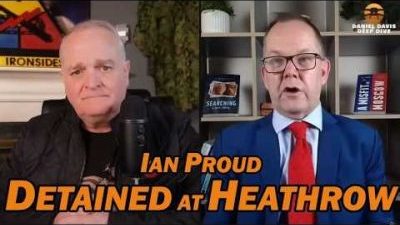
Diplomacy is Now a Crime in Britain / Ian Proud
or go to
Aletho News Archives – Video-Images
From the Archives
Genetic baloney in thick slices
MAYBE COULD BE INC.
By Jon Rappoport | No More Fake News | July 8, 2021
Gene research companies tend to come and go. They start out banging and popping like fireworks in the sky, and then they fade out—selling themselves to larger outfits who’ve hired better liars…
Once upon a time, it sounded easy. Start with a disease, find the gene responsible for the disease, and correct the problem.
Then, researchers wondered, was disease the result of one gene or a group of genes acting together?
Either way, the proof would be in devising cures for diseases using gene therapy. “Not yet, but soon…”
And regardless, the major need was: money. Lots and lots of money.
This need required good PR people. “We have to pump up the idea that we’re on the edge of tremendous breakthroughs. We’re always on that edge…”
This hype also needed to obscure the fact that there wasn’t (and isn’t) ANY gene cure for ANY disease. … continue
Blog Roll
 Aletho News
- Diplomacy is Now a Crime in Britain / Ian Proud
- UK Government Body Kept Files on People Criticizing Prevent Program
- US military withdrawal from Iraq and the collapse of US-Israeli hegemonic project in West Asia
- What does Europe want – a war with Russia?
- She Followed the Actual Data on COVID Vaccines and Masks — Her Career Took a Huge Hit
- Florida AG Sues Pfizer, Bourla Over Deceptive Marketing of COVID Vaccines
- Von der Leyen gifts her spin doctor a job for life
- 10K More U.S. Troops Deploy as Trump Weighs New Iran Strikes /Suliaman Ahmed
- Iranian crew declared Dena training vessel ‘unarmed’ to US warship before deadly torpedo strike: Report
- Iran’s NPT debate moves beyond parliament
- If Americans Knew
- An error has occurred; the feed is probably down. Try again later.
- No Tricks Zone
- Green Energy Debacle: German Expert Professor Fritz Vahrenholt Warns Of Severe Economic And Social Consequences
- Two More Paleo Reconstructions Affirm Meters-Higher Sea Levels Across Ireland, Brazil 7000-6000 Years Ago
- New Study: Earth And Venus Surface Warmth Largely Explained By Convection And Lapse Rate, Not CO2 Or Radiation
- 2025 Nature Paper Claiming Worsening Global Drought Gets RETRACTED …Heavily Flawed
- New Study: ‘Global Drought Shows No Detectable Recent Acceleration Under Climate Warming’
- Economic Masterminds: German Socialists Suggest Taxing Productivity Gains Stemming From Using AI
- The South China Sea Has Not Been Cooperating With The Climate Change Narrative
- Energy Crisis: Germany Enters Heating Season With Historically Low Gas Reserve Fill Levels
- New Study: The Antarctic Ice Sheet Gained Mass From 2020-2024 Due To Staggering Snow And Ice Accumulation
- Study: Ocean Heating Rates From Thousands Of Years Ago ‘Dwarf’ Modern Ocean Heating Rates

