Robert Samuelson Shows that the Post Has no Fact Checkers on Its Opinion Pages
By Dean Baker | Beat the Press | April 8, 2012
Social Security and Medicare are hugely important for the security of the non-rich population of the United States. For this reason, Robert Samuelson and the Washington Post hate them.
As we know, this is a question of basic political philosophy. In the view of Samuelson and the Post, a dollar that it is in the pocket of low or middle class people is a dollar that could be in the pocket of the rich. And Medicare and Social Security are keeping many dollars in the pockets of low and middle class people.
Today’s column by Robert Samuelson tries to tell us that Franklin Roosevelt would be appalled by the current state of the Social Security program. Of course, he produces not a single iota of evidence to support this position, although it is very clear that Samuelson doesn’t like Social Security.
Samuelson begins by telling us that:
“It [Social Security] has become what was then called ‘the dole’ and is now known as ‘welfare.’ This forgotten history clarifies why America’s budget problems are so intractable.”
He later adds:
“Millions of Americans believe (falsely) that their payroll taxes have been segregated to pay for their benefits and that, therefore, they ‘earned’ these benefits. To reduce them would be to take something that is rightfully theirs.”
Of course Samuelson is 100 percent wrong here. Payroll taxes have been segregated. That is the point of the Social Security trust fund and the Social Security trustees report. These institutions would make no sense if the funds were not segregated.
Samuelson is welcome to not like the way in which the funds were segregated, in the same way that I don’t like the Yankees, but that doesn’t change the fact that the Yankees have a very good baseball team. Since its beginnings, the government has maintained a separate Social Security account. Under the law, no money can be paid out in Social Security benefits unless the Trust Fund has the money to pay for them.
In this sense, the funds are absolutely segregated. Samuelson doesn’t like this, but why should any of the rest of us care? The rest of the piece shows the same dishonesty and lack of respect for facts.
Samuelson later tells readers:
“But now, demographics are unfriendly. In 1960, there were five workers per recipient; today, there are three, and by 2025 the ratio will approach two. Roosevelt’s fear has materialized. Paying all benefits requires higher taxes, cuts in other programs or large deficits.”
Okay, let’s think about this for a minute. We went from five workers per retiree in the 1960s to roughly three workers for each retiree in the 90s. This ratio is projected to fall to roughly two workers per retiree by 2030 (not 2025, as readers of the Trustees report know).
On average we were much richer in the 90s than in the sixties, in spite of the fall in the ratio of workers to retirees. The same will be true in 2030, even assuming that we see the projected decline in the ratio of workers to retirees.
A small fact that Samuelson never mentions in this piece is that the Congressional Budget Office projects the program to be fully funded through 2038, with no changes whatsoever (i.e. no new taxes, contra Samuelson). If we want to make the program fully solvent for the rest of the century, a tax increase that is equal to 5 percent of projected wage growth over the next three decades should be roughly sufficient to do the trick. Are you scared yet?
There is an issue that most workers have not shared in the economy’s growth over the last three decades. This is indeed a problem. If recent trends in inequality persist then any increase in Social Security taxes will be a burden, but the problem here are the policies that have brought about this upward redistribution of income, not Social Security.
Then Samuelson gives us his coup de grace:
“Although new recipients have paid payroll taxes higher and longer than their predecessors, their benefits still exceed taxes paid even assuming (again, fictitiously) that they had been invested. A two-earner couple with average wages retiring in 2010 would receive lifetime Social Security and Medicare benefits worth $906,000 compared with taxes of $704,000, estimate Steuerle and Rennane.”
Okay, this is a really nice trick. Remember we were talking about Social Security? Note that Samuelson refers to “lifetime Social Security and Medicare benefits.” It wasn’t an accident that he brought Medicare into this discussion. That is because Steuerle and Rennane’s calculations show that this average earning couple would get back less in Social Security benefits than what they paid in taxes. That would not fit well with Samuelson’s story, so he brings in Medicare (remember this is the Washington Post).
And, the high cost of Medicare benefits is not due to their great generosity. The high cost is due to the fact that we pay our doctors, our drug companies, and our medical equipment suppliers way more than do people in any other country, and we have no better outcomes. If our per person costs for health care were comparable to costs in Germany, Canada, the UK or any other wealthy country, then workers would be paying far more for their Medicare benefits than the cost of what they are getting in care.
The story here is that Samuelson wants to punish ordinary workers for the fact that we pay doctors and the other big winners in this story too much. That may not make sense, but they don’t call this paper “Fox on 15th Street” for nothing.
Related articles
- Heaven Mourns Every Day the Washington Post Liquidation Is Delayed… (delong.typepad.com)
- Stan Collender Thinks Robert Samuelson Is a Reason the Washington Post Should Shut Its Doors Immediately (delong.typepad.com)
Saudi Arabia gets two million acres from Sudan for tax-free farming
Sudan Tribune | April 9, 2012
KHARTOUM – A prominent Saudi businessman announced last week that the Sudanese government agreed to give his country two million acres of land as a farming investment that would allow the Arab Gulf state to ensure safe and steady food supply.
The chairman of the Jeddah Chamber of Commerce Saleh Kamel told the Saudi-based al-Sharq newspaper that the project, if successful, may allow Riyadh to achieve a food surplus that can be exported elsewhere.
Kamel disclosed that Khartoum will make the farmland a free zone that is not subject to any form of taxation or duties and is not covered by Sudanese laws.
The world’s largest oil exporter would no longer need to import food from Argentina, North America and Australia when the plantation scheme becomes fully operational, he added.
Since the 2007-2008 global food crisis, Saudi Arabia has been encouraging private and public firms to invest in farm projects abroad. In 2008, the government there also abandoned a 30-year self-sufficiency in wheat programme.
Saudi Arabia wants to build stocks of basic commodities such as wheat, rice, oil and sugar to avoid the implications of rising global food prices and also to meet the needs of a population that is growing at a rapid pace.
The government-owned Saudi Industrial Development Fund (SIDF) offers credit guarantees to companies wishing to invest in farming projects abroad.
Kamel explained the choice of East Sudan for launching the project is due to its proximity to Port Sudan which allows the products to be easily shipped to Saudi Arabia just across the Red Sea. He said that he would discuss the matter with the Saudi ministers of agriculture and finance.
“The return [on investment] of agriculture in Sudan will reach 15% of the capital in the first year, a return that is more than good and better than investing in any another business sector” he said.
It remains to be seen whether the Saudi farming venture will be successful. Saudi businessmen, including Kamel, have complained in the past that investing in Sudan faces too many hurdles.
Related articles
- Saudi-Sudan push to exploit Red Sea treasure (uwtreasures.wordpress.com)
Why Campaigning for Democrats Cripples Unions
By SHAMUS COOKE | CounterPunch | April 9, 2012
As labor leaders across the U.S. shift resources away from defending workers and into Obama’s re-election campaign, millions of organized and non-organized workers remain unemployed and hopeless. Contrary to the “optimistic” government jobs numbers, the jobs crisis grinds onward. Some labor leaders will argue that getting Obama elected is the first step towards addressing the jobs crisis, but they know better.
The recent so-called JOBS Act that passed with strong Democrat and Republican support will create zero jobs — the law’s intent is to lower regulations for banks and corporations, in an attempt to boost their profits. The JOBS wording was used for popularity’s sake, requiring heavy doses of deceit.
A similar-minded jobs project was put forth by Obama earlier in the year, when he appointed “experts” to his Council on Jobs and Competitiveness. But the Council was front loaded with CEO’s and bankers, with only two labor reps, who allowed themselves to be used to obscure the real intent of the project. Richard Trumka, President of the labor federation AFL-CIO, was one of the token labor leaders on the council, who only later partially redeemed himself by denouncing the Council’s job-creating recommendations (predictably, one of the key “job creating” ideas was to lower corporate tax rates).
Millions of union and non-union workers have seen their lives worsen under Obama while he promotes the above stunts that are intended to serve the wealthy and fool everybody else.
These millions of workers will now be subjugated to pro-Obama door knockers and phone callers from labor unions who will ignore the above facts while trying to put a pro-worker face on the pro-corporate president. Workers will not be so easily fooled, their paychecks — or lack thereof — speak stronger truths than can any pro-Obama campaigner.
The key irony is that the more forward-looking labor unions have already realized that they need the support of non-unionized workers if their movement is to survive. To this extent both union federations — AFL-CIO and Change to Win — have put tremendous resources towards community outreach and organizing. But such efforts can be wasted when unions pursue policies that working people not only disagree with, but denounce.
Non-unionized workers will only actively support labor unions when they are inspired to do so; if the non-union community trusts labor to fight for their interests, they will fight alongside unions in the streets. However, when unions have to skew the facts to encourage votes for Obama, they lose crucial trust with the broader community.
Trust was also lost when working people witnessed many unions publicly supporting Obama’s health care plan, which forces millions of non-union workers to buy shoddy corporate health insurance they cannot afford. Labor’s kid glove handling of Obama’s anti-public education policy is also high on the list of examples where unions weakened their community status by attaching themselves to the Democrats’ pro-corporate polices.
Shockingly, the largest teachers’ union, National Education Association, has endorsed Obama’s campaign even though the NEA President, Dennis Van Roekel, summarized teachers’ experience with the Obama Administration by saying, “Today our members face the most anti-educator, anti-union, anti-student environment I have ever experienced” — an environment directly encouraged by Obama’s deceitfully named “Race to the Top” education program.
Obama has yet to promise unions or working people anything in the upcoming election. Whoever wins the Presidency will immediately continue serving the corporations with varying degrees of public enthusiasm — the only real difference between the two parties.
Labor leaders are not stupid. They recognize these facts, but have absolutely no idea what to do about it. So they do what they’ve done for decades; align themselves with the Democrats in the hopes that they will be rewarded for their servitude. But the crumbs of gratitude stopped trickling down years ago, and what little remains on the workers plate is now being targeted by both Democratic and Republican politicians who insist on ever more concessions.
The Democrats’ policies signify a clean break from labor unions, an alliance that was always at the indirect expense of the rest of the working class. As long as unions were treated fairly, many labor leaders turned a blind eye to policies that affected non-union workers, creating a suicidal distance between the organized and non-organized.
Now it’s labor unions that are on the menu; Democratic governors on a state by state basis have wrenched major concessions from public sector unions, substantially weakening them and reducing their numbers. This, combined with mass unemployment and Race to the Top, amounts to a concerted anti-union agenda.
Labor leaders solution to this crisis is to raise money and volunteers…to elect Democrats.
Labor’s real power will thus remain unused. The inherent power of unions lies in their numbers, organization, and ability to collectively assert themselves in the workplace and streets. This is how labor became strong; the mass strikes and street demonstrations that built the labor movement created an organizational power that neither Democrats nor Republicans dared touch. President Eisenhower and Nixon, for example, refused to confront unions for fear of the repercussions. Unions were not given this power by compassionate Democrats in past generations; power was forcibly taken from the Democrats.
This truth is kept concealed from the current generation of union members, many of whom are miseducated into believing that their power is limited to electing Democrats. No other belief is as dangerous for the labor movement, which would immediately benefit from de-funding the Democrats and using the money to educate and organize their members to fight in the workplaces and streets for the many pro-worker demands, like a massive federal jobs program, that will otherwise remain “off the table” in Congress.
Shamus Cooke is a social worker, trade unionist, and writer for Workers Action (www.workerscompass.org)
Related articles
- Open Letter to Richard Trumka, president of the AFL-CIO (alethonews.wordpress.com)
- Labor Politics and the Captive Electorate of 2012 (alethonews.wordpress.com)
- Obama Set to Use Military Intervention Against Longshoremen (alethonews.wordpress.com)
Brazilian Judge Suspends Dam License, Upholds Indigenous Rights
ENS | April 5, 2012
BRASILIA, Brazil – A federal judge has suspended the construction license of the Teles Pires hydroelectric dam in the Brazilian Amazon, saying the permitting process violated the rights of indigenous people protected under the Brazilian Constitution.
In her ruling, Judge Celia Regina Ody Bernardes, a federal judge in the state of Mato Grosso, sided with federal public prosecutors and public prosecutors from Mato Grosso and the state of Pará who argued the dam would cause “imminent and irreversible damage to the quality of life and cultural heritage of indigenous peoples of the region.”
The dam would flooding a series of rapids on the Teles Pires River known as Sete Quedas, or Seven Waterfalls, the spawning grounds of fish of great importance to the indigenous residents.
The judge ordered the immediate suspension of all activities in dam construction, “especially explosions of boulders in the region of Sete Quedas.”
A recent declaration by indigenous peoples cited in the lawsuit states, “Sete Quedas is a sacred place, where the Mae dos Peixes (Mother of Fish) and other spirits of our ancestors live – a place known as Uel, meaning that it should not be messed with.”
The 1,820 megawatt capacity dam has been under construction since August 2011 on the Teles Pires River, a major tributary of the Tapajos River in the heart of the Brazilian Amazon.
The dam is one of six large hydropower projects planned for the Teles Pires River, which forms the border between the states of Mato Grosso and Pará.
In her decision, Judge Bernardes concluded that prior to greenlighting dam construction, the federal environmental agency IBAMA failed to consult with affected indigenous communities, despite serious threats to their “socioeconomic and cultural well-being.”
She ruled that this constitutes a violation of the Brazilian Constitution and ILO Convention 169, which Brazil signed in 2004.
In addition to its importance for the physical survival of indigenous peoples, Sete Quedas holds tremendous cultural significance. The lawsuit argues that the dam construction site is “a sacred area relevant for the beliefs, customs, traditions, symbolism and spirituality of indigenous peoples. As a cultural heritage site, it is protected by the Brazilian Constitution and international agreements.”
Other threats to indigenous peoples provoked by dam construction, cited in the lawsuit, include conflicts associated with a massive influx of migrants to the region, land speculation, illegal deforestation, predatory fishing and illegal exploitation of mining resources. The prosecutors argued that, given a delay of almost 20 years in the demarcation of the Kayabi territory, such threats are even more severe.
Taravy Kayabi, a leader of the Kayabi people, said, “While the federal government stalls in implementing laws that protect the rights of indigenous peoples, it is pressuring us to accept the dams. But we know the compensation they are offering will never substitute places that are sacred to us, such as Sete Quedas, that hold the cemeteries of our ancestors and that should be preserved.”
“Sete Quedas is also the spawning grounds of fish that are an important source of food. They talk about fish ladders, but where have these ever worked? Kayabi asked.
“The government needs to look for alternative ways to generate energy that don’t harm indigenous peoples and their territories,” he said.
Civil society groups and leaders of the Kayabi community welcomed the news of the the suspension of dam construction, but warned against a possible overturning of Judge Bernardes’ restraining order.
Brent Millikan, director of the Amazon Program at International Rivers, based in California, says he has seen it happen before.
“What we’ve seen over and over again, in cases such as Belo Monte, is that the President’s office politically intervenes in regional federal courts to overturn decisions against violations of human rights and environmental legislation, using false arguments, such as an impending blackout at the national level if dams aren’t immediately constructed,” he said.
“Of course, this is ludicrous,” said Millikan. He says indigenous peoples and human rights groups in Brazil and around the world” are calling on the government of President Dilma Rousseff “to change course and respect the country’s constitution and rule of law.”
Copyright Environment News Service (ENS) 2012. All rights reserved.
Venezuela is the Fifth Happiest Country in the World
AVN / Press Office – March 30, 2012
On Friday, the Washington Post highlighted a global happiness survey released last year by the polling firm Gallup, which found that Venezuela is the fifth happiest country in the world. According to the poll, 64 percent of Venezuelan respondents said their well-being was thriving.
The poll measured how people in 124 countries rated their lives at the current time and their expectations for the next five years.
Topping the list were Denmark (72 percent), Sweden (69 percent), Canada (69 percent), and Australia (65 percent). Finland is tied with Venezuela, sharing the fifth spot.
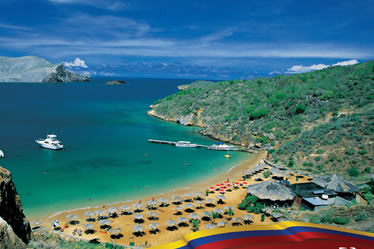 Venezuela is the Latin American country with the highest wellbeing, followed by Panama (11), Costa Rica (14), Brazil (15) and Mexico (19).
The classifications according to which respondents rated their wellbeing included “thriving,” “struggling,” or “suffering.” People who considered themselves to be thriving rated their lives a 7 or higher on a scale from 0 to 10.
According to the Post, the poll showed that the respondents with highest wellbeing also reported fewer health problems, less stress and sadness, and more happiness, respect and enjoyment.
Out of the 124 countries polled in 2010, the majority of residents in only 19 countries (mostly in Europe and the Americas) rated their lives “thriving.”
An article published on the Gallup website states that the list “is largely dominated by more developed and wealthier nations, as expected given the links between wellbeing and GDP.”
Nevertheless, it states: “Global wellbeing improved little between 2009 and 2010, remaining relatively steady when Gallup groups all these countries into four major global regions: Asia, Africa, the Americas, and Europe.”
Results have 95 percent confidence rate with a maximum margin of error of ±1.7 to ±5.7 percentage points.
Click here to see the poll results.
Related articles
- New Venezuelan Social Network Takes Off (alethonews.wordpress.com)
Pakistan to buy 1,100 MW of electricity from Iran: Gilani
Press TV – April 1, 2012
Pakistani Prime Minister Yousuf Raza Gilani has announced that Islamabad plans to purchase 1,100 megawatts (MW) more electricity from its western neighbor, Iran.
The electricity supplied from Iran to the Pakistani Balochistan Province would prove especially helpful in overcoming the country’s energy shortage, Gilani said during a meeting with the Iranian Vice President Mohammad-Javad Mohammadizadeh in Boao, China.
The Pakistani prime minister also expressed interest in buying oil, gas and electricity from Iran despite the US-led sanctions imposed against the Islamic Republic over Tehran’s nuclear energy program, Dawn News reported on Sunday.
On February 26, 2012, Iran doubled its power supply to the Makran region of Pakistan from 35 MW per day to 70 MW after the enhancement of transmission lines.
A spokesman for Pakistan’s Ministry of Water and Power told reporters that the daily 70 MW supply will meet the electricity demand of the Makran division for the next five years.
Iran is currently exchanging electricity with Afghanistan, Armenia, Azerbaijan, Iraq, Pakistan, Nakhichevan, Turkey and Turkmenistan.
Iran’s total power generation capacity stands at 63,403 MW while the total length of the power grid exceeds 780,000 km.
The Islamic Republic seeks to become a major regional exporter of electricity and has attracted more than USD 1.1 billion in investments to build three new power plants.
Related articles
- Iran doubles power supply to Makran (nation.com.pk)
- Pakistan to increase imports of Iranian electricity (alethonews.wordpress.com)
- ‘Iran-Pakistan trade rises despite US sanctions’ (alethonews.wordpress.com)
- Iran to Export Electricity to Pakistan ,IP Gas pipeline to complete on time, Investment of US$718 Milliion agreed in Power Sector (jafrianews.com)
BRICS agree to local currency credits to ease dollar dependency
RT | March 29, 2012
The BRICS – Brazil, Russia, India, China and South Africa – have agreed to provide credit to each other in local currencies. Officials say the deal will facilitate economic growth in times of crisis.
The currency swap deal is aimed at promoting trade and investment in local currencies as well as to cut transaction costs. It’s also seen as a step to replace the dollar as a reserve currency in trade between BRICS.
“The idea is in line with many interests and economic exigencies in the world economy,” Yaroslav Lissovolik, the chief economist at Deutsche Bank told RT. “The euro and dollar are no longer seen as unquestionable monopolies in the role of reserve currencies. Clearly the world needs more reserve currencies.”
The deal would also increase the BRICS influence on the international arena and will make their cooperation less sensitive to sanctions from the West, experts say.
“The BRICS countries are in the first rank to do the job that international financial system now needs. What the BRICS said was a very welcomed wake up call,” John Kirton, the Co-Director of the BRICS Research Group told RT.
Russia and China have been trading in the ruble and yuan for several years, now Russia plans to expand local currency settlement with India.
“With China it took us three years to (evolve) from initial conversations to trading in local currencies,” Vladimir Dmitriev, the chairman of Russia’ s VEB told reporters. “I think we will meet similar terms with India”.
Meanwhile the swap requires a lot of technical work by each country such as the synchronization of national banking legislation, according to Mr. Dmitriev.
The BRICS countries are also going to announce plans on a joint development bank which is considered a possible rival to the World Bank and the IMF. If established, it would function as a lending agency and would provide finance for joint BRICS projects.
“They made it very clear it would be built to benefit not only BRICS countries themselves, but developing countries more broadly,” said KIrton. “But the big message was to give the World Bank more resources, only then would they see how the BRICS bank would fit in the supplement what they’ve already got.”
Related articles
Partisan Confusion
By Kevin Zeese | Dissident Voice | March 28th, 2012
I was standing outside the U.S. Supreme Court holding a sign that said: “Single Payer Now, Strike Down the Obama Mandate.” It was the second day of argument on the Affordable Care Act. As I watched the crowds it was evident this was an organized partisan event.
As the Washington Post reports, the mandate was a Republican idea that originated with conservatives: “The tale begins in the late 1980s, when conservative economists such as Mark Pauly, a professor at the University of Pennsylvania’s Wharton School of business, were searching for ways to counter liberal calls for government-sponsored universal health coverage. Pauly then proposed a mandate requiring everyone to obtain this minimum coverage, thus guarding against free-riders…Health policy analysts at the conservative Heritage Foundation, led by Stuart Butler, picked up the idea and began developing it for lawmakers in Congress. The Heritage Foundation worked with then-Gov. Mitt Romney (R) to pass Massachusetts’ 2006 health reform law, which required all Bay State citizens to purchase coverage.”
Someone from the Heritage Foundation came up to us, wanting to take a photo of our sign. I asked him – does the Heritage Foundation oppose the mandate? He said “yes.” I told him that the idea came out of the Heritage Foundation. He looked confused, mumbled an unclear answer “not since 2006” and walked away.
Of course, Democrats opposed this Republican idea. They saw it for what it is: a massive giveaway to the insurance industry that will lead to their entrenchment and continued domination of heath care. The idea was used by Republicans to oppose the Clinton health plan. Of course, the Clinton’s opposed it. But, by the 2008 presidential campaign, Hillary Clinton supported the mandate (by then the insurance industry was a big financial backer of hers), but candidate Barack Obama opposed it. One of his campaign advertisements said: “What’s she not telling you about her health-care plan? It forces everyone to buy insurance, even if you can’t afford it, and you pay a penalty if you don’t.”
So, while I was out there watching groups like the National Organization for Women, who supports single payer favoring this pro-insurance law, as part of a coalition of Democratic Party aligned groups, I thought, what if President McCain had passed this law. My conclusion, we’d have the same people out here protesting, they’d just reverse sides. This was really not about healthcare, it was about Obama vs. the Republicans in this 2012 election year.
The people protesting followed their leader’s orders, said the chants they were told to say, and held the signs they were given to hold, but they were confused. When we talked to people on both sides the partisan confusion was evident.
My colleague, Margaret Flowers, asked two women carrying an Americans for Prosperity sign (a group opposed to Obama’s law) whether they were on Medicare. They said “yes.” “Do you like it?” Again, “yes.” “Do you know Medicare is a government program?” A confused look. “Do you know the Republicans want to end Medicare, make it into private insurance?” “You don’t know what you’re talking about. You probably support Obama”; and they started to walk away. “No, we oppose ObamaCare,” the women stopped and listened again, “We think everyone should have Medicare. Don’t you think it would be a good idea if every American could have the Medicare you have and like?” “Hmm, yes” then, more confusion in their faces.
Then, talking to the Democrats showed equal partisan confusion. I explained: “We oppose the Obama mandate because we want to end insurance control of health care. We support single payer, Medicare for all?” Response: “So do I.” I asked: “Single payer ends insurance, and Obama’s law entrenches insurance more deeply in control of health care, aren’t those opposites?” Response, obviously not understanding what ‘opposite’ means: “It’s a step in the right direction.” I ask: “How can it be a step in the right direction when it is going in the opposite direction?” No longer able to say it is the right direction, spouts another talking point: “This is the best we can get, we can build on this.” Me, trying to figure out what the Democrat thinks there is to build on, asks: “But, if we want to end insurance domination, how do we build on a law that is based on insurance?” Unable to explain it, the Democrat answers: “We can’t get what we want.” I say: “Of course, not, if people like you and organizations like yours who support single payer, spend their time advocating for the insurance industry, we can’t get what we want. But, if people who support single payer work for it we could.” Answer: “But, we have to re-elect President Obama.”
Partisan confusion reigned.
And, sadly partisan confusion dominates our airwaves as well. Of course, the right wing radio continues to attack Obama and confusingly calls a market-based, insurance-dominated health law socialism. But, sadly the “liberal” media sends out equal partisan confusion. We were able to go into Radio Row, where all the liberal radio outlets were interviewing “experts” on health care. The talking points, like in the conversation, were repeated and repeated. When one radio host wanted to interview me, really debate me since he was a Democratic apologist, I sat down. An organizer in the room asked the host to speak with her. She came back and told me I had to leave. This was private property and only people allowed to be here were allowed to be here. I explained I was invited by a station to be interviewed. She explained: “I tell them who to interview. The stations have slots and we fill them.” I asked: “Do you mean only people who support Obama can be interviewed.” She explained “The Republicans do it to.”
So, partisan confusion reigns and it permeates the airwaves leaving many people confused. We need to clear the FOG (Forces Of Greed) and get the truth on the air.
Despite all this supermajorities of Americans have consistently supported single payer, whether inaccurately called socialism or correctly described as “Medicare for all” 60% or more support it. Why? For the same reason that the great salesman President Obama and his superb marketing team have been unable to sell forced purchase of health insurance: Every family, business whether large or small; and every doctor or other health care provider have suffered insurance abuse. Two thirds of those who go bankrupt from a health problem have health insurance. The American experience is that health insurance is expensive, provides inadequate coverage and tries to avoid paying for health care. We all know this. So, no matter what the politicians say – Americans do not trust the health insurance industry.
But, one thing the two parties in Washington agree on – they will protect health insurance at all costs. After-all, they are a great source of campaign contributions – as the two politicians responsible for forcing Americans to buy insurance, President Obama and Mitt Romney, well know.
Kevin Zeese is executive director of Voters for Peace.
Related articles
- Left Takes ObamaCare To Court – Supreme Court (alethonews.wordpress.com)
- Real Health Care Advocates Should Support Repeal of the Insurance Mandate (alethonews.wordpress.com)
Real Health Care Advocates Should Support Repeal of the Insurance Mandate
By Kevin Zeese | Dissident Voice | March 26th, 2012
It’s Our Economy, the organization I co-direct with Margaret Flowers, MD, Single Payer Action and 50 doctors filed an amicus brief in HHS v. Florida, the challenge to the Affordable Care Act being heard in the Supreme Court this week.
We support health care reform but oppose the insurance mandate. Merely removing two words from existing law will achieve the President’s stated goals of universal, affordable and guaranteed health care. By removing the words “over 65” from the Medicare law, every American will have health care based on a proven public health care model that has been in existence since 1965. This will control costs and immediately provide health care to everyone in the United States.
Forcing Americans to buy insurance is both unconstitutional and bad policy. Even the most favorable estimates of the Affordable Care Act predict that tens of millions of Americans will not have health insurance when it is fully implemented in 2019. The number of employers offering health benefits will decline under the ACA pushing employees into the individual insurance market where coverage is skimpier and more expensive. The cost of premiums continues to rise and insurance coverage continues to shrink, putting patients at risk of personal bankruptcy when they suffer a serious accident or illness.
The United States already spends enough to provide health care to all. As the amicus brief states:
Studies conducted by the nonpartisan General Accounting Office and the nonpartisan Congressional Budget Office have consistently concluded that if a national single payer system were implemented in the United States, administrative cost-savings alone would be enough to guarantee universal coverage without increasing overall healthcare spending.
In addition, improved Medicare for all will slow the growth in the cost of health care. The cost of health care under Medicare is growing more slowly than private insurance-based health care, despite the fact that it deals with America’s elderly and disabled populations, groups that generally need more health care services. Unlike private insurance, under Medicare the increased cost is not due to administrative costs and bureaucracy. Medicare’s administrative costs have been consistently about 2% while private insurance is 16% administrative costs.
Instead, the ACA builds and expands the system of private insurance. This system is among the least efficient of any healthcare system currently operating in developed nations. The brief states: “In 2009, 28 healthcare expenditures accounted for 17.4 percent of GDP in the United States, compared with only 9.6 percent in the average OECD [The Organization for Economic Co-operation and Development] nation” and “measured per capita, healthcare expenditures in the United States ‘are by far the highest among OECD countries.’”
Medicare provides health services that people like, as the brief points out: “In addition to achieving universal coverage for Americans aged 65 and older and maintaining consistently low administrative costs, Medicare is also highly rated by senior citizens who are its primary beneficiaries – 51 percent of whom give their health insurance an ‘excellent” rating.’”
If the US Congress had considered an evidence-based approach to health reform instead of writing a bill that funnels more wealth to insurance companies that deny and restrict care, it would have been a no brainer to adopt improved Medicare for all. All the data points to a single payer system as the only way to accomplish universal health care and control health care costs.
It is also bad precedent to allow the federal government to mandate all Americans buy a corporate product. This takes corporate welfare to new levels of extreme. If this is upheld, will a future president facing an economic crisis require Americans to buy cars made in the USA – of course, with a government subsidy? Or, will the pension crisis in the United States be ‘solved’ by setting up a pension exchange of JP Morgan, Bank of America, Well Fargo, Chase and Citibank and require Americans to buy a federally subsidized pension from Wall Street?
Finally, an improved Medicare for all system will give everyone in the United States the greatest control of their own healthcare. The insurance industry will be removed from between doctors and patients. Doctors will not have to convince an insurance, profit-minded, bureaucrat to pay for a treatment. And, people will no longer be threatened with increased premiums, decreased coverage and financial ruin caused by an insurance industry that puts profits before people.
We filed the amicus brief because forcing people to purchase a flawed product, private health insurance, is not necessary and will not achieve the goals of universal, guaranteed and affordable health care. There is a health care model in the US already that will achieve these goals – that’s improved Medicare for all. Medicare for all is constitutional and simple to attain – just drop a few words from existing law and we will be on the path to joining the rest of the civilized world when it comes to health care.
Kevin Zeese is executive director of Voters for Peace.
Police attack Portuguese people protesting austerity measures

A policeman strikes a photojournalist of AFP during the Portuguese general strike in Lisbon March 22, 2012.
Press TV – March 22, 2012
Portuguese police have attacked demonstrators protesting nationwide against the government’s austerity measures.
Demonstrations were held on Thursday in 38 cities and towns across Portugal, including the capital city of Lisbon, Oporto – the second largest city after Lisbon — and Coimbra, AFP reported.
In Lisbon, police resorted to baton charge and arrests to disperse the protesters.
At least one demonstrator was arrested in Oporto as protesters expressed outrage at Prime Minister Pedro Passos Coelho during a visit to the northern city’s university.
The nationwide protests were part of a 24-hour strike against austerity measures adopted by the government in return for an international bailout. During the Thursday strike which was led by Portugal’s biggest union — the General Confederation of Portuguese Workers (CGTP) – public services across the country ground to a halt.
The trains and subways in Lisbon and Oporto, and the majority of ports, including the port of Lisbon and Viana do Castelo in the north, were shut down.
The strike is aimed at opposing changes to labor laws that make it easier to fire workers, reduce holidays and cut layoff compensation. The government argues that these changes will revive the economy.
Some European economies have introduced strict austerity plans to tackle their debt crises. The spending cuts have caused deep discontent among people in those countries.
Angel Gurria, secretary general of the Organization for Economic Cooperation and Development, said in a Thursday interview that the eurozone needs a bailout fund of at least 1 trillion euros ($1.3 trillion) to prevent its debt crisis from expanding to other European states.
Featured Video

Diplomacy is Now a Crime in Britain / Ian Proud
or go to
Aletho News Archives – Video-Images
From the Archives
Genetic baloney in thick slices
MAYBE COULD BE INC.
By Jon Rappoport | No More Fake News | July 8, 2021
Gene research companies tend to come and go. They start out banging and popping like fireworks in the sky, and then they fade out—selling themselves to larger outfits who’ve hired better liars…
Once upon a time, it sounded easy. Start with a disease, find the gene responsible for the disease, and correct the problem.
Then, researchers wondered, was disease the result of one gene or a group of genes acting together?
Either way, the proof would be in devising cures for diseases using gene therapy. “Not yet, but soon…”
And regardless, the major need was: money. Lots and lots of money.
This need required good PR people. “We have to pump up the idea that we’re on the edge of tremendous breakthroughs. We’re always on that edge…”
This hype also needed to obscure the fact that there wasn’t (and isn’t) ANY gene cure for ANY disease. … continue
Blog Roll
 Aletho News
- Diplomacy is Now a Crime in Britain / Ian Proud
- UK Government Body Kept Files on People Criticizing Prevent Program
- US military withdrawal from Iraq and the collapse of US-Israeli hegemonic project in West Asia
- What does Europe want – a war with Russia?
- She Followed the Actual Data on COVID Vaccines and Masks — Her Career Took a Huge Hit
- Florida AG Sues Pfizer, Bourla Over Deceptive Marketing of COVID Vaccines
- Von der Leyen gifts her spin doctor a job for life
- 10K More U.S. Troops Deploy as Trump Weighs New Iran Strikes /Suliaman Ahmed
- Iranian crew declared Dena training vessel ‘unarmed’ to US warship before deadly torpedo strike: Report
- Iran’s NPT debate moves beyond parliament
- If Americans Knew
- An error has occurred; the feed is probably down. Try again later.
- No Tricks Zone
- Green Energy Debacle: German Expert Professor Fritz Vahrenholt Warns Of Severe Economic And Social Consequences
- Two More Paleo Reconstructions Affirm Meters-Higher Sea Levels Across Ireland, Brazil 7000-6000 Years Ago
- New Study: Earth And Venus Surface Warmth Largely Explained By Convection And Lapse Rate, Not CO2 Or Radiation
- 2025 Nature Paper Claiming Worsening Global Drought Gets RETRACTED …Heavily Flawed
- New Study: ‘Global Drought Shows No Detectable Recent Acceleration Under Climate Warming’
- Economic Masterminds: German Socialists Suggest Taxing Productivity Gains Stemming From Using AI
- The South China Sea Has Not Been Cooperating With The Climate Change Narrative
- Energy Crisis: Germany Enters Heating Season With Historically Low Gas Reserve Fill Levels
- New Study: The Antarctic Ice Sheet Gained Mass From 2020-2024 Due To Staggering Snow And Ice Accumulation
- Study: Ocean Heating Rates From Thousands Of Years Ago ‘Dwarf’ Modern Ocean Heating Rates

