Iran draws red line as Europe threatens nuclear ‘snapback’
As indirect US–Iran nuclear talks inch forward, Europe’s fear of marginalization prompts a risky diplomatic maneuver in Istanbul.
By Vali Kaleji | The Cradle | May 26, 2025
In the backdrop of indirect nuclear negotiations between Tehran and Washington, Iranian Deputy Foreign Ministers Majid Takht-Ravanchi and Kazem Gharibabadi met with their European counterparts from France, Germany, and Britain – the so-called E3 of the Joint Comprehensive Plan of Action (JCPOA) – on 16 May in Istanbul.
The meeting, held at Iran’s Consulate General and hosted by Turkiye, brought together EU Deputy Secretary-General for Political Affairs Enrique Mora and his colleague Olof Skoog, alongside Turkish Deputy Foreign Minister Abdullah Celik. The discussions focused on the future of the 2015 nuclear agreement, the status of indirect Iran–US negotiations, and collective efforts to avert further escalation through diplomacy.
Although three earlier rounds of consultations between Tehran and the E3 occurred on 29 November 2024, 13 January, and 24 February 2025, the Istanbul session marked a pivotal moment: the first engagement since the revival of the Iran–US indirect dialogue.
Europe cut out of nuclear talks
Crucially, the EU, much like in the Ukraine peace process, found itself bypassed by Washington. This diplomatic exclusion has intensified Brussels’s urgency to reclaim relevance within the nuclear negotiations framework, apparently even if this means acting as spoiler.
At the heart of the Istanbul summit lies the snapback mechanism – an instrument embedded in the JCPOA allowing any signatory to reimpose all UN sanctions that existed before the 2015 agreement. The clause, originally intended as a safeguard, now threatens to become a geopolitical cudgel.
With the JCPOA’s expiration looming in October 2025, Tehran fears that the E3 may invoke the mechanism as early as this summer, citing Iran’s alleged enrichment beyond 60 percent and its growing stockpile of enriched uranium.
French Foreign Minister Jean-Noel Barrot minced no words during a 28 April address to the UN Security Council, stating that if European security interests are compromised, France “will not hesitate for a single second to reapply all the sanctions that were lifted 10 years ago.” His statement, which reverberated through diplomatic circles, was widely interpreted in Tehran as a stark ultimatum.
Iran’s permanent representative to the UN responded forcefully, accusing France of hypocrisy and warning that Paris’s own breaches of the agreement render any activation of the snapback legally indefensible.
Iranian Foreign Minister Abbas Araghchi echoed this stance in an op-ed for Le Point, characterizing the Istanbul discussions as “a fragile but promising beginning” while cautioning that “time is running out.” He wrote:
“The decisions we make now will shape Iran–Europe relations in ways that go far beyond this agreement. Iran is prepared to move forward – we hope Europe is, too.”
Following the talks, Gharibabadi wrote on X: “We exchanged views and discussed the latest state of play on nuclear & sanctions lifting indirect negotiations. Iran and the E3 are determined to sustain and make best use of diplomacy. We will meet again, as appropriate, to continue our dialogue.”
British envoy Christian Turner echoed this sentiment, affirming the shared commitment to maintaining open channels of communication.
‘Trigger Plus’
Yet not all assessments of the Istanbul summit were diplomatic. Tehran-based daily Farhikhtegan, aligned with Iran’s conservative establishment, described the session as tense and combative.
According to its report, the E3 tabled severe threats, including a proposal for what they termed “trigger plus” – an augmentation of the original snapback mechanism that would allow preemptive punitive measures without requiring technical justification.
Iranian officials, the newspaper reported, dismissed this demand as not only illegal and baseless but also presented in an “inappropriate” tone. The Iranian side reiterated that while they remain open to EU participation in broader nuclear negotiations, any activation of the snapback mechanism would trigger an immediate Iranian withdrawal from the Nuclear Non-Proliferation Treaty (NPT).
Mohammad Ghaderi, former editor-in-chief of Nour News – a media outlet close to Iran’s Supreme National Security Council – summarized the stance bluntly on social media:
“In the tense talks with Iran on Friday, [the E3] while requesting to participate in Iran–US talks, made non-technical & illegal requests, calling it trigger plus. But Iran’s response: Emphasizing the activation of the Trigger Mechanism will lead to Iran’s withdrawal from the NPT.”
The Iranian Foreign Ministry, in characteristic fashion, neither confirmed nor denied these reports, opting for strategic ambiguity to maintain leverage over multiple negotiation tracks.
The October deadline: Strategic implications
As the October 2025 expiration date draws closer, Iran has accelerated efforts to engage the remaining members of the 4+1 framework – China, Russia, France, Britain, and Germany. Trilateral meetings with Moscow and Beijing have underscored Tehran’s strategy of building a multilateral diplomatic buffer against US-European pressure.
However, the snapback clause remains the most potent lever in the E3’s arsenal. According to Article 36 of the JCPOA, any signatory can escalate a compliance dispute to the UN Security Council. Once initiated, this process does not require a vote or consensus, meaning that Russian and Chinese vetoes are nullified.
Should the snapback be triggered, all seven UN Security Council sanctions previously lifted would automatically be reinstated – a scenario with grave consequences for Iran’s economy and its broader regional strategy.
Analysts suggest the E3 may push for this mechanism’s activation as early as July or August, thereby maximizing diplomatic pressure while allowing time to shape global opinion. If that happens, Tehran’s recourse to NPT withdrawal – a threat repeatedly made since 2019 – would likely materialize.
Deputy Foreign Minister Kazem Gharibabadi reinforced this red line in response to a recent International Atomic Energy Agency (IAEA) resolution: “If Europe implements snapback, our answer is to withdraw from the NPT.” As Araghchi, writing again in Le Point, stated unequivocally:
“Iran has officially warned all JCPOA signatories that abuse of the snapback mechanism will lead to consequences – not only the end of Europe’s role in the agreement but also an escalation of tensions that could become irreversible.”
Europe’s desperation for relevance
Europe’s insistence on asserting itself in the JCPOA talks stems from its declining influence across global affairs. From the Ukraine war to the Persian Gulf, the EU has been reduced to a secondary actor. In the Iran file, this marginalization is especially stark.
While Washington and Tehran inch closer to a bilateral formula, Brussels finds itself largely ignored. Nosratollah Tajik, a former Iranian diplomat, argues:
“Europe’s main concern is that Iran and the United States will reach a bilateral agreement without considering European interests. Many of the Middle East [West Asian] crises spill over into Europe.”
The lack of a coordinated EU Iran policy only compounds this anxiety. Theo Nencini, an Iran expert at Sciences Po Grenoble and Paris Catholic University, concurs:
“The E3 countries have not yet managed to define a coherent and relevant ‘Iran policy.’ From Trump 1.0 to Biden, they have always been accustomed to flatly following American positions.”
Nencini believes that unexpected US–Iran direct talks caught Europeans off guard, prompting them to scramble to get involved in the negotiation process despite the fact that “they have always maintained a very strict attitude towards Iran.”
Diplomacy or detonation?
The Istanbul talks, despite their challenges, represent one of the few remaining diplomatic lifelines between Tehran and the E3.
Should these efforts collapse, the consequences would be profound: Iran could withdraw from the NPT, revise its nuclear doctrine, and prompt potential military escalation involving the US and Israel.
Such a scenario would spell the total disintegration of the JCPOA framework and shatter the fragile architecture of non-proliferation diplomacy built over the past two decades.
With less than five months to avert this trajectory, the onus lies on both parties to preserve what little remains of mutual trust. Yet the margin for error continues to shrink by the day.
Iran, China launch new commercial railway bypassing US sanctions
The Cradle | May 26, 2025
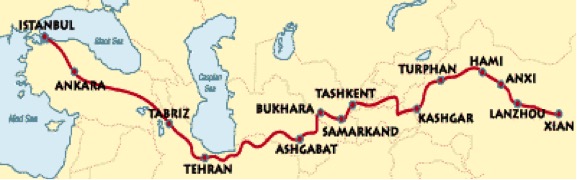
A new commercial rail route connecting China to Iran has officially launched with the arrival of the first cargo train from the eastern Chinese city of Xian at the Aprin dry port near Tehran.
Aprin’s CEO highlighted the port’s strategic role in lowering transport costs and reducing reliance on coastal freight hubs.
Railway infrastructure connecting Iran and China allows freight trains to travel from Shanghai to Tehran in 15 days, compared to 30 days via the maritime route.
On 12 May, railway officials from Iran, China, Kazakhstan, Uzbekistan, Turkmenistan, and Turkiye met in Tehran to advance a transcontinental rail network linking Asia to Europe, Tasnim News Agency reported on 25 May.
The six nations agreed on competitive tariffs and operational standards to streamline regional rail services and boost trade connectivity.
China and Iran have expanded trade and economic relations in recent years, as Tehran seeks to bypass US economic sanctions seeking to strangle its economy and oil exports.
The rail line between the two countries enables Iranian oil exports to China and allows Chinese goods to reach Europe without US naval interference.
In 2018, Iranian Supreme Leader Ali Khamenei stated that Iran should look to the east rather than the west. Since that time, China has become Iran’s largest oil purchaser, while Beijing has been able to supply Tehran with virtually all its needed manufactured goods, including electronics such as computers and cell phones.
The following year, Iran joined China’s “One Belt One Road” (BRI) initiative – President Xi Jinping’s hallmark strategic foreign policy initiative, seeking to recreate the economic ties that existed between ancient China and ancient Persia along the “Silk Road” dating back to the third century BCE.
China and Iran signed a historic 25-year economic cooperation agreement in 2021, reportedly worth $400 billion in trade.
In 2023, China’s growing relations with Iran helped it mediate a Saudi–Iranian rapprochement, which led to the resumption of diplomatic relations that had been cut in 2016.
Washington’s “Golden Dome” – Multi-Trillion Tax Dollar Heist at Best, Dangerous Provocation at Worst
By Brian Berletic – New Eastern Outlook – May 25, 2025
US President Donald Trump has announced his administration has chosen the architecture for the proposed Golden Dome missile defense system, claiming it will cost $175 billion and be operational in “less than three years” with a “success rate close to 100%.”
During President Trump’s announcement on May 21, 2025, it was claimed the Golden Dome will consist of technology deployed across land, sea, and space capable of intercepting hypersonic, ballistic, and advanced cruise missiles, “even if they are launched from other sides of the world and even if they are launched from space.”
Former-US President Ronald Reagan’s “Star Wars” program (also known as the Strategic Defense Initiative) was repeatedly cited during the announcement. That program sought to use space-based weapons to void the doctrine of “mutually assured destruction” allowing the US to conduct a nuclear or non-nuclear first strike on another nation and avoid what had otherwise been an inevitable nuclear retaliation that would destroy both nations in the process.
Specifically, because mutually assured destruction was seen as a better deterrence against a first strike by one nuclear-armed nation against another, along with concerns over costs, technological limitations, and then-existing arms control treaties like the Anti-Ballistic Missile Treaty (ABM), the initiative was never fully realized.
Granting the US Impunity to Attack, Not “Defend” Itself
US Space Force General Michael Guetlein, picked to lead the Golden Dome project and present during its announcement, would claim:
As you’re aware, our adversaries have become very capable and very intent on holding the homeland at risk. While we have been focused on keeping the peace overseas, our adversaries have been quickly modernizing their nuclear forces, building out ballistic missiles capable of hosting multiple warheads, building out hypersonic missiles capable of attacking the United States within an hour and traveling at 6,000 mph, building cruise missiles that can navigate around our radar and our defenses and building submarines that can sneak up on our shores and worse yet, building space weapons. It is time that we change that equation and start doubling down on the protection of the homeland.
Yet what General Guetlein calls “keeping the peace overseas,” is in reality the United States encroaching along the borders and shores of nations like Russia, Iran, China, and North Korea.
This includes the stationing of not only missile defense systems like Patriot, THAAD, and the Aegis Ashore system in close proximity to these nations in violation of the ABM treaty the US has since abandoned, but also first-strike offensive weapons like the Typhon missile launcher capable of firing both Standard SM-6 anti-air missiles, but also ground-launched Tomahawk cruise missiles previously prohibited under the INF treaty the US has also since abandoned.
For example, the US has positioned THAAD systems in both the Middle East and Asia, and its Typhon missile system is currently stationed in the Philippines with additional units on the way, specifically aimed at China.
Beyond the global-spanning military footprint of the United States, Washington is also preparing for or already directing multiple proxy wars against these nations.
The conflict in Ukraine was entirely engineered by the United States, beginning with Kiev’s political capture in 2014, the training and arming of Ukraine’s military, and the capture, reorganization, and direction of Ukraine’s intelligence agencies by the US Central Intelligence Agency.
The US has been waging war and proxy war against Iran for decades, including invading and occupying Afghanistan and Iraq right on its borders, invading and overthrowing the government of Iran’s ally Syria, the waging of war on Yemen-based Ansar Allah – also an Iranian ally. The US also maintains constant financial, political, and military support for Israel, which has repeatedly attacked Iran and its allies.
And despite officially recognizing Taiwan as part of “One China,” the United States has continued supporting separatist political parties administering Taipei, is arming local military forces, and is even stationing US troops on the island province itself.
All of this has forced Russia, Iran, China, and other nations to respond by bolstering military spending, increasing research and development into missile technology, and the creation of credible deterrents against decades-spanning US aggression and proxy war along and even within their borders.
While the Trump administration depicts the Golden Dome as necessary to “forever end the missile threat to the American homeland,” it is instead being built to enable the US to forever threaten other nations around the globe with its missiles.
Dubious Claims About Golden Dome’s “Near 100%” Success
At one point during the Golden Dome’s announcement, US President Trump would claim:
I will tell you an adversary told me, a very big adversary, told me the most brilliant people in the world are in Silicon Valley. He said, “we cannot duplicate them. We can’t.”
He also claimed:
We have things that nobody else can have. You see what we’ve done helping Israel. You probably wouldn’t have in Israel. They launched probably 500 missiles all together and I think one half of a missile got through and that was only falling to the ground as scrap metal.
Except none of this is true.
If President Trump is referring to the 2024 Iranian retaliatory strike on Israel, up to 200 missiles were fired, with dozens if not scores of them circumventing Israeli missile defenses and striking targets, including dozens striking and damaging Israel’s Nevatim Airbase alone, according to NPR.
No air or missile defense system has a “success rate close to 100%.”
While any particular system may have a “success rate close to 100%” intercepting individual targets, retaliatory strikes are planned specifically to include a large enough number of missiles, drones, and other projectiles to saturate a defense system’s ability to intercept them all during a single attack. This means that while many incoming targets will be intercepted, many others will not, and critical targets will inevitably be struck and destroyed.
Regarding the state of US missile defense technology, unless President Trump is referring to undisclosed innovations, nothing the US currently is known to possess in terms of air and missile defense systems consists of “things that nobody else can have.”
And while in the past Silicon Valley drove unparalleled advances in technology contributing to a decisive military advantage for the US, the gap has since drastically closed and in some instances is widening in favor of nations like Russia and China.
The conflict in Ukraine, for example, has demonstrated glaring Russian advantages in several key areas that void the entire premise the Golden Dome is predicated on. Russia has demonstrated that it is capable of producing both larger quantities of ballistic and cruise missiles as well as layered integrated air defense systems and at a fraction of the cost the US and its European partners spend on arms and ammunition production.
Russia’s advantage is so great, it prompted the first-ever US National Defense Industrial Strategy in 2022.
The paper admitted the US (and the rest of the collective West) suffers from a bloated, inefficient military industrial base incapable of meeting the demands of the type of large-scale, high-intensity, protracted warfare taking place in Ukraine and likely to take place in future conflicts with either Russia or China.
As previously reported, the paper lays out a multitude of problems plaguing the US military industrial base including a lack of surge capacity, an inadequate workforce, overdependence on offshore downstream suppliers, as well as insufficient “demand signals” to motivate private industry partners to produce what’s needed, in the quantities needed, when it is needed.
In fact, the majority of the problems identified by the report involved private industry and its unwillingness to meet national security requirements because they were not profitable.
Nations like Russia and China do not rely on private industry partners for national defense programs. Much of the industrial power researching, developing, and mass-producing arms and ammunition in these countries takes place within state-owned enterprises. Because national defense is the chief priority of these enterprises, money is invested whether it is profitable or not.
This is what allows Russian and Chinese industry to maintain huge workforces, facilities, and tooling even when production is reduced, while private industry in the West would slash all three to maximize profitability. The first model allows a nation to surge the production of arms and ammunition on short notice – the other requires strong enough “demand signals” to justify the time-consuming process of building up the levels of all three – a process that can take years.
None of the problems described regarding the US military industrial base have been addressed since the National Defense Industrial Strategy was published in 2022. Corporations like Lockheed, Raytheon, L3Harris, and newer companies like Anduril slated to play a role in the proposed Golden Dome system continue to pursue a strictly for-profit model that will create the same disparity in quantity and quality seen playing out on and over the battlefield in Ukraine.
This leaves the likelihood the Golden Dome – like all other modern US military programs – will fall far short of stated expectations because of the fraud, waste, and abuse that defines US military industrial production.
The ultimate irony is that while the Golden Dome is sold to the public as “protecting” America, vast sums of public money that could actually improve the lives of Americans at home through infrastructure, education, and healthcare, will instead be siphoned off by demonstrably incompetent and corrupt arms manufacturers, all in an attempt to enhance Washington’s ability to menace the rest of the world with greater impunity – not protect the US at home.
The rest of the world will predictably react to the Golden Dome by creating their own means to defend themselves and retaliate against the US if attacked, making Americans not only less safe, but in the process of building the Golden Dome, less prosperous.
Brian Berletic is a Bangkok-based geopolitical researcher and writer.
Indian Mass Delusion Syndrome on Full Display
What leads people to celebrate defeat as victory?
By Hua Bin | May 24, 2025
Since I wrote “the DeepSeek moment of modern air combat”, more details have come out about the battlefield outcome from the May 7 and 8 Pakistan India clash.
In addition to the 3 Rafales, 1 Su-30, 1 Mig-29 and 1 Heron UAV covered in my essay, Pakistan also shot down an Indian French-made Mirage 2000. Pakistan Air Force destroyed 2 batteries of the Russia-made S400 air defense system (the command center and one radar unit) with China-made CM400akg hypersonic land-attack missiles launched from JF-17, a fighter jet produced jointly with China.
Since this is the first truly high-tech large scale air combat in the 21st century and the first beyond-visual-range (BVR) air war, military experts and commentators are studying the battle in minute detail. I plan to write another short piece on the tech behind the Pakistan victory soon.
However, another aspect of the war has come to the forefront immediately after the war. That is the mass delusion indulged by the Indian government and press about the conflict. Rather than acknowledging its setback and reviewing its strategy, tactics and battlefield lessons, the Indians are trying to mask their defeat through outright fabrications and lies on a massive scale. It is going so far as to claim the clash an unqualified victory.
Indian government, its TV media (400+ channels), and social media are filled with made-up battlefield successes, destruction in Pakistan, and superiority of the Indian military. The wild claims include –
– No Indian aircrafts were lost and no damage to S400 (though wreckage of a Rafale jet was filmed with its tail number and two burial ceremonies were held for Indian soldiers operating S400 systems. Indian report said they were shot during border skirmishes, which defies any common sense)
– Indian air force shot down 8 Pakistan F-16 jets and 4 JF-17 fighters (no US-made F-16 even took off during the conflict as the US forbid Pakistan to use F-16 in conflicts with India)
– Karachi, the largest port city in Pakistan, was firebombed by Indian navy and one third of the city was destroyed (the footage shown on Indian TVs was later fact-checked to be Israeli’s bombing campaigns in Palestine)
– A coup d’etat happened in Pakistan and the army chief was arrested
– A retired Indian air force marshal claims the Chinese air force cannot use the China-made weapons as well as Pakistan so India has nothing to worry about a conflict with China
Right after the air war, the Indian government called in diplomatic staff from 70+ countries to announce its heroic victories; Modi went on a tour of the frontline and announced a 10-day national celebration. The Indian military was tasked to go on a national tour to share their battlefield successes with patriotic citizens.
When American and French officials confirmed some of the battlefield losses suffered by India, the Indian media, led by the famous BJP promoter and TV personality Palki Sharma, went into a frenzied attack on the inferiorities of US and European weaponry. They bombasted Trump for claiming to broach a ceasefire between the two belligerents. Their argument is India would have dealt an even bigger defeat to Pakistan without the ceasefire meddling.
To this day, most Indians are under the delusion that the Indian military has dealt Pakistan a deathly blow and emerged totally victorious and unscathed.
While shrill and high octane “news” reporting is par for the course in India, and BJP, under Modi, has long shaped and exploited wide-spread jingoistic Hindu nationalist fervour, the Bollywood-like mass delusion is over the top and probably without a parallel in military history.
It is interesting to explore what lies behind such mass hysteria that is completely divorced from reality and what this means for India and its population.
A quick AI search tells you the medical or psychological term for “self-fooling” is self-deception.
Self-deception refers to the process of misleading oneself to accept as true or valid what is false or invalid. It involves cognitive biases, denial, or rationalization to maintain certain beliefs or avoid uncomfortable truths.
While not a formal medical diagnosis, self-deception is studied in psychology and psychiatry as part of defense mechanisms (e.g., denial or repression) that protect the ego from anxiety or distress.
I think this perfectly captures the psychological reasons behind the wildly delusional Indian national mood and character.
Since BJP took power, Modi and his cronies have intentionally fostered a ultra-nationalistic narrative about India’s greatness and Hindu superiority.
– India has launched unprecedented repressions of Muslims and deprived the Kashmir region (a Muslim majority region) its long-held autonomous status.
– India has embraced the fantasy to replace China as the world’s manufacturing center and top economic growth engine by opportunistically aligning with the US and the west. At the same time, it is exploring the Russia-Ukraine war to enrich itself by selling Russian oil at inflated price to the west.
– India has boasted its economy has surpassed UK and France and will join the US and China in no time as the largest economies in the world while it is still behind Japan and Germany. To inflate its GDP, India has changed its GDP accounting method twice in the last 10 years and started to count cow dung as part of GDP as agricultural inputs. Grok estimates Indian GDP calculation included the value of cow dung and other manure at $4.7 billion in 2023.
– India has attempted to bolster its military by purchasing a hodge podge suite of brand-name weaponries from France, Russia, the US and Israel. India spent 7.8 billion Euros in 2015 to purchase 36 Rafale fighters, or 220 million Euros per jet, making it the most expensive fighter jet ever sold by that time. There was so much corruption by Modi’s cronies in the deal that Wikipedia has an entire entry dedicated to the controversy. Even after the corruption case was exposed, India decided to double down and spent anther $7.4 billion to buy 26 Rafale jets for its navy just this past April. That is a staggering price tag of $285 million per Rafale, a new world record.
This Pakistan India air war was initially intended by India to show off its new found muscle until it has its ass handed back by Pakistan.
Similarly, the Modi regime announced with big fanfare its Make In India campaign in 2015 to replace China as the world’s manufacturing powerhouse. It targeted manufacturing to reach 25% GDP by 2025. Instead, Indian manufacturing GDP was 13% by 2024, down from 17% in 2010. In contrast, according to CSIS, value-added industrial output accounted for nearly 40% China’s GDP (vs. 18% in the US). Given China’s GDP is 5 times of India, that means China’s manufacturing GDP alone is 2 times as big as India’s total GDP or 16 times India’s manufacturing output.
Another interesting statistic – in Paris 2024 Olympics, India won a grand total of 6 medals – 1 silver and 5 bronze, ranking 71st among the 84 countries with medal count. This is India’s third best medal haul after 2020 and 2012, according to Wikipedia. The world’s most populous country ranks between Lithuania (70th, population 2.8 million) and Moldova (72nd population 2.4 million). India’s Gold medal haul (0) was lower than Hong Kong (2). The US and China (ex. Hong Kong) each won 40 Gold medals, and 126 and 91 total medals respectively.
This wild gap between India’s self-perception (or should we say self-delusion) as a great power and the cold reality of its economic and social backwardness is the reason behind the mass delusion.
It’s a sad combination of inferiority complex and unfounded sense of grandeur.
There was a famous character called Ah Q in an early 20th century literature work in China. Ah Q is a loser but cannot accept his lowly station in life. So he goes around telling himself he is better than the other people around him, often saying “I was beaten by my bastard son” after losing a fight. In the end, he was framed for a robbery and sentenced to death. When he was signing his death warrant by drawing a circle (since he couldn’t write), he was more upset about the circle not drawn perfectly than the death sentence.
Indians didn’t succeed in copying China’s economic success. Instead, the Indians have fully adopted Ah Q’s delusional “spiritual victory” method of coping with failures and humiliations.
The Indian celebration of their imagined success perfectly reflects Ah Q’s delusional defiance when he tried to sing a heroic song on the road to his execution. He couldn’t sing with his wobbly voice at that point, instead weakly uttered a phrase commonly used by criminals before execution, ”In another 20 years, I shall be another stout young fellow”.
The Indian media obsession with spectacles mirror Ah Q’s morbid disappointment at the crowd at his execution – they were bored because he didn’t sing properly and lamented that he was shot instead of beheaded, denying them the “entertainment” of a decapitation .
India’s celebration of its defeat at the hand of Pakistan encapsulates Ah Q’s entire existence – a blend of farce and tragedy, where self-deception persists until the bullet ends his life.
On a higher level, the dishonest propaganda by the Indian government and media is an information war against its own population. Few foreigners believe the Indian official narrative. The Indian government and media has completely lost any credibility at this point. So the real target of the disinformation campaign is the Indian population itself.
A nation without basic intellectual honesty and suffering from cognitive dissonance will not rise. Instead it will be the butt of jokes by late night comedians.
In the so-called “largest democracy in the world” where the rule is one Rupiah one vote, Modi is resorting to the lowest level of “democratic” playbook – keep the population dumb and get their votes through lies.
Europe must bear consequences of forcing return of UN sanctions against Iran: FM
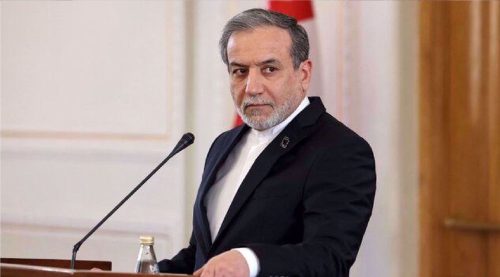
Iran’s Foreign Minister Abbas Araghchi
Press TV – May 21, 2025
Foreign Minister Abbas Araghchi has cautioned the US’s European allies in a 2015 nuclear agreement with Iran against invoking the so-called “snapback mechanism” to re-impose the United Nations sanctions against the Islamic Republic.
Speaking to Saudi Arabia’s Asharq News network on Wednesday, the top diplomat emphasized that such a move would end participation by the European parties — the UK, France, and Germany — in the deal that is officially known as the Joint Comprehensive Plan of Action (JCPOA).
He added that the trio’s potential recourse to the mechanism would lead to significant consequences and potential irreversible escalation of tensions, referring to the likelihood of strong retaliatory steps that the Islamic Republic could take in response.
Araghchi reiterated Iran’s readiness to engage in diplomacy, expressing hope that the European parties too would demonstrate determination to resolve the current impasse.
The deadlock occurred when the United States ditched the JCPOA in 2018, and returned the illegal and unilateral sanctions that the agreement had lifted.
This was followed by the European trio’s failure to return the US to the accord, as they had said would do, as well as their walking in Washington’s footsteps by returning their own sanctions.
In response to the betrayal, Iran began a number of legitimate and gradually escalating nuclear countermeasures.
“The situation we’re in is by no means Iran’s fault. It is the fault of the United States, which withdrew from the JCPOA, and the fault of the European countries that failed to compensate for the US’s withdrawal,” Araghchi added.
‘Uranium enrichment absolutely non-negotiable’
Addressing the topic of Iran’s peaceful uranium enrichment activities, the foreign minister said the activities were a principled and fundamental issue for Iran.
He emphasized that the enrichment program was a major scientific achievement developed by domestic scientists and held immense value for the Iranian people.
The official, meanwhile, paid tribute to the seven-strong Iranian nuclear scientists, who were assassinated amid their invaluable contribution to the Islamic Republic’s peaceful nuclear energy program.
According to Araghchi, the victims’ sacrifices towards advancement of the program had made the nuclear issue “absolutely non-negotiable.”
EU and UK impose more sanctions on Russia despite US concerns
RT | May 20, 2025
The EU and UK imposed new sanctions on Russia on Tuesday, escalating their campaign to pressure Moscow while ramping up support for Kiev.
The sanctions were announced shortly after a call between Russian President Vladimir Putin and his US counterpart, Donald Trump. Following the conversation, Trump warned that imposing additional economic restrictions on Moscow could hinder efforts to achieve peace in the Ukraine conflict.
The European Council, comprising leaders of EU member states and top officials, approved the bloc’s 17th round of sanctions, targeting what foreign policy chief Kaja Kallas called “nearly 200 shadow fleet ships.” Kallas, a vocal critic of Moscow, stated that further measures “are in the works” in Brussels.
Western officials claim that the targeted fleet enables Russia to evade G7-led efforts to enforce a price cap on its crude oil exports. In a coordinated move, the UK added 18 vessels from the same network to its sanctions list on Tuesday.
In addition, the UK imposed sanctions on the St. Petersburg Currency Exchange and Russia’s state deposit insurance agency, citing efforts to sever critical financial lifelines. Foreign Secretary David Lammy said the measures are intended to hold Putin accountable for supposedly “delaying peace efforts.”
Last week, delegations from Russia and Ukraine met for the first time since 2022, when Kiev abandoned negotiations in favor of pursuing victory on the battlefield, as advised by the then-UK Prime Minister Boris Johnson.
European backers of Ukraine initially supported Kiev’s demand for a 30-day unconditional ceasefire before resuming talks, and threatened additional sanctions if Russia refused. Zelensky later backtracked after the Trump administration supported Putin’s proposal for renewed diplomatic engagement.
Zelensky insisted, however, that Putin meet him in person in Türkiye to demonstrate his commitment to peace – an idea that the Russian president had not proposed. Ukrainian officials continue to call for expanded sanctions over what they describe as Moscow’s non-compliance with peace overtures.
The Putin-Trump call on Monday was characterized as productive by both leaders. Trump said he believes Putin is interested in ending the conflict and warned that additional economic pressure could obstruct US mediation efforts.
Putin has said Moscow and Kiev should negotiate a formal memorandum outlining a detailed path to a broader peace agreement, adding that a ceasefire could be part of the proposed road map.
Trump should not threaten new sanctions when he talks to President Putin
By Ian Proud | Strategic Culture Foundation | May 19, 2025
The U.S. side has made various signals that it might impose massive new sanctions on Russia unless the war ends soon. This would be a huge mistake that would lock in the fighting for the rest of the year and leave Europe on the hook for a massive bill and political disruption that it cannot afford. Trump should not threaten Putin with sanctions when they talk on Monday 19 May.
In the run up to the Russia-Ukraine bilateral peace talks which finally took place in Istanbul last week, both the EU and the UK imposed new sanctions on Russia. On 9 May, as Russian commemorated victory Day, Britain imposed sanctions on Russia’s shadow fleet and the EU followed suit with its 17th package of Russia sanctions on 14 May, the day before the Istanbul talks were due to start. Both the UK and EU have threatened further sanctions should Russia not agree a full and unconditional ceasefire in Ukraine and, with Zelensky, have actively urged the U.S. to follow suit, which it has not done, so far. However, the Americans have spoken increasingly about the possibility of massive new sanctions against Russia: this would be a huge mistake.
Sanctioning a country before peace talks have already started, or while they are still going on, is already a bad look. Very clearly, the Ukrainians, Europeans and British hope that new sanctions will apply such pressure on Russia that it agrees to terms that are more favourable to the Ukrainian side. I.e. that Ukraine does not have to go back to the Istanbul 1 commitment to adopt permanently neutral status. The western mainstream press has been carpet bombing their intellectually degraded readers with the latest press line that Ukraine should not have to go back to the Istanbul 1 text as a starting point for talks.
But there’s a problem. For this strategy to be effective, the sanctions have to work.
As I’ve pointed out before, sanctions against Russian energy have had limited impact, not just since 2022, but since 2014. Nothing about the glidepath of sanctions since February 2014 suggests that new sanctions will work now.
This latest round of UK and EU sanctions aimed to apply more pressure on enforcement of the G7 oil price cap of $60 which was first imposed in December 2022. Since the war started, that policy has failed.
Between 2021 and 2024, total volumes of Russian oil exported fell by just 0.2 million barrels per day, or 2.6%. After a bumper year for tax receipts in 2022 caused by Russian tumbling rouble and skyrocketing energy prices, Russia pulled in current account surpluses of $49.4bn and $62.3bn in 2023 and 2024. This was on the back of still strong goods exports of $425bn and $433bn respectively.
There are several reasons why the oil price cap didn’t work, the biggest being that Russia diverted 3 million barrels per day, around 39.5% of total oil exports to India (1.9 mbd), Türkiye (0.6 mbd) and China (0.5 mbd). Türkiye and India boosted exports of refined fuels to Europe providing a backdoor route for Russian oil to Europe. The second reason the oil price cap didn’t work is the near ten month time lag between war starting and the limit being imposed, which gave Russia space to readjust before punitive measure had been imposed. During this period, oil prices also dropped sharply from the high of $120 in the summer of 2022, to around $80 when the measure was imposed: the G7 missed the boat to impose maximum damage; this reinforces the point I make all the time that coalitions cannot act with speed and decisiveness.
Today, the Russian Urals oil price is below the $60 G7 cap meaning that any registered shipping company can transport it without penalty, which renders the British and European sanctions as pointless in any case.
Let’s be clear, western nations imposing sanctions against Russia that don’t work is not a new phenomena. As I have pointed out many times before, the vast majority (92%) of people that the UK has imposed assets freezes and travel bans upon have never held assets in the UK nor travelled here. For companies, the figure is just 23. The same, I am sure, is true of EU and U.S. sanctions, which cover largely the same cast list of characters and companies, as we all share and compare the same lists of possible designations. Financial sector sanctions prompted a massive readjustment of Russia’s financial sector. Energy and dual use sanctions drove self-sufficiency in technology production, through Rosnet, Gazprom and RosTec: i.e. these companies invested more in R&D on component production while sourcing components from alternative markets, in particular China.
At well over 20,000 sanctions imposed so far, Russia’s economy has proved remarkably robust and its key export sectors still find ways to deliver similar volumes across the world. At some point, I hope policy makers in London, Brussels and Washington will start to ask whether this policy is working. We long ago passed the point of diminishing marginal returns. I fear, however, they have their heads in the sand or, possibly another, darker, place.
So, coming back to Trump’s phone call with Putin on Monday 19 May you might ask yourself, ‘so what if he imposes a few more sanctions if they won’t work anyway?’
Putin would see the imposition of new U.S. sanctions as a complete 180, destroying any emerging trust he had in Trump or any belief in America’s stated intentions to end the war in Ukraine.
It is clear to me that further U.S. sanctions on Russia would kill stone dead any chance of a ceasefire in Ukraine at a time when Russia still has the upper hand. Russia has increased the pace of its advance since the Victory Day ceasefire and seems to be adding new blocks of red to the battle map each day. At the current rate of advance, even without a catastrophic Ukrainian collapse, it seems realistic to expect that Russia would paint out the remaining territory in Donetsk and Luhansk during the remainder of this year. In the process they would need to overcome the heavily fortified towns of Pokrovsk, Kramatorsk and Sloviansk, in what would likely be brutal and attritional battles killing many thousands more on both sides.
Moreover, dragging out the war for longer would simply add to Europe’s liability to fund Ukraine’s war effort at a time when it is only ever going to lose. Ukraine is spending over 26% of GDP on defence in 2025 and 67.5% of its budget expenditure is on defence and security, leaving a budget black hole of $42bn that has to be filled. America under Trump isn’t going to fill this hole. And, as Ukraine is cut off from international lending markets, that black hole is being filled by Europe.
There is no money for this.
Europe has neither the political capital nor the funds to maintain a losing war in Ukraine at enormous expense without massive domestic political blowback in their own countries.
Notwithstanding the possibly understandable fear among European leaders of failing and being seen to fail in Ukraine, keeping the war going is at best, a gesture in cynical self-preservation, pushing their eventual political demise further down the track.
Unfortunately, we have been here so many times before. Right back to the Minsk II agreement, Ukraine has been pushing for ever more sanctions against Russia that only ever served to ramp up resentment and exacerbate the conflict. European leaders have invested too much in Zelensky and his self-serving demands aimed primarily at staying in power. He is quickly becoming the gun that shoots European elites in the head.
If Trump really wants to be seen as a peacemaker, he should avoid doing what every other western leader before him including Sleepy Joe did and resist the temptation to impose more sanctions. Instead, he should continue to press President Putin to continue to engage with bilateral peace talks that finally recommenced in Istanbul last week. He must also tell the Eurocrats and Zelensky that they must make compromises rather than plugging the same old failed prescriptions.
As The Federal Government Abandons The Climate Fantasy, New York Doubles Down
By Francis Menton – Manhattan Contrarian – May 13, 2025
The first 100+ days of the second Trump administration (it’s now actually 113 days) have seen a near total abandonment of the fantasy that this one country’s government can change the weather and “save the planet” by suppressing use of hydrocarbon fuels and impoverishing the people. Biden administration “climate” and energy policies amounting to thousands of pages in regulations and hundreds of billions of dollars in grants and subsidies to uneconomic energy projects have been swiftly reversed. Examples in just the past few weeks include:
-
The announcement by the Department of Energy just yesterday (May 12) of no fewer than 47 regulatory reversals, covering everything from ovens. to dehumidifiers, to clothes washers and driers, to shower heads, to dishwashers, and much, much more.
-
Rescission of hundreds of grants from the Department of Energy for so-called “green energy” projects.
-
Similar rescission of hundreds of grants from EPA, supposedly to fund “greenhouse gas reduction” and “climate justice” initiatives.
-
Commencement by EPA of a process to undo the “Endangerment Finding” — a regulatory action that underlies essentially all climate and energy regulation by that agency — and some 30 other climate and energy actions of EPA.
And these are just examples. There are many more.
At this point, you would think that the blue states might take the hint. As a blue state, you had thought that you were embarking on an energy “transition” with the full backing and support of the federal government, complete with its vast powers and its infinite checkbook. Sure, this was going to cost trillions of dollars; but it was almost all their money, not yours. If somehow it all didn’t work out, you were not going to be the main one on the hook.
Now, all that has changed. In the blink of an eye, there is no more support to be had from the infinite deep pocket. Not only is the federal government no longer your partner and financial sugar daddy, but it is even taking steps to obstruct and hinder your efforts.
So going forward, is there any point? As a lone blue state, you don’t remotely have the resources to expunge fossil fuels from your energy system on your own. Maybe, would it be best just to lie low for a few years and wait for the next friendly administration in Washington?
Well, if you are New York, that is not how you react. Your religious fervor is such that you are now prepared to proceed totally on your own to defy the laws of physics and thermodynamics. Even as the federal government is telling New York to take a hike, here are some of the latest antics on the climate front from New York officials and climate activists:
-
The State’s 2025-26 budget just got enacted on Friday, May 9. ESG Today reported excitedly on Monday (May 12) that the budget includes “over $1 billion investment in decarbonization.” Excerpt:
New York Governor Kathy Hochul signed the state’s 2025-2026 budget on Friday, which included more than $1 billion in climate change-focused investments, including funding to lower emissions from buildings and accelerate the rollout of electrified transportation. . . . Key climate-focused allocations in the new budget include $450 million targeting reductions in building emissions, including investments in energy-efficient retrofits and clean heating technologies like heat pumps, more than $200 million for thermal energy networks, $250 million to support electric school buses, fast-charging stations and a NYSERDA rebate program for installing EV charging stations, as well as $200 million for renewable energy expansion and grid modernization.
Nobody is impolite enough here to mention that $1 billion is chump change in the effort to get rid of hydrocarbon fuels. If you were serious about the effort, the number would be more like $1 trillion. But don’t worry, nobody reading this stuff has sufficient numeric competency to understand that.
-
New York City Comptroller Brad Lander — who is also a candidate for Mayor in the current election cycle — fancies himself a leader in the climate movement. Lander put out a statement on April 22 (“Earth Day”) setting forth his position:
New York City Comptroller Brad Lander decried threats from the Trump administration to dramatically roll back climate progress and stood with climate activists from New York Communities for Change, 350 NYC, and Fridays for Future to announce new actions by the Comptroller’s Office to reduce New York City’s emissions. . . . [T]o stand strong against federal rollbacks, Comptroller Lander is demanding more from the asset managers who manage funds for the New York City Employees Retirement System (NYCERS), Teachers Retirement System (TRS), and Board of Education Retirement System (BERS).
-
In a prior statement on March 26, reported in Net Zero Investor, Lander vowed that the City “will not retreat one inch” on its climate program, despite the actions of the Trump administration.
-
Our local environmental activist groups brook no dissent from climate orthodoxy. On March 31, a group of four climate activist organizations sued the State government in an effort to force faster progress on greenhouse gas reduction goals. From New York Focus, March 31:
Four environmental and climate justice groups filed a lawsuit Monday in a state court, claiming that New York is “stonewalling necessary climate action in outright violation” of its legal obligations. By not releasing economy-wide emissions rules, the suit alleges, the state Department of Environmental Conservation, or dec, is “defying the Legislature’s clear directive” and “prolonging New Yorkers’ exposure to air pollution … especially in disadvantaged communities.” It’s the first lawsuit to charge the state with failing to enforce the core mandate of its 2019 Climate Leadership and Community Protection Act, or clcpa: eliminating nearly all of New York’s greenhouse gas emissions by 2050.
So, there is plenty of bluster from local politicians and activists. But despite that, I can’t find a word as to how they plan to meet the greenhouse gas reduction and green energy mandates of the 2019 Climate Leadership and Community Protection Act, now that all federal backing is withdrawn. As just one element, there was supposed to be 9000 MW of offshore wind built to replace on-shore fossil fuel power plants. Now the Trump administration is obstructing the offshore wind development. I haven’t been able to find a word from New York elected or energy officials on how they plan to transition the energy supply if they can’t build the offshore wind facilities.
So we move forward with our officials in a state of bluff and bluster and denial, and no plan of any kind to meet the impossible mandates of the Climate Act. We all know that this is doomed to failure, but it will likely be a couple of years before we see the failure unfold.
Being Russia’s enemy could cost European allies $1trn – study
RT | May 16, 2025
European NATO members would face a $1 trillion bill over 25 years to replace US military contributions if Washington exited the bloc, according to a study published on Thursday by a British think tank. The EU is planning a militarization drive, which it claims is necessitated by an alleged Russian threat.
Western European leaders have said member states must reduce their dependence on US weapons while implementing a massive increase in military spending. The proposed hike comes amid claims that Russia could attack a NATO member in the coming years. Moscow has denied the allegations and has accused the West of “irresponsibly stoking fears” of a fabricated threat.
The report by the International Institute for Strategic Studies (IISS) outlines the challenges nations would encounter in the event the US withdraws from NATO to focus on confronting China.
According to the IISS, European nations – including the UK – would need to replace some 128,000 American troops, along with a wide array of weapon systems and command infrastructure currently provided by the Pentagon, particularly for air and naval forces.
”European states would need to invest significant resources on top of already existing plans to boost military capacity,” the report stated. The estimated price tag for replacing American weaponry alone ranges from $226 billion to $344 billion.
Domestic arms manufacturers would face difficulties securing contracts, financing, and skilled labor, while also grappling with regulatory and supply chain hurdles, the report warned. In certain sectors – such as stealth aircraft and rocket artillery – European NATO members currently lack viable alternatives, prompting the IISS to suggest outsourcing production to countries outside the bloc.
Beyond hardware, the study highlighted intangible but critical costs associated with command-and-control functions, space intelligence, and filling high-level leadership roles traditionally held by US officers.
The think tank questioned whether European governments possess the political will to ensure the vast spending required. The administration of US President Donald Trump has accused European NATO nations of taking advantage of American military protection without contributing enough in return.
On Thursday, German Foreign Minister Johann Wadephul stirred controversy by vowing to increase defense spending to 5% of GDP, well above Germany’s existing level of 2.1%. The statement, made following a NATO meeting, drew backlash, including from members of Chancellor Friedrich Merz’s coalition. Defense Minister Boris Pistorius later stated that the exact percentage was “not so important” and that Berlin considered 3% to be a more realistic level.
Ball’s in Trump’s Court, But Iran Won’t Bow to US Pressure
By Ekaterina Blinova – Sputnik – 15.05.2025
There is a good possibility of a US-Iranian deal, Mohammad Marandi, a Tehran University professor who was on Iran’s team during the 2015 nuclear talks, tells Sputnik.
Marandi stresses, however, that Tehran won’t accept any agreement that infringes on the nation’s sovereignty.
Reduced, Not Suspended, Enrichment
“The reason why [Iran is] enriching uranium at 60% right now is in order to put pressure on the US to come to the negotiating table, to behave more reasonably and to force it to remove sanctions,” the professor tells Sputnik.
The US shouldn’t expect Iran to halt its uranium enrichment – Tehran will only reduce enrichment levels and expand the IAEA’s role in the country in exchange for US sanctions relief, the academic stresses.
“Iran is a country that’s deeply and profoundly independent in its foreign policy… so the US should not expect Iran to be a subordinate country.”
What’s the Real Cause of the US-Iranian Row?
- The root cause is “Iran’s support for the Palestinian people and… legitimate resistance to ethnic cleansing, to genocide, to apartheid,” says Marandi.
- “The US supports genocide, because they unconditionally support racism… and ethno-supremacism in our region.”
- The nuclear issue is an excuse — just like the “human rights” or “terrorism” accusations the US uses against Iran to appease Israel.
US: An Irresponsible Negotiator?
The US isn’t a trustworthy negotiator; it violates agreements, according to Marandi: Trump is constantly “flip-flopping” — be it Ukraine, trade wars, Yemen, or Gaza genocide.
“This is what makes it very difficult to come to any agreement,” the pundit concludes.
India, Pakistan, and the future of the Indus Waters Treaty

By Amin Noorafkan | Press TV | May 14, 2025
On April 22, 2025, militants carried out a brutal attack on tourists at a hill resort in Indian-administered Kashmir, leaving 26 people dead. Indian authorities swiftly blamed Pakistan, responding by downgrading diplomatic ties and initiating a series of escalatory measures.
Among these measures, one that took many observers by surprise was India’s decision to suspend the Indus Waters Treaty (IWT) – a landmark water-sharing agreement signed in Karachi in September 1960.
Despite decades of hostilities and multiple wars, the treaty had long endured as a rare symbol of cooperation between the two estranged neighbors.
As tensions surged, India launched a military operation on the morning of May 7, firing a barrage of missiles deep inside Pakistan and Pakistan-administered Kashmir, reportedly killing dozens.
In retaliation, Pakistan struck several Indian cities, including key military installations, three days later.
A ceasefire was brokered just hours after Pakistan’s attack, halting the escalation between the two nuclear-armed nations. However, underlying tensions remain high.
A key point of contention is the continued suspension of the Indus Waters Treaty. Pakistan’s Deputy Prime Minister Ishaq Dar, in remarks on Monday, warned that the fragile ceasefire could unravel if the treaty is not reinstated.
Indus Waters Treaty: Status, India’s stance and Pakistan’s response
India’s cabinet committee on security announced the Indus Waters Treaty – long seen as a symbol of “water for peace” – would be held “in abeyance” until Pakistan ends its support for cross-border terrorism.
India’s Foreign Secretary confirmed the suspension, stating it would remain in place until Pakistan “credibly and irrevocably abjures” terror support.
On the ground, India backed up its announcement with action. It briefly restricted flows on the Chenab River, and then released large volumes of water from the Baglihar and Salal dams as levels rose.
Indian Prime Minister Narendra Modi vowed that “India’s water will flow only in India,” emphasizing that water previously shared with Pakistan would now be conserved for domestic use.
Echoing this, Jal Shakti Minister C.R. Patil said, “We will ensure that not even a drop of water from the Indus River goes to Pakistan.”
In Islamabad, the reaction was defiant and dramatic. Pakistani leaders condemned India’s suspension of the treaty as “an act of war”.
Foreign Minister Ishaq Dar and military officials publicly warned that blocking Pakistan’s water share would trigger a full response. Pakistan also announced it would pursue international legal action.
The government is reportedly preparing cases before the World Bank (the treaty’s broker), the Hague’s arbitration tribunals and even the International Court of Justice.
This escalation is particularly notable given the treaty’s durability. The Indus Waters Treaty remained intact through the wars of 1965, 1971, and 1999.
What is clear is that water has moved to the center of the current standoff. India’s handling of dam flows appears to serve more as a signal of power than a direct retaliation; a message to Pakistan that New Delhi can, at will, alter the course of shared rivers.
The Indus basin dams underpin Pakistan’s food and energy security. A recent report showed that over 80% of Pakistan’s irrigation and nearly 50% of its GDP depend on the Indus water.
But there is another player that needs to be factored into the equation.
China’s role and upstream developments
Adding complexity to the dispute is the growing role of China. In January 2023, satellite imagery revealed extensive dam construction by China on the Indus headwaters in Tibet and on the Brahmaputra (Yarlung Zangbo).
Images also show China building a dam on the Mabja Zangbo (which is a tributary flowing toward Nepal and India) and planning a mega-dam on the lower Brahmaputra.
The Brahmaputra provides about 30% of India’s freshwater and 44% of its hydropower potential, giving Beijing strategic leverage.
Some analysts warn that India’s current use of the IWT as a geopolitical tool could set a precedent, encouraging China to do the same against India downstream.
China’s involvement also has a strategic aspect. Under the China-Pakistan Economic Corridor (CPEC), Beijing has poured billions into Pakistan’s hydropower sector, co-developing large dams like Diamer-Bhasha, Dasu, and Mohmand. These projects are central to Pakistan’s water and energy plans, and China’s investment makes it a key stakeholder.
As a result, any dramatic shift in Indus water flows or treaty dynamics is unlikely to remain a bilateral issue. China could respond directly, especially on the Brahmaputra, or through its partnership with Pakistan, by accelerating joint hydropower projects.
A fragile equilibrium
India’s moves risk triggering a “double-edged sword.” By choking Indus flows, it could prompt Beijing to tighten its grip on Himalayan rivers flowing into India.
In effect, the water dispute now entangles three powers: India, Pakistan, and China, each competing for control over critical transboundary rivers.
However, not all leverage is equal. While China’s upstream position on the Brahmaputra is significant, its practical impact is more limited. The Brahmaputra’s flow through India is largely driven by monsoons, with only 7–10% originating in Tibet.
Even a theoretical full diversion (which remains unlikely due to technical and geopolitical constraints) would reduce India’s national freshwater by 10–15%, impacting less than 1% of GDP. India’s more diversified economy and lower dependence on agriculture (13.5% of GDP) offer some buffer.
Still, China’s dam-building project signals its intent to assert hydro-hegemony in the region.
And as tensions mount, rivers are no longer just a source of sustenance; they are emerging as instruments of strategy and power.
Future scenarios for water diplomacy and conflict
The coming months will reveal whether the current crisis can be resolved through diplomacy or whether tensions will spiral further.
Pakistan appears determined to internationalize the dispute. It has signaled intentions to pursue legal action through the World Bank – the designated facilitator of the Indus Waters Treaty – as well as the Permanent Court of Arbitration and potentially the International Court of Justice.
However, the World Bank has already sought to distance itself. President Ajay Banga stated that the institution has “no role to play beyond a facilitator,” casting doubt on its capacity to mediate a meaningful resolution.
As of now, there are no reports of substantive diplomatic progress. This vacuum raises the risk that the ceasefire may falter, potentially reigniting conflict. Looking ahead, several possible scenarios emerge:
- Legal/diplomatic resolution: Pakistan could formally invoke treaty mechanisms, filing for arbitration and launching protests under international law. A mediated renegotiation might follow, potentially involving updated water allocations or enhanced confidence-building measures. India has long advocated for revisions to the treaty. Under international pressure, New Delhi might seek new security guarantees, while Islamabad could push for a more robust monitoring framework to ensure compliance.
- Escalation: If India persists in withholding water flows or damming key rivers in Kashmir, Pakistan’s response may not remain confined to legal avenues. Officials have warned of potential covert retaliation, including cyberattacks or sabotage targeting Indian water infrastructure. Military confrontation cannot be ruled out either. Pakistani leadership has labeled water denial as an existential threat, with some officials mentioning the possibility of a “last resort response.”
- International mediation/coercion: While the World Bank has signaled a limited role, other global actors may step in. The United States, which helped broker the current ceasefire, could take further steps to mediate the water dispute. Other states – including China, Iran, and Saudi Arabia – may offer to facilitate negotiations or introduce incentives for cooperation. Thus far, however, India has resisted most third-party involvement, making an exception only for US-led efforts.
Amin Noorafkahn is a student of regional studies at Allamah Tabatabai University, Tehran. He is interested in political science, literature, and sociology.
Iran’s Bold Nuclear Deal 2.0?
By Oleg Burunov – Sputnik – 14.05.2025
After the US unilaterally withdrew from the 2015 Iran nucleal deal in May 2018, subsequent efforts to revive the agreement have largely stalled.
Iran has suggested a joint nuclear enrichment project with US investments and regional Arab nations – Saudi Arabia and the United Arab Emirates.
Iranian FM Abbas Araghchi offered the idea as an alternative to US demand for the dismantling of Iran’s nuclear program during the recent talks with US Special Envoy Steve Witkoff in Oman, the New York Times reports.
Iran would use the venture to enrich uranium to a low grade, beneath the levels needed for nuclear weapons.
Representatives from other countries, including the US, will be on the ground to provide “oversight and involvement.”
Featured Video

Elijah Magnier: Yemen’s strikes are shattering Saudi Arabia’s long-term strategy
or go to
Aletho News Archives – Video-Images
From the Archives
British weapons and personnel doing much of the killing in Yemen
Press TV – June 18, 2019
A detailed report published by the Guardian newspaper has shown how Britain is massively contributing to Saudi Arabia’s devastating war on Yemen as it suggests that London is not only supplying the bombs that fall on Yemenis, but it provides the personnel and expertise that keep the war going.
The comprehensive report by Arron Merat published on Tuesday showed that Britain was doing much of the killing in Yemen as the country continues to provide Saudi Arabia with everything it needs to turn its southern impoverished neighbor into a graveyard.
“Every day Yemen is hit by British bombs – dropped by British planes that are flown by British-trained pilots and maintained and prepared inside Saudi Arabia by thousands of British contractors,” said Merat in the report. … continue
Blog Roll
 Aletho News
- Netizens condemn Japanese drama for projecting Japan’s wartime atrocities onto Chinese characters
- Racist Seinfeld Dances for Joy as Bibi Unveils His New Map
- A West Bank War for Netanyahu’s Election Campaign, Could It Backfire?
- Yemen denounces European Parliament’s ‘hypocritical’ push to blacklist Ansarullah
- Qalibaf: UAE’s UN bid aims to ‘clear the runway’ for ‘Greater Israel’, whitewash genocide
- Pakistan reopens Iran border after boosting security: Report
- Why are so many Brazilians voting for Flávio Bolsonaro?
- Democrats Put Anti-Russia Agenda Ahead of American Workers
- Elijah Magnier: Yemen’s Strikes Are Shattering Saudi Arabia’s Long-Term Strategy
- Pentagon designates Chinese cultural centers national security threat
- If Americans Knew
- An error has occurred; the feed is probably down. Try again later.
- No Tricks Zone
- Sudden Stratospheric Warming, Powerful El Niño Combination May Lead To Extreme Europe Cold, Energy Crisis!
- Two New Studies Find Thwaites Glacier Melt Cannot Be Driven By Human Activity Or A Warming Ocean
- E-Cars Reduce CO2 Emissions By Only 41% Compared To Internal Combustion Engine Vehicles
- Predictions Made By Renowned Climate Professor Over Past Decades Have Been Proven To Be Poor
- New Study Suggests Large Regions Of The Pacific Ocean Have Been Cooling For The Last 80 Years
- Germany’s Green Energy Debacle: High Energy Costs Force Kahla Porzellan to Close After 182 Years!
- New Study: 50 Years Of The Most Aggressive ‘Net Zero’ Policies Can Only Affect The Global Climate By 0.03°C
- US September “Heat” Was No Record…Many Records Set Decades Ago
- Latest European Green Energy Debacle; Portugal’s Largest Flagship Solar Park Insolvent!
- Green Energy Debacle: German Expert Professor Fritz Vahrenholt Warns Of Severe Economic And Social Consequences

