Indo-Pacific braces for Trump 2.0
By Salman Rafi Sheikh – New Eastern Outlook – November 10 2024
The victory of Donald Trump in the US presidential election is far from unexpected. Yet, the fact that he has won means that many countries across the world will brace for the impact this win will have on them.
This is especially true for countries in Asia – in particular, in the Asia Pacific region – where the Biden administration, despite its flawed plans, appeared willing to invest US resources, both economic and military, to offset China. Although Donald Trump is, in many ways, more anti-China than Joe Biden is, his anti-China geopolitics is confined primarily to one arena: the US-China trade (im)balance.
It means that the Trump administration will be far less interested in extending military and economic assistance to the regional countries than the Biden administration has been in the past four years. On the contrary, his administration is likely to slap heavy tariffs, which will negatively affect Washington’s bilateral trade with regional countries. In such a scenario, regional countries will have one key policy option: turn more towards China to resolve bilateral ties via diplomatic means and reduce their dependence on Washington.
The Aftermath of the Victory
If Trump’s previous four years in office are any guides to the future, Washington’s Indo-Pacific allies, such as Japan and South Korea, are deeply worried. As former officials of the Trump administration, such as the former National Security Adviser John Bolton, revealed later in their memoirs, Trump had plans to withdraw US military forces from South Korea, keep up with his planned rapprochement with North Korea, and demand massive payments from Japan to pay for the American defence role. During his campaign, Trump defended his foreign policy and repeatedly vowed to continue after assuming the presidency.
For Japan, defence payments are, however, only one of the major areas of concern. Trump will hit trade as well. A key Trump campaign pledge is slapping 10- to 20-percent tariffs on all imports to the United States. Trump has also vowed to “absolutely” block Nippon Steel Corp.’s proposed 2-trillion-yen ($13 million) acquisition of US Steel Corp. More importantly, the US-Japan trade gap has widened to the disadvantage of the US – a situation that Trump would like to reset. According to US official data,
“In 2022, both U.S. exports to Japan and imports from Japan continued to grow for a third year in a row. U.S. exports totaled $80.3 billion, an increase of 7.7% ($5.8 billion), and U.S. imports totaled $148.3 billion, an increase of 10.0% ($13.5 billion). The trade deficit was $68.0 billion, increasing 12.8% ($7.7 billion) from 2021”.
“Our allies have taken advantage of us more than our enemies,” Trump said in a media interview on October 15, referring to the US trade deficit and other issues. With Trump having repeatedly referred to cutting off US support for NATO, Japan’s idea of an ‘Asian NATO’, too, seems in deep trouble. The military pacts Joe Biden made with Japan, South Korea, and Australia are likely to face the same fate. According to Trump, one of the key reasons why the Biden administration entered into these pacts was the pressure the Ukraine conflict generated on these states.
Therefore, he believes, that if he can end the Ukraine conflict – which he promised to end quickly by cutting off US aid to Ukraine – this will allow for the US to divest its sources away from these countries. On the other hand, Trump would not only want South Korea and Japan to spend more on defence but also push them to join him in slapping tariffs on China, thus pushing them into a ‘trade war’ with Beijing. Given South Korea’s and Japan’s trade (im)balance with China, they are bound to suffer from such a policy step because China has the leverage to retaliate. Therefore, they are unlikely to initiate their ‘trade war’. Alternative routes, however, exist.
The Alternative Option
Official Think Tanks in India are already proposing that India should join the China-led Regional Comprehensive Economic Partnership (RCEP) Agreement. This policy shift probably speaks volumes about the direction that most regional countries might be willing to take. India is also one country that recently signed an agreement to jointly manage the disputed border. Now, this pact is crucial – not only because it signifies peaceful management of tensions, but also because the India-China border dispute is probably one major issue where China actually fought. This is unlike the South and East China Seas. Therefore, if China is able to diplomatically resolve its tense issues with India, there is little denying that other countries can do the same. There is, thus, a silver lining for countries like Japan, the Philippines, etc. to resolve their issues without relying on the US (or any other external power, such as the EU or NATO).
In some ways, an inward-looking approach, i.e., an approach that does not seek external mediation, would help push external powers permanently out of the region. Knowing that the Trump administration will itself be looking for disengagement, regional countries wouldn’t have to worry about annoying the US too.
For China, it presents an excellent opportunity to capitalise on US disengagement and deepen its ties with countries in the Indo-Pacific. Although China will probably be fighting a ‘trade war’ in the Atlantic, it can still find a major leeway in the Indo-Pacific. Its willingness and openness will only find regional countries ready to jump on the regional bandwagon of free trade for growth and diplomacy for dispute resolution.
Salman Rafi Sheikh, research analyst of International Relations and Pakistan’s foreign and domestic affairs.
Venezuela, Russia sign new energy, defense agreements
Press TV – November 8, 2024
Venezuela and Russia have signed 17 new agreements, in what was described as further consolidation of the “pressure-free” bilateral relationship between them.
During a visit by a senior Kremlin official to Caracas on Thursday, the two sides signed the new agreements in energy cooperation and petroleum exploration as well as in the security area on “intelligence, counterintelligence and counterespionage issues.”
Visiting Russian Deputy Prime Minister Dmitry Chernyshenko, who heads the Russian part of the Intergovernmental Russian-Venezuelan High-Level Commission (CIAN), told his Venezuelan counterpart Delcy Rodriguez that his country stood ready to support Venezuela’s armed forces with “the most sophisticated weapons and military equipment.”
The Russian delegation also met with Venezuelan President Nicolas Maduro, before inking several documents, including the outline of key cooperation areas until 2030.
During the ceremony at the Miraflores Palace, Maduro expressed his satisfaction with the work carried out by both the Venezuelan and Russian teams at CIAN. He said the new agreements would “seal and strengthen the path of union and cooperation” between Venezuela and Russia, “from now until 2030 and beyond.”
“This meeting, 20 years after the High Level Commission between both nations was founded, is one of satisfaction for the work, the spirit of friendship and brotherhood that increasingly unites Russia and Venezuela,” he said.
The Latin American leader added that Caracas and Moscow are building an “impregnable” “win-win” relationship that is “free of pressure, blackmail and sanctions”.
The 17 new agreements are added to the more than 300 bilateral cooperation instruments which were signed before in the fields of finance, energy, industry, commerce, customs, transportation and tourism, agriculture, fishing and food, science and technology, education, health, culture, sports and youth, among others areas of bilateral cooperation.
Venezuela has one of the world’s largest natural gas reserves and the world’s largest proven reserves of oil. Russia is a Eurasia energy giant. However, both countries’ energy sectors face sanctions by the United States.
Russian Foreign Minister Sergei Lavrov has repeatedly censured American leaders over Washington’s foreign policy which aims “to preserve their domination, hegemony and diktat” by targeting other countries with “blackmail, ultimatums, threats.”
Ukraine aid program responsible for political crisis in Germany
By Lucas Leiroz | November 8, 2024
The political crisis in Germany does not seem to be coming to an end in the short term. The collapse of the government is worrying the country’s authorities, and there is also an unbalanced social scenario that puts the entire German stability at risk. In a recent speech, Olaf Scholz acknowledged that the situation in Ukraine is the main reason for this crisis, particularly due to the systematic support provided by Berlin to the Kiev regime.
The German Prime Minister stated that the main reason for the country’s political crisis is the lack of consensus among the authorities on military backing for Ukraine. He blamed former Finance Minister Christian Lindner for refusing to approve a budget plan to further boost funding for Kiev. According to Scholz, Lindner’s position created polarization among officials and broke up the coalition of the government.
Scholz recently dismissed Lindner from his post, creating strong friction between the different groups supporting the government. Lindner is also the leader of the Free Democratic Party, which is one of the three parties that make up the pro-Scholz coalition. His firing caused discontent not only among the party members, but also among the Social Democrats and the “Greens”, creating an atmosphere of distrust among Scholz’s team.
The rivalry between Scholz and Lindner started as a dispute over how to establish a policy of support for Ukraine consistent with Germany’s financial situation. The two officials had a bitter and possibly disrespectful discussion during a meeting in which Scholz tried to force Lindner to approve a new economic plan that would allow further military aid to Ukraine, thus ignoring some of Germany’s major social problems, such as economic decline and deindustrialization.
Scholz tries to disguise the nature of his economic plan by claiming that it includes efforts to promote the development of clean energy and investment in the automotive industry. However, the Ukrainian issue is the central factor in the proposal. Scholz says that it is necessary to expand aid policies for Kiev, considering that winter is coming, and Ukrainians will increasingly require international help to overcome the difficulties of the season. The chancellor also says that, with Donald Trump’s victory in the US, the main responsibility for supporting Ukraine will come to Germany and the Europeans, which is why he hopes that an economic plan establishing clear assistance for Kiev will be approved.
“The finance minister shows no willingness to implement this offer in the federal government for the benefit of our country. I do not want to subject our country to such behavior any longer,” Scholz said.
Scholz is currently in a critical political situation. His followers have become a minority in the government, as Lindner’s dismissal has also encouraged the resignation of other ministers and officials. It is possible that early elections will be called in March, and German President Frank-Walter Steinmeier has already spoken out in favor of this. Clearly, Germany is going through one of the most critical moments in its post-Cold War history, no longer being the stable, peaceful and developed country so praised by European social democrats in previous years.
Moreover, Scholz’s political opponents are pressuring the remaining officials in his government to establish a different agenda from that of the chancellor. For example, according to German media, Lindner has asked the Defense Ministry to impose new limits on military aid to Ukraine, justifying his request based on economic calculations that prove Germany’s inability to continue boosting assistance. Berlin has already halved its aid to Kiev, but Lindner and other realist politicians say that it needs to be cut further to overcome the country’s billion-dollar deficit.
In the end, it is clear how the conflict in Ukraine is responsible for the German political crisis. Olaf Scholz himself admits that the lack of consensus on the Ukrainian issue led to the collapse of his government, which seems to be reason enough for Berlin to rethink its policy towards Ukraine. Instead of firing ministers who think differently, Scholz should pay more attention to the calculations that expose the German reality, recognizing that it is not viable for the country to continue backing the Ukrainian regime in the long term.
If Scholz does not change his strategy on Ukraine, he will be defeated in new parliamentary elections. Furthermore, the political cost of his efforts will be in vain because German aid to Ukraine is not capable of changing anything in the conflict scenario. In the end, the Scholz government is likely to become yet another of the many European governments that have collapsed amid the crisis that has affected the continent since 2022.
Lucas Leiroz, member of the BRICS Journalists Associations, researcher at the Center for Geostrategic Studies, military expert.
Nukes, NATO and New World Order: Putin Highlights Global Challenges Facing World in Coming Decades
By Ilya Tsukanov – Sputnik – 07.11.2024
Russian President Vladimir Putin has said that the coming decades could prove even more difficult than the first quarter of the 21st century owing to the birth pangs of the formation of a new, multipolar world order.
“Looking back over the past 20 years and considering the scale of changes, then projecting such changes onto the coming years, one could assume that the next two decades will be at least as challenging, if not more so,” Putin said at the plenary session of the Valdai International Discussion Club on Thursday, pointing to the “era of cardinal, essentially revolutionary changes” and the complex processes facing the world today.
“The imposition and transformation of totalitarian ideologies into the norm is a threat. We see in the example of today’s Western liberalism, which has resulted in extreme intolerance and aggression toward any alternative, toward any sovereign and independent thought, and today justifies neo-Nazism, terrorism, racism and even the mass genocide of civilian populations,” Putin said.
Today, Putin said, “democracy is increasingly being interpreted” by some “as the power of the minority rather than the majority,” contrasting “traditional democracy and people’s rule with some abstract freedom, for the sake of which democratic procedures, majority opinion, freedom of speech and non-partisanship in the media can be neglected and even sacrificed.”
“There must not be a situation where the model of one country or a relatively small part of humanity is taken as something that’s universal and imposed on everyone else,” Putin said.
Dangers Emanating From Deadly New Weapons
“International conflicts and clashes are fraught with mutually assured destruction. After all, weapons capable of doing so exist and are constantly being improved, acquiring new forms as technology develops. And the club of those who possess such weapons is expanding. No one can guarantee that they will not be used in the event of an avalanche-like increase in threats and the total destruction of legal and moral norms,” the Russian president warned.
“Calls in the West to inflict a strategic defeat on Russia, a country possessing the largest arsenal of nuclear weapons, demonstrate the extreme recklessness of Western politicians, at least some of them. Such blind faith in their own impunity and sense of exceptionalism can turn into a global tragedy,” Putin said.
“There is only one military bloc left in the world today, held together by…rigid ideological dogmas and cliches – and that is the North Atlantic Treaty Organization, which, without stopping its expansion to the east of Europe, is now trying to extend its approaches to other spaces of the world, violating its own statutory documents,” Putin said, highlighting the alliance’s broken promises not to expand eastward, and absolute disregard for Russia’s interests.
“Ultimately, this all began to look like a creeping intervention, which, without any exaggeration, would be aimed at some kind of humiliation, or better still [for NATO, ed.] the destruction of the country either from the inside or from the outside,” the president added.
Birth Pangs of a New World Order
In this environment, “a serious, irreconcilable struggle is unfolding” to form a new world order, according to Putin – “irreconcilable first and foremost because this is not even a fight for power or geopolitical influence,” but “a clash regarding the very principles on which relations between countries and peoples will be built in the next stage of history. Its outcome will determine whether we can build a world that will allow everyone to develop and resolve emerging contradictions on the basis of mutual respect for cultures and civilizations, without coercion and the use of force.”
“In a sense, a moment of truth is coming. The old world order is going away forever, one might say it is already gone,” Putin said.
“Under threat is the monopoly of the West, arising after the collapse of the Soviet Union, acquired at the end of the 20th century. Any monopoly, as we know from history, ends sooner or later. There are no illusions here that monopolies are always a harmful thing – even for the monopolists themselves,” Putin said, pointing to the “chaos and systemic crises growing in the countries trying to pursue such policies.”
As the Cold War ended, instead of seeing “a chance to rebuild the world on new fair principles, [the West] saw it as their triumph, victory, as our country’s capitulation to the West, and therefore an opportunity, by the rights of the winner, to establish complete dominance,” Putin said.
“Again, some people had the idea that the world would be better off without Russia, and they tried to finish her off, to destroy everything that was left after the USSR’s collapse, and now, it seems, someone is dreaming about this, thinking that the world will be more obedient, better managed. But Russia has more than once stopped those striving for world domination. And a world without Russia would not be better, and those trying to accomplish this must finally understand this,” Putin said.
The Russian president said that the emerging multipolar world order must be one that’s without hegemons, without any “losing countries or peoples. No one should feel disadvantaged or humiliated. Only then will we be able to ensure truly long-term conditions for universal fair and safe development.”
“There can be no talk of any hegemony in the new international environment. When this irrefutable and immutable fact is recognized, for example, in Washington and other Western capitals, the process of building a world system that meets the challenges of the future will finally enter a phase of its genuine creation. God willing, this will happen as soon as possible,” Putin said.
“We are confident that BRICS provides everyone with a good example of truly constructive cooperation in the new international environment,” Putin said, pointing out that “even among NATO members there are those, as you know, who are interested in working closely with BRICS.”
“In the meantime, those interested in creating a just and lasting peace have to spend too much effort on overcoming the destructive actions our adversaries take for the sake of their monopolies. It’s obvious that this is happening – everyone sees it, in the West itself, in the East, in the South, they all see it,” Putin said.
Russia does not see Western civilization as an enemy, does not pose the question of “us or them,” nor does it seek to impose its will on anyone, Putin said. This is the policy of the United States and its allies in recent years, and is a formula for disaster, he suggested.
“Acute, fundamental, emotionally charged conflicts do of course significantly complicate global development, but do not interrupt it. In place of chains of interaction destroyed by political decisions and even military means, others arise. Yes, much more complex, sometimes confusing, but ones which preserve economic and social ties. We have seen this in recent years,” Putin said, highlighting the collective West’s failure to “exclude Russia from the world system, both economically and politically.”
The Valdai International Discussion Club is an organization bringing together leading foreign and Russian experts in political science, economics, history, and international relations.
The club was established in 2004 through the initiative of Russia’s RIA Novosti News Agency, the Council on Foreign and Defense Policy, and the journals Russia in Global Affairs and Russia Profile. The club takes its name from the location of its first conference, held in Veliky Novgorod near Lake Valdai.
The Trump mandate
By Daniel MCCARTHY | Strategic Culture Foundation | November 7, 2024
Donald Trump has won a victory even more stunning than his upset defeat of Hillary Clinton eight years ago. Two impeachments, relentless lawfare and innumerable criminal charges, two assassination attempts, and an unceasing chorus of the nation’s most powerful media calling him a “fascist” could not stop Trump. In the teeth of all that adversity, Trump has only grown stronger. And now he has the symbolic yet potent mandate of a popular-vote majority.
That majority adds psychological force that makes the Trump revolution cultural as well as political. Before, it was easy for Trump’s critics to believe his 2016 victory was a fluke. They might have to deal with its consequences, including the impetus his election gave to a populist turn within the institutions of the conservative movement. But once Trump was out of office, those institutions would sooner or later revert to their former character. After all, populism didn’t have money behind it. If it didn’t have people, either, it wouldn’t be around for long.
Trump has shattered the laws of political physics. Realignments that had already begun as a result of Trump’s earlier success are accelerating. To appreciate the magnitude of what Trump achieved in this election, look beyond the states he won—in blue state after blue state, Trump made enormous, often double-digit gains. He made deep inroads into the Hispanic vote, particularly among men. Meanwhile, neoconservatives who held out hope of retaking the commanding heights of the Republican party if Trump was defeated have little choice now but to accept a place in the Democratic coalition. But they may not be comfortable there, either, as Democrats crack up over Israel’s war with Hamas.
This does not mean that four years from now the Republican nominee will be competitive in every blue state or will win a majority of Hispanics, and it certainly doesn’t mean that the GOP will be without a hawkish wing and some ostensibly pro-Trump neoconservative influences. The changes that Trump brings about are not necessarily linear. But they will afford opportunities hardly imaginable before this point. And J.D. Vance is well-equipped to make the most of them in 2028.
Although foreign policy was not voters’ top priority either this year or when Trump first won the presidency, war and the way leaders in both parties respond to it—or fail to respond—establishes conditions conducive to ideological mutation. How Trump handles the crises in Ukraine and the Middle East that he inherits from President Biden will be a watershed. Democrats who were reluctant to criticize U.S. support for Israel while that support was coming from the Biden-Harris administration will now hammer Trump over Israel’s actions. Can Trump make good on the faith placed in him both by Arab-American voters in Michigan and by ardent supporters of Israel? Can the green shoots of a return to realism in Republican foreign policy survive the burdens of responsibility that the wars in the Middle East and Ukraine impose? The wars themselves may not be America’s responsibility, but the administration will face tough choices about what not to do as well as what to do.
The possibility of wide-ranging new tariffs exists alongside the possibility that the Federal Reserve may be audited and compelled to answer to the public by the new administration. Moves in either of these directions would send shockwaves through Wall Street. Could the Trump administration be skillful enough to remake the fiscal and monetary systems without causing panic? If not, what milder measures could the administration undertake that would still address trade imbalances and inflation? Trump is open to considering a much wider range of possibilities than conventional politicians would dare to imagine, and even if his administration doesn’t avail itself of those possibilities, the mere fact the president would consider them will redraw the boundaries of policy discourse in Washington and beyond.
The president will be confronted by stiff opposition within the federal bureaucracy as well as from Democrats in Congress. He should not flinch from forcing reform on the administrative state and dismantling entire departments of the federal government. In this, too, Trump can be transformative. His experiences during his first term with leaks and policy sabotage originating from the bureaucracy should inform his handling of the civil service this time. It has been a power unto itself for far too long, and it has pursued not a disinterested agenda in the service of the public but a partisan agenda in the service of liberal elites.
New electoral maps, new issue coalitions, a new balance of power within the executive branch—all of these are just some of the domestic effects of Trump’s triumph. It also has the potential to inspire, or amplify, such changes all around the world. The precedent Trump has set is not only one that populist parties in Europe and elsewhere will take to heart. Mainstream parties that until now had looked to elite liberal opinion in the United States for guidance and guidelines will henceforth have to do some new thinking of their own, incorporating something of Trumpism into their dealings with America and perhaps into their politics at home. Emmanuel Macron joined Benjamin Netanyahu as the first of the world’s leaders to congratulate Trump on X last night.
The political and cultural aftershocks of Trump’s victory will not by themselves be enough to make the new administration a success—much hard work and resilience in the face of inevitable setbacks will be necessary, as in more pedestrian administrations. There is also a need for conservatives outside of government to answer the call, the moment presents to be both creative and disciplined. The right needs renovation, including in the way it approaches art and literature. Just as Trump has shown that a new majority can be forged in battles no one else would dare fight, the right may be capable of achieving greater things in the realm of culture and philosophy than it has so far been brave enough to imagine. What’s needed is not just a Trumpist or populist cultural program—though Hulk Hogan certainly has his place in America’s affections—but a cultural program as bold as Trump’s political challenge to the obsolete elite.
Trump should reawaken conservatives’ spirit of endeavor. Because he has dared greatly and succeeded.
Germany is a ‘banana republic’ – Zakharova
RT | November 7, 2024
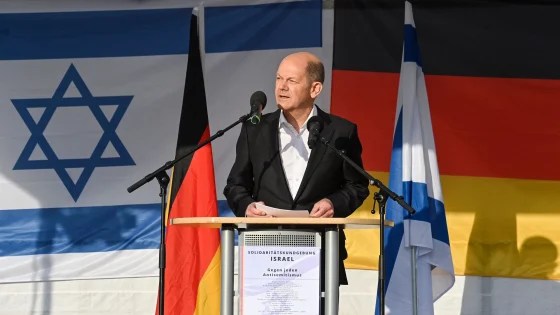
The collapse of Chancellor Olaf Scholz’s government just hours after Donald Trump was elected US president is a sign that Germany has become a “banana republic,” Russian Foreign Ministry spokeswoman Maria Zakharova said on Thursday.
The coalition collapsed on Wednesday, prompted by disagreements over the budget deficit and further aid to Ukraine.
“The … coalition breakdown has exposed the main problem of Germany’s political system: it is a classic ‘banana republic’,” the spokeswoman wrote in her Telegram channel. According to Zakharova, Berlin failed to maintain good economic relations with Russia, the supplier of cheap natural gas, which was “vitally important for its citizens and industry.”
Scholz’s government also could not keep the national economy afloat and allowed its industries to “emigrate” to the US, the spokeswoman stated, adding that it was all apparently done to “please Washington.”
Last month, the newspaper Sueddeutsche Zeitung reported that the German economy is expected to contract for a second year in a row as it struggles to keep up with soaring energy costs after cutting itself off from Russian gas. The nation’s industrial output dropped by 4.6% in September year-on-year as orders for domestic-made goods have also plummeted, according to official data released this week.
“Berlin stopped even pretending that the German government had any sovereignty and … was not just proxies for the American neoliberals in the EU,” Zakharova added.
Scholz fired Finance Minister Christian Lindner, the head of the business-friendly Free Democratic Party (FDP), late on Wednesday. The FDP was one of three parties comprising the German government coalition together with the chancellor’s Social Democrats and the Greens.
In response to the dismissal, the FDP announced its withdrawal from the government and formally ended the three-way coalition. The development left Scholz with a minority government consisting only of his own party and the Greens.
On Thursday, Scholz admitted that aid to Ukraine had become a major point of contention during talks the previous day during which the coalition members failed to find common ground.
According to the chancellor, he put forward a four-point plan that included “increasing our support for Ukraine” among other things. Lindner rejected the proposal and reportedly suggested calling for snap elections instead.
Earlier, Lindner had reportedly asked the Defense Ministry to limit military assistance to Kiev, citing budgetary difficulties. The government is still seeking a way to plug a multibillion-euro hole in next year’s budget and to revive the struggling economy.
Trump’s Victory & the Decline of Liberal Hegemony: “Unburdened By What Has Been”
By Professor Glenn Diesen | November 7, 2024
The election victory of Trump should not have been a surprise. The era of liberal hegemony has already come to an end, and a correction is long overdue. The liberal hegemony is no longer liberal, and the hegemony is exhausted. Trump is often denounced for being transactional, yet the de-ideologization of America and return to pragmatism is exactly what the country needs.
Change or Preserve the Unsustainble Status-Quo?
The overwhelming majority of Americans believe that the country is heading in the wrong direction, which placed Harris as the incumbent in an unfavourable position. Harris as the Vice President could not distance herself sufficiently from President Biden’s policies, which meant that she had to own the failures of the past four years. The message of “turning the page” did not resonate, and she was left with the meaningless slogan of “joy” – which only demonstrated her detachment from the growing concerns of Americans.
The borders have been wide open, media freedom is in decline, the government’s overreach is growing, US industries are no longer competitive, the national debt is out of control, social problems and culture wars are going from bad to worse, the political climate becomes increasingly divisive, the US military is overstretched, the global majority rejects Washington’s simplistic and dangerous heuristics of dividing the world into liberal democracy versus authoritarianism, the US is complicit in a genocide in Palestine and is heading towards nuclear war with Russia.
Who would vote for four more years when the status quo entails driving off a cliff? It is a good time to be in opposition and offer change. Being a populist with a bombastic demeanour, seemingly immune to consequences from breaking social norms, is a good feature when breaking free from decades-old ideological dogmas that constrain necessary pragmatism.
Neoliberalism Exhausted the US
“Make America Great Again” is likely a reference to 1973, when the US peaked and has since been in decline. Under the neoliberal consensus, society became an appendage to the market and politicians became impotent to deliver the change demanded by the public. The political Left could not redistribute wealth, and the political Right could not defend traditional values and communities. Globalisation gave birth to a political class loyal to international capital without national loyalties, and accountability to the public disappeared. Globalisation often contradicts democracy, and there is a growing division between illiberal democracy versus undemocratic liberalism.
A key lesson from the American System in the early 19th century was that industrialisation and subequent economic sovereignty is a necessity for national sovereignty. Tariffs and temporary subsidies are important tools for infant industries to develop maturity, and fair trade is thus often preferable to free trade. Trump’s tariffs to re-industrialise and advance technological sovereignty are noble ambitions that even the Biden administration attempted to emulate. However, Trump’s flaw is that excessive tariffs and the economic war on China will severely disrupt supply chains to the extent it undermines the US economy. The excesses of Trump’s tariffs and economic coercion derive from the effort to break China and restore US global primacy. If the US can accept a more modest role in the international system as one among many great powers, he could embrace a more moderate economic nationalism that would have greater prospect of succeeding.
Trump’s Vice President J.D. Vance correctly noted the self-defeating moralising of the US: “We have built a foreign policy of hectoring and moralising and lecturing countries that don’t want anything to do with it. The Chinese have a foreign policy of building roads and bridges and feeding poor people”. It is a good time for pragmatism to triumph over ideology.
Critics of Trump are correct to point out the paradox of a billionaire claiming to represent the people against a detached globalised elite. Sitting in flashy buildings with his name on the side in large golden letters, Trump has nonetheless taken the role of representing the American workers by calling for re-industrialisation. Raised in the excesses and hedonism of America’s cultural elites, Trump calls for preserving America’s traditional values and culture. Is Trump a saviour? Probably not. But policies are more important than personalities, and Trump is kicking open a door that was seemingly closed by liberal ideology.
An End to Liberal Crusades – Including Ending the Ukraine Proxy War
Trump’s appeal to end the forever wars resulted in invaluable support from former democrats such as Tulsi Gabbard, Robert F. Kennedy and Elon Musk. The liberal crusades over the past three decades fuel unsustainable debt, they finance the deep state (the blob), they alienate the US across the world, and incentivise the other great powers to collectively balance the US. The forever wars are costly mistakes that never end well, yet the US could absorb these costs during the unipolar era in the absence of any real opponents. In a multipolar system, the US must scale back its military adventurism and learn how to prioritise foreign policy objectives.
It is not unreasonable to argue that preserving the empire in its current format could cost the US its republic. Trump is not in favour of dismantling the empire, but being a transactional pragmatist, he would like a better return on investment. He believes allies should pay for protection, regional arrangements such as the former NAFTA and TPP that transfer productive power to allies are rejected, and adversaries should be engaged to the extent it serves US national interests. Trump is condemned for befriending dictators, yet this is surely preferable to the so-called “liberal” diplomats who no longer believe in diplomacy as it is feared to’ “legitimise” adversaries.
Trump would like to put an end to the proxy war in Ukraine as it is very costly in terms of both blood and treasure, and the war has already been lost. The liberal crusaders never defined a victory against the world’s largest nuclear power that believes it is fighting for its survival. Washington’s elites have repeatedly stated it is a good war as Ukrainian soldiers are dying rather than American soldiers, thus it is difficult to morally shame Trump when his main argument is that the killing must stop.
The liberal crusaders in Washington also frequently argue that the strategic objective of the proxy war was to knock out Russia from the ranks of great powers so the US could focus its resources on containing China. Instead, the war has strengthened Russia and pushed it further into the arms of China. A humanitarian disaster is taking place and the world is pushed to the brink of nuclear war. The economic coercion, including the theft of Russia’s sovereign funds, has triggered the global majority to de-dollarise and develop alternative payment systems. Trump is hardly innocent as he started the economic war against China. However, without ideological constraints, there may be room for course correction as he noted that the weaponisation of the dollar threatens the foundation of US superpower status. Yet again, pragmatism can triumph over ideology.
Will Trump be successful? He will certainly not end the war in 24 hours. Trump has the tools to influence Ukraine as the US is financing the war and arming Ukraine. However, Trump’s maximum pressure is unlikely to work against Russia as it considers this to be a war of survival, and the political West has broken nearly all agreements. Trump withdrew from strategic arms control treaties and armed Ukraine, which contributed to triggering the war. Russia will demand an end to NATO expansion in accordance with the Istanbul agreement, plus territorial concessions as a result of almost three years of war. Trump has previously signalled the willingness to offer an end to NATO expansionism, which could lay the foundation for a wider European security agreement. The conflicts between the West and Russia derive from the failure to establish a mutually acceptable settlement after the Cold War. The West instead began expanding NATO and thus revived the zero-sum bloc politics of the Cold War, and there has ever since been conflicts with Russia over where to draw the new militarised dividing lines.
Concerning Israel, there is an obvious exception to Trump’s aversion to war. Trump, Vance, Musk, Gabbard and Kennedy are all reluctant to take a hard line against the genocide in Palestine or even criticise Israel. Trump will likely continue to offer unconditional support for Israel and take a hostile stance against Palestine, Lebanon, Yemen and Iran. Pragmatism and “America First” will likely be lacking in this part of the world.
Panic Across the Liberal Empire
The opponents of Trump demonstrate a remarkable difficulty in articulating the case for Trump. Even if they know why people voted for him, they would feel morally compelled to refrain from articulating the reasons in fear of “legitimising” his policies with understanding. The inability to articulate the position of an adversary is a good indication of being propagandised. Have we been exposed to propaganda? There is clearly a tendency for ideological fundamentalists to present the world as a struggle between good and evil, in which mutual understanding and pragmatism are demonised as a betrayal of sacred values.
The panic and confusion is also caused by a dishonest media. The media has almost exclusively negative coverage of Trump, while Harris can do no wrong. Trump did not win despite the bad media coverage but because of it. A populist claims to be the real representative of the people, who will defend them against a detached and corrupt elite. The animosity towards Trump and his supporters was therefore worn as a badge of honour. The political-media elites used the judiciary system against the political opposition during the election cycle, they impeached Trump twice and tried him as a private citizen, and they attempted to remove Trump from 16 state ballots.
Trust to the media is not an advantage when it is not trustworthy. The Russiagate hoax from the 2016 election has been exposed as a fraud, and the Hunter Biden laptop story from the 2020 election was censored by the media under the false pretence of being “Russian propaganda”. During the 2024 election, the removal of Biden was largely a non-issue. The undemocratic selection of Harris was ignored, and the media instead converted her into a rockstar after ignoring her due to her failures over the past four years. The first assassination attempt against Trump went down the memory hole with remarkable haste, while most people are likely unaware that there was a second assassination attempt. Desperate media stories, such as Trump threatening Liz Cheney with a firing squad, were so desperate and dishonest that they had the opposite effect. The liberal machine, represented by an obedient media and Hollywood elites, has run out of steam.
Europe is in panic as they lost their ally in the White House and thus fear for the future of the liberal international order. Yet, the liberal international order is already gone and an ideological Europe is suffering from Stockholm Sydrome. Biden is complicit in genocide in Palestine, he attacked Europe’s critical energy infrastructure, lured European industries to relocate to to the US under the Inflation Reduction Act, brought major war to Europe by provoking a proxy war in Ukraine and sabotaging the peace negotiations in Istanbul, he intensified censorship around the world, and pressures the Europeans to reduce economic connectivity with China. After years of aspiring for strategic autonomy and de-vassalisation, the Europeans have subordinated themselves and accepted diminishing relevance in the world. The European political-media elites present Trump as the new Hitler, yet are in a great hurry to subordinate themselves economically, militarily and politically to the US. The Europeans are also worried that a similar leadership crisis has come to their own continent. Political elites committed to liberal hegemony have neglected national interests, and will be swept away in the years to come.
How will it all end?
The second Trump presidency will not be like the first term. The first Trump presidency was constrained as the Democrats largely contested the election results in 2016 by denouncing him as an illegitimate leader who had been placed in the White House by the Kremlin. The RussiaGate hoax has since been exposed and Trump even won the popular vote by 5 million votes, giving him a powerful mandate to pursue his agenda. Furthermore, Trump the first Trump government was infiltrated by neocons as he was dismissed as too radical. Over the past 8 years, a powerful MAGA movement has emerged that also consists of former Democrats.
One should be careful looking into the crystal ball and make predictions, and this is especially true with Trump. Professor Richard Rorty predicted in 1998 that the excesses of liberalism and globalisation would eventually be met with a fierce correction:
“Members of labor unions, and unorganized and unskilled workers, will sooner or later realize that their government is not even trying to prevent wages from sinking or to prevent jobs from being exported. Around the same time, they will realize that suburban white-collar workers—themselves desperately afraid of being downsized—are not going to let themselves be taxed to provide social benefits for anyone else. At that point, something will crack. The nonsuburban electorate will decide that the system has failed and start looking around for a strongman to vote for—someone willing to assure them that, once he is elected, the smug bureaucrats, tricky lawyers, overpaid bond salesmen, and postmodernist professors will no longer be calling the shots… Once the strongman takes office, no one can predict what will happen”.[1]
Trump has identified many of the problems plaguing the US and the world, although he may not have the answers. He will make many mistakes and his maximum pressure approach from business is not always transferrable to international politics. After decades of criminalising opposition to liberal hegemony, it should not have been a surprise that a “strongman” would be elected to throw a wrench into machinery. Trump is a wild card and the world is undergoing immense transformation, so to quote Rorty: “no one can predict what will happen.”
[1] Rorty, R 1998. Achieving our country: Leftist thought in twentieth-century America, Harvard University Press.
Top Three Reasons Why Trump Won
By Ekaterina Blinova – Sputnik – 06.11.2024
Donald Trump has been declared the winner of the 2024 presidential race, prompting a meltdown in the Kamala Harris camp and the US corporate media – who are struggling to understand what went wrong.
Wall Street analyst Charles Ortel gives the top three reasons behind Trump’s victory:
- Abject Failure of “Bidenomics” Despite Borrowing and Spending Trillions of Dollars: “Americans vote thinking first about their economic welfare and prospects,” Ortel told Sputnik. “The only beneficiaries of the Biden-Harris administration were connected political donors and insiders. Wages after taxes and inflation for private sector workers – the core slice – are way down and under continuing threat.”
- Soaring Crime, Especially in Cities: “The Biden-Harris Open Borders approach, coupled with George Soros-funded district attorneys refusing to prosecute and the ‘defund the police’ movement, pushed moderates and first-time voters into the MAGA movement.”
 “An Arrogant Slate of Idiots on the Democrat Ticket Backed by Out-of-Touch and Classless ‘Celebrities'”: “The 2024 Democrat ‘campaign’ was even less competent than Hillary in 2016 and Joe in 2020,” the Wall Street analyst points out. “This time, Harris and Walz were obviously inauthentic, incompetent and abysmal at connecting with likely voters, whereas Trump built a diverse Dream Team of authentic heroes – while Trump himself is a master leader and salesperson.”
Ortel drew attention to a high number of black, Latino and women’s votes for Trump, even though those demographics have long been considered pro-Democratic.
The analyst believes Democrats tried to rig the 2024 election “in countless ways” but the wave of support from Trump’s supporters “was too big to rig.” Misconduct by Democrats can only be fully exposed after Trump gets his cabinet picks confirmed into key positions, Ortel believes.
Trump’s Focus Will Be on Domestic Issues, Not Overseas Wars
Donald Trump’s first job when he takes office will be to clean house, Ortel believes.
“The largest single piece of the American economy is a woefully-bloated and ineffective slew of ‘government’ actors that will swiftly be put on a rigorous diet,” Ortel said. “Here, Elon Musk and other truly-accomplished standouts will play key roles.”
The analyst suggests that Robert F Kennedy Jr could be instrumental in reforming “the absurdly expensive ‘healthcare’ mess that actually seems to be hurting all Americans while enriching corrupt actors.”
The Trump administration also needs to bring down the cost of education and “strip away political indoctrination” in teaching, Ortel continues.
“In addition, the Trump team can finally bring countless crooked charities to a justice that is long overdue,” says the analyst, who has been investigating the Clinton Foundation’s alleged fraud for several years.
“Once Trump restores confidence in the Department of Justice, the IRS and the Judiciary branch of government, I believe trillions of dollars in investment capital will flow back inside America and many valuable private sector jobs will be created by entrepreneurs like Elon Musk and others,” Ortel predicts.
EU will not lift Russia sanctions – MEPs
RT | November 5, 2024
EU restrictions on Russia are unlikely to be lifted in the foreseeable future due to pressure from the US, two members of the European Parliament told Izvestiya newspaper on Tuesday.
Even an eventual end to the Ukraine conflict would not necessarily mean a scaling back of Western barriers to trade, finance and travel, French MEP Thierry Mariani told the Russian daily.
“It would be logical to lift them, but I am not sure that this will happen,” the lawmaker said. “It is likely that the US will ask to keep the sanctions in place to make sure that… economic relations with Russia do not resume immediately.”
America’s energy sector has benefited greatly from the EU’s sanctions against Russia, which was previously a leading energy supplier to the bloc, Izvestiya wrote. Following the escalation of the Ukraine conflict in 2022, Brussels chose to shun Russian natural gas, replacing cheap pipeline supplies with more expensive liquified natural gas (LNG).
Last year, the US was the largest LNG supplier to the EU, representing almost 50% of total LNG imports, having tripled the supply volume since 2021, according to the European Council data.
“The end of the military operation in Ukraine will undoubtedly push some economic players in the West to demand that the sanctions, especially in the energy sector, be lifted,” Luxembourg MEP Fernand Kartheiser told Izvestiya. The lawmaker went on to warn, however, that “influential circles” in the West, including American shale gas producers, will seek to maintain the restrictions, as they benefit from them.
“So far, no senior EU official has given any indication that sanctions could be lifted if the Ukraine conflict ends… Even if Russian negotiators succeed in convincing the EU to lift the restrictions, it will not happen immediately, and it would take years for trade relations to get back to normal,” according to EU law expert and former MEP Gunnar Beck.
European Commission President Ursula von der Leyen, who was reelected in July for another five-year term, has been one of the main backers of increasing pressure on Russia.
Last month, Politico reported that Brussels was preparing its 15th package of sanctions, aimed mainly at Russian LNG exports that are still sold to the EU. According to the newspaper, the bloc’s members plan to resume discussions on new restrictions in January.
No new measures will be introduced against Russia this year during Hungary’s presidency of the bloc, Polish media reported earlier this week. Officials in Brussels are reportedly waiting for Warsaw to take over the Council’s leadership on January 1 before they roll out any new restrictive measures.
Betting the Farm on the Imaginary War
The Highway of Death, Iraq War, 1991
By William Schryver – imetatronink – November 4, 2024
It has now been ten years since I first turned my attention to the necessity of prudent financial investments in order to both preserve and hopefully enlarge the modest amount of wealth I had accumulated up to that time. I began by attempting to identify the wisest and most discerning “experts” in the field. This was no easy trick.
Fortunately, in the ten years preceding my late-2014 awakening to the importance of financial and macroeconomic matters, I had spent several years discovering that most of western academia is a sham dominated by highly credentialled ignoramuses. Therefore I was alerted to the likelihood that the so-called “experts” in other fields of study were similarly intellectually impaired, regardless of their seemingly impressive curricula vitae, how many framed certificates hung on their wall, and the size of their “assets under management”.
That said, it became apparent over time that even those I initially identified as reliable “experts” could be well-informed most of the time, and yet still be subject to blind spots that rendered them susceptible to fatal errors which could often nullify their seemingly correct judgment of everything else.
In the context of financial matters, it must be understood that the “Quantitative Easing” and near-zero interest rates that followed on the heels of the so-called “Great Financial Crisis” of 2007-2009 was a tide that floated a great many boats captained by fools whose folly would not be recognized until the consequences of central bank profligacy were revealed several years further down the road.
Even so, most of the investment “gurus” whose analysis I had come to respect managed to successfully navigate the hurricane of price inflation that roared ashore in the wake of the Covid hysteria – a storm that was then followed by the Federal Reserve’s subsequent raising of interest rates in a frantic attempt to stem the inflationary tide.
Then World War Three began.
Of course, even at this point, almost three years into that war, few people recognize it for what it is. Even fewer recognize the degree to which the geopolitical and military parameters of war itself have been radically altered in comparison to what they were during the “American Unipolar Interregnum” that commenced with the dissolution of the Soviet Union.
Indeed, the overwhelming majority of Americans believe the “unipolar moment” continues essentially intact and unthreatened. In the highly insulated environs of Wall Street and Silicon Valley, faith in the overwhelming supremacy of American high-tech and military prowess remains almost entirely unshaken, notwithstanding the ever-increasing indications to the contrary – things about which I have been writing for several years now.
Most of the gods of American high-tech and finance, and those who worship them, simply cannot discern the degree to which American power in all its forms has steadily eroded over the course of the 21st century, and that this erosion has accelerated dramatically in recent years.
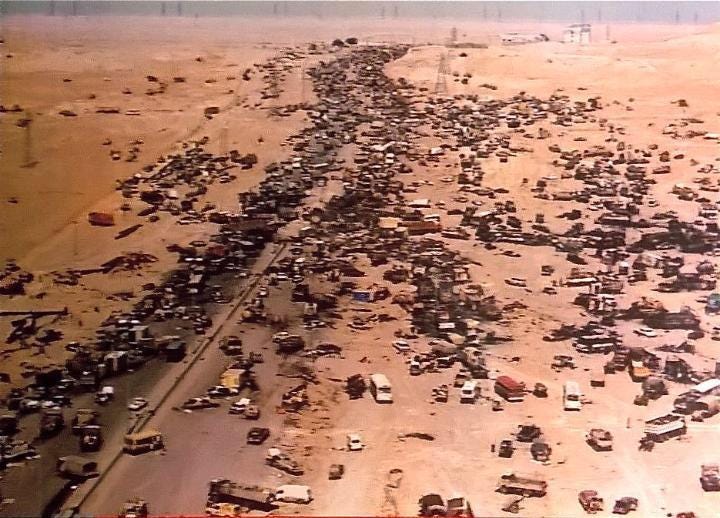
For most of the western elite and their acolytes, it is still early 1991, and Norman Schwarzkopf is leading a million-man army against the hapless Iraqis in a demonstration of military might that would finally expunge the bitter humiliation of Vietnam from the American psyche.
Such people have religiously embraced the Hollywood fantasies of unassailable American superpower dominance. And given the reality that Ukraine and Israel are considered merely appendages of this assumed American military supremacy, the eastern European and Levantine theaters of World War Three have given rise to extreme examples of an unprecedented tsunami of propaganda I have been wont to call “The Imaginary War”.
This phrase I coined in the early stages of the war in Ukraine has its origins in something allegedly said by an unnamed Israeli general in the aftermath of the 2006 war in southern Lebanon – a war whose ultimate outcome was a decisive strategic defeat for Israel, but which the Israelis subsequently attempted to spin into a great victory. It was in this context that the Israeli general reportedly said, “If you can’t win a real war, win an imaginary one.”
This is precisely the narrative-building approach we have seen in Ukraine over the past two-plus years.
Most Americans, and most people around the world who believe in mainstream western narratives, are convinced that the Russians have been dealt an overwhelming strategic defeat in Ukraine; that the Russian military has been exposed as a poorly trained drunken mob; that Russian military doctrine is imbecilic; that Russian equipment is junk; that Russian military technology is decades behind its western counterparts; that American and other NATO war toys sent to Ukraine have dominated the battlefield, etc., etc.
The same types of things are believed about China, its culture, and its military capabilities.
And, of course, even greater derision is directed towards the Iranians and the North Koreans.
Just today I read a short article from a fairly prominent Wall Street hedge fund CIO, in which he wrote the following paragraph of utterly fictitious (and yet widely believed) nonsense:
Israel sent 100 aircraft for a 2000km flight to attack Tehran. Zero were shot down. First, the IDF took out Iran’s air defenses. Those Russian S-300 anti-aircraft systems can now be found disassembled in large craters through the region (Russia’s newer S-400 system underperformed expectations in Ukraine and the S-500 is in test phase). With Iran’s air defenses offline, Israeli aircraft had their way with whatever targets they chose in Tehran. They skipped over the mullahs this time. Next time who knows. Such is the nature of warfare for those with superior tech.
Never mind that literally ALL of his assertions are demonstrably false – this would-be titan of American finance intends to bet the farm on the fallacious assumptions of the imaginary wars he has convinced himself are actually taking place.
Of course, both the major party candidates for President, almost the entirety of the United States Congress, and much of the sprawling swamp of American government bureaucracy in Washington are similarly convinced of the indomitability of American imperial military might, and they are anxious to teach the current “axis of evil” in Moscow, Beijing, and Tehran a lesson they will not soon forget.
In the end – and it will come sooner than later – the only thing that will not be soon forgotten is how briefly the American unipolar moment endured, and how shockingly and suddenly it all came crashing down.
Featured Video

Macgregor: We Haven’t Seen the Worst of the Iran War Yet
or go to
Aletho News Archives – Video-Images
From the Archives
15 Saudi ‘hijackers’ were CIA agents working for US: Scholar
Press TV – April 13, 2016
Fifteen of the 9/11 “hijackers” from Saudi Arabia were CIA agents working for the United States government, which was seeking to destroy the Middle East for Israel and to double the American military budget, says Dr. Kevin Barrett, an American academic who has been studying the events of 9/11 since late 2003…. continue
Blog Roll
 Aletho News
- Israel seeks ‘compensation’ from Washington over Saudi F-35 sale
- Saudi crown prince seeks dialogue with Ansarullah after Yemeni blows: Report
- Damascus rejects Saudi request for Syrian fighters to counter Yemen: Report
- South Korea says will not send troops to join terrorist US war on Iran
- Russia Just Struck the Eyes of NATO’s War Machine in Ukraine
- Russia summons UK charge d’affaires over Kiev drone support
- NATO member warns bloc seeking pretext for war with Russia
- Macgregor: We Haven’t Seen the Worst of the Iran War Yet
- ‘We are not like everyone else’ laws that bind other nations do not apply to Israel, says Likud lawmaker
- Report: Saudi Arabia seeks allies’ assistance as missiles deplete amid war on Yemen
- If Americans Knew
- Debunking The Claim That Macklemore Has A “History Of Antisemitism”
- CPJ demands release of arrested Palestinian-US journalist near Bethlehem
- Robert Kraft: The Billionaire Friend of Netanyahu Pulling The Strings Behind the Macklemore/Ed Sheeran Blow Up
- Columbia Administered Fund Gives Big Money to Pro-Israel Groups
- Deportation Case of Palestinian Activist Salah Sarsour Tests First Amendment
- ‘We Will Not Forget’: Palestinians Mark 44 Years since Sabra and Shatila
- Why do we let Zionists decide what we can and can’t say?
- US welcomes Israeli, Iranian delegations to UN, but not Palestinians – Daily Update
- Biden’s Genocide Accomplices Targeted by New Accountability Campaign
- AIPAC’s Network Has Already Spent $67.2 Million to Shape the Midterm Elections
- No Tricks Zone
- New Study: ‘Global Drought Shows No Detectable Recent Acceleration Under Climate Warming’
- Economic Masterminds: German Socialists Suggest Taxing Productivity Gains Stemming From Using AI
- The South China Sea Has Not Been Cooperating With The Climate Change Narrative
- Energy Crisis: Germany Enters Heating Season With Historically Low Gas Reserve Fill Levels
- New Study: The Antarctic Ice Sheet Gained Mass From 2020-2024 Due To Staggering Snow And Ice Accumulation
- Study: Ocean Heating Rates From Thousands Of Years Ago ‘Dwarf’ Modern Ocean Heating Rates
- Climate Extremists Target, Attack Large-Scale Power Grid Infrastructure In Germany!
- New Study: Antarctic Ice Melt Has Contributed Less Than 1 Centimeter To Sea Level Rise In The Last 30 Years
- Fear Of Debate: Alarmist German Climate Scientist Calls On Mainstream Media To Discredit Skeptic Voices
- End-Of-August Arctic Sea Ice Extent Hasn’t Fallen In 20 Years, Official Data Show!
 Aletho News