Nicaragua’s Canal: A Socialist Project for Economic Change
Tortilla Con Sal | July 29, 2015
The fundamental argument in favor of Nicaragua’s Interoceanic Canal is that it will change the structure of Nicaragua’s economy in such a way as to dramatically reduce poverty and so enable a reversal of the current destructive national and regional trends of impoverishment-driven environmental depredation.
Progressive and radical opinion in North America and Europe tends to skew discussion towards the Canal’s alleged potential environmental effects, generally ignoring both the urgent economic imperative of poverty reduction and the Canal’s wider regional and global significance.
The environmental argument in favor of the Canal is usually met with perplexed scepticism, blank incomprehension or, very often, deliberate misrepresentation.
Like almost all the articles that have criticized Nicaragua’s Canal, Truth Out’s recent article by Thomas J Scott,“Nicaragua’s Flirtation With Environmental Disaster” focuses largely on the Canal’s environmental aspects while omitting Nicaragua’s fundamental dilemma, one typical of impoverished countries. Namely, Nicaragua’s environmental sustainability requires significant new economic resources in the short term so as to reverse decades of poverty driven deforestation, contamination and inadequate water management.
Only massive structural investment in the economy will provide those resources. Some environmental impact from that level of investment is inevitable. But the resources generated by the investment will more than compensate for the initial limited local environmental impact by generating enough resources to finally enable adequate environmental recovery programs. Addressing environmental concerns, Thomas J. Scott’s account relies narrowly on other ideologically compromised media outlets highly critical of the Canal.
In doing so, Scott not only marginalizes the Canal’s fundamental economic logic, he also gets basic facts wrong.
Environment
Scott’s Truth Out article asserts, for example, that 120,000 people may be displaced by the Canal. That is completely untrue. The actual figure is around 7,000 families amounting to around 35,000 people along the Canal’s 275 kilometre length. Scott also asserts that the indigenous Rama-Kriol group may lose 40% of their land, referring to a negotiation process yet to be completed, a fact which undermines the very basis of the claim brought before the International Commission for Human Rights by the group’s lawyers, alleging lack of consultation. Similarly, Scott cites various environmental and scientific opinions against the Canal but fails to put them in context.
For example, he uncritically quotes a supposedly scientific calculation that up to a million acres of rainforest and wetlands could be destroyed by the Canal. Even a cursory look at that claim shows how nonsensical it is. The Canal is 278 kilometres long of which about 23km run from the Pacific Coast north of San Juan del Sur to Lake Nicaragua, known here as Lake Cocibolca. Then, 105km of the Canal route run across Lake Cocibolca. None of that part of the Canal or its related sub-projects affect any rainforest or wetlands, leaving 150km from the area of San Miguelito on the eastern edge of the lake to Punto Aguilar on the Caribbean coast.
Much of the area between San Miguelito and Punto Aguilar is already intervened by agricultural cultivation and cattle ranching and by often illicit timber activity. Here, the total area affected by the construction of the Canal itself is certainly not greater than about 150 square kilometres, equivalent to 37,500 acres. To guarantee adequate water for the canal and improve the region’s water management, an artificial lake will be created of about 395 square kilometres, equivalent to 98,750 acres. So the total affected land area of the Canal in this part of Nicaragua will be around 136,250 acres.
Even if one overstates that 70%-75% of that affected land area is vulnerable wetlands or forest, the total such area affected will be around 100,000 acres, equivalent to about 40,000 hectares, around one tenth of the area of one million acres mentioned by Scott in his article. The canal runs well south of the hugely important Bosawas reserve and well north of the equally important Indio Maiz reserve. Much smaller reserves like Cerro Silva may be directly affected, but these reserves are already suffering significant deforestation and contamination at the hands of the local population.
The canal projects have to reforest more than the forest it will displace over the five year period of its main construction, because the Canal depends on water conservation to be able to operate.
Currently Nicaragua is losing 65,000 to 70,000 hectares of forest a year to agricultural cultivation, cattle ranching and illicit timber felling. Under-resourced, government promoted reforestation programs only replace around 15,000 hectares a year
None of this information appears in Scott’s account in Truth Out or other similar anti-Canal reports. It puts in context the outrageous, nonsensical claim that a million acres of pristine rainforest may be destroyed by the project. It also highlights the truly urgent nature of Nicaragua’s environmental and economic dilemma.
The same is true in relation to the exaggerated claims that Lake Cocibolca may be destroyed by the huge dredging the project entails. The lake is already contaminated and suffering heavy sedimentation. But that information too is omitted from Truth Out, which alleges “The possibility the HKND environmental protection plan will mitigate the scientists’ concerns is questionable, given the scale and complexity of the project.” In fact, far more questionable is the wild speculation clearly underlying those often ideologically motivated scientists’ concerns and their own misleading interpretations of inadequate data.
The canal’s pre-feasibility studies by a Dutch company began in January 2013 and lasted six months. The complete feasibility studies by international specialist companies lasted 23 months from July 2013 until May 2015. The cost of these studies over almost two and a half years has been well over US$150 million. The canal company HKND puts the figure at around US$200 million.
By contrast, the environmental scientists critical of the canal can marshal no data remotely equivalent to these substantial, large scale, detailed, highly resource intensive and very expensive studies.
In any case, as the planning process for the canal has progressed, legitimate, relevant environmental concerns have indeed been taken into account. For example, the location of the proposed deep water port on the Pacific Coast has been moved so as to minimize damage to local mangroves. The final precise route of the Canal has been subject to similar change. So it is far from true that environmental and other concerns in relation to the Canal have not been heeded. But that fact too is completely missing from Truth Out’s article.
Politics and geopolitics
Shifting from the environment to political analysis, Scott’s article makes the completely ahistorical assertion that “Sandino led an armed resistance movement against US plans to build a canal in 1927.” Sandino campaign was not against US plans to build a canal in 1927. The US government had no plans to build a canal in Nicaragua in 1927. Sandino’s guerrilla was was very clearly and overwhelmingly against the US imperialist military occupation of his country. The US government already controlled and occupied the Panama Canal zone, invading Nicaragua only so as to consolidate its regional political and economic domination.
In his manifesto “The Supreme Dream of Bolivar”, Sandino himself wrote, “nothing is more logical, nothing more decisive and vital than the union of the twenty-one states of our America into a single unique Latin American Nationality, which may make possible, as an immediate consequence, the right to the route of an Inter-oceanic Canal through Central America.” The US military occupation of Nicaragua vetoed that right. In his Truth Out article, Scott himself proceeds to row back from his incorrect, ahistorical assertion ending up suggesting that critics of the canal have legitimate concerns about Chinese imperialism in Nicaragua.
But most of those same critics are people bought and paid for by US government money in one form or another. Right-wing opposition to the Canal comes from politicians who are explicit allies of the United States government. Currently those politicians and their political parties have around 8% support nationally. Social democrat opposition to the Canal comes from ex-Sandinista politicians now closely identified with US government and European Union policy. They currently enjoy under 1% support nationally. These critics have zero credibility when they express their clearly hypocritical concerns about Nicaragua’s sovereignty in relation to growing Chinese influence.
Nicaragua’s sovereignty over the canal and the rights of its population are protected by the legislation for the Canal and its sub- projects which place the overall project under the control of a government Commission. The government’s Minister for National Policy, has explained, “The incentives have to be strong because Nicaragua isn’t giving a sovereign guarantee….. After 50 years Nicaragua will already have 50% of the profits from the Canal. Then in the second 50 years the share goes up 60%, 70%, 80%, 90%. Finally Nicaragua will take over after benefiting by over 50% for 50 years. While considerable, that benefit is tiny compared to doubling the economy, and reducing poverty.”
Not only do decisions in relation to the canal have to be authorized by the government, but ownership of the Canal’s business will pass progressively to the Nicaraguan government on an already agreed schedule.
Scott’s inaccurate and misleading analysis of the canal and of the national context in Nicaragua extends equally to his article’s geopolitical analysis. He manages to write his article without once mentioning ALBA, the Community of Latin American and Caribbean States, or Mercosur. Scott completely ignores the diverse tensions between the Pacific Alliance countries (Chile, Colombia, Mexico and Peru) and their ALBA and Mercosur counterparts. Nor do US sponsored supra-national trade structures like the Trans Pacific Partnership and the Trans Atlantic Trade and Investment Partnership figure in their extremely superficial report.
But all of these are extremely and immediately relevant in any serious discussion of China’s growing world role, especially in Latin America and especially in relation to Nicaragua’s Interoceanic Canal. Perhaps the most astonishing omission in the Truth Out article’s geopolitical sketch of the meaning of Nicaragua’s Canal is the absence of China’s alliance with Russia India, Brazil and South Africa, in building a multipolar world. Scott still seems deeply invested in the long since discredited idea of Western, especially US, political, economic and moral global leadership.
The inaccuracies, falsehoods and omissions of Thomas J. Scott’s article about Nicaragua’s Canal are symptomatic of that intellectual and political narcissism, placing the US and its concerns at the center of every world trend.
In fact, the US government is increasingly losing influence in Latin America and the rest of the world as a result of its absurdly inept, aggressive foreign policy. Neither the US government nor its European Union allies have anything to offer countries like Nicaragua beyond the old neocolonial traps of onerous debt, inequitable trade and meager development aid.
The fundamental question Western progressives never pose, let alone answer, when criticizing the Interoceanic Canal is how Nicaragua will otherwise generate the enormous resources it needs to end looming poverty-driven environmental disaster. The Sandinista government has taken the strategic sovereign decision to prioritize the Interoceanic Canal so as to achieve the massive structural investment it needs in the short term to break out of low wage under-development. The decision itself is grounded in the vision of Simón Bolivar, one explicitly fought for by Sandino, of Latin American integration.
This vision underlies the Sandinistas’ historic program of political pluralism, a mixed economy and a non-aligned foreign policy. Inherently and necessarily, Nicaragua’s Canal is not just a national project but rather one that will multiply benefits in Central America and the Caribbean, generating trade and investment throughout the region. Likewise, in the global environmental picture, the Canal will encourage maritime shipping over air transport by shortening voyages. A study of the Nicaraguan Interoceanic Canal by Hong Kong academics argues, “Maritime transport will become more dominant in international trade by taking over from the air transport. To further take advantage of the low carbon opportunities, the shipping liners will use larger vessels and enjoy economies of scale for both economic and environmental benefits, while the hub and spoke system will be chosen to maximize the operation efficiency.”
In summary, the Nicaraguan Canal is a strategic national, regional and global development project based on the historic socialist program of Nicaragua’s Sandinista government. That program develops in harmony with the anti-imperialist vision of regional integration promoted by Nicaragua’s ALBA partners led by Cuba and Venezuela in the context of developing policy embodied in CELAC, where the US and Canada have neither voice nor vote. Primarily, Nicaragua’s Interoceanic Canal project is designed to resolve the threat posed to national environmental sustainability by the economy’s current slow incremental economic development. But the Canal will also contribute to resolving that wider environmental dilemma regionally and globally. It is an integral part of the changing pattern of global seaborne trade and the infrastructure needed for that change in a multipolar world. This process and its respective outcomes are under way now with or without the say so of the United States and its Western allies and regardless of ill-informed, inaccurate and misleading propaganda from Western neocolonial media.
Germans Resoundingly Saying “No!” To Clearing Forests To Make Way For Wind Parks
No Tricks Zone | July 24, 2015
A survey conducted by the German Emnid polling institute found that 79% of Germans reject the installation of wind turbines in forests. That’s the result of a survey commissioned by the Deutschen Wildtier Stiftung (German Wildlife Foundation).
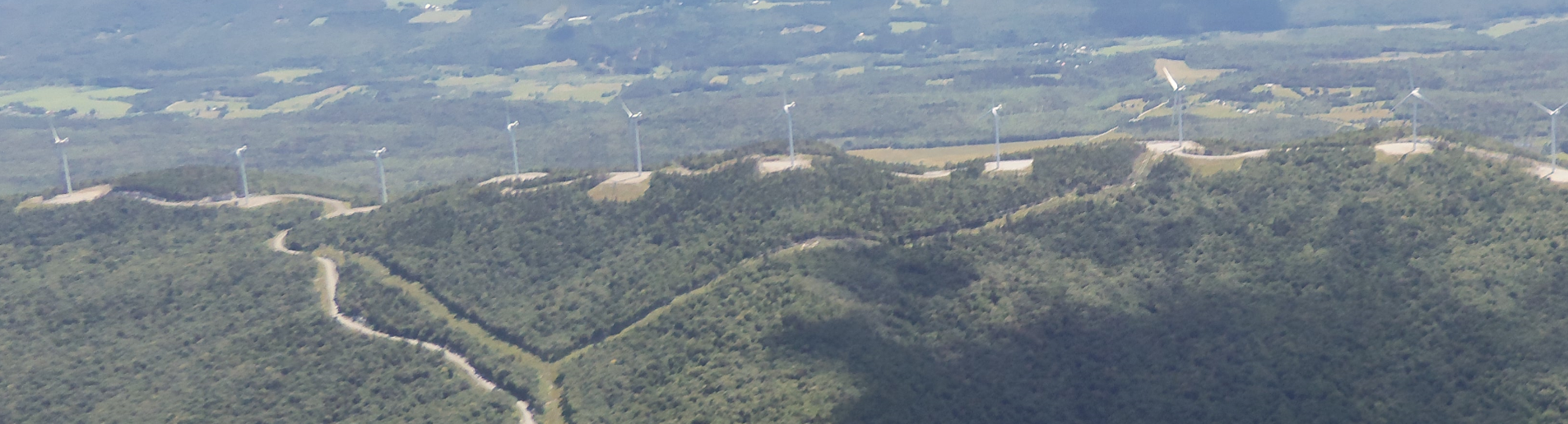
Not only are there plans to disfigure and destroy forest regions in Germany, it is already a sad reality in Vermont (New England). Here an aerial photo of a portion of the Lowell Mountain wind park shows how the once natural mountain was blasted with dynamite and forests cleared and industrialized. Photo: courtesy of Daniel F.
When asked if they agreed with the statement: “For the construction of more wind energy, in general no forest areas should disappear or be cut down.”, 79 percent replied with: “I agree!” Only 11% agreed with: “for additional wind parks also forest areas should be cleared away or cut down.” The Emnid Institute survey also determined that the public’s interest in the issue of wind parks in forests is very high. Only 8% said that the issue did not interest them.
For the Deutsche Wildtier Stiftung, the Emind results prove that a large majority of the German population reject wind parks in forests. “Wind power at any cost must not be the result of the Engergiewende,” emphasized Prof. Dr. Fritz Vahrenholt, Chairman of the German Wildlife Foundation. “The citizens of Germany do not want forests to become the victims of a one-dimensional climate policy.“ People think it is important to keep forests and biodiversity intact. Even 65% of those responding said: “In the case of any doubt, the construction of wind turbines must yield to the protection of birds and other animals”.
The thoughtless construction of wind energy in the forest is a serious threat. “Opening up forests to allow wind parks leads to the endangerment of rare species,” Prof. Dr. Vahrenholt criticized. Every year in Germany up to 240,000 bats are killed by wind turbine rotors. Although they are able to dodge the moving rotors, the negative pressure in the rotor’s wake causes the bats’ lungs to burst. Most of the domestic bats are on the endangered species list.
Bird species like the rare lesser spotted eagle, the red kite and the black stork are especially sensitive to turbines. For example half of the breeding population of the black stork disappeared in just 6 years at the Vogelsberg site in the state of Hesse after 125 wind turbines were constructed. Many predatory birds die in collisions with rotors.
“So far only the state of Saxony Anhalt has opted not to allow wind parks in forests,” says Prof. Vahrenholt. In German states with large forest areas, such as Baden-Wuerttemberg, Rhineland-Palatinate, North Rhine Westphalia, Hesse and Brandenburg, there are already decrees to allow the construction of wind parks despite regional resistance to them,” said Vahrenholt.
Moreover Emnid found that among those surveyed, wind energy in forests is not a matter of personal preference, but one of a greater good – namely forest as a space for life. On the question: “Would you feel disturbed about wind turbines in the forest?”, 43% answered with “yes”.
The Warped World of the GMO Lobbyist
By Colin Todhunter | CounterPunch | July 7, 2015
There’s a massive spike in cancer cases in Argentina that is strongly associated with glyphosate-based herbicides. These herbicides are a huge earner for agribusiness. But don’t worry, Patrick Moore says you can drink a whole quart and it won’t harm you. Who needs independent testing? He says people regularly try to commit suicide with it but fail. They survived – just. So what’s the problem? Perfectly safe. Patrick Moore says he is ‘not an idiot’. So he must be right. Right?
Anyway, all that scare mongering about GMOs and glyphosate is a conspiracy by a bunch of whinging lavishly funded green-blob types. Former UK environment minister Owen Paterson said as much. He says those self-serving anti-GMO people are damaging the interests of the poor and are profiting handsomely. They are condemning “billions” to lives of poverty.
He voted for the illegal invasion of Iraq, which has led to the death of almost 1.5 million Iraqis. His government has plunged millions into poverty and food insecurity in the UK. He now wants to help the poor by giving them GM courtesy of self-interested, corporations and their lavishly paid executives. What was that about self-serving, lavishly funded groups? As a staunch believer in doublespeak, hypocrisy and baseless claims by self-appointed humanitarians with awful track records, Paterson’s sound-bite smears and speeches are good enough for me.
So with that cleared up, hopefully we can move on.
Then there’s all that ‘anti-capitalist twaddle’ (another pearl of wisdom from Patrick Moore) about smallholders being driven from their lands and into poverty due to a corporate takeover aimed at expanding (GM) chemical-intensive agriculture. I showed Mr Moore a paper by an economics professor who had studied the devastation caused by the above in Ethiopia. That’s where the ‘anti-capitalist twaddle’ retort came in. As I’m also a staunch believer in the power of baseless, ill-informed abuse, I was once again convinced.
What about all that rubbish about GM not having enhanced the world’s ability to feed itself? You know, all that stuff about the way it has been used has merely led to greater food insecurity. Nonsense. I watched a prime-time BBC programme recently. Some scientist in a white coat in a lab said that GM can feed the world. He’d proved it in his lab. In reality (not in a lab), the fact it hasn’t done anything of the sort over the past 20-odd years doesn’t matter. He wore a white coat and held GM patents, so he definitely knows best!
I once read that industrialised agriculture is less productively efficient than smallholder agriculture that feeds most of the world. And then I read that the world can feed itself without GMOs. According to all of this, it is current policies and the global system of food production that militate against achieving global food security.
That’s just a big old load of rubbish put together by a bunch of conspiracy mongers. Who are these people? Food and trade policy analysts, political scientists, economics professors and the like. A bunch of whining anti-capitalist promoters of twaddle. None of them have studied molecular biology so how can they possibly be qualified to talk on this? I’d rather listen to a man in a lab who says GM can feed the world. He’s much more qualified to speak on politics, trade, the environment or anthropology than a bunch of lefties who don’t know one side of a petri dish from the other.
I happen to believe a profitable techno-fix is the way to go. A techno-fix that comes courtesy of the same companies whose global influence and power are helping to destroy indigenous agriculture across the world. But this is for the good of the traditional smallholder because these companies really, really care about the poor. Okay, okay, I know the top execs over at Monsanto are bringing in a massive annual cheque – but $12.4 million per year helps motivate a CEO to get out of bed in the morning and to develop empathy with the poor – unlike that elitist, self-serving green blob lot who rake in big money – according to hero-of-the-poor, the handsomely rewarded millionaire Owen Paterson… err, let’s swiftly move on.
To divert your attention away from all that scare mongering, conspiracy theory twaddle, I want you to concentrate solely on the science of GM and nothing else. But only on the version of ‘science’ as handed down from the great lawgiver in St Louis which creates it in its own image, not least by dodging any problematic questions that may have prevented GM from going on the market in the first place. Some troublemaker recently wrote a book about that, but someone said it wasn’t worth reading – so I didn’t bother (‘Altered Genes, Twisted…’ something or other – the word escapes me; it doesn’t appear in my lexicon).
So how about joining like-minded humanitarians and the handsomely-paid people over at big bioworld? We believe in mouthing platitudes about freedom and choice while serving interests that eradicate both. And let me add that scientists know that anyone who disagrees with them is just plain dim. C S Prakash recently posted a claim that implied such on Twitter. He’s a molecular biologist, so it must be true. Of course, there are scientists who disagree with us but they are quite clearly wrong – wrong methodology, wrong findings, wrong career turn – we’ll make sure of that!
In finishing, let me make the case for GM clear, based on logic and clear-headed rationality. There are those who are just too dim to understand any of the issues to do with GM so they should put up, shut up or go away and read or write about conspiracy theories on their blogs or in their peer-reviewed non-science journals that aren’t worth the paper they are written on given that the ‘peers’ in question are probably also a bunch of left-leaning wing nuts.
By comparison, unlike those self-serving ideologues, we are totally non-political. Okay, we might be firmly supporting a neoliberalism that is dominated by unaccountable big corporations which have captured policy-making space nationally and internationally, but any discussion of that is to be avoided by labelling those who raise such matters as politically motivated. We get you to focus on ‘the science’ – that is ‘our science’ – and nothing else. The fact that some of us tend to label anyone who disagrees with us as anti-science, anti-capitalist, socialists or enemies of the poor (or even ‘murdering bastards‘) says nothing at all about our political agenda.
And the lavish funds and powerful strategic position of big agribusiness means the pro-GMO lobby can smear, exert huge political influence and also restrict choice by preventing the labelling of GM food. You see, too much choice confuses people. We take the public for fools who will swallow anything – hopefully GMOs and our sound-bite deceptions.
So rests the case for GMOs. Eloquently put? I certainly think so. But I would say that, wouldn’t I? I’m paid to.
Colin Todhunter is an extensively published independent writer and former social policy researcher based in the UK and India.
Palm Oil Industry Tied to Ecocide in Guatemalan River

By Jeff Abbott | Upside Down World | July 6, 2015
The Pasión River in northern Guatemala is a disaster area. Beginning on June 6, residents along the river in the municipality of Sayaxché, Peten, began to find millions of fish, their primary source of food and income, floating dead in the river. Community members quickly accused the Palm firm, Reforestadora de Palma del Peten, S.A (REPSA) of contaminating the river. Communities have called the pollution of their river an “ecocide.”
“Unfortunately, there has been a massive pollution of our river,” said Rigoberto Lima, a community representative from Sayaxché. “We need to put an end to the problem of palm in northern Guatemala.”
The Public Ministry of Guatemala initially declared a red alert on June 11; days after the fish first began to appear floating in the river. The Public Ministry initially confirmed that the disaster was caused by run off of the pesticide Malathion into the river, but in the weeks after, they would take back the accusations against the palm company.
However, these accusations were supported by a toxicological study preformed by University of San Carlos, which found elevated levels of the pesticide, and other agro-chemicals in the river. The report determined that the local palm industry was responsible for the contamination.
The contamination affects 106 kilometers of river, and 65 communities. These poor communities have all been forced to rely more and more on the river for their sustenance because of the expansion of palm in the region.
Communities have called on the government to perform an investigation into the pollution of the river.
Late in the evening of June 23, nearly 45 members of communities along the Pasión River arrived to Guatemala City to denounce the pollution of their river. Following a late afternoon press conference, the community members began a sit-in outside the offices of the Presidential Commission Against Discrimination and Racism in Guatemala City to condemn and repudiate the contamination of their river by the palm company. They also demanded that the company be temporarily shut down for threatening life, and that they be allowed to be involved in the investigation of what occurred in Pasión River in order to ensure transparency.
The following day, members of the Public Ministry visited the encampment. Community members expressed frustration at being treated with disrespect and contempt by the state and the firm.
Denial of Responsibility
On June 17, the company, the mayor of Sayaxché, and community members gathered in Guatemala City to sign a document stating that the company “was not responsible for the death of the fish,” and that there “was no ecocide.” In exchange for the signing of the document, the company agreed to provide the communities with water, the improvement of town streets, and the construction of wells.
The document also states that the company is committed to taking better care of the river, but they stress, “They are not the cause of the killing of fish.”
REPSA is a subsidiary of the powerful Grupo Olmeca, Guatemala’s largest palm oil producer, which is owned by the powerful Molina family. The conglomerate was the first to begin the production of African palm in the late 1980s, and today cultivates nearly 46,000 hectares of land in Escuintla, Ocós in San Marcos, and Coatepeque in Quetzaltenango, and Sayaxché.
Those affected by the pollution do not agree with this declaration.
Continuous Pollution
This isn’t the first time that communities in Guatemala have accused the palm industry of polluting their rivers.
Communities in the Municipality Chisec, Alta Verapaz filled a complaint in the Guatemalan Public Ministry against the Ixcan Palm Company in 2013, for the contamination of their river. The following year, communities in Peten also filed a complaint in the Public Ministry against the pollution of their river. In both cases, the Pubic Ministry failed to investigate the contamination.
“This is not the first time that the fish have died in our rivers,” said Margarita, a representative from the Organization of Women of Alta Verpaz. “In 2013, there was massive death of fish in the rivers of northern Chisec. We have made denouncements against the palm firms in the region.”
The Public Ministry and Environmental ministry have called previous contaminations “accidents,” which have not resulted in new regulations.
The failure of the government ministries to respond to the concerns of the communities has increased frustrations with the expansion of palm across the FRANJA of Guatemala, which stretches from Huehuetenango in the west to Izabal in the east. These frustrations have led communities to demand that the government begin to regulate the industry, and end the expansion.
“The palm companies cannot keep expanding,” said Margarita. “They cannot continue to keep sowing, buying, and accumulating more land. We have demanded that the government put in place a law that caps the amount of land used for palm, and allows for us poor farmers to have access to land.”
Expansion of Palm Across Guatemala
The first palm plants were brought to Guatemala in the late 1980s and have since spread like a virus across Guatemala and Central America. The expansion was strengthened especially in the years after the signing of the Central American Free Trade Agreement, which guaranteed multinational companies with security in their investments into sectors such as palm oil.
The fruit of the palm is a high-yielding oil plant, which has gained a significant importance in the processed food industry. Palm oil production has spread because of the increased demand in the United States and Europe as vegetable oil used in a wide range of products including soaps and waxes, as well as popular food products such as Nutella, and Ben & Jerry’s Chubby Hubby Ice Cream. Increasingly the production has been promoted as a renewable biofuel, which has further brought people into the industry.
The bunches of palm oil berries, commonly called Racimos, contain roughly 2,300 berries, and are harvested by hand. From there they are loaded onto a truck, and taken to the processing plant.
The expansion has exasperated the crisis over land that has historically plagued the region; in Guatemala, 3 percent of the population owns nearly 85 percent of arable land.
According to statistics from the Guatemalan National Bank, production of palm oil has spread by nearly 270 percent since 2006. This expansion has been partially influenced by a campaign by the Guatemalan Ministry of the Economy to attract foreign direct investment. In 2011, the ‘Invest in Guatemala” campaign was launched, in which the ministry claims that “88 percent of fertile land is vacant.”
But as production of palm has expanded, small farmers have been pushed further and further to the margins.
“We need the fish,” said Juan Choy. “We are living without land. People are migrating to Mexico and the United States, and families are disintegrating. Where are we supposed to produce? There is no land. The cost of meat has skyrocketed, and our maize is coming from Mexico.”
Jeff Abbott is an independent journalist currently based out of Guatemala. He has covered human rights, social moments, and issues related to education, immigration, and land in the United States, Mexico, and Guatemala. Follow him on twitter @palabrasdeabajo
New Study by Leading Authority on Public Health: Fluoridating the Water “Does Not Reduce Cavities”

By Matt Agorist | The Free Thought Project | July 1, 2015
Fluoridation, Americans are told, is necessary for the prevention of tooth decay. We must drink it and we must give our children fluoridated water in order for everyone to have a healthy smile — or so we have been advised for the last 60 years.
A whopping 43 studies have linked fluoride ingestion with a reduction in IQ. A study out of the Harvard School of public Health concluded, “children in high-fluoride areas had significantly lower IQ scores than those who lived in low-fluoride areas.”
Even more independent studies have linked the associated health risks of fluoride to interfering with the endocrine system and increasing the risk of impaired brain function; two studies in the last few months, for example, have linked fluoridation to ADHD and underactive thyroid.
Dozens more studies show the ineffectiveness of fluoride ingestion in preventing dental caries; they actually show an increase in dental fluorosis instead of a reduction in decay.
Approximately 1.2 grams of sodium fluoride will kill an adult human being. That was the low estimate that Dominic Smith ingested when he died from an overdose of fluoridated water at Hooper Bay, Alaska on May 23, 1992. Approximately 200 mg will kill a small child.
Approximately 72% of all water supplies in the United States have fluoride dumped into them
According to the Centers for Disease Control and Prevention, this highly poisonous substance is sourced from the waste products of the fertilizer industry.
Most fluoride additives used in the United States are produced from phosphorite rock. Phosphorite is mainly used for manufacturing phosphate fertilizer. Phosphorite is refluxed (heated) with sulfuric acid to produce a phosphoric acid-gypsum (calcium sulfate-CaSO4) slurry.
The heating process releases hydrogen fluoride (HF) and silicon tetrafluoride (SiF4) gases, which are captured by vacuum evaporators. These gases are then condensed to a water-based solution of approximately 23% FSA.
Approximately 95% of FSA used for water fluoridation comes from this process. The remaining 5% of FSA is produced in manufacturing hydrogen fluoride or from the use of hydrogen fluoride to etch silicates and glasses when manufacturing solar panels and electronics.
In other words, instead of fertilizer and electronic companies paying to dispose of their wasteful byproducts in a responsible manner, they are given your tax dollars and this once toxic waste is magically transformed into a benefit for your teeth.
If the fact that fluoride lowers your IQ, is linked to ADHD, is an endocrine disrupter, is poisonous, is a hazardous bi-product of phosphate fertilizer production, and is being given to you without your consent, doesn’t get you riled up, then maybe the fact that the most highly regarded group of scientists in the world in assessing the effectiveness public health policies putting out a study showing that fluoridating the water supply “does not reduce cavities to a statistically significant degree in permanent teeth,” will help to change your mind.
“From the review, we’re unable to determine whether water fluoridation has an impact on caries levels in adults,” says study co-author Anne-Marie Glenny, a health science researcher at Manchester University in the United Kingdom.
According to Newsweek, the authors also found only two studies since 1975 that looked at the effectiveness of reducing cavities in baby teeth, and found fluoridation to have no statistically significant impact here, either.
Newsweek reports:
“Frankly, this is pretty shocking,” says Thomas Zoeller, a scientist at UMass-Amherst uninvolved in the work. “This study does not support the use of fluoride in drinking water.” Trevor Sheldon concurred. Sheldon is the dean of the Hull York Medical School in the United Kingdom who led the advisory board that conducted a systematic review of water fluoridation in 2000, that came to similar conclusions as the Cochrane review. The lack of good evidence of effectiveness has shocked him. “I had assumed because of everything I’d heard that water fluoridation reduces cavities but I was completely amazed by the lack of evidence,” he says. “My prior view was completely reversed.”
There is no evidence supporting the purported benefits of fluoridating the water supply, but its use continues
This study is yet another blow to the unethical and immoral process of forcing individuals to consume a deadly product against their will.
The fact that fluoridation is still happening with the mounds of evidence against speaks to the incompetent nature of the state and the special interests lining their pockets in order to dump their toxic waste into the US water supply.
Even more upsetting, is the fact that when you tell people about the negative effects of consuming fluoride you are somehow labeled a conspiracy theorist; as if the mountain of evidence backing up your claims is non-existent.
Many people have no idea that their toothpaste has a poison warning!

They’ve ignored the Harvard study and the many like it, they’ve ignored the thousands of dental professionals who’ve come out against it, and they have ignored the unethical significance associated with mass medication without consent. Will the government and the naysayers finally come to their senses and stop ignoring this problem now that the Cochrane Collaboration, which is widely regarded as the gold standard of scientific rigor in assessing effectiveness of public health policies has confirmed that it’s pointless? We remain optimistic.
After 8 Years of Delay, EPA Finally Agrees to Test Dangers of Monsanto’s Favorite Pesticide
By Steve Straehley | AllGov | June 29, 2015
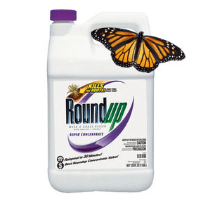 Glyphosate, which is the active ingredient in Monsanto’s Roundup herbicide, will finally undergo analysis for its effects on endangered species by the Environmental Protection Agency (EPA), thanks to the persistence of the Center for Biological Diversity (CBD).
The group has been trying for eight years to get the EPA to look at glyphosate, along with atrazine and two chemicals similar to atrazine: propazine and simazine. Glyphosate was found two months ago by the World Health Organization’s International Agency for Research on Cancer to be a probable human carcinogen and was banned for sale in garden centers in France earlier this month.
“This settlement will finally force the EPA to consider the impacts of glyphosate—widely known as Roundup—which is the most commonly used pesticide in the United States, on endangered species nationwide,” said Brett Hartl, CBD’s endangered species policy director. “With more than 300 million pounds of this stuff being dumped on our landscape each year, it’s hard to even fathom the damage it’s doing.”
Roundup appears to be responsible for the 90% drop in the number of monarch butterflies in the United States. The butterflies feed on milkweed, which has been just about eliminated because of Roundup use in fields near butterflies’ habitats.
Monsanto spokesman Robb Fraley said Roundup meets standards set by regulatory and health authorities. However, the EPA hasn’t ever taken a close look at glyphosate’s effect on endangered species.
Atrazine chemically castrates frogs and may be linked to increased risks of thyroid cancer, reproductive harm and birth defects in humans, according to CBD. “The EPA should have banned this years ago,” Hartl said. Up to 80 million pounds of atrazine are used each year in the United States on corn, sugarcane and sorghum, as well as lawns and golf courses.
The EPA’s agreement is only the beginning of a long, slow process. The agency has agreed to complete its assessments by 2020.
To Learn More:
Big Win for Environmentalists Will Force EPA to Study Glyphosate (by Elizabeth Warmerdam, Courthouse News Service )
Settlement: EPA to Analyze Impacts of World’s Two Most Widely Used Pesticides on 1,500 Endangered Species (Center for Biological Diversity)
UN Report Links California’s Favorite Herbicide, Monsanto’s Roundup, to Cancer (by Ken Broder, AllGov California )
EPA Sued over Not Protecting Decimated Monarch Butterflies from Monsanto (by Noel Brinkerhoff and Ken Broder, AllGov California )
EPA Approves Rise in Glyphosate Residue for Monsanto’s Herbicide (by Noel Brinkerhoff, AllGov )
Ariel University chemical waste threatens agriculture in Selfit
MEMO | June 22, 2015
Chemical waste produced by the laboratories of Ariel University, in the illegal West Bank settlement of the same name, threatens Palestinian agricultural land in Salfit, locals reported.
According to the locals, Ariel University pours its chemical waste into the settlement’s sewer network which runs into the agricultural lands owned by Palestinians in Selfit thus polluting the groundwater, soil and air.
Environmental researcher Khalid Al-Maaly said Ariel University does not take the environment in the surrounding areas into account when pouring hazardous materials into the land turning it into a dumping ground because the waste flows without treatment.
According to Al-Maaly, nearly 20,000 students are enrolled at the university.
He called on the environmental institutions to visit Salfit and witness the suffering caused by the university’s sewage.
Al-Maaly stressed that the presence of Ariel University on Selfit’s land is contrary to international law which considers this area occupied and therefore state institutions cannot be built on it.
Last month, Israeli authorities expanded the university’s campus by constructing new laboratories and student dorms over lands confiscated from Palestinians in Selfit.
How EPA Faked the Entire Science of Sewage Sludge Safety: A Whistleblower’s Story
Independent Science News | June 9, 2014
US EPA’s 503 sludge rule (1993) allows treated sewage sludges, aka biosolids, to be land-applied to farms, forests, parks, school playgrounds, home gardens and other private and public lands. According to a recent EPA survey, biosolids contain a wide range of mutagenic and neurotoxic chemicals, which are present at a million-fold higher concentrations (ppm versus ppt) compared with their levels in polluted air and water (1). Biosolids contain all of the lipophilic (fat-soluble) chemical wastes that once polluted our rivers and lakes, but which now settle out at sewage treatment plants and become concentrated in sewage sludges. Most biosolids contain ppm concentrations of heavy metals, including chromium, lead, and mercury. They contain similarly high levels of polycyclic aromatic hydrocarbons (PAHs) and semi-volatiles, such as bis (2-Ethylhexyl) phthalate, Benzo(a)pyrene), and polybrominated diphenyl ether congeners (PBDE flame retardants). Most biosolids also contain pathogenic agents and ppm levels of many common drugs, including ciprofloxacin (Cipro), carbamazepine (Tegretol, Equetro), and fluoxetine (Prozac).
While working at EPA Dr David Lewis published evidence that teenager Shayne Conner (of New Hampshire) died and other neighbors were harmed from living near land applied with sewage sludge (Lewis et al 2002). He furthermore became involved after dairy herds of two Georgia farms (McElmurray and Boyce) were poisoned after grazing on sludged land. He testified in lawsuits following each incident, against his employer (EPA), which is where many of the following depositions were obtained. The following article is an excerpt from Chapter 4 (Sludge Magic) of his new book (Science for Sale: How the US Government Uses Powerful Corporations and Leading Universities to Support Government Policies, Silence Top Scientists, Jeopardize Our Health, and Protect Corporate Profits). The lawsuits referred to are Lewis v. EPA 1999; Lewis v. EPA 2003; and USA, ex rel. Lewis, McElmurray and Boyce v. Walker et al. 2009. The depositions below piece together an unprecedented and coordinated multi-agency scientific scheme involving EPA, USDA, local and city municipalities, Synagro Technologies (a waste management company), various universities, and the National Academies of Science.
The effort was intended to misleadingly present sewage sludge as scientifically safe, to hide the evidence that it was not, to deliberately misreport the contents of municipal sludges, and smear David Lewis with a scientific misconduct charge after he blew the whistle.
From “Sludge Magic” by Dr David Lewis:
The Men Behind the Curtain
1) Alan Rubin – EPA
Alan Rubin, who was a career chemist at EPA’s Office of Water, is considered the primary author of EPA’s 503 sludge rule. He was one of a number of office scientists at EPA headquarters involved in retaliations against scientists and private citizens who reported adverse health effects associated with biosolids. Time magazine (September 27, 1999) ran a short article about Rubin mailing “death threats” on EPA and Water Environment Federation (WEF) letterhead to private citizens concerned about biosolids, saying, “Ask not for whom the bell tolls; it tolls for thee!”
When deposed in my U.S Department of Labor cases, Dr. Rubin explained what motivated these attacks:
RUBIN QUESTIONED BY ATTORNEY STEPHEN KOHN (1999) (2)
Q. Are you proud of the work you did?… Do you feel, in any
way, hurt or upset to have someone like Dr. Lewis criticizing
it?… Professionally hurt, a little?
A. Somewhat.
Q. How so?…
A. Well, I think my professional reputation, to a large extent, is
based on my association with biosolids, 503 and its technical basis.
So I feel my reputation would be somewhat disparaged if the basis
of the rule, and the scientific findings were shown to be in error.
Rubin coined the term “sludge magic” when EPA’s proposed 503 sludge rule was undergoing internal peer review at EPA’s Office of Research & Development in 1992. Dr. Robert Swank, the research director at the EPA lab in Athens, Georgia, where I worked, called Dr. Rubin. When Swank asked him to explain how sewage sludge renders pollutants non-bioavailable, Rubin replied, “It’s magic.” During his deposition, Rubin deferred to USDA agronomist Rufus Chaney when questioned about scientific studies supporting sludge magic:
RUBIN QUESTIONED BY MR. KOHN (1999) (3)
Q. You called it sludge magic?
A. Yes, that is my term. “sludge magic” [means] there are unique
properties in the biosolids matrix that sequester metals, that
sequester organics. By sequester I mean significantly reduce the
mobility to move from the biosolids out to the environment,
and the matrix is really complex, and has organic material in
it, organic pollutants, I’m talking about organic materials, like
unit type materials, and carbohydrates, and manganese, and
iron, and phosphorus, and all of these work together with the
soil in a matrix to significantly reduce, if not eliminate movement
of pollutants from the biosolids out to the environment.
The processes, some of them are understood, some of them are not
that well understood, but the whole thing taken together is called
magic. So I coined the term magic.
Q. And the “sludge magic” which prevents harmful stuff that is
in the sludge escaping the sludge?
A. Moving at any significant flux or rate out to the environment
to create doses of pollutants that would harm plants, animals or
humans.
Q. … these studies [are] kept somewhere?
A. No, they are actually—well, Chaney is probably the one that
has them all, he is like a walking encyclopedia.
So, after working in EPA’s biosolids program for over thirty years, the primary author of EPA’s 503 sludge rule still couldn’t explain how biosolids prevent potentially harmful levels of pollutants from being taken up by plants, animals and humans.
2) Rufus Chaney-USDA
My attorney, Ed Hallman, deposed Dr. Rufus Chaney at USDA’s Animal Manure and By-Products Laboratory in Beltsville, Maryland. His position reflects the importance that the USDA places on protecting biosolids:
CHANEY ANSWERING MR. HALLMAN (2009) (4)
I’ve been appointed in a category which is above GS-18 called
senior scientific research service. Within that, there are no subgrades.
There is a group —there is only about ten of us in all of
my agency that have reached that level.… I would say I’m the
US Department of Agriculture’s most knowledgeable scientist
about biosolids.
Chaney further testified that EPA scientists have never understood the science he developed, which proves heavy metals and toxic organic pollutants in biosolids cannot harm public health or the environment.
CHANEY ANSWERING MR. HALLMAN (2009) (5)
EPA withdrew the original proposed rule and completely
rewrote it. Actually I played a very significant role in what
the rule became. It’s evident in the record. And even at the
end I provided comments through USDA, approved at higher
levels, saying that the rule needed a few more revisions before
it was issued. But, yes, I was heavily involved in bringing to
fore the science about biosolids that needed to be the basis for
the rule.
Chaney explained that the unique properties of sewage sludge prevent pollutants from becoming bioavailable. In other words, they can’t be taken up or absorbed by plants and animals’ and they pose little or no risk to public health or the environment no matter which pollutants are present, or what their concentrations are.
One of Rufus Chaney’s primary collaborators, Jay Scott Angle, replaced Gale Buchanan as the agricultural dean at University of Georgia (UGA) in 2005, the year we filed a qui tam lawsuit over “the Gaskin study” (Gaskin et al 2003)(6). After EPA funded this study, one of its employees, Robert Brobst, who is charged with investigating reports of biosolids-related adverse health effects, provided UGA with data fabricated by the City of Augusta, Georgia (see Figure 1.). This fabricated data was used in the Gaskin study which EPA then used to discredit any links between biosolids and cattle deaths on two Georgia dairy farms owned by local farmers, the McElmurray and Boyce families (4). President Bush appointed Buchanan under secretary of agriculture for research, education and economics the following year (7).
Two years earlier, the director of UGA’s School of Marine Programs was advised not to hire me as a faculty member “because we’re dependent on this money… grant and contract money… money either from possible future EPA grants or [from] connections there might be between the waste disposal community [and] members of faculty at the university.” (8)
Many wastewater treatment plants throughout the United States aren’t working properly, and are constantly in need of being repaired or upgraded to keep up with population growth. To help with this problem, EPA created a revolving loan program under the Clean Water Act to pump billions of dollars into the states to keep their wastewater treatments plants pumping properly. Chaney reasons that because the system as a whole is in constant need of repair, and there are still no documented cases of adverse health effects in the peer-reviewed scientific literature, “sludge magic,” as Rubin calls it, works even when waste treatment plants don’t.
Chaney further reasoned that any peer-reviewed scientific articles claiming that land application of biosolids poses a risk to public health or the environment must be false because no scientists funded by the US government and other reputable institutions have documented adverse effects from biosolids since the 503 sludge rule was passed in 1993.
In 1992, EPA’s sludge rule failed to pass a scientific peer review in EPA’s Office of Research & Development. Chaney blamed scientists in EPA’s Office of Water for this failure:
CHANEY ANSWERING MR. HALLMAN (2009) (9)
They originally proposed a rule where they even had the data
screwed up. I don’t know how much you know about that. But
the original rule would have essentially prohibited all land
application…. So there were lots of errors the first time around,
stupid errors. They didn’t—they didn’t review it with USDA or Food
and Drug Administration before they put it on the street and they
suffered and had to withdraw it and start over.
In his deposition, Chaney stated that adverse health effects from biosolids were documented in the scientific literature before 1992, and that he himself authored many of those studies.
CHANEY QUESTIONED BY MR. HALLMAN (2009) (10)
Q. And you believe that all the studies you’ve seen, including
the ones that you have coauthored and worked on, indicate that
the land application of sewage sludge in accordance with 503 is
safe… and is not a danger to human health and welfare, is that
correct, if it’s applied in accordance with those regulations?
A. I won’t disagree with that. I had advised EPA that I wanted
a lower cadmium limit…. I won the battle because pretreatment
and the universal understanding of the unacceptability of cadmium
in biosolids has led to biosolids declining to 1 to 2 ppm in
most cities in the United States. Biosolids has become remarkably
less contaminated because of what we’ve done with the 503 and
because of the publications, such as mine, which showed adverse
effects of previous practices.
The phenomenon by which biosolids have become far less contaminated with cadmium is clearly evident in the data that the City of Augusta reported to EPA and the State of Georgia. These are the same (Gaskin) data that EPA and UGA published and later used by the National Academy of Sciences to conclude that Augusta’s biosolids were not responsible for hundreds of cattle that died on two dairy farms (McElmurray and Boyce) where it was applied. The data purportedly show (Fig. 1 pdf here) that monthly cadmium levels in the city’s sewage sludge fluctuated wildly up to 1, 200 ppm from January 1980 to February 1993, the very month that EPA promulgated the 503 rule.

Chaney wants everyone to believe that cadmium, which was making people and animals sick, dropped to safe levels all across the country the moment EPA passed its sludge regulation in February 1993. No regulatory agency at the state or federal level, however, ever monitors levels of cadmium, or anything else, in biosolids (11). They simply accept whatever data the cities provide.
In Augusta’s case, we know that the city’s “sludge magic” was faked. The city’s former plant manager, Allen Saxon, confessed when deposed by Mr. Hallman.
Judge Anthony Alaimo, who ruled on a lawsuit against the USDA filed by the McElmurray family, ordered the USDA to pay for crops the family couldn’t plant because their land was too contaminated with cadmium and other hazardous wastes from Augusta’s biosolids. Judge Alaimo wrote, “In January 1999, the City rehired Saxon to create a record of sludge applications that did not exist previously.” (12)
That same year, EPA gave UGA a federal grant to publish Augusta’s data as part of the Gaskin study (Gaskin et al 2003). As soon as Mr. Saxon finished making “sludge magic” happen, all of the original data Augusta reported to the Georgia Environmental Protection Division (EPD) between 1993 and 1999 magically disappeared, and not just in Augusta. They turned up missing from the EPD records in Atlanta as well. EPA doesn’t know what happened to the data, nor does the EPD, nor the City of Augusta, nor UGA. All of the data just magically disappeared from city and state records at the same time cadmium purportedly disappeared from Augusta’s sewage sludge.
According to Rufus Chaney, it just doesn’t matter whether the data are fake or real. He explained in his deposition: (13)
CHANEY QUESTIONED BY MR. HALLMAN (2009)
Q. Ms. Gaskin could have totally made up all that data and you
would still rely on it because it was in a peer-reviewed study; is
that accurate?
A As long as it—as long as it was in general agreement with
general patterns established in hundreds of papers….
To sum up Chaney’s position, because Gaskin’s paper concluded that Augusta’s sludge did not pose a health risk, it’s valid research even if the data were fabricated. On the other hand, people should disregard scientists who report problems with biosolids, even if their work is published in the peer-reviewed scientific literature. That’s because researchers at universities funded by government and have published hundreds of papers concluding that biosolids don’t put public health or the environment at risk.
In 2004, Chaney commented on the US Composting Council’s (USCC’s) list serve about my termination by EPA acting assistant administrator Henry Longest, who developed EPA’s sludge policies in the late 1970s (14). USCC is headed by Lorrie Loder, Synagro’s product marketing director. Chaney, of course, supported Longest’s decision to end my career for publishing research that raised public concerns over biosolids (Lewis et al. 2002). He contrasted our BMC study with the Gaskin study:
CHANEY USCC (2004) (15)
The paper by Gaskin et al. [Gaskin, J. W., R. B. Brobst, W. P.
Miller, and E. W. Tollner. 2003. Long-term biosolids application
effects on metal concentrations in soil and bermudagrass
forage J. Env. Qual. 32:146-152.] reports objective measurements
on the soil metal concentrations, and metals in forages
growing on the soils….[Lewis’s] publication [Lewis D. L., D. K.
Gattie, M. E. Novak, S. Sanchez, and C. Pumphrey. 2002.
Interactions of pathogens and irritant chemicals in land-applied
sewage sludges (biosolids). BMC Public Health 2:11.] contains none
of the data from examination of biosolids exposed subjects, and lacks the
comparison with randomly selected individuals from the general
populations. It is not valid epidemiological science….
I support the whistle-blower rule and process as strongly as any
other citizen or government employee. I happen to believe that
Dr. Lewis has been treated fairly. Claims and opinions about
public health are not peer-reviewed scientific evidence. EPA and
other agencies have to base rules on the peer-reviewed papers,
and to consider the weight of evidence. Some papers are more
complete in proof of the issue tested, as I noted above regarding
proof that some source caused a specific human infection.
Our study published in BMC-Public Health had documented several cases linking Synagro’s biosolids to illnesses and deaths, including the death of Shayne Conner in New Hampshire (Lewis et al. 2002). Chaney’s statements about our study are drawn from a white paper Synagro published in 2001, which contains false allegations of research misconduct against me and my coauthors. In 2004, Synagro withdrew its allegations after EPA dismissed the allegations as meritless and not based in any facts (16). Synagro’s white paper, which Chaney parroted, states, for example:
SYNAGRO WHITE PAPER (2001) (17)
[Steps Lewis should have taken] include analysis of biosolids
composition, fate and transport of chemicals and pathogens,
determination of dose-response relationships, and methodology
for and identification of the cause of health ailments purportedly
associated with an environmental contaminant….
Such studies should involve a comparison of outcomes for subjects
who are exposed to biosolids (treatment groups) and other subjects
who are not exposed (control groups)…. The leading study,
a comprehensive multi-year study of Ohio farm families living
near land-applied fields, reported “no adverse health effects…in
either people or animals.” (Cit. 38.) While Dr. Lewis admitted
that this study was based on sound epidemiology, he refuses to
apply its techniques….
Our BMC paper does, in fact, contain this information. It includes, for example, data we obtained from the patients’ medical records, and a dose-response analysis of exposed and unexposed individuals in an area near a field treated with biosolids (Figure 2)(18). This field lay approximately 300 feet from a house where Shayne Conner suddenly died from respiratory failure. Conner’s parents, Tom and Joanne Marshall, sued Synagro, which bought out the company that applied the biosolids. EPA ethics officials approved of my serving as an expert witness for plaintiffs, and required that I donate any expert witness fees to EPA or other governmental or nonprofit organizations. By serving as an expert witness, I was able to obtain access to medical records and other critically important information tied up in Marshall v. Synagro.
In Conner’s neighborhood, we were able to gather information on symptoms from all but one family, including family members who reported no symptoms. We found:
LEWIS ET AL. BMC PUBLIC HEALTH (2002) (19)
Based on a least-squares analysis, proportions of individuals
with symptoms increased linearly from 40 to 80 h (r2 0.98) with
time exposed to wind blowing from the field; all occupants in
households with exposure ≥ 80 h reported symptoms (Fig. 2).
Proportions of individuals with symptoms also decreased linearly
with distance from the field from 130 to 320 m (r2 0.95); all
occupants in households living ≤ 130 m from the field reported
symptoms.
As reported in our BMC article, we mainly investigated the most common form of treated sewage sludges, called Class B biosolids:
LEWIS ET AL. BMC PUBLIC HEALTH (2002) (20)
County records indicated that biosolids-related complaints for
individual patients described in this study were concurrent with
land application of Class B biosolids.
As mentioned earlier, most bacterial populations that are killed back can re-establish themselves within a few days after biosolids are stockpiled, or spread on land (21). It’s like cooking the Thanksgiving turkey. Eating it fresh out of the oven is one thing, but after it’s been sitting out for a few days is a different matter. Biosolids are rich in proteins, which allow staphylococci to proliferate just as they do with turkey dinners (22).
We discovered that one out of four residents who reported irritation of the skin, eyes, or respiratory tract from exposure to biosolids had staphylococcal infections involving S. aureus or S. epidermitis. Two of the three deaths linked to biosolids were caused by S. aureus infections. Because multi-antibiotic resistant bacteria are common at wastewater treatment plants, biosolids-related infections are of particular concern (23).
During her depositions, Julia Gaskin testified that she believed Augusta’s biosolids harmed the McElmurray and Boyce dairy farms; and she pointed out that her study included ample data supporting the dairy farmers’ lawsuits.
GASKIN ANSWERING MR. HALLMAN (2009) (24)
A. Now, you have characterized that the EPA has used this
against them. There is certainly data in here that could have been
used to support them as well.
Q. What data?
A. The fact that we had high cadmium and molybdenum in three
fields that had been—and forages in three fields that had been
greater than six years. The fact we saw a reduction in copper and
molybdenum ratios with long-term biosolids application.
3) Thomas Burke – EPA
Responding to congressional hearings into EPA retaliations against me, my EPA laboratory director, and others who have questioned the science EPA uses to support its sludge rule, EPA called upon the National Academy of Sciences National Research Council (NRC) to reevaluate its scientific basis. Ellen Harrison, an NRC panel member from Cornell University, provided the panel with copies of my unpublished manuscripts and two in-press, peer-reviewed journal articles (BMC Public Health, 2002; ES&T, 2002) (25). Harrison, director of the Cornell Waste Management Institute, and her coauthors published a well-documented, peer-reviewed article concluding that EPA’s current sewage sludge regulation does not protect human health, agriculture, or the environment (26). She was also part of a group of NRC panel members selected to brief EPA on the academy’s findings when their report was electronically released on July 2, 2002. She testified in my labor case: (27)
HARRISON QUESTIONED BY MR. KOHN (2003)
Q. I’m looking for a larger-picture question here, what would
you state would be Dr. Lewis’ major contribution in terms of the
concerns he was raising to the National Academy review process?
A. David is the only scientist that to that time had raised the
scientific issues that might lead to exposure and disease and so
David’s ideas in that regard, I think, were important to sort of
framing the National Academy panel’s in recognizing that…
there are a lot of gaps here, there are plausible routes of exposures
that we haven’t assessed. So David’s role was—I mean
in my book David was a hero in this regard basically. Despite
the incredible flack he was getting, [he] put forward reasonable
scientific theories, backed by some research to suggest that
there were plausible routes of exposure and that in fact illness
might be resulting. He, I mean as far as I’m concerned, he kind
of turned the whole thing around… I think without David’s
involvement we wouldn’t be at all where we are today in terms
of looking at the safety issues anew. David raised-David gave a
legitimacy to the allegations that has made it impossible to ignore
the alleged health issues…. So I think David has probably been
the most important player in all this.
Although the report drew heavily upon my unpublished manuscripts, the electronic version only cited one paper, an ES&T article. Susan Martel, an NRC staff member, explained to Harrison that all but one reference to my work were removed from draft versions of the NRC report based on input from panel members. Then, according to Martel, the panel chair, Thomas Burke, removed the one remaining reference to my ES&T article from the final copy of the report, which is posted on the NRC’s website (28). Burke, who was Dean of Johns-Hopkins School of Public Health at the time, was recently appointed head of EPA’s Office of Research & Development by President Obama.
Burke removed the one remaining reference to our research after he and Martel received the following email from panel member Greg Kester, who was the biosolids coordinator for the State of Wisconsin: (29)
Hi Tom and Susan—In contrast to your message that the briefings
went well, I am quite disturbed by what I have heard transpired
at the EPA briefing this morning. Among other items, I
heard that EPA staff in the biosolids program were referred to
as “the usual suspects” and basically denigrated for their work in
the program. The message was also taken that their work should
be devalued and the work of David Lewis should be elevated. I
did not agree to such representation nor do I believe much of the
committee did. We specifically noted that EPA should not be criticized
for the work they did.… While EPA may not have been
moved by the criticism, there are those on the Hill who would
love nothing more than to criticize EPA.
One year earlier, Synagro VP Robert O’Dette had emailed Kester a copy of his white paper accusing me of research misconduct. Kester, in turn, forwarded it to senior officials at EPA headquarters and other EPA offices throughout the country (30). In his email, Kester stated: (31)
This paper presents many of the issues raised by Dr. Lewis in the
New Hampshire case and provides compelling refutation. It was written
by Bob O’Dette of Synagro.
The NRC panel used Synagro’s white paper in its deliberations over my research, and rewarded O’Dette by using a photo he submitted for the cover of the NRC report. Although the panel liberally borrowed from my unpublished and in-press papers without citing the source, it was careful to credit O’Dette as the source of its cover photo. Then, after removing my in- press, peer-reviewed articles documenting scores of cases of adverse health effects across the country, the NRC panel falsely reported: “There is no documented scientific evidence that the Part 503 rule has failed to protect public health.” (32)
But the fallout from what the NRC panel did wasn’t over yet. In 2008, a Nature reporter called me wanting my response to a federal judge, Anthony Alaimo, ruling that data in the Gaskin study were fabricated to cover up cattle deaths linked to hazardous wastes in Augusta’s sewage sludge. Nature, as it turned out, was putting together a two-page news article and editorial about our research at UGA, pointing out that a multi-university study in Ohio had independently confirmed our findings:
NATURE EDITORS (2008) (35)
In what can only be called an institutional failure spanning
more than three decades—and presidential administrations
of both parties—there has been no systematic monitoring programme
to test what is in the sludge. Nor has there been much
analysis of the potential health effects among local residents—
even though anecdotal evidence suggests ample cause for concern.
In fact, one of the studies used to refute potential dangers,
published in the Journal of Environmental Quality in 2003
by researchers at the University of Georgia in Athens, has been
called into question ….
Even the National Academy of Sciences seems to have been
taken in. A 2002 report from the academy cited the then unpublished
Georgia work as evidence that the EPA had investigated
and dismissed claims that sewage sludge had killed cattle, but
the study had not looked at the dairy farms in question. And
although it may be technically true that there was no documented
evidence of sludge applications causing human illness or death,
the academy also cited work by an EPA whistleblower, David
Lewis, suggesting at least an association between these factors.
If anything, recent research underscores those findings. The
Georgia citation notwithstanding, the academy did outline a
sound plan for moving forward. It recommended among other
things that the EPA improve its risk-analysis techniques; survey
the sludges for potential contaminants; begin tracking health
complaints; and conduct some epidemiological analyses to determine
whether these reports merit concern.
To read the NRC report, the Nature reporter located it on EPA’s website rather than the NRC’s website. After I filled the reporter in on what happened, Nature ran the following correction, which contained even more misinformation from the NRC in an attempt to explain why it removed the last remaining reference to our work in the final version of its report.
NATURE EDITORS (2008) (36)
Correction: The 2002 biosolids study from the National Academy
of Sciences (NAS) did not reference research into health impacts
by Environmental Protection Agency (EPA) whistleblower
David Lewis, as reported in our News story “Raking through
sludge exposes a stink” (Nature 453, 262–263; 2008). The citation
was included in a prepublication draft that is still posted on
the EPA’s internet site, but the NAS panel voted to remove the
reference before final publication. An NAS spokesman said the
panel decided the information was not relevant as the panel was
not charged with evaluating health impacts.
At least panel member Ellen Harrison got in the last word about the National Academy of Sciences removing the last remaining reference to our work:
HARRISON TO NATURE EDITORS (2008) (37)
The NAS made this change to the report without permission from
the panel. This is a violation of the NAS procedures requiring full
committee consensus on reports. I would not have approved the
removal of this reference since it was clearly relevant to the work
of the committee…. the unilateral action of NAS to remove the
reference was highly inappropriate.
4) Robert O’Dette – Synagro Technologies Inc.
EPA and Water Environment Federation (WEF) officials involved in the National Biosolids Public Acceptance Campaign systematically funded scientists who supported the 503 sludge rule while eliminating those who did not. In 2002, a Texas county commissioner invited me to speak at a public hearing about a growing number of illnesses linked to Synagro’s biosolids in his area. I agreed on the condition that he invite Synagro to have its own expert rebut my arguments. So, the commissioner wrote a letter to the company’s VP for government relations, Robert O’Dette, who had authored Synagro’s white paper containing allegations of research misconduct against me and my coauthors at UGA. In his reply, O’Dette explained how the system works: (38)
What we don’t need are more so-called scientists whose research
findings are predetermined by scientific or personal bias. These
people will find their work rightly discredited and their funding
will disappear while credible researchers continue to have
funding.
Synagro sent its own expert, Ian Pepper from the University of Arizona, to give a presentation at our conference, and it held its own conference across the street with others speaking on its behalf.
5) Tracy Mehan, III – EPA
On December 24, 2003, Tracy Mehan, Asst. Administrator for EPA’s Office of Water, issued a letter in which he used the Gaskin study to dispel any link between biosolids and cattle deaths on the two dairy farms (39) Attorney Ed Hallman read Brobst’s testimony, then questioned Gaskin:
BROBST, GASKIN QUESTIONED BY MR. HALLMAN (2009) (40, 41)
[Brobst]
We, the authors, at least Julia and I, will stand by that the study
had nothing to do with the dairy farms. I mean, we both said
that on several occasions, and I believe we will both stand by
that. And I have conveyed that to headquarters. If they choose to
not listen or choose to listen, that’s up to them. I don’t have any
say in how they make these paragraphs and how they form things
and form their conclusions. I wouldn’t have done it that way.
[Gaskin]
Q. Do you recall any conversations that you’ve had with
Mr. Brobst about the study had nothing to do with the Boyce
and McElmurray farms?
A. Yes.
Q. Tell me the substance of those conversations.
A. I, the substance of the conversations were concerns that our
study was being used, that people were citing our study as if the
dairy farms were part of what we had sampled, and they were
not. And I had concerns about that, that even though the JEQ
article clearly said beef cattle farms, that some people were not
being clear about that fact.
Q. Did you ever voice those concerns to anyone besides
Mr. Brobst?
A. I voiced those concerns to Mr. Brobst and also at one point
Ned Beecher.
Q. Who is that?
A. He is the director of the Northeast Biosolids Association.
Q. What did you tell him?
A. I told him that I was concerned that the JEQ article was
being conflated with the dairy and that our study did indicate
that there was not a widespread problem, but it did not specifically
address the dairy concerns.
5) Henry Longest, II – EPA
When Speaker of the House Newt Gingrich greeted me in his office overlooking the National Mall in 1996, he looked at me and said, “You know you’re going to be fired for this, don’t you?” “I know,” I replied, “I just hope to stay out of prison.” The speaker had just read my commentary in Nature, titled “EPA Science: Casualty of Election Politics.” It reflected the proverbial crossroads in my life. Since I was five years old, I wanted to become a scientist and have my own laboratory. Giving up my research career was not something I took lightly. It reflected my conclusion that EPA’s commitment to removing pollutants from water and concentrating them on land will eventually cause as much, if not more, harm to public health and the environment than these same pollutants caused in rivers and other aquatic systems. As soon as I turned age 55 in 2003, EPA’s Acting Administrator for EPA’s Office of Research & Development, Henry Longest, terminated me ─ the Agency’s only research scientist to ever publish first-authored research articles in Nature, Lancet and Nature Medicine. As acting deputy assistant administrator for the Office of Water in the late 1970s, Longest was the first high-ranking EPA administrator to promote land application of sewage sludges.
Science for Sale: How the US Government Uses Powerful Corporations and Leading Universities to Support Government Policies, Silence Top Scientists, Jeopardize Our Health, and Protect Corporate Profits by David Lewis can be obtained here.
References
1. U.S. Environmental Protection Agency. Biosolids: Targeted National Sewage Sludge Survey Report —Overview, January 2009, EPA 822-R-08-014. http://www.epa.gov/waterscience/biosolids/tnsss-tech.pdf
2. US Dept. Labor, Office of Administrative Law Judges. Case No.99- CAA-12, Deposition transcript of Dr. Alan Rubin, p. 149. Lewis v. EPA, Apr. 27, 1999.
3. Ibid, pp. 168-172.
4. USA, ex rel. Lewis, McElmurray and Boyce v. Walker et al. United States District Court, Middle District of Georgia, Athens Division. Case No. 3:06-CV-16-CDL. Deposition transcript of Dr. Rufus Chaney, Jun. 26, 2009.
5. Ibid.
6. Dendy LB, U. of Maryland administrator named dean of UGA College of Agricultural and Environmental Sciences. University of Georgia, June 3, 2005.
7. University of Georgia, Bush taps former UGA dean for REE under secretary. Jan. 19, 2006.
8. Lewis v. EPA, U.S. Department of Labor, CA 2003-CAA-00005, 00006. Deposition of Robert E. Hodson, Ph.D. Jan. 31, 2003.
9. Ibid, USA, ex rel. Lewis,et al. R Chaney Deposition, p. 21.
10. Ibid, USA, ex rel. Lewis,et al. R Chaney Deposition, p.53-54.
11. U.S. Environmental Protection Agency. 2002. Land Application of Biosolids Status Report; Report 2002-S-000004; Office of Inspector General. Washington, DC.
12. McElmurray v. United States Department of Agriculture, United States District Court, Southern District of Georgia. Case No. CV105-159. Order issued Feb. 25, 2008.
13. Ibid, USA, ex rel. Lewis,et al. R Chaney Deposition, p. 157.
14. Chaney R, USCC Listserve, October 5, 2004.
15. Ibid, USA, ex rel. Lewis,et al. R Chaney Deposition, p. 13-17.
16. Lewis v. EPA, U.S. Department of Labor, Case Nos. 2003-CAA-6, 2003-CAA-5, Joint stipulations, March 4, 2003; USEPA, Stancil F, Branch Chief, ESD, to Russo R, Director, ERD, Apr. 22, 2003; Thomas AL, Synagro, to Adams M, President, University of Georgia, Dec. 21, 2004.
17. Synagro Technologies, Inc. Analysis of David Lewis’ Theories Regarding Biosolids, p. 4, 6, Sept. 20, 2001.
18. Lewis DL, Gattie DK, Novak ME, Sanchez S, Pumphrey C. (2002) Interactions of pathogens and irritant chemicals in land-applied sewage sludges (biosolids). BMC Public Health 2:11. www.biomedcentral.com/1471-2458/2/11.
19. Ibid, Lewis et al., BMC-Public Health, 2001. Results, Environmental Assessment.
20. Ibid, Lewis et al., BMC-Public Health, 2001. Methods, Assessing environmental conditions.
21. Gattie DK and Lewis DL. 2004. A high-level disinfection standard for land-applied sewage sludge (biosolids). Environ. Health Perspect. 112:126-31.
22. Khuder S, Milz SA, Bisesi M, Vincent R, McNulty W, Czajkowski K. Health survey of residents living near farm fields permitted to receive biosolids. Arch. Environ. Occup. Health 62, 5–11 (2007).
23. Reinthaler FF, Posch J, Feierl G, Wüst G, Haas D, Ruckenbauer G, Mascher F, Marth E. Antibiotic resistance of E. coli in sewage and sludge. Water Res. 2003 Apr; 37(8):1685-90; Sahlström L, Rehbinder V, Albihn A, Aspan A, Bengtsson B. Vancomycin resistant enterococci (VRE) in Swedish sewage sludge. Acta Veterinaria Scandinavica, 2009.
24. USA, ex rel. Lewis, McElmurray and Boyce v. Walker et al. United States District Court, Middle District of Georgia, Athens Division. Case No. 3:06-CV-16-CDL. Deposition transcript of J. Gaskin, p. 293-4, Jun. 20, 2009.
25. Martel S, National Academy of Sciences, to Harrison E, Mar. 27, 2002 [Email].
26. Harrison, EZ, McBride MB and Bouldin DR. Land application of sewage sludges: An appraisal of the US regulations. Int. J. Environ. and Pollution, Vol.11, No.1. 1-36. Case for Caution Revisited 2009.
27. Lewis v. EPA, U.S. Department of Labor, Office of Administrative Law Judges, Case No. 98-CAA-13, Deposition of Ellen Harrison, p. 34-35, 76, Mar. 21, 2003.
28. Harrison E, Cornell Waste Management Institute, to Lewis D, Mar. 5, 2003 [Email].
29. Ibid.
30. Kester G to EPA officials Rubin A, Hais A, Roufael A, Carkuff A, Sajjad A, Bastian R, Brobst R, Sans C, Hamilton D, Hetherington D, Gross C, Lindsey A, Home J, Ryan J, Smith J, Colletti J, Dombrowski J, Dunn J, Walker J, Fondahl L, Dominy M, Meckes M, Murphy T. Subject: FW: Dr. David Lewis, 09/24/01 [Email].
31. Ibid.
32. National Research Council. Biosolids Applied to Land: Advancing Standards and Practice, Overarching Findings, p. 4. National Academy Press. Washington, DC, 2002.
33. Burkhart J (NIH/NIEHS) to Lewis D, copied to Burleigh K (NIH/NIEHS), Subject: EHP ms 6207. May 07, 2003 [Email].
34. Ibid, Gattie, Lewis, 2004.
35. Stuck in the mud—The Environmental Protection Agency must gather data on the toxicity of spreading sewage sludge [Editorial]; Tollefson J. Raking through sludge exposes a stink. Nature, 2008, Vol. 453, p. 258, 262-3, May 15, 2008.
36. Nature editors. Correction. Nature 453; 577, May 28, 2008 doi:10.1038/453577d http://www.nature.com/news/2008/080528/full/453577d.html
37. Harrison E. Correspondence at Nature.com. June 17, 2008.
38. O’Dette R, Synagro Technologies, Inc., to Stavinoha TD, Commissioner Precinct 1, Fort Bend County, TX. Nov.18, 2002.
39. Mehan GT III. USEPA, Assistant Administrator, Office of Water, to Mendelson J III. Dec. 24, 2003 [Letter].
40. Ibid, Gaskin deposition p. 269, Jun. 22, 2009.
41. Ibid, Gaskin deposition p. 372-4, Jun. 22, 2009.
For more information go to the Bioscience Resource Project webpage on Sewage Sludge.
German Lawmakers Call for End to Subsidies as Nuclear Failures Continue
Sputnik | 17.06.2015
Lawmakers in Germany have been told that an EU agreement for a $25 billion state subsidy by the UK to build a nuclear power station is illegal and should be annulled, in another twist in Europe’s nuclear energy farce.
The German Bundestag’s Economic and Energy Committee took evidence on the European Commission’s approval of $25 billion worth of state aid for the construction of a new nuclear plant at Hinkley Point, in Somerset, southwest England. The hearing followed recent claims by German energy cooperative Greenpeace Energy that the EU state aid approval contravenes competition rules. In October 2014, the European Commission approved the state aid for the construction of Hinkley Point C, which allows the UK government to assure the future operator a fixed electricity price over a period of 35 years and to guarantee inflation surcharges and credit guarantees.
The German Government had informed the European Commission that “political expectations” made it clear that the promotion of renewable energy should not lead to the encouragement of nuclear power plants, according to, the Parliamentary State Secretary at the Federal Ministry of Economic Affairs, Brigitte Zypries.
A political coalition of Alliance 90 and the Greens called for a stop to “subsidies for British nuclear power plant Hinkley Point C and legal action.”
In January, the Austrian government confirmed it is to take the European Commission to the European Court of Justice over the subsidy deal.
New Nuclear in Meltdown Fears
The Hinkley Point C proposal has already been beset by many years of delay — mostly because the reactor it is considering using has been plagued with problems. EDF has chosen the European Pressurised Reactor (EPR), a third generation pressurised water reactor (PWR) design. It has been designed and developed mainly by Framatome (now Areva), EDF in France and Siemens in Germany.
However, the first ever EPR nuclear power station under construction in Flamanville, in northwest France, is already massively over budget and seriously delayed. Since construction began in April 2008, the French nuclear safety agency has found that a quarter of the welds inspected in the secondary containment steel liner were abnormal, cracks were found in the concrete base and it also ordered a suspension of concrete pouring on the site.
In November 2014, EDF announced that completion of construction was delayed to 2017 due to delays in component delivery by Areva. In the same month, Areva issued a profit warning and said it would suspend future profit predictions because of problems on a similar EPR power station project at Olkiluoto in Finland.
And in June 2015, the French nuclear safety watchdog says it has found “multiple failure modes” that carry “grave consequences” on crucial safety relief valves on the Flamanville nuclear plant in northern France, which could lead to meltdown.
Areva and EDF have been hit by the global backlash against nuclear plants since the Fukushima accident in 2011. Following the incident, Germany accelerated plans to close its nuclear power reactors, Italy voted in a referendum against the government’s plan to build new nuclear power plants and French President Francois Hollande announced the intention of his government to reduce nuclear usage by one third.
Read more:
Fallout over Floundering UK Nuke Site – ‘Illegal’ and Overpriced
Solar Fossil Fueled Fantasies
By Willis Eschenbach | Watts Up With That? | June 15, 2015
Sometimes when I’m reading about renewable technologies, I just break out laughing at the madness that the war on carbon has wrought. Consider the Ivanpah solar tower electric power plant. It covers five square miles in Southern California with mirrors which are all focusing the sun on a central tower. The concentrated sunlight boils water that is used to run a steam turbine to generate electricity.

Sounds like at a minimum it would be ecologically neutral … but unfortunately, the Law of Unintended Consequences never sleeps, and the Ivanpah tower has turned out to be a death trap for birds, killing hundreds and hundreds every year:
“After several studies, the conclusion for why birds are drawn to the searing beams of the solar field goes like this: Insects are attracted to the bright light of the reflecting mirrors, much as moths are lured to a porch light. Small birds — insect eaters such as finches, swallows and warblers — go after the bugs. In turn, predators such as hawks and falcons pursue the smaller birds.
But once the birds enter the focal field of the mirrors, called the “solar flux,” injury or death can occur in a few seconds. The reflected light from the mirrors is 800 to 1,000 degrees Fahrenheit. Either the birds are incinerated in flight; their feathers are singed, causing them to fall to their deaths; or they are too injured to fly and are killed on the ground by predators, according to a report by the National Fish and Wildlife Forensics Laboratory.”
– David Danelski, Solar: Ivanpah Solar Described as Deadly Trap for Wildlife,” Riverside-Press Enterprise, April 8, 2014.
But of course, that’s not what made me laugh. That’s a tragedy which unfortunately will be mostly ignored by those good-hearted environmentally conscious folks suffering from chronic carbophobia.
The next oddity about Ivanpah is that despite being powered by light, it is light-years away from being economically viable. Like the old sailors say, “The wind is free … but everything else costs money”.
But being totally uneconomical doesn’t matter, because despite costing $2.2 billion to build, Google is a major shareholder, so at least they could afford to foot the bills for their high-priced bird-burner …

… get real. Google would much rather use taxpayer dollars to burn birds alive than foot the costs themselves. Being good businessmen and women they sought and got a $1.6 billion dollar taxpayer funded loan, presumably because no bank on the planet would touch the project. And if the banks wouldn’t touch it, why should you and I?
But that’s not enough for these greedy green pluted bloatocrats. Now, they are applying for a $539 million dollar GIFT of your and my taxpayer money in order to repay the money that you and I already lent them … we should give them the money to repay ourselves? Give an unimaginably wealthy company money to repay us what we have loaned them? Have I wandered into a parallel universe? This is GOOGLE, folks, and they’re trying to poor-mouth us?
And of course, that’s not what made me laugh either. That is another tragedy which unfortunately will be ignored by those who wish to see electricity prices rise … you know, folks like President Obama, who famously said:
Under my plan of a cap and trade system, electricity rates would necessarily skyrocket …
Of course, such an electricity price rise would mean nothing to him, like every recent President he’ll leave office a multi-millionaire. And such an energy price rise means nothing to the Google execs who are burning birds alive … but for those of us here on the ground, causing the electricity rates to skyrocket is not the moral high ground, it is a crime against the poor.
So that is no laughing matter at all.
No, the part that I didn’t know about Ivanpah (and other solar steam plants), the part that got me smiling, was that there is a problem with a solar tower that is generating steam. This is that steam turbines don’t do well at all with half a head of steam. For full efficiency a turbine needs full pressure steam in order to operate. And it has to have full pressure, not when the valves are closed to let the pressure build up, but when the turbine is actually using the steam.
And since you can’t store steam, that in turn means that Google can’t start up their you-beaut solar tower until fairly late in the morning.
Well, the solution that the good engineers hired by Google came up with was simple.
Start the sucker up using natural gas. That way, first you can heat the cool boiler water before the sun comes up. Then, as more and more solar energy comes online during the morning, you can taper off on the natural gas.
But having a solar plant that runs on natural gas, although funny, wasn’t the best part … it gets better:
One big miscalculation was that the power plant requires far more steam to run smoothly and efficiently than originally thought, according to a document filed with the California Energy Commission. Instead of ramping up the plant each day before sunrise by burning one hour’s worth of natural gas to generate steam, Ivanpah needs more than four times that much help from fossil fuels to get plant humming every morning. MARKETWATCH
These good folks have underestimated the amount of fossil fuels that the plant would need by a factor of four, and they want us to follow their lead in reorganizing the world’s energy supply? And of course, in the familiar refrain, the taxpayer is expected to foot the bill for their ignorance and their inept calculations.
So now, I find out that the Ivanpah plant runs on natural gas four hours a day, and I gotta say, I did find that funny. But in the most ironic twist of all, the above link goes on to say:
Another unexpected problem: not enough sun. Weather predictions for the area underestimated the amount of cloud cover that has blanketed Ivanpah since it went into service in 2013.
And that brought the joke all the way around. I found that hilariously ironic. Because of alarmism based on computer model predictions of rising temperatures in 100 years, we’ve built a fossil-fuel fired solar plant which is already in trouble because of failed computer model predictions of the clouds over the next few years … don’t know about you, but that cracked me up.
Now, even the best solar energy conversion devices don’t operate 24 hours a day, or even 12 hours a day. Generally, eight hours a day or even less is the norm. And that has been cut down by clouds … so at present, dreaded fossil fuels are likely providing a third of the energy to fuel the plant.
Gotta say, I don’t know whether to laugh or cry about things like the natural-gas powered Ivanpah solar power plant fiasco. On the whole I have to favor laughter … but dear heavens, the damage that environmentalists are doing in the name of the environment is appalling. Burning birds alive in the name of making energy prices skyrocket? Have we sunk this low? Really?
In any case, my best guess is that this is a self-limiting problem, or it would be without subsidies. The “levelized cost” of solar thermal is horrendous. It is the only technology which is more expensive than offshore wind, and it is the most expensive of the commonly analyzed grid-scale renewable choices. It won’t work without the kind of multi-million dollar taxpayer subsidies that the Google folks think that they deserve … me, I would never have given them the loan of taxpayer money in the first place, that’s the bank’s job, not the government’s job. More to the point, I think they deserve to pay the damn loan back themselves.
Let me close on a more optimistic note. The referenced article says:
Bird carnage combined with opposition by Native American tribes to industrial projects on undeveloped land has made California regulators wary of approving more. Last September, Abengoa and BrightSource abandoned their quest to build a solar-thermal project near Joshua Tree National Park when the state regulator told them the plant’s footprint would have to be cut in half.
In March the Board of Supervisors of Inyo County, a sparsely populated part of California that is home to Death Valley National Park, voted to ban solar-thermal power plants altogether. “Ivanpah had a significant effect on the decision making,” said Joshua Hart, the county’s planning director.
If the final end of Ivanpah is the end of any further Ivanpahs ever, I suppose that I’d say that Ivanpah was worth whatever it cost … although I’m sure the birds would have preferred a different path to that outcome. As long as Ivanpah is in operation birds will continue to be burned alive in the name of driving up electricity prices … and these monomoniacal carbophobes still think that they have the high moral ground regarding fossil fuels?
Because I rather suspect that neither the birds nor the poor would agree …
Cycles of Oppression, Cycles of Liberation: The Nasa People of Colombia Are Dispossessed Once Again

By Natalia Fajardo | Toward Freedom | June 8, 2015
An intense struggle for dignity and the right to land is being waged right now in the green mountains of south western Colombia, and chances are, you haven´t heard of it. While the scant mainstream media coverage of the country focuses on soccer or peace talks between government and armed guerrilla groups, it ignores that same government’s attacks against communities defending their territory.
On May 28th, one thousand riot police officers entered a sugar cane plantation called La Emperatriz in the municipality of Caloto, in the state of Cauca, to evict nearly 300 members of the Nasa indigenous people. The indigenous community members had peacefully replaced the sugar monocrop for beans and corn, as part of the process they call the Liberation of Mother Earth. This follows other recent evictions in the nearby town of Corinto, which left many civilians wounded, and clashes since February that resulted in the killing of Nasa youth Guillermo Pavi.
These confrontations occur in the midst of the community’s historic effort to defend their right to a dignified life by recovering land stolen from them – land which has been falsely promised to be returned.
Why Liberation? Why These Lands?
The Nasa people inhabited a large portion of southwestern Colombia long before the Spanish invasion. However, over decades of deceit and violence, the most fertile areas were taken over by wealthy landowners and the Nasa were displaced to higher elevations. Seferino Zapata, an elder from Caloto, explains, “We were taken to the mountain, but we fought. I took part in the struggles in the 80s, when we had to pay to work the land for food. We recovered this very land where I now sit.”
But these land takeovers have cost lives. According to Arcadio Mestizo, a leader of the indigenous reserve Huellas Caloto, on a night in 1991 the police and paramilitaries carried out the massacre known as El Nilo, killing 20 adults and children. While the slaughter occurred about 4 kilometers from the plantation, it was planned the night before at La Emperatriz.
The largehacienda of La Emperatriz, once used to raise livestock and grow rice, now hosts the exclusive cultivation of sugarcane by the transnational company Incauca, owned by the millionaire emporium Ardila Lule and currently under investigation for price fixing. Cane production has significant environmental impacts, such as biodiversity loss and toxic residues. La Emperatriz is just a sample of the economic reality of a region which has been transformed into a ‘green desert’ where sugarcane grown to produce biofuels replaced subsistence crops that fed thousands.
Following a ruling in 2000 by the Inter-American Commission on Human Rights, the Colombian state accepted its responsibility in the 1991 El Nilo massacre and agreed to transfer 15,600 hectares of land, including La Emperatriz, to the Huellas Caloto indigenous community. Trusting the agreement, the Nasa people suspended land takeovers. But time went by and the land promised by the government did not come through.
The Huellas Caloto indigenous leader Arcadio Mestizo explained, “In 2005, we re-started this struggle, now calling it Liberation of Mother Earth, and we began with La Emperatriz.”
Although in 2010 the government completed the transfer of the number of hectares of land promised, they are not the lands agreed upon, and much of it is not suitable for agriculture. So the Nasa vowed to “liberate” La Emperatriz hacienda.
The latest wave of liberation began in March, with the Nasa occupation of land, cultivation of maize, beans and cassava, and the construction of basic structures.
However, community leader Emer Pinzón said that in the morning this past May 28, the owner of La Emperatriz ordered their removal: “Riot police came in with their full war machinery ” and encountered 300 Nasa members armed with courage, shovels and stones to defend their efforts and dreams.
“The police brought, tanks, tractors and tear gas, and in four hours destroyed over two months of work,” Pinzón added. In addition to the constant threats by paramilitary groups, Pinzón reported that, during the eviction, riot police warned through megaphones, “this one will be worse than El Nilo.”
Mestizo added, “There is the 1991 precedent, and now we see us going in circles, but today the oppression happens in broad daylight, and fully institutionalized. [A massacre] can certainly happen again.”
This violence against civilians comes amid peace negotiations between the government and the FARC guerrillas.
Constanza Cuetia, a member of the Nasa community´s communications team, reflected, “The war is very much present in our communities. Targeted assassinations and recruitment of civilians continued during the ceasefire. In addition, the peace talks do not get to the heart of the conflict. The government’s delegate to the talks said that the [neoliberal] economic model will not be challenged in the negotiations.” Indeed, the government has justified the violent evictions defending the right to private property of a few, while ignoring the right of many for a dignified life.
However, resistance is strong. “These lands, as taught by our grandparents, belonged to our ancestors,” Pinzón said. “We will take it back for our youth, at any cost.”
Liberation as a Cure
The spokespeople of this community make it clear that the main reason for the liberations is not unfulfilled land agreements; this is only one ingredient in the recipe of reasons for why the Nasa struggle. “We do this to reclaim our land, but also to defend our social rights,” Mestizo explained.
Abel Coicué, a community leader, added, “we liberate these lands, both of the mountains and the lowlands, because they are ancestral and we have a right to them.”
‘’Everything done on the land sickens the earth further, and this disease is treated [by] liberating Mother Earth,” Paulina, a Nasa leader from nearby Corinto, noted. “It is about sowing spaces of freedom and life that allow us to live in balance and harmony.”
This strategy of liberation becomes even more urgent in light of the many “diseases” these territories face. “We have a major threat coming: mining, for which we must prepare,” Mestizo said. “Mining creeps in more quietly than sugarcane, and sometimes the community does not see it, but we have learned that mining companies, such as [South African] Anglogold Ashanti, have requested mining permits over our land, regardless if it is on a protected area or an indigenous reserve.’’
The Nasa people invite us to understand that their struggle is everyone’s struggle, and to take our part in it. ‘’This is not an issue for indigenous people in Cauca, Colombia, but it is a fundamental issue for all of humanity, whose main battlefield is here,” Mestizo explained. “We must understand and own this struggle, putting pressure on the capitalist who dispossess and abuses, and on the government that supports it.”
Click here to view a slideshow of this community and its struggle
Featured Video

Deception – Submarines against Olof Palme
or go to
Aletho News Archives – Video-Images
From the Archives
Woolsey Fire started at Santa Susana Field Lab — where “radioactive materials released were never accurately measured”
By John Laforge | CounterPunch | November 30, 2018
In my Nov. 16 column, I reported on potential radiation risks posed by California’s Woolsey wildfire having burned over parts or all of the Santa Susana Field Laboratory—south of Simi Valley, Calif., 30 miles outside Los Angeles—site of at least four partial or total nuclear reactor meltdowns.
The field laboratory operated 10 experimental reactors and conducted rocket engine tests. In his 2014 book Atomic Accidents, researcher James Mahaffey writes, “The cores in four experimental reactors on site … melted.” Reactor core melts always result in the release of large amounts of radioactive gases and particles. Clean up of the deeply contaminated site has not been conducted in spite of a 2010 agreement.
Los Angeles’s KABC-7 TV reported Nov. 13 that the Santa Susana lab site “appears to be the origin of the Woolsey Fire” which has torched over 96,000 acres. Southern Calif. Public Radio said, “According to Cal Fire, the Woolsey Fire started on the afternoon of Thursday, Nov. 8 … on the Santa Susana site.” … continue
Blog Roll
 Aletho News
- Feeling Better, Getting Worse: How Psychiatric Drugs Create the Illusion They Cure
- ‘Nobody Told Me’: Former Mental Health Patient Calls Out Dangerous Side Effects of Psychiatric Drugs
- Dr. Abu-Sitta: Beirut ‘felt like a day in Shifa Hospital’
- Iran Has Won the War, It Will Be Up to the US to Secure the Peace: Mohammad Marandi
- Iran condemns assassination threats against Iranian negotiators amid US talks
- Brussels cannot say where its own pipeline inspectors are as Hungary’s oil lifeline remains shut
- Israel’s Iran War: Myth and Reality
- Between war and industrial breakdown: The US-Israeli attrition crisis
- Pressure builds on Iran to ‘drop’ Lebanon ceasefire demand as Islamabad talks hang in balance
- In another clash report, US denies agreement to release Iran’s assets
- If Americans Knew
- Pro-Israel ‘Thinktanks’ and Individuals who Influence U.S. Foreign Policy
- Mearsheimer reveals how Israel dictates US policies on Iran, Gaza – video
- After killing 350+, Israel still has a “score to settle” with Lebanon before ceasefire – Daily Update
- Military aid to Israel emerges as the latest political litmus test for Democrats
- The only Palestinian children’s rights organization closes following years-long Israeli campaign against it
- ‘I Can’t Forget the Smell’: Lebanese Reel After Israel Kills Over 300 in Single Day
- DNC Shoots Down Resolutions Calling Out AIPAC and Limiting Arms to Israel
- TCN: Is Israel Blackmailing President Trump?
- Israel killed at least 303 Lebanese yesterday – who were they? Daily Update
- Amnesty: Urgent – Protect Lebanese civilians from brutal escalation in Israeli attacks
- No Tricks Zone
- German Expert: Heat Dome Led To Record Temps In Western USA…Warmer In 1934, 1936
- New Study: No Linear Warming Or Glacier Retreat Along Northern Antarctic Peninsula Since 1980s
- An Inconvenient Tree: Uncovered In Alps… Europe Much Warmer Than Today 6000 Years Ago
- New Study Reports A 60% Slowdown In Greenland’s Ice Loss Rate In The Last Decade
- Low Intensity Tornado Wrecks Major Solar Farm, Creating A Potential Toxic Dump
- New Study Finds Warming Saves Lives…Cold Temperatures 12 Times More Deadly Than Excess Heat
- German Science Blog Accuses PIK Climate Institute Of Hallucinating Climate Tipping Points
- Devastating Assessment Of Comirnaty Vaccine By Former Senior Pfizer Europe Toxicologist
- New Study: CO2 Is ‘Effectively Negligible’ As An Explanatory Climate Change Factor Since 2000
- Former Pfizer Toxicologist Dr. Helmut Sterz Tells Bundestag Hearing Pfizer Vaccine Should Have Never Been Approved
 Aletho News