US universities impose ‘police state’ rules to prevent campus protests over Gaza war
Press TV – August 18, 2024
US universities have imposed “police state” rules to avoid a repeat of campus protests against Israel’s genocidal war on Gaza, with students and faculties warning of the chilling effect they would have on free speech.
Reports indicate that as summer break ends, university administrations across the United States are imposing tougher measures to avoid a new wave of campus protests, which led to nationwide police crackdowns on campuses last semester.
Large protest encampments set up last semester eventually ended after a nationwide police crackdown on campuses in different US universities led to more than 3,100 arrests.
Scores of students faced criminal charges and disciplinary measures, and several schools scaled back graduation ceremonies for protesting against the Israeli war which has killed more than 40,000 Palestinians so far.
Columbia University students, who were at the vanguard of the movement, may encounter the most changes.
The university president, Minouche Shafik, resigned this week in the wake of criticism for her handling of the protests, but not before overseeing the installation of fencing around the lawns of the school’s quad – the heart of campus life and the site of large protest encampments.
According to the Wall Street Journal, university administrators are also considering bringing in “peace officers” with the authority to arrest students – something Columbia’s current 290 security personnel cannot do.
In an email sent to students last month, the administration also announced a “color-coded campus status” system, with varying levels of access restrictions “based upon the potential disruption to our academic mission and/or campus operations.”
To further confront protesting students, some universities have banned the use of “event tents, tables, walls, outdoor displays, inflatables, freestanding signs, huts, sculptures, booths, facilities, flashing or rotating lights, illuminated signs, or similar objects and structures.”
Students say despite new draconian rules the pro-Palestine rallies will continue as long as Israeli atrocities go on in occupied Palestinian lands.
“The war is still there … nothing has changed in Palestine,” said Jonathan Ben-Menachem, a sociology PhD student who participated in the Columbia University students’ campus protests.
He said universities’ efforts to quash the protests when students return from summer vacation will fail.
“It’s going to be more of a police state than it was, but I don’t think that means no one’s going to do anything,” the graduate student pointed out.
Human rights advocates and student activists as well as university faculty members have sounded the alarm about the new policies, warning that the restrictions in addition to endangering free speech, run counter to educational institutions’ mission to foster debate, risk deepening tensions on campuses, and – in the case of public universities – may run foul of schools’ constitutional obligations.
Last week, the American Association of University Professors issued a statement condemning the harsh anti-protesting rules at universities.
The tougher new rules “impose severe limits on speech and assembly that discourage or shut down freedom of expression”, wrote the group, which represents more than 44,000 faculty members nationwide.
“Those who care about higher education and democracy should be alarmed.”
Israel’s creation and exploitation of Palestinian human shields
By Ramona Wadi | MEMO | August 17, 2024
How many times have Israeli officials justified massacring Palestinian civilians because Hamas uses them as human shields? Israeli media has now reported the opposite – the Israeli Defense Forces (IDF) using Palestinian civilians as human shields in areas slated for incursion. “It is better that they explode and not the soldiers,” an Israeli soldier was told by an IDF commander. According to testimonies given to Haaretz by soldiers, senior IDF staff are aware of the practice.
In Israeli narratives of Palestinian human shields, the context is completely stripped away. There is no mention of the fact that Gaza is blockaded, that people have no way out and that a densely populated strip of land is home to both civilians and the resistance movement, including their weapons. Israel using the term “human shields” to describe Hamas’s limitations in terms of resistance in Gaza is not only misleading, but also completely wrong. It is Israeli colonial violence that has created Palestinian human shields.
After creating Palestinian human shields, Israel found a way to use them. First, to build its narrative justifying each aggression against Gaza. In the genocide, Israel used Palestinian human shields to save the lives of soldiers tasked with killing Palestinians in Gaza.
While Israel’s colonial narrative deems Hamas a terror group, it is interesting to note how the Israeli media specified that the human shields used by the IDF “are not terror suspects”. The phrase itself speaks volumes about Israel’s genocidal intent and action in Gaza – every Palestinian is a target, not just Hamas. Palestinian civilians, Israeli media reported: “Are detained specifically to be sent into buildings and tunnels that troops believe may be booby-trapped.” Briefly, the IDF will explore any avenue to kill Palestinians in one way or another, and human shields make for convenient collateral damage for Israel, which doesn’t even need to justify its atrocities, not even in genocide, thanks to the impunity the international community bestowed upon the settler-colonial entity.
“These are just reports at this point,” US State Department spokesperson Vedant Patel stated in reply to reporters’ questions about Israel using Palestinian civilians as human shields. Yet the Haaretz report quotes Israeli soldiers confirming the IDF’s knowledge, which points to a practice legitimised by Israeli military officials.
Patel, however, found it pertinent to mention the Israeli propaganda, which states Hamas uses civilian infrastructure to operate from, as well as using civilians as human shields. “That is not hyperbole,” he added. There has never been greater hyperbole than Israel’s colonial narratives unless we are speaking about the US that disseminates hyperbole as truth.
Just a day prior to Haaretz’s report, Ynet News ran an article justifying Israel’s killing of civilians taking shelter in schools by blaming Hamas for using the premises and, therefore, civilians as human shields, quoting IDF spokesperson Daniel Hagari. “Israel views civilian casualties as a tragedy, while Hamas sees them as a strategy,” Hagari stated.
Israel’s use of Palestinian human shields as part of its military strategy clearly contradicts Hagari’s words and Netanyahu’s narrative. The only tragedy for Israel is the exposure of its crimes. Although with allies such as the US, which constructs its own definitions of what constitutes truth and hyperbole, tragedy is quickly exploited for PR opportunities, while Palestinian civilians – human shields created by Israel – decay in the genocide the world has learnt to accept.
Gaza Ceasefire Talks in Doha Concluded: New Proposal Said to Be on Table
Al-Manar | August 16, 2024
Two days of negotiations in Doha failed to end Gaza woe caused by a Zionist genocidal war ongoing for the 315th consecutive day despite the various political statements and media reports which claim a remarkable progress in this regard.
Political and security officials representing Qatar, Egypt, US and ‘Israel’ met amid the absence of Hamas representatives in order to mull a US truce proposal.
The U.S. presented a new bridging proposal to Israel and Hamas on Friday in an effort to close the remaining gaps in the Gaza hostage and ceasefire deal, the U.S., Qatar and Egypt claimed in a joint statement.
US President Joe Biden told reporters in the Oval Office on Friday that “we are closer to a deal than we have ever been,” adding he doesn’t want “to jinx” it but “we might have something there.” Biden said, “we are not there yet but we are closer than we were three days ago.”
Biden also spoke on the phone with the Emir of Qatar and the President of Egypt on Friday about the deal.
The U.S., Qatar and Egypt said in the statement that the talks over the last two days in Doha “were serious and constructive and were conducted in a positive atmosphere.”
“The U.S. with support from Egypt and Qatar, presented to both parties a bridging proposal that is consistent with the principles laid out by President Biden on May 31, 2024 and Security Council Resolution No. 2735,” they said.
“This proposal builds on areas of agreement over the past week, and bridges remaining gaps in the manner that allows for a swift implementation of the deal.”
A source with knowledge of the talks told Axios : “We got more progress over the last two days than the last six weeks combined.”
Working teams from the U.S., Qatar, Egypt and Israel will continue technical work over the coming days on the details of implementation of the deal, the statement said.
According to the statement, the issues that still need to be concluded are the arrangements for extensive humanitarian provisions to Gaza and the specifics relating to the hostages and Palestinian prisoners who will be released as part of the deal.
Another summit between the senior mediators and negotiators — CIA director Bill Burns, the Qatari prime minister, director of the Israeli Mossad and the Egyptian head of intelligence — will take place in Cairo before the end of next week “with the aim to conclude the deal under the terms put forward today,” the statement said.
Secretary of State Antony Blinken is expected to travel to the region on the weekend to continue pushing for a deal, sources briefed on the trip said.
On Sunday, Blinken is expected to land in Israel and meet Prime Minister Netanyahu on Monday, the Israeli Prime Minister’s office said.
Israeli evacuation orders shut 10 wells, worsening water crisis in Gaza
MEMO | August 17, 2024
The new Israeli evacuation orders for areas in eastern Gaza have resulted in the shutdown of 10 water wells, Deir al-Balah Municipality in the central Gaza Strip announced on Saturday, Anadolu reports.
Ismail Sarsour, head of the municipality’s Emergency Committee, told Anadolu : “The new Israeli evacuation orders for eastern Deir al-Balah have effectively taken 10 out of 19 wells out of service.”
“Access to three other wells west of Salah al-Din Street has become hazardous,” Sarsour stated.
He emphasized that the water situation in Deir al-Balah will become extremely dire in the coming days, especially with the shutdown of the eastern wells, which serve as a critical water supply for areas west of Salah al-Din Street, including the city center.
Deir al-Balah is currently home to hundreds of thousands of displaced Palestinians, particularly in the city center and its western areas.
Residents in the Gaza Strip are already facing significant challenges in accessing potable water, often traveling long distances to secure just a few liters. In various parts of the strip, displaced people are rationing drinking water in fear of future shortages.
According to the Government Media Office in Gaza, the ongoing Israeli war has displaced nearly 2 million people out of a total population of 2.3 million.
The Israeli army issued immediate evacuation orders on Saturday for residents of Deir al-Balah.
On Tuesday, the UN Agency for Palestinian Refugees (UNRWA) reported that approximately 84% of Gaza’s territory has been under evacuation orders since Oct. 7.
Israel’s continued onslaught on Gaza has drawn international condemnation for violating a UN Security Council resolution demanding an immediate ceasefire.
The ongoing war has resulted in over 40,000 Palestinian deaths and has left vast areas of Gaza in ruins, exacerbated by a severe blockade of food, clean water, and medicine.
Israel is accused of genocide at the International Court of Justice (ICJ), which ordered it to immediately halt its military operation in the southern city of Rafah, where more than 1 million Palestinians had sought refuge from the war before it was invaded on May 6.
Senior UK diplomat resigns over London’s ‘complicity’ in Gaza war crimes
The Cradle | August 17, 2024
Mark Smith, the head of the Africa Programmes and Expertise Department and the UK Foreign, Commonwealth, and Development Office (FCDO), formally resigned on 16 August, citing London’s continued arms sales to Israel.
In a letter titled “FCDO complicity in War Crimes,” Smith – an expert on the legality of UK arms sales – laments ending his long diplomatic career “in the knowledge that this Department may be complicit in War Crimes.”
“As [a] former penholder on the arms exports licensing assessment in [the Middle East and North Africa Department] MENAD, I am a subject matter expert in the domain of armed sales policy. Each day we witness clear and unquestionable examples of War Crimes and breaches of International Humanitarian Law in Gaza perpetrated by the State of Israel,” Smith writes.
“Senior members of the Israeli government and military have expressed open genocidal intent, Israeli soldiers take videos, deliberately burning destroying, and looting civilian property and openly admit to the rape and torture of prisoners,” the letter continues.
He also highlights that Israel’s wholesale destruction of Gaza’s infrastructure, their continued restrictions on the entry of humanitarian aid, plus attacks on ambulances, schools, and hospitals all constitute war crimes.
“There is no justification for the UK’s continued arms sales to Israel yet somehow it continues. I have raised this at every level in the organization including through an official whistle-blowing investigation and received nothing more than ‘thank you we have noted your concerns.’”
Smith also criticizes UK authorities for misrepresenting London’s arms export licensing regimes as “robust and transparent,” saying, “This is the opposite of the truth.”
Although falling well behind Israel’s top suppliers of deadly armament – the US and Germany – the UK granted more than 100 weapon export licenses to Tel Aviv between 7 October and the end of May.
Between 2008 and the end of 2023, London granted export licenses for arms deals to Israel worth 576 million pounds ($740m).
Earlier this month, British news outlets reported that the new Labour government “[appears] to have suspended the processing of arms export licenses for sales to Israel pending the completion of a wider government review into the issue.”
The suspension is reportedly part of a review “of the risk of weapons sales to Israel in light of allegations of breaches of humanitarian law in the Gaza conflict.”
Israel expects US and other allies to help bomb Iran
RT | August 17, 2024
Israel’s Foreign Minister, Israel Katz, has stated that his country expects not only the United States but also its allies, including Britain and France, to assist in offensive operations against Tehran in the event of direct conflict.
Katz made these comments during a meeting with British Foreign Secretary David Lammy and French Foreign Minister Stéphane Séjourne in Jerusalem on Friday, according to a Hebrew-language statement from his office.
”Israel expects France and Britain to publicly clarify to Iran that it is unacceptable for it to attack Israel, and that if Iran attacks, the US-led coalition will join Israel not only in defense but also in an attack against significant targets in Iran,” the statement said, as cited by the Times of Israel.
Katz reiterated in a post on X that he made it “clear” to his colleagues that they should publicly announce their countries “will stand with Israel not only in defense but also in striking targets in Iran.”
The French and British diplomats downplayed these assertions, with Sejourne telling reporters that it would be “inappropriate” to discuss any “retaliation or preparation for an Israeli retaliation” amid diplomatic efforts to negotiate a deal to end the Gaza war. A joint French-British statement following the meeting also made no mention of any anti-Iran coalitions.
“We have urged Iran and its proxies to stand down the ongoing threats of military attack against Israel. We have also stressed to all parties that the spiral of escalating reprisals must end,” they said in their only reference to Tehran.
The meeting in Jerusalem occurred shortly before the latest round of indirect ceasefire talks ended without breakthroughs, though there were promises to return to the negotiating table next week. The war between Israel and Hamas has dragged on for 10 months since the militant group staged a deadly incursion, resulting in approximately 1,100 deaths and around 200 hostages. The massive Israeli response has claimed over 40,000 Palestinian lives, according to Gaza health officials.
The risk of wider conflict in the Middle East was drastically exacerbated by the assassination of Hamas Political Bureau Chief Ismail Haniyeh, who served as the Palestinian armed group’s lead negotiator in indirect talks with Israel. He was killed in Tehran on June 31, hours after attending the inauguration of Iranian President Masoud Pezeshkian. Iran promised to inflict a “harsh punishment” on Israel, which has neither acknowledged nor denied any involvement in the killing.
The US has deployed additional warships and a submarine to the Middle East to protect the Jewish state from potential attacks, but it remains unclear whether Washington has agreed to any plans to bomb Iran.
In April, when Iran fired hundreds of missiles and drones at Israel in retaliation for the bombing of its embassy in Damascus, US fighter jets and warships helped intercept many of the incoming projectiles. However, this was a purely defensive operation, with no direct counterstrike on targets inside Iran.
Norway closes its Palestine office after Israel revokes status of diplomats
Press TV – August 16, 2024
Norway has announced the closure of its Representative Office in al-Ram, Palestine, after Israel’s “extreme” decision to revoke the diplomatic status of several Norwegian diplomats.
Norwegian Foreign Minister Espen Barth Eide said it was an “extreme and unreasonable” decision made by the regime.
“This decision seeks to target the Palestinians and the Palestinian Authority and all those who defend international law, the two-state solution and the Palestinians’ legitimate right to self-determination.”
The minister vowed that his country will continue to support the Palestinian people “with full force.”
“We will do our utmost to ensure that this does not affect our work for Palestine and for a viable Palestinian state. Our commitment will continue with full force.”
He noted that the Israeli decision obviously “has consequences for our work in Palestine.”
“It affects our locally employed staff. Many of them have worked at the representative office for several years. It also affects our diplomats and their families. We are now fully focused on how to safeguard our employees and our work in the best possible way,” Eide said.
Earlier this month, Israel revoked the diplomatic status of eight Norwegian diplomats who had been working in Norway’s representative office to the Palestinian Authority.
Ties between Oslo and Tel Aviv have been deteriorating since Norway recognized the state of Palestine in May.
More than two-thirds of the United Nations, approximately 140 countries, already recognize a Palestinian state.
Hezbollah reveals massive underground base, reminds Israel retaliation imminent
The Cradle | August 16, 2024
Hezbollah released a video on 16 August showcasing a highly secretive underground facility, which serves as a missile storage and launch site.
The video is titled “Our mountains are our storage sites,” indicating that the underground facility is part of Hezbollah’s large and sophisticated tunnel network built underneath southern Lebanon’s mountainous terrain.
The facility is named Imad-4, after the late Hezbollah commander Imad Mughniyeh, who was assassinated by Israel in 2008.
The video starts by showing motorcycles and trucks equipped with missile launch pads moving through the facility’s long tunnels. Later, one of the trucks is seen positioning to fire missiles out of the facility as a tunnel entrance opens up.
Al Mayadeen said on Friday that the facility’s name, Imad-4, indicates that other sites like it exist.
It sends the message that Hezbollah “is not afraid to go to war, and is prepared for it if [Israel] decides to go too far in escalation and aggression,” the outlet wrote.
It also serves as the “obituary” of Israel’s “battle between wars,” the campaign of airstrikes on Syria which aims to stifle the flow of weapons to Hezbollah.
“The capabilities of the Islamic Resistance, especially missiles, are fully prepared to defend Lebanon … the secrecy of the site allows Hezbollah’s missile capabilities to be immune from any preemptive Israeli strikes,” as well as from Israeli espionage and intelligence warfare, according to Al Mayadeen.
The video is a reminder that “even if the retaliation for the targeting of the southern suburbs and the assassination of martyr Fuad Shukr, and the killing of civilians is delayed for several reasons, it will surely come,” Al Mayadeen went on to say.
In the video, excerpts from speeches by Hezbollah leader Hassan Nasrallah are heard. “Our next battle with Israel will span across the entirety of occupied Palestine,” Nasrallah is heard saying in the clip.
Hebrew newspaper Maariv referred to the video as Hezbollah’s “psychological pressure” on Israel.
Israeli journalist for the Ynet news site, Lior Ben Ari, called the video “disturbing” and said it should be “examined in depth.”
“The video revealed an underground facility called “Emad 4” that launches missiles underground, but not only. The video reveals huge tunnels, lit, equipped with computers, which allow motorcycles and trucks to pass easily. Did someone say Philadelphi [Corridor]?” he added sarcastically, referring to Hamas’ tunnel network under the Gaza–Egypt border, seemingly indicating that the Hezbollah facility is much more sophisticated.
Hezbollah is known to have a large and advanced secretive network of tunnels under south Lebanon.
In February, French newspaper Liberation reported that the network is remarkably sophisticated, spanning hundreds of kilometers and even reaching into Syria.
Dr Andreas Krieg, an assistant professor at King’s College London, told The Cradle last month: “There are different types of tunnels: surface-level tunnels used for moving operatives and materials, which can be destroyed from the air; and deeper, concrete-reinforced tunnels that serve as command centers and armories. The deeper tunnels, some up to 60 meters underground, are almost impervious to Israeli airstrikes and were built with support from North Korea and Iran.”
These tunnels constituted a major obstacle for Israel in the 2006 war.
The new video comes as Tel Aviv is in high anticipation over Hezbollah’s promised retaliation to the killing of top commander Fuad Shukr and several civilians, including children, in Beirut late last month – which was followed by the assassination of Hamas chief and lead negotiator Ismail Haniyeh in Tehran.
The Islamic Republic has also promised to retaliate to Haniyeh’s assassination.
Hezbollah unveils underground Imad 4 missile facility
Al Mayadeen | August 16, 2024
Hezbollah, the Islamic Resistance in Lebanon, has released a new video showcasing a sophisticated underground facility and an extensive tunnel network, complete with missile launchpads.
The video titled “Our Mountains, Our Strongholds” features the Imad 4 facility, which highlights the Resistance’s missile capabilities.
The footage reveals Hezbollah freedom fighters inside a sophisticated underground complex, with visible signs marking the facility as Imad 4, and displaying the Quranic verse: “Prepare against them whatever you can of [military] power.”
The video also shows missile trucks moving from within the facility toward a blast door, preparing them for launch.
In the video excerpts from a speech by Sayyed Hassan Nasrallah were used, during which he asserts that “the resistance is stronger than ever since its inception in the region.”
Al Mayadeen’s sources revealed that Imad 4 features a state-of-the-art technical system and a secure communication network that links it to the outside world, allowing it to receive launch orders within minutes, adding that the network’s communications are said to be highly encrypted for added security.
The sources also disclosed that the facility is equipped with a comprehensive logistics team, as well as dedicated construction, security, and backup launch teams. These teams operate based on pre-determined coordinates for launching operations.
In addition, the facility, according to exclusive sources, is outfitted with a field hospital and enough supplies to sustain its occupants for a period ranging from eight months to a year.
The same sources also noted that the Resistance maintains larger, more critical facilities designed to accommodate larger and heavier rockets, including precision missiles.
It is worth noting that the video comes shortly after US special envoy Amos Hochstein arrived in Beirut, warning that time is running out to secure a Gaza ceasefire and a deal for the release of Israeli captives, which could also bring an end to the situation on the Lebanese-Palestinian borders.
Concurrently, parties involved in the Doha negotiations are set to continue their meetings on Friday, as the ongoing Israeli genocide in Gaza nears its 11-month mark.
Why the Israelis are incapable of implementing a ceasefire
By Robert Inlakesh | Al Mayadeen | August 16, 2024
A lot of value has again been placed upon useless ceasefire negotiations supposedly aimed at ending the war in Gaza, despite Hamas having rejected involvement in the hamster wheel process that the US is telling the world represents a serious diplomatic effort. In reality, a regional conflict has already been opened, the pre-October 7 world will never return and the future of the Zionist Entity is to remain in a state of perpetual war.
Let’s be clear, if the US government wanted a ceasefire, it would have already happened or will be announced suddenly. The framework is already there for it, a deal could be implemented and every Israeli held in Gaza would eventually be exchanged for a large sum of Palestinian detainees. We need not go back far to demonstrate that such a ceasefire and prisoner exchange is possible, a smaller truce and prisoner swap occurred in November of last year which proved that Hamas would implement such an agreement. Yet, neither the US nor their Israeli allies seek a meaningful ceasefire and only play with this notion for political purposes.
Eventually there will need to be a ceasefire in Gaza, likely following a large escalation across the West Asia region, but even in the event that this takes place sooner rather than later, the war will continue elsewhere.
The level of genocidal extremism that is present at every level of Israeli society is not ignorable. We are no longer talking about the intelligent politicians, dog whistles and sanitized rhetoric of the past, this is raw and brazen ethno-supremacy. Itamar Ben Gvir is the Israeli Police Minister and Bezalel Smotrich is the entity’s finance minister, they aren’t some kind of fringe elements of the settler movement in the West Bank, they directly control the regime’s policy.
There are no notable Israeli political forces that oppose the war in Gaza and no notable anti-war demonstrations at all from Jewish Israelis, even the 98-Palestinians living in the occupied territories are often too intimidated to dare hold demonstrations, despite their heartache at what is happening in Gaza. The demonstrations that frequently take place against Israeli Prime Minister Benjamin Netanyahu, are motivated out of concern for the Israeli captives held in Gaza and the soldiers dying at the hands of the resistance, there is no concern for Palestinian civilians.
Western liberals have presented the argument that Israelis are fed up with Netanyahu and that he would be pushed out of power suddenly if there was an election, in order to suggest that somehow there is a voice of reason opposed to the current leadership. This is based upon outdated polls, the latest of which now suggest that the Israeli Premier currently remains the most popular politician and that despite projections that he couldn’t secure a coalition, he would still outperform his opposition. Yet this is irrelevant, as the issue that many Israelis have with Benjamin Netanyahu is not that he is waging a genocidal war that is slaughtering tens of thousands of children. We know this because all the polls suggest that the overwhelming majority of the Zionist public believe that enough or not enough force is being used in the Gaza Strip, while the number of those who believe that too much force has been used remains in the low single digits (percentage wise).
Why point this out? Because the Zionist dream has been broken on every level. We are now well past the idea of an Israeli “deterrence capacity”, let alone expansionism, it has become apparent to anyone with eyes that the Zionist regime has no way of dealing with the threats posed from Lebanon, Yemen, Syria, Iran and Iraq, besides opening up a wider regional war. The Zionist regime’s military has failed in the Gaza Strip to defeat the Palestinian resistance and is now left with no way out other than a wider regional war or ceasefire.
If we look at the state of the Israeli economy, tourism is dead, 46,000 businesses have declared bankruptcy, imports and exports have plummeted, investors are withdrawing, multi-billion dollar projects are falling through, the Port of Eilat has gone bust, the value of the Shekel has fallen and the list goes on. In the north of occupied Palestine, industry is dead, settlements have been evacuated and were/are pummeled with missiles, drones and rockets, while over 100,000 displaced have nowhere to turn.
The Israeli military is exhausted and has scattered its soldiers across the fronts in Gaza, the West Bank and northern occupied Palestine, while they deal with a lack of tanks and armored personnel carriers in the event that war in the north opens up. Their ill-trained, ill-disciplined and overworked soldiers are clearly incapable of fighting the likes of Hezbollah.
All of this is obvious and this weakness has brought out the very worst in Israelis that had already adopted an apartheid ideology. Deep down, they all would like to return to the delusional racist bubble world in which they lived prior to October 7, but it isn’t possible. The world will never forget what has been done and the survivors will never abandon their struggle for self-determination.
The idea that their racist settler colony can exist in prosperity at the expense of the entire region is under threat, an existential threat, and with this, so too is American hegemony. This is why neither Washington nor Tel Aviv will back down from their position of pursuing “victory”. For Benjamin Netanyahu personally, he is surrounded by a coalition of extremist nut jobs that he helped nurture into power, a project that began in 2005. Behind him also is an Israeli public that wants their captives returned and may apply some pressure in that regard, but also wants to see Gaza wiped off of the map for good. So there is no incentive for him to end the war in Gaza from the US or domestically, since the resistance forces across the region are the only ones that can apply real pressure.
If you want a good indication of how the Israeli society thinks, following the declaration by International Criminal Court (ICC) chief prosecutor, Karim Khan, that he was calling for an arrest warrant against the Israeli premier, Netanyahu’s support surged in the polls at the time. Or, look at the fact that it was completely acceptable for the issue of gang-raping a defenseless Palestinian prisoner, who died from his wounds and was held without a charge, to be debated in the Israeli Knesset, with a member of Netanyahu’s Likud Party passionately defending the gang-rapists. One of the gang-rapists was even invited on Israeli television to advocate for the actions committed by him and follow soldiers, despite there being a video that showed the horrifying incident. There were even protests that broke out in favor of 10 soldiers accused of involvement in the case of gang-rape, who Ben-Gvir called heroes, and an Israeli legal representative organisation for four of the accused argued that the gang-rape occurred in self defense.
Whether we look at the Israeli political elite, military, police, intelligence, society or media, we see genocidal mania. This is because their narcissistic supremacist ideology is collapsing before their very eyes, they are beginning to realize that maintaining apartheid is no longer viable.
The opportunity for the Israelis to implement the only solution that would have enabled them to continue their existence has passed. If the Zionist regime was actually serious about the Oslo Accords and simply accepted international law as the consensus for a so-called two-state solution, they could have perhaps proceeded and actually maintained their regime. However, allowing the Palestinian people to gain access to basic human rights in only 22% of historic Palestine was not possible for them under their racist expansionist ideology.
We are now reaching the final phase of this settler colonial project and the Israelis have come to the realization that maintaining their ethno-supremacist regime of absolute privilege will mean exterminating and ethnically cleansing everyone in their way. They are so immersed in their own collective form of narcissism, in which they view themselves as both the victim and hero of the story, that stopping now is impossible. This is also why Israeli society is split down the middle on the question of what kind of ethno-supremacist regime they seek: whether that will be a secular or religious regime going forward.
Therefore, with full US backing they are slowly committing national suicide. This may be a process that is somewhat delayed if a ceasefire is reached in Gaza that prevents the immediate end of the regime by military means, but the war will continue in other ways. The West Bank will likely end up becoming their punching bag until they can again escalate elsewhere and the only promise that can be made to their own people is a future of perpetual war.
CIA awards Qatari intel chief top medal for cooperation with US
The Cradle | August 16, 2024
In a ceremony earlier this week, CIA Director William Burns awarded the head of the Qatari State Security Agency the George Tenet medal for his work on strengthening intelligence cooperation between the US and Qatar, Axios reported on 16 August.
Both Burns and Al-Khulaifi have played important roles in the negotiations between Israel and Hamas for a potential ceasefire in Gaza and prisoner exchange.
One reason for the award is Qatari efforts to release the remaining 111 Israeli captives held by Hamas in Gaza, one source with knowledge of the issue told Axios.
Israel is holding thousands of Palestinians in its prisons and detention camps, where torture and rape is common.
Another source said Burns gave the award to his Qatari counterpart in “appreciation of his role in maintaining national and regional security, and the exceptional support he provided to the CIA in preserving the interests and security of the US and Qatar.”
Another important reason for the award was the cooperation between the CIA and Qatari intelligence in counterterrorism and the ability of the Qatari State Security Agency to prevent and foil threats and attacks in West Asia, the source told Axios.
Both the US and Qatar have long been known for their support of terrorist groups in the region.
Starting in 2011, the US and Qatar worked closely with other regional states to support Al-Qaeda in Syria.
The Syrian branch of the terror group, the Nusra Front, led a jihadist insurgency against the Syrian government led by Bashar al-Assad under the cover of US-sponsored anti-government protests.
Bibi’s War of Terror Agenda
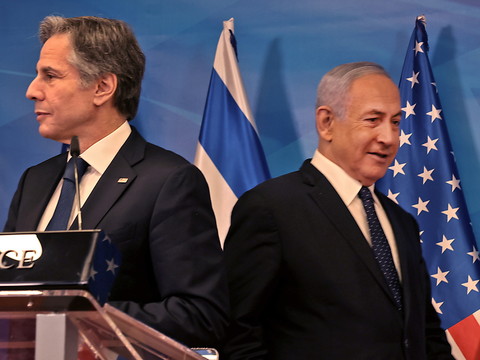
By W.M. Peterson | Truth Blitzkrieg | August 5, 2024
Former U.S. Congressman Ron Paul once asserted, “There’s no history to show that Iranians are aggressive people. When is the last time they invaded a country? Over 200 years ago!”
As with many other important matters, Congressman Paul was absolutely correct; Iran has never been a warmongering state, unlike adversarial belligerents Israel and the USA.
Despite deep state meddling in the Persian nation’s affairs (e.g., the 1953 coup against Prime Minister Mohammad Mossadegh and the 2020 murder of Major General Qasem Soleimani), Iran has never posed the slightest threat to America. Why, then, are we being maneuvered into war when there is absolutely no national interest at stake?
It’s somewhat of a rhetorical question, I admit, since by now most people who aren’t cognitively impaired understand that Israel is trying like hell to steer America’s military into the Middle East to shed more blood on its behalf. The recent provocations towards Iran are but the latest installments in an ongoing saga we’ve witnessed play out repeatedly since 2001.
Americans should know by now what to expect. After having been led by the nose into 20 years of costly wars primarily for the enrichment and comfort of Jewish intruders squatting in the Holy Land, you’d think we might have learned a thing or two about international Zionist statecraft. It’s not as if their methods of fomenting a climate of war have changed. It’s not as if we weren’t told what to expect.
In fact we were told, by none other than former Supreme Allied Commander of NATO, General Wesley Clark.
During a 2007 interview on Amy Goodman’s political talk show Democracy Now, General Clark spoke about a detailed war agenda that was revealed to him by members of the Joint Chiefs of Staff when he visited the Pentagon just ten days after 9/11:
“One of the generals called me in. He said, ‘Sir, you’ve got to come in and talk to me a second… We’ve made the decision we’re going to war with Iraq.’ This was on or about the 20th of September. I said, ‘We’re going to war with Iraq? Why?’ He said, ‘I don’t know…I guess they don’t know what else to do.’ So I said, ‘Well, did they find some information connecting Saddam to al-Qaeda?’ He said, ‘No, no…there’s nothing new that way. They just made the decision to go to war with Iraq…I guess it’s like we don’t know what to do about terrorists, but we’ve got a good military and we can take down governments.’ And he said, ‘I guess if the only tool you have is a hammer, every problem has to look like a nail.”
A few weeks later, Clark returned to the Pentagon and met with the same man, recalling:
“I said, ‘Are we still going to war with Iraq?’ And he said, ‘Oh, it’s worse than that.’ He reached over his desk. He picked up a piece of paper and he said, ‘I just got this down from upstairs’ — meaning the Secretary of Defense’s office — ‘today.’ And he said, ‘This is a memo that describes how we’re going to take out seven countries in five years, starting with Iraq, and then Syria, Lebanon, Libya, Somalia, Sudan and, finishing off, Iran.’ I said, ‘Is it classified?’ He said, ‘Yes sir.’ I said, ‘Well don’t show it to me.’ And I saw him a year or so ago, and I said, ‘You remember that?’ He said, ‘Sir, I didn’t show you that memo! I didn’t show it to you.’”
General Clark was having these conversations at a time when the Pentagon was entirely under the thumb of Zionist Jews who had been plotting and preparing for a global war on terror for many years prior to 2001. The battle plan disclosed to Clark is not of American provenance; it is an Israeli war stratagem smuggled into our foreign policy by duplicitous foreign agents. You’ll notice that almost every country named by the general has been ‘dealt with’ militarily in one form or another in the years following 9/11, Iran being the lone exception. That status is likely to change real soon as Israel continues to escalate tensions in the region. AIPAC control over U.S. politicians ensures there won’t be so much as a whimper of protest from the ‘American Colossus’ in response to Zionist saber-rattling and increased provocations. And, rest assured, America will defend Israel to the death when the situation in the Middle East reaches critical mass. American citizens, and especially ‘conservatives,’ need to understand how they’re being emotionally manipulated into supporting yet another war that is entirely at variance with our interests and could only spell doom for our already beleaguered nation.
Netanyahu’s War on Terror
On July 24th, Benjamin ‘Bibi’ Netanyahu swaggered into the U.S. Capitol to address a joint session of Congress and to cultivate material and emotional support for his upcoming war with Iran. During the course of his nagging hour-long harangue, the Israeli prime minister received 58 standing ovations from submissive stooges on both sides of the aisle, proving once more that Pat Buchanan’s description of Capitol Hill as “Israeli-occupied territory” is as true today as it was 30 years ago.
The AIPAC-funded adulation shown this Hebrew war criminal was a sickening sight to behold. Former US Marine and United Nations weapons inspector Scott Ritter summed it up nicely:
“Israel has bragged about buying the US Congress. And this is the result, where a war criminal—a man who has been accused of genocide, who has arrest warrants being prepared for him by the International Court of Justice, a man who heads a State that has been defined legally as an “apartheid state,” carrying out an illegal and unjust occupation and, again, genocide of the Palestinian people—has demanded an audience to the Congress that he has bought and paid for. That’s what’s happening here. We must see it in that perspective. This isn’t an honor being given to Netanyahu by the US Congress. This is the US Congress obeying the commands of the man who leads the nation that owns the US Congress.”
In one of his most memorable lines of the day, Netanyahu affirmed with a straight face, “there is no place for political violence in democracies!” (He made the comment while referring to the recent shooting at a Trump rally in Pennsylvania.) Within one week, however, Israel had assassinated Hamas political leader Ismail Haniyeh in Tehran; Hezbollah commander Fuad Shukr in Beirut; and Al Jazeera journalist Ismail al-Ghoul in Gaza. The recent killing spree occurred only three months after IDF jets bombed the Iranian embassy in Syria killing 16 people, including seven diplomats. “There is no place for political violence in democracies!” quoth the mass-murdering psychopathic Jew, who once attended a two-day anniversary celebration commemorating the Irgun’s 1946 bombing of the King David Hotel.
Bibi the Butcher, that distinguished darling of America’s political class, has spent his entire adult life promoting Israel’s War on Terror.
In 1979, he and his father Benzion partnered with Irgun terrorist-turned-prime minister Menachem Begin to organize the Jerusalem Conference on International Terrorism, a three-day event intended to “launch an international propaganda offensive to promote and exploit the issue of international terrorism,” as Philip Paull explains in his 1982 book, International Terrorism: The Propaganda War. The event was held at the Yonatan Institute, named after Netanyahu’s deceased older brother, and its purpose was to bring Western political leaders together to discuss international terrorism and the possibility of manipulating America’s military into the Middle East to wage a war on terror. The elder Netanyahu (born Mileikowsky) said in his opening address, “This conference was called to serve as a beginning of a new process — the purpose of rallying democracies of the world to a struggle against terrorism and the dangers it represents.” (George H.W. Bush spoke on the last day of the event.)
From that point on, the Western media dutifully disseminated the propaganda of the Jerusalem Conference and Benjamin Netanyahu would produce a number of books, articles and speeches throughout the 1980s and 90s promoting the doctrine of a global War on Terror. As Philip Paull wrote in 1982, “This ‘anti-terrorist’ propaganda campaign was and is being conducted in a style reminiscent of war-time ‘psychological warfare’ by journalists serving as conduits and spreaders of misinformation originating in Jerusalem.”<
Forecasting War
Netanyahu’s plan to haul America’s military into the Middle East to wage war on Israel’s enemies became a reality after September 11, 2001, a day he claimed was “very good” for Israel. (Source: New York Times, Sept. 12, 2001)
Many Americans still believe the War on Terror was launched in response to the 9/11 attacks. The fact is, however, the War on Terror was conceived many years before 2001, and the atrocities perpetrated in New York City and Washington D.C. were merely the excuse to make the war agenda operational.
In February 1982, the World Zionist Organization published ‘The Yinon Plan: A Strategy for Israel in the Nineteen Eighties.’ The document was published in Hebrew but was later translated into English by the eminent professor Israel Shahak of Hebrew University. It was written by military strategist Oded Yinon and detailed a plan to break up large Arab nations like Iraq and Syria and transform them into tiny ethnic statelets that would be incapable of defending themselves against Israel’s superior military might. Yinon wrote:
“The dissolution of Syria and Iraq later on into ethnically or religiously unique areas… is Israel’s primary target on the Eastern front in the long run, while the dissolution of the military power of those states serves as the primary short term target.”
Yinon’s vision for Iraq came to fruition following the illegal American invasion, launched on the Jewish revenge holiday Purim, in 2003. Almost immediately, America’s conquering forces disbanded Iraq’s military and the entire country soon descended into civil war between competing factions of Sunnis, Shiites and Kurds. Prior to the invasion, Iraq had been a significant impediment to Israeli domination of the Middle East, which is why the Jews in control of America’s foreign policy selected it for annihilation. And, as an added bonus, there were the financial spoils of war to acquire as well. Oded Yinon: “Iraq, rich in oil on the one hand…is guaranteed as a candidate for Israel’s targets. Its dissolution is even more important for us than that of Syria.”
What Yinon described in 1982 is the Eretz Yisrael (Greater Israel) project that Americans have been fighting and dying for since 2001. America’s military is not fighting terrorism; it is reorganizing the Middle East to conform with Israel’s whims and Iran is the crown jewel. This war agenda has already bankrupted America morally and financially and has destroyed the erstwhile superpower’s standing on the world stage. As noted Middle East expert Linda S. Heard wrote in an article for Counterpunch (April 25, 2006), “Oded Yinon’s 1982 ‘Zionist Plan for the Middle East’ is in large part taking shape. Is this pure coincidence? Was Yinon a gifted psychic? Perhaps! Alternately, we in the West are victims of a long-held agenda not of our making and without doubt not in our interest.”
A Clean Break and PNAC
An updated version of The Yinon Plan was drafted for Netanyahu in 1996 during his first year as Israel’s prime minister. Titled ‘A Clean Break: A New Strategy for Securing the Realm,’ the document was assembled for Netanyahu by neocon hawks Richard Perle, Douglas Feith and David Wurmser. It specifically called for the removal from power of Saddam Hussein in Iraq and Bashar al-Assad in Syria and recommended military confrontations with both countries as well as with Lebanon and Iran. One year later, Perle, Feith and Wurmser would all join the newly-founded Project for a New American Century (PNAC) and continue their strategizing for Netanyahu’s War on Terror.
PNAC was an elite neoconservative think-tank founded in 1997 by influential Zionists William Kristol and Robert Kagan. The majority of the group’s membership was comprised of fanatical Jews with deep ties to the state of Israel, many of whom came to power just prior to 9/11 within the administration of George W. Bush. These include: Dov Zakheim, Paul Wolfowitz, Douglas Feith, Elliot Abrams, Richard Perle, David Frum, Robert Zoellick, David Wurmser, and the convicted felon Lewis ‘Scooter’ Libby.
The overarching philosophy of PNAC was based on the ideology of Jewish intellectual Leo Strauss. Like many of today’s neoconservatives, Strauss was an ex-Trotskyite who promoted Machiavellian tactics and the use of lies as necessary political tools while a professor of political science at the University of Chicago. Significantly, he was also a dedicated Zionist and a follower of the terrorist Ze’ev Jabotinsky. On the surface these ideological alignments appear to be contradictory, unless some understanding of the overwhelming Jewish role in both Zionism and Communism can be apprehended. Both were pioneered by the same man, Moses Hess, and both are Jewish revolutionary movements whose sole aim is to do whatever is best for Jewish interests even if it means employing seemingly opposing methods. Far-right Zionism (Jewish nationalism) and far-left Communism (Jewish internationalism) are two sides of the same shekel working in tandem as a lethal pincer for global hegemony. Attempting to explain these amorphous tendencies, Jewish historian and political theorist Murray Rothbard once noted that neoconservatives “moved from cafeteria Trotskyites to apologists for the US warfare state without missing a beat.”
In September 2000, PNAC published a 90-page document titled ‘Rebuilding America’s Defenses: Strategies, Forces, and Resources For a New Century.’ The document, co-authored by Rabbi Dov Zakheim, called for America to initiate a series of regime change wars in the Middle East and North Africa with an emphasis on Iraq, Syria, Libya, Lebanon and Iran. The authors of the report emphasized the importance for America to “fight and decisively win multiple, simultaneous major theater wars” but acknowledged that “the process of change is likely to be a long one, absent some catastrophic and catalyzing event like a new Pearl Harbor.” One year to the month of the document’s publication America got what George W. Bush referred to at the time as ‘our Pearl Harbor.’
Conclusion
And so America teeters once again on the brink of war due to our fatal attraction to the Zionist state. The man who claims “there is no place for political violence in democracies” presides over a country that has made political assassinations its stock-and-trade and is undoubtedly responsible for the 9/11 attacks which activated its long-held War on Terror scheme. Speaking to an audience at Bar Ilan University in 2008, the war criminal recipient of 58 standing ovations from the US Congress reiterated his belief that the 9/11 attacks were in fact good for Israel: “We are benefitting from one thing, and that is the attack on the Twin Towers and Pentagon, and the American struggle in Iraq.” (Source: Ha’aretz, April 16, 2008)
*Nota bene: Netanyahu listed three things, not one, but to the mind of an architect of the War on Terror, all three blend seamlessly together.*
The Israeli prime minister and his minions have nothing but contempt for America. That won’t change regardless of how many standing ovations he receives from a goyische congress or how many US dollars flow into his over-stuffed war chest. In 2001, he was filmed having a conversation with Israeli settlers about ways in which he intended to undermine the US-led Oslo Peace Accords that had been signed in 1993 and 1995. During one such conversation, he crowed: “I know what America is… America is a thing you can move very easily, move it in the right direction. They won’t get in the way.” He goes on to boast about his ability to manipulate the US in the ongoing Israeli/Palestinian peace process, saying, according to the Washington Post (July 16, 2010), “They asked me before the election if I’d honor [the Oslo Accords]… I said I would, but … I’m going to interpret the accords in such a way that would allow me to put an end to this galloping forward to the ’67 borders. How did we do it? Nobody said what defined military zones were. Defined military zones are security zones; as far as I’m concerned, the entire Jordan Valley is a defined military zone. Go argue.”
Benjamin Netanyahu ladies and gentleman. A man whose military has killed upwards of over 186,000 Palestinians this year alone and has bombed hospitals, schools, churches, aid convoys and refugee camps; a man who sanctions the anal rape of prisoners; a man American politicians hail as a conquering hero; a man millions of evangelical ‘Christians’ believe we should sacrifice more of our children’s blood for.
Featured Video
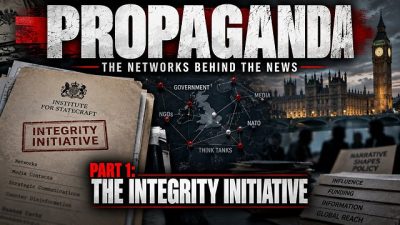
Integrity Initiative: UK-funded network framed dissent as Russian disinformation for years
or go to
Aletho News Archives – Video-Images
From the Archives
Why Saudi Ties to 9/11 Mean U.S. Ties to 9/11
By Kevin Ryan | Dig Within | September 27, 2015
Media interest in Saudi Arabian connections to the crimes of 9/11 has centered on calls for the release of the 28 missing pages from the Joint Congressional Inquiry’s report. However, those calls focus on the question of hijacker financing and omit the most interesting links between the 9/11 attacks and Saudi Arabia—links that implicate powerful people in the United States. Here are twenty examples. … continue
Blog Roll
 Aletho News
- ‘A Big Victory’ – Palestine Chronicle Wins Two-Year Legal Battle
- IAEA inspectors cannot return to Iran amid US threats: Russia
- Senate Rejects Iran War Powers Resolution Passed By House
- ‘We did not attack Pakistan with drones’: Afghan sources
- Iraqi Resistance faction links arms to sovereignty, questions US exit
- Cannon fodder no more… South Korea rejects Trump’s pressure to join his criminal war on Iran
- Neria Leiter Was A Legitimate Military Target
- Integrity Initiative: UK-funded network framed dissent as Russian disinformation for years
- ‘We don’t seek permission to defend our country’: Snippets from President Pezeshkian’s UNGA address
- NATO chief wants Europeans to fight American wars [for Israel]
- If Americans Knew
- In UN Speech, Iran’s President Displays Pictures of Children Killed by US, Brings Attention to Israel’s Nuclear Arsenal
- Israel displaces hundreds of Palestinians amid wave of demolitions in West Bank
- Aid, reconstruction, and Israel’s history of obstruction in Gaza
- Trump administration digs an ever-deeper hole of complicity in genocide – Daily Update
- US-Israel $2.8 Billion Arms Deal, 40,000-Bomb Supply Faces New Gaza Complicity Accusations
- Caught on Tape: AIPAC CEO Boasted of Controlling Trump’s National Security Officials
- Why Hamas Attacked Israel in October 2023 – Israeli professor Ilan Pappé
- They see them, then kill them: Israeli quadcopters track, deliberately target civilians in Gaza
- Winter could turn Gaza’s treacherous, war-damaged buildings into deathtraps
- Majority of Democratic Voters Want to Prosecute Both Biden and Trump Administration Officials Over Gaza
- No Tricks Zone
- New Study: Earth And Venus Surface Warmth Largely Explained By Convection And Lapse Rate, Not CO2 Or Radiation
- 2025 Nature Paper Claiming Worsening Global Drought Gets RETRACTED …Heavily Flawed
- New Study: ‘Global Drought Shows No Detectable Recent Acceleration Under Climate Warming’
- Economic Masterminds: German Socialists Suggest Taxing Productivity Gains Stemming From Using AI
- The South China Sea Has Not Been Cooperating With The Climate Change Narrative
- Energy Crisis: Germany Enters Heating Season With Historically Low Gas Reserve Fill Levels
- New Study: The Antarctic Ice Sheet Gained Mass From 2020-2024 Due To Staggering Snow And Ice Accumulation
- Study: Ocean Heating Rates From Thousands Of Years Ago ‘Dwarf’ Modern Ocean Heating Rates
- Climate Extremists Target, Attack Large-Scale Power Grid Infrastructure In Germany!
- New Study: Antarctic Ice Melt Has Contributed Less Than 1 Centimeter To Sea Level Rise In The Last 30 Years

