Israel wants foreigners to report falling in love with Palestinians
Samizdat | September 4, 2022
According to new guidelines coming into force on Monday, foreigners will be required to inform the Israeli Defense Ministry if their romantic relationship with a resident of the West Bank gets serious – including plans to live together, get engaged or marry – to receive or extend an entry permit. The restrictions do not apply to those visiting Israeli settlements.
The new set of rules was originally drafted by the Defense Ministry’s agency for Palestinian civil affairs, COGAT, back in February, but its implementation faced several delays due to legal challenges. The lengthy 97-page document stipulates the procedure for entry and residence of foreign nationals in the Israeli-controlled Palestinian territories.
Foreign citizens, even those of Palestinian descent living abroad and officially married to a West Bank resident, will no longer be able to obtain a visa on arrival in Israel, and will have to file an application for an entry permit at least 45 days in advance, the Times of Israel reports. Additional requirements are also introduced for those who fall in love and “form a couple” after the arrival.
“If the relationship starts after the foreigner arrived at the Area, then the authorized COGAT official must be informed in writing… within 30 days of the relationship’s start,” the rules state. The “starting date” of the relationship is defined as the day of the engagement ceremony, wedding, or the start of cohabitation – “whichever occurs first.”
The couple must also “formalize” their status with the Palestinian Authority, and a failure to do so within 90 days will result in “immediate” expulsion. But even if the relationship status is formalized, the Israeli permit cannot be extended for more than 27 months, after which a foreigner will have to leave the country for at least 6 months.
COGAT officials said this “two-year pilot” program, which does not apply to those visiting Israeli settlements in the West Bank, is intended to make the entry process “more efficient and more suited to the dynamic conditions of the times,” according to AFP.
Israeli occupation forces confiscate 4 boats, sink 2 others off Gaza shores
Palestinian Information Center – September 2, 2022
GAZA – During the past two days, the Israeli occupation forces (IOF) have escalated their attacks against the Palestinian fishermen off the Gaza shores.
The IOF chased and opened fire at Palestinian fishing boats sailing within the allowed fishing area in separate incidents. As a result, four boats were confiscated, and another was sunk, while a fifth was burned.
According to the Palestinian fishermen syndicate, the occupation forces burned a boat belonging to the fisherman Haitham Farwana after opening fire at it off Khan Yunis shores on Thursday.
The Israeli forces also confiscated on the same day the boat of the fisherman Abdel Moati Al-Habil.
Earlier on Wednesday, IOF confiscated a fishing boat where Ahmad Adel Mohammad Al-Bardawil was on board sailing within 3 nautical miles off western Rafah shore, southern Gaza Strip. There were also 2 generators and 30 searchlights on the boat.
The IOF also confiscated 2 fishing boats belonging to Muhannad Ra’fat Radwan Baker, and Tayseer Mohammad Abdulnouri, who are both residents of al-Shati refugee camp. They were sailing within 3 nautical miles off al-Waha shore, northwest of Beit Lahia in the northern Gaza Strip.
In a separate incident, a fisherman named Omar Mohammad Ism’ail Al-Bardawil said that IOF’s gunboats stationed off the Fishermen Seaport, western Rafah, pumped water at a fishing boat he owns and sank it. The boat was sailing within 6 nautical miles and had a generator and searchlights on board.
So far in 2022, the Palestinian Center for Human Rights (PCHR) documented the injury of 19 fishermen and the arrest of 44 others, including 6 children; 2 fishermen remain in IOF detention. Also, the Israeli authorities continue to keep 18 fishing boats and dozens of fishing tools and equipment in their custody.
In this regard, PCHR reiterated its call upon the international community, including the States Party to the Geneva Conventions of 1949, to compel the Israeli authorities to cease their attacks and pursuit of Palestinian fishermen in the Gaza waters, and to allow them to fish freely.
Latvian president Levits takes aim at Russian minority
By Ahmed Adel | August 31, 2022
Ethnic Russians residing permanently in Latvia should be “isolated” if they are deemed not to be loyal to the state, Latvian President Egils Levits said. Such a move demonstrates that the liberal experiment in the Baltics has failed and is quickly descending into fascism.
“We see that some of the Russian community is disloyal to our country… Our task is to deal with them, to isolate them… They should simply be isolated,” he said on Latvijas Radio.
The majority of Latvians, according to Levits, have become “more nationalist and patriotic” as a result of the war in Ukraine, which he believed was a positive thing.
The Latvian president’s statement is an expression of open and unacceptable discrimination without precedent, effectively a new type of fascism. When viewed in the context of Latvia openly glorifying and supporting Nazism by removing monuments to Soviet martyrs, as well as being ardent supporters of the fascist regime in Kiev, the non-condemnation from the European Union highlights that liberalism will always descend into fascism when non-Western powers challenge their hegemony.
During World War II, Latvians fought on the side of Hitler and served as guards at concentration camps. Just like what happened in Ukraine since 2014, Nazi collaborators are now being elevated as heroes in Latvia. Although defenders of anti-Russia policies point out that Levits could not be a fascist as he is Jewish, they also ignore Volodymyr Zelensky, also of Jewish heritage, is a gatekeeper of Far-Right ideology in Ukraine and describes the neo-Nazi Azov Battalion and Right Sector as heroes and patriots. In addition, Zelensky’s top financial backer, the Ukrainian Jewish energy oligarch Igor Kolomoisky, has been a key benefactor of the Azov Battalion and other Far-Right extremist militias.
21st century fascism is motivated by Russophobia rather than antisemitism, as was the case in the previous century. As pointed out by Toward Freedom: “In its bid to deflect from the influence of Nazism in contemporary Ukraine, U.S. media has found its most effective PR tool in the figure of Zelensky […] For a U.S. media engaged in an all-out information war against Russia, the president’s Jewish background has become an essential public relations tool.” Therefore, dismissing Levits’ anti-Russia racism because of his Jewish heritage does not hold and is a lazy effort to dismiss the emerging fascism in Latvia.
Since the three Baltic countries – Lithuania, Estonia and Latvia – achieved independence in the early 1990’s, they have worked towards a homogenisation that does not respect minorities. It is recalled that an “Estonianization” was carried out in Estonia in the 1930s, which forced Poles, Russians, Germans and Jews to adopt Estonian surnames. This is similar to the Ukraianization that was forced on Russian-speakers in Ukraine, as well as the Polish, Romanian and Hungarian minorities, since 2014.
It cannot be discounted that Russian people, supposedly living in liberal Europe, will find their language, culture and identity attacked, with individuals targeted for being proud of their ethnicity. Latvian authorities could take away the Russian minorities citizenship or even expel them from the country, with little to no recourse from Brussels.
Emboldened by the lack of condemnation from the West, Latvia’s actions could force Moscow to take its own retaliatory measures, such as terminating diplomatic relations and the transit of goods through these countries, from which they earn fees. Although initial reactions in the West might be celebratory, just as happened in Ukraine, it is remembered that Kiev is now the biggest loser as it is not earning full transit fees for the transportation of Russian energy.
Latvia recently declared Russia a sponsor of terrorism and suspended the issuance of tourist visas to Russian citizens. In addition, the Baltic countries are actively fighting against their Soviet legacy, among other things, by demolishing monuments to Soviet martyrs and soldiers who defeated Nazism in World War II.
Two million people live in Latvia, of which more than 220,000 are so-called non-citizens. These are permanent residents of the country, whose ancestors arrived after 1940 when Latvia became a part of the Soviet Union. Non-citizens, despite being in Latvia for multiple generations, have limited rights and cannot participate in elections and referendums. To obtain Latvian citizenship, they need to go through the naturalization procedure by passing an exam in Latvian language and history.
This procedure itself is a demonstration of fascist policies in supposedly liberal Europe.
None-the-less, calling for the “isolation” of Russians in Latvia is an othering resembling the policies of Nazi Germany against its Jewish and Roma citizens. Yet, as Russophobia has become a mainstream and acceptable form of racism and fascism in the liberal West, it will continue to receive little condemnation.
Ahmed Adel is a Cairo-based geopolitics and political economy researcher.
Voting Rights For Non-Locals Unacceptable, Former Jammu and Kashmir State Chief Says
By Deexa Khanduri | Samizdat | August 24, 2022
Until August 2019, the Indian Constitution’s Article 370 restricted voting rights in Jammu and Kashmir to its permanent residents who belong to the region by birth. The Election Commission of India (ECI) last week said Indian citizens temporarily living in Jammu and Kashmir are now eligible to cast their votes in the union territory.
Former chief of the erstwhile state of Jammu and Kashmir Farooq Abdullah has said that giving voting rights to non-locals is “totally unacceptable,” and if needed, local politicians will go to court against the Election Commission of India’s (ECI) decision.
He said this after presiding over a meeting of Kashmiri political parties held on Monday, which was attended by Congress, the People’s Democratic Party (PDP), Awami National Conference (ANC), Shiv Sena, CP, JDU, and Akali Dal.
Two regional parties that did not attend the meeting were the Apni Party led by Altaf Bukhari and the People’s Conference of Sajad Lone.
Lone on Monday said that it would stage a hunger strike in front of the parliament if there was a demographic intervention or the rights of the people of Jammu and Kashmir were compromised.
The Election Commission of India last week said Indian citizens temporarily living in Jammu and Kashmir are now eligible to cast their votes in the union territory.
The ECI’s announcement is expected to add a significant number of voters to the existing ones.
“Tomorrow, it will be five million or ten million,” Abdullah said Monday, adding the move is a direct threat to the identity of Jammu and Kashmir natives — Dogras, Kashmiris, Sikhs, and other communities who are losing their identity.
A section of local parties saw the ECI’s announcement as an attempt to change the demography of the Muslim-dominated region.
Israel must ‘eliminate’ nuclear arsenal: Official
The Cradle | August 23, 2022
On 23 August, Iran’s top UN Envoy Majid Takht Ravanchi decried the lack of progress over efforts to denuclearize West Asia, and called on Israel – the region’s only nuclear armed state – to eliminate its stockpile of weapons.
Tehran’s ambassador made these remarks during the Tenth Review Conference of the Parties to the Treaty on the Non-Proliferation of Nuclear Weapons (NPT) held at the UN’s headquarters in New York.
Takht-Ravanchi charged the US with exercising double standards, and demanded that Israel’s accession to the NPT “without precondition and further delay” and the placement of all of its nuclear activities and facilities under the comprehensive International Atomic Energy Agency (IAEA) safeguards are essential in “realizing the goal the of establishing of a nuclear-weapon-free zone in the Middle East.”
The Iranian envoy said delays in 2012, 2013 and 2014 in convening the Conference – which is meant to advance the goal of eliminating weapons of mass destruction from the region – had caused serious setbacks for participating states.
“We are firmly convinced that the Conference was postponed indefinitely because of the US opposition, and this has been the persistent policy of the US to turn a blind eye to the nuclear arsenals of the Israeli regime while not supporting the convening of the Conference,” he declared.
Israel reportedly possesses 200 to 400 nuclear warheads, making it the sole possessor of non-conventional arms in West Asia, yet Tel Aviv as yet to sign the NPT and refuses to allow inspections of its nuclear facilities.
Signatories from 191 countries have signed the NPT, including the US, UK, France, China, and Russia, making it the most highly ratified armaments agreement in history.
Experts suggest that the US and EU support for Israel has emboldened the country to increase its nuclear activities, despite essential oversight by the IAEA.
Over the years, Israelis are believed to have assassinated at least seven Iranian nuclear scientists and conducted a series of sabotage operations against Iran’s IAEA-monitored nuclear facilities.
Last week, Israeli officials called on western nations to “walk away” from the negotiating table with Iran, fearful that the US is on the cusp of returning to the 2015 Joint Comprehensive Plan of Action (JCPOA) that would freeze Tehran’s enrichment program.
During a phone call with German Chancellor Olaf Scholz on 18 August, Israel’s interim Prime Minister Yair Lapid demanded that Europe send a “clear and unequivocal message that there will be no more concessions to Iran,” according to Israeli media.
Lapid also met with the US ambassador to Israel and the chairman of the US House Foreign Affairs Committee’s ‘Middle East’ Subcommittee, telling them: “In the current situation, the time has come to walk away from the table. Anything else sends a message of weakness to Iran.”
This comes after several Israeli assassination and sabotage operations inside Iran, in efforts to set back Iran’s advancements and scuttle JCPOA revival talks.
Mossad Likely Behind Salman Rushdie Stabbing: Denver Professor
Al-Manar | August 23, 2022
The last week’s stabbing of novelist Salman Rushdie, the author of a sacrilegious anti-Islam book may have been orchestrated by the Mossad, suggested Nader Hashemi, Director of the Center for Middle East Studies at the University of Denver.
In a Saturday interview with Negar Mortazavi, host of the Iran Podcast, Hashemi questioned the timing of the attack, highlighting what he believed to be two possible explanations.
Hashemi said that one possibility is that Iran wanted to take vengeance on the United States for the 2020 assassination of IRGC general Qassem Suleimani in a drone strike at Baghdad Airport.
Another possibility, Hashemi said, adding that he believes this is more likely, is that Rushdie’s attacker, Hadi Matar, had been convinced to commit the attack by a Mossad agent masquerading as an IRGC operative or supporter.
“That so-called person online claiming to be affiliated with the Islamic Republic of Iran could’ve been a Mossad operative.”
“The other possibility, which I actually think is much more likely, is that this young man Hadi Matar was in communication with someone online who claimed to be an Islamic Revolutionary Guard Corps member or supporter and lured him into attacking Salman Rushdie and that so-called person online claiming to be affiliated with the Islamic Republic of Iran could’ve been a Mossad operative.”
Hashemi went on to suggest that the Zionist entity’s motive for carrying out a false flag operation would be to galvanize opposition to the ongoing efforts of world powers to revive the 2015 nuclear agreement.
“Israel has taken a very strong position against reviving the Iran nuclear agreement,” he said. “We were in very sensitive negotiations, like an agreement was imminent, and then the attack on Salman Rushdie takes place. I think that’s one possible interpretation and scenario that could explain the timing of this at this moment during these sensitive political discussions related to Iran’s nuclear program.”
Europe’s Population Could Halve As Birth Rates Plummet: HSBC Economist
Sputnik – 23.08.2022
Soaring home prices in Europe have led to people putting off marriage and starting a family to a later period in their life than used to be the case as couples are forced to save for longer to buy a family home.
Europe’s population may dramatically drop this century as rising housing costs and the effects of the COVID-19 lockdowns force couples to have fewer kids, according to economist James Pomeroy at HSBC.
Pomeroy predicts that by the end of this century, Europe’s population could fall by 40 percent and the workforce could fall by 20 million by 2030 because of plummeting birth rates.
“Though economic development typically lowers fertility rates, in developed markets there is some evidence that fertility rates are being held back by elevated house prices as couples postpone their first child, partly as people tend to get married later, but also because they have to save for longer to buy a family home,” Pomeroy said.
According to him, Italy already has 40 percent fewer schoolchildren than it had in 1980, and figures are expected to drop by another quarter by 2040.
“In 2000, the bulk of the population was aged 15 to 45; by 2020, it was 30 to 60. And across southern Europe – including Italy and Greece – there will be twice as many people in their sixties than in their teens,” the economist said.
In Germany, Netherlands, Canada and New Zealand, house prices are more than 30 percent higher than they were seven years ago relative to incomes, he added.
By the end of the 21st century, the population in Europe may drop to fewer than 350 million people from more than 700 million today.
Tel Aviv hiding evidence of ethnic cleansing of Palestinians from public: Israeli media
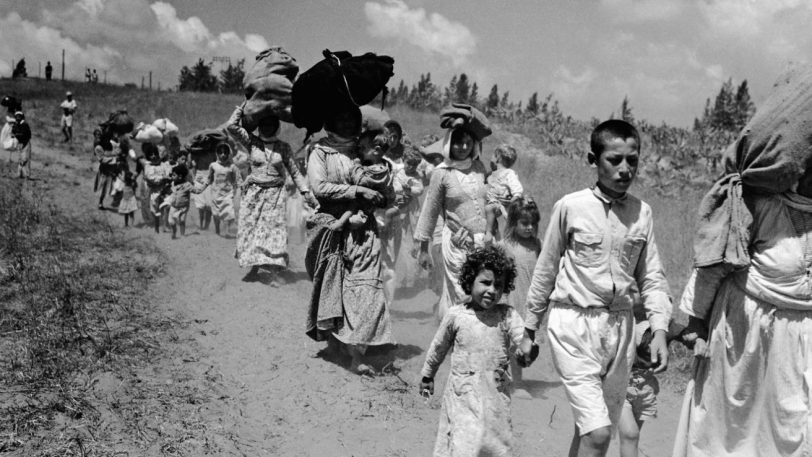
The Cradle | August 22, 2022
According to a report by Hebrew newspaper Haaretz released on 22 August, Tel Aviv has been working through its defense ministry to hide historical documents related to the founding of the state of Israel, from the Israeli public.
The founding of Israel in 1948, known throughout the Arab world as the “Nakba,” or catastrophe, involved the ethnic cleansing and mass expulsion of Palestinians from their land by ultra-nationalist Jewish gangs.
These gangs were later integrated into the Israeli military.
The documents contain details on Israel’s killing of civilians, as well as the erasure of entire Palestinian villages. Israel is undergoing “a systematic process to conceal evidence of the Nakba,” Haaretz reveals.
The report states that efforts to hide these documents have been carried out by the Directorate of Security of the Defense Establishment, a secret department in the Israeli Defense Ministry known as the Malmab, “whose work and budget are secret.”
Members of the Malmab reportedly “worked without any legal authority, even in some cases [hiding] documents that the military censor had previously allowed to be published,” Haaretz revealed.
The report also details that government officials, including members of the Israeli Knesset, who by law are allowed access to such archives, were barred from viewing the documents in question.
A settlement was reached in which the Israeli Treasury would send requests in order for archived documents to be examined for disclosure. The Malmab apparatus would then search through them thoroughly to determine if they can be published alongside Israel’s accessible archives, despite already being accessible by Israeli law.
Haaretz reported that the Malmab were also working to hide documents relating to Tel Aviv’s nuclear program.
“If the state admitted … that the documents were hidden without authority, why did it not insist on their immediate disclosure?” the report asks.
The report concludes by saying that Israel has to “get rid of the twisted habit it has adopted of concealing its past from the public … the public has the right to know the history of the country in which it lives, and also to discover its less pleasant aspects.”
Despite the events of the Nakba being common historical knowledge, Israel’s attempt to hide these documents represents its policy of trying to control the perception of the Israeli public.
Israel is known to have attempted hiding the atrocities of its past.
On 8 July, Hebrew media revealed the existence of a mass grave under the parking lot of a tourist attraction in Israel, where the bodies of dozens of Egyptian soldiers burned alive by Israeli forces were buried during the 1967 Arab–Israeli War, also known as the Six-Day War.
For over five decades, Tel Aviv kept the secret of the mass grave, never attempting to return the bodies to their homeland.
Additionally, Israel has been secretly building a nuclear arsenal for several decades – owning around 40 to 800 nuclear warheads which it denies having – while criticizing Tehran over its nuclear program.
How the US controls Lebanon’s energy supply
The US is leveraging Egypt’s gas supply to pressure Beirut over US-brokered maritime border talks with Israel
By Yeghia Tashjian | The Cradle | August 19 2022
Consider the chaos in Europe today caused by a sudden reduction in Russian gas supplies.
Now imagine the catastrophic state of Lebanon’s energy sector after two years of fuel shortages, limited foreign currency with which to purchase new, urgent supplies, and US-sanctions on Syria impeding Lebanon’s only land route for imports.
After decades of stalled reforms, Lebanon is running out of time and money.
In June 2021, a lifeline was handed to the country in a deal struck with Baghdad to supply two Lebanese power stations with Iraqi fuel. The agreement, which was due to expire in September 2022, has recently been extended for one year.
But while there are short and long term solutions available to remedy Lebanon’s energy crisis, the two main options are both monopolized by US policymakers with stakes in regional geopolitics.
The first option involves transporting fuel to Lebanon via the Arab Gas Pipeline (AGP), whereby Egypt will supply gas through Syria. Although the proposal was originally an American suggestion, this fuel route requires US sanctions waivers that have not yet been approved by Washington.
The second option is for Lebanon to extract its own gas supply from newly discovered fields off its coastline. This too depends entirely on US-mediated, indirect negotiations with Israel to resolve a maritime dispute over the Karish gas field in the eastern Mediterranean Sea.
Accessing its own gas supplies will go a long way to guarantee Lebanon’s own energy security, while providing the state with much needed revenues from exports.
However, the success of either project depends largely on the status of US-Lebanese relations at any given moment. The two options are also inextricably linked to each other: Washington is pressuring Beirut to compromise with Tel Aviv on the maritime border dispute before agreeing to “green light” Cairo’s gas exports via Syria, which is in turn heavily sanctioned by the US’s “Caesar Act.”
While Washington is playing a leverage game, Lebanon is slowly collapsing.
Gas from Egypt
Under the agreement signed with Cairo, 650 million cubic meters of natural gas will be exported annually via the AGP. As it turns out, the actual supply of gas, as per the World Bank’s conditions, awaits US approval to exclude Egypt from sanctions imposed on the passage of goods through Syria.
The AGP is already a functioning pipeline that has supplied Lebanon with Egyptian gas in the past, but operations were halted in 2011 when Syrian pipelines were damaged during the country’s armed conflict.
Under the deal, Egypt will pump gas through the pipeline to supply Lebanon’s northern Deir Ammar power plant, which can then produce 450 megawatts of electricity – adding four hours of additional electricity supply per day. It is a modest but necessary improvement over the barely two hours of electricity currently provided by the state.
The World Bank has pledged to finance the deal on the condition that the Lebanese government implements much needed reforms in the electricity sector, which has created tens of billions of dollars in public debt.
The Syrian equation
For the Syrian government, the arrangement is perceived as a diplomatic victory as it confers ‘legitimacy’ to the state and represents a step toward its international rehabilitation. The AGP deal was also hailed by Syrian Minister of Oil and Mineral Resources Bassam Tohmy as one of the most important joint Arab cooperation projects.
According to Will Todman, a research fellow in the Middle East Program at the Center for Strategic and International Studies, the agreement is “a win for the [Bashar al-]Assad government. The deal represents the first major move toward Syria’s economic integration with the region since Arab Spring protests shook Syria in March 2011, halting previous integration efforts.”
However, due to US Caesar Law restrictions, no concrete progress has been made over the past months. Amman and Cairo have both requested guarantees from Washington that they will not be subject to sanctions – to no avail. US President Joe Biden has yet to make a final decision on whether the plan will be considered a violation of sanctions on Syria.
Linking the Egypt deal with Israel talks
In order to create a certain interdependency in the region to minimize the possibility of new conflicts with Israel, the US is attempting to link the Egyptian gas deal with the ongoing, indirect, maritime negotiations between Tel Aviv and Beirut.
Amos Hochstein, the State Department senior adviser on energy security, who acts as chief mediator on the disputed maritime border between Lebanon and Israel, said after arriving in Beirut on 14 June that the US side will look at the final agreement between Egypt and Lebanon to evaluate the sanctions compliance of the natural gas project.
This means that Washington is linking the fate of the gas deal to the maritime dispute with Israel to exert additional pressure on Lebanon.
On 14 October, 2020 – just two months after the Beirut port blast which severed the primary transportation route for seaborne Lebanese imports – Lebanon and Israel began the long-awaited US-mediated talks to demarcate their maritime borders, under the supervision of the UN.
The framework agreement announced by both countries at the time was the most serious attempt to resolve the maritime dispute and secure gas drilling operations through diplomatic means.
However, there are many challenges that can slow or even derail these negotiations.
According to Lebanese estimates, the country has 96 trillion cubic feet of natural gas reserves and 865 million barrels of oil offshore, and is in urgent need to begin drilling to save its ailing economy.
Israel is also in hurry to resolve this dispute as it wants to finalize the negotiations before September 2022, when the Karish gas rig is expected to begin production. The concern is that if a deal is not signed by then, Hezbollah may take action to halt Israel’s extraction altogether – until Lebanon is able to extract its own fuel from those waters.
Resolution or conflict
Last month, Hezbollah Secretary General Hassan Nasrallah reiterated warnings against Tel Aviv in the event that Lebanon is prevented from extracting its own resources in the Med. “When things reach a dead-end, we will not only stand in the face of Karish… Mark these words: we will reach Karish, beyond Karish, and beyond, beyond Karish,” he cautioned.
Initially, Lebanon took a maximalist position on its maritime borders with Israel: the main dispute was around the percentage both countries should share in the disputed 860 square kilometers, which covers Lebanon’s offshore gas Blocks 8, 9 and 10.
It is worth mentioning that Lebanon does not enter these negotiations from a position of strength and is in dire economic need to unlock foreign aid and begin the flow of potential gas revenues.
Meanwhile, the arrival this summer of the British-based Energean, an oil and gas exploration company, which will begin a drilling operation close to the Karish gas field, has sparked tensions between both countries, prompting US envoy Hochstein to race back to the region on 13 June.
In order to provide Lebanon with some much-needed leverage and accelerate negotiations, Hezbollah dispatched three drones towards the Karish gas field on 2 July. The operation sought several results: to test Israeli military responses to the drones, to scare off the private company contractors working on the rig, and to motivate both Tel Aviv and Washington to step up and strike a deal.
The operation achieved its goals. Israel’s military now can’t rule out the possibility that the Lebanese resistance movement will launch additional attacks on the gas field in the near future, or provoke Israel in a different manner – if the maritime dispute is not ironed out, and soon.
Beyond the Mediterranean Sea
The negotiations have also been impacted by international developments, chiefly, the war in Ukraine and the growing energy crisis in Europe. Sweeping western economic sanctions on Moscow’s economic interests have dried up Russian exports to the continent, driving Europe to seek alternative sources of energy, few of which are readily available.
In May 2022, the US and EU unveiled a plan to reduce Europe’s dependence on Russian fossil fuels and in June, the EU and Israel signed an agreement to export Israeli gas to Europe. These external factors have further motivated the US and Israel to hasten the negotiation process with Lebanon, all of which are overshadowed by the aforementioned US pressure on the Lebanese government.
Energy expert Laury Haytayan believes that linking Lebanon to regional energy projects makes it harder for Lebanon to go to war with Israel. Haytayan told The Cradle: “Lebanon needs gas, Israel needs stability, and the US wants to give both what they want.”
It is important to recognize that a final maritime demarcation agreement also means defusing the tensions on the Lebanese-Israeli border, which may require a broader US-Iranian agreement, something that is unlikely in the short term.
If the gas deal is successful and the US approves the Egyptian energy exports, the move will only increase US leverage over Lebanon when it comes to future negotiations on energy security.
It is in Lebanon’s interest to ensure that one party, the US, does not continue to hold all the cards related to its vital fuel needs. A recent offer from Iran to supply the country with monthly free fuel was tacitly accepted by Lebanon’s prime minister and energy minister, but needs work. Other states have offered to build power generation plants to enhance the nation’s infrastructure and efficiency.
But with Lebanon so deeply affected by Washington’s whims – and punishments – it isn’t at all certain that the country can steer itself to these more independent options.
The US and Israel have never been this highly incentivized to solve the maritime dispute. If the deal fails, Hezbollah may proceed with military action, especially before the conclusion of political ally President Michel Aoun’s term this Fall.
Furthermore, the gas issue may turn into a contentious domestic political issue ahead of Israel’s November parliamentary elections. In that instance too, a military conflict between Israel and Hezbollah may be triggered.
The only solution is to strike a deal, get gas flowing, and avert war. Will saner minds prevail, or will the region’s high-stakes geopolitical competition continue to escalate blindly? More importantly, can Washington bear to allow Lebanon the breathing space after three years of severe economic pressure to control Beirut’s political decisions?
Occupation raids, attacks Palestinian organizations: EU, US and Canada are complicit!
Samidoun Palestinian Prisoner Solidarity Network | August 21, 2022
In the early morning hours of Thursday, 18 August, armed Israeli occupation forces invaded the offices of seven prominent Palestinian NGOs, civil society organizations and human rights defenders: the Health Work Committees, Addameer Prisoner Support and Human Rights Association, Al-Haq, Union of Palestinian Women’s Committees, Bisan Centre, Defence for Children International – Palestine, and the Union of Agricultural Work Committees. These organizations have all been designated by the Israeli occupation as “terrorist” in retaliation for their advocacy and community organizing work for Palestine, and then labeled “illegal organizations” in a military order covering the occupied West Bank of Palestine.
The invading forces ransacked the offices, confiscating computers, legal client files, documentation, printers and monitors and leaving clutter behind — as documented by the organizations’ surveillance cameras, recording the occupation forces’ invasion. The doors of the organizations were welded shut and a paper military order affixed to the door declaring their operation “illegal” under the occupation’s (illegal) military orders.
The organizations declared that they would not be silenced by these attacks, holding press conferences and returning to the offices to reopen them and continue their work. The attacks received widespread condemnation not only from Palestinian and pro-Palestinian forces but even from European governments whose policies and practices consistently target the Palestinian people and their fundamental rights.
Now, on Sunday, 21 August, occupation intelligence authorities — the Shin Bet — phoned Al-Haq director Shawan Jabarin to threaten him with interrogation and arrest if the organization’s work continues, while Defence for Children International – Palestine director Khaled Quzmar was summoned to and held under interrogation.
“Terror” Designations and Political Control
The invasions, interrogations, ransacking and attacks on these organizations reflect the failure of the occupation’s regime of “terror” designations to undermine their work. In 2021, not only did the regime designate Al-Haq, Addameer, DCI, Bisan, the UPWC and the UAWC as “terrorist” organizations — quickly followed by the military orders banning their work in the occupied West Bank of Palestine — it earlier in the year designated Samidoun (on 21 February 2021), followed by three more organizations. Previously and in a similar pretext, the occupation had issued a similar designation against the Health Work Committees along with designations of groups including the Arab Organization for Human Rights UK, the Palestinian Return Centre and Euro-Mediterranean Human Rights Monitor.
As we noted at the time, this
“indicates just how meaningless the term ‘terrorist’ is in the hands of the Israeli regime. It means precisely any organization, activist, or freedom fighter that challenges Zionist colonialism through any method or means of resistance at all. The flurry of ‘terrorist’ designations for organizations working to expose Israel’s crimes and organize Palestinians underlines this reality….These designations are not attacks on individual organizations but against Palestinian human rights defenders and those around the world who stand up for Palestinian liberation — and, fundamentally, the Palestinian people as a whole, especially the Palestinian prisoners in Israeli occupation prisons. They attempt to repress growing support for the legitimate resistance of the Palestinian people and confrontation of imperialism and Zionism.”
Further, it is clear that the use of such designations is intended to further political control over Palestinian society. These designations hinge on the allegation that organizations are close to one or another Palestinian resistance organizations, most commonly the Popular Front for the Liberation of Palestine or Hamas. Israeli officials have shopped around “evidence” to various governments that is so weak so as to be ludicrous, consisting almost entirely of unsubstantiated statements or on the idea that employing a person who supports a political organization (or, in some cases, relatives of people in political organizations “designated” by the occupation) is “funding” that organization by paying employees a salary for doing their job.
While it is obvious that these are false claims, the objective of this type of attack goes beyond simply lobbing allegations. Indeed, the European governments that have criticized the attacks and designations have also repeatedly affirmed their willingness to “examine evidence” and “act” if the Israeli regime “proves” that popular organizations, civil society groups and human rights advocates are in some way “tied” to Palestinian resistance movements. Not only are the organizations “innocent” of the Israeli claims, the claims themselves are fundamentally repugnant. The Palestinian people have the right to resist occupation and to be a part of political, social and armed movements in that resistance; this is not “terrorism” but an essential right of people under occupation and colonization.
Rather than affirming the right of Palestinians to resist and to organize themselves to achieve those goals, these European governments instead use these attacks to impose even greater political scrutiny and conditions. In many cases (such as the Netherlands), these governments recommend or require that all employees of these organizations must not be associated with any “banned” Palestinian political organization. If Palestinians are part of a political party or movement, they must be unemployable and impoverished: this is both the argument of the occupation and of the European states providing a meager “defense” of Palestinian civil society.
For the European funding agencies and many large foundations, supporting Palestinian NGOs has never been primarily about empowering or supporting the Palestinian people to achieve their liberation but rather about redirecting Palestinian energies into “state-building” and/or “reform” projects that exist within the confines of Oslo. Time and time again, these forces have introduced new conditional funding mechanisms and restrictions on everything from the political affiliation of individual employees to the names of buildings and schools.
European Union: Partners in Colonialism and Apartheid
This is borne out once again by the statement of nine European states — Belgium, Denmark, France, Germany, Ireland, Italy, the Netherlands, Spain and Sweden — which invokes the promotion of “democratic values and the two-state solution,” a fundamental contradiction as the so-called “two-state solution” itself is the legitimization of the colonization and occupation of 78% of Palestine and no solution at all for the Palestinian people. This brief comment lays bare the real political motivation for European involvement in funding Palestinian organizations, which is to limit rather than to achieve rights, justice and liberation. Further, the statement notes that “should convincing evidence be made available to the contrary, we would act accordingly.”
Here, the “evidence” being referred to would be any “links” between these NGOs and the Palestinian resistance. By including this statement in their alleged defense of the organizations, these European states actually encourage the occupation to continue its raids and ransacking, confiscation of files, arrests and interrogations, in an attempt to manufacture such “evidence”.
Of course, the position of these states themselves — members of the aggressive NATO alliance, defenders of the Israeli occupation in international arenas — is all too clear. The European Union, while rejecting the designation of advocacy and civil society organizations, continues to designate Palestinian resistance organizations as “terrorists.”
France continues to imprison Georges Ibrahim Abdallah while doing almost nothing to advocate for its citizen Salah Hamouri, jailed without charge or trial under Israeli administrative detention, as the government attempts to criminalize Palestinian activism, such as the Collectif Palestine Vaincra. Germany not only engages in weapons deals with the occupation, it also engages in severely repressive practices against Palestine organizing, particularly Palestinian communities in exile and diaspora, from the expulsion of Palestinian writer Khaled Barakat and Palestinian torture survivor and feminist Rasmea Odeh to the ban on 15 May Nakba demonstrations in Berlin. This is not to mention the links between Zionism and European colonialism from the very beginning of the Zionist project.
Now, Israeli prime minister and war criminal Yair Lapid is scheduled to come to Brussels on 6 October to convene the “Association Council” with all EU member states’ foreign ministers, for the first time in 10 years. This is the council under the EU-Israel Association Agreement, the agreement that provides for free trade for occupation products inside the EU and allows for occupation institutions to receive European grants for research and development.
Ending the EU-Israel Association Agreement is a long-time demand of the Palestine solidarity movement, but despite their expressed “concerns” about the violent repression imposed on Palestinians, these European states are planning to welcome Lapid and convene the Association Council after a long hiatus, celebrating their complicity in war crimes and crimes against humanity.
The Canadian government has refused to make any meaningful statement about these attacks, despite posing as a defender of “human rights.” U.S. officials stated their “concern,” while continuing to provide $3.8 billion in military support to the occupier.
**
Samidoun Palestinian Prisoner Solidarity Network affirms that these attacks are part and parcel of the ongoing war on Palestinian existence and organization, carried out by the Zionist state and supported by the imperialist powers that ally with the Israeli occupation, as well as Arab reactionary regimes engaged in “normalization” and the Palestinian Authority. While PA officials declare their public support for the targeted organizations, the PA continues to engage in security coordination with the occupation, declined the use of its security forces to defend the organizations, and has even previously detained leaders, directors and staff of these organizations challenging its repression at the behest of the occupier.
We reaffirm that the primary way that we can confront these designations is by intensifying our organizing, action, mobilization and resistance to bring down the structures of colonialism, implement the right to return for Palestinian refugees, and support the liberation of all Palestinian prisoners and of Palestine, from the river to the sea. This includes campaigning to bring an end to the so-called “terrorist lists” used to terrify Palestinian communities and Palestine solidarity organizers, which only provide a weapon in the hands of the occupation and encourages it to engage in further specious designations.
We also urge all to take action to confront Lapid’s visit on 6 October in Brussels and to bring down the “EU-Israel Association Agreement,” an agreement built on the colonization of Palestine and the massacres targeting the Palestinian people. It is incumbent upon all institutions and organizations concerned about these raids and about the Palestinian people to adopt and implement the boycott and international isolation of Israel, including at the United Nations and its bodies.
Further, we urge all to join us in organizing to march in Brussels on 29 October for the March for Return and Liberation to the European Parliament, to demand an end to European complicity, involvement in and support for the colonization of Palestine, the siege on Gaza, the imprisonment of Palestinians and the denial of millions of Palestinians’ right to return home.
Featured Video

Dan Dicks with James Corbett on Solutions Watch
or go to
Aletho News Archives – Video-Images
From the Archives
$1.5bn up in smoke: US THAAD missile stockpile dries up defending Israel against Iran
By Ivan Kesic | Press TV | July 2, 2025
According to American media, defense news outlets, and independent analysts, the 12-day Israeli military aggression against Iran significantly depleted the US stockpile of THAAD (Terminal High Altitude Area Defense) interceptor missiles.
Citing official sources, American magazine Newsweek reported on Friday that the US transferred a substantial portion of its advanced missile defense capabilities to support the Israeli regime, an effort with questionable results and a critical impact on US strategic reserves.
THAAD, developed by Lockheed Martin arms manufacturing company, is a key component of Israel’s multi-layered air defense architecture. It is designed to intercept medium-range ballistic missiles, including those launched from Iran and Yemen.
The US-made system is capable of targeting short-, medium-, and intermediate-range ballistic missiles during their terminal phase, whether inside or outside Earth’s atmosphere.
THAAD uses a “hit-to-kill” method, relying on kinetic energy rather than explosive warheads to destroy incoming threats, intercepting at altitudes of up to 150 km and ranges between 150-200 km.
Operated exclusively by American personnel, the US military maintains eight THAAD batteries with an estimated 350–400 interceptors in total. The eighth battery was activated during the June 20 Israeli aggression against Iran and is capable of intercepting hypersonic missiles. … continue
Blog Roll
 Aletho News
- While Gaza dominates the UN, these are the people keeping it alive
- New Report: “Scholasticide and Genocide in Gaza: Assessment, Testimonies and Legal Analysis”
- ‘THAAD Delusion’: Iran war exposes US missile shield limits – The Atlantic
- Moscow issues warning to NATO over Russian exclave
- Yes, the Iran war has destroyed Trump’s presidency
- The fallacy of US delusions about Iran’s economic collapse
- Hezbollah denies Syria cell link, warns of Israeli plan to sow discord
- The legacy of US sanctions, war, and occupation in Iraq
- Iraqi resistance group rejects disarmament, vows to maintain support for Lebanon
- Sheikh al-Asadi warns of Iraqi government compliance with US demands
- If Americans Knew
- Iran’s Revolutionary Guards Publish Letter to the American People
- DMFI launches $1 million ad campaign supporting Virginia’s Elaine Luria
- US Senate blocks resolution seeking report on Americans killed by Israel
- Israeli Attacks Kill Ten Palestinians in Gaza
- Massacre at Minab: The School That Became a Grave
- Israeli media: The IDF Shows It Doesn’t Turn a Blind Eye; It Actively Emboldens Settler Havoc
- As settlers ravage West Bank, Israeli forces kill 10 in Gaza – Daily Update
- New Report: “Scholasticide and Genocide in Gaza: Assessment, Testimonies and Legal Analysis”
- Ex-Biden officials are desperate for a Gaza scapegoat
- Israeli “settlers” Invade Al-Aqsa; Pour Boiling Water on 75-Year-Old
- No Tricks Zone
- Green Energy Debacle: German Expert Professor Fritz Vahrenholt Warns Of Severe Economic And Social Consequences
- Two More Paleo Reconstructions Affirm Meters-Higher Sea Levels Across Ireland, Brazil 7000-6000 Years Ago
- New Study: Earth And Venus Surface Warmth Largely Explained By Convection And Lapse Rate, Not CO2 Or Radiation
- 2025 Nature Paper Claiming Worsening Global Drought Gets RETRACTED …Heavily Flawed
- New Study: ‘Global Drought Shows No Detectable Recent Acceleration Under Climate Warming’
- Economic Masterminds: German Socialists Suggest Taxing Productivity Gains Stemming From Using AI
- The South China Sea Has Not Been Cooperating With The Climate Change Narrative
- Energy Crisis: Germany Enters Heating Season With Historically Low Gas Reserve Fill Levels
- New Study: The Antarctic Ice Sheet Gained Mass From 2020-2024 Due To Staggering Snow And Ice Accumulation
- Study: Ocean Heating Rates From Thousands Of Years Ago ‘Dwarf’ Modern Ocean Heating Rates

