For weeks now, Palestinians everywhere have been galvanized by events taking place in the Gaza Strip, the site of weekly (since March 30) mass protests demanding the end of the siege and blockade of Gaza (in place now since 2007) and the right to return to the homes from which they or their elders had been kicked out. Dubbed the Great March of Return, Gazans have assembled as close as they can to the Israeli-designated buffer zone separating Gaza from Israel. Israeli soldiers at a distance, crouched behind earth barriers that they created in the days preceding the march, and at absolutely no danger of attack from the unarmed protestors, pick off demonstrators at their leisure. By June 14, at least 129 Palestinians had been killed and 13,000 injured; the dead included medics like the 21-year-old Razan al-Najjar and journalists including Yaser Murtaja—typically seen as off-limits in conflict zones but transformed by Israel into prime targets.
On June 4, Ida Audeh spoke to Jamal Juma’, coordinator of the Palestinian Grassroots Anti-Apartheid Wall Campaign, about the popular resistance in Gaza, the Trump administration’s policy toward the question of Palestine, and Palestinian options to chart a new course. Salah Khawaja, an activist who works with the campaign, joined the conversation.
Ida Audeh: I interviewed you in August 2011 to learn more about the separation wall and its effect on communities in its path.[2] Describe Israel’s current system of control over the occupied territories, of which the wall is a part.
Jamal Juma’: It is clear that the wall was designed to isolate and lay siege to Palestinians. The project to place Palestinians under siege by means of the wall has been completed. It closed off all the dynamic areas that Israel considered necessary to isolate various areas. Eighty percent of the Wall is within the West Bank. The second part of the siege is reinforcement of the settlements. Each settlement has what Israel calls a buffer zone – a security apparatus consisting of barbed wire and roads that Palestinians are not allowed to use. This, together with the alternative (bypass) roads (which we call the apartheid roads), allows them to control the territory. Today there are two road networks: one is for Israeli settlers, about 1,400 km long, and its purpose is to connect all settlements to one another and to Israel in a kind of network. And this is complete. This network is the dominant one in the West bank, and it includes the major roads. The other, the alternative roads, are for Palestinians to use; these roads will intersect through 48 planned tunnels and bridges, some of which have been created already. The two road systems are separate. This is the basis of the racist discriminatory system we talk about: isolating Palestinians and confining them in limited spaces, control of their resources through settlements, the road network, and military installations, and the wall, which take up about 62% of the area of the West Bank.
With the extension of the settlements, we no longer just talk about Palestinians being ghettoized in the north, south and central region. There is more fragmentation of Palestinian residential areas. New settlement outposts are not being discussed in terms of whether they should be removed or not. They are being transformed into settlements. When you see 150 outposts, you are really talking about 150 new settlements. This project is being intensified, and especially since Trump took office.
IA: So you noticed a clear acceleration after Trump?
JJ: It’s much more than an acceleration. This is a watershed moment in Palestinian history. We consider that since Trump took office, US policy fully adopted the Zionist project and embarked on a process of liquidating the Palestinian cause, of eliminating it. It is clear program. This began with Jerusalem and the recognition of Jerusalem as the capital of the Zionist entity, transfer of the embassy, targeting the refugees by cutting financing of UNRWA, and other forms of pressure on areas that host large numbers of refugees including getting them settled permanently in the host countries.
Israeli colonization, the geographic engineering of the political map, is another component in the liquidation of the Palestinian cause. Israeli proposals for colonization are massive. They are concentrating on the Jordan Valley – creating new settlements, expanding existing settlements, creating the supportive infrastructure, with huge incentives for Israelis who work in agriculture (including cash payments of $20,000 for anyone willing to move there). Now the settlements are on the tops of the mountain chain that overlook the Jordan Valley, which enable them to encircle lower lying towns. When you talk about Ariel, Ma’ale Adumim, and so on, it will be as though the entire West Bank is a suburb of Tel Aviv. This will make it impossible for there to be any separation in the future, for there to be any independent Palestinian entity; instead, an apartheid system of cantons will be imposed on Palestinians. This is the reality on the ground.
Back to the new US policy: In addition to a shift in standing US positions on Jerusalem and the refugee issue, there is the use of Arab countries that are ready for normalization with Israel and eager to be aligned with the American project – first and foremost, Saudi Arabia, and also Bahrain, the United Arab Emirates, and Egypt, which are pressuring the Palestinians to accept the US project to liquidate the Palestinian cause. This has complicated things and taken it out of the sphere of international law and the UN; everyone had previously worked within that framework. We have been demanding the implementation of resolutions. But the US dealt a blow to international law.
IA: The US now proposes the “deal of the century,” which Gulf states are eagerly endorsing. Can you describe the contours of that deal?
JJ: The proposal is to create a Palestinian state in Gaza with extensions into the Sinai Desert, to be administered by the Palestinian Authority. The West Bank and Jerusalem are not part of these calculations, although Israel might be willing to give up some areas around Jerusalem that are densely populated with Palestinians. (This part of the proposal has been floated by extremist Israeli groups even before the Trump proposal.) They might be willing to remove from Greater Jerusalem areas with high Palestinian density, like Jabal Mukkaber, Isawiya, Silwan, and Sur Bahir; there has been some discussion about removing Beit Hanina and Shufat. The Israelis would retain control of the Jewish settlements and the Old City, which together make up about 87% of the area of East Jerusalem—not exactly a small territory.
IA: What is the Palestinian response to these plans?
JJ: On the formal political level, the PA is in a crisis. It placed its faith in the US, but now US determination to liquidate the Palestinian cause is very clear. The only real option remaining to the PA is to cast its lot with the Palestinian people and on free people around the world, international solidarity and movements that support us. The Palestinian people have to make a decision, and so does the PA.
On the popular level, we see serious activity in search of an alternative to the status quo, the largest and the most important of which is taking place now in Gaza with the Great March of Return. These actions are important for a number of reasons. They changed the stereotypes about Gaza as a launchpad for rockets, a place of terrorism that has been hijacked by Hamas. In fact, the marches in Gaza since March 30 represent a widespread popular movement, massive popular resistance. Just like the first intifada emerged from Jabaliya in the Gaza Strip, today we have the beginnings of a mass civil disobedience movement. Gaza has a population that is resisting, and Hamas does not control this resistance. The discourse we generally hear, that Hamas is leading people to their death, should be recognized as racist and dehumanizing. People are not robots. Gazans of all ages, family situations, and economic and educational levels are taking part in these marches to raise their cause to the world. These people are saying that the siege of Gaza cannot continue. We are human beings, we have rights, and one of those rights is to live like human beings. Gaza is no longer inhabitable. Gaza has been turned into a prison and a hell. Even the UN acknowledges that. The numbers around Gaza are just astounding.[3]
The Great March has returned focus on the refugee issue and put it squarely on the table despite all the efforts to ignore and erase it. More than 70% of Gaza residents are refugees, and they are demanding the right to return to their original hometowns.
For that reason, the marches in Gaza are very important in defining the trajectory of the Palestinian question and restoring the role of popular resistance to the forefront. They lay the popular foundation for the coming phase. They might also have prevented another massive disaster. I think Israel was preparing to implement the Trump administration’s proposals; the scenario that the Israelis were planning for was to pull Gaza into a military confrontation, which would justify more intense bombing than it has done in the past. The borders with Egypt would open, and people would flee into Egypt. But the march with its mass participation thwarted that plan.
IA: I find it hard to understand how Ramallah can be so tranquil considering the carnage in Gaza.
JJ: It might seem that what is happening in the West Bank is not at all comparable to what is happening in Gaza. And that is true, it isn’t as massive. But actions are taking place in the West Bank, and they are also important. On a weekly basis people are gathering to protest at the checkpoints. Since 2011 there have been continuous outbursts (in Arabic, habbat); for example, in Jerusalem in the Bab al-Shams encampment and in the aftermath of the Abu Khdeir and Dawabshe killings (January 2013, July 2014, and July 2015, respectively).[4] These outbursts were significant and exemplary, the way Gaza is today. They reminded us of what the Palestinian people are capable of doing. I expect that these outbursts here and there will lead to widespread civil disobedience. Young people in Jerusalem and the West Bank have been going out to checkpoints in the hundreds, on a daily basis, and these conditions put one in the mindset of the first intifada.
We should take note of what Palestinians in Israel are doing as well. There are youth movements that are taking action in ways that are very impressive and a source of pride. They defy the occupation and they involve large numbers of people, in Haifa and elsewhere.
IA: Let’s look at the relationship of Palestinians to formal political bodies. Recently the Palestinian National Council held its first meeting in 22 years. One might have thought that over the course of more than two decades, several issues and events warranted a meeting – regional events, the assassination of Yasir Arafat, and the status of the Oslo accords come to mind. But the convening of the PNC doesn’t seem to have generated much popular interest.
JJ: People did not pay much attention to it, but in fact they should be talking about it because it poses a threat. Meeting for the first time in 22 years, it did not even discuss what it has done since the last meeting! What it did do is effectively cancel itself, which means it is changing the structure of the PLO. There is an attempt to replace the Central Committee with a body consisting of the private sector, the political currents in the PA today, and elements of the security apparatus. No representation of Palestinians from the 1948 areas, or the diaspora, or even the Palestinian street. This is a threat to the Palestinian project.
The PLO as it has been transformed by Mahmoud Abbas threatens the national cause. It has been hijacked; our task is to restore it as a representative and unifying entity that works to support the Palestinian cause. The reform should be led by Palestinian groups and movements.
People have no confidence in the leadership; they don’t think it is capable of leading in the coming phase. In fact, the outbursts I referred to earlier had the potential of triggering a third intifada. People were waiting for a leadership to emerge, as happened during the first intifada; three months into the intifada, a unified leadership emerged and took charge. But this time, the PA wasn’t interested in assuming that role; three months into these protests, the PA sent its people to disrupt actions and prevent young people from gathering at checkpoints. The national factions were unable to form a unified leadership for obvious reasons.
IA: What is the alternative?
JJ: People have to create a national movement that can lead the change. What will lead the movement for change will not be a single individual. It will be a widespread national movement that has a real relationship with people on the ground, a movement that will direct the street. This is the only way change will take place. People have been waiting for a long time, but who are we waiting for? There is not going to be a great charismatic leader. We don’t talk about a heroic leader, we talk about a heroic people and a leadership of institutions.
We want a Palestinian state that represents all Palestinians. Within that broad outline, we say that right now, we have to protect the Palestinian project – the right to self-determination, and we all struggle for that right. We don’t have to get into a discussion about the final outcome. The time for the two state solution is clearly over—and in fact, that proposal provided the basis for trying to destroy our cause. The other option is clear. But like I said, we don’t want that discussion to detract from our focus now or to place us in conflict with the position of the PLO.
How do we support the Palestinian project? We have to confront what is happening in Jerusalem, the settlements. There has to be a practical program, not just slogans on paper. Palestinians in the diaspora should support these activities, get involved in the boycott movement, because we are part of that boycott movement. We are trying to keep the political work and the boycott movement separate to protect the boycott movement, because there is a Palestinian effort underway to weaken the BDS movement; through normalization, by invoking the PLO position. We consider the boycott movement an essential component of our activism.
This is what people are discussing today, here and with our people in the 1948 areas, and in the diaspora. There has to be a movement that preserves the unity of the Palestinian people and protects the national cause from liquidation. That’s what we are working on now. I expect that in the next few weeks there will be a meeting to put in writing some of the agreed upon principles underlying all of these actions. Many meetings have taken place, and they are being expanded.
SK: We are looking at all ways to get all Palestinians to participate under a banner of a common cause that unites us all. In the 1948 areas, the issue is colonization and civil rights, but Palestinians within Israel don’t find themselves too far apart from those in the West Bank and Gaza. In the West Bank, the issues are Judaization, settlements, attacks against the holy sites. Those in Gaza are concerned about 12-year siege and blockade, hunger, and murder. Those in the diaspora want the right of return. All of these are national issues that unite us, but each location faces specific threats.
The next phase will be difficult, as we figure out how to present a vision that unites all people, especially the youth, which have been marginalized, to be effective participants. Since 2012, we have been in contact with the youth. About 76% of the population is 35 years old or younger. And yet no one is making a practical effort to involve them in political planning and decision making. As a campaign, we made a deliberate decision about this. Programs grow old, and so do people. So we need an extension, and the youth movement is part of that. Our hope is to create a mass youth activist base so that our energy will be renewed. We see in the diaspora and in the 1948 areas that the majority of activists are young – the marches in Haifa, confronting the Judaization of the Galilee, activism around the depopulated villages of 1948, the attempt to seize homes in Akka — young people are confronting these issues. We must raise the slogan of confronting colonialism, which is the main cause of what we face. We Palestinians have to work together, not against one another, and not expect solutions from others.
What they are doing is preparatory to a major outbreak; there will be a launch of boats to break the blockade, and not just from Gaza, and a rush toward all entry points to Palestine, without exception. Either we live with dignity, or we declare an intifada on those who deny us a life with dignity.
Everyone is targeted. In the West Bank, there are mass arrests, home demolitions, checkpoints, and people on the run. The idea of civil disobedience is not a slogan. We can rebel against all forms of Israeli control within the framework of a national program. Since the international community has not acted, what prevents Palestinians from adjacent countries from moving on mass to the border, as occurred in 2012 (and some were able to make it to Jaffa). Those in the diaspora might have ongoing marches in front of Israeli embassies and its supporters. They can paralyze Israel’s work in all countries. These are not the usual slogans or approaches to political work. There is no need to hold on to agreements and positions that Israel long ago abandoned.
In 1948 we looked to what the international community might give us; it gave to Israel but nothing to us. There were conditions placed on it for recognition: its treatment of the Palestinian minority, accepting the Palestinian right of return, and the creation of a Palestinian state. None of them was fulfilled. After 1967, Palestinians agreed to accept 22% of historical Palestine, but even that was unacceptable for Israel. Palestinians can’t continue to think in terms of what Israel might be willing to give us.
We have a right to exist and to determine our own destiny. This is the issue that concerns us.
Notes.
[1] “Gaza protests: All the latest updates,” Al Jazeera, June 14, 2018, https://www.aljazeera.com/news/2018/04/gaza-protest-latest-updates-180406092506561.html. See also Kate, “Israel has shot 29 medics at Gaza border, killing two,” Mondoweiss,http://mondoweiss.net/2018/06/israel-medics-killing/amp/
[2] Ida Audeh, “Interview with Jamal Juma’: PA ‘killing popular resistance.’” Electronic Intifada, August 8, 2011,https://electronicintifada.net/content/jamal-juma-pa-killing-popular-resistance/10249
[3] “Living conditions in Gaza ‘more and more wretched’ over past decade, UN finds,” UN News, 11 July 2017, https://news.un.org/en/story/2017/07/561302-living-conditions-gaza-more-and-more-wretched-over-past-decade-un-finds. Status Audio Journal Hosts, “Under siege: Daily life in Gaza with Rawan Yaghi,” Jadaliyya, May 16, 2018, http://www.jadaliyya.com/Details/37563/Under-Siege-Daily-Life-in-Gaza-with-Rawan-Yaghi. Gaza in Context Team, “Understanding Gaza in context,” Jadaliyya, May 16, 2018, http://www.jadaliyya.com/Details/37562/Understanding-Gaza
[4] The 2013 encampment known as Bab al-Shams was an attempt by Palestinians to thwart Israeli plans to establish a settlement on land in the E1 zone, between East Jerusalem and the Jewish-only settlement Ma’ale Adumim; the Israeli plan was designed to permanently sever the West Bank from East Jerusalem. Another encampment, Bab al-Karama, was set up in Beit Iksa and stormed by Israeli soldiers two days later. In July 2014, Israeli settlers in Jerusalem abducted 16-year-old Mohammad Abu Khdeir from Shufat and set him on fire; the ensuing demonstrations resulted in 160 Palestinians injured. Israel’s assault on Gaza began five days later. One year later, settlers set fire to a residence in Duma. The soul survivor of the attack was a 4-year-old child; the child’s parents and infant brother were killed. In 2015, a tent encampment, “Gate of Jerusalem,” was set up in Abu Dis to protest the Israeli government’s plans to displace Bedouin communities there. Beginning in September 2015 and lasting until the end of the year, protests spread from the al-Aqsa Mosque in Jerusalem throughout the West Bank; 108 Palestinians were killed and 12,260 were injured. Palestinians in Israel demonstrated in solidarity.
Ida Audeh is a Palestinian from the West Bank who lives in Colorado. She is the editor of Birzeit University: The Story of a National Institution, published by Birzeit University in 2010. She can be reached at idaaudeh A T yahoo D O T com.
June 22, 2018
Posted by aletho |
Ethnic Cleansing, Racism, Zionism, Solidarity and Activism, Timeless or most popular | Egypt, Human rights, Israel, Jerusalem, Palestine, Saudi Arabia, United States, West Bank, Zionism |
Leave a comment
A Dutch state TV station has apologised twice following complaints from Jewish groups that its coverage was biased against Israel.
According to Israeli sources, NOS, Netherlands’ main public broadcaster, made two retractions within the space of two weeks amid protests by Dutch Jews and others who complained that the state-funded organisation has an institutional anti-Israel bias.
Though a senior NOS spokesperson has denied accusations of anti-Israel bias, the broadcaster has been forced to retract comments about Israel’s occupation and suggesting that Iran and Israel face the same level of threat from each other.
NOS retracted comments, which described Palestinian demonstrators in Gaza as a protest for the right to return to areas that were occupied by Israel after 1948. The broadcast said that those taking part in the “March of Return” wanted to “return to areas that since the establishment of Israel in 1948 are occupied.”
In their retraction, NOS said that the land that came under the control of the Jewish state following the 1949 armistice that ended its war of independence is internationally recognised as belonging to Israel.
The revised statement appears to endorse the Israeli line, which claims that the Palestinians protesting in Gaza have no legitimate rights to return to the land from which they were expelled by Israel in 1948 and the various wars that followed.
Under international law, an armistice line to end hostilities is not the final border, which is to be agreed through negotiations. Israel’s non-declaration of its borders is one of the means by which it has continued to expand its colonies outside what is internationally regarded as the armistice line. The non-resolution of the refugee question also, under international law, means that they have every right to demand a return to their land and receive compensation for their expulsion and loss.
In its second retraction, NOS withdrew the comment that “Iran and Israel are arch-enemies that regularly threaten one another with destruction.” According to the retracted statement Iranian officials have often spoken about Israel’s destruction but Israeli have not. NOS acknowledged this after protests by the Centre for Information and Documentation on Israel (CIDI), a pro-Israel group.
The retraction demanded by the pro-Israeli group sent the message that Israel and Iran are not mutually calling for each other’s destruction; which they alleged was only coming from the Iranians. “Israel sees Iran, which regularly threatens to destroy Israel, as a grave danger,” the corrected text reads. Israel has threatened repeatedly “to intervene, also with bombing of Iranian targets”.
Dick Jansen, the chief editor of international news at NOS, said the original phrasing was “insensitive”.
June 22, 2018
Posted by aletho |
Deception, Ethnic Cleansing, Racism, Zionism, Fake News, Mainstream Media, Warmongering, Timeless or most popular | Netherlands, Zionism |
Leave a comment
Russian Envoy to Lebanon, Alexander Zasypkin, stressed that the so-called “deal of century” with the Zionist entity is a matter of surrender, not peace with the occupation regime.
In an interview with Lebanese daily, Al-Akhbar, the Russian diplomat said that Tel Aviv bets on the Arabic obedience.
“The deal of century is a matter of surrender. It’s not peace. Israel’s calculations which suit with some Arab states don’t match with the condition of Syria, Lebanon and Palestine,” Zasypkin told Al-Akhbar’s Firas Al-Shoufi.
He said stressed that the Syrian army will retake control of the war-torn country’s south, ruling out a possible confrontation between the Zionist entity from one side and Iranian and Hezbollah from the other side.
“When discussions started on de-escalation zones, there were talks with all sides on importance of confronting terrorism. Israel fears the presence of Iran and Hezbollah in Syria. We say that the Syrian army is now engaged with the Russian forces in liberating the country’s south, and there is no justification for any Israeli action that could derail confronting terrorism,” the Russian diplomat said.
But he acknowledged that the Zionist entity exploits the presence of terrorist in Syria’s south, but assured that the terrorists will be crushed at last.
“A confrontation is not of favor of any side. There exists a balance of deterrence,” Zasypkin said.
On the other hand, the Russian ambassador dismissed reports of alleged disagreements between Russia and Syria, stressing that such reports are just “out of place propaganda” aimed at sowing discord between the two states whose alliance is “deep”.
“Russia and Iran are bound by very big geopolitical and even economic interests and their alliance is deep, not only in Syria but in entire Eurasia,” Zasypkin added.
Meanwhile, the Russian envoy revealed that the US has been renewing its support to the terrorist groups in Syria, ISIL and Nusra Front.
“It’s right that ISIL and Nusra were dealt blows. However, they still exit and are being supported by US, and they pose a threat to stability and are capable of launching attacks. Now, we have information that the US has renewed its support to some terrorist groups, including to White Helmets which belongs to Nusra,” Zaspakin told the Lebanese daily.
June 22, 2018
Posted by aletho |
Ethnic Cleansing, Racism, Zionism | Israel, Lebanon, Middle East, Russia, Syria, Zionism |
Leave a comment
Students at the University of Cambridge protested a talk given by former Israeli prime minister Ehud Olmert at the Judge Business School on Wednesday night, denouncing the former leader as a “war criminal”.
According to Varsity, “a poster campaign condemning his [Olmert’s] actions and declaring that he is ‘not welcome in Cambridge’” was launched ahead of the event.
Olmert, who was convicted of and jailed for accepting bribes and of obstruction of justice, gave a talk entitled ‘Israel as a start up nation’.
An email from the Cambridge Judge Business School inviting staff to attend the event, said: “We would like to keep this event low profile and we are not promoting it across the University”.
In a statement published Wednesday, Cambridge University Palestine Society said the invitation to Olmert was “deeply shameful”.
“As Prime Minister of Israel from 2006-9, he directly ordered and oversaw the bombardment and massacre of thousands of civillians in Lebanon and Gaza, decried as war crimes by Amnesty International and UNHRC inquiries”, the group said.
“Olmert is a war criminal who belongs in the dock of the International Criminal Court at the Hague, not at a canapé-laden reception and discussion in Cambridge”, the statement added.
“The title of Olmert’s appearance, ‘Israel as a start up nation’, adds insult to injury, revealing utter contempt on the part of JBS for the millions of Palestinian refugees dispossessed by Israel and denied the right to return to their homes, some of whom study and work at this University”.
Unidentified students subsequently plastered the walls of the entrance to the school with posters denouncing Olmert as a war criminal, along with slogans such as ‘Free Palestine’.
June 21, 2018
Posted by aletho |
Ethnic Cleansing, Racism, Zionism, Solidarity and Activism, Timeless or most popular, War Crimes | Ehud Olmert, Israel, Palestine, UK, University of Cambridge, Zionism |
Leave a comment
An Israeli court on Tuesday threw out a confession given by a teenage settler – who cannot be named for legal reasons – in which he admitted his participation in an arson attack on a Palestinian home that killed three people.
The court ruled that the confession had been obtained under duress and was inadmissible in court, but that the confession given by primary suspect Amiram Ben-Uliel was valid. Ben-Uliel admitted firebombing the house and his involvement in six other racially motivated attacks targeting Palestinian villages after the “necessary investigations” conducted by Shin Bet police.
The unnamed minor had also been accused of taking part in the attack on the Dawabsheh family home on 31 July 2015 in the West Bank village of Duma, which killed toddler Ali Saad Dawabsheh and parents Riham and Saad Dawabsheh.
Omar Khamaisi, a lawyer for the family, told MEMO that despite the confession being overruled, the prosecution still had sufficient evidence of the minor’s involvement.
“The minor was not accused of murder, but prior planning and plotting. His confessions and statement [referring] to “Tag Mehir” or “Paying the price” and the activities of revenge, of burning and sabotaging Palestinian properties were taken and accepted.”
Khamaisi also said that the family would take the case further if a verdict of murder was not handed down to the guilty parties:
“The Dawabsheh case joins other cases and [queries] that the Palestinian Authority is trying to [take to] the International Criminal Court (ICC) and the ICC prosecutor.”
The Dawabsheh family has experienced ongoing harassment as the case is heard in court, with another family home in Duma firebombed by settlers last month, causing severe damage.
Earlier this week, as the family’s uncle and grandfather Nasr and Hussein Dawabsheh walked out of the courtroom accompanied by MKs Ahmad Tibi and Ayman Odeh, right wingers taunted the family chanting: “Where is Ali? Ali’s dead” and “Ali’s on the grill”.
Israel has also refused to pay compensation to the family and five year-old Ahmad, the only surviving member of the attack, who sustained severe burns in the fire. Israeli Defence Minister Avigdor Lieberman said last year that the Palestinian child did not qualify as a “terror victim” and does not hold Israeli citizenship and therefore is not entitled to compensation.
The UN has previously expressed concern at the slow progression of the case, with Special Envoy to the Middle East Nikolay Mladenov calling on Israeli authorities “to move swiftly in bringing the perpetrators of this terrible crime to justice”.
June 21, 2018
Posted by aletho |
Ethnic Cleansing, Racism, Zionism, Subjugation - Torture | Human rights, Israel, Palestine, West Bank, Zionism |
Leave a comment
Over the past month, two mainstream news outlets have done in-depth reporting on the grip that Sheldon Adelson, President Donald Trump’s and the GOP’s biggest donor, holds over U.S. foreign policy in the Middle East. LobeLog has closely followed this important story, so it’s heartening to see The Guardian and CBC highlighting the apparent capture of U.S. foreign-policy decision-making by a billionaire donor.
But there’s a noticeable gap in the coverage of this topic. U.S. news outlets, which routinely “follow the money” when it comes to domestic issues, are almost completely avoiding any reporting on the clear link between Adelson’s campaign contributions and the administration’s pursuit of policies that hew closely to positions espoused by the billionaire casino magnate.
Adelson’s influence over the Trump administration’s foreign policy is hard to overlook. The Las Vegas-based billionaire, and currently the fourteenth wealthiest American, is outspoken about his political views. He has suggested using nuclear weapons against Iran, declared the “purpose of the existence of Palestinians is to destroy Israel,” promoted John Bolton for a senior foreign-policy post, directly lobbied Trump about moving the U.S. embassy from Tel Aviv to Jerusalem. Newt Gingrich, himself a recipient of Adelson’s financial support during his failed 2012 presidential big, said that his benefactor’s “central value” is Israel.
Mainstream Media Coverage
Deep in Adam Entous’s excellent New Yorker feature in this week’s issue, he briefly grapples with Adelson’s influence on U.S. Mideast policy. Entous writes:
No Republican candidate can easily afford to ignore him. Adelson considered Obama an enemy of Israel, and, in the 2012 election, he and his wife, Miriam, contributed at least ninety-three million dollars to groups supporting the G.O.P. Officials in the U.S. and Israel said that they learned from American Jewish leaders that Adelson had vowed to spend “whatever it takes” to prevent Obama from securing a peace agreement while in office.
Entous then returns to the thesis of his article—that Israel, Saudi Arabia and the United Arab Emirates are manipulating Trump’s foreign policy team. But the brief acknowledgement that one donor has leveraged legal political spending to control the foreign policy positions of the Republican Party deserves more attention.
Indeed, there’s ample evidence that Trump, who received $35 million in outside election spending from Adelson and his wife, Miriam, listens to what his biggest campaign supporter has to say.
Before winning the GOP’s nomination, Trump quipped that Adelson was seeking to “mold [Marco Rubio] into the perfect little puppet,” but he quickly came around and echoed Adelson’s hawkish positions on the Israeli-Palestinian peace process and moving the U.S. embassy to Jerusalem after winning the Republican nomination and securing Adelson’s financial backing.
Politico reported that the most threatening line in Trump’s October UN speech—that he would cancel Washington’s participation in the JCPOA if Congress and U.S. allies did not bend to his efforts to renegotiate it—came directly from John Bolton, now Trump’s national security advisor, and with the full weight of Trump’s biggest donor. The hawkish language was not in the original text prepared by Trump’s staff. Politico reported:
The line was added to Trump’s speech after Bolton, despite Kelly’s recent edict [restricting Bolton’s access to Trump], reached the president by phone on Thursday afternoon from Las Vegas, where Bolton was visiting with Republican megadonor Sheldon Adelson. Bolton urged Trump to include a line in his remarks noting that he reserved the right to scrap the agreement entirely, according to two sources familiar with the conversation.
That was the only mention of Adelson’s influence in the article.
The day after Trump’s violation of the Joint Comprehensive Plan of Action (JCPOA) last month, Adelson visited Trump in the White House. The week before, Adelson cut a $30 million check to the Congressional Leadership Fund, a super PAC exclusively dedicated to securing a GOP majority in the House of Representatives. That contribution made Adelson, again, the biggest contributor to the Republican Party in an election cycle.
Politico broke the story of the $30 million contribution but didn’t mention Adelson’s possible foreign policy motivations. In the mainstream news media, only McClatchy’s Peter Stone, reporting on May 14, dedicated an entire article to the obvious influence that the president’s biggest donor appears to hold over U.S. foreign policy. He wrote:
These are heady days for casino billionaire and megadonor Sheldon Adelson.
A passionate and hawkish advocate for Israel with close ties to its prime minister, Benjamin Netanyahu, Adelson was in Jerusalem today for a celebration of the U.S. embassy’s relocation to that city, a longstanding priority for the mogul. Similarly, Adelson had pushed hard for President Donald Trump to pull out of the Iran nuclear deal, which happened last week.
Stone went on to report on Adelson’s White House meeting the day after the JCPOA announcement.
And The New York Times only briefly touched on this issue in a February 23 article on the moving of the U.S. embassy from Tel Aviv to Jerusalem and Adelson’s controversial offer to pay for the new facility:
For years, Mr. Adelson, a Las Vegas casino mogul, has pushed the United States government to move its embassy to Jerusalem, the disputed capital that both Israelis and Palestinians claim as their own. With an estimated net worth of $40 billion, Mr. Adelson donated heavily to Mr. Trump’s campaign and gave $5 million to the committee organizing the president’s inauguration festivities, the largest such contribution ever.
Progressive Media Coverage
Progressive and left-leaning media have been equally silent about the special interest control over U.S. foreign policy decision-making.
Two days after Trump violated the JCPOA, MSNBC’s Chris Hayes devoted more than eight minutes to the $30 million contribution in which his panelists decried the outsized role of money in politics. Two minutes into the segment, they speculated about how much Adelson’s heirs might benefit from estate-tax reductions in the Republican tax bill, suggesting that Adelson’s contribution might be an investment in influencing tax policy in ways that would personally benefit him and his family.
At the end of the segment, with only two minutes remaining, Hayes said:
There’s also a foreign policy component here. The rich donors might have different foreign policy priorities. Sheldon Adelson has very intense foreign policy priorities as relate to Israel. You can imagine people having intense foreign policy priorities as to Brexit or NATO or Ukraine… You get a US foreign policy where you have to wonder what is guiding it.
None of Hayes’s panelists engaged with that explanation and Hayes did not return to it.
Vox’s Matt Yglesias also speculated about Adelson’s desire to reduce the estate tax and concluded:
Throw in the benefits of the other tax cut provisions and Adelson’s interest in maintaining a business-friendly National Labor Relations Board and the investment is very small and sensible. The same goes for even richer people like the Koch brothers, who are planning to spend even larger sums in the midterms.
There’s no actual evidence that Adelson feels particularly strongly about the estate tax. He hasn’t given public remarks about the estate tax, and he hasn’t contributed large sums of money to think tanks with an anti-estate tax agenda. In other words, Hayes and Yglesias are guessing about Adelson’s motives without acknowledging what Adelson publicly talks about as motivating his political and civic engagement.
ThinkProgress, a site for which I used to work, offers another insight into the progressive media landscape’s refusal to acknowledge Adelson’s capture of Washington’s Mideast policy. Adelson’s name hasn’t appeared in a TP headline for over two years. Housed at the Democratic-Party-aligned Center for American Progress, TP doesn’t shy away from writing about certain other right-wing donors. But it hasn’t put the Republican Party’s biggest donor’s name in a headline since five months before the 2016 presidential election.
By comparison, “Koch” has appeared in 20 ThinkProgress headlines in the same two-year span.
Foreign Media Coverage
It’s not as if mainstream, let alone left-wing, journalists and pundits don’t understand what’s happening. Half of the CBC’s May 20 segment is taken up by Wendy Mesley’s interview with Ken Vogel, a money-in-politics reporter for The New York Times.
Mesley: Why is Adelson so driven on these causes, these mostly Israeli causes?
Vogel: Yeah, he is a cause donor. It’s been really his animating political issue behind his donations for some time. People I’ve talked to trace it to his marriage to his wife Miriam Adelson in the early 1990s. Her parents fled the Holocaust, ended up in Israel where she was raised and so far that reason and others he’s really become a leading donor and a leading figure in this hawkish pro-Israel conservative sort of circle that is so influential in American politics.
Later, Vogel added:
I think what [Adelson] does is act as an enforcer. People are scared, to some extent, to cross him because they fear that if they anger him and fall out of favor with him that his funding, not only funding from him will dry up, funding from this larger circle of Jewish-American donors who give a lot of money in Republican politics.
Vogel’s description of Adelson’s influence was succinct and clearly backed up by Adelson’s own statements, his choice of causes and candidates to support, and the policy positions embraced by candidates who owe their political careers to Adelson’s largesse.
But this explanation was delivered to a Canadian television network instead of The New York Times.
Phil Weiss of the Mondoweiss blog writes that acknowledging Adelson’s motives and influence “smacks of assertions of outsize Jewish influence that were a hallmark of murderous, anti-Semitic campaigns in Europe.” Indeed, Weiss is accurate that discussing Adelson’s influence can often feed anti-Semitic tropes with no basis in facts.
If he’s correct, journalists are actively censoring themselves from discussing how an individual donor, whose views are shared by only a small minority of Jewish Americans, is advocating for foreign policy positions that isolate the U.S. from allies, such as those that supported the agreement to curb Iran’s nuclear program, in favor of a hawkish U.S. agenda in the Middle East.
At the bare minimum, news outlets are expected to report on the facts. In this case, the facts are that U.S. foreign policy is starting to look an awful lot like what Sheldon Adelson has encouraged over the past several years.
Perhaps it’s all a coincidence and Adelson is really engaged in a stealth campaign to reduce the estate tax and pass his $40-billion-plus fortune on to his children.
It makes more sense, however, to take the GOP’s biggest donor at his word. Foreign news outlets have done just that. But the U.S. media appears incapable of wrestling with the new role money is playing in steering Washington’s policy abroad.
June 20, 2018
Posted by aletho |
Corruption, Deception, Ethnic Cleansing, Racism, Zionism, Mainstream Media, Warmongering, Progressive Hypocrite, Wars for Israel | ThinkProgress, United States, Zionism |
Leave a comment
I find it exceptionally irritating when I hear liberals worry about whether Israel will be able to remain a “Jewish and Democratic State” if it retains control of occupied Palestinian lands. It’s irritating because Israel is not now a democratic state nor has it ever tried to be one.
A state that prioritizes rights for one group of citizens (in this case Jews, who comprise 80% of the population) over the rights of another group (Arabs, who are 20% of Israel’s citizenry) cannot be democratic. Israel discriminates against its Arab citizens in law, social services, funding for education, and in everyday life. So although the concerns of liberals in the West are about the future of Israeli democracy, what they ignore is the reality of Israel, in practice.
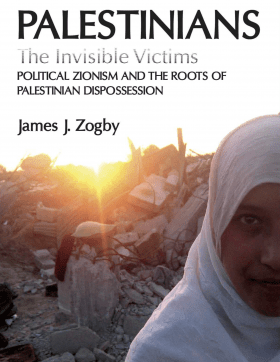 As I document in my book, Palestinians: the Invisible Victims, from its inception in 1948, Israel has guaranteed rights and opportunities for Jews at the expense of the indigenous Palestinians who remained after the Nakba. Instead of experiencing democracy, these Arabs were subjected to harsh military law, as a result of which they were denied fundamental human and civil rights. Their lands and businesses were confiscated. And they were even denied the opportunity to join the labor movement, or form independent political parties.
During the past 70 years, these Palestinian Arab citizens of Israel have made significant advances as they organized and fought to expand their rights. But as two stories that have appeared recently in the Israeli media make clear, the contradiction inherent in being a democracy and a Jewish state continues to plague Israel.
In the first story, the leadership of the Knesset disqualified a proposed piece of legislation offered by a group of Arab legislators. The bill “Basic Law: Israel, a State of All Its Citizens” sought to guarantee equal rights for all Israelis—Jews and Arabs alike.
Apparently the Knesset leaders were so threatened by this bill that they were unwilling to even allow it to be introduced and debated. At the same time, however, Jewish members of the body are advancing another piece of legislation that defines Israel as the “national state of the Jewish People,” making it clear that Arabs are at best, second-class citizens.
In another story, Jewish residents of Afula, a town in Northern Israel, demonstrated against the proposed sale of a home in their community to an Arab family. The flyer, mobilizing Afula residents to come to the demonstration, criticized “the sale of homes to those who are undesirable in the neighborhood.” The former mayor of the community is quoted in the story saying “the residents of Afula don’t want a mixed city, but rather a Jewish city, and it’s their right.”
This is the impact of the apartheid system that Israel established to govern the lives of its Arab citizens. Since 1948, Israel not only confiscated lands surrounding Arab towns and villages to make way for Jewish agriculture and development, it denied Arabs the right to purchase land and homes in Jewish communities. Reflecting how this history has led to the demonstration in Afula, the leader of the Arab bloc in the Knesset said, “It is not a surprise that in a country that has founded 700 towns for Jews and not even one for Arabs, the idea that Arabs should be pushed aside does not shock citizens… our hope of living together is crumbling due to hatred and racism fueled by the government.”
Meanwhile, in the West Bank, Israel appears to be preparing a similar fate for the Palestinians living under occupation. Continuing the practice the Israelis instituted in the Galilee region, they have been slowly and steadily concentrating captive West Bank Palestinians into enclaves, denying them access to their land and in some cases, evicting them from their communities. One recent case reported in the Israeli press involves a Supreme Court decision allowing the state to demolish the West Bank community of Khan al Ahmar and to forcibly relocate “its citizens to a site near a dumpster in Abu Dis”—a Palestinian community near occupied East Jerusalem. At risk are Khan al Ahmar’s 173 residents and the community’s school that serves 150 youngsters from there, and neighboring villages. This is one of four recent forced evictions to clear areas of Palestinians in order to consolidate Israeli control.
These three stories combined have two things in common. On the one hand, they establish that it is a contradiction in terms to consider that Israel can be both Jewish and democratic at the same time. Liberals therefore can stop fretting about the danger facing Israeli democracy in the future. It already is, in practice, an apartheid state.
Next to consider is the fact that none of these stories made it into the U.S. press and so I suppose I can almost understand the Western liberal’s lament. Since they just don’t know how Israel behaves, they have no idea that the future they fear, is already here.
James J. Zogby is the president of the Arab American Institute.
June 19, 2018
Posted by aletho |
Book Review, Civil Liberties, Ethnic Cleansing, Racism, Zionism, Timeless or most popular | Human rights, Palestine |
Leave a comment
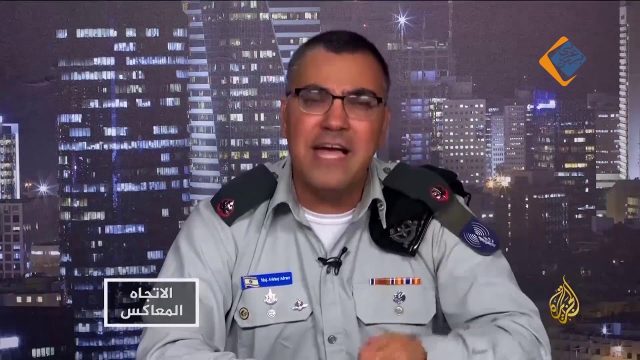
GAZA – A new video released by an Israeli Defense Force (IDF) spokesman has unnerved many in the global Muslim community for its use of sectarian rhetoric and slurs targeting Shia Muslims that are often used by leaders of extremist Wahhabi terror groups.
The video, released on social media on Thursday and already with more than 20,000 views, shows IDF Major Avichay Adraee asserting that Palestinian resistance group Hamas is “imitating Iran’s mullahs” — thereby making the group “officially Shiites,” even though Hamas is nominally Sunni.
Adraee — fluent in Arabic, given his family’s Syrian roots — then expounded on the “dangers” of Shia Islam, the followers of which he referred to as “rafidha” — a derogatory slur frequently used by Wahhabi terror groups like Al Qaeda and Jaish al-Islam for any Muslim who does not follow their radical interpretation of the religion.
Indeed, Adraee directly quotes Muhammad ibn abd al-Wahhab, the founder of the political movement of Wahhabism, stating that Shiites are “more harmful to Islam than Jews and Christians,” as he seeks to convince his viewers that supporting “these corrupt ones” who “claim” to be Muslim – i.e. the region’s “resistance axis,” composed of secular and Shiite governments – is a rejection of Islam.
Adraee singled out Shiites in the video as a means of targeting Iran, a Shia-majority nation whose government is the archenemy of the Israeli state, largely due to its obstruction of Israeli expansionism and continued support for Palestine. Adraee makes this clear in the video by asserting that “Shia Iran’s” recognition of the Palestinian Nakba, known as “Al-Quds Day,” is a “bid’ah” or heresy invented by Iran’s government. This, again, is an appeal to Wahhabism, as Wahhabist doctrine holds that any attempts to “innovate” within Islam must be rejected completely.
While an IDF soldier quoting extremists like al-Wahhab may seem unusual, Adraee – head of the IDF’s Arabic-language media division – has been making videos of a similar nature for over a decade, many of which similarly accuse Hamas of “profaning” Islam. Though his videos are often the butt of jokes in Gaza and elsewhere in Palestine, they seem to be aimed more at the global Sunni Muslim community. Indeed, Adraee boasts over 1.5 million followers on Facebook and Twitter and has found sympathetic ears in some Arab countries — such as Saudi Arabia, where Wahhabi Islam is the official religion.
As Adraee himself has hinted, his videos are aimed at robbing Palestinians of Arab support by seeking to foment sectarian hatred for Shiites. Adraee recently told Bloomberg:
The idea was that if there was a person who you could curse at or request something from, or who you knew, it would be much easier to connect through some kind of feeling, not necessarily love, it could also be hatred.”
By preaching anti-Shia sermons on social media, it is clear which feeling Adraee is seeking to promote through his videos.
A long history of colonial and post-colonial dividing and destabilizing
Adraee’s videos and their recent success is part of a long-standing effort, backed by Israel and select Western powers, to chip away at support for a Palestinian state among Sunni Arabs in the region. Such efforts have been more successful of late, with Saudi Arabian leadership recently chiding Palestinians for resisting Israel’s colonial ambitions amid warming ties between the Gulf kingdom and Israel.
Yet this strategy aimed at reducing regional support for Palestinians is based upon much older efforts seeking to divide and thereby weaken the entire Middle East. Indeed, Wahhabism itself was created by al-Wahhab at the behest of the British Empire, which sought to erode the Muslim community as a means of weakening the Ottoman Empire by breeding sectarianism and religious in-fighting.
That same century-old strategy is still used today with great effect. Indeed, the manipulation of sectarianism has been used by the United States to destabilize Iraq and, subsequently, to destabilize Syria. Israel has similarly sought to use sectarianism to its advantage by leveraging such divisions to push for the partition of surrounding Arab countries, in order to allow Israel to emerge as a regional superpower while Sunni and Shiite governments are constantly at each other’s throats.
Adraee’s latest video is not only part of that larger project, however. It also lays bare the roots of both Wahhabism and Zionism – intolerance and hate.
Whitney Webb is a staff writer for MintPress News and a contributor to Ben Swann’s Truth in Media. Her work has appeared on Global Research, the Ron Paul Institute and 21st Century Wire, among others. She has also made radio and TV appearances on RT and Sputnik. She currently lives with her family in southern Chile.
Photo | IDF Arabic media spokesman Avichay Adraee. Screenshot | YouTube
June 19, 2018
Posted by aletho |
Deception, Ethnic Cleansing, Racism, Zionism, Timeless or most popular | Israel, Middle East, Palestine, Zionism |
Leave a comment
Former chief of an Israeli spy service unit has said that the first cyber target in any future conflict with Iran should be its energy infrastructure.
Speaking at a major cyber conference in Israel, former Unit 8200 chief Ehud Schnerosen referred to the energy sector as a “major pillar economy, state’s cardiovascular system.”
“We should not attack water, food, healthcare on ethical grounds, and should not attack banks because of the potential butterfly effect,” he said. “The next 9/11 in cyber will be energy sector.”
Israel is widely believed to be behind a cyber attack on the Iranian nuclear energy program in 2011.
The Washington Post reported in June 2012 that US spy services and Israel’s military had worked together to launch the Stuxnet computer virus against a uranium enrichment facility at Natanz, Iran. It was the first publicly known example of a virus being used to attack industrial machinery.
Since Stuxnet’s discovery in 2010, security researchers have uncovered a handful of other sophisticated pieces of computer code they believe were developed by the US and Israel in tandem to engage in espionage and warfare.
Israeli Prime Minister Benjamin Netanyahu reportedly told Russian President Vladimir Putin and US Secretary of State Mike Pompeo over the weekend that Israel would strike against Iranian efforts to entrench itself militarily throughout Syria, and not only along the Syrian border with the occupied Palestinian territories.
“First of all, Iran needs to withdraw from all of Syria,” he told the weekly cabinet meeting.
“Second, we will take action – and are already taking action – against efforts to establish a military presence by Iran and its proxies in Syria, both close to the border and deep inside Syria. We will act against these efforts anywhere in Syria.”
Diplomatic officials said that Netanyahu raises the issue of Iranian activity in Syria in all his conversations with foreign leaders.
June 18, 2018
Posted by aletho |
Ethnic Cleansing, Racism, Zionism, False Flag Terrorism, Timeless or most popular, War Crimes | Iran, Israel, Syria, Zionism |
Leave a comment

Human Rights campaigners say that Kimberley Process Certification Scheme (KPCS) must suspend Israel and ban Israeli diamonds exports.
A global coalition of organizations working for justice and peace in Palestine have called on the EU to seek the suspension of Israel from the Kimberley Process and a ban on Israel diamond exports at next week ’s meeting of the diamond regulatory body in Antwerp.
The KPCS is the process established in 2000 to prevent “conflict diamonds” from entering the mainstream rough diamond market by United Nations General Assembly Resolution 55/56 following recommendations in the Fowler Report.
The process was set up “to ensure that diamond purchases were not financing violence by rebel movements and their allies seeking to undermine legitimate governments.”
In the wake of the latest Israeli massacres in Gaza, which Human Rights Watch said “may amount to war crimes” and called on the international community to “impose real costs for such blatant disregard for Palestinian lives” it is imperative that diamonds which generate revenue used to fund the Israeli military are banned.
Israel is the biggest net beneficiary of the global diamond trade with exports worth US$11 billion net in 2014 when diamonds accounted for 30% of manufacturing exports.
Revenue from the Israeli diamond industry is a highly significant source of funding for the Israeli government and its violent settler-colonial project in Palestine.
Despite generating an estimated $1 billion per year in funding for Israeli occupation forces which stand accused of war crimes, crimes against humanity, the proliferation of unregulated nuclear weapons and the enforcement of a system of apartheid jewelers claim diamonds processed in Israel are conflict-free.
Diamonds that are a significant source of funding for violations of international humanitarian law or international human rights law are regarded as blood diamonds.
The jewelry industry refuses to ban all blood diamonds and limited the remit of the KPCS to “conflict diamonds” which are defined as rough diamonds used by rebel groups to fund violence against legitimate governments.
June 16, 2018
Posted by aletho |
Ethnic Cleansing, Racism, Zionism, Solidarity and Activism, Timeless or most popular, War Crimes | Human rights, Israel, Kimberley Process, Palestine |
Leave a comment
The United States’ demands regarding reforming the United Nations Human Rights Council (UNHRC) have failed to be met, and as such Washington is reportedly ready to pull out over what it calls anti-Israel bias and the inclusion of alleged rights abusers.
Diplomats told Reuters that it’s merely a matter of time before the US exits the council, which will convene Monday for a three week convention that will last until July 6. One US source who spoke anonymously said that an announcement looks “imminent.”
Another US official in Geneva, where the UNHRC will meet June 18, said, “we are still moving ahead with our engagement for the coming session.”
US Ambassador to the UN Nikki Haley has cast shade on the council since taking the job, while both the US State Department and US President Donald Trump himself found issue with it in 2017.
On June 6, 2017, Haley went to Geneva to give the council a series of ultimatums. At the meeting, she said, “It’s hard to accept that this council has never considered a resolution on Venezuela, and yet it adopted five biased resolutions in March against a single country: Israel. It is essential that this council address its chronic anti-Israel bias if it is to have any credibility.”
Later in the day, she expanded on her grievances against the council at a speech she gave to the Graduate Institute of Geneva, noting that the UNHRC had, by then, passed “more than 70 resolutions targeting Israel” since its inception in 2006, but “just seven on Iran.” The UNHRC has passed more resolutions against Israel than the rest of the world’s countries combined, according to the Geneva-based UN Watch.
“This relentless, pathological campaign against a country that actually has a strong human rights record makes a mockery not of Israel, but of the council itself.”
She also called on the body to do two things: “Act to keep the worst human rights abusers from obtaining seats on the council,” and remove permanent Agenda Item 7, which requires that the council address the “human rights situation in Palestine and other occupied Arab territories,” regularly when it meets.
Trump later echoed those demands in his speech to the United Nations General Assembly (UNGA) on September 19, 2017, calling the inclusion of governments with “egregious human rights records” in the UNHRC a “massive source of embarrassment to the United Nations.” He also singled out North Korea and Iran for their hostility to Israel.
After the UNHRC, a body of 47 nations, adopted five resolutions condemning Israel on March 23, 2018, Haley warned “our patience is not limited,” reminding the body that “The United States continues to evaluate our membership in the Human Rights Council.”
Those resolutions called on governments to stop selling weapons to Israel; for Palestinian self-rule according to Israel and the Palestinian territories’ pre-1967 borders; for Israel to remove itself from the Golan Heights, which it has illegally occupied since the 1967 Six Day War; and for an end to Israeli settlements and human rights abuses against Palestinians.
Haley called the council “foolish and unworthy of its name” for treating Israel “worse than North Korea, Iran and Syria.”
The US ambassador hasn’t only struggled with the Human Rights Council, but also with the UN General Assembly and Security Council. On Wednesday, she failed to prevent the assembly from condemning Israel’s use of deadly force against Palestinians demonstrating in the Great Return March after having vetoed a similar resolution in June. She fired back against the vote, saying that for some, “attacking Israel is their favorite political sport.”
More than 120 Palestinians have been killed and more than 13,000 injured, many by live ammunition, since the start of the protest on March 30, Sputnik News reported. Haley previously told the UN Security Council that Israel acted with “restraint” in the protests. One Israeli soldier was “slightly wounded” in the protests, according to an IDF spokesperson.
The US has boycotted the UNHRC before, as former President George W Bush and his Ambassador to the UN John Bolton — now Trump’s national security adviser — opposed it from its outset in 2006. The Bush administration refused to run in its first election and also declined to participate the following year.
The main points of opposition then were the “focus on Israeli human rights violations while failing to address human rights abuses in other parts of the world,” according to the US Congressional Research Service’s 2009 “Issues for Congress” report on the UNHRC.
However, former President Barack Obama began to work with the council after his election in 2008, believing it was better to work on human rights issues within the council than from the outside, according to a similar report from 2017.
June 15, 2018
Posted by aletho |
Ethnic Cleansing, Racism, Zionism, War Crimes | Human rights, Israel, UNHRC, United Nations, United States |
Leave a comment
A compilation of various racist and hateful quotes by Israeli Prime Ministers demonstrating the extent to which racism is entrenched as well as normalized in Israeli political culture.
Most nation states in our world today have dealt with their fair share of institutionalized racism and bigotry, and Israel is no exception. However when it comes to Israel, the volume of racism expressed by prominent political figures is both astounding and concerning.
DAVID BEN-GURION:
David Ben-Gurion was the first Prime Minister of the state of Israel, serving his first term between 1948 and 1953, he later served a second term from 1955 to 1963. Other than being a member of – what the British considered a terrorist organization at the time – the Haganah, David Ben-Gurion also notably presided over the ethnic cleansing of an estimated 750,000 Palestinians from their homeland.
David Ben-Gurion made his contempt for Palestinian human rights evident from his actions and therefore giving an example of his hatred for Palestinians would be nothing new. Instead it is crucial to understand that, from the very first Prime-Minister, the Israeli government viewed non-European Jews as “the other” and were very much racist.
On the 11th of June, 1962, David Ben-Gurion made the following statement at a meeting with the head of Israel’s teachers federation, Shalom Levin:
“The danger we face is that the great majority of those children whose parents did not receive an education for generations, will descend to the level of Arab children”. (https://www.haaretz.com/israel-news/.premium-1.653134)
The statement was addressing the question as to whether Israel should segregate the “Mizrahi” (Jews of Middle-Eastern origin or “oriental communities”) from the “Ashkenazi” (European Jewish) population.
This quote is crucial to understanding the attitude of the Prime Minister towards Jews, who were not of European descent.
This information comes from the Israeli Labour Party archives and was reported upon by the Israeli media outlet Haaretz on the 24th of April, 2015.
MOSHE SHARETT:
Moshe Sharett was Israel’s second and shortest serving Prime Minister (1953-1955), he was perceived by many as a liberal Zionist. Unfortunately for Israel romanticists, the fictional depiction of Moshe Sharett, as the ‘dove amongst hawks’, really came under fire when he revealed his racially charged descriptions of Palestinian refugees.
The following is an entry from Moshe Sharett’s diary on the 15th of November, 1953, where he refers to returning Palestinian refugees as infiltrators:
“In the last three years [Shani reported] 20,000 infiltrators settled in Israel, in addition to 30,000 who returned immediately after the war…. Only because these 20,000 have not been given permanent documents has the brake been put on the flow of infiltration directed toward settlement. To abolish the military government would mean to open the border areas to undisturbed infiltration and to increasing penetration toward the interior of the country. Even as things are, around 19,000 Arabs in Galilee are in possession of permanent permits to move freely around but only to the West and the South and not toward the North and the East…. it is true that the troublesome problem of the evacuees must be liquidated through a permanent resettlement”.
The entry was made addressing a report, which was submitted to the Israeli cabinet, that same day, by the chief Military governor of the Arab minority in Israel, ‘Colonel Yitzhak Shani’.
A leading right-wing Israeli scholar, Benny Morris, in his book Righteous Victims: A History of the Zionist-Arab Conflict quotes Sharett as saying; “We have forgotten that we have not come to an empty land to inherit it, but we have come to conquer a country from people inhabiting it”, confirming that the liberal Zionist, isn’t so representative of liberty when it comes to Palestinian human rights.
LEVI ESHKOL:
Levi Eshkol served as Israeli Prime Minister between 1963 and 1969. Eshkol oversaw 1967’s ‘six day war, in which Israel was responsible for attacking a defenseless Egypt and initiating a war in which they would illegally occupy the Golan Heights (From Syria), the West Bank, the Gaza Strip and the Sinai Peninsula.
On the 17th of November, 2017, Haaretz News reported upon declassified documents previously release by the Israeli government. The documents unearth some very revealing opinions and the way in which Levi Eshkol discussed Palestinians.
In December 1967, months after the war, Levi Eshkol discusses the Palestinians of Gaza, labelling them a “problem” that needs to be dealt with by making life so miserable for them that they would just leave, he even began discussing the “luxury” of another war which would deal with the “problem” Israel faces.
Eshkol goes on to state:
“I cannot imagine it – how we will organize life in this country when we have 1.4 million Arabs and we are 2.4 million, with 400,000 Arabs already in the country?” (https://www.haaretz.com/israel-news/.premium-1.823075)
Evidently someone who declares Palestinians as a “problem” and “cannot imagine” living with them, actively working to violently expel them and/or force their departure, is no friend to any kind of peace in the region.
GOLDA MEIR:
Golda Meir became Prime Minister of Israel in 1969 and served until the year 1974. Golda Meir notably spoke of non-European Jews in a very demeaning way, perpetuating a very popular European Zionist stereo-type, that Jews from parts of the world other than Europe were essentially primitive.
Golda once said, whilst addressing the Zionist federation of Great Britain (in 1964):
“We in Israel need (Jewish) immigrants from countries with a high standard, because the future of our social structure is worrying us. We have immigrants from Morocco, Libya, Iran, Egypt and other countries with a 16th century level. Shall we be able to elevate these immigrants to a suitable level of civilization?”
Golda’s statement speaks for itself as to what she thought of non-European Jewry, hardly holding those from countries foreign to Europe at high esteem.
A notable concept pushed by the likes of Golda Meir, is the idea that Palestinians don’t exist, they are just Arabs and that Palestine never existed, an outright denial of history.
Golda Meir stated this idea loud and clear, on the 8th of March, 1969:
“It was not as if there was a Palestinian people in Palestine and we came and threw them out and took their country away from them. They did not exist.” (https://www.haaretz.com/israel-news/.premium-1.654218)
Although the statement above is one that Golda Meir gave, she seemed to acknowledge the existence of Palestine when she wrote letters, during her time living under the British Mandate of Palestine.
YITZHAK RABIN:
Yitzhak Rabin was Israel’s Prime Minister twice, the first time between 1971 and 1977 and then the second time he served 1992-95. Yitzhak Rabin, for the most part, was seen through the eyes of the West as a liberal president, ultimately facing assassination at the hands of a fanatical right wing Israeli in 1995.
The Yitzhak Rabin known to the Palestinians however, was the bone-breaker, who oversaw mass murder and the brutalization of their people.
Something very kept quiet, is Yitzhak Rabin’s greeting of John Vorster in April, 1976. Yitzhak Rabin threw a Banquet for the Prime Minister of Apartheid South Africa, expressing that Israel and Apartheid South Africa both face “foreign-inspired instability and recklessness”, he then went on to praise Apartheid South Africa and hailed “the ideals shared by Israel and South Africa”.
MENACHEM BEGIN:
Menachem Begin was Israel’s Prime Minister between the years 1977 and 1983. Menachem Begin was once described by Albert Einstein as a terrorist, he and 25 other prominent Jews even wrote an open letter to the ‘New York Times’ in 1948. Begin was involved in the infamous bombing of the King David Hotel as well as many other terrorist attack, which claimed the lives of innocent men, women and children.
To point to the language, by which Menachem Begin used, to characterize his Palestine “enemy”, I would simply turn to Ammon Kapeliouk’s article from the New Statesman (June 25,1982). The article entitled ‘Begin and the Beasts’ sums up the dehumanizing way in which Menachem Begin referred to Palestinians, stating that they were “beasts walking on two legs” according to Kapeliouk’s account from the observation of his speech delivered to the Knesset.
YITZHAK SHAMIR:
Yitzhak Shamir was Prime Minister of Israel twice, first from 1983 to 1984 and then again from 1986 to 1992. Yitzhak Shamir was formerly a leader of the Lehi (Stern Gang), a terrorist group responsible for the Deir Yassin massacre of 1948, along with countless attacks on civilians before this.
Yitzhak Shamir said, prior to the Madrid peace talks (in 1991), “The Arabs are the same Arabs and the sea is the same sea”. With this statement he was insinuating that the Palestinians and Arab neighboring countries had never changed, asserting that engaging with them in a negotiable manner was not something he was so happy about.
Yitzhak Shamir also referred to Palestinian protesters in 1988 as “grasshoppers compared to us”, vowing to crush the demonstrations. (http://www.nytimes.com/1988/04/01/world/shamir-promises-to-crush-rioters.html)
SHIMON PERES:
Shimon Peres was elected twice as Prime Minister of Israel, serving the first time from 1984-1986, then again from 1995 until 1996. Peres also served the ninth President of the state of Israel (2007-2014) taking over from the convicted rapist Moshe Katzav.
Although dubbed as a champion of peace, Shimon Peres was in fact the man who led the initiative to create Israel’s first illegal settlements. He was also the founding father of Israel’s nuclear weapons program.
As Prime Minister Shimon Peres oversaw the massacre of Qana Massacre (South Lebanon, 1996) in which more than 100 civilians were killed, this occurred after Israel targeted and blew up a United Nations facility where roughly 800 people had gathered to take shelter.
Despite the often used, flowery language he chose to consult international media with, Shimon Peres actively enforced the strategic, zionist objective, of pacifying the Palestinian population through the means of strangling them financially.
During an interview, conducted by al-Jazeera, (published on the 30th of December, 2012) Peres blamed Palestinians for the hardships they endure, stating that; “They are self victimizing. They victimize themselves. They are a victim of they’re own mistakes, unnecessarily .” (https://www.aljazeera.com/programmes/frostinterview/2012/12/2012122610132412135.html)
BENJAMIN NETANYAHU:
Benjamin Netanyahu was also Israel’s Prime Minister twice, beginning his first term in 1996 leaving office in 1999, he was then again elected in 2009 where he currently remains to this day.
Benjamin Netanyahu has a large track record of massacring Palestinians, most notably in Gaza during the large scale bombardments in 2012 and 2014. Netanyahu has on multiple occasions announced that settlements will never be reversed and constantly allows the approval of more settler units in the West Bank and Jerusalem.
A sample of things that commonly come from Benjamin Netanyahu’s mouth are as follows:
On March the seventeenth, 2015, in order to urge Israeli Jews to vote for him, Benjamin Netanyahu released a video on Facebook and other social media platforms, where he said; “The right-wing government is in danger. Arab voters are heading to the polling stations in droves.” (https://www.facebook.com/Netanyahu/videos/10152778935532076/)
As reported by Haaretz News, Netanyahu on the ninth of February, 2016, visited the construction of a concrete wall that was being constructed on the border between Gaza and Israel. In his own words, the wall was necessary to “defend ourselves against the wild beasts”. (https://www.haaretz.com/israel-news/1.702562)
Something else that is notable about Mr. Netanyahu is his views on African migrants. Haaretz News reported upon the comments made by the Prime Minister – on the 31st of August, 2017 – in which he referred to African Migrants as “infiltrators”. A portion of what Netanyahu said was; “We will return south Tel Aviv to the citizens of Israel, they are not refugees, but infiltrators looking for work,” he said. He added: “If needed, we will legislate an amendment to the law or change the agreements with the African countries, or both.” (https://www.haaretz.com/israel-news/1.809999)
EHUD BARAK:
Ehud Barak was Israel’s Prime Minster between 1999 and 2001, he saw the beginning of the second Intifada during his time in office.
In April of 1973 Ehud Barak entered Beirut, dressed in drag (as a woman), in order to assassinate members of the PLO (Palestinian Liberation Organization), in killing innocent people.
On the 13th of June, 2002, Ehud Barak was interviewed by the New York Review of Books, during this interview he said the following:
“They [Arabs] are products of a culture in which to tell a lie… Creates no dissonance. They don’t suffer from the problem of telling lies that exists in Judeo-Christian culture”.
ARIEL SHARON:
Serving from 2001 until 2006 as Israeli Prime Minister leaving behind a lengthy trail of blood.
Ariel Sharon was most infamous for commanding the Qibya massacre,along with the massacres at Sabra and Shatila. Sharon also used his death squads to execute people in mass numbers in Gaza during the 50’s, especially upon the strips establishment.
Other than his willingness to massacre Palestinians and Arabs, it is also important to be aware of Ariel Sharon’s stance on stealing Palestinian land. Ariel Sharon said (as Foreign Minister) on Israeli radio in November of 1998; Everybody has to move, run and grab as many [Palestinian] hilltops as they can to enlarge the [Jewish] settlements because everything we take now will stay ours… Everything we don’t grab will go to them. (http://www.bbc.co.uk/news/world-middle-east-11576714)
EHUD OLMERT:
Prime Minister from 2006 until 2009, Ehud Olmert, inflicted devastating wars of aggression upon the civilian population of Lebanon (2006) and the Gaza strip (2008-2009), targeting and killing thousands of innocent people.
Like former Prime Minister Yitzhak Rabin, Ehud Olmert also liked to compare Israel to Apartheid South Africa. Olmert spoke to Haaretz News following the Annapolis conference – which ended in an agreement to try and reach a Middle-East peace settlement by the end of 2008 – making the following comments:
“If the day comes when the two-state solution collapses, and we face a South African-style struggle for equal voting rights (also for the Palestinians in the territories), then, as soon as that happens, the State of Israel is finished”. (https://www.haaretz.com/news/olmert-to-haaretz-two-state-solution-or-israel-is-done-for-1.234201)
In 2014 Ehud Olmert was sentenced to 27 months imprisonment, over charges on the grounds of corruption, he served 16 of those months before being released.
Racism and bigotry have been prominent features of Israeli politics since the states very inception. Israeli political leaders have repeatedly expressed dehumanization of Palestinians and Jews of non-European origin, across the political spectrum.
June 15, 2018
Posted by aletho |
Ethnic Cleansing, Racism, Zionism, Timeless or most popular | Israel, Palestine, Zionism |
Leave a comment

 Aletho News
