Douma locals, medical personnel deny veracity of 2018 ‘chemical weapons attack’
The Cradle | February 2, 2023
Locals and medical personnel from the Syrian city of Douma in the Damascus countryside confirmed on 2 February during a press conference in the country’s Foreign Ministry headquarters that the alleged 2018 chemical attack on the city was, indeed, staged.
This follows the release of a new report by the Organization for the Prohibition of Chemical Weapons (OPCW) on 27 January, which once again renewed the accusation that Damascus was behind a 2018 chlorine gas attack on civilians in Douma.
“I live 400 meters from the place of the alleged incident, and I only learned of its occurrence the next day through social media,” Syrian lawyer Muhammad al-Naasan said during the press conference.
Another testimony is that of Dr. Hassan Oyoun, an ambulance worker at Douma Hospital, who claimed that “information was published a day before the alleged incident that it was necessary to prepare for an event that would result in a large number of injuries.”
This confirms that “prior preparations” were underway for the staging of the attack, Oyoun said, referring to the incident as a “fabricated play that was filmed.”
“What the terrorists announced about 800 injuries from chemical substances is incorrect, and the number of people who visited the hospital that day did not exceed 35,” he added.
According to Dr. Mumtaz al-Hanash, a Douma local, Douma Hospital announced just one day after the alleged attack that no chemically induced deaths were recorded whatsoever. He went on to say that the “photographed cases” did not provide evidence that chlorine, or any other weaponized chemical, was used.
An imam and preacher at a local mosque, Sheikh Ratib Naji, said: “We did not see with our own eyes any injured or dead, as they claimed, and those whom the terrorists claimed were dead, their bodies did not appear, and when we demanded them, they assaulted us.”
Syria’s permanent representative at the Hague-based chemical weapons watchdog, Milad Attiya, affirmed that Damascus does not recognize the OPCW investigation team’s third and latest report, as it rejected the last two. Attiya added that the report relies heavily on western sources, as well as groups such as Hayat Tahrir al-Sham (HTS) and the White Helmets, an Al-Qaeda affiliated rescue organization with links to organ trafficking networks in Syria.
Since 2013, armed groups in Syria have attempted to pin chemical attacks on the government to instigate internationally-led regime change operations against it. This comes in the form of staged attacks, or actual false-flag chemical attacks which leave many dead and are designed to implicate Damascus – as was the case in Ghouta in 2013 and in Khan Sheikhoun in 2017.
On 28 January, the Syrian government released a statement rejecting the OPCW report, which it said ignored “objective information which was provided by some … experts … and former OPCW inspectors with knowledge and expertise,” referring to the fact that the organization suppressed the findings of its initial report on Douma, as revealed by WikiLeaks in 2019.
Ukraine could stage false flag operation on nuclear power plant to force Western intervention
By Ahmed Adel | January 25, 2023
The Ukrainian military are storing Western weapons in nuclear power plants in the hope that Russia will strike them. However, as Russia is unlikely to make this mistake, it cannot be ruled out that Kiev will stage a false flag operation to force direct Western intervention and increase the supply of weapons.
According to the director of the Russian Foreign Intelligence Service, Sergey Naryshkin, HIMARS missiles and other foreign air defence systems, as well as large-calibre artillery ammunition, are deployed at Ukrainian nuclear power plants.
“There is credible information that Ukrainian troops are stockpiling the Western-supplied weapons and ammunition on the territory of nuclear power plants,” Naryshkin said, according to a statement on the intelligence service’s website.
According to the intelligence chief, several cars loaded with “lethal cargo” were delivered by rail to the Rovno Nuclear Power Plant in western Ukraine during the last week of December alone.
“They rely on the calculation that the Russian Armed Forces would not strike nuclear power plants because they realise the danger of a nuclear disaster,” Naryshkin said.
He expressed the hope that no one in Kiev would deliberately think of blowing up the nuclear power plants in a false flag operation. False flag operations are often used by international terrorists, as seen on a frequent basis during the peak of the Syrian war, or by the US to justify their own invasions and interventions.
The Ukrainian Armed Forces often receive weapons that are of very poor quality. This fact alone heightens the risk of an accidental explosion, something that could unleash a nuclear catastrophe and be blamed on Moscow.
Alarmingly, in addition to nuclear power plants, the Ukrainian military also uses residential buildings to house Western weapons. Ukrainian soldiers are fully aware of the fact that the Russian military does not strike civilian populations. The Russian military does not strike at nuclear plants, especially as any spill over can directly affect Russian citizens.
Ukrainian soldiers on the other hand have consistently used civilians as human shields, even before the Russian military operation began in 2022, as reported by the United Nations. The Ukrainian military is desperate for more weapons, tanks, howitzers, and ammunition, and such an incident could unite the West in providing Kiev with what it demands.
Ukraine’s nuclear plants are located near the border with Romania, Slovakia and Poland. Therefore, delivering military equipment from the West is a relatively straightforward process. According to intelligence data, only in the last week of December, several railway wagons with “lethal cargo” were delivered from abroad via the Rafalovka railway station to the Rivne nuclear power plant, located only 170km from the Polish border.
None-the-less, according to Andrei Golovatyuk, a colonel in the Russian army reserve, Moscow will certainly find a way to destroy ammunition and Western weapons stores without endangering the lives and health of the civilian population.
“They are doing this on purpose so that the Russian armed forces cannot shell their weapons depots. But our army will certainly not do that to avoid damaging the nuclear power plant,” he added.
Mykhailo Podolyak, an adviser to Ukraine President Volodomyr Zelensky, claimed that his country has never used nuclear power plants to store weapons.
“Ukraine has never stored any weapons on NPP territory, as falsely claimed by Russia’s Foreign Intelligence Service. On the contrary, the Russian Federation seized the Zaporizhzhia nuclear power plant and keeps its military there,” he said on Twitter, alluding that a military presence and weapons storage is the same thing.
Podolyak said that Kiev remained “open to inspecting bodies, including the IAEA” and that “Russian lies are aimed to justify their provocations.”
However, it does question what kind of “justification” Russia gets for its military operation by claiming that Ukraine stores weapons in nuclear power plants. Moscow obviously gains no “justification” and rather its justification is hinged on Kiev’s unrelenting fascistic policies towards minorities since 2014.
Rather, it is more likely that Podolyak is making nonsensical statements as Kiev is stunned that their false flag operation cannot be implemented because Moscow has already called it out. The Kiev regime is currently desperate for Western weaponry, particularly tanks, and was likely hoping that a nuclear incident could force the issue, or even better, force a direct intervention.
Podolyak tweeted on January 21 that “Today’s indecision is killing more of our people. Every day of delay is the death of Ukrainians. Think faster.”
However, even if US and German-made tanks start arriving in Ukraine, the situation is already too late for the Ukrainian military because it struggles to maintain a semblance of order in the face of Russia’s unrelenting onslaught. Rather, Kiev is responsible for the death of Ukrainians as it refuses to find a peace with Moscow. Therefore, it cannot be entirely discounted that as Ukraine becomes more desperate, it may resort to reckless measures, such as false flag operations on nuclear power plants.
Ahmed Adel is a Cairo-based geopolitics and political economy researcher.
‘US, British Snipers Sent to Potemkin Island Near Kherson’
Samizdat – 21.01.2023
Ukrainian servicemen have told Russian security forces that snipers from the United States and the United Kingdom have been sent to Potemkin Island (Ostriv Velykyi Potomkin) near Kherson to kill civilians in order to pass them off as victims of the Russian Armed Forces, a Russian law enforcement source told Sputnik.
“According to information received from sources in the Armed Forces of Ukraine, an American-British group of mercenaries, mostly snipers, drove to Bolshoy Potemkin Island in the Kherson region in order to terrorize the Russian-speaking population,” the source said.
“The victims of the mercenaries’ murders are supposed to be passed off as those killed by the Russian army.”
In early January, a video started circulating on Ukrainian websites showing how Ukrainian militants allegedly raised the Ukrainian flag on Potemkin Island, controlled by Russian troops. Subsequently, the footage was reported to have been filmed in a “gray zone.”
A Sputnik correspondent visited the island on December 5 and confirmed that it was under the control of Russian troops. One of the Russian soldiers on the island told Sputnik in an interview that the Ukrainian video showing the alleged raising of the Ukrainian flag was a fake.
Earlier Friday, French media reported that the US officials were also urging the Ukrainian regime to prepare for a counteroffensive against Russian forces as opposed to clinging to the town of Bakhmut.
The latest comes as reports detailed on Wednesday that the Biden administration was considering providing Ukraine with weapons necessary to target the Crimean Peninsula.
EU parliament backs tribunal to probe Russia
RT | January 19, 2023
The European Parliament on Thursday voted in favor of an international court to probe Russia over its conflict with Ukraine. Moscow has rejected allegations of war crimes in the past and has also said such a court would have no legal power over it.
In a non-binding resolution, MEPs asked the bloc and its individual member states to create a “special tribunal for the crime of aggression against Ukraine,” accusing Moscow of violating international law. The legislators added that the tribunal would “focus on alleged genocide, war crimes and crimes against humanity committed in Ukraine.”
“The EU’s preparatory work on the special tribunal should begin without delay,” the resolution said.
Ukrainian President Vladimir Zelensky thanked the parliament for the move. “Russia must be held accountable,” he tweeted.
Kremlin spokesman Dmitry Peskov said late last month that an international tribunal tasked with prosecuting Russia would be rejected by Moscow as “illegitimate” and that the West has no legal right to establish it.
He said this in response to European Commission President Ursula von der Leyen proposing a special UN-backed court to probe what she described as Russia’s “horrific crimes” in Ukraine.
Similar suggestions have been made by other Western and Ukrainian officials. Bloomberg reported a few months ago that The Hague-based International Criminal Court (ICC) could start reviewing cases of alleged Russian crimes in Ukraine in late 2022 or early 2023.
The Russian Foreign Ministry said that “the current attempt by Western countries to whip up a quasi-judicial mechanism is unprecedented in its legal nihilism and is yet another example of the West’s practice of double standards.”
Moscow launched a military operation in Ukraine last February, citing the need to protect the people of Donbass, as well as Kiev’s failure to implement the 2014-15 Minsk accords.
Kiev and its Western supporters have since accused Russian troops of killing civilians in Bucha, near Kiev, and other areas. Moscow maintains that its forces only strike military targets and has insisted that allegations of atrocities were fabricated.
Ukraine said in the past that peace can only be achieved if Russia faces an international court. Moscow has rejected this demand as unacceptable.
The Kremlin has said Russian investigators were, however, carefully documenting crimes committed by the Kiev regime since 2014, when a violent coup ousted a democratically elected government and Kiev sent its military to Donbass. Peskov said Moscow had not seen “any critical reaction from the so-called ‘collective West’” on those wrongdoings.
Moscow: Sweden’s Refusal to Share Nord Stream Findings Suggests They’re ‘Hiding Something’
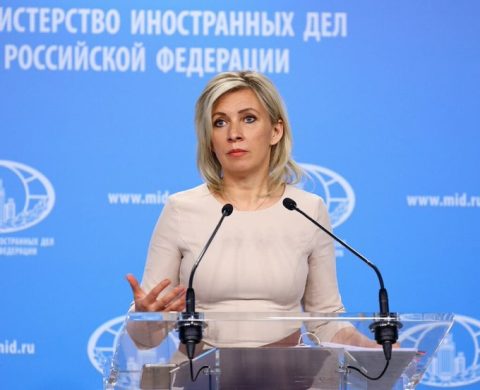
Samizdat – 14.01.2023
Russia’s Foreign Ministry spokeswoman skewered Sweden for staying silent about the identity of the perpetrators of the notorious terrorist attack that crippled Russian revenues and European energy supplies.
Sweden’s refusal to disclose the results of its investigation into the terrorist attack that crippled the Nord Stream pipeline in September suggests Stockholm is “hiding something,” Russian Foreign Ministry spokeswoman Maria Zakharova has said.
As one of the attack’s primary victims, Russia deserves answers, Zakharova told reporters at a Thursday briefing.
“The refusal of the Swedish side to respond on the merits to another request from the Russian Prosecutor General’s Office for legal aid in the criminal case on Nord Stream and Nord Stream 2 pipeline damage in September 2022 is genuinely perplexing,” Zakharova said.
A message sent three months ago by Russian Prime Minister Mikhail Mishustin to the head of the Swedish government regarding “the need to conduct a comprehensive and open investigation” of the attacks with Moscow officials still “remains unanswered,” Zakharova explained, noting Sweden’s silence stood “in defiance of all the decorum of international diplomatic communication.”
“Stockholm explains its refusal by saying… that meeting the Russian request will allegedly ‘pose a security threat to Sweden,’” she noted.
“What are the threats to national security that Stockholm is talking about?” Zakharova asked.
“Who committed these sabotage and terrorist acts, who is behind them, who devised and implemented them – withholding the established facts irrefutably testifies to the obvious: the Swedish authorities are hiding something.”
Sweden invoked the same ‘national security’ justification in October when attempting to explain why it was unwilling to commit to a joint investigation on the Nord Stream attack alongside Germany and Denmark.
As the main recipient of Nord Stream’s affordable supply of Russian gas, Germany was arguably the prime beneficiary of the pipelines. But Moscow has also suffered serious economic damage as a result of the act of industrial sabotage.
“We consider ourselves to be the party that sustained material damage, to say nothing of losses,” Zarakhova explained.
As such, “we have the right to receive appropriate information, have the right to ask questions and demand an answer to them,” she said, adding “we must make sure that it doesn’t happen again in the future.”
Ex-French soldier requests asylum in Russia
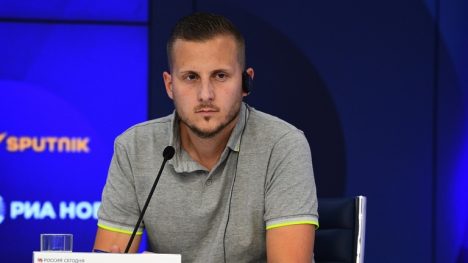
FILE PHOTO: Adrien Bocquet © Sputnik / Nina Zotina
RT | January 11, 2023
A former French military serviceman and volunteer, Adrien Bocquet, has allegedly requested asylum in Russia, the RIA news agency reported on Wednesday, citing an unnamed “source familiar with the situation.” The Frenchman had previously repeatedly traveled to Ukraine and Donbass and claimed that he had witnessed war crimes committed by the Ukrainian forces.
“A former French serviceman, Adrien Bocquet, has approached the Russian authorities and asked them to grant him political asylum,” the source told RIA, adding that the asylum application was supposedly filed in mid-December. The Russian authorities have so far not commented on the development.
Bocquet first traveled to Ukraine as a volunteer delivering humanitarian aid last spring. At the time, he reportedly visited Lviv and Kiev as well as its suburbs, including Bucha. Kiev accused the Russian forces of committing mass killings of civilians in that town, which the Russian troops withdrew from in late March. Moscow has repeatedly denied all of the accusations.
After returning to France in May, Bocquet gave an interview to French Sud Radio, where he claimed to have witnessed the abuse of Russian POWs at the hands of Ukrainian soldiers. The Frenchman accused the Ukrainian soldiers of torturing and killing civilians and claimed the French media was concealing that. He also said that he himself was detained by the Ukrainian soldiers for ten hours.
Last summer, he started traveling to the Donbass regions controlled by the Russian forces and local militias while publishing reports on the situation on the ground on his Telegram channel. There, he wrote weapons like Caesar howitzers, which France supplies to Ukraine, end up injuring civilians in Donbass.
In October, Bocquet claimed he was attacked by “militants” linked to the Ukrainian Security Service (SBU) in Istanbul. The Frenchman also published a photo of himself lying in bed with some visible injuries to his face and one hand. The next day, France’s foreign ministry published a statement in which it said it had “no information” on the incident.
Bocquet himself has not commented on his reported asylum application so far.
US Entry Into the Ukraine War?
BY MIKE WHITNEY • UNZ REVIEW • DECEMBER 22, 2022
“The war in Ukraine is not a Call of Duty fantasy. It is an enlargement of the human tragedy that NATO’s eastward expansion created. The victims do not live in North America. They live in a region that most Americans can’t find on a map. Washington urged the Ukrainians to fight. Now Washington must urge them to stop.” Colonel Douglas MacGregor, The American Conservative
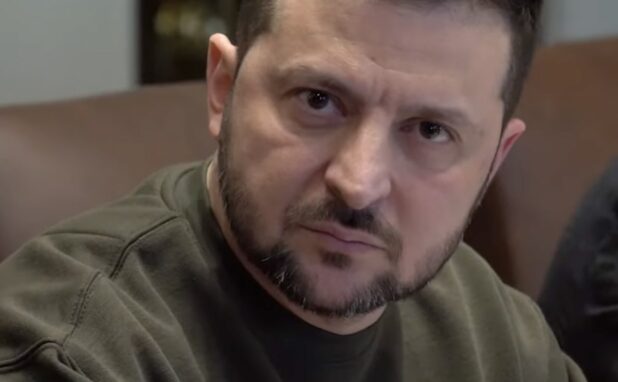
Volodymyr Zelensky did not fly across the Atlantic so he could deliver a speech to the US Congress. That was not the purpose of his trip. The real objective was to produce a galvanizing event that would create the illusion of broad-based public support for the war. That is why the speech was broadcast on all the mainstream media channels and that is why Congress repeatedly greeted Zelensky with raucous applause. Once again, the cadres of voracious elites who control the political levers of power in America, are determined to drag the country to war, which is why they portray a cross-dressing “thug in a gym suit” as a Churchillian figure of unshakable principles. It’s all public relations. It’s all an attempt to garner support for a conflict which will soon involve young American men and women who will be asked to die so that wealthy elites can maintain their grip on global power.
Zelensky’s trip to Capitol Hill was timed to coincide with Putin’s winter offensive, which is expected to crush the Ukrainian Armed Forces and bring the war to a swift end. The Biden administration understands the situation but does not have weaponry or manpower to impact the outcome. That doesn’t mean, however, that Washington doesn’t have a plan for prolonging the conflict or beefing up its combat forces. It does have a plan, that is evident by the way the administration has rejected negotiations at every turn. What that tells us is that Washington is still committed to defeating Russia whatever the cost. In practical terms, that means that the US must create an incident that will serve as a justification for escalation. The incident could be related to Zelensky’s unexpected trip to Washington or, perhaps, it could be linked to the detonation of a nuclear device somewhere in Ukraine. Check out this excerpt from an article at RT:
The risk of Kiev attempting to build a so-called ‘dirty bomb’ remains, a senior Russian diplomat has said….
“Ukraine has the potential necessary to make a ‘dirty bomb,’ it doesn’t take much effort. Especially since Ukraine has been a nation advanced in nuclear technology since the Soviet times, [and] has many technologies and expertise,” Mikhail Ulyanov told journalists on Wednesday, as quoted by RIA Novosti…
General Igor Kirillov, the commander of the Russian military branch responsible for protecting troops from weapons of mass destruction, claimed in October that Kiev was “at the final stage” of producing a dirty bomb.” (“Radioactive threat from Kiev persists – Moscow“, RT)
The means by which a false flag is carried out, is completely irrelevant. What matters is that — according to political analyst John Mearsheimer– “The United States is in this to win”, that is, the US foreign policy establishment is not prepared to let the Russian army prevail in Ukraine and impose its own settlement. They’re going to find a way to intensify the conflict and bring foreign troops into the theater. That’s the objective, and that’s what they’ll do once they’ve figured out an excuse for escalation. Bottom line: The US is not going to throw in the towel and call it quits. This is a long-term project that could drag on for years if not decades.

Political analyst Kurt Nimmo thinks that NATO might join the fighting. Here’s a short blurb from Nimmo’s latest at Global Research :
If Olga Lebedeva and Pravda.ru can be believed, NATO is on the verge of entering the war in Ukraine.
“Such announcements were heard from officials of the Polish Ministry of Defence, the General Staff of the NATO alliance, officers of the French army and (of course) the Ukrainian Ministry of Defence,” according to Lebedeva.
“The main reason would be the very next Russian general offensive that NATO is planning and which according to it would decimate the Ukrainian army not only in the Donbass but also on the Kiev side (many Russian units are in combat situation in Belarus at the borders with Ukraine),” explains Rusreinfo.ru, a Russian website.
But NATO has always been very clear: Ukraine CANNOT LOSE. For Washington, the only solution would therefore be for NATO forces to enter Ukraine, hoping that this will end the Russian offensive. The calculation is that Vladimir Putin will not want to directly face NATO with the possible (nuclear) consequences, and will therefore then retreat.” (“NATO Decides to Attack Russia in Ukraine– Ukraine is unable to defeat Russia. The next step is for direct NATO involvement“, Kurt Nimmo, Global Research )
Nimmo could be right but, maybe not. It appears to me that NATO is hopelessly divided on the issue. A number of NATO countries will not join in a war against Russia regardless of the circumstances or the amount of pressure from the White House. The more likely scenario was presented by Colonel Douglas MacGregor who laid it out in an article at The American Conservative on Tuesday. Here’s what he said:
The Biden administration’s unconditional support for the Zelensky regime in Kiev is reaching a strategic inflection point not unlike the one LBJ reached in 1965… Like South Vietnam in the 1960s, Ukraine is losing its war with Russia… The real danger now is that Biden will soon appear on television to repeat LBJ’s performance in 1965, substituting the word “Ukraine” for “South Vietnam”:
“Tonight, my fellow Americans I want to speak to you about freedom, democracy, and the struggle of the Ukrainian people for victory. No other question so preoccupies our people. No other dream so absorbs the millions who live in Ukraine and Eastern Europe… However, I am not talking about a NATO attack on Russia. Rather, I propose to send a U.S. led coalition of the willing, consisting of American, Polish, and Romanian armed forces into Ukraine, to establish the ground equivalent of a “no-fly zone.” The mission I propose is a peaceful one, to create a safe zone in the Western most portion of Ukraine for Ukrainian Forces and refugees struggling to survive Russia’s devastating attacks…”
NATO’s governments are divided in their thinking about the war in Ukraine. Except for Poland and, possibly, Romania, none of NATO’s members are in a rush to mobilize their forces for a long, grueling war of attrition with Russia in Ukraine. No one in London, Paris, or, Berlin wants to run the risk of a nuclear war with Moscow. Americans do not support going to war with Russia, and those few who do are ideologues, shallow political opportunists, or greedy defense contractors.” (“Washington is Prolonging Ukraine’s Suffering“, Colonel Douglas MacGregor, The American Conservative )
This, I think, is the much more plausible scenario. The Biden Administration will enlist a handful of countries that agree to troop deployments to west Ukraine ostensibly for humanitarian reasons. At the same time, they will allow disparate Ukrainian forces to continue the random shelling of Russia-controlled areas as well as locations on Russian soil. There will undoubtedly be an effort to control the skies over west Ukraine (no-fly zone) and to conduct attacks on Russian formations in the east. Most important, vital supplylines from Poland will remain open to accommodate the flow of men, munitions and lethal weaponry to the front. MacGregor appears to anticipate these developments given his comments at the beginning of the article. Here’s what he said:
During a speech given on November 29, Polish Vice-Minister of National Defense (MON) Marcin Ociepa said: “The probability of a war in which we will be involved is very high. Too high for us to treat this scenario only hypothetically.” The Polish MON is allegedly planning to call up 200,000 reservists in 2023 for a few weeks’ training, but observers in Warsaw suspect this action could easily lead to a national mobilization.
Meanwhile, inside the Biden administration, there is growing concern that the Ukrainian war effort will collapse under the weight of a Russian offensive. And as the ground in Southern Ukraine finally freezes, the administration’s fears are justified. In an interview published in the Economist, head of Ukraine’s armed forces General Valery Zaluzhny admitted that Russian mobilization and tactics are working. He even hinted that Ukrainian forces might be unable to withstand the coming Russian onslaught.” (“Washington is Prolonging Ukraine’s Suffering“, Colonel Douglas MacGregor, The American Conservative )
The plan to lure Russia into a war in Ukraine goes back at least a decade. And what we know now from comments by former German Chancellor Angela Merkel, is that Washington never sought a peaceful resolution to the conflict but worked tirelessly to install a Russia-hating regime in Kiev that would help it to prosecute its war on Russia. The gathering of nearly 600,000 Russian combat troops in or around Ukraine threatens to derail Washington’s strategy and end the war on Russia’s terms. Washington can’t allow that to happen. It cannot allow the world to see that it was beaten by Russia. Thus, Washington must pursue the only option left to them, the deployment of US troops to Ukraine.
Perhaps, cooler heads will prevail and the administration will pull back from the brink, but we think that is highly unlikely. We think the decision has already been made: We think the United States is going to war with Russia.

Kosovo Conflict is Part of US, EU and NATO’s Broader Plan Aimed Against Serbia & Russia, Experts Say
By Ekaterina Blinova – Samizdat – 12.12.2022
Kosovo and Metohija Serb leader Goran Rakic announced on December 12 that a crisis headquarters would be created to provide civilians and the media with first-hand information about the simmering crisis in the north of the region. Meanwhile, the self-proclaimed Albanian leadership of the so-called Republic of Kosovo is urging NATO to step in.
“A standoff in the predominantly Serbian northern Kosovo was sparked by an arrest of a former police officer [Dejan Pantic] accused of attacking a Kosovo law enforcement patrol,” Scott Bennett, a former US psychological warfare officer and State Department counterterrorism analyst, and former Booz Allen Hamilton contractor, told Sputnik.
“Serbian protesters erected barricades over the weekend to stop Kosovo police from entering a town and launching any kind of a terror operation against the Serbian people. Tensions were already running high after Pristina announced snap elections in the area, which were expected to be boycotted by all Serbian parties. On Saturday, Kosovo’s [de facto] President Vjosa Osmani postponed the vote until April,” Bennett continued.
The Albanian population of Serbia’s province of Kosovo unilaterally declared independence from Serbia in February 2008. Serbia has de facto not controlled the territory of its southern province since 1999, after the US-led NATO invasion of Yugoslavia, which was the first all-out war in Europe after the Second World War.
Even though the so-called Republic of Kosovo has been recognized by the US and less than half of the international community, Serbia’s territorial integrity is confirmed by United Nations Security Council Resolution 1244 of June 10, 1999. Hence, there is no state border between them, but just an internal border line.
This summer, tensions erupted around the self-proclaimed Republic of Kosovo after Pristina decided to impose a ban on the entry of vehicles with Serbian license plates from August 1, 2022. This prompted Serbs, who maintain large communities in northern Kosovo, to hold protests against the move.
Pristina’s initiative was clearly in breach of the 2013 Brussels Agreement. The agreement guaranteed that “there will be an association/community of Serb majority municipalities in Kosovo” with substantial local powers and ties to Serbia. The treaty was negotiated and concluded in Brussels under the auspices of the European Union.
“The Brussels negotiations between Belgrade and Pristina did not bring any positive result for Serbia, but led to the violation of international law, i.e. Resolution 1244, and the Constitution of Serbia,” Dragana Trifkovic, director of the Center for Geostrategic Studies, told Sputnik. “At the same time, the Pristina side did not even fulfill what it committed to in the Brussels agreement. Therefore, the only solution would be for Serbia to announce that it is canceling the Brussels agreement and request that the negotiation process continue in the UN, where it is the place for negotiations if we take into account the fact that the status of Kosovo cannot be resolved outside the framework of the UN Security Council. Attempts by the West to resolve the Kosovo issue outside the framework of international law must be condemned.”
On July 31, 2022 the Russian Foreign Ministry lambasted Pristina and its backers in Brussels and Washington for an attempted expulsion of the Serbian population and Serbian social institutions from Kosovo, calling upon the international community to observe the rights of Serbs in the region.
At the time, the de-facto Albanian authorities of the region backed down, but the conflict erupted again in December.
On Thursday, December 8, the “customs” of the self-proclaimed republic confiscated a batch of 42,000 liters of wine from one of the oldest Serb producers in the village of Velika Hoča in the southwest of the region. The formal reason was that the activities of the manufacturer’s legal entity were frozen during the COVID pandemic. De facto customs officers drove the tank to the wine cellar and poured all sorts of wine into it, thereby actually destroying the high-quality product, which would be impossible to consume if returned.
On December 10, the self-declared republic’s security forces detained 56-year-old former Serb police officer Dejan Pantic on “suspicion of terrorism.” Pantic resigned in November along with other Serbian law enforcement personnel from the self-proclaimed republic’s Interior Ministry. At the time, some Serbs living in Kosovo deliberately withdrew from local government institutions in protest against Pristina’s decision to fine anyone who did not change their Serbian car registration plates to Kosovo ones. Pantic was arrested while trying to enter central Serbia.
Pantic’s arrest prompted Kosovo Serbs to blockade roads and checkpoints on the administrative line between Kosovo and central Serbia. After that, employees of the European Union Rule of Law Mission (EULEX) in Kosovo and KFOR – the NATO-led international force in Kosovo – were dispatched to the barricades. NATO reportedly has roughly 3,700 personnel stationed in Serbia’s province.
The media reported interruptions in Internet and mobile communications. Gunshots were also heard in the north of Kosovo. Eventually, Kosovo’s de facto President Vjosa Osmani announced that local elections scheduled for December 18, 2022 would be postponed until next year.
Meanwhile, Serbia’s President Vucic announced on Saturday that he would make a request to the commander of NATO’s KFOR mission to deploy a 1,000-strong Serbian contingent in the north of Kosovo to protect Serbs under UN Security Council Resolution 1244.
The resolution authorizes Serbia to deploy up to 1,000 military, police, and customs officials to Kosovo’s Orthodox Christian religious sites, areas with Serb majorities, and border crossings, if such a deployment is approved by KFOR’s commander. However, Vucic added that he had “no illusions” that his request would be approved by NATO.
US and Brussels are Behind Kosovo Conflict
According to Bennett, the escalation of tensions over Kosovo was provoked by the US and its Western allies in order to tighten the screws on Belgrade, with whom Russia has a longstanding special relationship, amid Moscow’s special military operation to demilitarize and de-Nazify Ukraine.
“It seems the West, and specifically the United States and its proxies in NATO, are planning a military pivot to open up a new civil war between Serbia and Kosovo, as a means of menacing Russia and opening up a potential new front,” said Bennett. “So expect some kind of a false flag attack where the British-American intelligence services and military mercenaries artificially create a situation – most likely a bombing or massacre – and blame it on Serbia and Russia, to engineer yet another wave of hysterical EU sanctions and NATO military support for Kosovo against Serbia, and by proxy Russia.”
Hysteria has already engulfed Brussels and Pristina, with EU foreign policy chief Josep Borrell trying to threaten Belgrade over possible attacks on the EULEX and Kosovo’s de facto Prime Minister Albin Kurti urging the West to “punish” Serbia.
“The EU has behaved as a biased side from the beginning,” Professor Stevan Gajic, a research associate at the Institute of European Studies in Belgrade, told Sputnik. “And this was obvious, since the negotiations were basically lowered to the level of the EU from the level of the United Nations. The EULEX was biased. The whole process of Brussels agreements was only a sham in order for Serbia to give up all its state powers that it had. It is only logical that now the EU behaves like this. This might be a provocation. Serbia is very calm, actually trying not to use force to defend its citizens. But it only depends on the Western structures, whether they want to escalate or de-escalate this conflict.”
Gajic noted that nothing has changed in the West’s perception of Serbia over the last two centuries: “[T]he Serbs resisted Hitler’s pact [in July 1941] and we were bombed and consequently occupied,” he noted, referring to Nazi Germany’s occupation and subsequent division of the Kingdom of Yugoslavia in 1941 and Serbia’s resistance movement.
“NATO already bombed us twice in the 1990s,” the professor continued. “They bombed the positions of Serbs in Bosnia-Herzegovina, in Croatia in 1995, and then they bombed Yugoslavia, meaning Serbia and Montenegro, in 1999, directly supporting Albanian separatists and terrorists. Now they are again against the Serbs because they see us as proxies of Russia. And this didn’t start yesterday, but it’s been like that for the last 200 years, at least.”
The West is currently trying hard to sever ties between Moscow and Belgrade by both demanding that Serbia impose sanctions on Russia, and pressuring Belgrade into signing a comprehensive peace agreement with Pristina, which would pave the way to Serbia losing its Kosovo province, according to Trifkovic.
“The request for the introduction of sanctions against Russia is related to this in the sense that the West believes that by severing the ties between Russia and Serbia, it would solve the Kosovo issue much faster in terms of the implementation of the Kosovo independence project,” she explained. “Even if Serbia were to impose sanctions on Russia, which over 80% of the population of Serbia opposes, there would still be demands to sign a comprehensive peace agreement with Pristina.”
In addition to that, the West seems eager to twist Belgrade’s hand into dropping its partnership with Moscow because the US and EU’s anti-Russia sanctions have turned out to be a complete failure, according to Bennett. “Former Austrian Vice-Chancellor Heinz-Christian Strache has said Europeans are bearing the brunt of the crisis, while Moscow’s economy is doing fine,” the former US State Department counterterrorism analyst remarked. The West’s inability to “rein in” Moscow is casting a shadow over its image as leader of the world order.
One shouldn’t be deluded into believing Washington or Brussels’ statements about their intent to maintain peace and stability in Kosovo, according to Bennett. “As we have seen in the past, the promises and agreements made by the West, by the EU, and by NATO are worthless and not to be trusted,” he stressed.
Another telling moment, according to Bennett, is former German Chancellor Angela Merkel’s recent remarks about the 2015 Minsk Agreements, which deeply frustrated President Vucic:
“President Vucic describe[ed] how amazed, shocked, and disappointed he was to discover that Germany’s former Chancellor Angela Merkel has admitted what many people suspected all along: that the promises made by Germany and France in the Minsk agreements were never intended to be honored, and were instead simply a ruse or lie intended to generate space and time for the Ukrainian military to build up its ability to wage a proxy war against Russian civilians. President [Vladimir] Putin has also commented on the deceitfulness of this grotesque betrayal, but then again, betrayal and monstrous ugliness seems to be fast becoming the main characteristic of the European Union’s character,” Bennett observed.
Meanwhile, there are numerous similarities between the involvement of American politics in Kosovo and Ukraine, said Trifkovic.
She noted that in both cases, the US, as well as other Western countries, supported extremism, fuelled militant nationalism directed against the Serbs and the Russians in Kosovo and Ukraine, respectively. NATO also provided logistical and material support, so the extremists underwent training and received weapons, according to her. Meanwhile, the Western mainstream media actively spread anti-Serbian and anti-Russian propaganda, with numerous Western-funded NGOs joining the media chorus, the Serbian geopolitical analyst pointed out.
“By and large, they created a complex war atmosphere, and they brought to power extremist structures in Kosovo, as well as in Ukraine, which they control and through which they actually rule,” Trifkovic said. “At the expense of that, American and other Western companies [served] their economic interests. In Kosovo and Metohija, the Americans opened the largest military base in Europe, Bondsteel, and I am sure that there were plans to open American military bases in Ukraine as well. In fact, American military bases have surrounded the whole of Russia, and the attack on Serbia in 1999 was only one segment of that process.”
Coup plot an example of government’s diversionary tactics – German MP
RT | December 7, 2022
A lawmaker from the right-wing Alternative for Germany party, Eugen Schmidt, has called into question the authorities’ claims that a group of QAnon followers had been plotting a coup to overthrow the German government. The MP alleged that the powers-that-be in Berlin arranged the arrest of dozens of people on Wednesday merely to divert Germans’ attention from an increasingly acute energy crisis.
Speaking to Russia’s Izvestia media outlet on Wednesday, Schmidt pointed out that the vast majority of the suspects are in their 60s or even 70s. He noted that the elite troops who officials say were part of the conspiracy had served before 1990, when the German Democratic Republic was still around, and added that these soldiers are “long past their prime.”
With this in mind, the lawmaker argued, the official position that these individuals had been planning to storm the German parliament sounds downright “absurd” and “ludicrous.”
According to Schmidt, the entire case is merely an attempt by the German government to create a furor in the media that would eclipse “catastrophic problems in the German economy.”
He stressed that, amid the worsening energy crisis and with deteriorating weather, many Germans “have no means to pay [the bills]” because they “receive fairly modest salaries.” The MP also cited energy prices that are up to five times higher than last year.
He went on to say that ever more people are starting to ask themselves “who’s to blame?” Bearing the responsibility for the current situation, the MP proposed, is the “incompetent government.”
“So, now, right before our eyes, a media provocation is being concocted with the sole purpose of diverting [the people’s] attention from their everyday problems,” the AfD politician concluded.
On Wednesday morning, German police announced it had carried out multiple raids across the country, arresting 25 members and supporters of an alleged terrorist group.
According to officials, the suspected conspirators had been planning to form an armed group to overthrow the government and install a regime modeled after the German Reich of 1871.
A former MP for the AfD is among the detainees, along with a Russian national.
Kiev preparing to boycott Russian ammonia transit
By Lucas Leiroz | December 6, 2022
According to recent reports, Ukrainian intelligence, with foreign support, is planning a provocation to prevent the resumption of Russian ammonia transit. The aim would be to further destabilize humanitarian deals to secure fertilizer supplies and, consequently, global food security. Ammonia is an important component in the production of various types of fertilizers, which is why the instability of its supply poses considerable risks to millions of people around the planet, whose food is cultivated with Russian products.
Sources interviewed by a Russian media outlet claim that Ukrainian agents are being instructed by the UK Special Services and the Canadian military company Garda World to destroy the Russian export infrastructure of ammonia. The operation would be very similar to what happened in September with the Nord Stream pipelines. Informers allege that Kiev wants to bomb the ammonia storage facilities at the Odessa Portside Plant. Thus, the flow of ammonia through the Tolyatti-Odessa pipeline could not be resumed, generating an increase in the prices of the product.
“The provocation has been planned and is carried out under the control of the UK special services stationed in Odessa. Members of Canada’s private military company Garda World, who are responsible for security of port infrastructure in the Odessa region under the contract with the administration of Ukrainian sea ports, are also participating in the implementation of this provocation”, the source said.
Although the UN-mediated grain deal in which Russia is involved did not originally include the return of ammonia transit, negotiations in this regard were making significant progress. UN officials have expressed optimism on the matter in several recent pronouncements. According to Martin Griffiths, Under-Secretary-General for humanitarian affairs and emergency relief at the UN’s Office for the Coordination of Humanitarian Affairs (OCHA), the ammonia deal was “quite close”. Indeed, since the beginning of the special military operation Russia has shown diplomatic goodwill in negotiating humanitarian agreements, so it was possible that something was close to being achieved soon.
However, once again Western-backed Ukrainian terrorists seem to plan maneuvers which will increase tensions and instability. The sources also claim that Kiev will try to blame Russia for the attack. With this, the possible plan appears even more similar to what happened on previous occasions, such as Nord Stream, the Crimean Bridge, and the bombing in Poland. Indeed, this has become common practice on the part of Kiev and its Western supporters: using terrorism to serve their anti-Russian interests and trying to blame Moscow. As on previous occasions, if the attack in Odessa actually takes place, it is expected that there will be a huge defamatory media repercussion, with western news agencies spreading lies and distorted narratives about the incident.
In addition to defaming Russia even more, thus “justifying” the sanctions and other coercive measures, the West would also be economically interested in this type of move, since, without the resumption of Russian ammonia exports, many emerging countries would start to buy ammonia from the EU and from the UK – or start importing ammonia-based fertilizers from Canada. Obviously, Western countries would increase prices exponentially, demanding really abusive prices, given the scarcity of ammonia in the global market.
This once again shows how the West-Kiev axis seems only interested in fomenting chaos and international crisis, without any regard for pacifying the current conflict and for lessening its consequences. All forms of boycotting Russia’s international ties seem “legitimate” to Western countries, even if this endangers the food security of millions of people. Considering the importance of ammonia-based fertilizers for the cultivation of grains, if the predictions made by Russian media’s sources are confirmed, in-depth investigations will be necessary in order to punish those responsible for this crime.
It is also important to remember that the grains and fertilizers exported by Russia have been seized in Europe. Tons of food and chemical products are detained in European ports due to the sanctions, without reaching the countries of destination in Africa and Asia, where Moscow prioritizes exports for humanitarian reasons. Despite several Russian denunciations in this regard, no action has been taken by the UN, which remains silent in the face of illegal European practices that are evidently contributing to worsening food shortages around the world.
There is no way to deny the destabilizing and terrorist attitudes that NATO and its Ukrainian proxy are promoting. And international organizations need to recognize this as soon as possible.
Lucas Leiroz is a researcher in Social Sciences at the Rural Federal University of Rio de Janeiro; geopolitical consultant.
Featured Video
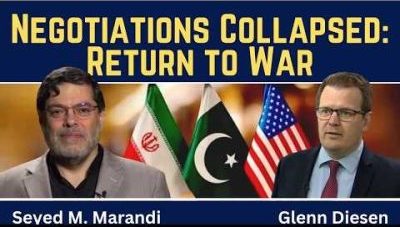
Seyed M. Marandi: Negotiations Collapsed – Return to War
or go to
Aletho News Archives – Video-Images
From the Archives
Wartime internment camps in Australia
National Archives of Australia
World War I
During World War I, for security reasons the Australian Government pursued a comprehensive internment policy against enemy aliens living in Australia.
Initially only those born in countries at war with Australia were classed as enemy aliens, but later this was expanded to include people of enemy nations who were naturalised British subjects, Australian-born descendants of migrants born in enemy nations and others who were thought to pose a threat to Australia’s security.
Australia interned almost 7,000 people during World War I, of whom about 4,500 were enemy aliens and British nationals of German ancestry already resident in Australia.
Records of World War I internment camps
World War II
During World War II, Australian authorities established internment camps for three reasons – to prevent residents from assisting Australia’s enemies, to appease public opinion and to house overseas internees sent to Australia for the duration of the war.
Unlike World War I, the initial aim of internment during the later conflict was to identify and intern those who posed a particular threat to the safety or defence of the country. As the war progressed, however, this policy changed and Japanese residents were interned en masse. In the later years of the war, Germans and Italians were also interned on the basis of nationality, particularly those living in the north of Australia. In all, just over 20 per cent of all Italians resident in Australia were interned. … continue
Blog Roll
 Aletho News
- Seyed M. Marandi: Negotiations Collapsed – Return to War
- Tomorrow’s naval blockade showdown
- ‘Israel’ attacks civilians to hide its embarrassing military failures & out of pure sadism
- Any Foreign Military Vessel Approaching Hormuz Under Any Pretext ‘Will Be Dealt With Severely’: IRGC
- Diplomats slam US negotiators’ performance in Iran talks
- Trump Refuses Exit Ramp, War with Iran will Continue
- Trump Says US Naval Blockade in Strait of Hormuz Will Begin Shortly
- US, Iran end 21-hour talks without agreement
- US IRAN TALKS: Who Are the Crazy Ones Here? /Lt Col Daniel Davis
- Talks with the US end without a deal over excessive US demands: Iran
- If Americans Knew
- US-Iran ceasefire negotiations make zero progress – Daily Update
- Pro-Israel ‘Thinktanks’ and Individuals who Influence U.S. Foreign Policy
- Mearsheimer reveals how Israel dictates US policies on Iran, Gaza – video
- After killing 350+, Israel still has a “score to settle” with Lebanon before ceasefire – Daily Update
- Military aid to Israel emerges as the latest political litmus test for Democrats
- The only Palestinian children’s rights organization closes following years-long Israeli campaign against it
- ‘I Can’t Forget the Smell’: Lebanese Reel After Israel Kills Over 300 in Single Day
- DNC Shoots Down Resolutions Calling Out AIPAC and Limiting Arms to Israel
- TCN: Is Israel Blackmailing President Trump?
- Israel killed at least 303 Lebanese yesterday – who were they? Daily Update
- No Tricks Zone
- Cave Discovery Reveals Today’s Desert Climates Were Recently Far Warmer, Wetter, Teeming With Life
- German Expert: Heat Dome Led To Record Temps In Western USA…Warmer In 1934, 1936
- New Study: No Linear Warming Or Glacier Retreat Along Northern Antarctic Peninsula Since 1980s
- An Inconvenient Tree: Uncovered In Alps… Europe Much Warmer Than Today 6000 Years Ago
- New Study Reports A 60% Slowdown In Greenland’s Ice Loss Rate In The Last Decade
- Low Intensity Tornado Wrecks Major Solar Farm, Creating A Potential Toxic Dump
- New Study Finds Warming Saves Lives…Cold Temperatures 12 Times More Deadly Than Excess Heat
- German Science Blog Accuses PIK Climate Institute Of Hallucinating Climate Tipping Points
- Devastating Assessment Of Comirnaty Vaccine By Former Senior Pfizer Europe Toxicologist
- New Study: CO2 Is ‘Effectively Negligible’ As An Explanatory Climate Change Factor Since 2000
 Aletho News