Why is the UN Commissioner For Human Rights Trying to Suppress Free Speech on Twitter?
BY DR DAVID MCGROGAN | THE DAILY SCEPTIC | NOVEMBER 22, 2022
While there has been a great deal of hullabaloo concerning Elon Musk’s takeover of Twitter, one would probably not have expected senior officials at the United Nations to find it necessary to have their say on the matter. Yet on November 5th Volker Türk, the new UN High Commissioner for Human Rights, did indeed weigh-in, sending an open letter to Mr. Musk to express his “concern and apprehension” about Twitter’s role in the “digital public square”. He urged Musk to make sure human rights would be “central to the management of Twitter”, and to “address harms” associated with the platform, and also took the time for a bit of finger-wagging at Twitter’s new CEO for sacking Twitter’s human rights team (no, I had no idea it had one either).
The letter was almost certainly only sent so that Türk, who assumed office in mid-October and is a comparative unknown (some UN insiders were apparently hoping for Michelle Obama or Angela Merkel), can get a bit of recognition. But it is instructive nonetheless in giving stark expression to the awkward position which human rights advocates have found themselves adopting when it comes to one of the most salient issues of the day – the regulation of speech online and particularly the subjects of disinformation and misinformation.
This happens in the course of two short paragraphs. Starting off, Türk is keen to emphasise the importance of protecting free speech. Twitter, he notes, is being pressed by governments to take down content or use upload filters, and he urges it in clear terms to “stand up for the rights to privacy and free expression to the full [sic] extent possible under relevant laws”. So, on the one hand, he adopts a strong position against censorship, implying that speech should only be restricted online where it would cross the border into illegality.
Yet on the other hand, in the very next breath, he declares that “free speech is not a free pass” and that the “viral spread of harmful disinformation…results in real world harms”. Therefore, in his view, Twitter must take responsibility to “avoid amplifying content” that results in harms to people’s rights – whether or not, by implication, it is technically legal. Hence, for example, scepticism about the efficacy of vaccines, legally expressed, ought nonetheless to be supressed given the impact it might have on the right to health.
This can only be described as cakeism. For Türk, it is apparently desirable both to protect freedom of expression to the fullest extent possible under the law, and yet also to restrict lawful speech where it might result in ‘harms’. It is easy to see the appeal in the abstract of the idea that these positions can be reconciled, and Türk indeed concludes his letter by suggesting that “our shared human rights offer a unifying way forward”. But it is difficult to see from its content how this could be so. Does Türk believe that freedom of speech should be protected insofar as it is possible to do so? Or does he believe lawful speech should be suppressed to prevent harm? He can believe in one, but he surely cannot coherently believe in both.
The wider point is that human rights advocates like Türk have rather lost faith in their own model. For decades, it has been orthodox human rights doctrine that all human rights are, in UN-speak, “indivisible and interdependent”. The rights to freedom of expression, freedom of association, non-discrimination, health, food, housing, education, and so on, all support one another and, indeed, cannot properly be enjoyed without the others. It is therefore not only possible to secure (say) freedom of expression and the right to health – they actually bolster each other.
The rationale for this can be readily understood: if freedom of expression is secure, then people will have access to the full range of information and opinion available on any given topic, and therefore policymakers, healthcare providers, doctors and patients will be able to make better health-related decisions than they would otherwise. There is therefore a direct link between securing freedom of speech and the right to health. (And conversely, of course, securing the right to health means increasing opportunities for people to express themselves freely – one will find it much easier to actively participate in public discourse if one is in good health than not.) What is true in this example is true across the round, and the orthodox position in the UN human rights system has long been that these mutually-supportive linkages can be found throughout the human rights corpus.
This is not, however, the position that Türk adopts in his letter. To reiterate, for the new High Commissioner, freedom of expression and the right to health are not in fact “indivisible and interdependent”, but incommensurate. If people are able to express themselves freely, they will circulate dangerous disinformation about vaccines, and harm will result. Freedom of expression does not reinforce the right to health; it undermines it.
Türk is no loose cannon. As short as his letter to Musk is, it essentially summarises the position adopted in a recent report to the UN General Assembly by the Secretary-General himself. This report manages somehow to express a robust defence of the “right to hold opinions without interference” and an insistence that “free communication of information and ideas about public and political issues… is essential”, while at the same time advocating for state intervention to prevent the spread of inaccurate information concerning “public health, electoral processes or national security” and the demonetisation of legal-but-harmful content. The same schizophrenic attitude is adopted as in Türk’s letter, but the message is clear enough: while it is necessary to pay lip service to the importance of freedom of expression, the system as a whole now disavows the “indivisible and interdependent” doctrine, and instead sees freedom of expression as being potentially antagonistic to other rights.
What are we to make of this? The clue is in the types of harmful inaccurate information that both Türk and the Secretary-General identify as particularly dangerous and hence warranting state suppression – i.e., those implicating public health, electoral processes and national security. It is no accident that these subjects map pretty closely to the issues that are of greatest concern to the global bien pensant class in which these figures are so firmly entrenched – Covid vaccines, ‘election denialism’, and Russian disinformation. And it is not really a great surprise that when the chips are down and the consensus within that class is that oppositional views on those topics represent a genuine threat, the UN High Commissioner for Human Rights and Secretary-General suddenly find that freedom of expression is not so “indivisible and interdependent” with respect to other rights at all. Indeed, it is to be sacrificed where those particular concerns are raised. Human beings, as we know, can be remarkably flexible on points of principle when peer pressure is applied – even, it turns out, senior human rights lawyers and UN Secretary-Generals.
More broadly, if one were being especially cynical, one might say that this is further evidence supporting the long-term criticism of the international human rights system – that it is essentially a forum for pharisaical expressions of right-on opinions which vary in accordance with whatever the ‘current thing’ is. This would not be entirely fair – the UN human rights organs do very important work – but it is sometimes easy to see how this view proliferates. Türk’s letter is suggestive not so much of a commitment to the letter of human rights law, but rather only to the contemporary concerns of a particular elite constituency. This in turn indicates that the UN human rights apparatus as a whole is geared more toward addressing the anxieties of that constituency than it is towards standing up for human rights across the board. Is it any wonder, then, that ordinary people generally take a sceptical view about human rights in the round?
Dr. David McGrogan is Associate Professor of Law at Northumbria Law School.
The Colorado gay club shooting is being used to shut down debate on child sexualization
Blaming ‘Libs of TikTok’ for a deranged murderer’s actions is shameless politicization
By Robert Bridge | RT | November 23, 2022
Almost as repugnant as the deadly attacks that are occurring with alarming frequency in the United States is the speed with which certain individuals rush to politicize them. The Club Q massacre in Colorado Springs, which left five dead and 18 injured, was certainly no exception.
The Democrats’ reaction kicked off with predictable calls for gun control. In this particular tragedy, however, the killer, 22-year-old Andersen Lee Aldrich, should never have been allowed to buy a gun in the first place. Moreover, he should have been high on the FBI’s ‘person of interest’ radar.
A year-and-a-half before Aldrich went on his deadly shooting spree, this troubled young man (who, according to court documents, has now started to identify as non-binary and use the pronouns them/they) threatened his family with a homemade bomb, forcing neighbors to evacuate while police talked him into surrendering. Yet, despite this, the district attorney of Colorado, Michael J. Allen, not only refused to press charges, but did not impose Colorado’s red-flag laws, which would have prevented Aldrich from purchasing a firearm. Had the Democratic-run state of Colorado enforced its own laws, five people might still be alive today.
Perhaps sensing the weakness of their anti-gun position, the Democrats rushed to politicize the tragedy by blaming conservative figures for instigating the violence.
Democratic Representative Alexandria Ocasio-Cortez chastised her Republican colleague Representative Lauren Boebert in the wake of the tragedy for “elevating anti LGBT+ hate rhetoric and anti-trans lies,” while MSNBC reporter Brandy Zadrozny took aim at a popular Twitter account for merely pointing out what is becoming increasingly clear to many Americans.
“Online… this Libs of TikTok account, which feeds larger media like Fox News stories, what has happened is the demonization of LGBTQ people, calling them ‘groomers’ and ‘pedophiles,’” remarked Zadrozny. “This type of thing, whether it’s motive or not, what we know is that it’s just another reason why LGBTQ people are scared.”
Yet the goal of voices like Libs of TikTok, which uses actual progressive sources, is not “the demonization of LGBTQ people,” as Zadrozny argues, but rather to shine a spotlight on an issue that many millions of people view as a serious problem. A recent poll showed that 57% of Americans support a ban on teaching young children about sexual orientation and transgender issues in public schools.
Meanwhile, it does not require much digging to see that the sexualization of children is really happening. Consider a recent advertising campaign by the famous fashion house, Balenciaga.
The photo shoot features a very young girl holding a teddy bear that is dressed up in a bondage outfit. Another picture in the series displays a Balenciaga bag on top of a sheaf of documents, one of which appears to reference the 2002 US Supreme Court case “Ashcroft vs Free Speech Coalition,” which struck down some provisions in an anti-child pornography law. The paper wasn’t featured prominently, but it’s hard to imagine it ended up there by accident.
Although the left would like people to ignore it, it stands to reason that these highly suggestive images could inspire acts of violence against children, albeit of a different kind from those witnessed at the Colorado Springs gay club. The only way to address these very real threats to children is to speak openly about them.
Youth today are being exposed to a slew of complex ideas and actions – from questioning their ‘true’ gender, to watching drag queens perform at the local gay club. Having been subjected to such radical concepts at the most impressionable age, an increasing number of young people eventually make the fateful decision to have a sex-change operation.
It is only natural that millions of Americans will want to make their opinions heard on these topics that could have life-long consequences for their children. They should be able to do so without facing accusations of being accomplices to murders carried out by deranged individuals. But as far as the left is concerned, anyone who speaks out against the sexualization of children will be responsible for getting more people killed, just like we saw at Club Q.
Robert Bridge is an American writer and journalist. He is the author of ‘Midnight in the American Empire,’ How Corporations and Their Political Servants are Destroying the American Dream.
Fauci Grilled Under Oath in Social Media Censorship Case
By Michael Nevradakis, Ph.D. | The Defender | November 23, 2022
Dr. Anthony Fauci today faced questions from Attorneys General Eric Schmitt (Missouri) and Jeff Landry (Louisiana) in their lawsuit against the federal government for allegedly colluding with Big Tech platforms to censor content critical of COVID-19 vaccines and countermeasures.
Fauci sat for a deposition one day after the 5th U.S. Circuit Court of Appeals temporarily halted the depositions of three other Biden administration officials.
In a statement released Tuesday in advance of Fauci’s deposition, Schmitt said:
“Tomorrow, along with my colleague from Louisiana, my Office and I will depose Dr. Anthony Fauci in our lawsuit against the Biden Administration for allegedly colluding with social media companies to censor freedom of speech.
“Since we filed our landmark lawsuit, we have uncovered documents and discovery that show clear coordination between the Biden Administration and social media companies on censoring speech, but we’re not done yet. We plan to get answers on behalf of the American people. Stay tuned.”
The statement also quoted Jeff Landry:
“We all deserve to know how involved Dr. Fauci was in the censorship of the American people during the COVID pandemic; tomorrow, I hope to find out.
“And I will continue fighting for the truth as it relates to Big Government colluding with Big Tech to stifle free speech.”
Schmitt and Landry sued President Biden, Fauci and others on May 5. New Civil Liberties Alliance, a nonprofit group representing outspoken critics of COVID-19 vaccines and countermeasures, including Drs. Jayanta Bhattacharya, Martin Kulldorff, Aaron Kheriaty and also Jill Hines, joined the lawsuit in August, as did Jim Hoft, founder and editor-in-chief of The Gateway Pundit.
According to the complaint, government officials colluded with and coerced Big Tech and social media platforms to “suppress disfavored speakers, viewpoints and content” relating to COVID-19.
Several officials named in the suit, including former White House press secretary Jen Psaki, argued they shouldn’t be required to be deposed, but a federal judge on Monday denied a request to quash Psaki’s subpoena.
The same judge, U.S. District Judge Terry Doughty, on Oct. 21 ordered Fauci and other government officials to provide depositions under oath.
In addition to Fauci and Psaki, other government officials slated to be deposed include:
- FBI Supervisory Special Agent Elvis Chan
- Carol Crawford, chief of the Centers for Disease Control and Prevention’s Digital Media Branch
- Cybersecurity and Infrastructure Security Agency Director Jen Easterly
- White House Director of Digital Strategy Rob Flaherty
- Daniel Kimmage, an official at the State Department’s Global Engagement Center
- U.S. Surgeon General Dr. Vivek Murthy
Two lower-level officials were listed as alternates: Lauren Protentis of the Cybersecurity and Infrastructure Security Agency in place of Easterly, and former White House COVID-19 adviser Andrew Slavitt in place of Flaherty.
A previous ruling had forced the above-named individuals to provide written testimony.
Judge rejects ‘self-serving blanket denials’
In his Oct. 21 ruling, Judge Doughty agreed with the plaintiffs that Fauci’s prior “self-serving blanket denials” regarding his role in censoring certain types of content and viewpoints on social media could not be taken at face value, necessitating a deposition.
Fauci challenged the order to sit for a deposition, arguing the communications in question are protected by executive privilege. But Judge Doughty ordered Fauci to turn over the documents within 21 days and to answer the plaintiffs’ questions in full.
Landry and Schmitt filed a request for depositions Oct. 10. In a statement released at the time by Schmitt, he said:
“After finding documentation of a collusive relationship between the Biden administration and social media companies to censor free speech, we immediately filed a motion to get these officials under oath.
“It is high time we shine a light on this censorship enterprise and force these officials to come clean to the American people, and this ruling will allow us to do just that. We’ll keep pressing for the truth.”
Depositions of three Biden administration officials on hold
In an order issued Monday, the New Orleans-based 5th Circuit temporarily halted the scheduled depositions of Easterly, Flaherty and Murthy.
According to Politico, the three-judge panel unanimously found Judge Doughty had erred in approving the depositions without first examining whether there were “other means” of obtaining the information the plaintiffs are seeking.
The court sent the case back to Doughty for further review. According to the order:
“Thus, before any of the depositions may go forward, the district court must analyze whether the information sought can be obtained through less intrusive, alternative means, such as further written discovery or depositions of lower-ranking officials.
“Written findings as to the availability and sufficiency of alternatives need to be entered.”
In a statement provided to The Defender by Landry’s office, Landry said, “These developments do not change my pursuit of the truth. We respect the court’s decision and will continue in the discovery phase of this case.”
Thursday’s court order came after lawyers for the government argued the plaintiffs should not have the ability to depose the three officials in question, on the basis that they are high-ranking government officials, and that the depositions would “unavoidably distract” them from “their important and time-sensitive duties,” which would “cause irreparable harm.”
However, the federal government’s motion for a partial stay of Judge Doughty’s deposition order was denied. The Nov. 21 order stated, “We make no ruling on the petition … at this time.”
Easterly, Flaherty and Murthy were scheduled to be deposed in early December.
On Wednesday Judge Doughty, in a separate ruling, ordered Psaki to sit for a deposition and rejected an attempt to shield FBI Agent Chan from answering questions under oath.
Plaintiffs in the case argued that none of the officials were “high-ranking,” and Judge Doughty agreed, finding that the “burdens” the officials would face as a result of sitting for depositions were outweighed by the necessity of gathering more information regarding the allegations in question prior to ruling on a motion for a preliminary injunction.
According to the 5th Circuit’s order:
“It is not enough, as the district court found, that these officials may have ‘personal knowledge’ about certain communications.
“That knowledge may be shared widely or have only marginal importance in comparison to the ‘potential burden’ imposed on the deponent.”
According to the court, the government already produced “extensive written discovery.” The government claims that these documents do not reveal any violations of the First Amendment, while the plaintiffs claim otherwise.
Politico also reported that the 5th Circuit asked Judge Doughty to consider ruling on the overall viability of the lawsuit before allowing the depositions to proceed.
The 5th Circuit said Judge Doughty should have not issued a ruling regarding the depositions until the courts decided on the government’s motion to dismiss — even though that motion was withdrawn after plaintiffs filed an amended complaint and the government has not filed a new motion to dismiss.
According to Politico, the 5th Circuit’s order is not final: Judge Doughty may still decide, based on a newly clarified analysis, that depositions of Easterly, Flaherty and Murthy are needed.
Politico also reported that the 5th Circuit’s order may strengthen efforts by Psaki and the U.S. Department of Justice (DOJ) to halt her deposition.
At a recent hearing, Psaki’s lawyers claimed there is no evidence she had met or had been in contact with any social media executives regarding purported “misinformation,” although she did express critical remarks about social media platforms during White House press briefings.
In his Nov. 21 order, Judge Doughty rejected that claim, writing:
“Despite the fact that Psaki is a former high-ranking official, the potential burden upon Psaki was outweighed by the need to determine whether free speech had been suppressed.”
Previously, a federal judge in Virginia rejected the arguments made by Psaki and the DOJ, including that sitting for a deposition would place an “undue burden” on her, taking her away from her family and her new job at MSNBC for several days.
Magistrate Judge Ivan Davis of the U.S. District Court for the Eastern District of Virginia passed the issue to Judge Doughty. Davis dismissed Psaki’s claims, arguing that Psaki and the DOJ were attempting an “end-run” around the deposition order.
Judge Doughty previously found “that Plaintiffs have proven that Jennifer Psaki has personal knowledge about the issue concerning censorship across social media as it related to COVID-19 and ancillary issues of COVID-19.”
“Psaki has made a number of statements that are relevant to the Government’s involvement in a number of social-media platforms’ efforts to censor its users across the board for sharing information related to COVID-19,” Judge Doughty added. “Any burden on Psaki is outweighed by the need to determine whether free speech has been suppressed.”
Michael Nevradakis, Ph.D., based in Athens, Greece, is a senior reporter for The Defender and part of the rotation of hosts for CHD.TV’s “Good Morning CHD.”
This article was originally published by The Defender — Children’s Health Defense’s News & Views Website under Creative Commons license CC BY-NC-ND 4.0. Please consider subscribing to The Defender or donating to Children’s Health Defense.
Should Individualism be Medicated Away to be Replaced by “Welfarism?”
By Igor Chudov | November 21, 2022
Medical ethics is a large field of study. The Covid pandemic certainly brought many medical ethics issues to the forefront and produced rather amazing “ethicist” gems, such as this:
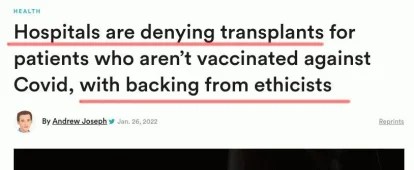
Be aware that “bioethics” has moved on to proposals that might seem crazy to you but are considered seriously and published in Bill Gates-funded publications and scientific journals. Important studies on this subject are conducted under the auspices of the World Economic Forum.
Forcibly giving people collectivism-promoting “Morality Pills” (archive link) is a popular suggestion among bioethicists. It was published in Bill Gates-funded The Conversation and is discussed widely in scientific literature. (The Conversation received 7 million dollars from Bill Gates but pretends to be an independent journalism publication)
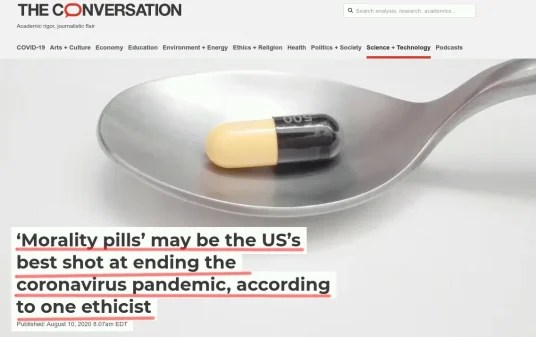
What are these morality pills? You might think that morality, to them, means being a good husband or wife, an honest businessperson, fulfilling promises, and so on. Why not enhance that? What’s the problem?
The problem is that this is NOT how they define morality! To them, morality is a collectivist mindset, lack of critical thinking, and compliance. The article explains that some people lack “moral qualities” and refuse to wear masks or take Covid vaccines, or even deny climate change:
My research in bioethics focuses on questions like how to induce those who are noncooperative to get on board with doing what’s best for the public good. To me, it seems the problem of coronavirus defectors could be solved by moral enhancement: like receiving a vaccine to beef up your immune system, people could take a substance to boost their cooperative, pro-social behavior. Could a psychoactive pill be the solution to the pandemic?
They propose giving people pills to enhance “morality” and explain the climate change angle relevance:
But a strategy like this one could be a way out of this pandemic, a future outbreak or the suffering associated with climate change. That’s why we should be thinking of it now.
The proposed solution to give people morality pills is more than idle thinking. Several candidate psychoactive substances are identified and considered seriously: psilocybin and oxytocin, for example.
The obvious objection to all this morality pill talk is that skeptics would not take them! I would not take such a pill to enhance my collectivist mindset. At the risk of being presumptuous, I would say that you, my dear subscriber, would refuse them also. Right?
The ethicists have a solution: administer collectivist morality pills by force or surreptitiously.
As some have argued, a solution would be to make moral enhancement compulsory or administer it secretly, perhaps via the water supply. These actions require weighing other values. Does the good of covertly dosing the public with a drug that would change people’s behavior outweigh individuals’ autonomy to choose whether to participate? Does the good associated with wearing a mask outweigh an individual’s autonomy to not wear one?
Serious articles discuss how to do it:
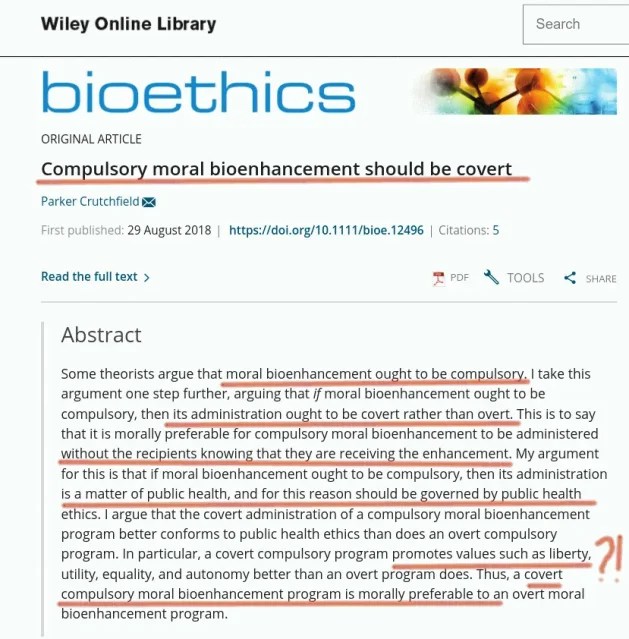
A covert psychoactive substance administration to the masses must not be discussed publicly before its implementation, right? So the ethicists desire to bypass any democratic process or prior public discussion and scrutiny. These ethicists refuse to see an ethical problem with that!
World Economic Forum Sponsored Research into “Collectivist Bioenhancement”
Some of you, my dear readers, might think this is so batshit crazy that it is simply useless musings of fringe philosophers, not worth discussing.
Quite to the contrary, the famous and influential organization called the World Economic Forum sponsors such bioenhancement research.
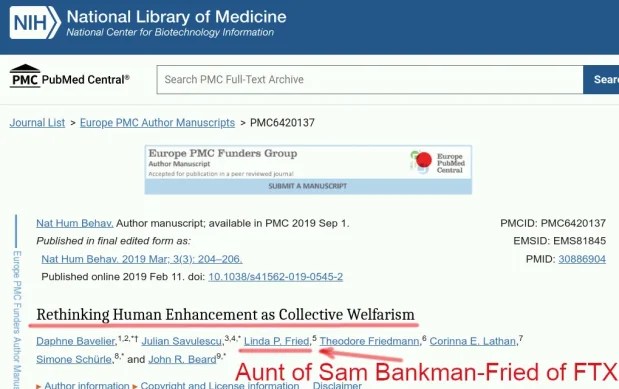
Linda Fried, mentioned above, is the aunt of Sam Bankman-Fried. Sam stole billions of dollars from crypto-investors (in my opinion) and used that money to become the second largest Democratic party donor. So, Linda Fried is not exactly a nobody languishing in obscurity. By the way, a friend of this blog El Gato wrote a great post discussing Sam — check it out.
Linda explains in her article that her goal is “collective welfarism,” and she is part of the group convened by the World Economic Forum:
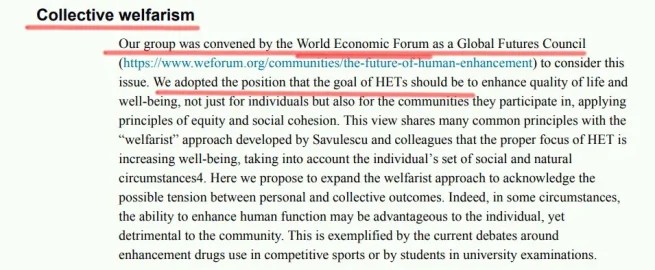
A stronger ethical approach, though, would be to abide by the principle, termed ‘collective easy rescue’, whereby small individual losses are justified in the name of collective well-being. Mass vaccination is a well-documented example of collective easy rescue.
Human “enhancement” to force mass vaccination? Sounds familiar?
Those “medical ethicists,” “world changers,” and “disinformation fighters” are so self-absorbed and self-righteous that they think their way of thinking is the only right way. They consider any deviation from their mindset to be antisocial, divisive, and subversive.
To them, freedom is dangerous. Truth is misinformation. Pursuing personal happiness and liberty instead of welfarism is selfish and immoral and needs to be dealt with through covert bioenhancement pills. Their opponents need to be silenced as “disinformation agents” or influenced via secretly applied substances to enhance compliance and lower critical thinking.
My post, discussing outlandish agenda developed under the auspices of the World Economic Forum, may sound like the perfect conspiracy theory. If someone approached me and told me that the WEF is sponsoring “bioenhancement research,” whose goal is to develop substances to impose “collective welfarism” and achieve compliance with mass vaccination, I would not take that person seriously!
Such is the problem with describing many WEF proposals. Some of their ideas are so crazy that they are difficult to accept as genuine when retold. Official papers, proposals, peer-reviewed studies, and agenda articles describe plans that are extremely strange to the uninitiated — and yet are pursued seriously. Other authors, such as Tessa Lena, also mentioned how difficult it is to describe these tendencies.
I have explained my difficulties with describing crazy but real proposals by world-leading unelected organizations such as the WEF.
I Do Not Spread Conspiracy Theories – I Report on Actual News
Their proposals, when understood properly, are highly disturbing and seem unreal — except that they are very serious.
The difficulty with their plans is that regular people cannot believe they are real. That happens for a good reason: nobody would expect such insanity to be seriously promulgated by important men and women. Even I have difficulty reconciling the plain text and the simple meaning of their anti-human theories with my idea of what our leaders should act like.
And yet, here we are — the welfarist pills are promulgated under the auspices of the WEF by no one but Linda Fried, the aunt of the second-largest Democrat donor and crypto thief (in my opinion) Sam Bankman-Fried.
In the future, you may need to be careful with your drinking water or the compulsory mystery “health enhancement pill” you must take for an unexplained reason!
Would you take such a welfarism bioenhancement pill?
Canada tells world leaders to clamp down on online “misinformation”
By Christina Maas | Reclaim The Net | November 21, 2022
Canadian Prime Minister Justin Trudeau and Public Safety Minister Marco Mendicino are doing the rounds, insisting on the need to fight online harassment and misinformation.
At the G20 Summit in Bali, Indonesia, Trudeau said that Canada wants to regulate online “harassment and violence.” He added that Canada’s social media platforms have a responsibility to “address online harassment and violence to ensure trust in technology.”
“While always ensuring and defending free speech, we must make it clear that it cannot be OK to bully and attack people online,” Trudeau said.
At the G7 summit in Germany, Public Safety Minister Marco Mendicino told other interior and security ministers there is a need to tackle disinformation. On November 17, he tweeted that “the G7 stands united” when it comes to “addressing the rise of mis and disinformation online.”
On November 19, Mendicino tweeted that Canada will host a G7 summit next year to fight “disinformation.”
“Taking a leading role at the G7, Canada has invited counterpart interior and public safety ministers here for a summit to tackle disinformation, which is one of the most pervasive threats to all our democracies right now,” he tweeted.
He added that a summit in Canada would help “flip the script, and to get ahead of the curve of disinformation.”
“This is where we think that Canada and the G7 can show leadership,” he continued.
According to Mendicino, the “marketplace for disinformation” is bigger than the “marketplace for reliable information,” and Canadians need to be helped to distinguish between the two.
He continued to say that, to fight disinformation, online platforms should ensure they are “adhering to the terms and conditions of their own user agreements.”
During the summit, he suggested the education of high school students on how to identify disinformation, as well as online scams and fraudulent emails and texts.
White House disavows FBI probe into Shireen Abu Aqla murder to appease Israel
The Cradle | November 17, 2022
The White House and the US State Department have disowned an FBI investigation into the murder of Al Jazeera journalist Shireen Abu Aqla in a last-ditch attempt to appease “furious” Israeli officials, according to US news outlet Axios.
Axios’ correspondent in Israel, Barak Ravid, claims senior Israeli officials were informed of the FBI probe three days after the 1 November elections, at which point they “urged” the White House to “fix the situation” before the investigation was leaked to the press.
Tel Aviv reportedly warned Washington that once news of the probe became public, the situation “would turn into a bilateral crisis.”
“We spoke to every Biden administration official we work with and made it clear how furious we were,” Ravid quotes a senior Israeli official as saying.
Outgoing Defense Minister Benny Gantz reportedly held a “difficult call with a very senior US official” before the probe was made public, telling them that Israel would not cooperate “in any way with the FBI investigation.”
Gantz reiterated this stance this week, calling the FBI probe a “mistake” and saying Israel “will not cooperate with an external investigation, and will not enable intervention to internal investigations.”
Outgoing Prime Minister Yair Lapid echoed the same sentiment, saying: “Our soldiers will not be investigated by the FBI or by any other foreign country or entity, however friendly it may be. We will not abandon our soldiers to foreign investigations.”
For their part, US officials told their irate Israeli counterparts that the White House and the State Department were not part of the decision-making process of the Department of Justice (DOJ), adding that the probe is “an independent decision … [not] motivated by a political decision.”
In May of this year, an Israeli sniper shot and killed Abu Aqla in the occupied West Bank city of Jenin. At the time, the Palestinian-American journalist was wearing body armor clearly labeled ‘PRESS.’
Independent investigations by the UN, human rights groups, and western media outlets have all concluded that Abu Aqla was deliberately shot by an Israeli soldier. Moreover, the investigations show that neither the journalist nor the occupation troops were in an active-fire zone at the time of the murder.
These findings are corroborated by the testimonies of the journalists who were accompanying the Al Jazeera reporter, as well as by the video footage of her murder.
Despite the mountains of evidence, both the US and Israel avoided placing any blame on the Israeli soldiers who fired at the group of Palestinian journalists.
In September, self-proclaimed ‘centrist’ Lapid said in no uncertain terms that he would “not allow an [Israeli] soldier … to be prosecuted just to receive applause from abroad,” before adding that “no one will dictate opening fire instructions to us.”
His statements were made on the heels of a squalid Israeli investigation into the events of 11 May, which concluded that “there is a high possibility that Ms. Abu Aqla was accidentally hit by [Israeli] gunfire fired toward suspects identified as armed Palestinian gunmen during an exchange of fire.”
In July, a US forensic investigation into the murder reached “no definitive conclusion” on the origin of the bullet that killed Abu Aqla, suggesting that gunfire from Israeli positions was “likely responsible.”
A mere two weeks after Abu Aqla’s death, an Israeli soldier shot and killed Palestinian journalist Ghufran Warasneh in Al-Arroub refugee camp, north of Hebron in the occupied West Bank. At the time, Warasneh was headed for her first day at work.
G20 Declares Vaccine Passports Will Be Adopted For International Travel
By Richie Allen | November 17, 2022
The leaders of the G20 have been meeting in Bali over the past two days.
The G20 is an intergovernmental forum made up of 19 countries and the EU.
It claims to work on the global economy, international financial stability, climate change, and sustainable development.
The White House has just published the declaration signed by each of the G20 leaders at the conclusion of the two day summit. It makes for very interesting reading.
Read the full declaration here: https://www.whitehouse.gov/briefing-room/statements-releases/2022/11/16/g20-bali-leaders-declaration/
Pay attention to Paragraph 23.
It says:
We support the WHO mRNA Vaccine Technology Transfer hub as well as all as the spokes in all regions of the world with the objective of sharing technology and technical know-how on voluntary and mutually agreed terms. We welcome joint research and joint production of vaccines, including enhanced cooperation among developing countries. We acknowledge the importance of shared technical standards and verification methods, under the framework of the IHR (2005), to facilitate seamless international travel, interoperability, and recognizing digital solutions and non-digital solutions, including proof of vaccinations. We support continued international dialogue and collaboration on the establishment of trusted global digital health networks as part of the efforts to strengthen prevention and response to future pandemics, that should capitalize and build on the success of the existing standards and digital COVID-19 certificates.
Chilling, isn’t it?
Paragraph 24 addresses online safety and disinformation:
We acknowledge that affordable and high-quality digital connectivity is essential for digital inclusion and digital transformation, while a resilient, safe and secure online environment is necessary to enhance confidence and trust in the digital economy. We recognize the importance of policies to create an enabling, inclusive, open, fair and non-discriminatory digital economy that fosters the application of new technologies, allows businesses and entrepreneurs to thrive, and protects and empowers consumers, while addressing the challenges, related to digital divides, privacy, data protection, intellectual property rights, and online safety. We acknowledge the importance to counter disinformation campaigns, cyber threats, online abuse, and ensuring security in connectivity infrastructure.
Vaccine passports, digital inclusion, digital economy and censorship on steroids.
Tyranny reigns now.
The media is lost with all hands.
Not so much as a peep.
Why is Nature Praising the Use of Propaganda During the Pandemic and Calling for More?
BY DR GARY SIDLEY | THE DAILY SCEPTIC | NOVEMBER 15, 2022
Throughout the Covid era, those expressing views at odds with the dominant narrative were often subjected to unprecedented levels of censorship and psychological manipulation. Academic journals played a significant role in this silencing of alternative voices by, for example, ignoring the work of established scholars, perpetuating bias, rejecting research papers that reached conclusions inconsistent with mainstream views, and demonstrating a financial motivation to only publish studies favourable to the pharmaceutical industry. As a consequence of this partiality, the perceived scientific integrity of academic periodicals has suffered considerable damage. Alas, a recent article in the once highly respected Nature journal will have done nothing to improve the credibility of the academic press.
The article, titled “Mastering the art of persuasion during a pandemic“, is a supplementary ‘outlook’ piece written by Elizabeth Svoboda, a Californian science journalist. Drawing on the perspectives of a cluster of social science experts, Svoboda lauds the importance of health policymakers deploying “effective communication strategies” so as to ensure that the populace do the right things when faced with the next global pandemic. She asserts that a range of behavioural science strategies, or “nudges”, will be of central importance in enhancing compliance with public health restrictions when the next novel respiratory virus emerges over the horizon. The article, however, is riddled with highly questionable assumptions and ideological biases.
The Covid science is not settled
Arguably the most blatant distortion, illustrated many times by both the author and the experts cited, is that the Covid science is settled and their version is the definitive truth. The article opens with the ludicrous suggestion that the official advice in early 2020 – that masking healthy people would achieve no benefit – was a “fateful moment”, a missed opportunity “to stop the virus bringing the world to a halt”. In support of this assertion, Rob Willer, a sociologist at Stanford University, describes this initial guidance as “a big credibility mistake”, and goes on to suggest that it was an example of public health experts trying to protect the supply of masks to healthcare. According to Willer, this noble white lie led to many people feeling “resentful” at having been misinformed and it fuelled their reluctance to adhere to subsequent mask requirements. Totally ignored is that most of the more robust, real-world evidence concludes that masking healthy people achieves no meaningful reduction in viral transmission, and the U-turn in mid-2020 towards mask mandates was not the result of new research findings but was – more likely – politically motivated.
Similarly, the raft of unprecedented Covid restrictions (lockdowns, shutting businesses, school closures) inflicted on Western citizens by the public health establishment are all assumed to achieve important benefits so that the only challenge for the pandemic experts is how to persuade the pesky people to comply with them. Consequently, the article cites the ideas of a number of social scientists regarding how to effectively lever compliance with future public health diktats. Varun Gauri, a senior economist, highlights the importance of making it easier for people to ‘do the right things’. Matthew Goldberg, a research psychiatrist, wants the psychological persuasion techniques of behavioural science to be used pre-emptively “so that when the time arises, people can act quickly”, a view echoed by infection-control researcher Armand Balboni. Katy Milkman, a behavioural scientist, promotes her strategies to enhance the take-up of Covid vaccines, including a “regret lottery” where people are informed that their names have been entered into a draw to win a lot of money, but that the “winner” will lose the prize if not vaccinated.
Despite the wealth of accumulated evidence that lockdowns are ineffectual in reducing Covid-related hospitalisations and cause huge collateral damage, alongside the emerging realisation that Covid vaccines may achieve no overall net benefits and can do considerable harm, nowhere in the article is there even a hint of recognition that the restrict-and-jab doctrine of mainstream public health failed to achieve many of its stated aims.
One important negative consequence of the flawed ‘science is settled’ assumption, as displayed by the author and her expert contributors, is that it justifies the censoring and vilification of anyone challenging the dominant narrative. For example, Varun Gauri says, “During the COVID-19 pandemic, disinformation played a major part in sowing division and undermining the authority of health officials” and that this “paved the way for fast viral spread and low vaccination rates”. His solution is for authorities to “take a bigger, legislative approach to the problem” – a euphemism for censorship. Similarly, Katy Milkman warns against allowing “conspiracy theories to slither in”.
The controversy surrounding the acceptability of state-imposed ‘nudging’
It seems that all those involved in the Nature article are blissfully unaware of the controversy surrounding the state’s use of covert psychological strategies (or ‘nudges’) to promote compliance with Government restrictions. Blinded by their fixed belief that the Covid science is settled, and focused only on the goal of persuading the populace to ‘do the right things’, the social scientists cited in the commentary blithely propose a range of behavioural science interventions without any questioning around the appropriateness and ethical acceptability of these clandestine methods.
Nudges are psychological strategies of persuasion that largely impact upon their targets below the level of conscious awareness – that is, people do not know they are being influenced. Such techniques have been heavily deployed throughout the Covid era, and have evoked a range of ethical concerns relating to the acceptability of the state strategically (and non-consensually) increasing the emotional discomfort of its citizens as a means of promoting compliance with unprecedented and largely non-evidenced public health restrictions. Also, as the strategies operate subconsciously, they could often be categorised as manipulative.
The expert contributors referenced in the Nature article repeatedly commend greater deployment of these ethically dubious techniques in future pandemics. For instance, Balboni urges political leaders to ensure human behaviour specialists play a much bigger part in health policy, bemoaning that, during the Covid era, “social scientists, anthropologists and psychologists were not used nearly enough”. Later in the article, the purported benefits of the “pre-emptive deployment of behavioural science” is highlighted.
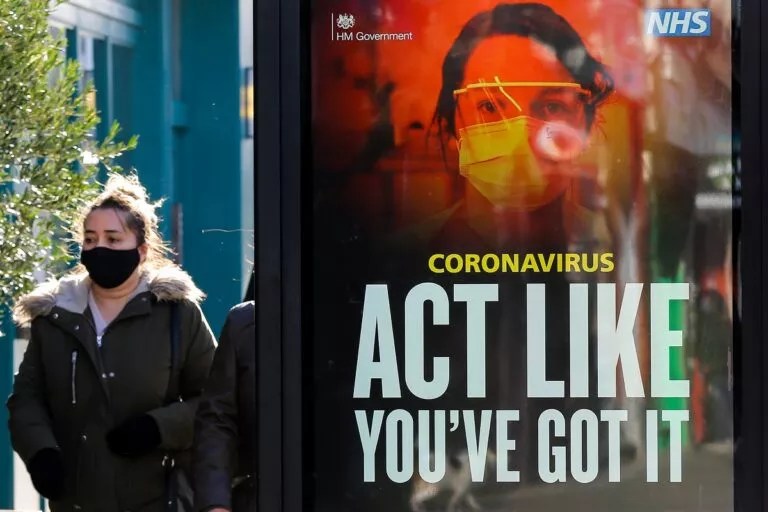
More specifically, the value of equating virtue with compliance with the restrictions is lauded. This particular strategy – an ‘ego’ nudge in behavioural science parlance – was used repeatedly throughout the Covid event, effectively evoking shame in anyone who deviated from the demands of public health diktats and the vaccination doctrine. Many will recall the repeated ‘I wear a face covering to protect my mates’ adverts, the ‘don’t kill your gran’ quips by ministers, and the close-up images of acutely unwell hospital patients with the voiceover, “Can you look them in the eyes and tell them you’re doing all you can to stop the spread of coronavirus?” Of the same ilk was the NHS document (later redacted) advising front-line staff to tell young people that, “Normality can only return, for you and others, with your vaccination” (my emphasis).
The Nature article endorses the same tactic of differentiating the goodies from the baddies. It is stated that, “Encouraging feelings of empathy in people could make them more likely to choose to protect others during a pandemic”. There are also references to the desirability of “invoking of empathy” and emphasising “the vaccines’ collective benefits, such as protecting others”. In the words of Balboni, it is really important to get people to recognise that “through their behaviour, they can actually protect other people”. Clearly, the considerable evidence demonstrating that Covid vaccinations do not prevent viral transmission has yet to reach these nudge enthusiasts.
In a Western supposedly liberal democracy, is it ethical for the state to strategically inflict shame on its citizens? Does the informed consent of the people, as to whether to accept a medical or psychological intervention, no longer matter? Is it acceptable to covertly influence the general population to follow contentious and largely non-evidenced Covid restrictions? Shamefully – pun intended – these key ethical considerations are totally disregarded in this Nature journal commentary.
The role of political ideology and conflict of interests
What might account for the publication of such a partisan article in an academic journal?
Many critics of Covid orthodoxy have raised the spectre of an underlying globalist agenda, removed from any democratic process, shaping Western responses to pandemic management. With the central involvement of the World Economic Forum (WEF), it has been argued that the crisis following the emergence of a novel respiratory virus has been opportunistically exploited in pursuit of wider, pre-existing goals pertaining to tackling climate change and the imposition of Covid Passes and Digital ID, Social Credit Systems, Central Bank Digital Currency and Universal Basic Income (as detailed in Agenda 2030). The authoritarian control over the world’s population (essential to realise such an agenda) is typically legitimised under the banners of ‘the greater good’ and ‘social responsibility’, two themes that run through the Nature article. Is it possible that the author and contributors adhere to this globalist ideology?
Exploration of the ongoing interests of those involved in the compilation of the article is revealing:
- Elizabeth Svoboda is a regular contributor to Greater Good online magazine.
- Varun Gauri is a member of the WEF and an economist at the Development Research Group of the World Bank.
- Rob Fuller is “Director of Polarisation and Social Change Lab” at Stanford University; he recently co-wrote an article in the Los Angeles Times titled, “How to convince Republicans to get vaccinated”.
- Matthew Goldberg is a research scientist at the Yale Program on Climate Change Communication.
- Katherine Milkman is Deputy Director at the “Behaviour Change for Good Initiative“, an enterprise that claims it uses behavioural science to “transform people’s lives for the better”.
Would it be too speculative to suggest that those involved in the Nature article harbour a penchant for a new world order, and that these globalist proclivities may have compromised their objectivity?
Finally, my eye was drawn to a footnote to the article that read: “This article is part of Nature Outlook: Pandemic preparedness, an editorially independent supplement produced with the financial support of third parties.” And who funds this supplement? Astra Zeneca and Moderna.
I rest my case.
Dr. Gary Sidley is a retired NHS Consultant Clinical Psychologist and co-founder of the Smile Free campaign. He blogs at Coronababble.
The “Fact Check” Scam
By Paul Craig Roberts | Institute for Political Economy | November 16, 2022
Last Monday I received an email from NewsGuard, “an independent organization that rates and reviews news outlets based on nine apolitical journalistic criteria.”
The analyst asked me to comment on two statements in my columns in which I am accused of “advancing false and unsupported claims.”
One false and and unsuopported claim is “a March 2022 article titled ‘Ukraine Hosted Illegal US Biowarfare Laboratories,’ repeated Russian and Chinese propaganda about the presence of U.S.-run bioweapons labs in Ukraine, which has been repeatedly debunked by fact-checking organizations and refuted by U.S. government officials.”
The alleged “fact checker’s” claim that I made a false and unsupported claim is incorrect for two reasons. One is the fact that a Freedom of Information Act (FOIA) request to the Defense Threat Reduction Agency produced official US government documents that state that the Defense Threat Reduction Agency, a component of the U.S. Department of Defense, funded anthrax laboratory activities in a Ukrainian biolab in 2018. The US government’s records also show over $11 million in funding for the Ukraine biolabs program in 2019.
Apparently, it never occurred to the dumbshit “fact checker” that relying on assurances from a proven liar such as the US government is no way to check a fact. How, “fact checker,” does the government refute its own admission? Notice also that the “fact checker” thinks that a statement by the Russian government is “unsupported,” but a statement by the US government is considered “supported.” How does this obvious bias serve to verify any fact?
The second reason the “fact checker” is incorrect indicates that the “fact checker” is incapable of understanding that to report what the Russian government claims to have discovered in Ukraine is not misinformation or propaganda. It is correct information reporting Russian claims. What we see here is a “fact checker” who thinks or has been trained to see any report, whether or not endorsed by the reporter, of an item in the “impermissible to be mentioned” category as a “false and unsupported claim.” In other words, all is false except official narratives.
My other “false and unsupported claim” is that 100,000 vote spikes are indications of fraud, a conclusion endorsed by numerous experts. The “fact checker” alleges that vote spikes “are commonplace and due to the release of large batches of results all at once from solidly Democratic or Republican districts, or from mailed ballots.” What the “fact checker” does not account for is the extreme unlikeliness of a vote dump of 100,000 or more ballots that is all for one candidate, or how votes were mailed in such a way that all Democrat votes arrived in the same delivery. Perhaps it is statistically possible for 100,000 votes to arrive in an unbroken stream all for the same person, but the probability of such an event is far too low to account for the large number of times it throws a close election to a Democrat. Are there that many voting precincts in which not a single Republican voter lives? Republican vote spikes are rare and seem to happen when the algorithm of the voting machines has created an unbelievable margin of Democrat victory and has to be narrowed.
In my opinion, “fact checkers” are unintelligent people devoid of integrity who are hired to support official narratives by stamping out truth and dissenting opinion. Who checks the “fact checkers?” There is no reason to trust a “fact checker.” Anyone can set up a “fact check” site to protect any material or ideological interest from examination. Note that “fact checkers” appeared only after the official narratives became so blatantly false that they had to be protected from examination. Never before did we have an industry of censors employed to protect official narratives. “Fact checkers” are the true enemies of truth.
Israel refuses to cooperate with FBI probe into journalist’s death

RT | November 15, 2022
Israel has carried out its own probe into the death of Al Jazeera journalist Shireen Abu Akleh and won’t cooperate with the FBI’s investigation into the incident, Israeli Defense Minister Benny Gantz tweeted on Monday.
Media reports claimed the Federal Bureau of Investigation (FBI) had launched a probe into the killing of Palestinian-American media worker, who was shot dead while covering an Israeli raid in the city of Jenin in the occupied West Bank in mid-May. US officials updated their Israeli counterparts on the move earlier this month, sources told the Times of Israel paper.
“The decision taken by the US Justice Department to conduct an investigation into the tragic passing of Shireen Abu Akleh, is a mistake,” Gantz wrote on Twitter in English. The Hebrew version of the message was formulated in harsher terms, labeling the US actions “a grave mistake.”
He said the Israel Defense Forces (IDF) have already carried out “a professional, independent investigation” into the death of the Al Jazeera reporter, and its findings were presented to Washington.
“I have delivered a message to US representatives that we stand by the IDF’s soldiers, that we will not cooperate with an external investigation, and will not enable intervention to internal investigations,” Gantz insisted.
An Israeli probe established that Abu Akleh, who was shot despite wearing a vest marked “Press” and a blue helmet, was likely hit by a bullet that an Israeli soldier fired by mistake. It also didn’t rule out the possibility that the 51-year-old came under Palestinian fire.
However, Palestinian officials and Abu Akleh’s family, as well as Al Jazeera, insist the renowned journalist, who had been covering the Israeli-Palestinian conflict for two decades, had been deliberately targeted by the IDF.
Abu Akleh’s death has led to anger and protests in the Middle East and elsewhere, with tensions mounting even further after the Israeli police used force to disperse mourners at her funeral.
“I had to stand by idly, watching these people die.”
The crime committed against Dr. Paul Marik and his patients
By John Leake | Courageous Discourse | November 14, 2022
The following post is from The Courage to Face COVID-19: Preventing Hospitalization and Death While Battling the Bio-Pharmaceutical Complex, by John Leake and Peter A. McCullough. MD, MPH.
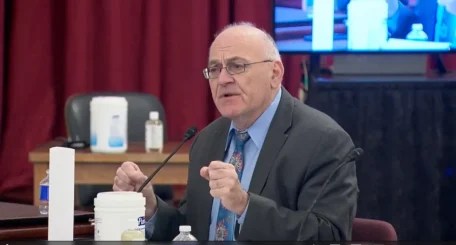
Dr. Paul Marik testifying at the US Senate on January 24, 2022
At the same time that Dr. McCullough was stripped of his job and professorships, his colleague and kindred spirit, Dr. Paul Marik, experienced a similar fate. On October 15, 2021, his hospital’s administration circulated a memo to the entire healthcare system stating that its doctors were authorized to administer remdesivir to COVID-19 patients, but not ivermectin or a host of other repurposed drugs. As Dr. Marik read the memo, he marveled at the sheer perfidy of it. Especially grotesque was the inclusion of “Ascorbic acid” (vitamin C) on the list of banned substances.
The administration issued this directive at a time when seven COVID-19 patients were in the ICU, desperately in need of Dr. Marik’s care. He, in turn, desperately wanted to treat them with the drug regimen that he knew would give them a good chance of recovery. Three months later, at the January 24, 2022 panel discussion (COVID-19: A Second Opinion),hosted by Senator Ron Johnson, Dr. Marik recounted his helplessness. His heart-wrenching testimony (starting at 4:19:30) was probably the most dramatic moment in the extraordinary conference.
This system was effectively preventing me from treating my patients according to my best clinical judgement. … As a clinician for the first time in my entire career, I could not be a doctor. I could not treat patients. I had seven Covid patients [he holds up his hands showing seven digits] including a 31-year-old woman. I was not allowed to treat these people. I had to stand by idly [he clenches and raises his fists with anguish and begins to weep]. I had to stand by idly, watching these people die.
I then tried to sue the system, so then they did something called peer sham review. It is a disgusting and evil concept. They then accused me of seven most outrageous crimes … and [claimed] that I was such a severe threat to the safety of patients, they immediately suspended my hospital privileges because I posed such a threat to these patients—ignoring the fact that under my care, mortality was 50% less than it was under my colleagues. I then went on to this sham peer review. I went to a Kangaroo Court, where they continued this, and the end result was that I lost my hospital privilege and was reported to the National Practitioner Databank. So here I was standing up for my patients’ rights, and this hospital, this evil hospital, ended my medical career.
Featured Video
Integrity Initiative: UK-funded network framed dissent as Russian disinformation for years
or go to
Aletho News Archives – Video-Images
From the Archives
Why Saudi Ties to 9/11 Mean U.S. Ties to 9/11
By Kevin Ryan | Dig Within | September 27, 2015
Media interest in Saudi Arabian connections to the crimes of 9/11 has centered on calls for the release of the 28 missing pages from the Joint Congressional Inquiry’s report. However, those calls focus on the question of hijacker financing and omit the most interesting links between the 9/11 attacks and Saudi Arabia—links that implicate powerful people in the United States. Here are twenty examples. … continue
Blog Roll
 Aletho News
- IAEA inspectors cannot return to Iran amid US threats: Russia
- Senate Rejects Iran War Powers Resolution Passed By House
- ‘We did not attack Pakistan with drones’: Afghan sources
- Iraqi Resistance faction links arms to sovereignty, questions US exit
- Cannon fodder no more… South Korea rejects Trump’s pressure to join his criminal war on Iran
- Neria Leiter Was A Legitimate Military Target
- Integrity Initiative: UK-funded network framed dissent as Russian disinformation for years
- ‘We don’t seek permission to defend our country’: Snippets from President Pezeshkian’s UNGA address
- NATO chief wants Europeans to fight American wars [for Israel]
- German chemicals giant reveals details of downsizing
- If Americans Knew
- Israel displaces hundreds of Palestinians amid wave of demolitions in West Bank
- Aid, reconstruction, and Israel’s history of obstruction in Gaza
- Trump administration digs an ever-deeper hole of complicity in genocide – Daily Update
- US-Israel $2.8 Billion Arms Deal, 40,000-Bomb Supply Faces New Gaza Complicity Accusations
- Caught on Tape: AIPAC CEO Boasted of Controlling Trump’s National Security Officials
- Why Hamas Attacked Israel in October 2023 – Israeli professor Ilan Pappé
- They see them, then kill them: Israeli quadcopters track, deliberately target civilians in Gaza
- Winter could turn Gaza’s treacherous, war-damaged buildings into deathtraps
- Majority of Democratic Voters Want to Prosecute Both Biden and Trump Administration Officials Over Gaza
- As Gaza languishes, world leaders gather at the UN – Daily Update
- No Tricks Zone
- New Study: Earth And Venus Surface Warmth Largely Explained By Convection And Lapse Rate, Not CO2 Or Radiation
- 2025 Nature Paper Claiming Worsening Global Drought Gets RETRACTED …Heavily Flawed
- New Study: ‘Global Drought Shows No Detectable Recent Acceleration Under Climate Warming’
- Economic Masterminds: German Socialists Suggest Taxing Productivity Gains Stemming From Using AI
- The South China Sea Has Not Been Cooperating With The Climate Change Narrative
- Energy Crisis: Germany Enters Heating Season With Historically Low Gas Reserve Fill Levels
- New Study: The Antarctic Ice Sheet Gained Mass From 2020-2024 Due To Staggering Snow And Ice Accumulation
- Study: Ocean Heating Rates From Thousands Of Years Ago ‘Dwarf’ Modern Ocean Heating Rates
- Climate Extremists Target, Attack Large-Scale Power Grid Infrastructure In Germany!
- New Study: Antarctic Ice Melt Has Contributed Less Than 1 Centimeter To Sea Level Rise In The Last 30 Years

