Democrats and Media Do Not Want to Weaken Facebook, Just Commandeer its Power to Censor
By Glenn Greenwald | October 5, 2021
Much is revealed by who is bestowed hero status by the corporate media. This week’s anointed avatar of stunning courage is Frances Haugen, a former Facebook product manager being widely hailed as a “whistleblower” for providing internal corporate documents to the Wall Street Journal relating to the various harms which Facebook and its other platforms (Instagram and WhatsApp) are allegedly causing.
The social media giant hurts America and the world, this narrative maintains, by permitting misinformation to spread (presumably more so than cable outlets and mainstream newspapers do virtually every week); fostering body image neurosis in young girls through Instagram (presumably more so than fashion magazines, Hollywood and the music industry do with their glorification of young and perfectly-sculpted bodies); promoting polarizing political content in order to keep the citizenry enraged, balkanized and resentful and therefore more eager to stay engaged (presumably in contrast to corporate media outlets, which would never do such a thing); and, worst of all, by failing to sufficiently censor political content that contradicts liberal orthodoxies and diverges from decreed liberal Truth. On Tuesday, Haugen’s star turn took her to Washington, where she spent the day testifying before the Senate about Facebook’s dangerous refusal to censor even more content and ban even more users than they already do.
There is no doubt, at least to me, that Facebook and Google are both grave menaces. Through consolidation, mergers and purchases of any potential competitors, their power far exceeds what is compatible with a healthy democracy. A bipartisan consensus has emerged on the House Antitrust Committee that these two corporate giants — along with Amazon and Apple — are all classic monopolies in violation of long-standing but rarely enforced antitrust laws. Their control over multiple huge platforms that they purchased enables them to punish and even destroy competitors, as we saw when Apple, Google and Amazon united to remove Parler from the internet forty-eight hours after leading Democrats demanded that action, right as Parler became the most-downloaded app in the country, or as Google suppresses Rumble videos in its dominant search feature as punishment for competing with Google’s YouTube platform. Facebook and Twitter both suppressed reporting on the authentic documents about Joe Biden’s business activities reported by The New York Post just weeks before the 2020 election. These social media giants also united to effectively remove the sitting elected President of the United States from the internet, prompting grave warnings from leaders across the democratic world about how anti-democratic their consolidated censorship power has become.
But none of the swooning over this new Facebook heroine nor any of the other media assaults on Facebook have anything remotely to do with a concern over those genuine dangers. Congress has taken no steps to curb the influence of these Silicon Valley giants because Facebook and Google drown the establishment wings of both parties with enormous amounts of cash and pay well-connected lobbyists who are friends and former colleagues of key lawmakers to use their D.C. influence to block reform. With the exception of a few stalwarts, neither party’s ruling wing really has any objection to this monopolistic power as long as it is exercised to advance their own interests.
And that is Facebook’s only real political problem: not that they are too powerful but that they are not using that power to censor enough content from the internet that offends the sensibilities and beliefs of Democratic Party leaders and their liberal followers, who now control the White House, the entire executive branch and both houses of Congress. Haugen herself, now guided by long-time Obama operative Bill Burton, has made explicitly clear that her grievance with her former employer is its refusal to censor more of what she regards as “hate, violence and misinformation.” In a 60 Minutes interview on Sunday night, Haugen summarized her complaint about CEO Mark Zuckerberg this way: he “has allowed choices to be made where the side effects of those choices are that hateful and polarizing content gets more distribution and more reach.” Haugen, gushed The New York Times’ censorship-desperate tech unit as she testified on Tuesday, is “calling for regulation of the technology and business model that amplifies hate and she’s not shy about comparing Facebook to tobacco.”
Agitating for more online censorship has been a leading priority for the Democratic Party ever since they blamed social media platforms (along with WikiLeaks, Russia, Jill Stein, James Comey, The New York Times, and Bernie Bros) for the 2016 defeat of the rightful heir to the White House throne, Hillary Clinton. And this craving for censorship has been elevated into an even more urgent priority for their corporate media allies, due to the same belief that Facebook helped elect Trump but also because free speech on social media prevents them from maintaining a stranglehold on the flow of information by allowing ordinary, uncredentialed serfs to challenge, question and dispute their decrees or build a large audience that they cannot control. Destroying alternatives to their failing platforms is thus a means of self-preservation: realizing that they cannot convince audiences to trust their work or pay attention to it, they seek instead to create captive audiences by destroying or at least controlling any competitors to their pieties.
As I have been reporting for more than a year, Democrats do not make any secret of their intent to co-opt Silicon Valley power to police political discourse and silence their enemies. Congressional Democrats have summoned the CEO’s of Google, Facebook and Twitter four times in the last year to demand they censor more political speech. At the last Congressional inquisition in March, one Democrat after the next explicitly threatened the companies with legal and regulatory reprisals if they did not immediately start censoring more.
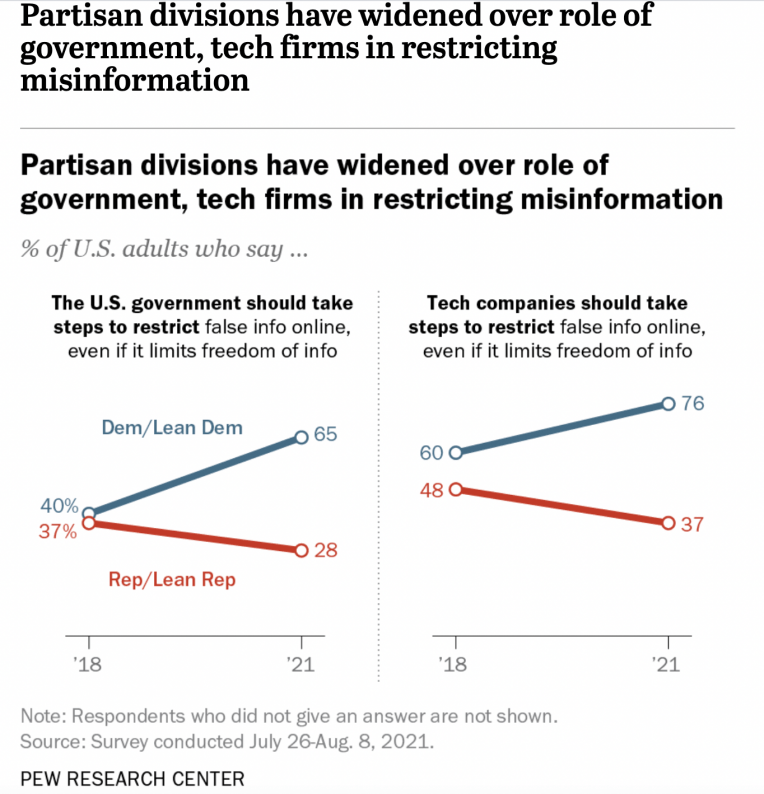
A Pew survey from August shows that Democrats now overwhelmingly support internet censorship not only by tech giants but also by the government which their party now controls. In the name of “restricting misinformation,” more than 3/4 of Democrats want tech companies “to restrict false info online, even if it limits freedom of information,” and just under 2/3 of Democrats want the U.S. Government to control that flow of information over the internet:
The prevailing pro-censorship mindset of the Democratic Party is reflected not only by that definitive polling data but also by the increasingly brash and explicit statements of their leaders. At the end of 2020, Sen. Ed Markey (D-MA), newly elected after young leftist activists worked tirelessly on his behalf to fend off a primary challenge from the more centrist Rep. Joseph Kennedy III (D-MA), told Facebook’s Zuckerberg exactly what the Democratic Party wanted. In sum, they demand more censorship:
This, and this alone, is the sole reason why there is so much adoration being constructed around the cult of this new disgruntled Facebook employee. What she provides, above all else, is a telegenic and seemingly informed “insider” face to tell Americans that Facebook is destroying their country and their world by allowing too much content to go uncensored, by permitting too many conversations among ordinary people that are, in the immortal worlds of the NYT‘s tech reporter Taylor Lorenz, “unfettered.”
When Facebook, Google, Twitter and other Silicon Valley social media companies were created, they did not set out to become the nation’s discourse police. Indeed, they affirmatively wanted not to do that. Their desire to avoid that role was due in part to the prevailing libertarian ideology of a free internet in that sub-culture. But it was also due to self-interest: the last thing social media companies wanted to be doing is looking for ways to remove and block people from using their product and, worse, inserting themselves into the middle of inflammatory political controversies. Corporations seek to avoid angering potential customers and users over political stances, not courting that anger.
This censorship role was not one they so much sought as one that was foisted on them. It was not really until the 2016 election, when Democrats were obsessed with blaming social media giants (and pretty much everyone else except themselves) for their humiliating defeat, that pressure began escalating on these executives to start deleting content liberals deemed dangerous or false and banning their adversaries from using the platforms at all. As it always does, the censorship began by targeting widely disliked figures — Milo Yiannopoulos, Alex Jones and others deemed “dangerous” — so that few complained (and those who did could be vilified as sympathizers of the early offenders). Once entrenched, the censorship net then predictably and rapidly spread inward (as it invariably does) to encompass all sorts of anti-establishment dissidents on the right, the left, and everything in between. And no matter how much it widens, the complaints that it is not enough intensify. For those with the mentality of a censor, there can never be enough repression of dissent. And this plot to escalate censorship pressures found the perfect vessel in this stunningly brave and noble Facebook heretic who emerged this week from the shadows into the glaring spotlight. She became a cudgel that Washington politicians and their media allies could use to beat Facebook into submission to their censorship demands.
In this dynamic we find what the tech and culture writer Curtis Yarvin calls “power leak.” This is a crucial concept for understanding how power is exercised in American oligarchy, and Yarvin’s brilliant essay illuminates this reality as well as it can be described. Hyperbolically arguing that “Mark Zuckerberg has no power at all,” Yarvin points out that it may appear that the billionaire Facebook CEO is powerful because he can decide what will and will not be heard on the largest information distribution platform in the world. But in reality, Zuckerberg is no more powerful than the low-paid content moderators whom Facebook employs to hit the “delete” or “ban” button, since it is neither the Facebook moderators nor Zuckerberg himself who is truly making these decisions. They are just censoring as they are told, in obedience to rules handed down from on high. It is the corporate press and powerful Washington elites who are coercing Facebook and Google to censor in accordance with their wishes and ideology upon pain of punishment in the form of shame, stigma and even official legal and regulatory retaliation. Yarvin puts it this way:
However, if Zuck is subject to some kind of oligarchic power, he is in exactly the same position as his own moderators. He exercises power, but it is not his power, because it is not his will. The power does not flow from him; it flows through him. This is why we can say honestly and seriously that he has no power. It is not his, but someone else’s. . . .
Zuck doesn’t want to do any of this. Nor do his users particularly want it. Rather, he is doing it because he is under pressure from the press. Duh. He cannot even admit that he is under duress—or his Vietcong guards might just snap, and shoot him like the Western running-dog capitalist he is….
And what grants the press this terrifying power? The pure and beautiful power of the logos? What distinguishes a well-written post, like this one, from an equally well-written Times op-ed? Nothing at all but prestige. In normal times, every sane CEO will comply unhesitatingly with the slightest whim of the legitimate press, just as they will comply unhesitatingly with a court order. That’s just how it is. To not call this power government is—just playing with words.
As I have written before, this problem — whereby the government coerces private actors to censor for them — is not one that Yarvin was the first to recognize. The U.S. Supreme Court has held, since at least 1963, that the First Amendment’s “free speech” clause is violated when state officials issue enough threats and other forms of pressure that essentially leave the private actor with no real choice but to censor in accordance with the demands of state officials. Whether we are legally at the point where that constitutional line has been crossed by the increasingly blunt bullying tactics of Democratic lawmakers and executive branch officials is a question likely to be resolved in the courts. But whatever else is true, this pressure is very real and stark and reveals that the real goal of Democrats is not to weaken Facebook but to capture its vast power for their own nefarious ends.
There is another issue raised by this week’s events that requires ample caution as well. The canonized Facebook whistleblower and her journalist supporters are claiming that what Facebook fears most is repeal or reform of Section 230, the legislative provision that provides immunity to social media companies for defamatory or other harmful material published by their users. That section means that if a Facebook user or YouTube host publishes legally actionable content, the social media companies themselves cannot be held liable. There may be ways to reform Section 230 that can reduce the incentive to impose censorship, such as denying that valuable protection to any platform that censors, instead making it available only to those who truly allow an unmoderated platform to thrive. But such a proposal has little support in Washington. What is far more likely is that Section 230 will be “modified” to impose greater content moderation obligations on all social media companies.
Far from threatening Facebook and Google, such a legal change could be the greatest gift one can give them, which is why their executives are often seen calling on Congress to regulate the social media industry. Any legal scheme that requires every post and comment to be moderated would demand enormous resources — gigantic teams of paid experts and consultants to assess “misinformation” and “hate speech” and veritable armies of employees to carry out their decrees. Only the established giants such as Facebook and Google would be able to comply with such a regimen, while other competitors — including large but still-smaller ones such as Twitter — would drown in those requirements. And still-smaller challengers to the hegemony of Facebook and Google, such as Substack and Rumble, could never survive. In other words, any attempt by Congress to impose greater content moderation obligations — which is exactly what they are threatening — would destroy whatever possibility remains for competitors to arise and would, in particular, destroy any platforms seeking to protect free discourse. That would be the consequence by design, which is why one should be very wary of any attempt to pretend that Facebook and Google fear such legislative adjustments.
There are real dangers posed by allowing companies such as Facebook and Google to amass the power they have now consolidated. But very little of the activism and anger from the media and Washington toward these companies is designed to fracture or limit that power. It is designed, instead, to transfer that power to other authorities who can then wield it for their own interests. The only thing more alarming than Facebook and Google controlling and policing our political discourse is allowing elites from one of the political parties in Washington and their corporate media outlets to assume the role of overseer, as they are absolutely committed to doing. Far from being some noble whistleblower, Frances Haugen is just their latest tool to exploit for their scheme to use the power of social media giants to control political discourse in accordance with their own views and interests.
Twitter backtracks after censoring a mother’s obituary

By Cindy Harper | Reclaim The Net | October 4, 2021
Twitter’s fact-checkers appended a “misleading” alert to an obituary about a young woman who allegedly died after contracting a rare blood-clotting condition provoked by the COVID-19 vaccine.
After being accused of going so far with its censorship that it would resort to censoring an obituary, Twitter relented to the backlash and reversed the censorship.
The woman in question, Jessica Berg Wilson, a 37-year-old mother of two, died in the first week of September from Vaccine-Induced Thrombotic Thrombocytopenia, a rare blood disorder in which small clots grow throughout the body, damaging platelets and preventing blood from reaching key organs. According to her obituary, Wilson’s greatest life ambition was to “be the best mother possible” to her daughters Bridget and Clara.
“She had been vehemently opposed to taking the vaccine, knowing she was in good health and of a young age and thus not at risk for serious illness. In her mind, the known and unknown risks of the unproven vaccine were more of a threat,” it read.
Kelly Bee, a Twitter user, posted Jessica Berg Wilson’s obituary with the statement, “an ‘exceptionally healthy and vibrant 37-year-old young mother with no underlying health conditions,’ passed away from COVID Vaccine-Induced Thrombotic Thrombocytopenia. She did not want to get vaccinated.”
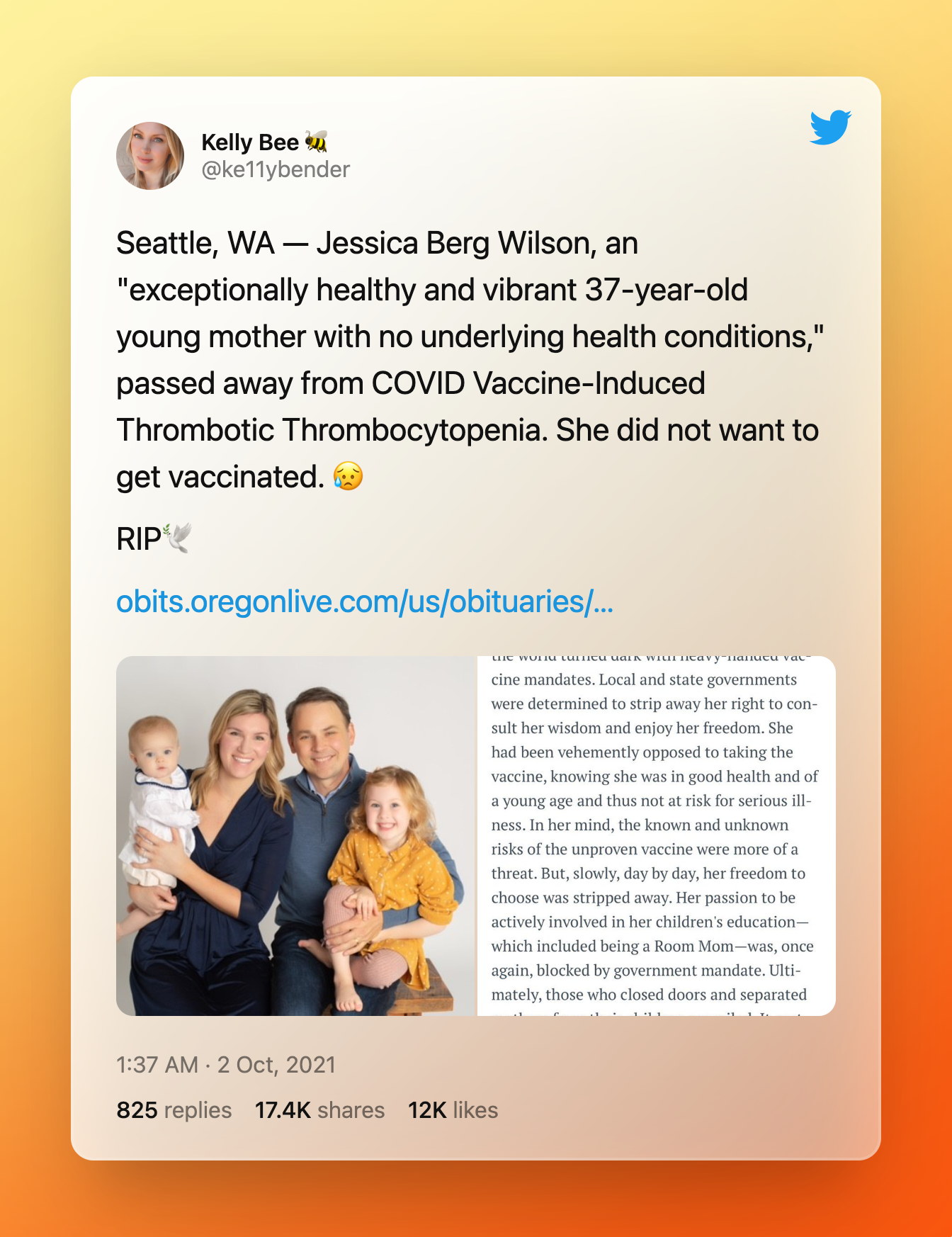
However, Twitter flagged the post as “misleading” and blocked it from being replied to, shared, or liked.
The majority of critics were outraged that Twitter was censoring an obituary and they responded by urging their followers to help the tweet go viral in violation of the company’s warning. Twitter has since removed the “misleading” designation and revoked the shadowban.
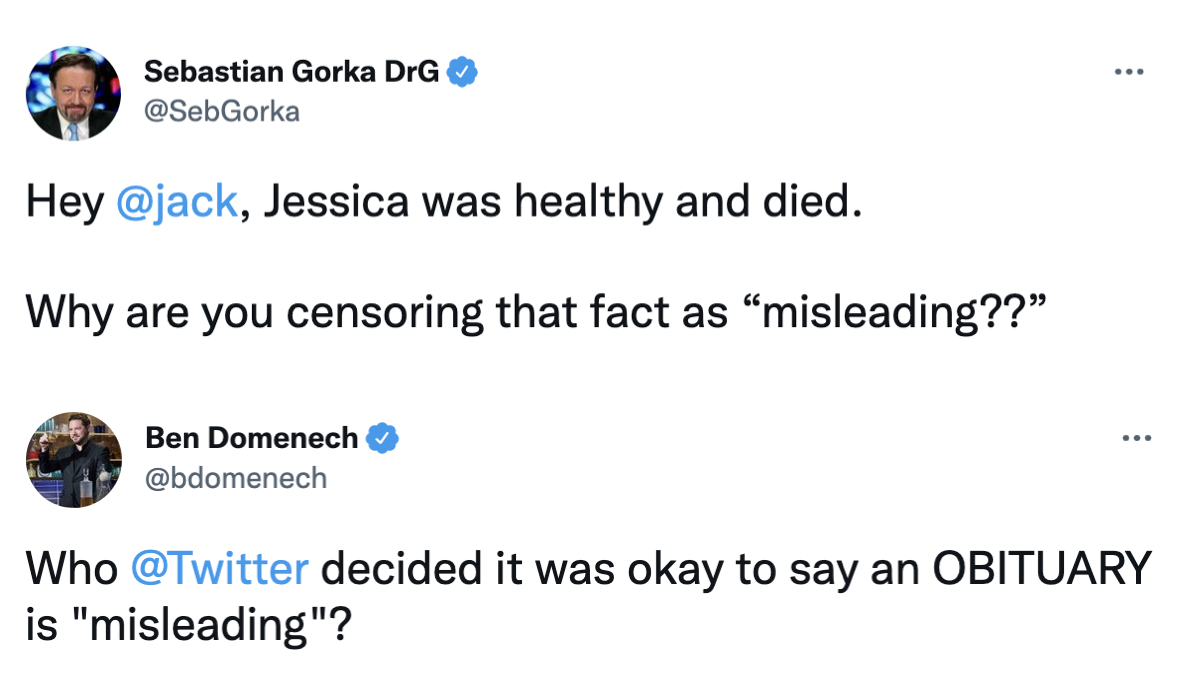
Additionally, several bloggers, including Ben Domenech of The Federalist, retweeted the obituary. Ben’s tweet reads: Who @Twitter decided it was okay to say an OBITUARY is ‘misleading’ ?”
Another tweet said “Twitter is now censoring obituaries,” – posted by Sean Davis.
Furthermore, Sebastian Gorka, who worked in the Trump administration’s Department of Defense, tagged Twitter CEO Jack Dorsey in a tweet asking what aspect of the obituary was incorrect or “misleading.”
“Hey @jack, Jessica was healthy and died. Why are you censoring that fact as ‘misleading??” he said.
Rep. Adam Schiff says YouTube’s ban of vaccine skepticism doesn’t go far enough
By Christina Maas | Reclaim The Net | October 2, 2021
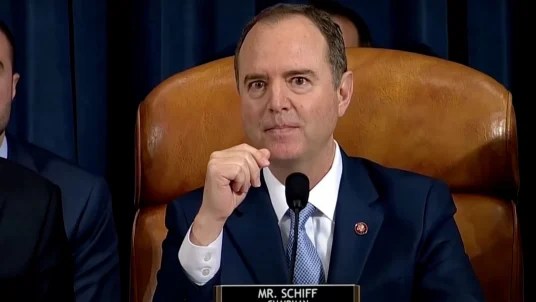
Rep. Adam Schiff praised YouTube’s decision to ban all vaccine skepticism but said it was not the “end of our fight against misinformation.”
On Wednesday afternoon, YouTube announced that it will ban all vaccine skepticism to stop the spread of what it says is misinformation. The ban not only applies to COVID vaccines but also any other vaccines that pharmaceutical companies produce.
While making the announcement, YouTube said: “Today’s policy update is an important step to address vaccine and health misinformation on our platform, and we’ll continue to invest across the board.”
YouTube’s decision was applauded by many, including Rep. Adam Schiff.
“YouTube’s curbing of anti-vaccine content is a strong first step,” the Democrat congressman wrote on Twitter. But this doesn’t mark the end of our fight against deadly misinformation. These policies must be enforced. And we must keep pushing for other companies to follow suit. What do you say, @Amazon and @Facebook?” hinting at his demands for more censorship.
YouTube Bans Mercola, Others Without Warning but Tips Off Media First
By Dr. Joseph Mercola | October 1, 2021
In a move to override the First Amendment with its own interpretation of what constitutes free speech, YouTube spent the last few days of September planning and executing a coup that included notifying major media of what they were doing before they pulled it off.
The coup was a sudden strike against Mercola.com, the National Vaccine Information Center (NVIC), Robert F. Kennedy Jr. and others whose channels YouTube decided to shut down without as much as a single word of warning — except to news agencies that obviously were tipped off in advance.
According to the Washington Post, YouTube was specifically targeting channels “associated with high-profile anti-vaccine activists … who experts say are partially responsible for helping seed the skepticism that’s contributed to slowing vaccination rates across the country.”
Early in the work day September 29, the Post gave Dr. Mercola exactly 23 minutes to respond to a story they had to have already had written about. They contacted Mercola’s media department just after 9 a.m.; they broke the story at 9:35 a.m.
CNBC’s Jim Forkin must have had a tip too, from YouTube, as he contacted Mercola at 9:12 a.m., with just two sentences: “Have your videos been removed from YouTube?” and “Do you have a statement or comment?”
YouTube, meanwhile, quietly changed their policies regarding who gets to publish on their server and who gets banned. It was a deviously brilliant move: Just change the rules to match the (previously compliant) content of the individuals you want to remove, and provide users no time to remain in compliance of the new rules.
Israel officials intervene to have US academic removed
MEMO | October 1, 2021
Israeli diplomats reportedly put pressure on the dean of a US university to have a teacher critical of the occupation state removed using allegations of anti-Semitism. Details of the intervention by Israeli consular officials, in what has been slammed as another example of the gross interference by a foreign state, were reported by the Intercept.
Israeli consular officials in the southeast US arranged meetings with a dean at the University of North Carolina at Chapel Hill to remove graduate student, Kylie Broderick, from teaching the history department course called ‘The Conflict over Israel/Palestine’. Details of the visit by Israeli officials are said to have been exposed by two UNC professors who had knowledge of the meeting.
The intervention by the Israeli officials followed a pressure campaign by right-wing pro-Israel websites and an advocacy group who pointed to postings Broderick had made on Twitter that criticised Israel and Zionism and, without evidence, cited the postings as evidence of anti-Semitism.
Over the past few years there has been a concerted campaign to conflate anti-Semitism with criticism of Israel using the adoption of a highly controversial definition of racism known as the International Holocaust Definition of anti-Semitism. Seven of the 11 examples of anti-Semitism cited in the IHRA conflate criticism of Israel with anti-Semitism. Critics have argued that its adoption has had a chilling effect on all levels of society especially in universities and campuses.
The two UNC professors revealed that in addition to the intervention by the Israeli government, the university faced pressure from a member of the US House of Representatives.
“It is not a new phenomenon where outside parties have tried to stifle academic freedom on this subject,” Broderick is reported saying. “But these people have never seen me teach, never seen my past evaluations which have said that I treat students fairly, and thus have no right to dictate what I say inside the classroom.”
“I think that a representative of a foreign government attempting to police an academic class is, in the first place, ridiculous, and an obvious overreaction to what is essentially an issue that started on Twitter,” Broderick added. “I also think it is strange that the Israeli consulate general was granted an audience. If this was a class on Hungary or Australia, would the university have permitted the attempted interference of a foreign government? The fact that this meeting happened at all is clearly a threat to academic freedom.”
French President Macron criticized for creating online “thought police” task force
By Dan Frieth | Reclaim The Net | September 30, 2021
The President of France, Emmanuel Macron, has come under fire after forming a committee against online speech that critics are already calling the “thought police.” According to Macron, he considers “conspiracy theories” a “poison” to society.
Macron claimed in an interview that conspiracy theories are a “key problem” for France and that he’s fighting against the idea that “all views are equal, that those of someone who is not a specialist but who has an opinion on the coronavirus are just as valid as those of a scientist.”
However, some have blasted the president for trying to impose an official narrative to secure a second presidency against conservative populists such Marine Le Pen.
François Bernard Huyghe, a political scientist at the Institute of Strategic and International Affairs in Paris, has criticized the president’s commission.
“I don’t think that multiplying laws, censoring social media accounts or treating people as cretins is the solution. It provokes the opposite effect to the one desired and the feeling that something is being hidden,” Huyghe stated in The Times.
Members of the committee will include 15 academics, as well as journalists, teachers and lawyers. Mr Macron asked them to submit a report on these topics, along with algorithms that are “enslaving the public.”
However, the chair of the commission, Gerald Bronner has denied all claims in involvement with the effect of the “thought police”, stating that “There is no question of censorship but of strengthening the space for common debates that are increasingly threatened by a succession of opinions.”
UK Military Wants to Spy on Social Media to Detect “Change in Population Sentiment”
By Paul Joseph Watson | Summit News | September 30, 2021
The UK Ministry of Defence has inadvertently revealed its plan to spy on social media platforms in order to detect “change(s) in population sentiment.”
Despite ostensibly being about “better use of existing silos,” the MoD’s Data Strategy for Defence document explains how the military should move towards “Automated scanning of social media platforms” to detect “change in population sentiment.”
“Nowhere does the document explain why a strategy paper has gone so far off the beaten track that it promotes collecting data the MoD doesn’t have and using it for decidedly non-military purposes,” reports the Register.
Since the beginning of the COVID pandemic, the military has increasingly turned its attention inward towards its own citizens rather than doing what it should do, which is fighting foreign adversaries.
As author Laura Dodsworth revealed, GCHQ has embroiled itself in anti-vaccine and anti-lockdown messaging by targeting people who challenge the official COVID narrative online.
“She says some people believe they have been targeted by the 77th Brigade, part of the 6th Division of the Army,” reported the Telegraph.
According to the Ministry of Defence, the 77th Brigade uses “legitimate non-military levers as a means to adapt behaviours of the opposing forces and adversaries.”
The military’s main “adversaries” are now apparently British citizens who complain about lockdown while questioning the efficacy and safety of vaccines.
Dodsworth said she “hit a brick wall” when attempting to get answers about the unit’s activities, noting, “and I find that when someone puts up a brick wall, it’s because that’s where the real story lies.”
The unit played its role in the broader agenda, facilitated by government-affiliated behavioral psychologists, to terrify the public into mass obedience to lockdown rules by exaggerating the threat posed by COVID.
If YouTube’s block of RT’s German channels is about ‘misinformation’, when will MSNBC & CNN be banned for Russiagate conspiracies?
By Glenn Diesen | RT | September 30, 2021
Russia is locked into yet another standoff with an American tech company. This time, it’s YouTube, which has taken down two of RT’s German-language news channels and provoked a furious response from Moscow’s most senior officials.
The decision, understood to have been taken over allegations the broadcaster tried to circumvent a ‘community standards strike’ handed down over ‘medical misinformation’, has seen Russia’s regulators rally round RT DE and its sister account, Der Fehlende Part.
Roskomnadzor, the Russian federal executive agency responsible for overseeing the media, warned Google it would be fined if did not end the suspension. At the same time, RT’s editor-in-chief, Margarita Simonyan, cautioned that this was “a declaration of media war against Russia by Germany,” and argued in favour of retaliatory restrictions against German media in Russia.
The closure of German-language RT channels should be seen in the context of growing censorship in the West and hostility to Moscow’s media outlets.
The rise of censorship in the West
Censorship has acquired a new dictionary over the past few years, with the rise of concepts such as safe spaces, cancel culture, and de-platforming – which are synonyms for striking down what people can and can’t say. Terms like hate speech and propaganda are defined increasingly loosely and censorship is therefore imposed on a wider and more inconsistent basis. The US government works hand in glove with the private tech giants to re-label censorship at platform policies.
There is especially a growing effort to legitimise censoring news and media related to Russia, which is usually conducted under the auspices of “countering propaganda.” We are constantly informed that Russia is launching a disinformation and propaganda campaign against the West to undermine its democracies. The response to this alleged threat by Western governments is a firm campaign of one-sided fact-checkers and efforts to out-propaganda the supposed propagandists.
The problem is that what is framed as counter-propaganda usually looks indistinguishable from propaganda, and merely undermines and ignores the arguments on the other side. Propaganda is the science of persuading an audience without reason by instead appealing to group psychology and emotional rhetoric. If propaganda entails “closing the mind to argument,” then countering propaganda implies appealing to reason by objectively presenting competing arguments.
British philosopher Bertrand Russell is known for arguing during the Cold War that countering communist propaganda did not necessitate simply censoring the Soviet Union, as such a move would merely give space for British propaganda. Instead, he envisioned counter-propaganda as facilitating all perspectives by, for example, organising a debate between Stalin and the Archbishop of Canterbury. By redefining propaganda as anything that presents Russia favourably – debates that give Russian arguments a platform and legitimacy are deemed dangerous and thus require censorship. Under this new definition of propaganda, even the Russian Sputnik V Covid-19 vaccine and Russian cartoons are considered propaganda.
It is only a year ago that Hunter Biden’s laptop scandal unfolded ahead of the US presidential election, purporting to reveal that now-US President Joe Biden was involved in corruption with Ukraine and China. Fearing that this revelation could cause Joe Biden to lose the election, the Biden campaign adopted the same Russiagate playbook as the Clinton campaign – blame Russia.
By labelling the entire scandal a Russian disinformation campaign, the media chose not to report on the matter while social media platforms outright censored the story from their platforms. Well, last week the evidence was in – the incriminating emails from Hunter Biden’s laptop were completely authentic and Moscow had absolutely nothing to do with it. Much like the conspiracy theories linking former President Donald Trump to the Kremlin and the tale of Russia placing bounties on US troops in Afghanistan – the disinformation came from the Western media.
In many cases, mainstream outlets have championed claims that were at the time unsubstantiated, and now fully discredited, without ever correcting themselves. American networks including MSNBC and CNN have played host to some of the most egregiously untrue Russia-gate conspiracy theories. Those, like Rachel Maddow, who unapologetically championed them, have never faced repercussions for their careers, and their sensationalist content still sits online proud as punch and without retraction or amendment. Accountability, it seems, is something reserved for other people.
Western states are also countering alleged Russian disinformation with ‘fact-checkers’. The problem is that these fact-checkers do not actually check facts, they check narratives, impose their own, and thereby operate as a Ministry of Truth.
Case in point, the EU fact-checkers label the reference to ‘coup’ to describe the events in Ukraine in February 2014 as Russian disinformation, as it was argued to supposedly have been a ‘democratic revolution’ and that former leader Viktor Yanukovich chose to leave the country voluntarily.
Actual fact-checkers would check objective facts: Did the OSCE characterise the election of President Yanukovich as free and fair? – Yes. Did the removal of Yanukovich from power violate the Ukrainian constitution? – Yes. Did the toppling of Yanukovich enjoy support from a democratic majority of the Ukrainian population? – No. Did the US and EU support the removal of Yanukovich? – Yes. Instead of fact-checking, the fact-checkers employ ambiguous and contradictory terms such as ‘democratic revolution’ to delegitimise the Russian position. Subsequently, these fact-checkers send an unmistakable signal to Western media that they cannot discuss the extent to which a coup occurred in Ukraine, as this can be considered peddling Russian disinformation.
Diversity of perspectives demands a diversity of media
The media landscape is polarising both domestically and internationally. Within the US, liberals who appear on conservative media platforms are chastised for their lack of loyalty to the group. Within Europe, the media polarises between pro-Brexit and anti-Brexit, or between pro-EU and anti-EU.
Groupthink is amplified and the subsequent polarisation implies that the nuances disappear as political questions are framed as a struggle between right and wrong, or good and evil. With the death of objective reporting, the solution for the audience to remain informed is a diversity of media – both CNN and Fox News, both The Daily Telegraph and the Guardian, both Haaretz and Al Jazeera.
The Western media acts in conformity with a heavy anti-Russian bias that reflects the alliance system and security architecture of a divided Europe. Those interested in Russian politics should by no means limit themselves to RT as the sole arbiter of truth, but RT is an important contribution to a severely polarised media landscape.
The Western media has exceptionally poor reporting on Russia, as it is ideologically constrained from recognising Russian security concerns. All political questions are filtered through the simplistic and outdated binary stereotypes of ‘democracy’ versus ‘authoritarianism’ that provides little if any heuristic value to understand the complexities of the socio-economic, political, and military conflicts.
The inability to recognise that the West can threaten Russian security makes it impossible to have any reasonable analysis of Russian foreign policy. By neglecting external threats and limiting the analysis of Russia to its internal characteristics, Russian policies can only be explained by referencing Putin’s belligerent personality or nostalgia for empire.
The information space is becoming a key battleground in great power rivalry, and for the sake of an informed population, we have to hope what some see as propaganda is countered with reason – not just more propaganda.
Glenn Diesen is a Professor at the University of South-Eastern Norway and an editor at the Russia in Global Affairs journal.
Russia will take ‘zero tolerance’ approach to US tech giant YouTube’s ‘censorship’ of RT’s German-language channels
RT | September 29, 2021
YouTube has violated Russian law by taking down two German-language channels run by RT, the Kremlin has insisted, cautioning that the American tech giant will face serious consequences unless it urgently reinstates the accounts.
Speaking to journalists on Wednesday, President Vladimir Putin’s press secretary said that “there are of course signs that Russian law has been broken” after the platform moved to ban RT DE and Der Fehlende Part from its site. “In fact, it has been broken very brazenly,” Dmitry Peskov added. “Because of this, it is a case of censorship, and of obstructing the dissemination of information by the media, and so on.”
Peskov added that “there must be zero tolerance for such violations of the law,” insisting that “if our regulators deem this is a violation of legislation then we can’t exclude the possibility we will take measures to force this network to comply with the law.”
Earlier on Wednesday, Moscow’s media watchdog, Roskomnadzor, published a letter sent to YouTube’s parent company, Google, demanding all restrictions be lifted from RT’s channels. The purportedly permanent deletion was imposed after the German-language broadcaster allegedly attempted to circumvent a ‘community guidelines’ strike, handed down for ‘medical misinformation’ in four videos. The details of the purported breach are not yet clear, but RT’s editor-in-chief, Margarita Simonyan, has said that it amounts to “a declaration of media war against Russia by Germany.”
Roskomnadzor went on to tell Google that, if the site does not comply with the order, “legislation allows us to take measures including completely or partially blocking access to it.”
Moscow’s Foreign Ministry has also announced that it is considering taking steps against German news outlets in retaliation over the decision. “Adopting reciprocal measures against the German media in Russia which, by the way, has been repeatedly shown to have interfered in our country’s internal affairs, seems not only appropriate but necessary,” it said in a statement.
Officials went on to say that such restrictions are “the only possible way to focus our partners’ attention on a constructive and meaningful dialogue around this unacceptable situation.” According to the diplomats, YouTube acted not out of adherence to its community policies but with the “obvious connivance, if not the insistence,” of German authorities.
Berlin has denied involvement in the decision and insists that the matter is one for YouTube alone.
The Vaccine Death Report
By Dr David John Sorenson & Dr Vladimir Zelenko MD | Principia Scientific | September 29, 2021
The purpose of this report is to document how all over the world millions of people have died, and hundreds of millions of serious adverse events have occurred, after injections with the experimental mRNA gene therapy.
We also reveal the real risk of an unprecedented genocide.
F A C T S
Our aim is to only present solid facts, and stay away from unfounded claims. The data is clear and verifiable. References can be found with all presented information, which is provided as a starting point for further investigation.
C O M P L I C I T Y
The data shows that we are currently witnessing the greatest organized mass murder in the history of our world. The severity of this situation compels us to ask this critical question: will we rise up to the defense of billions of innocent people? Or will we permit personal profit over justice, and be complicit?
Networks of lawyers all over the world are preparing class action lawsuits to prosecute all who are serving this criminal agenda. Hundreds of millions of people worldwide are rising up against this criminal operation. To all who have been complicit so far, we say: There is still time to turn and choose the side of truth. Please make the right choice.
W O R L D W I D E
Although this report focuses on the situation in the United States, it also applies to the rest of the world, as the same type of experimental injections with similar death rates – and comparable systems of corruption to hide these numbers – are used worldwide. Therefore we encourage everyone around the world to share this report. May it be a wake up call for all of humanity.
AT LEAST 5 TIMES MORE DEATHS
VACCINE DEATHS ARE SEVERELY UNDERREPORTED
VAERS data from the American CDC shows that as of August 26, 2021 already half a million people suffered severe side effects, including stroke, heart failure, blood clots, brain disorders, convulsions, seizures, inflammations of brain & spinal cord, life threatening allergic reactions, autoimmune diseases, arthritis, miscarriage, infertility, rapid-onset muscle weakness, deafness, blindness, narcolepsy and cataplexy.
Besides the astronomical number of severe side effects, the CDC reports that approx. 16,000 people died as a result of receiving the experimental injections. However, according to a CDC whistleblower who signed a sworn affidavit, the actual number of deaths is at least five times higher. This is what the CDC healthcare fraud detection expert Jane Doe officially stated in a sworn affidavit:1
‘I have, over the last 25 years, developed over 100 distinct healthcare fraud detection algorithms, both in the public and private sector. (…) When the COVID-19 vaccine clearly became associated with patient death and harm, I was inclined to investigate the matter. It is my professional estimate that VAERS (the Vaccine Adverse Event Reporting System) database, while extremely useful, is under-reported by a conservative factor of at least 5 (…) and have assessed that the deaths occurring within 3 days of vaccination are higher than those reported in VAERS by a factor of at least 5.’
The CDC is also vastly underreporting other adverse events, like severe allergic reactions (anaphylaxis). The Informed Consent Action Network (ICAN) reported that a study showed that the actual number of anaphylaxis is 50 to 120 times higher than claimed by the CDC. 2, 3
On top of that, a private researcher took a close look at the VAERS database, and tried looking up specific case-ID’s. He found countless examples where the original death records were deleted, and in some cases, the numbers have been switched for milder reactions. He says:
‘What the analysis of all the case numbers is telling us right now is that there’s approximately 150,000 cases that are missing, that were there, that are no longer there. The question is, are they all deaths?’4
How criminal the CDC is, was also revealed a few years ago, when researchers investigated the link between vaccines and autism. They found that there indeed is a direct connection. So what did the CDC do?
All the researchers came together and a large dustbin was placed in the middle of the room. In it they threw all the documents that showed the link between autism and vaccinations. Thus, the evidence was destroyed.
Subsequently, a so-called ‘scientific’ article was published in Pediatric, stating that vaccinations do not cause autism. However, a leading scientist within the CDC, William Thompson, exposed this crime. He publicly admitted:
‘I was involved in misleading millions of people about the possible negative side effects of vaccines. We lied about the scientific findings.’ 5
Maybe the worst example of criminal methodology used to hide vaccine deaths is the incredible fact that the CDC doesn’t consider a person vaccinated until two weeks after the injection.
Therefore everyone who dies within the first two weeks after being injected, is not considered a vaccine death, further skewing the data. 6,7
MODERNA: 300,000 ADVERSE EVENTS
HUNDREDS OF THOUSANDS IN THREE MONTHS TIME
A whistleblower from Moderna made a screenshot of an internal company notice labeled “Confidential – For internal distribution only”, showing there were 300,000 adverse events reported in only three months time.” This is a quote from this confidential notice:
‘This enabled the team to effectively manage approximately 300,000 adverse event reports and 30,000 medical information requests in a three month span to support the global launch of their COVID-19 vaccine.’
https://alexberenson.substack.com/p/some-actual-news
LESS THAN 1% IS BEING REPORTED
STUDY SHOWS REAL NUMBER OF ADVERSE EVENTS IS 100X HIGHER
All this information already shows us that the number of adverse events and deaths is a multitude of what is being told to the public. The situation is however still far worse, than most of us can even imagine.
The famous Lazarus report from Harvard Pilgrim Health Care inc. in 2009 revealed that in general only 1% of adverse events from vaccines is being reported:
‘Adverse events from drugs and vaccines are common, but underreported. Although 25% of ambulatory patients experience an adverse drug event, less than 0.3% of all adverse drug events and 1-13% of serious events are reported to the Food and Drug Administration (FDA). Likewise, fewer than 1% of vaccine adverse events are reported.’
LESS THAN 1% IS BEING REPORTED
STUDY SHOWS REAL NUMBER OF ADVERSE EVENTS IS 100X HIGHER
All this information already shows us that the number of adverse events and deaths is a multitude of what is being told to the public. The situation is however still far worse, than most of us can even imagine.
The famous Lazarus report from Harvard Pilgrim Health Care inc. in 2009 revealed that in general only 1% of adverse events from vaccines is being reported:
‘Adverse events from drugs and vaccines are common, but underreported. Although 25% of ambulatory patients experience an adverse drug event, less than 0.3% of all adverse drug events and 1-13% of serious events are reported to the Food and Drug Administration (FDA). Likewise, fewer than 1% of vaccine adverse events are reported.’
REASONS FOR UNDERREPORTING
THE POPULATION IS UNAWARE AND MISINFORMED
The reason that less than 1% of adverse events is reported, is first of all because the vast majority of the population is not aware of the existence of official reporting systems for vaccine adverse events.
Secondly, the pharmaceutical industry has been waging an unrelenting media war the past decades against all medical experts, who attempted to inform the public about the dangers of vaccines.
One deployed strategy is name calling, and the negative label ‘anti-vaxxer’ was chosen to shame and blame all scientists, physicians and nurses who speak truth.
Because of this criminal campaign of aggressive suppression of adverse events data, the majority of the population is clueless that vaccines can cause any harm at all.
The message the general public constantly hears and sees, couldn’t be further from the truth: ‘Vaccines are safe and the best way to protect yourself from disease.’ The thousands of books, scientific studies, and reports documenting the devastating effects of vaccines in general, have been suppressed by all possible means. The undeniable fact that children (and people of all ages, for that matter) are far more ill today than ever before in history, while at the same time they are the most vaccinated population in all of history, is flatly denied.
The widespread propaganda by the vaccine companies, who use government agencies as their main carrousel, simply told humanity for decades that adverse events are a very rare occurrence.
When vaccinated people therefore suffer from serious adverse events, it doesn’t even occur to them that this could be from previous injections, and therefor don’t report it as such.
During the current world crisis the attacks on medical experts who are warning about vaccines, have gone to an even higher level. Medical experts are now being completely deplatformed from all social media, their websites are deranked by Google, entire YouTube channels are deleted, many have lost their jobs, and in some countries medical experts have been arrested, in an attempt to suppress the truth about the experimental covid injections.
Scientists who speak out against vaccines are even labeled ‘domestic terrorists’. All means are deployed by the criminal vaccine cartel to suppress the truth.
As a result countless medical professionals are afraid to report adverse events, which further contributes to the underreporting of these side effects. Additionally, the amount of scientific information warning for these dangerous biological agents, and the number of medical experts warning humanity, is so overwhelming and almost omnipresent – despite the aggressive attempts to silence them – that it is virtualy impossible for any medical professional to not be at least somewhat aware of the risk they are taking, by administering an untested DNA altering injection, without even informing their patients of what is being injected into their body.
If they then see their patients suffer or die, they are naturally afraid of being held accountable, so they refuse to report it.
Lastly: many medical professionals receive financial incentives to promote the vaccines. In the United Kingdom for example nurses get ₤10 per needle they put into a child. That again is a reason for them to not report adverse events.
They see large numbers of patients come in with serious adverse reactions, like heart failure, and they notice how the authorities of their hospitals are not reporting any of these vaccine injuries. Dr. Maria Gonzales, ER doctor from the U.S. Dept. of Health and Human Services, expresses her outrage about this in the Phoenix Indian Medical Center.
She discusses with a colleague how a patient was vaccinated and as a result got heart failure:
‘They’re not going to blame the vaccine. But he has an obligation to report that, doesn’t he? They are not reporting!’ – ‘Right!’ – ‘Because they want to shove it under the mat. The government doesn’t want to show that the vaccine is full of shit.’
PROJECT VERITAS WHISTLEBLOWERS
DOCTORS AND NURSES SPEAK OUT: ‘THEY ARE NOT REPORTING!’
Project Veritas is a journalistic organization that has been exposing crime and corruption in our world for years. They often receive video footage from hidden cameras, that reveal what is going on behind closed doors. They were contacted by several federal doctors and nurses, who can no longer be silent.
In an interview with James O’Keefe from Project Veritas, the nurse Jodi O’Malley testifies:
‘I’ve seen dozens of people come in with adverse reactions.’
She adds that none of these are being reported. When asked if she isn’t afraid for repercussions for speaking the truth, she answers:
‘I am not afraid, because my faith is in God. This is evil at the highest level.’
The video also shows nurse Jodi talking to a doctor, who is desperate to break the silence:
‘It is bullshit. I am about tired of it. So what we’re going to have to do, cause we’re on the inside… I’ve been thinking about it.’ – ‘And, what do we do?’ – ‘I don’t know, but there’s so much I want to blow up.’ – ‘So much. How do we do that?’ – ‘You know Project Veritas?’
There are thousands of doctors and nurses like this, whose hearts are burning to speak out, but who are afraid. I have personally been contacted by different groups of hundreds of medical professionals. If you are a medical professional and want to speak out, please contact Project Veritas veritastips@protonmail.com or Stop World Control: network@stopworldcontrol.com
You will be not be alone, but you will find a vast army of freedom fighters, worldwide, who will stand with you. Please come forward and share your story. Humanity needs you!
Watch the videos from Project Veritas with the medical whistleblowers here:
THOUSANDS OF STORIES
FACEBOOK POST REVEALS TSUNAMI OF ADVERSE EVENTS
A local ABC News Station posted a request on Facebook for people to share their stories of unvaccinated loved ones that died. They wanted to make a news story on this. What happened was totally unexpected. In five days time over 250,000 people posted comments, but not about unvaccinated beloved ones. All the comments talk about vaccinated loved ones that died shortly after being injected, or that are disabled for life. The 250,000 comments reveal a shocking deathwave among the population, and the heartwrenching suffering these injections are causing. The post was already shared 200,000 times, and counting…


Notice in the last comment how the lady says that everybody in the hospital is afraid to report this as a vaccine reaction, and another person says ‘the doctors can’t report it’. That is proof of what I explained earlier: Most medical professionals are terrified to report adverse events, which causes the true prevalence of vaccine injuries to remain hidden from the world.
The 250,000+ comments show that once people find a safe place to report their suffering caused by the injections, we see a tsunami… This is only one single Facebook post, that is getting no media attention whatsoever. What would we see if this was announced on the news, and everyone was allowed to report their stories?
https://www.facebook.com/80221381134/posts/10158207967261135/?d=n
VACCINE DEATHS SUMMARY
WHAT IS HAPPENING IS FAR WORSE THAN WE THINK
- VAERS published 16,000+ deaths and 450,000+ adverse events, as of August 28, 2021
- CDC fraud expert says that number of deaths is at least five times higher 150,000 reports have been rejected or scrubbed by the VAERS system.
- The actual number of anaphylaxis is 50 to 120 times higher than claimed by the CDC
- Vaccinated people who die within two weeks, are not listed as vaccine deaths
- Moderna received over 300,000 reports of adverse events in only three months-time
- The Lazarus Report shows that only 1% of adverse events is being reported by the public
- The majority of the population is not aware of the existence of systems where they can report vaccine adverse events
- Aggressive censorship and propaganda told the public that adverse events are rare, causing people to not understand how their health problems stem from past injections
- The shaming and blaming of medical professionals who say anything against the vaccines, cause many in the medical community to avoid reporting adverse events
- The fear of being held accountable after administering an injection that killed or disabled patients, further prevents medical personnel from reporting it
- Having accepted financial incentives to promote, and administer the covid vaccines, also stops medical personnel from reporting adverse events
- Profit driven vaccine manufacturers have every reason not to report the destruction their untested experimental products are causing 250,000+ Facebook users comment about vaccine deaths and serious injuries
- Nurses and doctors testify how their hospitals are hiding vaccine injuries.

WORLD EXPERTS WARN HUMANITY
LEADING SCIENTIFIC VOICES ISSUE GRAVE WARNINGS
This alarming data leads world experts, like the Nobel Prize Winner in Medicine, Dr. Luc Montagnier, to issue a grave warning that we are currently facing the greatest risk of worldwide genocide, in the history of humanity. Even the inventor of the mRNA technology, Dr. Robert Malone, warns against these injections that are using his technology.
The situation is so severe that former Pfizer vice president and chief scientist Dr. Mike Yeadon came forward to warn humanity for these extremely dangerous injections. One of his best known videos is titled ‘A Final Warning’.
Another world renown scientist, Geert Vanden Bossche, former Head of Vaccine Development Office in Germany, and Chief Scientific Officer at Univac, also risks his name and career, by bravely speaking out against administration of the covid shots. The vaccine developer warns that the injections can compromise the immunity of the vaccinated, making them vulnerable for every new variant.
WWII holocaust survivors wrote to the European Medicines Agency demanding the injections to be stopped, which they consider to be a new holocaust.
REFERENCES:
1: https://renzlaw.godaddysites.com/45k-whistleblower-suit
2: https://www.icandecide.org/wp-content/uploads/2021/03/Letter-to-Dr.-Walensky-re-anaphylaxis.pdf1: https://renzlaw.godaddysites.com/45k-whistleblower-suit
3: https://jamanetwork.com/journals/jama/fullarticle/2777417
4: https://centipedenation.com/first-column/150k-records-deleted-from-vaers-covid-database/
tempest-in-a-trashcan/?sh=47819f145396
6: https://rumble.com/vm1yrt-wow-vaccine-caused-deaths-reported-as-un-vaxxed-covid-deaths.html
7: https://dissident.one/2021/08/29/18311/
To Download The Full PDF Of The Above Report Please Visit: Https://Www.Stopworldcontrol.Com/Report
YouTube deletes 2 channels of RT DE with 600K subscribers over ‘community guidelines’ violation
RT | September 28, 2021
YouTube has permanently deleted two of RT’s German-language channels, the news outlet has announced. RT DE was listed among top News & Politics channels on the social media platform, with hundreds of millions of views.
The Google-owned video service “has deleted the RT DE channel, as well as our second channel DFP [Der Fehlende Part, “the missing piece”], without the right to restoration,” Dinara Toktosunova, head of RT in Germany, announced on her Telegram channel on Tuesday.
The main RT DE channel was barred from live-streaming and uploading videos for seven days since September 21, on the basis of a strike over “community guidelines” violations, for alleged “medical misinformation” in four videos. YouTube did not elaborate on what specifically was questionable in the clips. The videos, some weeks while others months old, focused on the Covid-19 crisis. They featured, among others, an interview with German epidemiologist Friedrich Puerner, who was critical of the governmental ways of battling the pandemic.
The strike was due to expire on Tuesday, but YouTube removed the channel. The social media platform said in a statement: “We have reviewed your content and found severe or repeated violations of our Community Guidelines. Because of this, we have removed your channel from Youtube.”
The same thing happened with DFP, which had no strikes and posted RT DE content. A YouTube representative later confirmed that publishing material on the DFP was, according to the tech giant, a violation of the strike handed to RT DE’s main channel. As a result, both channels were deleted.
RT DE was among the top five German-language channels in YouTube’s News and Politics category, based on Tubular Labs data for August, with over 600,000 subscribers and almost 547 million total views.
In recent months, RT DE has faced mounting pressure in Germany, including over its plans to launch a TV broadcast later this year. In mid-August, Luxembourg denied RT’s application for a German-language broadcast license. Chancellor Angela Merkel denied pressuring the neighbouring country to do so, despite multiple German outlets reporting that representatives from Berlin met with Luxembourg officials to discuss the issue.
Ahead of the planned TV launch, Russian Foreign Ministry spokeswoman Maria Zakharova said some German media outlets had waged “an outright information war” against RT. The same month, Die Welt – owned by the Axel Springer conglomerate – published two opinion pieces that German courts later found contained false claims about RT DE.
Earlier this year, Commerzbank abruptly and without explanation announced that it was shutting down accounts associated with RT DE. When the outlet reached out to other German banks, its inquiries about doing business were ignored or rejected.
Featured Video

Death Spikes & Rising Cancer In Our Youth Explained
or go to
Aletho News Archives – Video-Images
From the Archives
Politicians lie
By Mazin Qumsiyeh | Popular Resistance | August 18, 2013
There is no way to say this truth nicely: Politicians lie. That includes Japanese, American, Egyptian, Israeli, and Palestinian politicians! Is there something more common sense than that? Yet, so many citizens around the world believe their own politicians or wistfully acknowledge lies but think it is part of the job needed to run things. They believe even when politicians contradict themselves blatantly. This phenomenon is rather remarkable. It is a dissonance and disconnect from reality that many seem oblivious to. It is very dangerous because it can lead to accepting rationales for going to war. These can be deadly wars that lead to millions of lives lost as happened in what was called World War 1 and WW2. Even when incredible and declassified evidence abound, politicians continue to lie and old mythologies refuse to die. Here are just a few of the countless lies told to us over the past few decades… continue
Blog Roll
 Aletho News
- Iraqi resistance group vows to stage airport sit-ins over Iran aerial blockade
- Turkish parliament to review Saudi-Pakistan defense pact next month
- DEATH SPIKES & RISING CANCER IN OUR YOUTH EXPLAINED
- Iran offers Trump deal before US election
- Merz regime wants ‘secret police’ – opposition
- Israeli settlers terrorize West Bank Palestinians with state-provided drones: Report
- They see them, then kill them: Israeli quadcopters track, deliberately target civilians in Gaza
- Debunked: Trump’s egregious UNGA claims on war against Iran crumble under scrutiny
- Europe was part of the infrastructure of US aggression against Iran: Deputy FM
- New evidence on the Bucha Massacre
- If Americans Knew
- Trump betrayed voters with his campaign lies and prioritized a foreign country once he took office
- Netanyahu calls Israel’s war in Gaza ‘opposite of genocide’ in UN speech to near-empty hall
- Settler Kidnappings: Torture, Sexual Abuse and Terrorisation of Palestinian Abductees as Israel Deepens Annexation of West Bank
- Gaza winter nears as 162,000 tents become unusable, raising fears of humanitarian crisis
- Netanyahu says, “It’s the opposite of genocide”; UN says Gaza economy is world’s ‘most severe crisis on record’ – Daily Update
- Israel’s US-Backed Assault on Gaza Has Created the ‘World’s Most Severe Economic Crisis on Record’: UN
- ‘Protecting U.S. Citizens’… From Israel
- ‘This is where I live now, the back of a truck’: a day in the life of a grandmother in Gaza
- In UN Speech, Iran’s President Displays Pictures of Children Killed by US, Brings Attention to Israel’s Nuclear Arsenal
- Israel displaces hundreds of Palestinians amid wave of demolitions in West Bank
- No Tricks Zone
- New Study: Earth And Venus Surface Warmth Largely Explained By Convection And Lapse Rate, Not CO2 Or Radiation
- 2025 Nature Paper Claiming Worsening Global Drought Gets RETRACTED …Heavily Flawed
- New Study: ‘Global Drought Shows No Detectable Recent Acceleration Under Climate Warming’
- Economic Masterminds: German Socialists Suggest Taxing Productivity Gains Stemming From Using AI
- The South China Sea Has Not Been Cooperating With The Climate Change Narrative
- Energy Crisis: Germany Enters Heating Season With Historically Low Gas Reserve Fill Levels
- New Study: The Antarctic Ice Sheet Gained Mass From 2020-2024 Due To Staggering Snow And Ice Accumulation
- Study: Ocean Heating Rates From Thousands Of Years Ago ‘Dwarf’ Modern Ocean Heating Rates
- Climate Extremists Target, Attack Large-Scale Power Grid Infrastructure In Germany!
- New Study: Antarctic Ice Melt Has Contributed Less Than 1 Centimeter To Sea Level Rise In The Last 30 Years

