Israeli Firm Helped Governments Target Journalists, Activists with 0-Days and Spyware
By Ravie Lakshmanan | The Hacker News | July 16, 2021
Two of the zero-day Windows flaws rectified by Microsoft as part of its Patch Tuesday update earlier this week were weaponized by an Israel-based company called Candiru in a series of “precision attacks” to hack more than 100 journalists, academics, activists, and political dissidents globally.
The spyware vendor was also formally identified as the commercial surveillance company that Google’s Threat Analysis Group (TAG) revealed as exploiting multiple zero-day vulnerabilities in Chrome browser to target victims located in Armenia, according to a report published by the University of Toronto’s Citizen Lab.
“Candiru‘s apparent widespread presence, and the use of its surveillance technology against global civil society, is a potent reminder that the mercenary spyware industry contains many players and is prone to widespread abuse,” Citizen Lab researchers said. “This case demonstrates, yet again, that in the absence of any international safeguards or strong government export controls, spyware vendors will sell to government clients who will routinely abuse their services.”
Founded in 2014, the private-sector offensive actor (PSOA) — codenamed “Sourgum” by Microsoft — is said to be the developer of an espionage toolkit dubbed DevilsTongue that’s exclusively sold to governments and is capable of infecting and monitoring a broad range of devices across different platforms, including iPhones, Androids, Macs, PCs, and cloud accounts.
Citizen Lab said it was able to recover a copy of Candiru’s Windows spyware after obtaining a hard drive from “a politically active victim in Western Europe,” which was then reverse engineered to identify two never-before-seen Windows zero-day exploits for vulnerabilities tracked as CVE-2021-31979 and CVE-2021-33771 that were leveraged to install malware on victim boxes.
The infection chain relied on a mix of browser and Windows exploits, with the former served via single-use URLs sent to targets on messaging applications such as WhatsApp. Microsoft addressed both the privilege escalation flaws, which enable an adversary to escape browser sandboxes and gain kernel code execution, on July 13.
The intrusions culminated in the deployment of DevilsTongue, a modular C/C++-based backdoor equipped with a number of capabilities, including exfiltrating files, exporting messages saved in the encrypted messaging app Signal, and stealing cookies and passwords from Chrome, Internet Explorer, Firefox, Safari, and Opera browsers.
Microsoft’s analysis of the digital weapon also found that it could abuse the stolen cookies from logged-in email and social media accounts like Facebook, Twitter, Gmail, Yahoo, Mail.ru, Odnoklassniki, and Vkontakte to collect information, read the victim’s messages, retrieve photos, and even send messages on their behalf, thus allowing the threat actor to send malicious links directly from a compromised user’s computer.
Separately, the Citizen Lab report also tied the two Google Chrome vulnerabilities disclosed by the search giant on Wednesday — CVE-2021-21166 and CVE-2021-30551 — to the Tel Aviv company, noting overlaps in the websites that were used to distribute the exploits.
Furthermore, 764 domains linked to Candiru’s spyware infrastructure were uncovered, with many of the domains masquerading as advocacy organizations such as Amnesty International, the Black Lives Matter movement, as well as media companies, and other civil-society themed entities. Some of the systems under their control were operated from Saudi Arabia, Israel, U.A.E., Hungary, and Indonesia.
Over 100 victims of SOURGUM’s malware have been identified to date, with targets located in Palestine, Israel, Iran, Lebanon, Yemen, Spain (Catalonia), United Kingdom, Turkey, Armenia, and Singapore. “These attacks have largely targeted consumer accounts, indicating Sourgum’s customers were pursuing particular individuals,” Microsoft’s General Manager of Digital Security Unit, Cristin Goodwin, said.
The latest report arrives as TAG researchers Maddie Stone and Clement Lecigne noted a surge in attackers using more zero-day exploits in their cyber offensives, in part fueled by more commercial vendors selling access to zero-days than in the early 2010s.
“Private-sector offensive actors are private companies that manufacture and sell cyberweapons in hacking-as-a-service packages, often to government agencies around the world, to hack into their targets’ computers, phones, network infrastructure, and other devices,” Microsoft Threat Intelligence Center (MSTIC) said in a technical rundown.
“With these hacking packages, usually the government agencies choose the targets and run the actual operations themselves. The tools, tactics, and procedures used by these companies only adds to the complexity, scale, and sophistication of attacks,” MSTIC added.
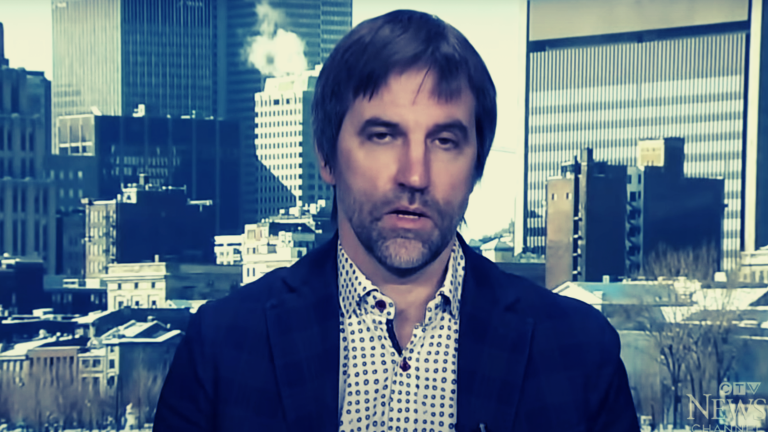
Canada’s Heritage Minister says free speech online ‘undermines democracy’
By Dan Frieth | Reclaim the Net | July 17, 2021
Offensive remarks on social media are legal, but Canada’s Heritage Minister Steven Guilbeault says they “undermine democracy.”
The government is promoting the internet censorship bill C-36, which seeks to obligate social media platforms to mass censor.
In a briefing, reviewed by Blacklock’s Reporter, the Heritage Ministry argued for censorship of offensive Twitter messages because he says they prevent “a truly democratic debate.”
“This content steals and damages lives,” the briefing read. “It intimidates and obscures valuable voices, preventing a truly democratic debate.”
In late June, the cabinet introduced Bill C-36, which threatens social media users with house arrests and fines of up to $50,000 for sharing content that promotes “detestation or vilification.”
“Our objective is to ensure more accountability and transparency from online platforms while respecting the Canadian Charter Of Rights And Freedoms,” said the June 16 briefing note.
“The mandate of the Department of Canadian Heritage includes the promotion of a greater understanding of human rights.”
Under Canada’s Criminal Code, so-called “hate speech” (open to interpretation) is a crime. What Bill C-36 does is make hate speech illegal even when there is no evidence of a crime.
“Social media platforms such as Facebook or Twitter are increasingly central to participation in democratic, cultural and public life,” said the briefing note.
“However, social media platforms can also be used to threaten, intimidate, bully and harass people or used to promote racist, anti-Semitic, Islamophobic, misogynist and homophobic views that target communities, put people’s safety at risk and undermine Canada’s social cohesion or democracy.”
White House: If you’re banned for “misinformation” on one platform, you should be banned from ALL platforms
More calls for censorship from the Federal Government
By Tom Parker | Reclaim the Net | July 16, 2021
After making the shocking admission that the Federal Government is flagging content for Facebook to censor in yesterday’s White House Press Briefing, White House Press Secretary Jen Psaki doubled down on the censorship rhetoric in today’s Press Briefing by calling for users to be banned from all platforms if they post “misinformation” and dismissing concerns that the Biden administration is acting as “Big Brother.”
During the Press Briefing, Psaki was asked to elaborate on the Biden administration’s flagging of misinformation to Facebook and to respond to a CNN report about the Biden administration’s “frustration with what they view as Facebook’s failures to uphold its own policies on vaccine misinformation.”
Psaki responded by framing the flagging issue as simply staying in “regular touch with social media platforms” to make them “aware of the latest narratives dangerous to public health” and engaging with them to “better understand the enforcement of social platform policy.”
She insisted that the social media platforms make the decisions when it comes to content moderation.
Of course, Psaki failed to mention that while Facebook is technically free to make its own content moderation decisions, this outreach about so-called dangerous public health narratives is coming from the same Federal Government that is placing huge amounts of pressure on Facebook’s business through an antitrust lawsuit.
When pressed on whether Facebook’s censorship has been as proactive as the White House would like, Psaki said there are “more steps everyone can take” and suggested that one step that “could be constructive for public health” is for social media platforms to coordinate and implement cross-platform censorship when users post alleged misinformation.
“You shouldn’t be banned from one platform and not others…for providing misinformation,” Psaki added.
After she was told that Facebook had already removed 18 million pieces of “COVID misinformation” and connected more than two billion people to “reliable information,” Psaki was asked whether the White House finds this “sufficient.”
“Clearly not,” Psaki responded.
She added: “They’re a private sector company, they’re gonna make decisions about additional steps they can take, it’s clear there are more that can be taken.”
Psaki also dismissed Fox News reporter Pete Doocy’s question about a lot of people on Facebook being concerned about “Big Brother watching you” now that they know the White House flags posts to Facebook to be censored.
“They’re more concerned about that than people dying across the country because of a pandemic where misinformation is traveling on social media platforms?” Psaki said. “That seems unlikely to me. If you have the data to back that up, I’m happy to discuss it.”
When Doocy raised the double standard with which The White House flags and censors so-called misinformation, Psaki again dismissed the concerns.
“There are videos of Dr. Fauci from 2020 before anybody had a vaccine and he’s out there saying there’s no reason to be walking around with a mask,” Doocy said. “So, is the administration going to contact Facebook and take that down?”
Psaki responded by arguing that Fauci said: “Science evolves, information evolves.”
But when she discussed other claims that she doesn’t approve of during the Press Briefing, such as claims that the vaccines cause infertility, Psaki framed it as “information that is irresponsibly traveling” and pushed social media platforms to let the White House know that they’re “taking steps to address it.”
The White House Press Secretary’s comments are yet another example of the increasing collaboration between public officials and private companies that are raising First Amendment violation flags.
Prior to Psaki’s recent statements, numerous reports have pointed to similar public-private sector censorship collaborations. These include a recent lawsuit showing that Democrats have worked with Twitter to flag tweets and get them taken down and a recent letter from Republicans accusing Fauci of advising Facebook to censor lab leak theories.
Social media misinformation ‘killing people,’ Biden says, as White House doubles down on private censorship
RT | July 16, 2021
US President Joe Biden claimed social media platforms are “killing people” with misinformation about Covid-19, as his press secretary Jen Psaki made a case for deplatforming ‘offenders’ across the ostensibly private networks.
“They’re killing people,” Biden told reporters who asked him to send a message to platforms like Facebook. “The only pandemic we have is among the unvaccinated. And they’re killing people,” he shouted, over the noise of a helicopter outside the White House on Friday.
On Thursday, US Surgeon General Vivek Murthy issued an advisory against health “misinformation,” calling it “an imminent and insidious threat to our nation’s health.” He defined it as information that is “false, inaccurate, or misleading according to the best available evidence” and claimed 67% of unvaccinated Americans had heard at least one “myth” about Covid-19 vaccines.
At the same press conference, Psaki admitted the government was “flagging problematic posts for Facebook,” causing a stir among some civil libertarians.
Insisting that it was these ostensibly private companies doing the censorship and not the federal government – thereby trying to dodge the thorny issue of the First Amendment – Psaki then doubled down on Friday, saying that platforms should coordinate their rules and terms of service so that a person “shouldn’t be banned from one platform and not others… for providing misinformation out there.”
Her announcement raised more than a few eyebrows across the political spectrum. Journalist Glenn Greenwald, responsible for publishing NSA whistleblower Edward Snowden’s revelations in 2013, called the entire line of White House thinking “pernicious.”
Psaki was “issuing decrees on who should and shouldn’t be allowed to use social media, then smugly scoffing at the notion that this should concern anyone on the ground that we’re going to die if we don’t submit to the White House’s orders,” Greenwald added, summarizing her exchange with Fox News’ Peter Doocy.
In a video making rounds on social media, Psaki tells Doocy that everyone, including journalists, ought to be more concerned about “the number of people who are dying around the country” due to misinformation rather than any Big Brother-like behavior by the government. When he argued the opposite, she replied, “That feels unlikely to me.”
“We don’t take anything down… Facebook makes decisions,” she insisted.
Asked politely by Philip Wegmann of RealClearPolitics to explain how often and how long the White House has been flagging “misinformation,” and if she could define it, Psaki responded with generalizations and claims that all this information is “publicly available” on social networks.
Psaki’s remarks amounted to an admission that the government is coordinating with private corporations to ban people from social media, podcast host Jack Murphy pointed out, calling it “literal fascism before our eyes.”
The American Civil Liberties Union (ACLU) was conspicuously silent about this threat to freedom of expression, Greenwald noted, and was instead tweeting about transgender issues.
Meanwhile, a UK-based nonprofit Center for Countering Digital Hate (CCDH) claimed the White House relied on their research in identifying the people producing alleged “misinformation,” and promoted their CEO Imran Ahmed’s TV appearance in which he spoke about online “superspreaders.”
CCDH first drew attention in June 2020, when NBC – one of the big three broadcast TV networks in the US – cited their research in a story trying to pressure Google into demonetizing the blog ZeroHedge and the conservative-leaning online magazine Federalist.
US Surgeon General advises “clear consequences” for online “misinformation super-spreaders”
By Didi Rankovic | Reclaim the Net | July 16, 2021
The US Department of Health and Human Services (HHS) has released its general Covid advisory on “confronting health misinformation” signed by US Surgeon General Vivek H. Murthy.
We obtained a copy of the report for you here.
For the purposes of the advisory, health misinformation is defined as information that is false, inaccurate, or misleading “according to the best available evidence at the time.”
And among those who are urged and given suggestions on how to act to suppress this kind of information are technology platforms, who are advised to devise “clear consequences” for users who are branded as “misinformation super-spreaders.”
Technology platforms are told to assess the benefits and harms of their platforms and products, and then “take responsibility for addressing the harms.”
And those who are found to be “super-spreaders” and “repeat offenders” in posting misinformation should be faced with “clear consequences” that tech platforms are supposed to devise and impose on their users.
Tech companies are also expected to commit to long-term investments for the purpose combating misinformation that can include changing their products – such as redesigning recommendation algorithms. The idea here is to tweak these algorithms so that unwanted medical information is down ranked and difficult to discover.
The surgeon general also wants tech platforms to put more “frictions” in place – like labels and warnings that now appear on many social media posts in order to dissuade users from interacting with the content in question, or direct them towards “trusted sources.”
Next, unspecified researchers should be given access to Big Tech’s data so that they can learn “what people see and hear, not just what they engage with.” Another reason is for “researchers” to be sure how platforms are moderating and censoring content – some methods mentioned are labeling, removing, and downranking.
Privacy is also paid lip service in a remark that says user data “can be” anonymized while provided with user consent – but the advisory is not explicit that this “must be” the case.
And not all medical (mis)information is happening in English, so these US platforms are recommended to “increase staffing of multilingual content moderation teams and improve the effectiveness of machine learning algorithms in languages other than English.”
The advisory also wants platforms to amplify, i.e. direct users even more aggressively towards “trusted and credible sources” and those who are accepted as experts.
Then there’s – as the advisory phrased it – the “unintended consequences” of censorship. And that’s not about free speech suppression or anything similar – it’s “migration of users to less-moderated platforms.”
And that is another thing, the US surgeon general writes, that tech platforms should “work to understand.”
Governments are using credit card purchase data as “contact tracing’ COVID surveillance
By Didi Rankovic | Reclaim the Net | July 16, 2021
The ongoing “war on cash” that far preceded the pandemic, whose goal is to steer people towards using traceable forms of payment, is coming in very handy in the COVID era precisely for the reason the policy is criticized in the first place – it makes it easy for authorities to keep tabs on individuals who use card transactions.
Reports now mention instances of Australian residents receiving a mandate to quarantine after using their credit card to pay at an establishment, where somebody known to be infected with the virus had stayed.
Credit card receipts led back to the person that was then forced to self-isolate (although they did not have coronavirus) – and apparently led the person to consider what, if anything, is left of their privacy in a world where more and more people leave long “data trails” behind them.
Stop-gap measures like switching to alternative browsers etc (while probably running it on Windows) aside – the takeaway is that the only way to regain some privacy in the world of mass surveillance and tracking is to turn to alternatives – but do it consistently, and be prepared to pay for the privilege of removing oneself from the closed ecosystems like those ruled with an iron fist by Google, Apple, or Microsoft.
As for using card transactions to do COVID contact tracing, Australia is far from being the only country that is doing it. In fact, those lauded as most successful in even getting their contact tracing efforts off the ground, like South Korea, pioneered the practice. Data surveillance, reports said, was used by authorities there to make sure that people who were either unable or unwilling to share their every move are eventually forced into doing it.
Australia has “distinguished” itself for being willing to jeopardize people’s privacy with a series of COVID surveillance and control measures over the past 18 months, and last November, the National Contact Tracing Review, whose chair is Australia’s Chief Scientist Alan Finkel, recommended using consumer credit card data for track and trace purposes.
But what about privacy? Privacy rules will apply – until they don’t, seems to be the gist of it.
“Privacy rules will apply,” the Review said, but then added, “and in some jurisdictions legislative change may be required.”
North Carolina Henderson County Board of Commissioners look for new platform after YouTube censorship
By Didi Rankovic | Reclaim the Net | July 15, 2021
Once again YouTube has decided that it has the right to silence elected officials in the US in a bid to prevent them from making their policies and decisions known, particularly concerning COVID.
When North Carolina’ Henderson County Board of Commissioners met to discuss whether to spend taxpayer money to promote Covid vaccination, and decided against the idea, passing a relevant resolution, YouTube was quick to delete the video taken during the meeting.
The commissioners’ meeting and vote not to spend county dollars to push for people to get the jab was followed by citizens, vaccine skeptics, expressing their opinion on the issue by saying that they believed the inoculation project was put together by the government, the media, and pharmaceutical companies who have a “hidden agenda.”
The Google company also swiftly rejected the appeal filed by the commissioners, stating that the the content had been reviewed “carefully,” but that YouTube censors still found the video in violation of the medical misinformation policy.
Two days after this happened, the County held another vote and decided to remove YouTube as the video platform its officials use, and look for alternatives.
Vice chair Rebecca McCall and other commissioners called YouTube’s decision an act of censorship, and questioned whether such a widely used platform, even if privately owned, should be allowed to do that – or be the judge of what medical information is acceptable.
YouTube has a long list of things its users are not allowed to utter on the platform, often not even as part of a debate among scientists and doctors, as YouTube believes these things pose “a serious risk of egregious harm.”
This includes recommending Ivermectin or hydroxychloroquine for Covid treatment (even though critics of the use of these drugs speak about their inefficacy rather than potential harm), and making claims that Covid vaccines can make people ill. Contradicting local health authorities or the WHO is also prohibited, where it comes to treatment, prevention, transmission, or orders of restrictive measures such as mask wearing and social distancing.
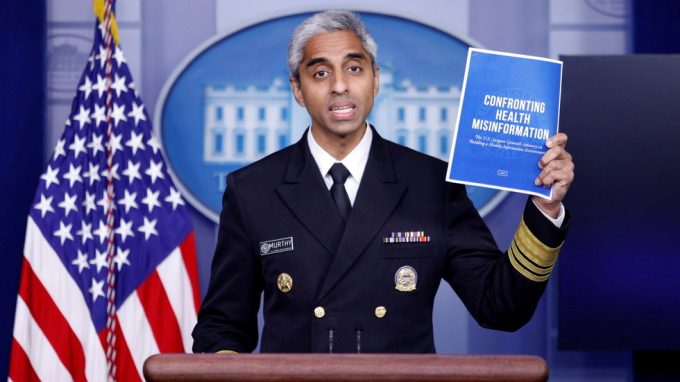
White House admits ‘flagging problematic posts’ for Facebook, says it’s needed to fight medical ‘misinformation’
RT | July 15, 2021
As the Biden administration called “medical misinformation” a public health threat, the White House said it was working with social media to flag “problematic” posts. Critics called it an end-run around the First Amendment.
“We’re flagging problematic posts for Facebook that spread disinformation,” White House press secretary Jen Psaki told reporters on Thursday. In addition to directing the company to censor people, the government is also working to “get trusted content out there” by putting medical professionals in touch with social media influencers.
Psaki’s admission came after Surgeon General Vivek Murthy issued an advisory declaring misinformation “an imminent and insidious threat to our nation’s health.”
“Misinformation takes away our freedom to make informed decisions about our health and the health of our loved ones,” Murthy said at the White House. During just the Covid-19 pandemic, it has led to Americans refusing to wear masks, “turn down proven treatments” and choosing not to get vaccinated, which, he said, cost lives.
Murthy is a “tyrant” who wants “Big Tech to crack down on what amounts to open inquiry and free exchange of ideas,” commented journalist Jordan Schachtel, one of the notable skeptics when it comes to official pandemic narratives.
Looking at the surgeon general’s recommendations, Grabien’s Tom Elliott pointed out that the government is literally instructing private companies to “abridge the freedom of speech, and of the press, and the rights of people to peaceably assemble and petition the gov’t for redresses of grievances” – in other words, violate the First Amendment of the US Constitution.
Journalist Glenn Greenwald, who helped publish NSA whistleblower Edward Snowden’s revelations about surveillance abuse in 2013, called this union of corporate and state power “one of the classic hallmarks of fascism.”
“If you don’t find it deeply disturbing that the White House is ‘flagging’ internet content that they deem ‘problematic’ to their Facebook allies for removal, then you are definitionally an authoritarian,” said Greenwald.
“This is ‘Ministry of Truth’ level malfeasance. They’re literally admitting to colluding with [the] media to control the narrative. This is censorship,” tweeted Congressman Thomas Massie (R-Kentucky), adding that such tactics befit dictatorships and that throttling speech with which the government disagrees crosses a line.
Conservative columnist Stacey Lennox argued that censorship would actually make Americans question the White House’s narrative even more.
“If your ideas are the best, they can stand on their own. Censorship will make people question it more. Every. Single. Time,” she tweeted.
Democrats have clamored for social media to censor “misinformation” ever since the 2016 election, which resulted in the surprise victory of Republican Donald Trump over mainstream media favorite Hillary Clinton. The Trump campaign had bypassed corporate gatekeepers by reaching out to Americans directly via Twitter, Facebook, and other social media.
Four years later, under the pretext of fighting misinformation and “Russian interference,” thousands of users had been purged from the platforms, while Twitter and Facebook suppressed a newspaper for publishing a story about Joe Biden’s son Hunter and the information found on his laptop. They also cracked down on any questions about new electoral practices, such as mass mail-in voting, labeling them “misinformation.”
The Biden campaign actually demanded Facebook censor Trump himself for “misinformation,” which the platform initially refused to do.
Eventually, however, Trump was banned from all social media platforms – while he was still the sitting president – as much for allegedly “inciting violence” over the January 6 riot at the US Capitol, as for continuing to argue the 2020 election wasn’t honest.
YouTube censors Dr. Drew (again) for “medical misinformation”
By Didi Rankovic | Reclaim the Net | July 15, 2021
US physician and media personality Dr. Drew Pinsky is once again in trouble on YouTube, after one of his videos was removed for allegedly containing medical misinformation.
The video was an episode of one of Pinsky’s podcasts that featured Dr. Ram Yogendra, an anesthesiologist, and following this, he announced that YouTube handed his channel a “two week penalty.”
This is similar to what happened in February, when Pinsky told Dave Rubin of the Rubin Report that his YouTube channel had been “deplatformed” for a week, with a threat of permanent deplatforming.
He also shared at the time that he was unable to understand what the reasons behind YouTube’s actions were, but assumed they had to do with a discussion with another doctor of Covid topics such as immunity and controversies around different types of treatments of some complications brought on by the disease.
This time, Pinsky seems to have received a second strike against his channel within 90 days, leading to two weeks suspension, or, as he put it, “penalty.” A third strike within a given period would lead to the doctor’s permanent deplatforming.
This development seemed to have given Pinsky some show topic ideas, so he afterwards took to Twitter to announce an AMA session on Clubhouse, the topic being, “Big Tech vs. Free Speech: Ask Dr. Drew.”
Pinsky has a diversified presence on many platforms, including on Rumble, which he recently joined, and he urged his audience on Twitter to find links on his website to the video on other social media networks.
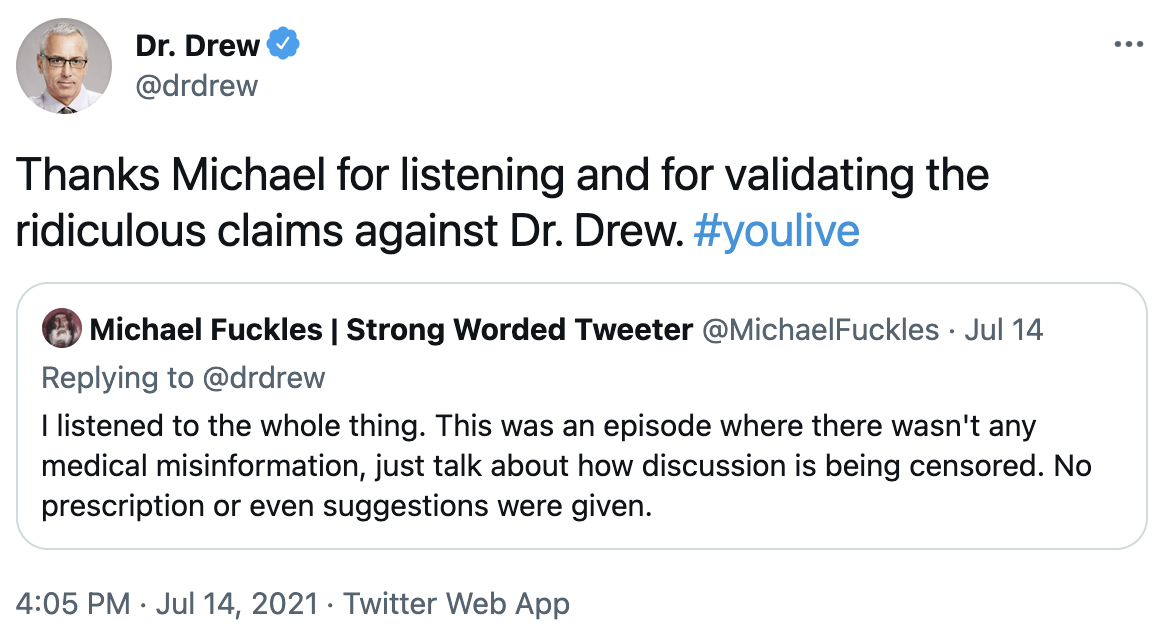
As for this latest example of YouTube’s censorship of his videos on the platform, Pinsky in one tweet thanked a commenter who said they listened to the whole podcast episode but were unable to determine what might have constituted for medical information – instead, it was “just talk about how discussion is being censored.”
But it would be much easier for YouTube to cite medical misinformation and call it a day, than to for once go into any meaningful detail in explaining why creators are punished and deplatformed.
Biden & DNC want to censor text messages to stop ‘misinformation’ – ‘if it saves just one life’
Who needs privacy?
By Helen Buyniski | RT | July 14, 2021
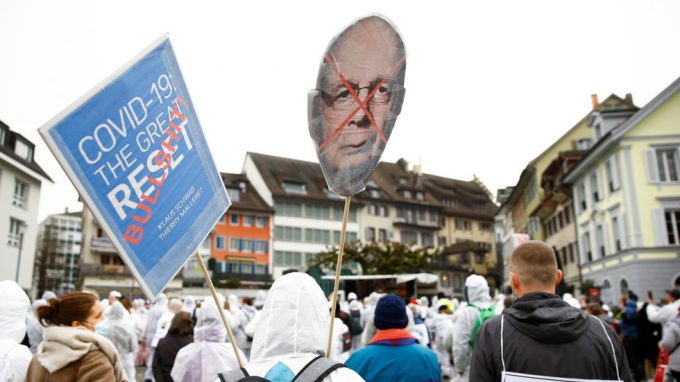
The White House is tying itself in knots to silence anyone questioning the mainstream Covid-19 narrative, and, whatever you think of vaccines, its latest plans are only the first step toward making thoughtcrime a reality.
The US government is done playing “good cop” with regard to the “vaccine hesitant.” The Biden administration, which recently opted to send ‘volunteer’ vaccinators door to door in what may be the most ill-thought-out public health campaign in US history, doesn’t just want to meddle with your body anymore – its plans to control “misinformation” you may send by SMS text message indicate it’s intent on controlling your mind as well.
White House chief medical adviser Anthony Fauci is leading the crusade, blaming “Fox News or whomever” for crafting the vision of “a bunch of federal workers knocking on your door, telling you you’ve got to do something that you don’t want to do.” Fauci clarified that it wasn’t government officials, but “trusted messengers who are part of the community”. Noticeably, he didn’t address the “doing something you don’t want to do” part – a telling oversight in the minds of those who are convinced the campaign is indeed a coercive one and those who’ve been paying closer attention to who makes up the door-to-door vax packs.
While Politico insisted on Monday that these teams talked up by Biden and Psaki were merely delivering information on vaccination, not administering the jabs, a Tuesday report from a local TV network in Mecklenburg, North Carolina showed precisely the opposite, proudly announcing one man was so excited by the visit he chose to get the shot right then and there on his porch.
Who are you going to believe, then, America? The TV or your lying eyes?
And this campaign is far from a single-pronged strategy. According to Politico, the Democratic National Committee (DNC) and “Biden-allied groups” – whatever that last phrase means – have plans to “engage fact-checkers more aggressively” and “work with SMS carriers to dispel misinformation about vaccines that is sent over social media and text messages.”
Yes, you read that correctly. The White House plans to interfere with people’s ability to send text messages if it doesn’t like what they say. This is not a question of whether one supports or rejects the Covid-19 vaccine campaign, or what one thinks about vaccines at all; this is the curtain being yanked back on the police state the US has long insisted it isn’t (but that all its enemies are). It’s Washington rearing up with bared teeth, concealing its scabrous pelt in a lab coat, and hoping you don’t see the claws grasping the syringe. The US gave up its moral authority regarding freedom of the press somewhere between the Pentagon Papers and the revelations of Operation Mockingbird, but interfering with the content of individual text messages sent between innocent civilians brings the nation much deeper into the thickets of fascism than it has ever dared venture before, to a spot where it seems intent on setting up shop permanently.
Shots in the Hood ‘Strike Force’
Ultimately, the issue goes far beyond the pandemic to how much power Americans are willing to cede to a government that – based on statistics, at least – less than a quarter actually supported in the last election, a result framed as an accomplishment that speaks more to apathy. This is why the narrative managers don’t replace Fauci. When they really need credibility, they deputize trusted community members – a tactic they’ve been quite open about using, recently to middling success in Chicago’s Englewood neighborhood, where a local barber shop participated in Biden’s “Shots at the Shops” campaign to flood some of the city’s most dangerous, crime-plagued black neighborhoods with what were portrayed as clever, street-smart vaccination teams eager to save the lives of their fellow man.
That way, when whatever health campaign (or other government initiative) those barber shops (or other incursion on constitutional freedoms) have tied their credibility to suffers a hit – and the Englewood appearance wasn’t anything to write home about – it’s the trusted local institution that takes the blame. The overarching public-private partnership – that Faustian (Faucian?) pact between business and government – is one of the defining elements of fascism. But it’s become so common and normalized under Biden’s Covid-19 “Build Back Better” project that the average American thinks nothing about seeing all their local businesses getting into bed with the private equity firms such as BlackRock and Blackstone that have quietly bought up their neighborhoods during the pandemic – or as far back as the 2008 crash. After all, these groups know enough to shroud themselves in rainbows and climate-babble, and that’s all most people care about these days when vetting who they will allow to own them.
Search and Stick
More importantly, if White House spokeswoman Jen Psaki can look Americans in the eye and claim no one’s being vaccinated on the search-and-inoculate missions in North Carolina, while the next TV channel shows exactly that happening, a seed of cognitive dissonance is successfully sown that allows a person to believe two mutually exclusive “truths.” Even if we know at some basic level the government is lying to us, we don’t want to believe our trusted neighborhood fixtures are also doing so. The Biden administration’s recently declared scorched-earth campaign thus has the potential to sabotage trust in as many ways as there are trusting relationships in a community, and it doesn’t care what happens to those people as long as it gets control of the American mind at the end of the road. Families might be shredded and homes torn apart over the FBI’s recent announcement that we must snitch on our fellow man lest ill-defined “extremism” take root somewhere, but Blackstone and Vanguard turned record profits this year, and that’s what matters.
Americans seem to believe the Covid-19 pandemic is winding down – a Gallup poll early last month suggested nearly three in five Americans believe their lives are either “somewhat” or “completely” back to normal after 18 months of being put through their Pavlovian paces in what the World Economic Forum admits was the world’s largest-ever psychological experiment. But the narrative managers have only begun declaring war – not on the virus, or even so much on how we think about it, but how we think about them.
Former George W. Bush administration official John Bridgeland warned Politico on Tuesday that “lies” (not necessarily about vaccines, but that create “communities already wary of the vaccines”) are “potentially a death sentence.” Now what kind of government official would he be if he allowed some family who just wanted to be left alone with their “death sentence” to go back to their dinner? Not a very effective one, that’s for sure! Bridgeland didn’t say what kind of “lies” made people more susceptible to death by Covid-19, but no doubt he’d like to spend a long time digging through your phone to make sure you’re not harboring any.
Humanity must be primed for the next crisis, after all. Whether that’s a “climate lockdown” or a fake alien invasion, we’re being primed for another metaphysical gut punch meant to turn us against ourselves. At that point, resistance will no longer be optional, it will be a matter of survival – but your phone won’t let you text that to anybody.
Helen Buyniski is an American journalist and political commentator at RT. Follow her on Telegram
YouTube censors New Jersey Senate hearing about kids’ mask mandates
By Didi Rankovic | Reclaim the Net | July 14, 2021
As YouTube continues to censor a wide array of topics, not least those around the Covid pandemic, so it’s independent competitors like Rumble continue to attract more creators.
The trend was unbroken last week when Google’s video giant censored a video showing a New Jersey Senate hearing on the topic of forcing school children to wear masks, which concluded the policy may be harmful.
New Jersey-based talk show host and former chair of the College Republican National Committee Bill Spadea announced this, accusing the Democratic majority in the state’s capital, Trenton, of shunning the official event, and YouTube of eventually “not liking” the content of the discussion, and for that reason removing the video.
However, as Spadea explained, the video can still be found on his new channel on Rumble.
Scientists, doctors, lawyers and senators who chose to participate were there to debate the validity of one of the more controversial topics relating to Covid mandates in the US – masking children.
Like most other rules around masks and their efficacy in preventing infection, these have been changing over the past 18 months – but the consensus seems to be that children are least at risk of contracting and spreading the virus.
However, YouTube’s pro-masking, pro-distancing censorship algorithms aren’t very sophisticated so it appears that even to this day, even a discussion of the issue, let alone directly opposing the policy of masking children, will get content banned – even if the source is an official gathering of experts and lawmakers.
Spadea himself has little doubt that masks should not be mandated, because after covering the topic for over a year, he sees no proof that masks protect children.
This, however, runs contrary to what the US political and medical establishment thinks, and those doctors and scientists who disagree with official narratives and are willing to speak their mind are also often getting censored by Big Tech – the New Jersey Senate hearing, that concluded forcing children to wear masks could be dangerous, being no different.
Spadea blasted these acts of suppression of information as “the aggressive and immoral efforts of the social media oligarchs,” at the same time referring to Rumble as “a sliver of free speech” left out there.
YouTube censors public Lake Forest School District board meeting where parents opposed mask mandates
By Tom Parker | Reclaim the Net | July 13, 2021
YouTube has scrubbed a public Lake Forest High School District 115 board meeting from its platform after numerous parents at the meeting spoke out against required masking.
Ben Bradley, a news anchor and investigative reporter for WGN TV News, tweeted: Our understanding is that people reported the content to youtube as a violation of its terms, which triggered the removal while youtube reviews.”
Twitter user Harriet Smith Martin said “numerous parents spoke against required masking” at the meeting and added that the video was removed before she had finished listening to it.
“The video was up as of 10:30 or so last night (I was watching it.),” she tweeted. “When I went back to finish listening this morning, it was gone.”
Under its far-reaching “medical misinformation” policy, YouTube prohibits a wide range of claims about masks including claims that “wearing a mask is dangerous or causes negative physical health effects,” that “wearing a mask causes oxygen levels to drop to dangerous levels,” or that “masks do not play a role in preventing the contraction or transmission of COVID-19.”
As a result of this policy, numerous public debates and meetings on mask mandates have been censored by the tech giant.
In May, a public Shawnee Mission School District board meeting was removed under similar circumstances. The meeting was open to public comment and parents urged the district to remove mask mandates. YouTube flagged these comments as “misinformation” and removed the video.
A few days after this video was removed, YouTube deleted a Georgia mom’s testimony against mask mandates during a school board meeting. YouTube again claimed that the video violated its medical misinformation rules.
Featured Video

Death Spikes & Rising Cancer In Our Youth Explained
or go to
Aletho News Archives – Video-Images
From the Archives
Politicians lie
By Mazin Qumsiyeh | Popular Resistance | August 18, 2013
There is no way to say this truth nicely: Politicians lie. That includes Japanese, American, Egyptian, Israeli, and Palestinian politicians! Is there something more common sense than that? Yet, so many citizens around the world believe their own politicians or wistfully acknowledge lies but think it is part of the job needed to run things. They believe even when politicians contradict themselves blatantly. This phenomenon is rather remarkable. It is a dissonance and disconnect from reality that many seem oblivious to. It is very dangerous because it can lead to accepting rationales for going to war. These can be deadly wars that lead to millions of lives lost as happened in what was called World War 1 and WW2. Even when incredible and declassified evidence abound, politicians continue to lie and old mythologies refuse to die. Here are just a few of the countless lies told to us over the past few decades… continue
Blog Roll
 Aletho News
- Ukrainian Soldiers, Potential Mercenaries: Have Gun, Will Travel!
- Burnham’s UN debut… A masterclass in British disinformation
- Iran flights continue despite US aviation sanctions
- Global Tipping Points Lead the World Into a State of Entropy
- The day-after at the White House: USA and Xi Jinping
- The Geopolitical Balance in the Red Sea: The UAE Being Displaced by New Players
- Iraqi resistance group vows to stage airport sit-ins over Iran aerial blockade
- Turkish parliament to review Saudi-Pakistan defense pact next month
- DEATH SPIKES & RISING CANCER IN OUR YOUTH EXPLAINED
- Iran offers Trump deal before US election
- If Americans Knew
- Deconstructing Netanyahu’s pants-on-fire UN rant – Daily Update
- Trump betrayed voters with his campaign lies and prioritized a foreign country once he took office
- Netanyahu calls Israel’s war in Gaza ‘opposite of genocide’ in UN speech to near-empty hall
- Settler Kidnappings: Torture, Sexual Abuse and Terrorisation of Palestinian Abductees as Israel Deepens Annexation of West Bank
- Gaza winter nears as 162,000 tents become unusable, raising fears of humanitarian crisis
- Netanyahu says, “It’s the opposite of genocide”; UN says Gaza economy is world’s ‘most severe crisis on record’ – Daily Update
- Israel’s US-Backed Assault on Gaza Has Created the ‘World’s Most Severe Economic Crisis on Record’: UN
- ‘Protecting U.S. Citizens’… From Israel
- ‘This is where I live now, the back of a truck’: a day in the life of a grandmother in Gaza
- In UN Speech, Iran’s President Displays Pictures of Children Killed by US, Brings Attention to Israel’s Nuclear Arsenal
- No Tricks Zone
- New Study: Earth And Venus Surface Warmth Largely Explained By Convection And Lapse Rate, Not CO2 Or Radiation
- 2025 Nature Paper Claiming Worsening Global Drought Gets RETRACTED …Heavily Flawed
- New Study: ‘Global Drought Shows No Detectable Recent Acceleration Under Climate Warming’
- Economic Masterminds: German Socialists Suggest Taxing Productivity Gains Stemming From Using AI
- The South China Sea Has Not Been Cooperating With The Climate Change Narrative
- Energy Crisis: Germany Enters Heating Season With Historically Low Gas Reserve Fill Levels
- New Study: The Antarctic Ice Sheet Gained Mass From 2020-2024 Due To Staggering Snow And Ice Accumulation
- Study: Ocean Heating Rates From Thousands Of Years Ago ‘Dwarf’ Modern Ocean Heating Rates
- Climate Extremists Target, Attack Large-Scale Power Grid Infrastructure In Germany!
- New Study: Antarctic Ice Melt Has Contributed Less Than 1 Centimeter To Sea Level Rise In The Last 30 Years

