France shuts down ‘anti-Semitic’ groups after pledge to fight worst surge ‘since World War II’
RT | March 21, 2019
Emmanuel Macron has ordered the closure of four organizations accused by officials of promoting jihad and anti-Semitism. Earlier, the French president pledged to fight an unprecedented surge of anti-Semitism in the country.
The move comes at the request of Interior Minister Christophe Castaner, who said the groups “foment hatred, call for discrimination and justify violence,” and must be closed.
The ministry separately said the groups advocated armed jihad and indoctrinating young people. They also promoted organizations like Hamas, Palestinian Islamic Jihad and Hezbollah – all listed as terrorist organizations by the EU, the ministry stressed.
French government spokesman Benjamin Griveaux labeled the groups as “openly anti-Semitic and dangerous associations” during a cabinet meeting on Wednesday.
The development comes a month after Macron pledged to the Jewish community to fight against what he called a “resurgence of anti-Semitism unseen since World War II.” He said France will redefine anti-Zionism as a form of anti-Semitism in line with the preferences of pro-Israel groups. The decision was welcomed by the government of Israel.
The French government reported a 74-percent increase in anti-Semitic incidents in 2018 in the country compared to previous year. The pledge from Macron came after thousands of people, including two former French presidents, rallied across the country to condemn anti-Semitism in response to the desecration of a Jewish cemetery in the Strasbourg area.
The banned organizations are the Zahra Center France, the Shia Federation of France, the Anti-Zionist Party and France Marianne TV. Center Zahra France was targeted by an anti-terrorist raid in October, and was followed by the seizure of assets for six months. The French authorities accused the group, which is based in northern France, of being a vehicle for propagating radical Shiite Islam. The three others organizations are reportedly working under the center’s umbrella.
The man behind the Zahra Center and Anti-Zionist Party is Yahia Gouasmi. He is a Lebanese-born Shia Muslim, who has been living in France since the 1960s. An avowed critic of Zionism and Israel, his stated goal is to oppose the Israeli lobby in France and hold the Jewish state accountable for crimes against Palestinians and other nations. He launched the party in 2009 after the Israeli bombings of the Gaza Strip during Operation Cast Lead.
Goodbye to the Internet: Interference by Governments Is Already Here
By Philip M. GIRALDI | Strategic Culture Foundation | 21.03.2019
There is a saying attributed to the French banker Nathan Rothschild that “Give me control of a nation’s money and I care not who makes its laws.” Conservative opinion in the United States has long suspected that Rothschild was right and there have been frequent calls to audit the Federal Reserve Bank based on the presumption that it has not always acted in support of the actual interests of the American people. That such an assessment is almost certainly correct might be presumed based on the 2008 economic crash in which the government bailed out the banks, which had through their malfeasance caused the disaster, and left individual Americans who had lost everything to face the consequences.
Be that as it may, if there were a modern version of the Rothschild comment it might go something like this: “Give me control of the internet and no one will ever more know what is true.” The internet, which was originally conceived of as a platform for the free interchange of information and opinions, is instead inexorably becoming a managed medium that is increasingly controlled by corporate and government interests. Those interests are in no way answerable to the vast majority of the consumers who actually use the sites in a reasonable and non-threatening fashion to communicate and share different points of view.
The United States Congress started the regulation ball rolling when it summoned the chief executives of the leading social media sites in the wake of the 2016 election. It sought explanations regarding why and how the Russians had allegedly been able to interfere in the election through the use of fraudulent accounts to spread information that might have influenced some voters. In spite of the sound and fury, however, all Congress succeeded in doing was demonstrating that the case against Moscow was flimsy at best while at the same time creating a rationale for an increased role in censoring the internet backed by the threat of government regulation.
Given that background, the recent shootings at a synagogue in Pittsburgh and at mosques in Christchurch New Zealand have inevitably produced strident demands that something must be done about the internet, with the presumption that the media both encouraged and enabled the attacks by the gunmen, demented individuals who were immediately labeled as “white supremacists.” One critic puts it this way, “Let’s be clear, social media is the lifeblood of the far-right. The fact that a terror attack was livestreamed should tell us that this is a unique form for violence made for the digital era. The infrastructure of social media giants is not merely ancillary to the operations of terrorists — it is central to it [and] social media giants assume a huge responsibility to prevent and stop hate speech proliferating on the internet. It’s clear the internet giants cannot manage this alone; we urgently need a renewed conversation on internet regulation… It is time for counter-terrorism specialists to move into the offices of social media giants.”
It’s the wrong thing to do, in part because intelligence and police services already spend a great deal of time monitoring chat on the internet. And the premise that most terrorists who use the social media can be characterized as the enemy du jour “white supremacists” is also patently untrue. Using the national security argument to place knuckle dragging “counter-terrorism specialists” in private sector offices would be the last thing that anyone would reasonably want to do. If one were to turn the internet into a government regulated service it would mean that what comes out at the other end would be something like propaganda intended to make the public think in ways that do not challenge the authority of the bureaucrats and politicians. In the US, it might amount to nothing less than exposure to commentary approved by Mike Pompeo and John Bolton if one wished to learn what is going on in the world.
Currently I and many other internet users appreciate and rely on the alternative media to provide viewpoints that are either suppressed by government or corporate interests or even contrary to prevailing fraudulent news accounts. And the fact is that the internet is already subject to heavy handed censorship by the service providers, which one friend has described as “Soviet era” in its intensity, who are themselves implementing their increasingly disruptive actions to find false personas and to ban as “hate speech” anything that is objected to by influential constituencies.
Blocking information is also already implemented by various countries through a cooperative arrangement whereby governments can ask search engines to remove material. Google actually documents the practice in an annual Transparency Report which reveals that government requests to remove information have increased from less than 1,000 per year in 2010 to nearly 30,000 per year currently. Not surprisingly, Israel and the United States lead the pack when it comes to requests for deletions. Since 2009 the US has asked for 7,964 deletions totaling 109,936 items while Israel has sought 1,436 deletions totally 10,648 items. Roughly two thirds of Israeli and US requests were granted.
And there is more happening behind the scenes. Since 2016, Facebook representatives have also been regularly meeting with the Israeli government to delete Facebook accounts of Palestinians that the Israelis claim constitute “incitement.” Israel had threatened Facebook that non-compliance with Israeli deletion orders would “result in the enactment of laws requiring Facebook to do so, upon pain of being severely fined or even blocked in the country.” Facebook chose compliance and, since that time, Israeli officials have been “publicly boasting about how obedient Facebook is when it comes to Israeli censorship orders.” It should be noted that Facebook postings calling for the murder of Palestinians have not been censored.
And censorship also operates as well at other levels unseen, to include deletion of millions of old postings and videos to change the historical record and rewrite the past. To alter the current narrative, Microsoft, Google, YouTube, Twitter and Facebook all have been pressured to cooperate with pro-Israel private groups in the United States, to include the powerful Anti-Defamation League (ADL). The ADL is working with social media “to engineer new solutions to stop cyberhate” by blocking “hate language,” which includes any criticism of Israel that might be construed as anti-Semitism by the new expanded definition that is being widely promoted by the US Congress and the Trump Administration.
Censorship of information also increasingly operates in the publishing world. With the demise of actual bookstores, most readers buy their books from media online giant Amazon, which had a policy of offering every book in print. On February 19, 2019, it was revealed that Amazon would no longer sell books that it considered too controversial.
Government regulation combined with corporate social media self-censorship means that the user of the service will not know what he or she is missing because it will not be there. And once the freedom to share information without restraint is gone it will never return. On balance, free speech is intrinsically far more important than any satisfaction that might come from government intrusion to make the internet less an enabler of violence. If history teaches us anything, it is that the diminishment of one basic right will rapidly lead to the loss of others and there is no freedom more fundamental than the ability to say or write whatever one chooses, wherever and whenever one seeks to do so.
Countdown to “Full Spectrum Dominance”
By T.J. Coles | CounterPunch | March 20, 2019
The US is formally committed to dominating the world by the year 2020. With President Trump’s new Space Directive-4, the production of laser-armed fighter jets as possible precursors to space weapons, and the possibility of nuclear warheads being put into orbit, the clock is ticking…
Back in 1997, the now-re-established US Space Command announced its commitment to “full spectrum dominance.” The Vision for 2020 explains that “full spectrum dominance” means military control over land, sea, air, and space (the so-called fourth dimension of warfare) “to protect US interests and investment.” “Protect” means guarantee operational freedom. “US interest and investment” means corporate profits.
The glossy brochure explains that, in the past, the Army evolved to protect US settlers who stole land from Native Americans in the genocidal birth of the nation. Like the Vision for 2020, a report by the National Defense University acknowledges that by the 19th century, the Navy had evolved to protect the US’s newly-formulated “grand strategy.” In addition to supposedly protecting citizens and the constitution, “The overriding principle was, and remains, the protection of American territory … and our economic well-being.” By the 20th century, the Air Force had been established, in the words of the Air Force Study Strategy Guide, to protect “vital interests,” including: “commerce; secure energy supplies; [and] freedom of action.” In the 21stcentury, these pillars of power are bolstered by the Cyber Command and the coming Space Force.
The use of the Army, Navy, and Air Force—the three dimensions of power—means that the US is already close to achieving “full spectrum dominance.” Brown University’s Cost of War project documents current US military involvement in 80 countries—or 40% of the world’s nations. This includes 65 so-called counterterrorism training operations and 40 military bases (though others think the number of bases is much higher). By this measure, “full spectrum dominance” is nearly half way complete. But the map leaves out US and NATO bases, training programs, and operations in Estonia, Latvia, Poland, and Ukraine.
As the US expands its space operations—the fourth dimension of warfare—the race towards “full spectrum dominance” quickens. Space has long been militarized in the sense that the US uses satellites to guide missiles and aircraft. But the new doctrine seeks to weaponize space by, for instance, blurring the boundaries between high-altitude military aircraft and space itself. Today’s space power will be harnessed by the US to ensure dominance over the satellite infrastructure that allows for the modern world of internet, e-commerce, GPS, telecommunications, surveillance, and war-fighting.
Since the 1950s, the United Nations has introduced various treaties to prohibit the militarization and weaponization of space—the most famous being the Outer Space Treaty (1967). These treaties aim to preserve space as a commons for all humanity. The creation of the US Space Force is a blatant violation of the spirit, if not the letter, of those treaties. In more recent decades, successive US governments have unilaterally rejected treaties to reinforce and expand the existing space-for-peace agreements. In 2002, the US withdrew from the Anti-Ballistic Missile Treaty (1972), allowing it to expand its long-range missile systems. In 2008, China and Russia submitted to the UN Conference on Disarmament the proposed Treaty on the Prevention of the Placement of Weapons in Outer Space, the Threat or Use of Force Against Outer Space Objects. This would have preserved the space-as-a-commons principle and answered US claims that “enemies” would use space as a battleground against US satellites.
But peace is not the goal. The goal is “full spectrum dominance,” so the US rejected the offer. China and Russia introduced the proposed the treaty again in 2014—and again the US rejected it. Earlier this year, the US withdrew from the Intermediate-Range Nuclear Forces (INF) treaty. Last month, President Trump sent an unclassified memo on the new Space Directive-4 to the Vice President, Joint Chiefs of Staff, NASA, and the Secretaries of Defense and State.
The document makes for chilling and vital reading. It recommends legislating for the training of US forces “to ensure unfettered access to, and freedom to operate in, space, and to provide vital capabilities to joint and coalition forces.” Crucially, this doctrine includes “peacetime and across the spectrum of conflict.” As well as integrating space forces with the intelligence community, the memo recommends establishing a Chief of Staff of the Space Force, who will to join the Joint Chiefs of Staff. The memo also says that US space operations will abide by “international law.” But given that the US has rejected anti-space weapons treaties, it is barely constrained by international law.
In late-2017, Space.com reported on a $26.3m Department of Defense contract with Lockheed Martin to build lasers for fighter jets under the Laser Advancements for Next-generation Compact Environments program. The report says that the lasers will be ready by 2021. The article links to Doug Graham, the Vice President of Missile Systems and Advanced Programs at Lockheed Martin Space Systems. In the original link Graham reveals that the Air Force laser “is an example of how Lockheed Martin is using a variety of innovative technologies to transform laser devices into integrated weapon systems.”
As if all this wasn’t bad enough, the British Ministry of Defence (MoD) states in a projection out to the year 2050: “Economies are becoming increasingly dependent upon space-based systems … By 2050, space-based weapon systems may also be deployed, which could include nuclear weapons.” But this is extremely reckless. Discussing technologies, including the artificial intelligence on which weapons systems are increasingly based, another MoD projection warns of “the potential for disastrous outcomes, planned and unplanned … Various doomsday scenarios arising in relation to these and other areas of development present the possibility of catastrophic impacts, ultimately including the end of the world, or at least of humanity.”
“Full spectrum dominance” is not only a danger to the world, it is a danger to US citizens who would also suffer the consequences, if and when something goes wrong with their leaders’ complicated space weapons.
The Guardian of Judea
By Devon Nola | March 19, 2019
In the last week, we saw yet another organised smear campaign of hate and slander orchestrated by Jewish interest groups and Labour Party affiliates wielded against Internationally acclaimed Jazz musician, Gilad Atzmon. A protest was planned for Atzmon’s concert at The Vortex Jazz Club after numerous emails from local Labour Council members and members of these groups demanded the cancellation of the gig fell on deaf ears. They claimed Atzmon plays ‘Nazi-apologist Jazz.’ Personally, I’m not familiar with the genre. The chief organiser was Jewdas, a group that qualifies itself as “Radical Jewish Voices”. The four co-sponsors were: Momentum, an alleged grass-roots collective, Socialists Against Antisemitism, whose name is self-explanatory if not contradictory, London Young Labour and The Jewish Labour Movement.
What is most interesting is this event was supported and promoted by journalist for The Guardian, Owen Jones. It’s always shocking when a journalist supports any sort of censorship. Jones posted the event on his Facebook page and within two days, managed to rack up over 350 comments telling him what a huge mistake he was making, the accusations against Atzmon were false and totally absurd, and might he provide some proof to substantiate the claims. Many came from avid readers and supporters of Jones’ usual commentary but were aghast at his support of preventing a respected musician from earning a living and they expressed this in no uncertain terms.
When Jones finally did respond, it was to attach a hit piece that came from an ultra-Zionist website full of misquotes, quotes out of context and even completely fabricated quotes. Rather than sifting through Atzmon’s prolific body of written work to decipher if the accusations against him were legitimate, Jones instead chose this piecemeal missive full of lies.
Realising, at that point, Jones hadn’t actually read anything by Atzmon, I attached a copy of a page from Atzmon’s book, “The Wondering Who”. I assumed once he read Atzmon’s thoughts, directly, versus some bastardised fictional version, he would realise his error in judgement and deliver a swift apology. This is what an honest journalist, a person with integrity would do. Astonishingly, Owen Jones chose a different path. He didn’t admit to his mistake (giving him the benefit of the doubt, here), but rather removed the entire thread, or shall I say, the evidence. This was a calculated, conscious decision, by Jones, suggesting he was fully aware of the deceit being peddled in both the protest he was supporting and the piece he scrounged up to defend it. This isn’t the behaviour one expects from a journalist. It’s typically something one finds in a sleazy tabloid writer whose articles are printed next to ads for miracle serums to cure baldness or penis enlargement.
Some time ago, Atzmon coined the phrase “The Guardian of Judea” for the well-known paper. Witnessing one of their journalists engaged in such a slanderous campaign, where completely unfounded accusations of antisemitism, Nazi apologist and holocaust-denier are being lobbed at an innocent man like tennis balls on the final Sunday of Wimbledon, I’m inclined to think this is yet one more astute observation by the legendary saxophonist.
List of signatories to letters demanding the ouster of Gilad Atzmon:
As’ad AbuKhalil, The Angry Arab News Service, Turlock, CA
Suha Afyouni, solidarity activist, Beirut, LEBANON
Max Ajl, essayist, rabble-rouser, proprietor of Jewbonics blog site, Ithaca, NY
Haifaa Al-Moammar, activist, stay-at-home mom, and marathon walker, Los Angeles, CA
Electa Arenal, professor emerita, CUNY Graduate Center/Hispanic & Luso-Brazilian Literatures and Women’s Studies, New York, NY
Gabriel Ash, International Jewish Anti-Zionist Network, Geneva, SWITZERLAND
Joel Beinin, Donald J. McLachlan Professor of History, Stanford University, Palo Alto, CA
Dan Berger, Wild Poppies Collective, Philadelphia, PA
Chip Berlet, Boston, MA
Nazila Bettache, activist, Montréal, CANADA
Sam Bick, Tadamon!, Immigrant Workers Center, Montréal, Québec
Max Blumenthal, author; writing fellow, The Nation, New York, NY
Lenni Brenner, author, Zionism in the Age of the Dictators, New York, NY
Café Intifada
Paola Canarutto, Rete-ECO (Italian Network of Jews against the Occupation), Torino, ITALY
Paulette d’Auteuil, National Jericho Movement, Albuquerque, NM
Susie Day, Monthly Review, New York, NY
Ali Hocine Dimerdji, PhD student at The University of Nottingham, in Nottingham, UK
Roxanne Dunbar-Ortiz, professor emerita, California State University
Todd Eaton, Park Slope Food Coop Members for Boycott/Divestment/Sanctions, Brooklyn, NY
Mark Elf, Jews sans frontieres
S. EtShalom, registered nurse, Philadelphia, PA
Benjamin Evans, solidarity activist, Chicago, IL
First of May Anarchist Alliance
Sherna Berger Gluck, professor emerita, California State University/Israel Divestment Campaign, CA
Neta Golan, International Solidarity Movement
Tony Greenstein, Secretary Brighton Unemployed Centre/UNISON, Jews for Boycotting Israeli Goods, Brighton, UK
Andrew Griggs, Café Intifada, Los Angeles, CA
Jenny Grossbard, artist, designer, writer and fighter, New York, NY
Freda Guttman, activist, Montréal, CANADA
Adam Hanieh, lecturer, Department of Development Studies/SOAS, University of London, UK
Swaneagle Harijan, anti-racism, social justice activism, Seattle, WA
Sarah Hawas, researcher and solidarity activist, Cairo, EGYPT
Stanley Heller, “The Struggle” Video News, moderator “Jews Who Speak Out”
Mostafa Henaway, Tadamon!, Immigrant Workers Center, Montréal, CANADA
Elise Hendrick, Meldungen aus dem Exil/Noticias de una multipátrida, Cincinnati, OH
Doug Henwood, Left Business Observer, New York, NY
Ken Hiebert, activist, Ladysmith, CANADA
Elizabeth Horowitz, solidarity activist, New York, NY
Adam Hudson, writer/blogger, San Francisco Bay Area, CA
Dhruv Jain, Researcher at the Jan Van Eyck Academie and PhD student at York University, Paris, FRANCE
Tom Keefer, an editor of the journal Upping the Anti, Toronto, CANADA
Karl Kersplebedeb, Left Wing Books, Montréal, CANADA
Anne Key, Penrith, Cumbria, UK
Mark Klein, activist, Toronto, CANADA
Bill Koehnlein, Brecht Forum, New York, NY
L.A. Palestine Labor Solidarity Committee, Los Angeles, CA
Mark Lance, Georgetown University/Institute for Anarchist Studies, Washington, DC
David Landy, author, Jewish Identity and Palestinian Rights: Diaspora Jewish Opposition to Israel, Dublin, IRELAND
Bob Lederer, Pacifica/WBAI producer, Queers Against Israeli Apartheid, New York, NY
Matthew Lyons, Three Way Fight, Philadelphia, PA
Karen MacRae, solidarity activist, Toronto, CANADA
Heba Farouk Mahfouz, student activist, blogger, Cairo, EGYPT
Marvin Mandell and Betty Reid Mandell, co-editors, New Politics, West Roxbury, MA
Ruth Sarah Berman McConnell, retired teacher, DeLand, FL
Kathleen McLeod, poet, Brisbane, Australia
Karrie Melendres, Los Angeles, CA
Matt Meyer, Resistance in Brooklyn, New York, NY
Amirah Mizrahi, poet and educator, New York, NY
mesha Monge-Irizarry, co-director of Education Not Incarceration; SF MOOC City commissioner, San Francisco, CA
Matthew Morgan-Brown, solidarity activist, Ottawa, CANADA
Michael Novick, People Against Racist Terror/Anti-Racist Action, Los Angeles, CA
Saffo Papantonopoulou, New School Students for Justice in Palestine, New York, NY
Susan Pashkoff, Jews Against Zionism, London, UK
Tom Pessah, UC Berkeley Students for Justice in Palestine, Berkeley, CA
Marie-Claire Picher, Theater of the Oppressed Laboratory (TOPLAB), New York, NY
Sylvia Posadas (Jinjirrie), Kadaitcha, Noosa, AUSTRALIA
Roland Rance, Jews Against Zionism, London, UK
Danielle Ratcliff, San Francisco, CA
Liz Roberts, War Resisters League, New York, NY
Emma Rosenthal, contributor, Shifting Sands: Jewish Women Confront the Israeli Occupation, Los Angeles, CA
Penny Rosenwasser, PhD, Oakland, CA
Suzanne Ross, Free Mumia Abu-Jamal Coalition, The Riverside Church Prison Ministry, New York, NY
Gabriel San Roman, Orange County Weekly, Orange County, CA
Ian Saville, performer and lecturer, London, UK
Joel Schwartz, CSEA retiree/AFSCME, New York, NY
Tali Shapiro, Anarchists Against the Wall, Boycott From Within, Tel Aviv, OCCUPIED PALESTINE
Simona Sharoni, SUNY, author, Gender & the Israeli-Palestinian Conflict, Plattsburgh, NY
Jaggi Singh, No One Is Illegal-Montreal/Solidarity Across Borders, Montréal, CANADA
Michael S. Smith, board member, Center for Constitutional Rights, New York, NY
Pierre Stambul, Union juive française pour la paix (French Jewish Union for Peace), Paris, FRANCE
Muffy Sunde, Los Angeles, CA
Bhaskar Sunkara, editor of Jacobin, Bronx, NY
Tadamon! (http://www.tadamon.ca/), Montréal, CANADA
Ian Trujillo, atheist, Los Angeles, CA
Gabriella Turek, PhD, Auckland, NEW ZEALAND
Henry Walton, SEIU, retired, Los Angeles, CA
Bill Weinberg, New Jewish Resistance, New York, NY
Abraham Weizfeld, author, The End of Zionism and the liberation of the Jewish People, Montreal, CANADA
Ben White, author, Palestinians in Israel: Segregation, Discrimination, and Democracy, Cambridge, UK
Laura Whitehorn, former political prisoner, NYS Task Force on Political Prisoners, New York, NY
Naomi Wimborne-Idrissi, founding member, Jews for Boycotting Israeli Goods (J-BIG)
Asa Winstanley, journalist for Electronic Intifada, Al-Akhbar and others, London, UK
Ziyaad Yousef, solidarity activist
and also:
Ali Abunimah
Naseer Aruri, Professor Emeritus, University of Massachusetts, Dartmouth
Omar Barghouti, human rights activist
Hatem Bazian, Chair, American Muslims for Palestine
Andrew Dalack, National Coordinating Committee, US Palestinian Community Network
Haidar Eid, Gaza
Nada Elia, US Academic and Cultural Boycott of Israel
Toufic Haddad
Kathryn Hamoudah
Adam Hanieh, Lecturer, School of Oriental and African Studies (SOAS), London
Mostafa Henaway, Tadamon! Canada
Monadel Herzallah, National Coordinating Committee, US Palestinian Community Network
Nadia Hijab, author and human rights advocate
Andrew Kadi
Abir Kobty, Palestinian blogger and activist
Joseph Massad, Professor, Columbia University, NY
Danya Mustafa, Israeli Apartheid Week US National Co-Coordinator & Students for Justice in Palestine- University of New Mexico
Dina Omar, Columbia Students for Justice in Palestine
Haitham Salawdeh, National Coordinating Committee, US Palestinian Community Network
Sobhi Samour, School of Oriental and African Studies (SOAS), London
Khaled Ziada, SOAS Palestine Society, London
Rafeef Ziadah, poet and human rights advocate
The Zionists’ Fight Extends Beyond Palestine
By Miko Peled | Mint Press News | March 14, 2019
The Zionists’ suppression of freedoms extends beyond Palestine, particularly when it comes to freedom of speech about Israel. Zionist agents, planted in centers of power around the world, are busy silencing those who would criticize Israel. Using an array of highly effective methods, they have been successful at getting laws passed by legislators, getting major political figures falsely accused of making anti-Semitic statements, and establishing a new, Zionist-manufactured definition of what it means to be anti-Semitic.
Earlier this year the United States Senate passed Resolution S-1 that gives the federal government the right to penalize anyone calling to boycott Israel. Then — being a black, Muslim woman who dared to challenge the patriarchy, white supremacy, and Zionism and thus alienate the Washington establishment — Rep. Ilhan Omar (D-MN) was targeted and accused of anti-Semitism.
As I had reported in 2017 and again in 2018, this disturbing political witch hunt is not limited to the U.S. In the U.K., members of the Labor Party, including the leader Jeremy Corbyn, have been under attack for several years, with the latest targets being MP Chris Williamson of the U.K. Labour Party and journalist Asa Winstanley. They are latest of a long list of members of the party who have been suspended from the party because of bogus accusations of anti-Semitism.
A campaign to bring down Corbyn
Israel is terrified of a Corbyn government in the U.K. and we can expect that it will stop at nothing in order to bring him down. The campaign to undermine him includes the office of the Israeli prime minister. This was made evident in August of 2018 when Prime Minister Benjamin Netanyahu demanded that Corbyn receive “unequivocal condemnation” for attending “a memorial service for the Munich massacre terrorists.” Corbyn attended no such memorial, as I was able to demonstrate in a piece published by MintPress News at the time.
The Zionist fear of Corbyn is a result of his lifelong commitment to justice and his unwavering support for all oppressed people, including the Palestinians. He has said on more than one occasion, and as recently as this month, that the U.K. must freeze its arms sales to Israel. However, attacks aimed directly at Corbyn are not enough to get the job done. Israel and its agents around the U.K. have been engaged in a campaign of lies and smears, the results of which are shown in this report that was put out by the Labour Party and published by the BBC.
The report points out, among other things:
- 673 complaints of anti-Semitism by Labour Party members were received — a Labour spokesman said this represented about 0.1 percent of the membership;
- 96 members were immediately suspended after complaints were made, and a further 211 were told they would be investigated;
- 146 members received a first warning, and 220 cases did not have sufficient evidence of a breach of party rules for an investigation;
- Of the 307 who were suspended or notified of an investigation, 44 members left the party.
These are complaints that pertain to members of the party. An additional 433 complaints were received by the party that were not about Labour Party members. Clearly, the campaign by the pro-Israel groups aims to overwhelm the Labour Party into submission and bring about the fall of Corbyn by using a barrage of anti-Semitism accusations.
Jeremy Corbyn is a man who has stood against racism and injustice his entire career. His leadership has energized the party, which has gained more than half a million new members over that span. However, one has to wonder if there is an argument being made somewhere that Corbyn is the reason for this sudden outbreak of anti-Semitism in the Labour Party. Again, one can only guess that the Zionist goal is to bring the Labour Party to exhaustion, and to the conclusion that Corbyn is too much trouble for his worth and thus must be replaced for the good of the party.
Chris Williamson
Slated to be Corbyn’s number-two man, at least in the minds of Corbyn supporters, Williamson is no less principled and no less a fighter than Corbyn himself. He is charismatic and he and Corbyn could make a powerful progressive leadership team, which is why he had to be taken down.
The hope, one assumes, on the pro-Israel flank of the Labour Party is that Corbyn’s current deputy, Tom Watson — who is an avid Zionist and not at all a Corbyn supporter — will take over once Corbyn steps down, or rather, once Corbyn is taken down by Zionist agencies working for Israel. Watson, for his part, is already rallying supporters behind him in a new group he formed within the Labour Party, called “Future Britain.”
Williamson, like Corbyn, is dedicated to the idea of democratizing the Labour Party, which means taking control from the party establishment and giving it to the members. Combine that with his pro-Palestine views and he is the perfect target for an anti-Semitism smear.
Asa Winstanley
According to a report in the Electronic Intifada, a publication for which Asa Winstanley writes, the Labour Party has initiated disciplinary proceedings against Winstanley, who is also a member of the party. This was first published by a journalist from the Jewish Chronicle — which is a Zionist, anti-Palestinian publication. Winstanley is a journalist whose views on Palestine are clear, uncompromising and precise [he insisted on shunning Gilad Atzmon as ‘antisemitic’]. No doubt he was placed on the list of members to be smeared and suspended because of his honest writing on Palestine.
Zionist oppression and brutal tactics against the people of Palestine, and the attempts to silence their supporters around the world, are not going to end on their own. People of conscience must stand for Palestine; people whose right to free speech is being denied must stand up and stand together; steps must be taken to end the dominant influence and automatic legitimacy that Zionism and its agents enjoy around the world.
Israel military censor banned, partially redacted more than 3,000 news items in 2018
MEMO | March 18, 2019
Israel’s military censor “prohibited the publication of 363 news articles in 2018” in addition to “partially or fully redacting a total of 2,712 news items submitted to it for prior review”, reported +972 Magazine, a significant spike in “censor intervention”.
According to the news site, “the censor barred more news stories from publication in 2018 than in almost any other year this decade”. With respect to articles published after partial redaction, only 2014 saw “similarly substantial censorship of the press”.
+972 Magazine reported that “the spike in censorship compared to 2017 is significant: in the last year, the IDF Censor prevented the publication of 92 more articles than it did in the year prior, while it partially or fully redacted an additional 625 stories.”
Overall, “over the past eight years, the censor has prohibited a total of 2,661 news stories from seeing the light of day,” the article added.
As +972 Magazine explained, “all media outlets in Israel are required to submit articles relating to security and foreign relations to the IDF Censor for review prior to publication.”
Israel is unique in the so-called “democratic world” in compelling journalists and publications to “submit their reporting for review prior to publication”, and the only country “where that censorship can be criminally enforced”.
In addition, “the Israeli military censor’s powers extend beyond news outlets to include authority to review before publication and censor books and items in the State Archives.”
How Online Users responded to YouTube’s termination of Middle East Observer – Facts & Figures

Middle East Observer | March 14, 2019
Hello fellow observers,
Just five days after YouTube’s termination of our channel, here’s some of the major developments that occurred in response to this decision:
a) the number of ‘Patrons’ supporting us financially on our Patreon page grew by an outstanding 70%, opening up much greater opportunities for MEO to not only become more sustainable but to increase its content production too (e.g. one more Patron and we will reach 30 total Patrons – which means we’ll be committing to producing at least 6 video translations/month, in line with our current stated goal on Patreon – a significant milestone indeed!).
b) the number of subscribers on our website mailing list grew by %170
c) the number of our Twitter followers grew by 200%
d) major spikes in the number of ‘likes’ and general engagement on our Facebook page
Many heartfelt thanks once again to everyone who supported us with a word of solidarity, a subscription to our website mailing list or social media, and/or crucially, a financial sponsorship of our project on our Patreon page!
Meanwhile, ALOT is going on behind the scenes, most notably:
1. We are gradually uploading some of the more than 250 videos that were taken down by YouTube on to our Daily Motion channel. We will embed every video that we upload on our Daily Motion channel on to our website aswell as stand alone posts.
2. We are replacing the ‘dead’ embedded video links on our website with the Daily Motion video links (this is a gradual process, but you may have noticed that we have already replaced many dead links with the functional Daily Motion versions).
3. We are working on a more detailed and rigorous long-term strategic plan for MEO which takes into consideration the relatively huge developments (both positive and negative) that MEO experienced over the past one week. We will share some details of this strategic vision with you in due time.
Thanks again to every single person who stood in solidarity with MEO and the freedom to express alternative news and views.
French MPs approve anti-riot bill amid Yellow Vest protests, rights watchdog sounds alarm

A protester is pushed back by police during a demonstration of the “yellow vests” movement in Nantes, France, February 16, 2019. © REUTERS/Stephane Mahe
RT | March 13, 2019
The upper house of the French parliament has greenlighted a bill giving police broad powers to quell unrest. It comes as a rights watchdog warned of civil liberties being undermined in France due to crackdowns on protest.
Following hours of tense debate on Tuesday, the French Senate approved an anti-hooligan (‘anti-casseurs’) bill by a margin of 210 votes to 115.
The bill has courted widespread controversy, having been denounced as “liberticide” by the left, and hailed as a “the law of protections” by the French Interior Minister Christophe Castaner.
The government insists that the legislation will allow to distinguish between law-abiding protesters and violent rioters, while providing protection for both law enforcement and Yellow Vest demonstrators. Speaking ahead of the vote on Tuesday, Castaner defended the bill, saying that it “safeguards the right to demonstrate,” while brushing off concerns that it encroaches on civil freedoms.
“This text does not include an ounce of arbitrariness,” he said.
His view has not been shared by many among the opposition.
Senator Jerome Durain of the center-left Socialist Party (PS) slammed the draft as “useless, imprecise and dangerous,” arguing that it will only foment the unrest.
“The dramatization of the situation does not serve anyone,” Durain said.
The bill, which was first introduced in parliament last year, has already received backing from the National Assembly, France’s lower house. While the National Assembly overwhelmingly supported the bill in February, the vote saw an unprecedented number of abstentions within French President Emmanuel Macron’s own La Republique En Marche (LREM) party. Some 50 LREM lawmakers chose not to approve the bill and one MP, Matthieu Orphelin, went as far as to desert the party ranks altogether in the wake of the vote.
Many took issue with the provisions of the bill that prohibit protesters from wearing masks at rallies and allow police to single out and ban certain “troublemakers” from attending the ‘acts.’
The Yellow Vest protests have been marred by violence from both sides. While the French authorities blame radicals for inciting violence, protesters accuse the police of disproportionate use of force that has resulted in limbs getting torn off, eyes lost and other life-changing injuries for demonstrators who were caught up in the clashes.
In the run-up to the bill’s adoption, the head of the Defenseur des Droits de l’Homme (Defender of Human Rights) body, Jacques Toubon, called for change to the ham-fisted policing methods employed by the state, which he said was a legacy of the state of emergency imposed after a spate of Islamist-inspired terrorist attacks in November 2015. The state of emergency was lifted in 2017, but it has weakened the French legal system by giving police more leeway to crack down on rights and freedoms under the pretext of protecting national security, Toubon argued.
It “helped lay the foundations for a new legal order, based on suspicion, in which fundamental rights and liberties have been somewhat weakened,” Toubon said, calling it a “poisoned pill” that “gradually contaminated our common law, undermining the rule of law as well as the rights and freedoms.”
The law will now be referred to the Constitutional Council, which will ensure none of its points violate the constitution. Some lawmakers said they are placing hope on the Council to erase or modify the most troubling provisions.
“We are now relying on the Council to purge this text of all its unconstitutionality,” Maryse Carrere of the social-liberal The Radical Movement (MR) said.
Read more:
Yellow Vest protester tipped out of wheelchair onto ground by police (VIDEO)
No, Dual Loyalty Isn’t Okay
Many in congress and the media won’t discuss loyalty to Israel
By Philip Giraldi • Unz Review • March 12, 2019
The Solons on Capitol Hill are terrified of the expression “dual loyalty.” They are afraid because dual loyalty means that one is not completely a loyal citizen of the country where one was born, raised and, presumably, prospered. It also suggests something more perverse, and that is dual citizenship, which in its present historic and social context particularly refers to the Jewish congressmen and women who just might be citizens of both the United States and Israel. There is particular concern over the issue at the moment because a freshman congresswoman Ilhan Omar has let the proverbial cat out of the bag by alluding to American-Jewish money buying uncritical support for a foreign country which is Israel without any regard to broader U.S. interests, something that everyone in Washington knows is true and has been the case for decades but is afraid to discuss due to inevitable punishment by the Israel Lobby.
Certainly, the voting record in Congress would suggest that there are a lot of congress critters who embrace dual loyalty, with evidence that the loyalty is not so much dual as skewed in favor of Israel. Any bill relating to Israel or to Jewish collective interests, like the currently fashionable topic of anti-Semitism, is guaranteed a 90% plus approval rating no matter what it says or how much it damages actual U.S. interests. Thursday’s 407 to 23 vote in the House of Representatives on a meaningless and almost unreadable “anti-hate” resolution was primarily intended to punish Ilhan Omar and to demonstrate that the Democratic Party is indeed fully committed to sustaining the exclusive prerogatives of the domestic Jewish community and the Jewish state.
The voting on the resolution was far from unusual and would have been unanimous but for the fact that twenty-three Republicans voted “no” because they wanted a document that was only focused on anti-Semitism, without any references to Muslims or other groups that might be encountering hatred in America. That the congress should be wasting its time with such nonsense is little more than a manifestation of Jewish power in the United States, part of a long-sought goal of making any criticism of Israel a “hate” crime punishable by fining and imprisonment. And congress is always willing to play its part. Famously, American Israel Public Affairs Committee (AIPAC) official Steven Rosen once boasted that he could take a napkin and within 24 hours have the signatures of 70 Senators on it, reflective of the ability of the leading pro-Israel organization to impel the U.S. legislature to respond uncritically to its concerns.
Ilhan Omar has certainly been forced to apologize and explain her position as she is under sustained attack from the left, right and center as well as from the White House. One congressman told her that “Questioning support for the US-Israel relationship is unacceptable.” Another said “there are many reasons to support Israel, but there is no reason to oppose Israel” while yet another one declared that all in Congress are committed to insuring that the “United States and Israel stand as one.”
But Omar has defended herself without abandoning her core arguments and she has further established her bona fides as a credible critic of what passes for U.S. foreign policy by virtue of an astonishing attack on former President Barack Obama, whom she criticized obliquely in an interview Friday, saying “We can’t be only upset with Trump. His policies are bad, but many of the people who came before him also had really bad policies. They just were more polished than he was. That’s not what we should be looking for anymore. We don’t want anybody to get away with murder because they are polished. We want to recognize the actual policies that are behind the pretty face and the smile.” Presumably Omar was referring to Obama’s death by drone program and his destruction of Libya, among his other crimes. Everything she said about the smooth talking but feckless Obama is true and could be cast in even worse terms, but to hear the truth from out of the mouth of a liberal Democrat is something like a revelation that all progressives are not ideologically fossilized and fundamentally brain dead. One wonders what she thinks of the Clintons?
The Democrats are in a tricky situation that will only wind up hurting relationships with some of their core constituencies. If they come down too hard on Omar – a Muslim woman of color who wears a head covering – it will not look good to some key minority voters they have long courted. If they do not, the considerable Jewish political donations to the Democratic Party will certainly be diminished if not slowed to a trickle and much of the media will turn hostile. So they are trying to bluff their way through by uttering the usual bromides. Senator Kristin Gillibrand of New York characteristically tried to cover both ends by saying “Those with critical views of Israel, such as Congresswoman Omar, should be able to express their views without employing anti-Semitic tropes about money or influence.” Well, of course, it is all about Jews, money buying access and obtaining political power, with the additional element of supporting a foreign government that has few actual interests in common with the United States, isn’t it?
As Omar put it, “I want to talk about the political influence in this country that says it is OK for people to push for allegiance to a foreign country…” She also tweeted to a congressional critic that “I should not be expected to have allegiance/pledge support to a foreign country in order to serve my country in Congress or serve on committee.” Gilad Atzmon, a well known Jewish critic of Israel, observed drily that “How reassuring is it that the only American who upholds the core values of liberty, patriotism and freedom is a black Muslim and an immigrant…”
But such explicatory language about the values that Americans used to embrace before Israel-worship rendered irrelevant the Constitution clearly made some lightweights from the GOP side nervous. Megan McCain, daughter of thankfully deceased “Bomb, bomb, bomb, bomb, bomb Iran” Senator John McCain appears on a mind numbing talk-television program called The View where she cried as she described her great love for fellow Israel-firster warmonger former U.S. Senator Joe Lieberman as “like family,” before launching into her own “informed” analysis: “I take the hate crimes rising in this country incredibly seriously and I think what’s happening in Europe is really scary. On both sides it should be called out. And just because I don’t technically have Jewish family that are blood-related to me doesn’t mean that I don’t take this seriously and it is very dangerous, very dangerous… what Ilhan Omar is saying is very scary to me.”
The New York Times also had a lot to say, covering the story on both its news and op-eds pages daily. Columnist Michelle Goldberg, who is usually sensible, criticizes Omar because of her “minimizing the legacy of the holocaust” and blames her because “she’s committed what might be called, in another context, a series of microaggressions — inadvertent slights that are painful because they echo whole histories of trauma.” In other words, if some Jews are indeed deliberately corrupting American politics on behalf of Israel and against actual U.S. interests using money to do so it is not a good idea to say anything about it because it might revive bad historical – or not so historical – memories. It is perpetual victimhood employed as an excuse for malfeasance on the part of Jewish groups and the Jewish state.
Another Times columnist Bret Stephens also takes up the task of defenestrating Omar with some relish, denying that “claims that Israel… uses money to bend others to its will, or that its American supporters ‘push for allegiance to a foreign country” are nothing more than the “repackage[ing] falsehoods commonly used against Jews for centuries.” He attributes to her “insidious cunning” and “anti-Jewish bigotry” observing how “she wraps herself in the flag, sounding almost like Pat Buchanan when he called Congress “Israeli-occupied” territory.” And it’s all “… how anti-Zionism has abruptly become an acceptable point of view in reputable circles. It’s why anti-Semitism is just outside the frame, bidding to get in.” He concludes by asking why the Democratic Party “has so much trouble calling out a naked anti-Semite in its own ranks.”
Stephens clearly does not accept that what Omar claims just might actually be true. Perhaps he is so irritated by her because he himself is a perfect example of someone who suffers from dual loyalty syndrome, or perhaps it would be better described as single loyalty to his tribe and to Israel. Review some of his recent columns in The Times if you do not believe that to be true. He has an obsession with rooting out people that he believes to be anti-Semites and believes all the nonsense about Israel as the “only democracy in the Middle East.” In his op-ed he claims that “Israel is the only country in its region that embraces the sorts of values the Democratic Party claims to champion.” Yes, a theocratic state’s summary execution of unarmed protesters and starving civilians while simultaneously carrying out ethnic cleansing are traditional Democratic Party programs, at least as Bret sees it.
People like Stephens are unfortunately possessors of a bully pulpit and are influential. As they are public figures, they should be called out regarding where their actual loyalties lie, but no one in power is prepared to do that. Stephens wears his Jewishness on his sleeve and is pro-Israel far beyond anyone else writing at The Times. He and other dual loyalists, to be generous in describing them, should be exposed for what they are, which is the epitome of the promoters of the too “passionate attachment” with a foreign state that President George Washington once warned against. If the United States of America is not their homeland by every measure, they should perhaps consider doing Aliyah and moving to Israel. We genuine Americans would be well rid of them.
Philip M. Giraldi, Ph.D., is Executive Director of the Council for the National Interest, a 501(c)3 tax deductible educational foundation that seeks a more interests-based U.S. foreign policy in the Middle East. Website is www.councilforthenationalinterest.org, address is P.O. Box 2157, Purcellville VA 20134 and its email is inform@cnionline.org.
Facebook Bans Zero Hedge
By Tyler Durden – Zero Hedge – 03/11/2019
Over the weekend, we were surprised to learn that some readers were prevented by Facebook when attempting to share Zero Hedge articles. Subsequently it emerged that virtually every attempt to share or merely mention an article, including in private messages, would be actively blocked by the world’s largest social network, with the explanation that “the link you tried to visit goes against our community standards.”
We were especially surprised by this action as neither prior to this seemingly arbitrary act of censorship, nor since, were we contacted by Facebook with an explanation of what “community standard” had been violated or what particular filter or article had triggered the blanket rejection of all Zero Hedge content.
To be sure, as a for-profit enterprise with its own unique set of corporate “ethics”, Facebook has every right to impose whatever filters it desires on the media shared on its platform. It is entirely possible that one or more posts was flagged by Facebook’s “triggered” readers who merely alerted a censorship algo which blocked all content.
Alternatively, it is just as possible that Facebook simply decided to no longer allow its users to share our content in retaliation for our extensive coverage of what some have dubbed the platform’s “many problems”, including chronic privacy violations, mass abandonment by younger users, its gross and ongoing misrepresentation of fake users, ironically – in retrospect – its systematic censorship and back door government cooperation (those are just links from the past few weeks).
Unfortunately, as noted above, we still don’t know what event precipitated this censorship, and any attempts to get feedback from the company with the $500 billion market cap, have so far remained unanswered.
We would welcome this opportunity to engage Facebook in a constructive dialog over the company’s decision to impose a blanket ban on Zero Hedge content. Alternatively, we will probably not lose much sleep if that fails to occur: unlike other websites, we are lucky in that only a tiny fraction of our inbound traffic originates at Facebook, with most of our readers arriving here directly without the aid of search engines (Google banned us from its News platform, for reasons still unknown, shortly after the Trump victory) or referrals.
That said, with Facebook increasingly under political, regulatory and market scrutiny for its arbitrary internal decisions on what content to promote and what to snuff, its ever declining user engagement, and its soaring content surveillance costs, such censorship is hardly evidence of the platform’s “openness” to discourse, its advocacy of free speech, or its willingness to listen to and encourage non-mainstream opinions, even if such “discourse” takes place in some fake user “click farm” somewhere in Calcutta.
The Final Version of the EU’s Copyright Directive Is the Worst One Yet
By Cory Doctorow | EFF | February 13, 2019
Despite ringing denunciations from small EU tech businesses, giant EU entertainment companies, artists’ groups, technical experts, and human rights experts, and the largest body of concerned citizens in EU history, the EU has concluded its “trilogues” on the new Copyright Directive, striking a deal that—amazingly—is worse than any in the Directive’s sordid history.
Goodbye, protections for artists and scientists
The Copyright Directive was always a grab bag of updates to EU copyright rules—which are long overdue for an overhaul, given that it’s been 18 years since the last set of rules were ratified. Some of its clauses gave artists and scientists much-needed protections: artists were to be protected from the worst ripoffs by entertainment companies, and scientists could use copyrighted works as raw material for various kinds of data analysis and scholarship.
Both of these clauses have now been gutted to the point of uselessness, leaving the giant entertainment companies with unchecked power to exploit creators and arbitrarily hold back scientific research.
Having dispensed with some of the most positive versions of the Directive, the trilogues have also managed to make the (unbelievably dreadful) bad components of the Directive even worse.
A dim future for every made-in-the-EU platform, service and online community
Under the final text, any online community, platform or service that has existed for three or more years, or is making €10,000,001/year or more, is responsible for ensuring that no user ever posts anything that infringes copyright, even momentarily. This is impossible, and the closest any service can come to it is spending hundreds of millions of euros to develop automated copyright filters. Those filters will subject all communications of every European to interception and arbitrary censorship if a black-box algorithm decides their text, pictures, sounds or videos are a match for a known copyrighted work. They are a gift to fraudsters and criminals, to say nothing of censors, both government and private.
These filters are unaffordable by all but the largest tech companies, all based in the USA, and the only way Europe’s homegrown tech sector can avoid the obligation to deploy them is to stay under ten million euros per year in revenue, and also shut down after three years.
America’s Big Tech companies would certainly prefer not to have to install these filters, but the possibility of being able to grow unchecked, without having to contend with European competitors, is a pretty good second prize (which is why some of the biggest US tech companies have secretly lobbied for filters).
Amazingly, the tiny, useless exceptions in Article 13 are too generous for the entertainment industry lobby, and so politicians have given them a gift to ease the pain: under the final text, every online community, service or platform is required to make “best efforts” to license anything their users might conceivably upload, meaning that they have to buy virtually anything any copyright holder offers to sell them, at any price, on pain of being liable for infringement if a user later uploads that work.
News that you’re not allowed to discuss
Article 11, which allows news sites to decide who can link to their stories and charge for permission to do so, has also been worsened. The final text clarifies that any link that contains more than “single words or very short extracts” from a news story must be licensed, with no exceptions for noncommercial users, nonprofit projects, or even personal websites with ads or other income sources, no matter how small.
Will Members of the European Parliament dare to vote for this?
Now that the Directive has emerged from the Trilogue, it will head to the European Parliament for a vote for the whole body, either during the March 25-28 session or the April 15-18 session—with elections scheduled in May.
These elections are critical: the Members of the European Parliament are going to be fighting an election right after voting on this Directive, which is already the most unpopular legislative effort in European history, and that’s before the public gets wind of these latest changes.
Let’s get real: no EU political party will be able to campaign for votes on the strength of passing the Copyright Directive—but plenty of parties will be able to drum up support to throw out the parties that defied the will of voters and risked the destruction of the Internet as we know it to pour a few million Euros into the coffers of media companies and newspaper proprietors—after those companies told them not to.
There’s never been a moment where your voice mattered more
Watch this space. We will be working with allies across the EU to make this upcoming Parliamentary vote into an issue that every Member of the European Parliament is well-informed on, and we’re going to make sure that every MEP knows that the voters of Europe are watching them and taking note of how they vote.
All that it takes is for you to speak up. Over four million Internet users have signed the petition against the Directive. If you can do that, you can pick up the phone and call your MEP. Tell them why you’re against the Directive, what it means for you, and what you expect your representatives to do in the forthcoming plenary vote. It really is the last chance to make your voice heard.
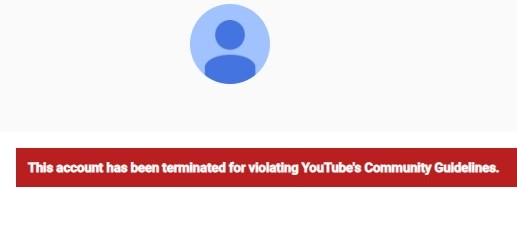
YouTube terminates Middle East Observer after almost 10 years online
Middle East Observer | March 9, 2019
After almost 10 years online, over 250 videos, almost 13,000 subscribers, and about 8 million total video views, YouTube has terminated the Middle East Observer (MEO) channel on its platform.
Although perhaps MEO became best known for its video translations of regional political actors such as Sayyed Hassan Nasrallah, its work was certainly not limited to that. Middle East Observer sought to provide its viewers with reliable English translations on politics, religion, and culture from the Middle East more broadly, with a particular focus on media from key states such as Lebanon, Syria, Iraq, Qatar, Saudi Arabia and Iran.
The termination of MEO’s channel came after several months of seemingly routine ‘violation’ emails sent to us by YouTube, the taking down of various videos of ours (most of which were uploaded several years ago) and the imposition of ‘channel strikes’ accompanied by emails about how we could better uphold its rather vague and in many ways hegemonic ‘Community Guidelines’. We gradually realised that no matter what measures we took, it would not satisfy YouTube’s ‘Guidelines’, as the platform’s architecture and policies increasingly moved towards the censorship of alternative news and views.
This censorship process against MEO began several years earlier, when YouTube deactivated our ability to monetise the absolute majority of our videos, classifying them as “Non-advertiser friendly”. Needless to say, this demonetisation regime has increasingly been criticised by many observers and major ‘YouTubers’ in recent years. They argued that the “Non-advertiser friendly” label was deeply ideological, as it worked to effectively censor (no funds = less ability to produce content) alternative and non-mainstream narratives while continuing to portray YouTube as a democratic and transparent media platform.
To bypass reliance on YouTube advertising revenue, we tried various options over the years, the last of which being an up-until-now successful experience on Patreon (here’s our page), where after only a few months 17 of our global viewers/readers joined the highly flexible crowd sourcing platform to fund our work and keep it going. Truly without their support we would not have been able to continue producing translations consistently (by all means support us to help us expand our work too).
Nevertheless, we believe that the termination of our channel today is a great blow to the coverage on YouTube of voices, news, and perspectives found on Arab and Islamic media that are rarely covered – or even purposefully silenced – by Western mainstream media.
YouTube’s message today is clear: the production, uploading, and viewing of genuinely critical and alternative ideas and viewpoints is not welcome.
Thankfully we at MiddleEastObserver.net have been anticipating this scenario for many years, and especially in the last 6 months. For now, these are the best ways to continue to follow and support our work:
– Support us financially (even with $1/month) on Patreon
– You won’t miss out on any content if you subscribe to our Website Mailing List
– We will now be uploading our video content on our Daily Motion channel
– Like our Facebook page
– Follow us on Twitter
Best wishes,
Middle East Observer
Featured Video

Dan Dicks with James Corbett on Solutions Watch
or go to
Aletho News Archives – Video-Images
From the Archives
MMR (Measles, Mumps and Rubella) – Vaccine Risk Statement
MMR Vaccine (Measles, Mumps, and Rubella) Is It Safer Than Measles, Mumps and Rubella?
Physicians for Informed Consent | December 2024
… It has not been proven that the MMR vaccine is safer than measles, mumps, and rubella. The vaccine package insert raises questions about safety testing for cancer, genetic mutations, and impaired fertility. Although VAERS tracks some adverse events, it is too inaccurate to measure against the risk of measles, mumps, and rubella. Clinical trials do not have the ability to detect less common adverse reactions, and epidemiological studies are limited by the effects of chance and possible confounders. Safety studies of the MMR vaccine are particularly lacking in statistical power. A review of more than 60 MMR vaccine studies conducted for the Cochrane Library states, “The design and reporting of safety outcomes in MMR vaccine studies, both pre- and post-marketing, are largely inadequate.”19 Because permanent sequelae (aftereffects) from measles, mumps, and rubella are so rare (especially in children with normal levels of vitamin A and infected after birth),6,15-17 the level of accuracy of the research studies available is insufficient to rule out the possibility that the MMR vaccine causes greater death or permanent disability than measles, mumps, and rubella. – Read full article
Blog Roll
 Aletho News
- Moscow issues warning to NATO over Russian exclave
- Yes, the Iran war has destroyed Trump’s presidency
- The fallacy of US delusions about Iran’s economic collapse
- Hezbollah denies Syria cell link, warns of Israeli plan to sow discord
- The legacy of US sanctions, war, and occupation in Iraq
- Iraqi resistance group rejects disarmament, vows to maintain support for Lebanon
- Sheikh al-Asadi warns of Iraqi government compliance with US demands
- How to MAKE THE CONSPIRATORS PAY for their crimes! Dan Dicks with James Corbett on Solutions Watch
- There’s a drought in academia: A drought in honest research on the subject of drought and other weather extremes
- Department of War Awards $20.7 Billion Contract to Raytheon for Air-to-Air Missiles
- If Americans Knew
- An error has occurred; the feed is probably down. Try again later.
- No Tricks Zone
- Green Energy Debacle: German Expert Professor Fritz Vahrenholt Warns Of Severe Economic And Social Consequences
- Two More Paleo Reconstructions Affirm Meters-Higher Sea Levels Across Ireland, Brazil 7000-6000 Years Ago
- New Study: Earth And Venus Surface Warmth Largely Explained By Convection And Lapse Rate, Not CO2 Or Radiation
- 2025 Nature Paper Claiming Worsening Global Drought Gets RETRACTED …Heavily Flawed
- New Study: ‘Global Drought Shows No Detectable Recent Acceleration Under Climate Warming’
- Economic Masterminds: German Socialists Suggest Taxing Productivity Gains Stemming From Using AI
- The South China Sea Has Not Been Cooperating With The Climate Change Narrative
- Energy Crisis: Germany Enters Heating Season With Historically Low Gas Reserve Fill Levels
- New Study: The Antarctic Ice Sheet Gained Mass From 2020-2024 Due To Staggering Snow And Ice Accumulation
- Study: Ocean Heating Rates From Thousands Of Years Ago ‘Dwarf’ Modern Ocean Heating Rates

