PM vows to clamp down on online abuse… despite spending millions vilifying Corbyn
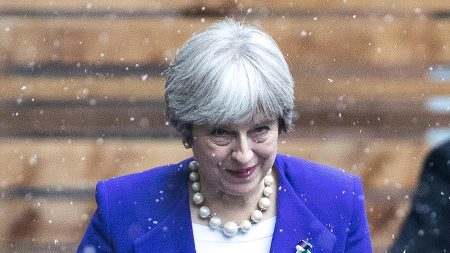
© Joel Goodman/ Global Look Press
RT | February 7, 2018
Prime Minister Theresa May was applauded on Monday when she pledged new measures to tackle online abuse against politicians. But has the Tory leader forgotten about the millions her party spent on smearing Labour’s Jeremy Corbyn?
In a speech marking the centenary of women gaining the right to vote in Britain, the Tory leader said new measures aimed at tackling online abuse will include a new annual report comprising of data on how social media giants moderate alleged abusers.
Speaking in Manchester, May said: “While there is much to celebrate, I worry that our public debate is coarsening. That for some it is harder to disagree, without also demeaning opposing viewpoints in the process.”
She said she will also ask the Law Commission to shake up legislation so it ensures abuse is illegal online just as it is offline.
“In the face of what is a threat to our democracy, I believe that all of us – individuals, governments, and media old and new – must accept our responsibility to help sustain a genuinely pluralist public debate for the future,” May added.
The comments appear to be a bit rich, however, as they come from the leader of a party which reportedly spent millions on a smear campaign against Labour during the 2017 general election.
The Conservatives were accused of circulating ‘dark ads’ on YouTube and Facebook to deter voters in marginal constituencies from voting for Labour. One of the last installments was an 85-second video made up of Labour leader Jeremy Corbyn’s speeches circulated on Facebook with the caption: “On June 9th, this man could be Prime Minister. We can’t let that happen.”
The ad featured a snippet of an interview with Corbyn, given to Sky News in May 2016, received a widespread backlash as it erroneously framed the Labour leader as condoning IRA bombings. The Labour boss had argued: “All bombing is wrong, of course I condemn [IRA bombings].”
The video was only built to show the channel’s news anchor Sophy Ridge asking, “but you’re condemning all bombing, can you condemn the IRA without equating it to…?” to which Corbyn is heard adding “no.”
In the full footage, however, Corbyn goes on to say: “No, I think what you have to say is all bombing has to be condemned and you have to bring about a peace process. Listen, in the 1980s Britain was looking for a military solution, it clearly was never going to work. Ask anyone in the British Army at the time… I condemn all the bombing by the loyalists and the IRA.”
Corbyn representatives said the Tories were “running a hateful campaign based on smears, innuendo and fake news.”
Labour also sent out ads, but they focused on policies to appeal to the party’s supporters rather than attacking their rivals.
Teacher on Leave After Allegedly Assaulting Student Who Refused to Stand for Pledge of Allegiance
By Jon Queally | Common Dreams | February 3, 2018
A teacher in Colorado this week was suspended after it was alleged that she assaulted a young child who refused to stand for the Pledge of Allegiance—a troubling example of educators who refuse to acknowledge that students have the right to refuse participation in the daily ritual still found in many U.S. schools.
According to CBS News:
A teacher with Colorado’s Boulder Valley School District was placed on paid administrative leave following an alleged incident at the middle school, the school district said Thursday. CBS Denver confirmed the Lafayette Police Department is investigating reports that teacher allegedly assaulted a student who refused to stand for the Pledge of Allegiance.
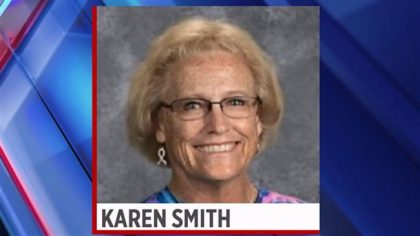
Karen Smith, [the school’s] physical education teacher, was placed on leave Thursday.
The school’s principal, Mike Medina, sent a letter home to parents Thursday evening notifying them there had been an “incident” involving Smith but said he could not elaborate.
Last year, as Splinter News reported at the time, a teacher in New Jersey was suspended after he bragged about failing students who refused to participate in the pledge.
“They refused to stand, saying ‘they didn’t have to[.]’ I told them that is true and that what makes this country great is ‘that I didn’t have to pass them either,'” Steven Solomon, the teacher, confessed. He was later suspended for his actions.
Though many public schools in the country continue to treat standing as the pledge as compulsory, the U.S. Supreme Court has said forcing students to do so is a violation of their constitutionally-protected rights. The court, as the ACLU explains in an on-line manual directed at students, “has held that it is just as much a violation of your First Amendment rights for the government to make you say something you don’t want to say as it is for the government to prevent you from saying what you do want to say.” All students, the civil liberties group says, “have a right to remain silently seated during the pledge.”
In a 2009 column that appeared on Common Dreams, entitled ‘The Pledge of Allegiance Is Un-American,” Michael Lind put it this way: “In a republic, the people should not pledge allegiance to the government; the government should pledge allegiance to the people.”
Social media giants crack down on RT under Senate pressure
RT | January 26, 2018
Facebook, Google and Twitter are taking action against RT in response to pressure from the Senate Intelligence Committee, but have found very little to indicate ‘Russian meddling’ in the 2016 elections, new documents show.
Google Search, for example, has labels “describing RT’s relationship with the Russian Government” and the company is “working on disclosures to provide similar transparency on YouTube,” according to a letter sent to the committee by Google’s VP and general counsel Kent Walker.
Twitter has “off-boarded” RT and Sputnik “and will no longer allow those companies to purchase ad campaigns and promote Tweets on our platform,”said the letter from the company’s acting general counsel Sean Edgett.
The letters were provided following the October 31, 2017 hearing at which the senators grilled social media executives on alleged Russian meddling in the 2016 presidential election via their products and services.
Senator Joe Manchin (D-West Virginia) was interested to know whether any of the companies accepted advertising from RT or Sputnik. Unlike Twitter, Facebook and Google continue to carry ads from both outlets. Google’s Walker wrote that such ads remain subject to “strict ads policies and community guidelines,” and that “to date, we’ve seen no evidence that they are violating these policies.”
Walker added that Google took RT out of its Preferred Lineup on YouTube. In November, Eric Schmidt, chairman of Google’s parent company Alphabet, told an international forum that he planned to “de-rank” RT and Sputnik in displayed search results.
Facebook’s general counsel Colin Stretch wrote that RT and Sputnik can “use our advertising tools as long as they comply with Facebook’s policies, including complying with applicable law.”
Committee chairman Richard Burr (R-North Carolina) asked whether any of the companies provide any data to the Russian government. Twitter said it had received requests for data, but did not comply with any of them. Facebook said it had received 28 requests for data between 2013 and 2017, but that it “did not provide any data in response.”
Google said it had “not complied with every request” but declined to provide any specifics, referring the senators to its Transparency Report. RT’s analysis of that data shows that Google received 237 requests in the first half of 2016 and provided responses in 7 percent of cases. Another 234 requests came in the second half of the year, with a 15 percent response rate. There were 318 requests in 2017 with a 10 percent response rate.
Senator Kamala Harris (D-California) was very interested to hear what the social media companies are doing with the revenue supposedly earned from “Russian” advertising. Edgett’s letter confirmed Twitter’s commitment to donate the $1.9 million that RT had spent globally on ads to “academic research into elections and civic engagement.” He did not specify the organizations that would benefit from this funding.
Although Stretch said that revenue from ads running on pages managed by the Internet Research Agency (IRA, usually described in the Western press as the “St. Petersburg troll farm”) was “immaterial,” he revealed that Facebook has contributed “hundreds of thousands of dollars” to the Defending Digital Democracy Project, an outfit based at the Harvard Kennedy School of Government “that works to secure democracies around the world from external influence.”
Furthermore, the investments Facebook has made to “address election integrity and other security issues” have been so significant that “we have informed investors that we expect that the amount that we will spend will impact our profitability,” Stretch added.
Google said the total amount of revenue from “Russian” ads amounted to $4,700, while the company has contributed $750,000 to the the Defending Digital Democracy Project.
The outfit is run by Eric Rosenbach, former assistant secretary of defense in the Obama administration. According to the Belfer Center at Harvard University, Rosenbach recruited Hillary Clinton’s former campaign manager Robby Mook and Mitt Romney’s 2012 campaign manager Matt Rhoades to co-chair the project.
Among the project’s advisers is Marc Elias of Perkins Coie, the law firm that has represented Clinton and the DNC, and was revealed to have paid for the notorious “Steele Dossier.” Another member of the project’s senior advisory group is Dmitri Alperovitch, CEO of Crowdstrike, the private company hired by the DNC which originated the accusation that Russia hacked into the party’s emails. Alperovitch is also a senior fellow at the Atlantic Council, a think tank associated with anti-Russian reports and partially funded by the US military, NATO, and defense contractors like Lockheed Martin and Boeing.
Read more:
Virginia Attorney General Attempting to Blacklist Activist & Political Organizations as Domestic Terrorists
The Rutherford Institute | January 26, 2018
RICHMOND, Va. — Warning that attempts by the political establishment to blacklist groups espousing unpopular ideas will endanger and undermine legitimate First Amendment activities across the political spectrum, The Rutherford Institute is calling on the Virginia General Assembly to denounce House Bill No. 1601.
Introduced by Del. Marcia Price and drafted with the help of Attorney General Mark Herring, H.B. 1601 broadly and vaguely defines “domestic terrorism” in such a way as to create a new criminal class of “domestic terrorist organizations” by labeling organizations that are even minimally affiliated with individuals engaged in so-called “acts of terrorism” such as misdemeanor assault, trespass, and damaging property on the land of another. Moreover, once an organization is designated a “domestic terrorist organization,” it becomes a crime to provide that group with a service, whether that be food, lodging, transportation, communication or commerce for any purpose whatsoever.
“If you believe in and exercise your rights under the Constitution (namely, your right to speak freely, worship freely, associate with like-minded individuals who share your political views, criticize the government, demand a warrant before being questioned or searched, or any other activity viewed as potentially anti-government), that could be enough to land you on the federal government’s terrorism watch list. Now, under this proposed Virginia law, just associating with someone labeled a ‘domestic terrorist’ is enough to get an organization blacklisted,” said constitutional attorney John W. Whitehead, president of The Rutherford Institute and author of Battlefield America: The War on the American People. “People have forgotten that in his day, civil rights leader Martin Luther King Jr. was viewed as a domestic terrorist for his acts of civil disobedience. Under this law, which aims to demonize and criminalize organizations based on their social or political associations with individuals whose unpopular beliefs or anti-government sentiments may be construed as ‘terrorist,’ organizations associated with King would be labeled as domestic terrorists and blacklisted. This is about as McCarthyist and un-American as it gets.”
In the wake of a massive protest in Charlottesville, Va., in August 2017 that resulted in violent clashes between alt-right and alt-left activists, with little to no intervention by police, Del. Marcia Price and Attorney General Mark Herring collaborated on legislation, House Bill 1601, that would create a new criminal class of domestic terrorists and blacklist any organizations associated, even minimally, with individuals engaged in so-called domestic terrorist activities.
In a letter to the Courts of Justice Committee, attorneys for The Rutherford Institute warn that H.B. 1601 poses grave dangers to the core constitutional rights of activist and political organizations of all stripes across the entire social and political spectrum. Notably, under H.B. 1601, almost any political organization risks being designated a “domestic terrorist organization”; organizations could be classified as terrorist based merely on minimal associations with individuals engaged in acts of so-called domestic terrorism; mired in secret proceedings, the protocol lacks any assurance of due process; the process for mounting an appeal of a “domestic terrorist” designation is overly burdensome and skewed; and the provisions impermissibly burden the right of political association protected by the First Amendment.
Documents
 The Rutherford Institute’s letter to the Virginia General Assembly
Facebook, Google, Twitter Announce ‘Counterspeech’ Psyop to Keep Public Docile

By Jake Andersen | ANTIMEDIA | January 18, 2018
If you’re a radical or search for “extremist” content online, the biggest social networks and internet companies on Earth will soon be converting you into a docile moderate, or at least, they will try.
Facebook, Google, and Twitter have been screening and filtering extremist content for years, but on Wednesday, the gatekeepers of the internet confirmed to Congress that they are accelerating their efforts and will target users who may be exposed to extremist/terrorist content, redirecting them instead to “positive and moderate” posts.
Representatives for the three companies testified before the Senate Committee on Commerce, Science and Transportation to outline specific ways they are trying to combat extremism online. Facebook, Google, and Twitter aren’t just tinkering with their algorithms to restrict certain kinds of violent content and messaging. They’re also using machine learning and artificial intelligence (AI) to manufacture what they call “counterspeech,” which has a hauntingly Orwellian ring to it. Essentially, their goal is to catch burgeoning extremists, or people being radicalized online, and re-engineer them via targeted propagandistic advertisements.
Monika Bickert, Facebook’s head of global policy management, stated:
“We believe that a key part of combating extremism is preventing recruitment by disrupting the underlying ideologies that drive people to commit acts of violence. That’s why we support a variety of counterspeech efforts.”
Meanwhile, Google’s YouTube has deployed something called the “Redirect Method,” developed by Google’s Jigsaw research group. With this protocol, YouTube taps search history metrics to identify users who may be interested in extremist content and then uses targeted advertising to counter “hateful” content with “positive” content. YouTube has also invested in a program called “Creators for Change,” a group of users that makes videos opposed to hate speech and violence. Additionally, the video platform has tweaked their algorithm to reduce the reach of borderline content.
In his testimony, Juniper Downs, YouTube’s head of public policy, said, “Our advances in machine learning let us now take down nearly 70% of violent extremism content within 8 hours of upload and nearly half of it in 2 hours.”
On the official YouTube blog, the company discussed how they plan to disrupt the “radicalization funnel” and change minds. The four steps include:
- “Expanding the new YouTube product functionality to a wider set of search queries in other languages beyond English.
- Using machine learning to dynamically update the search query terms.
- Working with expert NGOs on developing new video content designed to counter violent extremist messaging at different parts of the radicalization funnel.
- Collaborating with Jigsaw to expand the ‘Redirect Method’ in Europe.”
Starting at the end of last year, the company had already begun altering its algorithm so that 30% of its videos were demonetized. The company had explained that it wanted YouTube to be a safer place for brands to advertise, but the move has angered many content producers who generate income with their video channels.
The effort to use machine learning and AI as part of a social engineering funnel is probably not new, but we’ve never seen it openly wielded on a vast scale by a government-influenced corporate consortium. To say the least, it is unsettling for many. One user commented underneath the post, “So if you have an opinion that’s not there [sic] agenda You are a terrorist. Free speech is dead on YouTube.”
For its part, Twitter’s representative told Congress that since 2015 the company had taken part in over 100 training events focused on how to reduce the impact of extremist content on the platform.
In a post called “Introducing Hard Questions” on its blog, Facebook discussed rethinking the “meaning of free expression.” The post posed a number of hypothetical questions, including:
- How aggressively should social media companies monitor and remove controversial posts and images from their platforms? Who gets to decide what’s controversial, especially in a global community with a multitude of cultural norms?
- Who gets to define what’s false news — and what’s simply controversial political speech?”
The three tech giants have been under intense scrutiny from lawmakers who feel the platforms have been used to sow division online and even recruit homegrown terrorists. While the idea of using an algorithm to fight extremism online is not new, a unified front of Facebook, Google, and Twitter has never collectively produced original online propaganda, the specifics and scope of which remain vague despite the companies’ attempts at transparency.
Only recently, in the 2012 National Defense Authorization Act (NDAA), was the use of propaganda on the American people by the government formally legalized. Then-President Barack Obama continued strengthening government propaganda at the end of his administration with the dystopic Countering Disinformation and Propaganda Act of 2017, which created a kind of Ministry of Truth for the creation of so-called “fact-based narratives.”
It appears that while the government continues to strengthen its potential to conduct psychological operations (psyops), it is also joining forces with internet gatekeepers that can use their algorithms to shape billions of minds online. While one may applaud the ostensible goal of curbing terrorist recruitment, the use of psyops for social engineering and manufacturing consent could extend far beyond the original intent.
Court rejects school’s effort to dismiss free speech lawsuit
By Tyler Cochran | Campus Reform | January 19, 2018
Pierce College will have to defend the constitutionality of its policies restricting speech to just 0.003 percent of campus after a judge rejected its motion to dismiss a student’s lawsuit.
With help from attorneys at the Foundation for Individual Rights in Education (FIRE), student Kevin Shaw sued the school in March after administrators refused to let him distribute copies of the Constitution outside of the school’s “free speech zone,” which encompasses just 616 square feet of the 426-acre campus.
Shaw was also told he must fill out a permit application to use the free speech zone, and that he would have to leave campus if he refused to comply, which the school’s defense attorneys have sought to justify by arguing that the campus is a “non-public forum.”
According to the court order, the motion was dismissed in part because “given the traditional purpose of the open, outdoor areas of universities, such as the ‘Mall’ on Pierce’s campus, the Court finds that these areas are traditional public fora, regardless of Pierce’s regulations naming them non-public fora.”
At issue was the school’s contention that rules established by the Los Angeles Community College District designate all areas of the district’s campuses “non-public fora” except for those that are specifically set aside as “Free Speech Areas.”
Shaw, however, pointed out that the California Education Code contradicts that policy, requiring community colleges to allow all lawful forms of free expression that do not substantially disrupt normal operations, thereby rendering them, at the very least, “designated public fora.”
“The court’s ruling sends an important message to colleges nationwide that still restrict student speech to free speech zones,” FIRE Director of Litigation Marieke Tuthill Beck-Coon remarked in a press release. “The campus is a college student’s public square. It’s their space to be engaged citizens. The public recognizes this. So do courts across the country. Now it’s time for LACCD to follow suit.”
“This decision sends a clear signal to all university administrators that mistakenly believe they can create rules that supersede the Constitution,” concurred Young Americans for Liberty (YAL) Director of Free Speech Alexander Staudt. “I see this as a victory in the fight for free speech.”
“To walk completely across this campus would take hours and it is absurd that there is only a small space on that walk where free speech is allowed,” added Alex Murphy, president of the YAL chapter at Pierce College. “This case is not just about Pierce College, but every public university in the nation that has unconstitutional free speech policies.”
The LACCD is the largest community college district in the country, and Shaw’s lawsuit has the potential to affect the free speech rights of more than 150,000 students.
Pierce College spokesperson Yusef Robb told Campus Reform that “we do not comment on pending litigation,” but insisted that the school is not hostile to free speech.
“We are fully committed to free expression on our campuses,” Robb said. “As a community college district, promoting the free exchange of ideas and knowledge is at the core of what we do, every day.”
Follow the author of this article on Twitter: @tylercochran54
This Does Not Represent the Views of the University
By Maximilian Forte | Zero Anthropology | January 20, 2018
I know that I am not the first person to ask this, but when did universities start having “views”? When some professors indulge their rights to free speech or put academic freedom into practice, they can sometimes express views that some members of the public find controversial, distasteful, or reprehensible. In such cases, one frequently reads their university administrations publishing memos to the effect that, “Professor X’s views on Subject Y do not represent the views of the university”. What does that mean? Has “the university” studied the subject to the same degree as the professor, thus allowing it to conclude its views are the correct ones? Was the professor supposed to be instructed on the correct views to represent, since the job of professor apparently means not having an independent mind? Does it mean that Professor X does not represent the views of all professors and students at the university? How could anyone ever assume that one professor spoke for all others? Does it instead mean that the professor does not represent the views of those in the administration? The support staff? If so, who cares? And where exactly did the university administration publish its “party line”? When I was twice hired for tenure-track positions, the one thing I recall no Dean ever telling me was: “Here is a list of the views of the university. Only if you uphold these views can you consider working here. Should you ever express any differing views, you may be subjected to disciplinary action”. Nonetheless, the attitude of some university administrations in North America is that they have a right to publicly castigate faculty for not toeing the line. It is as if “the university” has been reduced to working as a mere cell of a ruling political party.
One could ask similar questions as above, only in reverse. What entitles administrators to speak for the university as a whole? How do they know that Professor X’s statements really do not reflect the views of the university? Did they ever consult faculty and students? Where is all the survey data that reveal the views of faculty on any subject? How is “the university” defined? Is it just the board of governors? Whose views does the university represent? Since I work in a public university—Canada only has public universities, with maybe one or two little exceptions—can we then assume that the “views of the university” neatly align with the broad majority of the public that we presumably are meant to serve? Is it the job of professors to simply reflect the views of others? Since when did it fall to professors to “represent” their universities—and will they get paid extra for doing PR work?
Three transformations have happened more or less simultaneously, and relatively recently, which may explain these bizarre communiqués from university administrators. One has to do with the politicization of university directorates, especially as even public universities have turned to support from private donors, most of whom have big axes to grind. Private donors are keen to buy support, and silence. Few are the donors who give generously just because they are thrilled by learning—that would be too countercultural in the North American context in which we lionize our meat packers and vilify intellectuals. From this first point, where private donors act as lobbyists for special interests, almost all else follows. To assure donors that universities are being run in a “smart” fashion, administrators have multiplied administrative positions and stacked them with persons from the private sector, who draft “strategic plans” and design what are essentially corporate business models. In other words, politicization stems from privatization and corporatization—this is the neoliberal transformation of the public university. To be clear, this transformation has its origins neither in university administrations nor the private sector, both of which lack the political power and authority necessary to effect such a transformation. Instead, governments are the ones that actively took the decision to cut back on funding for public universities, which is their responsibility, even as taxation levels either remained the same or continued to rise. They chose to redirect public funding away from universities, just as they did with education as a whole, as well as healthcare, social welfare, and so on. Governments pressed universities to raise funds from private sources, just as they pressed them to expand their governance by including more individuals from the private sector.
The second change has to do with universities seeking to raise their public profile, to gain visibility, and advance in the rankings through enhanced public recognition. To gain recognition, university websites have shed their traditional dull and dour functionality, and have become replicas of CNN. Even the university shields have been tossed, in favour of some terrible, and terribly expensive, brand logos produced by private consultants and graphic designers. Universities now also have “media relations” units, with expert staff that spend their days in Twitter and Facebook, and writing up newsy articles about what select faculty members and students are achieving (more on the political functions of “media relations” units, below). These same media units then do the rounds of the departments, advising faculty on how best to interact with journalists. To the laughter of everyone in my Department, one team showed us a video that advised us to dumb down our research so that “even your grandmother could understand it”. I still have no idea why they focused on grandmothers, not grandfathers, and why they assume that all grandmothers are ignorant rubes—perhaps theirs are? In addition, the media units encourage us to list ourselves as experts, for any journalists perusing the university website, by listing the presumably edgy and sexy topics we have mastered with our unrivalled expertise. Not enough, they then invite professors to do professional photo shoots in which they pose playfully for the camera, with a single short sentence in huge print next to them which somehow encapsulates their decades of research: “Do humans really like food?”
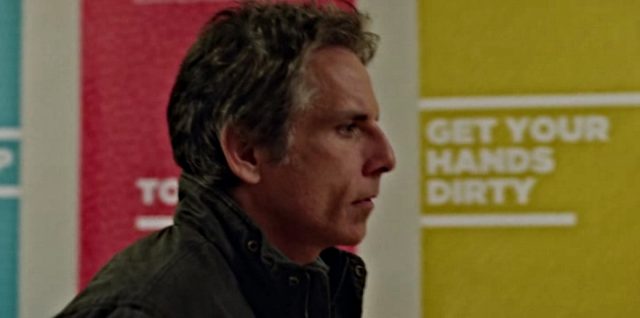
The third major change has to do with how university administrations understand academic freedom, and separately, freedom of speech. One might say they understand these concepts very poorly, or not at all, but I think that misses the above points. The desire by administrators to chill speech, to counter the embarrassingly contrary statements made by publicly outspoken professors, has to do with assuaging private donors as the public university is realigned with the political interests of the so-called top 1%. The immense irony of this is that it is university administrations themselves that actively pushed faculty into the public limelight in the first place, under the strategic rubrics of “knowledge mobilization” and “community outreach”. My university has posted banners around campus that urge us to “mix it up,” “get your hands dirty,” and “embrace the city, embrace the world”—vapid commercialist fluff. Even Hollywood took notice. Bleak Ben Stiller bleakly walked past some of these same bleak posters in his recent bleak film, “Brad’s Status,” which apparently was partly shot on the campus of Concordia University (not that the university is listed in the credits of the film—in fact, the movie credits claim the film was shot either in Hawaii or Boston, Montreal itself is not even mentioned):
Having urged us to “get out there,” university administrators then later express regret when they feel compelled to counter a given professor’s statements with press releases affirming that “this does not represent the views of the university”. This is an “own goal” on the part of university administrators. They have worked assiduously to make the university into a media organization, to turn professors into celebrity advocacy-journalists, and to make the institution responsive to market audiences to such an extent that the autonomy of the university becomes untenable.
Firings of tenured professors by university administrations, over a difference of opinion, are still relatively rare in Canada, when compared with the US or the UK. In fact, it is not an easy option: tenured professors have not only the protection of their tenure, but of their union, and a legally binding contract negotiated with the union on behalf of faculty which ensures academic freedom and due process. Faculty unions in turn belong to a national umbrella organization, CAUT, which boasts a multi-million dollar academic freedom fund and gets actively involved in supporting faculty. Canadian universities are also deeply fearful of lawsuits which could easily demolish their already frail budgets, most of which are running deficits already. Poor financial management and the backlash of legal damage often results in the top administrators being toppled. Rather than go the messy route which, heaven forbid, could also give rise to “bad press”—good lord, not “bad press,” that’s the other court which administrations fear—administrators have had to develop quieter, more insidious and subtle forms of suppression. The way to send “the right message” to the outside world, to properly convey the unspoken “views of the university,” is to publicly promote and praise certain select professors, the ones whose views and whose work best align with those of private individual and corporate donors, or with the ruling party, or the military. To take a recent example: as Donald Trump neared electoral victory, articles were published on the university website, in its magazine and elsewhere, that featured the expert analysis of select faculty—strangely enough, all of whom were clearly pro-Hillary Clinton, anti-Trump, a number of them American expatriates, and who evinced a certain Liberal Party affinity. Unlike in a real university, there was no debate among this small cluster of people bewailing the dawn of the “post-truth” world.
The paradox is that neoliberal university administrators have adopted a policy of containment, at the same time as they seek to publicly advertise themselves. Not wanting “the wrong views” to get notice, they engage in restricting speech by selecting that speech which suits their purposes. Speech is thus not just restricted, it is regulated, by promoting only those persons whose views are safe and deemed worthy of recognition. Speech is thus effectively restricted to those academics that the administrators judge to be “qualified” to speak, thereby limiting not only what is said, but who can say it. Media relations departments have the primary responsibility of inventing online rituals around speech, practicing containment through promotion. In some cases such departments actively tutor budding young “public intellectuals” through seminars and by shadowing them online, always ready for the opportune time for that strategic “retweet”. As weak, vain, and ineffective as these policies are, they serve as a useful reminder of how liberal authoritarianism works. In this case, liberal authoritarianism produces fictional representations of “the views of the university,” by thinning out the work actually done by faculty, spreading out the words of a few to represent the words of all.
Another method of indirect silencing is for the university to “celebrate” the media “accomplishments” of select faculty only, by listing stories of faculty who have appeared in the media… only in select media, depending on the “prestige” of the outlet. This is a way to ensure that professors whose views are worthy of being courted by the corporate, neoliberal imperialist media are the only ones featured. In other words, a professor mentioned in a story on CNN is deemed to be worthy of note; a professor who appears on RT, is ignored, as if the event never happened. Selective pride is a way of signalling selective shame. It has the effect of rendering silent the actual media accomplishments of faculty, in order to produce a false picture of where faculty stand, thus assuring the egos of financial donors and politicians. The policy is implemented with the naïve hope that misaligned professors will quietly yearn for that elusive little place on the university website, a place that amounts to nothing more than a few ephemeral pixels seen by few and forgotten by all.
On a range of other issues, near and dear to regime changers, liberal imperialists, and the pro-Israel lobby, one sees the pattern being reproduced, as I can affirm after close scrutiny that has endured for over a decade. If the topics are Iran, Libya, Syria, refugees, wars, nationalism, and so on, one sees the selectivity being actively enforced, even if it means publishing, praising and promoting the same two or three professors time after time. Rather than a university of hundreds of professors, added to tens of thousands students, we become a university of three individuals. Rarely, probably never, do we see university articles dealing with the working class, with poverty and inequality, critical of neoliberalism, globalization and imperialism. Thus the university presents its “views,” of such a one-sided nature and so bereft of any healthy dissent and disagreement as one would find on no university campus that ever took itself seriously.
Viewed from afar, there might even be something comical about a university administration busying itself with inventing a secret university, one that covertly lurks beneath the chosen public representation of the university. That is the point of creating “signature areas” that determine “strategic hiring”: lifting hiring decisions from the hands of Departments, now it is university executives who impose the parameters on what constitutes a desirable candidate, and decide which areas need to be filled. Slowly they thus invent for themselves the university they desire, as opposed to the real one that actually exists. Finally, they will have something they can sell with confidence. One has to almost feel sympathy for the administrators, who feel the keen pressure of public politics and special interest lobbies, into whose arms they have been driven by governments that renege on their obligation to support public universities.
The “views” of the university are a mercantile fiction, a falsehood designed to mislead the public and to caress donors and politicians, the kinds of individuals who are apparently empty and infantile enough to believe that the winning arguments are those that are advanced in the absence of criticism. What if we taught our students that the best way to learn is to ignore whatever they do not like to hear? That is indeed what is being pushed, ironically under the signs of “tolerance” and “inclusion,” the usual neoliberal claptrap. Thus we witness the university turned into a mere echo chamber for the comfortable, a safe space for moneyed elites to flatter themselves, creating a virtual world of unrivalled ideological purity, contrived harmony, and eternal hegemony.
Finally, messages from university administrators along the lines of “this does not represent the views of the university,” might serve an additional function, but I am just speculating. This might be a polite way of telling rabid members of the public to lay off. We heard you, yes it’s all quite disconcerting, and here is our little statement, now move along. Had universities with their bloated administrations and overt political leanings not wished to enhance their public profiles and represent themselves as quasi-media outlets, they would spare themselves such unnecessary exercises. In the end, pronouncements about “the views of the university” end up multiplying the damage to the university, both as a self-inflicted wounds within the university, and as a sign of intellectual cowardice in the face of bullies. A university administration that engages in such conduct has failed its first and most basic function: to administer university resources in order to facilitate teaching and learning.
European Commission to Issue Plan on Tackling Foreign Fake News
Sputnik – January 18, 2108
The European Commission is preparing a strategy to counter fake news, which will be published this spring, European Commissioner for the Security Union Julian King said during a debate at the EU Parliament on Wednesday.
“There’s been a focus on a wider phenomenon of fake news. It’s one of the European Commission’s priorities for the coming year… In November last year, we established a high-level expert group which has now started its work to advise the commission on scooping the phenomenon … and presenting recommendations. It will contribute to the preparation of a strategy addressing the challenge of fake news, which we’ll issue in spring this year,” King said at the European Parliament’s debates entitled “Russia — the influence of propaganda on EU countries.”
According to King, there was little doubt that a pro-Kremlin disinformation campaign was an orchestrated strategy aimed at spreading disinformation in various languages and through various channels.
“Russian disinformation can be extremely successful. So that’s why we need to redouble efforts to debunk this propaganda,” King stressed. Western politicians have repeatedly accused the Kremlin of orchestrating disinformation and propaganda campaigns and spoken about threats allegedly posed by Russian media, specifically emphasizing the role of Sputnik news agency and RT broadcaster. Moscow has repeatedly dismissed such allegations.
However, current EU polices on countering fake news and propaganda are focused on Russian media exclusively, with some other outlets like Fox News and Al Jazeera not being under the radar, the European Parliament member from the Group of the Progressive Alliance of Socialists and Democrats, Tanja Fajon, said on Wednesday.
“I agree that monitoring the impact of the media on the politics in society is necessary … but I have a few critical remarks. Firstly, why are we dealing only with Russian propaganda, how do we view the news on the American Fox News, do we have a problem with the stakes of the US media corporations in EU media outlets whose views are reported by Al Jazeera? And if we remain in Europe, how do we feel about the national media owned by a political party members and related persons, in Slovenia we have such a media outlet,” Fajon said during a debate at the EU Parliament dubbed “Russia — the influence of propaganda on EU countries.”
She added that RT broadcaster and Sputnik news agency perhaps should be seen as an attempt of Russia to find its place in the media world, which had long been dominated by the West.Meanwhile, several other lawmakers also pointed at the hypocrisy of the European Parliament. Joerg Meuthen from the Alternative for Germany (AfD) party noted that the term “fake news” was often used to discredit unwanted facts and opinions.
“Today’s debate about alleged election influence by Russian fake news is for the established European parties like Easter and Christmas at once … This is pure hypocrisy, since this Parliament will lead an election campaign in pure self-interest in the 2019 European elections. The self-supporting slogans of EU officials and campaigners will produce their own truths, which will be propaganda of the best calibre. Anyone who acts like that has no right to complain about alleged election interferences by Russia. You are sitting in a glasshouse here in Strasburg, you should therefore not throw stones,” Meuthen warned.
Leader of the UK Independence Party (UKIP) in Scotland, David Coburn, stressed that it was the European Union that spent millions in propaganda to prevent Brexit, and that was destroying impartiality or credibility of this debate about alleged Russian influence.
“The EU is still doing it by setting up the Orwellian machine to push the EU project and subvert national democracies, in its own words, ‘challenging Euroscepticism.’ It is pure Soviet ‘Pravda’ [newspaper]. I am more concerned with EU propaganda than with their clunky Russian version,” he said. Moreover, Coburn recalled that RT broadcaster gave the UKIP an opportunity to voice its position when they could not get on the BBC.
Western politicians have repeatedly accused the Kremlin of orchestrating disinformation and propaganda campaigns and spoke about threats allegedly posed by Russian media. Moscow has repeatedly dismissed all such allegations.In November 2016, the European Parliament adopted a Polish-initiated resolution which declared that Russia was waging an “information war” against the European Union and claimed the need to “fight” Russian “disinformation.” Commenting on that decision, Russian President Vladimir Putin stated that the adoption of the resolution demonstrated the degradation of the perception of democracy in the European society and expressed hope that the common sense would prevail.
Since then, the European External Action Service East Stratcom Task Force, set up in 2015, has secured over $1 million in funding and published multiple articles “debunking” alleged cases of “disinformation” by Russian outlets. A lot of these cases appeared to “debunk” news pieces reporting about opinionated remarks by Russian officials and overblown tabloid headlines.
Featured Video
New positive ivermectin evidence
or go to
Aletho News Archives – Video-Images
From the Archives
Fanatical Followers of the Covid Regime: A Jim Jones-Style Cult?
By Professor Roger Watson and Dr. Niall McCrae | The Daily Sceptic | November 15, 2021
As scholars at leading British universities over recent decades, we witnessed the replacement of critical thinking and debate by narrative: facts are discrimination and scientific method is imperialism; truth, instead, is derived from ‘progressive’ values. This educational trend may be a major contributory factor to the ease in which society has been inculcated to the Covid ‘new normal’ of masking, testing, and repeated doses of vaccines for a disease of similar risk to severe influenza.
One doesn’t need much critical reasoning to observe the flawed logic of some vaccination enthusiasts, such as people who respond to experiencing any side effects, however debilitating, by saying “at least I know it’s working”, or, after contracting the disease despite their promised inoculation (over 90% effective, according to initial drug company claims), “I’d have been worse off without the jab.” … continue
Blog Roll
 Aletho News
- EU Council Advances Chat Control 2.0 Scanning Proposal
- Ex-Greek MEP files complaint against Israeli spyware firm over alleged Pegasus surveillance
- Troubling ideas throughout the Torah, Talmud, Mishneh Torah and Tanya
- ‘Grave, alarming’: Iran mission on Trump’s UNGA ‘annihilation’ threats
- Najaf airport to reopen to Iranian flights within 24 hours: Ambassador
- From ‘How Will This End For Iran’ to ‘When America Walks Away’: A tale of two Economist covers
- Tehran blasts ‘baseless’ speculation linking Iran to alleged bomb plot at UK air base
- The Rise And… Rise Of ‘Color Revolutions’
- The Coming GOP Bloodbath?
- Arctic Scare Stories Melt Away
- If Americans Knew
- Netanyahu Asked UAE Leader to Deny Report on Oct. 7 Warning in Secret Visit, Sources Say
- CNN Chief Int’l Correspondent Clarissa Ward on Journalists in Gaza
- Democratic Party Consultants Surround Troy Jackson with Pro-Israel Donors
- Christian Leader Responds To Netanyahu’s Claims Regarding Palestinian Christians
- In Gaza, ‘Whoever Survives the Bombing Won’t Survive the Rubble’
- Israel kills more Palestinians, amid push to resettle Gaza – Daily Update
- Israel forces Gazans to live in constant peril – Daily Update
- Deconstructing Netanyahu’s pants-on-fire UN rant – Daily Update
- Trump betrayed voters with his campaign lies and prioritized a foreign country once he took office
- Netanyahu calls Israel’s war in Gaza ‘opposite of genocide’ in UN speech to near-empty hall
- No Tricks Zone
- New Study: Earth And Venus Surface Warmth Largely Explained By Convection And Lapse Rate, Not CO2 Or Radiation
- 2025 Nature Paper Claiming Worsening Global Drought Gets RETRACTED …Heavily Flawed
- New Study: ‘Global Drought Shows No Detectable Recent Acceleration Under Climate Warming’
- Economic Masterminds: German Socialists Suggest Taxing Productivity Gains Stemming From Using AI
- The South China Sea Has Not Been Cooperating With The Climate Change Narrative
- Energy Crisis: Germany Enters Heating Season With Historically Low Gas Reserve Fill Levels
- New Study: The Antarctic Ice Sheet Gained Mass From 2020-2024 Due To Staggering Snow And Ice Accumulation
- Study: Ocean Heating Rates From Thousands Of Years Ago ‘Dwarf’ Modern Ocean Heating Rates
- Climate Extremists Target, Attack Large-Scale Power Grid Infrastructure In Germany!
- New Study: Antarctic Ice Melt Has Contributed Less Than 1 Centimeter To Sea Level Rise In The Last 30 Years

