Ukraine Bans Eight Reporters From Covering Odessa Massacre Anniversary
Sputnik – 02.05.2016
ODESSA — Eight foreign reporters were prohibited from entering the southern Ukrainian city of Odessa to cover the events commemorating the second anniversary of the massacre in the city, a lawyer representing one of the people accused of involvement in the deadly events said Monday.
“About eight journalists were not allowed to enter [the city],” Kirill Shevchuk told RIA Novosti.
He added that the reporters, including those from Poland, France, the Netherlands and Germany, were turned back at passport control in Odessa’s airport.
On May 2, 2014, pro-Kiev radicals blocked anti-government protesters in Odessa’s House of Trade Unions and set the building on fire by hurling Molotov cocktails inside. According to the official data, 48 people died and more than 250 were injured in the fire. No perpetrators have been brought to justice.
The mourning rally was scheduled for 2 p.m. local time (11:00 GMT), but because of an alleged bomb threat local authorities blocked the access to the tragedy site for people who wanted to commemorate the victims of the massacre.
UK Labour leader refuses to denounce Hamas, Hezbollah
Press TV – May 2, 2016
Britain’s Labour Party Leader Jeremy Corbyn has refused to give in to calls from Israeli officials and British Jewish figures to denounce Islamic resistance movements Hamas and Hezbollah, vowing to continue talking to the two groups.
The leader of the opposition has come under pressure from a number of Labour lawmakers, Israeli Ambassador to London Mark Regev and Jewish leaders in the UK to distance himself from Labour politicians’ recent remarks condemning Israeli crimes against Palestinians, as well as groups fighting against the Tel Aviv regime’s occupation of the Palestinian lands.
Labour MP Naz Shah resigned as an aide to the party’s shadow chancellor last week after being forced to apologize for backing calls for Israel to “relocate” to the United States.
Also last week, the Labour Party suspended former London Mayor Ken Livingston after he defended Naz Shah in BBC interview and criticized the British media for ignoring Israeli war crimes against the Palestinian people. Livingston also said that Nazi leader Adolf Hitler had been a Zionist early in his political career.
Following these developments, Israeli figures accused the Labour Party leader of being soft on “anti-Semitism” in the party, which was forced to launch an inquiry into how to tackle the issue.
On Monday, Israel’s opposition leader Tzipi Livni said that Britain should condemn “anti-Semitism for the sake of its own core values.”
Israeli Ambassador Regev called on Corbyn to denounce Hamas and Hezbollah and pay a visit to Tel Aviv to build bridges.
Regev referred to Corbyn’s earlier support for the Islamic resistance movements, which were labeled as terrorist organizations by Britain.
A number of British Jews also urged Corbyn to display clarity about having relations with the two groups.
In response to the ongoing calls to reject Hamas and Hezbollah, Corbyn’s spokesman issued a statement on Sunday, saying, “Jeremy Corbyn has been a longstanding supporter of Palestinian rights and the pursuit of peace and justice in the Middle East through dialogue and negotiation.”
“He has met many people with whom he profoundly disagrees in order to promote peace and reconciliation processes, including in South Africa, Latin American, Ireland and the Middle East,” the statement added, noting that it is essential to talk to people “with whom he profoundly disagrees in order to promote peace and reconciliation processes, including in South Africa, Latin American, Ireland and the Middle East.”
“Simply talking to people who agree with you won’t help achieve justice or peace,” it added.
Corbyn has in the past called for the participation of Hamas and Hezbollah for a settlement of the conflict in the Middle East and highlighted the role of Iran in the regional issues. He has also referred to the two movements as “friends.”

UK Labour Party in Grip of Zionist Inquisition
By Stuart Littlewood | Dissident Voice | April 29, 2016
The orchestrated smear campaign against pro-Palestine sympathisers sent me reaching for my pen. But Gilad Atzmon too was eyeing the Labour Party’s crazed witch hunt for “antisemites” with misgiving and had already declared, in his usual robust way, that Labour under Jeremy Corbyn was not so much a party as a piece of Zionist-occupied territory.
Writing in his blog about Corbyn and McDonnell’s servile commitment to expel anyone whose remarks might be interpreted by Zionist mafioso as hateful or simply upsetting to Jews, Atzmon concludes: “Corbyn’s Labour is now unequivocally a spineless club of Sabbos Goyim” [which I take to mean non-Jewish dogsbodies who do menial jobs that Jews are forbidden to do for religious reasons].
“The Labour party’s policies,” says Atzmon, “are now compatible with Jewish culture: intolerant to the core and concerned primarily with the imaginary suffering of one people only. These people are not the working class, they are probably the most privileged ethnic group in Britain. Corbyn’s Labour is a Zionist Occupied Territory… It proves my theses that the Left is not a friend to Palestine, the oppressed or the workless people.
“I would have never believed that Jeremy Corbyn would engage in such colossally treacherous politics. I did not anticipate that Corbyn would become a Zionist lapdog. Corbyn was a great hope to many of us. I guess that the time has come to accept that The Left is a dead concept, it has nothing to offer.”
This writer too is shocked after signing up as a supporter (though not a member) of the Labour Party with the express purpose of voting in the leadership election for that beacon of common sense, that staunch champion of high ideals, that great white hope who would start a revolution in British politics and sweep away the crap and corruption left behind by Blair and Brown.
Boy, was I in for a disappointment!
And the latest casualty in this ugly Zionist power-play is former mayor of London Ken Livingstone. In a heated public spat with one of the party’s chief inquisitors, MP John Mann, he had the temerity to defend a female MP, Naz Shah, who had fallen foul of the party’s antisemitism police for comments made on Facebook before becoming an MP. She had suggested that Israel be transferred to the United States. She apologised profusely, but Labour’s Israel lobby went ballistic after raking up this old remark. Had they forgotten that their hero, David Ben-Gurion, himself, was mad-keen on population transfer… of Palestinian Arabs, that is? So what’s to get excited about? Mann happens to be chair of the All-Party Parliamentary Group on Antisemitism. One-sidedness is the name of his game.
What seems to have generated the greatest sound and fury is this observation by Livingstone: “When Hitler won his election in 1932 his policy then was that Jews should be moved to Israel. He was supporting Zionism before he went mad and ended up killing six million Jews.”
Joan Ryan MP, Chair of Labour Friends of Israel, said: “To speak of Zionism – the right of the Jewish people to self-determination – and Hitler in the same sentence is quite breathtaking. I am appalled that Ken Livingstone has chosen to do so…. He should be suspended from the Labour Party immediately.”
It scarcely needs saying that Zionism may mean self-determination for the Jewish people but it has cruelly denied the Palestinians their right to self-determination for decades. Nevertheless Livingstone is suspended from the party after 47 years.
President of the Board of Deputies of British Jews Jonathan Arkush can be relied on to put in his two-pennyworth on these occasions, and he didn’t disappoint: “Ken Livingston’s comments were abhorrent and beyond disgraceful. His latest comments combine Holocaust revisionism with antisemitism denial, when the evidence is there for all to see. He lacks any sense of decency. He must now be expelled from the Labour Party.”
And on the suspension of Naz Shah, Arkush was in overdrive: “If the Labour party is to re-establish its credibility on this issue, it needs to take four important steps forward:
First, there must be a credible inquiry into the entire Naz Shah episode. Secondly, the party has to take effective measures to eradicate antisemitism wherever it occurs within its membership. Thirdly, the leader must make it clear that allegations of antisemitism are not to be dismissed as arguments about Israel. Fourthly, Jeremy Corbyn must now respond to our repeated calls for him to accept that his meetings with rank antisemites before he became leader were not appropriate and will not be repeated.
Witch hunters’ balloon pricked
Whether Livingstone’s claim that Hitler was a Zionist is correct, I know not and care not. He presumably checked his facts and was itching to score with this mischievous titbit. Whether that was a wise thing to do is a matter for idle chatter, not expulsion. Meanwhile Zio hotheads inside and outside the party would do well to pay attention to the The Jewish Socialists’ Group, which has some sound advice for them and sticks a pin in their not-so-pretty balloon with this measured statement:
Antisemitism and anti-Zionism are not the same. Zionism is a political ideology which has always been contested within Jewish life since it emerged in 1897, and it is entirely legitimate for non-Jews as well as Jews to express opinions about it, whether positive or negative. Not all Jews are Zionists. Not all Zionists are Jews.
Criticism of Israeli government policy and Israeli state actions against the Palestinians is not antisemitism. Those who conflate criticism of Israeli policy with antisemitism, whether they are supporters or opponents of Israeli policy, are actually helping the antisemites. We reject any attempt, from whichever quarter, to place legitimate criticism of Israeli policy out of bounds.
Accusations of antisemitism are currently being weaponised to attack the Jeremy Corbyn-led Labour party with claims that Labour has a “problem” of antisemitism. This is despite Corbyn’s longstanding record of actively opposing fascism and all forms of racism, and being a firm supporter of the rights of refugees and of human rights globally.
A very small number of such cases seem to be real instances of antisemitism. Others represent genuine criticism of Israeli policy and support for Palestinian rights, but expressed in clumsy and ambiguous language, which may unknowingly cross a line into antisemitism. Further cases are simply forthright expressions of support for Palestinian rights, which condemn Israeli government policy and aspects of Zionist ideology, and have nothing whatsoever to do with antisemitism.
The JSG goes further and suggests that the attacks come from four main sources – the Conservative Party, Conservative-supporting media and pro-Zionist Israeli media sources, right-wing and pro-Zionist elements claiming to speak on behalf of the Jewish community, and opponents of Jeremy Corbyn within the Labour party. These groups make common cause to wreck the Corbyn leadership, divert attention from Israeli government crimes and discredit those who dare to criticise Israeli policy or the Zionist enterprise.
In short, the JSG says what needs to be said and puts the witchfinder-generals firmly in their place.
Of course, if Labour – or the Conservatives – truly wished to be squeaky-clean in matters of racism they would disband their Israel fan clubs (i.e. Friends of Israel) and suspend all who refuse to condemn Israel’s brutal acts of ethnic cleansing and other war crimes. If people holding public office put themselves in a position where they are influenced by a foreign military power, they flagrantly breach the Principles of Public Life. There are far too many Labour and Conservative MPs and MEPs who fall into that category.
The Labour Party announced today it is considering reviewing its rules to send a clear message of zero-tolerance on antisemitism. For balance, why not match this with zero-tolerance of those who use the party as a platform for promoting the criminal Israeli regime and its continuing territorial ambitions? Go on, Labour, prove Atzmon wrong… prove the party is not Zionist occupied territory.
Stuart Littlewood’s book Radio Free Palestine, with Foreword by Jeff Halper, can now be read on the internet by visiting radiofreepalestine.org.uk.
‘Israel is a vicious racist construct… that claims tribal superiority over the entire rest of the world’
My Anti-Racist Comments on Israel
By Craig Murray – April 29, 2016
I was accused on Sky News of making comments attacking the Jewish tribe. Ripped from its context, the remark appeared so offensive I could not conceive I had ever made it. I find now that in fact I did say it, but in the context of a specific remark by an Israeli minister making a claim that the Israeli Prime Minister leads all Jews worldwide. My remark was part of a post attacking all racism. They could equally well have taken the quote “I wish nothing but good to all people, including all Jewish people” out of the post.
To be absolutely open, I repeat the post here:
Israeli economics minister Naftali Bennett has claimed of Binyamin Netanyahu that “The prime minister is not a private person but the leader of the Jewish state and the whole Jewish world.” Really? Netanyahu is the leader of all the Jews in London, or California, or Ethiopia, who may never have set foot in his state?
This extraordinary remark by Bennett lays bare the fundamental flaw in the very concept of Israel. It is not a modern state, defined as a territory and comprising all the various citizens of whatever descent who live within it. It is rather a vicious racist construct, defined absolutely by race, refusing territorial limits, and with an aggressive theocratic overlay that claims tribal superiority over the entire rest of the world.
Here is a picture of the New Zealand cricket team. In the last twelve months, New Zealand cricket teams have fielded payers including Hamish Rutherford, Peter Fulton, Colin Munro, Dean Brownlie, Ross Taylor, Rob Nicol, Corey Anderson, Grant Elliott, Jimmy Neesham, Kyle Mills, Adam Milne and Mark Craig, not to mention the McCullum brothers. But if I told you that Alex Salmond was the leader of all Scots around the world, including the Black Caps, you would quite rightly call me a nutter.
We would not tolerate the level of racism in any other country that we tolerate from Israel. There was a huge outcry against Labour MP Paul Flynn who dared question whether it was sensible to send a strongly professed Zionist Jew as British ambassador to Israel, but when the Israeli government itself proclaim the political leadership of all Jews all over the world, it is a logical impossibility not to ask the question.
I wish nothing but good to all people, including all Jewish people, but by their increasingly hardline racialist approach, their unceasing encroachment on Palestinian land and their rigorous adoption of all the racist mechanisms of an apartheid state internally, I fear that the window of opportunity for a peaceful future for those Jewish people living in what is currently Israel is closing fast.
It must be universally proclaimed: there is not a single racial group in the whole world from whom worldwide racial claims of political allegiance, or an internal racially based legislative order, are acceptable. Bennett’s remarks are beyond the limit of civilised political discourse.
The Lingering Danger of Google & Facebook
By Ulson Gunnar – New Eastern Outlook – 30.04.2016
During the 2011 Arab Spring, it was clear to those who bothered to look, that the US State Department and the various arms of soft power attached to it were directly responsible for what was otherwise initially passed off as a spontaneous, region-wide uprising.
Eventually, what was dismissed as “conspiracy theory” regarding the US-backed nature of the uprising, was finally admitted to by the New York Times in an April 2011 article titled, “U.S. Groups Helped Nurture Arab Uprisings,” which admitted that:
A number of the groups and individuals directly involved in the revolts and reforms sweeping the region, including the April 6 Youth Movement in Egypt, the Bahrain Center for Human Rights and grass-roots activists like Entsar Qadhi, a youth leader in Yemen, received training and financing from groups like the International Republican Institute, the National Democratic Institute and Freedom House, a nonprofit human rights organization based in Washington, according to interviews in recent weeks and American diplomatic cables obtained by WikiLeaks.
The New York Times would go on to admit direct ties between the above-mentioned organizations and both the US Congress and the US State Department.
The article would also admit:
Some Egyptian youth leaders attended a 2008 technology meeting in New York, where they were taught to use social networking and mobile technologies to promote democracy. Among those sponsoring the meeting were Facebook, Google, MTV, Columbia Law School and the State Department.
The 2008 meeting wasn’t the only one. And, as it would turn out, Facebook and Google’s role in preparing the ground for the Arab Spring, quite literally years before the “spontaneous” protests erupted, was much more complicated than merely being sponsors of a single event in New York.
Hillary Clinton was serving as US Secretary of State both during and in the lead up to the Arab Spring. She even attended via teleconference one of these “technology meetings” briefly mentioned by the New York Times.
Also attending the meetings were actually staff from the US State Department and various staff from both Google and Facebook. Also in attendance were members of the US media. In other words, the event was not only sponsored by the US government and these two tech-giants, it was organized and conducted by them as well. Their event program (PDF) makes this abundantly clear.
The purpose was clearly to create a unified network combining the US State Department’s direction, the tech-giant’s technical capabilities, and influence of the US media together to overwhelm the information space when finally the time came for the Arab Spring to unfold. And overwhelm it did. The governments of Tunisia, Egypt, Yemen, and Libya fell, with violence and even war breaking out in the latter three, while Syria to this day remains engulfed in violence that began in the wake of the 2011 operation.
More recently, e-mails leaked from then US Secretary of State Hillary Clinton, reveal further details on just how close the tech-giants work with the government. Some could even say they are an extension of the government.
A CBS article titled, “Clinton Emails Show State Department’s Close Relationship With Google,” reveled that:
The latest release of emails sent to and from Hillary Clinton’s private email server reveals a close relationship between Google and the State Department.
A 2012 email recently uploaded onto Wikileaks’ searchable archive came from Google Ideas director Jared Cohen, who formerly worked as an advisor to Secretary Clinton, indicates that Google wanted to help bolster support for those who defected from Syrian President Bashar al-Assad’s military.
It also showed that before launching a “defection tracker” Cohen wanted the State Department to weigh in on the idea and potentially provide feedback.
Not only does the leak expose what appears to be a revolving door between the tech-giant and the US State Department, but it exposes the fact that regardless of who is working where, Google was working in tandem with the State Department. Cohen was actually listed in the above cited event program as Policy Planning Staff of the Office of the Secretary of State meaning that before moving to Google he was working with Google to undermine various foreign governments, and continued to do so after he moved from government to the private sector.
Just Warming Up
Google and Facebook are still very much engaged in information warfare for the US government and the special interests that it serves. Likewise, the US State Department is still very much in the business of subverting foreign nations by recruiting, training, equipping and directing collaborators from targeted nations.
Facebook, for example, has expressed plans to get everyone on the planet on the Internet. The seemingly humanitarian mission is in all actuality an attempt to get the world on Facebook, which through its algorithms and ability to censor, ban and delete accounts at will, would virtually control what the world saw and didn’t see.
More forward-thinking states like Russia and China have noted this reality of the 21st century battlefield and have responded by creating their own domestic versions of Google and Facebook. An arms race of sorts has begun between these competing services both in terms of reach and capabilities for everything from artificial intelligence deep learning algorithms to the ability to control and influence the flow of information over and within borders.
Tech-centric US-funded nongovernmental organizations have begun to spring up alongside their traditional US-funded collaborators in nations around the world, specializing in doing many of the sort of workshops initially conducted by the US State Department, Google and Facebook before the Arab Spring. For nations either not aware of this or incapable of responding to this threat, it could be comparable to a new weapon of war taking to the battlefield one has no defense to or anything which which to strike back with.
This threat will only increase, with the “information war” becoming more and more literal as advances are made in information technology. The US is openly using information technology to augment its hegmonic ambitions around the world, with e-mail leaks confirming what many have already suspected all along. What is more worrisome is the collaborations and technologies being used now that are not being disclosed or “leaked.”
For nations around the world, raising literacy in terms of information technology and the threat it poses can help inoculate their populations from the overwhelming nature of foreign-backed operations like the Arab Spring. By creating and cultivating a domestic information technology sector and recruiting talent before the US does, creating competitive services like Russia’s VK and China’s Baidu not only serves as a means of improving and diversifying one’s economy, but can also serve as an important pillar of national security in the 21st century.
Reporters May Face Trial for Revealing Berlin’s Role in ‘Network of Death’
Sputnik – 29.04.2016
In their book “Network of Death”, three German journalists revealed illegal arms supplies from Germany to Mexico. However, instead of being praised for their efforts, all three of them may face a court trial on alleged breach of the German Press Act and disclosure of secret information.
The book written by German journalists Daniel Harrich, Danuta Harrich-Sandberg und Jürgen Grässlin revealed illegal arms supplies by German company Heckler & Koch to Mexico. It turned out that the weapons — G36 assault rifles made by the firm — appeared in the Mexican states of Guerrero and Chihuahua, although the supplies to these states were prohibited by German authorities.
In 2005, the German regulatory agency allowed the delivery of 9,000 assault rifles to Mexico between 2006 and 2009 on the condition that they won’t be available in the Mexican states of Guerrero, Jalisco, Chiapas and Chihuahua.
However, it recently became known that the arms not only leaked to these territories, but were also allegedly used during the assault on Ayotzinapa students on September 26, where six people were killed, 25 injured and 43 disappeared.
In their book, journalists not only revealed the fact that the German company illegally delivered G36 assault rifles to Mexico, but also accused German authorities of negligence and complicity in the deal.
“In our latest book, […] we’ve published highly sensitive documents as proof for our assumptions that not only Heckler & Koch is responsible for this, but also the Federal Office on Export and the Federal Ministry of Economics,” Grässlin said in an interview with Sputnik.
According to the journalist, both authorities made the deliveries to Mexico possible, although the German Foreign Ministry had initially prohibited the supply of weapons to the country. In 2010, Grässlin filed an application with a request to start an investigation into the case, but as a result only employees of the company, and none of the authorities were prosecuted.
“The Stuttgart public prosecution office still refuses to prosecute those in the Federal Ministry of Economics and the Federal Export Office responsible and co-responsible for it, and this is a scandal,” Grässlin said.
Instead, surprisingly, the Munich public prosecution office is currently considering an option to prosecute journalists themselves.
Under paragraph 353d of the Criminal Code, the journalists might be charged with “violation of professional and special secrecy”. The law prohibits disclosing messages, documents or any other information from a criminal case. The violation is punishable with a fine or imprisonment of up to one year.
Livingstone vindicated: There WAS a Nazi-Zionist agreement and Hitler DID support it

Ken Livingstone
By Mike Sivier | Vox Political | April 28, 2016
It turns out all those who clamoured for Ken Livingstone to be suspended from the Labour Party – on the basis that Nazi Germany and Zionist Jews never had an agreement – were completely wrong.
Perhaps John Mann needs to reconsider his actions of earlier today (April 28) – along with all those who accused Livingstone of “rewriting history” when he really was simply quoting it.
Vox Political is grateful to the reader who sent us to the Wikipedia page stating the following:
The Haavara Agreement was an agreement between Nazi Germany and Zionist German Jews signed on 25 August 1933.
The agreement was finalized after three months of talks by the Zionist Federation of Germany, the Anglo-Palestine Bank (under the directive of the Jewish Agency) and the economic authorities of Nazi Germany.
The agreement was designed to help facilitate the emigration of German Jews to Palestine.
While it helped Jews emigrate, it forced them to temporarily give up possessions to Germany before departing. Those possessions could later be re-obtained by transferring them to Palestine as German export goods.
The agreement was controversial at the time, and was criticised by many Jewish leaders both within the Zionist movement and outside it.
Hitler’s own support of the Haavara Agreement was unclear and varied throughout the 1930s.
Initially, Hitler criticized the agreement, but reversed his opinion and supported it in the period 1937-1939.
Source: Haavara Agreement – Wikipedia, the free encyclopedia
Jewish Lobby finds 250 Hizbullah agents in Berlin
Rehmat’s World | April 25, 2016
The American Jewish Committee (AJC) has accused the Berlin-based theater project, Refugee Club Impulse (RCI) of harboring anti-Israel Lebanese Islamic resistance and political party Hizbullah agents.
The Jewish lobby has accused Nadia Grossmann (Jewish), artistic director of RCI and her sister Maryam, a pedagogical director at RCI of organizing the annual pro-Hizbullah and pro-Iran Al-Quds Day.
Iran’s Imam Khomeini declared the last Friday of the month of Muslim fasting as Al-Quds Day in 1981 in support of the Palestinian struggle to regain their land stolen by European Zionist Jews in 1948.
“The RCI is expected to receive 100,000 euros from Berlin government for refugee work. German taxpayers [funds] have been furnished to the RCI for number of years,” said Benjamin Weinthal, The Jerusalem Post, April 20,2016.
Pity! Weinthal’s Zionist entity received only $93 billion from German taxpayers since 1950s.
Nadia and Miryams’ father Jurgen Grossmann told the press that his daughters were not co-organizers of the International Al-Quds Day, but that they along with their father support Palestinian cause.
Volker Beck, a Green Party member in the Bundestag (parliament) and former spokesperson of LGBT Germany, and Benedikt Lux, member of the Berlin City Senate have raised their concerns over “the danger of giving taxpayers’ money to RCI that supports antisemitic forces.”
On March 16, 2016, Barack Obama’s Czar to monitor so-called anti-Semitism around the world, Ira Forman (a Zionist Jew) delivered a speech in Berlin in which he warned Europeans that they risk turning their continent into a breeding ground for the vilest form of Jew hatred.
I suppose, this idiot like Netanyahu too believes that the Mufti of Palestine ordered Adolf Hitler to burn 6 million Jews.
Israeli occupation forces kidnap professor near Ramallah
Palestinian Information Center – April 25, 2016
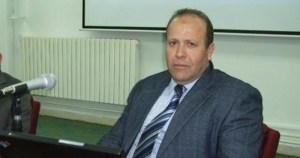 RAMALLAH – Israeli occupation forces (IOF) on Sunday kidnapped Palestinian astrophysicist Imad al-Barghouthi at Nabi Saleh checkpoint, northwest of Ramallah.
Local sources told the Palestinian Information Center that Israeli soldiers at the checkpoint detained Barghouthi and took him to an undeclared place.
Barghouthi, 53, is a professor of theoretical space plasma physics at al-Quds University and has worked for some time at NASA in the United States. His scientific work is widely published internationally in academic journals.
The IOF previously kidnapped him on December 6, 2014 at al-Karama border crossing as he was trying to cross to Jordan in order to attend a scientific conference in the United Arab Emirates.
At the time, he was reportedly interrogated for participating in a mass march against Israel’s war on Gaza.
Copyright © The Palestinian Information Center
Turkey bars entry to photojournalist on Bild assignment
RT | April 25, 2016
Greek freelance photojournalist Giorgos Moutafis, who was trying to travel through Turkey on an assignment from German tabloid Bild, has been barred from entering the country without explanation.
Moutafis, 38, was denied entry to Turkey after landing in Istanbul on Saturday and sent back to Athens. He was kicked out of the country less than an hour after German Chancellor Angela Merkel left it after visiting a refugee camp in Gaziantep, the newspaper pointed out. He intended to go to Libya from Turkey.
“I was told at the passport control that my name was on a blacklist and that I’m not allowed to enter Turkey. Then my passport was taken from me until the early morning. I had to spend the night in a room in the airport. The reasons why I’m on this list were not explained to me,” Moutafis said.
He added that he entered Turkey six months ago with no problems, and that he cannot explain why he could have been banned since then.
Moutafis is an internationally-acclaimed journalist and filmmaker, who has covered stories for outlets such as Newsweek, TIME, the New Yorker, Der Spiegel, the Guardian, Al Jazeera, CBS, CNN and the BBC, among others. He received the 2014 Press Freedom Award from Reporters Without Borders.
The focus of his work is on the perils of asylum seekers travelling to Europe from the Middle East, but he also reported on the battle for the Kurdish city of Kobani in Syria, which may explain the Turkish authorities’ attitude.
Last week, Turkey barred Volker Schwenck, a journalist working for the TV channel ARD, from entering the country. Ankara cited “security reasons.” Schwenck, who heads the channel’s Cairo bureau, intended to travel to Gaziantep to cover Merkel’s visit.
Turkey’s crackdown on the media is a hot topic in Germany after Merkel failed to oppose the prosecution of a comedian who recited a crude poem criticizing Turkish President Recep Tayyip Erdogan. Ankara had complained that the poem was insulting.
Some 2,000 libel cases have been filed in Turkey against people accused of insulting the president.
Read more:
Dutch columnist detained in Turkey ‘over Erdogan tweet’

Ebru Umar, Dutch writer © wikipedia.org
RT | April 24, 2016
The Turkish police have detained a Dutch columnist over a critical tweet she posted about Turkish President Recep Erdogan, her newspaper said. The woman intends to go back to the Netherlands after being released.
Ebru Umar is a Dutch columnist of Turkish origin, who writes for several newspapers, including Metro. On Saturday, the Turkish police detained her at the resort of Kusadasi and seized her laptop, the newspaper reported.
Umar said she was questioned about critical tweets about the Turkish president. She expects to be released soon and leave for the Netherlands, Metro reported.
Dutch and Turkish officials couldn’t immediately be reached for comment, the newspaper said.
It comes amid public outcry in the Netherlands over a letter sent by a Turkish consular to its citizens asking to report insults to the Turkish leader they encounter.
The Turkish authorities have launched some 2,000 lawsuits against people accused of insulting Erdogan.
Umar is a regular guest on Dutch TV panels on Muslim-related issues. She has a reputation for being highly critical of Islam and was reportedly targeted with retaliation in Amsterdam.
Featured Video
10K More U.S. Troops Deploy as Trump Weighs New Iran Strikes
or go to
Aletho News Archives – Video-Images
From the Archives
Genetic baloney in thick slices
MAYBE COULD BE INC.
By Jon Rappoport | No More Fake News | July 8, 2021
Gene research companies tend to come and go. They start out banging and popping like fireworks in the sky, and then they fade out—selling themselves to larger outfits who’ve hired better liars…
Once upon a time, it sounded easy. Start with a disease, find the gene responsible for the disease, and correct the problem.
Then, researchers wondered, was disease the result of one gene or a group of genes acting together?
Either way, the proof would be in devising cures for diseases using gene therapy. “Not yet, but soon…”
And regardless, the major need was: money. Lots and lots of money.
This need required good PR people. “We have to pump up the idea that we’re on the edge of tremendous breakthroughs. We’re always on that edge…”
This hype also needed to obscure the fact that there wasn’t (and isn’t) ANY gene cure for ANY disease. … continue
Blog Roll
 Aletho News
- US military withdrawal from Iraq and the collapse of US-Israeli hegemonic project in West Asia
- What does Europe want – a war with Russia?
- She Followed the Actual Data on COVID Vaccines and Masks — Her Career Took a Huge Hit
- Florida AG Sues Pfizer, Bourla Over Deceptive Marketing of COVID Vaccines
- Von der Leyen gifts her spin doctor a job for life
- 10K More U.S. Troops Deploy as Trump Weighs New Iran Strikes /Suliaman Ahmed
- Iranian crew declared Dena training vessel ‘unarmed’ to US warship before deadly torpedo strike: Report
- Iran’s NPT debate moves beyond parliament
- Houthis condemn Saudi claims of attack on Medina
- Fatuous False Flags
- If Americans Knew
- Israel is squeezing the life out of Palestinians – Daily Update
- The Israeli Right Portrays Islam as Murderous. It Serves a Political Purpose
- Jordan Has Had Enough: King Abdullah’s Scathing Warning to Israel
- Israeli Colonizers (i.e. Settlers) Kill Palestinian Man Near Salfit
- New Google Maps images reveal massive scale of devastation in Gaza
- Jewish supremacy, anti-Palestinian bigotry on display in Israel – Daily Update
- Israeli Soldiers Abduct At Least 22 Across Occupied West Bank
- Eight Palestinians Killed in Israeli Attacks on Gaza
- Israeli former leaders and security chiefs threaten legal action over ‘Jewish terrorism’
- Israel map in LA Times ad includes all land from the river to the sea
- No Tricks Zone
- Green Energy Debacle: German Expert Professor Fritz Vahrenholt Warns Of Severe Economic And Social Consequences
- Two More Paleo Reconstructions Affirm Meters-Higher Sea Levels Across Ireland, Brazil 7000-6000 Years Ago
- New Study: Earth And Venus Surface Warmth Largely Explained By Convection And Lapse Rate, Not CO2 Or Radiation
- 2025 Nature Paper Claiming Worsening Global Drought Gets RETRACTED …Heavily Flawed
- New Study: ‘Global Drought Shows No Detectable Recent Acceleration Under Climate Warming’
- Economic Masterminds: German Socialists Suggest Taxing Productivity Gains Stemming From Using AI
- The South China Sea Has Not Been Cooperating With The Climate Change Narrative
- Energy Crisis: Germany Enters Heating Season With Historically Low Gas Reserve Fill Levels
- New Study: The Antarctic Ice Sheet Gained Mass From 2020-2024 Due To Staggering Snow And Ice Accumulation
- Study: Ocean Heating Rates From Thousands Of Years Ago ‘Dwarf’ Modern Ocean Heating Rates

