Minnesota mom faces up to 2 years in prison for saving son’s life with cannabis oil

Trey Brown in the hospital due to his brain injury
Police State USA | January 9, 2015
MADISON, MN — A mother has been criminally charged for the efforts she took to save her son’s life with cannabis oil, and could spend up to two years in prison if convicted.
In 2011, eleven-year-old Trey Brown suffered a traumatic brain injury. Trey was struck in the skull with a baseball and put into a coma due to bleeding in his brain. When he finally awoke, he was “a shell of himself” and suffered from chronic pain, seizures, learning disabilities, and suicidal thoughts.
“I cry like every day before I go to bed,” Trey, now 15 years old, told CBS News. “Like my brain is about to blow up, cause there is so much pressure.”
Trey’s mother, 38-year-old Angela Brown, searched for ways to alleviate her son’s agony. He was put on 18 different pharmaceutical drugs but the problems persisted, and the side effects made him even more suicidal. He told his mother that he “didn’t want to live anymore.”
Mrs. Brown saw one final option: cannabis oil. Recently approved for medical use in a number of states, the oil has shown remarkable results in patients with pain and seizures. A doctor recommended the family seek the treatment in Colorado. So, in March of 2014, the family took a trip to Boulder, Colorado, to obtain a bottle of cannabis oil legally from one of the state’s medical marijuana dispensaries.
The results were incredible. Trey’s pain subsided and the migraines went away. The muscle spasms stopped, too. Trey was finally able to do better in school.
“It was a miracle in a bottle,” his mother said.
Trey continued taking the oil for about a month. The family’s good fortunate was soon stamped out by oppressive forces in their home state. Trey’s school became inquisitive about how the teen had shown so much improvement at school. Mrs. Brown — who describes herself as “an open book” — eagerly told his teachers about the successful treatment.
“I said ‘Well, I gave him an oil that we’d gotten from Colorado,’” Angela recalled to CBS. “‘It’s derived from a marijuana plant.’ And then you could feel the tension in the room.”
School administrators wasted no time in reporting Ms. Brown to law enforcement. She had technically broken the law by returning to Minnesota with the forbidden oil. The Chippewa County Sheriff’s Department arrested Angela Brown and she was charged with two gross misdemeanors, including child endangerment due to substance possession (609.378) and criminal jurisdiction which contributes to the need for child protective services (260C.425).
Trey’s oil was confiscated and his treatment ceased. The agonizing pain, swelling, and muscle spasms returned. “School was really hard again,” he said.
Ironically, the problem is not a refusal of the Minnesota state legislature to ease up on cannabis patients. In May 2014, Minnesota became the 22nd state to pass a medical marijuana law. The problem is that it doesn’t go into effect until July 2015.
But with Trey’s constant suicidal thoughts, Angela Brown said that her son could not wait for relief.
“I stupidly opened my mouth to the wrong people and I got turned in,” she said. “When people ask me questions, I’m an open book. It got me in trouble. The only thing I did wrong was open my mouth.”
The two gross misdemeanor charges could land Mrs. Brown in prison for up to two years and result in a $6,000 fine. Her children could also be taken away.
* * * * *
FOLLOW UP
The Brown family is now embroiled in legal problems and preparing to defend Angela’s actions in court. Supporters have shown up to court hearings but the district attorney refused to drop the charges.
“This simply is not a situation where someone has endangered their child,” said attorney Michael Hughes, who filed a motion to dismiss on behalf of Mrs. Brown. The judge reportedly has 90 days to decide whether to grant the motion.
“We are good hard working people that were just trying to save our son’s life. It has been a living hell since his injury and this just adds to our ever growing stress,” the Brown family stated on their GoFundMe Page — set up to raise funds for the Angela’s legal defense.
The family has indicated that they plan to move to Colorado to resume Trey’s treatment with cannabis oil. Whether Angela will be able to join them remains to be seen.
SPEAK OUT FOR THE BROWN FAMILY
Demand charges be dropped against Angela Brown.Chippewa County District Attorney’s Office (Montevideo, Minnesota)
D.A. David Gilbertson
Phone: (320) 269-7138
Provide feedback to the police for coldly enforcing unjust laws.
Chippewa County Sheriff’s Department (Montevideo, Minnesota)
Phone: (320) 269-2121
Email: Contact Form
(Photo Credit: Angela Brown)
If David Petraeus is actually charged, all of DC will finally find out how incredibly unjust the Espionage Act is
By Trevor Timm | Freedom of the Press Foundation | January 9, 2015
In a surprising development, the New York Times reported late Friday that the FBI and Justice Department have recommended felony charges against ex-CIA director David Petraeus for leaking classified information to his former biographer and mistress Paula Broadwell. While the Times does not specify, the most likely law prosecutors would charge Petraeus under is the same as Edward Snowden and many other leakers: the 1917 Espionage Act.
It remains to be seen whether Petraeus will actually be indicted (given how high-ranking government officials so often escape punishment), and the decision now sits on Attorney General Eric Holder’s desk. But this is a fascinating and important case for several reasons.
First, all of Petreaus’s powerful D.C. friends and allies are about to be shocked to find out how seriously unjust the Espionage Act is—a fact that has been all too real for many low-level whistleblowers for years.
By all accounts, Petraeus’s leak caused no damage to US national security. “So why is he being charged,” his powerful friends will surely ask. Well, that does not matter under the Espionage Act. Even if your leak caused no national security damage at all, you can still be charged, and you can’t argue otherwise as a defense at trial. If that sounds like it can’t be true, ask former State Department official Stephen Kim, who is now serving a prison sentence for leaking to Fox News reporter James Rosen. The judge in his case ruled that prosecutors did not have to prove his leak harmed national security in order to be found guilty.
It doesn’t matter what Petraeus’s motive for leaking was either. While most felonies require mens rea (an intentional state of mind) for a crime to have occurred, under the Espionage Act this is not required. It doesn’t matter that Petraeus is not an actual spy. It also doesn’t matter if Petraeus leaked the information by accident, or whether he leaked it to better inform the public, or even whether he leaked it to stop a terrorist attack. It’s still technically a crime, and his motive for leaking cannot be brought up at trial as a defense.
This may seem grossly unfair (and it is!), but remember, as prosecutors themselves apparently have been arguing in private about Petraeus’s case: “lower-ranking officials had been prosecuted for far less.” Under the Obama administration, more sources of reporters have been prosecuted under the Espionage Act than all other administrations combined, and many have been sentenced to jail for leaks that should have never risen to the level of a criminal indictment.
Ultimately, no one should be charged with espionage when they didn’t commit espionage, but if prosecutors are going to use the heinous Espionage Act to charge leakers, they should at least do it fairly and across the board—no matter one’s rank in the military or position in the government. So in one sense, this development is a welcome one.
For years, the Espionage Act prosecutions have only been for low-level officials, while the heads of federal agencies leak with impunity. For example, current CIA director John Brennan, former CIA director Leon Panetta, and former CIA general counsel John Rizzo are just three of many high-ranking government officials who have gotten off with little to no punishment despite the fact we know they’ve leaked information to the media that the government considers classified.
So hopefully Eric Holder does the right thing and indicts Petreaus like he has so many others with far fewer powerful connections. As Petraeus himself once said after CIA whistleblower John Kiriakou was convicted for leaking: “There are indeed consequences for those who believe they are above the laws.”
But if Petraeus does get indicted, perhaps we should start a new campaign: “Save David Petreaus! Repeal the Espionage Act!”
97 Journalists Killed in Mexico in Past 4 Years
teleSUR | January 7, 2015
According to a new study released by the National Commission on Human Rights (CNDH) Wednesday, 97 journalists have been killed in Mexico in connection with their work since 2010.
The new research also revealed 22 cases of disappearances and 433 attacks against journalists and media offices since 2005. Investigations into the crimes have been carried out in very few cases.
The CNHD has criticized the Mexican government for their lack of action regarding violence against journalists in the country. It also emphasized the importance of guaranteeing freedom of expression in the country to ensure the free flow of news and information, which means guaranteeing the right of journalists to work in a safe environment.
“The state is first required to become a guarantor of freedom of expression, since the institutions must assume their primary responsibility and give validity to democracy in our country,” said the organization.
Mass surveillance breeds self-censorship in democracies – report
RT | January 5, 2015
A study published by a top US literary organization on Monday, found that an increasing number of writers in democratic countries are censoring themselves due to fears about government surveillance.
The study entitled “Global chilling: The impact of Mass Surveillance on International Writers” surveyed 772 writers in 50 countries and concluded that writers and journalists are self-censoring for fear of reprisal.
A similar report published in November 2013 found that writers were “worried about mass surveillance, and were engaged in multiple forms of self-censorship as a result.”
A full report from writers around the world will be issued in the spring of 2015. As writers are considered to be the “canaries in the coalmine” therefore they are likely to give an accurate picture of the impact of surveillance on privacy and freedom of expression.
Writers living in democratic countries were found to be nearly as concerned as those living in non-democratic states with long histories of mass surveillance.
It found that while 61 percent of writers living in the countries labeled as ‘Not Free’ by Freedom House avoided writing or speaking about a certain topic because of government surveillance this was now true of 34 percent of writers in ‘Free’ countries.
“Writers are concerned that expressing certain views even privately or researching certain topics may lead to negative consequences,” the study concluded.
It also found that writers outside the US shared many of the same fears and uncertainties, particularly in the countries in the Five Eyes alliance of Australia, Canada, New Zealand, the UK and US.
One respondent said he “hesitated – and thought to answer very honestly – these questions.”
There was also a sharp decline in how writers viewed the US as a haven for free expression, with 36 percent of writers surveyed in so-called ‘Free’ countries believing that their own country offers better protection for freedom of expression than the US.
The Pen document ends with recommendations that the US government stops dragnet monitoring and the collection of US citizen’s communications. It also advises that collection of digital metadata be suspended and advises greater judicial, legislative and executive oversight of US intelligence agency programs.
It also pointed out that the US has to respect the privacy and rights to free expression of foreign citizens either in or out of the US.
“As the United Nations has repeatedly stated, the International Covenant on Civil and Political Rights, to which the US is a party, requires it to respect the human rights to privacy and free expression of all individuals affected by its surveillance programs,” the report says.
US Social Surveillance Abuse Puts Civil Liberties in Jeopardy
By Vladimir Platov | New Eastern Outlook | January 3, 2015
 According to various publications in the American and foreign media, the United States has created a global system of cyber espionage that allows the interception and processing of personal data around the globe in violation of fundamental human rights. Tapped phones, intercepted short messages, supervised discussions in social networks and stolen emails – this is the ugly reality we are living in. The NSA and other units of the United States Intelligence Community are more than capable of breaching any mobile operating system, be it iOS, Android or BlackBerry OS.
In 2011 US intelligence agencies successfully finished the development of geo-location tracking software that allows the NSA to collect and save more than five billion location records of mobile users around the world on a daily basis, and then through a special program labeled CO-TRAVELER analyze and monitor the movement of certain individuals that could be of interest for Washington. In addition, since 2010 information on social contacts of US citizens, their personal data, including telephone calls, Internet logs, bank codes, insurance data is being processed by intelligence agencies on a regular basis.
The NSA’s secret project codenamed Boundless Informant seeks to establish control over “information space.” According to The Guardian it has been able to collect the data on 97 billion phone calls worldwide since March 2013.
The global electronic intelligence net Echelon (AUSCANNZUKUS or Five Eyes), that was established by the US in cooperation with the UK back in 1947, allowed the intelligence agencies of the the Untied States, the United Kingdom, Canada, Australia, New Zealand, Norway, Denmark, Germany, Turkey and other countries to exchange secret information, including the records on their respective citizens.
Yet another secret project codenamed Prism established by the NSA and Britain’s Government Communications Headquarters (GCHQ), allowed intelligence agencies to establish close partnerships with major IT companies back in 2007, including Microsoft, Yahoo, Google, Facebook, PalTalk, AOL, Skype, YouTube and Apple. Such cooperation allows the secret services to read private e-mails and monitor the transfer of files throughout global information space. This allows the NSA to control sovereign leaders, business representatives and foreign diplomats as has been repeatedly reported on by various international media outlets.
However, Washington doesn’t seem to be satisfied with its “progress” since it continues funding and developing new secret projects that would not simply allow the United States to retain an effective control over global information space, but to influence web users worldwide to its own advantage as well.
Thus, the Intelligence Advanced Research Projects Activity Agency (IARPA) in recent years has started a number of research programs to manipulate social networks.
Programs for analysis of the socio-cultural content of language (Socio-Cultural Content in Language – SCIL Program) is implemented in order to develop algorithms, methods and technologies that could enable the intelligence community to supervise the activities of various non-governmental organizations that do not agree with the social policies of certain governments. The development of this program is dictated by the need to recognize the content of messages transmitted over the Internet, taking into account linguistic differences and dialects.
IARPA in close collaboration with the National Institute of Standards and Technology is also developing a program codenamed Reynard, which aims at studying the phenomena of social dynamics in so-called virtual worlds such as MMOs. This particular study is carried out in the interest of the security agencies in order to assess the political mood of the population and taking proactive measures once it changes.
The intelligence community is also sponsoring the development of the Aladdin program designed for automated analysis and description of video content (Automated Low-Level Analysis and Description of Diverse Intelligence Video – VACE). The main goal of this program is to provide intelligence analysts with automated search capabilities to track videos that could be of interest for them. Videos for analytical processing can come from different sources – television, surveillance cameras, regular pictures, interviews or even footage shot by drones. The footage is systematized by time and place to identify certain individuals and determine the sequence of their actions which may be in certain semantic relations to present-day events.
Currently, IARPA implemented a program called Babel, which aims at developing effective speech recognition software in different languages and dialects.
Washington and its agencies are literally spending billions of taxpayer dollars annually under the convenient guise of the “war on terror”, which in fact turns out to be a hidden war against its own citizens, now deprived of basic human rights. But what makes it even worse is that it’s pushing its satellite countries to launch an all-out offensive against the civil liberties of Europe and beyond.
UK proposes nursery staff to spy on toddlers
Press TV – 1/4/2015
The British government has put forward a proposal urging nursery school staff and registered childminders to report the toddlers at risk of becoming terrorists, a plan which critics have deemed “unworkable.”
The proposal, issued by the Home Office and included in the Counter-Terrorism and Security Bill, is currently before the parliament, the Guardian reported on Sunday.
The proposed measure states that British nurseries and early years childcare providers, along with schools and universities, have a duty “to prevent people being drawn into terrorism.”
This is while critics regard the proposal as “unworkable,” accusing the Tory-led Coalition government of treating teachers and carers as “spies.” They have also raised concerns over the practicalities of making it a legal requirement for staff to report toddlers.
Isabella Sankey, the policy director at human rights body Liberty, commented on the proposal, saying, “Turning our teachers and childminders into an army of involuntary spies will not stop the terrorist threat.”
Such a move “will sow seeds of mistrust, division and alienation from an early age,” she added.
Headteachers’ union NAHT also criticized the plans, with its General Secretary Russel Hobby saying nursery and school staff should not be required to act as a police service.
A Home office spokesman, however, defended the proposed measure, arguing “it is important that children are taught fundamental British values in an age-appropriate way” and “we do expect them (staff) to take action when they observe behavior of concern.”
Mexican Journalist Kidnapped in Veracruz State
teleSUR | January 3, 2015
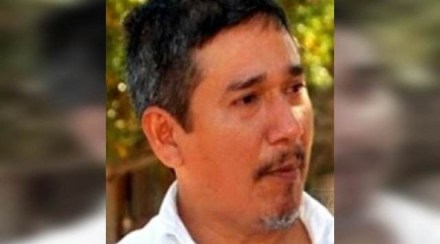
Mexican photojournalist and social activist, Moises Sanchez Cerezo, was reportedly kidnapped by an armed group at his home in the community of Medellin de Bravo in the turbulent state of Veracruz on Friday.
According to local media reports, Cerezo was taken at gunpoint along with his computer, camera and cell phone. Neighbor testimony outlined that the incident took place at 7:30 in the evening. They affirmed that three cars arrived with several armed men who entered the home of Cerezo then drove off with him in their custody.
Although the neighbors notified police, law enforcement showed up hours later.
Cerezo contributes to the local weekly La Union as well as participated in neighborhood security and watch groups to try to confront the widespread insecurity resulting from the presence of organized crime and corrupt local police officials.
Media rights watchdog groups have raised alarm over the number of journalists and media workers killed or targeted during the current administration of Enrique Peña Nieto. According to the International Center for Journalists (ICFJ), 13 journalists have been killed in Mexico in the past two years.
Mexico remains one of the most dangerous places in the world to practice journalism. Nearly 100 media workers have lost their lives or gone missing since the year 2000, and most of these cases are still unsolved, insufficiently probed, and few perpetrators arrested or convicted, according to the PEN American Center.
The Committee to Protect Journalists reported that since 1992, 73 percent of journalists killings in Mexico involved criminal groups with 8 percent involving the military.
High School Bans “I Can’t Breathe” T-Shirts at Tournament
By John Vibes | The Free Thought Project | December 28, 2014
San Francisco, California – In the aftermath of the many recent high profile police killings, athletes all over the country have been using their platform to spread awareness about the growing police state.
Many professional players have worn shirts that say “I Can’t Breathe”, in remembrance of Eric Garner’s last words before his life was taken by NYPD cops. In most cases, the professional sports teams have stood by their athletes and respected their freedom of speech. However, many young athletes who play for school teams have been banned from wearing these shirts during games and tournaments.
At a high school basketball tournament in California, administrators have banned all of their players from wearing the controversial T-shirts during warm-ups and practices. The three-day tournament was actually temporarily cancelled until every player from every team involved agreed not to wear any police brutality related clothing during their warm-ups.
One female team from the Mendocino Unified School District was actually disqualified from the tournament after several girls on the team refused to comply with the new conditions.
Not everyone from the boys teams decided to comply with the orders, some decided to sit out because they felt that their rights to freedom of speech were violated. However, there were enough players on the boys team to agree for the tournament to take place.
According to a statement from Principal Rebecca Walker, the ban is intended “To protect the safety and well-being of all tournament participants it is necessary to ensure that all political statements and or protests are kept away from this tournament. We are a small school district that simply does not have the resources to ensure the safety and well-being of our staff, students and guests at the tournament should someone get upset and choose to act out.”
Mendocino teams created controversy on December 16th when the teams first wore the “I Can’t Breathe” T-shirts before a game with Fort Bragg.
The political correctness brigade has succeeded once again at stifling the free exchange of ideas. To all those students who refused to comply with the dictates of the censors, we commend you; you are an example for children everywhere and a beacon of hope for society.
UK police misuse pre-charge bail to ban activists from protesting – report
RT | December 25, 2014
UK police forces are misusing pre-charge bail by banning hundreds of protestors from attending lawful demonstrations, The Guardian newspaper has revealed. Of all bailed protesters, eighty-five percent are never charged with any crime.
Since 2008 police have arrested at least 855 people in England and Wales and then released them on pre-charge bail, setting a date to return to the police station. Until their return, those bailed are prohibited from attending any demonstration. However, 85 percent, or about 732 people, have never been charged, according to data the Guardian collected using the Freedom of Information Act.
Of the 500 arrests by the Metropolitan Police since 2008, only 15 people have been charged. In the same way the City of London, Essex and Sussex police banned 120 people. On average only one in seven has been charged.
Citing “additional research”, The Guardian assumed the actual number of bans imposed could be far greater as some of the bail conditions given by custody sergeants were not picked up by the scope of the newspaper’s information requests.
In the UK, no court permission is required for a custody sergeant to hand out a protest ban. Should a protester violate this restriction, an arrest for breach of bail could follow. However, people on pre-charge bail can appeal to a magistrate.
“Bail is becoming an instrument that is being used by people without recourse to the judicial process. It is essentially to punish protesters and curb their right to demonstrate,” Rachel Harger of leading human rights law firm Bindmans told the newspaper. “It is effectively the police conducting their own extra-judicial justice without going to court.”
In the meantime, police managed to prove that in 123 cases they had enough evidence to start proceedings against the suspects.
However, civil liberties and protest groups insist that using bail is just a way of “disrupting protest activity without the inconvenience of dealing with a formal legal process.”
“As a result of the police’s long track record of misusing pre-charge conditions against protesters in an irresponsible way, we believe the only solution is the complete withdrawal of this power for all protest-related offences,” The Network for Police Monitoring (Netpol), a group which seeks to monitor public order, protest and street policing, said.
According to the policy officer of civil liberties group Liberty, Rachel Robinson, “the lack of limits on police bail make it liable to abuse and misuse, and can act to frustrate, rather than further, prosecutions.”
“Its use against protesters raises particular concerns, potentially chilling peaceful dissent for protracted periods without any prospect of criminal conviction,” she added.
The Guardian has also cited an example of Kelly Rogers who was one of those affected by the ban. She said West Midlands Police issued her a “blanket ban on all protests.” However no criminal charges were ever pressed against her.
“Ultimately, their only aim could have been to stop us protesting again, even though it is our right to do so,” she said.
UK Justice Minister Mike Penning said there will be consultation on pre-charge bail reform.
“The Home Secretary has been clear that it is wrong for people to spend months, or even years, on police bail with no judicial oversight or accountability,“ he said.
He added that in parallel, the College of Policing “is developing evidence-based guidance to bring consistency, transparency and rigor to the way in which pre-charge bail is used in criminal investigations.”
Featured Video
Anthrax War – CBC The Passionate Eye
or go to
Aletho News Archives – Video-Images
Book Review
Shattered Dreams: The HPV Vaccine Exposed (2019)
By Christina England – 30 Q&As – Book Review & Summary
Lies are Unbekoming | September 4, 2026
… Gardasil received FDA fast-track approval in 2006, Cervarix followed in 2009, and Gardasil 9 was approved in December 2014 with more than double the aluminium adjuvant content of the original. The commercial context is specific. Merck was about to lose patent protection on Zocor and faced $18 billion in Vioxx injury claims from a cardiovascular drug the company had marketed while suppressing its own data showing a five-times increase in heart attacks. Analysts projected the global HPV vaccine market at $4 billion by 2011, contingent on government-funded national programs for teenage girls. The 1986 National Childhood Vaccine Injury Act had already granted manufacturers complete liability immunity. By 2013, Japan had withdrawn its HPV vaccine recommendation after cataloguing severe adverse reactions in hundreds of girls. No Western government followed. The establishment position across the UK, US, Australia, and most of Europe held, and still holds, that the vaccines are safe and effective, that reported injuries are coincidental, and that cervical cancer prevention justifies the program. The book was published into this position, not against a vacuum.
Shattered Dreams sits alongside Mary Holland’s The HPV Vaccine On Trial and Viera Scheibner’s foundational vaccination work as part of the documented record on what has been done to a generation of teenage girls under the banner of cancer prevention. The full summary unpacks three specific findings: that Merck used the aluminium adjuvant itself as the “placebo” control in 92.5% of trial subjects, making it structurally impossible to detect excess reactions from the adjuvant; that Dr. Sin Hang Lee found HPV DNA fragments bound to aluminium in every one of sixteen Gardasil samples tested, and in the blood and spleen of a New Zealand girl six months after her third dose; and that in every country with high vaccination coverage, including Australia, the UK, Norway, and Sweden, cervical cancer rates have stopped declining and started rising specifically in the vaccinated cohort. Martínez-Lavín’s 2017 calculation puts the number needed to seriously harm with Gardasil 9 at 140, and the number needed to vaccinate to prevent one case at 1,757. Thirteen young women are seriously harmed for every one who benefits. The vaccine was approved on the basis of trials that could not detect what the trials were supposed to detect, and it is still being given to twelve-year-olds today. … Read full review
Blog Roll
 Aletho News
- Georgia’s Largest Healthcare System Will Fire Employees Who Refuse Flu Vaccine
- The Five-Year Fuel Crisis: Why the World Economy Is Paying for a War It Thinks Is Ending
- Trump’s Big Bluff on Iran
- Swiss scammed out of millions by Ukraine-linked call centers – media
- Germany facing potential ‘violent conflict’ with Russia – spy chief
- Ukraine’s EU neighbors reject new plea from Kiev – Politico
- British Transport Police Facial Recognition Trial Scanned 926,912 People With Zero Arrests
- House Bill Would Ban Federal Use of Flock ALPR Data
- Can a Spice Rival a Drug? 10 Head-to-Head Trials Put It to the Test.
- The oil routes around Hormuz face their own chokepoints
- If Americans Knew
- “We See Our Homes Now From A Satellite, Like Strangers”
- Watch “Gaza: Doctors Under Attack”, originally censored by BBC
- NAZA: Israeli embassies in UK and US promote rival documentary to challenge Gaza genocide allegations
- David Ellison appoints Israeli to lead merged Paramount-Warner studios
- Turkish Red Crescent helps elderly Gaza man walk again after Israel confiscates his prosthetic limb
- Four Palestinians Killed in Israeli Attacks in Gaza
- Two Palestinian youths killed and village razed as Israeli attacks on West Bank continue
- Two more Christian women innocent victims of Gaza raids
- Cruelty, Deprivation, Indignity: A Journalist’s 22 Months in Israeli Prison
- New IDF Website Frames Slain Gaza Journalists as Terrorists
- No Tricks Zone
- Latest European Green Energy Debacle; Portugal’s Largest Flagship Solar Park Insolvent!
- Green Energy Debacle: German Expert Professor Fritz Vahrenholt Warns Of Severe Economic And Social Consequences
- Two More Paleo Reconstructions Affirm Meters-Higher Sea Levels Across Ireland, Brazil 7000-6000 Years Ago
- New Study: Earth And Venus Surface Warmth Largely Explained By Convection And Lapse Rate, Not CO2 Or Radiation
- 2025 Nature Paper Claiming Worsening Global Drought Gets RETRACTED …Heavily Flawed
- New Study: ‘Global Drought Shows No Detectable Recent Acceleration Under Climate Warming’
- Economic Masterminds: German Socialists Suggest Taxing Productivity Gains Stemming From Using AI
- The South China Sea Has Not Been Cooperating With The Climate Change Narrative
- Energy Crisis: Germany Enters Heating Season With Historically Low Gas Reserve Fill Levels
- New Study: The Antarctic Ice Sheet Gained Mass From 2020-2024 Due To Staggering Snow And Ice Accumulation

